Acid-Base Balance
Dr. Radhwan Hazem Alkhashab
Consultant anaesthesia & ICU
Aljamhori teaching hospital
2020
 Arterial blood gas analysis is an essential part of
diagnosing and managing a patient’s oxygenation
status and acid-base balance.
Introduction
 Oxygenation (PaO2). The PaO2 is the amount of oxygen
dissolved in the blood and therefore provides initial information
on the efficiency of oxygenation.
 Ventilation (PaCO2). The adequacy of ventilation is inversely
proportional to the PaCO2 .so that, when ventilation increases,
PaCO2 decreases, and when ventilation decreases, PaCO2
increases.
 Acid-base status (pH, HCO3, and base deficit [BD]). A plasma pH
of >7.4 indicates alkalemia, and a pH of <7.35 indicates acidemia.
Despite a normal pH, an underlying acidosis or alkalosis may still
be present.
Arterial blood gas (ABG) provides an
assessment of the following:
 The pH is a measurement of the acidity or
alkalinity of the blood.
 It is inversely proportional to the number of
hydrogen ions (H+) in the blood. The more H+
present, the lower the pH will be.
 Likewise, the fewer H+ present, the higher the pH
will be. The pH of a solution is measured on
a scale from 1 (very acidic) to 14 (very alkalotic).
 A liquid with a pH of 7, such as water, is neutral
(neither acidic nor alkalotic).
 Acids & Bases
 An acid is usually defined as a chemical species that
can act as a proton (H + ) donor, whereas a base is a
species that can act as a proton acceptor (Brönsted–
Lowry definitions).
Acids
 A strong acid is a substance that readily and almost
irreversibly gives up an H + and increases [H + ],
whereas a strong base avidly binds H + and decreases
[H + ].
Strong acids& base
 In contrast, weak acids reversibly donate H + ,
whereas weak bases reversibly bind H + ; both weak
acids and bases tend to have less of an effect on [H +
] (for a given concentration of the parent compound)
than do strong acids and bases.
 these are compounds that are only partially ionized in solution
 Physiologically important acids include:
 Carbonic acid (H2CO3)
 Phosphoric acid (H3PO4)
 Pyruvic acid (C3H4O3)
 Lactic acid (C3H6O3)
 These acids are dissolved in body fluids.
 Physiologically important bases include:
 Bicarbonate (HCO3
- )
 Biphosphate (HPO4
-2 )
Weak Acids and Bases:
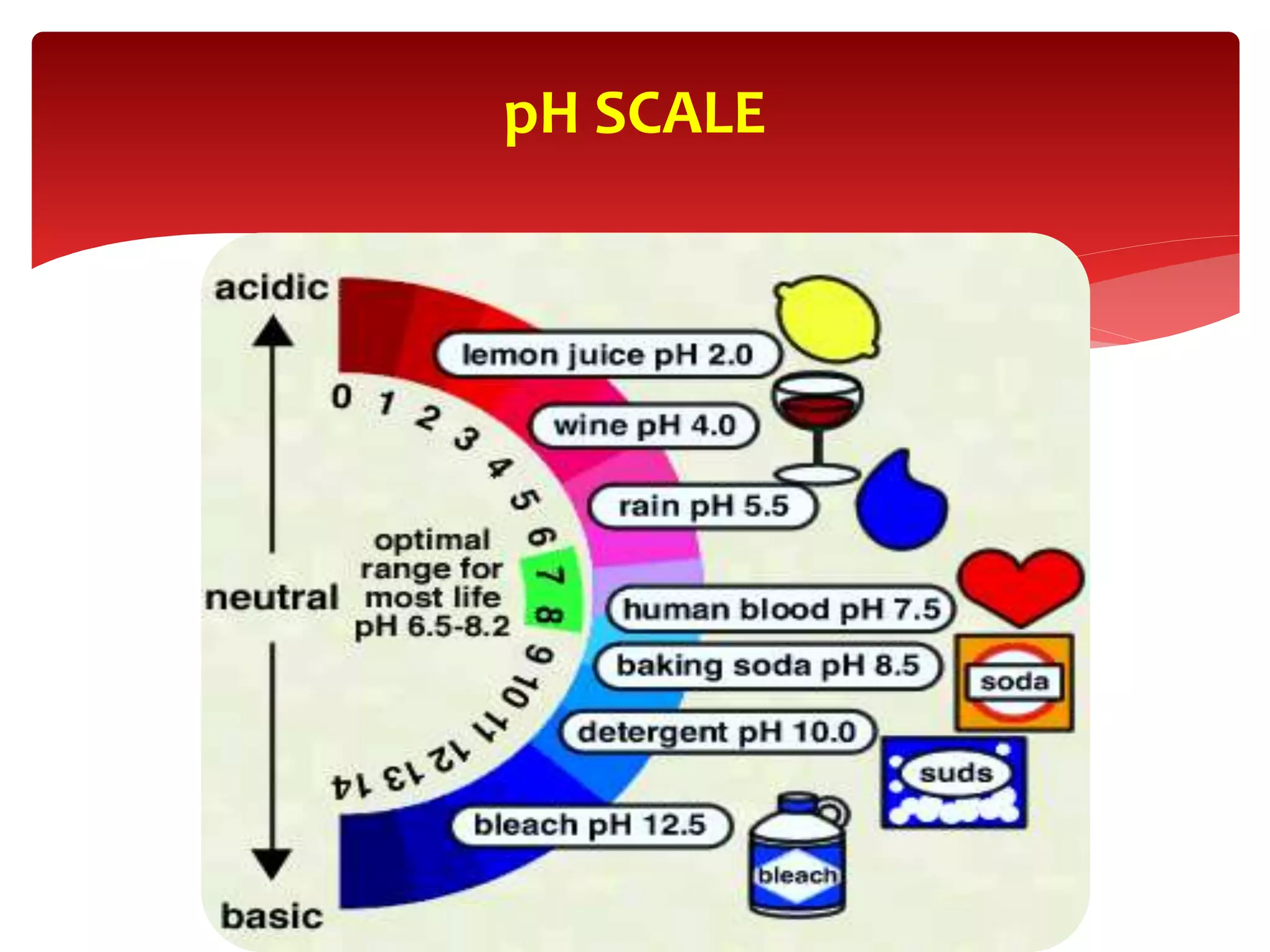
 Normal pH 7.35-7.45
 Narrow normal range
 Compatible with life 6.8 - 8.0
___/______/___/______/___
6.8 7.35 7.45 8.0
Acid Alkaline
Normal Acid-Base Balance
 pH is the negative logarithm of the hydrogen
ion concentration ([H]). pH is a convenient
descriptor for power of hydrogen. Normally
the [H] in extacellular fluid is 40 nmol/L, a very
small number. By taking the negative log of
this value we obtain a pH of 7.4.
pH SCALE
pH = -log10(H+)
Low pH values = high H+ concentrations
Unit changes in pH represent a tenfold
change in H+ concentrations
 Nature of logarithms
pH SCALE
 pH = 4 is more acidic than pH = 6
 pH = 4 has 10 times more free H+ concentration
than pH = 5 and 100 times more free H+
concentration than pH = 6
pH SCALE
ACIDOSIS ALKALOSISNORMAL
DEATH DEATH
Venous
Blood
Arterial
Blood
7.3 7.57.46.8 8.0
pH SCALE
 Severe acidemia is defined as blood pH <7.20 and is associated
with the following major effects:
1) Impairment of cardiac contractility, cardiac output, and the
response to catecholamines.
2) Susceptibility to recurrent arrhythmias and lowering the
threshold for ventricular fibrillation.
3) Arteriolar vasodilation resulting in hypotension
Major consequences of acidemia.
4) Vasoconstriction of the pulmonary vasculature,
leading to increased pulmonary vascular resistance
5) Hyperventilation (a compensatory response)
6) Confusion, and coma
7) Insulin resistance
8) Inhibition of glycolysis and adenosine triphosphate
synthesis
9) Hyperkalemia as potassium ions are shifted
extracellularly
Severe alkalemia is defined as blood pH >7.60 and is
associated with the following major effects:
1. Increased cardiac contractility until pH >7.7, when a
decrease is seen.
2. Refractory ventricular arrhythmias.
3. Coronary artery spasm/vasoconstriction.
4. Vasodilation of the pulmonary vasculature, leading
to decreased pulmonary vascular resistance
Major consequences of alkalemia
5. Hypoventilation (which can frustrate efforts to wean
patients from mechanical ventilation).
6. Cerebral vasoconstriction
7. Neurologic manifestations such as headache,
lethargy, delirium, stupor, tetany, and seizures
8. Hypokalemia, hypocalcemia, hypomagnesemia, and
hypophosphatemia
9. Stimulation of anaerobic glycolysis and lactate
production
 pH changes have dramatic effects on normal cell
function
 1) Changes in excitability of nerve and muscle cells
 2) Influences enzyme activity
 3) Influences K+ levels
ACIDOSIS / ALKALOSIS
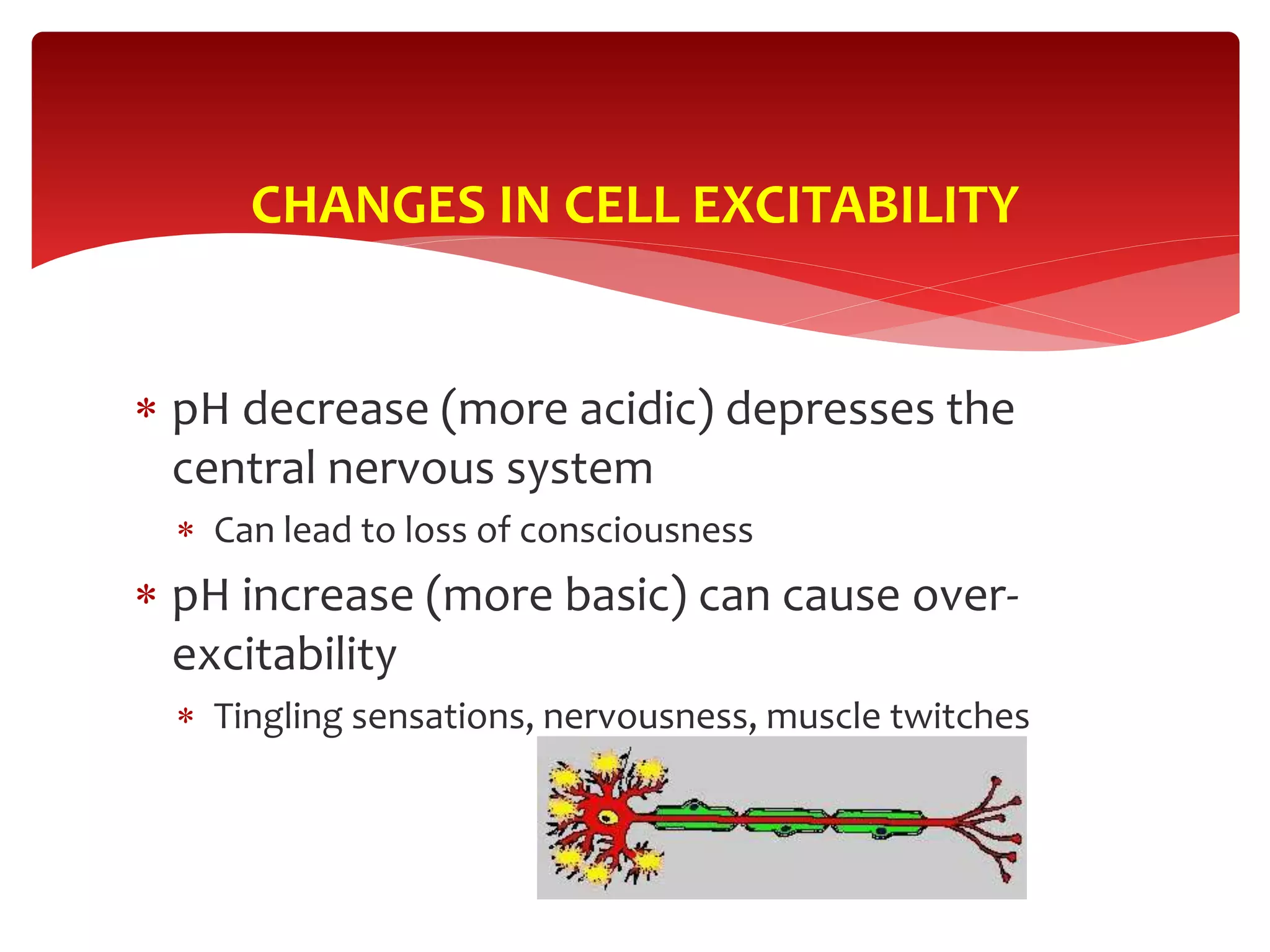
 pH decrease (more acidic) depresses the
central nervous system
 Can lead to loss of consciousness
 pH increase (more basic) can cause over-
excitability
 Tingling sensations, nervousness, muscle twitches
CHANGES IN CELL EXCITABILITY
 pH increases or decreases can alter the shape of the
enzyme rendering it non-functional
 Changes in enzyme structure can result in accelerated
or depressed metabolic actions within the cell
INFLUENCES ON ENZYME ACTIVITY
 When reabsorbing Na+ from the filtrate of the renal
tubules K+ or H+ is secreted (exchanged)
 Normally K+ is
secreted in much
greater amounts
than H+
INFLUENCES ON K+ LEVELS
K+
K+K+K+K+K+K+
Na+Na+Na+Na+Na+Na+
H+
 If H+ concentrations are high (acidosis) than H+ is
secreted in greater amounts
 This leaves less K+ than usual excreted
 The resultant K+ retention can affect cardiac function
and other systems
INFLUENCES ON K+ LEVELS
K+K+K+
Na+Na+Na+Na+Na+Na+
H+H+H+H+H+H+H+
K+K+K+K+K+
Balance maintained by:
Buffering systems
Lungs
Kidneys
Maintenance of Balance
Chemical Buffers
 The body uses pH buffers in the blood to guard against sudden
changes in acidity
 A pH buffer works chemically to minimize changes in the pH of a
solution
ACID-BASE REGULATION
H+
OH-
H+
H+
OH-
OH-
Buffer
 Prevent major changes in pH
 Act as sponges…
 3 main systems
1) Bicarbonate-carbonic acid buffer
2) Phosphate buffer
3) Protein buffer
Buffer Systems
H+
H+
H+
 Bicarbonate buffer- most important
Active in ECF and ICF
 Phosphate buffer
Active in intracelluar fluid
 Protein buffer- Largest buffer store
Albumins and globulins
Hemoglobin
Buffer Systems
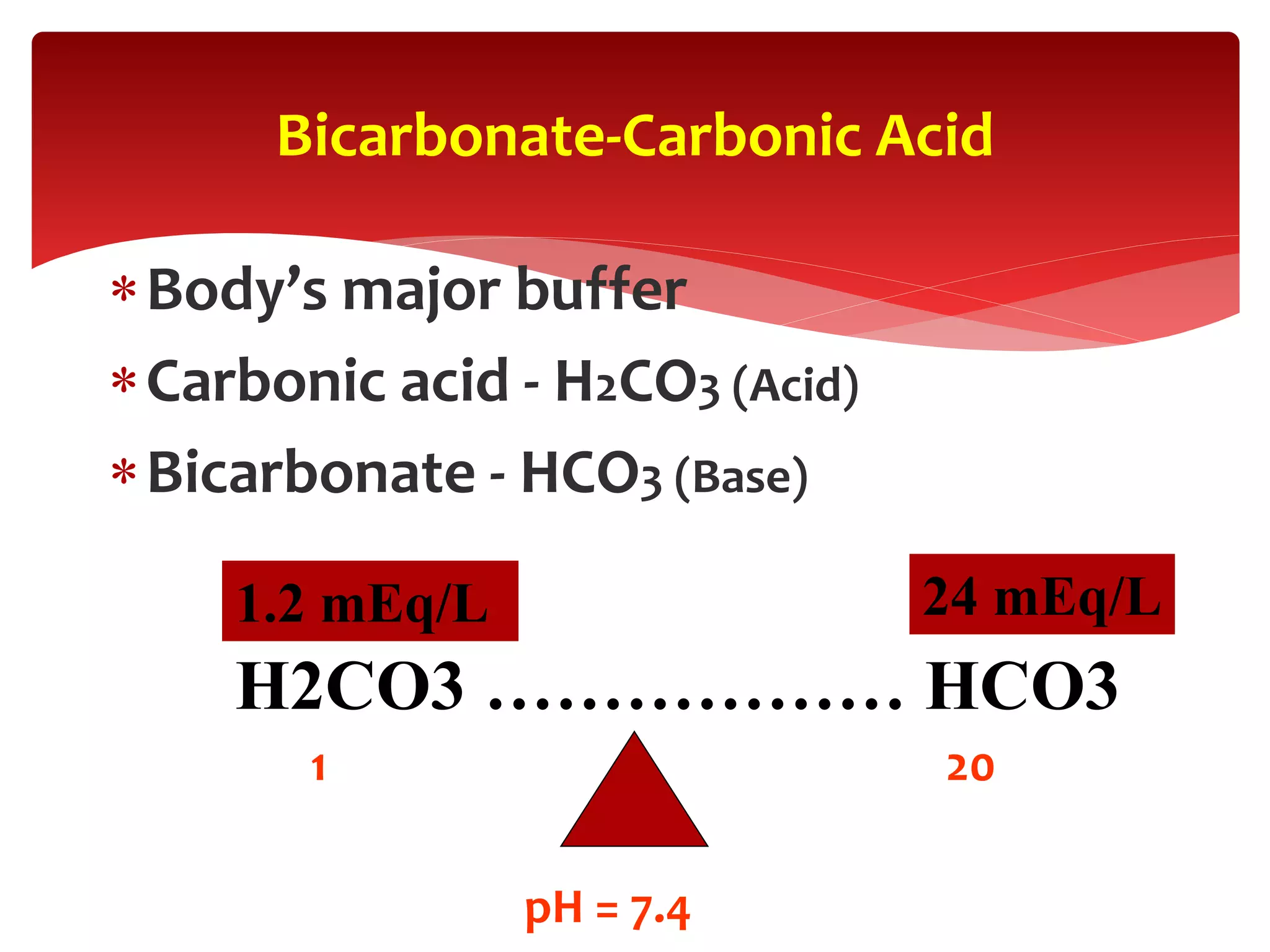
Body’s major buffer
Carbonic acid - H2CO3 (Acid)
Bicarbonate - HCO3 (Base)
1 20
pH = 7.4
Bicarbonate-Carbonic Acid
H2CO3 ……………… HCO3
24 mEq/L1.2 mEq/L
 Key concept
 Carbonic anhydrase equation
CO2 +H2O H2CO3 H+ + HCO3
Carbon Carbonic Bicarbonate
Dioxide Acid
(ACID) (BASE)
Regulation
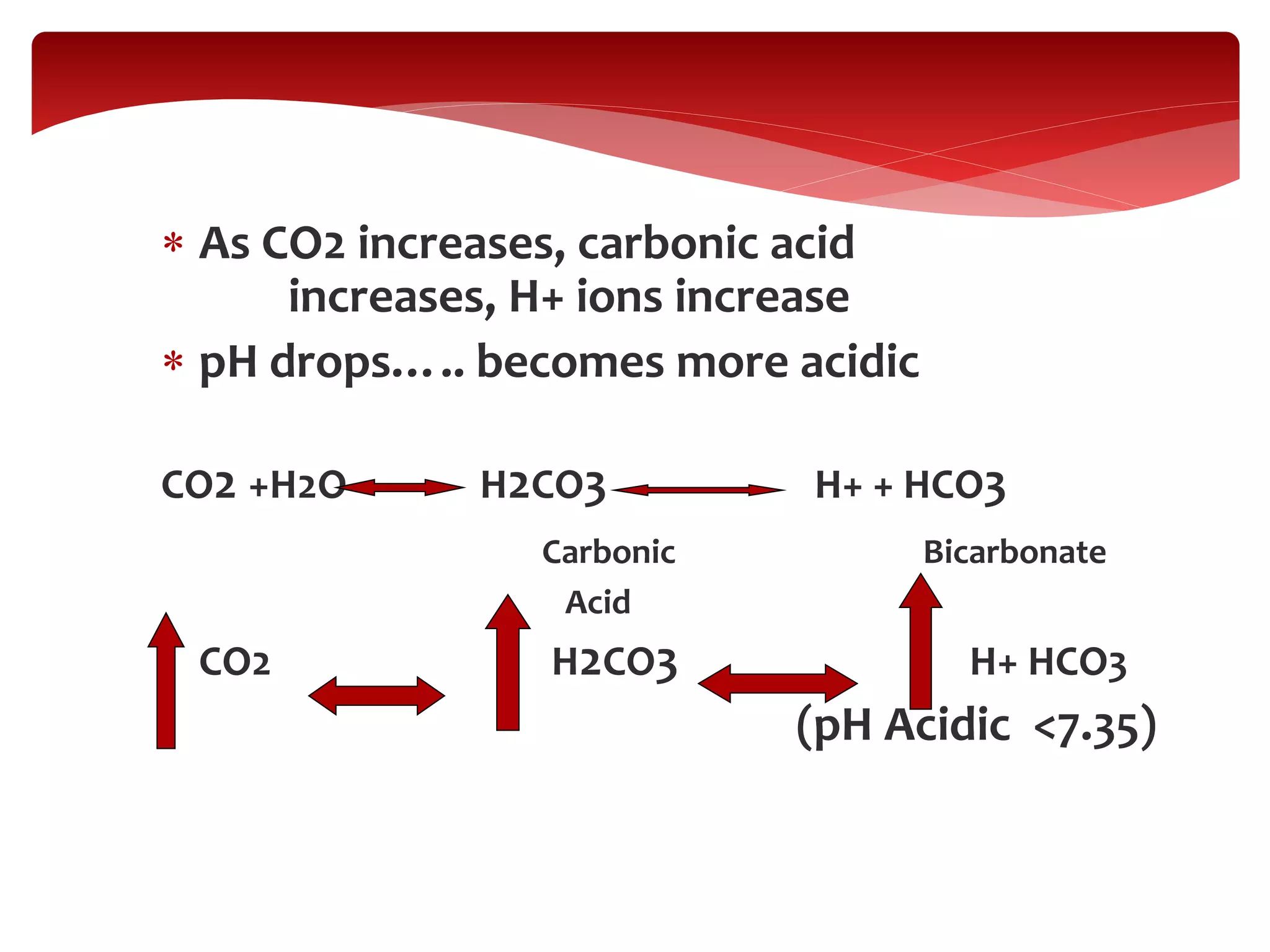
 As CO2 increases, carbonic acid
increases, H+ ions increase
 pH drops….. becomes more acidic
CO2 +H2O H2CO3 H+ + HCO3
Carbonic Bicarbonate
Acid
CO2 H2CO3 H+ HCO3
(pH Acidic <7.35)
 As HCO3 increases, H+ decreases
 pH rises, becomes more alkaline
CO2 +H2O H2CO3 H+ + HCO3
Carbonic Bicarbonate
Acid
(pH Basic >7.45)
Lungs control CO2
Kidneys control HCO3
Respiratory & Renal Regulation
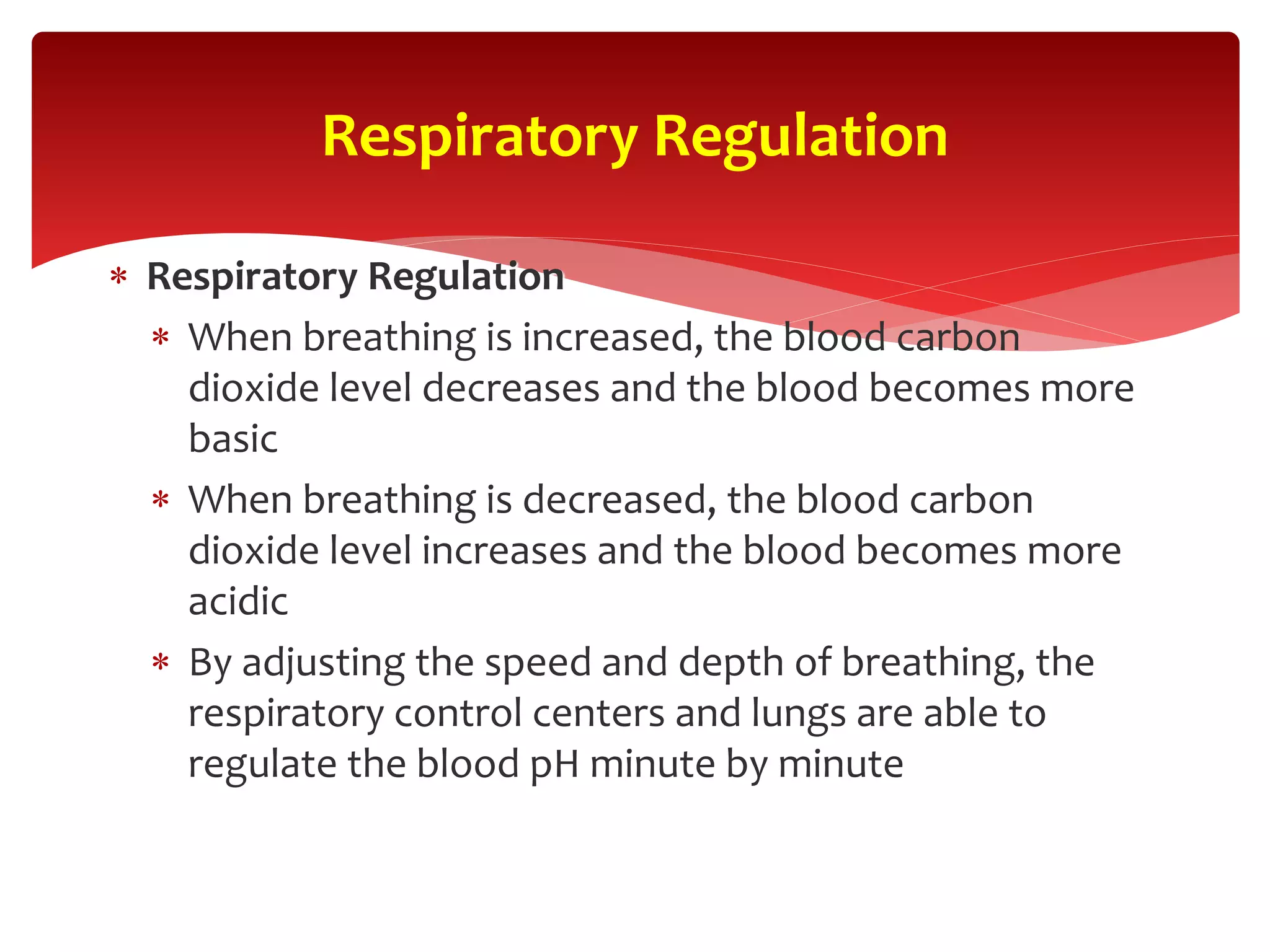
 Respiratory Regulation
 When breathing is increased, the blood carbon
dioxide level decreases and the blood becomes more
basic
 When breathing is decreased, the blood carbon
dioxide level increases and the blood becomes more
acidic
 By adjusting the speed and depth of breathing, the
respiratory control centers and lungs are able to
regulate the blood pH minute by minute
Respiratory Regulation
Mechanism of control
 Excretion or retention of
H+ or HCO3
Regulation….. Slow
 Hours to days to change pH
Renal Regulation
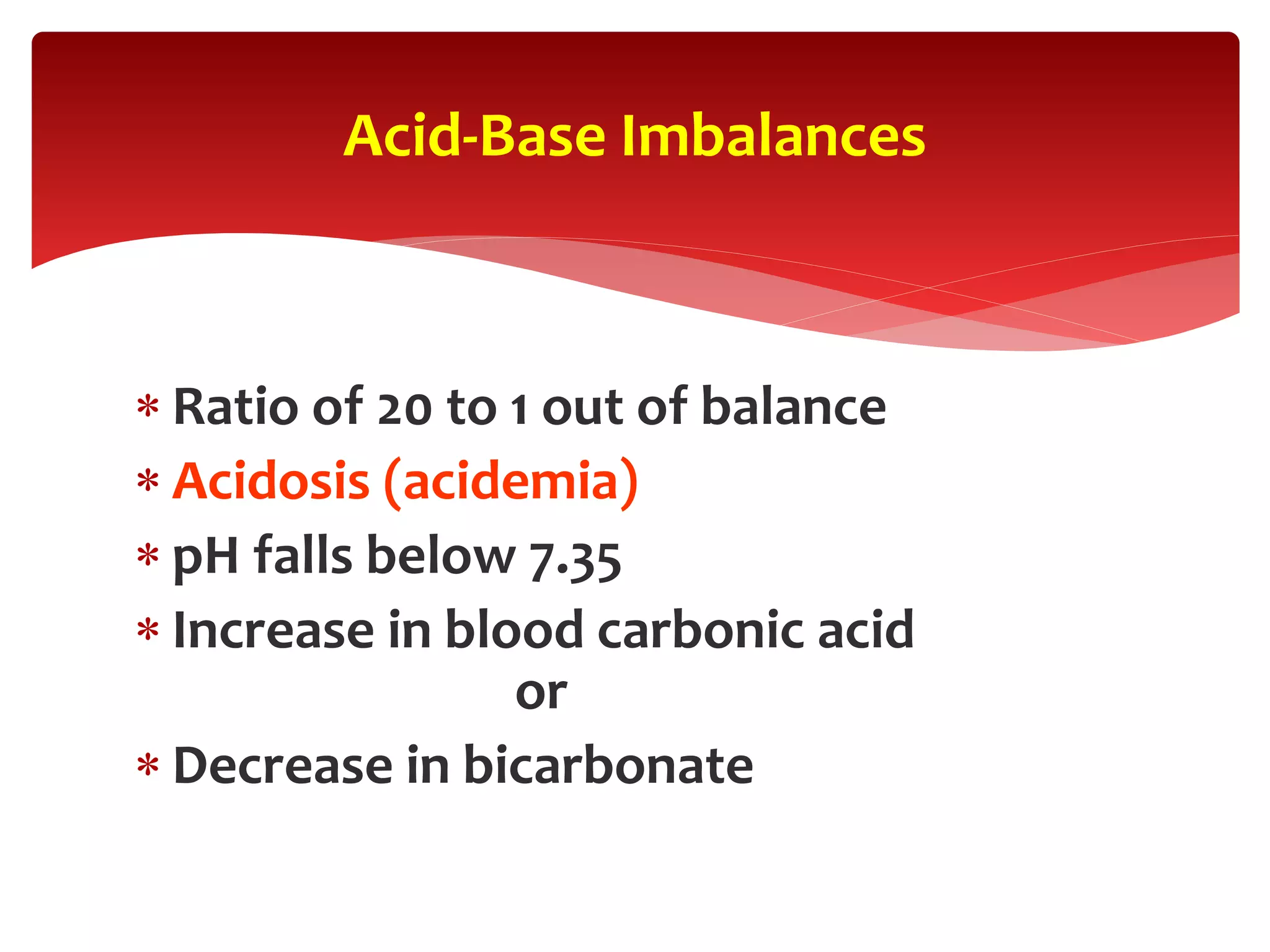
 Ratio of 20 to 1 out of balance
 Acidosis (acidemia)
 pH falls below 7.35
 Increase in blood carbonic acid
or
 Decrease in bicarbonate
Acid-Base Imbalances
 Alkalosis (alkalemia)
 pH greater than 7.45
 Increase in bicarbonate
or
 Decrease in carbonic acid
Acid-Base Imbalances
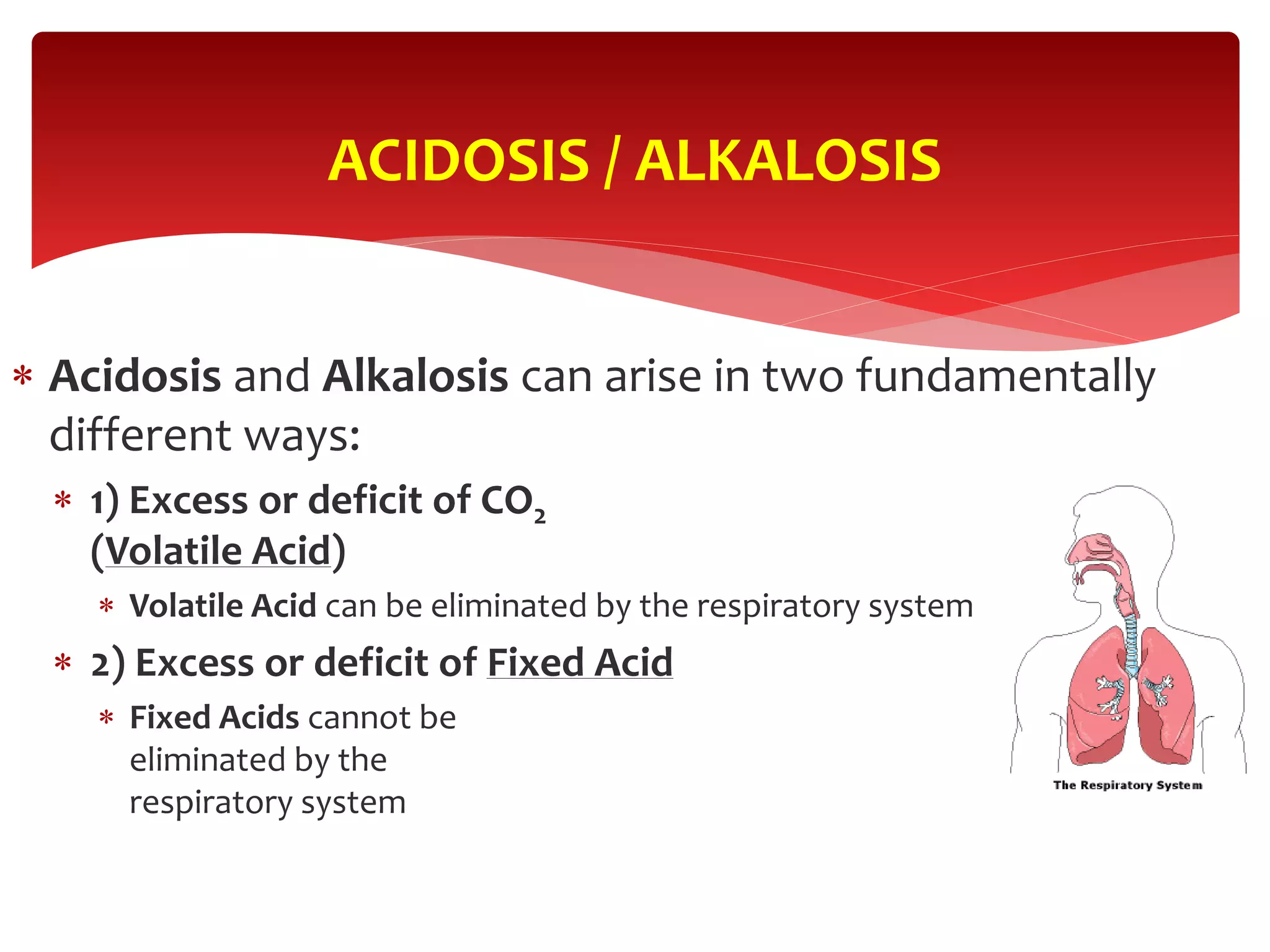
 Acidosis and Alkalosis can arise in two fundamentally
different ways:
 1) Excess or deficit of CO2
(Volatile Acid)
 Volatile Acid can be eliminated by the respiratory system
 2) Excess or deficit of Fixed Acid
 Fixed Acids cannot be
eliminated by the
respiratory system
ACIDOSIS / ALKALOSIS
Primary cause or origin:
 Metabolic
Changes brought about by systemic
alterations (cellular level)
 Respiratory
Changes brought about by
respiratory alterations
Acid-Base Imbalances
Compensation
 Corrective response of kidneys and/or lungs
Compensated
 Restoration of pH and 20 : 1 ratio
Uncompensated
 Inability to adjust pH or 20 : 1 ratio
Acid-Base Imbalances
 Respiratory Acidosis
 Respiratory Alkalosis
 Metabolic Acidosis
 Metabolic Alkalosis
Four Basic Types of Imbalance
 Carbonic acid excess
 Exhaling of CO2 inhibited
 Carbonic acid builds up
 pH falls below 7.35
 Cause = Hypoventilation
Respiratory Acidosis
H2CO3
 Caused by hypercapnia due to hypoventilation
 Characterized by a pH decrease and an increase in
CO2
RESPIRATORY ACIDOSIS
CO2
CO2
CO2
CO2 CO2
CO2
CO2
CO2
CO2
CO2
CO2
CO2
CO2
pH
pH
 The speed and depth of breathing control the amount of CO2 in
the blood
 Normally when CO2 builds up, the pH of the blood falls and the
blood becomes acidic
 High levels of CO2 in the blood stimulate the parts of the brain
that regulate breathing, which in turn stimulate faster and
deeper breathing
RESPIRATORY ACIDOSIS
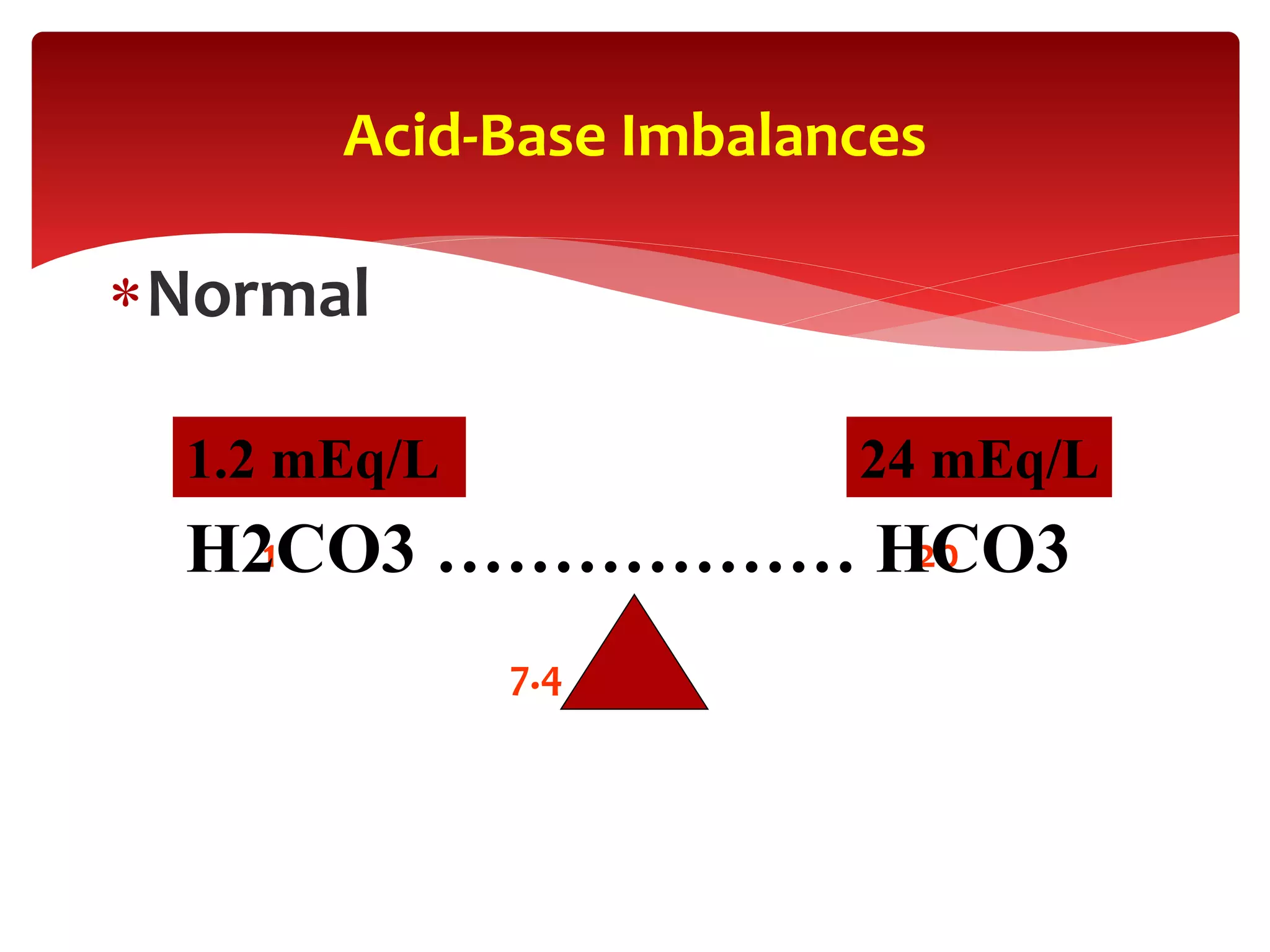
 Normal
1 20
7.4
Acid-Base Imbalances
H2CO3 ……………… HCO3
24 mEq/L1.2 mEq/L
1 13
7.21
Respiratory Acidosis
Compensation: How?
Opposite regulating mechanism
Problem = depressed breathing,
build up of CO2 in blood
Response - Kidney retains HCO3
(Response ….. Slow)
Respiratory Acidosis
RESPIRATORY ACIDOSIS
-body’s compensation
-kidneys conserve HCO3
- ions to restore the normal
40:2 ratio
-kidneys eliminate H+ ion in acidic urine
2 30:
HCO3
-
H2CO3
HCO3
-
H+
+
acidic urine
RESPIRATORY ACIDOSIS
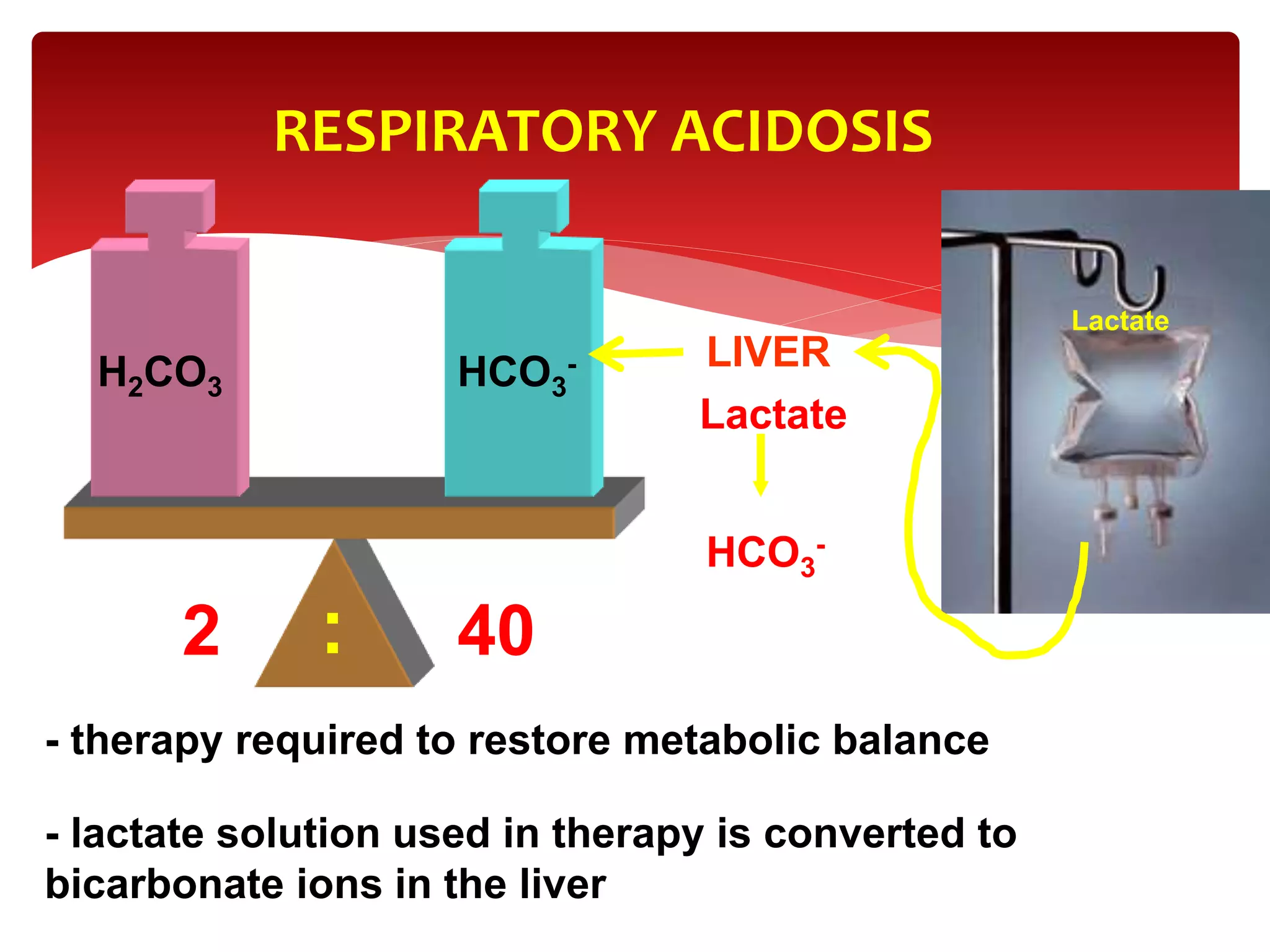
- therapy required to restore metabolic balance
- lactate solution used in therapy is converted to
bicarbonate ions in the liver
H2CO3 HCO3
-
2 40:
Lactate
Lactate
LIVER
HCO3
-
 The treatment of respiratory acidosis aims to improve
the function of the lungs
 Drugs to improve breathing may help people who
have lung diseases such as asthma and emphysema
RESPIRATORY ACIDOSIS
 Carbonic acid deficit
 Increased exhaling of CO2
 Carbonic acid decreases
 pH rises above 7.45
 Cause = hyperventilation.
Respiratory Alkalosis
H2CO3
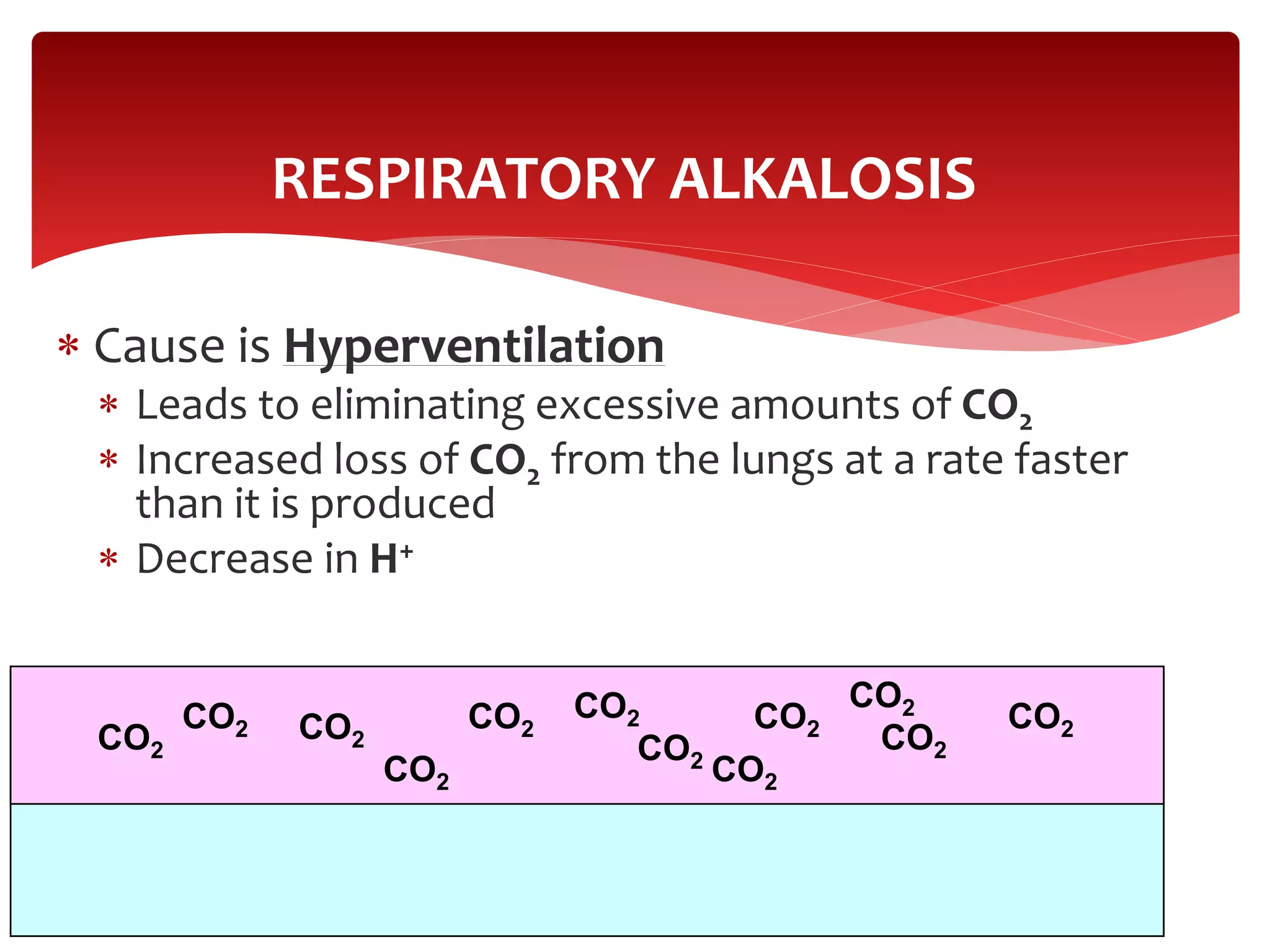
 Cause is Hyperventilation
 Leads to eliminating excessive amounts of CO2
 Increased loss of CO2 from the lungs at a rate faster
than it is produced
 Decrease in H+
RESPIRATORY ALKALOSIS
CO2 CO2 CO2
CO2
CO2
CO2
CO2
CO2
CO2
CO2
CO2
CO2
Normal
1 20
7.4
Acid-Base Imbalances
H2CO3 ……………… HCO3
24 mEq/L1.2 mEq/L
1
40
7.70
Respiratory Alkalosis
 Compensation:
 Problem = excess “blowing off” of CO2
 Result = decrease in carbonic acid and increase in
HCO3
 Response: Kidney excretes excess bicarbonate
Respiratory Alkalosis
 Usually the only treatment needed is to slow down
the rate of breathing
 Breathing into a paper bag or holding the breath as
long as possible may help raise the blood CO2 content
as the person breathes carbon dioxide
back in after breathing it out
RESPIRATORY ALKALOSIS
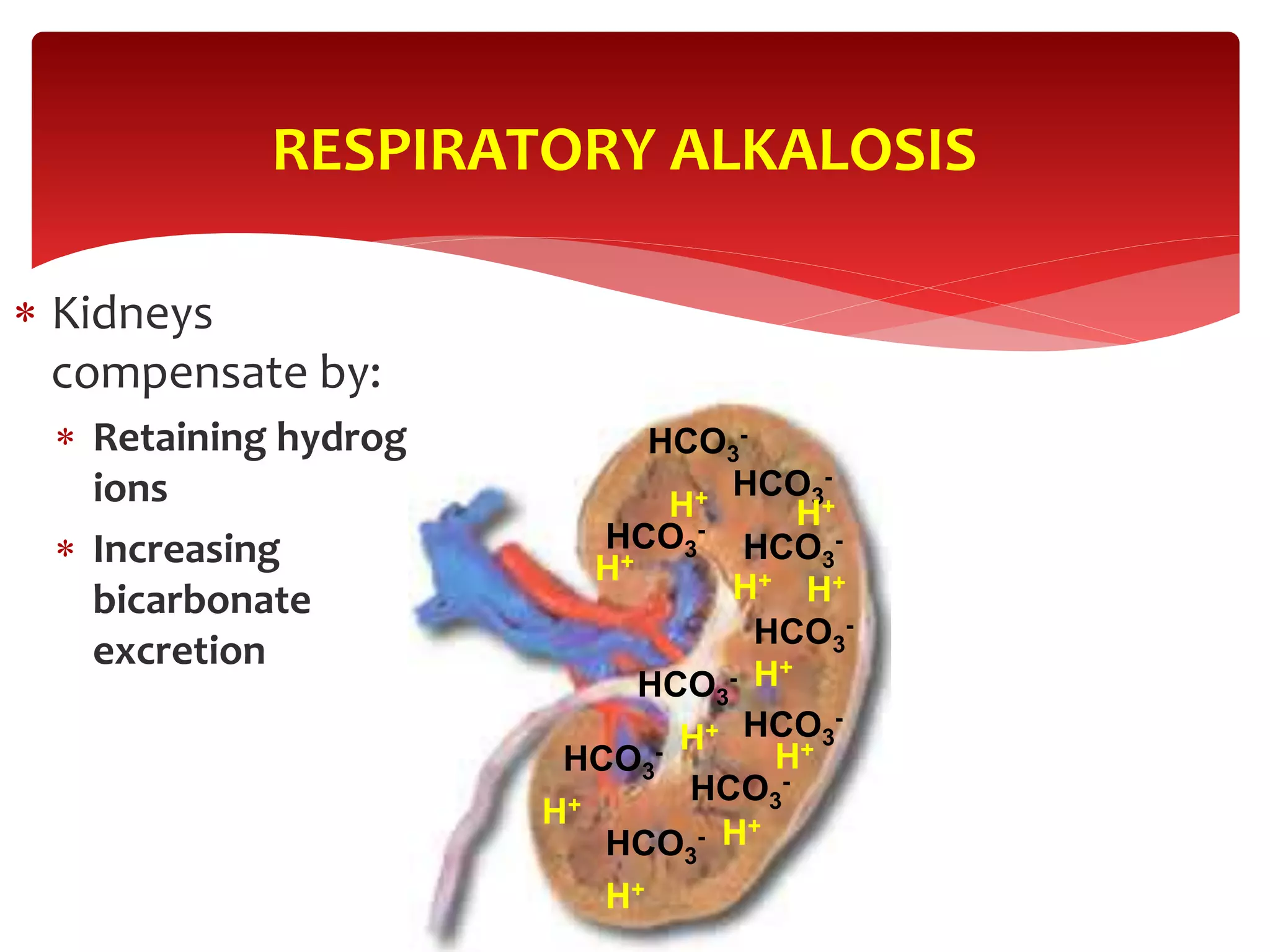
 Kidneys
compensate by:
 Retaining hydrogen
ions
 Increasing
bicarbonate
excretion
RESPIRATORY ALKALOSIS
H+
HCO3
-
HCO3
-
HCO3
-
HCO3
-
HCO3
-
HCO3
-
HCO3
-
HCO3
-
HCO3
-
HCO3
-
H+
H+
H+
H+
H+
H+
H+
H+
H+
H+
RESPIRATORY ALKALOSIS
- Body’s compensation
- Kidneys conserve H+ ions and eliminate HCO3
- in alkaline
urine
0.5 15:
HCO3
-
Alkaline Urine
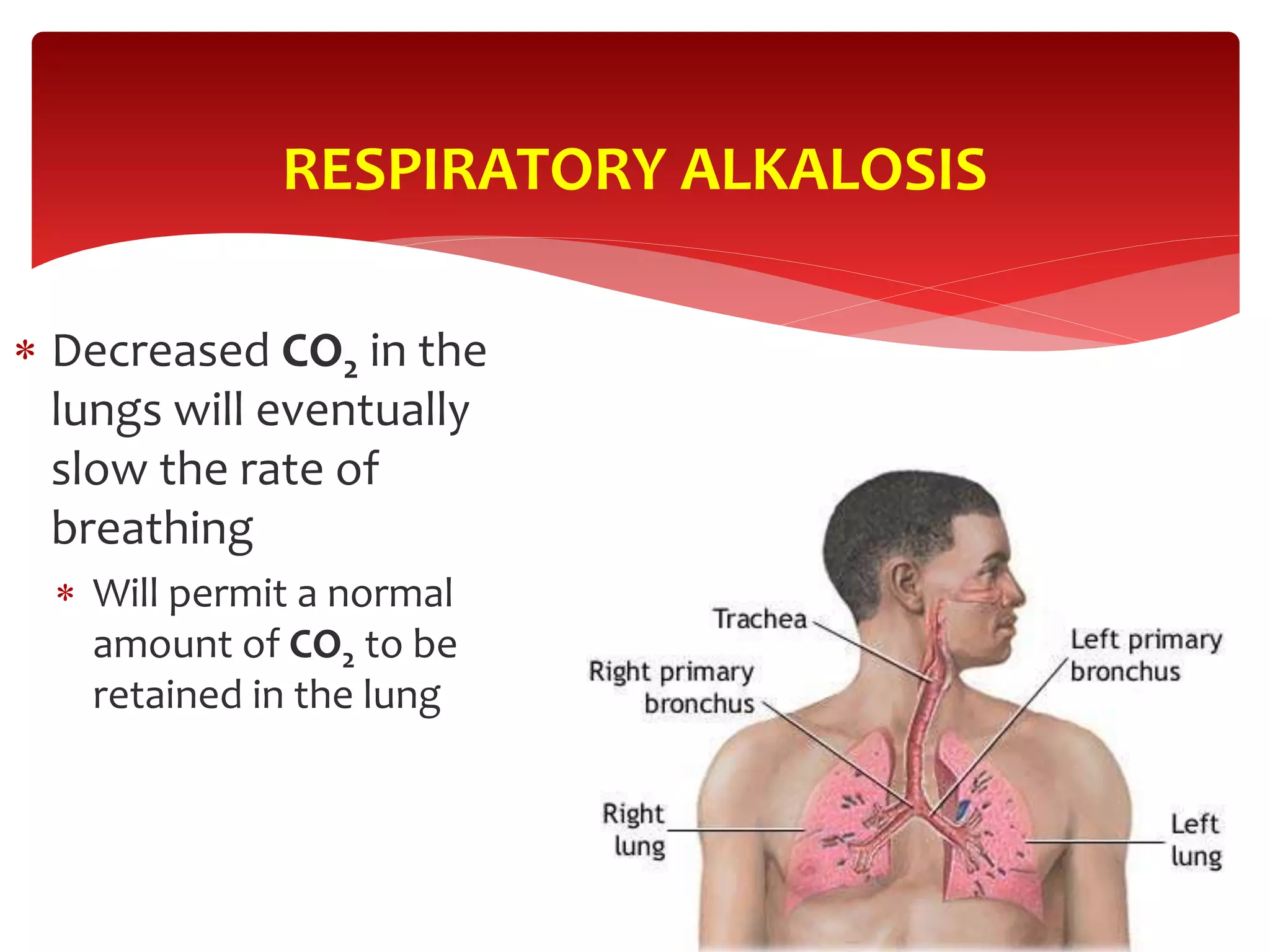
 Decreased CO2 in the
lungs will eventually
slow the rate of
breathing
 Will permit a normal
amount of CO2 to be
retained in the lung
RESPIRATORY ALKALOSIS
 Base-bicarbonate deficit
 Low pH (< 7.35)
 Low plasma bicarbonate (base)
 Cause = relative gain in H+
(lactic acidosis, ketoacidosis)
or actual loss of HCO3
(renal failure, diarrhea)
Metabolic Acidosis
 Any acid-base imbalance not attributable to CO2
is classified as metabolic
 Metabolic production of Acids
 Or loss of Bases
METABOLIC ACIDOSIS
 If an increase in acid overwhelms the
body's pH buffering system, the
blood can become acidic
 As the blood pH drops, breathing
becomes deeper and faster as the
body attempts to rid the blood of
excess acid by decreasing the
amount of carbon dioxide
METABOLIC ACIDOSIS
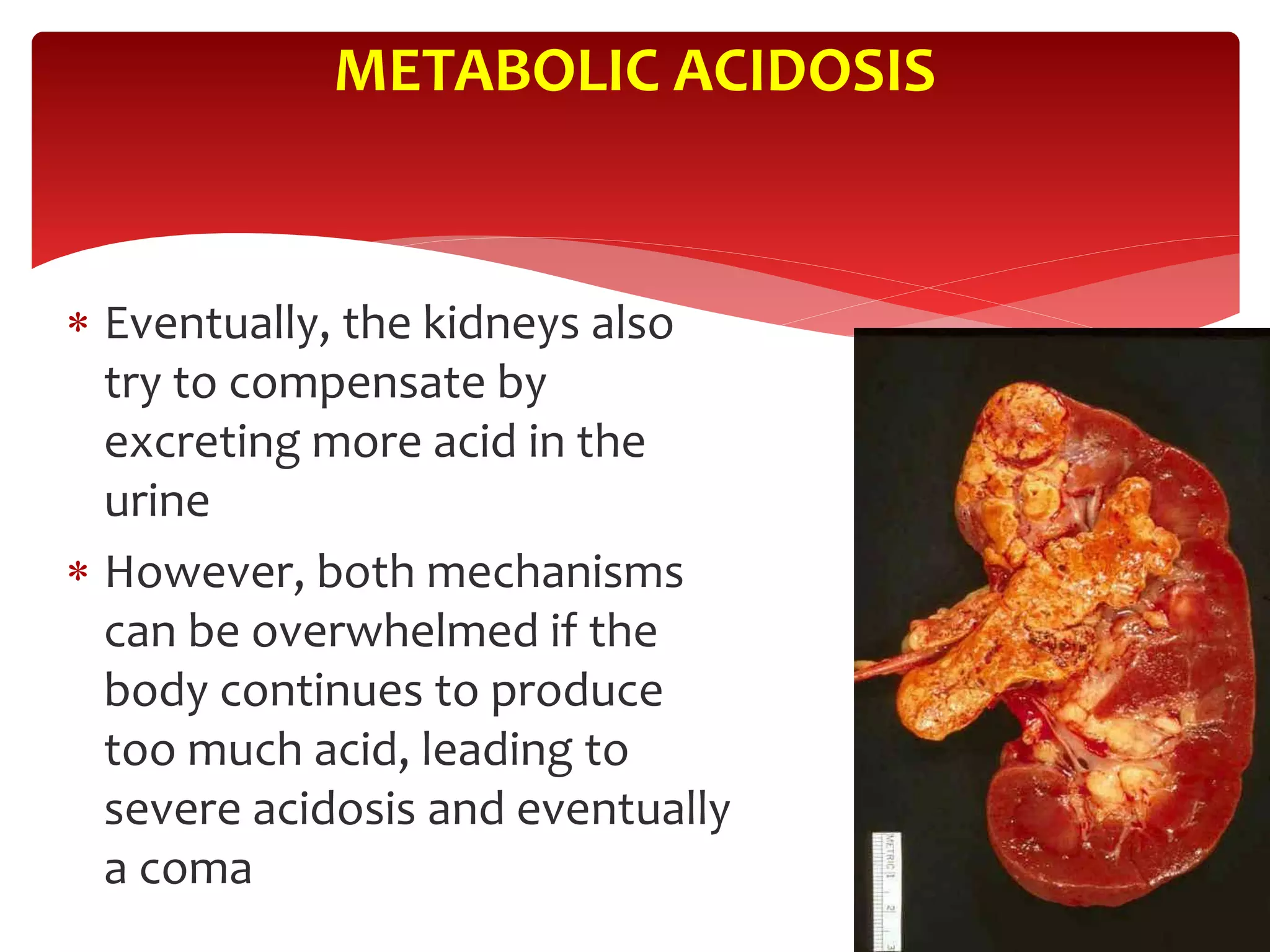
 Eventually, the kidneys also
try to compensate by
excreting more acid in the
urine
 However, both mechanisms
can be overwhelmed if the
body continues to produce
too much acid, leading to
severe acidosis and eventually
a coma
METABOLIC ACIDOSIS
 The causes of metabolic acidosis can be
grouped into four major categories
 1) Ingesting an acid or a substance that is
metabolized to acid
 2) Abnormal Metabolism
 3) Kidney Insufficiencies
 4) Severe Diarrhea
METABOLIC ACIDOSIS
Normal
1 20
7.4
Acid-Base Imbalances
H2CO3 ……………… HCO3
24 mEq/L1.2 mEq/L
 Kidney failure (decrease in bicarbonate)
1 10
7.10
Metabolic Acidosis
 Lactic acidosis, keto acidosis (increase acid… no change
in bicarbonate)
1 10
7.10
Metabolic Acidosis
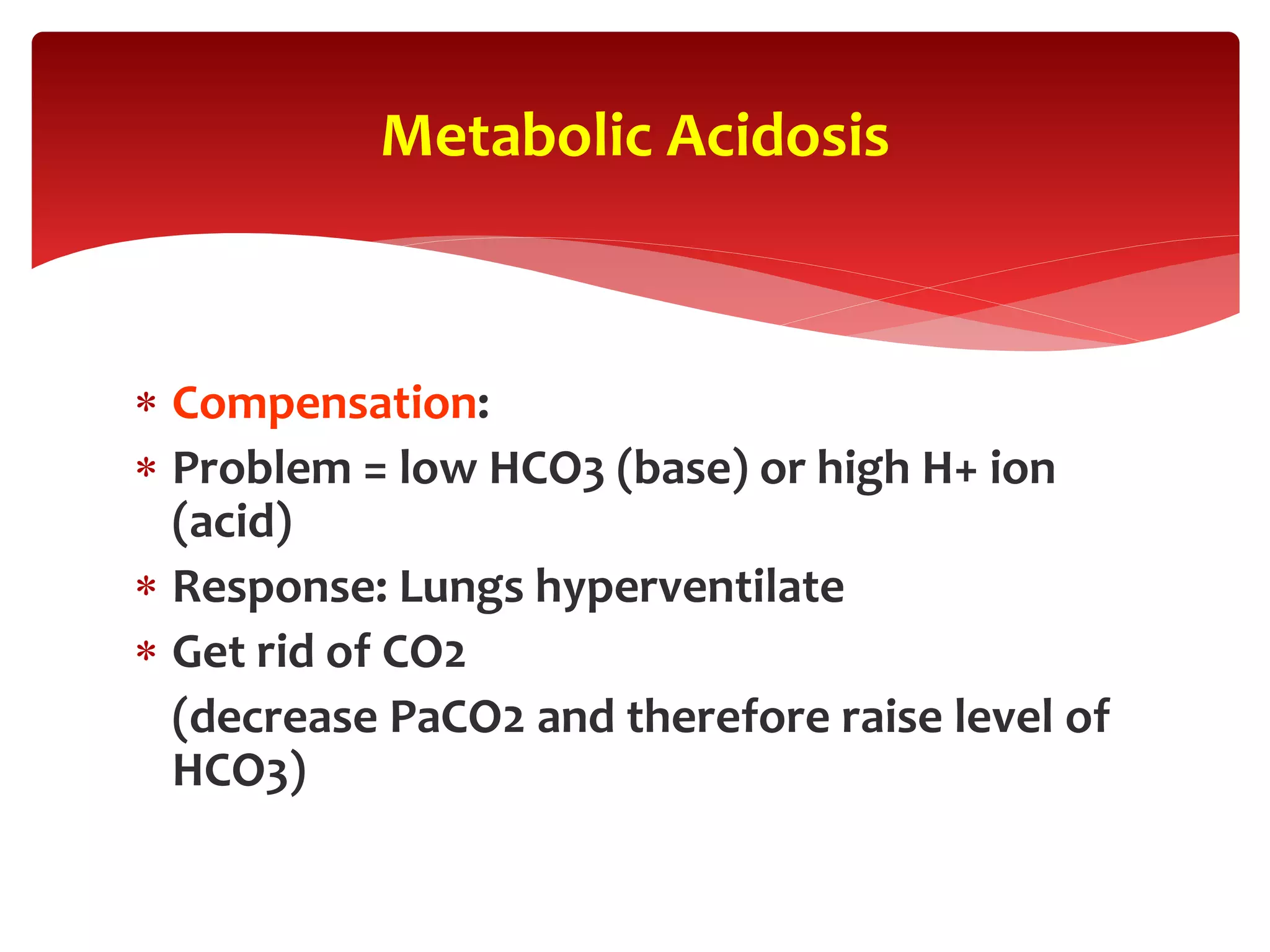
 Compensation:
 Problem = low HCO3 (base) or high H+ ion
(acid)
 Response: Lungs hyperventilate
 Get rid of CO2
(decrease PaCO2 and therefore raise level of
HCO3)
Metabolic Acidosis
METABOLIC ACIDOSIS
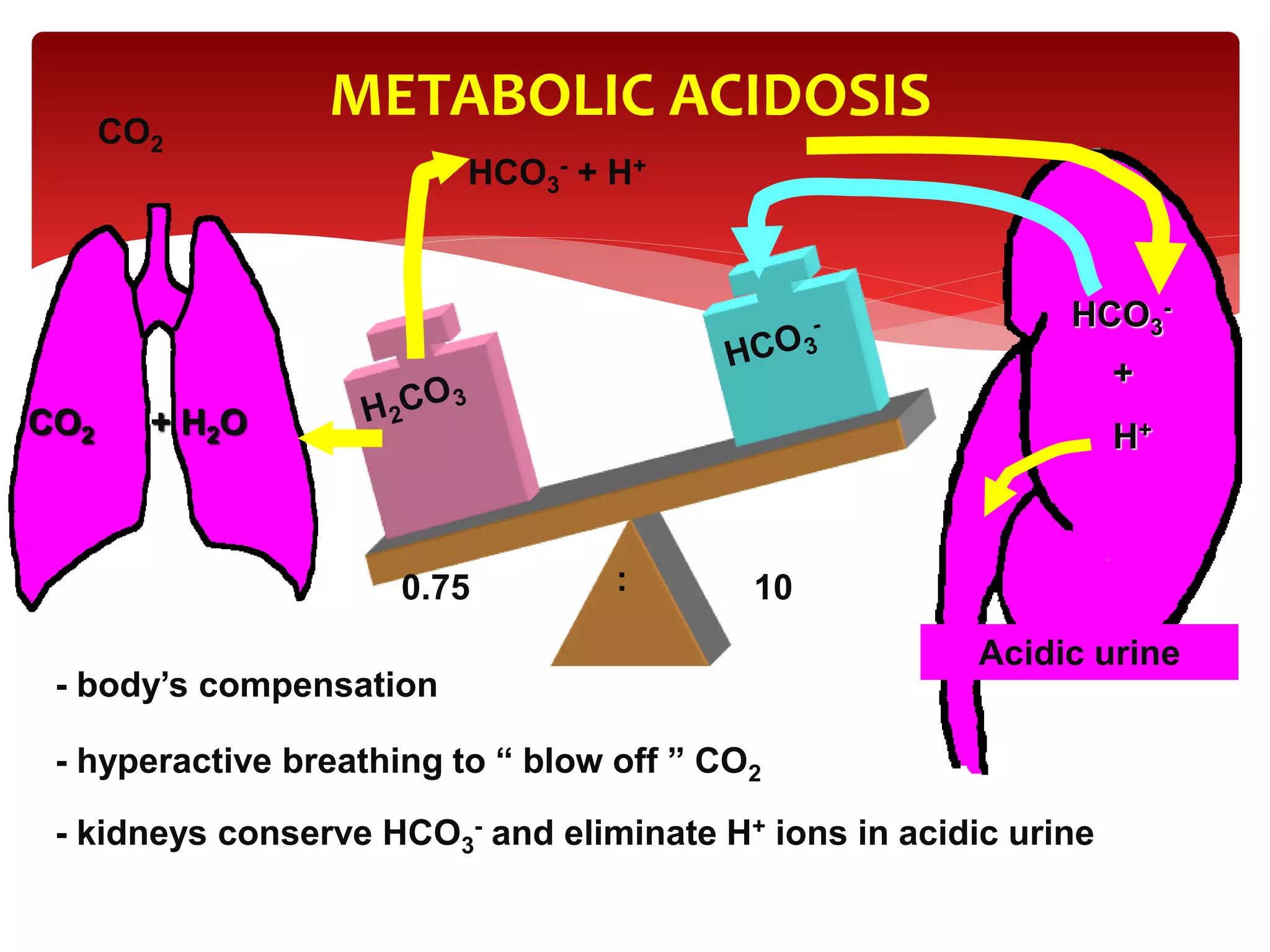
- body’s compensation
- hyperactive breathing to “ blow off ” CO2
- kidneys conserve HCO3
- and eliminate H+ ions in acidic urine
0.75 10:
CO2
CO2 + H2O
HCO3
- + H+
HCO3
-
+
H+
Acidic urine
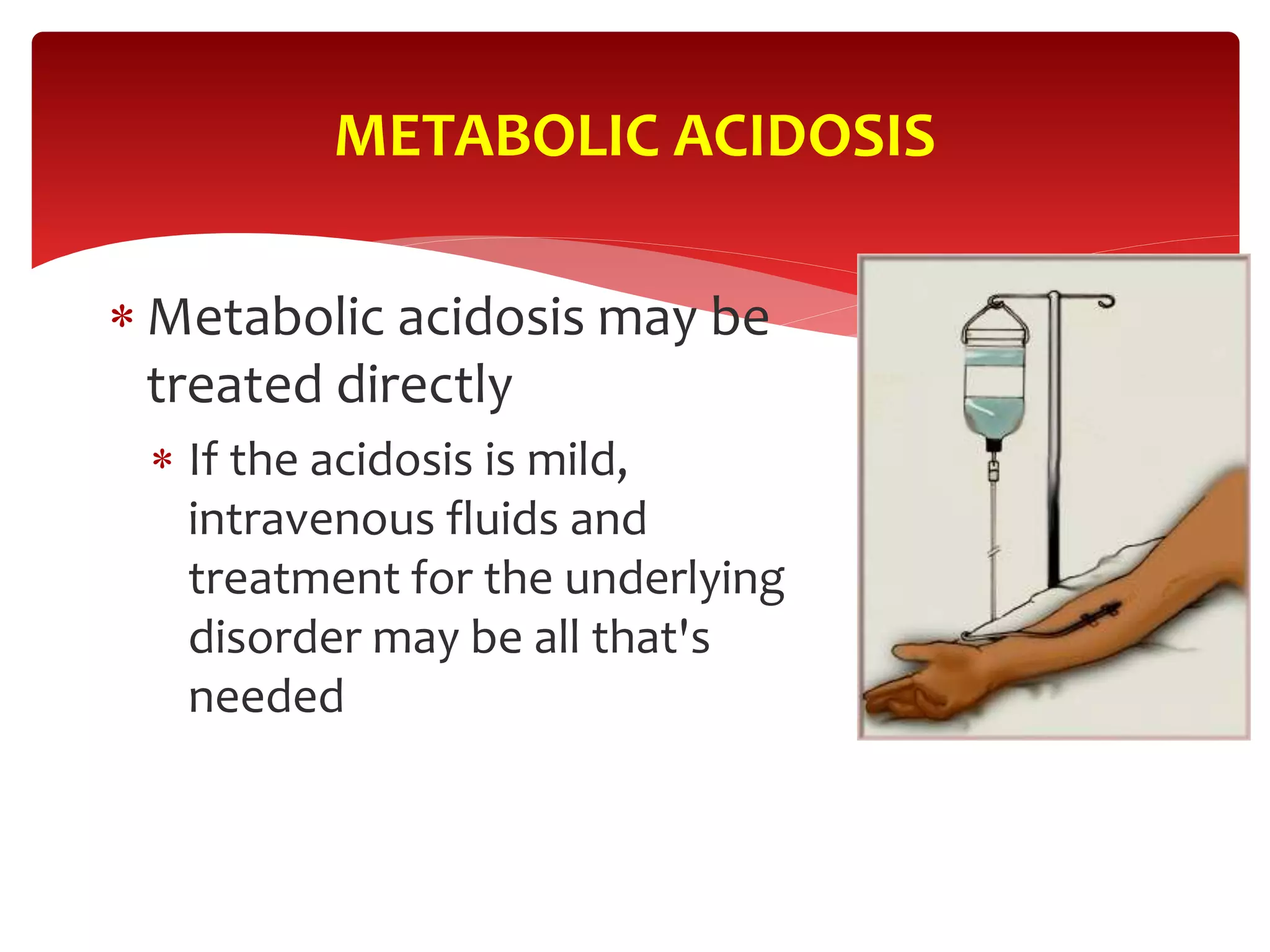
 Metabolic acidosis may be
treated directly
 If the acidosis is mild,
intravenous fluids and
treatment for the underlying
disorder may be all that's
needed
METABOLIC ACIDOSIS
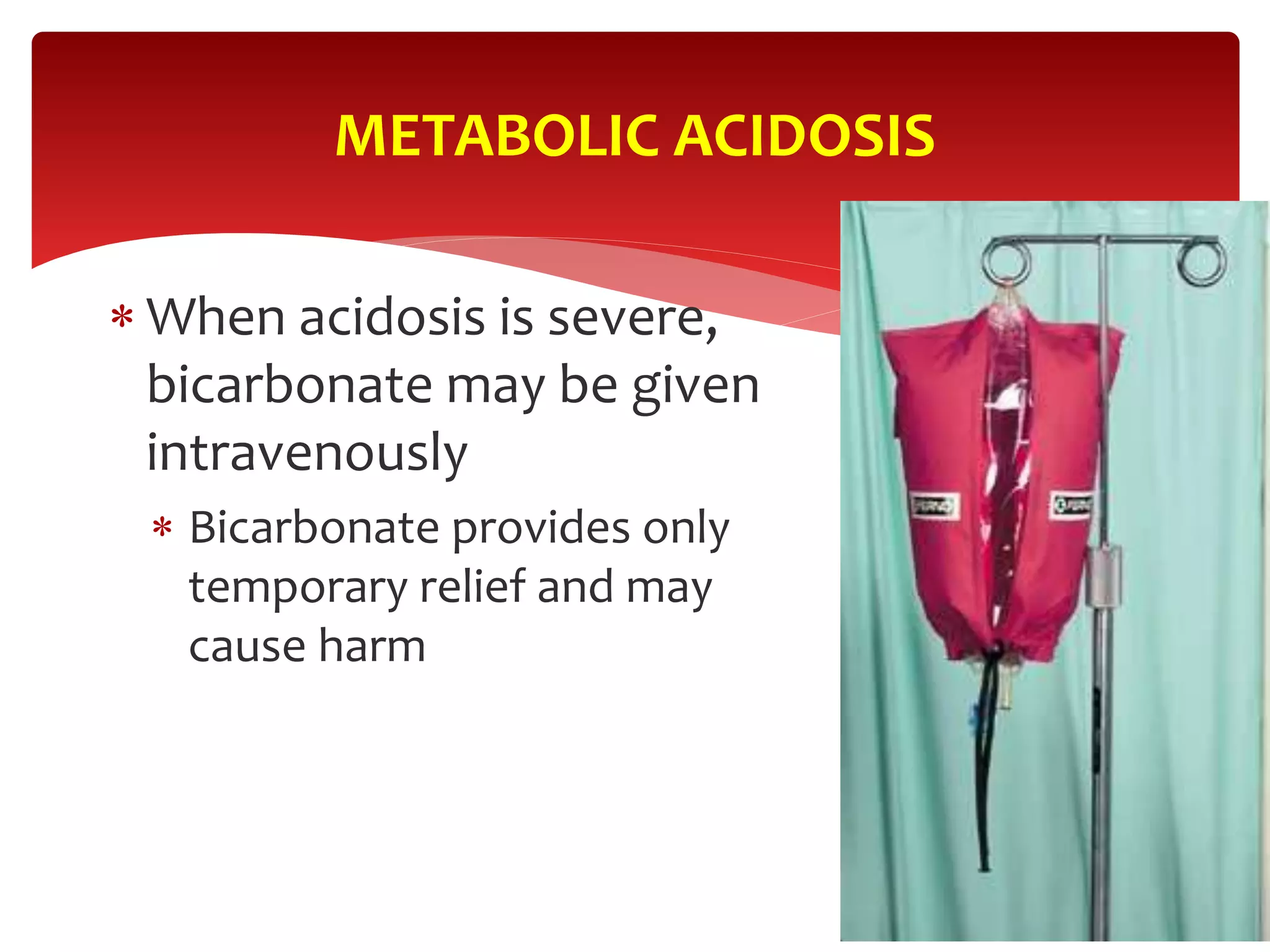
 When acidosis is severe,
bicarbonate may be given
intravenously
 Bicarbonate provides only
temporary relief and may
cause harm
METABOLIC ACIDOSIS
METABOLIC ACIDOSIS
- therapy required to restore metabolic balance
- lactate solution used in therapy is converted to
bicarbonate ions in the liver
H2CO3 HCO3
-
0.5 10:
Lactate
Lactate
containing
solution
 Bicarbonate excess
 High pH (> 7.45)
 Loss of H+ ion or gain of HCO3
 Most common causes vomiting, gastric
suctioning (NG tube)
 Other: Abuse of antacids, K+ wasting diuretics
Metabolic Alkalosis
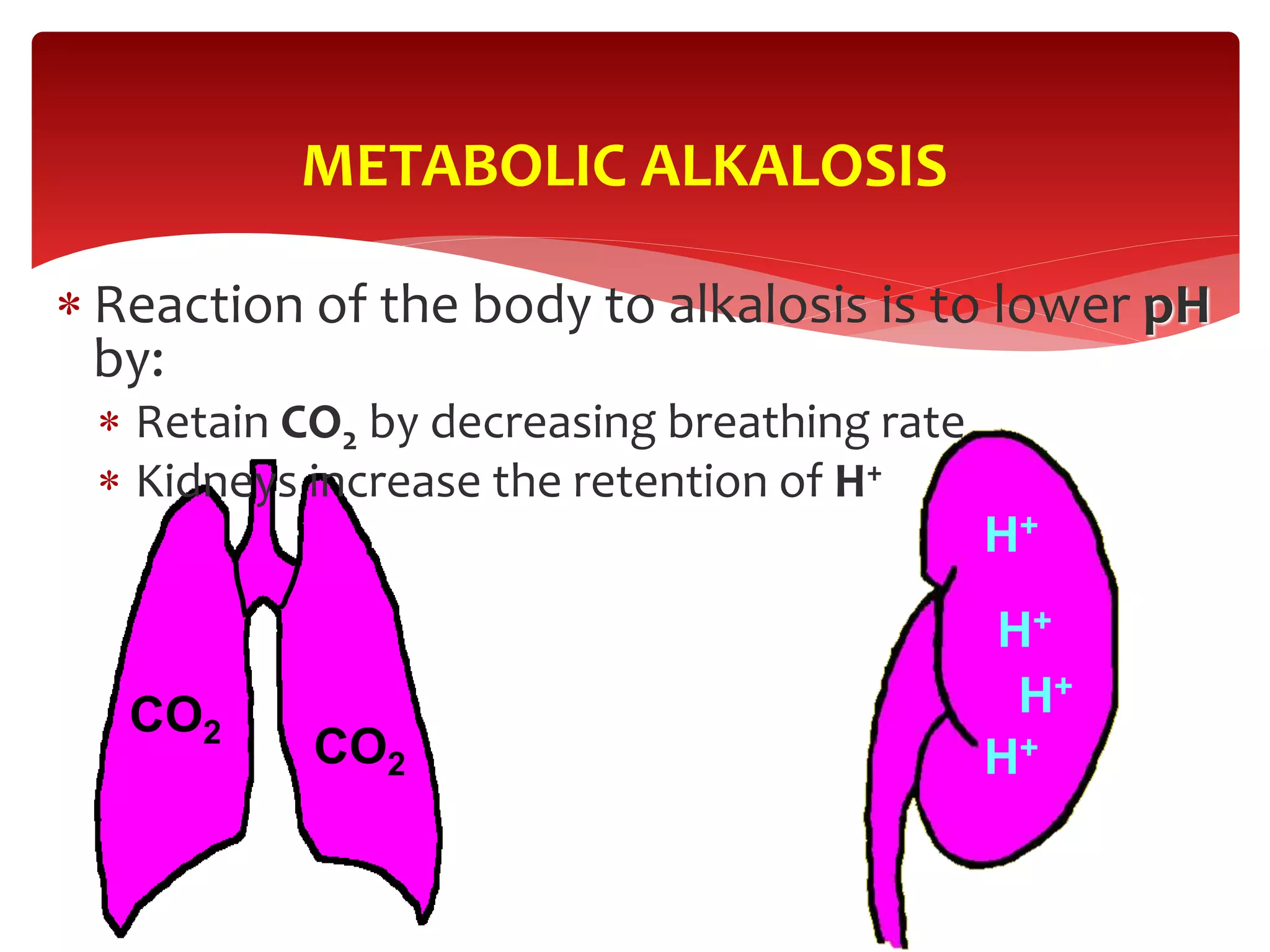
 Reaction of the body to alkalosis is to lower pH
by:
 Retain CO2 by decreasing breathing rate
 Kidneys increase the retention of H+
METABOLIC ALKALOSIS
CO2
CO2
H+
H+
H+
H+
METABOLIC ALKALOSIS
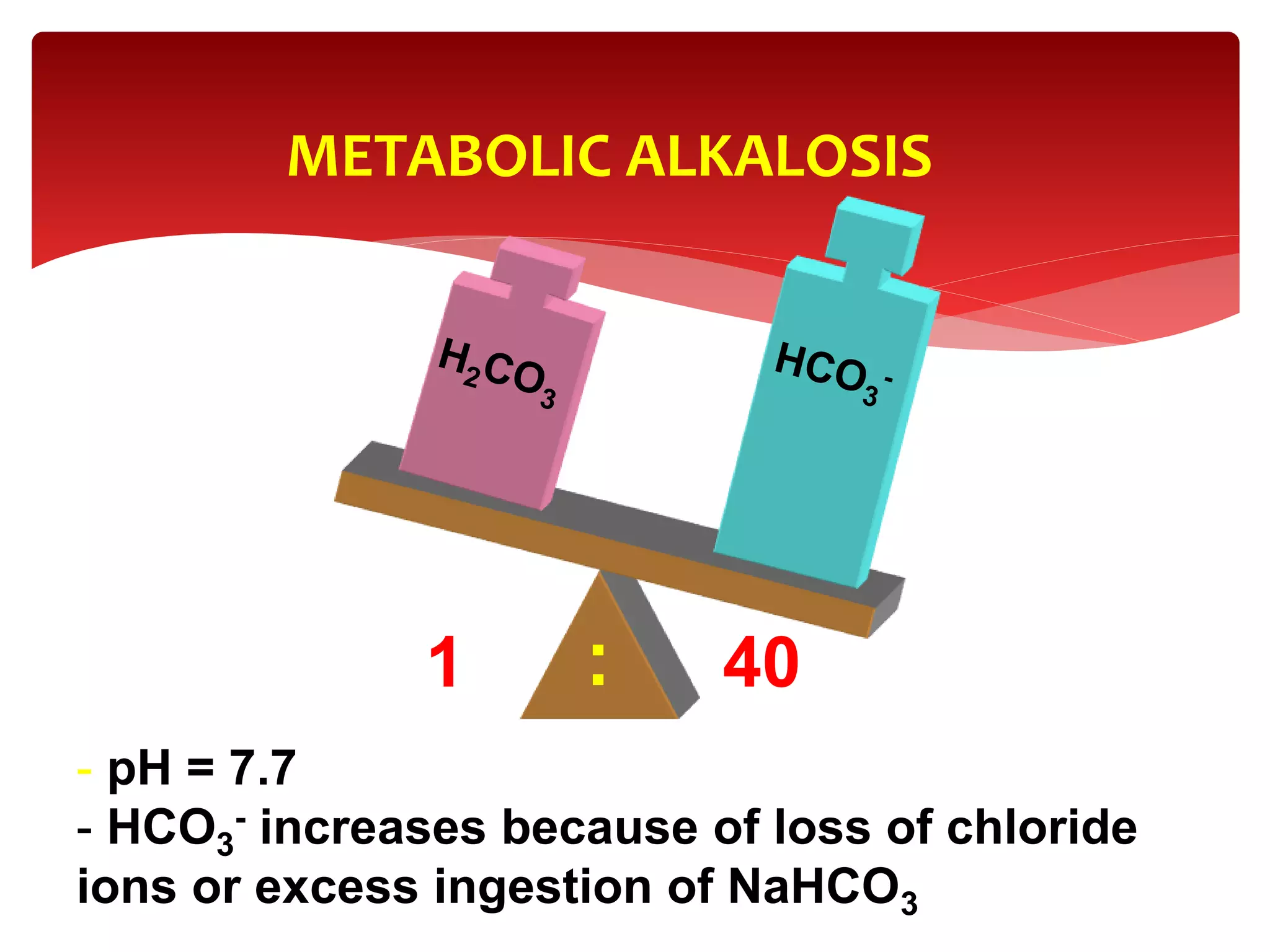
- pH = 7.7
- HCO3
- increases because of loss of chloride
ions or excess ingestion of NaHCO3
1 40:
METABOLIC ALKALOSIS
- body’s compensation
- breathing suppressed to hold CO2
- kidneys conserve H+ ions and eliminate HCO3
- in
alkaline urine
1.25 30
CO2 + H2O
HCO3
- + H+
HCO3
-
H+
+
Alkaline urine
:
Normal
1 20
7.4
Acid-Base Imbalances
H2CO3 ……………… HCO3
24 mEq/L1.2 mEq/L
1
30
7.58
Metabolic Alkalosis
 Compensation:
 Problem = too much base
 Response: Lungs compensate by
hypoventilating
 Retain CO2, increase PaCO2
 Increase acid level in blood
Metabolic Alkalosis
 pH 7.35 - 7.45
 PaCO2 35 - 45 mmHg
 HCO3 22 - 26 mEq/L
 Base Excess -2 - +2 mEq/L
 PaO2 75 - 100 mm Hg
 O2 saturation 93 - 100 %
Assessing ABGs
 pH
 Measurement of acidity or alkalinity, based on the hydrogen (H+)
ions present.
 The normal range is 7.35 to 7.45

 PaO2
 The partial pressure of oxygen that is dissolved in arterial blood.
 The normal range is 75 to 100 mm Hg.

 SaO2
 The arterial oxygen saturation.
 The normal range is 93% to 100%.

 PaCO2
 The amount of carbon dioxide dissolved in arterial blood.
 The normal range is 35 to 45 mm Hg.

Components of the Arterial Blood Gas
 HCO3
 The calculated value of the amount of bicarbonate in
the bloodstream.
 The normal range is 22 to 26 mEq/liter

 B.E.
 The base excess indicates the amount of excess or
insufficient level of bicarbonate in the system.
 The normal range is –2 to +2 mEq/liter.
 (A negative base excess indicates a base deficit in the
blood.)
 The anion gap (AG) estimates the presence of unmeasured
anions. Excess inorganic and organic anions that are not readily
measured by standard assays are termed unmeasured anions.
The AG is a tool used to further classify a metabolic acidosis as
an AG metabolic acidosis (elevated AG) or a non-AG metabolic
acidosis (normal AG). This distinction narrows the differential
diagnosis.
 The AG is the difference between the major serum cations and
anions
 that are routinely measured:
 AG = Na-(HCO3+CL)
 A normal value is 12 mEq/L 4 mEq/L.
The anion gap
 Nonanion gap metabolic acidosis results from loss of Na and K or
accumulation of Cl. The result of these processes is a decrease in
HCO3:
 Iatrogenic administration of hyperchloremic solutions
(hyperchloremic metabolic acidosis)
 Alkaline gastrointestinal losses
 Renal tubular acidosis
 Ureteric diversion through ileal conduit
 Endocrine abnormalities
MAJOR CAUSES OF A NONANION
GAP METABOLIC ACIDOSIS
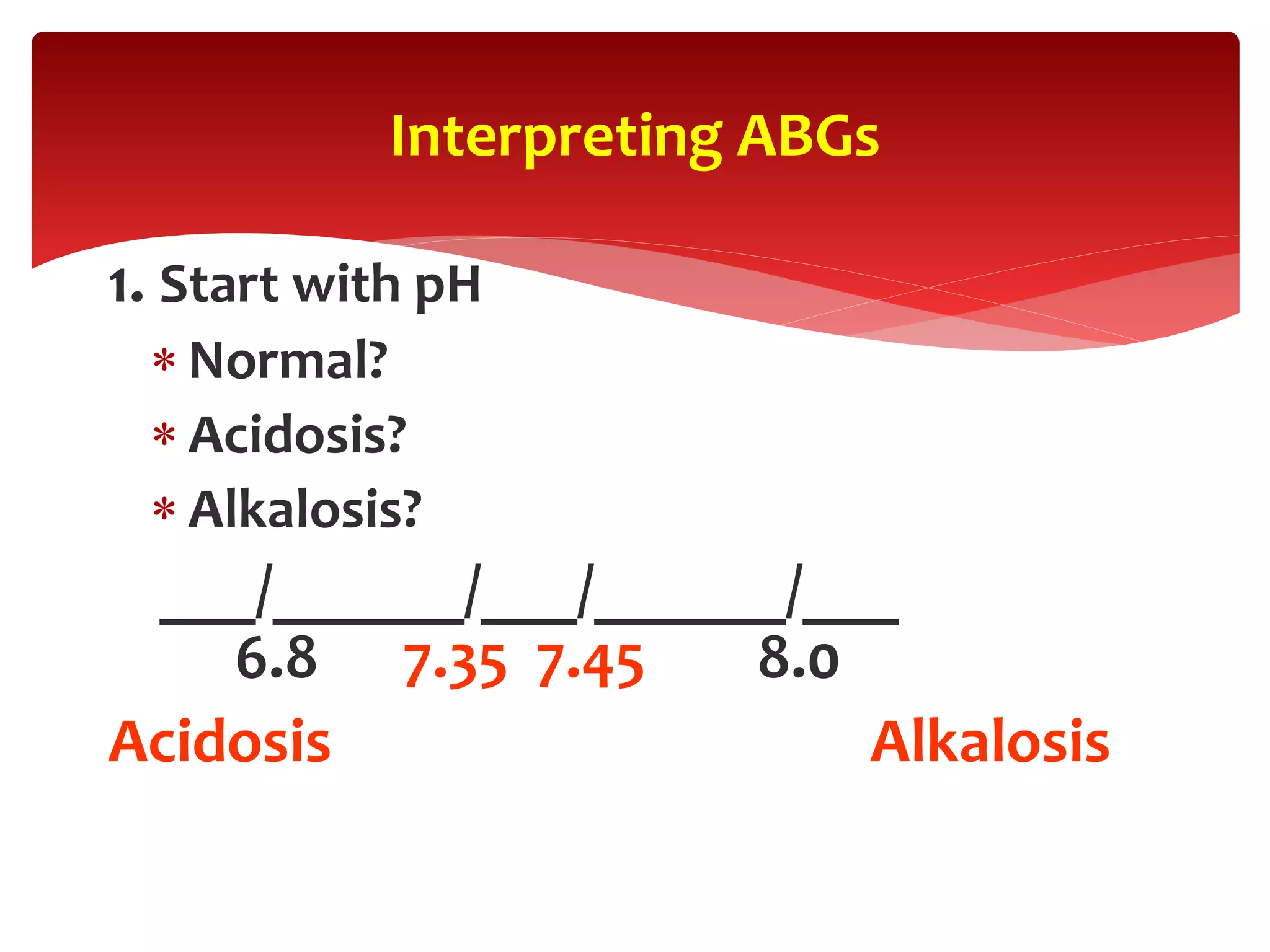
1. Start with pH
 Normal?
 Acidosis?
 Alkalosis?
___/______/___/______/___
6.8 7.35 7.45 8.0
Acidosis Alkalosis
Interpreting ABGs
2. Assess PaCO2
(respiratory value)
_____/________/______
35 45
Respiratory Respiratory
Alkalosis Acidosis
Interpreting ABGs
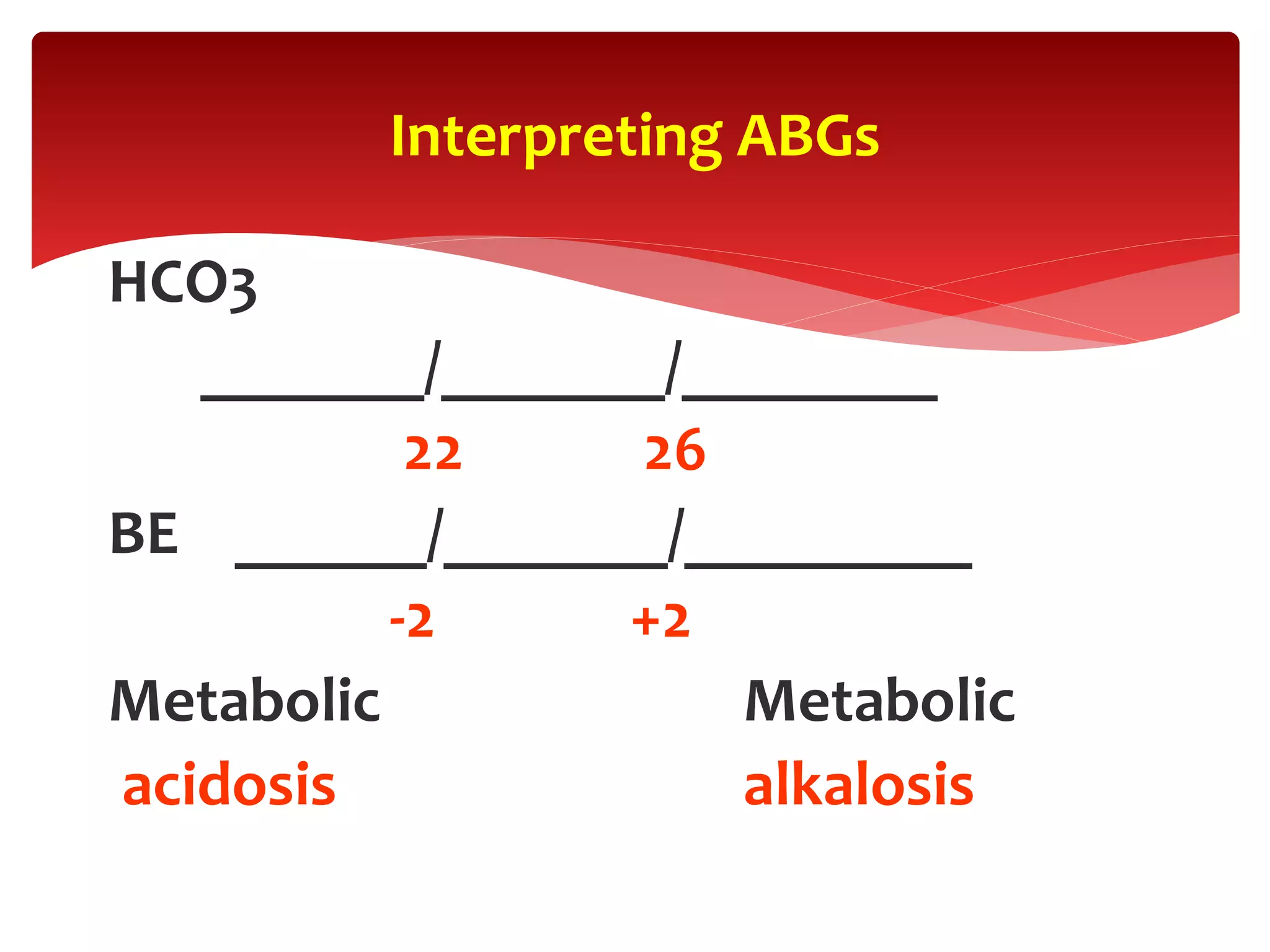
3. Evaluate metabolic indicators
Bicarbonate (HCO3) 22-26
and
Base excess (-2 to +2)
Interpreting ABGs
HCO3
_______/_______/________
22 26
BE ______/_______/_________
-2 +2
Metabolic Metabolic
acidosis alkalosis
Interpreting ABGs
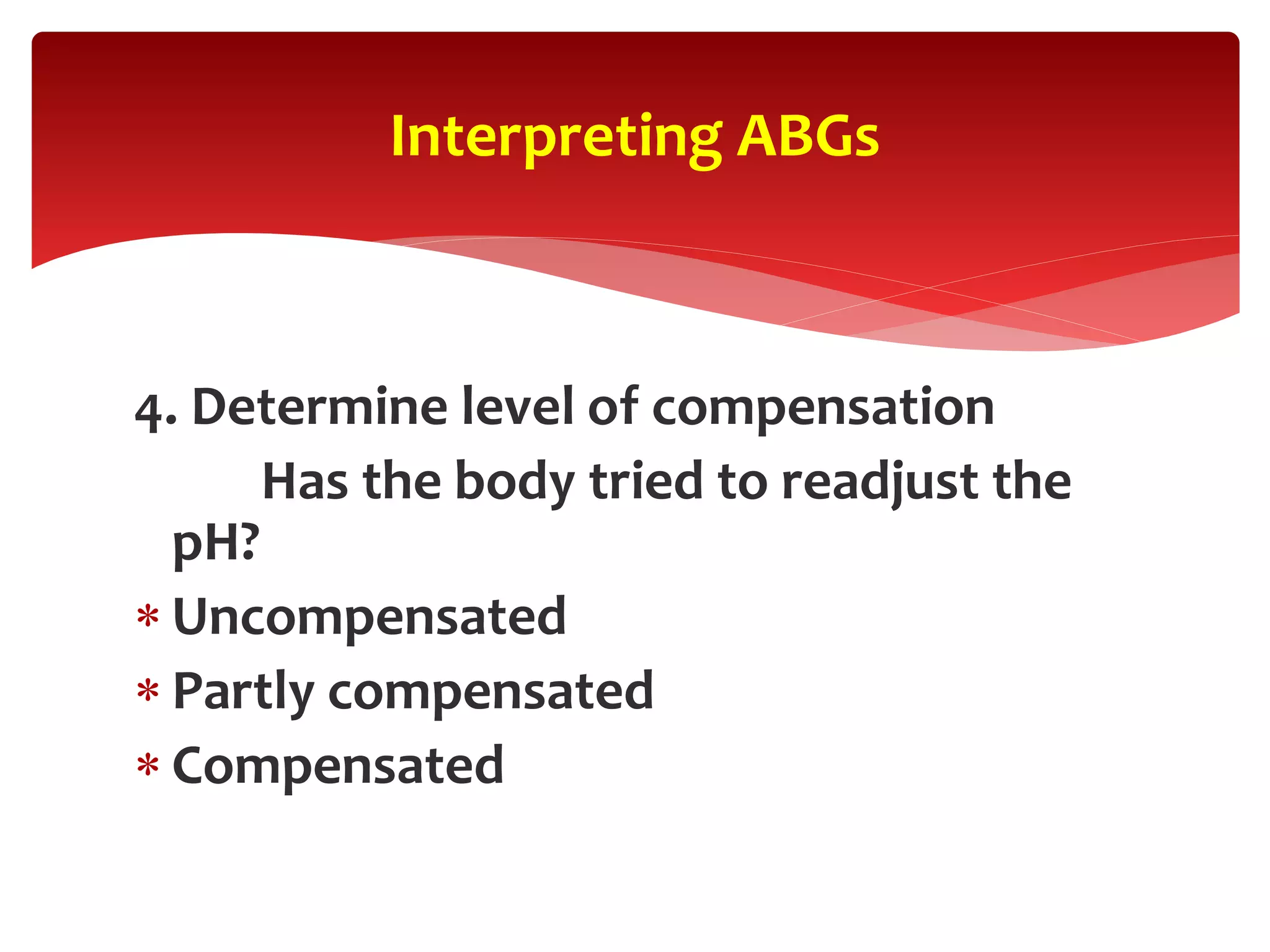
4. Determine level of compensation
Has the body tried to readjust the
pH?
 Uncompensated
 Partly compensated
 Compensated
Interpreting ABGs
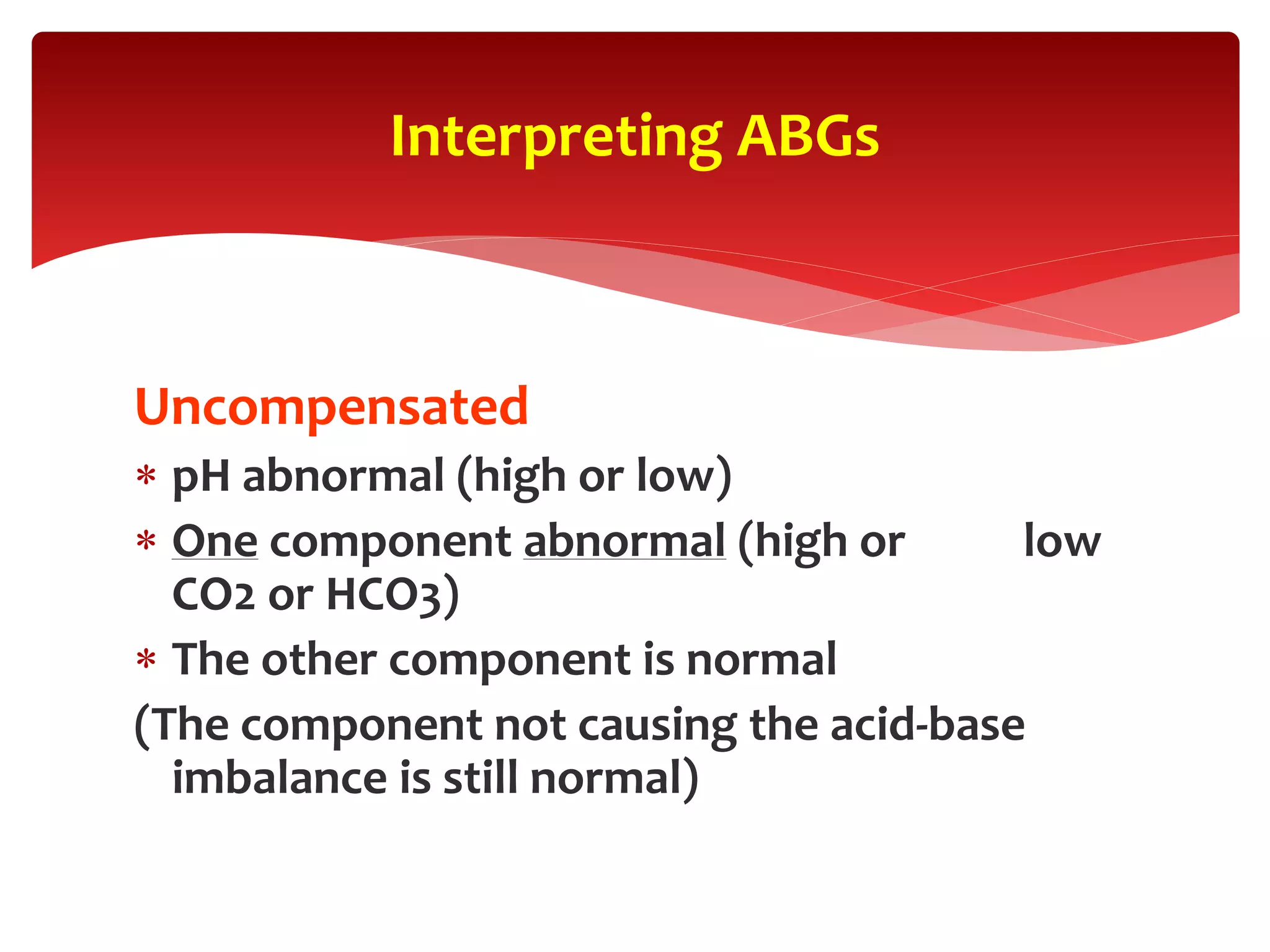
Uncompensated
 pH abnormal (high or low)
 One component abnormal (high or low
CO2 or HCO3)
 The other component is normal
(The component not causing the acid-base
imbalance is still normal)
Interpreting ABGs
Partly compensated
 pH not normal (but moving toward normal)
 Both CO2 and HCO3 are outside normal range
 The component that was normal is changing
in order to compensate
Compensated
 pH normal
 Other values abnormal in
opposite directions
 One is acidotic the other alkaline
Interpreting ABGs
 Determine amount of hypoxemia present
 Normal PaO2 (adults - room air)
 < 70 years = 75-100 mm Hg
70-79 = 70-100 mm Hg
 Drops 10 mm Hg for each decade
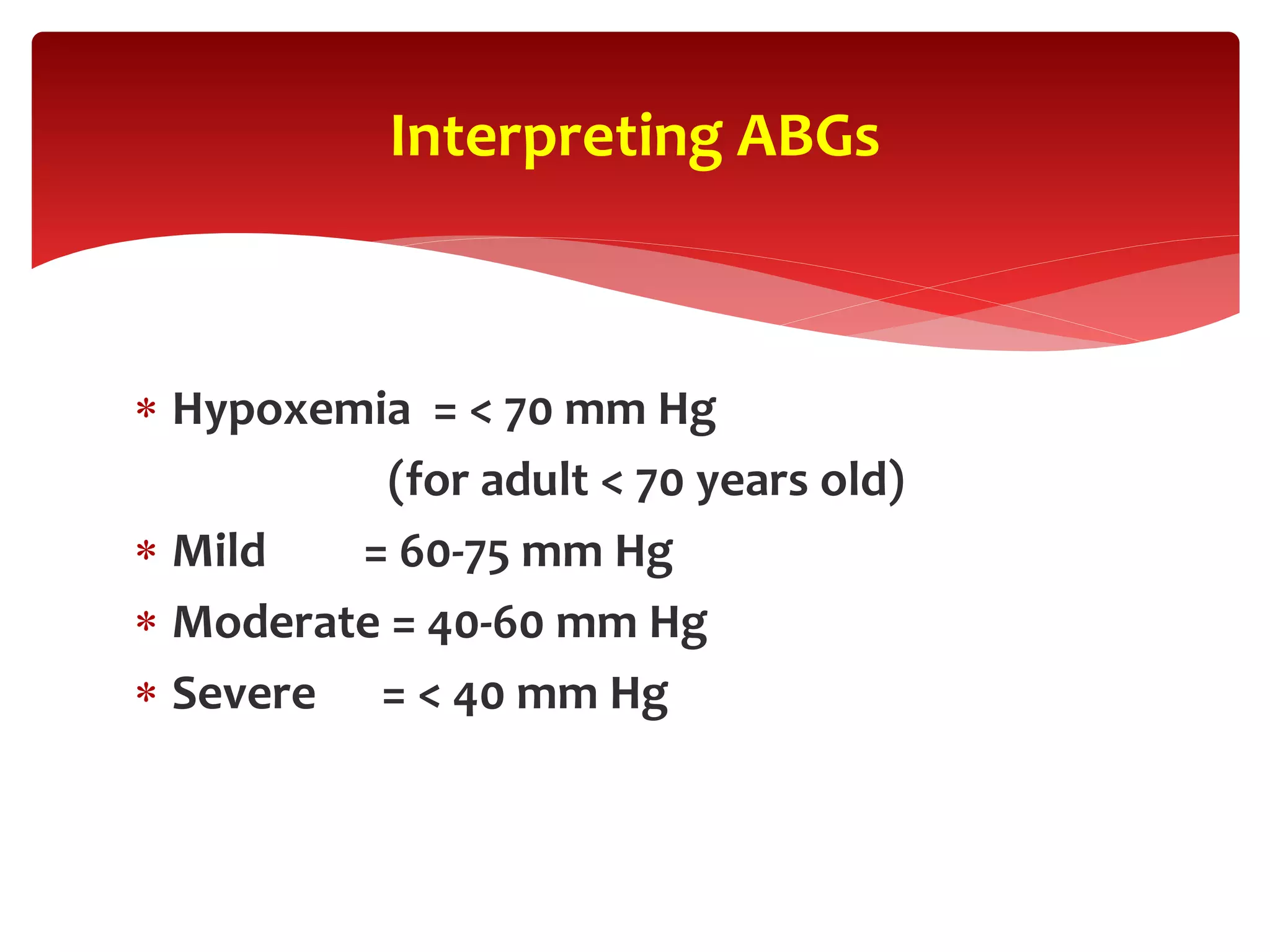
Interpreting ABGs
 Hypoxemia = < 70 mm Hg
(for adult < 70 years old)
 Mild = 60-75 mm Hg
 Moderate = 40-60 mm Hg
 Severe = < 40 mm Hg
Interpreting ABGs
 Oxygen saturation (pulse oximetry)
 93-100%
 < 91% confusion
 < 70% life threatening
Interpreting ABGs
 80 year old female with severe pneumonia,
fever
 pH = 7.25
 PaCO2 = 55 mm Hg
 HCO3 = 24 mEq/L
 PaO2 = 65 mm Hg
 O2 sat = 80%
Case 1
What is the problem?
Acidosis or alkalosis?
Respiratory or metabolic?
Compensated or not?
Level of hypoxemia?
Diagnoses?
Interventions?
Practice Problems
ACID NORMAL ALKALINE
_pH__________________________
_PaCO2_______________________
HCO3
Problem: _Respiratory acidosis___
Compensated? _Uncompensated_____
 Level of hypoxemia?
mild to normal….
 Diagnosis?
 Impaired gas exchange
 lung congestion Dx pneumonia.
 Assessment of breath sounds and respiratory rate
 Maintain patent airway
 Oxygen support, ventilation
 Positioning/turning 2 hrs
 Pulmonary hygiene
 IV antibiotic
Nursing Management
 Lab values
 ABGs - interpretation critical, reported first to nursing
staff then to doctor
 Electrolytes- coexisting imbalance almost
always present (Na, K+, Ca+)
 BUN, Creatinine, serum lactate
Assessment (cont.)
 Ineffective breathing pattern
 Impaired gas exchange
 Altered tissue perfusion (cerebral)
 Activity intolerance
 Altered thought processes
 Risk for injury
Diagnoses
 Monitor /interpret ABGs
 Correction of underlying problem
 Administer O2 as appropriate
 Positioning, pulmonary hygiene
 Hydration, appropriate IV solutions, electrolytes
(bicarbonate, KCl)
 Medications (antibiotics, bronchodilators, mucolytics,
diuretics).
Interventions
 Assessment of breath sounds and respiratory rate
 Maintain patent airway
 Oxygen support, ventilation
 Positioning/turning q 2 hrs
 Pulmonary hygiene (postural drainage, chest
clapping)
Nursing Management
Respiratory Acidosis
 Teach how to relieve/ prevent anxiety
 Calm environment
 Positioning for comfort
 Assist with relaxation techniques
 Protection from injury
 Education re: drug overdose, esp aspirin
Nursing Management
Respiratory Alkalosis
 Frequent assessment of vital signs esp respiratory
rate and rhythm (compensatory mechanisms)
 Safety precautions for confusion
 For ketoacidosis, sodium bicarbonate IV
 Education about diabetes
Nursing Management
Metabolic Acidosis
 Monitoring LOC and confusion
 Monitor serum electrolytes, ABG’s
 Administer K and Cl replacement as ordered
 Antiemetics to relieve vomiting
 Seizure precautions
 Teaching/monitoring of diuretic therapy
 Referrals re: eating disorders
Nursing Management
Metabolic Alkalosis
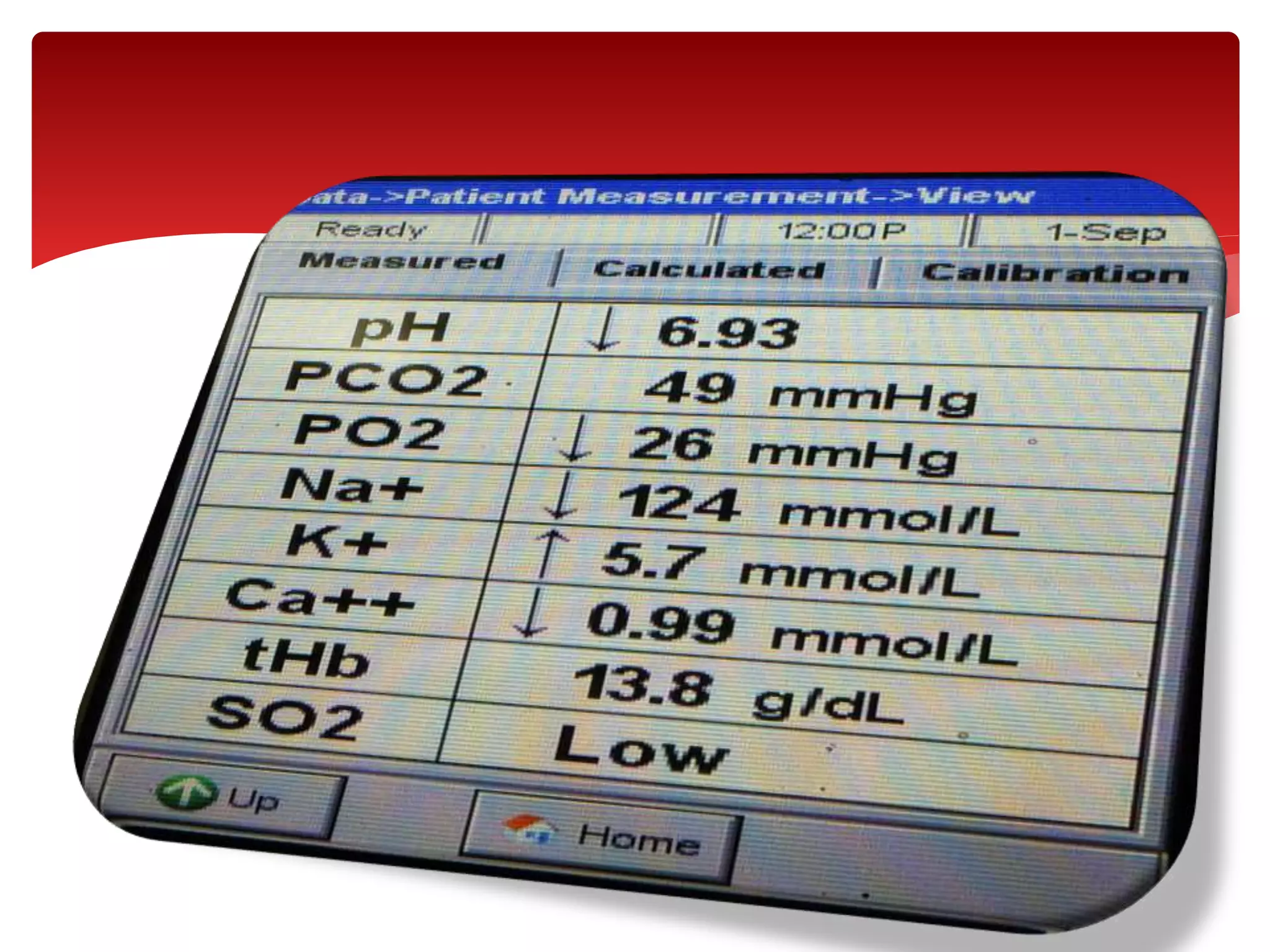
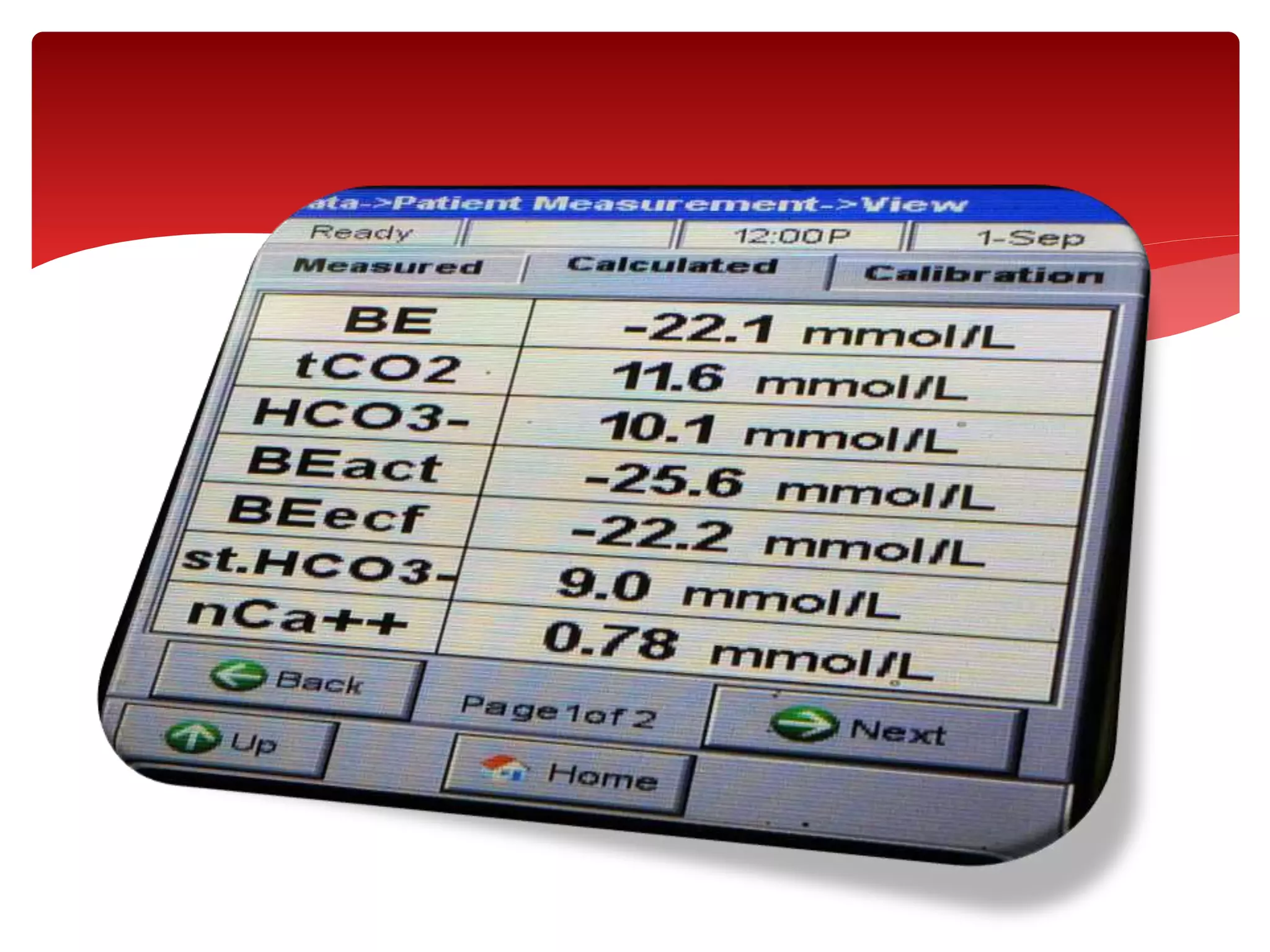
 Burn patient 70% (2nd & 3rd degree),with respiratory
distress on 2nd day arterial blood sampling shows:
Case 2
 According to ABG results so decision for mechanical
support was made.
 CPAP mode was chosen from start then changed to
fully assisted mode (APRV).
 Another sample was drawn from patient`s radial
artery & showed:
Thank you

Acid base balance (2).ppt

  • 1.
    Acid-Base Balance Dr. RadhwanHazem Alkhashab Consultant anaesthesia & ICU Aljamhori teaching hospital 2020
  • 2.
     Arterial bloodgas analysis is an essential part of diagnosing and managing a patient’s oxygenation status and acid-base balance. Introduction
  • 3.
     Oxygenation (PaO2).The PaO2 is the amount of oxygen dissolved in the blood and therefore provides initial information on the efficiency of oxygenation.  Ventilation (PaCO2). The adequacy of ventilation is inversely proportional to the PaCO2 .so that, when ventilation increases, PaCO2 decreases, and when ventilation decreases, PaCO2 increases.  Acid-base status (pH, HCO3, and base deficit [BD]). A plasma pH of >7.4 indicates alkalemia, and a pH of <7.35 indicates acidemia. Despite a normal pH, an underlying acidosis or alkalosis may still be present. Arterial blood gas (ABG) provides an assessment of the following:
  • 4.
     The pHis a measurement of the acidity or alkalinity of the blood.  It is inversely proportional to the number of hydrogen ions (H+) in the blood. The more H+ present, the lower the pH will be.  Likewise, the fewer H+ present, the higher the pH will be. The pH of a solution is measured on a scale from 1 (very acidic) to 14 (very alkalotic).
  • 5.
     A liquidwith a pH of 7, such as water, is neutral (neither acidic nor alkalotic).
  • 6.
     Acids &Bases  An acid is usually defined as a chemical species that can act as a proton (H + ) donor, whereas a base is a species that can act as a proton acceptor (Brönsted– Lowry definitions). Acids
  • 7.
     A strongacid is a substance that readily and almost irreversibly gives up an H + and increases [H + ], whereas a strong base avidly binds H + and decreases [H + ]. Strong acids& base
  • 8.
     In contrast,weak acids reversibly donate H + , whereas weak bases reversibly bind H + ; both weak acids and bases tend to have less of an effect on [H + ] (for a given concentration of the parent compound) than do strong acids and bases.
  • 9.
     these arecompounds that are only partially ionized in solution  Physiologically important acids include:  Carbonic acid (H2CO3)  Phosphoric acid (H3PO4)  Pyruvic acid (C3H4O3)  Lactic acid (C3H6O3)  These acids are dissolved in body fluids.  Physiologically important bases include:  Bicarbonate (HCO3 - )  Biphosphate (HPO4 -2 ) Weak Acids and Bases:
  • 10.
     Normal pH7.35-7.45  Narrow normal range  Compatible with life 6.8 - 8.0 ___/______/___/______/___ 6.8 7.35 7.45 8.0 Acid Alkaline Normal Acid-Base Balance
  • 11.
     pH isthe negative logarithm of the hydrogen ion concentration ([H]). pH is a convenient descriptor for power of hydrogen. Normally the [H] in extacellular fluid is 40 nmol/L, a very small number. By taking the negative log of this value we obtain a pH of 7.4. pH SCALE pH = -log10(H+)
  • 12.
    Low pH values= high H+ concentrations Unit changes in pH represent a tenfold change in H+ concentrations  Nature of logarithms pH SCALE
  • 13.
     pH =4 is more acidic than pH = 6  pH = 4 has 10 times more free H+ concentration than pH = 5 and 100 times more free H+ concentration than pH = 6 pH SCALE ACIDOSIS ALKALOSISNORMAL DEATH DEATH Venous Blood Arterial Blood 7.3 7.57.46.8 8.0
  • 14.
  • 15.
     Severe acidemiais defined as blood pH <7.20 and is associated with the following major effects: 1) Impairment of cardiac contractility, cardiac output, and the response to catecholamines. 2) Susceptibility to recurrent arrhythmias and lowering the threshold for ventricular fibrillation. 3) Arteriolar vasodilation resulting in hypotension Major consequences of acidemia.
  • 16.
    4) Vasoconstriction ofthe pulmonary vasculature, leading to increased pulmonary vascular resistance 5) Hyperventilation (a compensatory response) 6) Confusion, and coma 7) Insulin resistance 8) Inhibition of glycolysis and adenosine triphosphate synthesis 9) Hyperkalemia as potassium ions are shifted extracellularly
  • 17.
    Severe alkalemia isdefined as blood pH >7.60 and is associated with the following major effects: 1. Increased cardiac contractility until pH >7.7, when a decrease is seen. 2. Refractory ventricular arrhythmias. 3. Coronary artery spasm/vasoconstriction. 4. Vasodilation of the pulmonary vasculature, leading to decreased pulmonary vascular resistance Major consequences of alkalemia
  • 18.
    5. Hypoventilation (whichcan frustrate efforts to wean patients from mechanical ventilation). 6. Cerebral vasoconstriction 7. Neurologic manifestations such as headache, lethargy, delirium, stupor, tetany, and seizures 8. Hypokalemia, hypocalcemia, hypomagnesemia, and hypophosphatemia 9. Stimulation of anaerobic glycolysis and lactate production
  • 19.
     pH changeshave dramatic effects on normal cell function  1) Changes in excitability of nerve and muscle cells  2) Influences enzyme activity  3) Influences K+ levels ACIDOSIS / ALKALOSIS
  • 20.
     pH decrease(more acidic) depresses the central nervous system  Can lead to loss of consciousness  pH increase (more basic) can cause over- excitability  Tingling sensations, nervousness, muscle twitches CHANGES IN CELL EXCITABILITY
  • 21.
     pH increasesor decreases can alter the shape of the enzyme rendering it non-functional  Changes in enzyme structure can result in accelerated or depressed metabolic actions within the cell INFLUENCES ON ENZYME ACTIVITY
  • 22.
     When reabsorbingNa+ from the filtrate of the renal tubules K+ or H+ is secreted (exchanged)  Normally K+ is secreted in much greater amounts than H+ INFLUENCES ON K+ LEVELS K+ K+K+K+K+K+K+ Na+Na+Na+Na+Na+Na+ H+
  • 23.
     If H+concentrations are high (acidosis) than H+ is secreted in greater amounts  This leaves less K+ than usual excreted  The resultant K+ retention can affect cardiac function and other systems INFLUENCES ON K+ LEVELS K+K+K+ Na+Na+Na+Na+Na+Na+ H+H+H+H+H+H+H+ K+K+K+K+K+
  • 24.
    Balance maintained by: Bufferingsystems Lungs Kidneys Maintenance of Balance
  • 25.
    Chemical Buffers  Thebody uses pH buffers in the blood to guard against sudden changes in acidity  A pH buffer works chemically to minimize changes in the pH of a solution ACID-BASE REGULATION H+ OH- H+ H+ OH- OH- Buffer
  • 26.
     Prevent majorchanges in pH  Act as sponges…  3 main systems 1) Bicarbonate-carbonic acid buffer 2) Phosphate buffer 3) Protein buffer Buffer Systems H+ H+ H+
  • 27.
     Bicarbonate buffer-most important Active in ECF and ICF  Phosphate buffer Active in intracelluar fluid  Protein buffer- Largest buffer store Albumins and globulins Hemoglobin Buffer Systems
  • 28.
    Body’s major buffer Carbonicacid - H2CO3 (Acid) Bicarbonate - HCO3 (Base) 1 20 pH = 7.4 Bicarbonate-Carbonic Acid H2CO3 ……………… HCO3 24 mEq/L1.2 mEq/L
  • 29.
     Key concept Carbonic anhydrase equation CO2 +H2O H2CO3 H+ + HCO3 Carbon Carbonic Bicarbonate Dioxide Acid (ACID) (BASE) Regulation
  • 30.
     As CO2increases, carbonic acid increases, H+ ions increase  pH drops….. becomes more acidic CO2 +H2O H2CO3 H+ + HCO3 Carbonic Bicarbonate Acid CO2 H2CO3 H+ HCO3 (pH Acidic <7.35)
  • 31.
     As HCO3increases, H+ decreases  pH rises, becomes more alkaline CO2 +H2O H2CO3 H+ + HCO3 Carbonic Bicarbonate Acid (pH Basic >7.45)
  • 32.
    Lungs control CO2 Kidneyscontrol HCO3 Respiratory & Renal Regulation
  • 33.
     Respiratory Regulation When breathing is increased, the blood carbon dioxide level decreases and the blood becomes more basic  When breathing is decreased, the blood carbon dioxide level increases and the blood becomes more acidic  By adjusting the speed and depth of breathing, the respiratory control centers and lungs are able to regulate the blood pH minute by minute Respiratory Regulation
  • 34.
    Mechanism of control Excretion or retention of H+ or HCO3 Regulation….. Slow  Hours to days to change pH Renal Regulation
  • 35.
     Ratio of20 to 1 out of balance  Acidosis (acidemia)  pH falls below 7.35  Increase in blood carbonic acid or  Decrease in bicarbonate Acid-Base Imbalances
  • 36.
     Alkalosis (alkalemia) pH greater than 7.45  Increase in bicarbonate or  Decrease in carbonic acid Acid-Base Imbalances
  • 37.
     Acidosis andAlkalosis can arise in two fundamentally different ways:  1) Excess or deficit of CO2 (Volatile Acid)  Volatile Acid can be eliminated by the respiratory system  2) Excess or deficit of Fixed Acid  Fixed Acids cannot be eliminated by the respiratory system ACIDOSIS / ALKALOSIS
  • 38.
    Primary cause ororigin:  Metabolic Changes brought about by systemic alterations (cellular level)  Respiratory Changes brought about by respiratory alterations Acid-Base Imbalances
  • 39.
    Compensation  Corrective responseof kidneys and/or lungs Compensated  Restoration of pH and 20 : 1 ratio Uncompensated  Inability to adjust pH or 20 : 1 ratio Acid-Base Imbalances
  • 40.
     Respiratory Acidosis Respiratory Alkalosis  Metabolic Acidosis  Metabolic Alkalosis Four Basic Types of Imbalance
  • 41.
     Carbonic acidexcess  Exhaling of CO2 inhibited  Carbonic acid builds up  pH falls below 7.35  Cause = Hypoventilation Respiratory Acidosis H2CO3
  • 42.
     Caused byhypercapnia due to hypoventilation  Characterized by a pH decrease and an increase in CO2 RESPIRATORY ACIDOSIS CO2 CO2 CO2 CO2 CO2 CO2 CO2 CO2 CO2 CO2 CO2 CO2 CO2 pH pH
  • 43.
     The speedand depth of breathing control the amount of CO2 in the blood  Normally when CO2 builds up, the pH of the blood falls and the blood becomes acidic  High levels of CO2 in the blood stimulate the parts of the brain that regulate breathing, which in turn stimulate faster and deeper breathing RESPIRATORY ACIDOSIS
  • 44.
     Normal 1 20 7.4 Acid-BaseImbalances H2CO3 ……………… HCO3 24 mEq/L1.2 mEq/L
  • 45.
  • 46.
    Compensation: How? Opposite regulatingmechanism Problem = depressed breathing, build up of CO2 in blood Response - Kidney retains HCO3 (Response ….. Slow) Respiratory Acidosis
  • 47.
    RESPIRATORY ACIDOSIS -body’s compensation -kidneysconserve HCO3 - ions to restore the normal 40:2 ratio -kidneys eliminate H+ ion in acidic urine 2 30: HCO3 - H2CO3 HCO3 - H+ + acidic urine
  • 48.
    RESPIRATORY ACIDOSIS - therapyrequired to restore metabolic balance - lactate solution used in therapy is converted to bicarbonate ions in the liver H2CO3 HCO3 - 2 40: Lactate Lactate LIVER HCO3 -
  • 49.
     The treatmentof respiratory acidosis aims to improve the function of the lungs  Drugs to improve breathing may help people who have lung diseases such as asthma and emphysema RESPIRATORY ACIDOSIS
  • 50.
     Carbonic aciddeficit  Increased exhaling of CO2  Carbonic acid decreases  pH rises above 7.45  Cause = hyperventilation. Respiratory Alkalosis H2CO3
  • 51.
     Cause isHyperventilation  Leads to eliminating excessive amounts of CO2  Increased loss of CO2 from the lungs at a rate faster than it is produced  Decrease in H+ RESPIRATORY ALKALOSIS CO2 CO2 CO2 CO2 CO2 CO2 CO2 CO2 CO2 CO2 CO2 CO2
  • 52.
    Normal 1 20 7.4 Acid-Base Imbalances H2CO3……………… HCO3 24 mEq/L1.2 mEq/L
  • 53.
  • 54.
     Compensation:  Problem= excess “blowing off” of CO2  Result = decrease in carbonic acid and increase in HCO3  Response: Kidney excretes excess bicarbonate Respiratory Alkalosis
  • 55.
     Usually theonly treatment needed is to slow down the rate of breathing  Breathing into a paper bag or holding the breath as long as possible may help raise the blood CO2 content as the person breathes carbon dioxide back in after breathing it out RESPIRATORY ALKALOSIS
  • 56.
     Kidneys compensate by: Retaining hydrogen ions  Increasing bicarbonate excretion RESPIRATORY ALKALOSIS H+ HCO3 - HCO3 - HCO3 - HCO3 - HCO3 - HCO3 - HCO3 - HCO3 - HCO3 - HCO3 - H+ H+ H+ H+ H+ H+ H+ H+ H+ H+
  • 57.
    RESPIRATORY ALKALOSIS - Body’scompensation - Kidneys conserve H+ ions and eliminate HCO3 - in alkaline urine 0.5 15: HCO3 - Alkaline Urine
  • 58.
     Decreased CO2in the lungs will eventually slow the rate of breathing  Will permit a normal amount of CO2 to be retained in the lung RESPIRATORY ALKALOSIS
  • 59.
     Base-bicarbonate deficit Low pH (< 7.35)  Low plasma bicarbonate (base)  Cause = relative gain in H+ (lactic acidosis, ketoacidosis) or actual loss of HCO3 (renal failure, diarrhea) Metabolic Acidosis
  • 60.
     Any acid-baseimbalance not attributable to CO2 is classified as metabolic  Metabolic production of Acids  Or loss of Bases METABOLIC ACIDOSIS
  • 61.
     If anincrease in acid overwhelms the body's pH buffering system, the blood can become acidic  As the blood pH drops, breathing becomes deeper and faster as the body attempts to rid the blood of excess acid by decreasing the amount of carbon dioxide METABOLIC ACIDOSIS
  • 62.
     Eventually, thekidneys also try to compensate by excreting more acid in the urine  However, both mechanisms can be overwhelmed if the body continues to produce too much acid, leading to severe acidosis and eventually a coma METABOLIC ACIDOSIS
  • 63.
     The causesof metabolic acidosis can be grouped into four major categories  1) Ingesting an acid or a substance that is metabolized to acid  2) Abnormal Metabolism  3) Kidney Insufficiencies  4) Severe Diarrhea METABOLIC ACIDOSIS
  • 64.
    Normal 1 20 7.4 Acid-Base Imbalances H2CO3……………… HCO3 24 mEq/L1.2 mEq/L
  • 65.
     Kidney failure(decrease in bicarbonate) 1 10 7.10 Metabolic Acidosis
  • 66.
     Lactic acidosis,keto acidosis (increase acid… no change in bicarbonate) 1 10 7.10 Metabolic Acidosis
  • 67.
     Compensation:  Problem= low HCO3 (base) or high H+ ion (acid)  Response: Lungs hyperventilate  Get rid of CO2 (decrease PaCO2 and therefore raise level of HCO3) Metabolic Acidosis
  • 68.
    METABOLIC ACIDOSIS - body’scompensation - hyperactive breathing to “ blow off ” CO2 - kidneys conserve HCO3 - and eliminate H+ ions in acidic urine 0.75 10: CO2 CO2 + H2O HCO3 - + H+ HCO3 - + H+ Acidic urine
  • 69.
     Metabolic acidosismay be treated directly  If the acidosis is mild, intravenous fluids and treatment for the underlying disorder may be all that's needed METABOLIC ACIDOSIS
  • 70.
     When acidosisis severe, bicarbonate may be given intravenously  Bicarbonate provides only temporary relief and may cause harm METABOLIC ACIDOSIS
  • 71.
    METABOLIC ACIDOSIS - therapyrequired to restore metabolic balance - lactate solution used in therapy is converted to bicarbonate ions in the liver H2CO3 HCO3 - 0.5 10: Lactate Lactate containing solution
  • 72.
     Bicarbonate excess High pH (> 7.45)  Loss of H+ ion or gain of HCO3  Most common causes vomiting, gastric suctioning (NG tube)  Other: Abuse of antacids, K+ wasting diuretics Metabolic Alkalosis
  • 73.
     Reaction ofthe body to alkalosis is to lower pH by:  Retain CO2 by decreasing breathing rate  Kidneys increase the retention of H+ METABOLIC ALKALOSIS CO2 CO2 H+ H+ H+ H+
  • 74.
    METABOLIC ALKALOSIS - pH= 7.7 - HCO3 - increases because of loss of chloride ions or excess ingestion of NaHCO3 1 40:
  • 75.
    METABOLIC ALKALOSIS - body’scompensation - breathing suppressed to hold CO2 - kidneys conserve H+ ions and eliminate HCO3 - in alkaline urine 1.25 30 CO2 + H2O HCO3 - + H+ HCO3 - H+ + Alkaline urine :
  • 76.
    Normal 1 20 7.4 Acid-Base Imbalances H2CO3……………… HCO3 24 mEq/L1.2 mEq/L
  • 77.
  • 78.
     Compensation:  Problem= too much base  Response: Lungs compensate by hypoventilating  Retain CO2, increase PaCO2  Increase acid level in blood Metabolic Alkalosis
  • 79.
     pH 7.35- 7.45  PaCO2 35 - 45 mmHg  HCO3 22 - 26 mEq/L  Base Excess -2 - +2 mEq/L  PaO2 75 - 100 mm Hg  O2 saturation 93 - 100 % Assessing ABGs
  • 80.
     pH  Measurementof acidity or alkalinity, based on the hydrogen (H+) ions present.  The normal range is 7.35 to 7.45   PaO2  The partial pressure of oxygen that is dissolved in arterial blood.  The normal range is 75 to 100 mm Hg.   SaO2  The arterial oxygen saturation.  The normal range is 93% to 100%.   PaCO2  The amount of carbon dioxide dissolved in arterial blood.  The normal range is 35 to 45 mm Hg.  Components of the Arterial Blood Gas
  • 81.
     HCO3  Thecalculated value of the amount of bicarbonate in the bloodstream.  The normal range is 22 to 26 mEq/liter   B.E.  The base excess indicates the amount of excess or insufficient level of bicarbonate in the system.  The normal range is –2 to +2 mEq/liter.  (A negative base excess indicates a base deficit in the blood.)
  • 82.
     The aniongap (AG) estimates the presence of unmeasured anions. Excess inorganic and organic anions that are not readily measured by standard assays are termed unmeasured anions. The AG is a tool used to further classify a metabolic acidosis as an AG metabolic acidosis (elevated AG) or a non-AG metabolic acidosis (normal AG). This distinction narrows the differential diagnosis.  The AG is the difference between the major serum cations and anions  that are routinely measured:  AG = Na-(HCO3+CL)  A normal value is 12 mEq/L 4 mEq/L. The anion gap
  • 83.
     Nonanion gapmetabolic acidosis results from loss of Na and K or accumulation of Cl. The result of these processes is a decrease in HCO3:  Iatrogenic administration of hyperchloremic solutions (hyperchloremic metabolic acidosis)  Alkaline gastrointestinal losses  Renal tubular acidosis  Ureteric diversion through ileal conduit  Endocrine abnormalities MAJOR CAUSES OF A NONANION GAP METABOLIC ACIDOSIS
  • 84.
    1. Start withpH  Normal?  Acidosis?  Alkalosis? ___/______/___/______/___ 6.8 7.35 7.45 8.0 Acidosis Alkalosis Interpreting ABGs
  • 85.
    2. Assess PaCO2 (respiratoryvalue) _____/________/______ 35 45 Respiratory Respiratory Alkalosis Acidosis Interpreting ABGs
  • 86.
    3. Evaluate metabolicindicators Bicarbonate (HCO3) 22-26 and Base excess (-2 to +2) Interpreting ABGs
  • 87.
    HCO3 _______/_______/________ 22 26 BE ______/_______/_________ -2+2 Metabolic Metabolic acidosis alkalosis Interpreting ABGs
  • 88.
    4. Determine levelof compensation Has the body tried to readjust the pH?  Uncompensated  Partly compensated  Compensated Interpreting ABGs
  • 89.
    Uncompensated  pH abnormal(high or low)  One component abnormal (high or low CO2 or HCO3)  The other component is normal (The component not causing the acid-base imbalance is still normal) Interpreting ABGs
  • 90.
    Partly compensated  pHnot normal (but moving toward normal)  Both CO2 and HCO3 are outside normal range  The component that was normal is changing in order to compensate
  • 91.
    Compensated  pH normal Other values abnormal in opposite directions  One is acidotic the other alkaline Interpreting ABGs
  • 92.
     Determine amountof hypoxemia present  Normal PaO2 (adults - room air)  < 70 years = 75-100 mm Hg 70-79 = 70-100 mm Hg  Drops 10 mm Hg for each decade Interpreting ABGs
  • 93.
     Hypoxemia =< 70 mm Hg (for adult < 70 years old)  Mild = 60-75 mm Hg  Moderate = 40-60 mm Hg  Severe = < 40 mm Hg Interpreting ABGs
  • 94.
     Oxygen saturation(pulse oximetry)  93-100%  < 91% confusion  < 70% life threatening Interpreting ABGs
  • 95.
     80 yearold female with severe pneumonia, fever  pH = 7.25  PaCO2 = 55 mm Hg  HCO3 = 24 mEq/L  PaO2 = 65 mm Hg  O2 sat = 80% Case 1
  • 96.
    What is theproblem? Acidosis or alkalosis? Respiratory or metabolic? Compensated or not? Level of hypoxemia? Diagnoses? Interventions? Practice Problems
  • 97.
  • 98.
     Level ofhypoxemia? mild to normal….  Diagnosis?  Impaired gas exchange  lung congestion Dx pneumonia.
  • 99.
     Assessment ofbreath sounds and respiratory rate  Maintain patent airway  Oxygen support, ventilation  Positioning/turning 2 hrs  Pulmonary hygiene  IV antibiotic Nursing Management
  • 100.
     Lab values ABGs - interpretation critical, reported first to nursing staff then to doctor  Electrolytes- coexisting imbalance almost always present (Na, K+, Ca+)  BUN, Creatinine, serum lactate Assessment (cont.)
  • 101.
     Ineffective breathingpattern  Impaired gas exchange  Altered tissue perfusion (cerebral)  Activity intolerance  Altered thought processes  Risk for injury Diagnoses
  • 102.
     Monitor /interpretABGs  Correction of underlying problem  Administer O2 as appropriate  Positioning, pulmonary hygiene  Hydration, appropriate IV solutions, electrolytes (bicarbonate, KCl)  Medications (antibiotics, bronchodilators, mucolytics, diuretics). Interventions
  • 103.
     Assessment ofbreath sounds and respiratory rate  Maintain patent airway  Oxygen support, ventilation  Positioning/turning q 2 hrs  Pulmonary hygiene (postural drainage, chest clapping) Nursing Management Respiratory Acidosis
  • 104.
     Teach howto relieve/ prevent anxiety  Calm environment  Positioning for comfort  Assist with relaxation techniques  Protection from injury  Education re: drug overdose, esp aspirin Nursing Management Respiratory Alkalosis
  • 105.
     Frequent assessmentof vital signs esp respiratory rate and rhythm (compensatory mechanisms)  Safety precautions for confusion  For ketoacidosis, sodium bicarbonate IV  Education about diabetes Nursing Management Metabolic Acidosis
  • 106.
     Monitoring LOCand confusion  Monitor serum electrolytes, ABG’s  Administer K and Cl replacement as ordered  Antiemetics to relieve vomiting  Seizure precautions  Teaching/monitoring of diuretic therapy  Referrals re: eating disorders Nursing Management Metabolic Alkalosis
  • 107.
     Burn patient70% (2nd & 3rd degree),with respiratory distress on 2nd day arterial blood sampling shows: Case 2
  • 110.
     According toABG results so decision for mechanical support was made.  CPAP mode was chosen from start then changed to fully assisted mode (APRV).  Another sample was drawn from patient`s radial artery & showed:
  • 113.