MUSCULOSKELET
AL TRAUMA
OVERVIEW
๏‚จ Fractures
๏‚จ Dislocations
๏‚จ Soft tissue injury
FRACTURES
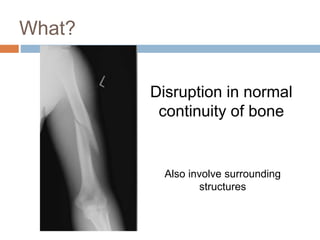
What?
Disruption in normal
continuity of bone
Also involve surrounding
structures
Pathophysiology
๏‚จ d/t mechanical overload
๏‚จ More stress than bone can absorb
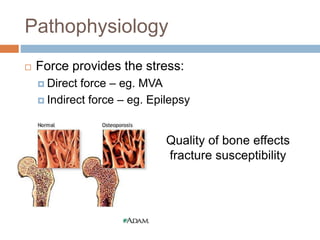
Pathophysiology
๏‚จ Force provides the stress:
๏‚ค Direct force โ€“ eg. MVA
๏‚ค Indirect force โ€“ eg. Epilepsy
Quality of bone effects
fracture susceptibility
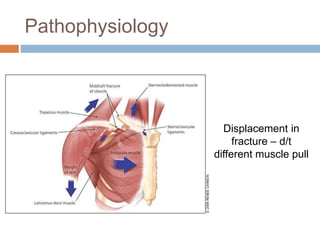
Pathophysiology
Displacement in
fracture โ€“ d/t
different muscle pull
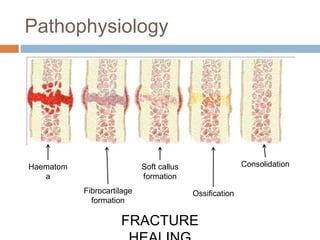
Pathophysiology
Haematom
a
Fibrocartilage
formation
Soft callus
formation
Ossification
Consolidation
FRACTURE
Manifestations, assessment &
diagnosis
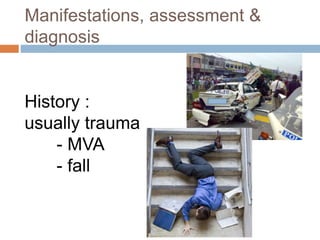
History :
usually trauma
- MVA
- fall
Manifestations, assessment &
diagnosis
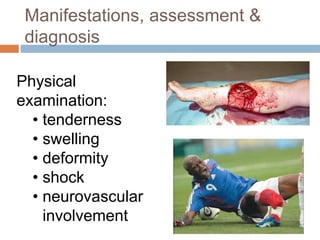
Physical
examination:
โ€ข tenderness
โ€ข swelling
โ€ข deformity
โ€ข shock
โ€ข neurovascular
involvement
Manifestations, assessment &
diagnosis
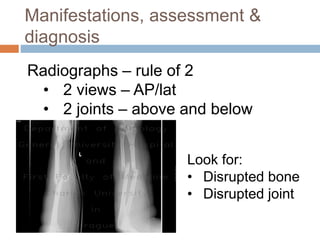
Radiographs โ€“ rule of 2
โ€ข 2 views โ€“ AP/lat
โ€ข 2 joints โ€“ above and below
Look for:
โ€ข Disrupted bone
โ€ข Disrupted joint
Manifestations, assessment &
diagnosis
๏‚จ Diagnosis is obvious esp. with h/o
MVA or fall
๏‚จ Fracture classification extensive:
๏‚คe.g: Open fracture (Gustilo))
๏ฎGrade I โ€“ wound <1cm, minimal
contamination
๏ฎGrade II โ€“ wound >1cm, moderate
contmination
๏ฎGrade III โ€“ wound >1cm with extensive
soft tissue damage and high degree
contamination
Clinical management
๏‚จ Thorough initial management
๏‚จ Reduction and stabilization of fracture
๏‚จ Monitoring of complications
๏‚จ Remobilization and rehabilitation
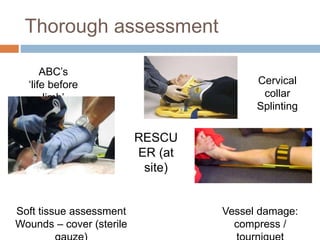
Thorough assessment
RESCU
ER (at
site)
ABCโ€™s
โ€˜life before
limbโ€™
Cervical
collar
Splinting
Soft tissue assessment
Wounds โ€“ cover (sterile
Vessel damage:
compress /
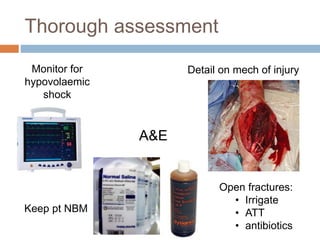
Thorough assessment
A&E
Monitor for
hypovolaemic
shock
Detail on mech of injury
Open fractures:
โ€ข Irrigate
โ€ข ATT
โ€ข antibiotics
Keep pt NBM
Reduction & stabilization
๏‚จ AIM:
๏‚ค Restore alignment
๏‚ค Restore position
๏‚ค Restore length
๏‚จ HOW?
๏‚ค Closed manipulative reduction (CMR)
๏‚ค Open reduction and internal fixation (ORIF)
๏‚ค External fixation (ext-fix)
๏‚ค Traction
Reduction & stabilization - CMR
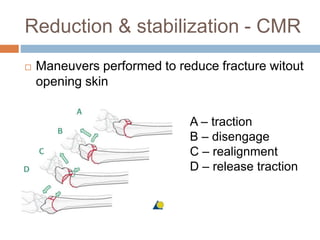
๏‚จ Maneuvers performed to reduce fracture witout
opening skin
A โ€“ traction
B โ€“ disengage
C โ€“ realignment
D โ€“ release traction
Reduction & stabilization - CMR
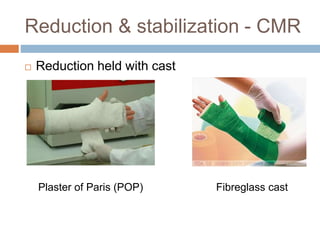
๏‚จ Reduction held with cast
Plaster of Paris (POP) Fibreglass cast
Reduction & stabilization - ORIF
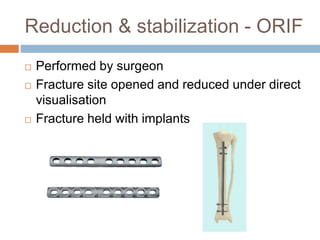
๏‚จ Performed by surgeon
๏‚จ Fracture site opened and reduced under direct
visualisation
๏‚จ Fracture held with implants
Reduction & stabilization โ€“ ext-
fix
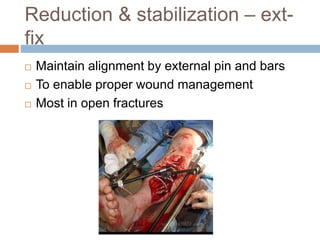
๏‚จ Maintain alignment by external pin and bars
๏‚จ To enable proper wound management
๏‚จ Most in open fractures
Reduction & stabilization -
traction
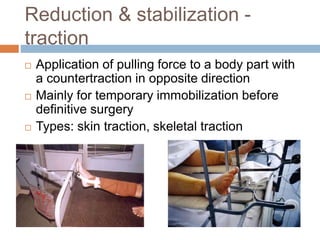
๏‚จ Application of pulling force to a body part with
a countertraction in opposite direction
๏‚จ Mainly for temporary immobilization before
definitive surgery
๏‚จ Types: skin traction, skeletal traction
to look out forโ€ฆ.
Complications
Compartment syndrome
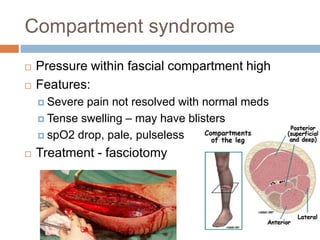
๏‚จ Pressure within fascial compartment high
๏‚จ Features:
๏‚ค Severe pain not resolved with normal meds
๏‚ค Tense swelling โ€“ may have blisters
๏‚ค spO2 drop, pale, pulseless
๏‚จ Treatment - fasciotomy
Fat embolism syndrome
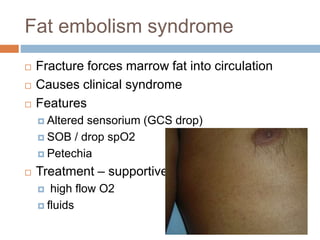
๏‚จ Fracture forces marrow fat into circulation
๏‚จ Causes clinical syndrome
๏‚จ Features
๏‚ค Altered sensorium (GCS drop)
๏‚ค SOB / drop spO2
๏‚ค Petechia
๏‚จ Treatment โ€“ supportive
๏‚ค high flow O2
๏‚ค fluids
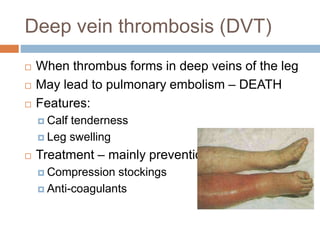
Deep vein thrombosis (DVT)
๏‚จ When thrombus forms in deep veins of the leg
๏‚จ May lead to pulmonary embolism โ€“ DEATH
๏‚จ Features:
๏‚ค Calf tenderness
๏‚ค Leg swelling
๏‚จ Treatment โ€“ mainly prevention
๏‚ค Compression stockings
๏‚ค Anti-coagulants
DISLOCATIONS
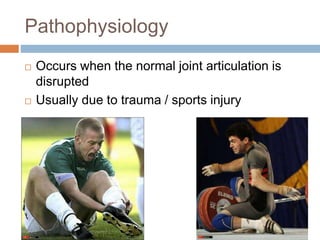
Pathophysiology
๏‚จ Occurs when the normal joint articulation is
disrupted
๏‚จ Usually due to trauma / sports injury
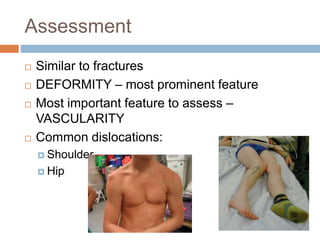
Assessment
๏‚จ Similar to fractures
๏‚จ DEFORMITY โ€“ most prominent feature
๏‚จ Most important feature to assess โ€“
VASCULARITY
๏‚จ Common dislocations:
๏‚ค Shoulder
๏‚ค Hip
Clinical management
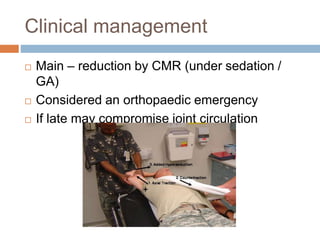
๏‚จ Main โ€“ reduction by CMR (under sedation /
GA)
๏‚จ Considered an orthopaedic emergency
๏‚จ If late may compromise joint circulation
SOFT TISSUE INJURIES
Strains
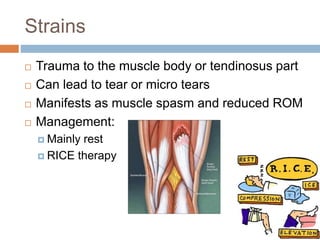
๏‚จ Trauma to the muscle body or tendinosus part
๏‚จ Can lead to tear or micro tears
๏‚จ Manifests as muscle spasm and reduced ROM
๏‚จ Management:
๏‚ค Mainly rest
๏‚ค RICE therapy
Sprains
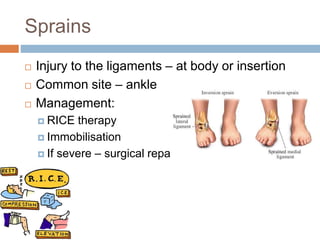
๏‚จ Injury to the ligaments โ€“ at body or insertion
๏‚จ Common site โ€“ ankle
๏‚จ Management:
๏‚ค RICE therapy
๏‚ค Immobilisation
๏‚ค If severe โ€“ surgical repair
Questions?
THANK YOUโ€ฆ

Musculoskeletal trauma lecture