A Case study on Technology Management. Divya Sindhu Lekha M. Tech (TM) ‘08-’10
Technology Management “Set of management disciplines that allows organization to manage its technological fundamentals to create competitive advantage.” “The integrated planning, design, optimization, operation and control of technological products, processes and services.”
Hewlett Packard Stanford University classmates Bill Hewlett and Dave Packard founded HP in 1939.  The company's first product was an audio oscillator—an electronic test instrument used by sound engineers.  Technology Portfolio:  Personal systems, Imaging & Printing, Technology solutions, Financial Services, HP Labs. Over 1billion customers in 178 countries worldwide. 2009 Fortune 500 ranking: No. 9.
Concepts Technology Base Technology Cycle Technology Transfer Technology Diffusion Knowledge Mapping
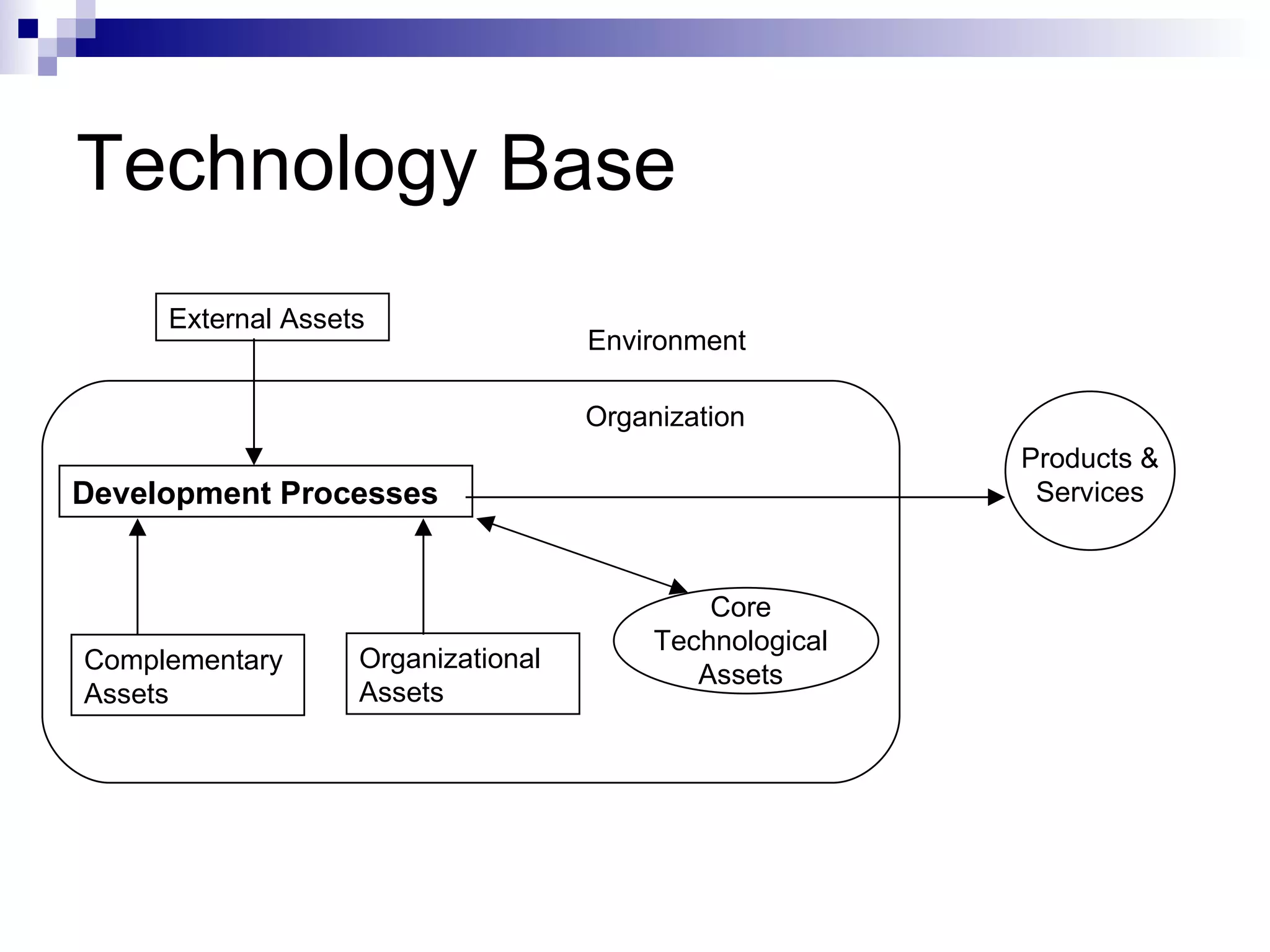
Technology Base Development Processes Complementary Assets Organizational Assets Core Technological Assets Products & Services External Assets Environment Organization
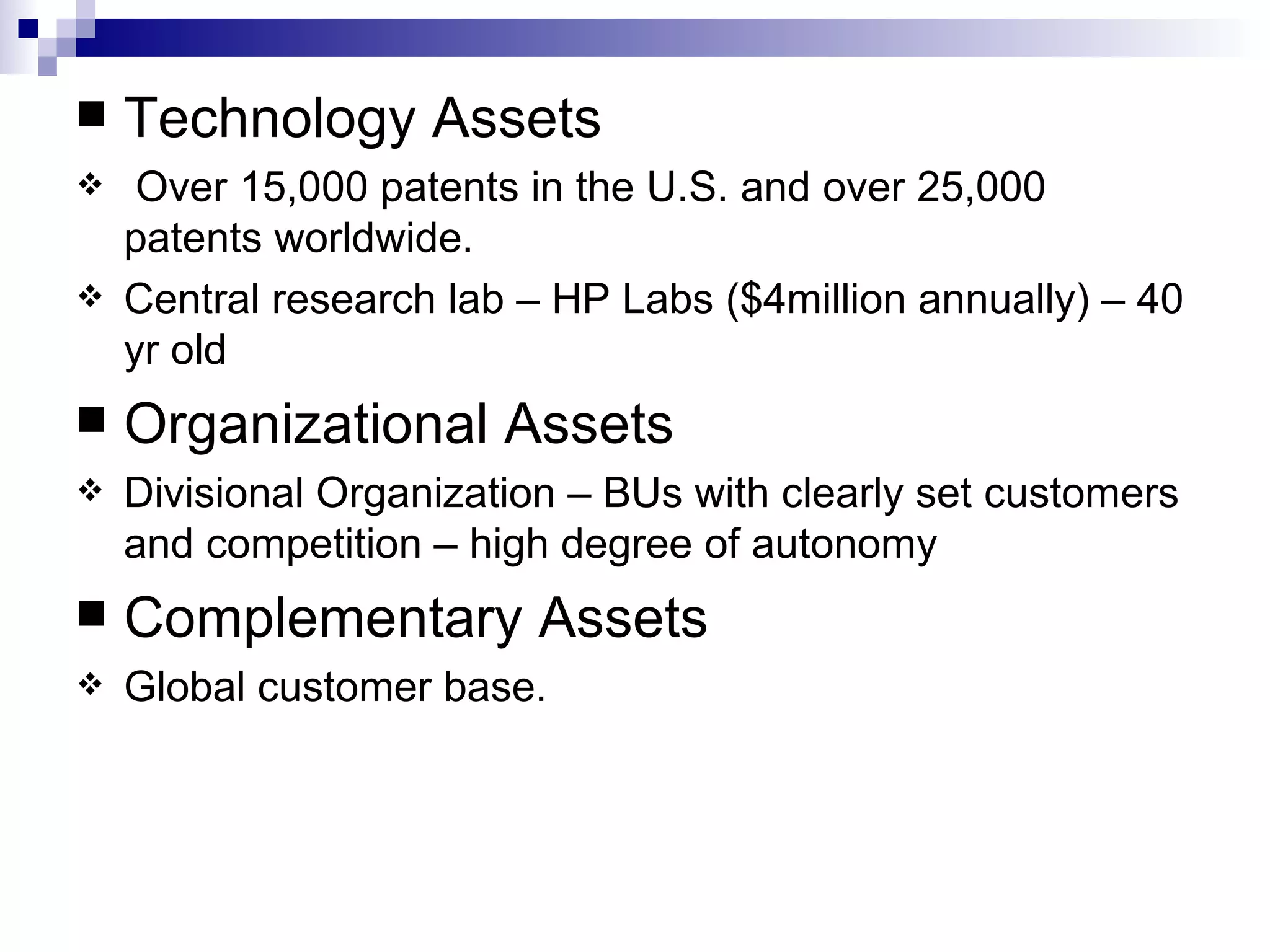
Technology Assets Over 15,000 patents in the U.S. and over 25,000 patents worldwide. Central research lab – HP Labs ($4million annually) – 40 yr old Organizational Assets Divisional Organization – BUs with clearly set customers and competition – high degree of autonomy Complementary Assets Global customer base.
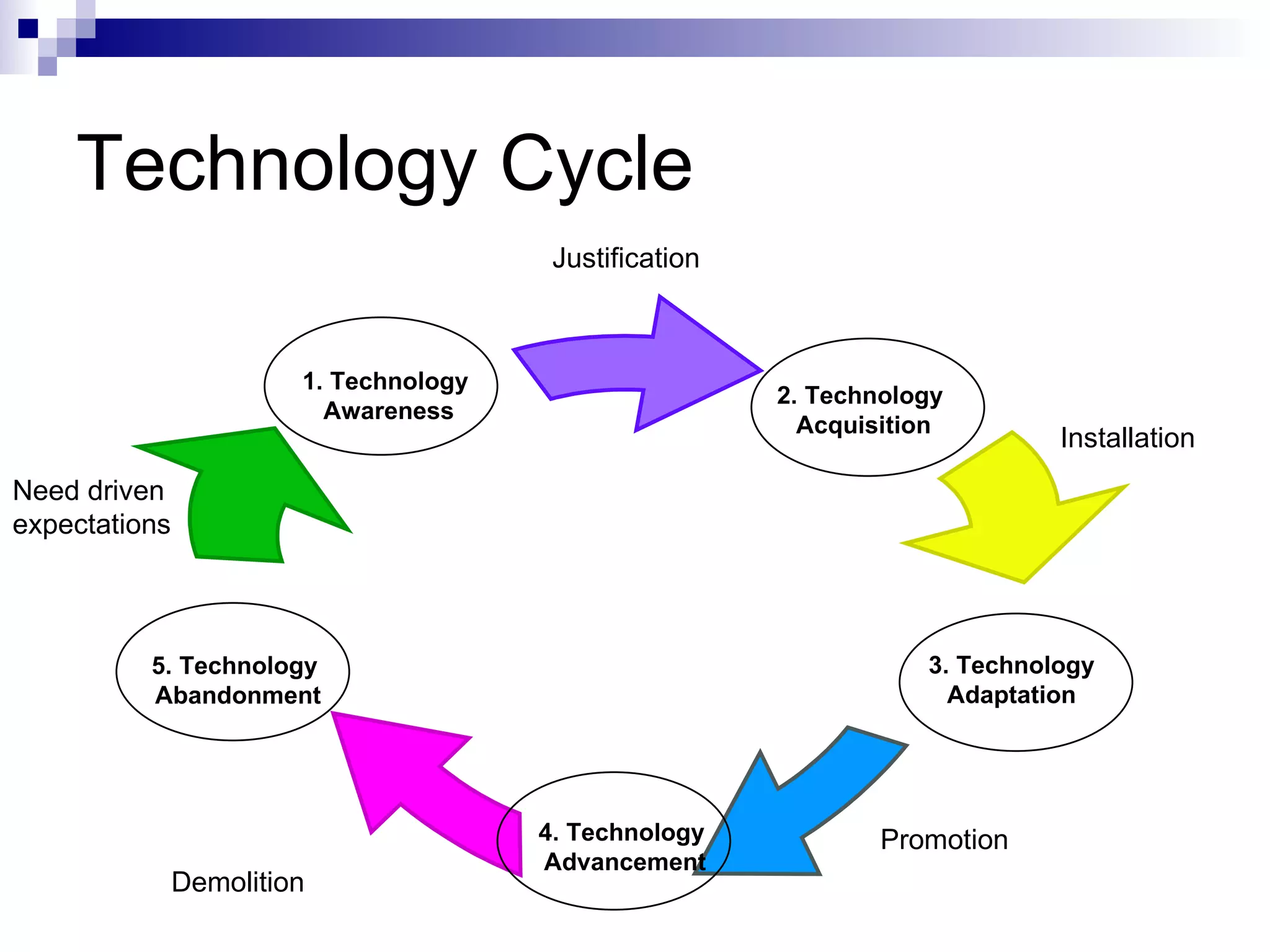
Technology Cycle Justification Installation Promotion Demolition Need driven expectations 1. Technology Awareness 4. Technology  Advancement 5. Technology  Abandonment 3. Technology Adaptation 2. Technology  Acquisition
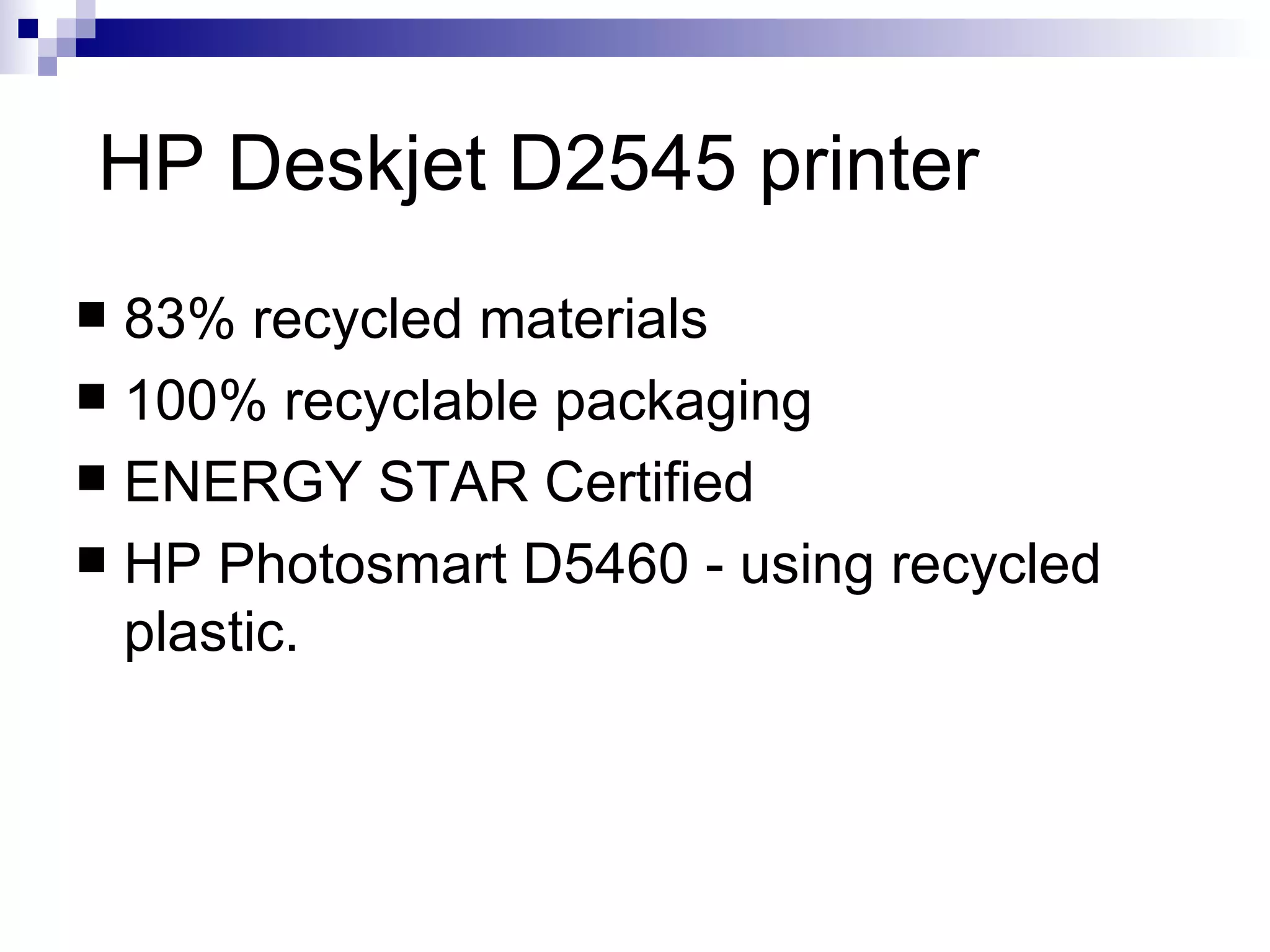
HP Deskjet D2545 printer 83% recycled materials 100% recyclable packaging ENERGY STAR Certified HP Photosmart D5460 - using recycled plastic.
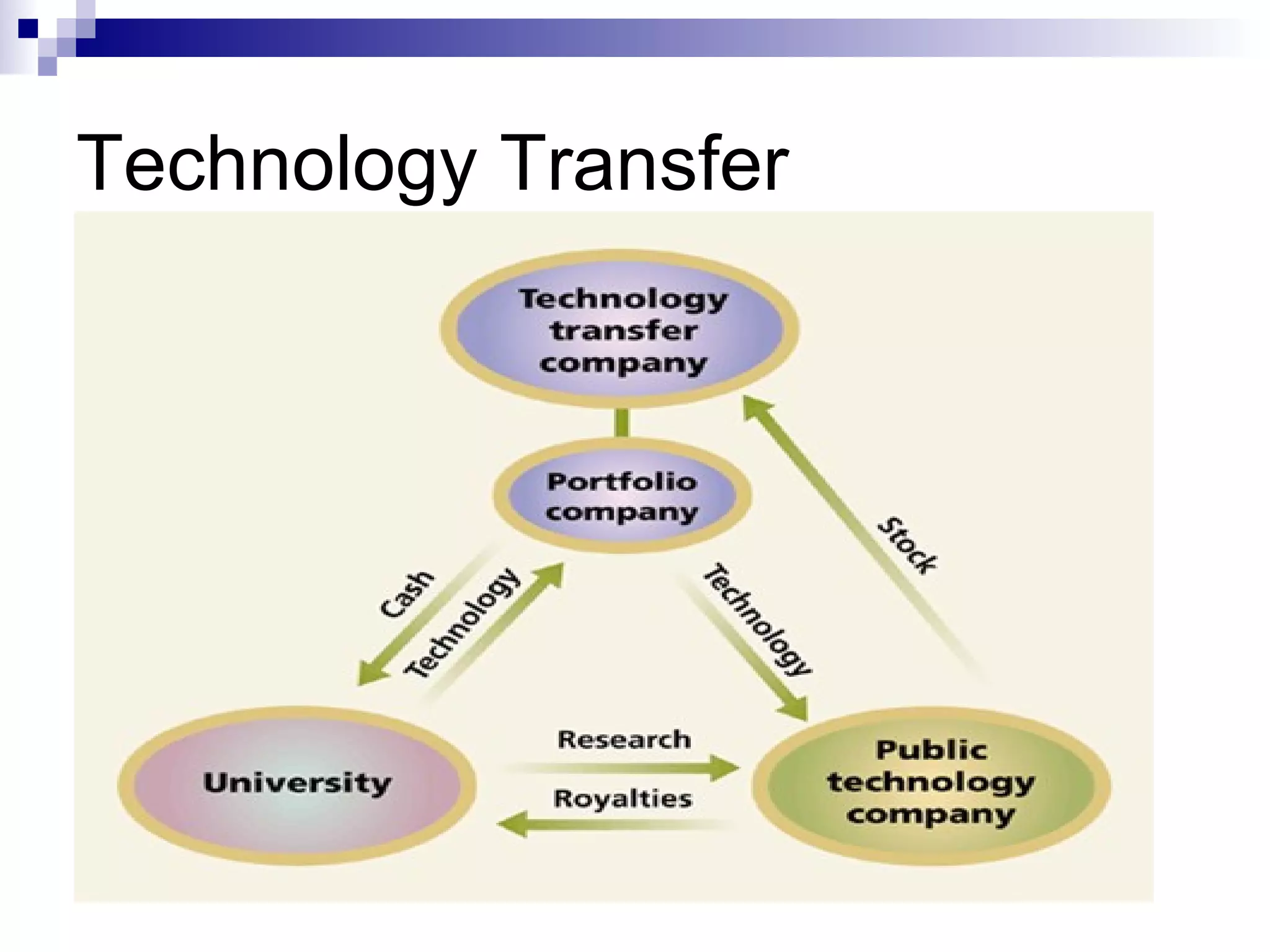
Technology Transfer
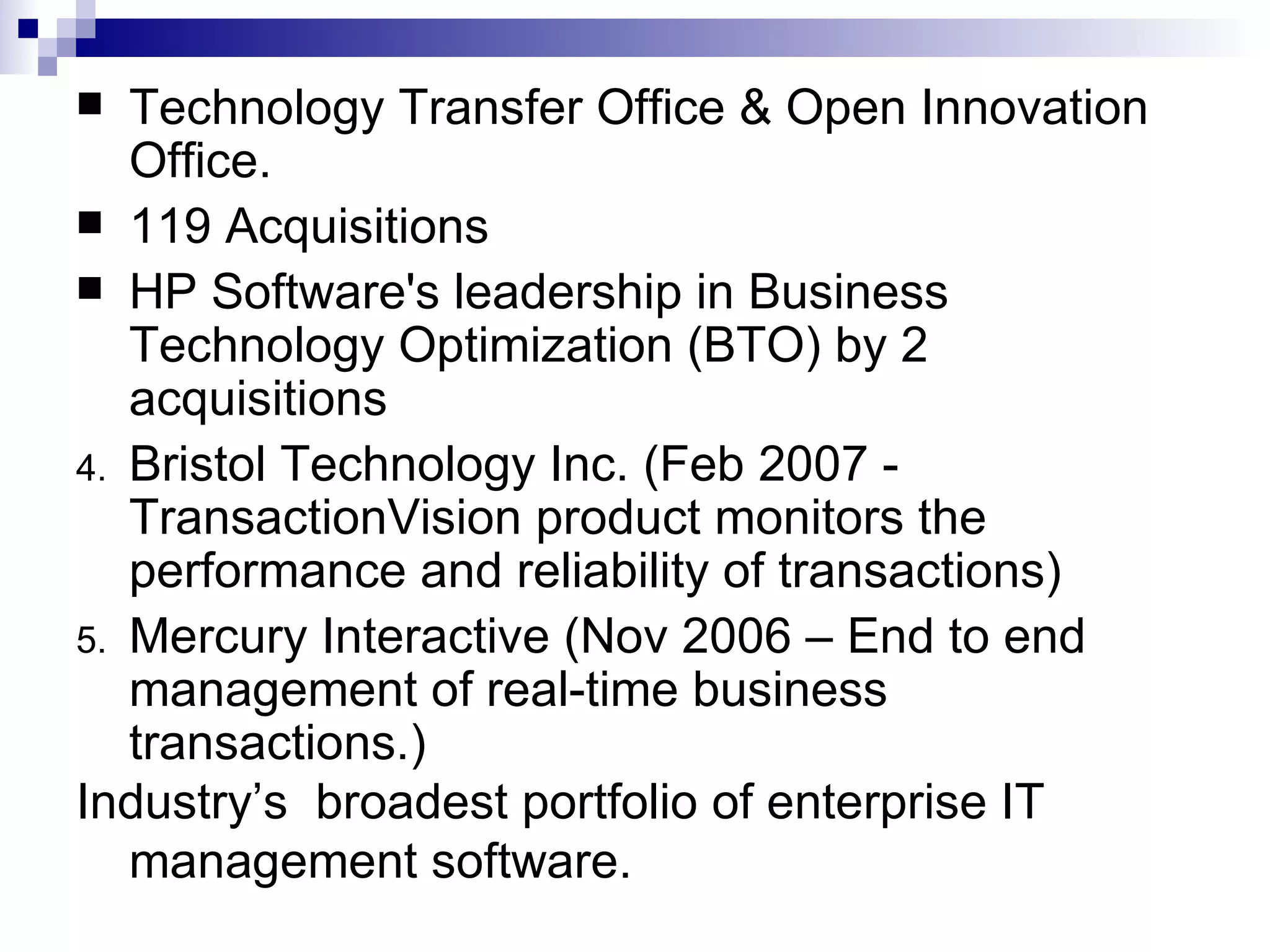
Technology Transfer Office & Open Innovation Office. 119 Acquisitions HP Software's leadership in Business Technology Optimization (BTO) by 2 acquisitions  Bristol Technology Inc. (Feb 2007 - TransactionVision product monitors the performance and reliability of transactions) Mercury Interactive (Nov 2006 – End to end management of real-time business transactions.) Industry’s  broadest portfolio of enterprise IT management software.
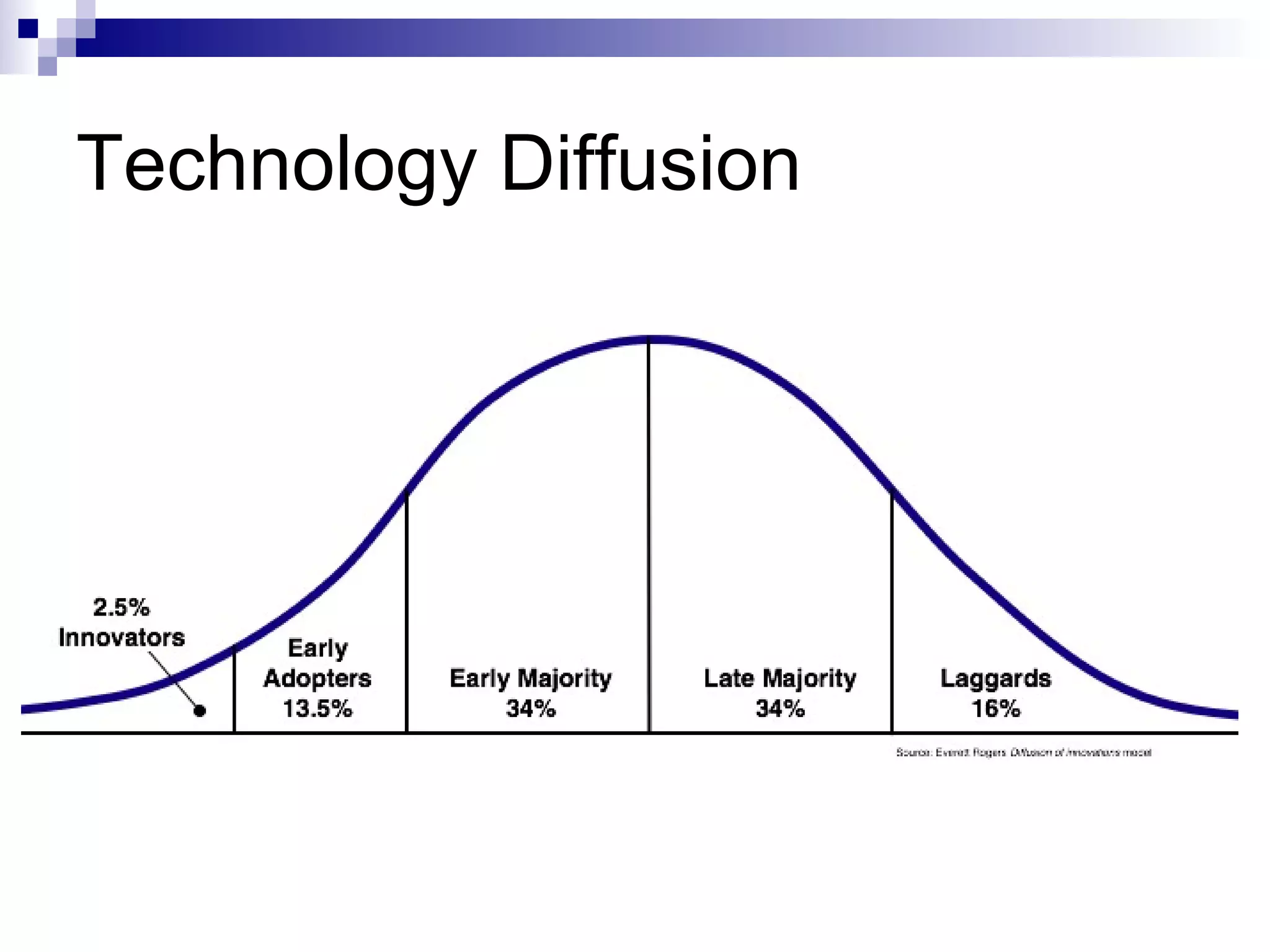
Technology Diffusion
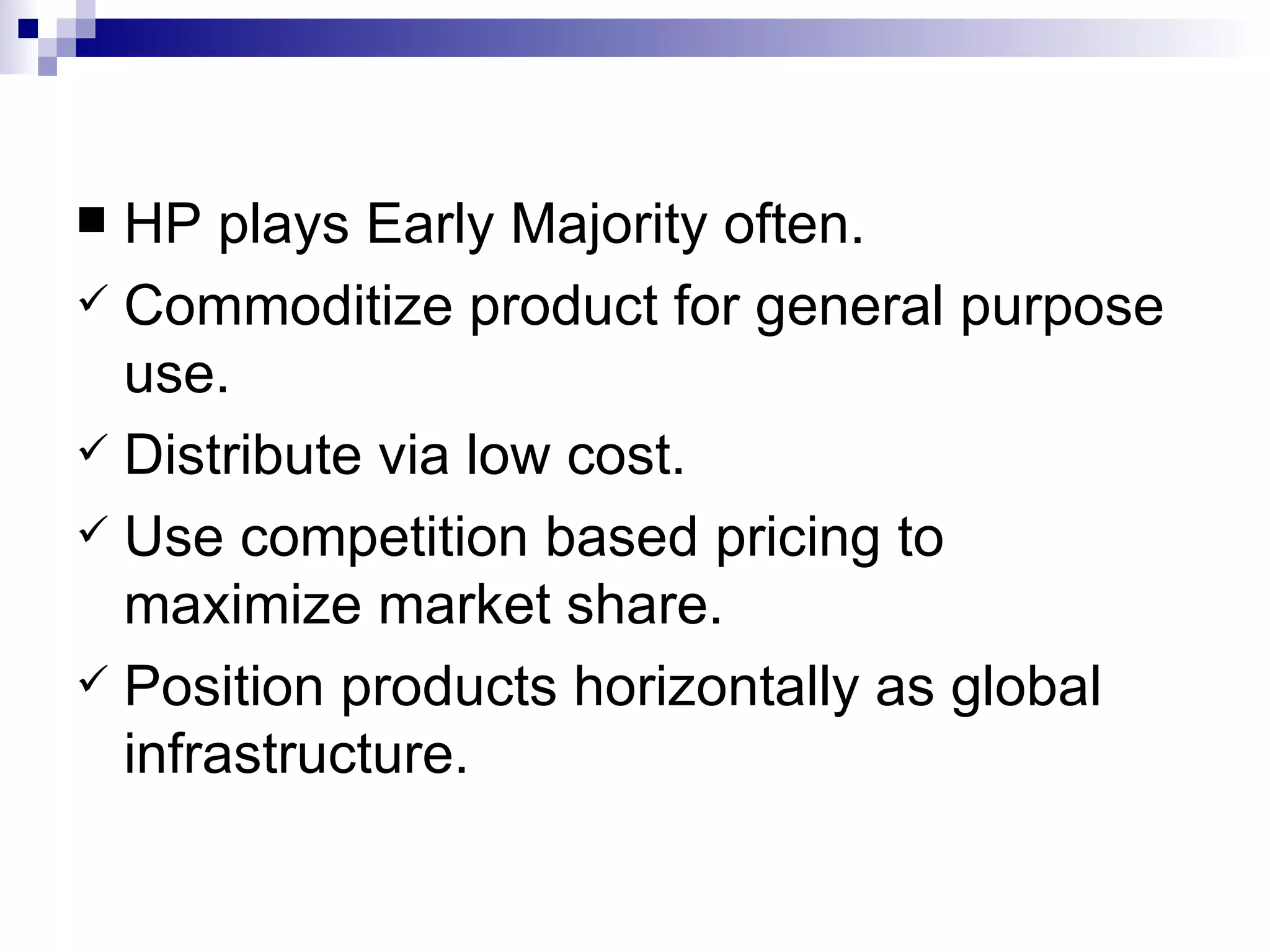
HP plays Early Majority often. Commoditize product for general purpose use. Distribute via low cost. Use competition based pricing to maximize market share. Position products horizontally as global infrastructure.
Knowledge Map Portrays a perspective of the players, sources, flows, constraints and sinks of knowledge within an organization.  A navigation aid to both explicit information and tacit knowledge, showing the importance and the relationships between knowledge stores and the dynamics.
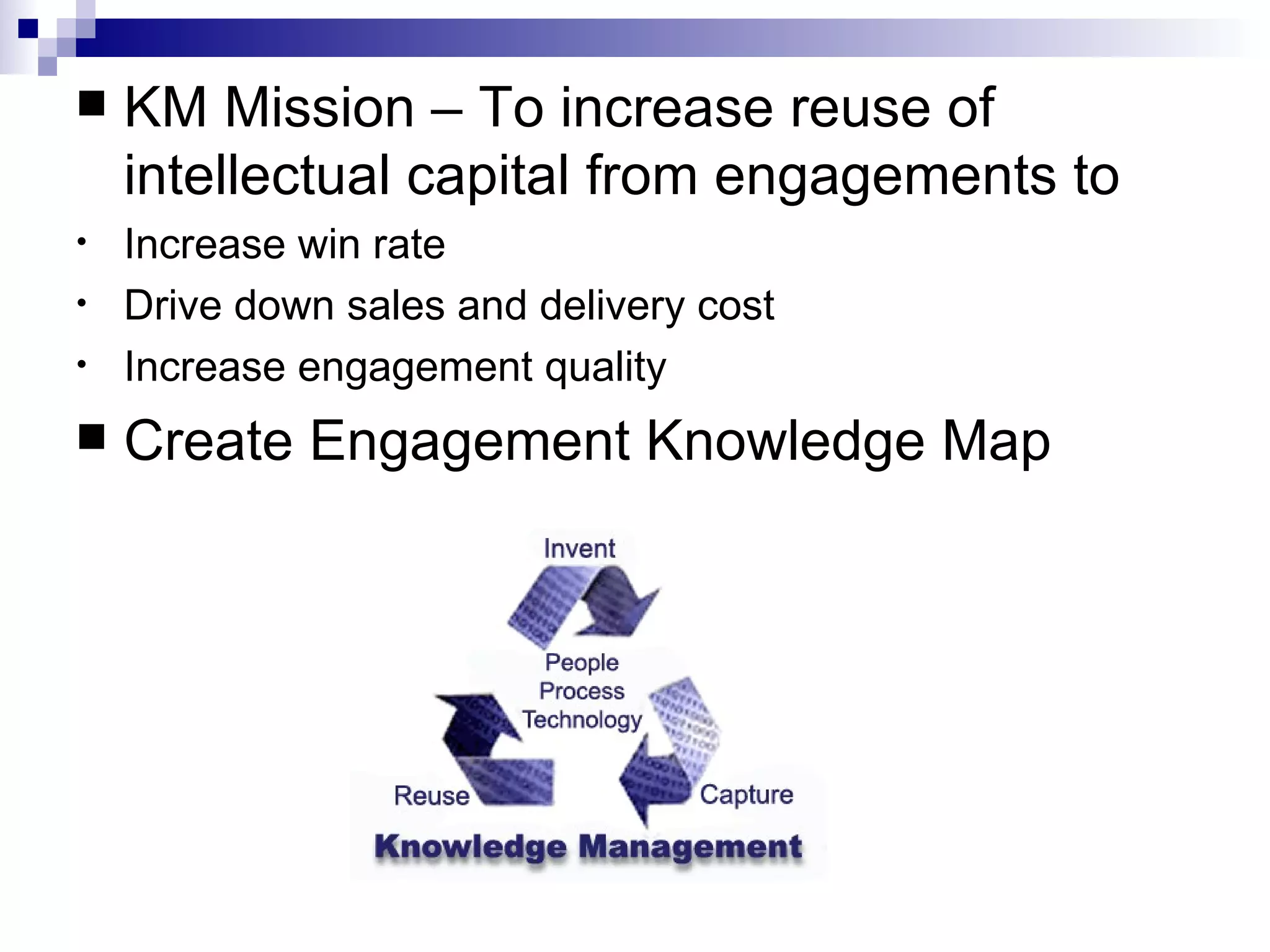
KM Mission – To increase reuse of intellectual capital from engagements to Increase win rate Drive down sales and delivery cost Increase engagement quality Create Engagement Knowledge Map
Thank you.

A Case Study On Technology Management

  • 1.
    A Case studyon Technology Management. Divya Sindhu Lekha M. Tech (TM) ‘08-’10
  • 2.
    Technology Management “Setof management disciplines that allows organization to manage its technological fundamentals to create competitive advantage.” “The integrated planning, design, optimization, operation and control of technological products, processes and services.”
  • 3.
    Hewlett Packard StanfordUniversity classmates Bill Hewlett and Dave Packard founded HP in 1939. The company's first product was an audio oscillator—an electronic test instrument used by sound engineers. Technology Portfolio: Personal systems, Imaging & Printing, Technology solutions, Financial Services, HP Labs. Over 1billion customers in 178 countries worldwide. 2009 Fortune 500 ranking: No. 9.
  • 4.
    Concepts Technology BaseTechnology Cycle Technology Transfer Technology Diffusion Knowledge Mapping
  • 5.
    Technology Base DevelopmentProcesses Complementary Assets Organizational Assets Core Technological Assets Products & Services External Assets Environment Organization
  • 6.
    Technology Assets Over15,000 patents in the U.S. and over 25,000 patents worldwide. Central research lab – HP Labs ($4million annually) – 40 yr old Organizational Assets Divisional Organization – BUs with clearly set customers and competition – high degree of autonomy Complementary Assets Global customer base.
  • 7.
    Technology Cycle JustificationInstallation Promotion Demolition Need driven expectations 1. Technology Awareness 4. Technology Advancement 5. Technology Abandonment 3. Technology Adaptation 2. Technology Acquisition
  • 8.
    HP Deskjet D2545printer 83% recycled materials 100% recyclable packaging ENERGY STAR Certified HP Photosmart D5460 - using recycled plastic.
  • 9.
  • 10.
    Technology Transfer Office& Open Innovation Office. 119 Acquisitions HP Software's leadership in Business Technology Optimization (BTO) by 2 acquisitions Bristol Technology Inc. (Feb 2007 - TransactionVision product monitors the performance and reliability of transactions) Mercury Interactive (Nov 2006 – End to end management of real-time business transactions.) Industry’s broadest portfolio of enterprise IT management software.
  • 11.
  • 12.
    HP plays EarlyMajority often. Commoditize product for general purpose use. Distribute via low cost. Use competition based pricing to maximize market share. Position products horizontally as global infrastructure.
  • 13.
    Knowledge Map Portraysa perspective of the players, sources, flows, constraints and sinks of knowledge within an organization. A navigation aid to both explicit information and tacit knowledge, showing the importance and the relationships between knowledge stores and the dynamics.
  • 14.
    KM Mission –To increase reuse of intellectual capital from engagements to Increase win rate Drive down sales and delivery cost Increase engagement quality Create Engagement Knowledge Map
  • 15.