“Fast Track to
Commercialization”
… how to discover your
One Million Dollar Business (1mdb)
WORKSHOP 1 : TECHNOLOGY ANALYSIS
Stephen Ong
Visiting Professor, Shenzhen University, PRC
Academic Fellow in Entrepreneurship &
Innovation, Anglia Ruskin University, UK
21 December 2016
“Is your product new, unique,
and technically feasible?”
Innovation SPACE™ Technology Commercialization Model
Phase 1 : CONCEPT
Stage 1 : DISCOVERY
Step 1 : TECHNOLOGY ANALYSIS
3
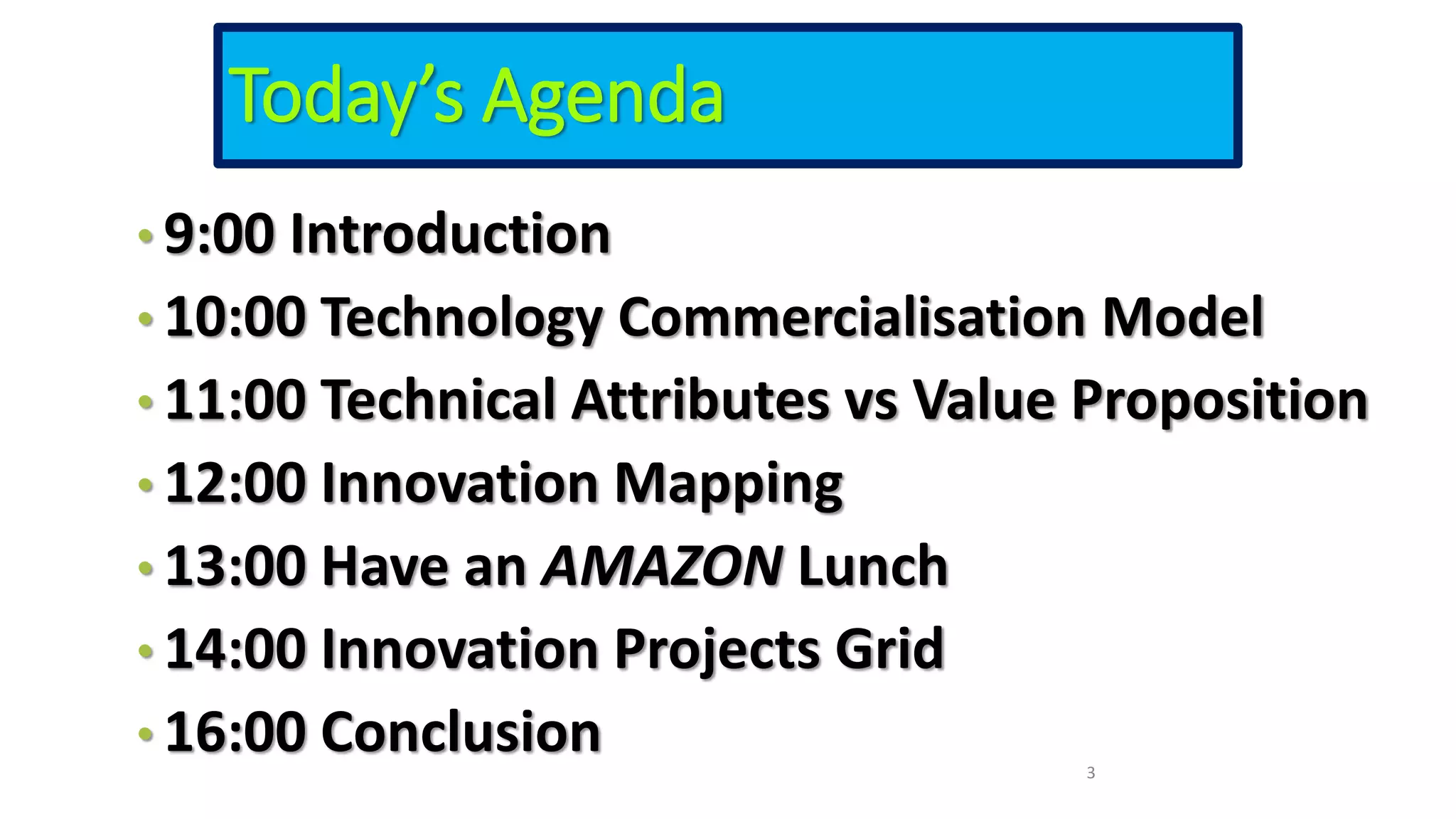
Today’s Agenda
• 9:00 Introduction
• 10:00 Technology Commercialisation Model
• 11:00 Technical Attributes vs Value Proposition
• 12:00 Innovation Mapping
• 13:00 Have an AMAZON Lunch
• 14:00 Innovation Projects Grid
• 16:00 Conclusion
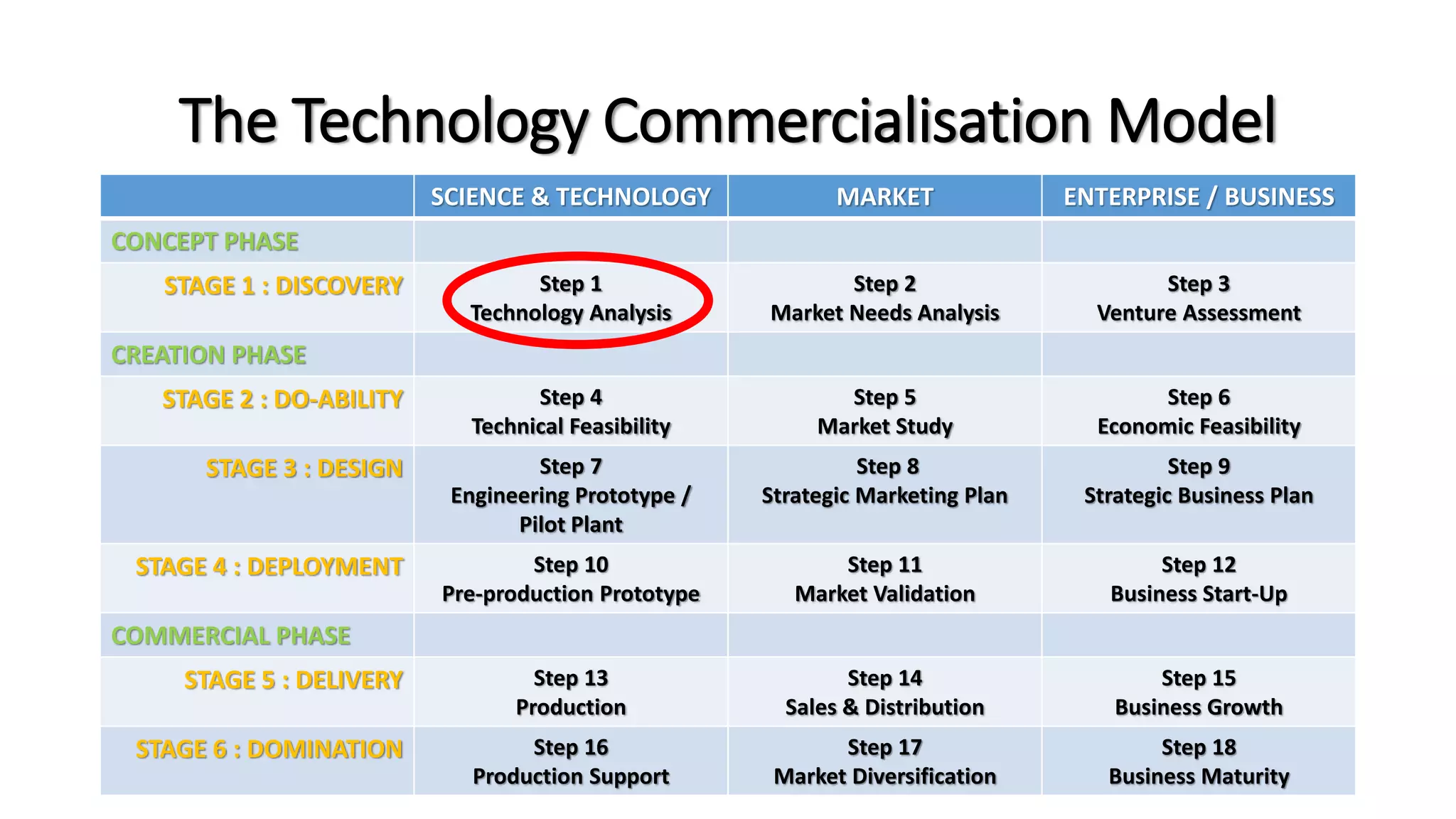
The Technology Commercialisation Model
SCIENCE & TECHNOLOGY MARKET ENTERPRISE / BUSINESS
CONCEPT PHASE
STAGE 1 : DISCOVERY Step 1
Technology Analysis
Step 2
Market Needs Analysis
Step 3
Venture Assessment
CREATION PHASE
STAGE 2 : DO-ABILITY Step 4
Technical Feasibility
Step 5
Market Study
Step 6
Economic Feasibility
STAGE 3 : DESIGN Step 7
Engineering Prototype /
Pilot Plant
Step 8
Strategic Marketing Plan
Step 9
Strategic Business Plan
STAGE 4 : DEPLOYMENT Step 10
Pre-production Prototype
Step 11
Market Validation
Step 12
Business Start-Up
COMMERCIAL PHASE
STAGE 5 : DELIVERY Step 13
Production
Step 14
Sales & Distribution
Step 15
Business Growth
STAGE 6 : DOMINATION Step 16
Production Support
Step 17
Market Diversification
Step 18
Business Maturity
Step 1: Technology Analysis
Is this product new, unique, and technically feasible?
• The first activity to testing these new venture
assumptions is to investigate the technical
validity of the product. This step is called
the Technology Analysis. To have commercial
value, the product or service should solve a real
world problem better, cheaper, or faster than
existing solutions, and the feature advantages of
the new product must be powerfully better than
existing ones. You should remember that
existing products and services are often
supported by huge advertising budgets,
aggressive marketing strategies, and fierce
customer loyalty. It is seldom enough for an
incremental improvement in a product to
displace a well-entrenched product already in
the market. Also, remember that product
benefits take precedence over product features.
Customers buy electric drills to make holes, not
to get fancy cases.
The purpose of this activity is to assess the
intellectual property status of any technology
involved in the product. This involves
determining whether the product or any of its
components are covered by intellectual
property protection such as patents or
copyrights.
• Definition: The process of determining that the physical features of the concept are
potentially achievable and operational.
• Objective: The objectives of the technical concept analysis step are to succinctly define the
concept, to assess the implementation potential of the technical aspects of the concept, and
establish the uniqueness of the technical concept.
• Product: The product of this activity is a verbal description, schematic, formula, conceptual
model or paper design, delineating the main features of the technical concept.
• Technical Activities: During the technical concept analysis step the following activities must
be completed:
• Define the concept fully;
• Demonstrate that performance assumptions are viable;
• Assess critical barriers to production;
• Survey the state-of-the-art of the technology;
• Estimate the working models costs.
• Milestones: Provisional patent, patent, copyright, patent scan, license agreement
• Funding Sources: Personal finances, MOSTI (Technofund, Innofund)
• Technical Information: The technical concept analysis will usually result in knowledge about
the features of the technical concept, performance expectations, prior art, and other similar
or related research and development activities.
• Key Questions :
• Have you completed a technology database search?
Have you researched related patents or copyrights?
Have you researched technical journals and trade magazines?
Have you discussed the topic with experts?
Do you know the current state-of-the-art competitive technologies?
Have you selected the technologies for the application?
Have you determined the advantages of this technology?
Have you determined the risks for this technology?
Do the benefits of this technology or product offer significant advantages over the existing
solution?
KEY QUESTIONS
1. Have you completed a technology database search?
2. Have you researched related patents or copyrights?
3. Have you researched technical journals and trade magazines?
4. Have you discussed the topic with experts?
5. Do you know the current state-of-the-art competitive technologies?
6. Have you selected the technologies for the application?
7. Have you determined the advantages of this technology?
8. Have you determined the risks for this technology?
9. Do the benefits of this technology or product offer significant
advantages over the existing solution?
THE INNOVATOR’S DELUSION
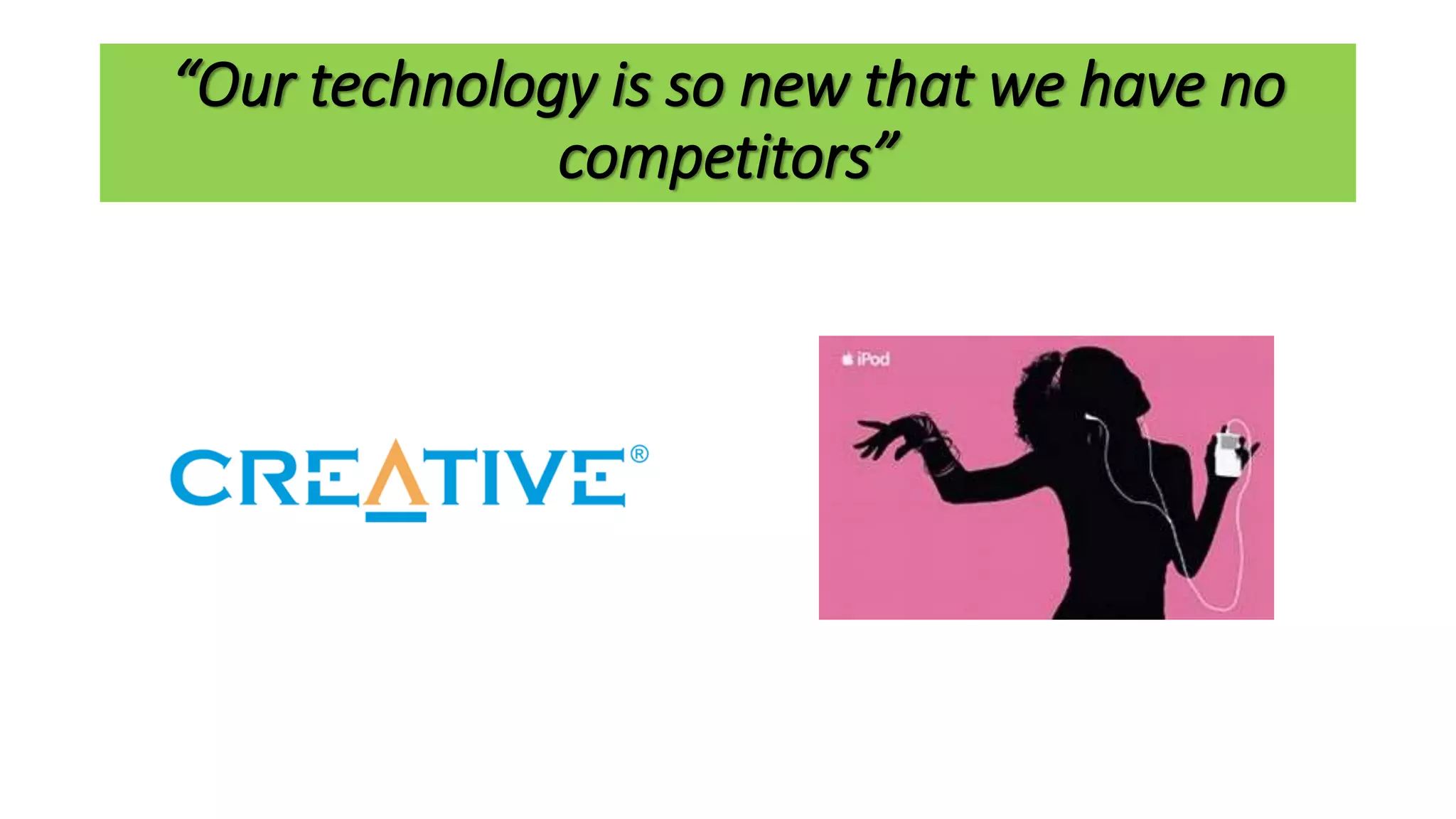
1. “Our technology is so new that we have no competitors”
2. “The new technology being commercialized by our competitors
will not pose a large threat”
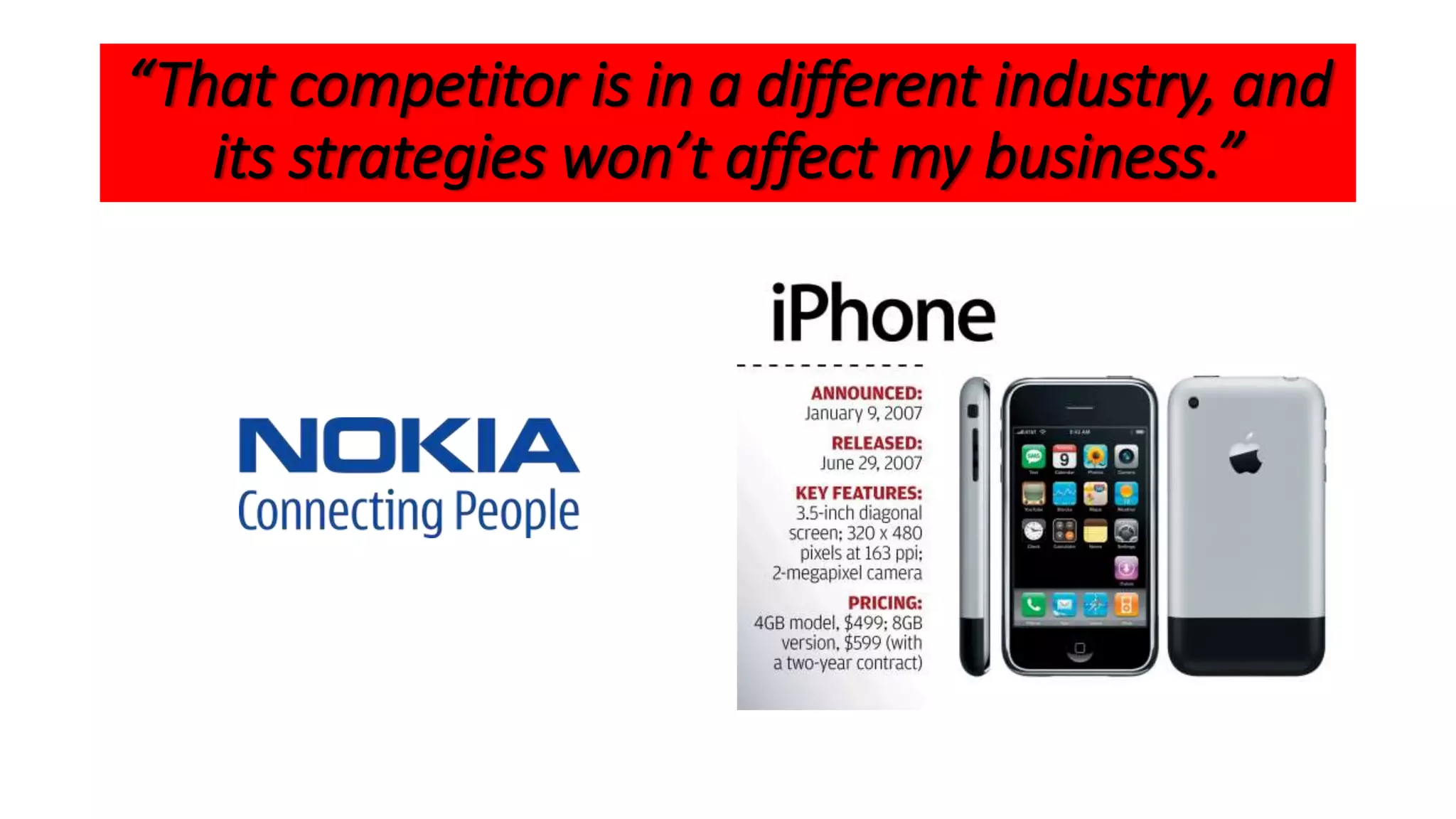
3. “That competitor is in a different industry, and its strategies won’t
affect my business.”
“Our technology is so new that we have no
competitors”
“The new technology being commercialized by
our competitors will not pose a large threat”
“That competitor is in a different industry, and
its strategies won’t affect my business.”
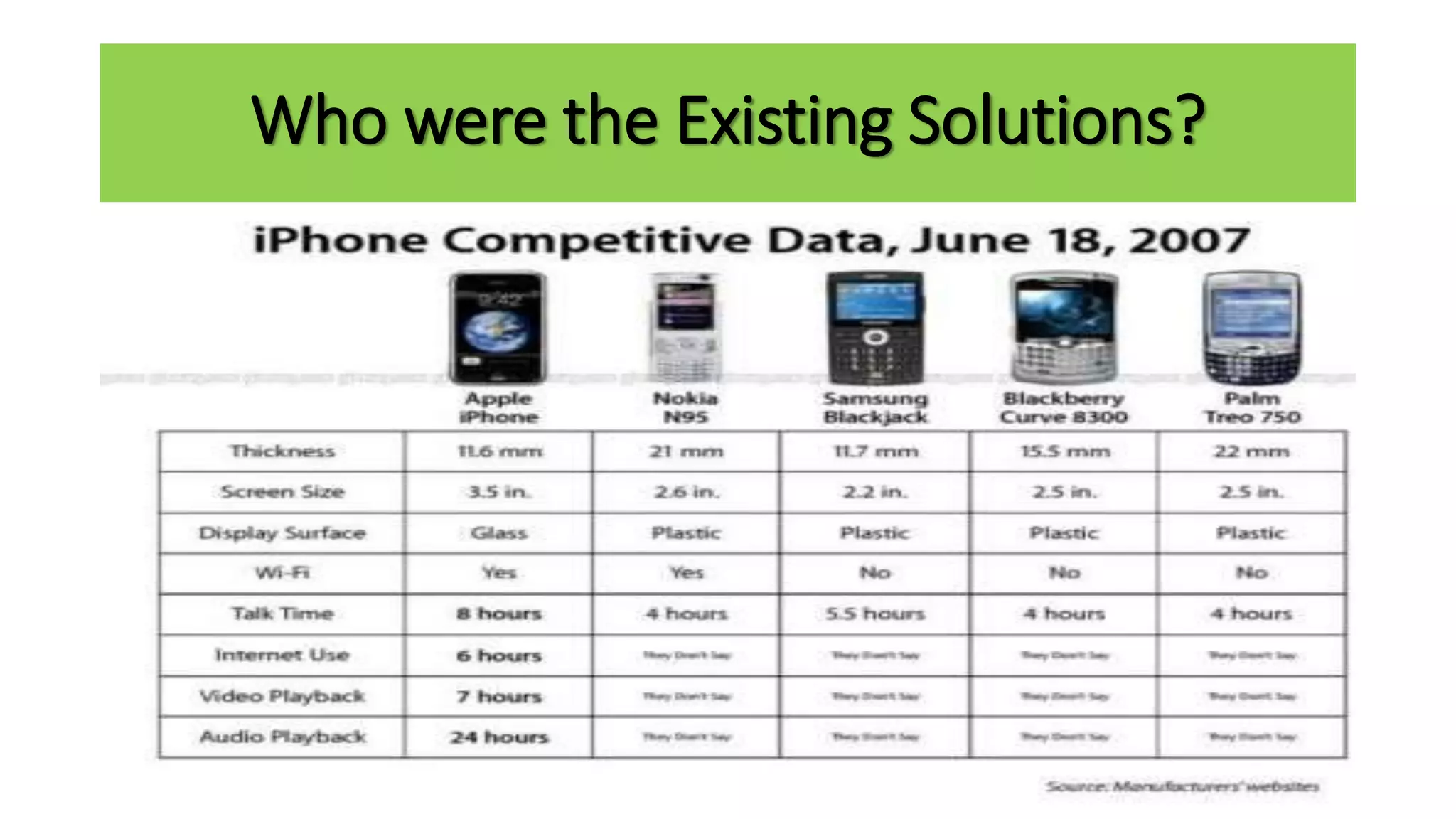
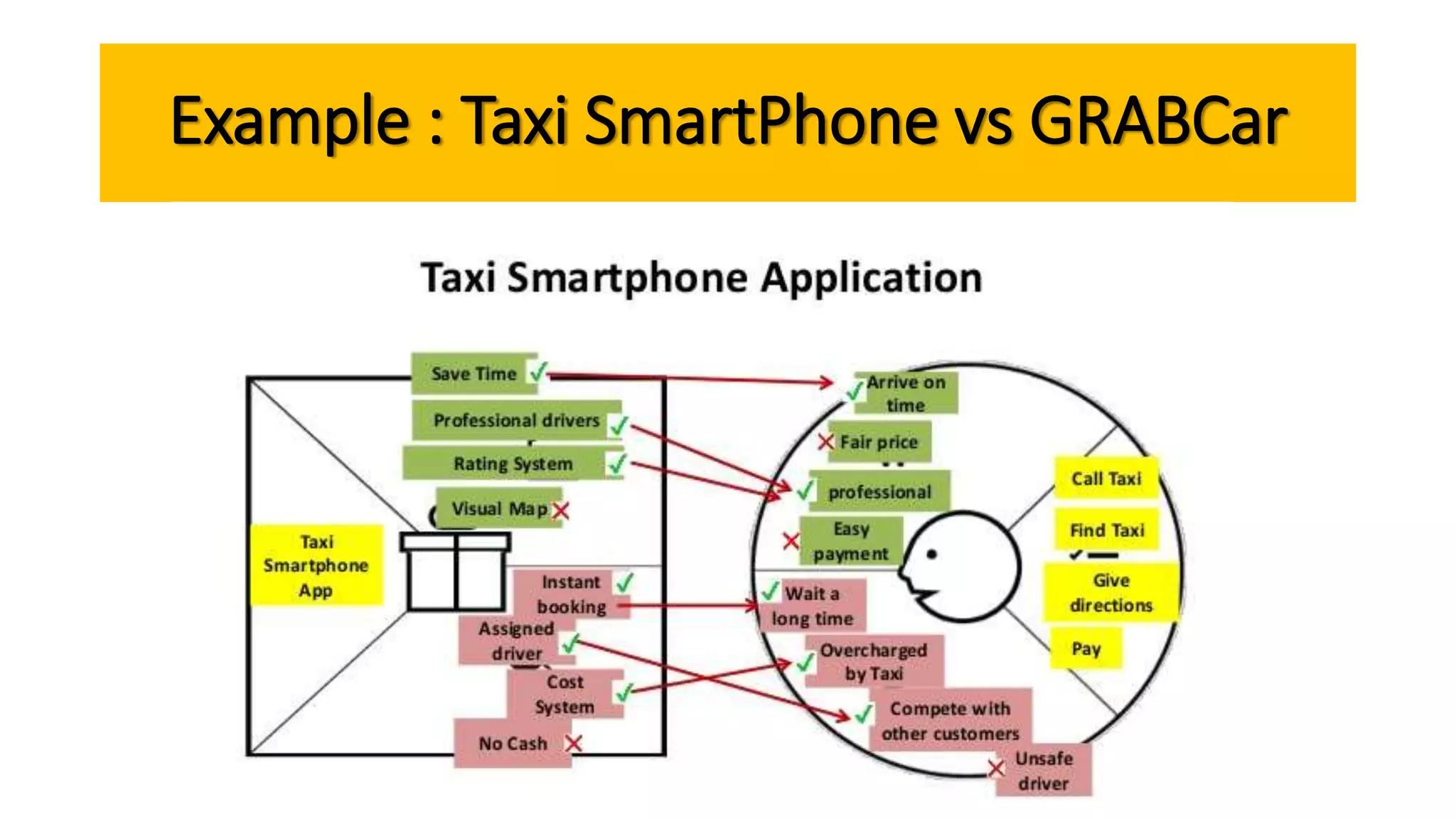
Who were the Existing Solutions?
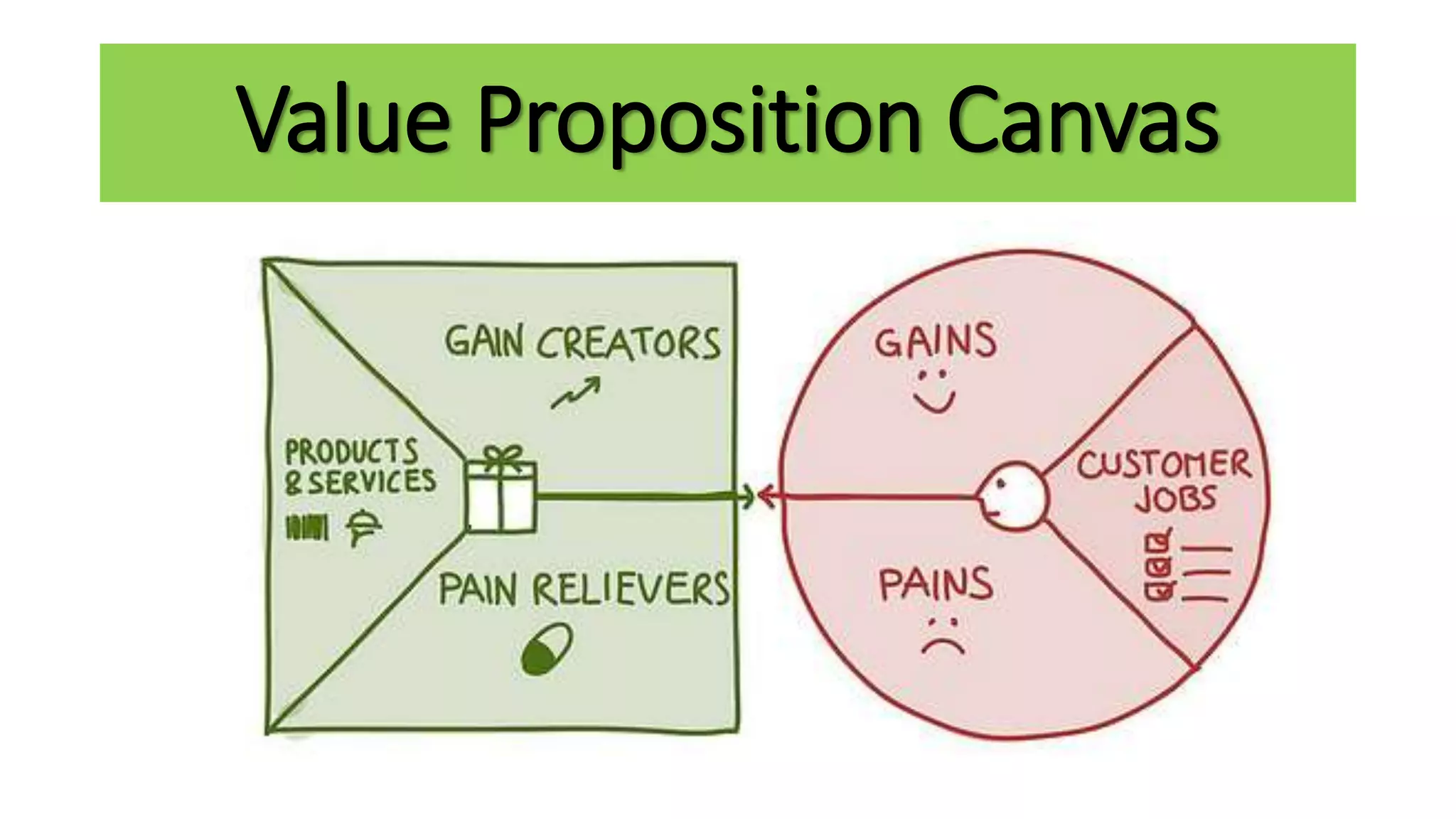
Value Proposition Canvas
Example : Taxi SmartPhone vs GRABCar
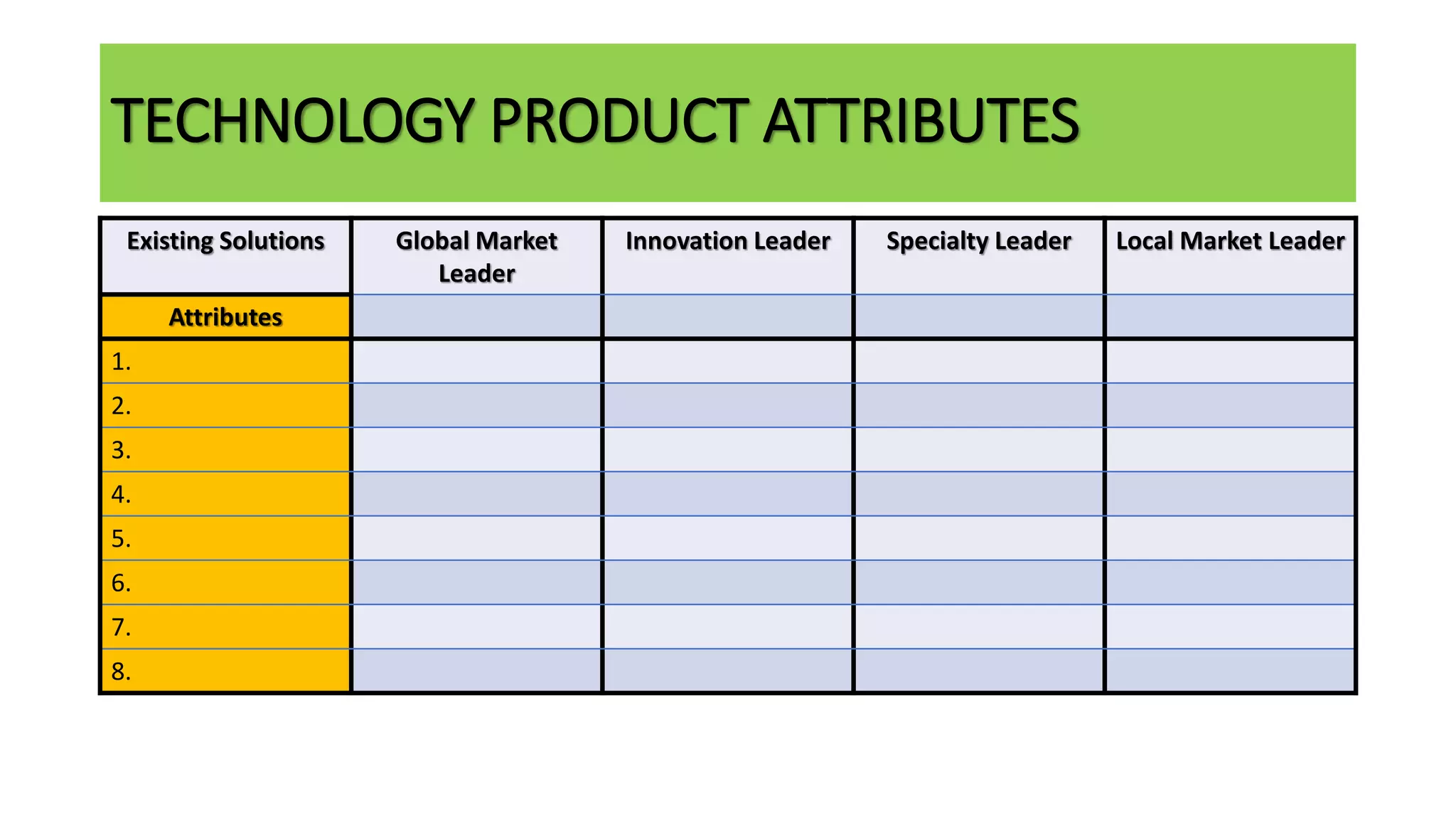
TECHNOLOGY PRODUCT ATTRIBUTES
Existing Solutions Global Market
Leader
Innovation Leader Specialty Leader Local Market Leader
Attributes
1.
2.
3.
4.
5.
6.
7.
8.
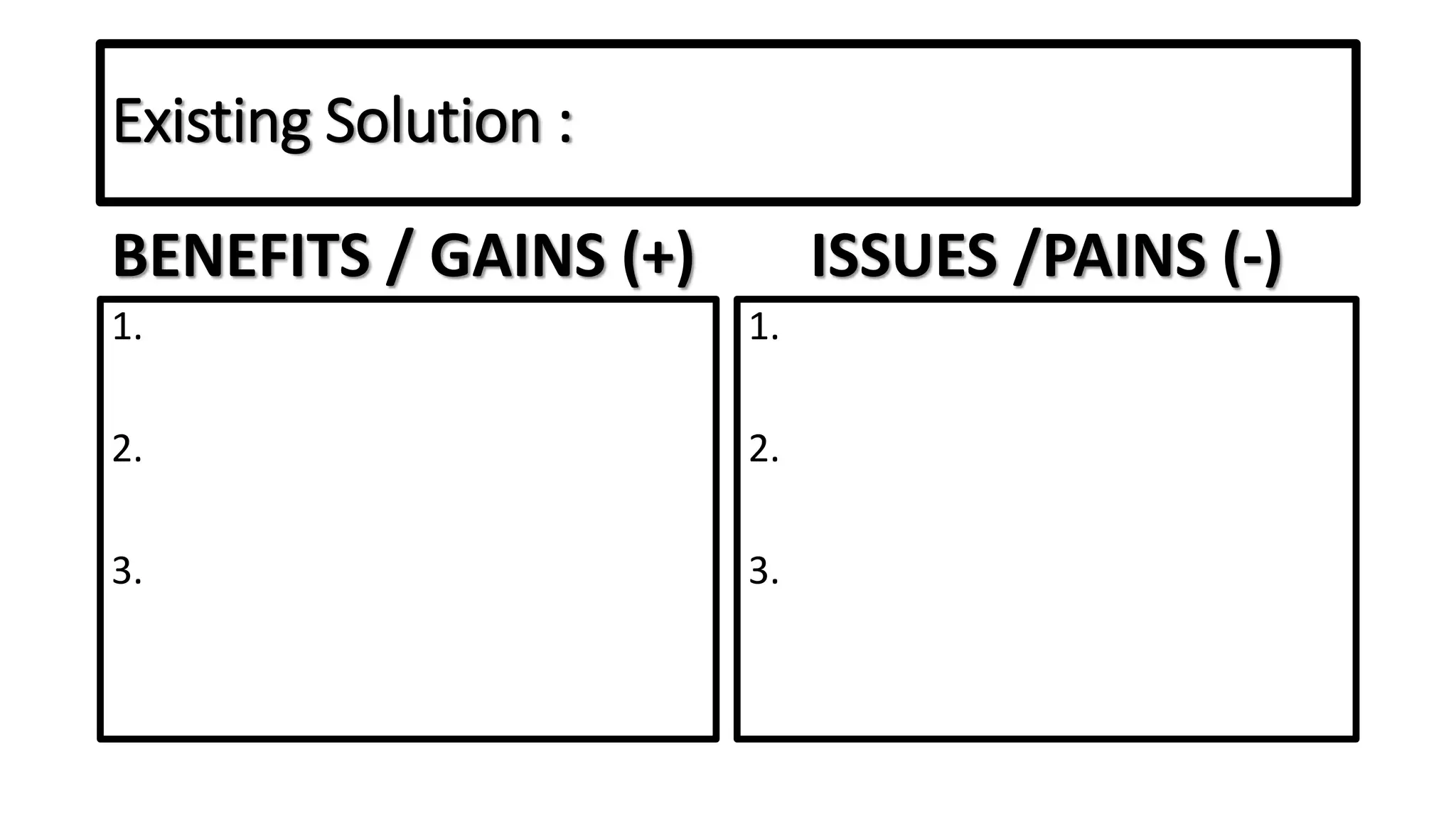
Existing Solution :
BENEFITS / GAINS (+)
1.
2.
3.
ISSUES /PAINS (-)
1.
2.
3.
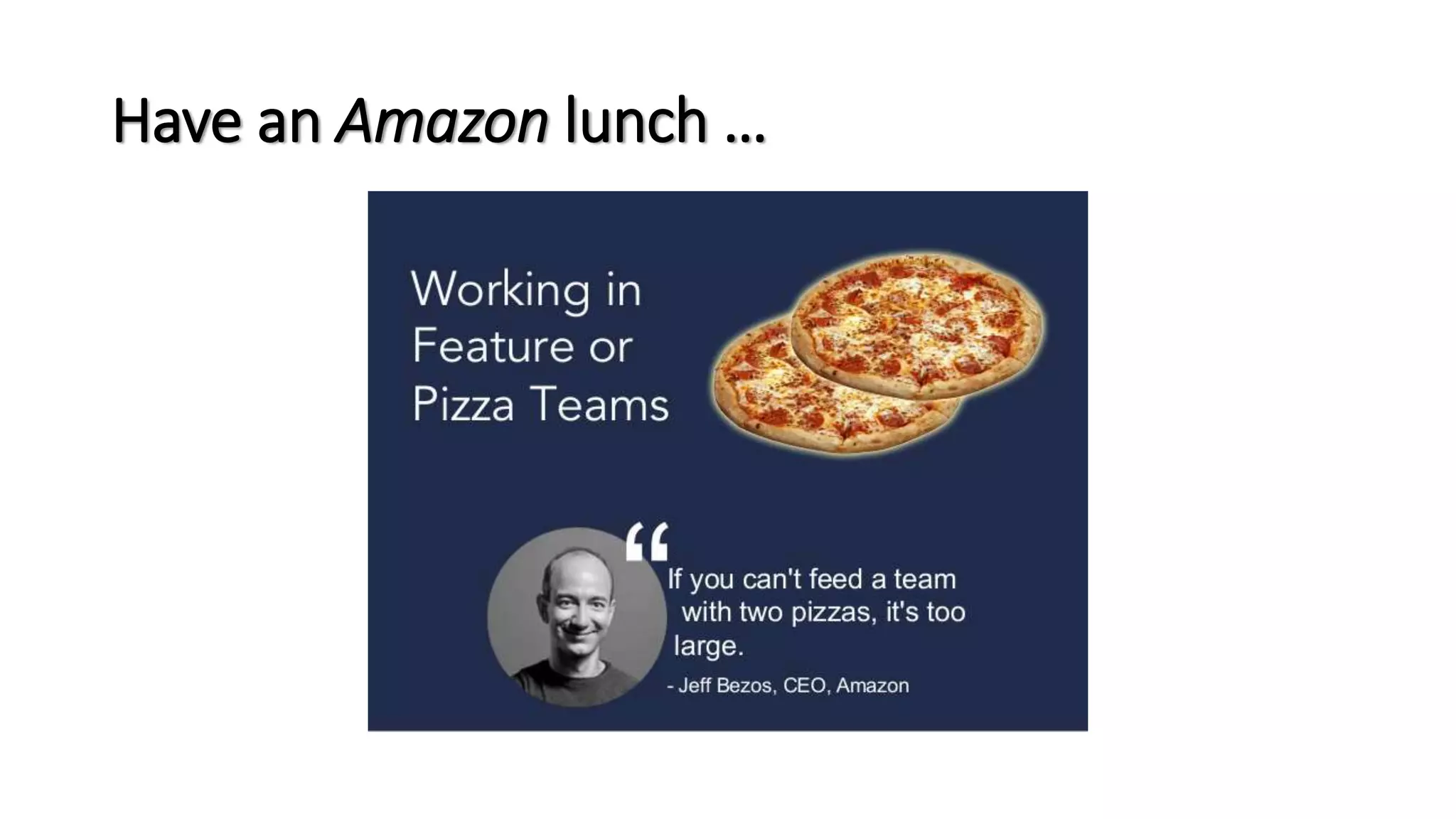
Have an Amazon lunch …
WHERE ARE YOU ?
… on the CURVE or
on the next WAVE ?
THE CURRENT STATE OF ART OF TECHNOLOGY
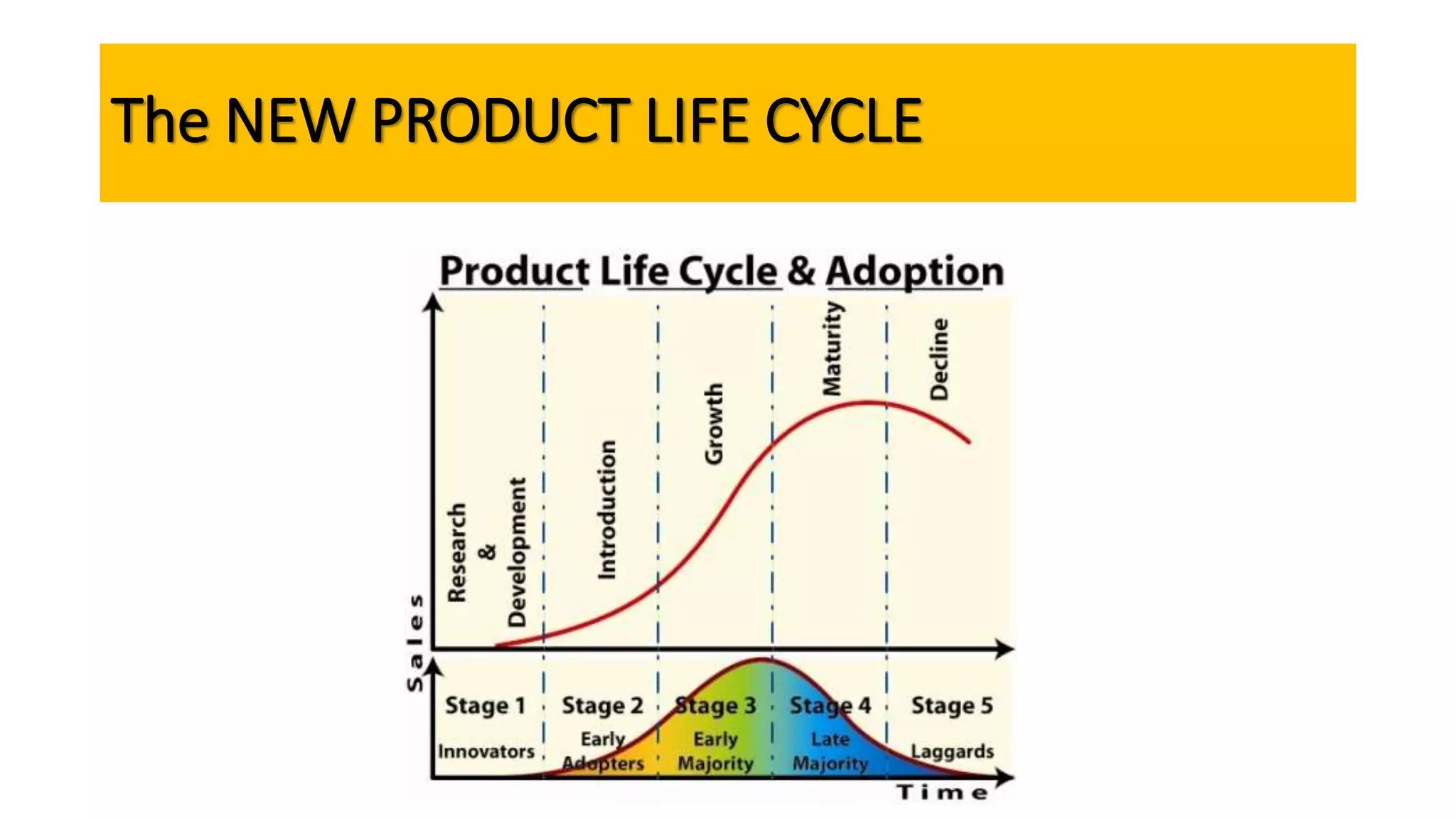
The NEW PRODUCT LIFE CYCLE
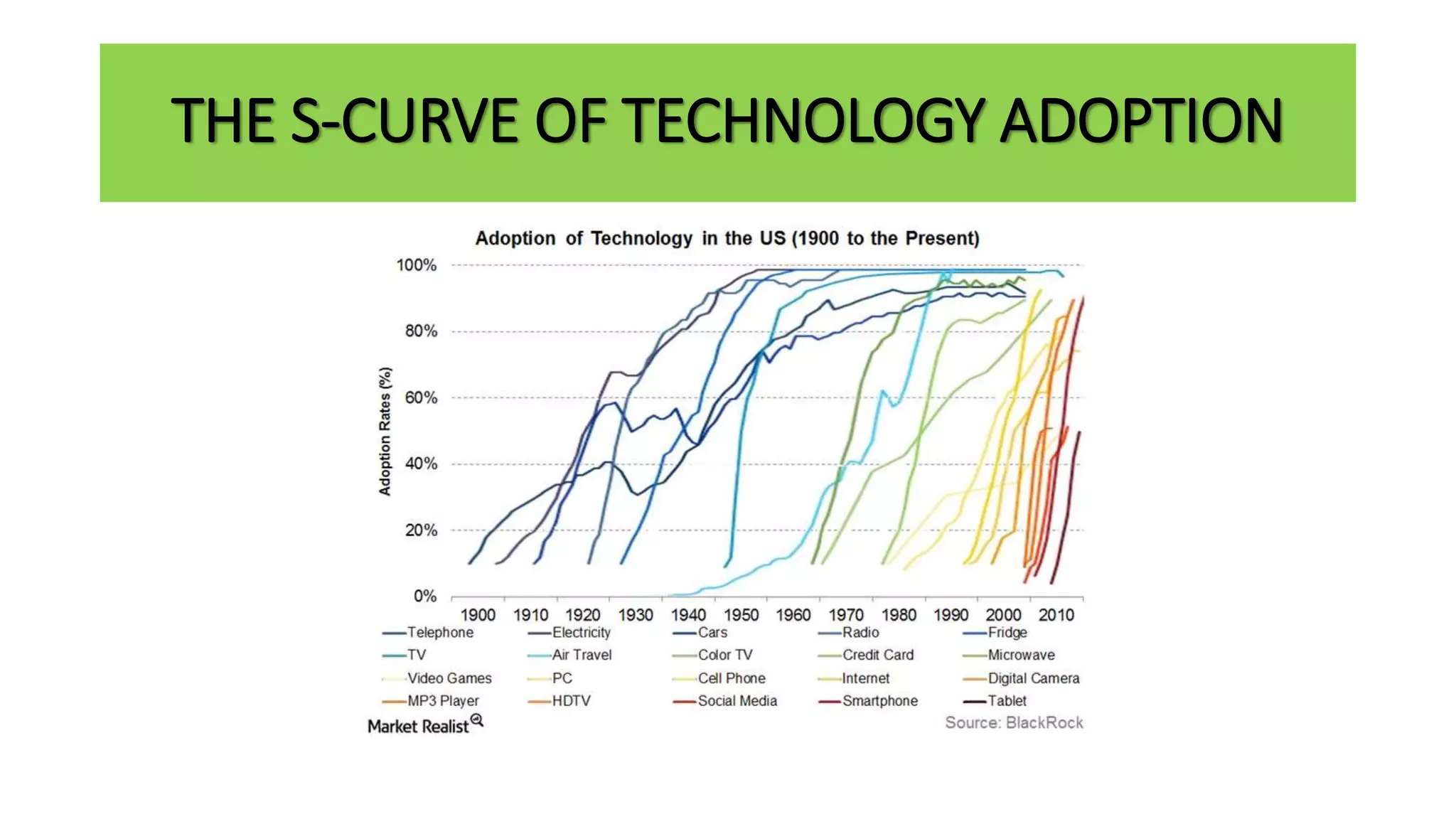
THE S-CURVE OF TECHNOLOGY ADOPTION
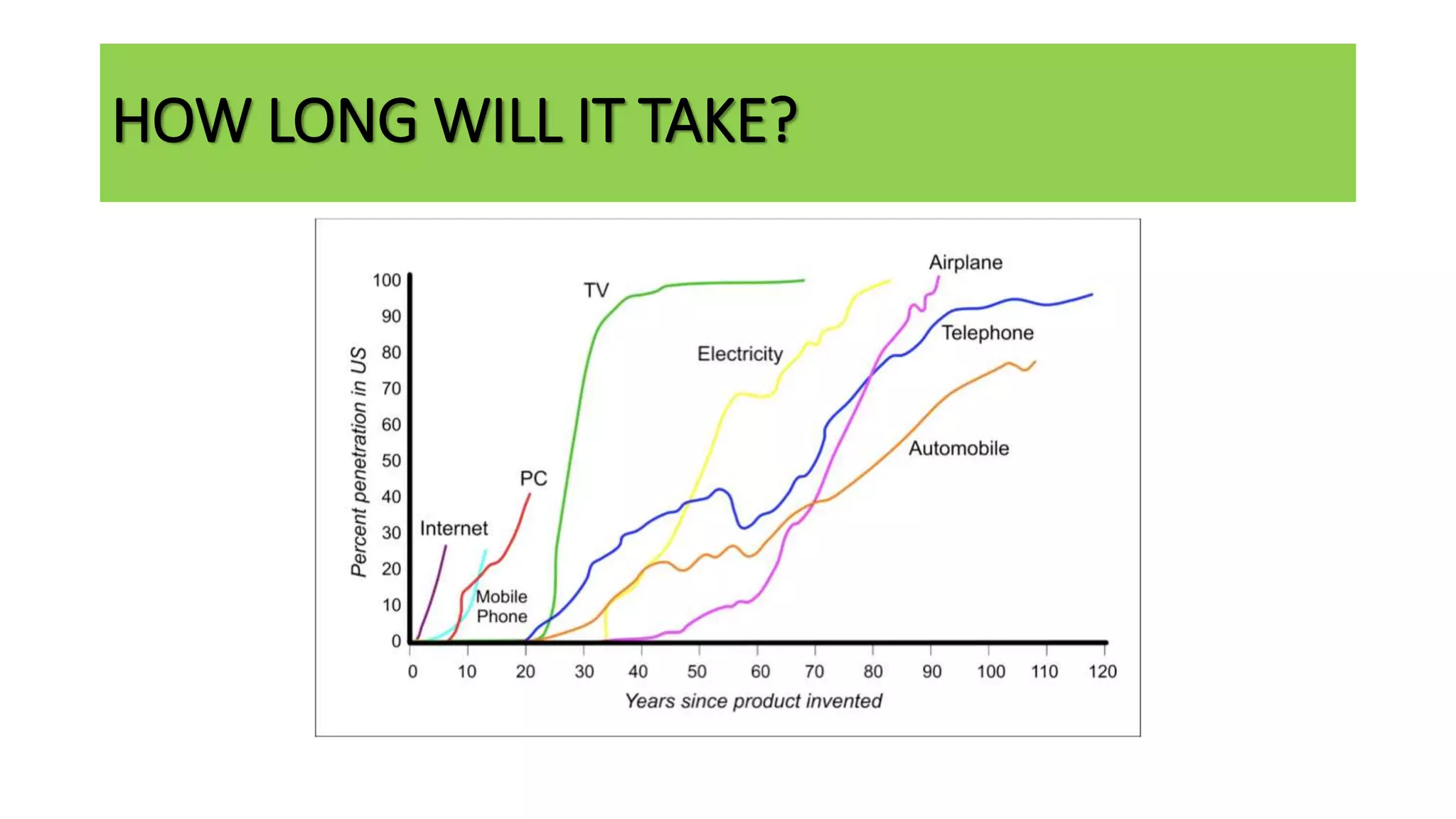
HOW LONG WILL IT TAKE?
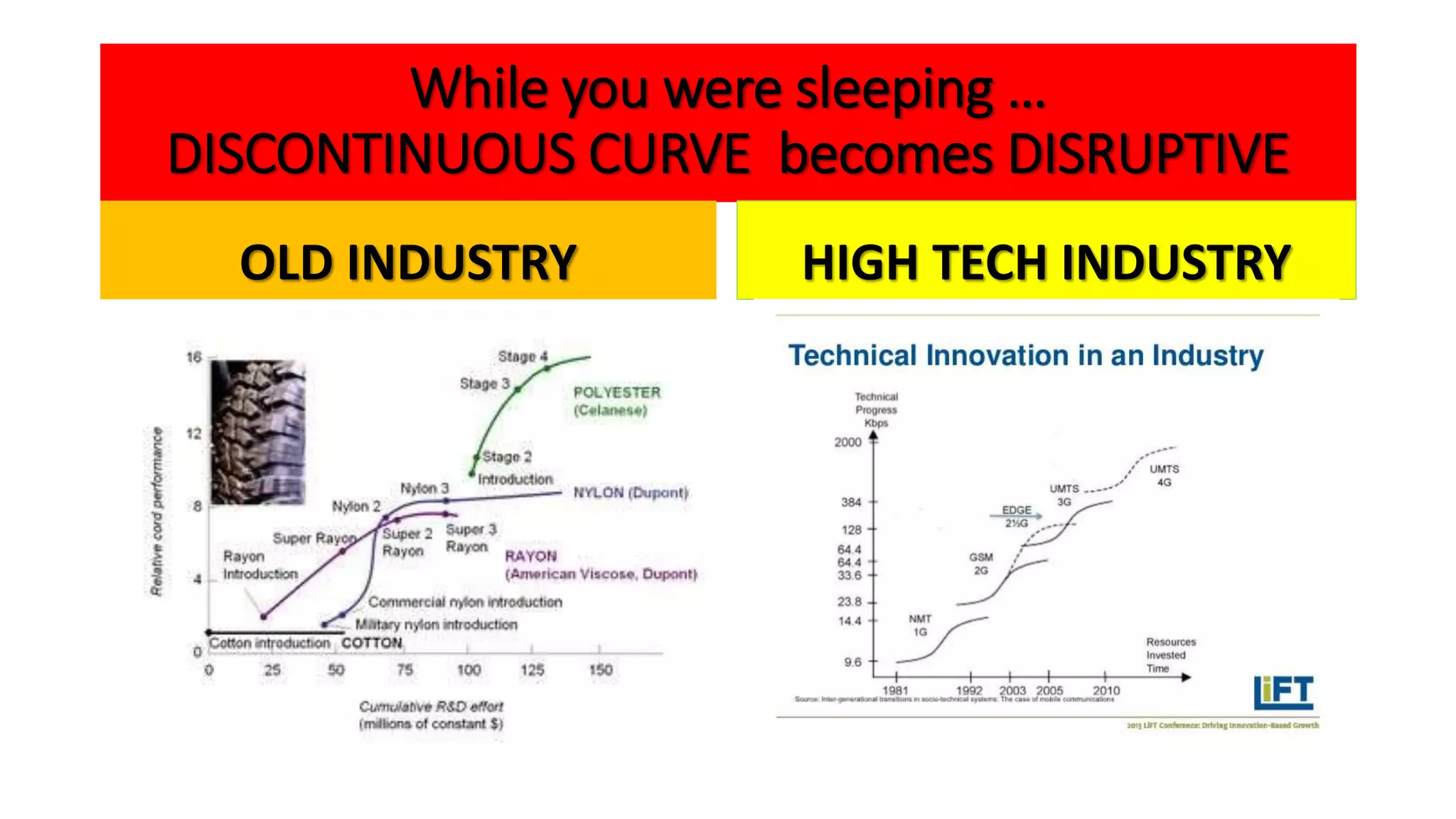
While you were sleeping …
DISCONTINUOUS CURVE becomes DISRUPTIVE
OLD INDUSTRY HIGH TECH INDUSTRY
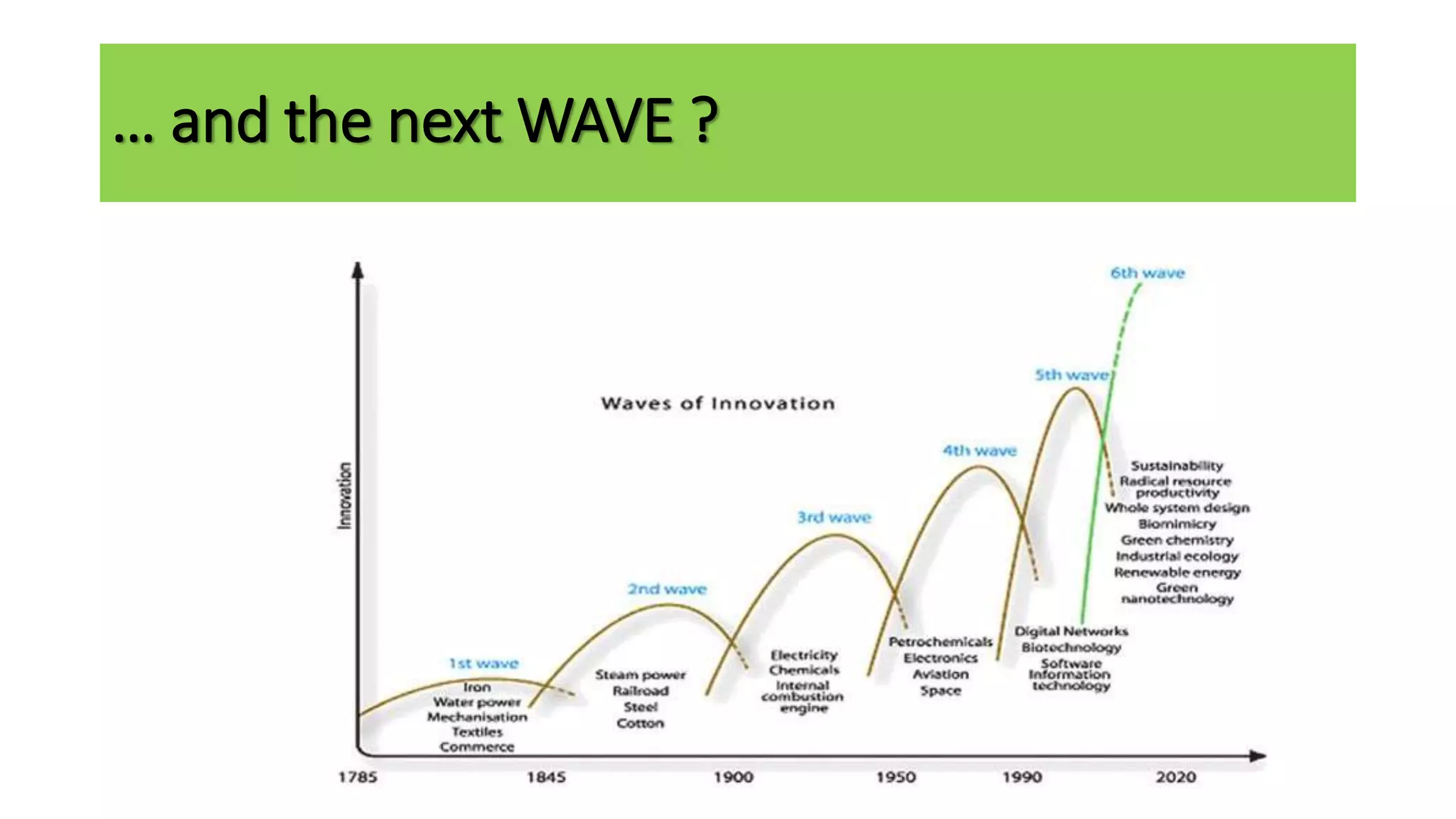
… and the next WAVE ?
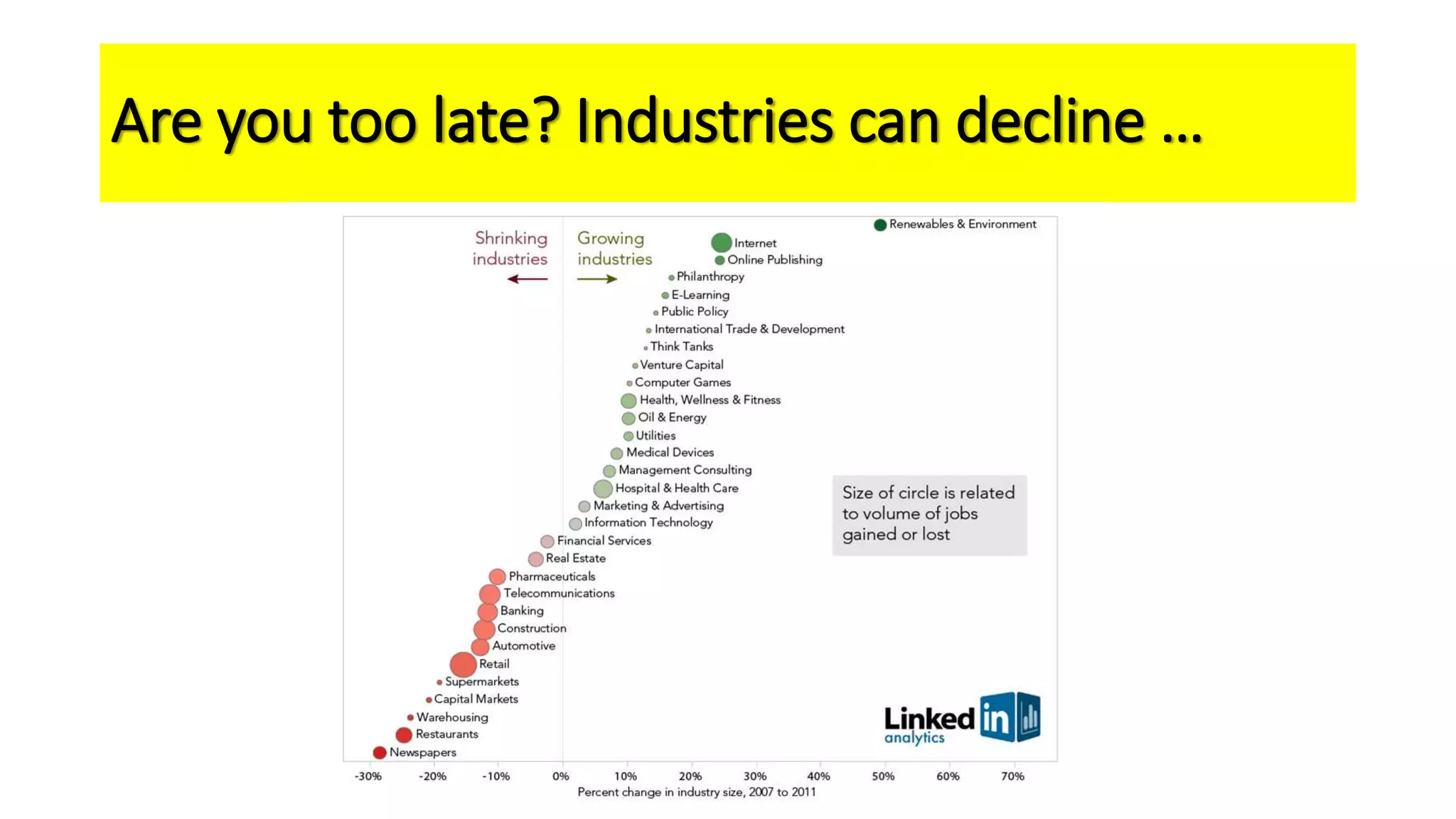
Are you too late? Industries can decline …
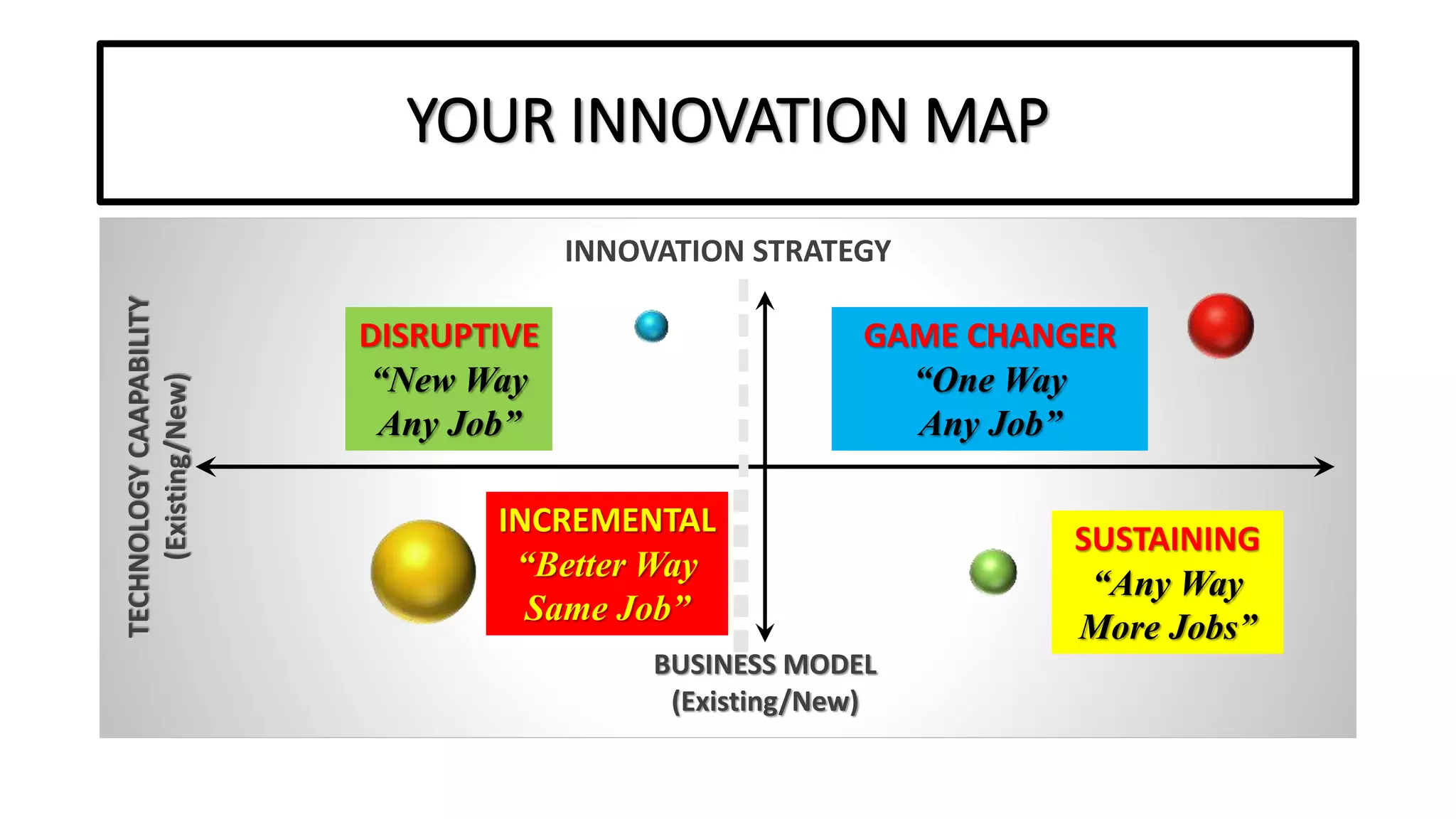
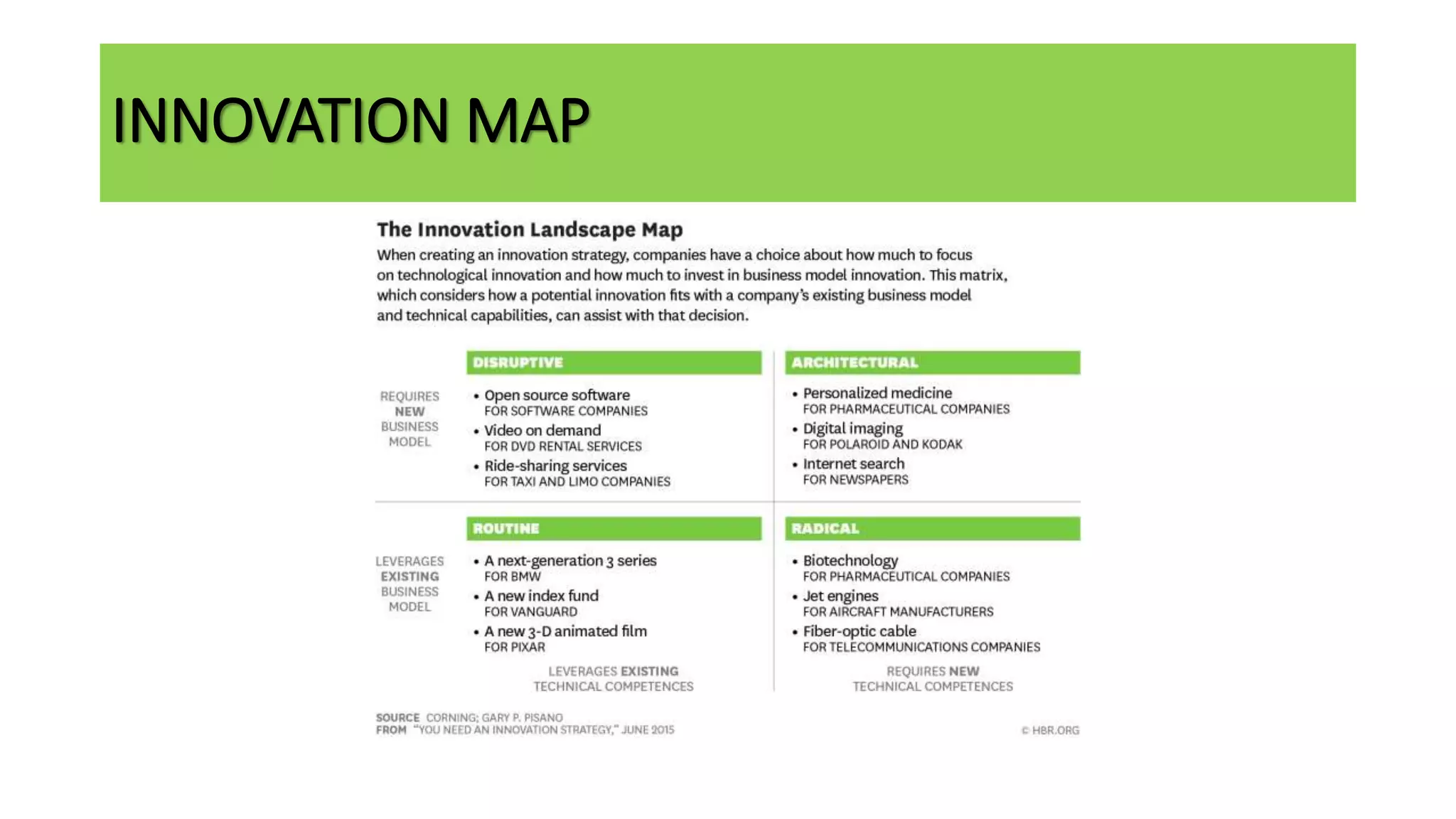
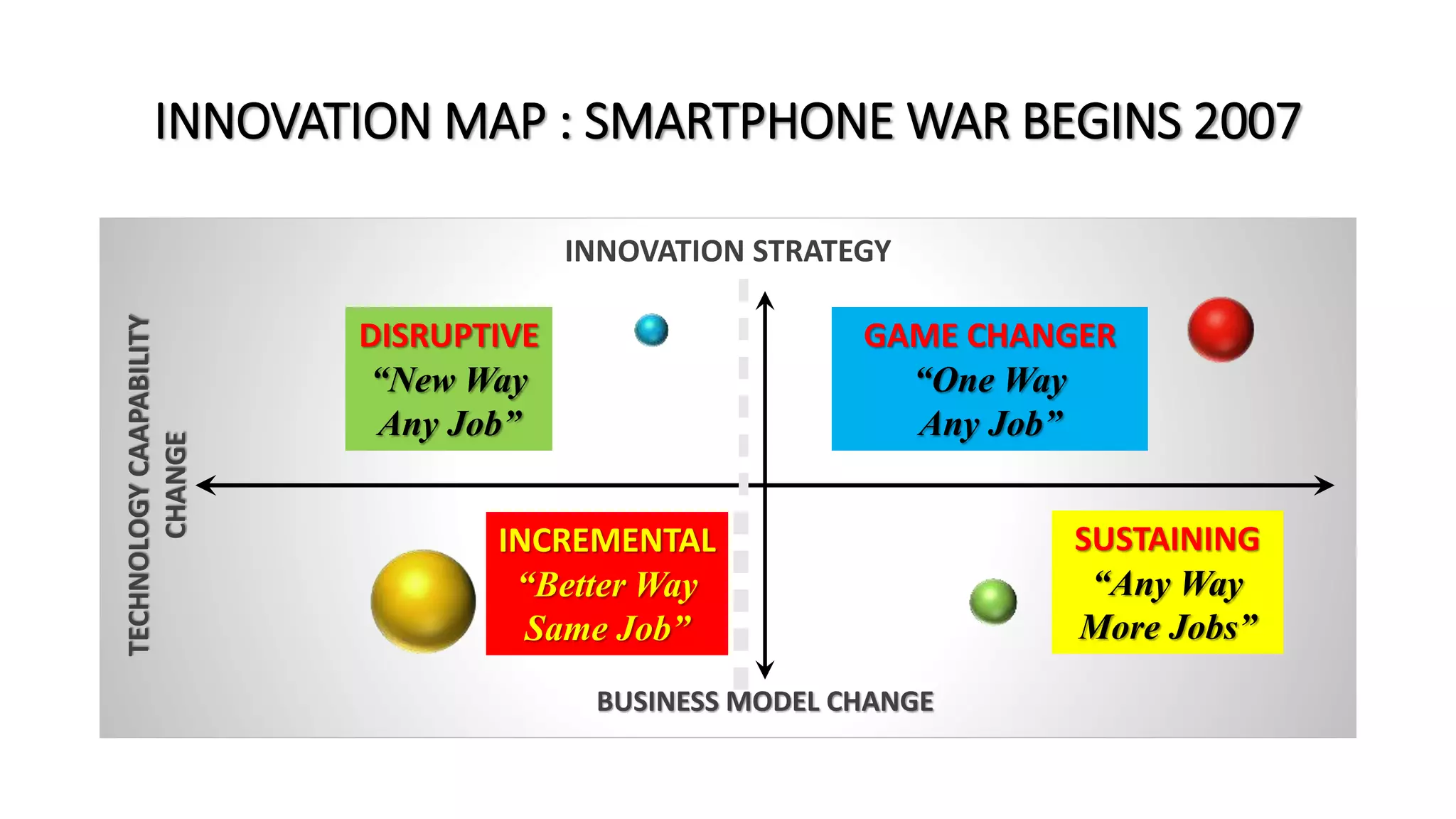
INNOVATION MAP
INNOVATION MAP : SMARTPHONE WAR BEGINS 2007TECHNOLOGYCAAPABILITY
CHANGE
BUSINESS MODEL CHANGE
INNOVATION STRATEGY
DISRUPTIVE
“New Way
Any Job”
GAME CHANGER
“One Way
Any Job”
INCREMENTAL
“Better Way
Same Job”
SUSTAINING
“Any Way
More Jobs”
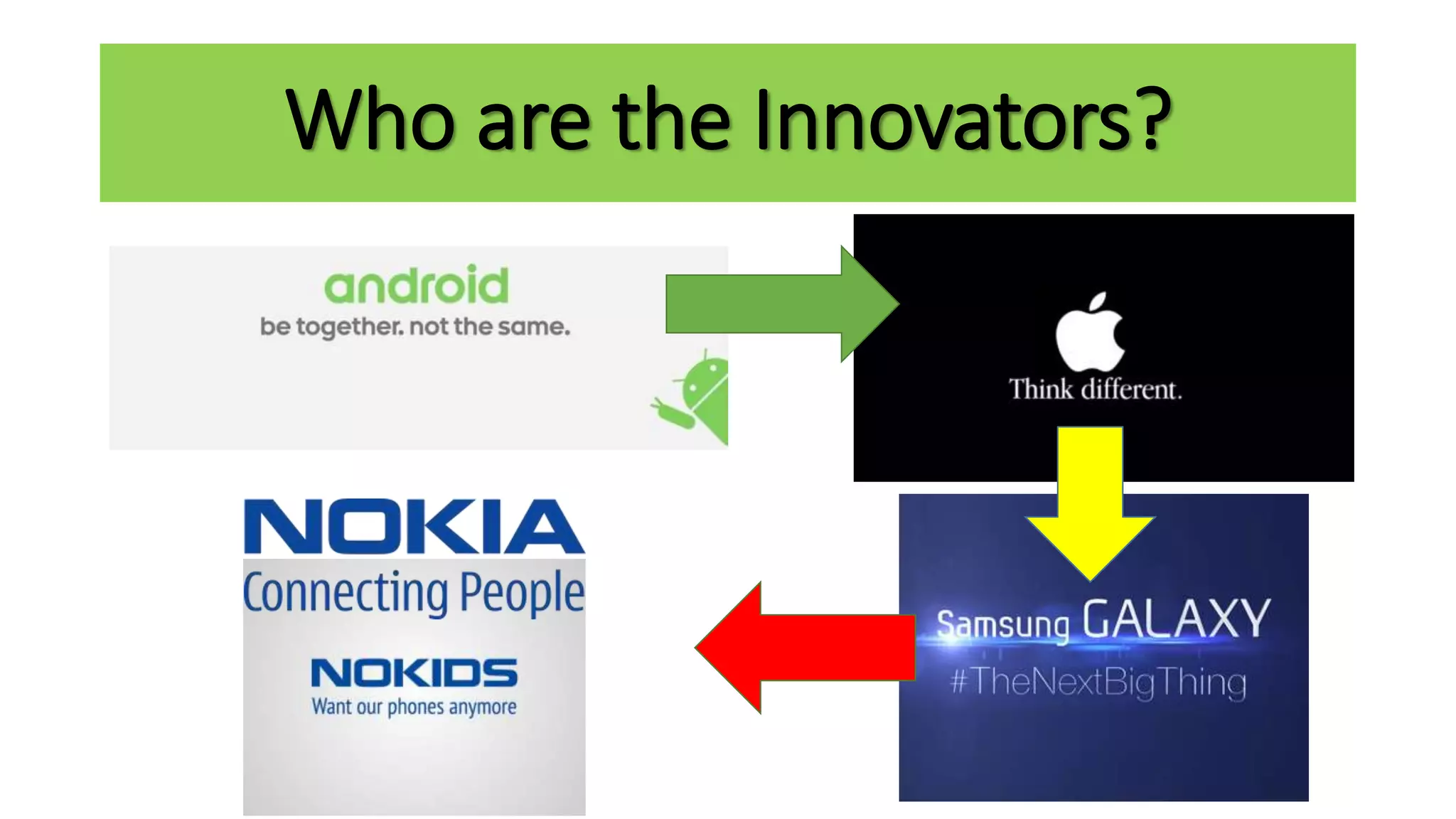
Who are the Innovators?
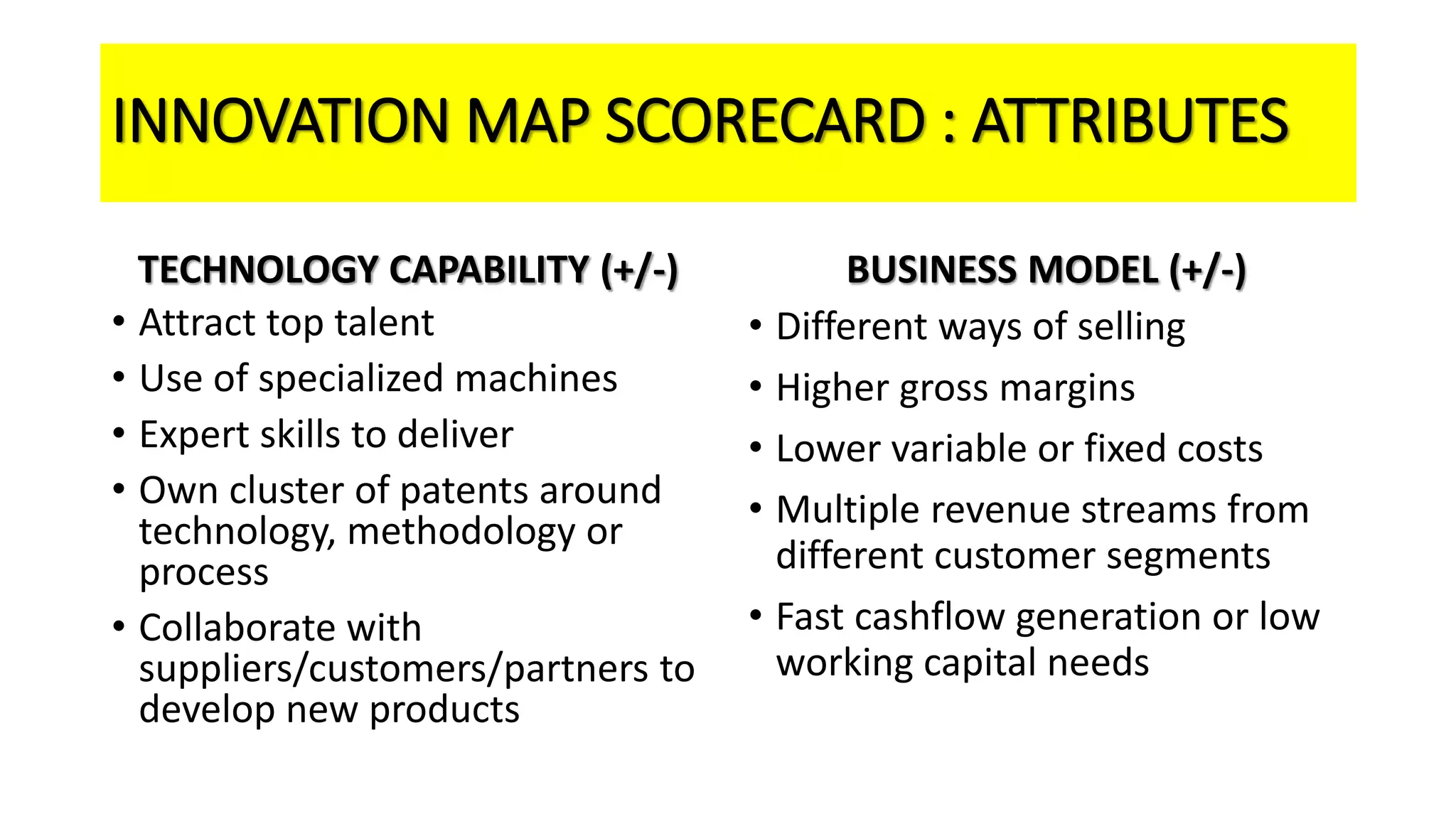
INNOVATION MAP SCORECARD : ATTRIBUTES
TECHNOLOGY CAPABILITY (+/-)
• Attract top talent
• Use of specialized machines
• Expert skills to deliver
• Own cluster of patents around
technology, methodology or
process
• Collaborate with
suppliers/customers/partners to
develop new products
BUSINESS MODEL (+/-)
• Different ways of selling
• Higher gross margins
• Lower variable or fixed costs
• Multiple revenue streams from
different customer segments
• Fast cashflow generation or low
working capital needs
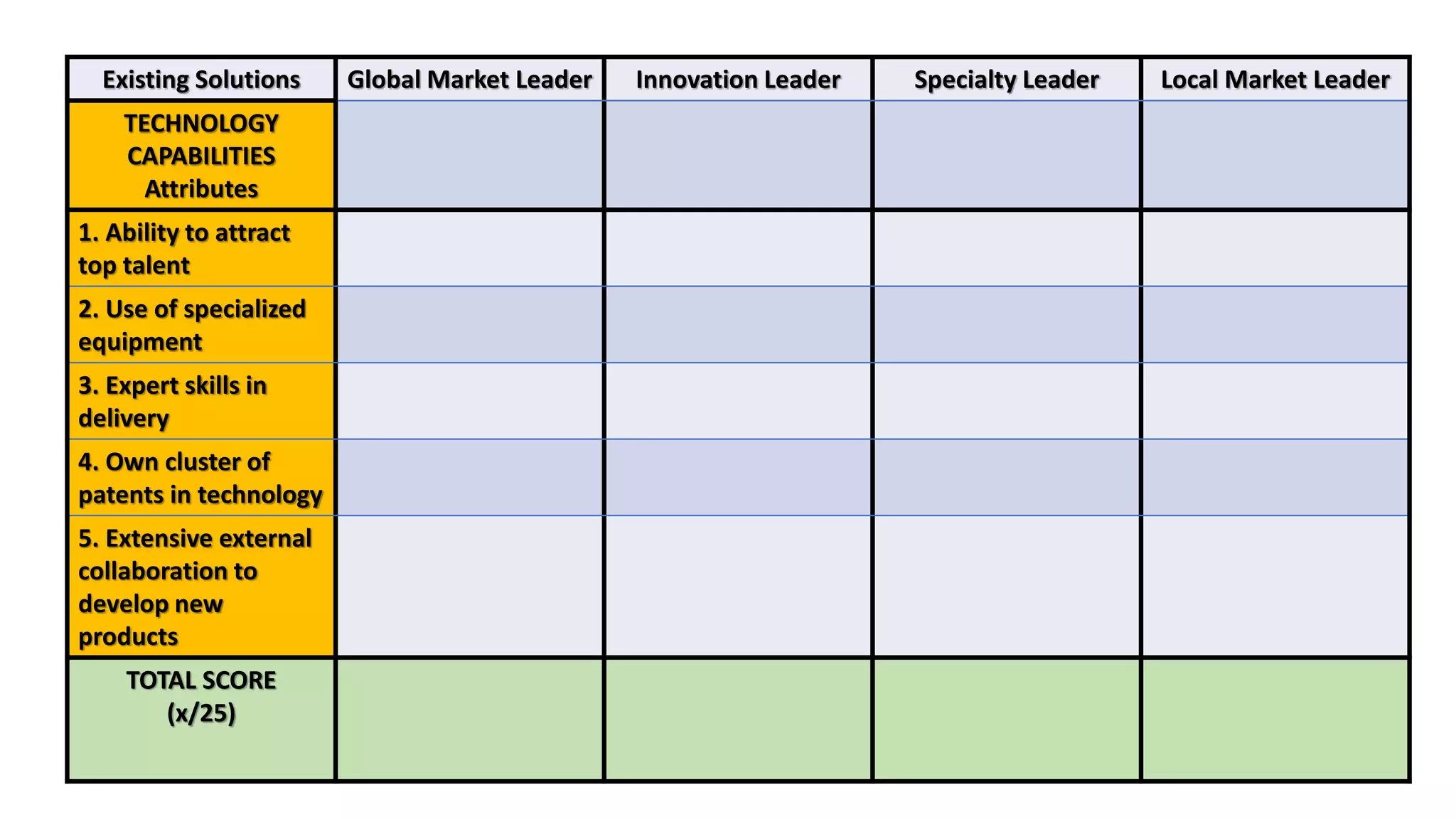
Existing Solutions Global Market Leader Innovation Leader Specialty Leader Local Market Leader
TECHNOLOGY
CAPABILITIES
Attributes
1. Ability to attract
top talent
2. Use of specialized
equipment
3. Expert skills in
delivery
4. Own cluster of
patents in technology
5. Extensive external
collaboration to
develop new
products
TOTAL SCORE
(x/25)
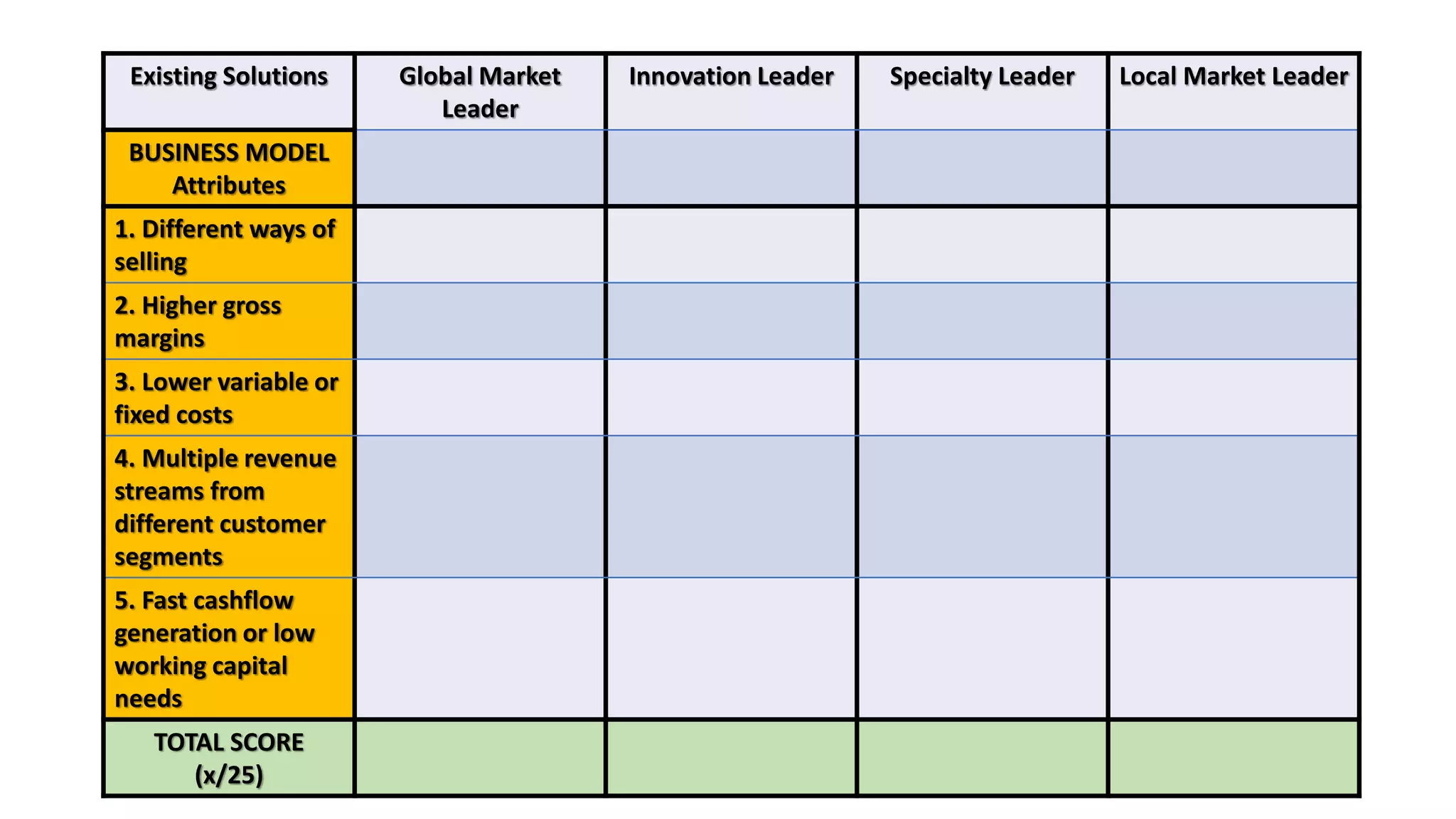
Existing Solutions Global Market
Leader
Innovation Leader Specialty Leader Local Market Leader
BUSINESS MODEL
Attributes
1. Different ways of
selling
2. Higher gross
margins
3. Lower variable or
fixed costs
4. Multiple revenue
streams from
different customer
segments
5. Fast cashflow
generation or low
working capital
needs
TOTAL SCORE
(x/25)
INNOVATION MAP SCORECARD : CALCULATION
COMPETITOR
ATTRIBUTES
TECHNOLOGY
CAPABILITY
(X AXIS)
BUSINESS
MODEL
(Y AXIS)
MARKET SHARE
(SIZE)
TOTAL RAW
SCORE (s)
Maximum : 25
Minimum : 0
Maximum : 25
Minimum : 0
m%
XY PLOT
COORDINATES :
[ s*0.4 – 5 ]
Maximum : 5
Minimum : -5
Maximum : 5
Minimum : -5
[m%*10]
YOUR INNOVATION MAPTECHNOLOGYCAAPABILITY
(Existing/New)
BUSINESS MODEL
(Existing/New)
INNOVATION STRATEGY
DISRUPTIVE
“New Way
Any Job”
GAME CHANGER
“One Way
Any Job”
INCREMENTAL
“Better Way
Same Job”
SUSTAINING
“Any Way
More Jobs”
EXERCISE : INNOVATION PROJECTS GRID
INNOVATION ATTRACTIVENESS VS EFFORT REQUIRED
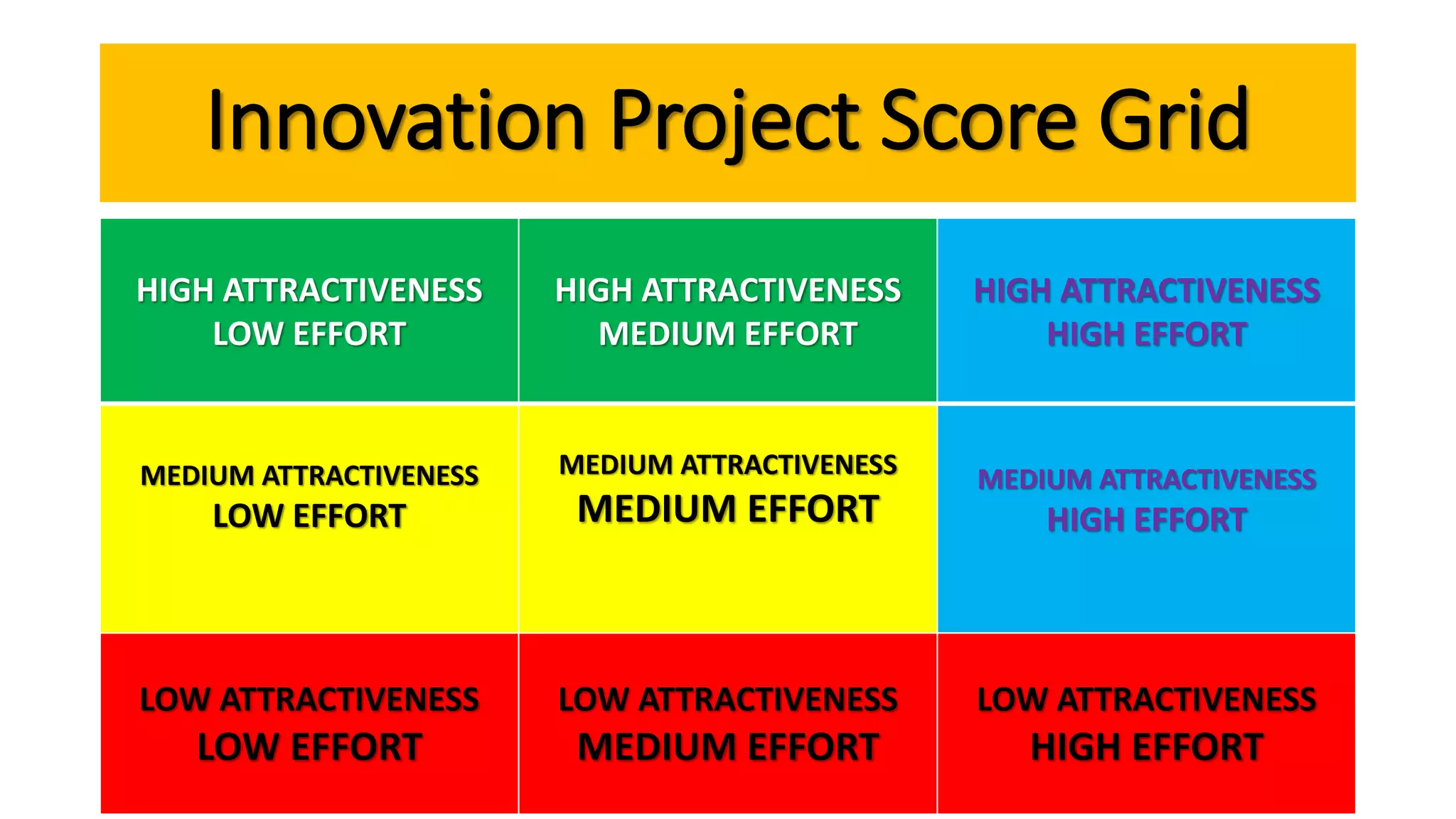
Innovation Project Score Grid
HIGH ATTRACTIVENESS
LOW EFFORT
HIGH ATTRACTIVENESS
MEDIUM EFFORT
HIGH ATTRACTIVENESS
HIGH EFFORT
MEDIUM ATTRACTIVENESS
LOW EFFORT
MEDIUM ATTRACTIVENESS
MEDIUM EFFORT
MEDIUM ATTRACTIVENESS
HIGH EFFORT
LOW ATTRACTIVENESS
LOW EFFORT
LOW ATTRACTIVENESS
MEDIUM EFFORT
LOW ATTRACTIVENESS
HIGH EFFORT
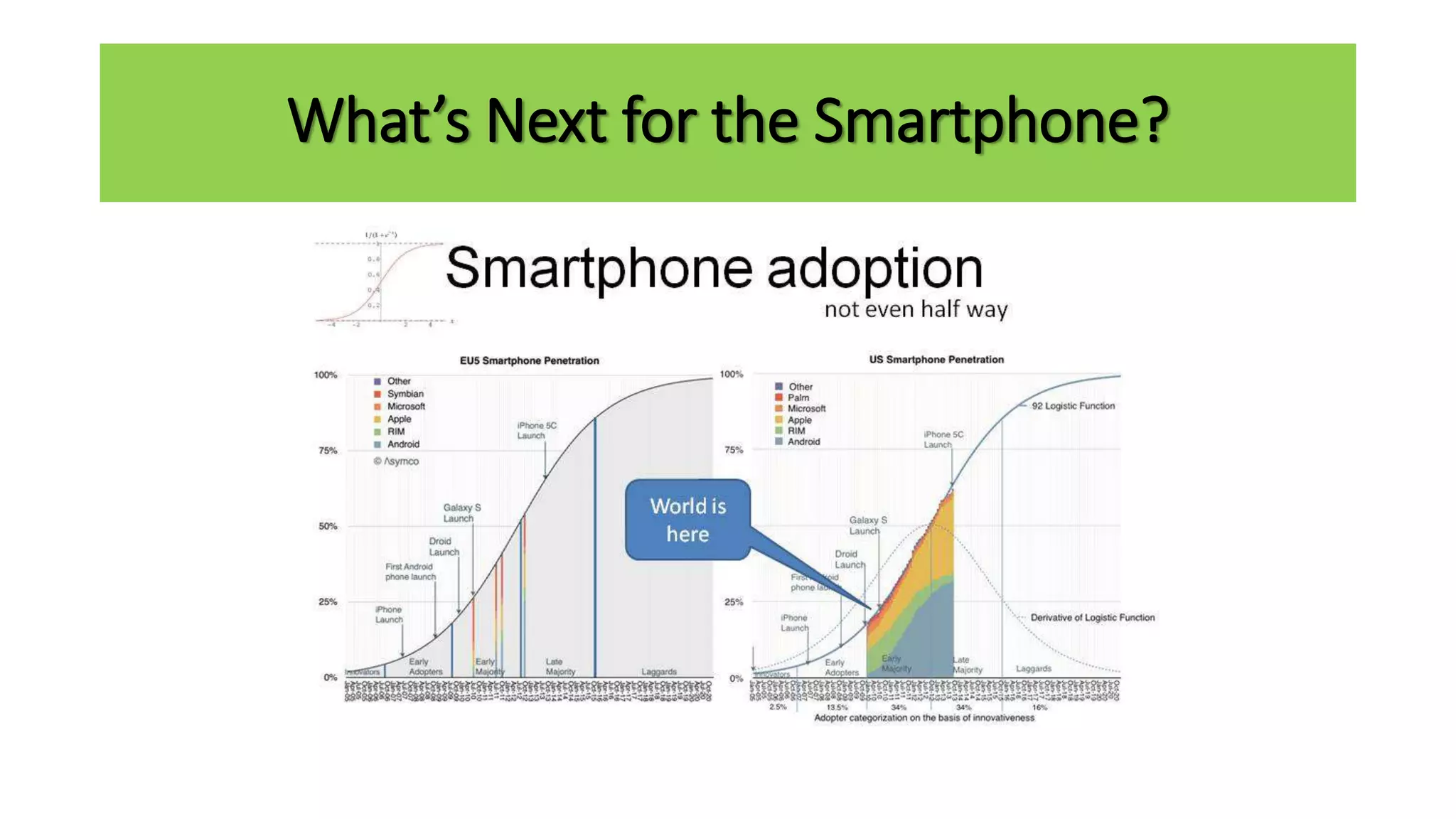
What’s Next for the Smartphone?
What to expect from MARKET LEADERS

Tcm step 1 technology analysis

  • 1.
    “Fast Track to Commercialization” …how to discover your One Million Dollar Business (1mdb) WORKSHOP 1 : TECHNOLOGY ANALYSIS Stephen Ong Visiting Professor, Shenzhen University, PRC Academic Fellow in Entrepreneurship & Innovation, Anglia Ruskin University, UK 21 December 2016
  • 2.
    “Is your productnew, unique, and technically feasible?” Innovation SPACE™ Technology Commercialization Model Phase 1 : CONCEPT Stage 1 : DISCOVERY Step 1 : TECHNOLOGY ANALYSIS
  • 3.
    3 Today’s Agenda • 9:00Introduction • 10:00 Technology Commercialisation Model • 11:00 Technical Attributes vs Value Proposition • 12:00 Innovation Mapping • 13:00 Have an AMAZON Lunch • 14:00 Innovation Projects Grid • 16:00 Conclusion
  • 4.
    The Technology CommercialisationModel SCIENCE & TECHNOLOGY MARKET ENTERPRISE / BUSINESS CONCEPT PHASE STAGE 1 : DISCOVERY Step 1 Technology Analysis Step 2 Market Needs Analysis Step 3 Venture Assessment CREATION PHASE STAGE 2 : DO-ABILITY Step 4 Technical Feasibility Step 5 Market Study Step 6 Economic Feasibility STAGE 3 : DESIGN Step 7 Engineering Prototype / Pilot Plant Step 8 Strategic Marketing Plan Step 9 Strategic Business Plan STAGE 4 : DEPLOYMENT Step 10 Pre-production Prototype Step 11 Market Validation Step 12 Business Start-Up COMMERCIAL PHASE STAGE 5 : DELIVERY Step 13 Production Step 14 Sales & Distribution Step 15 Business Growth STAGE 6 : DOMINATION Step 16 Production Support Step 17 Market Diversification Step 18 Business Maturity
  • 5.
    Step 1: TechnologyAnalysis Is this product new, unique, and technically feasible? • The first activity to testing these new venture assumptions is to investigate the technical validity of the product. This step is called the Technology Analysis. To have commercial value, the product or service should solve a real world problem better, cheaper, or faster than existing solutions, and the feature advantages of the new product must be powerfully better than existing ones. You should remember that existing products and services are often supported by huge advertising budgets, aggressive marketing strategies, and fierce customer loyalty. It is seldom enough for an incremental improvement in a product to displace a well-entrenched product already in the market. Also, remember that product benefits take precedence over product features. Customers buy electric drills to make holes, not to get fancy cases. The purpose of this activity is to assess the intellectual property status of any technology involved in the product. This involves determining whether the product or any of its components are covered by intellectual property protection such as patents or copyrights. • Definition: The process of determining that the physical features of the concept are potentially achievable and operational. • Objective: The objectives of the technical concept analysis step are to succinctly define the concept, to assess the implementation potential of the technical aspects of the concept, and establish the uniqueness of the technical concept. • Product: The product of this activity is a verbal description, schematic, formula, conceptual model or paper design, delineating the main features of the technical concept. • Technical Activities: During the technical concept analysis step the following activities must be completed: • Define the concept fully; • Demonstrate that performance assumptions are viable; • Assess critical barriers to production; • Survey the state-of-the-art of the technology; • Estimate the working models costs. • Milestones: Provisional patent, patent, copyright, patent scan, license agreement • Funding Sources: Personal finances, MOSTI (Technofund, Innofund) • Technical Information: The technical concept analysis will usually result in knowledge about the features of the technical concept, performance expectations, prior art, and other similar or related research and development activities. • Key Questions : • Have you completed a technology database search? Have you researched related patents or copyrights? Have you researched technical journals and trade magazines? Have you discussed the topic with experts? Do you know the current state-of-the-art competitive technologies? Have you selected the technologies for the application? Have you determined the advantages of this technology? Have you determined the risks for this technology? Do the benefits of this technology or product offer significant advantages over the existing solution?
  • 6.
    KEY QUESTIONS 1. Haveyou completed a technology database search? 2. Have you researched related patents or copyrights? 3. Have you researched technical journals and trade magazines? 4. Have you discussed the topic with experts? 5. Do you know the current state-of-the-art competitive technologies? 6. Have you selected the technologies for the application? 7. Have you determined the advantages of this technology? 8. Have you determined the risks for this technology? 9. Do the benefits of this technology or product offer significant advantages over the existing solution?
  • 7.
    THE INNOVATOR’S DELUSION 1.“Our technology is so new that we have no competitors” 2. “The new technology being commercialized by our competitors will not pose a large threat” 3. “That competitor is in a different industry, and its strategies won’t affect my business.”
  • 8.
    “Our technology isso new that we have no competitors”
  • 9.
    “The new technologybeing commercialized by our competitors will not pose a large threat”
  • 10.
    “That competitor isin a different industry, and its strategies won’t affect my business.”
  • 11.
    Who were theExisting Solutions?
  • 12.
  • 13.
    Example : TaxiSmartPhone vs GRABCar
  • 14.
    TECHNOLOGY PRODUCT ATTRIBUTES ExistingSolutions Global Market Leader Innovation Leader Specialty Leader Local Market Leader Attributes 1. 2. 3. 4. 5. 6. 7. 8.
  • 15.
    Existing Solution : BENEFITS/ GAINS (+) 1. 2. 3. ISSUES /PAINS (-) 1. 2. 3.
  • 16.
    Have an Amazonlunch …
  • 17.
    WHERE ARE YOU? … on the CURVE or on the next WAVE ? THE CURRENT STATE OF ART OF TECHNOLOGY
  • 18.
    The NEW PRODUCTLIFE CYCLE
  • 19.
    THE S-CURVE OFTECHNOLOGY ADOPTION
  • 20.
    HOW LONG WILLIT TAKE?
  • 21.
    While you weresleeping … DISCONTINUOUS CURVE becomes DISRUPTIVE OLD INDUSTRY HIGH TECH INDUSTRY
  • 22.
    … and thenext WAVE ?
  • 23.
    Are you toolate? Industries can decline …
  • 24.
  • 25.
    INNOVATION MAP :SMARTPHONE WAR BEGINS 2007TECHNOLOGYCAAPABILITY CHANGE BUSINESS MODEL CHANGE INNOVATION STRATEGY DISRUPTIVE “New Way Any Job” GAME CHANGER “One Way Any Job” INCREMENTAL “Better Way Same Job” SUSTAINING “Any Way More Jobs”
  • 26.
    Who are theInnovators?
  • 27.
    INNOVATION MAP SCORECARD: ATTRIBUTES TECHNOLOGY CAPABILITY (+/-) • Attract top talent • Use of specialized machines • Expert skills to deliver • Own cluster of patents around technology, methodology or process • Collaborate with suppliers/customers/partners to develop new products BUSINESS MODEL (+/-) • Different ways of selling • Higher gross margins • Lower variable or fixed costs • Multiple revenue streams from different customer segments • Fast cashflow generation or low working capital needs
  • 28.
    Existing Solutions GlobalMarket Leader Innovation Leader Specialty Leader Local Market Leader TECHNOLOGY CAPABILITIES Attributes 1. Ability to attract top talent 2. Use of specialized equipment 3. Expert skills in delivery 4. Own cluster of patents in technology 5. Extensive external collaboration to develop new products TOTAL SCORE (x/25)
  • 29.
    Existing Solutions GlobalMarket Leader Innovation Leader Specialty Leader Local Market Leader BUSINESS MODEL Attributes 1. Different ways of selling 2. Higher gross margins 3. Lower variable or fixed costs 4. Multiple revenue streams from different customer segments 5. Fast cashflow generation or low working capital needs TOTAL SCORE (x/25)
  • 30.
    INNOVATION MAP SCORECARD: CALCULATION COMPETITOR ATTRIBUTES TECHNOLOGY CAPABILITY (X AXIS) BUSINESS MODEL (Y AXIS) MARKET SHARE (SIZE) TOTAL RAW SCORE (s) Maximum : 25 Minimum : 0 Maximum : 25 Minimum : 0 m% XY PLOT COORDINATES : [ s*0.4 – 5 ] Maximum : 5 Minimum : -5 Maximum : 5 Minimum : -5 [m%*10]
  • 31.
    YOUR INNOVATION MAPTECHNOLOGYCAAPABILITY (Existing/New) BUSINESSMODEL (Existing/New) INNOVATION STRATEGY DISRUPTIVE “New Way Any Job” GAME CHANGER “One Way Any Job” INCREMENTAL “Better Way Same Job” SUSTAINING “Any Way More Jobs”
  • 32.
    EXERCISE : INNOVATIONPROJECTS GRID INNOVATION ATTRACTIVENESS VS EFFORT REQUIRED
  • 33.
    Innovation Project ScoreGrid HIGH ATTRACTIVENESS LOW EFFORT HIGH ATTRACTIVENESS MEDIUM EFFORT HIGH ATTRACTIVENESS HIGH EFFORT MEDIUM ATTRACTIVENESS LOW EFFORT MEDIUM ATTRACTIVENESS MEDIUM EFFORT MEDIUM ATTRACTIVENESS HIGH EFFORT LOW ATTRACTIVENESS LOW EFFORT LOW ATTRACTIVENESS MEDIUM EFFORT LOW ATTRACTIVENESS HIGH EFFORT
  • 34.
    What’s Next forthe Smartphone?
  • 35.
    What to expectfrom MARKET LEADERS

Editor's Notes