Adrenoceptor Agonists &
Sympathomimetic Drugs
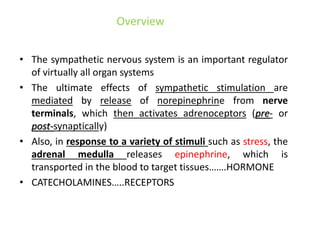
Overview
• The sympathetic nervous system is an important regulator
of virtually all organ systems
• The ultimate effects of sympathetic stimulation are
mediated by release of norepinephrine from nerve
terminals, which then activates adrenoceptors (pre- or
post-synaptically)
• Also, in response to a variety of stimuli such as stress, the
adrenal medulla releases epinephrine, which is
transported in the blood to target tissues…….HORMONE
• CATECHOLAMINES…..RECEPTORS
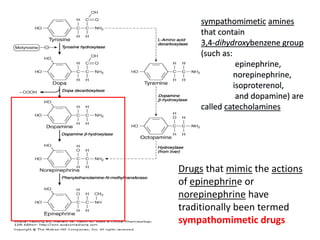
Drugs that mimic the actions
of epinephrine or
norepinephrine have
traditionally been termed
sympathomimetic drugs
Adrenergic receptors (adrenoceptors)
• There are two main groups of adrenergic receptors, α
and β, with several subtypes. These were initially
identified on the basis of their responses to the
adrenergic agonists epinephrine, norepinephrine, and
isoproterenol
• All the adrenoceptors are G-protein coupled
receptors (GPCRs)…..G????
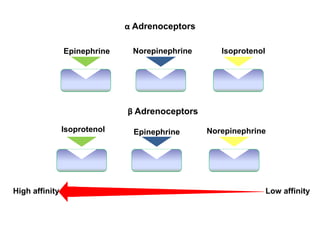
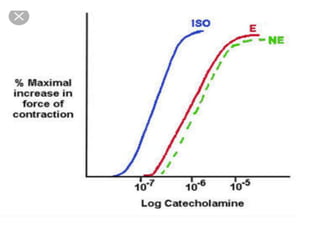
Epinephrine Norepinephrine Isoprotenol
Isoprotenol Epinephrine Norepinephrine
Low affinityHigh affinity
α Adrenoceptors
β Adrenoceptors
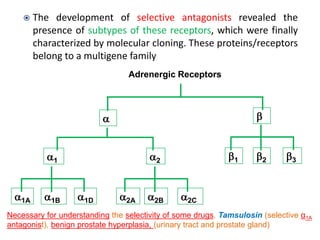
 The development of selective antagonists revealed the
presence of subtypes of these receptors, which were finally
characterized by molecular cloning. These proteins/receptors
belong to a multigene family
Adrenergic Receptors
a1A
a1
b
a2
a1B a1D a2A a2B a2C
b1 b2 b3
a
Necessary for understanding the selectivity of some drugs. Tamsulosin (selective α1A
antagonist), benign prostate hyperplasia, (urinary tract and prostate gland)
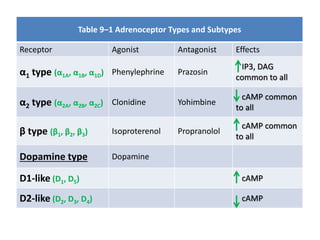
Table 9–1 Adrenoceptor Types and Subtypes
Receptor Agonist Antagonist Effects
α1 type (α1A, α1B, α1D) Phenylephrine Prazosin
IP3, DAG
common to all
α2 type (α2A, α2B, α2C) Clonidine Yohimbine
cAMP common
to all
β type (β1, β2, β3) Isoproterenol Propranolol
cAMP common
to all
Dopamine type Dopamine
D1-like (D1, D5) cAMP
D2-like (D2, D3, D4) cAMP
Adrenergic receptors (adrenoceptors)
Alpha receptors
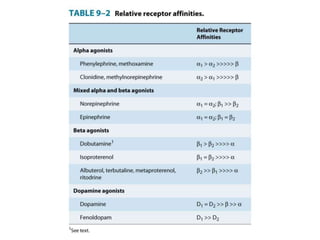
• The α1 receptors have a higher affinity for
phenylephrine than do the α2 receptors.
• Conversely, clonidine is more selective to α2
receptors (has less effect on α1 receptors)
• Both epinephrine and norepinephrine have
similar affinity for α and β receptors
selectivity
• Selectivity?? A drug may preferentially bind to one
subgroup of receptors at concentration too low to
interact extensively with other subgroup! (e.g., important in β
receptors)
• Selectivity not absolute….at higher concentration, the
drug interacts with other subgroups!! (drug are not
specific)
• The effect depends also on the expression of the subtype
on a given tissue
• The function of specific subtype receptor is known
through development of “knockout mice”
Adrenergic receptors (adrenoceptors)
Alpha receptors
I. α1 Adrenoceptors:
• These receptors are present on the postsynaptic membrane of
the effector organs and mediate many of the classic involving
contraction of smooth muscle
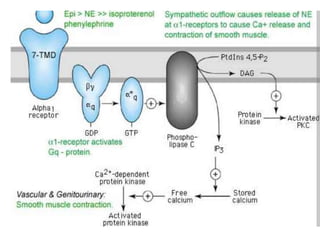
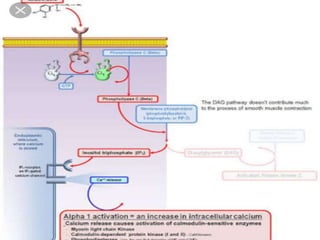
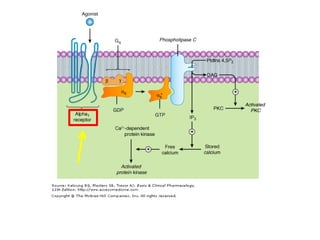
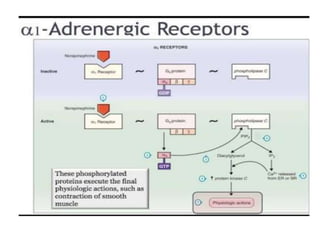
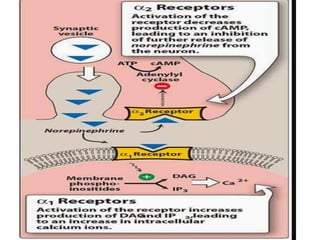
• Alpha1 receptors are coupled via Gq proteins to phospholipase
C.
– Activation of α1 receptors result in the generation of inositol-
1,4,5-trisphosphate (IP3) and diacylglycerol (DAG) from
phosphatidylinositol. IP3 initiates the release of Ca2+ from the
endoplasmic reticulum into the cytosol and the activation of
various calcium-dependent protein kinases.
– Activation of these receptors may also increase influx of calcium
across the cell's plasma membrane.
– DAG activates protein kinase C, which modulates activity of
many signalling pathways
Adrenergic receptors (adrenoceptors)
Alpha receptors
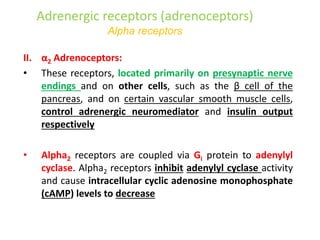
II. α2 Adrenoceptors:
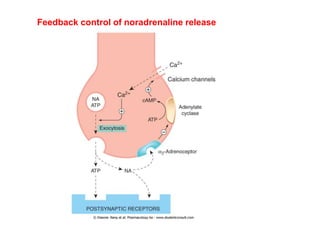
• These receptors, located primarily on presynaptic nerve
endings and on other cells, such as the β cell of the
pancreas, and on certain vascular smooth muscle cells,
control adrenergic neuromediator and insulin output
respectively
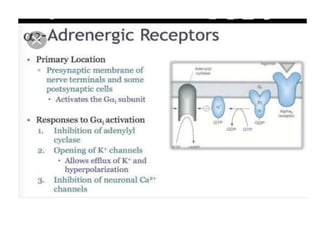
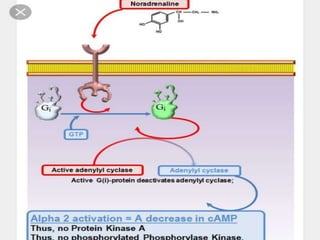
• Alpha2 receptors are coupled via Gi protein to adenylyl
cyclase. Alpha2 receptors inhibit adenylyl cyclase activity
and cause intracellular cyclic adenosine monophosphate
(cAMP) levels to decrease
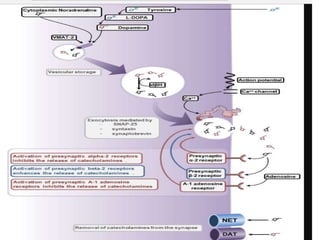
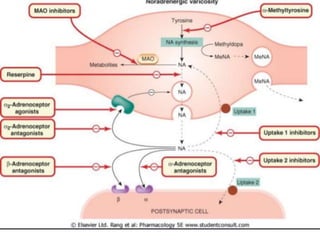
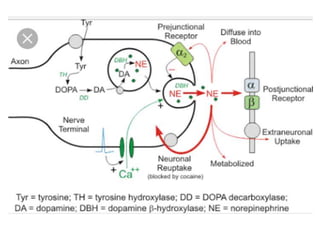
Feedback control of noradrenaline release
Adrenergic receptors (adrenoceptors)
Beta receptors
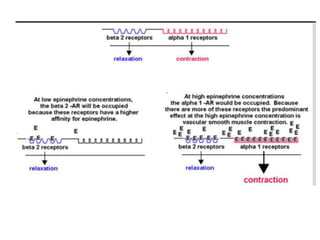
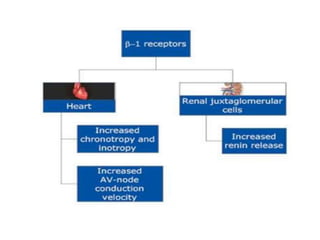
• β1 Receptors have approximately equal affinities for
epinephrine and norepinephrine,
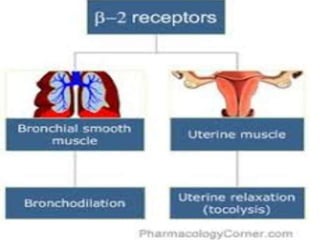
• whereas β2 receptors have a higher affinity for epinephrine
than for norepinephrine.
– Thus, tissues with a predominance of β2 receptors (such as the
vasculature of skeletal muscle) are particularly responsive to the
hormonal effects of circulating epinephrine released by the
adrenal medulla
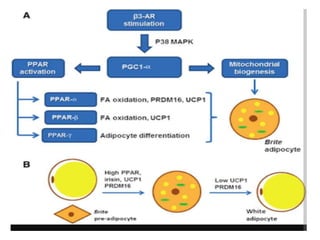
• β3 Receptors may mediate responses to catecholamine at
sites with "atypical" pharmacological characteristics (e.g.,
adipose tissue)
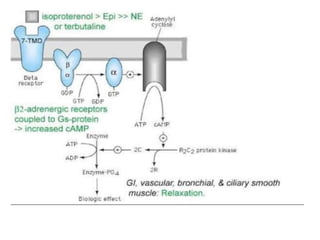
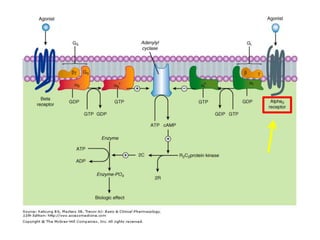
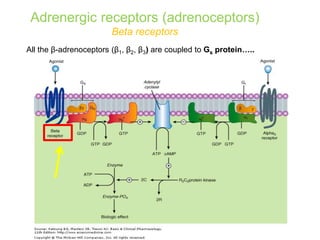
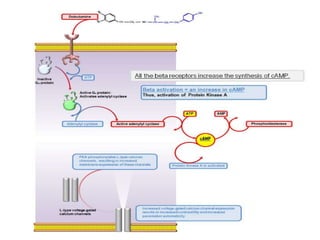
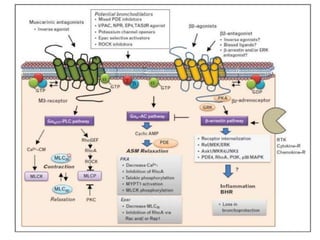
All the β-adrenoceptors (β1, β2, β3) are coupled to Gs protein…..
Adrenergic receptors (adrenoceptors)
Beta receptors
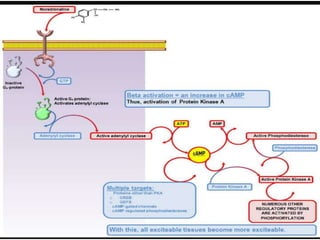
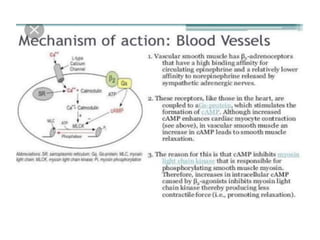
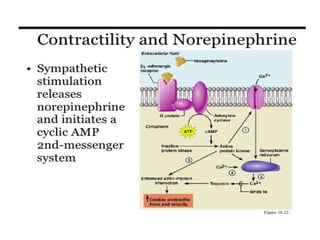
cAMP is the major second messenger of β-receptor activation!
For example:
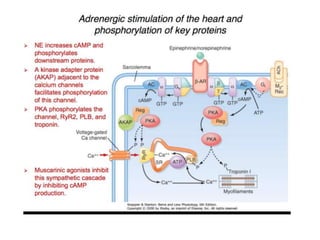
 In the heart, increases the influx of calcium across the
cell membrane and its sequestration inside the cell
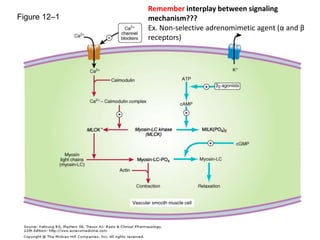
 cAMP also promotes the relaxation of smooth muscle
may involve the phosphorylation of myosin light-chain
kinase to an inactive form (uncertain mech.) (see Figure
12–1)
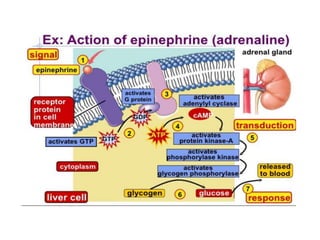
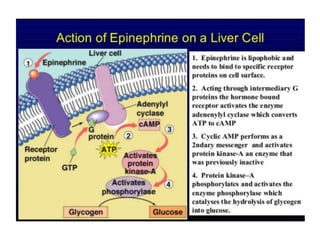
 In the liver, β-receptor-activated cAMP synthesis leads to
activation of glycogen phosphorylase
Adrenergic receptors (adrenoceptors)
Beta receptors
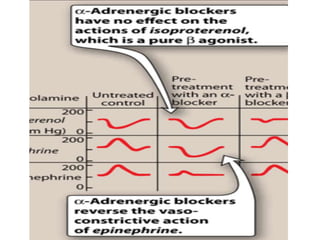
Remember interplay between signaling
mechanism???
Ex. Non-selective adrenomimetic agent (α and β
receptors)
Figure 12–1
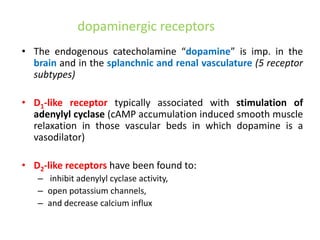
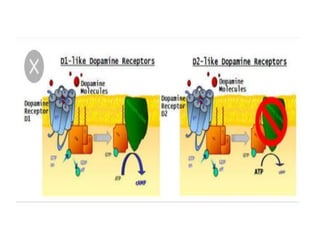
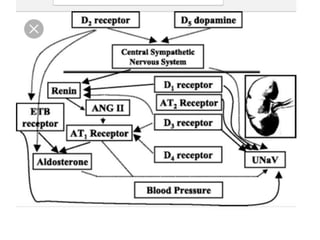
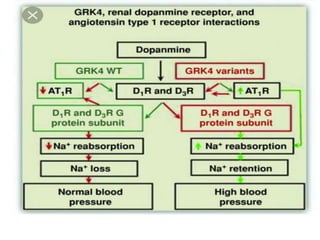
dopaminergic receptors
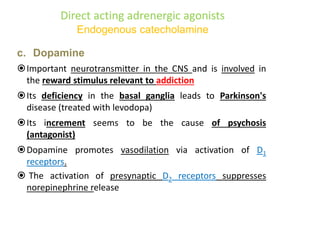
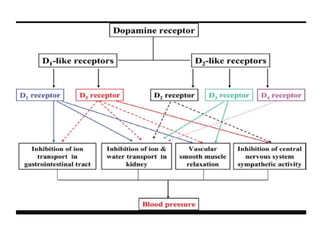
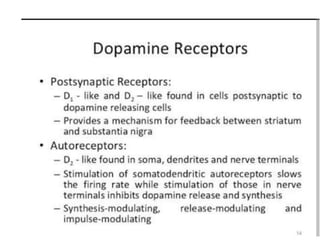
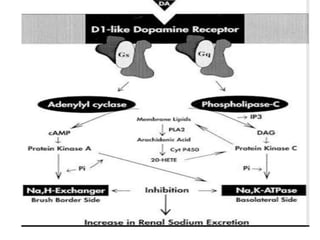
• The endogenous catecholamine “dopamine” is imp. in the
brain and in the splanchnic and renal vasculature (5 receptor
subtypes)
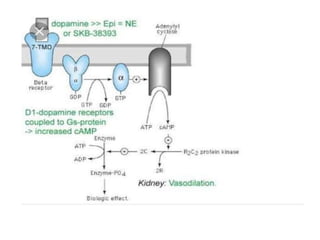
• D1-like receptor typically associated with stimulation of
adenylyl cyclase (cAMP accumulation induced smooth muscle
relaxation in those vascular beds in which dopamine is a
vasodilator)
• D2-like receptors have been found to:
– inhibit adenylyl cyclase activity,
– open potassium channels,
– and decrease calcium influx
Adrenergic receptors (adrenoceptors)
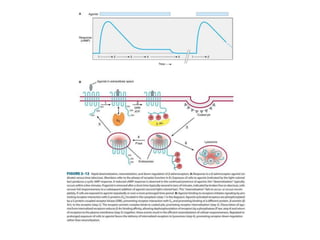
Receptor regulation
• Responses mediated by adrenoceptors are not fixed and
static
• Prolonged exposure to the catecholamines reduces the
tissue response to further stimulation by that agent
• This process has potential clinical significance because it
may limit the therapeutic response to sympathomimetic
agents
• Two major categories of desensitization of responses
mediated by G protein-coupled receptors
Adrenergic receptors (adrenoceptors)
Receptor regulation
 Homologous desensitization: loss of responsiveness
exclusively of the receptors that have been exposed to
repeated or sustained activation by an agonist:
Inability to couple to G protein, because the
receptor has been phosphorylated on the
cytoplasmic side by G protein-coupled receptor
kinase (GRK) family
Adrenergic receptors (adrenoceptors)
Receptor regulation
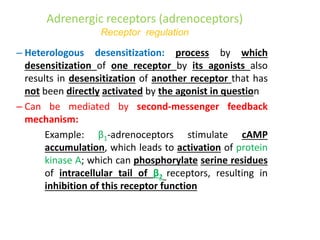
– Heterologous desensitization: process by which
desensitization of one receptor by its agonists also
results in desensitization of another receptor that has
not been directly activated by the agonist in question
– Can be mediated by second-messenger feedback
mechanism:
Example: β1-adrenoceptors stimulate cAMP
accumulation, which leads to activation of protein
kinase A; which can phosphorylate serine residues
of intracellular tail of β2 receptors, resulting in
inhibition of this receptor function
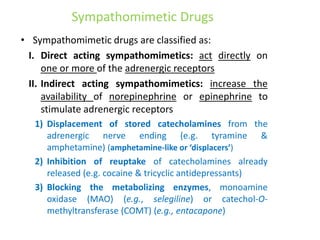
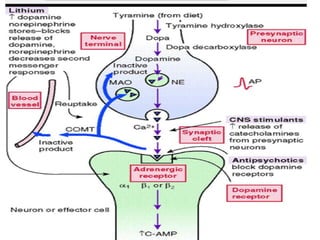
Sympathomimetic Drugs
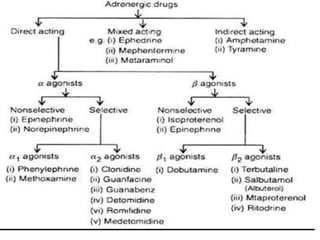
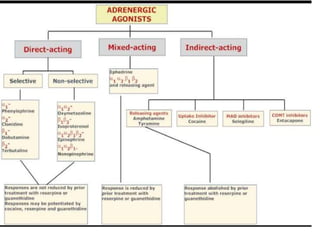
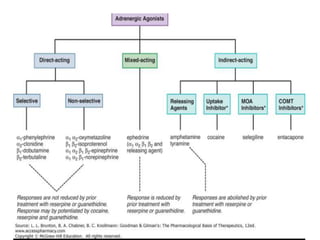
• Sympathomimetic drugs are classified as:
I. Direct acting sympathomimetics: act directly on
one or more of the adrenergic receptors
II. Indirect acting sympathomimetics: increase the
availability of norepinephrine or epinephrine to
stimulate adrenergic receptors
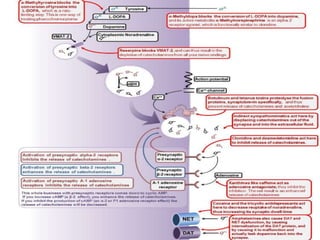
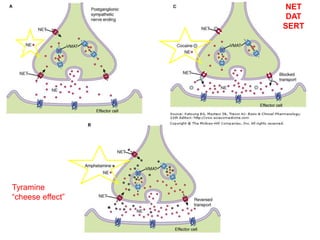
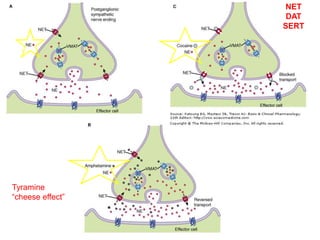
1) Displacement of stored catecholamines from the
adrenergic nerve ending (e.g. tyramine &
amphetamine) (amphetamine-like or ‘displacers’)
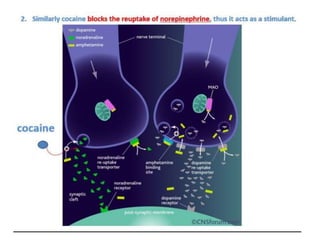
2) Inhibition of reuptake of catecholamines already
released (e.g. cocaine & tricyclic antidepressants)
3) Blocking the metabolizing enzymes, monoamine
oxidase (MAO) (e.g., selegiline) or catechol-O-
methyltransferase (COMT) (e.g., entacapone)
NET
DAT
SERT
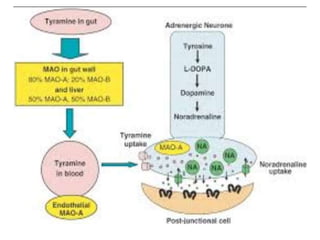
Tyramine
“cheese effect”
Sympathomimetic Drugs (Cont’d)
III. Mixed acting sympathomimetics: indirectly induce
the release of norepinephrine from the presynaptic
terminal and directly activate receptors (e.g.
Ephedrine)
Sympathomimetic Drugs (Cont’d)
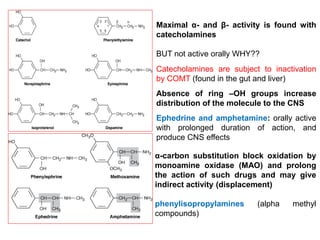
• Phenylethylamine (prototype)
• Substitutions may be made on (1) the benzene ring, (2) the
terminal amino group, and/or (3) the carbons of the amino
chain
• These modifications produce compounds with:
 varying affinities to α and β receptors,
 as well as to influence the intrinsic ability to activate the
receptors,
 their pharmacokinetic properties,
 and different abilities to penetrate the CNS
Maximal α- and β- activity is found with
catecholamines
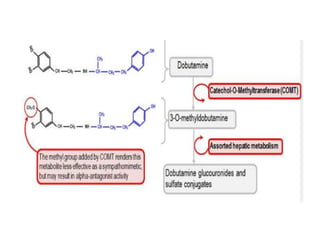
BUT not active orally WHY??
Catecholamines are subject to inactivation
by COMT (found in the gut and liver)
Absence of ring –OH groups increase
distribution of the molecule to the CNS
Ephedrine and amphetamine: orally active
with prolonged duration of action, and
produce CNS effects
α-carbon substitution block oxidation by
monoamine oxidase (MAO) and prolong
the action of such drugs and may give
indirect activity (displacement)
phenylisopropylamines (alpha methyl
compounds)
Organ System Effects of Sympathomimetic
Drugs
The response of any cell/organ to sympathomimetics
depends on:
– the density and proportion of α and β adrenergic receptors;
– their relative selectivity for the different adrenoceptor
subtype,
– and its pharmacological action on those receptors
– Don’t forget compensatory baroreflex mechanisms (CV
system)
Adrenergically innervated organs and tissues tend to
have a predominance of one type of receptor
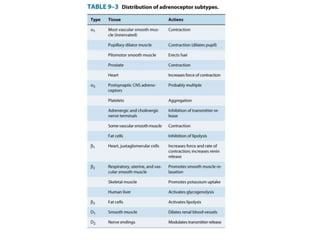
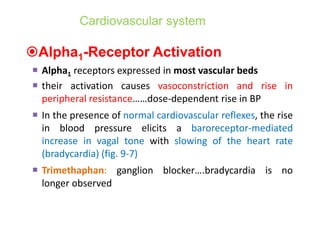
Cardiovascular system
Alpha1-Receptor Activation
 Alpha1 receptors expressed in most vascular beds
 their activation causes vasoconstriction and rise in
peripheral resistance……dose-dependent rise in BP
 In the presence of normal cardiovascular reflexes, the rise
in blood pressure elicits a baroreceptor-mediated
increase in vagal tone with slowing of the heart rate
(bradycardia) (fig. 9-7)
 Trimethaphan: ganglion blocker….bradycardia is no
longer observed
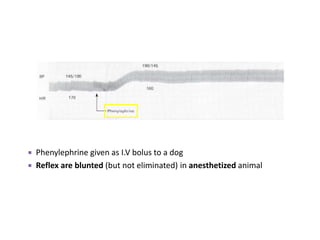
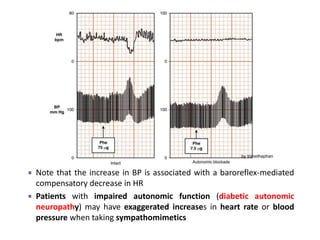
 Phenylephrine given as I.V bolus to a dog
 Reflex are blunted (but not eliminated) in anesthetized animal
 Note that the increase in BP is associated with a baroreflex-mediated
compensatory decrease in HR
 Patients with impaired autonomic function (diabetic autonomic
neuropathy) may have exaggerated increases in heart rate or blood
pressure when taking sympathomimetics
by trimethaphan
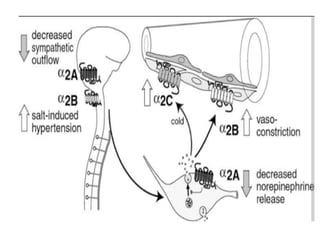
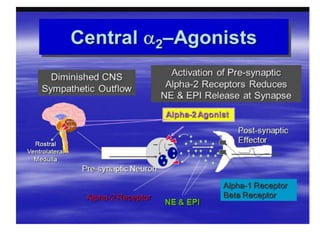
• Alpha2-Receptor Activation
– α2 adrenoceptors are present in the vasculature, and their
activation leads to vasoconstriction
– This effect observed only when α2 agonists are given locally by
rapid I.V injection, or in very high oral doses
– When given systemically, these vascular effects are obscured by
the central effects of α2 receptors, which lead to inhibition of
sympathetic tone and blood pressure (sympatholytic effect)
– Clonidine: used to treatment (Tx.) Hypertension
– Patients with pure autonomic failure??
Cardiovascular system
• Beta-Receptor Activation
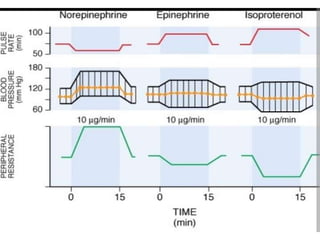
– Isoproterenol activates both beta1 and beta 2
adrenoceptor???
– Direct effects on the heart are determined largely by β1
receptors
– Positive chronotropic effect, inotropic effect and
dromotropic effect….increase coronary blood flow
– …..resulting in a marked increase in cardiac output and
cardiac oxygen consumption
– β2 receptors activation, leads to vasodilation in certain
vasculature of smooth muscles
• Increase blood flow in skeletal muscle during exercise
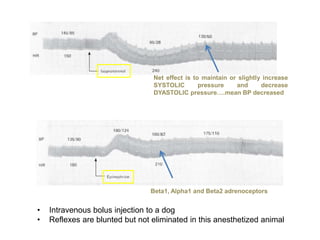
Net effect is to maintain or slightly increase
SYSTOLIC pressure and decrease
DYASTOLIC pressure….mean BP decreased
Beta1, Alpha1 and Beta2 adrenoceptors
• Intravenous bolus injection to a dog
• Reflexes are blunted but not eliminated in this anesthetized animal
Cardiovascular system
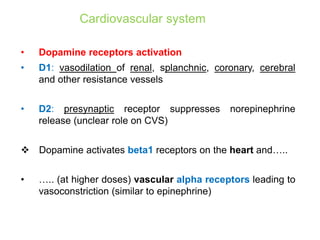
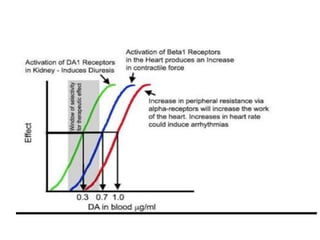
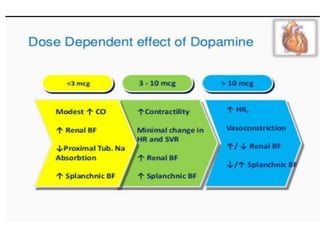
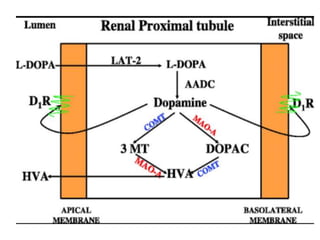
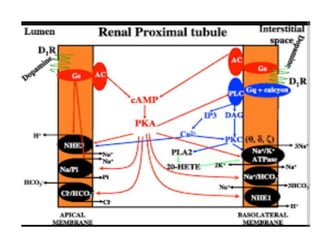
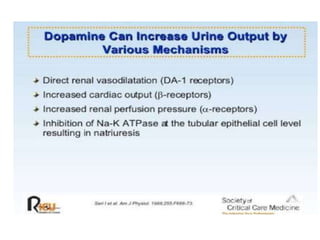
• Dopamine receptors activation
• D1: vasodilation of renal, splanchnic, coronary, cerebral
and other resistance vessels
• D2: presynaptic receptor suppresses norepinephrine
release (unclear role on CVS)
 Dopamine activates beta1 receptors on the heart and…..
• ….. (at higher doses) vascular alpha receptors leading to
vasoconstriction (similar to epinephrine)
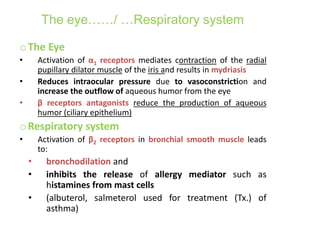
The eye……/ …Respiratory system
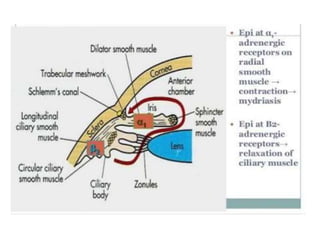
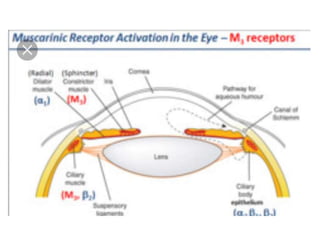
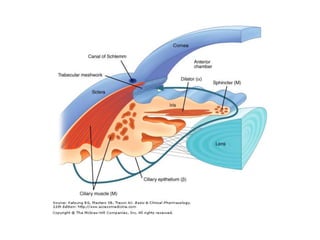
oThe Eye
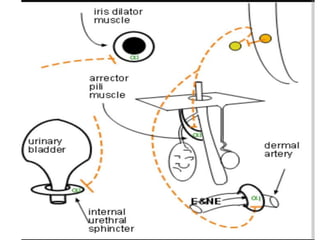
• Activation of α1 receptors mediates contraction of the radial
pupillary dilator muscle of the iris and results in mydriasis
• Reduces intraocular pressure due to vasoconstriction and
increase the outflow of aqueous humor from the eye
• β receptors antagonists reduce the production of aqueous
humor (ciliary epithelium)
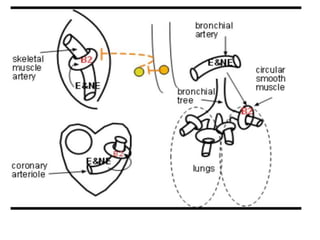
oRespiratory system
• Activation of β2 receptors in bronchial smooth muscle leads
to:
• bronchodilation and
• inhibits the release of allergy mediator such as
histamines from mast cells
• (albuterol, salmeterol used for treatment (Tx.) of
asthma)
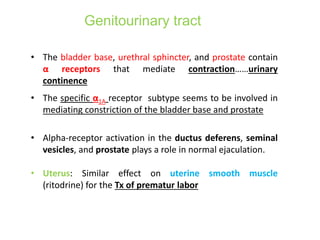
Genitourinary tract
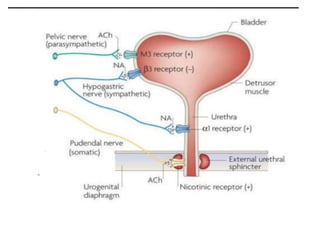
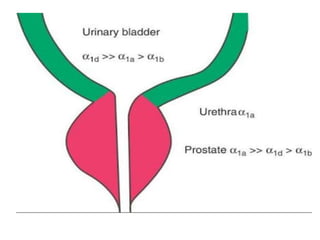
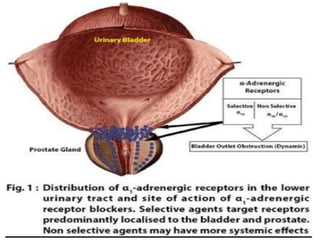
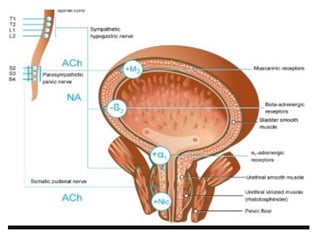
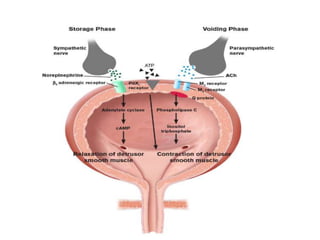
• The bladder base, urethral sphincter, and prostate contain
α receptors that mediate contraction……urinary
continence
• The specific α1A receptor subtype seems to be involved in
mediating constriction of the bladder base and prostate
• Alpha-receptor activation in the ductus deferens, seminal
vesicles, and prostate plays a role in normal ejaculation.
• Uterus: Similar effect on uterine smooth muscle
(ritodrine) for the Tx of prematur labor
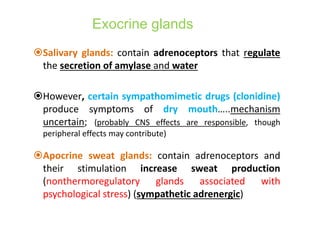
Exocrine glands
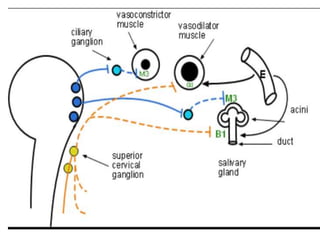
Salivary glands: contain adrenoceptors that regulate
the secretion of amylase and water
However, certain sympathomimetic drugs (clonidine)
produce symptoms of dry mouth…..mechanism
uncertain; (probably CNS effects are responsible, though
peripheral effects may contribute)
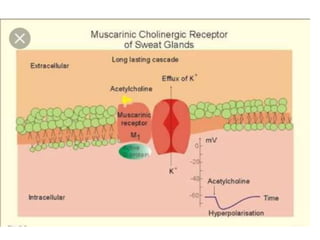
Apocrine sweat glands: contain adrenoceptors and
their stimulation increase sweat production
(nonthermoregulatory glands associated with
psychological stress) (sympathetic adrenergic)
Metabolism
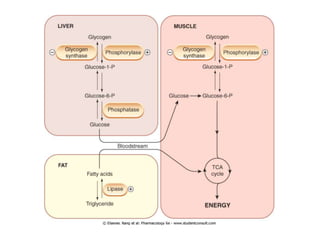
 Catecholamines encourage the conversion of energy stores
(glycogen and fat) to freely available fuels (glucose and free fatty
acids), and cause an increase in the plasma concentration of these
substances
1. Activation of β3 receptors in adipocytes stimulate
lipolysis……enhance release of FFA and glycerol into the blood
2. α2 receptors activation inhibit lipolysis by decreasing intracellular
cAMP
3. Stimulate glycogenolysis in the liver and muscles, which leads to
increased glucose release into the circulation……mediated mainly
by β receptors
Metabolism
• Activation of β2 receptors promotes K+ uptake into
cells, particularly skeletal muscle……
• and protect against a rise in plasma potassium
during exercise
• Stress result in……Fall in plasma K+ potassium
concentration (hypokalemia) during stress
Hormones secretion
• β receptors enhance insulin secretion and renin
secretion….
• ….while……
• α2 receptors inhibit insulin secretion and renin
secretion
• Adrenoceptors also modulate the secretion of
parathyroid hormone, calcitonin, thyroxine, and
gastrin…….limited physiologic significance
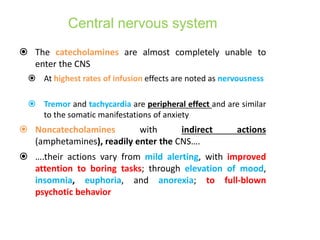
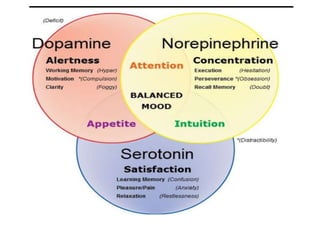
Central nervous system
 The catecholamines are almost completely unable to
enter the CNS
 At highest rates of infusion effects are noted as nervousness
 Tremor and tachycardia are peripheral effect and are similar
to the somatic manifestations of anxiety
 Noncatecholamines with indirect actions
(amphetamines), readily enter the CNS….
 ….their actions vary from mild alerting, with improved
attention to boring tasks; through elevation of mood,
insomnia, euphoria, and anorexia; to full-blown
psychotic behavior
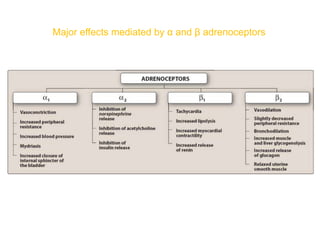
Major effects mediated by α and β adrenoceptors
Therapeutic Uses of Sympathomimetic Drugs
• Selection of a particular sympathomimetic
drug depends on:
1. Whether activation of α, β1, or β2 receptors is
desired
2. The desirable duration of action
3. The preferred route of administration
Direct acting adrenergic agonists
Endogenous catecholamine
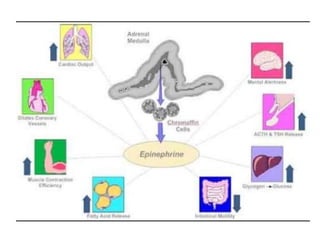
a. Epinephrine (adrenaline)
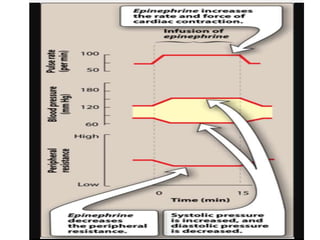
 Potent stimulant of both α and β adrenoceptors
 Potent vasoconstrictor and cardiac stimulant
● +ve inotropic and chronotropic actions on the heart (B1)
● and vasoconstriction induced in many vascular beds (a1)
● Epinephrine also activates β2 receptors in some vessels (eg,
skeletal muscle blood vessels), leading to their dilation
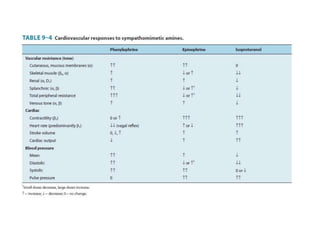
● Therefore, the net effect is an increase in systolic blood
pressure, coupled with a slight decrease in diastolic pressure
a. Epinephrine (adrenaline)
Respiratory:
 causes powerful bronchodilation by acting directly on bronchial
smooth muscle and
 inhibiting the release of allergic mediators such as histamine
from mast cells (β2 action)
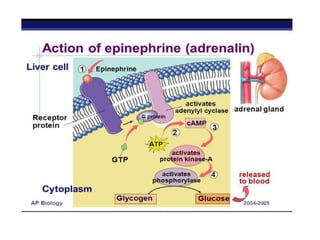
Hyperglycemia: epinephrine has a significant
hyperglycemic effect because of
 increased glycogenolysis in the liver (β2 effect),
 and a decreased release of insulin (α2 effect)
Lipolysis: epinephrine initiates lipolysis through its agonist
activity on the β receptors of adipose tissue
Therapeutic Uses of Sympathomimetic Drugs
Anaphylaxis
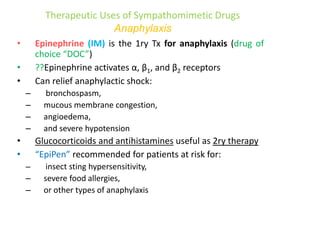
• Epinephrine (IM) is the 1ry Tx for anaphylaxis (drug of
choice “DOC”)
• ??Epinephrine activates α, β1, and β2 receptors
• Can relief anaphylactic shock:
– bronchospasm,
– mucous membrane congestion,
– angioedema,
– and severe hypotension
• Glucocorticoids and antihistamines useful as 2ry therapy
• “EpiPen” recommended for patients at risk for:
– insect sting hypersensitivity,
– severe food allergies,
– or other types of anaphylaxis
Direct acting adrenergic agonists
Endogenous catecholamine
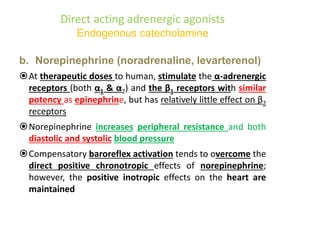
b. Norepinephrine (noradrenaline, levarterenol)
At therapeutic doses to human, stimulate the α-adrenergic
receptors (both α1 & α2) and the β1 receptors with similar
potency as epinephrine, but has relatively little effect on β2
receptors
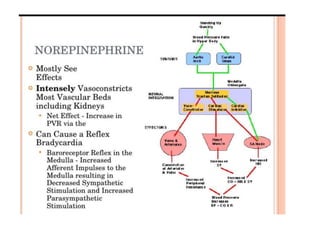
Norepinephrine increases peripheral resistance and both
diastolic and systolic blood pressure
Compensatory baroreflex activation tends to overcome the
direct positive chronotropic effects of norepinephrine;
however, the positive inotropic effects on the heart are
maintained
Direct acting adrenergic agonists
Endogenous catecholamine
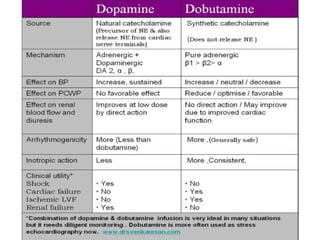
c. Dopamine
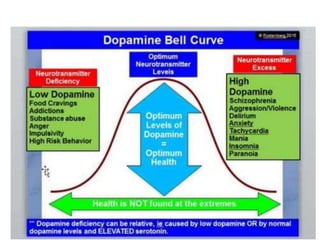
Important neurotransmitter in the CNS and is involved in
the reward stimulus relevant to addiction
Its deficiency in the basal ganglia leads to Parkinson's
disease (treated with levodopa)
Its increment seems to be the cause of psychosis
(antagonist)
Dopamine promotes vasodilation via activation of D1
receptors.
 The activation of presynaptic D2 receptors suppresses
norepinephrine release
Direct acting adrenergic agonists
Direct acting sympathomimetics
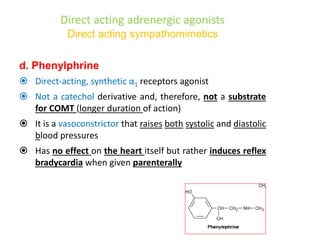
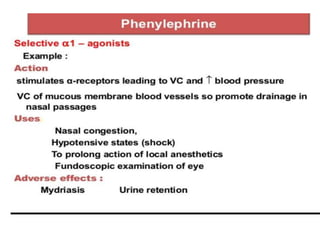
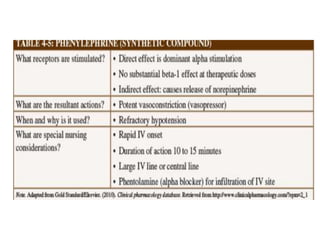
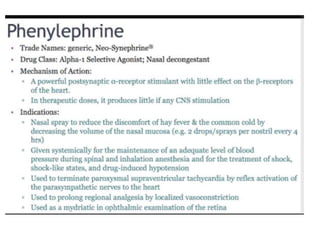
d. Phenylphrine
 Direct-acting, synthetic α1 receptors agonist
 Not a catechol derivative and, therefore, not a substrate
for COMT (longer duration of action)
 It is a vasoconstrictor that raises both systolic and diastolic
blood pressures
 Has no effect on the heart itself but rather induces reflex
bradycardia when given parenterally
Therapeutic Uses of Sympathomimetic Drugs
• Phenylephrine is an effective (1)mydriatic agent
frequently used to facilitate examination of the retina
• (2)Topically on the nasal mucous membrane as a
decongestant for minor allergic hyperemia and itching of
the conjunctival membranes
• N.B: Nasal blood vessels are rich in α receptors…..vasoconstriction
Tetrahydrozoline used also to induce mydriasis…..both drugs
do not cause cycloplegia!!
Direct acting adrenergic agonists
Direct acting sympathomimetics
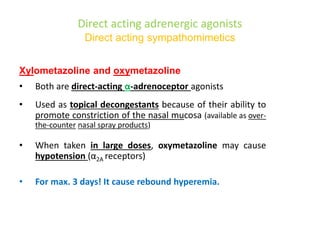
Xylometazoline and oxymetazoline
• Both are direct-acting α-adrenoceptor agonists
• Used as topical decongestants because of their ability to
promote constriction of the nasal mucosa (available as over-
the-counter nasal spray products)
• When taken in large doses, oxymetazoline may cause
hypotension (α2A receptors)
• For max. 3 days! It cause rebound hyperemia.
Direct acting adrenergic agonists
Direct acting sympathomimetics
Midodrine
• It is a prodrug that is enzymatically hydrolyzed to
DesGlyMidodrine……selective α1-receptor agonist
• USE: primarily indicated for the treatment of
orthostatic hypotension, typically due to impaired
autonomic nervous system function
• Effective when the patient is standing, but may cause
HTN when the subject is supine…..can be minimized
by
– avoiding dosing prior to bedtime
– and elevating the head of the bed
Direct acting adrenergic agonists
Direct acting sympathomimetics
c. Methoxamine
• α1 receptors agonist
• It may cause a prolonged increase in blood pressure
due to vasoconstriction; it also causes a vagally
mediated bradycardia
• USE: clinical applications are limited to overcome
hypotensive states during surgery
Direct acting adrenergic agonists
Direct acting sympathomimetics
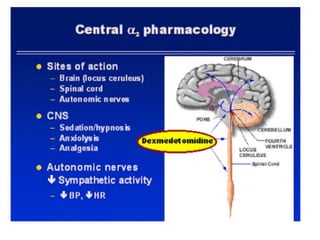
d. Alpha2-selective agonists
“Clonidine, Methyldopa, Guanfacine, Guanabenz”
• Primarily used for the treatment of systemic
hypertension through actions in the central nervous
system
• Apraclonidine and brimonidine (α2-selective
agonists) lower intraocular pressure and are
approved for use in glaucoma (used more than non-
selective alpha agonist).
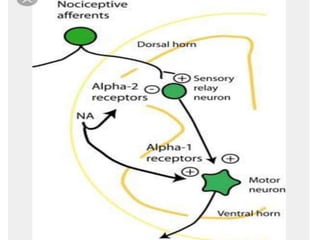
• Tizanidine (α2 agonist) that is used as a muscle
relaxant
Direct acting adrenergic agonists
Direct acting sympathomimetics
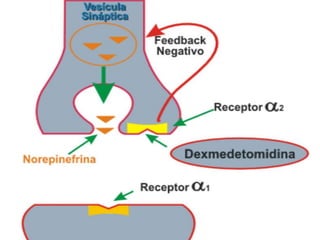
• DexMedeTomidine (α2 agonist) is used for sedation
under intensive care circumstances and during
anesthesia of initially intubated and mechanically
ventilated patients
• It blunts the sympathetic response to surgery, which
may be beneficial in some situations
• Lowers opioid requirements for pain control and
does not depress ventilation
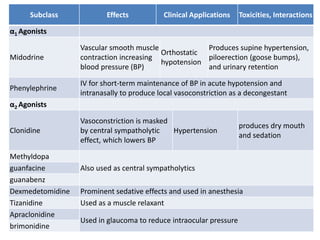
Subclass Effects Clinical Applications Toxicities, Interactions
α1 Agonists
Midodrine
Vascular smooth muscle
contraction increasing
blood pressure (BP)
Orthostatic
hypotension
Produces supine hypertension,
piloerection (goose bumps),
and urinary retention
Phenylephrine
IV for short-term maintenance of BP in acute hypotension and
intranasally to produce local vasoconstriction as a decongestant
α2 Agonists
Clonidine
Vasoconstriction is masked
by central sympatholytic
effect, which lowers BP
Hypertension
produces dry mouth
and sedation
Methyldopa
Also used as central sympatholyticsguanfacine
guanabenz
Dexmedetomidine Prominent sedative effects and used in anesthesia
Tizanidine Used as a muscle relaxant
Apraclonidine
Used in glaucoma to reduce intraocular pressure
brimonidine
Direct acting adrenergic agonists
Direct acting sympathomimetics
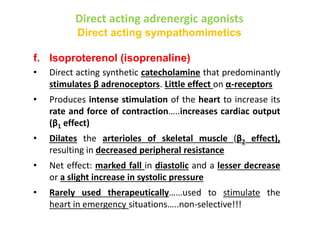
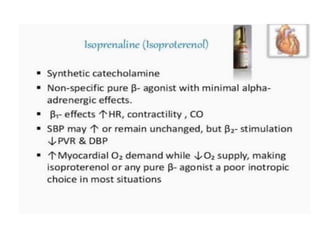
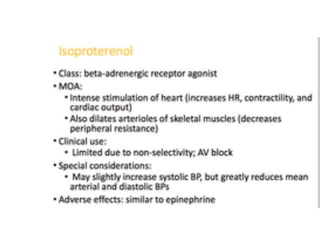
f. Isoproterenol (isoprenaline)
• Direct acting synthetic catecholamine that predominantly
stimulates β adrenoceptors. Little effect on α-receptors
• Produces intense stimulation of the heart to increase its
rate and force of contraction…..increases cardiac output
(β1 effect)
• Dilates the arterioles of skeletal muscle (β2 effect),
resulting in decreased peripheral resistance
• Net effect: marked fall in diastolic and a lesser decrease
or a slight increase in systolic pressure
• Rarely used therapeutically……used to stimulate the
heart in emergency situations…..non-selective!!!
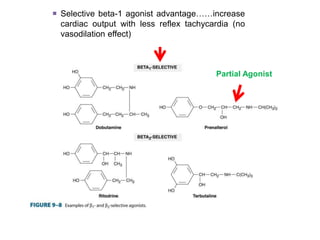
 Selective beta-1 agonist advantage……increase
cardiac output with less reflex tachycardia (no
vasodilation effect)
Partial Agonist
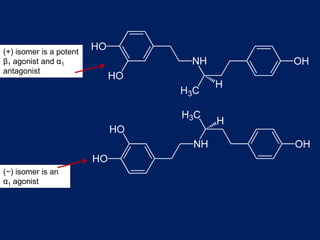
(+) isomer is a potent
β1 agonist and α1
antagonist
(−) isomer is an
α1 agonist
g. Beta-selective agonists
 β1-selective agents:
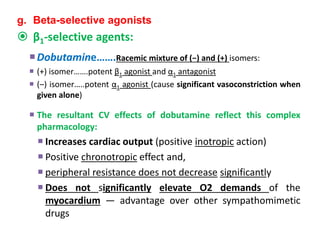
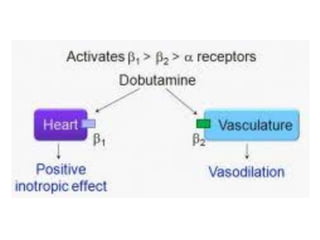
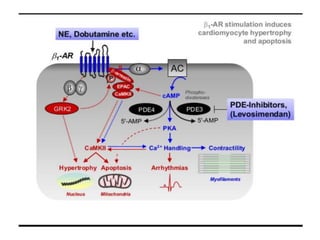
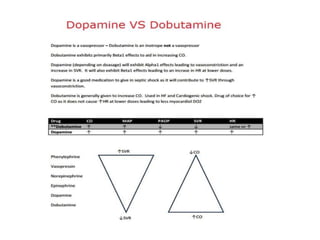
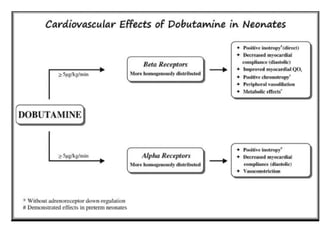
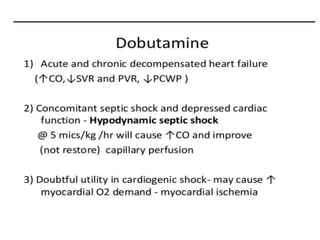
Dobutamine…….Racemic mixture of (−) and (+) isomers:
 (+) isomer…….potent β1 agonist and α1 antagonist
 (–) isomer…..potent α1 agonist (cause significant vasoconstriction when
given alone)
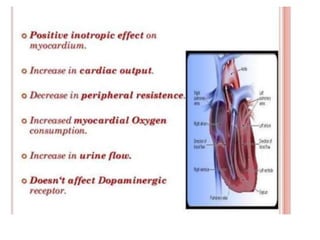
 The resultant CV effects of dobutamine reflect this complex
pharmacology:
 Increases cardiac output (positive inotropic action)
 Positive chronotropic effect and,
 peripheral resistance does not decrease significantly
 Does not significantly elevate O2 demands of the
myocardium — advantage over other sympathomimetic
drugs
g. Beta-selective agonists
• β2-selective agents:
–Used primarily as bronchodilator and their use have
achieved an important place in the treatment of asthma
(relievers)
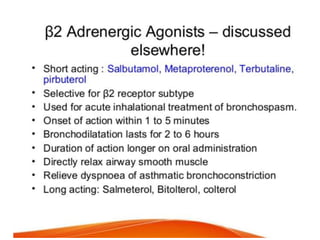
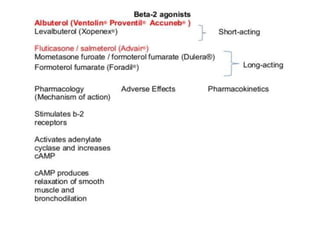
–Short-acting (inhalers): “albuterol (salbutamol),
metaproterenol, terbutaline”...effective for Tx of acute
symptoms
–Long-acting(inhalers): “salmeterol, formeterol”.....
combined with corticosteroid used as prophylaxis
• Nonselective drugs (epinephrine), β-selective agents
(isoproterenol), are available
Therapeutic Uses of Sympathomimetic Drugs
Genitourinary Applications
 Beta-selective agonists
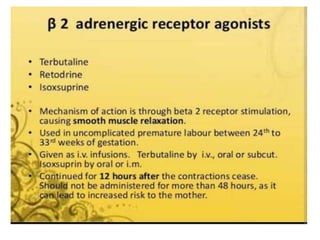
 Ritodrine (B2-selective) used clinically to achieve
uterine relaxation in premature labor (arrest
premature labor)
Terbutaline have been used to suppress premature
labor
• The goal is to defer labor long enough to ensure adequate
maturation of the fetus.
• This may afford time to administer corticosteroid drugs,
which decrease the incidence of neonatal respiratory distress
syndrome (IRDS)
Mixed-acting sympathomimetics
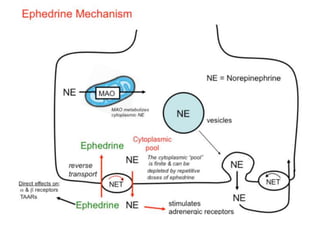
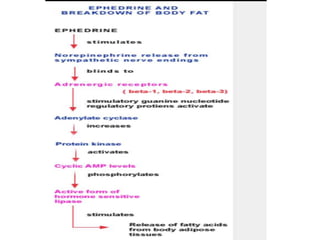
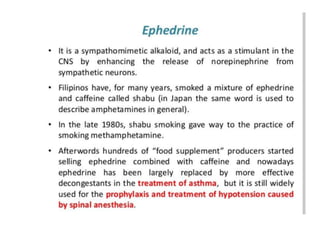
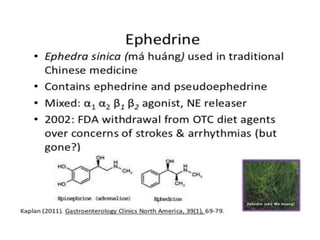
EPHEDRINE
— 1st orally active sympathomimetic (non-chatecol)
— Relatively long duration of action
— Can enter the CNS with mild stimulant effect
PSEUDOEPHEDRINE
— One of the four ephedrine enantiomers
— Was available as OTC component of many decongestant
mixtures
— Used as a precursor in the illicit manufacture of
methamphetamine (restrictions on its sale)
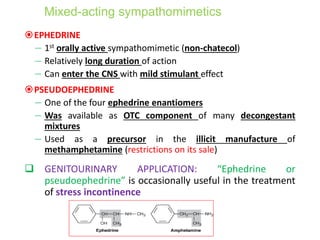
 GENITOURINARY APPLICATION: “Ephedrine or
pseudoephedrine” is occasionally useful in the treatment
of stress incontinence
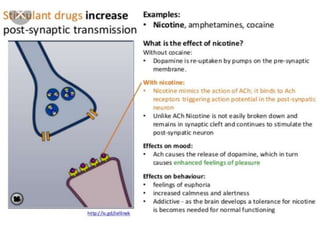
Indirect acting sympathomimetics
• They potentiate the effects of norepinephrine
produced endogenously, (do not directly affect
postsynaptic receptors)
• These agents can have one of two different
mechanisms:
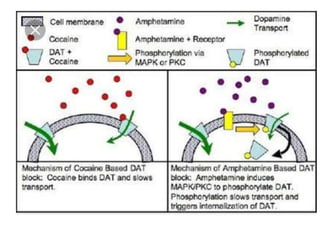
I. They may enter the sympathetic nerve ending and
displace stored catecholamine transmitter
(amphetamine-like or ‘displacers’)
II. They may inhibit the reuptake of released
transmitter by interfering with the action of the NET
NET
DAT
SERT
Tyramine
“cheese effect”
Indirect acting adrenergic agonists
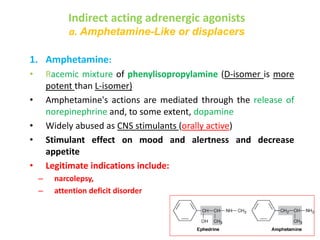
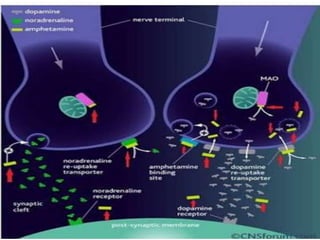
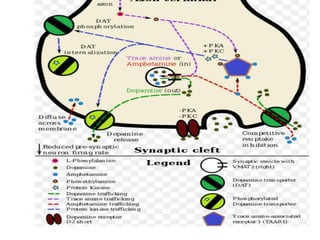
a. Amphetamine-Like or displacers
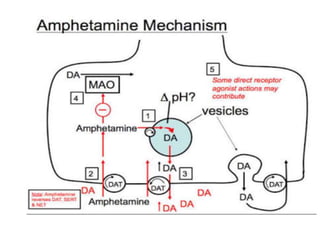
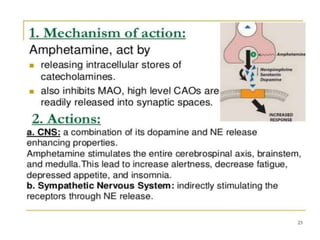
1. Amphetamine:
• Racemic mixture of phenylisopropylamine (D-isomer is more
potent than L-isomer)
• Amphetamine's actions are mediated through the release of
norepinephrine and, to some extent, dopamine
• Widely abused as CNS stimulants (orally active)
• Stimulant effect on mood and alertness and decrease
appetite
• Legitimate indications include:
– narcolepsy,
– attention deficit disorder
Indirect acting adrenergic agonists
a. Amphetamine-Like or displacers
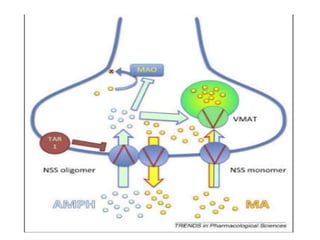
2. Methamphetamine:
• Very similar to amphetamine with an even higher ratio
of central to peripheral actions.
• In the brain, methamphetamine:
– releases dopamine and other biogenic amines,
– and inhibits MAO
 Used as anorexiant
3. Phenmetrazine:
• It is a variant phenylisopropylamine with amphetamine-
like effects.
– and is also a popular drug of abuse
Therapeutic Uses of Sympathomimetic Drugs
CNS Applications
• Obesity:
• an encouraging initial appetite-suppressing effect of
these agents may be observed in obese humans,
• but there is no evidence that long-term improvement in
weight control can be achieved with amphetamines
alone…..
• intensive dietary and psychological counseling and
support is needed
Indirect acting adrenergic agonists
a. Amphetamine-Like or displacers
4. Methylphenidate:
• Amphetamine variant with similar pharmacologic effects
and abuse potential
• It is a mild CNS stimulant with more prominent effects on
mental than on motor activities
• CNS application: attention-deficit hyperactivity disorder
(ADHD) and narcolepsy
• Some patients respond well to low doses of
methylphenidate or to clonidine.
• Extended-release formulations may simplify dosing
regimens and increase adherence to therapy, especially in
school-age children
Indirect acting adrenergic agonists
a. Amphetamine-Like or displacers
5. Modafinil: a new amphetamine substitute
• It is a psychostimulant that differs from amphetamine
– in structure,
– neurochemical profile,
– and behavioral effects
• Mech of action (MAO) not fully known
• Inhibits both NET and DAT, and increases interstitial
concentrations not only of norepinephrine and
dopamine, but also serotonin and glutamate while
decreasing GABA levels
Therapeutic Uses of Sympathomimetic Drugs
CNS Applications
• All amphetamine-like and displacer have a mood-
elevating (euphoriant) effect, alerting, & sleep-deferring
action that is manifested by improved attention to
repetitive tasks
• Modafinil is approved for use in NARCOLEPSY (chronic
sleep disorder)
• MODAFINIL is claimed to have fewer disadvantages than
amphetamine in this condition
– ……LESS mood changes,
– LESS insomnia
– and LESS abuse potential
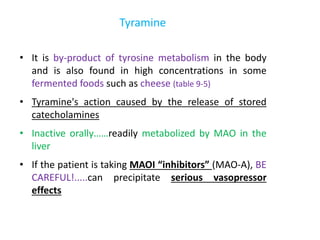
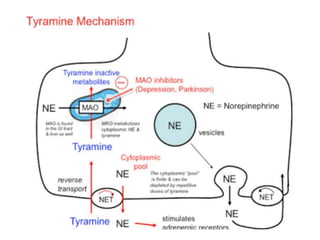
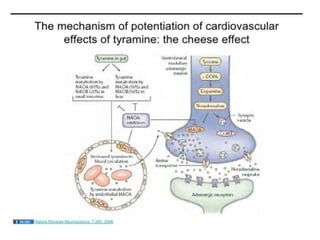
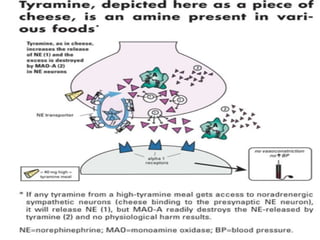
Tyramine
• It is by-product of tyrosine metabolism in the body
and is also found in high concentrations in some
fermented foods such as cheese (table 9-5)
• Tyramine's action caused by the release of stored
catecholamines
• Inactive orally……readily metabolized by MAO in the
liver
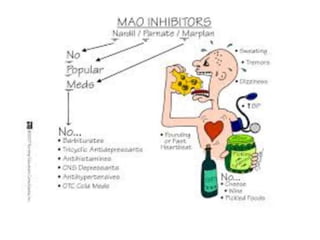
• If the patient is taking MAOI “inhibitors” (MAO-A), BE
CAREFUL!.....can precipitate serious vasopressor
effects
Indirect acting adrenergic agonists
b. Catecholamine Reuptake Inhibitors
1. ATOMOXETINE & REBOXETINE
• Selective inhibitors of the NET
• Surprisingly little cardiovascular effect because it has a
clonidine-like effect in the CNS
• ……decrease sympathetic outflow while at the same time
potentiating the effects of NE in the periphery
• Clinical use of atomoxetine: Tx. of ADHD
Indirect acting adrenergic agonists
b. Catecholamine Reuptake Inhibitors
2. SIBUTRAMINE: is a serotonin and norepinephrine
reuptake inhibitor not any more used as appetite
suppressant for the Tx of obesity (increase CV
events)
3. DULOXETINE: a widely used antidepressant with
serotonin and norepinephrine reuptake inhibitory
effects
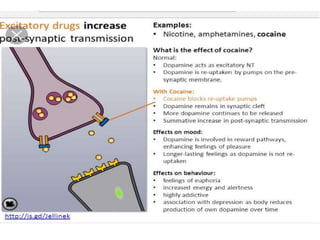
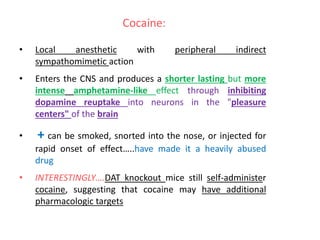
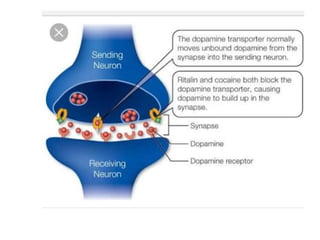
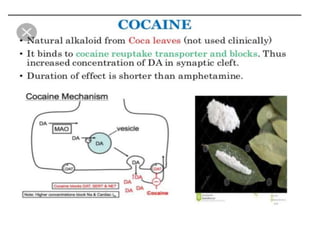
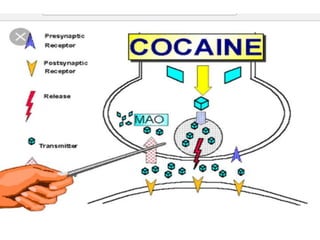
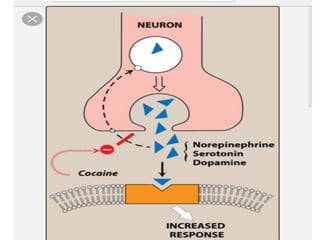
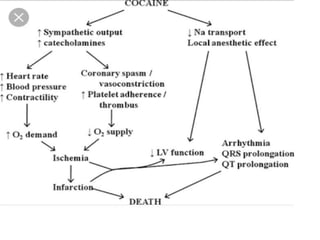
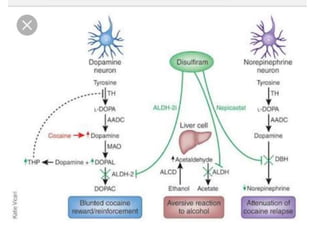
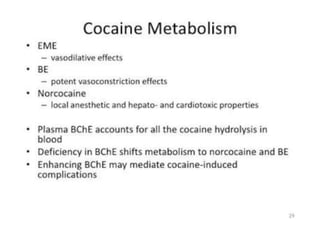
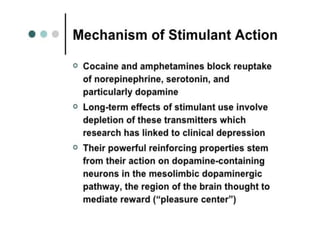
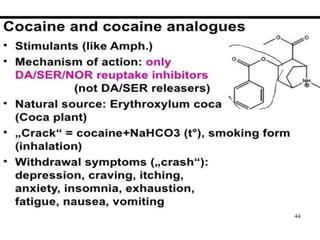
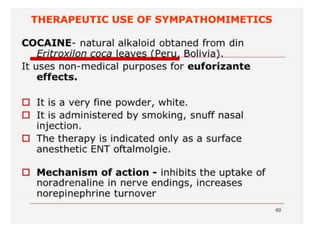
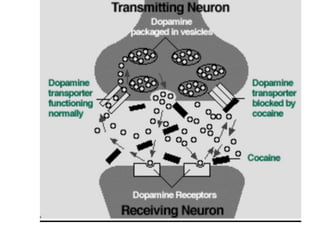
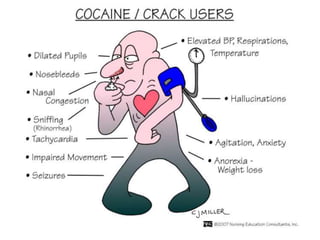
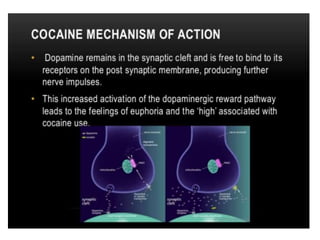
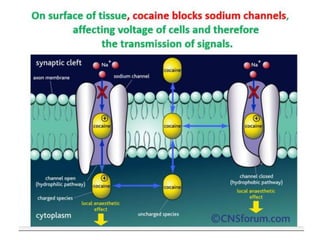
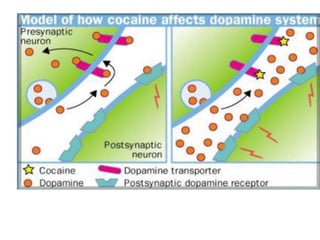
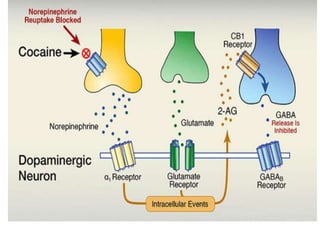
Cocaine:
• Local anesthetic with peripheral indirect
sympathomimetic action
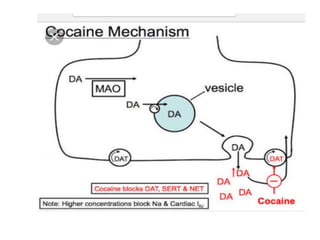
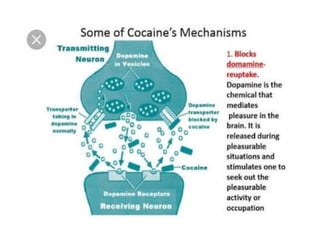
• Enters the CNS and produces a shorter lasting but more
intense amphetamine-like effect through inhibiting
dopamine reuptake into neurons in the "pleasure
centers" of the brain
• + can be smoked, snorted into the nose, or injected for
rapid onset of effect…..have made it a heavily abused
drug
• INTERESTINGLY….DAT knockout mice still self-administer
cocaine, suggesting that cocaine may have additional
pharmacologic targets
Therapeutic Uses of Sympathomimetic Drugs
Cardiovascular applications
• Condition in which an INCREASE in cardiac output and blood
flow to the tissue is desired (severe hypotension, cardiac
shock, heart failure)
• Place the patient in the recumbent position and ensure
adequate fluid volume (1st approach)
• β agonist useful in this situation because they increase cardiac
contractility and reduce diastolic pressure by β2 effect
• Dobutamine and dopamine are used (dopamine is DOC)
• Isoproterenol and epinephrine have been used in the
temporary emergency management of complete heart block
and cardiac arrest (electronic pacemaker are safer and more
effective)
Shock
• Acute cardiovascular syndrome that results in a critical reduction in
perfusion of vital tissues, altered mental state, hypotension and oliguria
• Usually due to: hypovolemia, cardiac insufficiency, and altered vascular
resistance
• Treatment: volume replacement and treatment of the underlying disease
are the mainstays of the treatment
• Adrenergic receptor agonists may be used……:
• β receptor agonists increase heart rate and force of contraction, α receptor
agonists increase peripheral vascular resistance, and dopamine (DOC)
promotes dilation of renal and splanchnic vascular beds, in addition to
activating α and β receptors
Therapeutic Uses of Sympathomimetic Drugs
Cardiovascular applications
• Condition in which a DECREASE in blood flow or increase in
blood pressure is desired
• α1 agonist are useful in situation in which vasoconstriction is
appropriate
• Such as decongestant effect (phenylephrine) or spinal
shock (NE) in which maintenance of blood pressure
may help in maintain perfusion to brain, heart, & liver
• Shock due to MI is usually made worse by
vasoconstriction
Therapeutic Uses of Sympathomimetic Drugs
Cardiovascular applications
• α agonist are often mixed with local anesthetic to reduce the loss of
anasthetic from the area of injection into the circulation
(epinephrine is DOC)
• Chronic orthostatic hypotension: On standing, gravitational forces
induce venous pooling, resulting in decreased venous return
• Increasing peripheral resistance is one of the strategies to treat
chronic orthostatic hypotension
• Midodrine, an orally active α1 agonist, is frequently used for this
indication
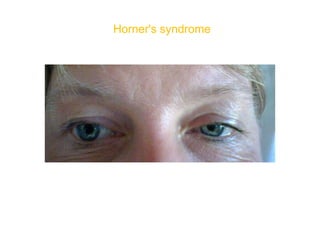
● Sympathomimetics administered as ophthalmic drops are also useful
in localizing the lesion in Horner's syndrome
● Horner's syndrome is a condition (usually unilateral) that results
from interruption of the sympathetic nerves to the face (caused by
either preganglionic or postganglionic lesion, such as a tumor)
● Symptoms include vasodilation, ptosis, miosis, and loss of sweating
on the affected side
● If the lesion is postganglionic, indirectly acting sympathomimetics (eg,
cocaine, amphetamine) will not dilate the abnormally constricted pupil
because catecholamines have been lost from the nerve endings in
the iris
● But phenylephrine will dilate the pupil (acts directly on the α receptors
on the smooth muscle of the iris)
● If the lesion is preganglionic, it will show a normal response to both
drugs, since the postganglionic fibers and their catecholamine stores
remain intact in this situation
OPHTHAMLIC APPLICATION
http://en.wikipedia.org/wiki/Horner's_syndrome
Horner's syndrome

6966901

  • 1.
  • 2.
    Overview • The sympatheticnervous system is an important regulator of virtually all organ systems • The ultimate effects of sympathetic stimulation are mediated by release of norepinephrine from nerve terminals, which then activates adrenoceptors (pre- or post-synaptically) • Also, in response to a variety of stimuli such as stress, the adrenal medulla releases epinephrine, which is transported in the blood to target tissues…….HORMONE • CATECHOLAMINES…..RECEPTORS
  • 3.
    Drugs that mimicthe actions of epinephrine or norepinephrine have traditionally been termed sympathomimetic drugs
  • 7.
    Adrenergic receptors (adrenoceptors) •There are two main groups of adrenergic receptors, α and β, with several subtypes. These were initially identified on the basis of their responses to the adrenergic agonists epinephrine, norepinephrine, and isoproterenol • All the adrenoceptors are G-protein coupled receptors (GPCRs)…..G????
  • 8.
    Epinephrine Norepinephrine Isoprotenol IsoprotenolEpinephrine Norepinephrine Low affinityHigh affinity α Adrenoceptors β Adrenoceptors
  • 16.
     The developmentof selective antagonists revealed the presence of subtypes of these receptors, which were finally characterized by molecular cloning. These proteins/receptors belong to a multigene family Adrenergic Receptors a1A a1 b a2 a1B a1D a2A a2B a2C b1 b2 b3 a Necessary for understanding the selectivity of some drugs. Tamsulosin (selective α1A antagonist), benign prostate hyperplasia, (urinary tract and prostate gland)
  • 20.
    Table 9–1 AdrenoceptorTypes and Subtypes Receptor Agonist Antagonist Effects α1 type (α1A, α1B, α1D) Phenylephrine Prazosin IP3, DAG common to all α2 type (α2A, α2B, α2C) Clonidine Yohimbine cAMP common to all β type (β1, β2, β3) Isoproterenol Propranolol cAMP common to all Dopamine type Dopamine D1-like (D1, D5) cAMP D2-like (D2, D3, D4) cAMP
  • 21.
    Adrenergic receptors (adrenoceptors) Alphareceptors • The α1 receptors have a higher affinity for phenylephrine than do the α2 receptors. • Conversely, clonidine is more selective to α2 receptors (has less effect on α1 receptors) • Both epinephrine and norepinephrine have similar affinity for α and β receptors
  • 22.
    selectivity • Selectivity?? Adrug may preferentially bind to one subgroup of receptors at concentration too low to interact extensively with other subgroup! (e.g., important in β receptors) • Selectivity not absolute….at higher concentration, the drug interacts with other subgroups!! (drug are not specific) • The effect depends also on the expression of the subtype on a given tissue • The function of specific subtype receptor is known through development of “knockout mice”
  • 23.
    Adrenergic receptors (adrenoceptors) Alphareceptors I. α1 Adrenoceptors: • These receptors are present on the postsynaptic membrane of the effector organs and mediate many of the classic involving contraction of smooth muscle • Alpha1 receptors are coupled via Gq proteins to phospholipase C. – Activation of α1 receptors result in the generation of inositol- 1,4,5-trisphosphate (IP3) and diacylglycerol (DAG) from phosphatidylinositol. IP3 initiates the release of Ca2+ from the endoplasmic reticulum into the cytosol and the activation of various calcium-dependent protein kinases. – Activation of these receptors may also increase influx of calcium across the cell's plasma membrane. – DAG activates protein kinase C, which modulates activity of many signalling pathways
  • 27.
    Adrenergic receptors (adrenoceptors) Alphareceptors II. α2 Adrenoceptors: • These receptors, located primarily on presynaptic nerve endings and on other cells, such as the β cell of the pancreas, and on certain vascular smooth muscle cells, control adrenergic neuromediator and insulin output respectively • Alpha2 receptors are coupled via Gi protein to adenylyl cyclase. Alpha2 receptors inhibit adenylyl cyclase activity and cause intracellular cyclic adenosine monophosphate (cAMP) levels to decrease
  • 30.
    Feedback control ofnoradrenaline release
  • 39.
    Adrenergic receptors (adrenoceptors) Betareceptors • β1 Receptors have approximately equal affinities for epinephrine and norepinephrine, • whereas β2 receptors have a higher affinity for epinephrine than for norepinephrine. – Thus, tissues with a predominance of β2 receptors (such as the vasculature of skeletal muscle) are particularly responsive to the hormonal effects of circulating epinephrine released by the adrenal medulla • β3 Receptors may mediate responses to catecholamine at sites with "atypical" pharmacological characteristics (e.g., adipose tissue)
  • 40.
    All the β-adrenoceptors(β1, β2, β3) are coupled to Gs protein….. Adrenergic receptors (adrenoceptors) Beta receptors
  • 44.
    cAMP is themajor second messenger of β-receptor activation! For example:  In the heart, increases the influx of calcium across the cell membrane and its sequestration inside the cell  cAMP also promotes the relaxation of smooth muscle may involve the phosphorylation of myosin light-chain kinase to an inactive form (uncertain mech.) (see Figure 12–1)  In the liver, β-receptor-activated cAMP synthesis leads to activation of glycogen phosphorylase Adrenergic receptors (adrenoceptors) Beta receptors
  • 45.
    Remember interplay betweensignaling mechanism??? Ex. Non-selective adrenomimetic agent (α and β receptors) Figure 12–1
  • 46.
    dopaminergic receptors • Theendogenous catecholamine “dopamine” is imp. in the brain and in the splanchnic and renal vasculature (5 receptor subtypes) • D1-like receptor typically associated with stimulation of adenylyl cyclase (cAMP accumulation induced smooth muscle relaxation in those vascular beds in which dopamine is a vasodilator) • D2-like receptors have been found to: – inhibit adenylyl cyclase activity, – open potassium channels, – and decrease calcium influx
  • 47.
    Adrenergic receptors (adrenoceptors) Receptorregulation • Responses mediated by adrenoceptors are not fixed and static • Prolonged exposure to the catecholamines reduces the tissue response to further stimulation by that agent • This process has potential clinical significance because it may limit the therapeutic response to sympathomimetic agents • Two major categories of desensitization of responses mediated by G protein-coupled receptors
  • 48.
    Adrenergic receptors (adrenoceptors) Receptorregulation  Homologous desensitization: loss of responsiveness exclusively of the receptors that have been exposed to repeated or sustained activation by an agonist: Inability to couple to G protein, because the receptor has been phosphorylated on the cytoplasmic side by G protein-coupled receptor kinase (GRK) family
  • 50.
    Adrenergic receptors (adrenoceptors) Receptorregulation – Heterologous desensitization: process by which desensitization of one receptor by its agonists also results in desensitization of another receptor that has not been directly activated by the agonist in question – Can be mediated by second-messenger feedback mechanism: Example: β1-adrenoceptors stimulate cAMP accumulation, which leads to activation of protein kinase A; which can phosphorylate serine residues of intracellular tail of β2 receptors, resulting in inhibition of this receptor function
  • 51.
    Sympathomimetic Drugs • Sympathomimeticdrugs are classified as: I. Direct acting sympathomimetics: act directly on one or more of the adrenergic receptors II. Indirect acting sympathomimetics: increase the availability of norepinephrine or epinephrine to stimulate adrenergic receptors 1) Displacement of stored catecholamines from the adrenergic nerve ending (e.g. tyramine & amphetamine) (amphetamine-like or ‘displacers’) 2) Inhibition of reuptake of catecholamines already released (e.g. cocaine & tricyclic antidepressants) 3) Blocking the metabolizing enzymes, monoamine oxidase (MAO) (e.g., selegiline) or catechol-O- methyltransferase (COMT) (e.g., entacapone)
  • 52.
  • 53.
    Sympathomimetic Drugs (Cont’d) III.Mixed acting sympathomimetics: indirectly induce the release of norepinephrine from the presynaptic terminal and directly activate receptors (e.g. Ephedrine)
  • 54.
    Sympathomimetic Drugs (Cont’d) •Phenylethylamine (prototype) • Substitutions may be made on (1) the benzene ring, (2) the terminal amino group, and/or (3) the carbons of the amino chain • These modifications produce compounds with:  varying affinities to α and β receptors,  as well as to influence the intrinsic ability to activate the receptors,  their pharmacokinetic properties,  and different abilities to penetrate the CNS
  • 55.
    Maximal α- andβ- activity is found with catecholamines BUT not active orally WHY?? Catecholamines are subject to inactivation by COMT (found in the gut and liver) Absence of ring –OH groups increase distribution of the molecule to the CNS Ephedrine and amphetamine: orally active with prolonged duration of action, and produce CNS effects α-carbon substitution block oxidation by monoamine oxidase (MAO) and prolong the action of such drugs and may give indirect activity (displacement) phenylisopropylamines (alpha methyl compounds)
  • 56.
    Organ System Effectsof Sympathomimetic Drugs The response of any cell/organ to sympathomimetics depends on: – the density and proportion of α and β adrenergic receptors; – their relative selectivity for the different adrenoceptor subtype, – and its pharmacological action on those receptors – Don’t forget compensatory baroreflex mechanisms (CV system) Adrenergically innervated organs and tissues tend to have a predominance of one type of receptor
  • 59.
    Cardiovascular system Alpha1-Receptor Activation Alpha1 receptors expressed in most vascular beds  their activation causes vasoconstriction and rise in peripheral resistance……dose-dependent rise in BP  In the presence of normal cardiovascular reflexes, the rise in blood pressure elicits a baroreceptor-mediated increase in vagal tone with slowing of the heart rate (bradycardia) (fig. 9-7)  Trimethaphan: ganglion blocker….bradycardia is no longer observed
  • 60.
     Phenylephrine givenas I.V bolus to a dog  Reflex are blunted (but not eliminated) in anesthetized animal
  • 61.
     Note thatthe increase in BP is associated with a baroreflex-mediated compensatory decrease in HR  Patients with impaired autonomic function (diabetic autonomic neuropathy) may have exaggerated increases in heart rate or blood pressure when taking sympathomimetics by trimethaphan
  • 62.
    • Alpha2-Receptor Activation –α2 adrenoceptors are present in the vasculature, and their activation leads to vasoconstriction – This effect observed only when α2 agonists are given locally by rapid I.V injection, or in very high oral doses – When given systemically, these vascular effects are obscured by the central effects of α2 receptors, which lead to inhibition of sympathetic tone and blood pressure (sympatholytic effect) – Clonidine: used to treatment (Tx.) Hypertension – Patients with pure autonomic failure?? Cardiovascular system
  • 64.
    Cardiovascular system • Beta-ReceptorActivation – Isoproterenol activates both beta1 and beta 2 adrenoceptor??? – Direct effects on the heart are determined largely by β1 receptors – Positive chronotropic effect, inotropic effect and dromotropic effect….increase coronary blood flow – …..resulting in a marked increase in cardiac output and cardiac oxygen consumption – β2 receptors activation, leads to vasodilation in certain vasculature of smooth muscles • Increase blood flow in skeletal muscle during exercise
  • 65.
    Net effect isto maintain or slightly increase SYSTOLIC pressure and decrease DYASTOLIC pressure….mean BP decreased Beta1, Alpha1 and Beta2 adrenoceptors • Intravenous bolus injection to a dog • Reflexes are blunted but not eliminated in this anesthetized animal
  • 66.
    Cardiovascular system • Dopaminereceptors activation • D1: vasodilation of renal, splanchnic, coronary, cerebral and other resistance vessels • D2: presynaptic receptor suppresses norepinephrine release (unclear role on CVS)  Dopamine activates beta1 receptors on the heart and….. • ….. (at higher doses) vascular alpha receptors leading to vasoconstriction (similar to epinephrine)
  • 69.
    The eye……/ …Respiratorysystem oThe Eye • Activation of α1 receptors mediates contraction of the radial pupillary dilator muscle of the iris and results in mydriasis • Reduces intraocular pressure due to vasoconstriction and increase the outflow of aqueous humor from the eye • β receptors antagonists reduce the production of aqueous humor (ciliary epithelium) oRespiratory system • Activation of β2 receptors in bronchial smooth muscle leads to: • bronchodilation and • inhibits the release of allergy mediator such as histamines from mast cells • (albuterol, salmeterol used for treatment (Tx.) of asthma)
  • 74.
    Genitourinary tract • Thebladder base, urethral sphincter, and prostate contain α receptors that mediate contraction……urinary continence • The specific α1A receptor subtype seems to be involved in mediating constriction of the bladder base and prostate • Alpha-receptor activation in the ductus deferens, seminal vesicles, and prostate plays a role in normal ejaculation. • Uterus: Similar effect on uterine smooth muscle (ritodrine) for the Tx of prematur labor
  • 81.
    Exocrine glands Salivary glands:contain adrenoceptors that regulate the secretion of amylase and water However, certain sympathomimetic drugs (clonidine) produce symptoms of dry mouth…..mechanism uncertain; (probably CNS effects are responsible, though peripheral effects may contribute) Apocrine sweat glands: contain adrenoceptors and their stimulation increase sweat production (nonthermoregulatory glands associated with psychological stress) (sympathetic adrenergic)
  • 85.
    Metabolism  Catecholamines encouragethe conversion of energy stores (glycogen and fat) to freely available fuels (glucose and free fatty acids), and cause an increase in the plasma concentration of these substances 1. Activation of β3 receptors in adipocytes stimulate lipolysis……enhance release of FFA and glycerol into the blood 2. α2 receptors activation inhibit lipolysis by decreasing intracellular cAMP 3. Stimulate glycogenolysis in the liver and muscles, which leads to increased glucose release into the circulation……mediated mainly by β receptors
  • 87.
    Metabolism • Activation ofβ2 receptors promotes K+ uptake into cells, particularly skeletal muscle…… • and protect against a rise in plasma potassium during exercise • Stress result in……Fall in plasma K+ potassium concentration (hypokalemia) during stress
  • 88.
    Hormones secretion • βreceptors enhance insulin secretion and renin secretion…. • ….while…… • α2 receptors inhibit insulin secretion and renin secretion • Adrenoceptors also modulate the secretion of parathyroid hormone, calcitonin, thyroxine, and gastrin…….limited physiologic significance
  • 89.
    Central nervous system The catecholamines are almost completely unable to enter the CNS  At highest rates of infusion effects are noted as nervousness  Tremor and tachycardia are peripheral effect and are similar to the somatic manifestations of anxiety  Noncatecholamines with indirect actions (amphetamines), readily enter the CNS….  ….their actions vary from mild alerting, with improved attention to boring tasks; through elevation of mood, insomnia, euphoria, and anorexia; to full-blown psychotic behavior
  • 94.
    Major effects mediatedby α and β adrenoceptors
  • 98.
    Therapeutic Uses ofSympathomimetic Drugs • Selection of a particular sympathomimetic drug depends on: 1. Whether activation of α, β1, or β2 receptors is desired 2. The desirable duration of action 3. The preferred route of administration
  • 99.
    Direct acting adrenergicagonists Endogenous catecholamine a. Epinephrine (adrenaline)  Potent stimulant of both α and β adrenoceptors  Potent vasoconstrictor and cardiac stimulant ● +ve inotropic and chronotropic actions on the heart (B1) ● and vasoconstriction induced in many vascular beds (a1) ● Epinephrine also activates β2 receptors in some vessels (eg, skeletal muscle blood vessels), leading to their dilation ● Therefore, the net effect is an increase in systolic blood pressure, coupled with a slight decrease in diastolic pressure
  • 104.
    a. Epinephrine (adrenaline) Respiratory: causes powerful bronchodilation by acting directly on bronchial smooth muscle and  inhibiting the release of allergic mediators such as histamine from mast cells (β2 action) Hyperglycemia: epinephrine has a significant hyperglycemic effect because of  increased glycogenolysis in the liver (β2 effect),  and a decreased release of insulin (α2 effect) Lipolysis: epinephrine initiates lipolysis through its agonist activity on the β receptors of adipose tissue
  • 105.
    Therapeutic Uses ofSympathomimetic Drugs Anaphylaxis • Epinephrine (IM) is the 1ry Tx for anaphylaxis (drug of choice “DOC”) • ??Epinephrine activates α, β1, and β2 receptors • Can relief anaphylactic shock: – bronchospasm, – mucous membrane congestion, – angioedema, – and severe hypotension • Glucocorticoids and antihistamines useful as 2ry therapy • “EpiPen” recommended for patients at risk for: – insect sting hypersensitivity, – severe food allergies, – or other types of anaphylaxis
  • 106.
    Direct acting adrenergicagonists Endogenous catecholamine b. Norepinephrine (noradrenaline, levarterenol) At therapeutic doses to human, stimulate the α-adrenergic receptors (both α1 & α2) and the β1 receptors with similar potency as epinephrine, but has relatively little effect on β2 receptors Norepinephrine increases peripheral resistance and both diastolic and systolic blood pressure Compensatory baroreflex activation tends to overcome the direct positive chronotropic effects of norepinephrine; however, the positive inotropic effects on the heart are maintained
  • 110.
    Direct acting adrenergicagonists Endogenous catecholamine c. Dopamine Important neurotransmitter in the CNS and is involved in the reward stimulus relevant to addiction Its deficiency in the basal ganglia leads to Parkinson's disease (treated with levodopa) Its increment seems to be the cause of psychosis (antagonist) Dopamine promotes vasodilation via activation of D1 receptors.  The activation of presynaptic D2 receptors suppresses norepinephrine release
  • 130.
    Direct acting adrenergicagonists Direct acting sympathomimetics d. Phenylphrine  Direct-acting, synthetic α1 receptors agonist  Not a catechol derivative and, therefore, not a substrate for COMT (longer duration of action)  It is a vasoconstrictor that raises both systolic and diastolic blood pressures  Has no effect on the heart itself but rather induces reflex bradycardia when given parenterally
  • 131.
    Therapeutic Uses ofSympathomimetic Drugs • Phenylephrine is an effective (1)mydriatic agent frequently used to facilitate examination of the retina • (2)Topically on the nasal mucous membrane as a decongestant for minor allergic hyperemia and itching of the conjunctival membranes • N.B: Nasal blood vessels are rich in α receptors…..vasoconstriction Tetrahydrozoline used also to induce mydriasis…..both drugs do not cause cycloplegia!!
  • 136.
    Direct acting adrenergicagonists Direct acting sympathomimetics Xylometazoline and oxymetazoline • Both are direct-acting α-adrenoceptor agonists • Used as topical decongestants because of their ability to promote constriction of the nasal mucosa (available as over- the-counter nasal spray products) • When taken in large doses, oxymetazoline may cause hypotension (α2A receptors) • For max. 3 days! It cause rebound hyperemia.
  • 137.
    Direct acting adrenergicagonists Direct acting sympathomimetics Midodrine • It is a prodrug that is enzymatically hydrolyzed to DesGlyMidodrine……selective α1-receptor agonist • USE: primarily indicated for the treatment of orthostatic hypotension, typically due to impaired autonomic nervous system function • Effective when the patient is standing, but may cause HTN when the subject is supine…..can be minimized by – avoiding dosing prior to bedtime – and elevating the head of the bed
  • 138.
    Direct acting adrenergicagonists Direct acting sympathomimetics c. Methoxamine • α1 receptors agonist • It may cause a prolonged increase in blood pressure due to vasoconstriction; it also causes a vagally mediated bradycardia • USE: clinical applications are limited to overcome hypotensive states during surgery
  • 139.
    Direct acting adrenergicagonists Direct acting sympathomimetics d. Alpha2-selective agonists “Clonidine, Methyldopa, Guanfacine, Guanabenz” • Primarily used for the treatment of systemic hypertension through actions in the central nervous system • Apraclonidine and brimonidine (α2-selective agonists) lower intraocular pressure and are approved for use in glaucoma (used more than non- selective alpha agonist). • Tizanidine (α2 agonist) that is used as a muscle relaxant
  • 140.
    Direct acting adrenergicagonists Direct acting sympathomimetics • DexMedeTomidine (α2 agonist) is used for sedation under intensive care circumstances and during anesthesia of initially intubated and mechanically ventilated patients • It blunts the sympathetic response to surgery, which may be beneficial in some situations • Lowers opioid requirements for pain control and does not depress ventilation
  • 141.
    Subclass Effects ClinicalApplications Toxicities, Interactions α1 Agonists Midodrine Vascular smooth muscle contraction increasing blood pressure (BP) Orthostatic hypotension Produces supine hypertension, piloerection (goose bumps), and urinary retention Phenylephrine IV for short-term maintenance of BP in acute hypotension and intranasally to produce local vasoconstriction as a decongestant α2 Agonists Clonidine Vasoconstriction is masked by central sympatholytic effect, which lowers BP Hypertension produces dry mouth and sedation Methyldopa Also used as central sympatholyticsguanfacine guanabenz Dexmedetomidine Prominent sedative effects and used in anesthesia Tizanidine Used as a muscle relaxant Apraclonidine Used in glaucoma to reduce intraocular pressure brimonidine
  • 142.
    Direct acting adrenergicagonists Direct acting sympathomimetics f. Isoproterenol (isoprenaline) • Direct acting synthetic catecholamine that predominantly stimulates β adrenoceptors. Little effect on α-receptors • Produces intense stimulation of the heart to increase its rate and force of contraction…..increases cardiac output (β1 effect) • Dilates the arterioles of skeletal muscle (β2 effect), resulting in decreased peripheral resistance • Net effect: marked fall in diastolic and a lesser decrease or a slight increase in systolic pressure • Rarely used therapeutically……used to stimulate the heart in emergency situations…..non-selective!!!
  • 145.
     Selective beta-1agonist advantage……increase cardiac output with less reflex tachycardia (no vasodilation effect) Partial Agonist
  • 146.
    (+) isomer isa potent β1 agonist and α1 antagonist (−) isomer is an α1 agonist
  • 147.
    g. Beta-selective agonists β1-selective agents: Dobutamine…….Racemic mixture of (−) and (+) isomers:  (+) isomer…….potent β1 agonist and α1 antagonist  (–) isomer…..potent α1 agonist (cause significant vasoconstriction when given alone)  The resultant CV effects of dobutamine reflect this complex pharmacology:  Increases cardiac output (positive inotropic action)  Positive chronotropic effect and,  peripheral resistance does not decrease significantly  Does not significantly elevate O2 demands of the myocardium — advantage over other sympathomimetic drugs
  • 156.
    g. Beta-selective agonists •β2-selective agents: –Used primarily as bronchodilator and their use have achieved an important place in the treatment of asthma (relievers) –Short-acting (inhalers): “albuterol (salbutamol), metaproterenol, terbutaline”...effective for Tx of acute symptoms –Long-acting(inhalers): “salmeterol, formeterol”..... combined with corticosteroid used as prophylaxis • Nonselective drugs (epinephrine), β-selective agents (isoproterenol), are available
  • 161.
    Therapeutic Uses ofSympathomimetic Drugs Genitourinary Applications  Beta-selective agonists  Ritodrine (B2-selective) used clinically to achieve uterine relaxation in premature labor (arrest premature labor) Terbutaline have been used to suppress premature labor • The goal is to defer labor long enough to ensure adequate maturation of the fetus. • This may afford time to administer corticosteroid drugs, which decrease the incidence of neonatal respiratory distress syndrome (IRDS)
  • 162.
    Mixed-acting sympathomimetics EPHEDRINE — 1storally active sympathomimetic (non-chatecol) — Relatively long duration of action — Can enter the CNS with mild stimulant effect PSEUDOEPHEDRINE — One of the four ephedrine enantiomers — Was available as OTC component of many decongestant mixtures — Used as a precursor in the illicit manufacture of methamphetamine (restrictions on its sale)  GENITOURINARY APPLICATION: “Ephedrine or pseudoephedrine” is occasionally useful in the treatment of stress incontinence
  • 168.
    Indirect acting sympathomimetics •They potentiate the effects of norepinephrine produced endogenously, (do not directly affect postsynaptic receptors) • These agents can have one of two different mechanisms: I. They may enter the sympathetic nerve ending and displace stored catecholamine transmitter (amphetamine-like or ‘displacers’) II. They may inhibit the reuptake of released transmitter by interfering with the action of the NET
  • 169.
  • 170.
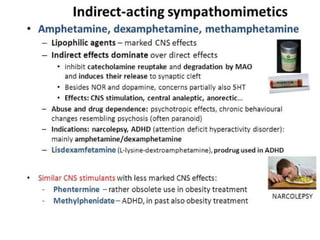
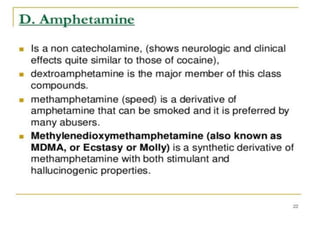
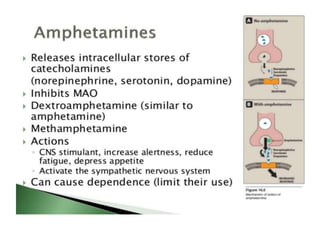
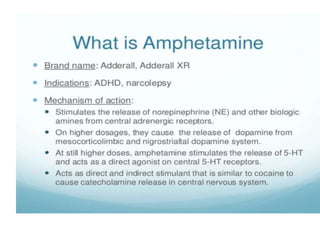
    Indirect acting adrenergicagonists a. Amphetamine-Like or displacers 1. Amphetamine: • Racemic mixture of phenylisopropylamine (D-isomer is more potent than L-isomer) • Amphetamine's actions are mediated through the release of norepinephrine and, to some extent, dopamine • Widely abused as CNS stimulants (orally active) • Stimulant effect on mood and alertness and decrease appetite • Legitimate indications include: – narcolepsy, – attention deficit disorder
  • 180.
    Indirect acting adrenergicagonists a. Amphetamine-Like or displacers 2. Methamphetamine: • Very similar to amphetamine with an even higher ratio of central to peripheral actions. • In the brain, methamphetamine: – releases dopamine and other biogenic amines, – and inhibits MAO  Used as anorexiant 3. Phenmetrazine: • It is a variant phenylisopropylamine with amphetamine- like effects. – and is also a popular drug of abuse
  • 181.
    Therapeutic Uses ofSympathomimetic Drugs CNS Applications • Obesity: • an encouraging initial appetite-suppressing effect of these agents may be observed in obese humans, • but there is no evidence that long-term improvement in weight control can be achieved with amphetamines alone….. • intensive dietary and psychological counseling and support is needed
  • 182.
    Indirect acting adrenergicagonists a. Amphetamine-Like or displacers 4. Methylphenidate: • Amphetamine variant with similar pharmacologic effects and abuse potential • It is a mild CNS stimulant with more prominent effects on mental than on motor activities • CNS application: attention-deficit hyperactivity disorder (ADHD) and narcolepsy • Some patients respond well to low doses of methylphenidate or to clonidine. • Extended-release formulations may simplify dosing regimens and increase adherence to therapy, especially in school-age children
  • 183.
    Indirect acting adrenergicagonists a. Amphetamine-Like or displacers 5. Modafinil: a new amphetamine substitute • It is a psychostimulant that differs from amphetamine – in structure, – neurochemical profile, – and behavioral effects • Mech of action (MAO) not fully known • Inhibits both NET and DAT, and increases interstitial concentrations not only of norepinephrine and dopamine, but also serotonin and glutamate while decreasing GABA levels
  • 184.
    Therapeutic Uses ofSympathomimetic Drugs CNS Applications • All amphetamine-like and displacer have a mood- elevating (euphoriant) effect, alerting, & sleep-deferring action that is manifested by improved attention to repetitive tasks • Modafinil is approved for use in NARCOLEPSY (chronic sleep disorder) • MODAFINIL is claimed to have fewer disadvantages than amphetamine in this condition – ……LESS mood changes, – LESS insomnia – and LESS abuse potential
  • 185.
    Tyramine • It isby-product of tyrosine metabolism in the body and is also found in high concentrations in some fermented foods such as cheese (table 9-5) • Tyramine's action caused by the release of stored catecholamines • Inactive orally……readily metabolized by MAO in the liver • If the patient is taking MAOI “inhibitors” (MAO-A), BE CAREFUL!.....can precipitate serious vasopressor effects
  • 192.
    Indirect acting adrenergicagonists b. Catecholamine Reuptake Inhibitors 1. ATOMOXETINE & REBOXETINE • Selective inhibitors of the NET • Surprisingly little cardiovascular effect because it has a clonidine-like effect in the CNS • ……decrease sympathetic outflow while at the same time potentiating the effects of NE in the periphery • Clinical use of atomoxetine: Tx. of ADHD
  • 193.
    Indirect acting adrenergicagonists b. Catecholamine Reuptake Inhibitors 2. SIBUTRAMINE: is a serotonin and norepinephrine reuptake inhibitor not any more used as appetite suppressant for the Tx of obesity (increase CV events) 3. DULOXETINE: a widely used antidepressant with serotonin and norepinephrine reuptake inhibitory effects
  • 194.
    Cocaine: • Local anestheticwith peripheral indirect sympathomimetic action • Enters the CNS and produces a shorter lasting but more intense amphetamine-like effect through inhibiting dopamine reuptake into neurons in the "pleasure centers" of the brain • + can be smoked, snorted into the nose, or injected for rapid onset of effect…..have made it a heavily abused drug • INTERESTINGLY….DAT knockout mice still self-administer cocaine, suggesting that cocaine may have additional pharmacologic targets
  • 216.
    Therapeutic Uses ofSympathomimetic Drugs Cardiovascular applications • Condition in which an INCREASE in cardiac output and blood flow to the tissue is desired (severe hypotension, cardiac shock, heart failure) • Place the patient in the recumbent position and ensure adequate fluid volume (1st approach) • β agonist useful in this situation because they increase cardiac contractility and reduce diastolic pressure by β2 effect • Dobutamine and dopamine are used (dopamine is DOC) • Isoproterenol and epinephrine have been used in the temporary emergency management of complete heart block and cardiac arrest (electronic pacemaker are safer and more effective)
  • 217.
    Shock • Acute cardiovascularsyndrome that results in a critical reduction in perfusion of vital tissues, altered mental state, hypotension and oliguria • Usually due to: hypovolemia, cardiac insufficiency, and altered vascular resistance • Treatment: volume replacement and treatment of the underlying disease are the mainstays of the treatment • Adrenergic receptor agonists may be used……: • β receptor agonists increase heart rate and force of contraction, α receptor agonists increase peripheral vascular resistance, and dopamine (DOC) promotes dilation of renal and splanchnic vascular beds, in addition to activating α and β receptors
  • 218.
    Therapeutic Uses ofSympathomimetic Drugs Cardiovascular applications • Condition in which a DECREASE in blood flow or increase in blood pressure is desired • α1 agonist are useful in situation in which vasoconstriction is appropriate • Such as decongestant effect (phenylephrine) or spinal shock (NE) in which maintenance of blood pressure may help in maintain perfusion to brain, heart, & liver • Shock due to MI is usually made worse by vasoconstriction
  • 219.
    Therapeutic Uses ofSympathomimetic Drugs Cardiovascular applications • α agonist are often mixed with local anesthetic to reduce the loss of anasthetic from the area of injection into the circulation (epinephrine is DOC) • Chronic orthostatic hypotension: On standing, gravitational forces induce venous pooling, resulting in decreased venous return • Increasing peripheral resistance is one of the strategies to treat chronic orthostatic hypotension • Midodrine, an orally active α1 agonist, is frequently used for this indication
  • 220.
    ● Sympathomimetics administeredas ophthalmic drops are also useful in localizing the lesion in Horner's syndrome ● Horner's syndrome is a condition (usually unilateral) that results from interruption of the sympathetic nerves to the face (caused by either preganglionic or postganglionic lesion, such as a tumor) ● Symptoms include vasodilation, ptosis, miosis, and loss of sweating on the affected side ● If the lesion is postganglionic, indirectly acting sympathomimetics (eg, cocaine, amphetamine) will not dilate the abnormally constricted pupil because catecholamines have been lost from the nerve endings in the iris ● But phenylephrine will dilate the pupil (acts directly on the α receptors on the smooth muscle of the iris) ● If the lesion is preganglionic, it will show a normal response to both drugs, since the postganglionic fibers and their catecholamine stores remain intact in this situation OPHTHAMLIC APPLICATION
  • 221.