Histamine
RVS Chaitanya Koppala
AUTOCOID
• Auto- self , akos –healing substance or remedy
• Acts locally ( with in inflammatory cells) at the site of synthesis and
release
• Also known as local hormones
• Differ from the hormones in two way?
• Acts as mediator in physiological and pathological processes, reaction to
injury and immunological insult)
• Serve as transmitter or modulator in nervous system
AUTOCOID
Classification of autocoids
 Amine autocoids: Histamine, 5-Hydroxytryptamine
 Lipid derived autocoids: prostaglandins, leukotrienes, platelet
activation factor
 Peptide autocoids: plasma kinins (bradykinins, kallidin),
Angiotensin
In addition Cytokines ( interleukins, TNFalpha, GM-CSF etc)
Several peptides Gastrin, somatostatin, vasoactive intestinal peptide
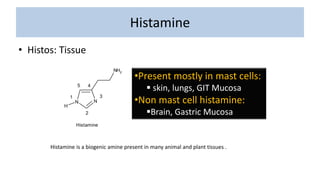
Histamine
• Histos: Tissue
N N
NH2
H
1
2
3
45
Histamine
•Present mostly in mast cells:
 skin, lungs, GIT Mucosa
•Non mast cell histamine:
Brain, Gastric Mucosa
Histamine is a biogenic amine present in many animal and plant tissues .
Histamine
• Meaning tissue amine, present in animal tissues and in certain plants eg: stinging
nettle
• Implicated as mediator in hypersentivity and tissue injury reactions
• Present almost and stored in mast cell
• Tissues rice in histamine are skin gastric mucosa and intestinal mucosa, lungs,
liver and placenta.
• Non mast cell histamine occurs in brain , epidermis, gastric mucosa and growing
regions
• Also presents in body secretions, venoms and pathological fluids
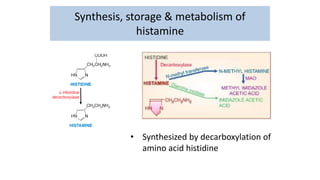
Synthesis, storage & metabolism of
histamine
• Synthesized by decarboxylation of
amino acid histidine
Pharmacological actions
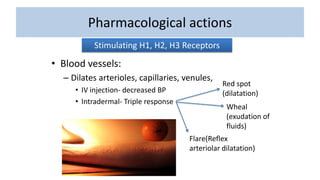
• Blood vessels:
– Dilates arterioles, capillaries, venules,
• IV injection- decreased BP
• Intradermal- Triple response
Stimulating H1, H2, H3 Receptors
Red spot
(dilatation)
Wheal
(exudation of
fluids)
Flare(Reflex
arteriolar dilatation)
Pharmacological actions (Contd)
• CVS: rate as well as force of contraction is increased (H2)
• Visceral smooth muscles:
Bronchoconstriction, abdominal cramps, colic by intestinal contractions,
uterus is contracted in animals
Smooth muscle is H1 response, sometimes H2 mediated relaxation is
also seen
• Secretions:
– Increased gastric secretion (H2) primarly of gastric but also pepsin
mediated by increase cAMP generation
– Increased nasal secretions (H1)
Pharmacological actions (Contd)
• Sensory Nerve Endings: i.v/ Intracutaneosly occurs itching
Higher concentrations injected more deeply causes pain
• Autonomic ganglia and adrenal medulla: stimulated and release
Adr- causes secondary rise in BP
• CNS: Doesnot cross/ penetrate BBB- no central effects are seen on
i.v
– Wakefulness, rise in BP, cardiac stimulation, behavioral arousal,
hypothermia, vomiting and ADH release on intra
Cerebroventricular Injection (H1/H2)
Pathophysiological Roles
• Gastric secretion(H2)
• Allergic phenomena (H1)
• As transmitter : regulate body temperature, CVS, thirst etc (H1)
• Inflammation (p-selection adhesion of leukocytes)
• Tissue growth and repair
• Head ache
Therapeutic Uses
• Betahistine
• H1 Selective histamine analogue
– To control vertigo in Meniere`s disease 8 mg tab ½
tablet QID (probably by vasodilatation in inner ear)
Histamine releasers
• stings and venom
•Ag-Ab reaction
•Drugs
 d-tubocurarine
Morphine
Histamine releasers
• Variety of mechanical , chemical and immunological
stimuli are capable of releasing histamine from mast
cell
• Tissue damage: trauma, stings and venoms, proteolytic
enzymes, phospholipase A
• Polymers like dextrans, polyvinyl pyrrolidone
• Basic drugs: tubocurarine, morphine, atropine,
pentamidine, plymyxin B, vancomycin
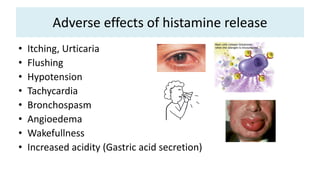
Adverse effects of histamine release
• Itching, Urticaria
• Flushing
• Hypotension
• Tachycardia
• Bronchospasm
• Angioedema
• Wakefullness
• Increased acidity (Gastric acid secretion)
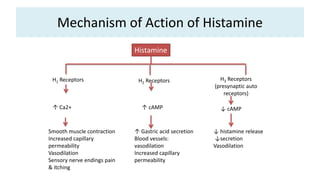
Mechanism of Action of Histamine
Histamine
H1 Receptors H2 Receptors H3 Receptors
(presynaptic auto
receptors)
↑ Ca2+
Smooth muscle contraction
Increased capillary
permeability
Vasodilation
Sensory nerve endings pain
& itching
↑ cAMP
↑ Gastric acid secretion
Blood vessels:
vasodilation
Increased capillary
permeability
↓ histamine release
↓secretion
Vasodilation
↓ cAMP
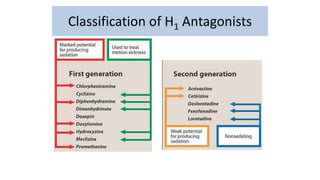
Classification of H1 Antagonists
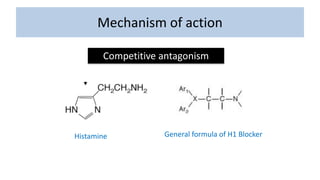
Mechanism of action
Competitive antagonism
Histamine General formula of H1 Blocker
Pharmacological actions
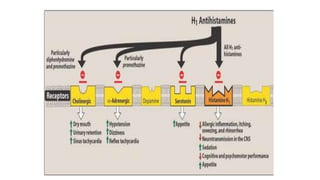
• CNS depression: (More with first generation)
– Sedation and drowsiness
– Some have antiemetic and antiparkinsonian
effects
• Antiallergic action
• Anticholinergic actions (More with first
generation)
– Dryness of mouth , Blurring of vision
– Constipation
– Urinary retention
Pharmacological Actions
• Local anesthetic
• BP: smooth muscle relaxation/ alpha
adrenergic blocade
• Antimotion sickness effect: Dimenhydrinate,
Promethazine
• Antiemetic: Promethazine
• Antiparkinsonism: Diphenhydramine,
orphenadrine, promethazine(IV)
• Antivertigo: cinnarizine
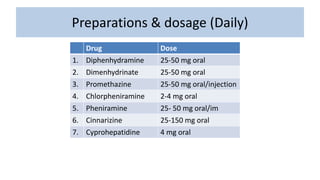
Preparations & dosage (Daily)
Drug Dose
1. Diphenhydramine 25-50 mg oral
2. Dimenhydrinate 25-50 mg oral
3. Promethazine 25-50 mg oral/injection
4. Chlorpheniramine 2-4 mg oral
5. Pheniramine 25- 50 mg oral/im
6. Cinnarizine 25-150 mg oral
7. Cyprohepatidine 4 mg oral
Therapeutic uses
1. Allergic rhinitis & common cold
2. Allergic dermatitis, itching, urticaria
3. Wasp stings/ bite: pain and itching decreases
4. Mild blood transfusion reactions
5. Allergic conjunctivitis
6. Motion sickness: dimenhydrinate, promethazine
7. Morning sickness: promethazine
8. Vertigo: cinnarizine
9. Chronic urticaria
10. Appetite stimulant: cyprohepatidine
11.Drug induced parkinsonism: Diphenhydramine,
Therapeutic uses (Contd..)
Adverse effects
• Sedation
• Anticholinergic effects
• Dermatitis on local use
• Cyclizine, meclizine : teratogenicity
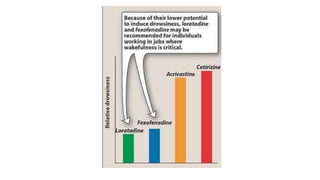
Second generation H1 Blockers
(Non Sedative:Less anticholinergic property)
• Fexofenadine
• Astemizole
• Loratidine
• Cetrizine
• Levocetrizine
• Azelastine
• Terfenadine
Uses:
• Allergic rhinitis
• Allergic Dermatitis
• Allergic conjunctivitis
• Urticaria
• Common cold
Advantages of second generation antihistaminics
• They have no anticholinergic side effects
• Do not cross blood brain barrier (BBB), hence
cause minimal or no drowsiness and sedation
• Do not impair Psychomotor performance
Serotonin
RVS Chaitanya Koppala
SEROTONIN
• Named after the vasoconstrictor substances which appeared in serum
when blood clotted
• Smooth muscle contracting substance present in enterchromaffin cell of
GIT
• About 95% of 5-HT receptors concentrated in Intestine remaining in
platelets and brain
• Wasp and scorpion sting also contains serotonin
• Widely distributed in invertebrates and plants (banana , pear, pineapple,
tomato, stinging)
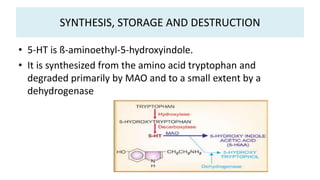
SYNTHESIS, STORAGE AND DESTRUCTION
• 5-HT is ß-aminoethyl-5-hydroxyindole.
• It is synthesized from the amino acid tryptophan and
degraded primarily by MAO and to a small extent by a
dehydrogenase
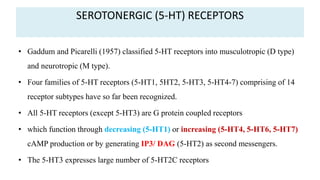
SEROTONERGIC (5-HT) RECEPTORS
• Gaddum and Picarelli (1957) classified 5-HT receptors into musculotropic (D type)
and neurotropic (M type).
• Four families of 5-HT receptors (5-HT1, 5HT2, 5-HT3, 5-HT4-7) comprising of 14
receptor subtypes have so far been recognized.
• All 5-HT receptors (except 5-HT3) are G protein coupled receptors
• which function through decreasing (5-HT1) or increasing (5-HT4, 5-HT6, 5-HT7)
cAMP production or by generating IP3/ DAG (5-HT2) as second messengers.
• The 5-HT3 expresses large number of 5-HT2C receptors
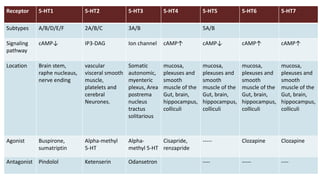
Receptor 5-HT1 5-HT2 5-HT3 5-HT4 5-HT5 5-HT6 5-HT7
Subtypes A/B/D/E/F 2A/B/C 3A/B 5A/B
Signaling
pathway
cAMP↓ IP3-DAG Ion channel cAMP↑ cAMP↓ cAMP↑ cAMP↑
Location Brain stem,
raphe nucleaus,
nerve ending
vascular
visceral smooth
muscle,
platelets and
cerebral
Neurones.
Somatic
autonomic,
myenteric
plexus, Area
postrema
nucleus
tractus
solitarious
mucosa,
plexuses and
smooth
muscle of the
Gut, brain,
hippocampus,
colliculi
mucosa,
plexuses and
smooth
muscle of the
Gut, brain,
hippocampus,
colliculi
mucosa,
plexuses and
smooth
muscle of the
Gut, brain,
hippocampus,
colliculi
mucosa,
plexuses and
smooth
muscle of the
Gut, brain,
hippocampus,
colliculi
Agonist Buspirone,
sumatriptin
Alpha-methyl
5-HT
Alpha-
methyl 5-HT
Cisapride,
renzapride
----- Clozapine Clozapine
Antagonist Pindolol Ketenserin Odansetron ---- ----- ----
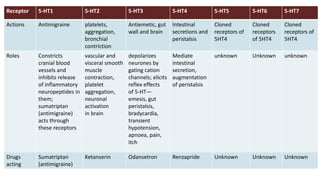
Receptor 5-HT1 5-HT2 5-HT3 5-HT4 5-HT5 5-HT6 5-HT7
Actions Antimigraine platelets,
aggregation,
bronchial
contriction
Antiemetic, gut
wall and brain
Intestinal
secretions and
peristalsis
Cloned
receptors of
5HT4
Cloned
receptors
of 5HT4
Cloned
receptors of
5HT4
Roles Constricts
cranial blood
vessels and
inhibits release
of inflammatory
neuropeptides in
them;
sumatriptan
(antimigraine)
acts through
these receptors
vascular and
visceral smooth
muscle
contraction,
platelet
aggregation,
neuronal
activation
in brain
depolarizes
neurones by
gating cation
channels; elicits
reflex effects
of 5-HT—
emesis, gut
peristalsis,
bradycardia,
transient
hypotension,
apnoea, pain,
itch
Mediate
intestinal
secretion,
augmentation
of peristalsis
unknown Unknown unknown
Drugs
acting
Sumatriptan
(antimigraine)
Ketanserin Odansetron Renzapride Unknown Unknown Unknown
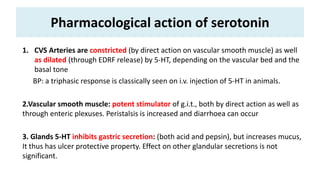
Pharmacological action of serotonin
1. CVS Arteries are constricted (by direct action on vascular smooth muscle) as well
as dilated (through EDRF release) by 5-HT, depending on the vascular bed and the
basal tone
BP: a triphasic response is classically seen on i.v. injection of 5-HT in animals.
2.Vascular smooth muscle: potent stimulator of g.i.t., both by direct action as well as
through enteric plexuses. Peristalsis is increased and diarrhoea can occur
3. Glands 5-HT inhibits gastric secretion: (both acid and pepsin), but increases mucus,
It thus has ulcer protective property. Effect on other glandular secretions is not
significant.
Pharmacological action of serotonin
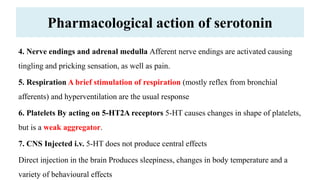
4. Nerve endings and adrenal medulla Afferent nerve endings are activated causing
tingling and pricking sensation, as well as pain.
5. Respiration A brief stimulation of respiration (mostly reflex from bronchial
afferents) and hyperventilation are the usual response
6. Platelets By acting on 5-HT2A receptors 5-HT causes changes in shape of platelets,
but is a weak aggregator.
7. CNS Injected i.v. 5-HT does not produce central effects
Direct injection in the brain Produces sleepiness, changes in body temperature and a
variety of behavioural effects
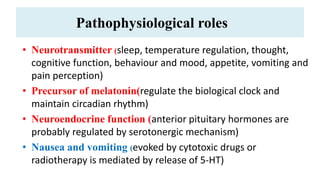
Pathophysiological roles
• Neurotransmitter (sleep, temperature regulation, thought,
cognitive function, behaviour and mood, appetite, vomiting and
pain perception)
• Precursor of melatonin(regulate the biological clock and
maintain circadian rhythm)
• Neuroendocrine function (anterior pituitary hormones are
probably regulated by serotonergic mechanism)
• Nausea and vomiting (evoked by cytotoxic drugs or
radiotherapy is mediated by release of 5-HT)
Pathophysiological roles
Migraine:5-HT is said to initiate the vasoconstrictor phase of migraine
Haemostasis (5-HT accelerates platelet aggregation and clot formation
Angina (5-HT released from platelets has been implicated in causing
coronary spasm and variant angina)
Hypertension (Increased responsiveness to 5-HT as well as its reduced
uptake and clearance by platelets has been demonstrated in
hypertensive Patients)
Intestinal motility (5-HT containing neurones may regulate peristalsis
and local reflexes in the gut)
Carcinoid syndrome (Bowel hypermotility and bronchoconstriction in
carcinoid is due to 5-HT)
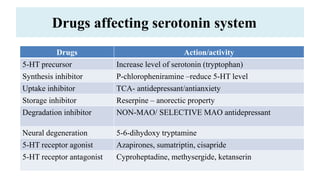
Drugs affecting serotonin system
•Drugs Action/activity
5-HT precursor Increase level of serotonin (tryptophan)
Synthesis inhibitor P-chloropheniramine –reduce 5-HT level
Uptake inhibitor TCA- antidepressant/antianxiety
Storage inhibitor Reserpine – anorectic property
Degradation inhibitor NON-MAO/ SELECTIVE MAO antidepressant
Neural degeneration 5-6-dihydoxy tryptamine
5-HT receptor agonist Azapirones, sumatriptin, cisapride
5-HT receptor antagonist Cyproheptadine, methysergide, ketanserin
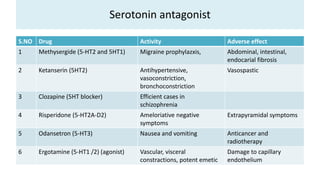
Serotonin antagonist
S.NO Drug Activity Adverse effect
1 Methysergide (5-HT2 and 5HT1) Migraine prophylazxis, Abdominal, intestinal,
endocarial fibrosis
2 Ketanserin (5HT2) Antihypertensive,
vasoconstriction,
bronchoconstriction
Vasospastic
3 Clozapine (5HT blocker) Efficient cases in
schizophrenia
4 Risperidone (5-HT2A-D2) Ameloriative negative
symptoms
Extrapyramidal symptoms
5 Odansetron (5-HT3) Nausea and vomiting Anticancer and
radiotherapy
6 Ergotamine (5-HT1 /2) (agonist) Vascular, visceral
constractions, potent emetic
Damage to capillary
endothelium
Migraine
Migraine is a mysterious disorder characterized by pulsating
headache, usually restricted to one side,lasting 4–48 hours
Associated with nausea, vomiting, sensitivity to light and sound,
flashes of light, vertigo, loose motions and other symptoms.
Two major types are—
• migraine with aura (classical migraine) in which headache is
preceded by visual or other neurological symptoms
• migraine without aura (common migraine).
Pathogenesis
• Pulsatile dilatation of certain large cranial vessels is the immediate cause of pain.
• Initial vasoconstriction or shunting of blood through carotid arteriovenous anastomoses
produces cerebral ischaemia and starts the attack.
• Inflammation of the affected blood vessel wall which is amplified by retrograde
transmission in the afferent nerves and release of mediators like 5-HT, neurokinin,
substance P, calcitonin gene related peptide (CGRP), nitric oxide, etc.
Specific antimigraine drugs
• Ergotamine (partial agonism of 5HT1 receptor vasoconstriction)
• Dihydroergotamine (DHE)
• Selective 5HT1 (agonist)
–Sumatriptans (5HT1 only and only)
–Rizatriptan
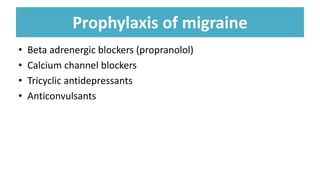
Prophylaxis of migraine
• Beta adrenergic blockers (propranolol)
• Calcium channel blockers
• Tricyclic antidepressants
• Anticonvulsants

Histamine and its antagonists

  • 1.
  • 2.
    AUTOCOID • Auto- self, akos –healing substance or remedy • Acts locally ( with in inflammatory cells) at the site of synthesis and release • Also known as local hormones • Differ from the hormones in two way? • Acts as mediator in physiological and pathological processes, reaction to injury and immunological insult) • Serve as transmitter or modulator in nervous system
  • 3.
    AUTOCOID Classification of autocoids Amine autocoids: Histamine, 5-Hydroxytryptamine  Lipid derived autocoids: prostaglandins, leukotrienes, platelet activation factor  Peptide autocoids: plasma kinins (bradykinins, kallidin), Angiotensin In addition Cytokines ( interleukins, TNFalpha, GM-CSF etc) Several peptides Gastrin, somatostatin, vasoactive intestinal peptide
  • 4.
    Histamine • Histos: Tissue NN NH2 H 1 2 3 45 Histamine •Present mostly in mast cells:  skin, lungs, GIT Mucosa •Non mast cell histamine: Brain, Gastric Mucosa Histamine is a biogenic amine present in many animal and plant tissues .
  • 5.
    Histamine • Meaning tissueamine, present in animal tissues and in certain plants eg: stinging nettle • Implicated as mediator in hypersentivity and tissue injury reactions • Present almost and stored in mast cell • Tissues rice in histamine are skin gastric mucosa and intestinal mucosa, lungs, liver and placenta. • Non mast cell histamine occurs in brain , epidermis, gastric mucosa and growing regions • Also presents in body secretions, venoms and pathological fluids
  • 6.
    Synthesis, storage &metabolism of histamine • Synthesized by decarboxylation of amino acid histidine
  • 7.
    Pharmacological actions • Bloodvessels: – Dilates arterioles, capillaries, venules, • IV injection- decreased BP • Intradermal- Triple response Stimulating H1, H2, H3 Receptors Red spot (dilatation) Wheal (exudation of fluids) Flare(Reflex arteriolar dilatation)
  • 8.
    Pharmacological actions (Contd) •CVS: rate as well as force of contraction is increased (H2) • Visceral smooth muscles: Bronchoconstriction, abdominal cramps, colic by intestinal contractions, uterus is contracted in animals Smooth muscle is H1 response, sometimes H2 mediated relaxation is also seen • Secretions: – Increased gastric secretion (H2) primarly of gastric but also pepsin mediated by increase cAMP generation – Increased nasal secretions (H1)
  • 9.
    Pharmacological actions (Contd) •Sensory Nerve Endings: i.v/ Intracutaneosly occurs itching Higher concentrations injected more deeply causes pain • Autonomic ganglia and adrenal medulla: stimulated and release Adr- causes secondary rise in BP • CNS: Doesnot cross/ penetrate BBB- no central effects are seen on i.v – Wakefulness, rise in BP, cardiac stimulation, behavioral arousal, hypothermia, vomiting and ADH release on intra Cerebroventricular Injection (H1/H2)
  • 10.
    Pathophysiological Roles • Gastricsecretion(H2) • Allergic phenomena (H1) • As transmitter : regulate body temperature, CVS, thirst etc (H1) • Inflammation (p-selection adhesion of leukocytes) • Tissue growth and repair • Head ache
  • 11.
    Therapeutic Uses • Betahistine •H1 Selective histamine analogue – To control vertigo in Meniere`s disease 8 mg tab ½ tablet QID (probably by vasodilatation in inner ear) Histamine releasers • stings and venom •Ag-Ab reaction •Drugs  d-tubocurarine Morphine
  • 12.
    Histamine releasers • Varietyof mechanical , chemical and immunological stimuli are capable of releasing histamine from mast cell • Tissue damage: trauma, stings and venoms, proteolytic enzymes, phospholipase A • Polymers like dextrans, polyvinyl pyrrolidone • Basic drugs: tubocurarine, morphine, atropine, pentamidine, plymyxin B, vancomycin
  • 13.
    Adverse effects ofhistamine release • Itching, Urticaria • Flushing • Hypotension • Tachycardia • Bronchospasm • Angioedema • Wakefullness • Increased acidity (Gastric acid secretion)
  • 14.
    Mechanism of Actionof Histamine Histamine H1 Receptors H2 Receptors H3 Receptors (presynaptic auto receptors) ↑ Ca2+ Smooth muscle contraction Increased capillary permeability Vasodilation Sensory nerve endings pain & itching ↑ cAMP ↑ Gastric acid secretion Blood vessels: vasodilation Increased capillary permeability ↓ histamine release ↓secretion Vasodilation ↓ cAMP
  • 15.
  • 16.
    Mechanism of action Competitiveantagonism Histamine General formula of H1 Blocker
  • 18.
    Pharmacological actions • CNSdepression: (More with first generation) – Sedation and drowsiness – Some have antiemetic and antiparkinsonian effects • Antiallergic action • Anticholinergic actions (More with first generation) – Dryness of mouth , Blurring of vision – Constipation – Urinary retention
  • 19.
    Pharmacological Actions • Localanesthetic • BP: smooth muscle relaxation/ alpha adrenergic blocade • Antimotion sickness effect: Dimenhydrinate, Promethazine • Antiemetic: Promethazine • Antiparkinsonism: Diphenhydramine, orphenadrine, promethazine(IV) • Antivertigo: cinnarizine
  • 20.
    Preparations & dosage(Daily) Drug Dose 1. Diphenhydramine 25-50 mg oral 2. Dimenhydrinate 25-50 mg oral 3. Promethazine 25-50 mg oral/injection 4. Chlorpheniramine 2-4 mg oral 5. Pheniramine 25- 50 mg oral/im 6. Cinnarizine 25-150 mg oral 7. Cyprohepatidine 4 mg oral
  • 21.
    Therapeutic uses 1. Allergicrhinitis & common cold 2. Allergic dermatitis, itching, urticaria 3. Wasp stings/ bite: pain and itching decreases 4. Mild blood transfusion reactions 5. Allergic conjunctivitis 6. Motion sickness: dimenhydrinate, promethazine 7. Morning sickness: promethazine
  • 22.
    8. Vertigo: cinnarizine 9.Chronic urticaria 10. Appetite stimulant: cyprohepatidine 11.Drug induced parkinsonism: Diphenhydramine, Therapeutic uses (Contd..)
  • 23.
    Adverse effects • Sedation •Anticholinergic effects • Dermatitis on local use • Cyclizine, meclizine : teratogenicity
  • 24.
    Second generation H1Blockers (Non Sedative:Less anticholinergic property) • Fexofenadine • Astemizole • Loratidine • Cetrizine • Levocetrizine • Azelastine • Terfenadine Uses: • Allergic rhinitis • Allergic Dermatitis • Allergic conjunctivitis • Urticaria • Common cold
  • 25.
    Advantages of secondgeneration antihistaminics • They have no anticholinergic side effects • Do not cross blood brain barrier (BBB), hence cause minimal or no drowsiness and sedation • Do not impair Psychomotor performance
  • 27.
  • 28.
    SEROTONIN • Named afterthe vasoconstrictor substances which appeared in serum when blood clotted • Smooth muscle contracting substance present in enterchromaffin cell of GIT • About 95% of 5-HT receptors concentrated in Intestine remaining in platelets and brain • Wasp and scorpion sting also contains serotonin • Widely distributed in invertebrates and plants (banana , pear, pineapple, tomato, stinging)
  • 29.
    SYNTHESIS, STORAGE ANDDESTRUCTION • 5-HT is ß-aminoethyl-5-hydroxyindole. • It is synthesized from the amino acid tryptophan and degraded primarily by MAO and to a small extent by a dehydrogenase
  • 30.
    SEROTONERGIC (5-HT) RECEPTORS •Gaddum and Picarelli (1957) classified 5-HT receptors into musculotropic (D type) and neurotropic (M type). • Four families of 5-HT receptors (5-HT1, 5HT2, 5-HT3, 5-HT4-7) comprising of 14 receptor subtypes have so far been recognized. • All 5-HT receptors (except 5-HT3) are G protein coupled receptors • which function through decreasing (5-HT1) or increasing (5-HT4, 5-HT6, 5-HT7) cAMP production or by generating IP3/ DAG (5-HT2) as second messengers. • The 5-HT3 expresses large number of 5-HT2C receptors
  • 31.
    Receptor 5-HT1 5-HT25-HT3 5-HT4 5-HT5 5-HT6 5-HT7 Subtypes A/B/D/E/F 2A/B/C 3A/B 5A/B Signaling pathway cAMP↓ IP3-DAG Ion channel cAMP↑ cAMP↓ cAMP↑ cAMP↑ Location Brain stem, raphe nucleaus, nerve ending vascular visceral smooth muscle, platelets and cerebral Neurones. Somatic autonomic, myenteric plexus, Area postrema nucleus tractus solitarious mucosa, plexuses and smooth muscle of the Gut, brain, hippocampus, colliculi mucosa, plexuses and smooth muscle of the Gut, brain, hippocampus, colliculi mucosa, plexuses and smooth muscle of the Gut, brain, hippocampus, colliculi mucosa, plexuses and smooth muscle of the Gut, brain, hippocampus, colliculi Agonist Buspirone, sumatriptin Alpha-methyl 5-HT Alpha- methyl 5-HT Cisapride, renzapride ----- Clozapine Clozapine Antagonist Pindolol Ketenserin Odansetron ---- ----- ----
  • 32.
    Receptor 5-HT1 5-HT25-HT3 5-HT4 5-HT5 5-HT6 5-HT7 Actions Antimigraine platelets, aggregation, bronchial contriction Antiemetic, gut wall and brain Intestinal secretions and peristalsis Cloned receptors of 5HT4 Cloned receptors of 5HT4 Cloned receptors of 5HT4 Roles Constricts cranial blood vessels and inhibits release of inflammatory neuropeptides in them; sumatriptan (antimigraine) acts through these receptors vascular and visceral smooth muscle contraction, platelet aggregation, neuronal activation in brain depolarizes neurones by gating cation channels; elicits reflex effects of 5-HT— emesis, gut peristalsis, bradycardia, transient hypotension, apnoea, pain, itch Mediate intestinal secretion, augmentation of peristalsis unknown Unknown unknown Drugs acting Sumatriptan (antimigraine) Ketanserin Odansetron Renzapride Unknown Unknown Unknown
  • 33.
    Pharmacological action ofserotonin 1. CVS Arteries are constricted (by direct action on vascular smooth muscle) as well as dilated (through EDRF release) by 5-HT, depending on the vascular bed and the basal tone BP: a triphasic response is classically seen on i.v. injection of 5-HT in animals. 2.Vascular smooth muscle: potent stimulator of g.i.t., both by direct action as well as through enteric plexuses. Peristalsis is increased and diarrhoea can occur 3. Glands 5-HT inhibits gastric secretion: (both acid and pepsin), but increases mucus, It thus has ulcer protective property. Effect on other glandular secretions is not significant.
  • 34.
    Pharmacological action ofserotonin 4. Nerve endings and adrenal medulla Afferent nerve endings are activated causing tingling and pricking sensation, as well as pain. 5. Respiration A brief stimulation of respiration (mostly reflex from bronchial afferents) and hyperventilation are the usual response 6. Platelets By acting on 5-HT2A receptors 5-HT causes changes in shape of platelets, but is a weak aggregator. 7. CNS Injected i.v. 5-HT does not produce central effects Direct injection in the brain Produces sleepiness, changes in body temperature and a variety of behavioural effects
  • 35.
    Pathophysiological roles • Neurotransmitter(sleep, temperature regulation, thought, cognitive function, behaviour and mood, appetite, vomiting and pain perception) • Precursor of melatonin(regulate the biological clock and maintain circadian rhythm) • Neuroendocrine function (anterior pituitary hormones are probably regulated by serotonergic mechanism) • Nausea and vomiting (evoked by cytotoxic drugs or radiotherapy is mediated by release of 5-HT)
  • 36.
    Pathophysiological roles Migraine:5-HT issaid to initiate the vasoconstrictor phase of migraine Haemostasis (5-HT accelerates platelet aggregation and clot formation Angina (5-HT released from platelets has been implicated in causing coronary spasm and variant angina) Hypertension (Increased responsiveness to 5-HT as well as its reduced uptake and clearance by platelets has been demonstrated in hypertensive Patients) Intestinal motility (5-HT containing neurones may regulate peristalsis and local reflexes in the gut) Carcinoid syndrome (Bowel hypermotility and bronchoconstriction in carcinoid is due to 5-HT)
  • 37.
    Drugs affecting serotoninsystem •Drugs Action/activity 5-HT precursor Increase level of serotonin (tryptophan) Synthesis inhibitor P-chloropheniramine –reduce 5-HT level Uptake inhibitor TCA- antidepressant/antianxiety Storage inhibitor Reserpine – anorectic property Degradation inhibitor NON-MAO/ SELECTIVE MAO antidepressant Neural degeneration 5-6-dihydoxy tryptamine 5-HT receptor agonist Azapirones, sumatriptin, cisapride 5-HT receptor antagonist Cyproheptadine, methysergide, ketanserin
  • 38.
    Serotonin antagonist S.NO DrugActivity Adverse effect 1 Methysergide (5-HT2 and 5HT1) Migraine prophylazxis, Abdominal, intestinal, endocarial fibrosis 2 Ketanserin (5HT2) Antihypertensive, vasoconstriction, bronchoconstriction Vasospastic 3 Clozapine (5HT blocker) Efficient cases in schizophrenia 4 Risperidone (5-HT2A-D2) Ameloriative negative symptoms Extrapyramidal symptoms 5 Odansetron (5-HT3) Nausea and vomiting Anticancer and radiotherapy 6 Ergotamine (5-HT1 /2) (agonist) Vascular, visceral constractions, potent emetic Damage to capillary endothelium
  • 39.
    Migraine Migraine is amysterious disorder characterized by pulsating headache, usually restricted to one side,lasting 4–48 hours Associated with nausea, vomiting, sensitivity to light and sound, flashes of light, vertigo, loose motions and other symptoms. Two major types are— • migraine with aura (classical migraine) in which headache is preceded by visual or other neurological symptoms • migraine without aura (common migraine).
  • 40.
    Pathogenesis • Pulsatile dilatationof certain large cranial vessels is the immediate cause of pain. • Initial vasoconstriction or shunting of blood through carotid arteriovenous anastomoses produces cerebral ischaemia and starts the attack. • Inflammation of the affected blood vessel wall which is amplified by retrograde transmission in the afferent nerves and release of mediators like 5-HT, neurokinin, substance P, calcitonin gene related peptide (CGRP), nitric oxide, etc.
  • 41.
    Specific antimigraine drugs •Ergotamine (partial agonism of 5HT1 receptor vasoconstriction) • Dihydroergotamine (DHE) • Selective 5HT1 (agonist) –Sumatriptans (5HT1 only and only) –Rizatriptan
  • 42.
    Prophylaxis of migraine •Beta adrenergic blockers (propranolol) • Calcium channel blockers • Tricyclic antidepressants • Anticonvulsants

Editor's Notes

  • #12 Meniere`s disease: betahistine acts by improving blood flow in inner ear. The side efects are nausea, vomiting, headache and pruritis. It should be avoided in patients with bronchial asthma and peptic ulcer.
  • #25 Azelastine H1 blocker, also decrease histamine release, PAF & Leukotriene release Good topical activity T ½ = 24 hrs, also have active metabolite Nasal spray: 0.14 mg/puff/nasal spray, 2 puffs per day for seasonal and perennial allergic rhinitis