PorPhyria
A Powerpoint Presentation by Jessi Young (Pd 6/7 Day 2)
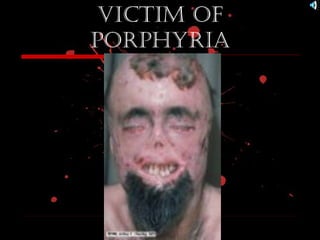
Victim of
PorPhyria
a Brief history
 The word “porphyria” derives from the Greek root porphura
(π ) meaning “purple pigment”ορφύρα
 There is some speculation as to whether or not this term came from the idea that
victims of porphyria would grow bruised and discolored from their disease, and
would often take on a violet hue
 There is no set date as to when porphyria emerged into mankind.
Some of the most prominent cases were found in the late eighteenth
to early twentieth centuries
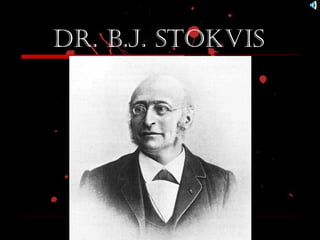
 The doctor who first gave an accurate description to porphyria was
Dr. B. J. Stokvis
 Hippocrates is cited as one of the very first to ever recognize porphyria
 Congenital Erythropoietic Porphyria, or CEP, was identified in
1923. To date this is the most prevalent strain of porphyria
Dr. B.j. stokVis
How it works
 Primarily, porphyria affects the nervous system. This can cause
abdominal pain, hallucinations, depression, anxiety, and paranoia
 Porphyria begins on a cellular level. porphyrins, the main
precursors of heme (the main ingredient in hemoglobin etc.)
 Porphyria creates dysfunction in porphyrins, which leads to low
(and eventually virtually nonexistent) heme production
 The build-up of dysfunctional porphyrins in the
bloodstream becomes toxic to the tissues in the body, which
causes the symptoms of porphyria
 Porphyria is largely a blood-related disease, so as a result, in addition
to largely affecting the nervous system, the toxic porphyrins have
devastating effects on the victim’s liver, usually leading to hepatic
encephalopathy (acute liver failure)
PorPHyrin & Heme
signs & syPmtoms
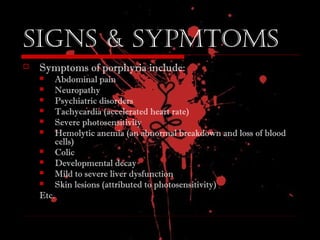
 Symptoms of porphyria include:
 Abdominal pain
 Neuropathy
 Psychiatric disorders
 Tachycardia (accelerated heart rate)
 Severe photosensitivity
 Hemolytic anemia (an abnormal breakdown and loss of blood
cells)
 Colic
 Developmental decay
 Mild to severe liver dysfunction
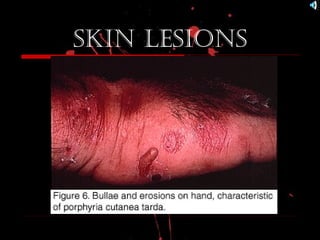
 Skin lesions (attributed to photosensitivity)
Etc.
skin Lesions
A Cure?
 At present, there is no cure for any strain of
porphyria. There are however, vaccinations
to prevent it, and treatments for those who
contract the disease
PorPhyriA
VACCinAtion
Mythology
 Porphyria has been suggested as an
explanation for the origin of vampire and
werewolf legends, based upon certain
perceived similarities between the condition
and the folklore
DrACulA
FIN
ANd just becAuse
you love hIm…
oNe moRe tIme!

Porphyria

  • 1.
    PorPhyria A Powerpoint Presentationby Jessi Young (Pd 6/7 Day 2)
  • 2.
  • 3.
    a Brief history The word “porphyria” derives from the Greek root porphura (π ) meaning “purple pigment”ορφύρα  There is some speculation as to whether or not this term came from the idea that victims of porphyria would grow bruised and discolored from their disease, and would often take on a violet hue  There is no set date as to when porphyria emerged into mankind. Some of the most prominent cases were found in the late eighteenth to early twentieth centuries  The doctor who first gave an accurate description to porphyria was Dr. B. J. Stokvis  Hippocrates is cited as one of the very first to ever recognize porphyria  Congenital Erythropoietic Porphyria, or CEP, was identified in 1923. To date this is the most prevalent strain of porphyria
  • 4.
  • 5.
    How it works Primarily, porphyria affects the nervous system. This can cause abdominal pain, hallucinations, depression, anxiety, and paranoia  Porphyria begins on a cellular level. porphyrins, the main precursors of heme (the main ingredient in hemoglobin etc.)  Porphyria creates dysfunction in porphyrins, which leads to low (and eventually virtually nonexistent) heme production  The build-up of dysfunctional porphyrins in the bloodstream becomes toxic to the tissues in the body, which causes the symptoms of porphyria  Porphyria is largely a blood-related disease, so as a result, in addition to largely affecting the nervous system, the toxic porphyrins have devastating effects on the victim’s liver, usually leading to hepatic encephalopathy (acute liver failure)
  • 6.
  • 7.
    signs & syPmtoms Symptoms of porphyria include:  Abdominal pain  Neuropathy  Psychiatric disorders  Tachycardia (accelerated heart rate)  Severe photosensitivity  Hemolytic anemia (an abnormal breakdown and loss of blood cells)  Colic  Developmental decay  Mild to severe liver dysfunction  Skin lesions (attributed to photosensitivity) Etc.
  • 8.
  • 9.
    A Cure?  Atpresent, there is no cure for any strain of porphyria. There are however, vaccinations to prevent it, and treatments for those who contract the disease
  • 10.
  • 11.
    Mythology  Porphyria hasbeen suggested as an explanation for the origin of vampire and werewolf legends, based upon certain perceived similarities between the condition and the folklore
  • 12.
  • 13.
  • 14.
  • 15.