By :- Ali Al-Alwani
Group:-117 i-6
Introduction
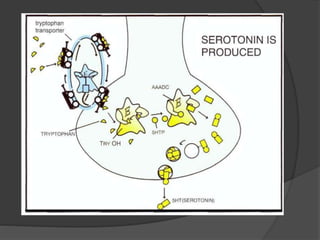
Synthesis.
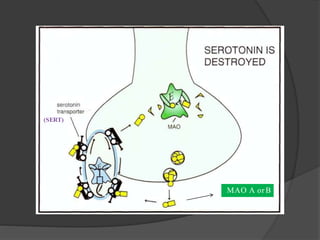
Degradation.
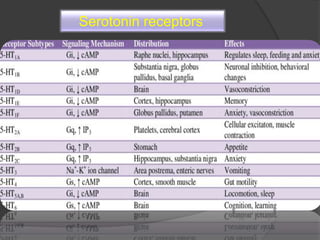
Serotonin Receptors.
Pathways in Brain.
Disorders associated with malfunctioned
Serotonergic System.
Drugs affecting on serotonergic System
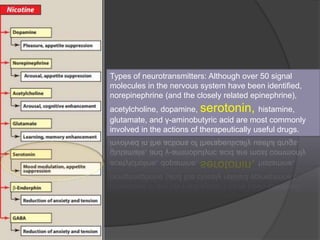
Types of neurotransmitters: Although over 50 signal
molecules in the nervous system have been identified,
norepinephrine (and the closely related epinephrine),
acetylcholine, dopamine, serotonin, histamine,
glutamate, and γ-aminobutyric acid are most commonly
involved in the actions of therapeutically useful drugs.
Serotonin is a monoamine neurotransmitter.
It has a popular image as a contributor to feelings of well-being
and happiness
extensively in GIT
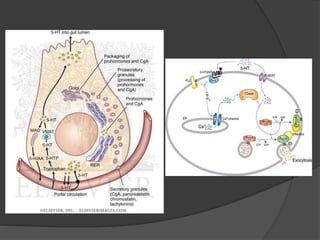
80 to 90 percent - enterochromaffin cells in the gut,
where it is used to regulate intestinal movements.
The remainder is synthesizedin serotonergic neurons
in the central nervous system.
Despite the abundance of peripheral serotonin, its
inability to cross the BBB necessitates the synthesis of
serotonin within the brain.
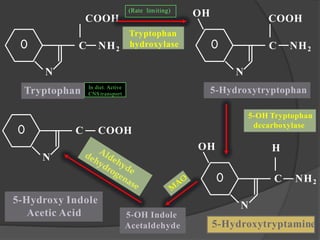
Serotonin is synthesized from the amino acid
tryptophan, which is derived from the diet.
Introduction
Serotonin secreted from the enterochromaffin
cells eventually finds its way out of tissues into the
blood.
There, it is actively taken up by blood platelets,
which store it.
When the platelets bind to a clot, they disgorge
serotonin, where it serves as a vasoconstrictor and
helps to regulate hemostasis and blood clotting.
Serotonin also is a growth factor for some types of
cells, which may give it a role in wound healing.
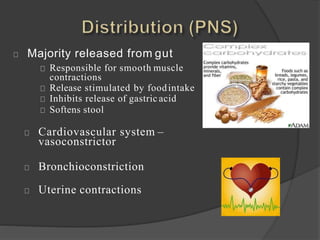
Majority released from gut
Responsible for smooth muscle
contractions
Release stimulated by foodintake
Inhibits release of gastric acid
Softens stool
Cardiovascular system –
vasoconstrictor
Bronchioconstriction
Uterine contractions
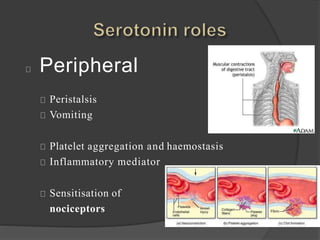
Peripheral
Peristalsis
Vomiting
Platelet aggregation and haemostasis
Inflammatory mediator
Sensitisation of
nociceptors
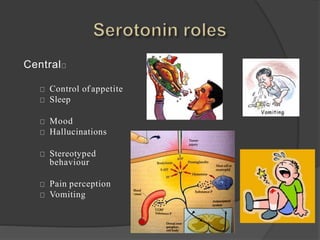
Central
Control of appetite
Sleep
Mood
Hallucinations
Stereotyped
behaviour
Pain perception
Vomiting
Actions of 5-HT
 Potent depolarizer of Nerve endings – exerts direct as well as
Arteries
areconstricted (direct) or dilated (EDRF) – depends
on vascular bed and basal tone
Also releases Adrenaline – affects ganglionic
transmission – CVS reflexes
Overall, large arteries and veins are constricted but in
microcirculation arterioles dilate and veins constrict
Constriction of veins – escape offluid
indirect effects
 Tachyphylaxis
Actions of 5-HT - CVS
 Heart: Isolated heart stimulation - direct ionotropic andchronotropic
effects
◦ Intact animal Heart: Bradycardia due to stimulation coronary
chemoreflex (Bezold Jarrisch reflex) – through vagaus Nerve
◦ Overall bradycardia, hypotension and apnoea
 Blood Pressure: Triphasic response on BP
◦ Early sharp fall: Coronary chemoreflex
◦ Brief rise in BP: vasoconstriction and increased cardiac output
◦ Prolonged fallin BP: arteriolar dilatation and extravasation of
fluid
 (Not involved in Physiological Regulation of BP) – Preeclmpsia
 Ketanserin – 5-HT antagonist (5-HT2)
Actions of 5-HT – contd.
Platelet: 5-HT2A action – changes in shape and size
of platelets– but weak aggregator
CNS: Poor entry to BBB – however
it’s atransmitter – INHIBITORY
◦ Direct Injection: Hunger, sleepiness,
behavioural changes
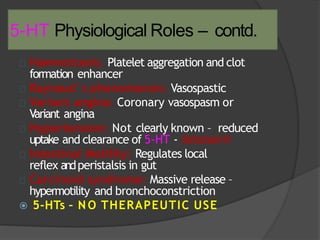
5-HT Physiological Roles – contd.
 Haemostasis: Platelet aggregation and clot
formation enhancer
 Raynaud`s phenomenon: Vasospastic
 Variant angina: Coronary vasospasm or
Variant angina
 Hypertension: Not clearly known – reduced
uptake and clearance of 5-HT - Ketanserin
 Intestinal Motility: Regulates local
reflex andperistalsis in gut
 Carcinoid syndrome: Massive release –
hypermotility and bronchoconstriction
 5-HTs – N O THERAPEUTIC USE
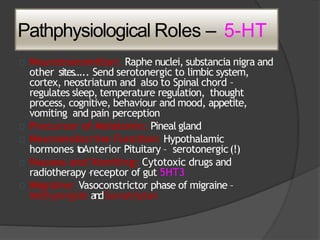
Pathphysiological Roles – 5-HT
 Neurotransmitter: Raphe nuclei, substancia nigra and
other sites….. Send serotonergic to limbic system,
cortex, neostriatum and also to Spinal chord –
regulates sleep, temperature regulation, thought
process, cognitive, behaviour and mood, appetite,
vomiting and pain perception
 Precursor of Melatonin: Pineal gland
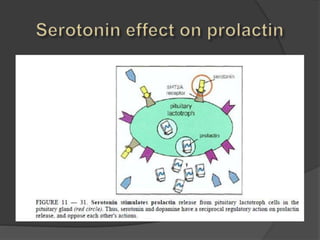
 Neuroendocrine Function: Hypothalamic
hormones toAnterior Pituitary – serotonergic(!)
 Nausea and Vomiting: Cytotoxic drugs and
radiotherapy –receptor of gut 5HT3
 Migraine: Vasoconstrictor phase of migraine –
Methysergide andSumatriptan
N N
COOH
C NH2
COOH
C NH2
OH
N
C NH2
OH H
Tryptophan 5-Hydroxytryptophan
5-Hydroxytryptamine
N
C COOH
5-OH Indole
Acetaldehyde
5-Hydroxy Indole
Acetic Acid
Tryptophan
hydroxylase
5-OH Tryptophan
decarboxylase
(Rate limiting)
In diet. Active
CNS transport
B
MAO A orB
(SERT)
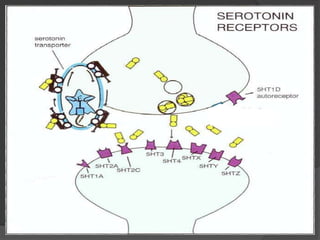
Serotonin receptors
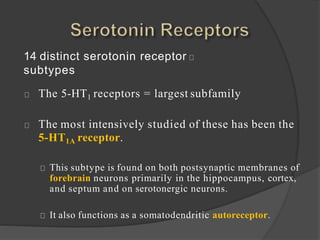
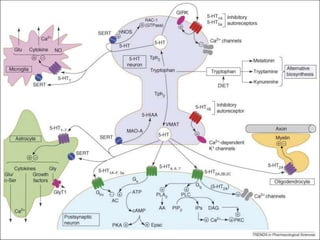
14 distinct serotonin receptor
subtypes
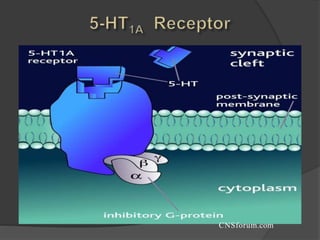
The 5-HT1 receptors = largest subfamily
The most intensively studied of these has been the
5-HT1A receptor.
This subtype is found on both postsynaptic membranes of
forebrain neurons primarily in the hippocampus, cortex,
and septum and on serotonergic neurons.
It also functions as a somatodendritic autoreceptor.
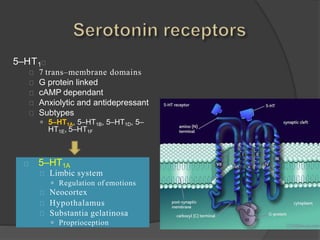
5–HT1
7 trans–membrane domains
G protein linked
cAMP dependant
Anxiolytic and antidepressant
Subtypes
 5–HT1A, 5–HT1B, 5–HT1D, 5–
HT1E, 5–HT1F
5–HT1A
Limbic system
 Regulation of emotions
Neocortex
Hypothalamus
Substantia gelatinosa
 Proprioception
CNSforum.com
•5-HT1 receptors occur primarily in the brain and cerebral
blood vessels (5-HT1D only), where they mediate neural
inhibition and vasoconstriction.
•They function mainly as inhibitory presynaptic receptors,
linked to inhibition of adenylatecyclase.
•Specific agonists at 5-HT1 receptors include
•Sumatriptan (used in migraine therapy)
•Buspirone (used in the treatment of anxiety).
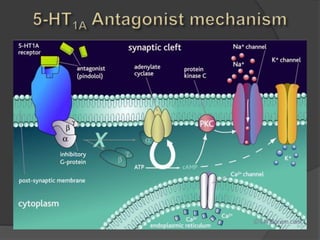
•Spiperone and methiothepin are specific antagonists of 5-
HT1 receptors.
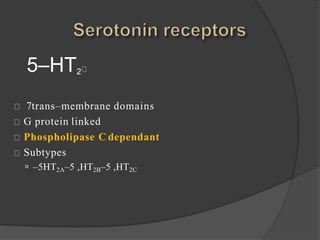
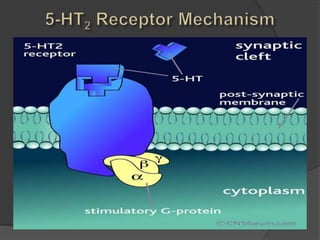
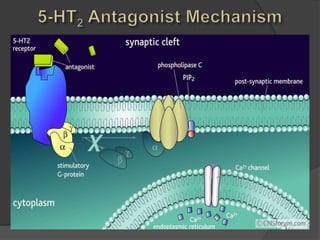
5–HT2
7trans–membrane domains
G protein linked
Phospholipase C dependant
Subtypes
 5– HT2A ,5– HT2B ,5– HT2C
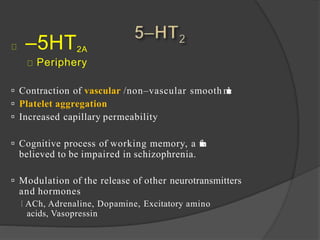
5– HT2A
Periphery
 Contraction of vascular /non–vascular smooth muscle
 Platelet aggregation
 Increased capillary permeability
 Cognitive process of working memory, a function
believed to be impaired in schizophrenia.
 Modulation of the release of other neurotransmitters
and hormones
ACh, Adrenaline, Dopamine, Excitatory amino
acids, Vasopressin
5- HT2A
CNS
 Motor behaviour
 Sleep regulation
 Nociception
 Neuroexcitation
•5-HT3 receptors occur
mainly in the peripheral
nervous system,
particularly on nociceptive
afferent neurones and on
autonomic and enteric
neurones.
•The effects of these
receptors are excitatory,
mediated by receptor-
coupled ion channels.
•5-HT3 antagonists (eg
ondansetron, tropisetron)
are used predominantlyas
anti-emetic drugs.
5-HT4 receptors are found in the brain, as well
as peripheral organs like the heart, bladder and
gastrointestinal (GI) tract.
stimulating peristalsis.
A specific 5-HT4 agonist ismetoclopramide
used for treating gastrointestinal disorders.
Little is known about the function and
pharmacology of 5-HT5, 5-HT6 and 5-HT7
receptors.
Serotonin has both ascending &
decending projections.
Ascending serononergic projections
Serotonergic neurons are clustered in midline raphe
nuclei of the midbrain, pons, and medulla
Ascending projections from these nuclei course through
the medial forebrain bundle before diverging to many
target regions.
 median raphe nucleus provides the majority of the
serotonergic innervation of the limbic system, including
the hippocampus and septum,
 dorsal raphe nucleus provides the primary innervation of
the striatum and thalamus.
Decendng serononergic projection
extend down the brainstem, and through the
spinal cord.
The caudal raphe serotonergic neurons project to the
medulla, cerebellum, and spinal cord.
Serotonergic efferents to the dorsal horn of the
spinal cord have been implicated in the
suppression of nociceptive pathways.
Ascending pathway
regulates
Mood,
Anxiety,
Sleep
Decending pathway regulate the pain
sentation.
1. Mood Disorders
2. Anxiety Disorder
3. Schizophrenia
4. ADHD
5. Sexual Disorders
6. Impulse Control Disorder
7. Personality disorders
8. Carcinoid syndrome
With the huge effect that the selective serotonin reuptake
inhibitors (SSRIs) for example, fluoxetine have made on the
treatment of depression, serotonin has become the biogenic
amine neurotransmitter most commonly associated with
depression.
The identification of multiple serotonin receptor subtypes has also
increased the excitement within the research community about the
development of even more specific treatments for depression.
Depletion of serotonin may precipitate depression, and some
patients with suicidal impulses have low cerebrospinal fluid
(CSF) concentrations of serotonin metabolites and low
concentrations of serotonin uptake sites onplatelets.
Different types of acute stress result in increased 5-
HT turnover in the prefrontal cortex, nucleus
accumbens, amygdala, and lateral
hypothalamus.
 5-HT release may have anxiogenic and anxiolytic effects,
depending on the region of the forebrain involved and the receptor
subtype activated.
Anxiogenic effects are mediated via 5-HT2A receptor,
stimulation of 5-HT1A receptors is anxiolytic.
 serotonergic antidepressants have therapeuticeffects in
some anxiety disorders for example, clomipramine (Anafranil) in
OCD.
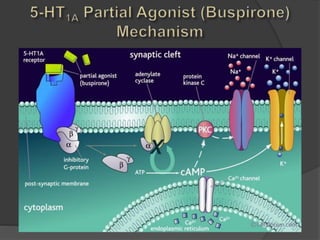
 The effectiveness of buspirone (BuSpar), a serotonin 5-HT1A
receptor agonist, in the treatment of anxiety disorders
Current hypotheses posit serotonin excess as a
cause of both positive and negative symptoms
in schizophrenia.
The robust serotonin antagonist activity of
clozapine and other second-generation
antipsychotics, coupled with the effectiveness
of clozapine to decrease positive symptoms in
chronic patients has contributed to the validity
of this proposition.
There is weak evidence for the significant
involvement of serotonin inADHD.
The support for the serotonin hypothesis comes
from the fact that some drugs (TCA & MAOI) that
affect serotonin metabolism are moderately
effective in ADHD.
However SSRIs have not been shown to be
effective.
Thus, if serotonin plays a role in ADHD, it is not
likely to have a central role but rather an
adjunctive role to one or more other
neurotransmitter systems.
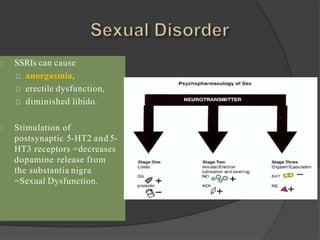
SSRIs can cause
anorgasmia,
erectile dysfunction,
diminished libido.
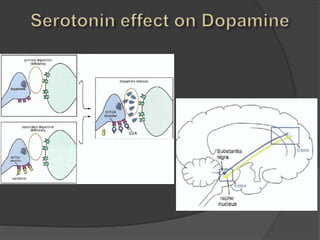
Stimulation of
postsynaptic 5-HT2 and 5-
HT3 receptors =decreases
dopamine release from
the substantia nigra
=Sexual Dysfunction.
Low CSF serotonin metabolites often found in
certain depressions.
Also are found among people who have made
suicide attempts who are violent, impulsive,
alcoholics and it has been found among their
relatives .
Impulsive alcoholic violent offenders have
decreased 5-HIAA.
Seretonin in ANOREXIANERVOSA
Three neurotransmitters involved in regulating eating
behavior in the paraventricular nucleus of the
hypothalamus.
 Serotonin,
 Dopamine,
 Norepinephrine.
Seretonin in BULIMIANERVOSA
Because antidepressants often benefit patients with
bulimia nervosa and because serotonin has been linked to
satiety, serotonin and norepinephrine have been
implicated.
Studies of personality traits and the dopaminergic
and serotonergic systems indicate an arousal-
activating function for these neurotransmitters.
Raising serotonin levels with serotonergic agents
such as fluoxetine (Prozac) can produce
dramatic changes in some character traits of
personality.
In many persons, serotonin reduces depression,
impulsiveness, and rumination, and can produce a
sense of general well-being.
One type of tumor, called carcinoid, sometimes
secretes large amounts of serotonin into the
blood, which causes various forms of the
carcinoid syndrome of flushing, diarrhea, and
heartproblems. Because of serotonin's growth-
promoting effect on cardiac myocytes, persons
with serotonin-secreting carcinoid may suffer a
right heart (tricuspid) valve disease syndrome,
caused by proliferation of myocytes onto the
valve.
Drugs Affecting
Serotonergic System
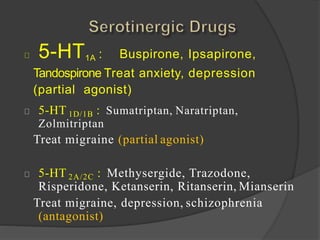
5-HT1A : Buspirone, Ipsapirone,
Tandospirone Treat anxiety, depression
(partial agonist)
5-HT 1D/1B : Sumatriptan, Naratriptan,
Zolmitriptan
Treat migraine (partial agonist)
5-HT 2A/2C : Methysergide, Trazodone,
Risperidone, Ketanserin, Ritanserin, Mianserin
Treat migraine, depression, schizophrenia
(antagonist)
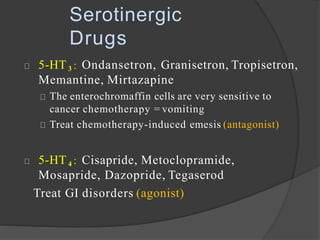
5-HT 3 : Ondansetron, Granisetron, Tropisetron,
Memantine, Mirtazapine
The enterochromaffin cells are very sensitive to
cancer chemotherapy = vomiting
Treat chemotherapy-induced emesis (antagonist)
5-HT 4 : Cisapride, Metoclopramide,
Mosapride, Dazopride, Tegaserod
Treat GI disorders (agonist)
Serotinergic
Drugs
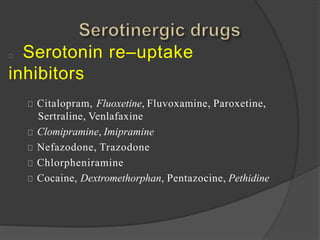
Serotonin re–uptake
inhibitors
Citalopram, Fluoxetine, Fluvoxamine, Paroxetine,
Sertraline, Venlafaxine
Clomipramine, Imipramine
Nefazodone, Trazodone
Chlorpheniramine
Cocaine, Dextromethorphan, Pentazocine, Pethidine
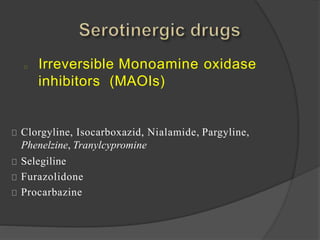
Irreversible Monoamine oxidase
inhibitors (MAOIs)
Clorgyline, Isocarboxazid, Nialamide, Pargyline,
Phenelzine, Tranylcypromine
Selegiline
Furazolidone
Procarbazine
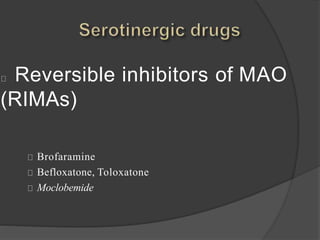
Reversible inhibitors of MAO
(RIMAs)
Brofaramine
Befloxatone, Toloxatone
Moclobemide
Kaplan and sadock ‘s comprehensive text book
of psychiatry.
Stephen M. Stahl –Essential
Psychopharmacology.
Medscape.com
Emedicine.com
Thank you

Serotonin pharmacology

  • 1.
    By :- AliAl-Alwani Group:-117 i-6
  • 2.
    Introduction Synthesis. Degradation. Serotonin Receptors. Pathways inBrain. Disorders associated with malfunctioned Serotonergic System. Drugs affecting on serotonergic System
  • 3.
    Types of neurotransmitters:Although over 50 signal molecules in the nervous system have been identified, norepinephrine (and the closely related epinephrine), acetylcholine, dopamine, serotonin, histamine, glutamate, and γ-aminobutyric acid are most commonly involved in the actions of therapeutically useful drugs.
  • 4.
    Serotonin is amonoamine neurotransmitter. It has a popular image as a contributor to feelings of well-being and happiness extensively in GIT 80 to 90 percent - enterochromaffin cells in the gut, where it is used to regulate intestinal movements. The remainder is synthesizedin serotonergic neurons in the central nervous system. Despite the abundance of peripheral serotonin, its inability to cross the BBB necessitates the synthesis of serotonin within the brain. Serotonin is synthesized from the amino acid tryptophan, which is derived from the diet. Introduction
  • 5.
    Serotonin secreted fromthe enterochromaffin cells eventually finds its way out of tissues into the blood. There, it is actively taken up by blood platelets, which store it. When the platelets bind to a clot, they disgorge serotonin, where it serves as a vasoconstrictor and helps to regulate hemostasis and blood clotting. Serotonin also is a growth factor for some types of cells, which may give it a role in wound healing.
  • 7.
    Majority released fromgut Responsible for smooth muscle contractions Release stimulated by foodintake Inhibits release of gastric acid Softens stool Cardiovascular system – vasoconstrictor Bronchioconstriction Uterine contractions
  • 8.
    Peripheral Peristalsis Vomiting Platelet aggregation andhaemostasis Inflammatory mediator Sensitisation of nociceptors
  • 9.
  • 10.
    Actions of 5-HT Potent depolarizer of Nerve endings – exerts direct as well as Arteries areconstricted (direct) or dilated (EDRF) – depends on vascular bed and basal tone Also releases Adrenaline – affects ganglionic transmission – CVS reflexes Overall, large arteries and veins are constricted but in microcirculation arterioles dilate and veins constrict Constriction of veins – escape offluid indirect effects  Tachyphylaxis
  • 11.
    Actions of 5-HT- CVS  Heart: Isolated heart stimulation - direct ionotropic andchronotropic effects ◦ Intact animal Heart: Bradycardia due to stimulation coronary chemoreflex (Bezold Jarrisch reflex) – through vagaus Nerve ◦ Overall bradycardia, hypotension and apnoea  Blood Pressure: Triphasic response on BP ◦ Early sharp fall: Coronary chemoreflex ◦ Brief rise in BP: vasoconstriction and increased cardiac output ◦ Prolonged fallin BP: arteriolar dilatation and extravasation of fluid  (Not involved in Physiological Regulation of BP) – Preeclmpsia  Ketanserin – 5-HT antagonist (5-HT2)
  • 12.
    Actions of 5-HT– contd. Platelet: 5-HT2A action – changes in shape and size of platelets– but weak aggregator CNS: Poor entry to BBB – however it’s atransmitter – INHIBITORY ◦ Direct Injection: Hunger, sleepiness, behavioural changes
  • 13.
    5-HT Physiological Roles– contd.  Haemostasis: Platelet aggregation and clot formation enhancer  Raynaud`s phenomenon: Vasospastic  Variant angina: Coronary vasospasm or Variant angina  Hypertension: Not clearly known – reduced uptake and clearance of 5-HT - Ketanserin  Intestinal Motility: Regulates local reflex andperistalsis in gut  Carcinoid syndrome: Massive release – hypermotility and bronchoconstriction  5-HTs – N O THERAPEUTIC USE
  • 14.
    Pathphysiological Roles –5-HT  Neurotransmitter: Raphe nuclei, substancia nigra and other sites….. Send serotonergic to limbic system, cortex, neostriatum and also to Spinal chord – regulates sleep, temperature regulation, thought process, cognitive, behaviour and mood, appetite, vomiting and pain perception  Precursor of Melatonin: Pineal gland  Neuroendocrine Function: Hypothalamic hormones toAnterior Pituitary – serotonergic(!)  Nausea and Vomiting: Cytotoxic drugs and radiotherapy –receptor of gut 5HT3  Migraine: Vasoconstrictor phase of migraine – Methysergide andSumatriptan
  • 16.
    N N COOH C NH2 COOH CNH2 OH N C NH2 OH H Tryptophan 5-Hydroxytryptophan 5-Hydroxytryptamine N C COOH 5-OH Indole Acetaldehyde 5-Hydroxy Indole Acetic Acid Tryptophan hydroxylase 5-OH Tryptophan decarboxylase (Rate limiting) In diet. Active CNS transport
  • 19.
  • 21.
  • 22.
    14 distinct serotoninreceptor subtypes The 5-HT1 receptors = largest subfamily The most intensively studied of these has been the 5-HT1A receptor. This subtype is found on both postsynaptic membranes of forebrain neurons primarily in the hippocampus, cortex, and septum and on serotonergic neurons. It also functions as a somatodendritic autoreceptor.
  • 25.
    5–HT1 7 trans–membrane domains Gprotein linked cAMP dependant Anxiolytic and antidepressant Subtypes  5–HT1A, 5–HT1B, 5–HT1D, 5– HT1E, 5–HT1F 5–HT1A Limbic system  Regulation of emotions Neocortex Hypothalamus Substantia gelatinosa  Proprioception
  • 26.
  • 29.
    •5-HT1 receptors occurprimarily in the brain and cerebral blood vessels (5-HT1D only), where they mediate neural inhibition and vasoconstriction. •They function mainly as inhibitory presynaptic receptors, linked to inhibition of adenylatecyclase. •Specific agonists at 5-HT1 receptors include •Sumatriptan (used in migraine therapy) •Buspirone (used in the treatment of anxiety). •Spiperone and methiothepin are specific antagonists of 5- HT1 receptors.
  • 30.
    5–HT2 7trans–membrane domains G proteinlinked Phospholipase C dependant Subtypes  5– HT2A ,5– HT2B ,5– HT2C
  • 33.
    5– HT2A Periphery  Contractionof vascular /non–vascular smooth muscle  Platelet aggregation  Increased capillary permeability  Cognitive process of working memory, a function believed to be impaired in schizophrenia.  Modulation of the release of other neurotransmitters and hormones ACh, Adrenaline, Dopamine, Excitatory amino acids, Vasopressin
  • 34.
    5- HT2A CNS  Motorbehaviour  Sleep regulation  Nociception  Neuroexcitation
  • 35.
    •5-HT3 receptors occur mainlyin the peripheral nervous system, particularly on nociceptive afferent neurones and on autonomic and enteric neurones. •The effects of these receptors are excitatory, mediated by receptor- coupled ion channels. •5-HT3 antagonists (eg ondansetron, tropisetron) are used predominantlyas anti-emetic drugs.
  • 36.
    5-HT4 receptors arefound in the brain, as well as peripheral organs like the heart, bladder and gastrointestinal (GI) tract. stimulating peristalsis. A specific 5-HT4 agonist ismetoclopramide used for treating gastrointestinal disorders. Little is known about the function and pharmacology of 5-HT5, 5-HT6 and 5-HT7 receptors.
  • 39.
    Serotonin has bothascending & decending projections. Ascending serononergic projections Serotonergic neurons are clustered in midline raphe nuclei of the midbrain, pons, and medulla Ascending projections from these nuclei course through the medial forebrain bundle before diverging to many target regions.  median raphe nucleus provides the majority of the serotonergic innervation of the limbic system, including the hippocampus and septum,  dorsal raphe nucleus provides the primary innervation of the striatum and thalamus.
  • 40.
    Decendng serononergic projection extenddown the brainstem, and through the spinal cord. The caudal raphe serotonergic neurons project to the medulla, cerebellum, and spinal cord. Serotonergic efferents to the dorsal horn of the spinal cord have been implicated in the suppression of nociceptive pathways.
  • 41.
  • 42.
    1. Mood Disorders 2.Anxiety Disorder 3. Schizophrenia 4. ADHD 5. Sexual Disorders 6. Impulse Control Disorder 7. Personality disorders 8. Carcinoid syndrome
  • 43.
    With the hugeeffect that the selective serotonin reuptake inhibitors (SSRIs) for example, fluoxetine have made on the treatment of depression, serotonin has become the biogenic amine neurotransmitter most commonly associated with depression. The identification of multiple serotonin receptor subtypes has also increased the excitement within the research community about the development of even more specific treatments for depression. Depletion of serotonin may precipitate depression, and some patients with suicidal impulses have low cerebrospinal fluid (CSF) concentrations of serotonin metabolites and low concentrations of serotonin uptake sites onplatelets.
  • 44.
    Different types ofacute stress result in increased 5- HT turnover in the prefrontal cortex, nucleus accumbens, amygdala, and lateral hypothalamus.  5-HT release may have anxiogenic and anxiolytic effects, depending on the region of the forebrain involved and the receptor subtype activated. Anxiogenic effects are mediated via 5-HT2A receptor, stimulation of 5-HT1A receptors is anxiolytic.  serotonergic antidepressants have therapeuticeffects in some anxiety disorders for example, clomipramine (Anafranil) in OCD.  The effectiveness of buspirone (BuSpar), a serotonin 5-HT1A receptor agonist, in the treatment of anxiety disorders
  • 45.
    Current hypotheses positserotonin excess as a cause of both positive and negative symptoms in schizophrenia. The robust serotonin antagonist activity of clozapine and other second-generation antipsychotics, coupled with the effectiveness of clozapine to decrease positive symptoms in chronic patients has contributed to the validity of this proposition.
  • 46.
    There is weakevidence for the significant involvement of serotonin inADHD. The support for the serotonin hypothesis comes from the fact that some drugs (TCA & MAOI) that affect serotonin metabolism are moderately effective in ADHD. However SSRIs have not been shown to be effective. Thus, if serotonin plays a role in ADHD, it is not likely to have a central role but rather an adjunctive role to one or more other neurotransmitter systems.
  • 47.
    SSRIs can cause anorgasmia, erectiledysfunction, diminished libido. Stimulation of postsynaptic 5-HT2 and 5- HT3 receptors =decreases dopamine release from the substantia nigra =Sexual Dysfunction.
  • 48.
    Low CSF serotoninmetabolites often found in certain depressions. Also are found among people who have made suicide attempts who are violent, impulsive, alcoholics and it has been found among their relatives . Impulsive alcoholic violent offenders have decreased 5-HIAA.
  • 49.
    Seretonin in ANOREXIANERVOSA Threeneurotransmitters involved in regulating eating behavior in the paraventricular nucleus of the hypothalamus.  Serotonin,  Dopamine,  Norepinephrine. Seretonin in BULIMIANERVOSA Because antidepressants often benefit patients with bulimia nervosa and because serotonin has been linked to satiety, serotonin and norepinephrine have been implicated.
  • 50.
    Studies of personalitytraits and the dopaminergic and serotonergic systems indicate an arousal- activating function for these neurotransmitters. Raising serotonin levels with serotonergic agents such as fluoxetine (Prozac) can produce dramatic changes in some character traits of personality. In many persons, serotonin reduces depression, impulsiveness, and rumination, and can produce a sense of general well-being.
  • 51.
    One type oftumor, called carcinoid, sometimes secretes large amounts of serotonin into the blood, which causes various forms of the carcinoid syndrome of flushing, diarrhea, and heartproblems. Because of serotonin's growth- promoting effect on cardiac myocytes, persons with serotonin-secreting carcinoid may suffer a right heart (tricuspid) valve disease syndrome, caused by proliferation of myocytes onto the valve.
  • 52.
  • 53.
    5-HT1A : Buspirone,Ipsapirone, Tandospirone Treat anxiety, depression (partial agonist) 5-HT 1D/1B : Sumatriptan, Naratriptan, Zolmitriptan Treat migraine (partial agonist) 5-HT 2A/2C : Methysergide, Trazodone, Risperidone, Ketanserin, Ritanserin, Mianserin Treat migraine, depression, schizophrenia (antagonist)
  • 56.
    5-HT 3 :Ondansetron, Granisetron, Tropisetron, Memantine, Mirtazapine The enterochromaffin cells are very sensitive to cancer chemotherapy = vomiting Treat chemotherapy-induced emesis (antagonist) 5-HT 4 : Cisapride, Metoclopramide, Mosapride, Dazopride, Tegaserod Treat GI disorders (agonist) Serotinergic Drugs
  • 57.
    Serotonin re–uptake inhibitors Citalopram, Fluoxetine,Fluvoxamine, Paroxetine, Sertraline, Venlafaxine Clomipramine, Imipramine Nefazodone, Trazodone Chlorpheniramine Cocaine, Dextromethorphan, Pentazocine, Pethidine
  • 58.
    Irreversible Monoamine oxidase inhibitors(MAOIs) Clorgyline, Isocarboxazid, Nialamide, Pargyline, Phenelzine, Tranylcypromine Selegiline Furazolidone Procarbazine
  • 59.
    Reversible inhibitors ofMAO (RIMAs) Brofaramine Befloxatone, Toloxatone Moclobemide
  • 60.
    Kaplan and sadock‘s comprehensive text book of psychiatry. Stephen M. Stahl –Essential Psychopharmacology. Medscape.com Emedicine.com
  • 61.