
Adrenergic Agonists and Antagonists
Haftom G. (BPharm., MSc.)
Email: haftomphar@gmail.com
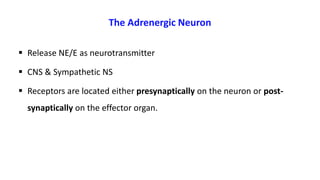
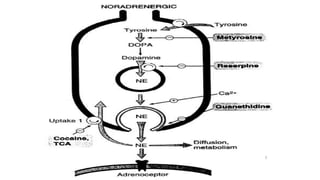
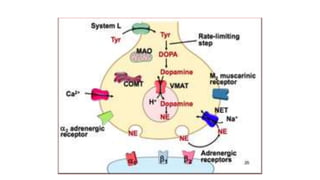
The Adrenergic Neuron
 Release NE/E as neurotransmitter
 CNS & Sympathetic NS
 Receptors are located either presynaptically on the neuron or post-
synaptically on the effector organ.
3
Adrenergic Receptors (Adrenoceptors)
 2 famillies (based on E, NE, Isoproterenol)
 ‘α’ & ‘β’
 α- receptors:- E> NE > isoproterenol
Subdivided in to two (α1 and α2) based on Phenylepherine
α1 > α2 affinity
 β-receptors:- isoproterenol > E > NE
Adrenergic Receptors (Adrenoceptors)…
 α1 Receptors:
– Present on the post-synaptic membrane of effecter organs & mediate many of
the classic effect. (constriction of smooth muscle)
 α2 receptors:
– Located primarily on pre-synaptic nerve endings and on other cells, such as β-cell
of the pancreas.
– Feed back inhibition of the on going release of NE when there is high
sympathetic activity.
Adrenergic Receptors (Adrenoceptors) cont’d…
 The β-receptor subdivide into two major groups.
– β1 receptors = approximately equal affinity for E and NE.
– β2 – receptors = higher affinity for E than NE.
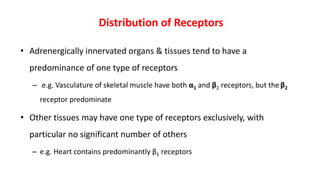
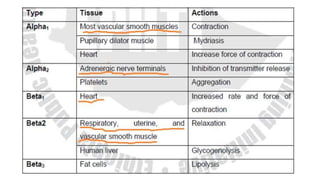
Distribution of Receptors
• Adrenergically innervated organs & tissues tend to have a
predominance of one type of receptors
– e.g. Vasculature of skeletal muscle have both α1 and β2 receptors, but the β2
receptor predominate
• Other tissues may have one type of receptors exclusively, with
particular no significant number of others
– e.g. Heart contains predominantly β1 receptors
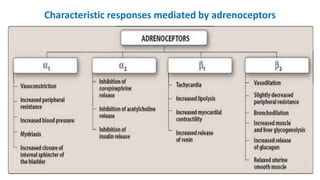
Characteristic responses mediated by adrenoceptors
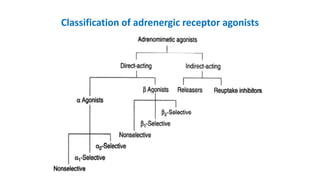
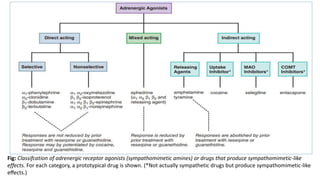
Classification of adrenergic receptor agonists
Fig: Classifcation of adrenergic receptor agonists (sympathomimetic amines) or drugs that produce sympathomimetic-like
effects. For each category, a prototypical drug is shown. (*Not actually sympathetic drugs but produce sympathomimetic-like
effects.)
Direct Acting Sympathomimetics
 Mimic the action of endogenous sympathetic neurotransmitter noradrenaline by
acting on adrenergic receptors.
 Classification
 Based on their chemical structures
1.Catecholamines 2. Non-catecholamines
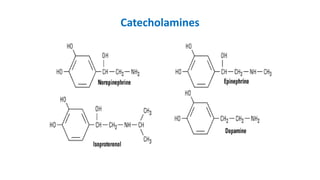
Catecholamines
Cathecolamines cont’d…
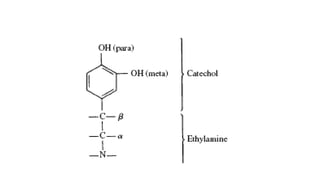
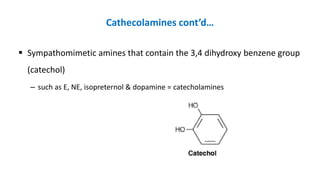
 Sympathomimetic amines that contain the 3,4 dihydroxy benzene group
(catechol)
– such as E, NE, isopreternol & dopamine = catecholamines
Catecholamines….
 These compounds share the following properties:
1. High potency: by activating α and/or β receptors
2. Rapid inactivation: metabolized
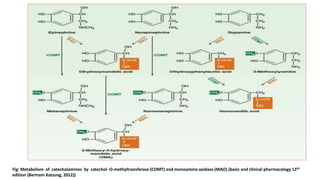
• By COMT post-synaptically and MAO intra neuronally
– Also metabolized in other tissues
– E.g. By COMT: in the gut wall
– By MAO: in gut wall & liver
• Only have a brief of action when given parentrally, and are ineffective when administered orally
because of inactivation
Cathecolamines…
3. Poor penetration into the CNS
 Cathecolamines are polar & therefore do not penetrate into the CNS;
 Nevertheless have some clinical effects that are attributed to their action on
CNS.
Fig: Metabolism of catecholamines by catechol- O-methyltransferase (COMT) and monoamine oxidase (MAO) (basic and clinical pharmacology 12th
edition (Bertram Katzung, 2012))
Non-catecholamines
 Lack the catechol hydroxyl groups: have longer half lives because:
– They are not inactivated by COMT
– They are poor substrate for MAO
• Permits greater access to CNS
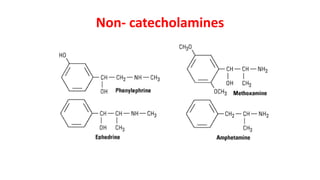
• Include: phenylephrine and Ephedrine
Non- catecholamines
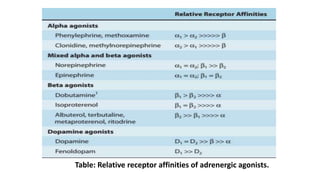
Table: Relative receptor affinities of adrenergic agonists.
Indirect acting sympathomimetics
 They produce their effects by increasing the concentration of A/NA or other
catecholamines at receptor sites (at synaptic cleft) through different mechanisms.
I. By increasing the release of NA
E.g., Amphetamine, Tyramine
II. By blocking the uptake of NA
E.g., Imipramine, Amitryptyline, etc
III. By inhibition of the enzymatic degradation of NA.
COMT-inhibitors (e.g entacapone)
 MAO –inhibitors (e.g. selegiline, pargyline)
Mixed action sympathomimetics
 They act by both mechanisms, i.e. directly and indirectly.
Eg. Ephedrine
Direct acting adrenergic agonists
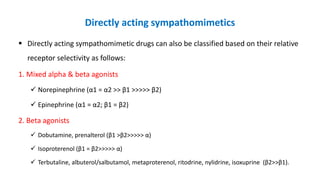
Directly acting sympathomimetics
 Directly acting sympathomimetic drugs can also be classified based on their relative
receptor selectivity as follows:
1. Mixed alpha & beta agonists
 Norepinephrine (α1 = α2 >> β1 >>>>> β2)
 Epinephrine (α1 = α2; β1 = β2)
2. Beta agonists
 Dobutamine, prenalterol (β1 >β2>>>>> α)
 Isoproterenol (β1 = β2>>>>> α)
 Terbutaline, albuterol/salbutamol, metaproterenol, ritodrine, nylidrine, isoxuprine (β2>>β1).
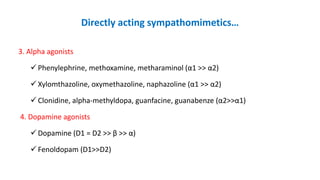
Directly acting sympathomimetics…
3. Alpha agonists
 Phenylephrine, methoxamine, metharaminol (α1 >> α2)
 Xylomthazoline, oxymethazoline, naphazoline (α1 >> α2)
 Clonidine, alpha-methyldopa, guanfacine, guanabenze (α2>>α1)
4. Dopamine agonists
 Dopamine (D1 = D2 >> β >> α)
 Fenoldopam (D1>>D2)
Adrenaline (epinephrine)
• Mechanism of Action:
• It stimulates both α1 & α2 and β1 & β2 receptor subtypes
• When given i.v. it is a very potent vasoconstrictor and cardiac stimulant.
– ↑ed systolic blood pressure: results from a β1 mediated increase in heart rate
and ventricular contractility
– ↑ed diastolic pressure: results from stimulation of α1 and α2 receptor mediated
vasoconstriction in many vascular beds
Adrenaline (epinephrine)
 Epinephrine also stimulates β2 receptors present in skeletal muscle
blood vessels, resulting in their dilation
• At low doses, at which β2 receptor stimulation predominates over α
receptor stimulation, total peripheral resistance and diastolic pressure may
fall
• Under physiological conditions, epinephrine released from the adrenal gland
functions as a hormone and, via activation of β2 receptors, contributes to
increased blood flow during exercise.
Adrenaline
 Respiratory System
• Bronchodilation (bronchial smooth muscle β2 action)
 Hyperglycemia: activate glycogenolysis in the liver
• A significant hyperglycemic effect b/c of increased glycogenolysis in liver( β2
effect)
• Increased release of glucagon( β2 effect) and a decreased release of insulin (α2
effect)
 Lipolysis
• Initiates lipolysis (β -receptors of adipose tissue)
Adrenaline
Pharmacokinetic Properties
 Route of administration: IV, IM & SC.
 Rapid onset but short duration
 Metabolized by COMT and MAO
 Metabolized rapidly by digestive enzymes so, not given orally.
 Aqueous solutions are very unstable, it oxidizes readily when exposed to light, so, it
is stored in umber or yellow color containers.
 Metabolized chiefly in the liver & excreted in urine
Adrenaline
Therapeutic uses
 In anaphylactic shock; due to its effect on the CVS & on the bronchial muscles.
 In acute attack of bronchial asthma
 Prolongation of duration of action of local anesthetics
 In treatment of complete heart block & sudden cardiac arrest (β1) (Dopamine)
 To stop bleeding from superficial blood vessels
Adrenaline
Side effects
• Restlessness, anxiety, sweating, palpitation
Severe adverse effects:
• Sudden rise in BP, cerebral hemorrhage, precipitation of angina pectoris, cardiac
arrhythmias, etc.
Contraindication (CI)
• In patients with severe hypertension, arrhythmias, coronary artery disease.
Noradrenaline
• Stimulates  receptors & has less pronounced effect on β1- receptors but it lacks β2
adrenergic activity.
Therapeutic uses
• To raise blood pressure in hypotensive states (administered by IV infusion).
– shock
• Never used in Asthma
Side-effects
• Reflex bradycardia
Alpha adrenergic agonists
• Selective Alpha-1 Agonists
– Phenylepherine
• Selective Alpha-2 Agonists
– Clonidine
– α-methyldopa
38
Alpha1-Selective Agonists
Phenylephrine
• selective α1 receptor agonist
• activates β receptors only at much higher concentrations.
• not inactivated by COMT and has a much longer duration of action than the catecholamines.
• Action-effective mydriatic and vasoconstrictor
• Use- treatment of glaucoma
– decongestant
• Raise the blood pressure (followed by reflex bradycardia)
39
Oxymetazoline
• Direct-acting α-agonist: stimulates both α1- and α2-adrenergic receptors.
• Use:
– short-term decongestants (nasal spray)
– ophthalmic drops for the relief of redness of the eyes associated with swimming,
colds, and contact lenses.
• It causes vasoconstriction which decreases congestion.
• Adverse effects include: nervousness, headaches, and trouble sleeping.
– Rebound congestion and dependence are observed with long-term use. 40
α2-Selective Agonists
• Activation of presynaptic α2 receptors
– inhibits the release of norepinephrine from PNS
– inhibits sympathetic nervous system activity and leads to a fall in blood
pressure in CNS .
• Blockade of α2 receptors can increase sympathetic outflow
– potentiate the release of norepinephrine from nerve endings
– leading to activation of α1 and β1 receptors in the heart and peripheral
vasculature
– Increase BP
41
Clonidine
• Agonist to presynaptic α2 adrenoceptors in brain, stimulation suppresses
sympathetic outflow and reduces blood pressure
• High dose activates peripheral presynaptic autoreceptors on adrenergic nerve ending
mediating negative feedback suppression of noradrenaline release
• Overdose stimulates peripheral postsynaptic α1 adrenoceptors & cause
hypertension by vasoconstriction
• Clonidine reduces BP
42
Clonidine…
Use- treatment of systemic hypertension.
– Low dose Clonidine (50-100μg/dl) is used in migraine prophylaxis and menopausal flushing
Adverse effects:
• Dry mouth, Sedation, Sexual dysfunction, Bradycardia
• Withdrawal syndrome (rebound hypertension) follows abrupt discontinuation of long-
term therapy with clonidine in some hypertensive patients.
• TCAs antagonize antihypertensive action & increase rebound hypertension of abrupt
withdrawal
43
Methyldopa
• Centrally acting antihypertensive agent.
• metabolized to α-methylnorepinephrine in the brain
– activate central α2 receptors and lower blood pressure in a manner similar to that
of clonidine.
• Safe and preferable anti-hypertensive agent during pregnancy
44
β- Adrenergic agonists
• β-1 adrenergic agonists
– Dopamine
– Dobutamine- synthetic analogue of dopamine
– Prenalterol- partial agonist
• Limitation- tolerance to their effects may develop with prolonged use
• β-2 Adrenergic agonists
– Salbutamol
– Terbutaline
– Salmeterol
45
Isoproterenol
 Stimulates β1& β2 receptors (non-selective β).
Actions:
a) CVS
– intense stimulation of the heart (increase rate & force of contraction) β1 effect.
– Dilates the arterioles of skeletal muscle, resulting in decreased PR
– It’s useful for the treatment of cardiac arrest
b) Pulmonary
– a profound and rapid bronchodilation (β2action)
c) Other effects: increase in blood sugar and increased lipolysis
Isoproterenol
Therapeutic use
• Relief of bronchospasm associated with respiratory disorders & general
anesthesia (β2).
• Rarely used as a bronchodilator in asthma
– replaced by β2 - selective drugs.
• For treatment of heart block (β1).
– employed to stimulate the heart in emergency situation
Isoproterenol…
• Route of administration: IV, IM, SC, intracardial, sublingual, Inhalation, Oral (sustained
release).
• Duration of action 2-4 hrs
• Metabolites are excreted largely in the urine
Side-effects & Adverse rxns
• Headache, dizziness, mild tremor, nervousness, insomnia, palpitation, tachycardia
Contraindications
• Arrhythmias associated with tachycardia.
• Concurrent administration of epinephrine
Dopamine
– It is principally a central neurotransmitter; it also acts at some sites in the PNS.
– There are two types of dopamine receptors D1 & D2.
– D2 receptors are predominantly found in the CNS & D1 receptors in the PNS.
– D1 receptors are found mainly in renal blood vessels.
– In higher doses it stimulates β1- receptors & increases force of contraction of the
myocardium.
– At very high doses it stimulates 1 receptors  vasoconstriction.
Dopamine
Pharmacokinetic properties
• Rapid onset & short duration of action
• It is inactivated in the body by MAO & COMT (in liver & plasma)
• Excreted in the urine as metabolite
• It does not cross BBB
Dopamine…
Therapeutic use
• Correction of low cardiac output associated with different forms of shock (e.g. heart
surgery, myocardial infarction, renal failure, etc.).
– It raises the BP by stimulating the heart ( β1 action)
– Treatment of refractory congestive heart failure (CHF).
Dobutamine
– Stimulates B1receptors of the heart  increased myocardial contractility
– It has minimal action on  & β2- receptors.
Therapeutic use
• Short term treatment of acute heart failure related to depressed contractility.
Pharmacokinetic properties
• On set of action is 1-2 minutes.
• Has short duration of action (t1/2 - 2 min)
• Metabolized in liver & excreted in urine as conjugated product
Side effects: Tachycardia, palpitation, mild hypertension
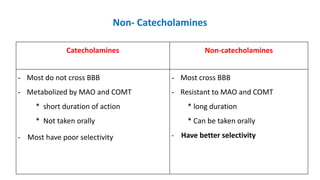
Non- Catecholamines
Catecholamines Non-catecholamines
- Most do not cross BBB
- Metabolized by MAO and COMT
* short duration of action
* Not taken orally
- Most have poor selectivity
- Most cross BBB
- Resistant to MAO and COMT
* long duration
* Can be taken orally
- Have better selectivity
INDIRECT ACTING ADRENRGIC AGONISTS
Indirect acting adrenergic agonists
A. Amphetamine
• Marked central stimulatory action is often mistaken by drug abusers as
its only action.
• ↑BP significantly (α-agonist action) on vasculature as well as β -
stimulatory effects on the heart
• MOA: primary through the cellular release of stored catecholamines
Amphetamine…
 Effects include:
– Euphoria (feeling of happiness)
– insomnia
– Suppress appetite
– Decrease the feeling of fatigue.
 Therapeutic Use:
– Narcolepsy
– Attention deficit disorder
– Weight reduction.
Mixed-action adrenergic agonists
• Induce the release of NE from presynaptic terminals and activate adrenergic
receptors on post synaptic membrane
Ephedrine
• A plant alkaloid, is now made synthetically
• releases stored norepinephrine from nerve endings and directly stimulate
both α and β receptors
• Ephedrine is not a catechol and poor substrate for COMT and MAO;
– thus, the drug has a long duration of action but less potent
Ephedrine…
• Excellent absorption orally & penetrates in to the CNS
• Raises BP by vasoconstriction and cardiac stimulation
• Produces bronchodilation
– less potent than epinephrine or isoproternol & produce it’s action more slowly
• Used to treat asthma, as nasal decongestant, and to raise BP
– The clinical use of ephedrine is declining due to availability of better, more potent
agents which cause fewer site effects
ADRENERGIC ANTAGONISTS
(SYMPATHOLYTICS)
II. Sympatholytics (Antiadrenergic) Drugs
• Adrenoceptor Blocking (Antagonist) Drugs
• Adrenoceptor antagonists classified based on their selectivity as:
– Alpha – adrenoceptor blocking agents
– Beta – adrenoceptor blocking agents
– Alpha and beta adrenoceptor blocking agents
1. Alpha- receptor blocking agents
• These drugs inhibit response at the alpha adrenergic receptor sites.
• Blocking alpha–1 adrenergic receptors antagonizes the presser (vaso-
constrictory) effect of epinephrine and norepinephrine.
Alpha- receptor blocking agents…
Classification
i. Non competitive antagonists:
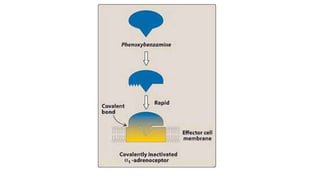
– They form stable (irreversible) bonds with alpha receptors and their effects can
persist for days or even weeks.
Example: Phenoxybenzamine (α1 > α2)
ii. Reversible, competitive antagonists:
– These drugs form a reversible, competitive blockade at alpha site that persists for
only a few hours.
E.g.Phentolamine (α1 = α2)
• Prazosin, Terazosin, doxazosin (α1 - selective)
Alpha- receptor blocking agents…
Phenoxybenzamine
 M.O.A: It is irreversible and selective alpha-1 receptor blocker.
– It also blocks histamine-H1, muscarinic and serotonin receptors; it inhibits uptake
of NE, as well.
Therapeutic uses
• In pheochromocytoma: To control the excessive sweating and hypertension
associated with pheochromocytoma
• It can also be used in hypertension & to improve circulation in vasospastic peripheral
vascular disease.
Phentolamine
M. O. A
• Blocks both α1 and α2 receptors reversibly and has direct relaxant action on vascular smooth
muscles.
• It blocks serotonin receptors.
• It stimulates cholinergic & histaminergic receptors  GI motility & secretion of pepsin &
HCl acid
Therapeutic uses
• Control of hypertension in patients with pheochromocytoma
• Prevention of tissue necrosis in patients with peripheral vascular disease
Prazosin
MOA & Pharmacological effects
– Selectively blocks α1 receptors.
– It is very potent & dilates both arteries and veins.
– This causes venous pooling, which usually leads to first dose syncope/ fainting -
which occurs 30 – 90 minutes after administration of the first dose.
– It also causes salt and water retention.
Therapeutic use
• To treat mild to moderate hypertension
Terazosin and Doxazosin
• The major distinction between these drugs and prazosin is in their pharmacokinetic
properties.
– Their bioavailability is high (>90%)
– They have longer duration of action (given once).
• An interesting aspect of the action of terazosin and doxazosin in the treatment of lower
urinary tract problems in men with BPH
Tamsulosin
• Tamsulosin shows some selectivity for α1a-adrenoceptor of the bladder and causes less
hypotension than drugs such as prazosin.
70
Adverse Effects of α1- selective Antagonists
 α1-Blockers such as prazosin and doxazosin may cause dizziness, a lack of energy,
nasal congestion, headache, drowsiness, and orthostatic hypotension (although to
a lesser degree than that observed with phenoxybenzamine and phentolamine).
 By blocking α-receptors in the ejaculatory ducts and impairing smooth muscle
contraction, α1 antagonists may cause inhibition of ejaculation and retrograde
ejaculation.
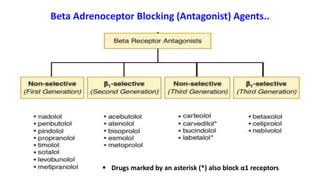
2. Beta Adrenoceptor Blocking (Antagonist) Agents
• They can be classified as non-selective beta antagonists and
selective β antagonists
Beta Adrenoceptor Blocking (Antagonist) Agents..
 Drugs marked by an asterisk (*) also block α1 receptors
General Pharmacological Actions of B-blockers
Action on cardiovascular system (CVS)
Heart (β1)
• Decrease heart rate –Bradycardia ↓ CO & work load & O2 demand.
• Decrease myocardial contractility
• Slow artrioventricular node conduction
Blood Vessels in skeletal Muscle (β2)
• Vasoconstriction
Over all effect on the CVS:
• Decrease in BP
• Decrease in oxygen demand in patients with coronary artery disease, such as angina
& myocardial infarction
• Decrease in automaticity – in impulse generation & conduction; management of
arrhythmia.
Action on respiratory system (β 2)
Bronchoconstriction
• This effect has no therapeutic value;
• This effect may be fatal in asthmatic patients
Action on eye
• Decrease aqueous humor formation   intraocular pressure
Action on CNS
• Block β 2 receptors on the vasomotor center  decrease sympathetic outflow from
the CNS. This contributes to their hypotensive effect.
General therapeutic uses of B-blockers
1. Treatment of hypertension
Example: Atenolol, metoprolol, propranolol, timolol?
• Because they  CO,  sympathetic outflow from the CNS and  rennin release from
kidneys.
• They are usually used in combination with diuretics or vasodilators.
2. In ischemic heart diseases:
– In the treatment of angina pectoris: Propranolol, metoprolol, atenolol
• Contractility and heart rate  work load  myocardial oxygen demand.
– Prevention of myocardial infarction
 Long term use of - metoprolol, propranolol, and timolol – prolongs
survival
3. In treatment of cardiac arrhythmias (both supraventricular & ventricular
arrhythmia)
Example: Propranolol
 Decrease automaticity and AV node conduction velocity
4. In treatment of glaucoma
• Example: Betaxolol, levobunolol, timolol
• They do not affect accommodation and pupillary reactions
5. In hyperthyroidism
Example: propranolol
– Reduce symptoms of sympathetic over activity caused by the excess thyroxin.
6. In pheochromocytoma
– Example: Propranolol - together with 1-blockers.
Side Effects and Adverse reactions
• Bronchoconstriction
• Cardiac failure
• Incapacity for vigorous exercise
• Reduce peripheral blood flow  cold extremities
• Hypoglycemia
• Impaired sexual activity
Contraindications
– In patients with Bronchial Asthma (non-selective)
– In patients with congestive heart failure?
– In patients with heart block
– In patients with bradycardia
– With other cardiac depressant drugs and some general anesthetics
 Propranolol: a non-selective β-antagonist
• Actions
I. Cardiovascular
• diminishes CO, having both negative inotropic and chronotropic effects by
blockage of β1 -receptors
II. Peripheral vasoconstriction
• Prevents β2 -mediated vasolidation
– the reduction in CO leads to decreased BP – triggers a reflex peripheral vasoconstriction which
is reflected in reduced blood flow to the periphery.
III. Bronchoconstiction:
– blocking β2 receptors in the lungs of susceptible patients causes
contraction of the bronchiolar smooth muscles
– Therefore β -blockers are thus contraindicated in patients with asthma
Propranolol: a non-selective β-antagonist…
IV. increased Na+ retention:
– Reduced blood pressure causes a decrease in renal perfusion, resulting in an
increase in Na+ retention & plasma volume which may elevate blood pressure
therefore β - Blockers are often combined with a diuretic to prevent Na+ retention
V. Disturbances in glucose metabolism:
– B-blockade leads to decreased glycogenolysis and decreased glucagons secretion
– therefore if an insulin dependent diabetic is to be given propranolol, may leads to
pronounced hypoglycemia may occur after insulin injection
Propranolol: a non-selective β-antagonist….
Therapeutic uses:-
1. Hypertension: - lower blood pressure in hypertneison by decreasing
cardiac output
2. Angina pectoris: -decrease the oxygen requirements of heart muscle
Propranolol: a non-selective β-antagonist…
Adverse effects:-
– Bronchoconstriction:-
– Arrhythmias:-
– Disturbances in metabolism:-leads to decreased glycogenolysis & decreased glucagons secretion
Drug interactions:
• Cimetidine, furosemide & chloropromazine inhibit metabolism of propranolol which
may potentiate its anti hypertensive effect
• Barbiturates, phenytoin & rifampcin stumlate metabolism of propranolol can mitigate
its effects.
Propranolol: a non-selective β-antagonist…
B) Timolol & nadolol
• Non selective β -antagonists
• Are more potent than propranolol
• Timolol reduces the production of aqueous humor in the eye and is use
topically in the treatment of chronic glaucoma; and occasionally for
system treatment of hypertension
C) Atenolol, acebutolol metoprolol and esmolol
• Selective β1 antagonists
• Eliminate the unwanted bronchoconstrictor effect (β2) of propranolol
seen among asthmatic patients
Therapeutic use:
• For hypertensive patients with impaired pulmonary function
• In diabetic hypertensive patients who are receiving insulin or oral
hypoglycemic agents
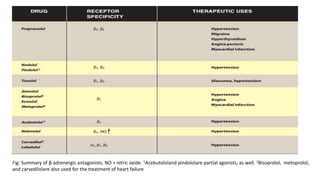
Fig: Summary of β-adrenergic antagonists. NO = nitric oxide. 1Acebutololand pindololare partial agonists, as well. 2Bisoprolol, metoprolol,
and carvedilolare also used for the treatment of heart failure
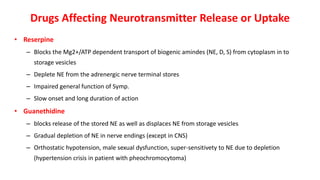
Drugs Affecting Neurotransmitter Release or Uptake
• Reserpine
– Blocks the Mg2+/ATP dependent transport of biogenic amindes (NE, D, S) from cytoplasm in to
storage vesicles
– Deplete NE from the adrenergic nerve terminal stores
– Impaired general function of Symp.
– Slow onset and long duration of action
• Guanethidine
– blocks release of the stored NE as well as displaces NE from storage vesicles
– Gradual depletion of NE in nerve endings (except in CNS)
– Orthostatic hypotension, male sexual dysfunction, super-sensitivety to NE due to depletion
(hypertension crisis in patient with pheochromocytoma)
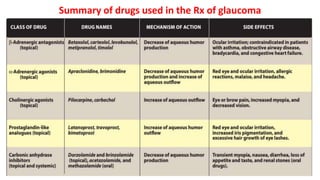
Summary of drugs used in the Rx of glaucoma
Thank you!

Adrenergic Agonists and Antagonists.pptx

  • 1.
    Adrenergic Agonists andAntagonists Haftom G. (BPharm., MSc.) Email: haftomphar@gmail.com
  • 2.
    The Adrenergic Neuron Release NE/E as neurotransmitter  CNS & Sympathetic NS  Receptors are located either presynaptically on the neuron or post- synaptically on the effector organ.
  • 3.
  • 6.
    Adrenergic Receptors (Adrenoceptors) 2 famillies (based on E, NE, Isoproterenol)  ‘α’ & ‘β’  α- receptors:- E> NE > isoproterenol Subdivided in to two (α1 and α2) based on Phenylepherine α1 > α2 affinity  β-receptors:- isoproterenol > E > NE
  • 7.
    Adrenergic Receptors (Adrenoceptors)… α1 Receptors: – Present on the post-synaptic membrane of effecter organs & mediate many of the classic effect. (constriction of smooth muscle)  α2 receptors: – Located primarily on pre-synaptic nerve endings and on other cells, such as β-cell of the pancreas. – Feed back inhibition of the on going release of NE when there is high sympathetic activity.
  • 8.
    Adrenergic Receptors (Adrenoceptors)cont’d…  The β-receptor subdivide into two major groups. – β1 receptors = approximately equal affinity for E and NE. – β2 – receptors = higher affinity for E than NE.
  • 9.
    Distribution of Receptors •Adrenergically innervated organs & tissues tend to have a predominance of one type of receptors – e.g. Vasculature of skeletal muscle have both α1 and β2 receptors, but the β2 receptor predominate • Other tissues may have one type of receptors exclusively, with particular no significant number of others – e.g. Heart contains predominantly β1 receptors
  • 11.
  • 12.
  • 13.
    Fig: Classifcation ofadrenergic receptor agonists (sympathomimetic amines) or drugs that produce sympathomimetic-like effects. For each category, a prototypical drug is shown. (*Not actually sympathetic drugs but produce sympathomimetic-like effects.)
  • 14.
    Direct Acting Sympathomimetics Mimic the action of endogenous sympathetic neurotransmitter noradrenaline by acting on adrenergic receptors.  Classification  Based on their chemical structures 1.Catecholamines 2. Non-catecholamines
  • 16.
  • 17.
    Cathecolamines cont’d…  Sympathomimeticamines that contain the 3,4 dihydroxy benzene group (catechol) – such as E, NE, isopreternol & dopamine = catecholamines
  • 18.
    Catecholamines….  These compoundsshare the following properties: 1. High potency: by activating α and/or β receptors 2. Rapid inactivation: metabolized • By COMT post-synaptically and MAO intra neuronally – Also metabolized in other tissues – E.g. By COMT: in the gut wall – By MAO: in gut wall & liver • Only have a brief of action when given parentrally, and are ineffective when administered orally because of inactivation
  • 19.
    Cathecolamines… 3. Poor penetrationinto the CNS  Cathecolamines are polar & therefore do not penetrate into the CNS;  Nevertheless have some clinical effects that are attributed to their action on CNS.
  • 20.
    Fig: Metabolism ofcatecholamines by catechol- O-methyltransferase (COMT) and monoamine oxidase (MAO) (basic and clinical pharmacology 12th edition (Bertram Katzung, 2012))
  • 21.
    Non-catecholamines  Lack thecatechol hydroxyl groups: have longer half lives because: – They are not inactivated by COMT – They are poor substrate for MAO • Permits greater access to CNS • Include: phenylephrine and Ephedrine
  • 22.
  • 23.
    Table: Relative receptoraffinities of adrenergic agonists.
  • 24.
    Indirect acting sympathomimetics They produce their effects by increasing the concentration of A/NA or other catecholamines at receptor sites (at synaptic cleft) through different mechanisms. I. By increasing the release of NA E.g., Amphetamine, Tyramine II. By blocking the uptake of NA E.g., Imipramine, Amitryptyline, etc III. By inhibition of the enzymatic degradation of NA. COMT-inhibitors (e.g entacapone)  MAO –inhibitors (e.g. selegiline, pargyline)
  • 25.
    Mixed action sympathomimetics They act by both mechanisms, i.e. directly and indirectly. Eg. Ephedrine
  • 26.
  • 27.
    Directly acting sympathomimetics Directly acting sympathomimetic drugs can also be classified based on their relative receptor selectivity as follows: 1. Mixed alpha & beta agonists  Norepinephrine (α1 = α2 >> β1 >>>>> β2)  Epinephrine (α1 = α2; β1 = β2) 2. Beta agonists  Dobutamine, prenalterol (β1 >β2>>>>> α)  Isoproterenol (β1 = β2>>>>> α)  Terbutaline, albuterol/salbutamol, metaproterenol, ritodrine, nylidrine, isoxuprine (β2>>β1).
  • 28.
    Directly acting sympathomimetics… 3.Alpha agonists  Phenylephrine, methoxamine, metharaminol (α1 >> α2)  Xylomthazoline, oxymethazoline, naphazoline (α1 >> α2)  Clonidine, alpha-methyldopa, guanfacine, guanabenze (α2>>α1) 4. Dopamine agonists  Dopamine (D1 = D2 >> β >> α)  Fenoldopam (D1>>D2)
  • 29.
    Adrenaline (epinephrine) • Mechanismof Action: • It stimulates both α1 & α2 and β1 & β2 receptor subtypes • When given i.v. it is a very potent vasoconstrictor and cardiac stimulant. – ↑ed systolic blood pressure: results from a β1 mediated increase in heart rate and ventricular contractility – ↑ed diastolic pressure: results from stimulation of α1 and α2 receptor mediated vasoconstriction in many vascular beds
  • 30.
    Adrenaline (epinephrine)  Epinephrinealso stimulates β2 receptors present in skeletal muscle blood vessels, resulting in their dilation • At low doses, at which β2 receptor stimulation predominates over α receptor stimulation, total peripheral resistance and diastolic pressure may fall • Under physiological conditions, epinephrine released from the adrenal gland functions as a hormone and, via activation of β2 receptors, contributes to increased blood flow during exercise.
  • 31.
    Adrenaline  Respiratory System •Bronchodilation (bronchial smooth muscle β2 action)  Hyperglycemia: activate glycogenolysis in the liver • A significant hyperglycemic effect b/c of increased glycogenolysis in liver( β2 effect) • Increased release of glucagon( β2 effect) and a decreased release of insulin (α2 effect)  Lipolysis • Initiates lipolysis (β -receptors of adipose tissue)
  • 32.
    Adrenaline Pharmacokinetic Properties  Routeof administration: IV, IM & SC.  Rapid onset but short duration  Metabolized by COMT and MAO  Metabolized rapidly by digestive enzymes so, not given orally.  Aqueous solutions are very unstable, it oxidizes readily when exposed to light, so, it is stored in umber or yellow color containers.  Metabolized chiefly in the liver & excreted in urine
  • 33.
    Adrenaline Therapeutic uses  Inanaphylactic shock; due to its effect on the CVS & on the bronchial muscles.  In acute attack of bronchial asthma  Prolongation of duration of action of local anesthetics  In treatment of complete heart block & sudden cardiac arrest (β1) (Dopamine)  To stop bleeding from superficial blood vessels
  • 34.
    Adrenaline Side effects • Restlessness,anxiety, sweating, palpitation Severe adverse effects: • Sudden rise in BP, cerebral hemorrhage, precipitation of angina pectoris, cardiac arrhythmias, etc. Contraindication (CI) • In patients with severe hypertension, arrhythmias, coronary artery disease.
  • 35.
    Noradrenaline • Stimulates receptors & has less pronounced effect on β1- receptors but it lacks β2 adrenergic activity. Therapeutic uses • To raise blood pressure in hypotensive states (administered by IV infusion). – shock • Never used in Asthma Side-effects • Reflex bradycardia
  • 36.
    Alpha adrenergic agonists •Selective Alpha-1 Agonists – Phenylepherine • Selective Alpha-2 Agonists – Clonidine – α-methyldopa 38
  • 37.
    Alpha1-Selective Agonists Phenylephrine • selectiveα1 receptor agonist • activates β receptors only at much higher concentrations. • not inactivated by COMT and has a much longer duration of action than the catecholamines. • Action-effective mydriatic and vasoconstrictor • Use- treatment of glaucoma – decongestant • Raise the blood pressure (followed by reflex bradycardia) 39
  • 38.
    Oxymetazoline • Direct-acting α-agonist:stimulates both α1- and α2-adrenergic receptors. • Use: – short-term decongestants (nasal spray) – ophthalmic drops for the relief of redness of the eyes associated with swimming, colds, and contact lenses. • It causes vasoconstriction which decreases congestion. • Adverse effects include: nervousness, headaches, and trouble sleeping. – Rebound congestion and dependence are observed with long-term use. 40
  • 39.
    α2-Selective Agonists • Activationof presynaptic α2 receptors – inhibits the release of norepinephrine from PNS – inhibits sympathetic nervous system activity and leads to a fall in blood pressure in CNS . • Blockade of α2 receptors can increase sympathetic outflow – potentiate the release of norepinephrine from nerve endings – leading to activation of α1 and β1 receptors in the heart and peripheral vasculature – Increase BP 41
  • 40.
    Clonidine • Agonist topresynaptic α2 adrenoceptors in brain, stimulation suppresses sympathetic outflow and reduces blood pressure • High dose activates peripheral presynaptic autoreceptors on adrenergic nerve ending mediating negative feedback suppression of noradrenaline release • Overdose stimulates peripheral postsynaptic α1 adrenoceptors & cause hypertension by vasoconstriction • Clonidine reduces BP 42
  • 41.
    Clonidine… Use- treatment ofsystemic hypertension. – Low dose Clonidine (50-100μg/dl) is used in migraine prophylaxis and menopausal flushing Adverse effects: • Dry mouth, Sedation, Sexual dysfunction, Bradycardia • Withdrawal syndrome (rebound hypertension) follows abrupt discontinuation of long- term therapy with clonidine in some hypertensive patients. • TCAs antagonize antihypertensive action & increase rebound hypertension of abrupt withdrawal 43
  • 42.
    Methyldopa • Centrally actingantihypertensive agent. • metabolized to α-methylnorepinephrine in the brain – activate central α2 receptors and lower blood pressure in a manner similar to that of clonidine. • Safe and preferable anti-hypertensive agent during pregnancy 44
  • 43.
    β- Adrenergic agonists •β-1 adrenergic agonists – Dopamine – Dobutamine- synthetic analogue of dopamine – Prenalterol- partial agonist • Limitation- tolerance to their effects may develop with prolonged use • β-2 Adrenergic agonists – Salbutamol – Terbutaline – Salmeterol 45
  • 44.
    Isoproterenol  Stimulates β1&β2 receptors (non-selective β). Actions: a) CVS – intense stimulation of the heart (increase rate & force of contraction) β1 effect. – Dilates the arterioles of skeletal muscle, resulting in decreased PR – It’s useful for the treatment of cardiac arrest b) Pulmonary – a profound and rapid bronchodilation (β2action) c) Other effects: increase in blood sugar and increased lipolysis
  • 45.
    Isoproterenol Therapeutic use • Reliefof bronchospasm associated with respiratory disorders & general anesthesia (β2). • Rarely used as a bronchodilator in asthma – replaced by β2 - selective drugs. • For treatment of heart block (β1). – employed to stimulate the heart in emergency situation
  • 46.
    Isoproterenol… • Route ofadministration: IV, IM, SC, intracardial, sublingual, Inhalation, Oral (sustained release). • Duration of action 2-4 hrs • Metabolites are excreted largely in the urine Side-effects & Adverse rxns • Headache, dizziness, mild tremor, nervousness, insomnia, palpitation, tachycardia Contraindications • Arrhythmias associated with tachycardia. • Concurrent administration of epinephrine
  • 47.
    Dopamine – It isprincipally a central neurotransmitter; it also acts at some sites in the PNS. – There are two types of dopamine receptors D1 & D2. – D2 receptors are predominantly found in the CNS & D1 receptors in the PNS. – D1 receptors are found mainly in renal blood vessels. – In higher doses it stimulates β1- receptors & increases force of contraction of the myocardium. – At very high doses it stimulates 1 receptors  vasoconstriction.
  • 48.
    Dopamine Pharmacokinetic properties • Rapidonset & short duration of action • It is inactivated in the body by MAO & COMT (in liver & plasma) • Excreted in the urine as metabolite • It does not cross BBB
  • 49.
    Dopamine… Therapeutic use • Correctionof low cardiac output associated with different forms of shock (e.g. heart surgery, myocardial infarction, renal failure, etc.). – It raises the BP by stimulating the heart ( β1 action) – Treatment of refractory congestive heart failure (CHF).
  • 50.
    Dobutamine – Stimulates B1receptorsof the heart  increased myocardial contractility – It has minimal action on  & β2- receptors. Therapeutic use • Short term treatment of acute heart failure related to depressed contractility. Pharmacokinetic properties • On set of action is 1-2 minutes. • Has short duration of action (t1/2 - 2 min) • Metabolized in liver & excreted in urine as conjugated product Side effects: Tachycardia, palpitation, mild hypertension
  • 51.
    Non- Catecholamines Catecholamines Non-catecholamines -Most do not cross BBB - Metabolized by MAO and COMT * short duration of action * Not taken orally - Most have poor selectivity - Most cross BBB - Resistant to MAO and COMT * long duration * Can be taken orally - Have better selectivity
  • 52.
  • 53.
    Indirect acting adrenergicagonists A. Amphetamine • Marked central stimulatory action is often mistaken by drug abusers as its only action. • ↑BP significantly (α-agonist action) on vasculature as well as β - stimulatory effects on the heart • MOA: primary through the cellular release of stored catecholamines
  • 54.
    Amphetamine…  Effects include: –Euphoria (feeling of happiness) – insomnia – Suppress appetite – Decrease the feeling of fatigue.  Therapeutic Use: – Narcolepsy – Attention deficit disorder – Weight reduction.
  • 55.
    Mixed-action adrenergic agonists •Induce the release of NE from presynaptic terminals and activate adrenergic receptors on post synaptic membrane Ephedrine • A plant alkaloid, is now made synthetically • releases stored norepinephrine from nerve endings and directly stimulate both α and β receptors • Ephedrine is not a catechol and poor substrate for COMT and MAO; – thus, the drug has a long duration of action but less potent
  • 56.
    Ephedrine… • Excellent absorptionorally & penetrates in to the CNS • Raises BP by vasoconstriction and cardiac stimulation • Produces bronchodilation – less potent than epinephrine or isoproternol & produce it’s action more slowly • Used to treat asthma, as nasal decongestant, and to raise BP – The clinical use of ephedrine is declining due to availability of better, more potent agents which cause fewer site effects
  • 57.
  • 58.
    II. Sympatholytics (Antiadrenergic)Drugs • Adrenoceptor Blocking (Antagonist) Drugs • Adrenoceptor antagonists classified based on their selectivity as: – Alpha – adrenoceptor blocking agents – Beta – adrenoceptor blocking agents – Alpha and beta adrenoceptor blocking agents
  • 59.
    1. Alpha- receptorblocking agents • These drugs inhibit response at the alpha adrenergic receptor sites. • Blocking alpha–1 adrenergic receptors antagonizes the presser (vaso- constrictory) effect of epinephrine and norepinephrine.
  • 60.
    Alpha- receptor blockingagents… Classification i. Non competitive antagonists: – They form stable (irreversible) bonds with alpha receptors and their effects can persist for days or even weeks. Example: Phenoxybenzamine (α1 > α2) ii. Reversible, competitive antagonists: – These drugs form a reversible, competitive blockade at alpha site that persists for only a few hours. E.g.Phentolamine (α1 = α2) • Prazosin, Terazosin, doxazosin (α1 - selective)
  • 62.
    Alpha- receptor blockingagents… Phenoxybenzamine  M.O.A: It is irreversible and selective alpha-1 receptor blocker. – It also blocks histamine-H1, muscarinic and serotonin receptors; it inhibits uptake of NE, as well. Therapeutic uses • In pheochromocytoma: To control the excessive sweating and hypertension associated with pheochromocytoma • It can also be used in hypertension & to improve circulation in vasospastic peripheral vascular disease.
  • 63.
    Phentolamine M. O. A •Blocks both α1 and α2 receptors reversibly and has direct relaxant action on vascular smooth muscles. • It blocks serotonin receptors. • It stimulates cholinergic & histaminergic receptors  GI motility & secretion of pepsin & HCl acid Therapeutic uses • Control of hypertension in patients with pheochromocytoma • Prevention of tissue necrosis in patients with peripheral vascular disease
  • 64.
    Prazosin MOA & Pharmacologicaleffects – Selectively blocks α1 receptors. – It is very potent & dilates both arteries and veins. – This causes venous pooling, which usually leads to first dose syncope/ fainting - which occurs 30 – 90 minutes after administration of the first dose. – It also causes salt and water retention. Therapeutic use • To treat mild to moderate hypertension
  • 65.
    Terazosin and Doxazosin •The major distinction between these drugs and prazosin is in their pharmacokinetic properties. – Their bioavailability is high (>90%) – They have longer duration of action (given once). • An interesting aspect of the action of terazosin and doxazosin in the treatment of lower urinary tract problems in men with BPH Tamsulosin • Tamsulosin shows some selectivity for α1a-adrenoceptor of the bladder and causes less hypotension than drugs such as prazosin. 70
  • 66.
    Adverse Effects ofα1- selective Antagonists  α1-Blockers such as prazosin and doxazosin may cause dizziness, a lack of energy, nasal congestion, headache, drowsiness, and orthostatic hypotension (although to a lesser degree than that observed with phenoxybenzamine and phentolamine).  By blocking α-receptors in the ejaculatory ducts and impairing smooth muscle contraction, α1 antagonists may cause inhibition of ejaculation and retrograde ejaculation.
  • 67.
    2. Beta AdrenoceptorBlocking (Antagonist) Agents • They can be classified as non-selective beta antagonists and selective β antagonists
  • 68.
    Beta Adrenoceptor Blocking(Antagonist) Agents..  Drugs marked by an asterisk (*) also block α1 receptors
  • 69.
    General Pharmacological Actionsof B-blockers Action on cardiovascular system (CVS) Heart (β1) • Decrease heart rate –Bradycardia ↓ CO & work load & O2 demand. • Decrease myocardial contractility • Slow artrioventricular node conduction
  • 70.
    Blood Vessels inskeletal Muscle (β2) • Vasoconstriction Over all effect on the CVS: • Decrease in BP • Decrease in oxygen demand in patients with coronary artery disease, such as angina & myocardial infarction • Decrease in automaticity – in impulse generation & conduction; management of arrhythmia.
  • 71.
    Action on respiratorysystem (β 2) Bronchoconstriction • This effect has no therapeutic value; • This effect may be fatal in asthmatic patients Action on eye • Decrease aqueous humor formation   intraocular pressure Action on CNS • Block β 2 receptors on the vasomotor center  decrease sympathetic outflow from the CNS. This contributes to their hypotensive effect.
  • 72.
    General therapeutic usesof B-blockers 1. Treatment of hypertension Example: Atenolol, metoprolol, propranolol, timolol? • Because they  CO,  sympathetic outflow from the CNS and  rennin release from kidneys. • They are usually used in combination with diuretics or vasodilators.
  • 73.
    2. In ischemicheart diseases: – In the treatment of angina pectoris: Propranolol, metoprolol, atenolol • Contractility and heart rate  work load  myocardial oxygen demand. – Prevention of myocardial infarction  Long term use of - metoprolol, propranolol, and timolol – prolongs survival
  • 74.
    3. In treatmentof cardiac arrhythmias (both supraventricular & ventricular arrhythmia) Example: Propranolol  Decrease automaticity and AV node conduction velocity 4. In treatment of glaucoma • Example: Betaxolol, levobunolol, timolol • They do not affect accommodation and pupillary reactions
  • 75.
    5. In hyperthyroidism Example:propranolol – Reduce symptoms of sympathetic over activity caused by the excess thyroxin. 6. In pheochromocytoma – Example: Propranolol - together with 1-blockers.
  • 76.
    Side Effects andAdverse reactions • Bronchoconstriction • Cardiac failure • Incapacity for vigorous exercise • Reduce peripheral blood flow  cold extremities • Hypoglycemia • Impaired sexual activity
  • 77.
    Contraindications – In patientswith Bronchial Asthma (non-selective) – In patients with congestive heart failure? – In patients with heart block – In patients with bradycardia – With other cardiac depressant drugs and some general anesthetics
  • 78.
     Propranolol: anon-selective β-antagonist • Actions I. Cardiovascular • diminishes CO, having both negative inotropic and chronotropic effects by blockage of β1 -receptors II. Peripheral vasoconstriction • Prevents β2 -mediated vasolidation – the reduction in CO leads to decreased BP – triggers a reflex peripheral vasoconstriction which is reflected in reduced blood flow to the periphery.
  • 79.
    III. Bronchoconstiction: – blockingβ2 receptors in the lungs of susceptible patients causes contraction of the bronchiolar smooth muscles – Therefore β -blockers are thus contraindicated in patients with asthma Propranolol: a non-selective β-antagonist…
  • 80.
    IV. increased Na+retention: – Reduced blood pressure causes a decrease in renal perfusion, resulting in an increase in Na+ retention & plasma volume which may elevate blood pressure therefore β - Blockers are often combined with a diuretic to prevent Na+ retention V. Disturbances in glucose metabolism: – B-blockade leads to decreased glycogenolysis and decreased glucagons secretion – therefore if an insulin dependent diabetic is to be given propranolol, may leads to pronounced hypoglycemia may occur after insulin injection Propranolol: a non-selective β-antagonist….
  • 81.
    Therapeutic uses:- 1. Hypertension:- lower blood pressure in hypertneison by decreasing cardiac output 2. Angina pectoris: -decrease the oxygen requirements of heart muscle Propranolol: a non-selective β-antagonist…
  • 82.
    Adverse effects:- – Bronchoconstriction:- –Arrhythmias:- – Disturbances in metabolism:-leads to decreased glycogenolysis & decreased glucagons secretion Drug interactions: • Cimetidine, furosemide & chloropromazine inhibit metabolism of propranolol which may potentiate its anti hypertensive effect • Barbiturates, phenytoin & rifampcin stumlate metabolism of propranolol can mitigate its effects. Propranolol: a non-selective β-antagonist…
  • 83.
    B) Timolol &nadolol • Non selective β -antagonists • Are more potent than propranolol • Timolol reduces the production of aqueous humor in the eye and is use topically in the treatment of chronic glaucoma; and occasionally for system treatment of hypertension
  • 84.
    C) Atenolol, acebutololmetoprolol and esmolol • Selective β1 antagonists • Eliminate the unwanted bronchoconstrictor effect (β2) of propranolol seen among asthmatic patients Therapeutic use: • For hypertensive patients with impaired pulmonary function • In diabetic hypertensive patients who are receiving insulin or oral hypoglycemic agents
  • 85.
    Fig: Summary ofβ-adrenergic antagonists. NO = nitric oxide. 1Acebutololand pindololare partial agonists, as well. 2Bisoprolol, metoprolol, and carvedilolare also used for the treatment of heart failure
  • 86.
    Drugs Affecting NeurotransmitterRelease or Uptake • Reserpine – Blocks the Mg2+/ATP dependent transport of biogenic amindes (NE, D, S) from cytoplasm in to storage vesicles – Deplete NE from the adrenergic nerve terminal stores – Impaired general function of Symp. – Slow onset and long duration of action • Guanethidine – blocks release of the stored NE as well as displaces NE from storage vesicles – Gradual depletion of NE in nerve endings (except in CNS) – Orthostatic hypotension, male sexual dysfunction, super-sensitivety to NE due to depletion (hypertension crisis in patient with pheochromocytoma)
  • 87.
    Summary of drugsused in the Rx of glaucoma
  • 88.

Editor's Notes

  • #34 open angle glaucoma- promotes an increase in the outflow of aqueous humor
  • #71 Induction of apoptosis in prostate smooth muscle cells. This apoptosis may lessen the symptoms associated with chronic BPH by limiting cell proliferation.