Adrenergic Agonists
Introduction
• The adrenergic drugs affect receptors that are stimulated by
norepinephrine (noradrenaline) or epinephrine (adrenaline). These
receptors are known as adrenergic receptors or adrenoceptors.
• Drugs that activate adrenergic receptors are termed
sympathomimetics, and drugs that block activation of adrenergic
receptors are termed sympatholytics.
• Some sympathomimetics directly activate adrenergic receptors
(direct-acting agonists), while others
• act indirectly by enhancing release or blocking reuptake of
norepinephrine (indirect-acting agonists).
Site of action of adrenergic agonist
Adrenergic Receptors
• In the sympathetic nervous system, several classes of adrenoceptors
can be distinguished pharmacologically.
• Two main families of receptors, designated α and β, are classified
based on response to the adrenergic agonists epinephrine,
norepinephrine, and isoproterenol.
• Both the α and β receptor types have a number of specific receptor
subtypes. Alterations in the primary structure of the receptors
influence their affinity for various agents.
α-Adrenoceptors
α1 Receptors
• These receptors are present on the postsynaptic membrane of the
effector organs and mediate many of the classic effects, originally
designated as α-adrenergic, involving constriction of smooth muscle.
• Activation of α1 receptors initiates a series of reactions through the
G-protein activation of phospholipase C, ultimately resulting in the
generation of second messengers inositol-1,4,5-trisphosphate (IP3)
and diacylglycerol (DAG).
• IP3 initiates the release of Ca2+ from the endoplasmic reticulum into
the cytosol, and DAG turns on other proteins within the cell
α2 Receptors
• These receptors are located primarily on sympathetic presynaptic nerve endings and control the
release of norepinephrine.
• When a sympathetic adrenergic nerve is stimulated, a portion of the released norepinephrine
“circles back” and reacts with α2 receptors on the presynaptic membrane.
• Stimulation of α2 receptors causes feedback inhibition and inhibits further release of
norepinephrine from the stimulated adrenergic neuron.
• This inhibitory action serves as a local mechanism for modulating norepinephrine output when
there is high sympathetic activity. [Note: In this instance, by inhibiting further output of
norepinephrine from the adrenergic neuron, these receptors are acting as inhibitory
autoreceptors]
• α2 Receptors are also found on presynaptic parasympathetic neurons. Norepinephrine released
from a presynaptic sympathetic neuron can diffuse to and interact with these receptors, inhibiting
acetylcholine release.
• This is another mechanism to modulate autonomic activity in a given area. In contrast to α1
receptors, the effects of binding at α2 receptors are mediated by inhibition of adenylyl cyclase
and by a fall in the levels of intracellular cAMP.
β-Adrenoceptors
• Responses of β receptors differ from those of α receptors and are characterized by a
strong response to isoproterenol, with less sensitivity to epinephrine and norepinephrine
• For β receptors, the rank order of potency is isoproterenol > epinephrine >
norepinephrine.
• The β-adrenoceptors can be subdivided into three major subgroups, β1, β2, and β3,
based on their affinities for adrenergic agonists and antagonists.
• β1 receptors have approximately equal affinities for epinephrine and norepinephrine,
whereas β2 receptors have a higher affinity for epinephrine than for norepinephrine.
• Thus, tissues with a predominance of β2 receptors (such as the vasculature of skeletal
muscle) are particularly responsive to the effects of circulating epinephrine released by
the adrenal medulla.
• Binding of a neurotransmitter at any of the three types of β receptors results in
activation of adenylyl cyclase and increased concentrations of cAMP within the cell
Response of adrenergic stimulation
Desensitization of receptors
• Prolonged exposure to the catecholamines reduces th responsiveness
of these receptors, a phenomenon known as desensitization.
• Three mechanisms have been suggested to explain this phenomenon:
1) sequestration of the receptors so that they are unavailable for
interaction with the ligand;
2) down-regulation, that is, a disappearance of the receptors either
by destruction or by decreased synthesis; and
3) an inability to couple to G-protein, because the receptor has been
phosphorylated on the cytoplasmic side.
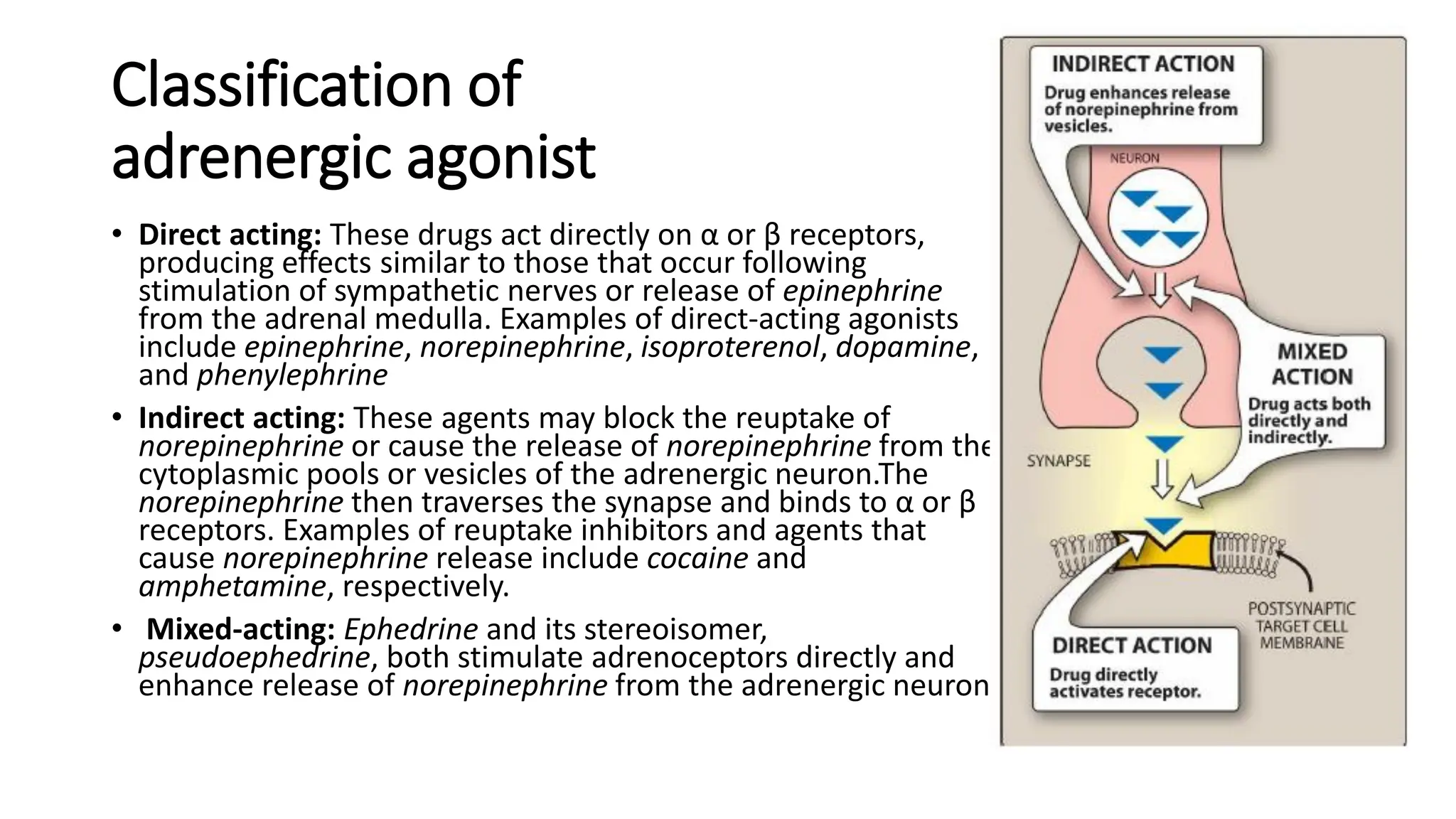
Classification of
adrenergic agonist
• Direct acting: These drugs act directly on α or β receptors,
producing effects similar to those that occur following
stimulation of sympathetic nerves or release of epinephrine
from the adrenal medulla. Examples of direct-acting agonists
include epinephrine, norepinephrine, isoproterenol, dopamine,
and phenylephrine
• Indirect acting: These agents may block the reuptake of
norepinephrine or cause the release of norepinephrine from the
cytoplasmic pools or vesicles of the adrenergic neuron.The
norepinephrine then traverses the synapse and binds to α or β
receptors. Examples of reuptake inhibitors and agents that
cause norepinephrine release include cocaine and
amphetamine, respectively.
• Mixed-acting: Ephedrine and its stereoisomer,
pseudoephedrine, both stimulate adrenoceptors directly and
enhance release of norepinephrine from the adrenergic neuron
A. Direct Acting Drugs
• They directly stimulate alpha or beta receptors
1. Epinephrine
• On stimulation, the adrenal medulla releases about 80% epinephrine and 20% norepinephrine
directly into the circulation. Epinephrine interacts with both α and β receptors.
• At low doses, β effects (vasodilation) on the vascular system predominate, whereas at high doses,
α effects (vasoconstriction) are the strongest.
• Actions on CVS:
• The major actions of epinephrine are on the cardiovascular system. Epinephrine strengthens the
contractility of the myocardium (positive inotrope: β1 action) and increases its rate of
contraction (positive chronotrope: β1 action). Therefore, cardiac output increases. These effects
increase oxygen demands on the myocardium.
• Epinephrine activates β1 receptors on the kidney to cause renin release. Renin is an enzyme
involved in the production of angiotensin II, a potent vasoconstrictor. Epinephrine constricts
arterioles in the skin, mucous membranes, and viscera (α effects), and it dilates vessels going to
the liver and skeletal muscle (β2 effects). These combined effects result in a decrease in renal
blood flow. Therefore, the cumulative effect is an increase in systolic blood pressure coupled
with a slight decrease in diastolic pressure due to β2 receptor–mediated vasodilation in the
skeletal muscle vascular bed
Action of epinephrine
• Respiratory: Epinephrine causes powerful bronchodilation by acting
directly on bronchial smooth muscle (β2 action). It also inhibits the
release of allergy mediators such as histamine from mast cells.
• Hyperglycemia: Epinephrine has a significant hyperglycemic effect
because of increased glycogenolysis in the liver (β2 effect), increased
release of glucagon (β2 effect), and a decreased release of insulin
(α2 effect).
• Lipolysis: Epinephrine initiates lipolysis through agonist activity on
the β receptors of adipose tissue. Increased levels of cAMP
stimulate a hormone-sensitive lipase, which hydrolyzes triglycerides
to free fatty acids and glycerol.
Epinephrine
• Therapeutic Use: Anaphylactic shock, cardiac arrest, to prolong the affect of anaesthesia, to treat
bronchospasm, in intraocular surgery as it causes mydrasis
• Pharmacokinetics: IV or IM route, can also give SC, via inhalation and through endotracheal tube,
metabolized COMT and MAO, poor penetration in brain, excreted via urine
• Toxicity:
• Epinephrine can produce adverse CNS effects that include anxiety, fear, tension, headache, and
tremor. It can trigger cardiac arrhythmias, particularly if the patient is receiving digoxin.
• Epinephrine can also induce pulmonary edema due to increased afterload caused by
vasoconstrictive properties of the drug.
• Patients with hyperthyroidism may have an increased production of adrenergic receptors in the
vasculature, leading to an enhanced response to epinephrine, and the dose must be reduced in
these individuals.
• Inhalation anesthetics also sensitize the heart to the effects of epinephrine, which may lead to
tachycardia.
• Epinephrine increases the release of endogenous stores of glucose. In diabetic patients, dosages
of insulin may have to be increased.
Norepinephrine
• Actions: Vasoconstriction: Norepinephrine causes a rise in peripheral resistance due to intense
vasoconstriction of most vascular beds, including the kidney (α1 effect). Both systolic and
diastolic blood pressures increase
• Baroreceptor reflex: Norepinephrine increases blood pressure, and this stimulates the
baroreceptors, inducing a rise in vagal activity. The increased vagal activity produces a reflex
bradycardia, which is sufficient to counteract the local actions of norepinephrine on the heart,
although the reflex compensation does not affect the positive inotropic effects of thedrug.
When atropine, which blocks the transmission of vagal effects, is given before norepinephrine,
stimulation of the heart by norepinephrine is evident as tachycardia
• Clinical Uses: Used to treat shock
• Pharmacokinetics: IV route, metabolized by COMT and MAO, excretion via urine
• ADRs: norepinephrine is a potent vasoconstrictor and may cause blanching and sloughing of
skin along an injected vein. If extravasation (leakage of drug from the vessel into tissues
surrounding the injection site) occurs, it can cause tissue necrosis. It should not be
administered in peripheral veins,
Isoproterenol
• direct-acting synthetic catecholamine that stimulates both β1- and β2-
adrenergic receptors. Its non-selectivity is a disadvantage and the reason
why it is rarely used therapeutically
• Actions: Isoproterenol produces intense stimulation of the heart (β1
effect), increasing heart rate, contractility, and cardiac output
• It is as active as epinephrine in this action. Isoproterenol also dilates the
arterioles of skeletal muscle (β2 effect), resulting in decreased peripheral
resistance. Because of its cardiac stimulatory action, it may increase
systolic blood pressure slightly, but it greatly reduces mean arterial and
diastolic blood pressures.
• Isoproterenol is also a potent bronchodilator (β2 effect).
Dopamine
• the immediate metabolic precursor of norepinephrine, occurs naturally in
the CNS in the basal ganglia, where it functions as a neurotransmitter, as
well as in the adrenal medulla.
• Dopamine can activate α- and β-adrenergic receptors. For example, at
higher doses, it causes vasoconstriction by activating α1 receptors,
whereas at lower doses, it stimulates β1 cardiac receptors.
• In addition, D1 and D2 dopaminergic receptors, distinct from the α- and β-
adrenergic receptors, occur in the peripheral mesenteric and renal
vascular beds, where binding of dopamine produces vasodilation.
• D2 receptors are also found on presynaptic adrenergic neurons, where
their activation interferes with norepinephrine release.
Dopamine
• Cardiovascular: Dopamine exerts a stimulatory effect on the β1 receptors of the heart, having
both positive inotropic and chronotropic effects . At very high doses, dopamine activates α1
receptors on the vasculature, resulting in vasoconstriction
• Renal and visceral : Dopamine dilates renal and splanchnic arterioles by activating
dopaminergic receptors, thereby increasing blood flow to the kidneys and other viscera and in
the past, low-dose (“renal-dose”) dopamine was often used in the prevention or treatment of
acute renal failure. Now, there is limited clinical utility in the renal protective effects of
dopamine.
• Therapeutic Use: Dopamine can be used for cardiogenic and septic shock and is given by
continuous infusion. It raises blood pressure by stimulating the β1 receptors on the heart to
increase cardiac output, and α1 receptors on blood vessels to increase total peripheral
resistance.
• It enhances perfusion to the kidney and splanchnic areas, Increased blood flow to the kidney
enhances the glomerular filtration rate and causes diuresis.
• Dopamine is also used to treat hypotension, severe heart failure, and bradycardia unresponsive
to other treatments.
• ADRs: An overdose of dopamine produces the same effects as sympathetic stimulation.
Dopamine is rapidly metabolized by MAO or COMT, and its adverse effects (nausea,
hypertension, and arrhythmias) are, therefore, short lived.
Dobutamine
• synthetic, direct-acting catecholamine that is primarily a β1 receptor
agonist with minor β2 and α1 effects.
• It increases heart rate and cardiac output with few vascular effects.
• Dobutamine is used to increase cardiac output in acute heart failure,
as well as for inotropic support after cardiac surgery. The drug
increases cardiac output and does not elevate oxygen demands of the
myocardium as much as other sympathomimetic drugs.
• Dobutamine should be used with caution in atrial fibrillation, because
it increases atrioventricular (AV) conduction. Other adverse effects
are similar to epinephrine. Tolerance may develop with prolonged
use.
Others
• Fenoldopam: an agonist of peripheral dopamine D1 receptors. It is
used as a rapid-acting vasodilator to treat severe hypertension in
hospitalized patients, acting on coronary arteries, kidney arterioles,
and mesenteric arteries
• Oxymetazoline: direct-acting synthetic adrenergic agonist that
stimulates both α1- and α2-adrenergic receptors. Oxymetazoline
directly stimulates α receptors on blood vessels supplying the nasal
mucosa and conjunctiva, thereby producing vasoconstriction and
decreasing congestion. ( found in nasal drops—act as nasal
decongestant and eye drops to reduce redness)
Others
• Midodrine: Midodrine, a prodrug, is metabolized to the
pharmacologically active desglymidodrine. It is a selective α1 agonist,
which acts in the periphery to increase arterial and venous tone.
Midodrine is indicated for the treatment of orthostatic hypotension.
• Clonidine: Clonidine is an α2 agonist used for the treatment of
hypertension. It can also be used to minimize symptoms of
withdrawal from opiates, tobacco smoking, and benzodiazepines.
Both clonidine and the α2 agonist guanfacine may be used in the
management of attention deficit hyperactivity disorder. Clonidine
acts centrally on presynaptic α2 receptors to produce inhibition of
sympathetic vasomotor centers, decreasing sympathetic outflow to
the periphery.
Others
• Albuterol, metaproterenol and terbutaline : are short-acting β2
agonists (SABAs) used primarily as bronchodilators and administered
by a metered-dose inhaler. Albuterol is the SABA of choice for the
management of acute asthma symptoms, because it is more selective
for β2 receptors than metaproterenol. Injectable terbutaline is used
off-label as a uterine relaxant to suppress premature labor, and use
for this indication should not exceed 72 hours.
• Salmeterol, formoterol, and indacaterol: are long-acting β2 selective
agonists (LABAs) used for the management of respiratory disorders
such as asthma and chronic obstructive pulmonary disease
Others
• Mirabegron: β3 agonist that relaxes the detrusor smooth muscle and
increases bladder capacity. It is used for patients with overactive
bladder.
B. Indirect-Acting Adrenergic Agonists
• Indirect-acting adrenergic agonists cause the release, inhibit the
reuptake, or inhibit the degradation of epinephrine or norepinephrine
• They potentiate the effects of epinephrine or norepinephrine
produced endogenously, but do not directly affect postsynaptic
receptors.
Amphetamine
• The marked central stimulatory action of amphetamine [am-FET-a-
meen] is often mistaken by drug abusers as its only action.
• However, the drug can also increase blood pressure significantly by α1
agonist action on the vasculature, as well as β1 stimulatory effects on
the heart. Its actions are mediated primarily through an increase in
nonvesicular release of catecholamines such as dopamine and
norepinephrine from nerve terminals.
• Thus, amphetamine is an indirect-acting adrenergic drug. The actions
and therapeutic uses of amphetamine and its derivatives are
discussed with CNS stimulants
Cocaine
• unique among local anesthetics in having the ability to block the sodium–
chloride (Na+/Cl−)–dependent norepinephrine transporter required for
cellular uptake of norepinephrine into the adrenergic neuron.
• Consequently, norepinephrine accumulates in the synaptic space, resulting
in enhanced sympathetic activity and potentiation of the actions of
epinephrine and norepinephrine.
• Therefore, small doses of the catecholamines produce greatly magnified
effects in an individual taking cocaine.
• In addition, the duration of action of epinephrine and norepinephrine is
increased. Like amphetamines, it can increase blood pressure by α1 agonist
actions and β stimulatory effects.
C. Mixed-Action Adrenergic Agonists
• Ephedrine and pseudoephedrine are mixed-action adrenergic agents.
They not only enhance release of stored norepinephrine from nerve
endings but also directly stimulate both α and β receptors.
• Ephedrine and pseudoephedrine are not catecholamines and are poor
substrates for COMT and MAO. Therefore, these drugs have a long
duration of action
• Pharmacokinetics: Ephedrine and pseudoephedrine have excellent
absorption after oral administration and penetrate the CNS, but
pseudoephedrine has fewer CNS effects. Ephedrine is eliminated
largely unchanged in urine, and pseudoephedrine undergoes
incomplete hepatic metabolism before elimination in urine.
Mixed-Action Adrenergic Agonists
• Clinical Uses of Ephedrine: Ephedrine raises systolic and diastolic
blood pressures by vasoconstriction and cardiac stimulation and it is
indicated in anesthesia-induced hypotension. Ephedrine produces
bronchodilation, but it is less potent and slower acting than
epinephrine or isoproterenol. It was previously used to prevent
asthma attacks but has been replaced by more effective medications.
Ephedrine produces a mild stimulation of the CNS. This increases
alertness, decreases fatigue, and prevents sleep. It also improves
athletic performance
• Clinical Uses of Psuedoephedrine: Oral pseudoephedrine is primarily
used to treat nasal and sinus congestion. Pseudoephedrine has been
illegally used to produce methamphetamine.

adrenergic agonists for all medical students

  • 1.
  • 2.
    Introduction • The adrenergicdrugs affect receptors that are stimulated by norepinephrine (noradrenaline) or epinephrine (adrenaline). These receptors are known as adrenergic receptors or adrenoceptors. • Drugs that activate adrenergic receptors are termed sympathomimetics, and drugs that block activation of adrenergic receptors are termed sympatholytics. • Some sympathomimetics directly activate adrenergic receptors (direct-acting agonists), while others • act indirectly by enhancing release or blocking reuptake of norepinephrine (indirect-acting agonists).
  • 4.
    Site of actionof adrenergic agonist
  • 5.
    Adrenergic Receptors • Inthe sympathetic nervous system, several classes of adrenoceptors can be distinguished pharmacologically. • Two main families of receptors, designated α and β, are classified based on response to the adrenergic agonists epinephrine, norepinephrine, and isoproterenol. • Both the α and β receptor types have a number of specific receptor subtypes. Alterations in the primary structure of the receptors influence their affinity for various agents.
  • 6.
  • 7.
    α1 Receptors • Thesereceptors are present on the postsynaptic membrane of the effector organs and mediate many of the classic effects, originally designated as α-adrenergic, involving constriction of smooth muscle. • Activation of α1 receptors initiates a series of reactions through the G-protein activation of phospholipase C, ultimately resulting in the generation of second messengers inositol-1,4,5-trisphosphate (IP3) and diacylglycerol (DAG). • IP3 initiates the release of Ca2+ from the endoplasmic reticulum into the cytosol, and DAG turns on other proteins within the cell
  • 8.
    α2 Receptors • Thesereceptors are located primarily on sympathetic presynaptic nerve endings and control the release of norepinephrine. • When a sympathetic adrenergic nerve is stimulated, a portion of the released norepinephrine “circles back” and reacts with α2 receptors on the presynaptic membrane. • Stimulation of α2 receptors causes feedback inhibition and inhibits further release of norepinephrine from the stimulated adrenergic neuron. • This inhibitory action serves as a local mechanism for modulating norepinephrine output when there is high sympathetic activity. [Note: In this instance, by inhibiting further output of norepinephrine from the adrenergic neuron, these receptors are acting as inhibitory autoreceptors] • α2 Receptors are also found on presynaptic parasympathetic neurons. Norepinephrine released from a presynaptic sympathetic neuron can diffuse to and interact with these receptors, inhibiting acetylcholine release. • This is another mechanism to modulate autonomic activity in a given area. In contrast to α1 receptors, the effects of binding at α2 receptors are mediated by inhibition of adenylyl cyclase and by a fall in the levels of intracellular cAMP.
  • 10.
    β-Adrenoceptors • Responses ofβ receptors differ from those of α receptors and are characterized by a strong response to isoproterenol, with less sensitivity to epinephrine and norepinephrine • For β receptors, the rank order of potency is isoproterenol > epinephrine > norepinephrine. • The β-adrenoceptors can be subdivided into three major subgroups, β1, β2, and β3, based on their affinities for adrenergic agonists and antagonists. • β1 receptors have approximately equal affinities for epinephrine and norepinephrine, whereas β2 receptors have a higher affinity for epinephrine than for norepinephrine. • Thus, tissues with a predominance of β2 receptors (such as the vasculature of skeletal muscle) are particularly responsive to the effects of circulating epinephrine released by the adrenal medulla. • Binding of a neurotransmitter at any of the three types of β receptors results in activation of adenylyl cyclase and increased concentrations of cAMP within the cell
  • 12.
  • 14.
    Desensitization of receptors •Prolonged exposure to the catecholamines reduces th responsiveness of these receptors, a phenomenon known as desensitization. • Three mechanisms have been suggested to explain this phenomenon: 1) sequestration of the receptors so that they are unavailable for interaction with the ligand; 2) down-regulation, that is, a disappearance of the receptors either by destruction or by decreased synthesis; and 3) an inability to couple to G-protein, because the receptor has been phosphorylated on the cytoplasmic side.
  • 15.
    Classification of adrenergic agonist •Direct acting: These drugs act directly on α or β receptors, producing effects similar to those that occur following stimulation of sympathetic nerves or release of epinephrine from the adrenal medulla. Examples of direct-acting agonists include epinephrine, norepinephrine, isoproterenol, dopamine, and phenylephrine • Indirect acting: These agents may block the reuptake of norepinephrine or cause the release of norepinephrine from the cytoplasmic pools or vesicles of the adrenergic neuron.The norepinephrine then traverses the synapse and binds to α or β receptors. Examples of reuptake inhibitors and agents that cause norepinephrine release include cocaine and amphetamine, respectively. • Mixed-acting: Ephedrine and its stereoisomer, pseudoephedrine, both stimulate adrenoceptors directly and enhance release of norepinephrine from the adrenergic neuron
  • 16.
    A. Direct ActingDrugs • They directly stimulate alpha or beta receptors
  • 17.
    1. Epinephrine • Onstimulation, the adrenal medulla releases about 80% epinephrine and 20% norepinephrine directly into the circulation. Epinephrine interacts with both α and β receptors. • At low doses, β effects (vasodilation) on the vascular system predominate, whereas at high doses, α effects (vasoconstriction) are the strongest. • Actions on CVS: • The major actions of epinephrine are on the cardiovascular system. Epinephrine strengthens the contractility of the myocardium (positive inotrope: β1 action) and increases its rate of contraction (positive chronotrope: β1 action). Therefore, cardiac output increases. These effects increase oxygen demands on the myocardium. • Epinephrine activates β1 receptors on the kidney to cause renin release. Renin is an enzyme involved in the production of angiotensin II, a potent vasoconstrictor. Epinephrine constricts arterioles in the skin, mucous membranes, and viscera (α effects), and it dilates vessels going to the liver and skeletal muscle (β2 effects). These combined effects result in a decrease in renal blood flow. Therefore, the cumulative effect is an increase in systolic blood pressure coupled with a slight decrease in diastolic pressure due to β2 receptor–mediated vasodilation in the skeletal muscle vascular bed
  • 18.
    Action of epinephrine •Respiratory: Epinephrine causes powerful bronchodilation by acting directly on bronchial smooth muscle (β2 action). It also inhibits the release of allergy mediators such as histamine from mast cells. • Hyperglycemia: Epinephrine has a significant hyperglycemic effect because of increased glycogenolysis in the liver (β2 effect), increased release of glucagon (β2 effect), and a decreased release of insulin (α2 effect). • Lipolysis: Epinephrine initiates lipolysis through agonist activity on the β receptors of adipose tissue. Increased levels of cAMP stimulate a hormone-sensitive lipase, which hydrolyzes triglycerides to free fatty acids and glycerol.
  • 19.
    Epinephrine • Therapeutic Use:Anaphylactic shock, cardiac arrest, to prolong the affect of anaesthesia, to treat bronchospasm, in intraocular surgery as it causes mydrasis • Pharmacokinetics: IV or IM route, can also give SC, via inhalation and through endotracheal tube, metabolized COMT and MAO, poor penetration in brain, excreted via urine • Toxicity: • Epinephrine can produce adverse CNS effects that include anxiety, fear, tension, headache, and tremor. It can trigger cardiac arrhythmias, particularly if the patient is receiving digoxin. • Epinephrine can also induce pulmonary edema due to increased afterload caused by vasoconstrictive properties of the drug. • Patients with hyperthyroidism may have an increased production of adrenergic receptors in the vasculature, leading to an enhanced response to epinephrine, and the dose must be reduced in these individuals. • Inhalation anesthetics also sensitize the heart to the effects of epinephrine, which may lead to tachycardia. • Epinephrine increases the release of endogenous stores of glucose. In diabetic patients, dosages of insulin may have to be increased.
  • 20.
    Norepinephrine • Actions: Vasoconstriction:Norepinephrine causes a rise in peripheral resistance due to intense vasoconstriction of most vascular beds, including the kidney (α1 effect). Both systolic and diastolic blood pressures increase • Baroreceptor reflex: Norepinephrine increases blood pressure, and this stimulates the baroreceptors, inducing a rise in vagal activity. The increased vagal activity produces a reflex bradycardia, which is sufficient to counteract the local actions of norepinephrine on the heart, although the reflex compensation does not affect the positive inotropic effects of thedrug. When atropine, which blocks the transmission of vagal effects, is given before norepinephrine, stimulation of the heart by norepinephrine is evident as tachycardia • Clinical Uses: Used to treat shock • Pharmacokinetics: IV route, metabolized by COMT and MAO, excretion via urine • ADRs: norepinephrine is a potent vasoconstrictor and may cause blanching and sloughing of skin along an injected vein. If extravasation (leakage of drug from the vessel into tissues surrounding the injection site) occurs, it can cause tissue necrosis. It should not be administered in peripheral veins,
  • 21.
    Isoproterenol • direct-acting syntheticcatecholamine that stimulates both β1- and β2- adrenergic receptors. Its non-selectivity is a disadvantage and the reason why it is rarely used therapeutically • Actions: Isoproterenol produces intense stimulation of the heart (β1 effect), increasing heart rate, contractility, and cardiac output • It is as active as epinephrine in this action. Isoproterenol also dilates the arterioles of skeletal muscle (β2 effect), resulting in decreased peripheral resistance. Because of its cardiac stimulatory action, it may increase systolic blood pressure slightly, but it greatly reduces mean arterial and diastolic blood pressures. • Isoproterenol is also a potent bronchodilator (β2 effect).
  • 22.
    Dopamine • the immediatemetabolic precursor of norepinephrine, occurs naturally in the CNS in the basal ganglia, where it functions as a neurotransmitter, as well as in the adrenal medulla. • Dopamine can activate α- and β-adrenergic receptors. For example, at higher doses, it causes vasoconstriction by activating α1 receptors, whereas at lower doses, it stimulates β1 cardiac receptors. • In addition, D1 and D2 dopaminergic receptors, distinct from the α- and β- adrenergic receptors, occur in the peripheral mesenteric and renal vascular beds, where binding of dopamine produces vasodilation. • D2 receptors are also found on presynaptic adrenergic neurons, where their activation interferes with norepinephrine release.
  • 23.
    Dopamine • Cardiovascular: Dopamineexerts a stimulatory effect on the β1 receptors of the heart, having both positive inotropic and chronotropic effects . At very high doses, dopamine activates α1 receptors on the vasculature, resulting in vasoconstriction • Renal and visceral : Dopamine dilates renal and splanchnic arterioles by activating dopaminergic receptors, thereby increasing blood flow to the kidneys and other viscera and in the past, low-dose (“renal-dose”) dopamine was often used in the prevention or treatment of acute renal failure. Now, there is limited clinical utility in the renal protective effects of dopamine. • Therapeutic Use: Dopamine can be used for cardiogenic and septic shock and is given by continuous infusion. It raises blood pressure by stimulating the β1 receptors on the heart to increase cardiac output, and α1 receptors on blood vessels to increase total peripheral resistance. • It enhances perfusion to the kidney and splanchnic areas, Increased blood flow to the kidney enhances the glomerular filtration rate and causes diuresis. • Dopamine is also used to treat hypotension, severe heart failure, and bradycardia unresponsive to other treatments. • ADRs: An overdose of dopamine produces the same effects as sympathetic stimulation. Dopamine is rapidly metabolized by MAO or COMT, and its adverse effects (nausea, hypertension, and arrhythmias) are, therefore, short lived.
  • 24.
    Dobutamine • synthetic, direct-actingcatecholamine that is primarily a β1 receptor agonist with minor β2 and α1 effects. • It increases heart rate and cardiac output with few vascular effects. • Dobutamine is used to increase cardiac output in acute heart failure, as well as for inotropic support after cardiac surgery. The drug increases cardiac output and does not elevate oxygen demands of the myocardium as much as other sympathomimetic drugs. • Dobutamine should be used with caution in atrial fibrillation, because it increases atrioventricular (AV) conduction. Other adverse effects are similar to epinephrine. Tolerance may develop with prolonged use.
  • 25.
    Others • Fenoldopam: anagonist of peripheral dopamine D1 receptors. It is used as a rapid-acting vasodilator to treat severe hypertension in hospitalized patients, acting on coronary arteries, kidney arterioles, and mesenteric arteries • Oxymetazoline: direct-acting synthetic adrenergic agonist that stimulates both α1- and α2-adrenergic receptors. Oxymetazoline directly stimulates α receptors on blood vessels supplying the nasal mucosa and conjunctiva, thereby producing vasoconstriction and decreasing congestion. ( found in nasal drops—act as nasal decongestant and eye drops to reduce redness)
  • 26.
    Others • Midodrine: Midodrine,a prodrug, is metabolized to the pharmacologically active desglymidodrine. It is a selective α1 agonist, which acts in the periphery to increase arterial and venous tone. Midodrine is indicated for the treatment of orthostatic hypotension. • Clonidine: Clonidine is an α2 agonist used for the treatment of hypertension. It can also be used to minimize symptoms of withdrawal from opiates, tobacco smoking, and benzodiazepines. Both clonidine and the α2 agonist guanfacine may be used in the management of attention deficit hyperactivity disorder. Clonidine acts centrally on presynaptic α2 receptors to produce inhibition of sympathetic vasomotor centers, decreasing sympathetic outflow to the periphery.
  • 27.
    Others • Albuterol, metaproterenoland terbutaline : are short-acting β2 agonists (SABAs) used primarily as bronchodilators and administered by a metered-dose inhaler. Albuterol is the SABA of choice for the management of acute asthma symptoms, because it is more selective for β2 receptors than metaproterenol. Injectable terbutaline is used off-label as a uterine relaxant to suppress premature labor, and use for this indication should not exceed 72 hours. • Salmeterol, formoterol, and indacaterol: are long-acting β2 selective agonists (LABAs) used for the management of respiratory disorders such as asthma and chronic obstructive pulmonary disease
  • 28.
    Others • Mirabegron: β3agonist that relaxes the detrusor smooth muscle and increases bladder capacity. It is used for patients with overactive bladder.
  • 29.
    B. Indirect-Acting AdrenergicAgonists • Indirect-acting adrenergic agonists cause the release, inhibit the reuptake, or inhibit the degradation of epinephrine or norepinephrine • They potentiate the effects of epinephrine or norepinephrine produced endogenously, but do not directly affect postsynaptic receptors.
  • 30.
    Amphetamine • The markedcentral stimulatory action of amphetamine [am-FET-a- meen] is often mistaken by drug abusers as its only action. • However, the drug can also increase blood pressure significantly by α1 agonist action on the vasculature, as well as β1 stimulatory effects on the heart. Its actions are mediated primarily through an increase in nonvesicular release of catecholamines such as dopamine and norepinephrine from nerve terminals. • Thus, amphetamine is an indirect-acting adrenergic drug. The actions and therapeutic uses of amphetamine and its derivatives are discussed with CNS stimulants
  • 31.
    Cocaine • unique amonglocal anesthetics in having the ability to block the sodium– chloride (Na+/Cl−)–dependent norepinephrine transporter required for cellular uptake of norepinephrine into the adrenergic neuron. • Consequently, norepinephrine accumulates in the synaptic space, resulting in enhanced sympathetic activity and potentiation of the actions of epinephrine and norepinephrine. • Therefore, small doses of the catecholamines produce greatly magnified effects in an individual taking cocaine. • In addition, the duration of action of epinephrine and norepinephrine is increased. Like amphetamines, it can increase blood pressure by α1 agonist actions and β stimulatory effects.
  • 32.
    C. Mixed-Action AdrenergicAgonists • Ephedrine and pseudoephedrine are mixed-action adrenergic agents. They not only enhance release of stored norepinephrine from nerve endings but also directly stimulate both α and β receptors. • Ephedrine and pseudoephedrine are not catecholamines and are poor substrates for COMT and MAO. Therefore, these drugs have a long duration of action • Pharmacokinetics: Ephedrine and pseudoephedrine have excellent absorption after oral administration and penetrate the CNS, but pseudoephedrine has fewer CNS effects. Ephedrine is eliminated largely unchanged in urine, and pseudoephedrine undergoes incomplete hepatic metabolism before elimination in urine.
  • 33.
    Mixed-Action Adrenergic Agonists •Clinical Uses of Ephedrine: Ephedrine raises systolic and diastolic blood pressures by vasoconstriction and cardiac stimulation and it is indicated in anesthesia-induced hypotension. Ephedrine produces bronchodilation, but it is less potent and slower acting than epinephrine or isoproterenol. It was previously used to prevent asthma attacks but has been replaced by more effective medications. Ephedrine produces a mild stimulation of the CNS. This increases alertness, decreases fatigue, and prevents sleep. It also improves athletic performance • Clinical Uses of Psuedoephedrine: Oral pseudoephedrine is primarily used to treat nasal and sinus congestion. Pseudoephedrine has been illegally used to produce methamphetamine.