

AUTACOIDS 
BY GROUP NO. 1 
RUDRAKSH JOSHI (17) 
MUKTA ASUDANI (4) 
TRISHNA MATAI (26) 
TARIKA DUGESHAR (12) 
MRUNALI INTWALA (16) 
GAURAV ANDHANSARE (2)
INTRODUCTION 
• AUTACOIDS auto=self akos=healing/remedy 
• Local Hormones
CLASSIFICATION 
• Amine derived: Histamine (amino acid: Histidine), 
Serotonin (Tryptophan) 
• Peptide derived: Angiotensin, Bradykinin 
• Lipid derived: Prostaglandins, Leukotrienes, Interleukins, 
Platelet Activating Factor, etc.
FUNCTIONS 
• Physiological 
• Pathophysiological (Reaction to injuries) 
• Transmission and Modulation
AMINE AUTACOIDS 
• DERIVED FROM NATURAL AMINO ACIDS 
• HISTAMINE AND SEROTONIN are the major autacoids in this class
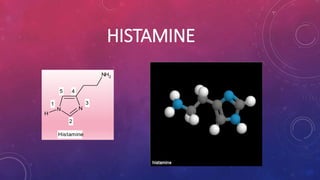
HISTAMINE 
N N 
NH2 
H 
1 
2 
3 
5 4 
Histamine
INTRODUCTION 
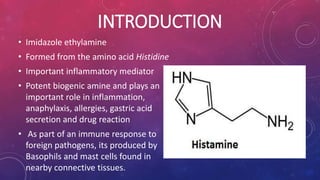
• Imidazole ethylamine 
• Formed from the amino acid Histidine 
• Important inflammatory mediator 
• Potent biogenic amine and plays an 
important role in inflammation, 
anaphylaxis, allergies, gastric acid 
secretion and drug reaction 
• As part of an immune response to 
foreign pathogens, its produced by 
Basophils and mast cells found in 
nearby connective tissues.
SITES OF HISTAMINE RELEASE 
1) Mast cell site: Pulmonary tissue (mucosa of bronchial tree) 
• Skin 
• GIT(intestinal mucosa) 
• Conc. Of histamine is particularly high in these tissues 
2) Non-mast cell sites: 
• CNS (neurons) 
• Epidermis of skin. 
• GIT(gastric cells) 
• Cells in regenerating or rapidly growing tissues 
• Basophils (in the blood)
MECHANISM OF RELEASE 
• Histamine held by an acidic protein and heparin within 
intracellular granules → Granules extrude by exocytosis → 
Na+ gets exchanged for histamine 
• Substances released during IgG or lgM immunoreactions 
release histamine from the mast cells & basophil. 
• Chemical & mechanical mast cells injury causes 
degranulation of cytoplasmic granules & histamine is 
released 
• Certain amines accumulate in mast cells due to affinity for 
heparin, displace histamine → form heparin liberator 
complex → increases permeability of mast cell membrane 
and diffuse histamine.
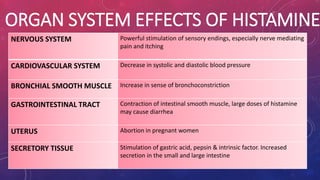
ORGAN SYSTEM EFFECTS OF HISTAMINE 
NERVOUS SYSTEM Powerful stimulation of sensory endings, especially nerve mediating 
pain and itching 
CARDIOVASCULAR SYSTEM Decrease in systolic and diastolic blood pressure 
BRONCHIAL SMOOTH MUSCLE Increase in sense of bronchoconstriction 
GASTROINTESTINAL TRACT Contraction of intestinal smooth muscle, large doses of histamine 
may cause diarrhea 
UTERUS Abortion in pregnant women 
SECRETORY TISSUE Stimulation of gastric acid, pepsin & intrinsic factor. Increased 
secretion in the small and large intestine
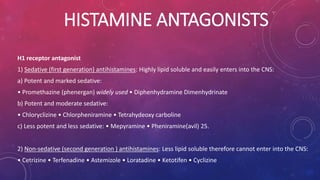
HISTAMINE ANTAGONISTS 
H1 receptor antagonist 
1) Sedative (first generation) antihistamines: Highly lipid soluble and easily enters into the CNS: 
a) Potent and marked sedative: 
• Promethazine (phenergan) widely used • Diphenhydramine Dimenhydrinate 
b) Potent and moderate sedative: 
• Chloryclizine • Chlorpheniramine • Tetrahydeoxy carboline 
c) Less potent and less sedative: • Mepyramine • Pheniramine(avil) 25. 
2) Non-sedative (second generation ) antihistamines: Less lipid soluble therefore cannot enter into the CNS: 
• Cetrizine • Terfenadine • Astemizole • Loratadine • Ketotifen • Cyclizine
ROLE IN ALLERGY: 
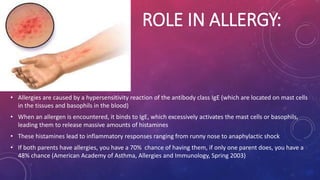
• Allergies are caused by a hypersensitivity reaction of the antibody class IgE (which are located on mast cells 
in the tissues and basophils in the blood) 
• When an allergen is encountered, it binds to IgE, which excessively activates the mast cells or basophils, 
leading them to release massive amounts of histamines 
• These histamines lead to inflammatory responses ranging from runny nose to anaphylactic shock 
• If both parents have allergies, you have a 70% chance of having them, if only one parent does, you have a 
48% chance (American Academy of Asthma, Allergies and Immunology, Spring 2003)
HISTAMINE EFFECTS ACCORDING TO PLASMA 
HISTAMINE CONCENTRATION 
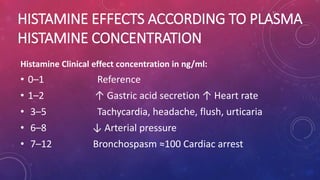
Histamine Clinical effect concentration in ng/ml: 
• 0–1 Reference 
• 1–2 ↑ Gastric acid secretion ↑ Heart rate 
• 3–5 Tachycardia, headache, flush, urticaria 
• 6–8 ↓ Arterial pressure 
• 7–12 Bronchospasm ≈100 Cardiac arrest
ADVERSE EFFECTS OF HISTAMINE 
RELEASE 
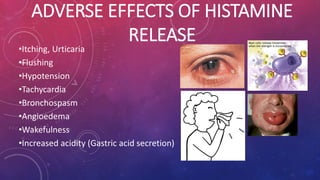
•Itching, Urticaria 
•Flushing 
•Hypotension 
•Tachycardia 
•Bronchospasm 
•Angioedema 
•Wakefulness 
•Increased acidity (Gastric acid secretion)
PHARMACEUTICAL PRODUCTS 
First generation anti-histamines for allergies (active ingredients and brand names): 
DRUG BRAND 
Brompheniramine – Dimetane 
Chlorpheniramine – Chlor-Trimeton 
Diphenhydramine – Benadryl 
Second generation anti-histamines for allergies (active ingredients and brand names): 
Loratadine – Claritin 
Cetirizine – Zyrtec 
• 
.
Dosage: 
Cetirizine (Zyrtec): Tablet - 5-10 mg orally once a day depending upon symptom severity. 
Syrup – 5 mg/ 5 mL 
Loratadine (Claritin, Tavist), Brompheniramine (Dimetane): Tablet – 10mg once daily 
for adults, 5 mg once daily for children 2 to 5 years. 
Chlorpheniramine (Chlor-Trimeton) – 4 mg orally every 4 - 6 hrs; sustained-release: 8 or 
12 mg orally every 8 - 12 hours. Maximum dose: 24 mg/day. 
Diphenhydramine (Benadryl): 25 mg to 50 mg (1-2 capsules) per day for adults and 
children above 12 years; for children 6 -12 years of age – 25 mg (1 capsule) 
Side effects – drowsiness especially in case of first generation antihistamines, 
restlessness, nervousness, upset stomach, dry mouth, irritability, difficulty urinating and 
sometimes blurred vision.
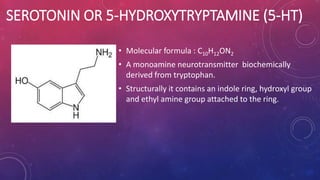
SEROTONIN OR 5-HYDROXYTRYPTAMINE (5-HT) 
• Molecular formula : C10H12ON2 
• A monoamine neurotransmitter biochemically 
derived from tryptophan. 
• Structurally it contains an indole ring, hydroxyl group 
and ethyl amine group attached to the ring.
• Approximately 90% of the human body's total serotonin is located in 
the enterochromaffin cells in the alimentary canal (gut), used to 
regulate intestinal movements. 
• The remainder is synthesized in serotonergic neurons of the CNS, where 
it has various functions including the regulation of mood, appetite, and 
sleep. 
• Serotonin secreted from the enterochromaffin cells eventually finds its 
way out of tissues into the blood. There, it is actively taken up by blood 
platelets, which store it. When the platelets bind to a clot, they release 
serotonin, where it serves as a vasoconstrictor and helps to regulate 
homeostasis and blood clotting.
IMPORTANCE OF SEROTONIIN 
Serotonin is believed to play a central role in: 
• Modulation of vasoconstriction 
• Anger 
• Aggression 
• Body temperature 
• Mood 
• Sleep 
• Sexual desire 
• appetite 
• Stimulation of vomiting reflex 
• Memory and Learning
SOURCES 
• Found abundantly in the gut and blood plasma, but it can not enter the 
brain. 
• Meat and Banana are the direct sources of serotonin. 
• Main source: L-tryptophan, an amino acid, which is found in proteins. 
So proteins are the main sources of serotonin: 
Meat, eggs, milk, fishes 
Pulses 
• Enough calcium, magnesium and oxygen are also needed for serotonin 
production. 
• Vitamin B6 also promotes its production.
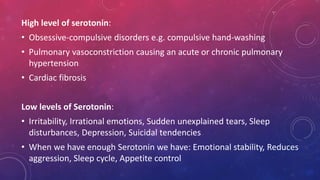
High level of serotonin: 
• Obsessive-compulsive disorders e.g. compulsive hand-washing 
• Pulmonary vasoconstriction causing an acute or chronic pulmonary 
hypertension 
• Cardiac fibrosis 
Low levels of Serotonin: 
• Irritability, Irrational emotions, Sudden unexplained tears, Sleep 
disturbances, Depression, Suicidal tendencies 
• When we have enough Serotonin we have: Emotional stability, Reduces 
aggression, Sleep cycle, Appetite control
SYNTHESIS 
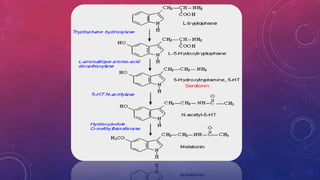
• Serotonin is synthesized from the amino acid L-tryptophan 
by a short metabolic pathway consisting of 
two enzymes: 
Tryptophan hydroxylase (TPH) 
Amino acid decarboxylase (DDC)
5-HT RECEPTORS 
• Receptors are divided into 7 types: 5-HT1 to 5-HT7 
• 5-HT1 group consist of 5 receptor subtypes: 
5-HT1A 
5-HT1B 
5-HT1D 
5-HT1E 
5-HT1F
5-HT1A RECEPTORS 
• Most extensively distributed of all 5-HT receptors. 
• In CNS, these receptors are present in high density in cerebral cortex, 
and raphe nucleus. 
• Involved in inhibition of discharge of neurons, regulation of production 
of behaviour and eating. 
• Play an important role in the emergence of anxiety. 
• Agonists: Buspiron, Ergotamine, Yohimbine and Antagonists are 
Alprenolol, Pindolol, Propranolol.
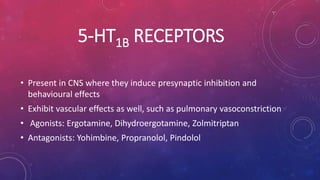
5-HT1B RECEPTORS 
• Present in CNS where they induce presynaptic inhibition and 
behavioural effects 
• Exhibit vascular effects as well, such as pulmonary vasoconstriction 
• Agonists: Ergotamine, Dihydroergotamine, Zolmitriptan 
• Antagonists: Yohimbine, Propranolol, Pindolol
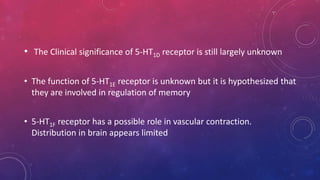
• The Clinical significance of 5-HT1D receptor is still largely unknown 
• The function of 5-HT1E receptor is unknown but it is hypothesized that 
they are involved in regulation of memory 
• 5-HT1F receptor has a possible role in vascular contraction. 
Distribution in brain appears limited
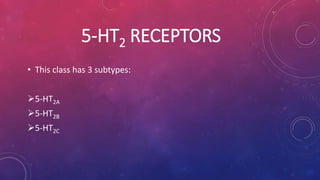
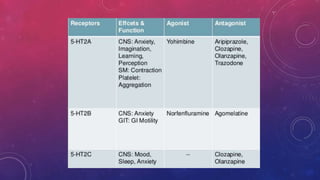
5-HT2 RECEPTORS 
• This class has 3 subtypes: 
5-HT2A 
5-HT2B 
5-HT2C
5-HT3 Receptors: 
• With the exception of the 5-HT3 receptor, a ligand- gated ion 
channel, all other serotonin receptors are G protein-coupled 
receptors that activate an intracellular second messenger 
cascade to produce an excitatory or inhibitory response 
• The 5-HT3 receptor antagonist suppress vomiting and nausea by 
inhibiting serotonin binding to the 5-HT3 receptors
5-HT4 Receptors: 
• Found on CNS and Myenteric neurons. 
• Prucalopride (brand name Resolor, developed by Johnson & Johnson) is 
a drug acting as a selective, high affinity 5-HT4 receptor agonist which 
targets the impaired motility associated with chronic constipation, thus 
normalising bowel movements 
5-HT5 Receptors: 
• Pharmacological functions of these receptors are unknown. Based on 
their localization, it has been speculated that they may be involved in 
motor control, anxiety, learning, adaptive behaviour and brain 
development.
5-HT6 Receptors: 
• The exact clinical significance of these receptors remain still unclear. 
Selective antagonist of this type of serotonin receptor have an impact 
on behaviour and seem to improve the spatial memory of laboratory 
animal 
5-HT7 Receptors: 
• Expressed abundantly in the vessels and are responsible for persistent 
vasodilation. 5-HT7 receptors are also expressed in CNS and in smooth 
muscles (in GIT tract).
SEROTONIN SYNDRO0ME 
• Extremely high levels of serotonin can cause a condition known as 
Serotonin Syndrome, with toxic and potentially fatal effects. 
• Drugs used to treat SEROTONIN SYNDROME 
Non–specific blocking agents: Methysergide, Cyproheptadine 
Beta blockers: Propranolol, Pindolol 
Benzodiazepines: Lorazepam, Diazepam, Clonazepam
MIGRAINE 
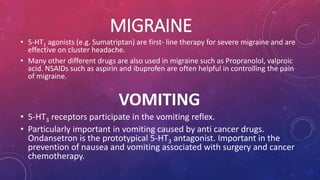
• 5-HT1 agonists (e.g. Sumatriptan) are first- line therapy for severe migraine and are 
effective on cluster headache. 
• Many other different drugs are also used in migraine such as Propranolol, valproic 
acid. NSAIDs such as aspirin and ibuprofen are often helpful in controlling the pain 
of migraine. 
VOMITING 
• 5-HT3 receptors participate in the vomiting reflex. 
• Particularly important in vomiting caused by anti cancer drugs. 
Ondansetron is the prototypical 5-HT3 antagonist. Important in the 
prevention of nausea and vomiting associated with surgery and cancer 
chemotherapy.
DEPRESSION 
• A class of drugs, such as fluoxetine or sertraline, that inhibit the uptake 
of serotonin by neurons of the central nervous system are primarily 
used in the treatment of depression and obsessive compulsive disorder 
known as SSRIs 
• A few of them are: Citalopram (Cipram, Seropram), Fluoxetine (Prozac, 
Evorex), Paroxetine (Paxil, Seroxat, Aropax), Sertraline (Zoloft, Lustral, 
Serlain)
LIPID DERIVED AUTACOIDS 
• Biologically active derivatives of 20 C-atoms polyunsaturated essential fatty acids that are major 
lipid derived autacoids. 
• Derived from arachidonic acids. 
• Two major types of eicosanoids- 
 Prostaglandins (PGs) 
 Leukotrienes (LTs) 
• The eicosanoids are important local hormones and they may act as circulating hormones as well. 
• In the body PGs, TXs and LTs are all derived from eicosa (Referring to 20c atoms) tri, tetra, penta 
enoic acids; so that they are collectively called eicosanoids.
PROSTAGLANDINS
WHAT ARE PROSTAGLANDINS ? 
• Group of hormone-like lipid compounds 
• Derived enzymatically from fatty acids 
• Perform important functions in the animal body 
• Every prostaglandin contains 20 carbon atoms, including a 5-carbon ring. 
• They are produced in many places throughout the body and their target cells are present in the immediate 
vicinity of the site of their secretion. 
• The prostaglandins, together with the thromboxane and prostacyclin, form the prostanoid class of fatty acid 
derivatives, a subclass of eicosanoids. 
• They are autocrine and paracrine lipid mediators that act upon platelets, endothelium, uterine and mast 
cells. They are synthesized in the cell from the essential fatty acids (EFAs). 
RELEASE OF PROSTAGLANDINS FROM THE CELL 
mediated by a specific transporter, namely the multidrug resistance protein 4 (MRP4, ABCC4), a member 
of the ATP-binding cassette transporter superfamily. Whether MRP4 is the only transporter releasing 
prostaglandins from the cells is still unclear.
BIOSYNTHESIS AND ACTIONS OF PROSTAGLANDINS 
MEMBRANE 
PHOSPHOLIPID 
Phospholipase A2 enzyme 
ARACHIDONATE 
Cyclooxygenase enzymes 
CYCLIC 
ENDOPEROXIDES 
Isomerases 
PROSTACYCLIN THROMBOXANE 
PROSTAGLANDINS 
PGF2α PGD2 PGE2 
Actions: 
• Bronchoconstriction 
• Myometrial Contraction 
Actions 
• Inhibits Platelet 
aggregation 
• Vasodilator 
Actions 
• Vasodilator 
• Hyperalgesic
PHARMACOLOGICAL ACTIONS 
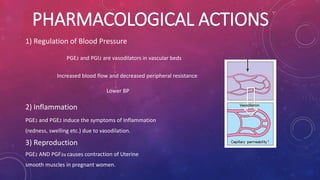
1) Regulation of Blood Pressure 
PGE2 and PGI2 are vasodilators in vascular beds 
Increased blood flow and decreased peripheral resistance 
Lower BP 
2) Inflammation 
PGE1 and PGE2 induce the symptoms of Inflammation 
(redness, swelling etc.) due to vasodilation. 
3) Reproduction 
PGE2 AND PGF2α causes contraction of Uterine 
smooth muscles in pregnant women.
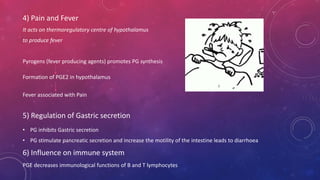
4) Pain and Fever 
It acts on thermoregulatory centre of hypothalamus 
to produce fever 
Pyrogens (fever producing agents) promotes PG synthesis 
Formation of PGE2 in hypothalamus 
Fever associated with Pain 
5) Regulation of Gastric secretion 
• PG inhibits Gastric secretion 
• PG stimulate pancreatic secretion and increase the motility of the intestine leads to diarrhoea 
6) Influence on immune system 
PGE decreases immunological functions of B and T lymphocytes
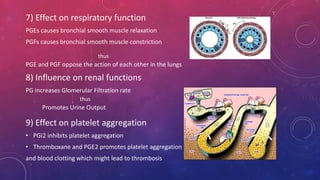
7) Effect on respiratory function 
PGEs causes bronchial smooth muscle relaxation 
PGFs causes bronchial smooth muscle constriction 
thus 
PGE and PGF oppose the action of each other in the lungs 
8) Influence on renal functions 
PG increases Glomerular Filtration rate 
thus 
Promotes Urine Output 
9) Effect on platelet aggregation 
• PGI2 inhibits platelet aggregation 
• Thromboxane and PGE2 promotes platelet aggregation 
and blood clotting which might lead to thrombosis
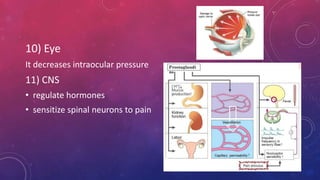
10) Eye 
It decreases intraocular pressure 
11) CNS 
• regulate hormones 
• sensitize spinal neurons to pain
1 
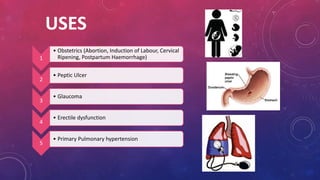
USES 
• Obstetrics (Abortion, Induction of Labour, Cervical 
Ripening, Postpartum Haemorrhage) 
2 
• Peptic Ulcer 
3 
• Glaucoma 
4 
• Erectile dysfunction 
5 
• Primary Pulmonary hypertension
WHAT HAPPENS WHEN THERE IS INCREASE IN 
PROSTAGLANDIN SECRETION ? 
• Conditions such as arthritis, heavy menstrual bleeding and painful menstrual cramps and 
certain types of cancer including colon and breast cancer might happen. 
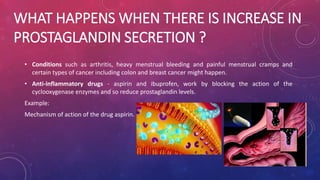
• Anti-inflammatory drugs - aspirin and ibuprofen, work by blocking the action of the 
cyclooxygenase enzymes and so reduce prostaglandin levels. 
Example: 
Mechanism of action of the drug aspirin.
WHAT HAPPENS IF TOO FEW 
PROSTAGLANDINS ? 
• Manufactured prostaglandins can be used to increase prostaglandin levels in the body under certain 
circumstances. 
• Administration of prostaglandins can induce labour at the end of pregnancy or abortion in the case of an 
unwanted pregnancy. 
• They can also be used to treat stomach ulcers, glaucoma and congenital heart disease in new born babies.
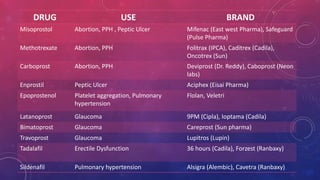
DRUG USE BRAND 
Misoprostol Abortion, PPH , Peptic Ulcer Mifenac (East west Pharma), Safeguard 
(Pulse Pharma) 
Methotrexate Abortion, PPH Folitrax (IPCA), Caditrex (Cadila), 
Oncotrex (Sun) 
Carboprost Abortion, PPH Deviprost (Dr. Reddy), Caboprost (Neon 
labs) 
Enprostil Peptic Ulcer Aciphex (Eisai Pharma) 
Epoprostenol Platelet aggregation, Pulmonary 
hypertension 
Flolan, Veletri 
Latanoprost Glaucoma 9PM (Cipla), Ioptama (Cadila) 
Bimatoprost Glaucoma Careprost (Sun pharma) 
Travoprost Glaucoma Lupitros (Lupin) 
Tadalafil Erectile Dysfunction 36 hours (Cadila), Forzest (Ranbaxy) 
Sildenafil Pulmonary hypertension Alsigra (Alembic), Cavetra (Ranbaxy)
LEUKOTRIENES 
• Leukotrienes are so named because they were first obtained from 
leukocytes (leuko) and conjugated double bonds
TYPES OF LEUKOTRIENES 
• Cysteinyl leukotrienes: LTC4, LTD4, LTE4 and LTF4 
• LTB4 
• synthesized in vivo from LTA4 by the enzyme LTA4 hydrolase 
• primary function is to recruit neutrophils to areas of tissue damage, though it also helps promote the 
production of inflammatory cytokines by various immune cells. 
• LTG4 
• a metabolite of LTE4 in which the cysteinyl moiety oxidized to an alpha-keto-acid (i.e. the cysteine has been 
replaced by a pyruvate)
FUNCTIONS OF LEUKOTRIENES 
• Act principally on a subfamily of G protein coupled receptors 
• May also act upon peroxisome proliferator-activated receptors 
• Involved in asthmatic and allergic reactions and act to sustain inflammatory reactions; several 
leukotriene receptor antagonists 
• Very important agents in the inflammatory response 
• LTB4 have a chemotactic effect on migrating neutrophils, and as such help to bring the necessary cells to 
the tissue
USED IN PROPHYLAXIS 
• Chronic asthma 
• Allergic Rhinitis 
• Chronic Urticaria 
• COPD 
• Atopic Dermatitis 
• Migraine Prophylaxis 
• Sino nasal polyposis
CHRONIC ASTHMA 
• Asthma is a common inflammatory illness 
• Characterized by airway inflammation and hyper responsiveness to stimuli that produce 
bronchoconstriction 
• These stimuli include cold air, exercise, a wide variety of allergens and emotional stress– 
 Extrinsic asthma: It is mostly episodic, less prone to status asthmaticus 
 Intrinsic asthma: It tends to be perennial, status asthmaticus is more common
LEUKOTRIENES IN ASTHMA 
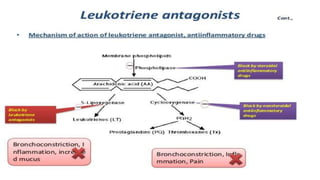
• Leukotrienes assist in the pathophysiology of asthma, causing or 
potentiating the following symptoms: 
• airflow obstruction 
• increased secretion of mucus 
• mucosal accumulation 
• bronchoconstriction 
• infiltration of inflammatory cells in the airway wall
LEUKOTRIENE RECEPTOR ANTAGONIST 
Mechanism of Action: 
• Attenuates bronchoconstriction and inflammation 
Leukotriene Receptor Antagonists 
• Zafirlukast (Accolate) 
• Montelukast (Singulair) 
Leukotriene Synthesis Inhibitor 
• Zileuton (Zyflo)
Zafirlukast (Accolate) : 
• Avoid at mealtimes 
• Take 1 hour before or 2 hours after meals 
• Dose: 
• Age >11 years old: 20 mg bid 
• Child 7-11 years old: 10 mg bid 
Montelukast (Singulair): 
• Dose: 
• Adults: 10 mg 
• Child age 6 to 14 years: 5 mg 
• Child age 2-5 years: 4 mg 
Zileuton (Zyflo): 
• Indicated in age only 12 and over 
• Dose: 600 mg orally four times daily 
• Hepatotoxicity in 5% 
• Drug interactions: Warfarin, theophylline, 
Propranolol
EFFICACY 
• Modestly effective for maintenance management 
• Inhaled Steroids are preferred over leukotriene agents 
• Used as adjunctive therapy in Asthma 
• Benefit may be limited to patients with the 5-LO and LTC4 
polymorphisms
INTERLEUKINS
WHAT ARE INTERLEUKINS? 
• Interleukins are a group of cytokines (secreted proteins and signalling molecules) 
that were first seen to be expressed by white blood cells (leukocytes). 
• Assigned to each family based on sequence homology and receptor chain 
similarities or functional properties. 
• The majority of interleukins are synthesized by helper CD4 T lymphocytes, as well 
as through monocytes, macrophages, and endothelial cells. 
• They promote the development and differentiation of T and B lymphocytes, 
and hematopoietic cells.
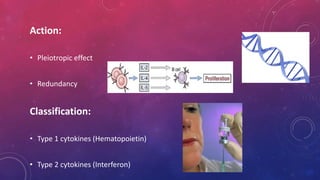
Action: 
• Pleiotropic effect 
• Redundancy 
Classification: 
• Type 1 cytokines (Hematopoietin) 
• Type 2 cytokines (Interferon)
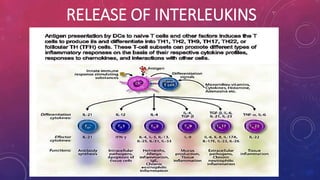
RELEASE OF INTERLEUKINS
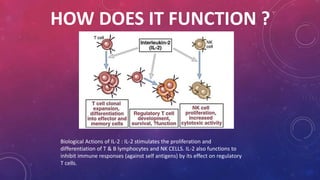
HOW DOES IT FUNCTION ? 
Biological Actions of IL-2 : IL-2 stimulates the proliferation and 
differentiation of T & B lymphocytes and NK CELLS. IL-2 also functions to 
inhibit immune responses (against self antigens) by its effect on regulatory 
T cells.
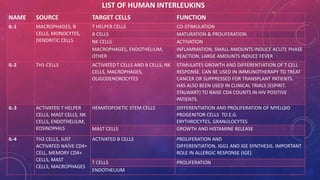
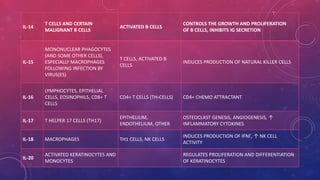
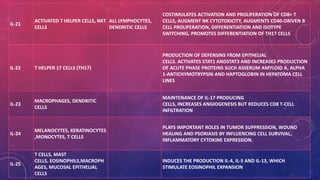
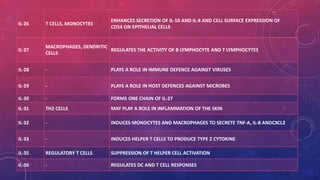
LIST OF HUMAN INTERLEUKINS 
NAME SOURCE TARGET CELLS FUNCTION 
IL-1 MACROPHAGES, B 
CELLS, MONOCYTES, 
DENDRITIC CELLS 
T HELPER CELLS CO-STIMULATION 
B CELLS MATURATION & PROLIFERATION 
NK CELLS ACTIVATION 
MACROPHAGES, ENDOTHELIUM, 
OTHER 
INFLAMMATION, SMALL AMOUNTS INDUCE ACUTE PHASE 
REACTION, LARGE AMOUNTS INDUCE FEVER 
IL-2 TH1-CELLS ACTIVATED T CELLS AND B CELLS, NK 
CELLS, MACROPHAGES, 
OLIGODENDROCYTES 
STIMULATES GROWTH AND DIFFERENTIATION OF T CELL 
RESPONSE. CAN BE USED IN IMMUNOTHERAPY TO TREAT 
CANCER OR SUPPRESSED FOR TRANSPLANT PATIENTS. 
HAS ALSO BEEN USED IN CLINICAL TRIALS (ESPIRIT. 
STALWART) TO RAISE CD4 COUNTS IN HIV POSITIVE 
PATIENTS. 
IL-3 ACTIVATED T HELPER 
CELLS, MAST CELLS, NK 
CELLS, ENDOTHELIUM, 
EOSINOPHILS 
HEMATOPOIETIC STEM CELLS DIFFERENTIATION AND PROLIFERATION OF MYELOID 
PROGENITOR CELLS TO E.G. 
ERYTHROCYTES, GRANULOCYTES 
MAST CELLS GROWTH AND HISTAMINE RELEASE 
IL-4 TH2 CELLS, JUST 
ACTIVATED NAÏVE CD4+ 
CELL, MEMORY CD4+ 
CELLS, MAST 
CELLS, MACROPHAGES 
ACTIVATED B CELLS PROLIFERATION AND 
DIFFERENTIATION, IGG1 AND IGE SYNTHESIS. IMPORTANT 
ROLE IN ALLERGIC RESPONSE (IGE) 
T CELLS PROLIFERATION 
ENDOTHELIUM
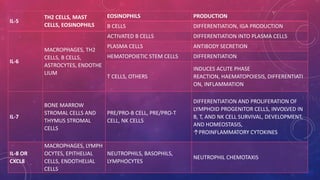
IL-5 
TH2 CELLS, MAST 
CELLS, EOSINOPHILS 
EOSINOPHILS PRODUCTION 
B CELLS DIFFERENTIATION, IGA PRODUCTION 
IL-6 
MACROPHAGES, TH2 
CELLS, B CELLS, 
ASTROCYTES, ENDOTHE 
LIUM 
ACTIVATED B CELLS DIFFERENTIATION INTO PLASMA CELLS 
PLASMA CELLS ANTIBODY SECRETION 
HEMATOPOIETIC STEM CELLS DIFFERENTIATION 
T CELLS, OTHERS 
INDUCES ACUTE PHASE 
REACTION, HAEMATOPOIESIS, DIFFERENTIATI 
ON, INFLAMMATION 
IL-7 
BONE MARROW 
STROMAL CELLS AND 
THYMUS STROMAL 
CELLS 
PRE/PRO-B CELL, PRE/PRO-T 
CELL, NK CELLS 
DIFFERENTIATION AND PROLIFERATION OF 
LYMPHOID PROGENITOR CELLS, INVOLVED IN 
B, T, AND NK CELL SURVIVAL, DEVELOPMENT, 
AND HOMEOSTASIS, 
↑PROINFLAMMATORY CYTOKINES 
IL-8 OR 
CXCL8 
MACROPHAGES, LYMPH 
OCYTES, EPITHELIAL 
CELLS, ENDOTHELIAL 
CELLS 
NEUTROPHILS, BASOPHILS, 
LYMPHOCYTES 
NEUTROPHIL CHEMOTAXIS
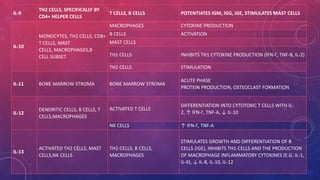
IL-9 
TH2 CELLS, SPECIFICALLY BY 
CD4+ HELPER CELLS 
T CELLS, B CELLS POTENTIATES IGM, IGG, IGE, STIMULATES MAST CELLS 
IL-10 
MONOCYTES, TH2 CELLS, CD8+ 
T CELLS, MAST 
CELLS, MACROPHAGES,B 
CELL SUBSET 
MACROPHAGES CYTOKINE PRODUCTION 
B CELLS ACTIVATION 
MAST CELLS 
TH1 CELLS INHIBITS TH1 CYTOKINE PRODUCTION (IFN-Γ, TNF-Β, IL-2) 
TH2 CELLS STIMULATION 
IL-11 BONE MARROW STROMA BONE MARROW STROMA 
ACUTE PHASE 
PROTEIN PRODUCTION, OSTEOCLAST FORMATION 
IL-12 
DENDRITIC CELLS, B CELLS, T 
CELLS,MACROPHAGES 
ACTIVATED T CELLS 
DIFFERENTIATION INTO CYTOTOXIC T CELLS WITH IL- 
2, ↑ IFN-Γ, TNF-Α, ↓ IL-10 
NK CELLS ↑ IFN-Γ, TNF-Α 
IL-13 
ACTIVATED TH2 CELLS, MAST 
CELLS,NK CELLS 
TH2-CELLS, B CELLS, 
MACROPHAGES 
STIMULATES GROWTH AND DIFFERENTIATION OF B 
CELLS (IGE), INHIBITS TH1-CELLS AND THE PRODUCTION 
OF MACROPHAGE INFLAMMATORY CYTOKINES (E.G. IL-1, 
IL-6), ↓ IL-8, IL-10, IL-12
IL-14 
T CELLS AND CERTAIN 
MALIGNANT B CELLS 
ACTIVATED B CELLS 
CONTROLS THE GROWTH AND PROLIFERATION 
OF B CELLS, INHIBITS IG SECRETION 
IL-15 
MONONUCLEAR PHAGOCYTES 
(AND SOME OTHER CELLS), 
ESPECIALLY MACROPHAGES 
FOLLOWING INFECTION BY 
VIRUS(ES) 
T CELLS, ACTIVATED B 
CELLS 
INDUCES PRODUCTION OF NATURAL KILLER CELLS 
IL-16 
LYMPHOCYTES, EPITHELIAL 
CELLS, EOSINOPHILS, CD8+ T 
CELLS 
CD4+ T CELLS (TH-CELLS) CD4+ CHEMO ATTRACTANT 
IL-17 T HELPER 17 CELLS (TH17) 
EPITHELIUM, 
ENDOTHELIUM, OTHER 
OSTEOCLAST GENESIS, ANGIOGENESIS, ↑ 
INFLAMMATORY CYTOKINES 
IL-18 MACROPHAGES TH1 CELLS, NK CELLS 
INDUCES PRODUCTION OF IFNΓ, ↑ NK CELL 
ACTIVITY 
IL-20 
ACTIVATED KERATINOCYTES AND 
MONOCYTES 
REGULATES PROLIFERATION AND DIFFERENTIATION 
OF KERATINOCYTES
IL-21 
ACTIVATED T HELPER CELLS, NKT 
CELLS 
ALL LYMPHOCYTES, 
DENDRITIC CELLS 
COSTIMULATES ACTIVATION AND PROLIFERATION OF CD8+ T 
CELLS, AUGMENT NK CYTOTOXICITY, AUGMENTS CD40-DRIVEN B 
CELL PROLIFERATION, DIFFERENTIATION AND ISOTYPE 
SWITCHING, PROMOTES DIFFERENTIATION OF TH17 CELLS 
IL-22 T HELPER 17 CELLS (TH17) 
PRODUCTION OF DEFENSINS FROM EPITHELIAL 
CELLS. ACTIVATES STAT1 ANDSTAT3 AND INCREASES PRODUCTION 
OF ACUTE PHASE PROTEINS SUCH ASSERUM AMYLOID A, ALPHA 
1-ANTICHYMOTRYPSIN AND HAPTOGLOBIN IN HEPATOMA CELL 
LINES 
IL-23 
MACROPHAGES, DENDRITIC 
CELLS 
MAINTENANCE OF IL-17 PRODUCING 
CELLS, INCREASES ANGIOGENESIS BUT REDUCES CD8 T-CELL 
INFILTRATION 
IL-24 
MELANOCYTES, KERATINOCYTES 
,MONOCYTES, T CELLS 
PLAYS IMPORTANT ROLES IN TUMOR SUPPRESSION, WOUND 
HEALING AND PSORIASIS BY INFLUENCING CELL SURVIVAL, 
INFLAMMATORY CYTOKINE EXPRESSION. 
IL-25 
T CELLS, MAST 
CELLS, EOSINOPHILS,MACROPH 
AGES, MUCOSAL EPITHELIAL 
CELLS 
INDUCES THE PRODUCTION IL-4, IL-5 AND IL-13, WHICH 
STIMULATE EOSINOPHIL EXPANSION
IL-26 T CELLS, MONOCYTES 
ENHANCES SECRETION OF IL-10 AND IL-8 AND CELL SURFACE EXPRESSION OF 
CD54 ON EPITHELIAL CELLS 
IL-27 
MACROPHAGES, DENDRITIC 
CELLS 
REGULATES THE ACTIVITY OF B LYMPHOCYTE AND T LYMPHOCYTES 
IL-28 - PLAYS A ROLE IN IMMUNE DEFENCE AGAINST VIRUSES 
IL-29 - PLAYS A ROLE IN HOST DEFENCES AGAINST MICROBES 
IL-30 - FORMS ONE CHAIN OF IL-27 
IL-31 TH2 CELLS MAY PLAY A ROLE IN INFLAMMATION OF THE SKIN 
IL-32 - INDUCES MONOCYTES AND MACROPHAGES TO SECRETE TNF-Α, IL-8 ANDCXCL2 
IL-33 - INDUCES HELPER T CELLS TO PRODUCE TYPE 2 CYTOKINE 
IL-35 REGULATORY T CELLS SUPPRESSION OF T HELPER CELL ACTIVATION 
IL-36 - REGULATES DC AND T CELL RESPONSES
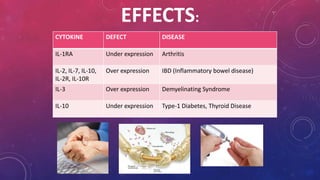
EFFECTS: 
CYTOKINE DEFECT DISEASE 
IL-1RA Under expression Arthritis 
IL-2, IL-7, IL-10, 
IL-2R, IL-10R 
Over expression IBD (Inflammatory bowel disease) 
IL-3 Over expression Demyelinating Syndrome 
IL-10 Under expression Type-1 Diabetes, Thyroid Disease
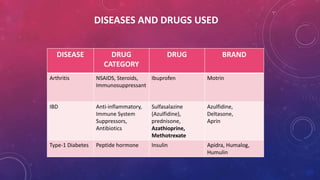
DISEASES AND DRUGS USED 
DISEASE DRUG 
CATEGORY 
DRUG BRAND 
Arthritis NSAIDS, Steroids, 
Immunosuppressant 
Ibuprofen Motrin 
IBD Anti-inflammatory, 
Immune System 
Suppressors, 
Antibiotics 
Sulfasalazine 
(Azulfidine), 
prednisone, 
Azathioprine, 
Methotrexate 
Azulfidine, 
Deltasone, 
Aprin 
Type-1 Diabetes Peptide hormone Insulin Apidra, Humalog, 
Humulin
PEPTIDE DERIVED AUTACOIDS 
• THESE ARE DERIVED FROM PROTEINS 
• MADE UP OF LONG CHAINS OF POLYPEPTIDES 
• MOST IMPORTANT IN THIS CLASS: ANGIOTENSIN, BRADYKININ
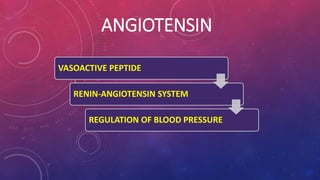
ANGIOTENSIN 
VASOACTIVE PEPTIDE 
RENIN-ANGIOTENSIN SYSTEM 
REGULATION OF BLOOD PRESSURE
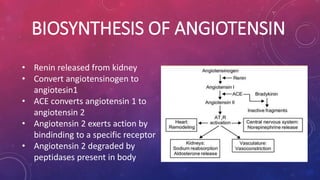
BIOSYNTHESIS OF ANGIOTENSIN 
• Renin released from kidney 
• Convert angiotensinogen to 
angiotesin1 
• ACE converts angiotensin 1 to 
angiotensin 2 
• Angiotensin 2 exerts action by 
bindinding to a specific receptor 
• Angiotensin 2 degraded by 
peptidases present in body
COMPONENTS OF RENIN-ANGIOTENSIN 
SYSTEM 
RENIN 
• Renin attacks alpha 2 globulin angiotensinogen. 
• Renin is glycoprotein and stored in juxtaglomerular cells. 
• Secretion of renin from kidney is prime determinant of this system. 
Renin secretion is controlled by following factors- 
• The mascula densa pathway 
• Intrarenal baroreceptor pathway 
• Sympathetic nervous system 
• Feedback control 
• Drugs
COMPONENTS OF RENIN-ANGIOTENSIN 
SYSTEM 
ANGIOTENSINOGEN 
• Globular glycoprotein that acts as substrate of renin. 
• Synthesized primarily in liver. 
• Secretion may be enhanced by inflammation, insulin, estrogens, glucocorticoids, thyroid hormone 
and angiotensin II. 
ANGIOTENSIN CONVERTING ENZYME (ACE) 
• Present on the luminal surface of vascular endothelial cells. 
• Most important substrates are angiotensin I which it converts into angiotensin substrates which is 
angiotensin I which it converts into angiotensin II.
ANGIOTENSIN RECEPTORS 
• Angiotensin II exerts its actions through specific G protein coupled 
receptors. 
• Two sub types AT1 and AT2. 
• Most of known action of angiotensin II are mediated through AT1 
receptors. 
• Present on vascular smooth muscle, kidney, heart, adrenal gland. 
• Most of the actions of angiotensin II such as vasoconstriction, 
aldosterone release are mediated by AT1 receptors. 
• AT2 receptors found in adrenal medulla, reproductive tissues, vascular 
endothelium and parts of the brain 
• AT2 receptors activation causes vasodilation and may exert 
antiproliferative effects. 
• AT2 receptors may also be involved in foetal tissue development.
FUNCTIONS OF ANGIOTENSIN 
CARDIOVASCULAR SYSTEM 
• Angiotensin II promotes vasoconstriction 
• Directly or indirectly by enhancing Adrenaline/NA release from adrenal 
medulla/adrenergic nerve endings and by increasing central sympathetic 
outflow 
• Acts as a pressor agent much more potent then NA 
• Angiotensin-II increases force of myocardial contraction by promoting 
Ca2+ influx 
SMOOTH MUSCLES 
• Angiotensin-II contracts many visceral smooth muscles in vitro, but in 
vivo effects are insignificant
FUNCTIONS OF ANGIOTENSIN 
KIDNEY 
• Angiotensin II promotes Na+/H+ exchange in proximal tube. 
• Reduces renal blood flow and produces Intrarenal haemodynamic effects 
which normally result in Na+ and water retention. 
CNS 
• Angiotensin-II can gain access to certain periventricular areas of the 
brain to induce drinking behaviour and ADH release. 
PERIPHERAL SYMPATHETIC STRUCTURES 
• Releases adrenaline from adrenal medulla, stimulates autonomic ganglia, 
and increases output of NA from adrenergic nerve endings
RENIN ANGIOTENSIN ALDOSTERONE 
SYSTEM INHIBITORS 
• THE RENIN ANGIOTENSIN SYSTEM PLAYS AN IMPORTANT ROLE IN 
MAINTAINENCE OF FLUID-ELECTROLYTE BALANCE AND BLOOD 
PRESSURE 
• ANY ABNORMALITY IN THE SYSTEM LEADS TO IMBALANCE IN FLUID 
LEVELS OF THE BODY LEADING TO RENOVASCULAR HYPERTENSION 
• REGULATION OF THE RAAS SYSTEM, THEREFORE BECOMES 
CLINICALLY IMPORTANT IN THE MANAGEMENT OF HYPERTENSION 
AND SOME KIDNEY DISORDERS.
RENIN ANGIOTENSIN ALDOSTERONE 
SYSTEM INHIBITORS 
• SYMPATHETIC BLOCKERS ( blockers): Propranolol, Metoprolol, Esmolol 
• RENIN INHIBITORY PEPTIDES: Aliskerin 
• ANGIOTENSIN CONVERTING ENZYME INHIBITOR: Captopril, Enalapril, 
Ramipril 
• ANGIOTENSIN RECEPTOR ANTAGONIST: Candesartan, Valsartan, 
Telmisartan, Olmesartan 
• ALDOSTRERONE ANTAGONIST: Spironolactone, Prorenone
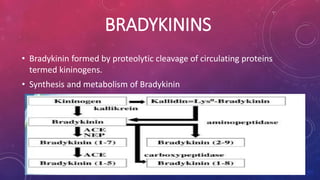
BRADYKININS 
• Bradykinin formed by proteolytic cleavage of circulating proteins 
termed kininogens. 
• Synthesis and metabolism of Bradykinin
KININS 
RECEPTORS, ACTIONS & THERAPY 
• Activate β1, β2, β3 receptors linked to PLC/A2 
• Powerful Vasodilation→ decreased blood pressure via 2 receptor stimulation (NO dependent) 
• Increase in capillary permeability inducing edema. 
• Produces inflammation & analgesia (2) 
• Cardiac stimulation: 
• Compensatory indirect & direct tachycardia & increase in cardiac output 
• It produces coronary vasodilation 
• Bradykinin has a cardiac anti-ischemic effect, inhibited by 2 antagonists (NO & PI2 dependent)
PHARMACOLOGICAL ACTIONS 
• Vasodilatation 
• Increased vascular permeability 
• Stimulation of pain nerve endings 
• Stimulation of epithelial ion transport and fluid secretion in 
airways and gastrointestinal tract 
• Contraction of intestinal and uterine smooth muscle.
KININS 
ACTIONS & THERAPY 
• Kinins produce broncho-constriction & itching in respiratory 
system 
• Therapeutic Use: 
• No current use of kinin analogues 
• Increased Bradykinin is possibly involved in the therapeutic efficiency 
& cough produced by ACEIs