M.THIRUPPATHI, M.PHARM.,
DEPARTMENT OF PHARMACOLOGY
S.B.COLLEGE OF PHARMACY,
SIVAKASI.
PROSTAGLANDINS
INTRODUCTION
 Prostaglandins (PGs) are biologically active
derivatives of 20 carbon atom polyunsaturated
essential fatty acids that are released from cell
membrane phospholipids.
 They are the major lipid derived autacoids.
 They were named so because of their presumed
origin from the prostate gland.
 Human seminal fluid is the richest known source,
but they are also present in various tissues
 PGE2 and PGF2 are the two main
prostaglandins. They are released in the body
by mechanical, chemical, and infectious
insults.
 They play an important role in the
development of the inflammatory response in
association with other mediators.
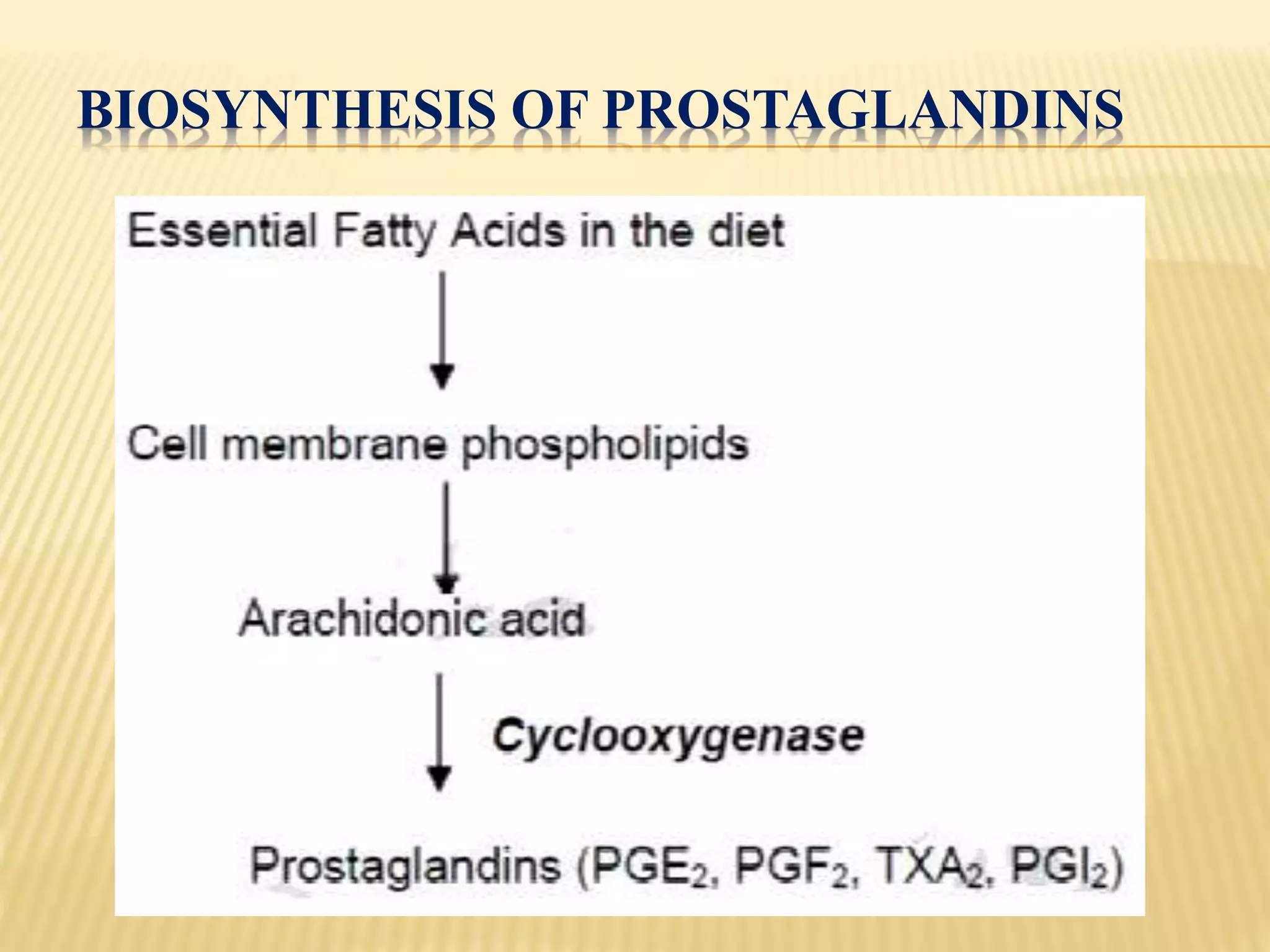
BIOSYNTHESIS OF PROSTAGLANDINS
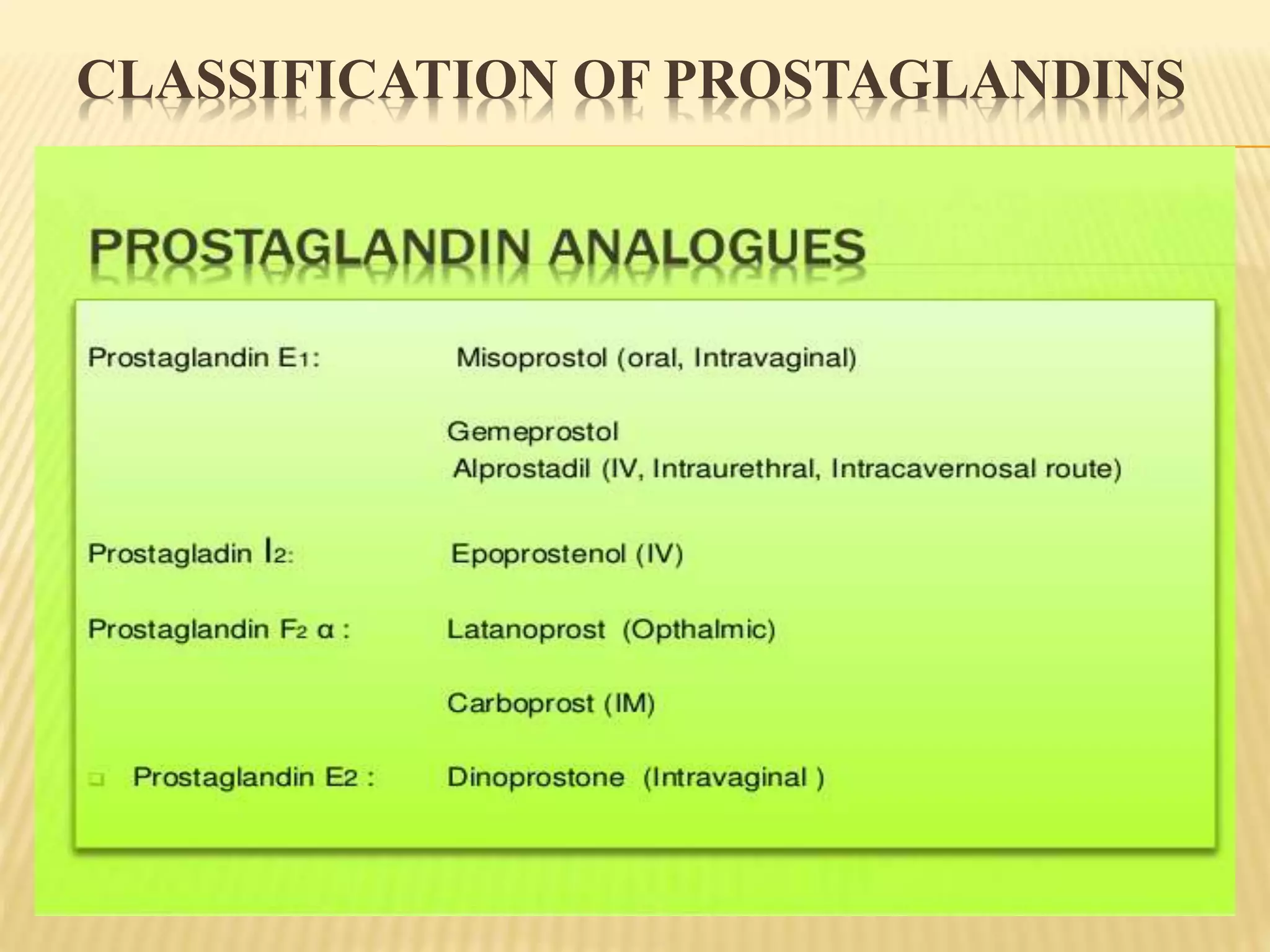
CLASSIFICATION OF PROSTAGLANDINS
PHARMACOLOGICALACTIONS
Cardiovascular system:
 PGE2 and PGF2α are more potent vasodilators than ACh
or histamine.
 PGF2α constricts many larger veins including pulmonary
vein and artery.
 Fall in BP occurs when PGE2 is injected i.v., but PGF2α
has little effect on BP.
Platelets:
 PGI (prostacycline) is found in the vascular endothelium
and is a potent vasodilator and inhibitor of platelet
aggregation.
PHARMACOLOGICALACTIONS
Uterus:
 PGE2 and PGF2 uniformly contract human uterus.
 Dysmenorrhoea in many women is associated with
increased PG synthesis by the endometrium.
Bronchial muscle:
 PGF2α, PGD2 are potent bronchoconstrictors, while
PGE2 is a powerful bronchodilator.
 PGI2 produces mild dilatation. It is used for
asthmatics because PGE2 and PGI2 also inhibit
histamine release and are effective by aerosol.
PHARMACOLOGICALACTIONS
GIT:
 They increase intestinal motility.
 PGE inhibits gastric acid secretion and they also stimulate
intestinal fluid secretion, resulting in diarrhoea.
Kidney:
 PGE2 and PGI2 increase water, Na+ and K+ excretion
and have a diuretic effect.
 They cause renal vasodilatation and inhibit tubular
reabsorption.
PHARMACOLOGICALACTIONS
CNS:
 Centrally no effective because PGs penetration is
poor into the brain.
Endocrine system
 PGE2 facilitates the release of anterior pituitary
hormones—growth hormone, prolactin, ACTH, FSH
and LH as well as that of insulin and adrenal
steroids.
Eye: PGF2α induces ocular inflammation and lowers
intraocular tension.
Adverse Effects: fever, diarrhea, abdominal
cramps, headache, nausea, and vomiting.
Therapeutic uses
1. Cervical ripening and labor induction
2. Control of postpartum hemorrhage,
3. Induction of abortion,
4. Prophylaxis of NSAID-induced peptic ulcers.
5. Recenty used for the treatment of erectile
dysfunction and glaucoma, etc.

Prostaglandins

  • 1.
    M.THIRUPPATHI, M.PHARM., DEPARTMENT OFPHARMACOLOGY S.B.COLLEGE OF PHARMACY, SIVAKASI. PROSTAGLANDINS
  • 2.
    INTRODUCTION  Prostaglandins (PGs)are biologically active derivatives of 20 carbon atom polyunsaturated essential fatty acids that are released from cell membrane phospholipids.  They are the major lipid derived autacoids.  They were named so because of their presumed origin from the prostate gland.  Human seminal fluid is the richest known source, but they are also present in various tissues
  • 3.
     PGE2 andPGF2 are the two main prostaglandins. They are released in the body by mechanical, chemical, and infectious insults.  They play an important role in the development of the inflammatory response in association with other mediators.
  • 4.
  • 5.
  • 6.
    PHARMACOLOGICALACTIONS Cardiovascular system:  PGE2and PGF2α are more potent vasodilators than ACh or histamine.  PGF2α constricts many larger veins including pulmonary vein and artery.  Fall in BP occurs when PGE2 is injected i.v., but PGF2α has little effect on BP. Platelets:  PGI (prostacycline) is found in the vascular endothelium and is a potent vasodilator and inhibitor of platelet aggregation.
  • 7.
    PHARMACOLOGICALACTIONS Uterus:  PGE2 andPGF2 uniformly contract human uterus.  Dysmenorrhoea in many women is associated with increased PG synthesis by the endometrium. Bronchial muscle:  PGF2α, PGD2 are potent bronchoconstrictors, while PGE2 is a powerful bronchodilator.  PGI2 produces mild dilatation. It is used for asthmatics because PGE2 and PGI2 also inhibit histamine release and are effective by aerosol.
  • 8.
    PHARMACOLOGICALACTIONS GIT:  They increaseintestinal motility.  PGE inhibits gastric acid secretion and they also stimulate intestinal fluid secretion, resulting in diarrhoea. Kidney:  PGE2 and PGI2 increase water, Na+ and K+ excretion and have a diuretic effect.  They cause renal vasodilatation and inhibit tubular reabsorption.
  • 9.
    PHARMACOLOGICALACTIONS CNS:  Centrally noeffective because PGs penetration is poor into the brain. Endocrine system  PGE2 facilitates the release of anterior pituitary hormones—growth hormone, prolactin, ACTH, FSH and LH as well as that of insulin and adrenal steroids. Eye: PGF2α induces ocular inflammation and lowers intraocular tension.
  • 10.
    Adverse Effects: fever,diarrhea, abdominal cramps, headache, nausea, and vomiting. Therapeutic uses 1. Cervical ripening and labor induction 2. Control of postpartum hemorrhage, 3. Induction of abortion, 4. Prophylaxis of NSAID-induced peptic ulcers. 5. Recenty used for the treatment of erectile dysfunction and glaucoma, etc.