42
1. Define research hypothesis
– Your hypothesis can include possible effect modification
– Determine to what extent you aim to make causal inferences
using your data
2. Determine study design (trial, cohort, etc.)
3. Draw a DAG
a. Identify potential confounders
b. Choose which variables to measure
4. Analyze your data
a.
b.
c.
Control for confounders identified in step 3
Assess effect modification on the additive or multiplicative
scale
Make statistical inferences
5. Make scientific inferences about your hypothesis
Causal inference in your
research
Example: worm infections
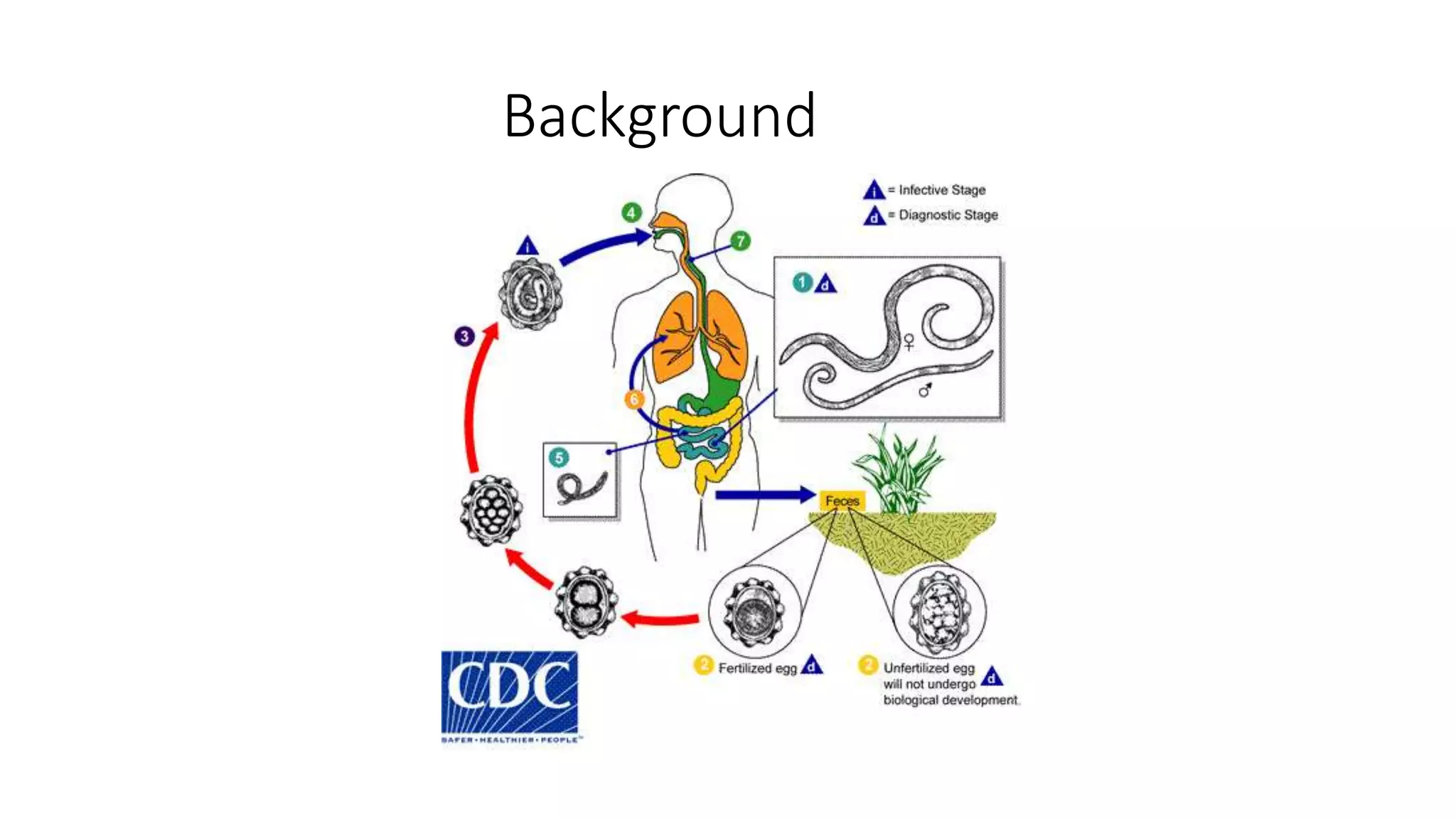
Background
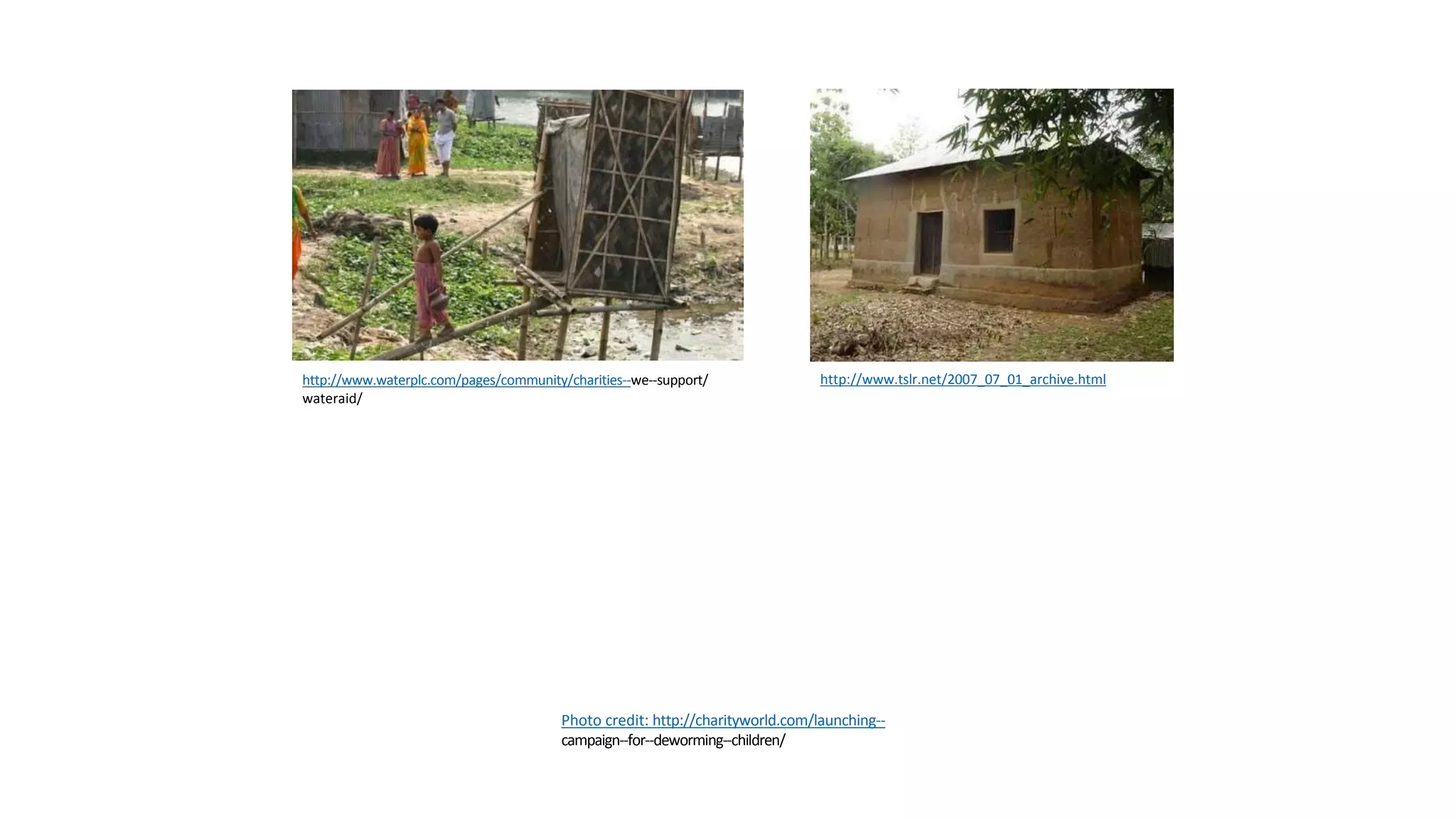
Photo credit: http://charityworld.com/launching-‐
campaign-‐for-‐deworming-‐children/
http://www.waterplc.com/pages/community/charities-‐we-‐support/
wateraid/
http://www.tslr.net/2007_07_01_archive.html
46
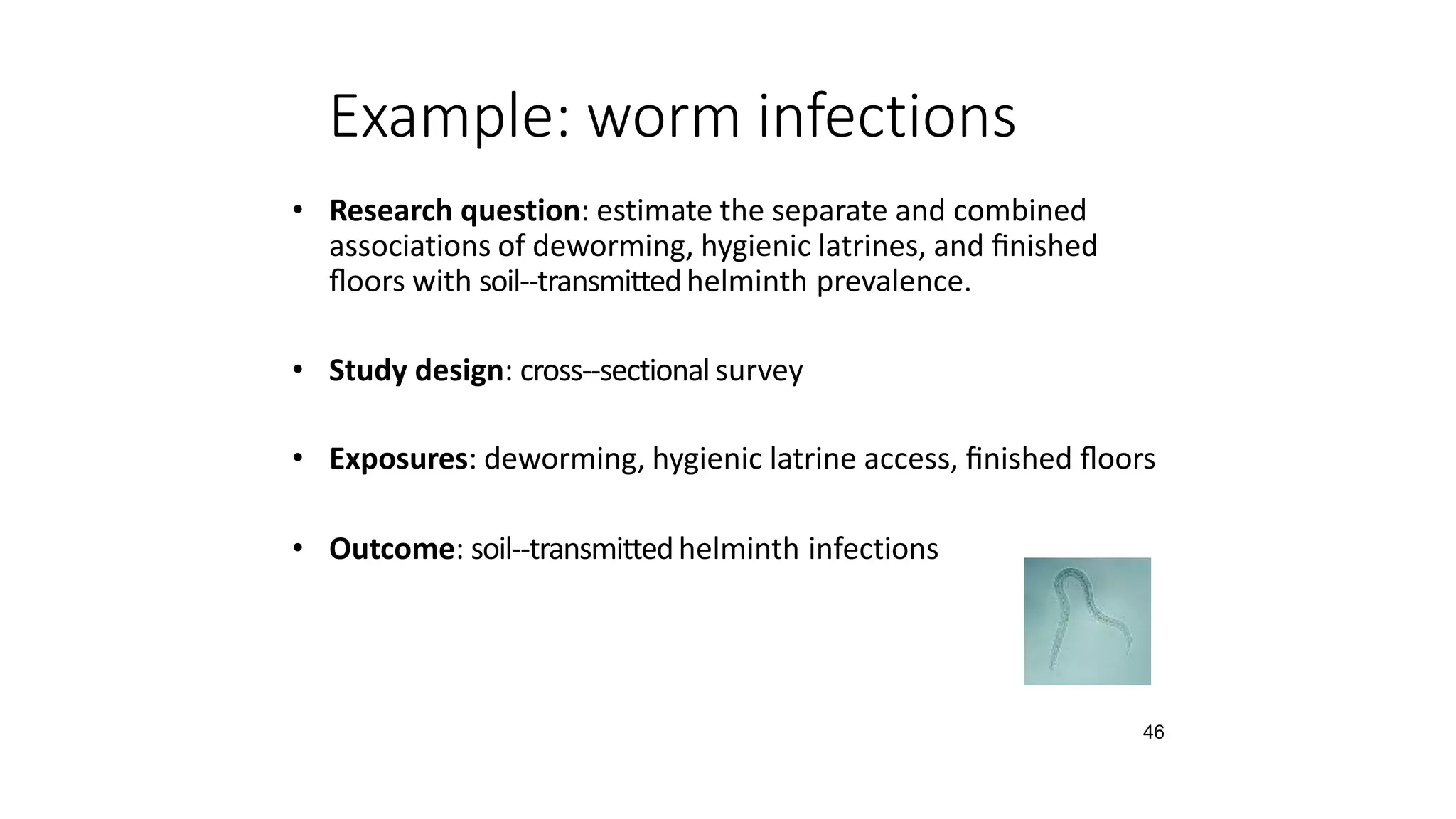
Example: worm infections
• Research question: estimate the separate and combined
associations of deworming, hygienic latrines, and finished
floors with soil-‐transmittedhelminth prevalence.
• Study design: cross-‐sectional survey
• Exposures: deworming, hygienic latrine access, finished floors
• Outcome: soil-‐transmittedhelminth infections
47
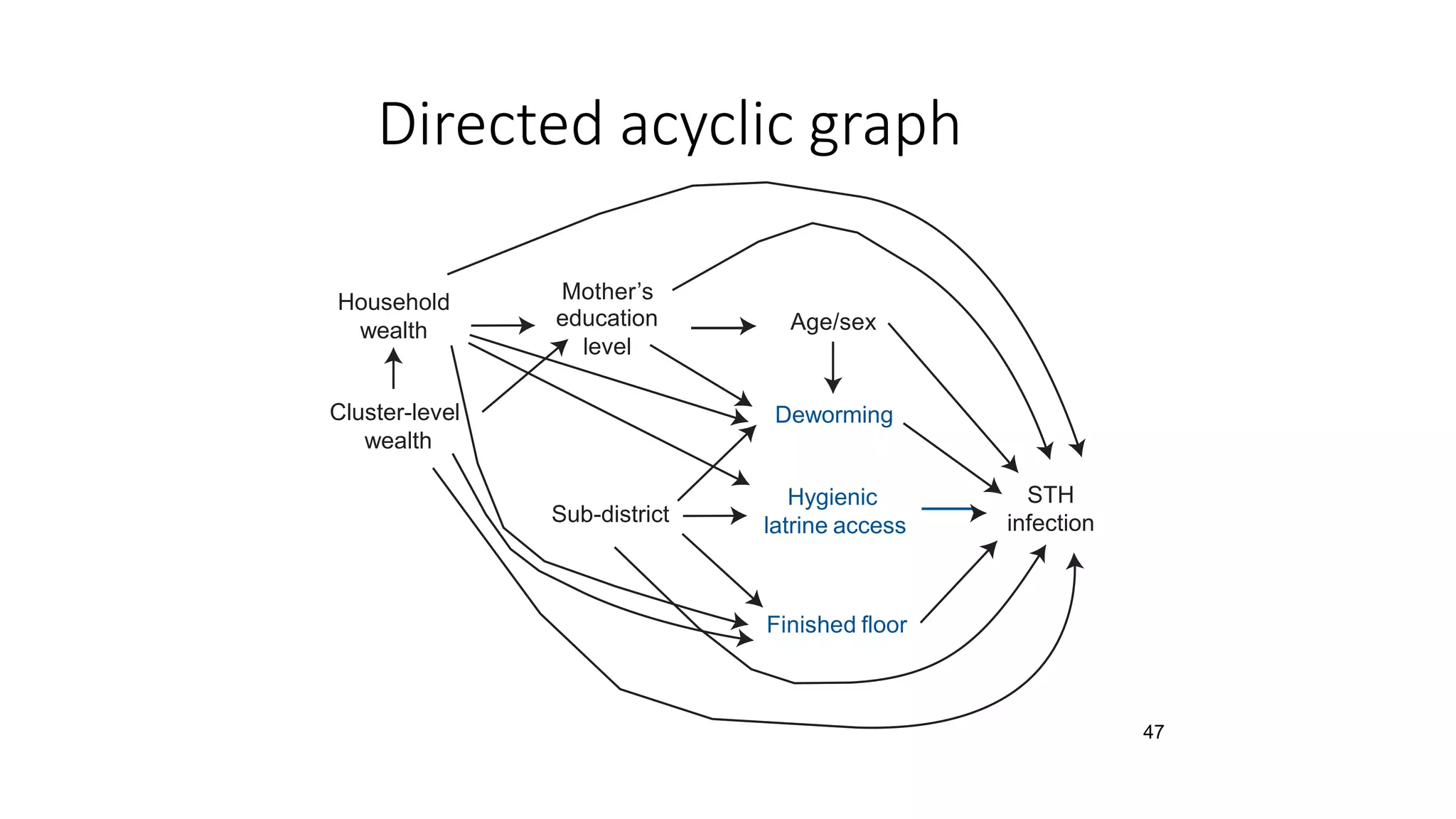
Directed acyclic graph
Hygienic
latrine access
Deworming
STH
infection
Age/sex
Household
wealth
Cluster-level
wealth
Mother’s
education
level
Finished floor
Sub-district
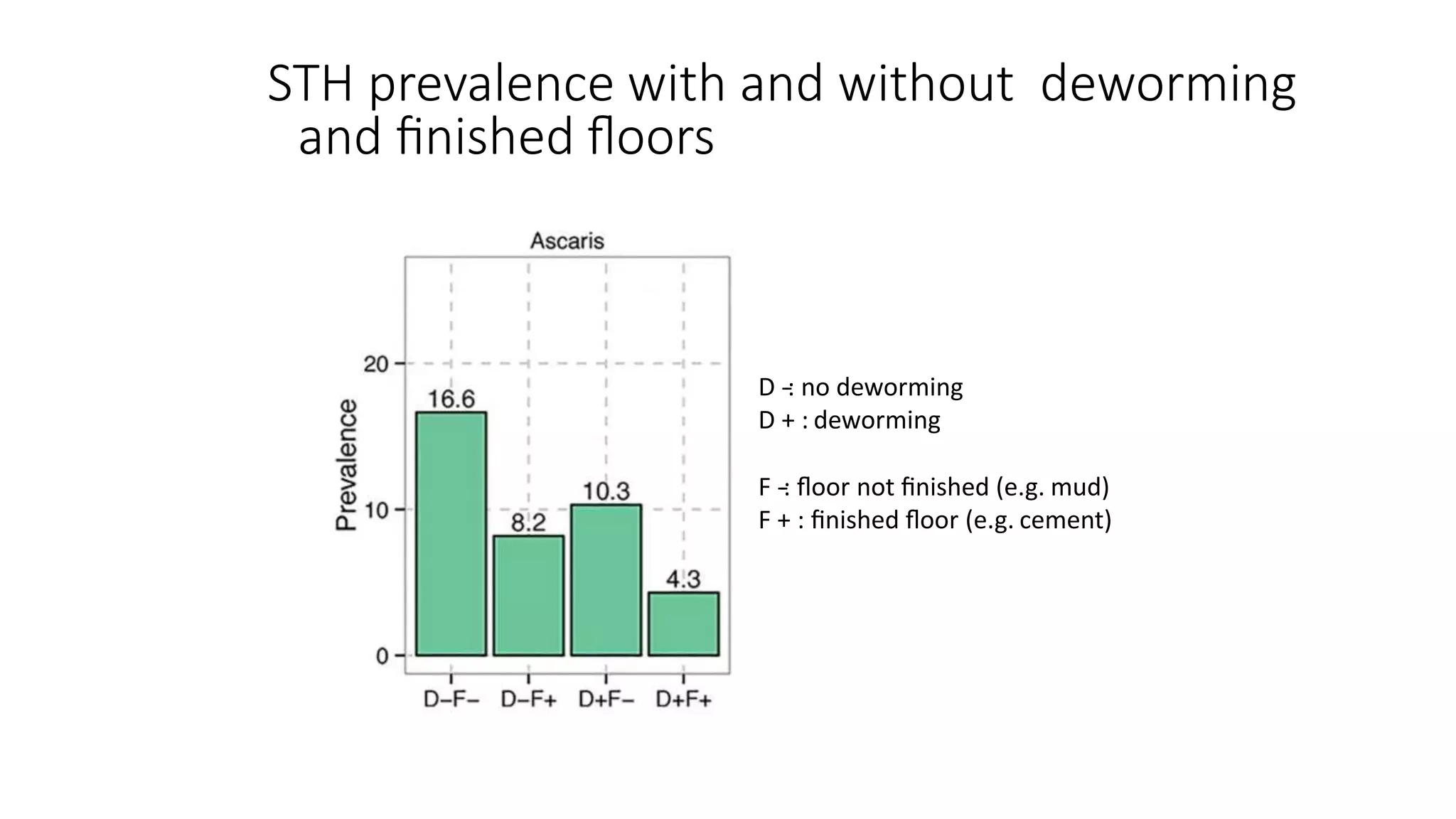
STH prevalence with and without deworming
and finished floors
D -‐: no deworming
D + : deworming
F -‐: floor not finished (e.g. mud)
F + : finished floor (e.g. cement)
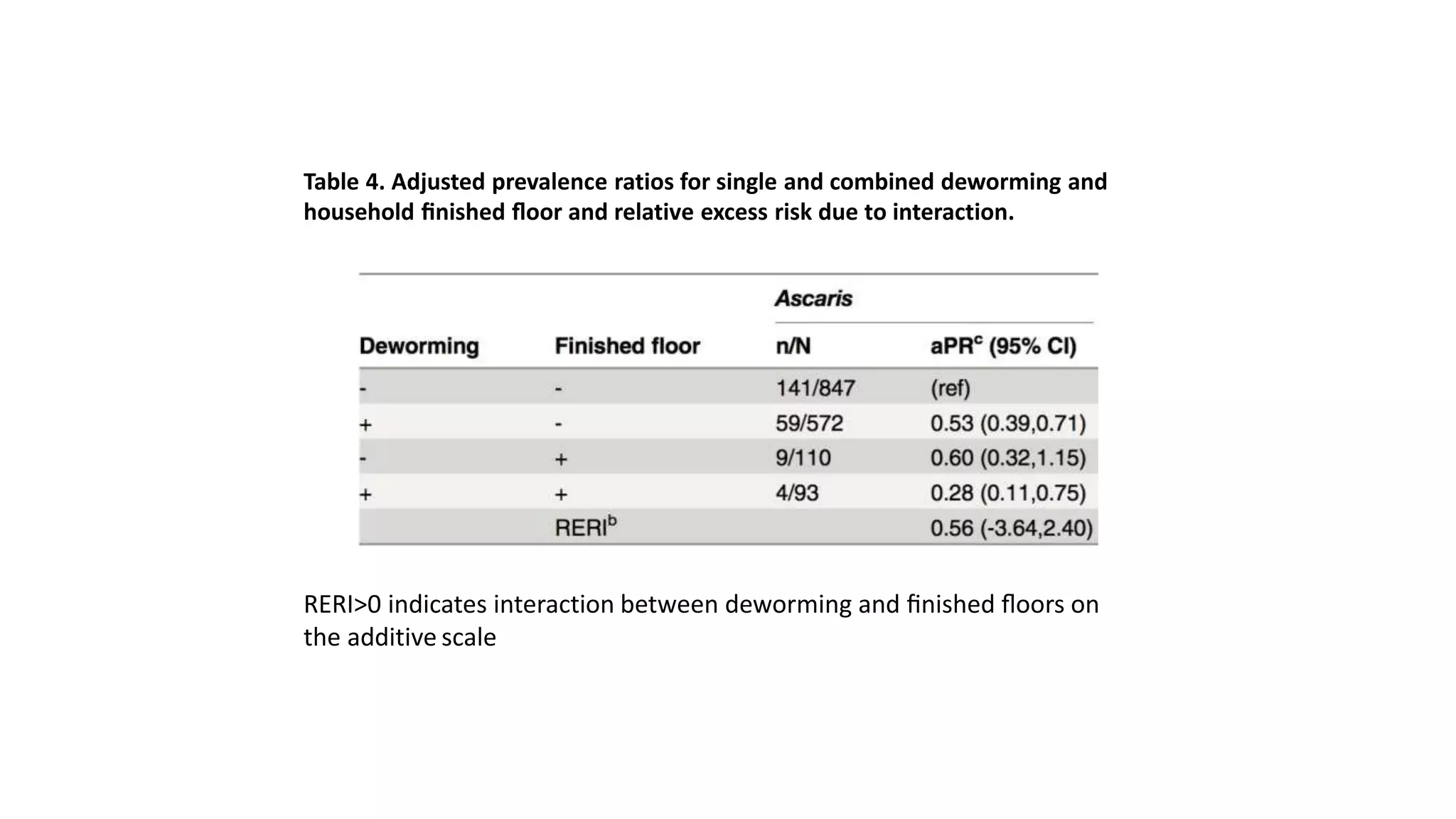
Table 4. Adjusted prevalence ratios for single and combined deworming and
household finished floor and relative excess risk due to interaction.
RERI>0 indicates interaction between deworming and finished floors on
the additive scale
50
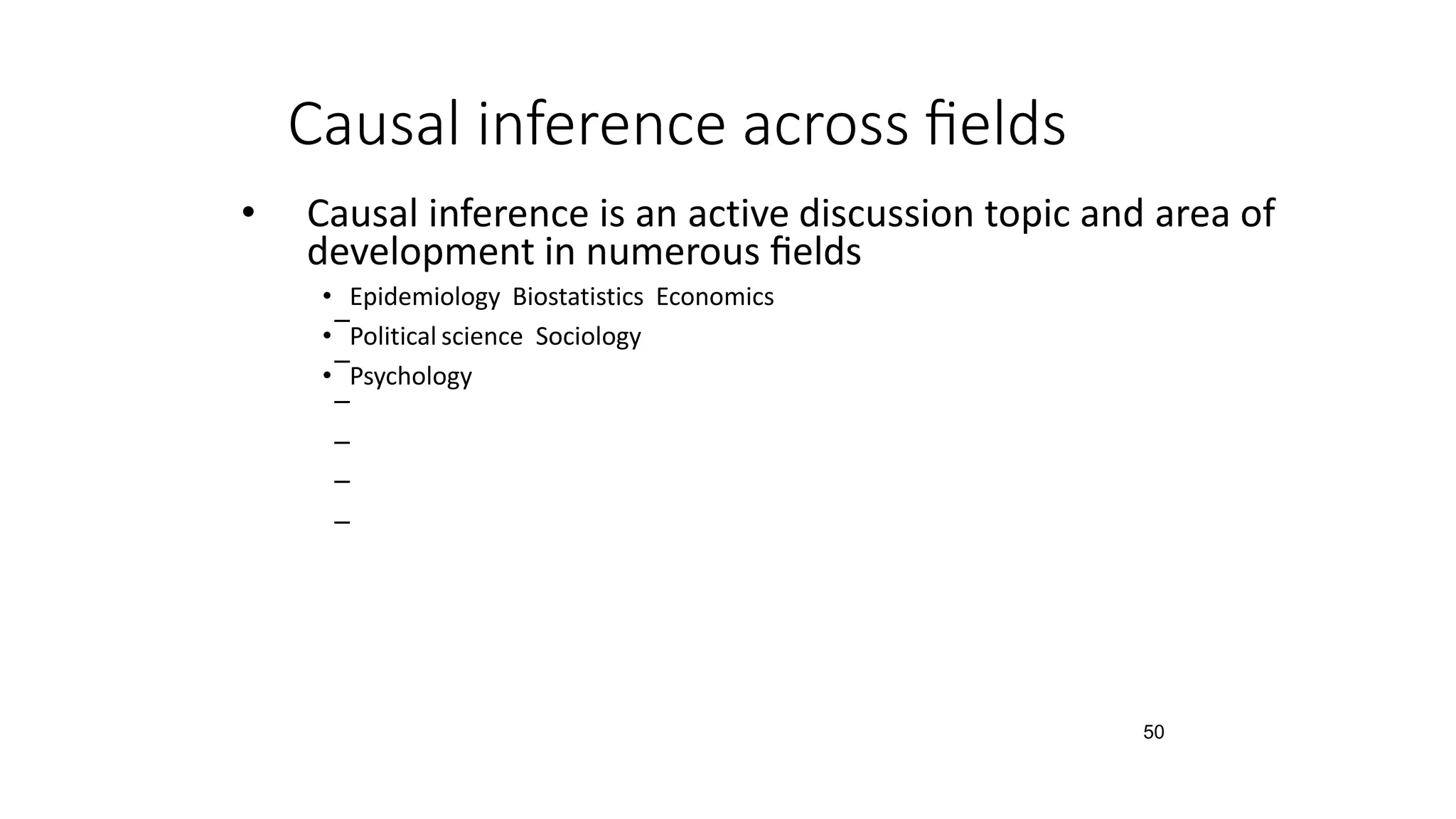
Causal inference across fields
–
–
–
–
–
–
• Causal inference is an active discussion topic and area of
development in numerous fields
• Epidemiology Biostatistics Economics
• Political science Sociology
• Psychology
51
Food for thought
• “A cause is something that makes a difference.” Susser (1991). AJE;
133:635-‐48.
• “Whether it is the social or biological sciences, there may
be no real ‘gold standard’ for [understanding causality].”
Galea (2010). IJE; 39:97-‐106.
• “Good description is the bread and butter of good science
and good policy research” Berk, 2004. Regression Analysis: A Constructive Critique.
Thousand Oaks: Sage.
References
Benjamin-‐ChungJ, Nazneen A, Halder AK, et al. The Interaction of Deworming, Improved Sanitation, and
Household Flooring with Soil-‐TransmittedHelminth Infection in Rural Bangladesh. PLoS Negl Trop Dis. 2015 Dec
1;9(12):e0004256.
Berk RA (2004). Regression Analysis: A Constructive Critique. Thousand Oaks: Sage.
Galea S, Riddle M, Kaplan GA (2010). Causal Thinking and Complex System Approaches in Epidemiology. IJE;
39:97-‐106.
Hernan & Cole (2009). Invited Commentary: Causal Diagrams and Measurement Bias. American Journal of
Epidemiology 170(8).
Pearl J (2009). Causality: Models, Reasoning and Inference. 2nd Edition. New York: Cambridge University Press.
Pearl J, Glymour M, and Jewell N (2016). Casual Inference in Statistics: A Primer. 1st Edition. John Wiley & Sons.
Rothman KJ, Greenland S, Lash, TL (2008). Modern Epidemiology. 3rd Edition. Philadelphia: Lippincott Williams
&Wilkins.
Susser M (1991). What is a Cause and How Do We Know One? A Grammar for Pragmatic Epidemiology. AJE;
133:635-‐48.
VanderWeele (2009). Sufficient Cause Interactions and Statistical Interactions. Epidemiology 20:6-‐13.

5.3.5 causal inference in research

  • 1.
    42 1. Define researchhypothesis – Your hypothesis can include possible effect modification – Determine to what extent you aim to make causal inferences using your data 2. Determine study design (trial, cohort, etc.) 3. Draw a DAG a. Identify potential confounders b. Choose which variables to measure 4. Analyze your data a. b. c. Control for confounders identified in step 3 Assess effect modification on the additive or multiplicative scale Make statistical inferences 5. Make scientific inferences about your hypothesis Causal inference in your research
  • 2.
  • 3.
  • 4.
  • 5.
    46 Example: worm infections •Research question: estimate the separate and combined associations of deworming, hygienic latrines, and finished floors with soil-‐transmittedhelminth prevalence. • Study design: cross-‐sectional survey • Exposures: deworming, hygienic latrine access, finished floors • Outcome: soil-‐transmittedhelminth infections
  • 6.
    47 Directed acyclic graph Hygienic latrineaccess Deworming STH infection Age/sex Household wealth Cluster-level wealth Mother’s education level Finished floor Sub-district
  • 7.
    STH prevalence withand without deworming and finished floors D -‐: no deworming D + : deworming F -‐: floor not finished (e.g. mud) F + : finished floor (e.g. cement)
  • 8.
    Table 4. Adjustedprevalence ratios for single and combined deworming and household finished floor and relative excess risk due to interaction. RERI>0 indicates interaction between deworming and finished floors on the additive scale
  • 9.
    50 Causal inference acrossfields – – – – – – • Causal inference is an active discussion topic and area of development in numerous fields • Epidemiology Biostatistics Economics • Political science Sociology • Psychology
  • 10.
    51 Food for thought •“A cause is something that makes a difference.” Susser (1991). AJE; 133:635-‐48. • “Whether it is the social or biological sciences, there may be no real ‘gold standard’ for [understanding causality].” Galea (2010). IJE; 39:97-‐106. • “Good description is the bread and butter of good science and good policy research” Berk, 2004. Regression Analysis: A Constructive Critique. Thousand Oaks: Sage.
  • 11.
    References Benjamin-‐ChungJ, Nazneen A,Halder AK, et al. The Interaction of Deworming, Improved Sanitation, and Household Flooring with Soil-‐TransmittedHelminth Infection in Rural Bangladesh. PLoS Negl Trop Dis. 2015 Dec 1;9(12):e0004256. Berk RA (2004). Regression Analysis: A Constructive Critique. Thousand Oaks: Sage. Galea S, Riddle M, Kaplan GA (2010). Causal Thinking and Complex System Approaches in Epidemiology. IJE; 39:97-‐106. Hernan & Cole (2009). Invited Commentary: Causal Diagrams and Measurement Bias. American Journal of Epidemiology 170(8). Pearl J (2009). Causality: Models, Reasoning and Inference. 2nd Edition. New York: Cambridge University Press. Pearl J, Glymour M, and Jewell N (2016). Casual Inference in Statistics: A Primer. 1st Edition. John Wiley & Sons. Rothman KJ, Greenland S, Lash, TL (2008). Modern Epidemiology. 3rd Edition. Philadelphia: Lippincott Williams &Wilkins. Susser M (1991). What is a Cause and How Do We Know One? A Grammar for Pragmatic Epidemiology. AJE; 133:635-‐48. VanderWeele (2009). Sufficient Cause Interactions and Statistical Interactions. Epidemiology 20:6-‐13.