Before the dawn of the 21st Century and
before the advent of antibiotics , Public

health since aegis

has waged war against

greatest threat to mankind, Plague,

cholera & small pox and has won
convincingly …… .
Association ,Causation
Cause and effect in Epidemiology

D R D E O D AT T M S U R YAW A N S H I
(MD COMMUNITY MEDICINE ,KEM,MUMBAI )
A S S I S TA N T P R O F E S S O R
COMMUNITY MEDICINE
DSMCH
The work of epidemiology is related to
unanswered questions ,but also
unquestioned answers.
Learning Objectives
 What is Association?.
 Types of association.
 Criteria for causation.
 Uses of Epidemiology.
Association
 Find the cause of disease

 Hypothesis : two or more variables related /associated
 Proceed to measure the association between the two .
Definition of association
 Concurrence of two variables more often than would be






expected by chance.
Association does not always means casual relationship.
Measure by correlation coefficient
+ 1 to – 1
+ 1 positive correlation
- 1 negative correlation
Learning Objectives
 Theories of disease causation
 What is cause effect ?
 Criteria for causal association.
Theories of causation of disease
 Supernatural theory – Old and medieval period
 Contagion theory (miasma)- Renaissance
 Germ theory (Koch postulates)-Early 19th century
 Epidemiological triad theory

 BEINGS model
 Web of causation
 Epidemiological wheel theory
 The theory of necessary and sufficient cause.
Types of association
 Spurious association.

 Indirect association.
 Direct association.


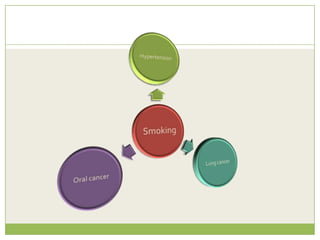
One to one causal



Multi factorial causation
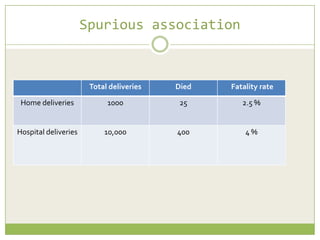
Spurious association

Total deliveries

Died

Fatality rate

Home deliveries

1000

25

2.5 %

Hospital deliveries

10,000

400

4%
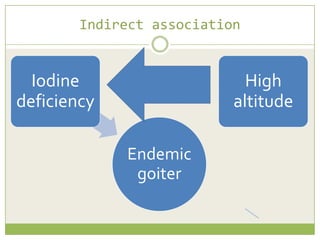
Indirect association

Iodine
deficiency

High
altitude
Endemic
goiter
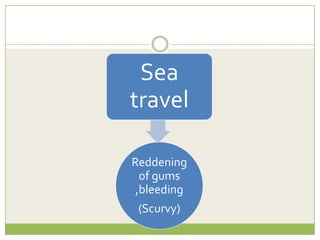
Sea
travel
Reddening
of gums
,bleeding
(Scurvy)
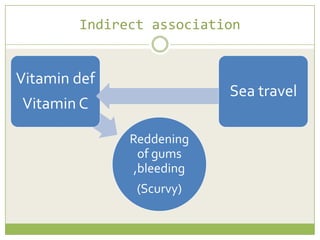
Indirect association

Vitamin def

Sea travel

Vitamin C
Reddening
of gums
,bleeding
(Scurvy)
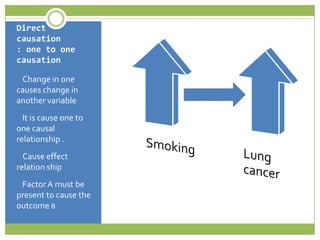
Direct
causation
: one to one
causation
Change in one

causes change in
another variable
It is cause one to

one causal
relationship .
Cause effect

relation ship
Factor A must be

present to cause the
outcome B
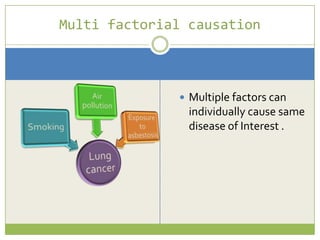
Multi factorial causation

 Multiple factors can

individually cause same
disease of Interest .
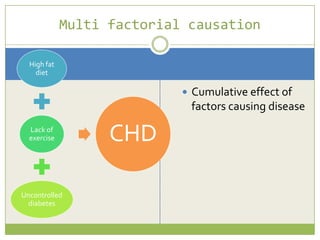
Multi factorial causation
High fat
diet

 Cumulative effect of

factors causing disease
Lack of
exercise

Uncontrolled
diabetes

CHD
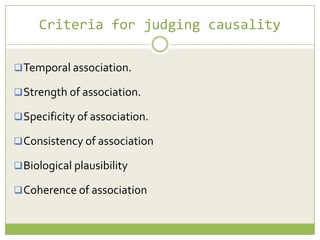
Criteria for judging causality
 Temporal association.

 Strength of association.
 Specificity of association.
 Consistency of association
 Biological plausibility
 Coherence of association
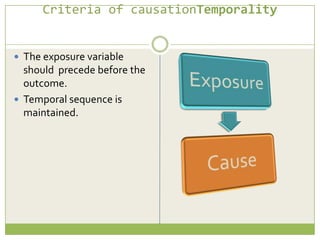
Criteria of causationTemporality

 The exposure variable

should precede before the
outcome.
 Temporal sequence is
maintained.
Strength of association
 How much is the association : measure


Relative risk & Odds ratio



Dose response relationship



Duration response relationship



Cessation relationship.
Specificity of association
 80 to 90 % of lung cancers are attributed to smoking
Consistency
 Studies conducted by various researchers at various

times have indicated similar cause effect phenomena
Biological plausibility
 Is the cause effect phenomena commensurate with

already known facts
 Should stand to reasoning of present day knowledge.
Coherence
 Rise in tobacco consumption has led to rise in lung

cancer deaths.
 So when smoking and tobacco consumption was

stopped ,the trend decreased.

Causation

  • 1.
    Before the dawnof the 21st Century and before the advent of antibiotics , Public health since aegis has waged war against greatest threat to mankind, Plague, cholera & small pox and has won convincingly …… .
  • 2.
    Association ,Causation Cause andeffect in Epidemiology D R D E O D AT T M S U R YAW A N S H I (MD COMMUNITY MEDICINE ,KEM,MUMBAI ) A S S I S TA N T P R O F E S S O R COMMUNITY MEDICINE DSMCH
  • 3.
    The work ofepidemiology is related to unanswered questions ,but also unquestioned answers.
  • 4.
    Learning Objectives  Whatis Association?.  Types of association.  Criteria for causation.  Uses of Epidemiology.
  • 5.
    Association  Find thecause of disease  Hypothesis : two or more variables related /associated  Proceed to measure the association between the two .
  • 6.
    Definition of association Concurrence of two variables more often than would be      expected by chance. Association does not always means casual relationship. Measure by correlation coefficient + 1 to – 1 + 1 positive correlation - 1 negative correlation
  • 7.
    Learning Objectives  Theoriesof disease causation  What is cause effect ?  Criteria for causal association.
  • 8.
    Theories of causationof disease  Supernatural theory – Old and medieval period  Contagion theory (miasma)- Renaissance  Germ theory (Koch postulates)-Early 19th century  Epidemiological triad theory  BEINGS model  Web of causation  Epidemiological wheel theory  The theory of necessary and sufficient cause.
  • 9.
    Types of association Spurious association.  Indirect association.  Direct association.  One to one causal  Multi factorial causation
  • 10.
    Spurious association Total deliveries Died Fatalityrate Home deliveries 1000 25 2.5 % Hospital deliveries 10,000 400 4%
  • 11.
  • 14.
  • 15.
    Indirect association Vitamin def Seatravel Vitamin C Reddening of gums ,bleeding (Scurvy)
  • 16.
    Direct causation : one toone causation Change in one causes change in another variable It is cause one to one causal relationship . Cause effect relation ship Factor A must be present to cause the outcome B
  • 18.
    Multi factorial causation Multiple factors can individually cause same disease of Interest .
  • 19.
    Multi factorial causation Highfat diet  Cumulative effect of factors causing disease Lack of exercise Uncontrolled diabetes CHD
  • 20.
    Criteria for judgingcausality  Temporal association.  Strength of association.  Specificity of association.  Consistency of association  Biological plausibility  Coherence of association
  • 21.
    Criteria of causationTemporality The exposure variable should precede before the outcome.  Temporal sequence is maintained.
  • 22.
    Strength of association How much is the association : measure  Relative risk & Odds ratio  Dose response relationship  Duration response relationship  Cessation relationship.
  • 23.
    Specificity of association 80 to 90 % of lung cancers are attributed to smoking
  • 24.
    Consistency  Studies conductedby various researchers at various times have indicated similar cause effect phenomena
  • 25.
    Biological plausibility  Isthe cause effect phenomena commensurate with already known facts  Should stand to reasoning of present day knowledge.
  • 26.
    Coherence  Rise intobacco consumption has led to rise in lung cancer deaths.  So when smoking and tobacco consumption was stopped ,the trend decreased.