Globalization
 What are the characteristics of the
globalization phenomenon?
 What are the components of the
globalization process
 How does this relate to history
 The same trend does not always have the
same impact everywhere
 What are the pros and cons of
Globalization?
Globalization-Something New?
 It’s been a long time coming, but now it is
happening furiously fast—and that is part
of the problem.
 So, to “what is it?” and “why is it
happening?” we have to add: “is the pace
of globalization accelerating—and the
answer is a definite “yes”
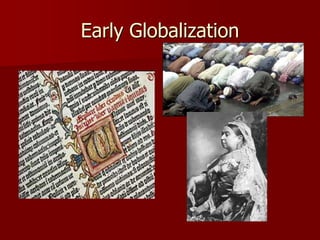
Early Globalization
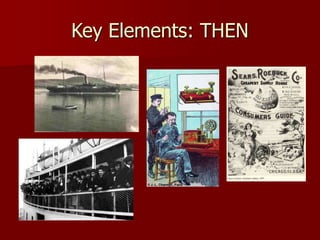
Key Elements: THEN
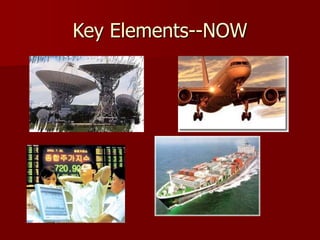
Key Elements--NOW
What are the Components? 1.
 Broad Category: Technology
 Instant, cheap Worldwide
Communications—cell phone,
www(availability at the individual level)
 International (instant)financial and capital
transfers
 Increased scale and frequency of air
transport
 Container ships
Component 2
 Broad Category: Information
 Instant dispersal of news by satellite TV,
www, fax (but what news and whose?)
 Competition is worldwide, not local or
national
 Very hard to keep a secret
Components 3
 Broad Category: Culture
 Increasingly a “global village,” but a
Western one watching the same TV, music
videos, news, soaps. Reaction to this?
 Rise of a “global language.” Why? Whose?
 Smaller cultures may feel threatened
Component 4
 Broad Category: Environment and
Health
 Global environmental problems (Ozone,
global “warming,” sea-level change
 AIDS, Ebola, ??
 Global plunder of common pool
resources—ocean, forests…..
Component 5
 Broad Category: Crime and Terrorism
 “International” crime, Russian Mafia
 Terrorists in caves in Afghanistan threaten
lower Manhattan
 International crime does not play by the
rules of “states,” and may be better
organized than some, and “own” others.
Component 6
 A global population?
 The rich countries remain rich, and a
declining proportion of world population
 The poor countries remain poor, and a
rapidly expanding part of the worlds
population (95% of the growth)
 Hence the pressure to move to the rich
countries, legally or illegally
The Information Revolution
 The Internet
 The WWW
 Instant Dispersal of News & Information
 The Rise of a Global Media Village?
 The Personalization of communications:
the cell/mobile phone system, and its
increasing capacity.
Information: Downside?
 But, what information is becoming global?
But whose news is becoming global?
 What is this doing to cultures and
communities?
 Does Globalization = Westernization
=Americanization? Does it matter?
 Are we evolving a global language? What
are the consequences of this?
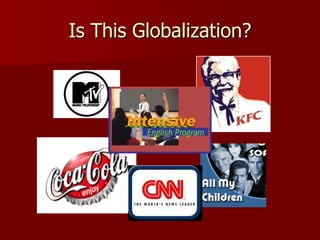
Is This Globalization?
Who Manages Globalization?
 There is no world government, so who
regulates and controls the process? Mostly
UN agencies, but they require the
compliance of all member states, and the
UN does not make law.
 Do states ever put the global priority
ahead of their own? Plus, we have rich,
strong states, and poor weak ones.
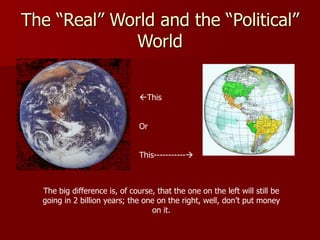
The “Real” World and the “Political”
World
This
Or
This-----------
The big difference is, of course, that the one on the left will still be
going in 2 billion years; the one on the right, well, don’t put money
on it.
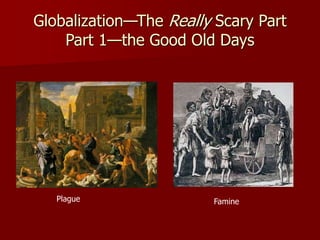
Globalization—The Really Scary Part
Part 1—the Good Old Days
Plague Famine
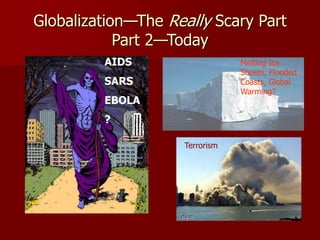
Globalization—The Really Scary Part
Part 2—Today
AIDS
SARS
EBOLA
?
Melting Ice
Sheets, Flooded
Coasts, Global
Warming?
Terrorism
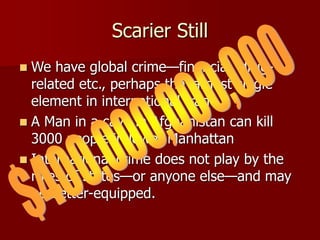
Scarier Still
 We have global crime—financial, drug-
related etc., perhaps the largest single
element in international trade
 A Man in a cave in Afghanistan can kill
3000 people in lower Manhattan
 International crime does not play by the
rules of states—or anyone else—and may
be better-equipped.
To Recap: Globalization
 Is Driven by Technology
 Is seen as threatening cultures because it
is equated with Westernization
 Increases the pace at which everything
happens: capital transfers, spread of
disease, change of culture…
 May be changing our global environment,
but can states manage the globe?
 Who runs the world????

Globalization

  • 2.
    Globalization  What arethe characteristics of the globalization phenomenon?  What are the components of the globalization process  How does this relate to history  The same trend does not always have the same impact everywhere  What are the pros and cons of Globalization?
  • 3.
    Globalization-Something New?  It’sbeen a long time coming, but now it is happening furiously fast—and that is part of the problem.  So, to “what is it?” and “why is it happening?” we have to add: “is the pace of globalization accelerating—and the answer is a definite “yes”
  • 4.
  • 5.
  • 6.
  • 7.
    What are theComponents? 1.  Broad Category: Technology  Instant, cheap Worldwide Communications—cell phone, www(availability at the individual level)  International (instant)financial and capital transfers  Increased scale and frequency of air transport  Container ships
  • 8.
    Component 2  BroadCategory: Information  Instant dispersal of news by satellite TV, www, fax (but what news and whose?)  Competition is worldwide, not local or national  Very hard to keep a secret
  • 9.
    Components 3  BroadCategory: Culture  Increasingly a “global village,” but a Western one watching the same TV, music videos, news, soaps. Reaction to this?  Rise of a “global language.” Why? Whose?  Smaller cultures may feel threatened
  • 10.
    Component 4  BroadCategory: Environment and Health  Global environmental problems (Ozone, global “warming,” sea-level change  AIDS, Ebola, ??  Global plunder of common pool resources—ocean, forests…..
  • 11.
    Component 5  BroadCategory: Crime and Terrorism  “International” crime, Russian Mafia  Terrorists in caves in Afghanistan threaten lower Manhattan  International crime does not play by the rules of “states,” and may be better organized than some, and “own” others.
  • 12.
    Component 6  Aglobal population?  The rich countries remain rich, and a declining proportion of world population  The poor countries remain poor, and a rapidly expanding part of the worlds population (95% of the growth)  Hence the pressure to move to the rich countries, legally or illegally
  • 13.
    The Information Revolution The Internet  The WWW  Instant Dispersal of News & Information  The Rise of a Global Media Village?  The Personalization of communications: the cell/mobile phone system, and its increasing capacity.
  • 14.
    Information: Downside?  But,what information is becoming global? But whose news is becoming global?  What is this doing to cultures and communities?  Does Globalization = Westernization =Americanization? Does it matter?  Are we evolving a global language? What are the consequences of this?
  • 15.
  • 16.
    Who Manages Globalization? There is no world government, so who regulates and controls the process? Mostly UN agencies, but they require the compliance of all member states, and the UN does not make law.  Do states ever put the global priority ahead of their own? Plus, we have rich, strong states, and poor weak ones.
  • 17.
    The “Real” Worldand the “Political” World This Or This----------- The big difference is, of course, that the one on the left will still be going in 2 billion years; the one on the right, well, don’t put money on it.
  • 18.
    Globalization—The Really ScaryPart Part 1—the Good Old Days Plague Famine
  • 19.
    Globalization—The Really ScaryPart Part 2—Today AIDS SARS EBOLA ? Melting Ice Sheets, Flooded Coasts, Global Warming? Terrorism
  • 20.
    Scarier Still  Wehave global crime—financial, drug- related etc., perhaps the largest single element in international trade  A Man in a cave in Afghanistan can kill 3000 people in lower Manhattan  International crime does not play by the rules of states—or anyone else—and may be better-equipped.
  • 21.
    To Recap: Globalization Is Driven by Technology  Is seen as threatening cultures because it is equated with Westernization  Increases the pace at which everything happens: capital transfers, spread of disease, change of culture…  May be changing our global environment, but can states manage the globe?  Who runs the world????