PRESENTATION ON
MAINTENANCE
MANAGEMENT:
Presented By:
SHILPI SAHA
1. Introduction.
2. Objectives.
3. Maintenance cost.
4. Failure analysis.
5. Benefits of failure statistics.
6. Limitations.
7. Types of Maintenance.
CONTENTS:
INTRODUCTION:
• It is necessary to keep materials, tools and equipment in
good condition in order to achieve desired result.
• If the working equipments are in good running condition,
the products obtained will be of required quality and the
process will be reliable.
• Therefore it is necessary to maintain the plant.
Maintenance is a set of organized activities
that are carried out in order to keep the item in its
best operational condition with minimum cost
required.
MAINTENANCE:
OBJECTIVES:
• To increase functional reliability of production facilities.
• To enable desired quality through correctly adjusted,
serviced and operated equipments.
• To maximize the useful life of equipments.
• To minimize cost of production.
• To minimize frequency of interruptions.
• To enhance the safety of manpower.
1. Inspection.
2. Repair.
3. Overhaul.
4. Lubrication.
5. Salvage.
FUNCTIONS:
MAINTENANCE COST:
1. Because of breakdowns, both the machinery as well as
the manpower are left idle, per force.
2. This results in production, delay in schedules and
emergency repairs.
3. The downtime costs generally exceed the preventive
maintenance costs of inspection, service and scheduled
repairs.
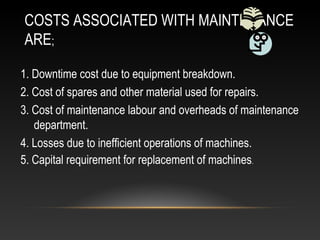
COSTS ASSOCIATED WITH MAINTENANCE
ARE;
1. Downtime cost due to equipment breakdown.
2. Cost of spares and other material used for repairs.
3. Cost of maintenance labour and overheads of maintenance
department.
4. Losses due to inefficient operations of machines.
5. Capital requirement for replacement of machines.
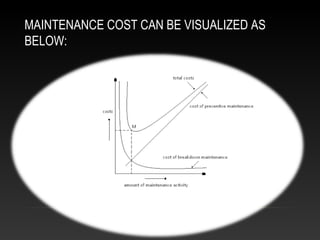
MAINTENANCE COST CAN BE VISUALIZED AS
BELOW:
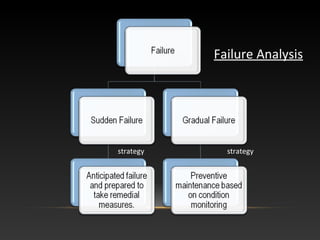
Failure Analysis
strategystrategy
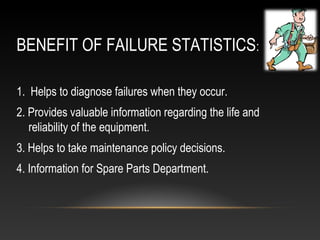
BENEFIT OF FAILURE STATISTICS:
1. Helps to diagnose failures when they occur.
2. Provides valuable information regarding the life and
reliability of the equipment.
3. Helps to take maintenance policy decisions.
4. Information for Spare Parts Department.
LIMITATIONS:
1. When the failure is due to inherent quality of the
equipment.
2. Manufacturing defects.
3. Poorly installed equipments .
4. Damage due to improper handling of equipments .
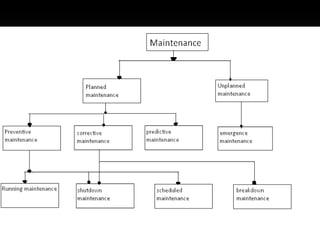
TYPES OF MAINTAINANCE:
• The various types of maintenance and their
relationship can be seen below:
PREVENTIVE MAINTENANCE
SYSTEMS :
1. Proper identification of all the items, their documentation
and coding.
2. Inspection of plant and equipment at regular intervals.
3. Proper cleaning and lubrication of equipments.
4. It helps to upkeep the machines through minor repairs.
5. Failures are analyzed in order to eliminate future
failures.
1.Organized maintenance work intended to
restore a failed unit.
2. It includes different types of actions like
typical adjustments to redesign equipments.
3. It is a one time job and each corrective
maintenance activity undertaken should be
completed fully.
4. The emphasis in corrective maintenance is on
obtaining full information of all breakdown and
their causes.
CORRECTIVE MAINTENANCE:
Predictive Maintenance as the name implies
predicting the failure before it occurs, identifying the
root causes for those failures symptoms and
eliminating those causes before they result in
extensive damage to the equipment.
PREDICTIVE MAINTENANCE:
It includes the maintenance activity that are carried
out while the machine or equipment is running and
they represent those activities that are performed
before the actual preventive maintenance activities
takes place.
RUNNING MAINTENANCE:
It is a scheduled service visit carried out by an
agent, to ensure that an item of equipment is
operating correctly and to therefore avoid any
unscheduled breakdown and downtime.
SCHEDULED MAINTENANCE
Maintenance that can only be performed while the
equipment is shutdown.
SHUTDOWN MAINTENANCE:
Repairs or replacements performed after a machine
has failed to return to its functional state following a
malfunction or shutdown.
BREAKDOWN MAINTENANCE:
ANY QUERRIES ?
Maintenance management

Maintenance management

  • 1.
  • 2.
    1. Introduction. 2. Objectives. 3.Maintenance cost. 4. Failure analysis. 5. Benefits of failure statistics. 6. Limitations. 7. Types of Maintenance. CONTENTS:
  • 3.
    INTRODUCTION: • It isnecessary to keep materials, tools and equipment in good condition in order to achieve desired result. • If the working equipments are in good running condition, the products obtained will be of required quality and the process will be reliable. • Therefore it is necessary to maintain the plant.
  • 4.
    Maintenance is aset of organized activities that are carried out in order to keep the item in its best operational condition with minimum cost required. MAINTENANCE:
  • 5.
    OBJECTIVES: • To increasefunctional reliability of production facilities. • To enable desired quality through correctly adjusted, serviced and operated equipments. • To maximize the useful life of equipments. • To minimize cost of production. • To minimize frequency of interruptions. • To enhance the safety of manpower.
  • 6.
    1. Inspection. 2. Repair. 3.Overhaul. 4. Lubrication. 5. Salvage. FUNCTIONS:
  • 7.
    MAINTENANCE COST: 1. Becauseof breakdowns, both the machinery as well as the manpower are left idle, per force. 2. This results in production, delay in schedules and emergency repairs. 3. The downtime costs generally exceed the preventive maintenance costs of inspection, service and scheduled repairs.
  • 8.
    COSTS ASSOCIATED WITHMAINTENANCE ARE; 1. Downtime cost due to equipment breakdown. 2. Cost of spares and other material used for repairs. 3. Cost of maintenance labour and overheads of maintenance department. 4. Losses due to inefficient operations of machines. 5. Capital requirement for replacement of machines.
  • 9.
    MAINTENANCE COST CANBE VISUALIZED AS BELOW:
  • 10.
  • 11.
    BENEFIT OF FAILURESTATISTICS: 1. Helps to diagnose failures when they occur. 2. Provides valuable information regarding the life and reliability of the equipment. 3. Helps to take maintenance policy decisions. 4. Information for Spare Parts Department.
  • 12.
    LIMITATIONS: 1. When thefailure is due to inherent quality of the equipment. 2. Manufacturing defects. 3. Poorly installed equipments . 4. Damage due to improper handling of equipments .
  • 13.
    TYPES OF MAINTAINANCE: •The various types of maintenance and their relationship can be seen below:
  • 15.
    PREVENTIVE MAINTENANCE SYSTEMS : 1.Proper identification of all the items, their documentation and coding. 2. Inspection of plant and equipment at regular intervals. 3. Proper cleaning and lubrication of equipments. 4. It helps to upkeep the machines through minor repairs. 5. Failures are analyzed in order to eliminate future failures.
  • 16.
    1.Organized maintenance workintended to restore a failed unit. 2. It includes different types of actions like typical adjustments to redesign equipments. 3. It is a one time job and each corrective maintenance activity undertaken should be completed fully. 4. The emphasis in corrective maintenance is on obtaining full information of all breakdown and their causes. CORRECTIVE MAINTENANCE:
  • 17.
    Predictive Maintenance asthe name implies predicting the failure before it occurs, identifying the root causes for those failures symptoms and eliminating those causes before they result in extensive damage to the equipment. PREDICTIVE MAINTENANCE:
  • 18.
    It includes themaintenance activity that are carried out while the machine or equipment is running and they represent those activities that are performed before the actual preventive maintenance activities takes place. RUNNING MAINTENANCE:
  • 19.
    It is ascheduled service visit carried out by an agent, to ensure that an item of equipment is operating correctly and to therefore avoid any unscheduled breakdown and downtime. SCHEDULED MAINTENANCE
  • 20.
    Maintenance that canonly be performed while the equipment is shutdown. SHUTDOWN MAINTENANCE:
  • 21.
    Repairs or replacementsperformed after a machine has failed to return to its functional state following a malfunction or shutdown. BREAKDOWN MAINTENANCE:
  • 22.