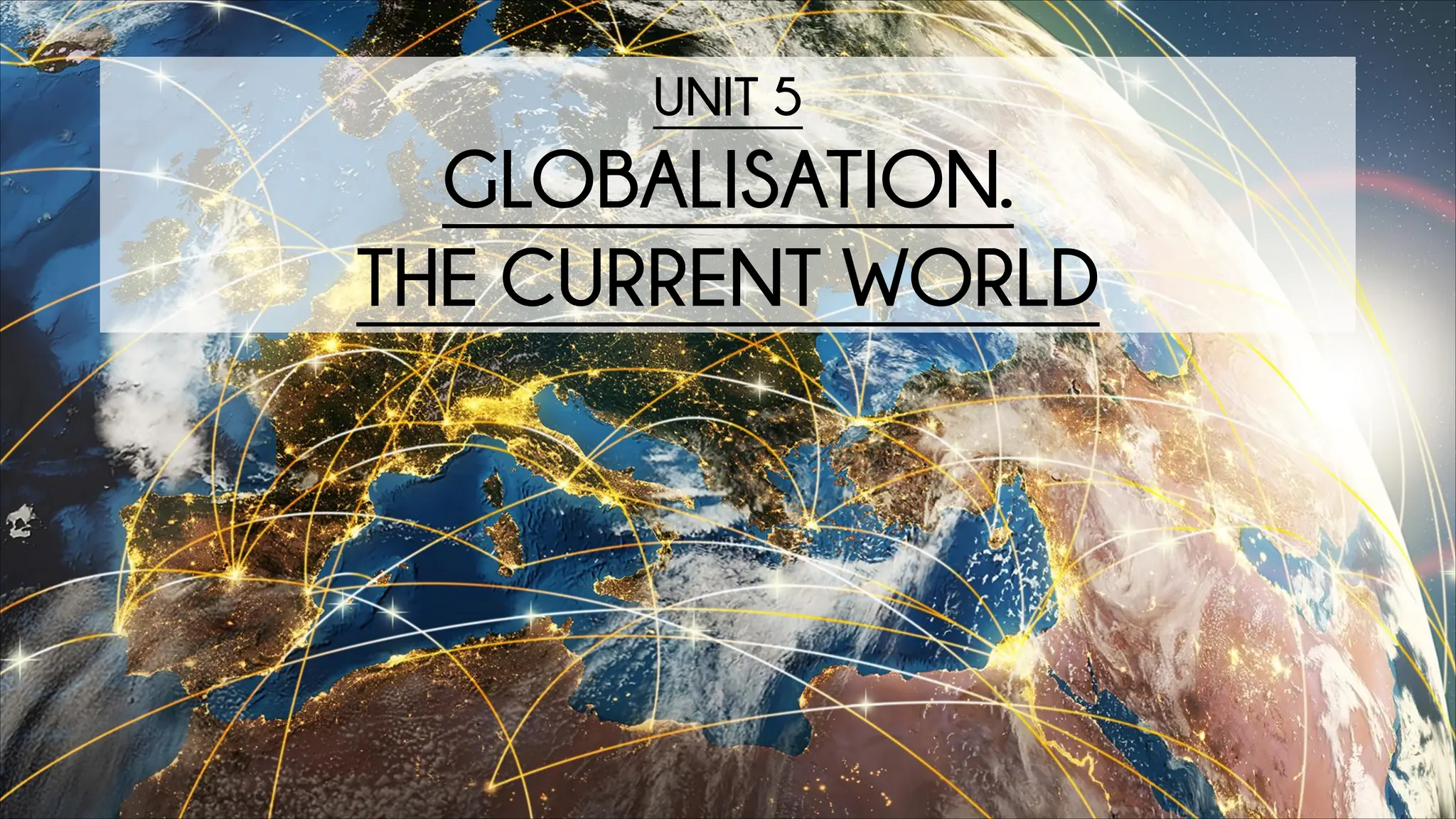
UNIT 5
GLOBALISATION.
THE CURRENT WORLD
1.AFTER THE COLD WAR: A NEW INTERNATIONAL ORDER
2.GLOBALISATION
3.INEQUALITY, CONFLICTS AND CURRENT CHALLENGES
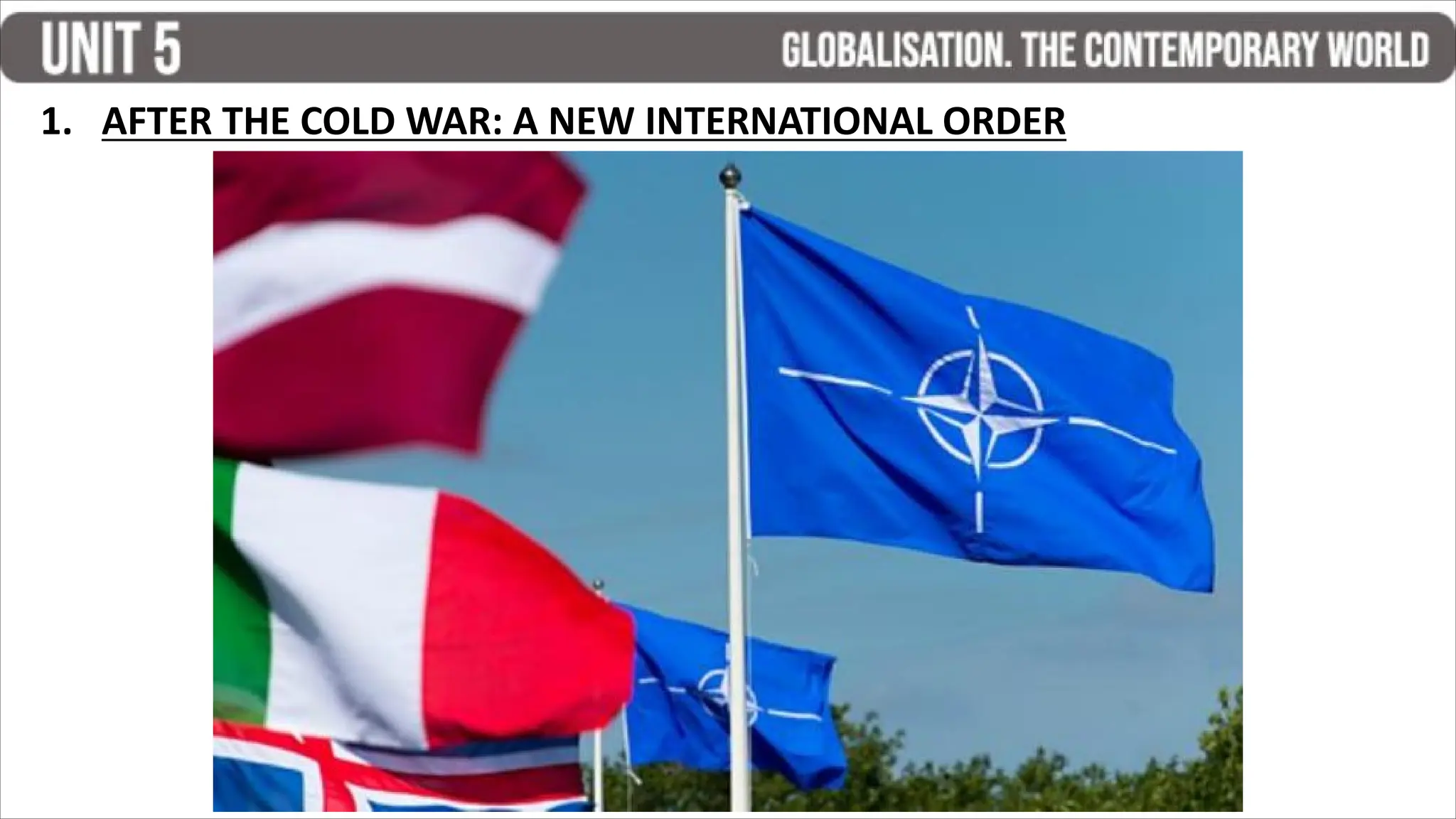
1. AFTER THE COLD WAR: A NEW INTERNATIONAL ORDER
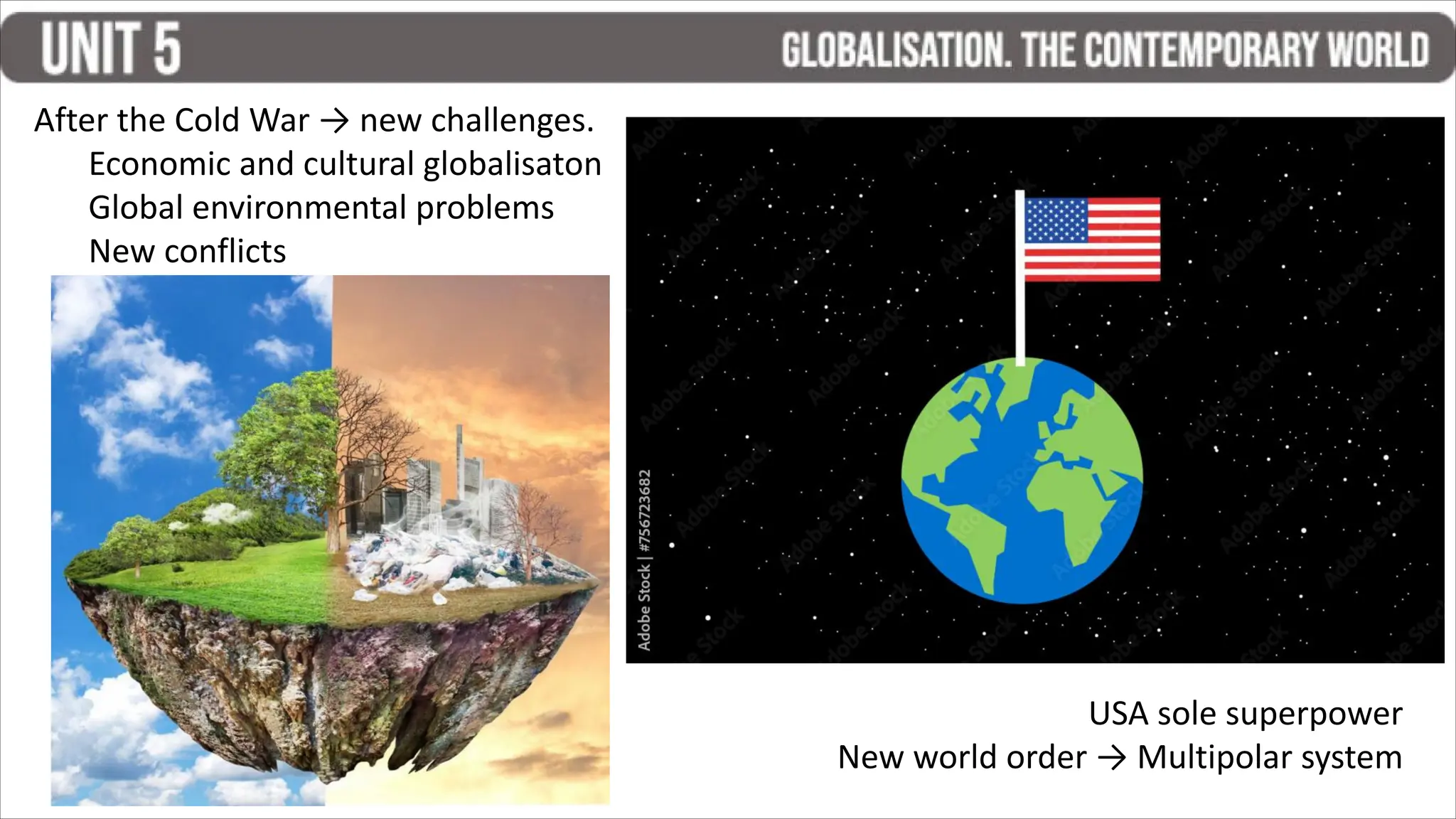
After the Cold War → new challenges.
Economic and cultural globalisaton
Global environmental problems
New conflicts
USA sole superpower
New world order → Multipolar system
1. The United States: a new world leader
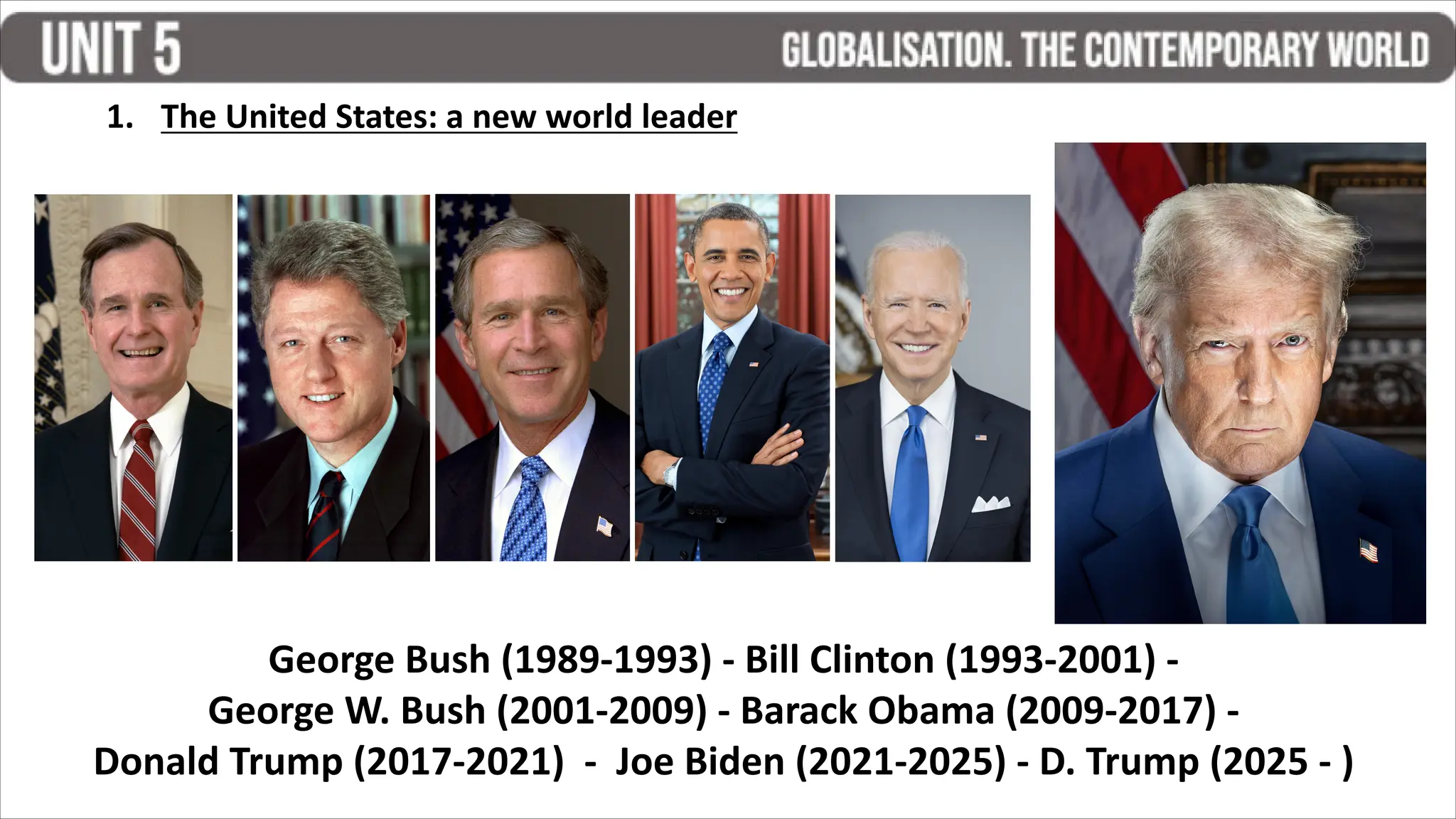
George Bush (1989-1993) - Bill Clinton (1993-2001) -
George W. Bush (2001-2009) - Barack Obama (2009-2017) -
Donald Trump (2017-2021) - Joe Biden (2021-2025) - D. Trump (2025 - )
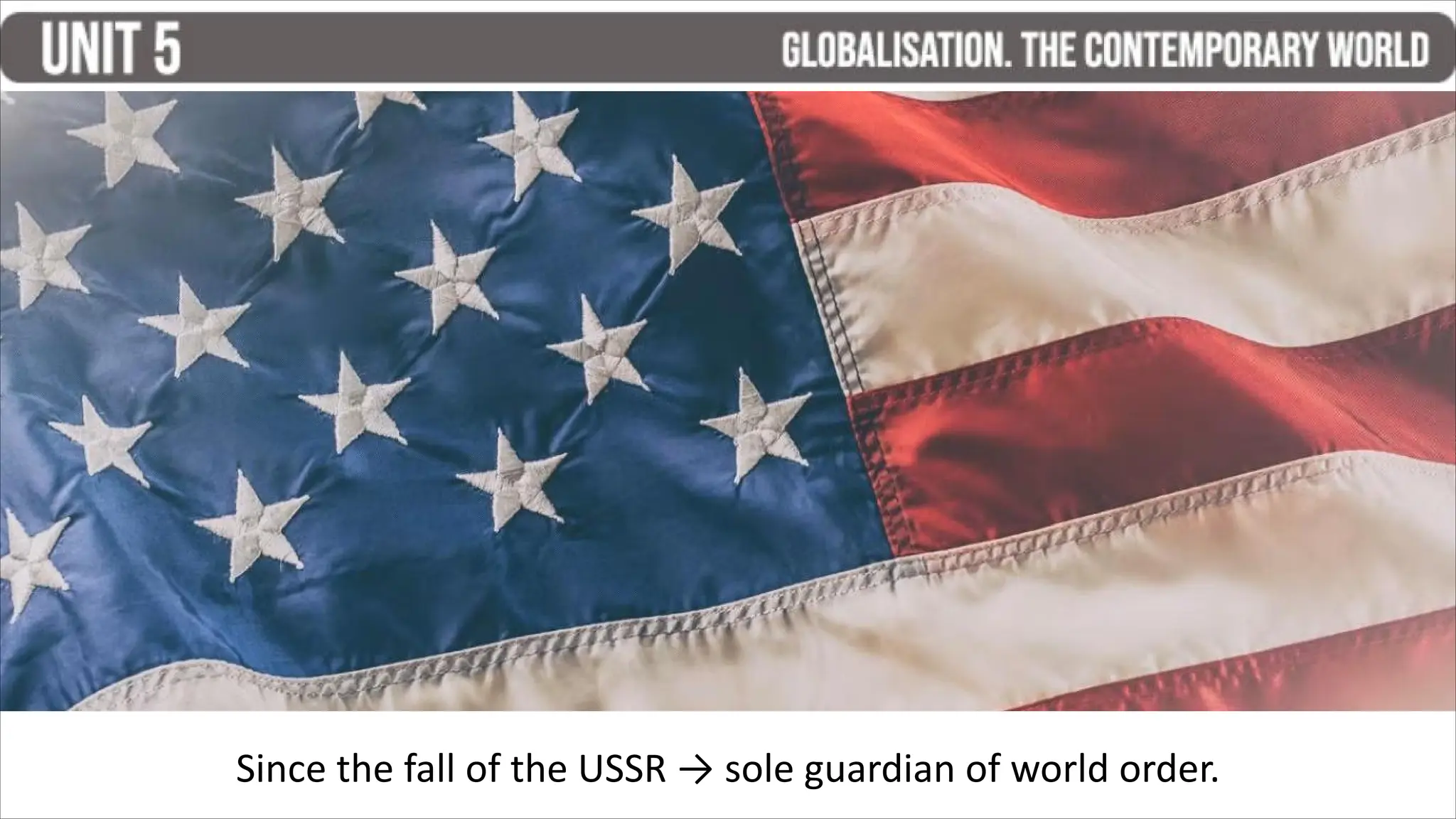
Since the fall of the USSR → sole guardian of world order.
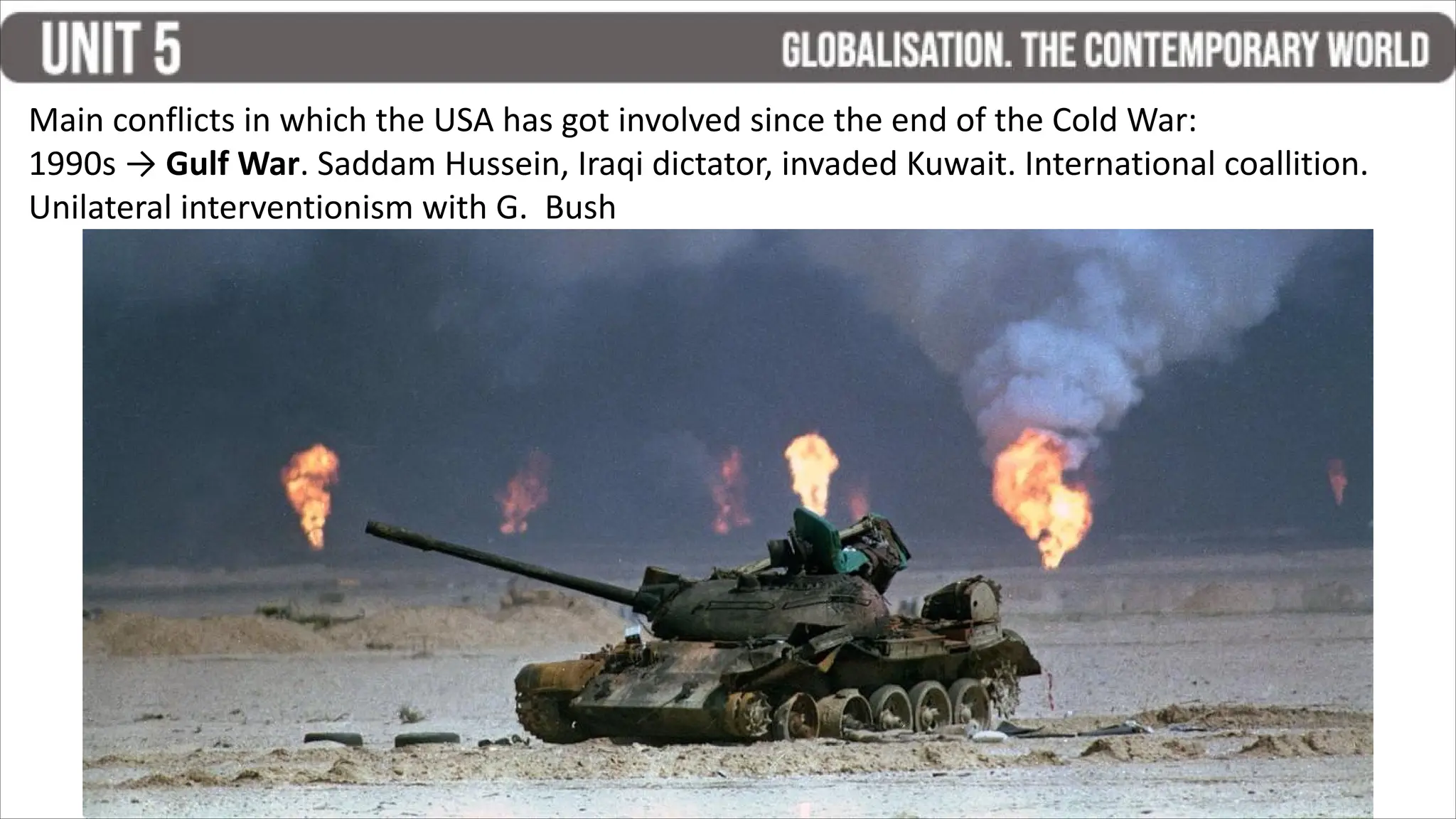
Main conflicts in which the USA has got involved since the end of the Cold War:
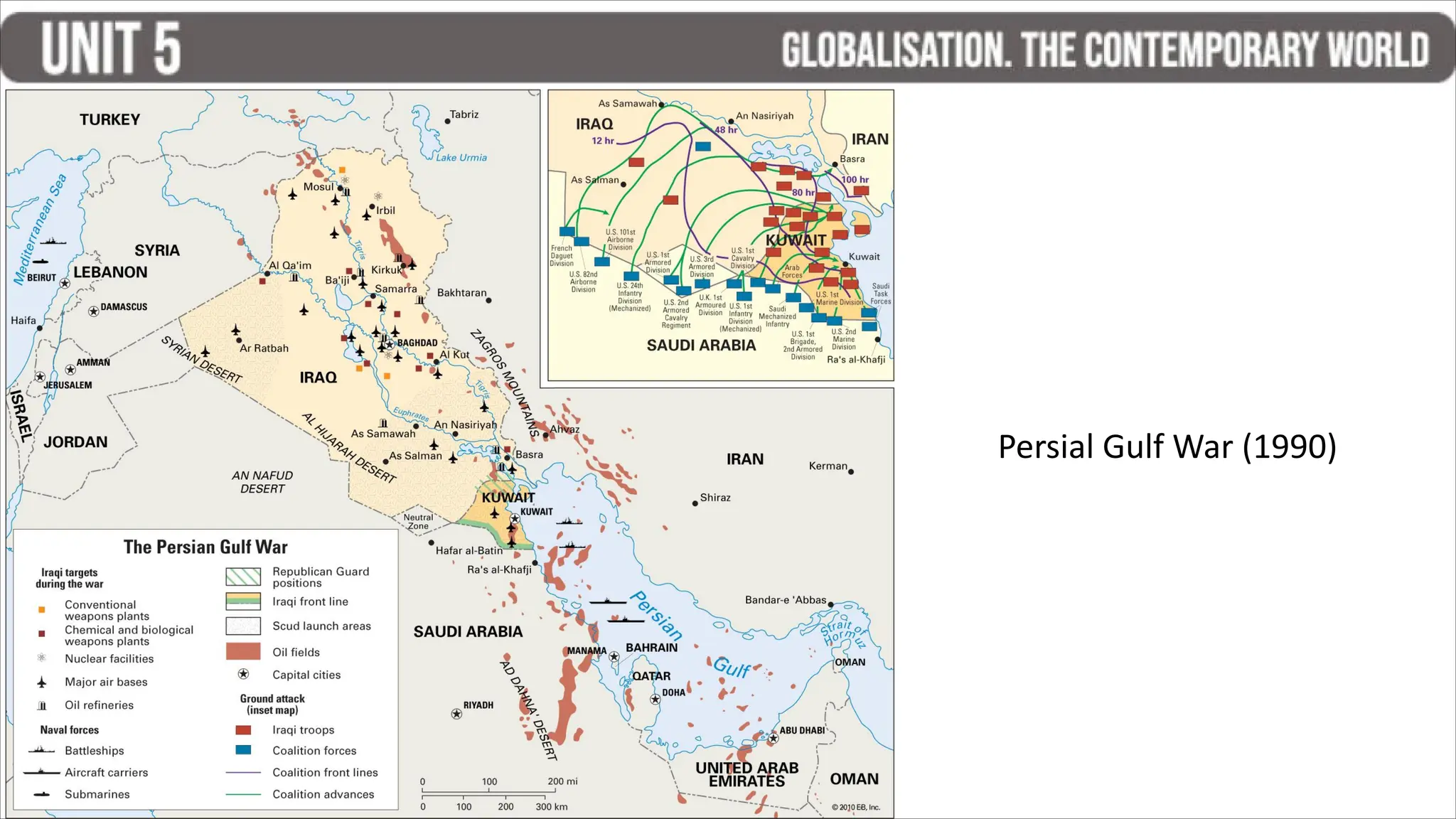
1990s → Gulf War. Saddam Hussein, Iraqi dictator, invaded Kuwait. International coallition.
Unilateral interventionism with G. Bush
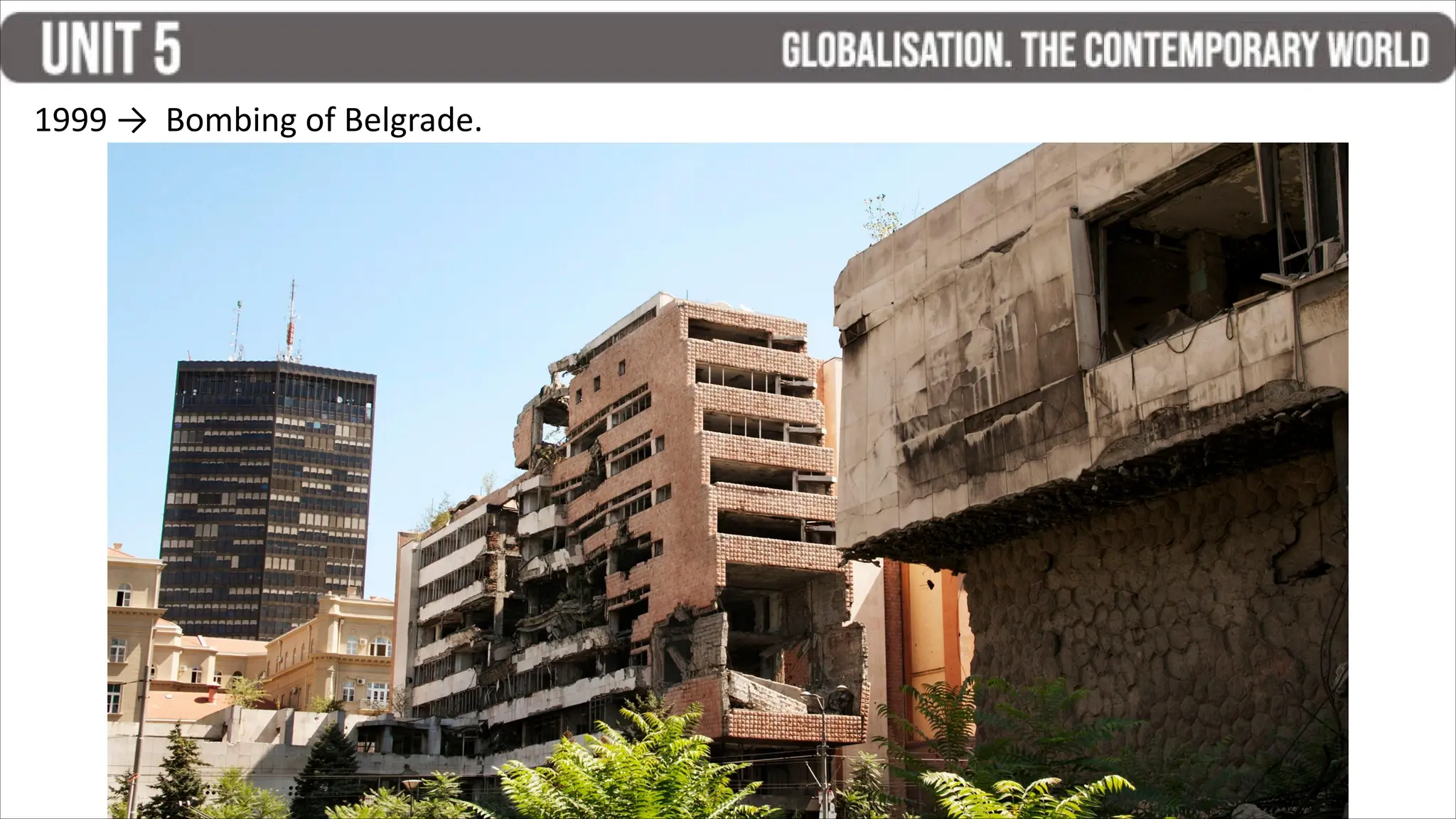
1999 → Bombing of Belgrade.
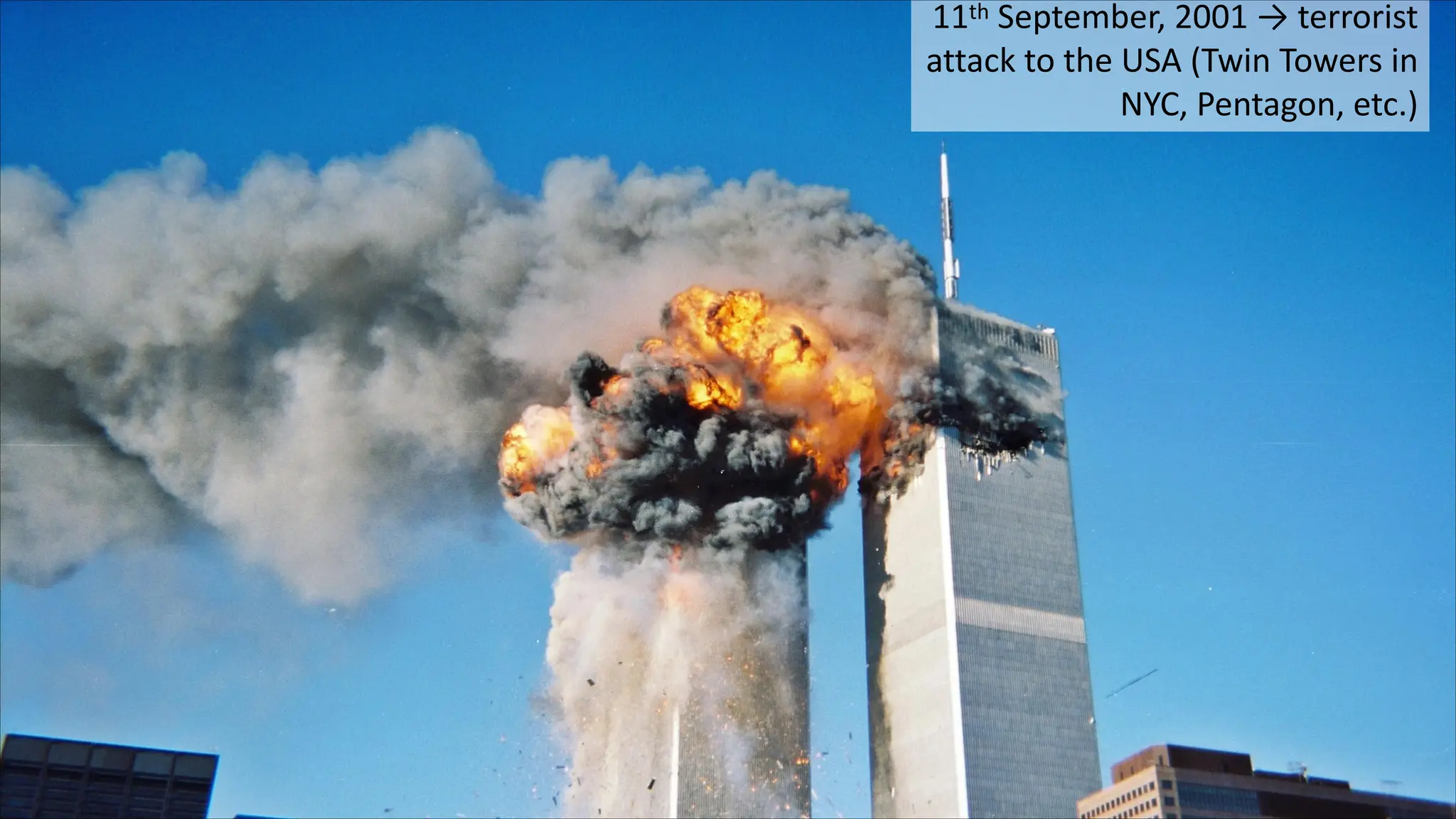
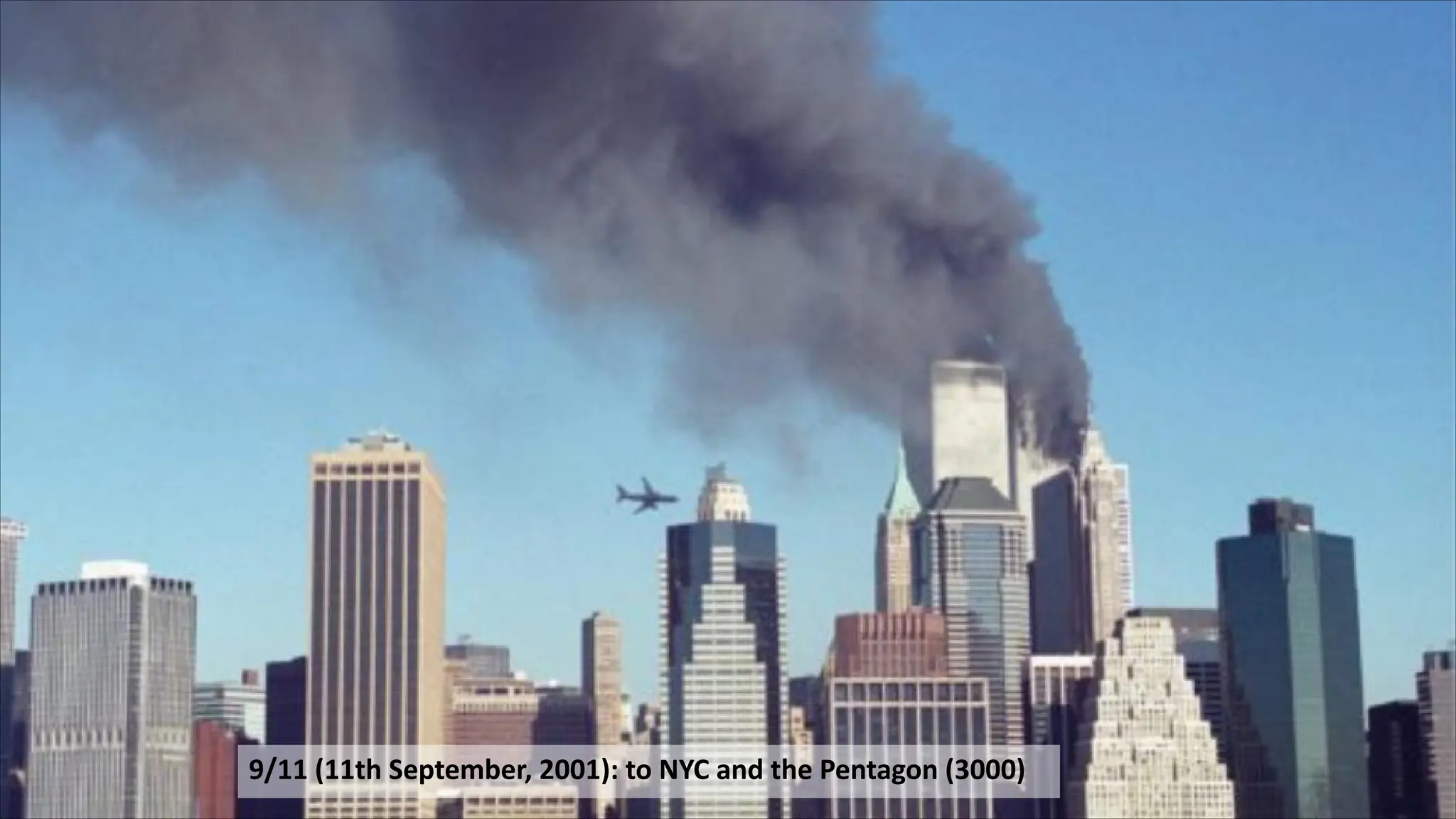
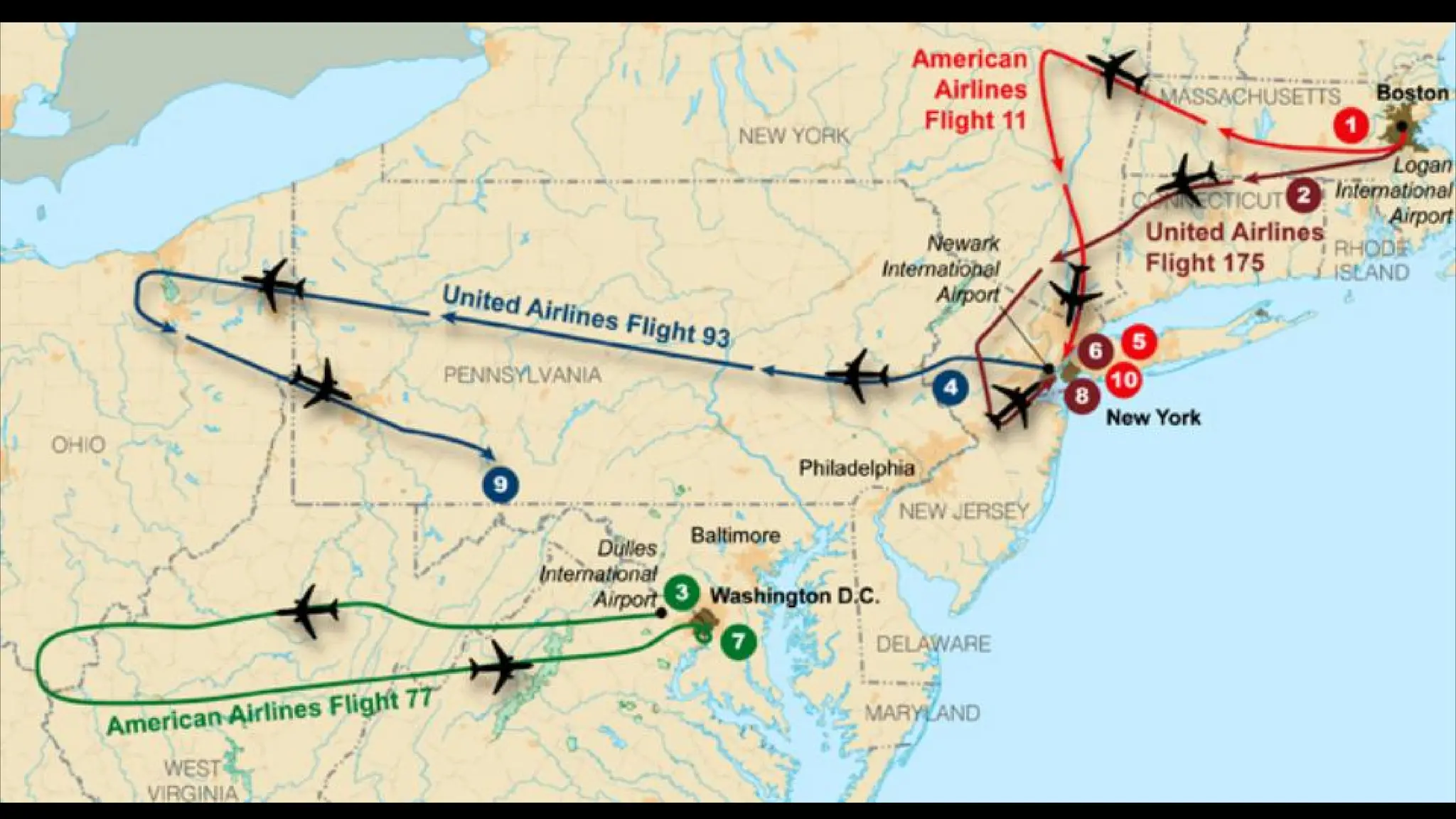
11th September, 2001 → terrorist
attack to the USA (Twin Towers in
NYC, Pentagon, etc.)
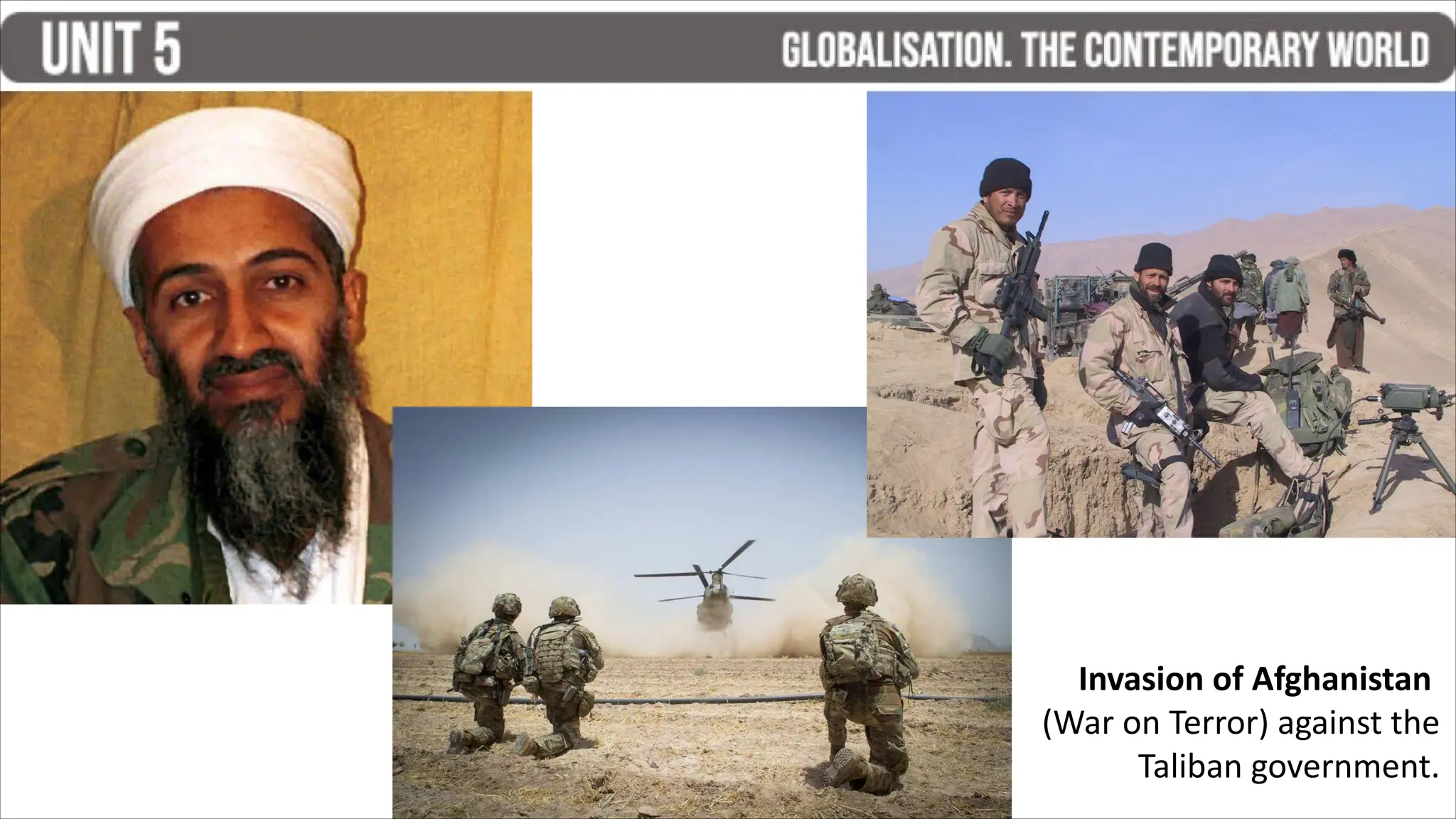
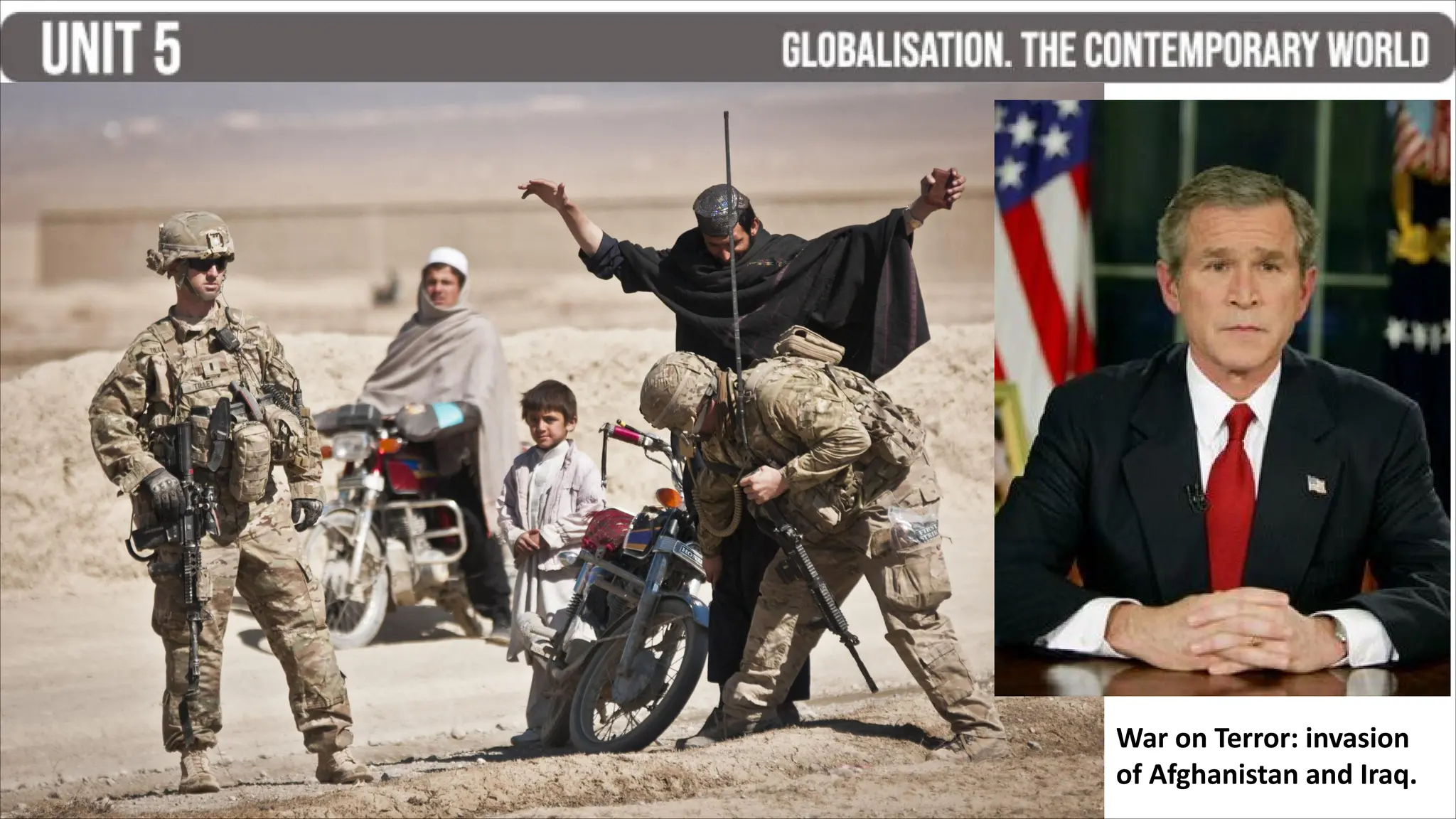
Invasion of Afghanistan
(War on Terror) against the
Taliban government.
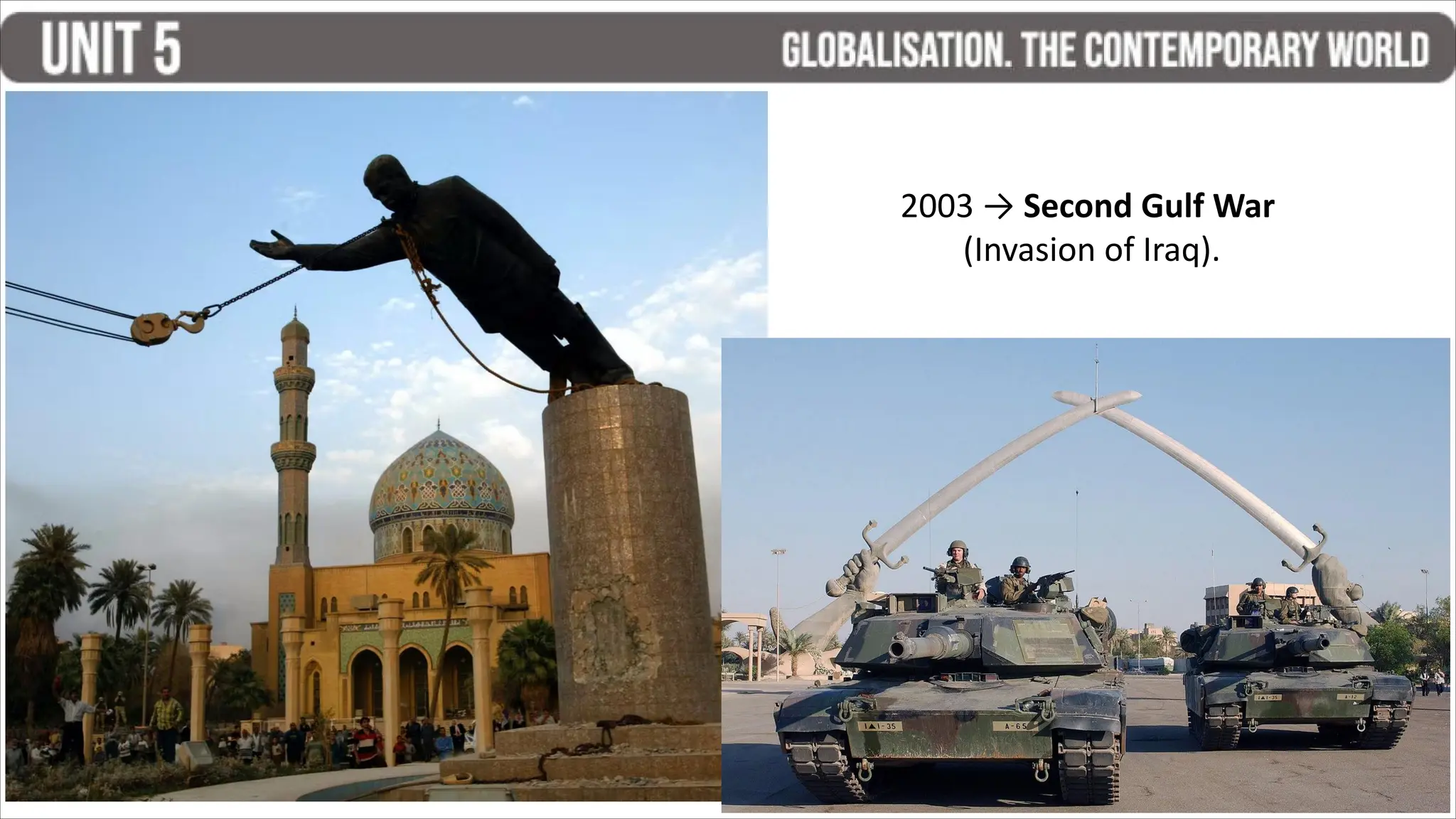
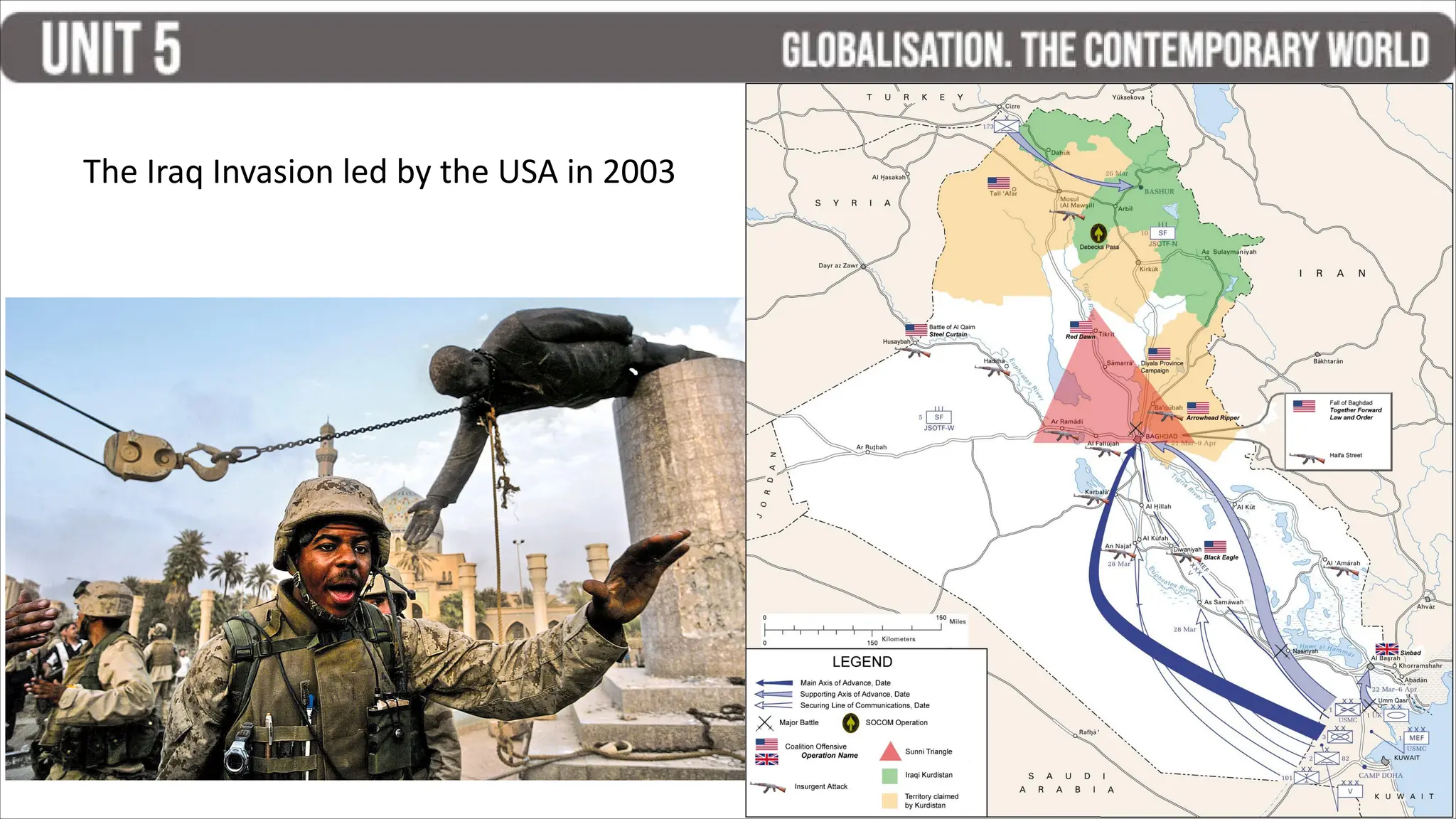
2003 → Second Gulf War
(Invasion of Iraq).
2. The global challenge of Islamic fundamentalism
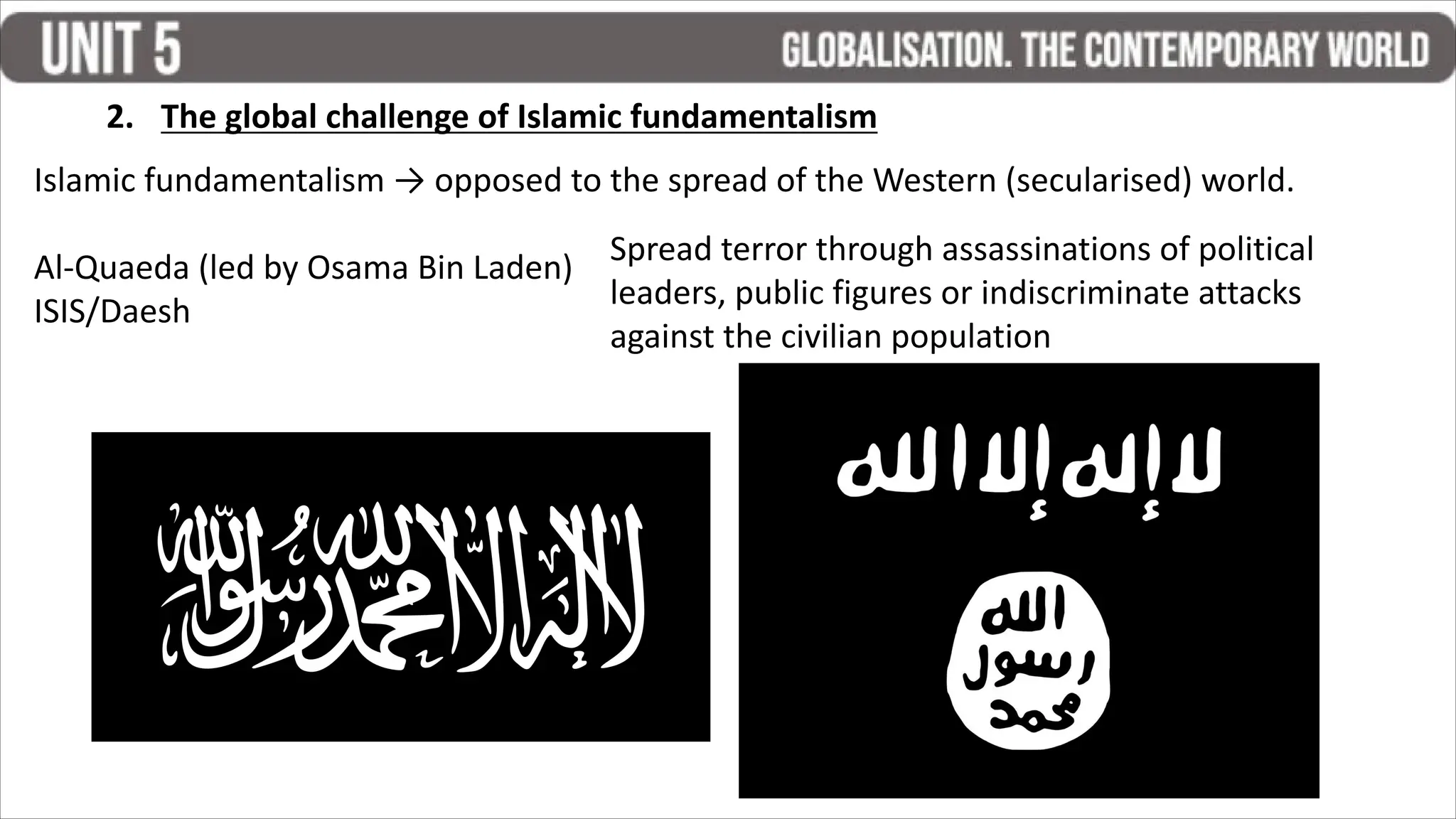
Islamic fundamentalism → opposed to the spread of the Western (secularised) world.
Al-Quaeda (led by Osama Bin Laden)
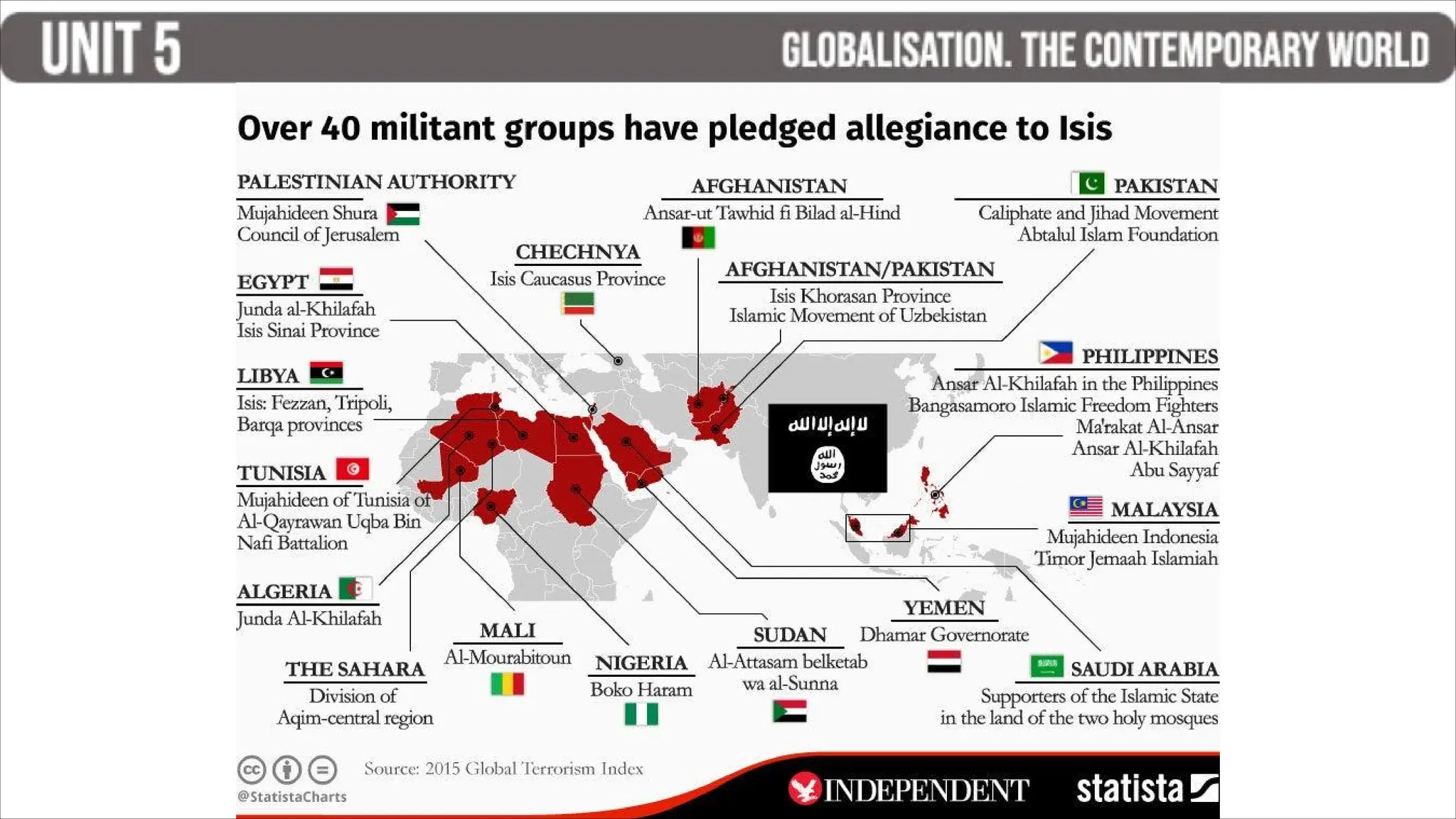
ISIS/Daesh
Spread terror through assassinations of political
leaders, public figures or indiscriminate attacks
against the civilian population
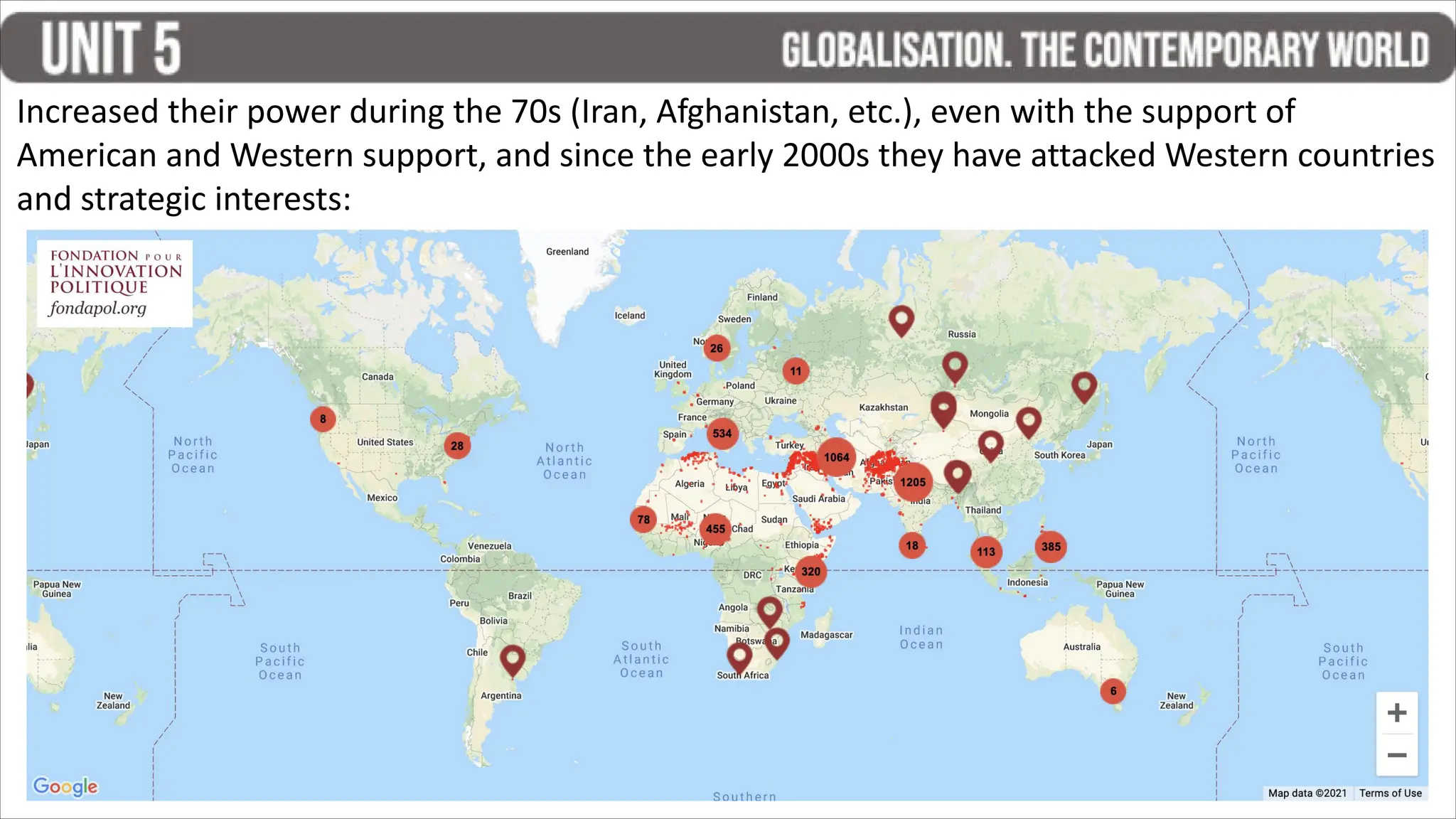
Increased their power during the 70s (Iran, Afghanistan, etc.), even with the support of
American and Western support, and since the early 2000s they have attacked Western countries
and strategic interests:
9/11 (11th September, 2001): to NYC and the Pentagon (3000)
War on Terror: invasion
of Afghanistan and Iraq.
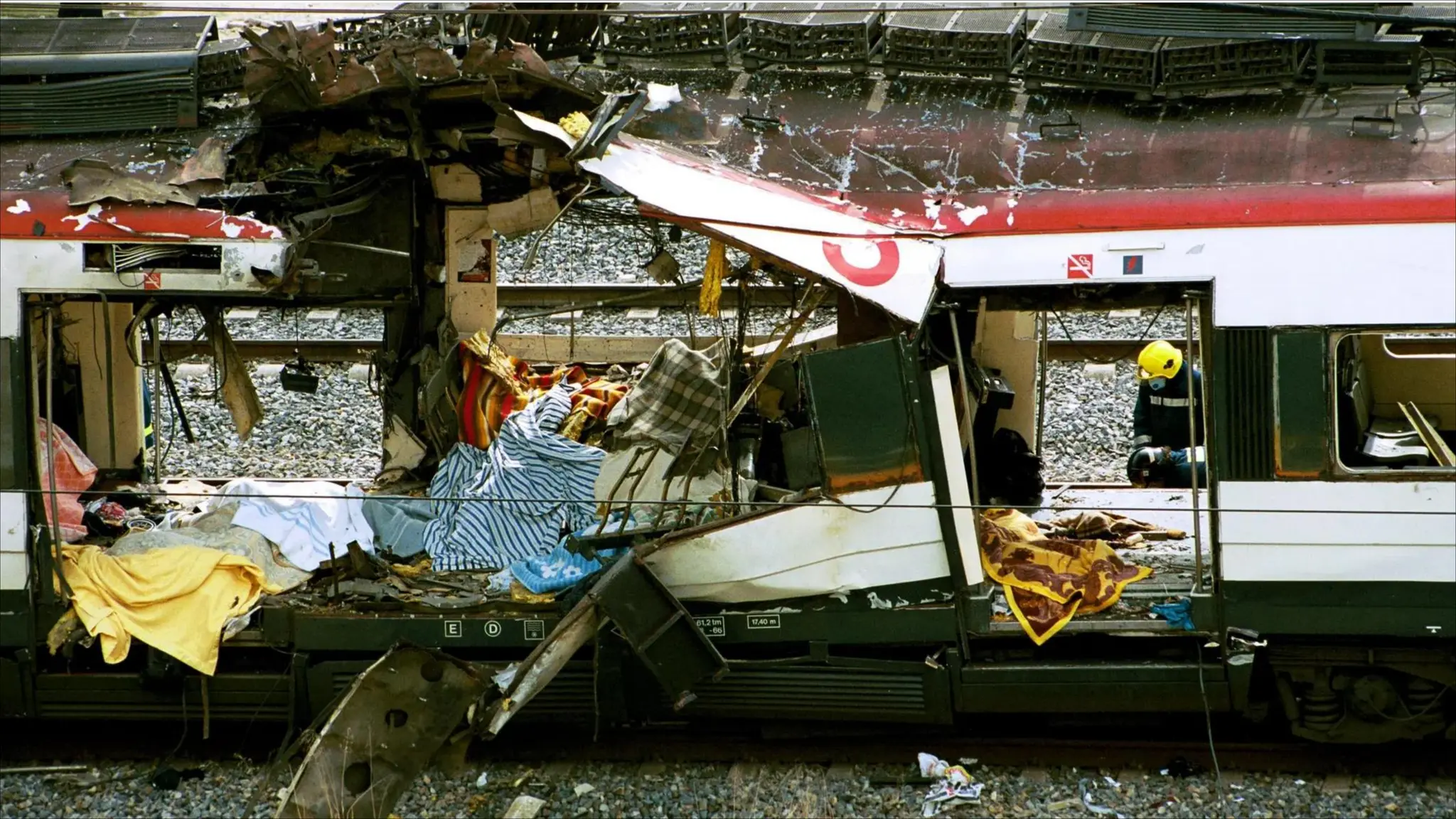
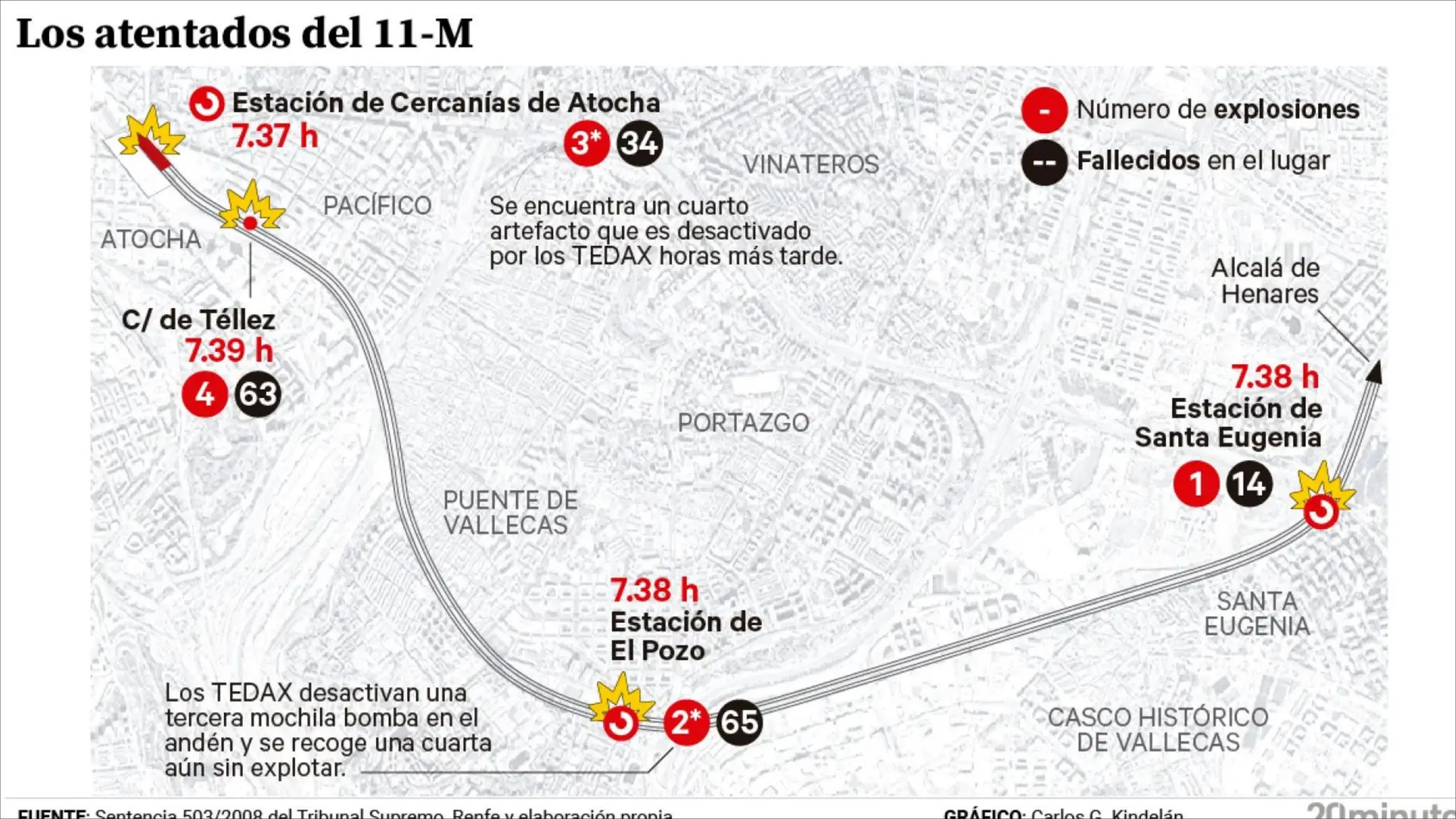
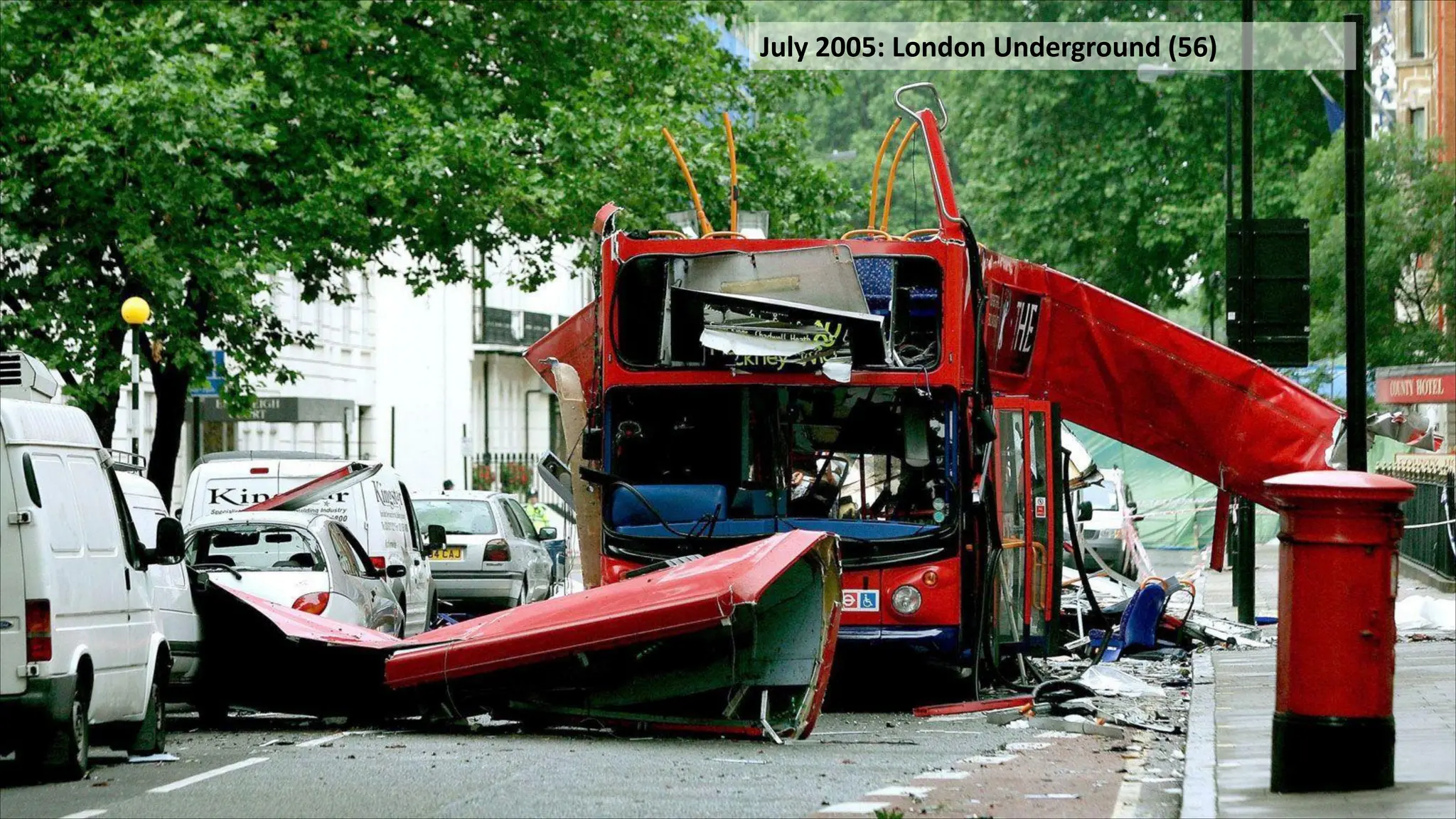
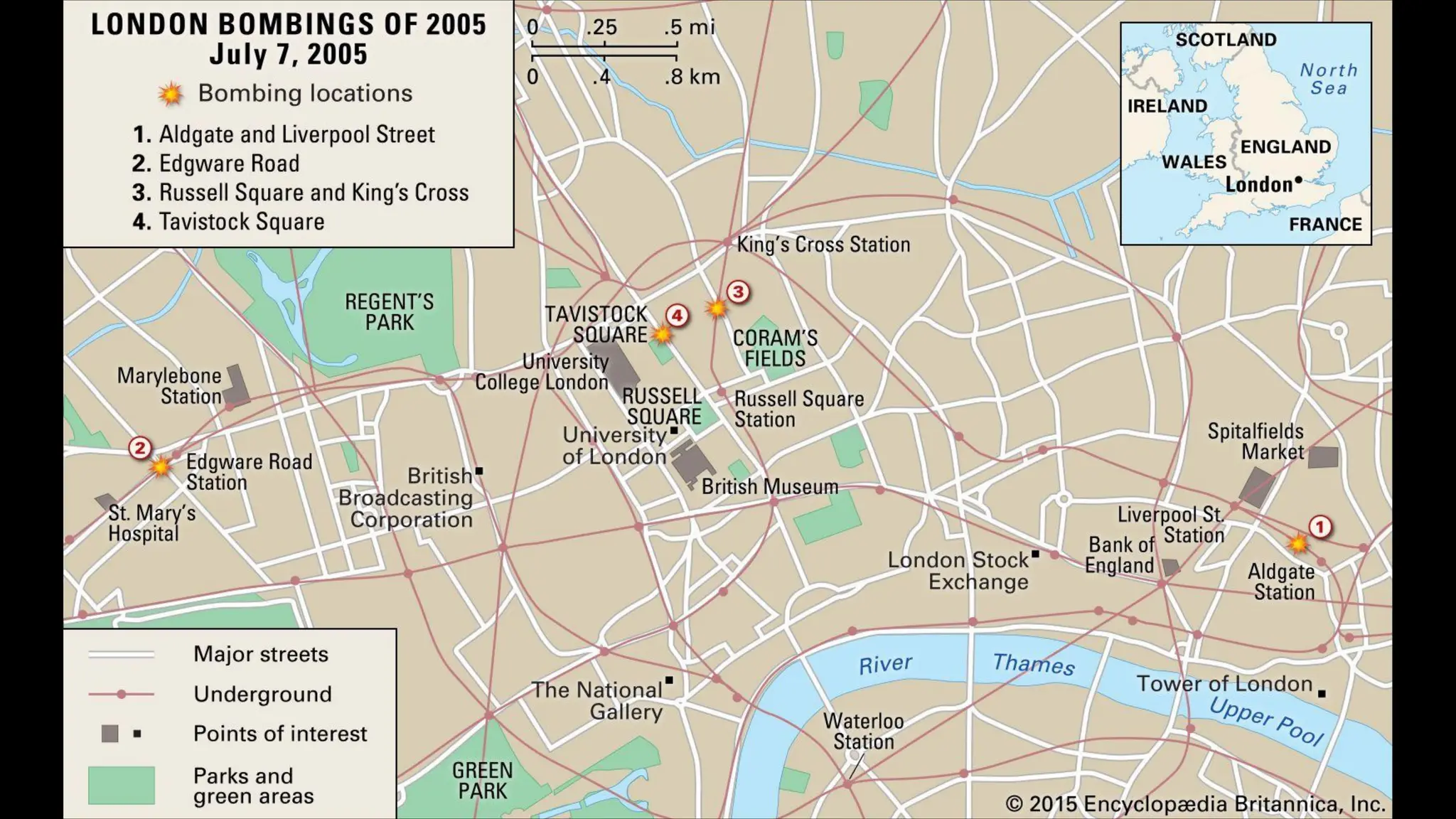
July 2005: London Underground (56)
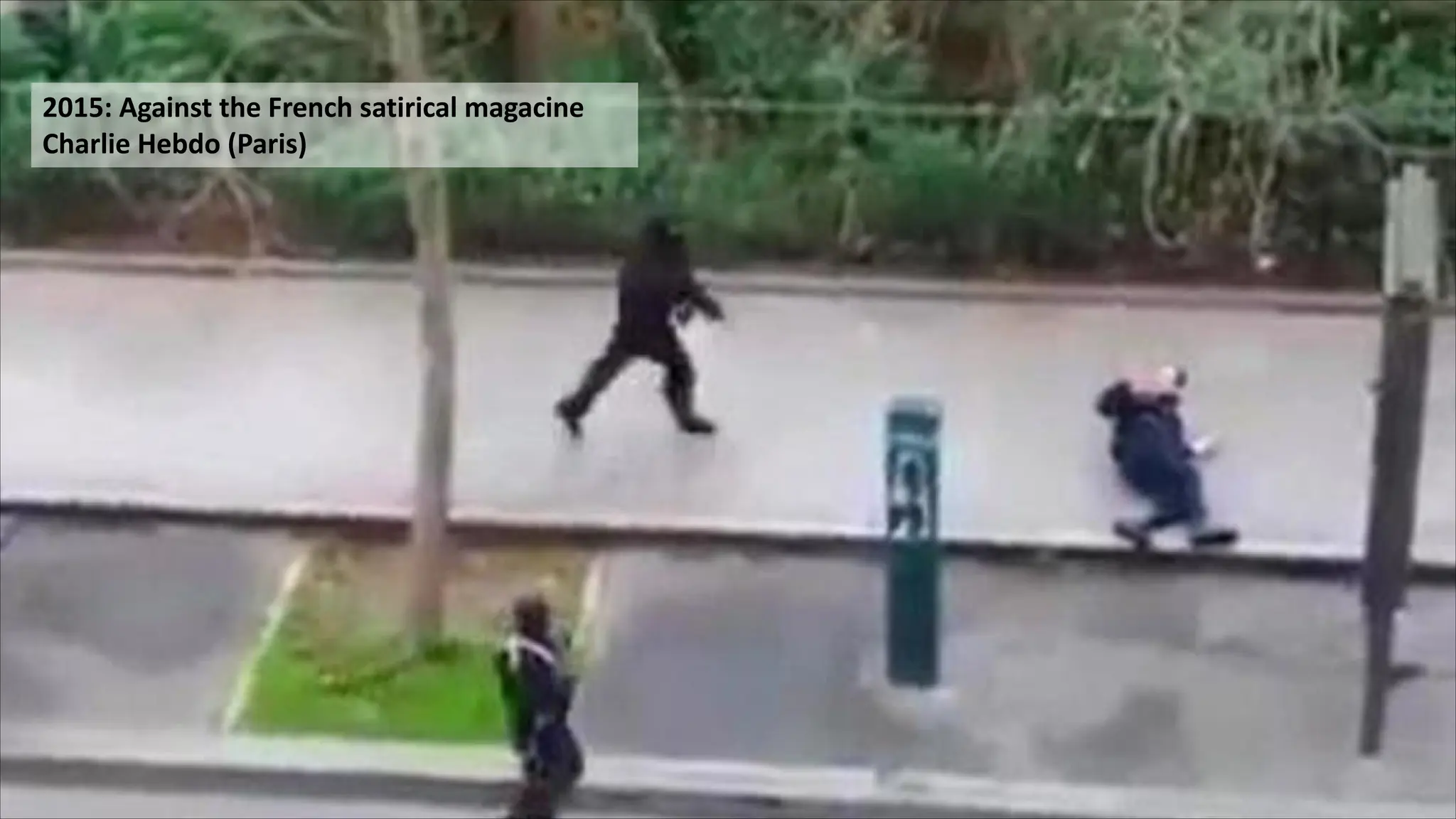
2015: Against the French satirical magacine
Charlie Hebdo (Paris)
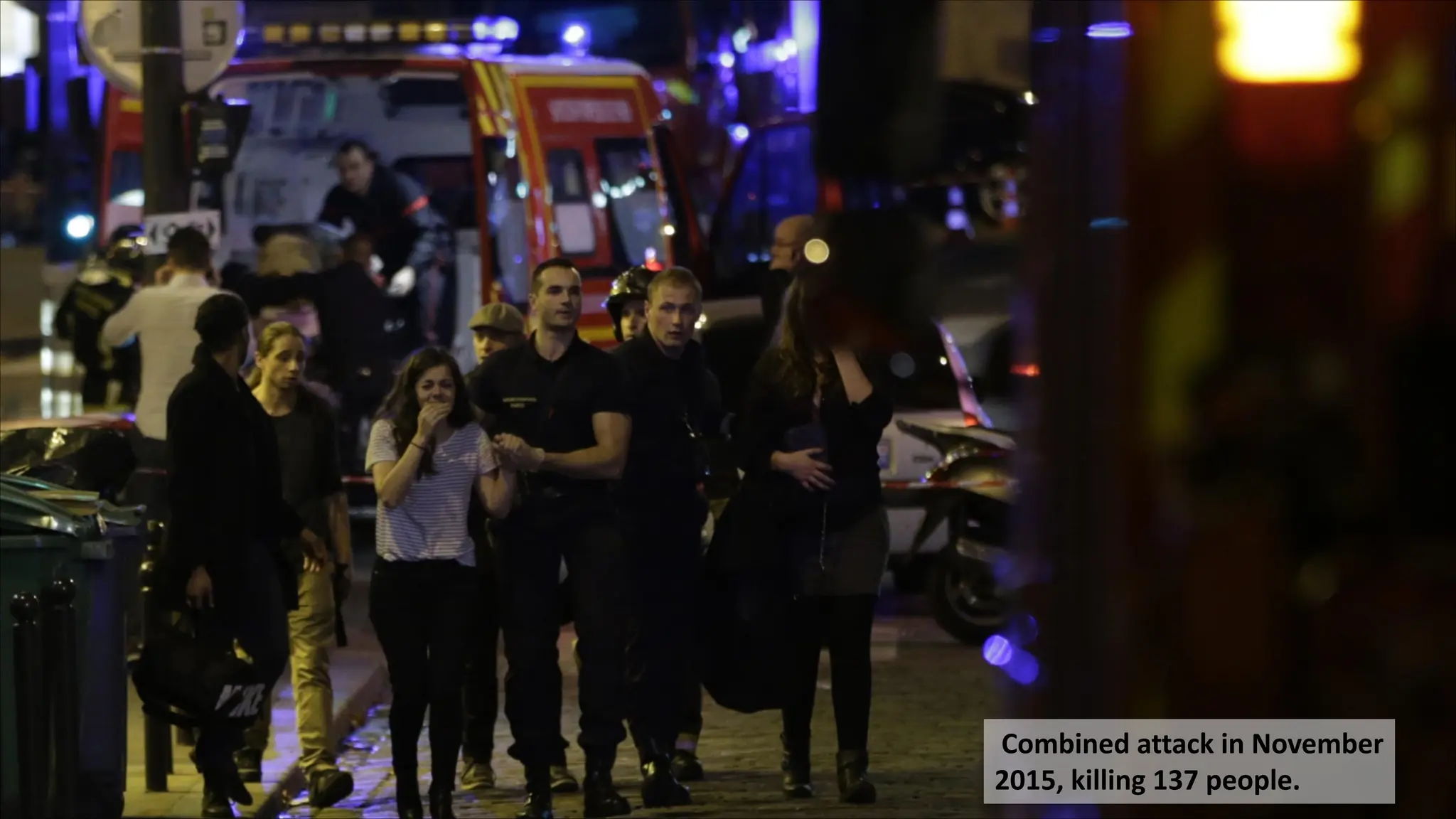
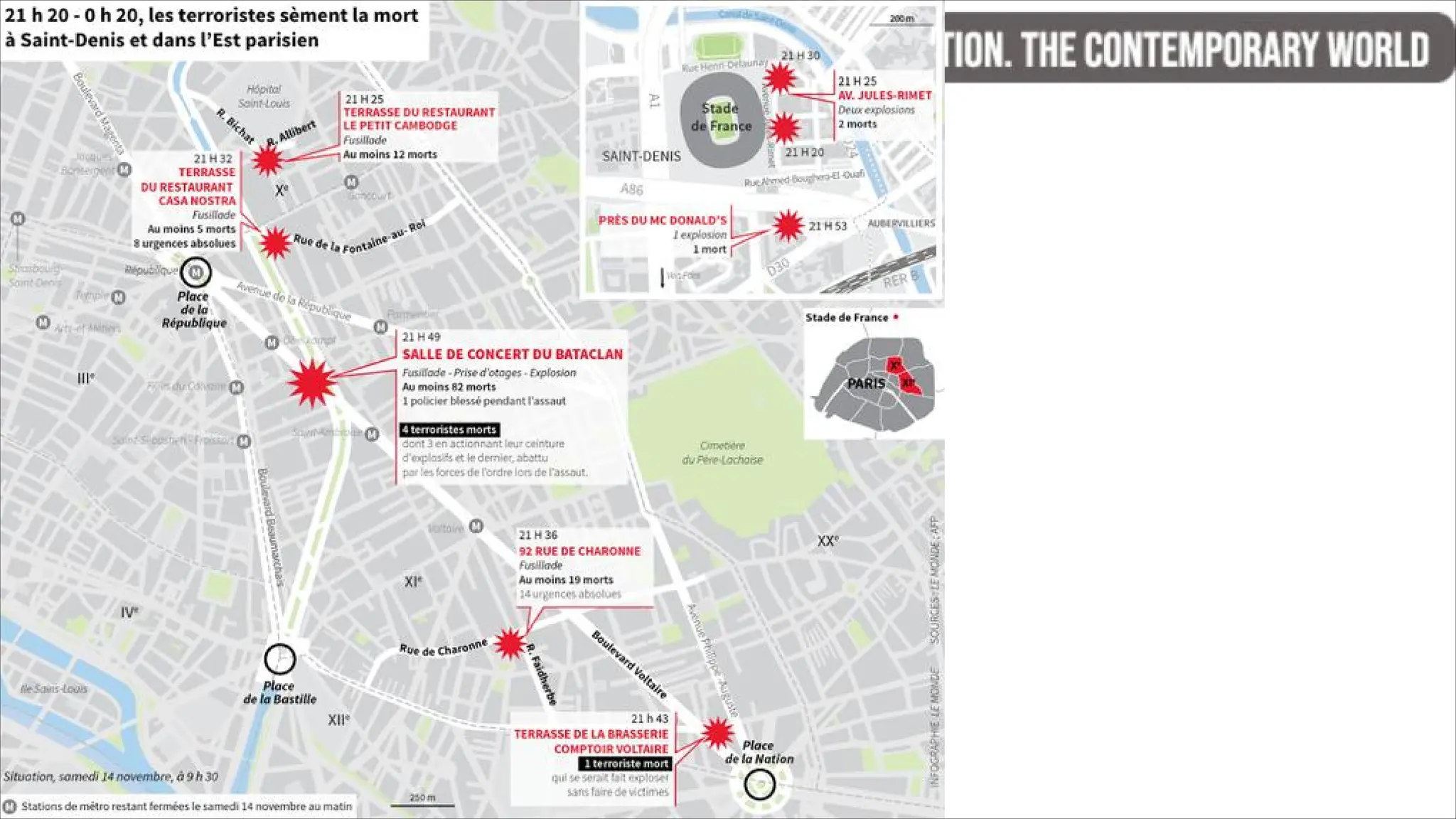
Combined attack in November
2015, killing 137 people.
○ 2016: Brussels bombings, at the airport, Nice (France) with a truck.
○ 2017: Manchester Arena (22), Barcelona, etc.
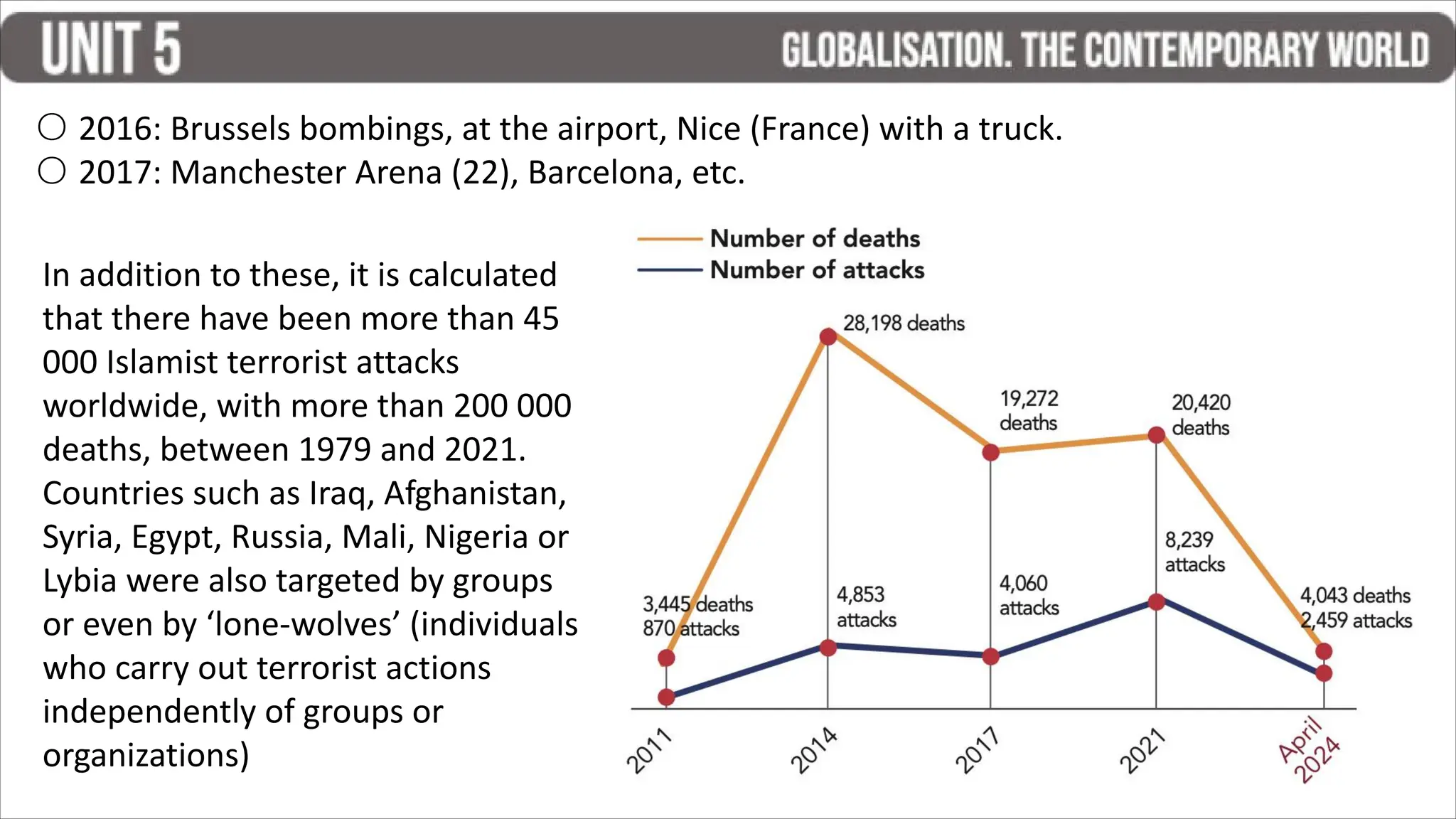
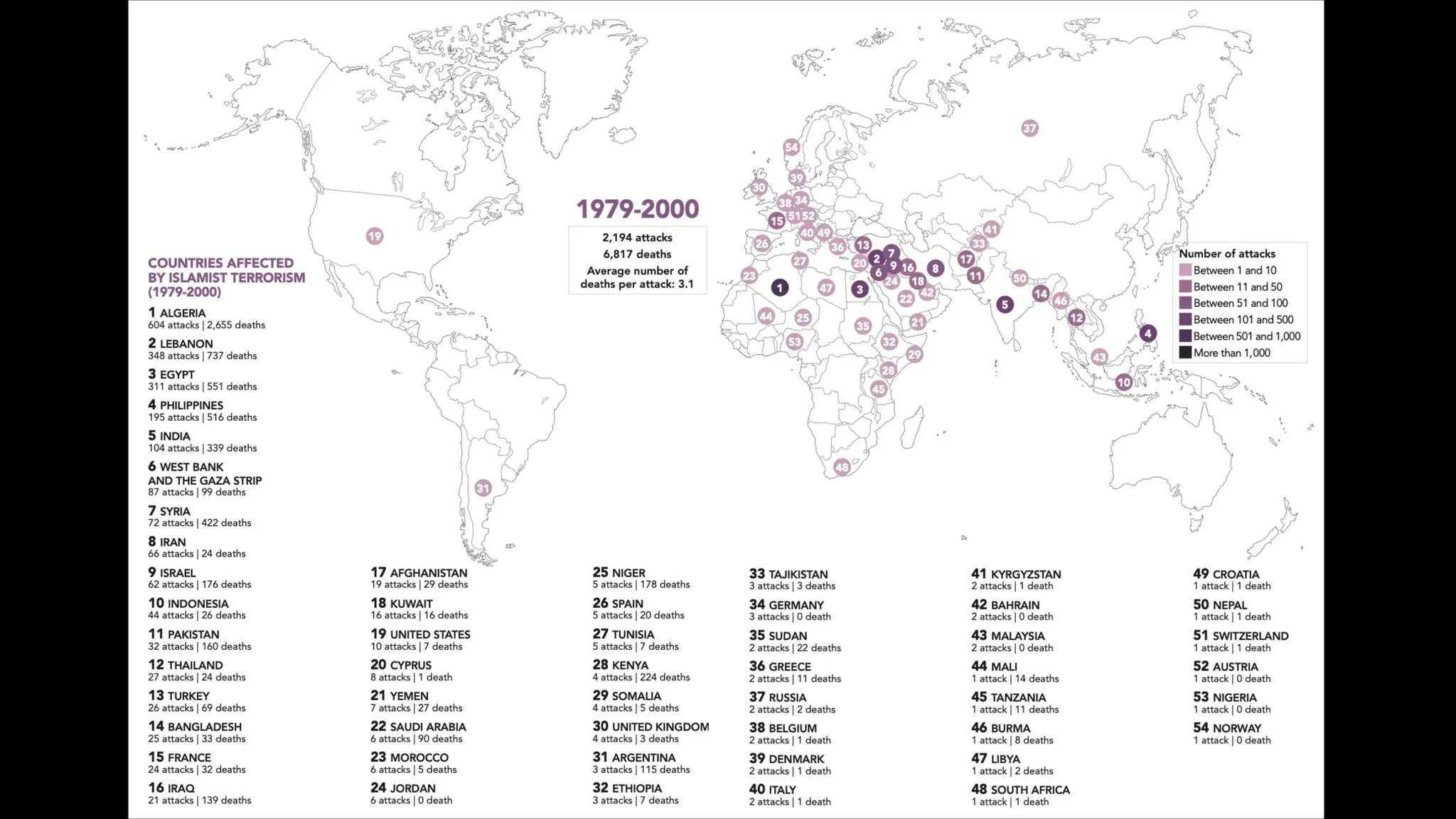
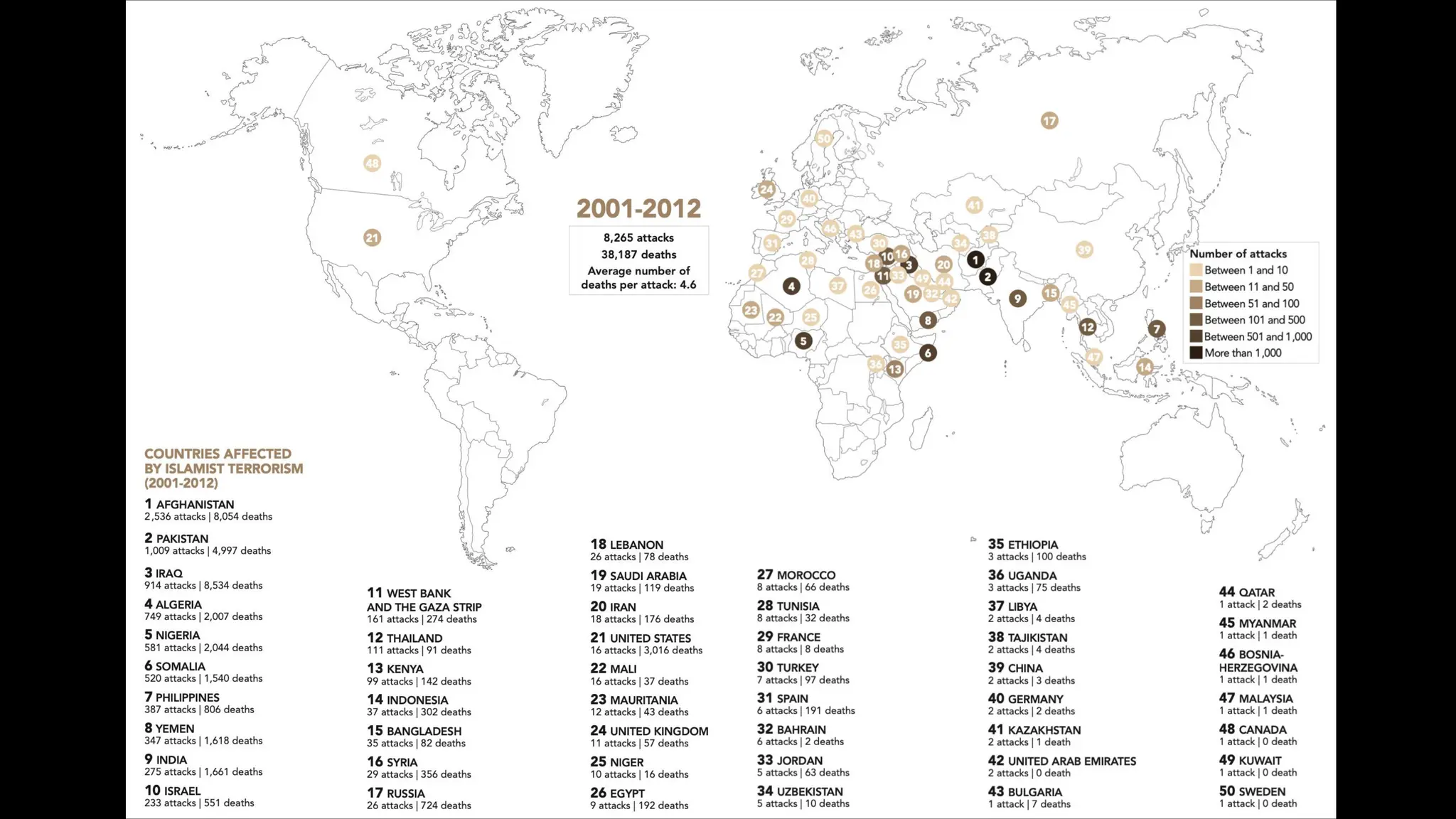
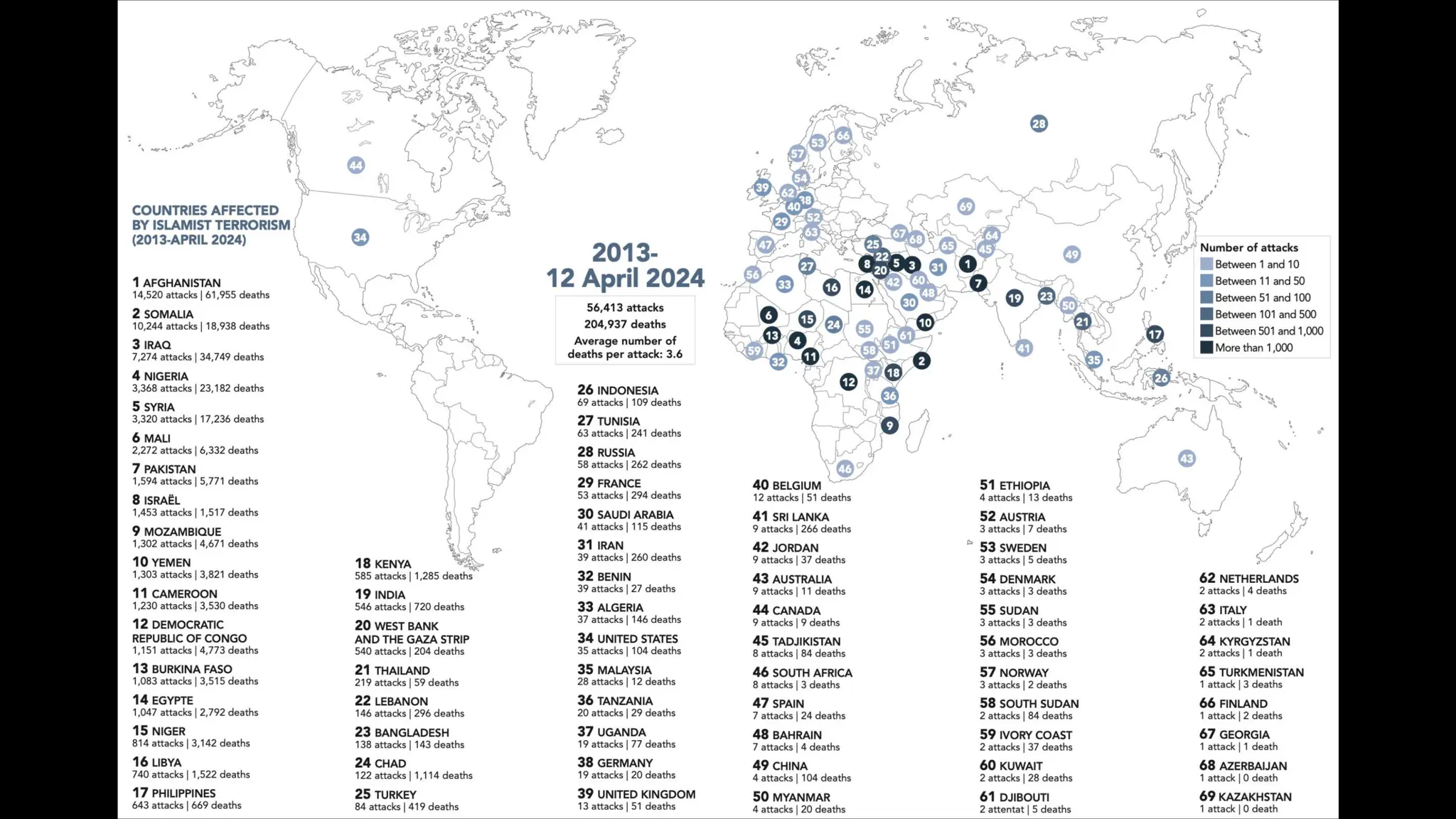
In addition to these, it is calculated
that there have been more than 45
000 Islamist terrorist attacks
worldwide, with more than 200 000
deaths, between 1979 and 2021.
Countries such as Iraq, Afghanistan,
Syria, Egypt, Russia, Mali, Nigeria or
Lybia were also targeted by groups
or even by ‘lone-wolves’ (individuals
who carry out terrorist actions
independently of groups or
organizations)
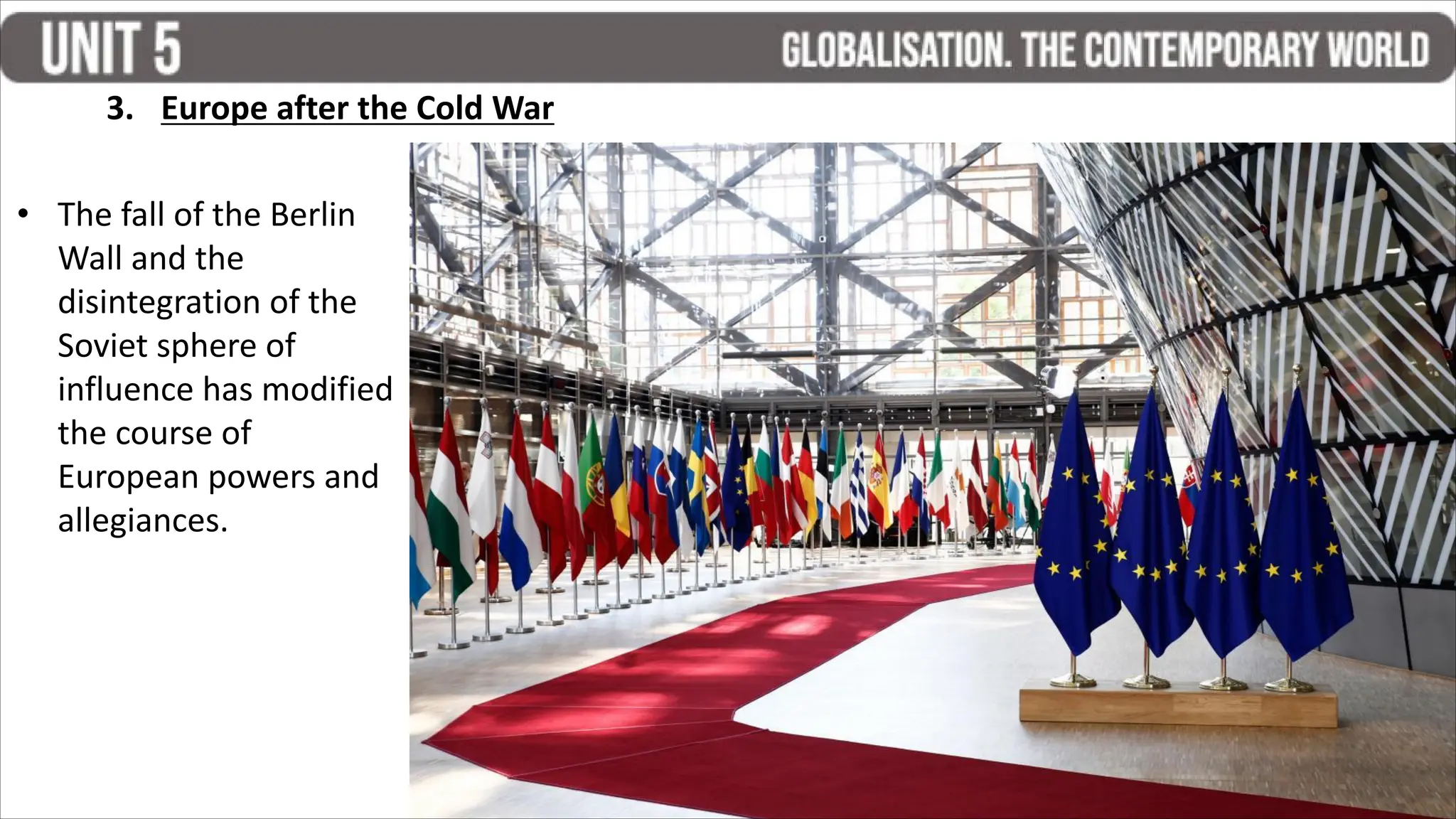
3. Europe after the Cold War
• The fall of the Berlin
Wall and the
disintegration of the
Soviet sphere of
influence has modified
the course of
European powers and
allegiances.
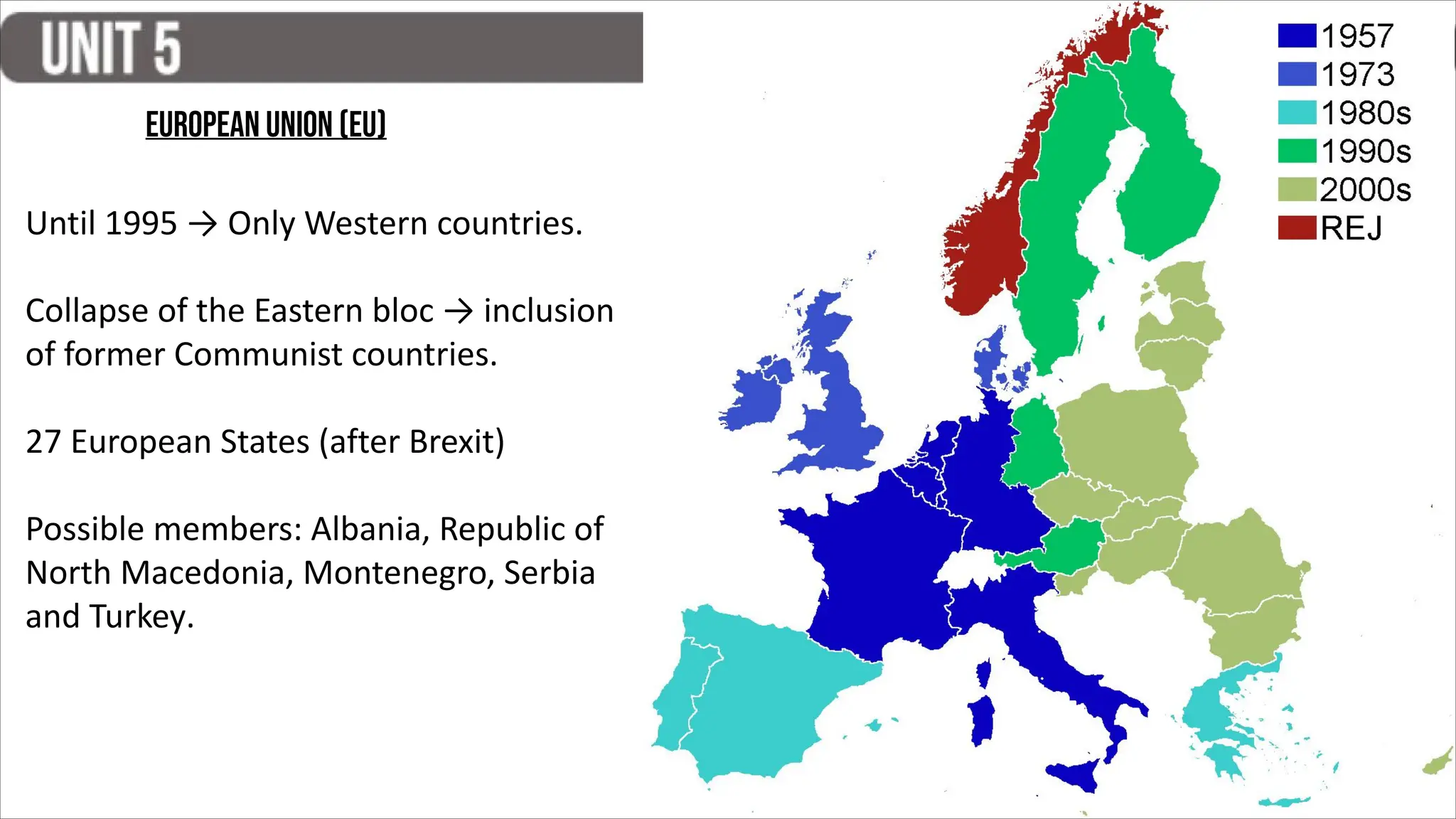
European Union (EU)
Until 1995 → Only Western countries.
Collapse of the Eastern bloc → inclusion
of former Communist countries.
27 European States (after Brexit)
Possible members: Albania, Republic of
North Macedonia, Montenegro, Serbia
and Turkey.
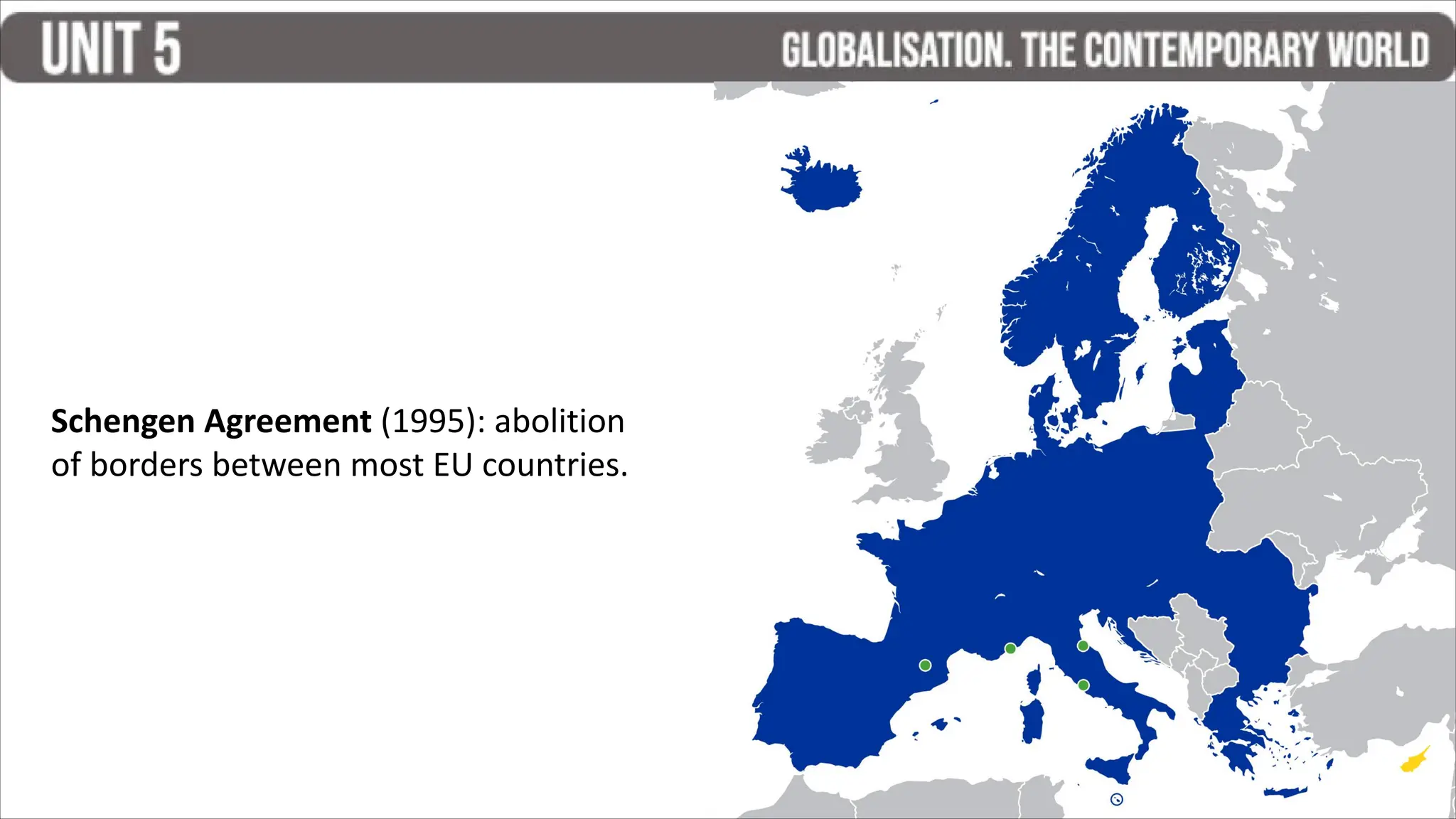
Schengen Agreement (1995): abolition
of borders between most EU countries.
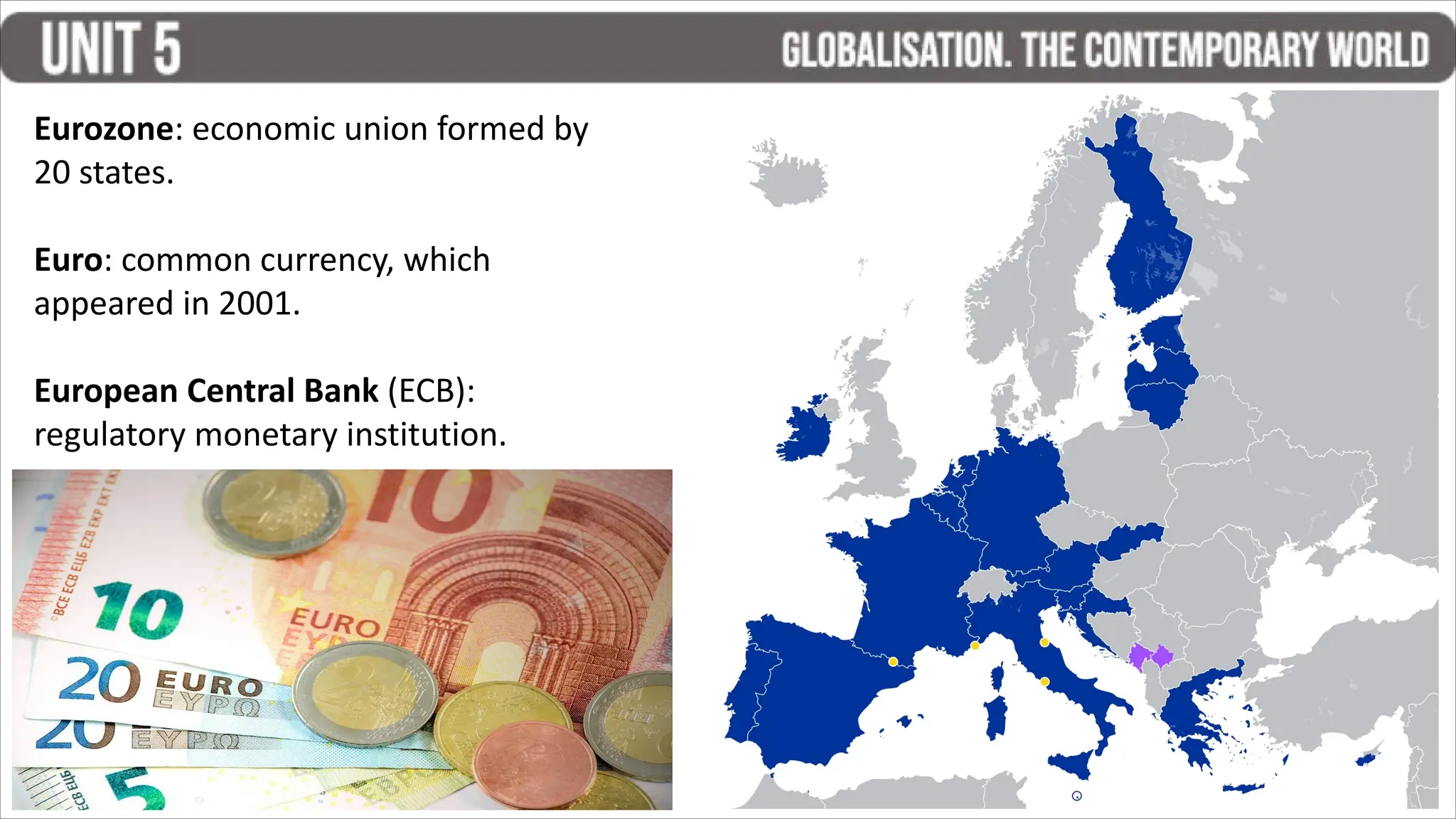
Eurozone: economic union formed by
20 states.
Euro: common currency, which
appeared in 2001.
European Central Bank (ECB):
regulatory monetary institution.
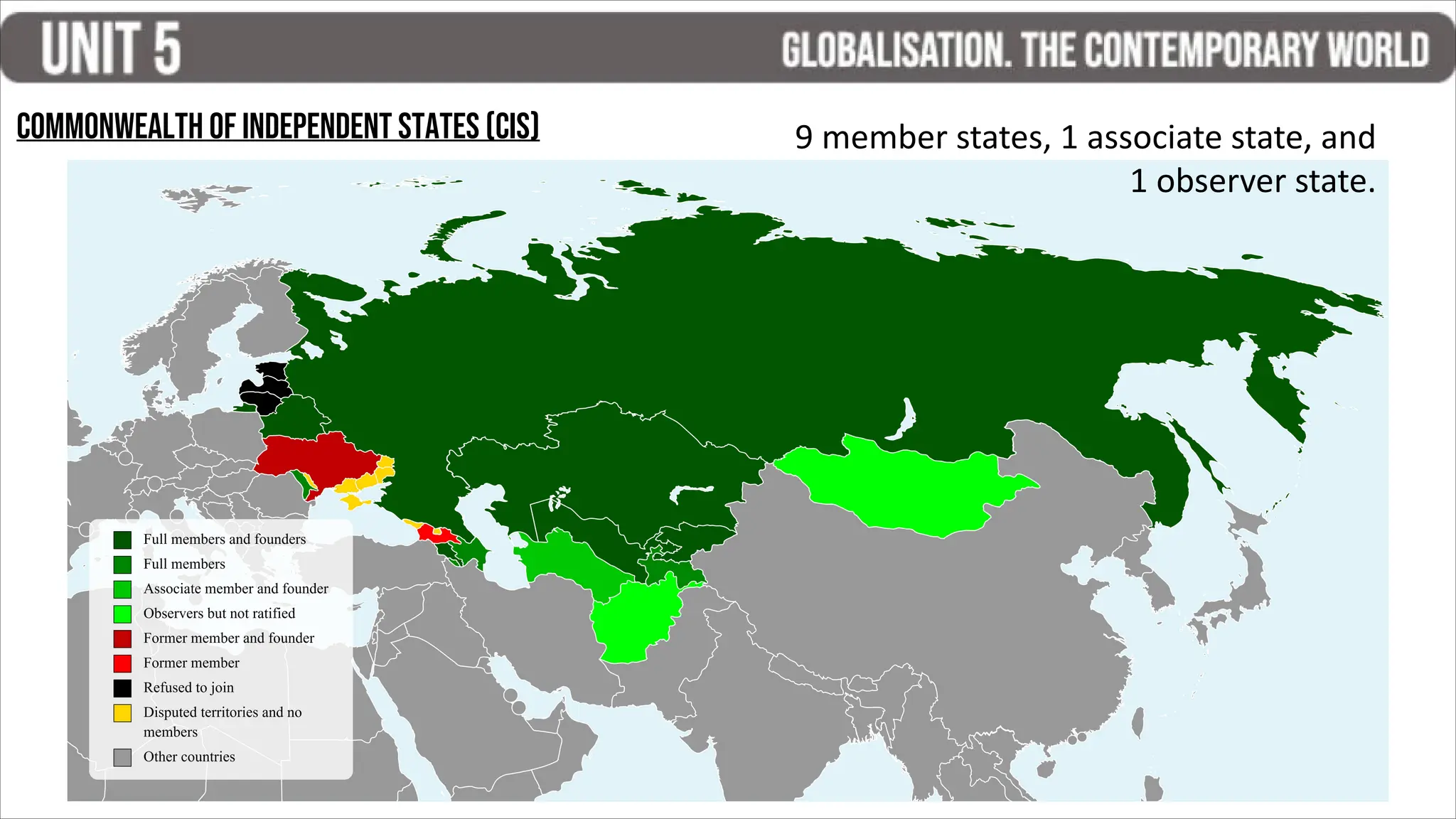
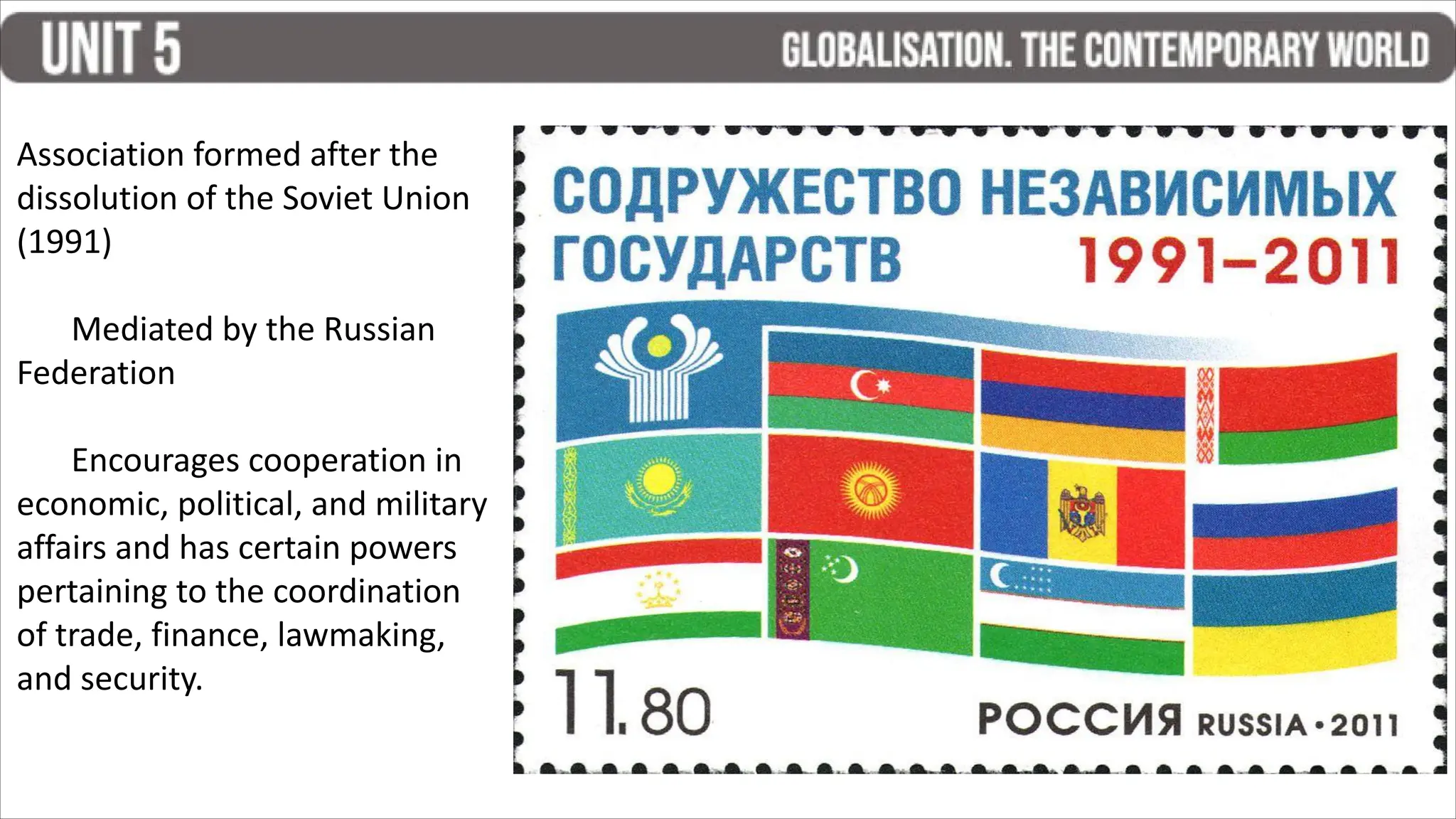
Commonwealth of Independent States (CIS) 9 member states, 1 associate state, and
1 observer state.
Association formed after the
dissolution of the Soviet Union
(1991)
Mediated by the Russian
Federation
Encourages cooperation in
economic, political, and military
affairs and has certain powers
pertaining to the coordination
of trade, finance, lawmaking,
and security.
CONFLICTS
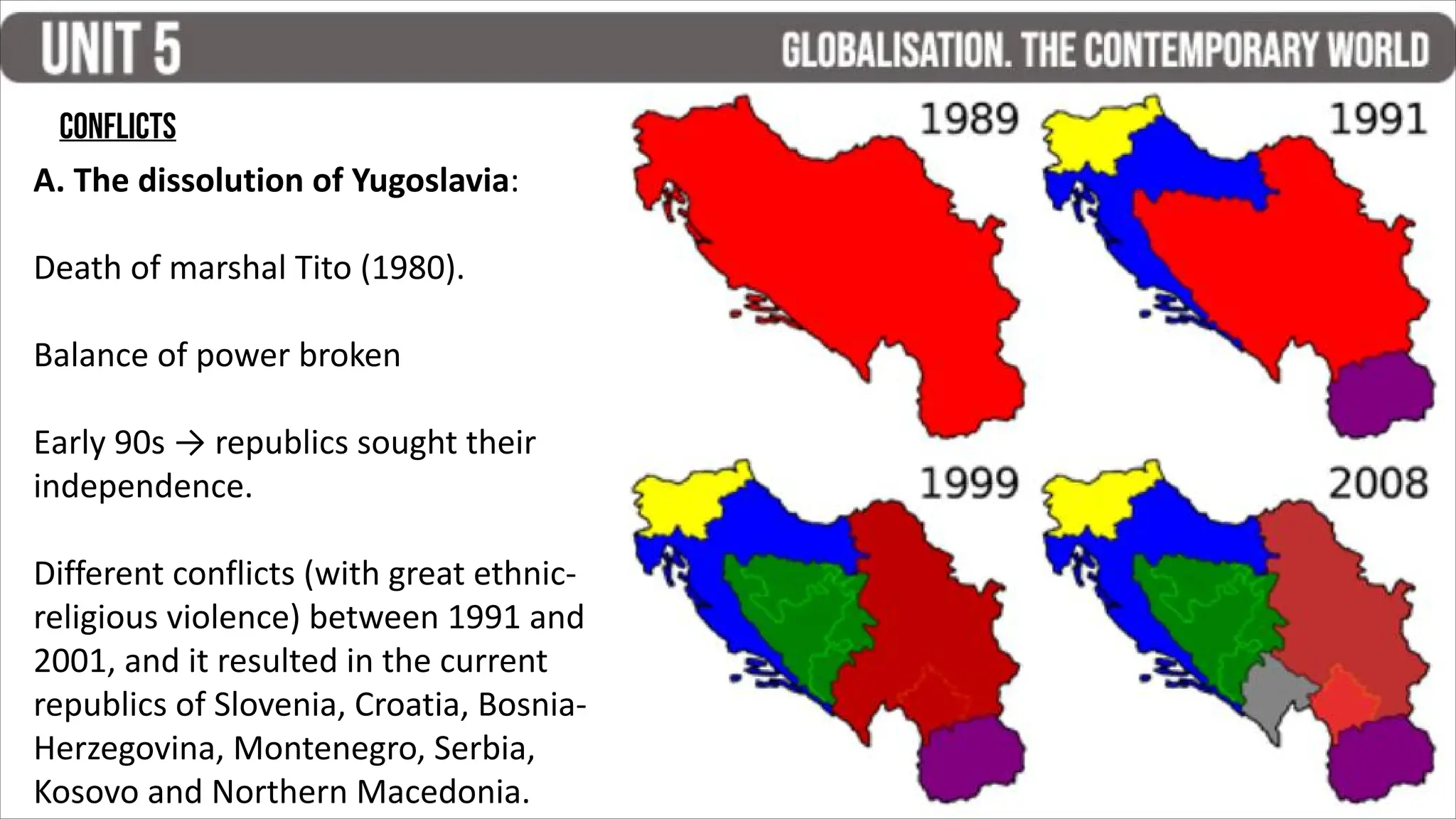
A. The dissolution of Yugoslavia:
Death of marshal Tito (1980).
Balance of power broken
Early 90s → republics sought their
independence.
Different conflicts (with great ethnic-
religious violence) between 1991 and
2001, and it resulted in the current
republics of Slovenia, Croatia, Bosnia-
Herzegovina, Montenegro, Serbia,
Kosovo and Northern Macedonia.
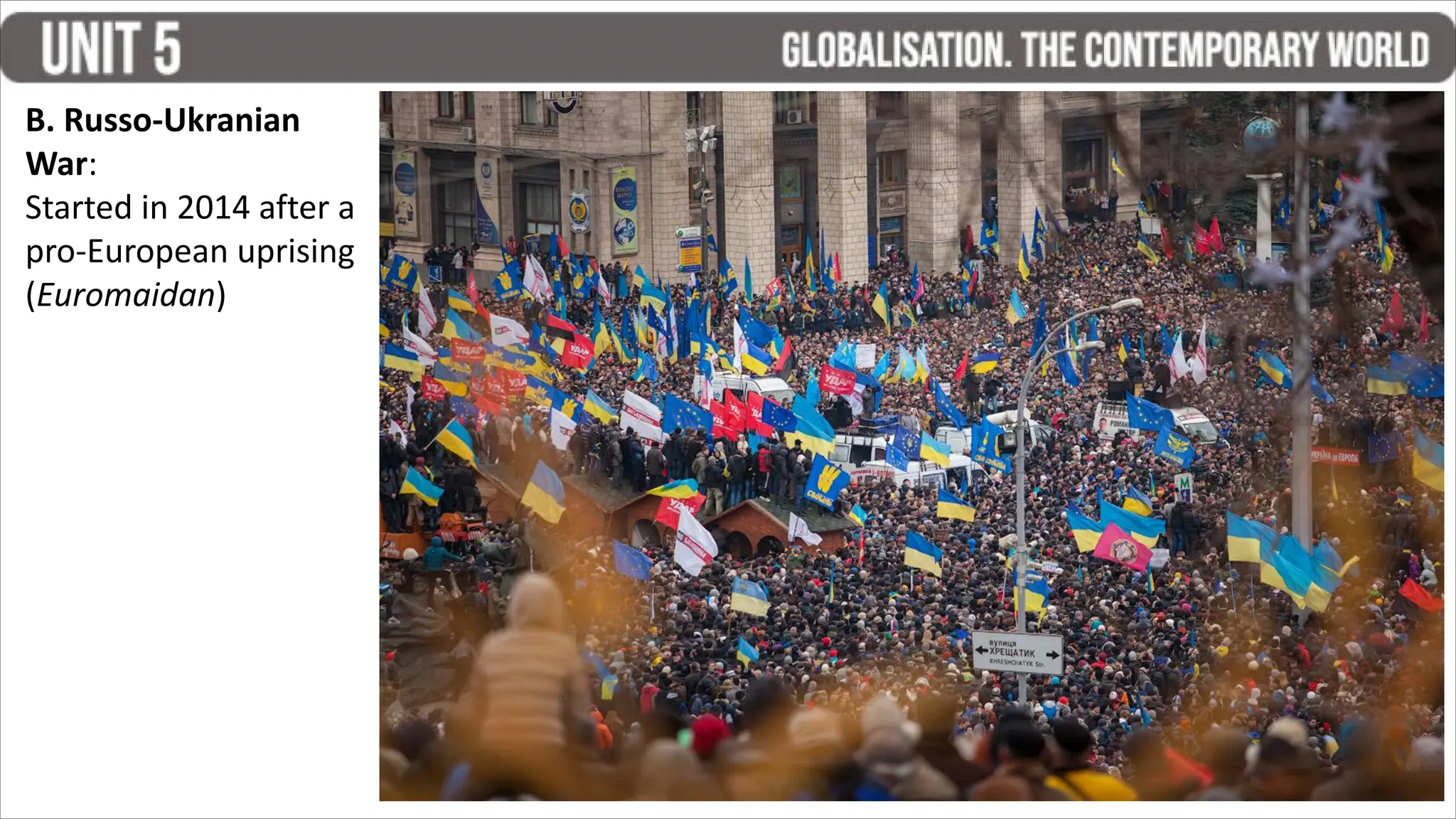
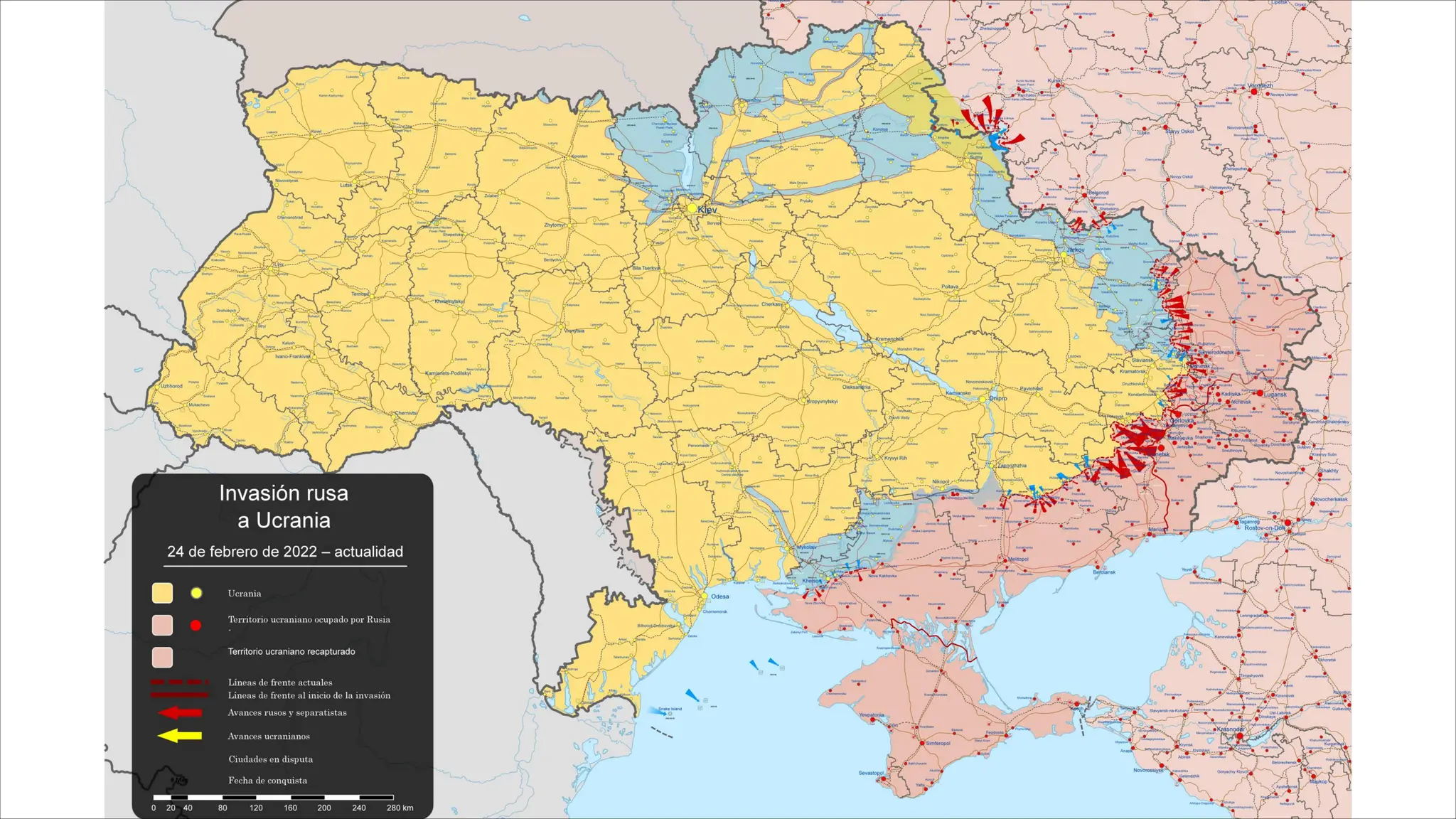
B. Russo-Ukranian
War:
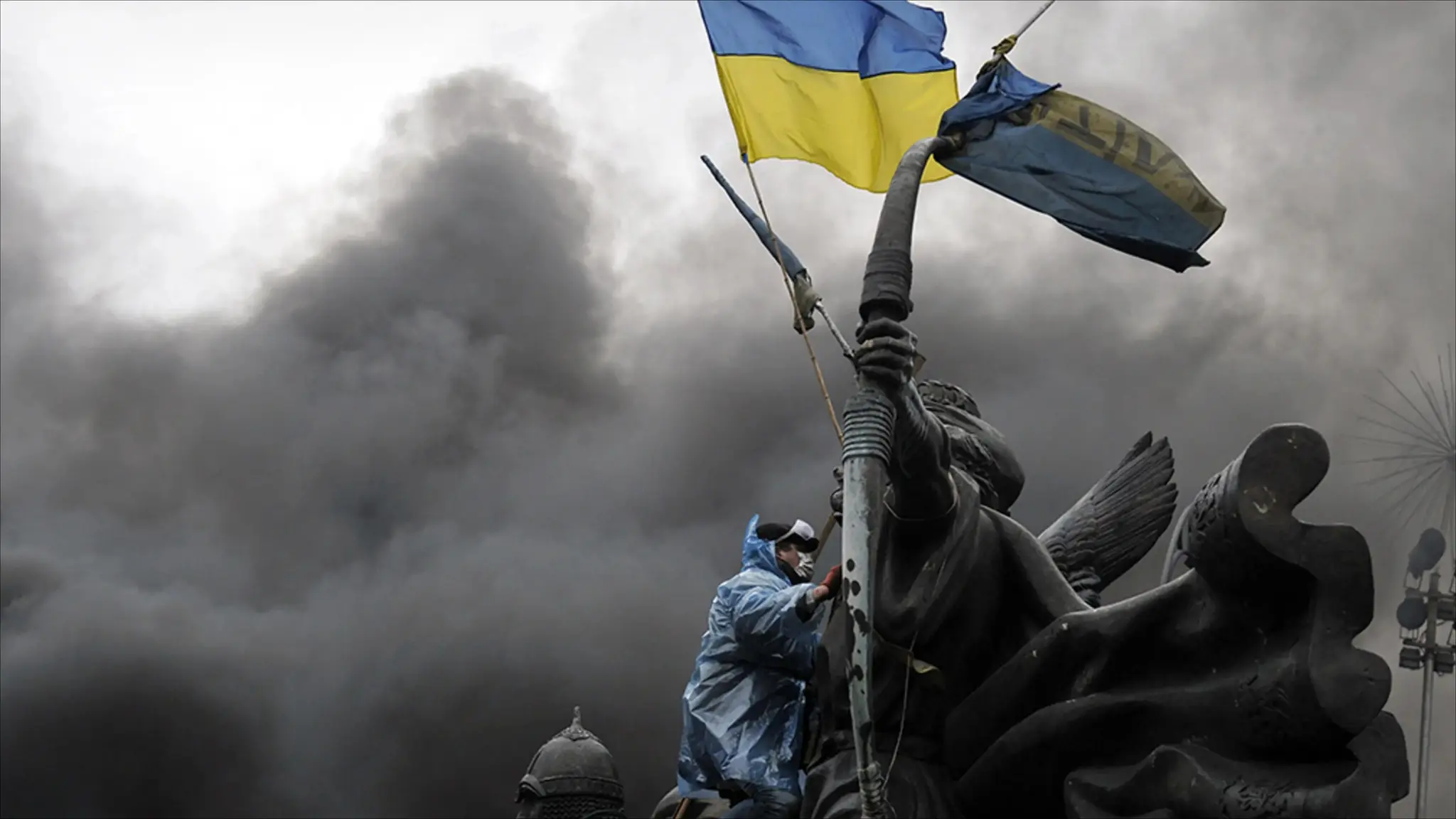
Started in 2014 after a
pro-European uprising
(Euromaidan)
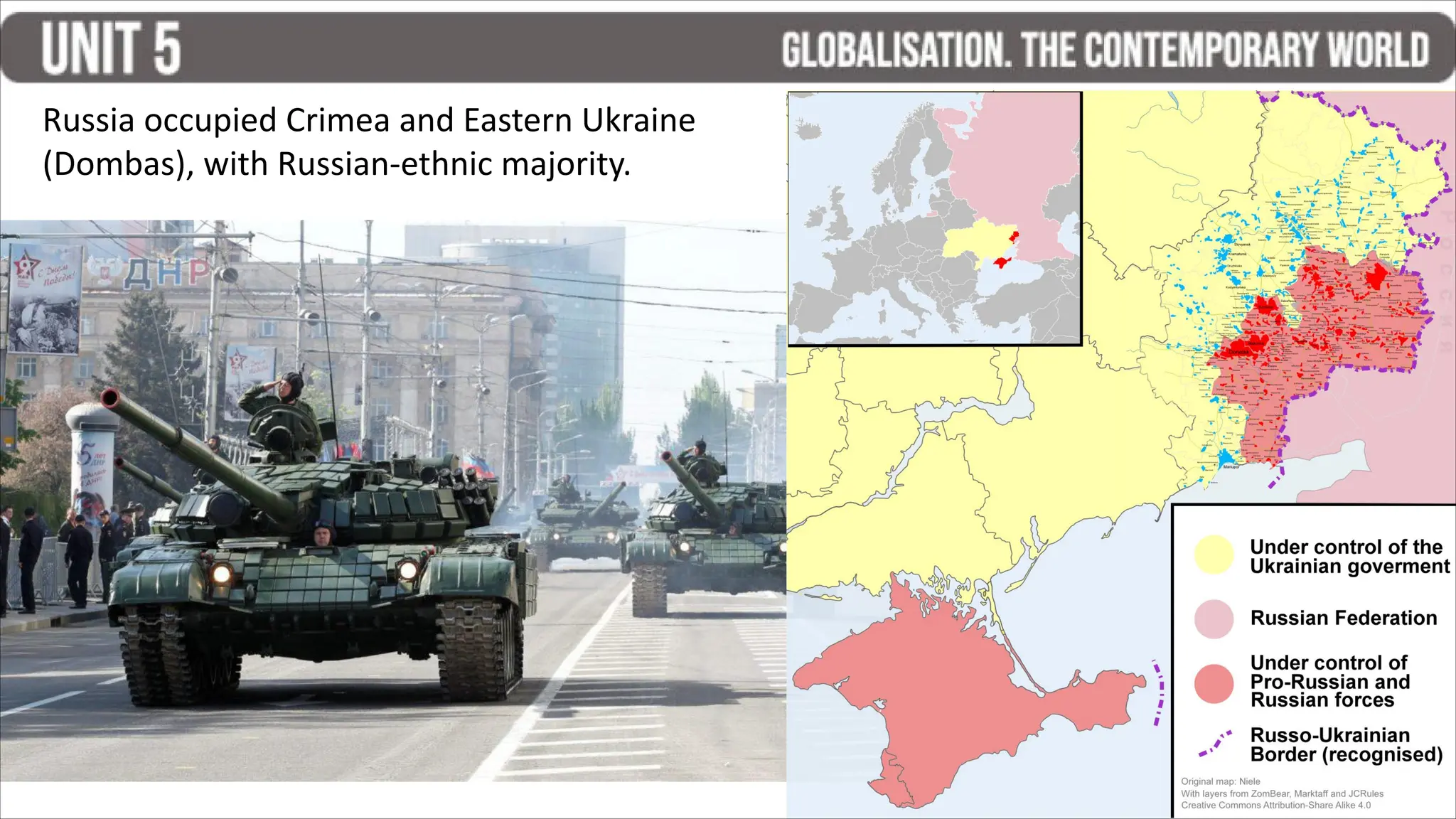
Russia occupied Crimea and Eastern Ukraine
(Dombas), with Russian-ethnic majority.
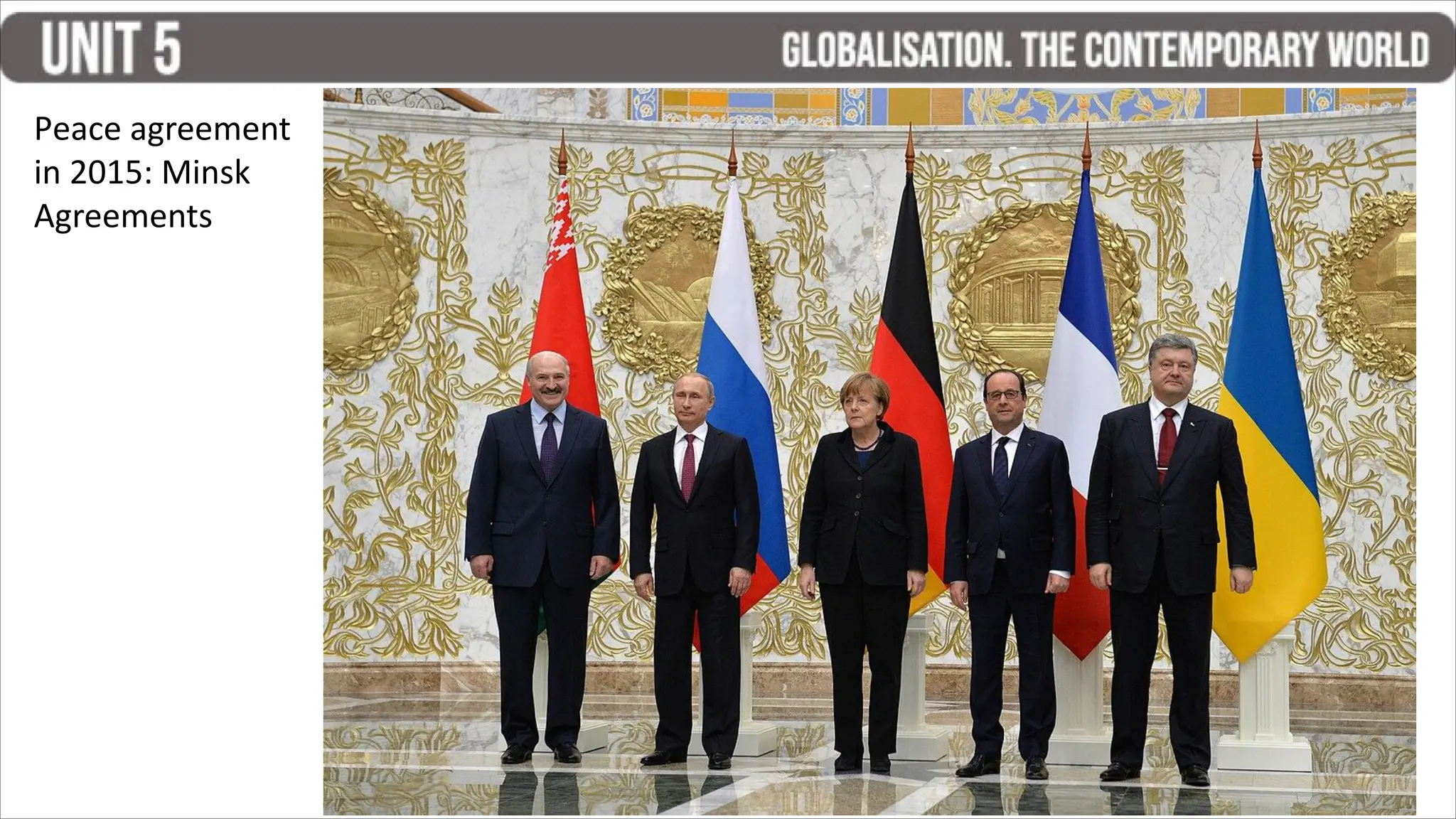
Peace agreement
in 2015: Minsk
Agreements
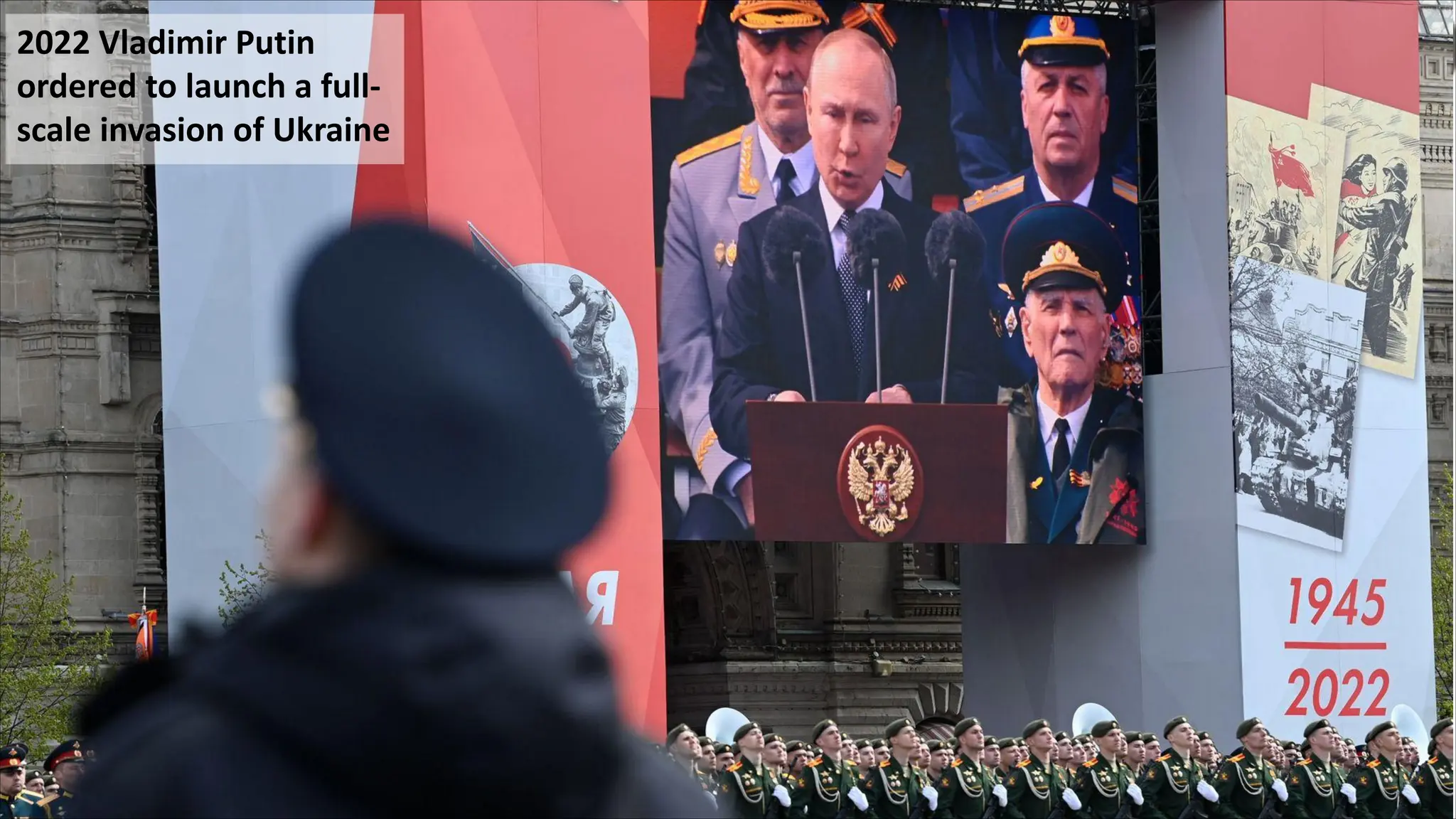
2022 Vladimir Putin
ordered to launch a full-
scale invasion of Ukraine
2. GLOBALIZATION
Globalization is the process by which ideas, knowledge, information, goods, and services
spread around the world. Globalization is driven by the convergence of cultural and economic
systems. This convergence promotes increased interaction, integration, and interdependence
among nations. The more countries and regions around the world become linked politically,
culturally, and economically, the more globalized the world becomes.
Late 20th century - early 21st century:
• economic interdependence
• technological innovations (telecommunications, transports, etc.).
• neoliberalist policies (raise profits minimising costs, individualism, etc.).
1. Types of globalization
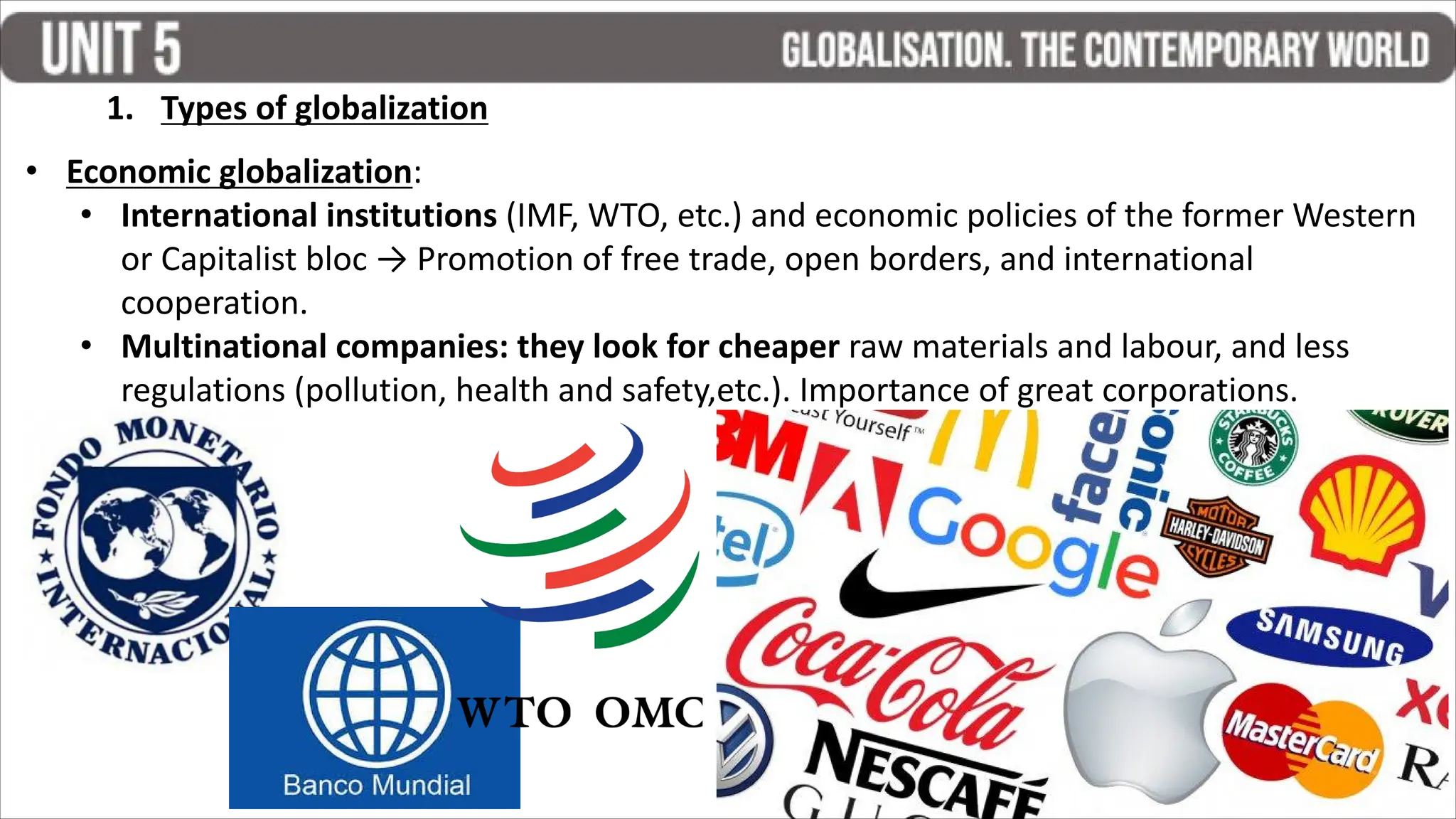
• Economic globalization:
• International institutions (IMF, WTO, etc.) and economic policies of the former Western
or Capitalist bloc → Promotion of free trade, open borders, and international
cooperation.
• Multinational companies: they look for cheaper raw materials and labour, and less
regulations (pollution, health and safety,etc.). Importance of great corporations.
• Technological globalization: improvements in information and communication technology
(ICT). The internet has increased the sharing and flow of information and knowledge, access
to ideas and exchange of culture among people of different countries. Constant
improvements, developments and advances.
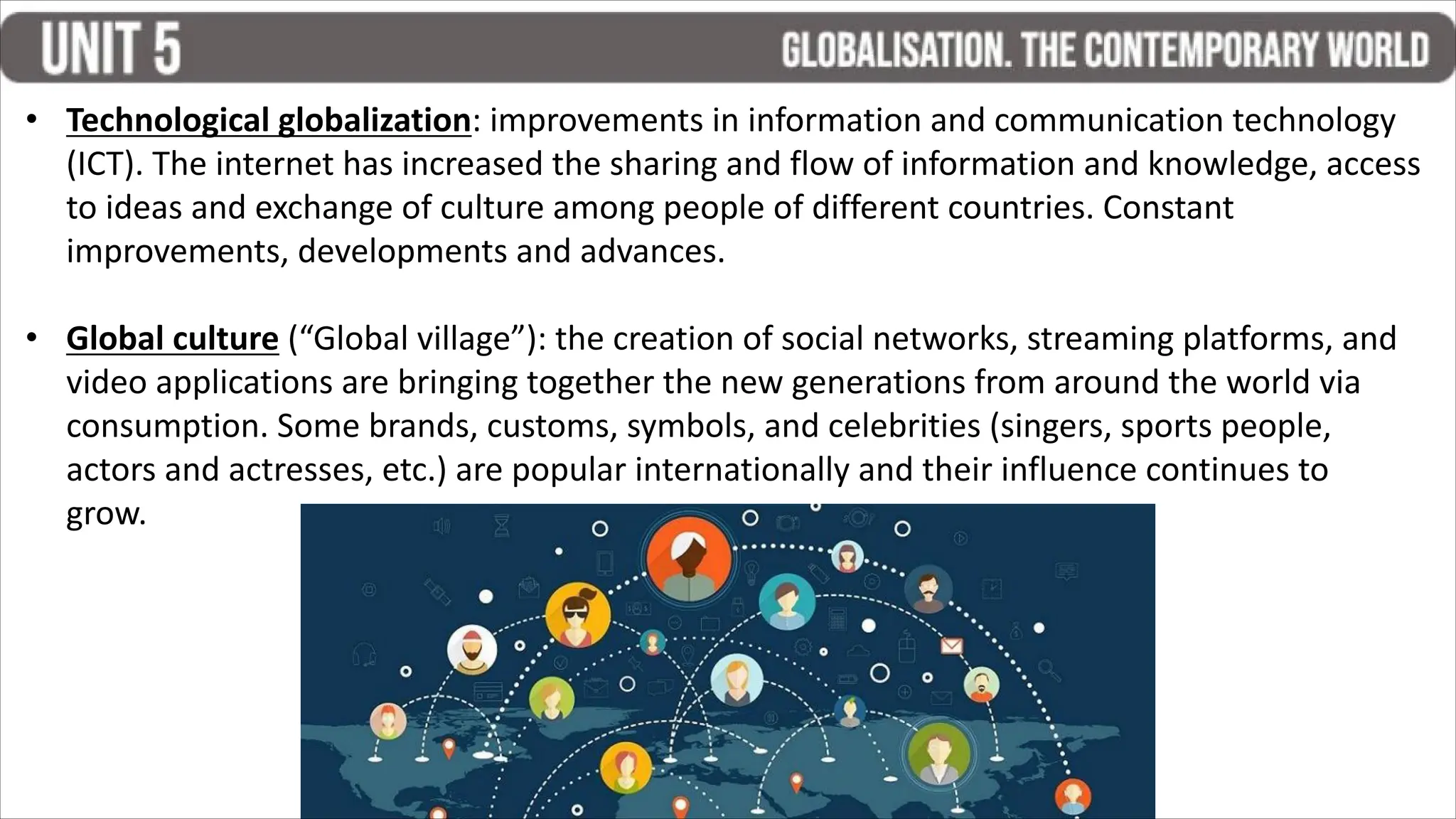
• Global culture (“Global village”): the creation of social networks, streaming platforms, and
video applications are bringing together the new generations from around the world via
consumption. Some brands, customs, symbols, and celebrities (singers, sports people,
actors and actresses, etc.) are popular internationally and their influence continues to
grow.
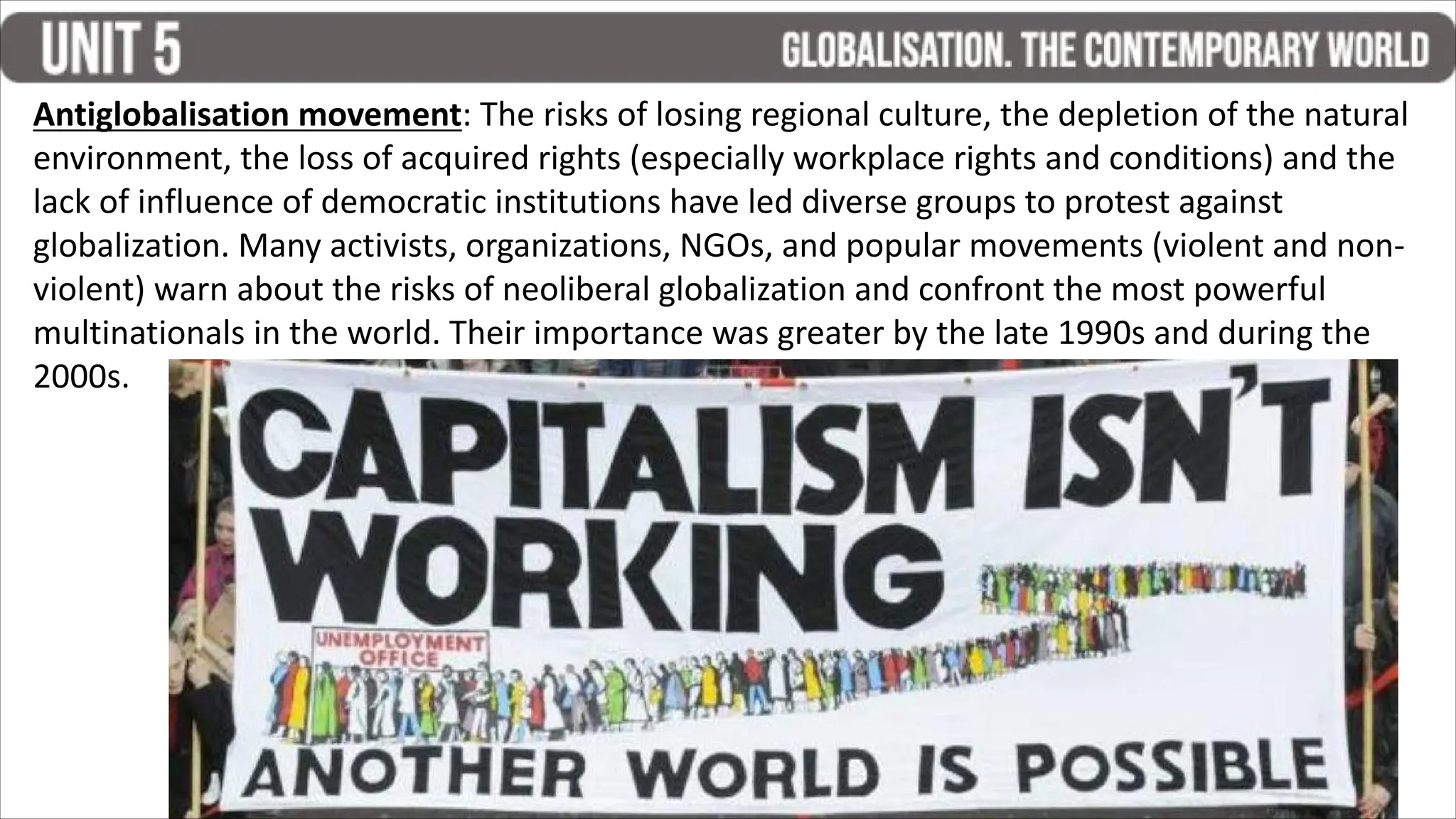
Antiglobalisation movement: The risks of losing regional culture, the depletion of the natural
environment, the loss of acquired rights (especially workplace rights and conditions) and the
lack of influence of democratic institutions have led diverse groups to protest against
globalization. Many activists, organizations, NGOs, and popular movements (violent and non-
violent) warn about the risks of neoliberal globalization and confront the most powerful
multinationals in the world. Their importance was greater by the late 1990s and during the
2000s.
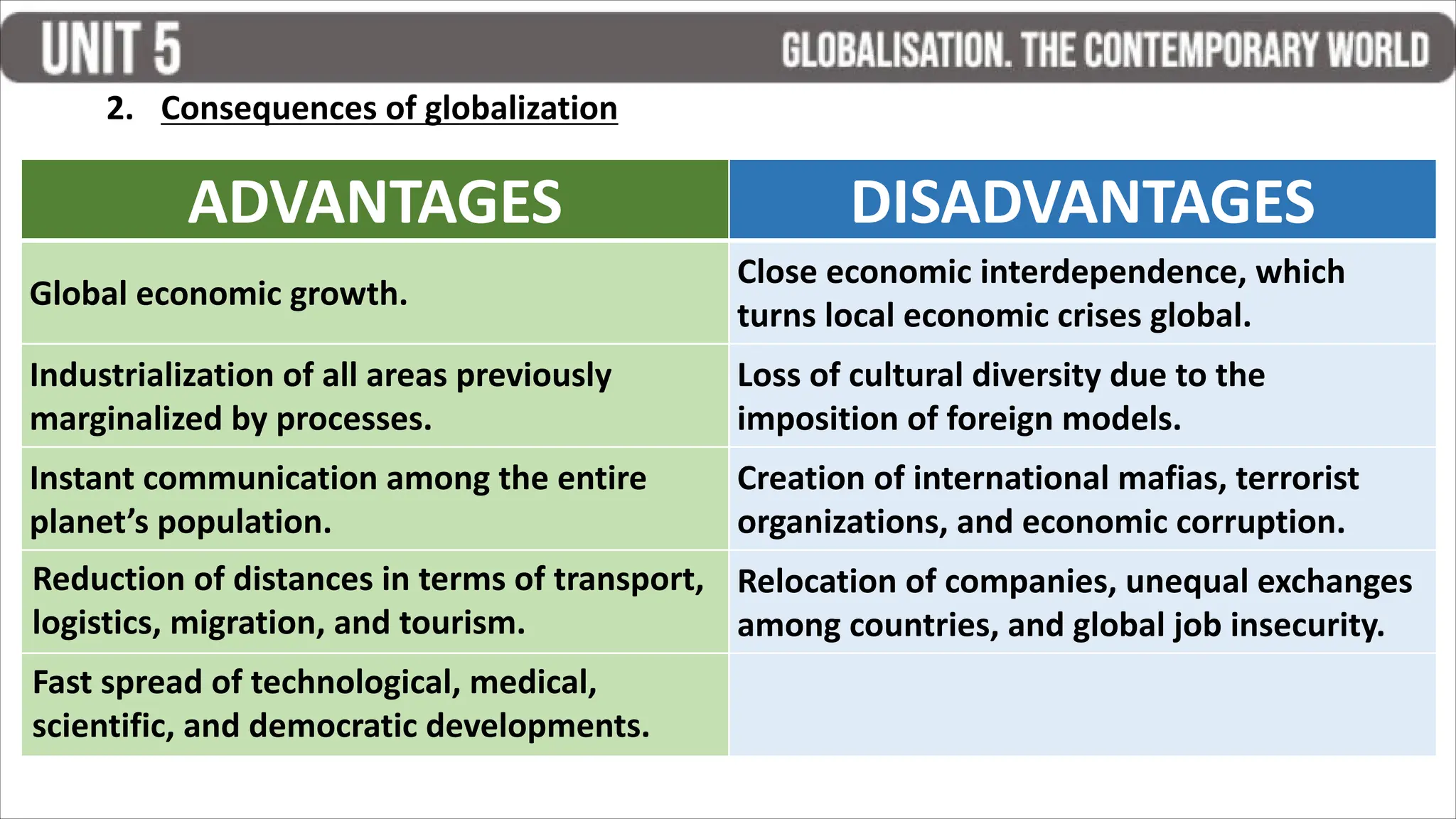
ADVANTAGES DISADVANTAGES
Global economic growth.
Close economic interdependence, which
turns local economic crises global.
Industrialization of all areas previously
marginalized by processes.
Loss of cultural diversity due to the
imposition of foreign models.
Instant communication among the entire
planet’s population.
Creation of international mafias, terrorist
organizations, and economic corruption.
Reduction of distances in terms of transport,
logistics, migration, and tourism.
Relocation of companies, unequal exchanges
among countries, and global job insecurity.
Fast spread of technological, medical,
scientific, and democratic developments.
2. Consequences of globalization
3. The emergence of new economic powers
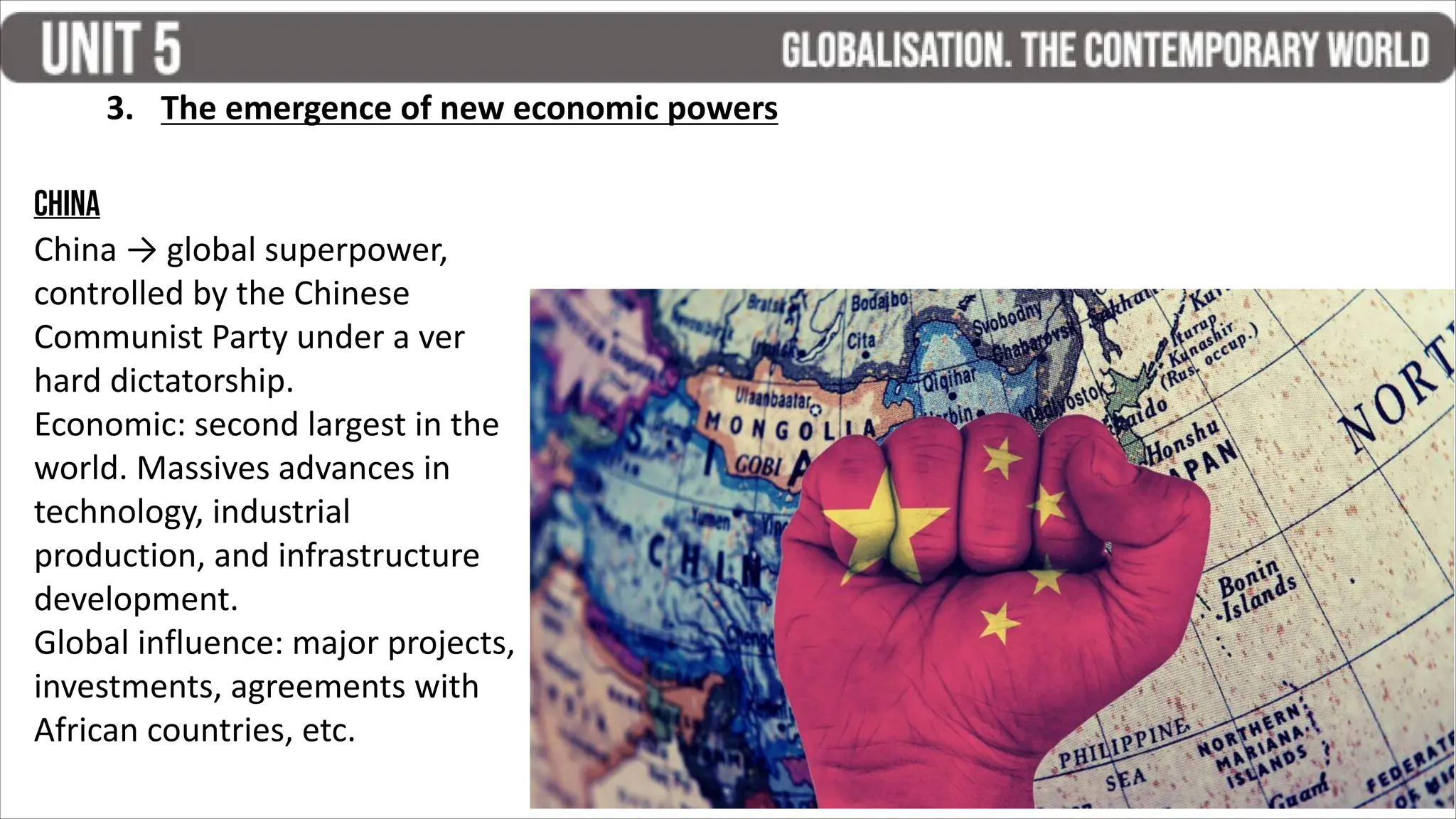
China
China → global superpower,
controlled by the Chinese
Communist Party under a ver
hard dictatorship.
Economic: second largest in the
world. Massives advances in
technology, industrial
production, and infrastructure
development.
Global influence: major projects,
investments, agreements with
African countries, etc.
BRICS
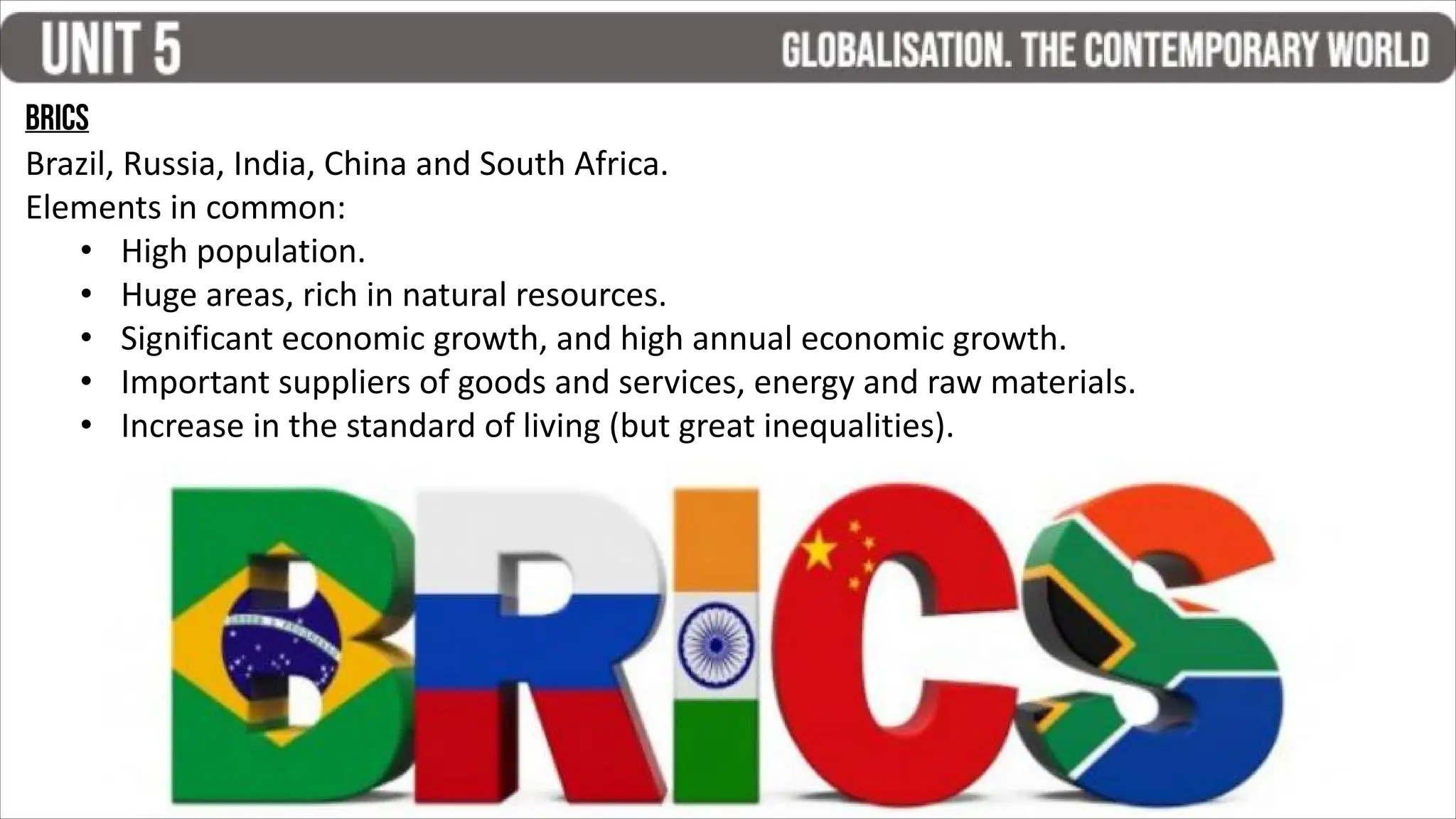
Brazil, Russia, India, China and South Africa.
Elements in common:
• High population.
• Huge areas, rich in natural resources.
• Significant economic growth, and high annual economic growth.
• Important suppliers of goods and services, energy and raw materials.
• Increase in the standard of living (but great inequalities).
Globalisation has implied the growth of social inequalities and the broadening of territorial
differences. While the traditionally developed areas and the BRICS have increased their
standard of living, former colonial territories have inherited problems derived of their imperial
rule and the processes of decolonisation and neo-colonialism.
3. INEQUALITY, CONFLICTS AND CURRENT CHALLENGES
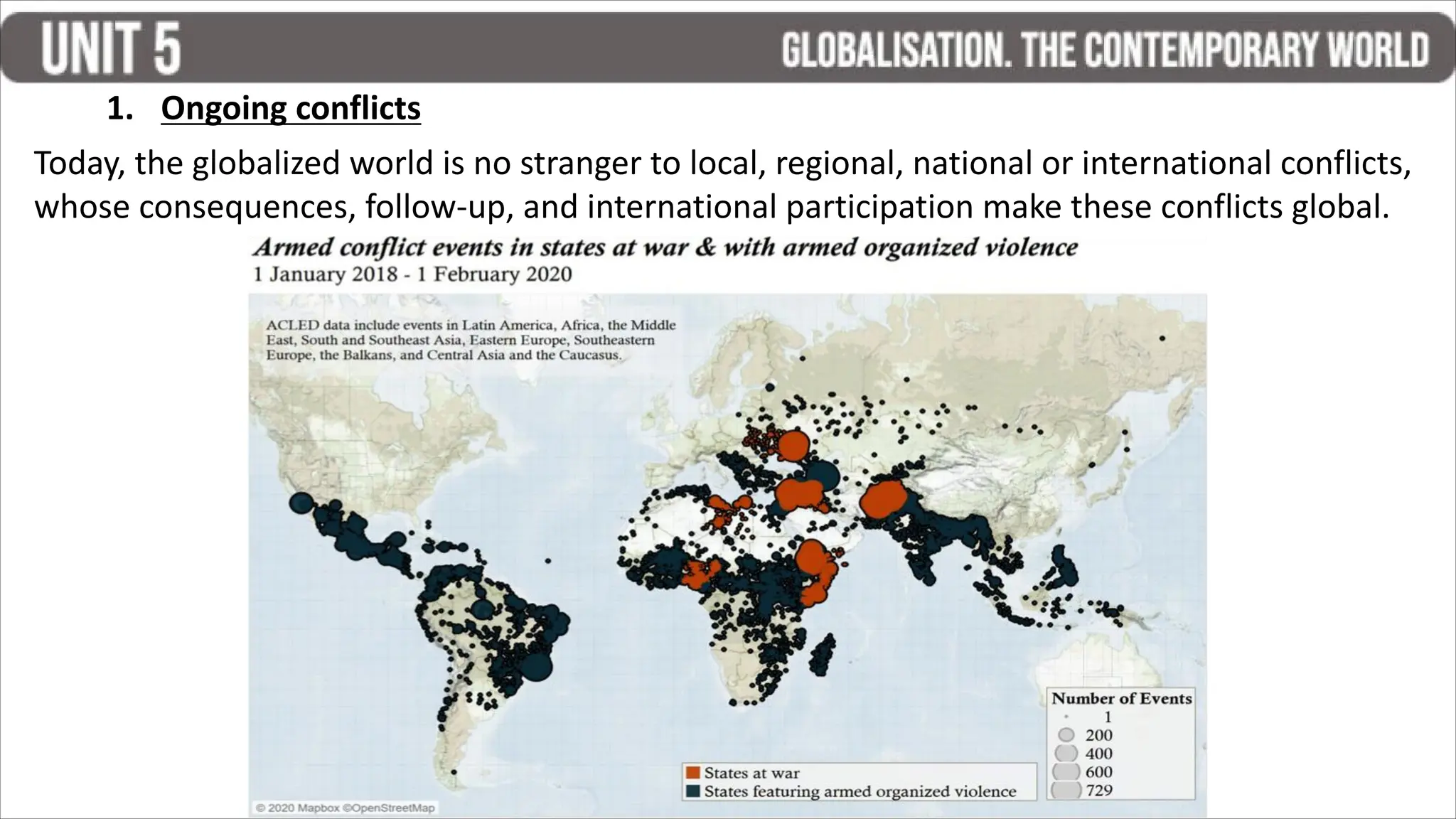
Today, the globalized world is no stranger to local, regional, national or international conflicts,
whose consequences, follow-up, and international participation make these conflicts global.
1. Ongoing conflicts
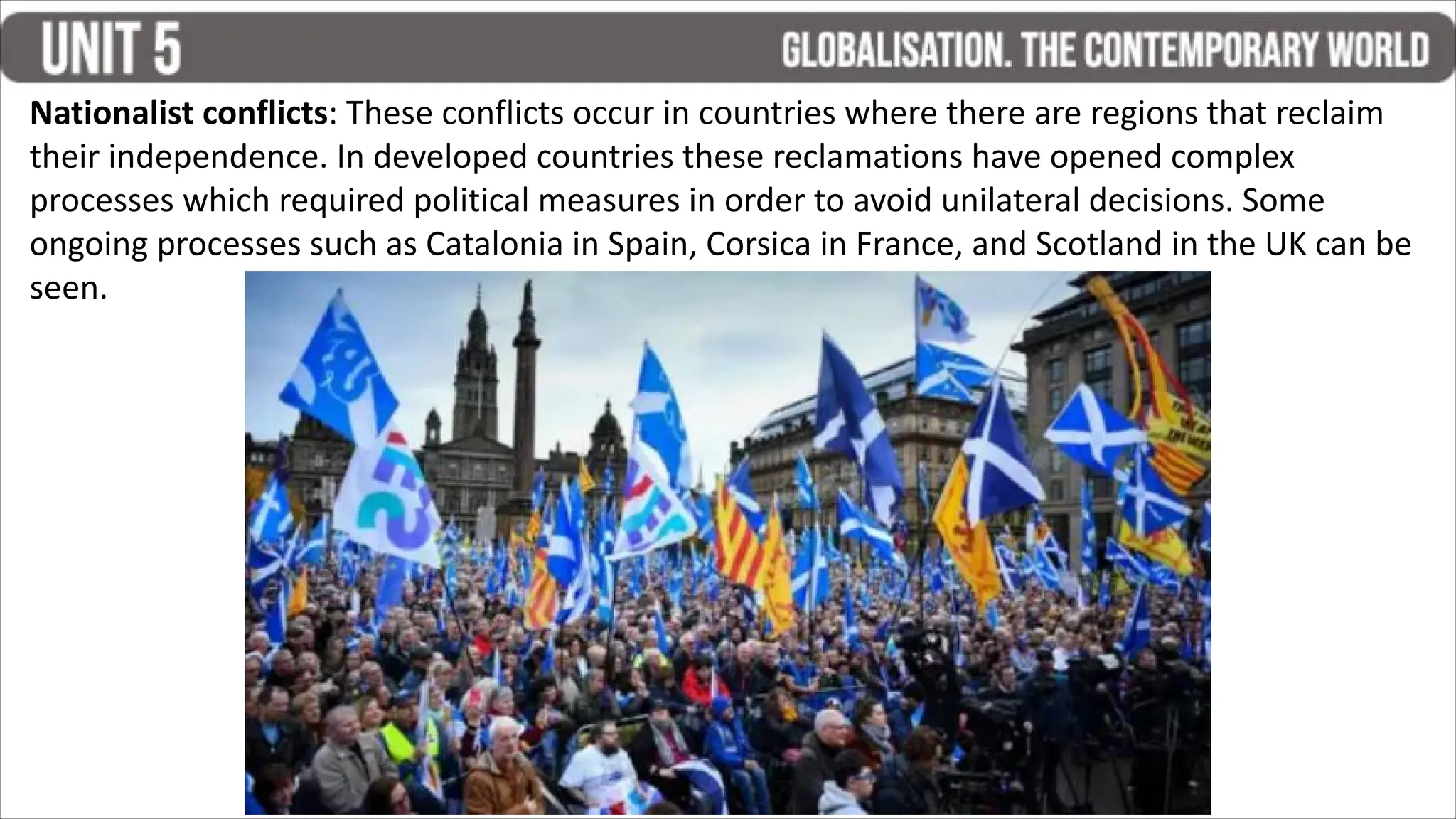
Nationalist conflicts: These conflicts occur in countries where there are regions that reclaim
their independence. In developed countries these reclamations have opened complex
processes which required political measures in order to avoid unilateral decisions. Some
ongoing processes such as Catalonia in Spain, Corsica in France, and Scotland in the UK can be
seen.
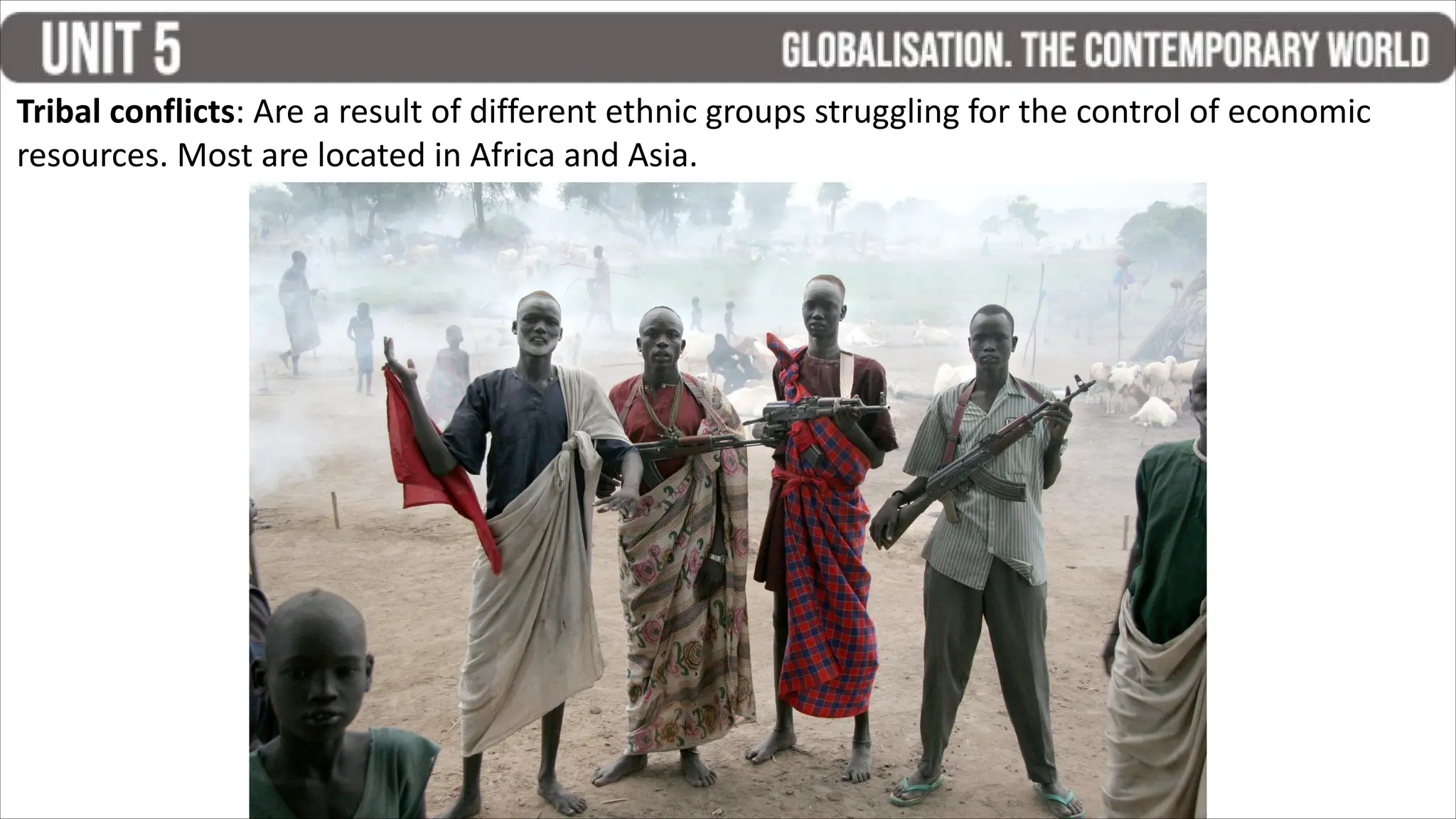
Tribal conflicts: Are a result of different ethnic groups struggling for the control of economic
resources. Most are located in Africa and Asia.
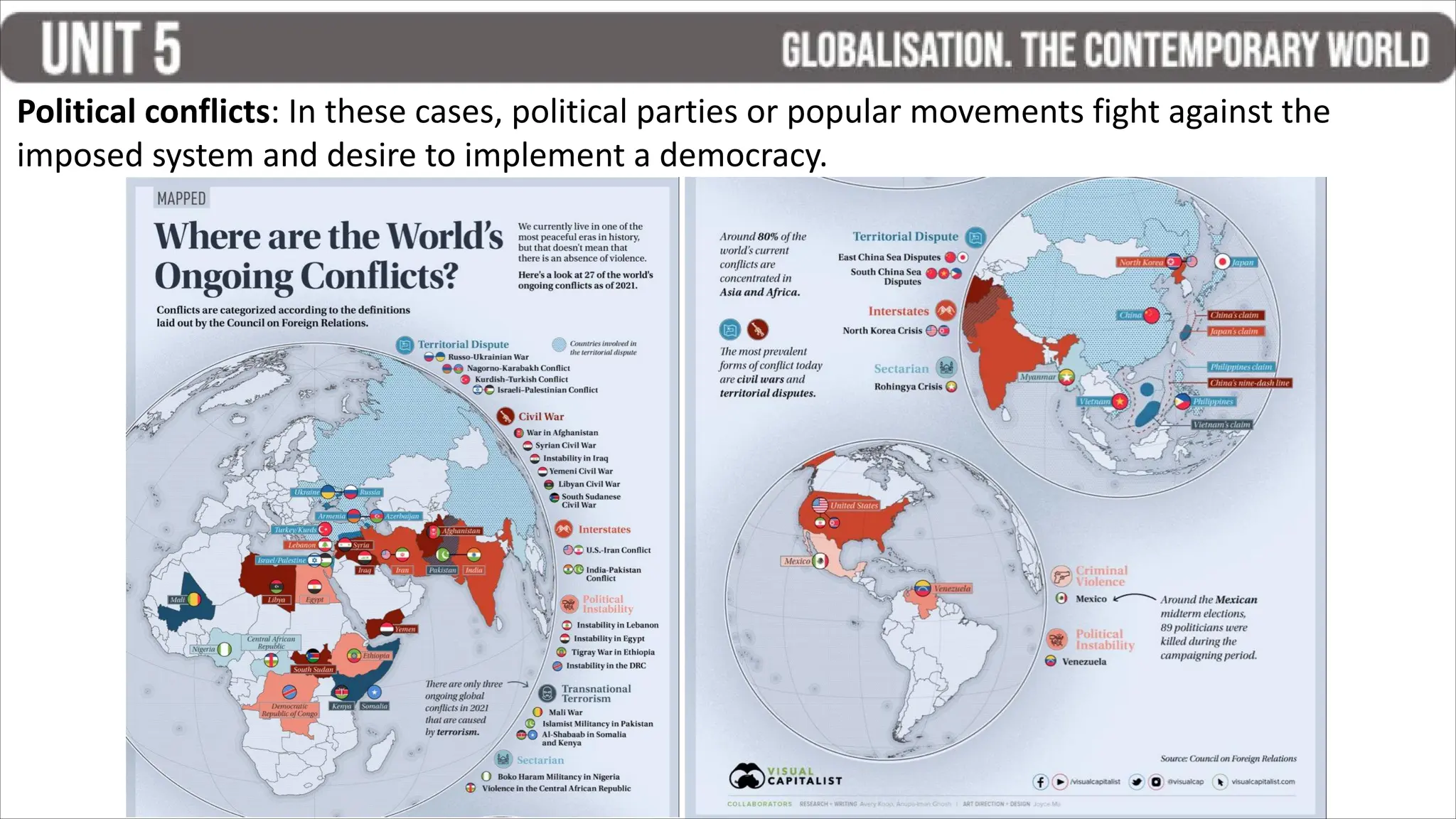
Political conflicts: In these cases, political parties or popular movements fight against the
imposed system and desire to implement a democracy.
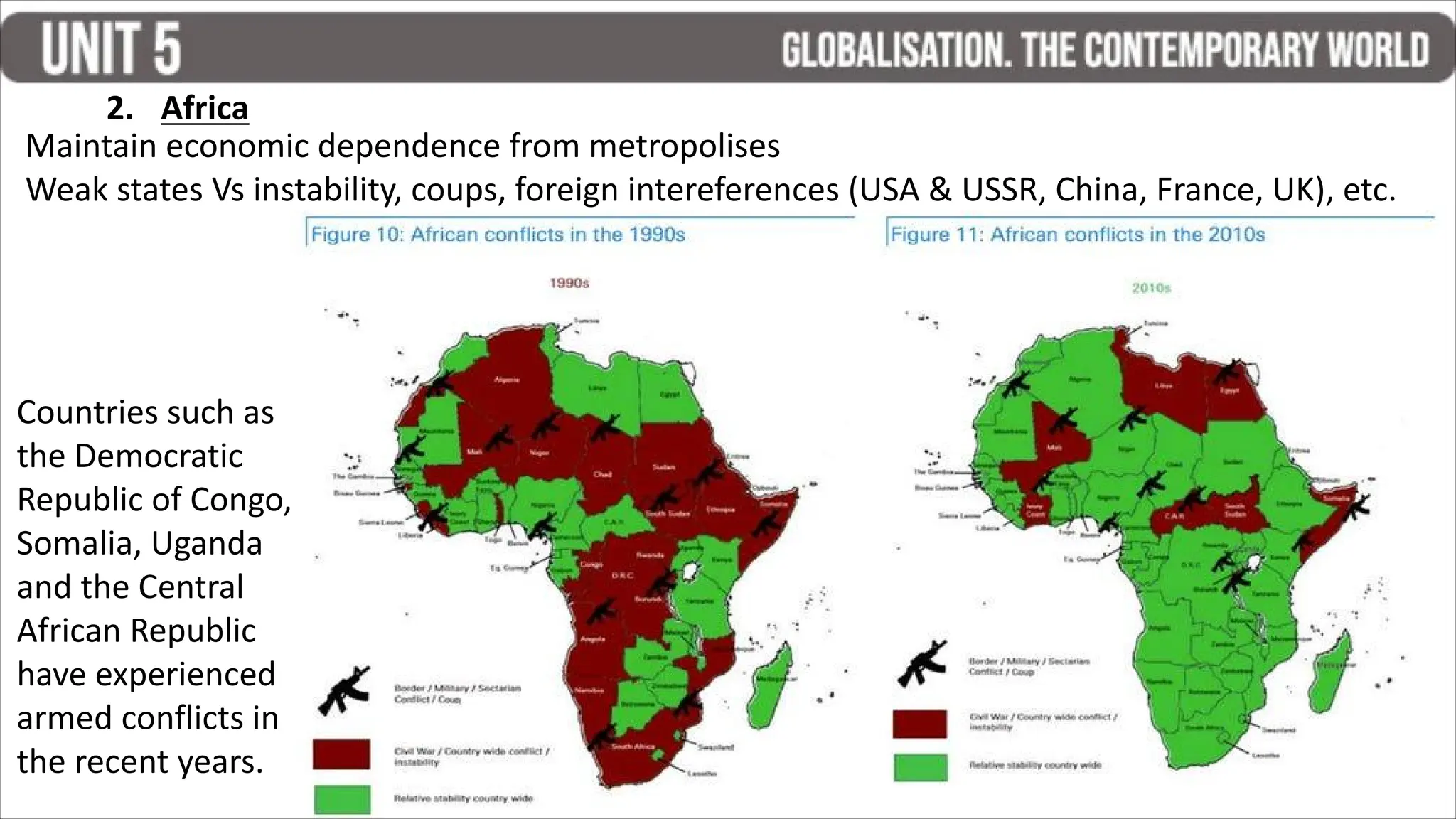
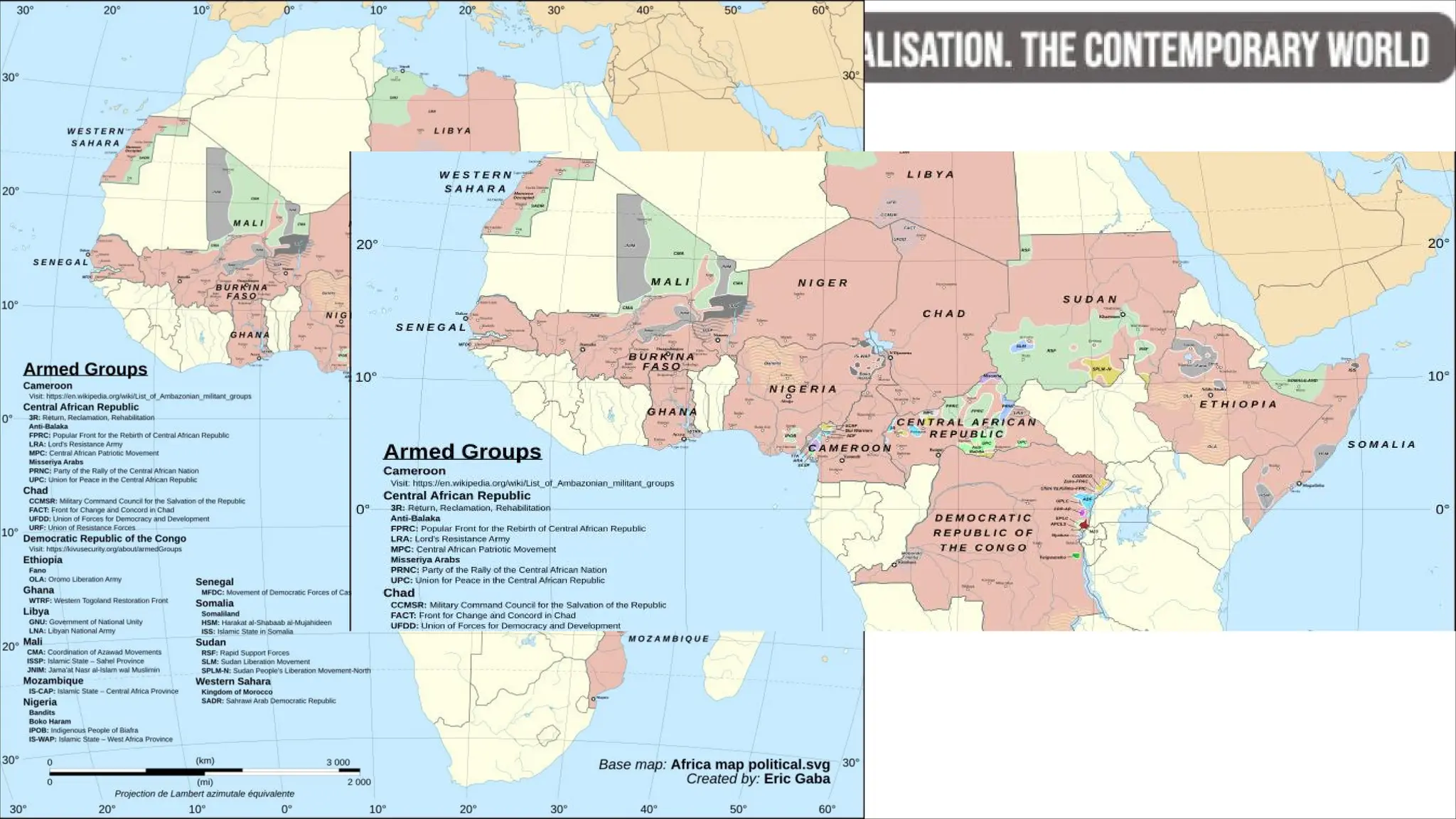
2. Africa
Maintain economic dependence from metropolises
Weak states Vs instability, coups, foreign intereferences (USA & USSR, China, France, UK), etc.
Countries such as
the Democratic
Republic of Congo,
Somalia, Uganda
and the Central
African Republic
have experienced
armed conflicts in
the recent years.
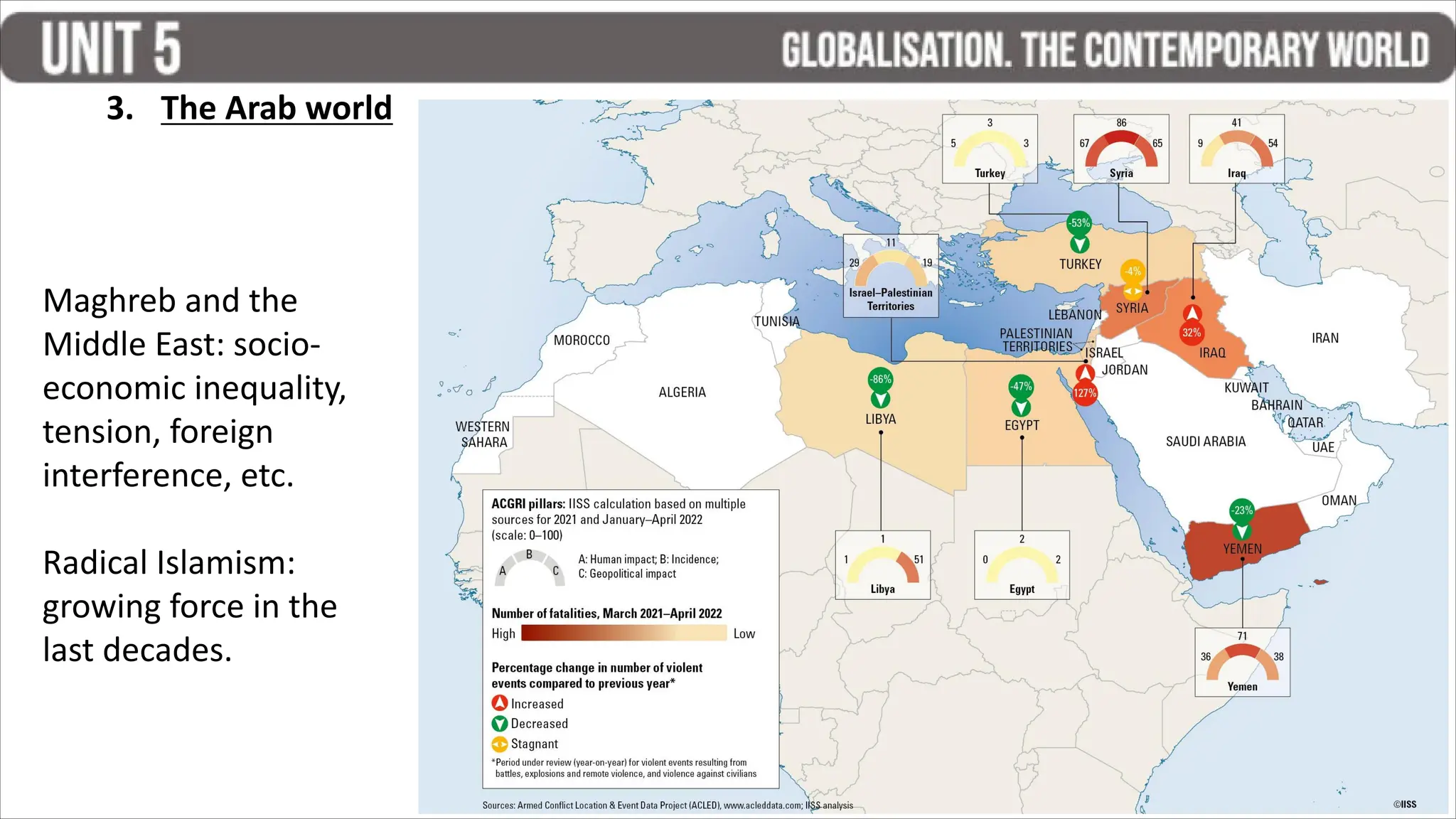
3. The Arab world
Maghreb and the
Middle East: socio-
economic inequality,
tension, foreign
interference, etc.
Radical Islamism:
growing force in the
last decades.
Persial Gulf War (1990)
The Iraq Invasion led by the USA in 2003
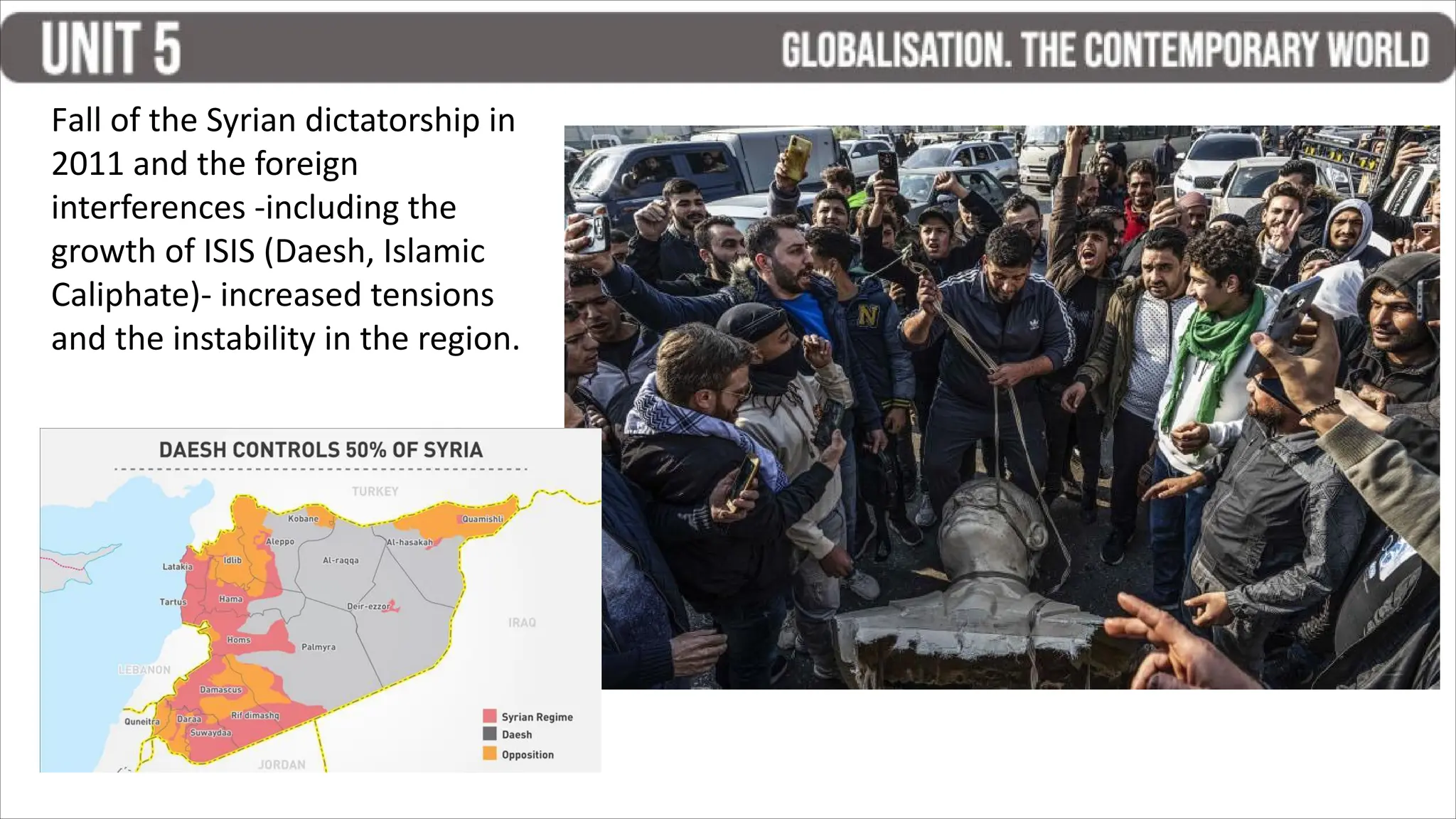
Fall of the Syrian dictatorship in
2011 and the foreign
interferences -including the
growth of ISIS (Daesh, Islamic
Caliphate)- increased tensions
and the instability in the region.
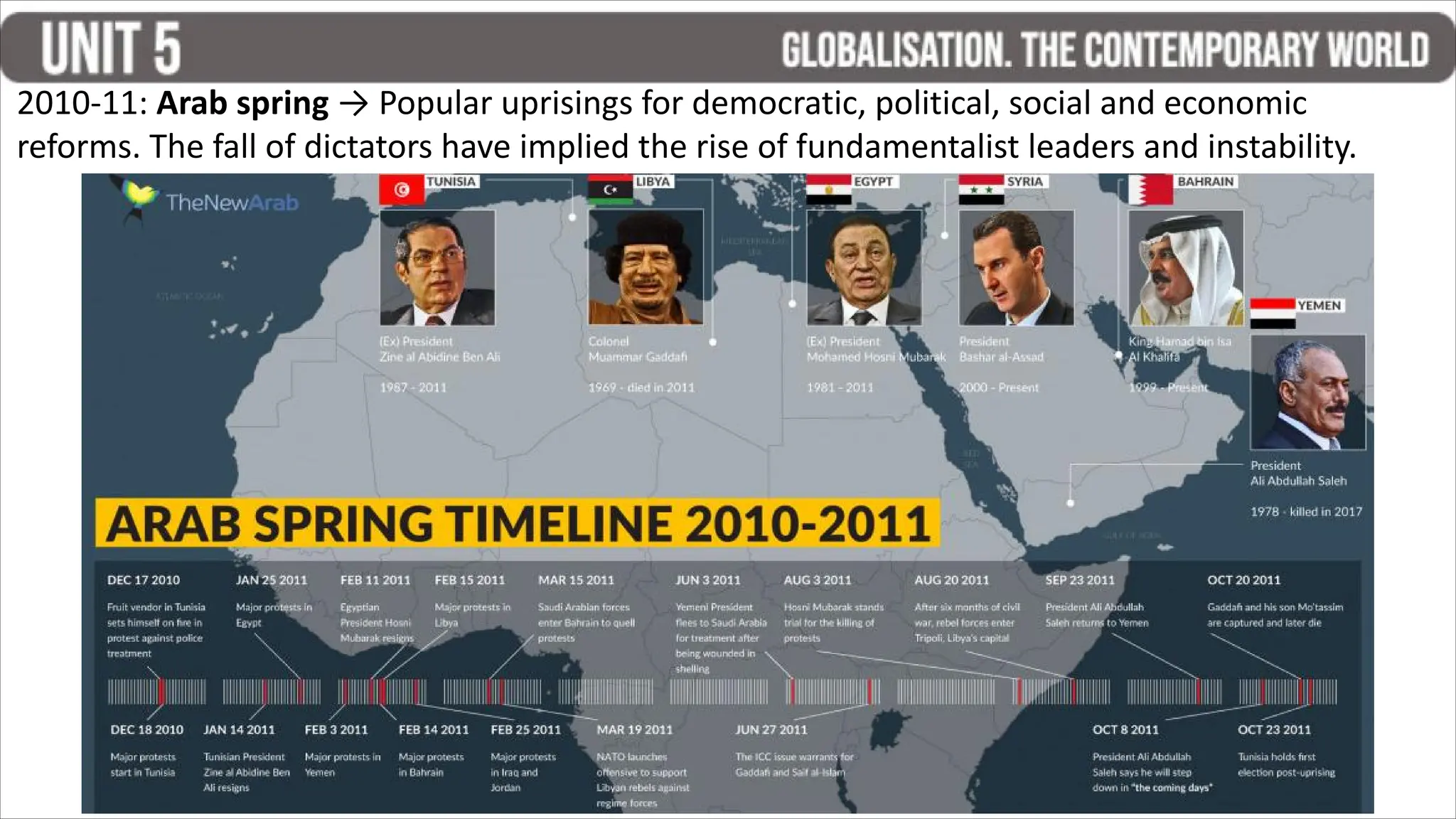
2010-11: Arab spring → Popular uprisings for democratic, political, social and economic
reforms. The fall of dictators have implied the rise of fundamentalist leaders and instability.
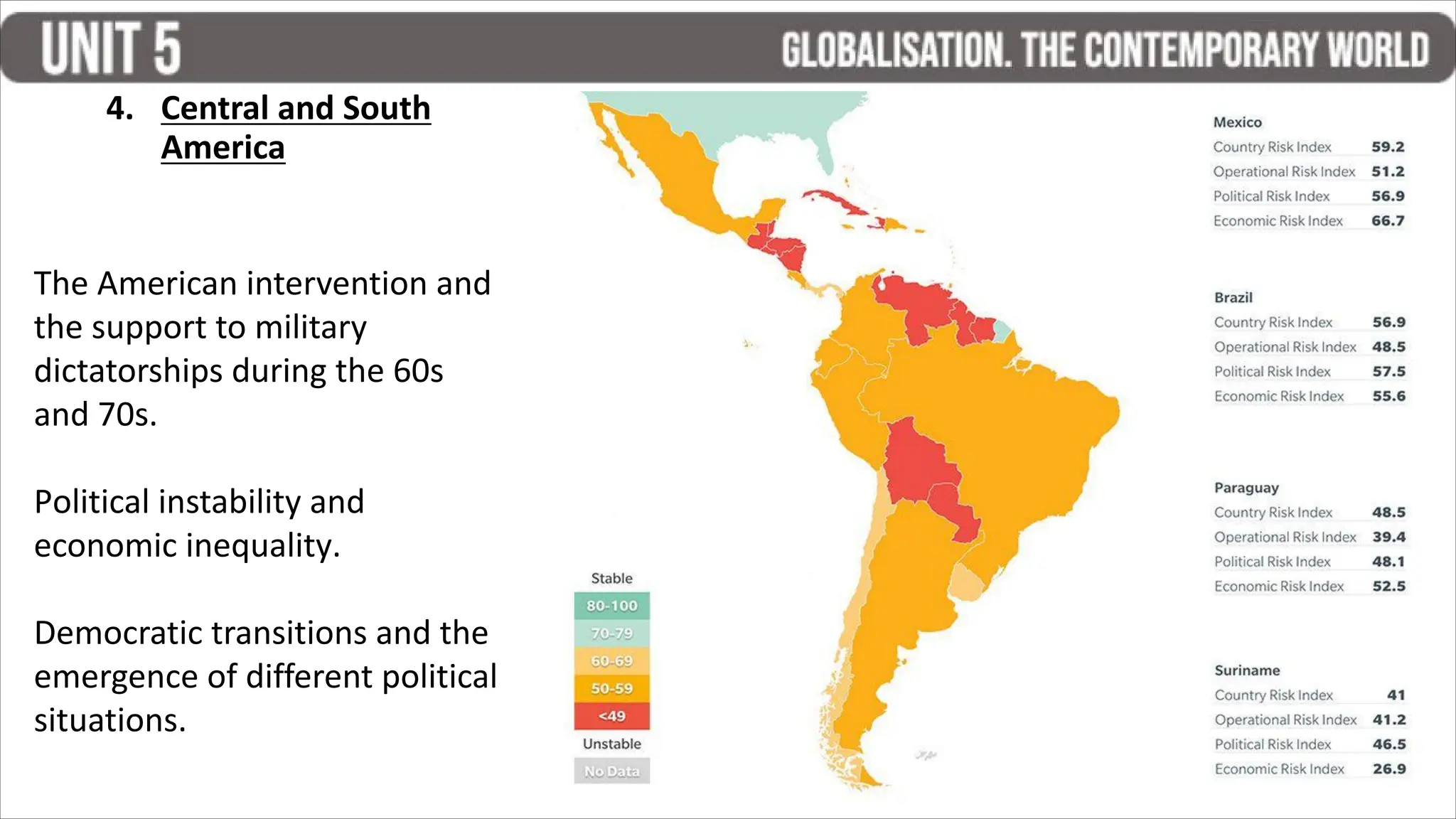
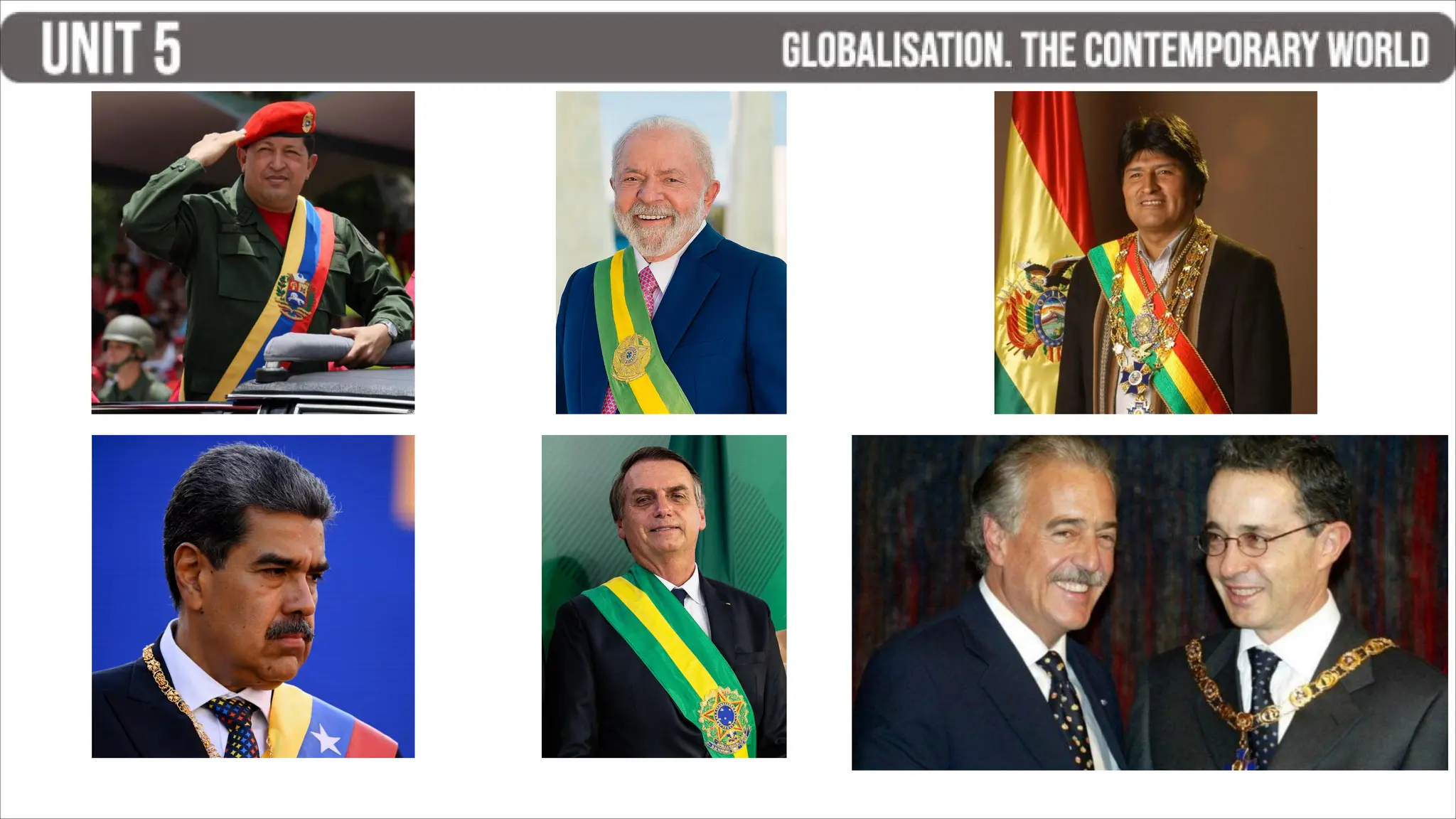
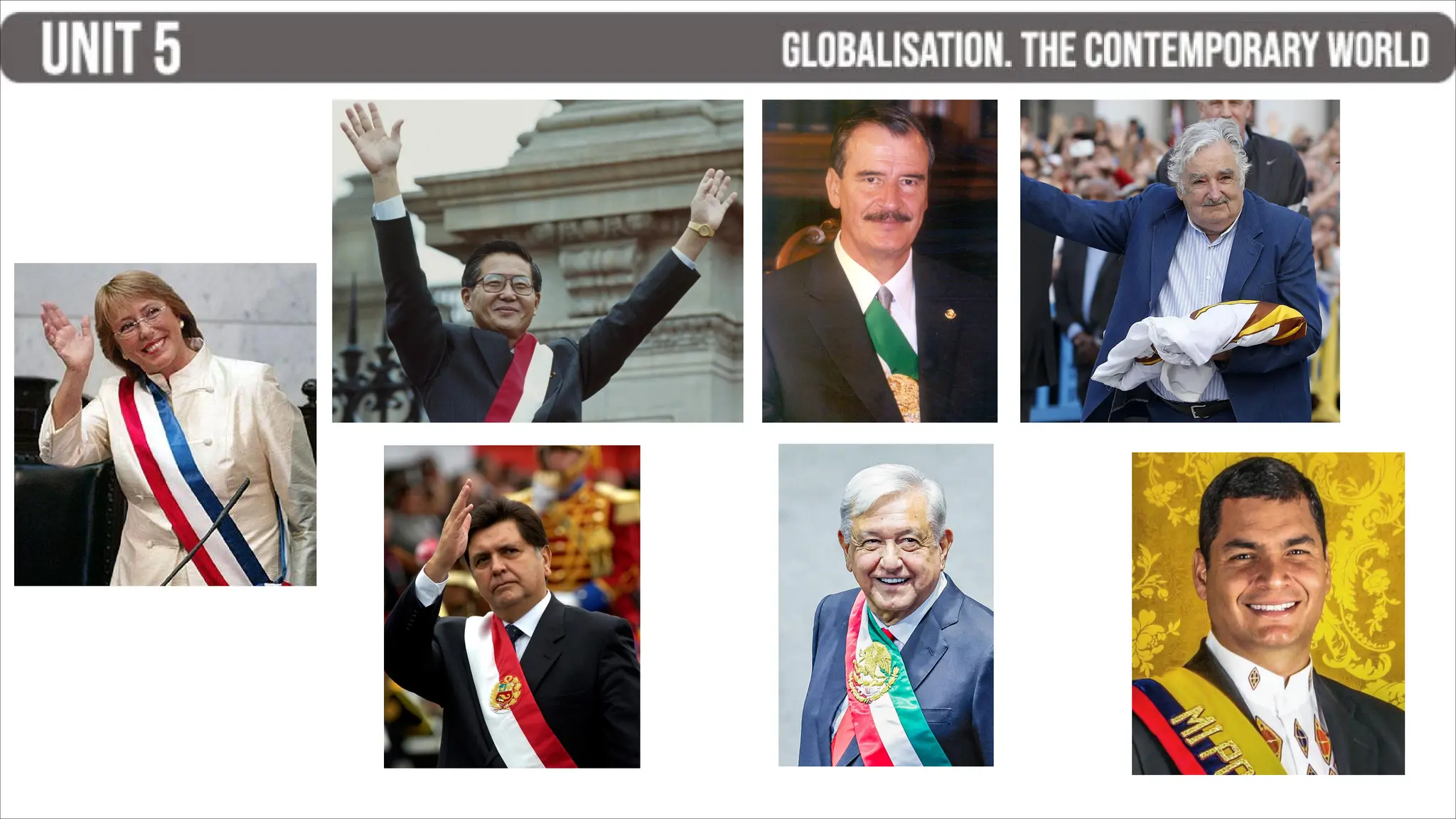
4. Central and South
America
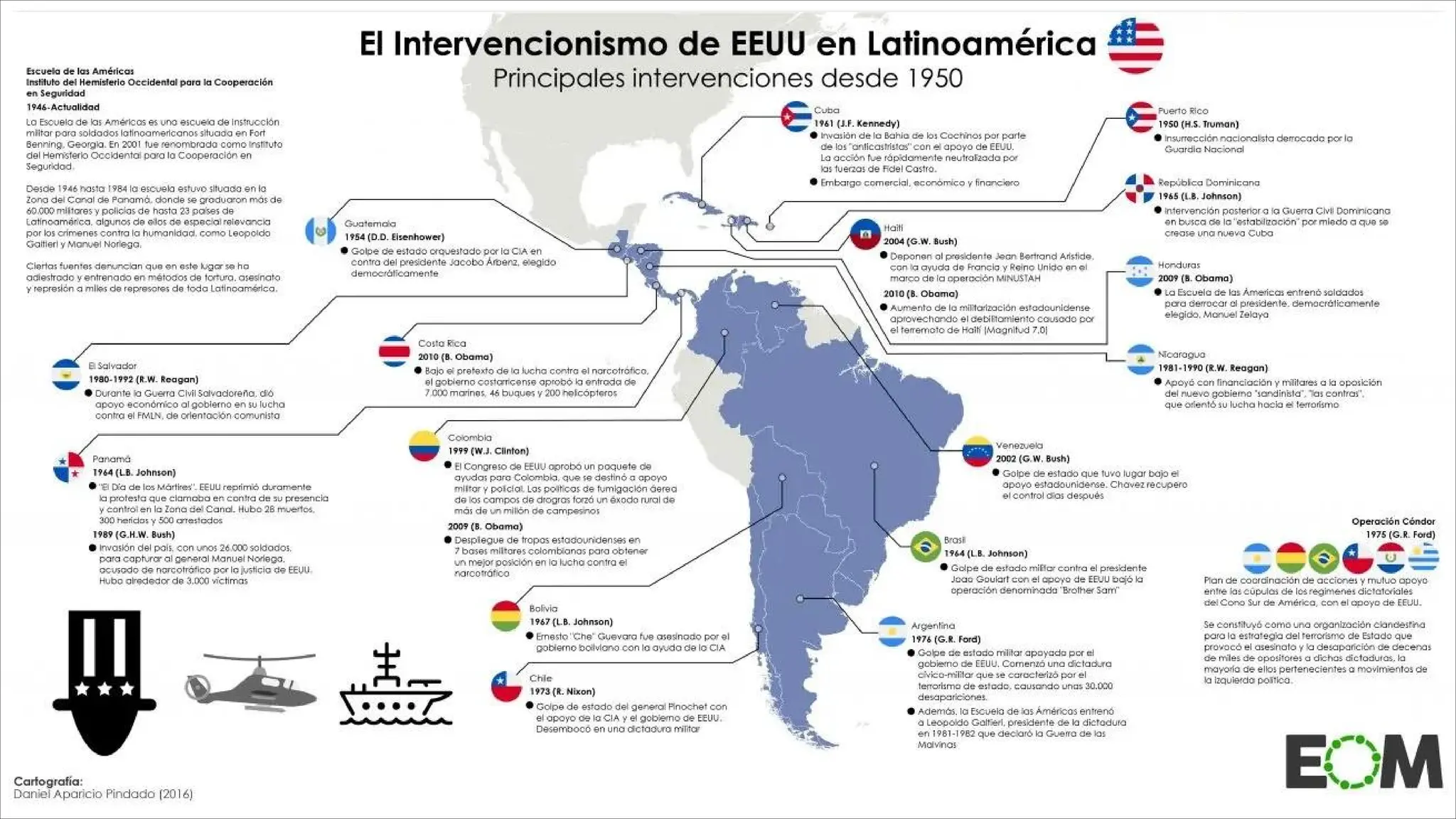
The American intervention and
the support to military
dictatorships during the 60s
and 70s.
Political instability and
economic inequality.
Democratic transitions and the
emergence of different political
situations.
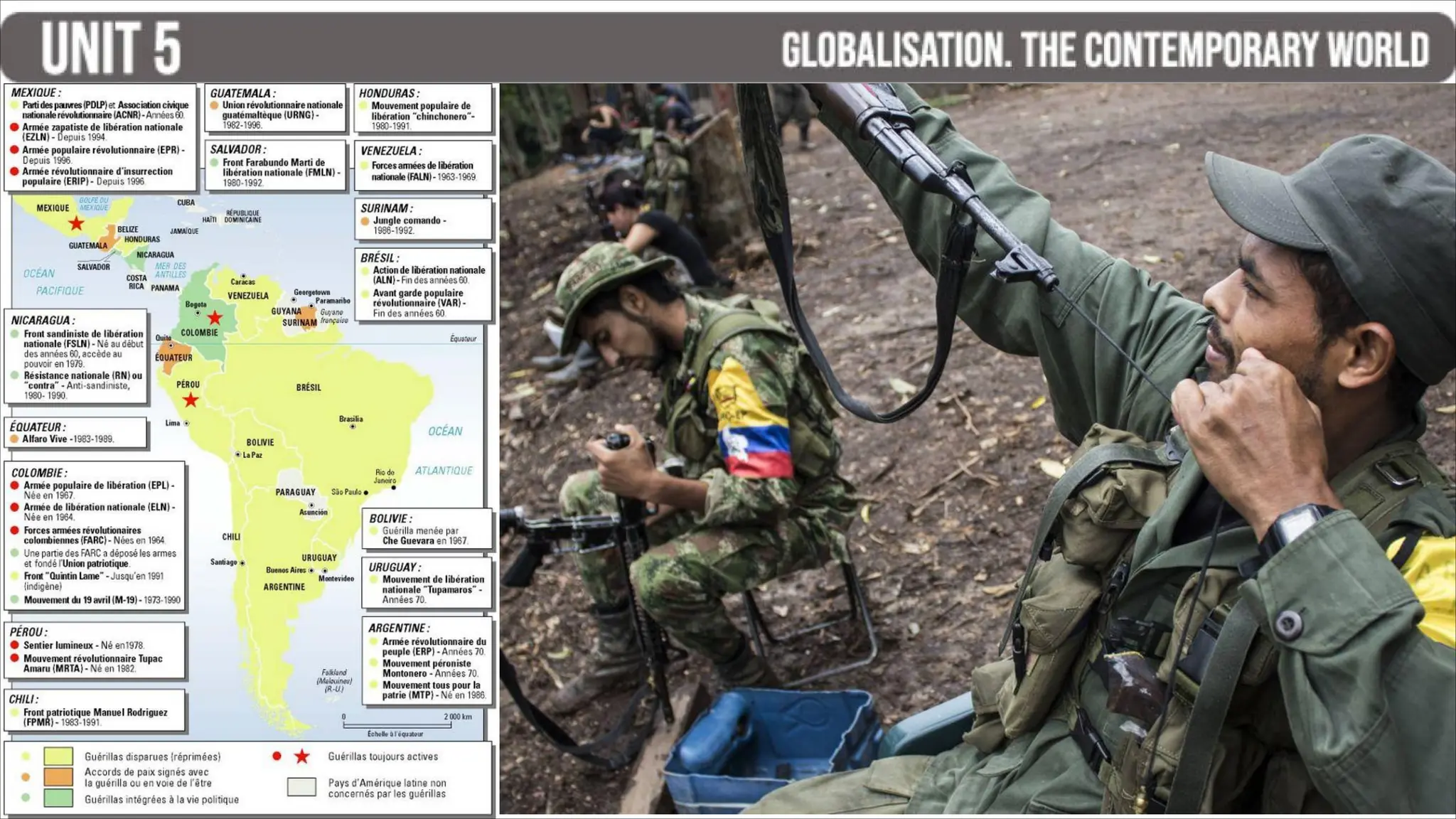
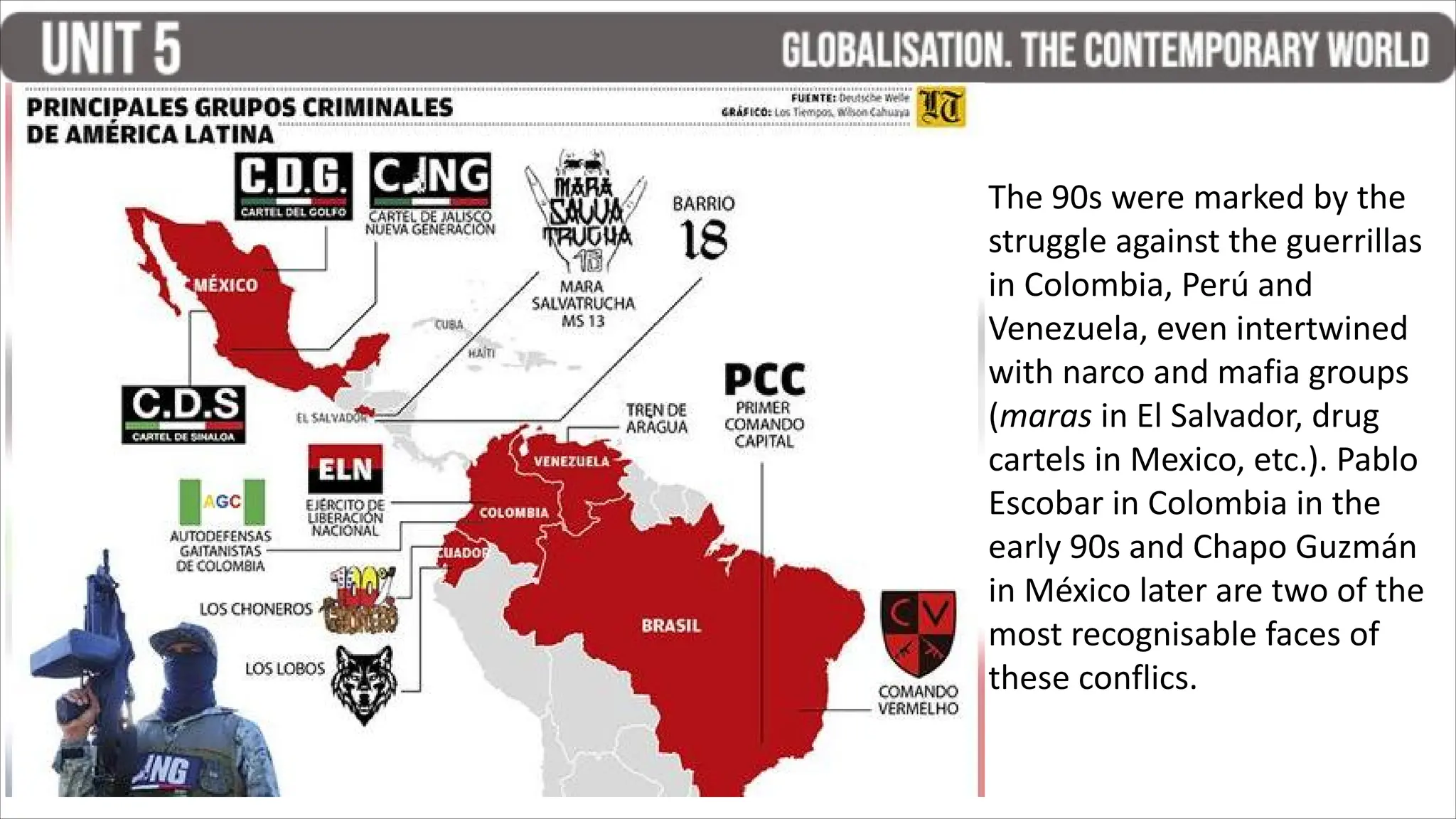
The 90s were marked by the
struggle against the guerrillas
in Colombia, Perú and
Venezuela, even intertwined
with narco and mafia groups
(maras in El Salvador, drug
cartels in Mexico, etc.). Pablo
Escobar in Colombia in the
early 90s and Chapo Guzmán
in México later are two of the
most recognisable faces of
these conflics.
UNIT 5 - Globalisation. The current world PPT.pdf

UNIT 5 - Globalisation. The current world PPT.pdf

  • 1.
  • 2.
    1.AFTER THE COLDWAR: A NEW INTERNATIONAL ORDER 2.GLOBALISATION 3.INEQUALITY, CONFLICTS AND CURRENT CHALLENGES
  • 3.
    1. AFTER THECOLD WAR: A NEW INTERNATIONAL ORDER
  • 4.
    After the ColdWar → new challenges. Economic and cultural globalisaton Global environmental problems New conflicts USA sole superpower New world order → Multipolar system
  • 5.
    1. The UnitedStates: a new world leader George Bush (1989-1993) - Bill Clinton (1993-2001) - George W. Bush (2001-2009) - Barack Obama (2009-2017) - Donald Trump (2017-2021) - Joe Biden (2021-2025) - D. Trump (2025 - )
  • 6.
    Since the fallof the USSR → sole guardian of world order.
  • 7.
    Main conflicts inwhich the USA has got involved since the end of the Cold War: 1990s → Gulf War. Saddam Hussein, Iraqi dictator, invaded Kuwait. International coallition. Unilateral interventionism with G. Bush
  • 8.
    1999 → Bombingof Belgrade.
  • 9.
    11th September, 2001→ terrorist attack to the USA (Twin Towers in NYC, Pentagon, etc.)
  • 10.
    Invasion of Afghanistan (Waron Terror) against the Taliban government.
  • 11.
    2003 → SecondGulf War (Invasion of Iraq).
  • 12.
    2. The globalchallenge of Islamic fundamentalism Islamic fundamentalism → opposed to the spread of the Western (secularised) world. Al-Quaeda (led by Osama Bin Laden) ISIS/Daesh Spread terror through assassinations of political leaders, public figures or indiscriminate attacks against the civilian population
  • 13.
    Increased their powerduring the 70s (Iran, Afghanistan, etc.), even with the support of American and Western support, and since the early 2000s they have attacked Western countries and strategic interests:
  • 15.
    9/11 (11th September,2001): to NYC and the Pentagon (3000)
  • 17.
    War on Terror:invasion of Afghanistan and Iraq.
  • 20.
    July 2005: LondonUnderground (56)
  • 22.
    2015: Against theFrench satirical magacine Charlie Hebdo (Paris)
  • 23.
    Combined attack inNovember 2015, killing 137 people.
  • 25.
    ○ 2016: Brusselsbombings, at the airport, Nice (France) with a truck. ○ 2017: Manchester Arena (22), Barcelona, etc. In addition to these, it is calculated that there have been more than 45 000 Islamist terrorist attacks worldwide, with more than 200 000 deaths, between 1979 and 2021. Countries such as Iraq, Afghanistan, Syria, Egypt, Russia, Mali, Nigeria or Lybia were also targeted by groups or even by ‘lone-wolves’ (individuals who carry out terrorist actions independently of groups or organizations)
  • 29.
    3. Europe afterthe Cold War • The fall of the Berlin Wall and the disintegration of the Soviet sphere of influence has modified the course of European powers and allegiances.
  • 30.
    European Union (EU) Until1995 → Only Western countries. Collapse of the Eastern bloc → inclusion of former Communist countries. 27 European States (after Brexit) Possible members: Albania, Republic of North Macedonia, Montenegro, Serbia and Turkey.
  • 31.
    Schengen Agreement (1995):abolition of borders between most EU countries.
  • 32.
    Eurozone: economic unionformed by 20 states. Euro: common currency, which appeared in 2001. European Central Bank (ECB): regulatory monetary institution.
  • 33.
    Commonwealth of IndependentStates (CIS) 9 member states, 1 associate state, and 1 observer state.
  • 34.
    Association formed afterthe dissolution of the Soviet Union (1991) Mediated by the Russian Federation Encourages cooperation in economic, political, and military affairs and has certain powers pertaining to the coordination of trade, finance, lawmaking, and security.
  • 35.
    CONFLICTS A. The dissolutionof Yugoslavia: Death of marshal Tito (1980). Balance of power broken Early 90s → republics sought their independence. Different conflicts (with great ethnic- religious violence) between 1991 and 2001, and it resulted in the current republics of Slovenia, Croatia, Bosnia- Herzegovina, Montenegro, Serbia, Kosovo and Northern Macedonia.
  • 36.
    B. Russo-Ukranian War: Started in2014 after a pro-European uprising (Euromaidan)
  • 37.
    Russia occupied Crimeaand Eastern Ukraine (Dombas), with Russian-ethnic majority.
  • 38.
    Peace agreement in 2015:Minsk Agreements
  • 39.
    2022 Vladimir Putin orderedto launch a full- scale invasion of Ukraine
  • 42.
    2. GLOBALIZATION Globalization isthe process by which ideas, knowledge, information, goods, and services spread around the world. Globalization is driven by the convergence of cultural and economic systems. This convergence promotes increased interaction, integration, and interdependence among nations. The more countries and regions around the world become linked politically, culturally, and economically, the more globalized the world becomes. Late 20th century - early 21st century: • economic interdependence • technological innovations (telecommunications, transports, etc.). • neoliberalist policies (raise profits minimising costs, individualism, etc.).
  • 43.
    1. Types ofglobalization • Economic globalization: • International institutions (IMF, WTO, etc.) and economic policies of the former Western or Capitalist bloc → Promotion of free trade, open borders, and international cooperation. • Multinational companies: they look for cheaper raw materials and labour, and less regulations (pollution, health and safety,etc.). Importance of great corporations.
  • 44.
    • Technological globalization:improvements in information and communication technology (ICT). The internet has increased the sharing and flow of information and knowledge, access to ideas and exchange of culture among people of different countries. Constant improvements, developments and advances. • Global culture (“Global village”): the creation of social networks, streaming platforms, and video applications are bringing together the new generations from around the world via consumption. Some brands, customs, symbols, and celebrities (singers, sports people, actors and actresses, etc.) are popular internationally and their influence continues to grow.
  • 45.
    Antiglobalisation movement: Therisks of losing regional culture, the depletion of the natural environment, the loss of acquired rights (especially workplace rights and conditions) and the lack of influence of democratic institutions have led diverse groups to protest against globalization. Many activists, organizations, NGOs, and popular movements (violent and non- violent) warn about the risks of neoliberal globalization and confront the most powerful multinationals in the world. Their importance was greater by the late 1990s and during the 2000s.
  • 46.
    ADVANTAGES DISADVANTAGES Global economicgrowth. Close economic interdependence, which turns local economic crises global. Industrialization of all areas previously marginalized by processes. Loss of cultural diversity due to the imposition of foreign models. Instant communication among the entire planet’s population. Creation of international mafias, terrorist organizations, and economic corruption. Reduction of distances in terms of transport, logistics, migration, and tourism. Relocation of companies, unequal exchanges among countries, and global job insecurity. Fast spread of technological, medical, scientific, and democratic developments. 2. Consequences of globalization
  • 47.
    3. The emergenceof new economic powers China China → global superpower, controlled by the Chinese Communist Party under a ver hard dictatorship. Economic: second largest in the world. Massives advances in technology, industrial production, and infrastructure development. Global influence: major projects, investments, agreements with African countries, etc.
  • 48.
    BRICS Brazil, Russia, India,China and South Africa. Elements in common: • High population. • Huge areas, rich in natural resources. • Significant economic growth, and high annual economic growth. • Important suppliers of goods and services, energy and raw materials. • Increase in the standard of living (but great inequalities).
  • 49.
    Globalisation has impliedthe growth of social inequalities and the broadening of territorial differences. While the traditionally developed areas and the BRICS have increased their standard of living, former colonial territories have inherited problems derived of their imperial rule and the processes of decolonisation and neo-colonialism. 3. INEQUALITY, CONFLICTS AND CURRENT CHALLENGES
  • 50.
    Today, the globalizedworld is no stranger to local, regional, national or international conflicts, whose consequences, follow-up, and international participation make these conflicts global. 1. Ongoing conflicts
  • 51.
    Nationalist conflicts: Theseconflicts occur in countries where there are regions that reclaim their independence. In developed countries these reclamations have opened complex processes which required political measures in order to avoid unilateral decisions. Some ongoing processes such as Catalonia in Spain, Corsica in France, and Scotland in the UK can be seen.
  • 52.
    Tribal conflicts: Area result of different ethnic groups struggling for the control of economic resources. Most are located in Africa and Asia.
  • 53.
    Political conflicts: Inthese cases, political parties or popular movements fight against the imposed system and desire to implement a democracy.
  • 54.
    2. Africa Maintain economicdependence from metropolises Weak states Vs instability, coups, foreign intereferences (USA & USSR, China, France, UK), etc. Countries such as the Democratic Republic of Congo, Somalia, Uganda and the Central African Republic have experienced armed conflicts in the recent years.
  • 56.
    3. The Arabworld Maghreb and the Middle East: socio- economic inequality, tension, foreign interference, etc. Radical Islamism: growing force in the last decades.
  • 57.
  • 58.
    The Iraq Invasionled by the USA in 2003
  • 59.
    Fall of theSyrian dictatorship in 2011 and the foreign interferences -including the growth of ISIS (Daesh, Islamic Caliphate)- increased tensions and the instability in the region.
  • 60.
    2010-11: Arab spring→ Popular uprisings for democratic, political, social and economic reforms. The fall of dictators have implied the rise of fundamentalist leaders and instability.
  • 61.
    4. Central andSouth America The American intervention and the support to military dictatorships during the 60s and 70s. Political instability and economic inequality. Democratic transitions and the emergence of different political situations.
  • 64.
    The 90s weremarked by the struggle against the guerrillas in Colombia, Perú and Venezuela, even intertwined with narco and mafia groups (maras in El Salvador, drug cartels in Mexico, etc.). Pablo Escobar in Colombia in the early 90s and Chapo Guzmán in México later are two of the most recognisable faces of these conflics.