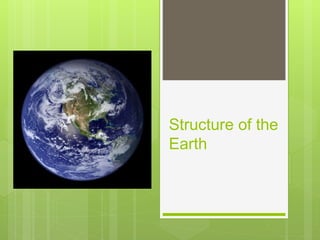
Structure of the
Earth
Earth Basics:
Earth is unique because it is the only planet:
a) With liquid water on surface
b) With oxygen in the atmosphere in such a
large proportion
c) That supports life
Basic Facts:
1. 4.55 billion years old
2. Made mostly of rock
3. 71% of surface covered with water
4. Slightly flattened sphere
5. Rotates on its axis
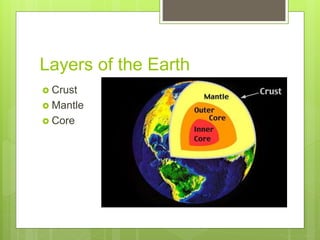
Layers of the Earth
 Crust
 Mantle
 Core
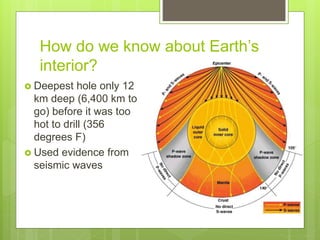
How do we know about Earth’s
interior?
 Deepest hole only 12
km deep (6,400 km to
go) before it was too
hot to drill (356
degrees F)
 Used evidence from
seismic waves
Crust:
 Thin, solid outermost layer of the Earth that
makes up less than 1% of the volume of the
Earth
 Two Types of Crust:
 Oceanic
 Continental
Mantle:
 Layer of “solid-ish” rock located between the
crust and the core
 able to move through convection currents
 denser than the crust
 makes up 2/3 of the mass of the Earth
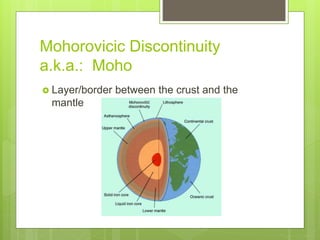
Mohorovicic Discontinuity
a.k.a.: Moho
 Layer/border between the crust and the
mantle
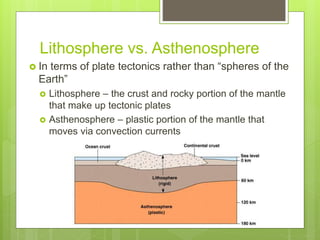
Lithosphere vs. Asthenosphere
 In terms of plate tectonics rather than “spheres of the
Earth”
 Lithosphere – the crust and rocky portion of the mantle
that make up tectonic plates
 Asthenosphere – plastic portion of the mantle that
moves via convection currents
Core:
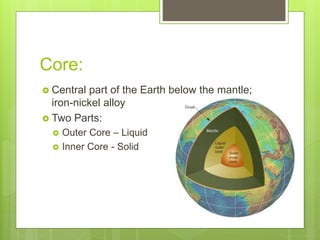
 Central part of the Earth below the mantle;
iron-nickel alloy
 Two Parts:
 Outer Core – Liquid
 Inner Core - Solid
Core Temperature
 Heat is both residual from the formation of the
Earth and from energy due to the abundance
of radioactive materials
General Trends
 As you head towards the center of the Earth
 Temperature Increases
 Density Increases
Magnetism:
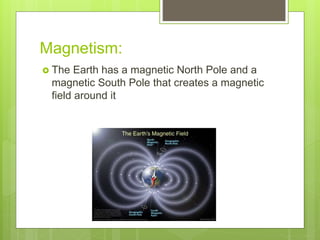
 The Earth has a magnetic North Pole and a
magnetic South Pole that creates a magnetic
field around it
Gravity:
 The force of attraction that exists between all
objects, the bigger and closer the object is,
the stronger the force of gravity

3. Structure of Earth Notes

  • 1.
  • 2.
    Earth Basics: Earth isunique because it is the only planet: a) With liquid water on surface b) With oxygen in the atmosphere in such a large proportion c) That supports life
  • 3.
    Basic Facts: 1. 4.55billion years old 2. Made mostly of rock 3. 71% of surface covered with water 4. Slightly flattened sphere 5. Rotates on its axis
  • 4.
    Layers of theEarth  Crust  Mantle  Core
  • 5.
    How do weknow about Earth’s interior?  Deepest hole only 12 km deep (6,400 km to go) before it was too hot to drill (356 degrees F)  Used evidence from seismic waves
  • 6.
    Crust:  Thin, solidoutermost layer of the Earth that makes up less than 1% of the volume of the Earth  Two Types of Crust:  Oceanic  Continental
  • 7.
    Mantle:  Layer of“solid-ish” rock located between the crust and the core  able to move through convection currents  denser than the crust  makes up 2/3 of the mass of the Earth
  • 8.
    Mohorovicic Discontinuity a.k.a.: Moho Layer/border between the crust and the mantle
  • 9.
    Lithosphere vs. Asthenosphere In terms of plate tectonics rather than “spheres of the Earth”  Lithosphere – the crust and rocky portion of the mantle that make up tectonic plates  Asthenosphere – plastic portion of the mantle that moves via convection currents
  • 10.
    Core:  Central partof the Earth below the mantle; iron-nickel alloy  Two Parts:  Outer Core – Liquid  Inner Core - Solid
  • 11.
    Core Temperature  Heatis both residual from the formation of the Earth and from energy due to the abundance of radioactive materials
  • 12.
    General Trends  Asyou head towards the center of the Earth  Temperature Increases  Density Increases
  • 13.
    Magnetism:  The Earthhas a magnetic North Pole and a magnetic South Pole that creates a magnetic field around it
  • 14.
    Gravity:  The forceof attraction that exists between all objects, the bigger and closer the object is, the stronger the force of gravity