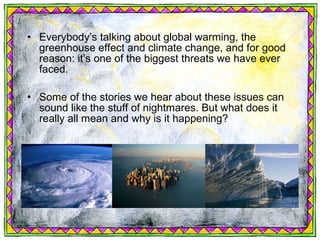
• Everybody’s talking about global warming, the
  greenhouse effect and climate change, and for good
  reason: it’s one of the biggest threats we have ever
  faced.

• Some of the stories we hear about these issues can
  sound like the stuff of nightmares. But what does it
  really all mean and why is it happening?
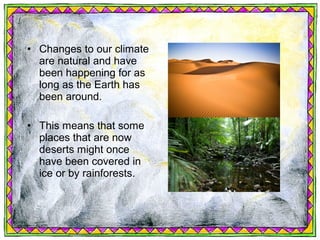
• Changes to our climate
  are natural and have
  been happening for as
  long as the Earth has
  been around.

• This means that some
  places that are now
  deserts might once
  have been covered in
  ice or by rainforests.
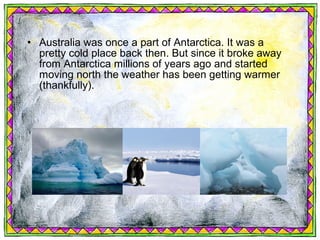
• Australia was once a part of Antarctica. It was a
  pretty cold place back then. But since it broke away
  from Antarctica millions of years ago and started
  moving north the weather has been getting warmer
  (thankfully).
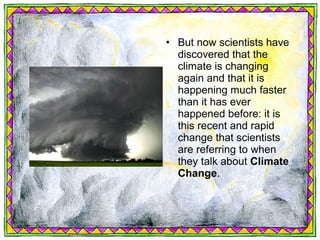
• But now scientists have
  discovered that the
  climate is changing
  again and that it is
  happening much faster
  than it has ever
  happened before: it is
  this recent and rapid
  change that scientists
  are referring to when
  they talk about Climate
  Change.
• So why is this change happening to our climate?

• Scientists have discovered that the Earth’s
  temperature is rapidly increasing and they believe
  that this is because of the amount of greenhouse
  gases being released into the atmosphere.

• There are a many types of greenhouse gases, but
  the main ones that are causing problems for the
  climate are Carbon Dioxide, Methane and Nitrous
  Oxide.
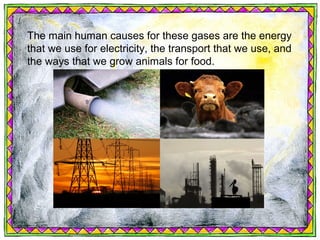
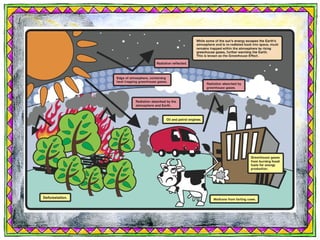
The main human causes for these gases are the energy
that we use for electricity, the transport that we use, and
the ways that we grow animals for food.
• Most of these problem greenhouse gases are
  produced in naturally in low amounts.

• At their natural low levels greenhouse gases act like
  a gassy blanket, trapping the heat of the sun around
  the Earth. This heat is the perfect temperature for
  Earth as we know it. Without this heat the Earth
  would get very, very cold: this warming blanket is
  known as the Greenhouse Effect.
• So what is the problem?

• The Earth’s not the only one making greenhouse
  gases anymore: people are also making them too,
  and we are making so many of them that the planet
  can’t take care of them naturally anymore.

• These extra gases are making the Earths gassy
  blanket thicker and thicker. And because this blanket
  is getting so thick it’s not letting out any of the heat.
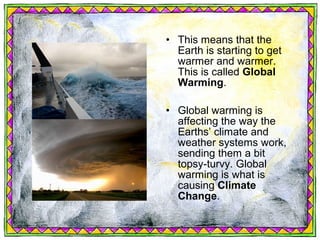
• This means that the
  Earth is starting to get
  warmer and warmer.
  This is called Global
  Warming.

• Global warming is
  affecting the way the
  Earths’ climate and
  weather systems work,
  sending them a bit
  topsy-turvy. Global
  warming is what is
  causing Climate
  Change.
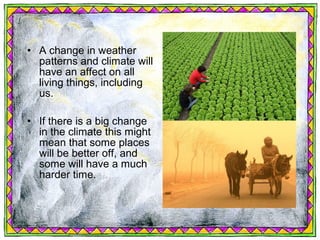
• A change in weather
  patterns and climate will
  have an affect on all
  living things, including
  us.

• If there is a big change
  in the climate this might
  mean that some places
  will be better off, and
  some will have a much
  harder time.
• This means that some plants might grow better, but
  others might not grow at all. Some animals might
  have more to eat, while others might have less. And
  some humans might find that where they live will be
  changed so much that it will be too difficult to live
  there anymore.

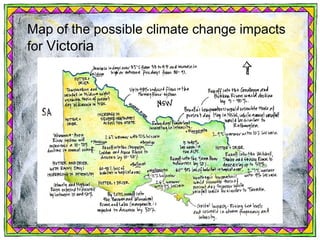
• In Victoria we may get even less rain than we have
  now. This means that Victoria will get drier and it will
  be harder for people, plants and animals to live here.
Map of the possible climate change impacts
for Victoria
• No one really knows what exactly will happen and
  how it will happen. It all depends on what we humans
  do now to stop the climate changing too much.

• There are lots and lots of people all around the world
  working hard to stop this problem getting any worse.

• The only thing is, they can’t do it alone. They need
  the help of as many people as possible: they need
  your help!
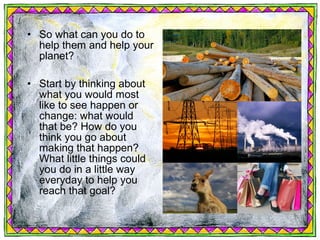
• So what can you do to
  help them and help your
  planet?

• Start by thinking about
  what you would most
  like to see happen or
  change: what would
  that be? How do you
  think you go about
  making that happen?
  What little things could
  you do in a little way
  everyday to help you
  reach that goal?
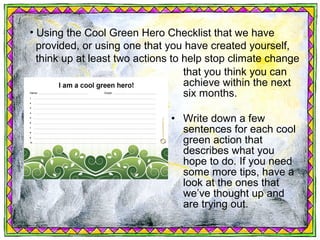
• Using the Cool Green Hero Checklist that we have
  provided, or using one that you have created yourself,
  think up at least two actions to help stop climate change
                                   that you think you can
                                   achieve within the next
                                   six months.

                              • Write down a few
                                sentences for each cool
                                green action that
                                describes what you
                                hope to do. If you need
                                some more tips, have a
                                look at the ones that
                                we’ve thought up and
                                are trying out.
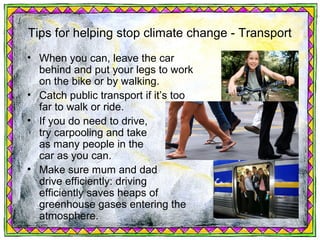
Tips for helping stop climate change - Transport
• When you can, leave the car
  behind and put your legs to work
  on the bike or by walking.
• Catch public transport if it’s too
  far to walk or ride.
• If you do need to drive,
  try carpooling and take
  as many people in the
  car as you can.
• Make sure mum and dad
  drive efficiently: driving
  efficiently saves heaps of
  greenhouse gases entering the
  atmosphere.
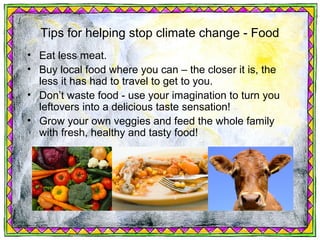
Tips for helping stop climate change - Food
• Eat less meat.
• Buy local food where you can – the closer it is, the
  less it has had to travel to get to you.
• Don’t waste food - use your imagination to turn you
  leftovers into a delicious taste sensation!
• Grow your own veggies and feed the whole family
  with fresh, healthy and tasty food!
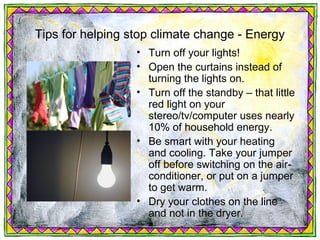
Tips for helping stop climate change - Energy
                  • Turn off your lights!
                  • Open the curtains instead of
                    turning the lights on.
                  • Turn off the standby – that little
                    red light on your
                    stereo/tv/computer uses nearly
                    10% of household energy.
                  • Be smart with your heating
                    and cooling. Take your jumper
                    off before switching on the air-
                    conditioner, or put on a jumper
                    to get warm.
                  • Dry your clothes on the line
                    and not in the dryer.
• For more tips, visit the
  Our Cool School
  website!

• Did we forget any tips?
  Send your tips to us
  and we’ll post them on
  the Our Cool School
  site!

Cool Australia: Climate Change Powerpoint Presentation

  • 2.
    • Everybody’s talkingabout global warming, the greenhouse effect and climate change, and for good reason: it’s one of the biggest threats we have ever faced. • Some of the stories we hear about these issues can sound like the stuff of nightmares. But what does it really all mean and why is it happening?
  • 3.
    • Changes toour climate are natural and have been happening for as long as the Earth has been around. • This means that some places that are now deserts might once have been covered in ice or by rainforests.
  • 4.
    • Australia wasonce a part of Antarctica. It was a pretty cold place back then. But since it broke away from Antarctica millions of years ago and started moving north the weather has been getting warmer (thankfully).
  • 5.
    • But nowscientists have discovered that the climate is changing again and that it is happening much faster than it has ever happened before: it is this recent and rapid change that scientists are referring to when they talk about Climate Change.
  • 6.
    • So whyis this change happening to our climate? • Scientists have discovered that the Earth’s temperature is rapidly increasing and they believe that this is because of the amount of greenhouse gases being released into the atmosphere. • There are a many types of greenhouse gases, but the main ones that are causing problems for the climate are Carbon Dioxide, Methane and Nitrous Oxide.
  • 7.
    The main humancauses for these gases are the energy that we use for electricity, the transport that we use, and the ways that we grow animals for food.
  • 8.
    • Most ofthese problem greenhouse gases are produced in naturally in low amounts. • At their natural low levels greenhouse gases act like a gassy blanket, trapping the heat of the sun around the Earth. This heat is the perfect temperature for Earth as we know it. Without this heat the Earth would get very, very cold: this warming blanket is known as the Greenhouse Effect.
  • 10.
    • So whatis the problem? • The Earth’s not the only one making greenhouse gases anymore: people are also making them too, and we are making so many of them that the planet can’t take care of them naturally anymore. • These extra gases are making the Earths gassy blanket thicker and thicker. And because this blanket is getting so thick it’s not letting out any of the heat.
  • 11.
    • This meansthat the Earth is starting to get warmer and warmer. This is called Global Warming. • Global warming is affecting the way the Earths’ climate and weather systems work, sending them a bit topsy-turvy. Global warming is what is causing Climate Change.
  • 12.
    • A changein weather patterns and climate will have an affect on all living things, including us. • If there is a big change in the climate this might mean that some places will be better off, and some will have a much harder time.
  • 13.
    • This meansthat some plants might grow better, but others might not grow at all. Some animals might have more to eat, while others might have less. And some humans might find that where they live will be changed so much that it will be too difficult to live there anymore. • In Victoria we may get even less rain than we have now. This means that Victoria will get drier and it will be harder for people, plants and animals to live here.
  • 14.
    Map of thepossible climate change impacts for Victoria
  • 15.
    • No onereally knows what exactly will happen and how it will happen. It all depends on what we humans do now to stop the climate changing too much. • There are lots and lots of people all around the world working hard to stop this problem getting any worse. • The only thing is, they can’t do it alone. They need the help of as many people as possible: they need your help!
  • 16.
    • So whatcan you do to help them and help your planet? • Start by thinking about what you would most like to see happen or change: what would that be? How do you think you go about making that happen? What little things could you do in a little way everyday to help you reach that goal?
  • 17.
    • Using theCool Green Hero Checklist that we have provided, or using one that you have created yourself, think up at least two actions to help stop climate change that you think you can achieve within the next six months. • Write down a few sentences for each cool green action that describes what you hope to do. If you need some more tips, have a look at the ones that we’ve thought up and are trying out.
  • 18.
    Tips for helpingstop climate change - Transport • When you can, leave the car behind and put your legs to work on the bike or by walking. • Catch public transport if it’s too far to walk or ride. • If you do need to drive, try carpooling and take as many people in the car as you can. • Make sure mum and dad drive efficiently: driving efficiently saves heaps of greenhouse gases entering the atmosphere.
  • 19.
    Tips for helpingstop climate change - Food • Eat less meat. • Buy local food where you can – the closer it is, the less it has had to travel to get to you. • Don’t waste food - use your imagination to turn you leftovers into a delicious taste sensation! • Grow your own veggies and feed the whole family with fresh, healthy and tasty food!
  • 20.
    Tips for helpingstop climate change - Energy • Turn off your lights! • Open the curtains instead of turning the lights on. • Turn off the standby – that little red light on your stereo/tv/computer uses nearly 10% of household energy. • Be smart with your heating and cooling. Take your jumper off before switching on the air- conditioner, or put on a jumper to get warm. • Dry your clothes on the line and not in the dryer.
  • 21.
    • For moretips, visit the Our Cool School website! • Did we forget any tips? Send your tips to us and we’ll post them on the Our Cool School site!