PORTFOLIO MANAGEMENT
INTRODUCTION
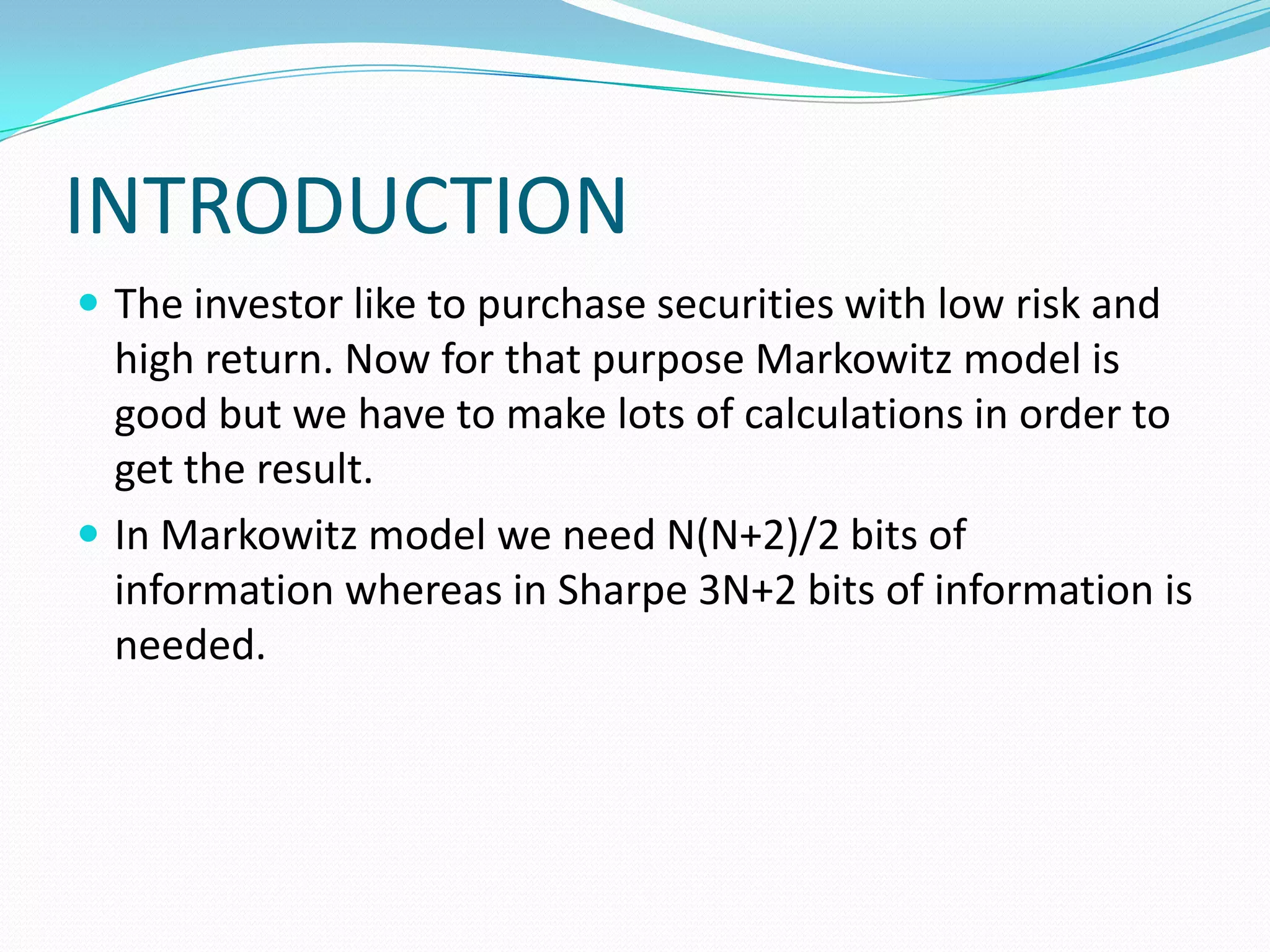
 The investor like to purchase securities with low risk and
  high return. Now for that purpose Markowitz model is
  good but we have to make lots of calculations in order to
  get the result.
 In Markowitz model we need N(N+2)/2 bits of
  information whereas in Sharpe 3N+2 bits of information is
  needed.
Sharpe index model
 Casual observation of stock prices over a period of time
  reveals that most of stock prices move with the market
  index. When the Sensex increases the price increases and
  vice versa. Stock prices are related to the market index
  and this relationship could be used to estimate return on
  stock. Towards this purpose following equation can be
  used.
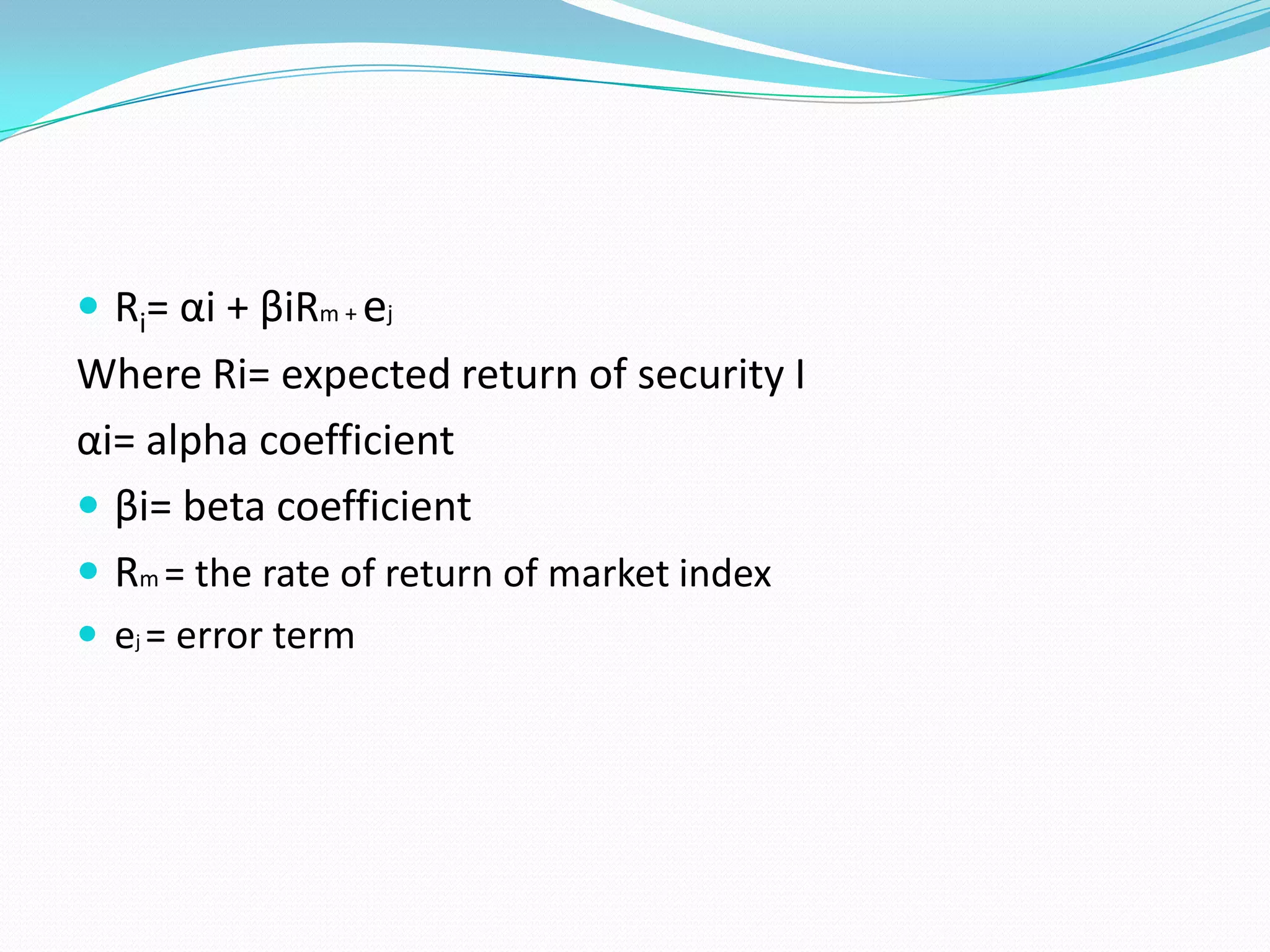
 Ri= αi + βiRm + ej
Where Ri= expected return of security I
αi= alpha coefficient
 βi= beta coefficient
 Rm = the rate of return of market index
 ej = error term
 According to the equation, the return of stock can be
  divided into two components, the return due to the
  market and the return independent of the market. βi
  indicates the sensitivity of stock return to the changes In
  market return. For example βi of 1.5 means the stock
  return is expected to increase by 1.5% if market increases
  by 1% and vice versa. The estimate of βi and αi can be
  obtained using regression analysis.
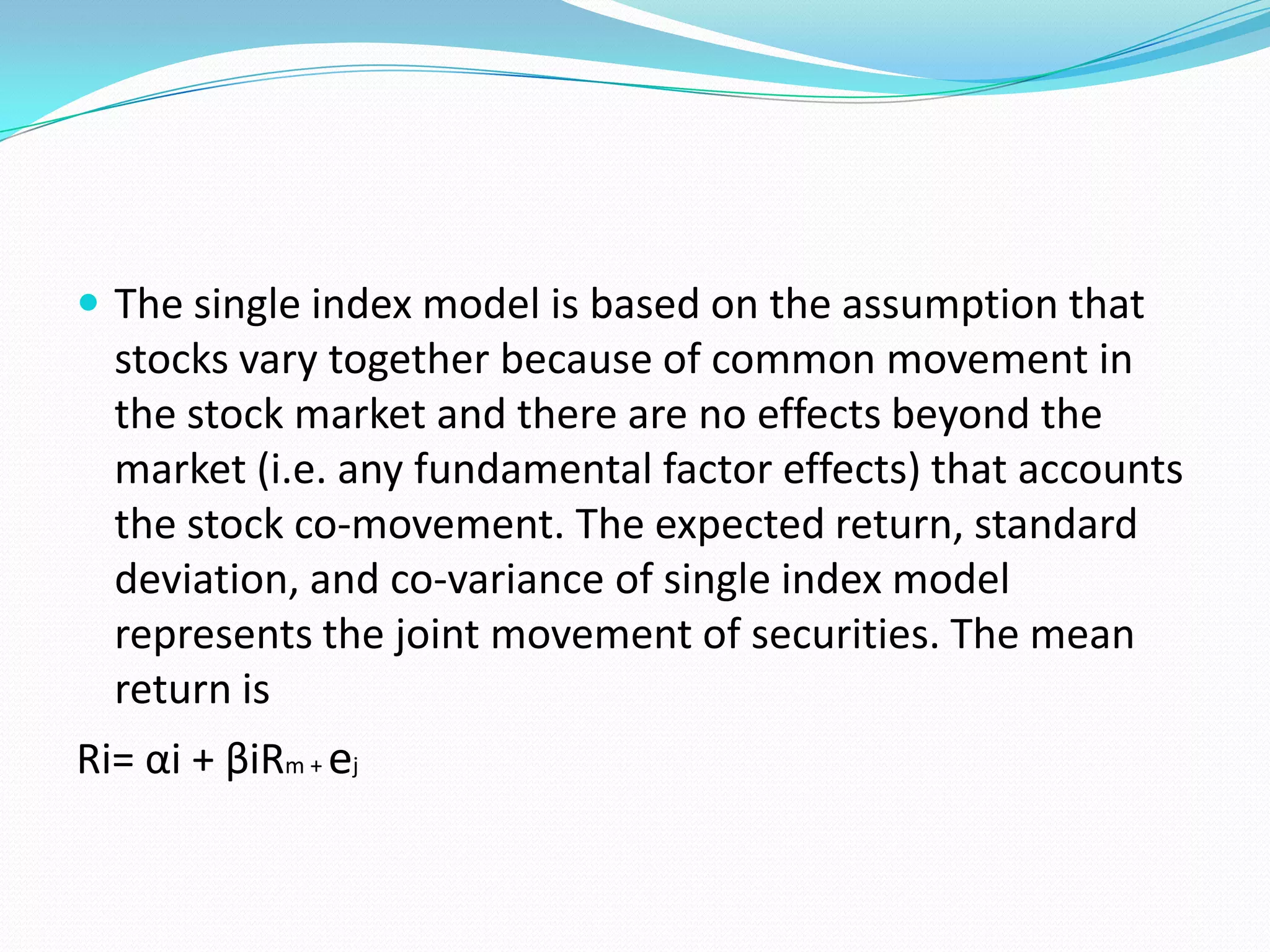
 The single index model is based on the assumption that
  stocks vary together because of common movement in
  the stock market and there are no effects beyond the
  market (i.e. any fundamental factor effects) that accounts
  the stock co-movement. The expected return, standard
  deviation, and co-variance of single index model
  represents the joint movement of securities. The mean
  return is
Ri= αi + βiRm + ej
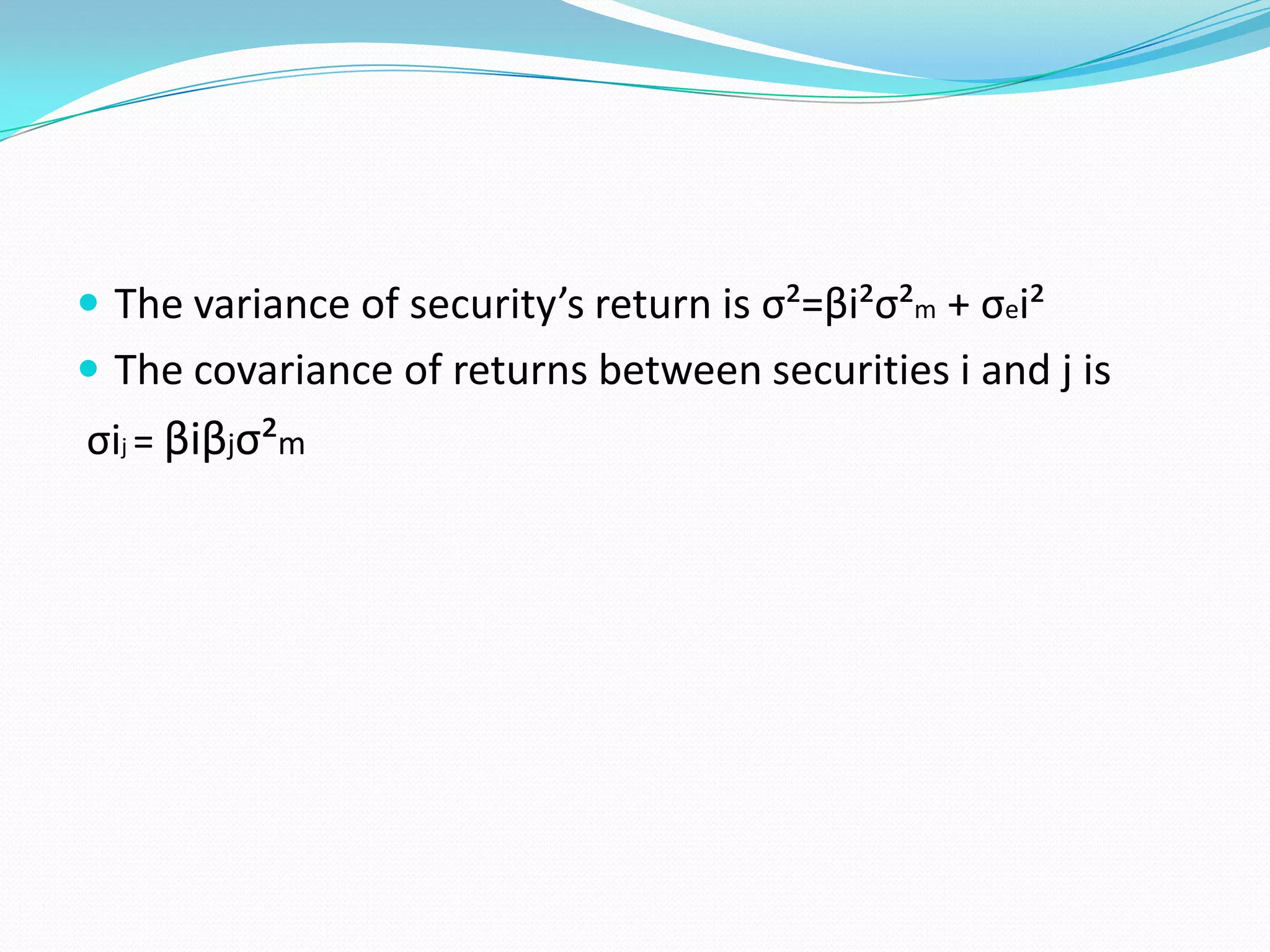
 The variance of security’s return is σ²=βi²σ²m + σei²
 The covariance of returns between securities i and j is
σij = βiβjσ²m
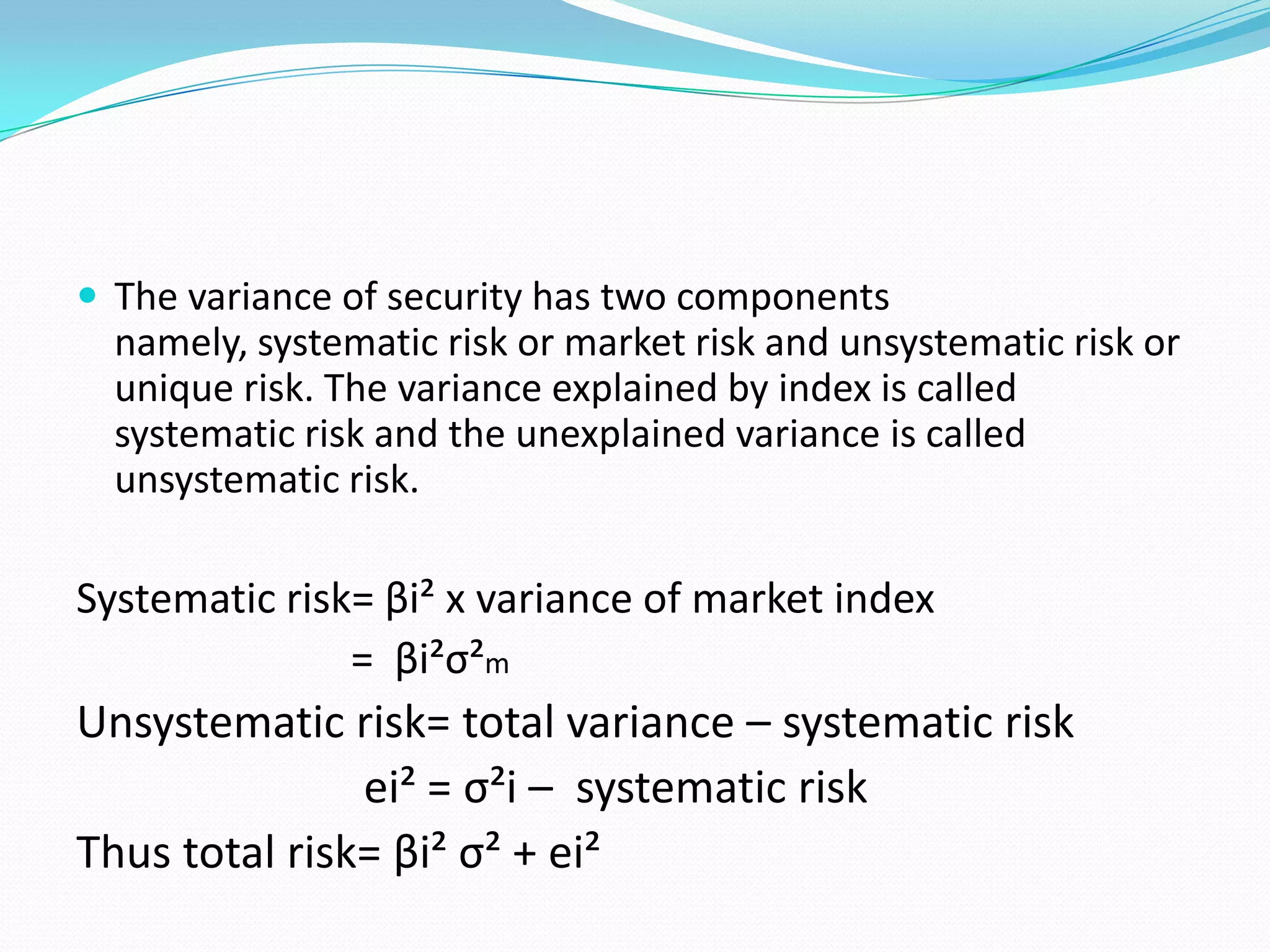
 The variance of security has two components
  namely, systematic risk or market risk and unsystematic risk or
  unique risk. The variance explained by index is called
  systematic risk and the unexplained variance is called
  unsystematic risk.

Systematic risk= βi² x variance of market index
               = βi²σ²m
Unsystematic risk= total variance – systematic risk
               ei² = σ²i – systematic risk
Thus total risk= βi² σ² + ei²
 From this the portfolio variance can be derived


  σ²p = [ (Σxiβi)²σ²m] + [ Σxi² ei²]
σ²p = variance of portfolio
σ²m = expected variance of index
ei²= variation in security return not related to the market index
xi = the portion of stock i in the portfolio
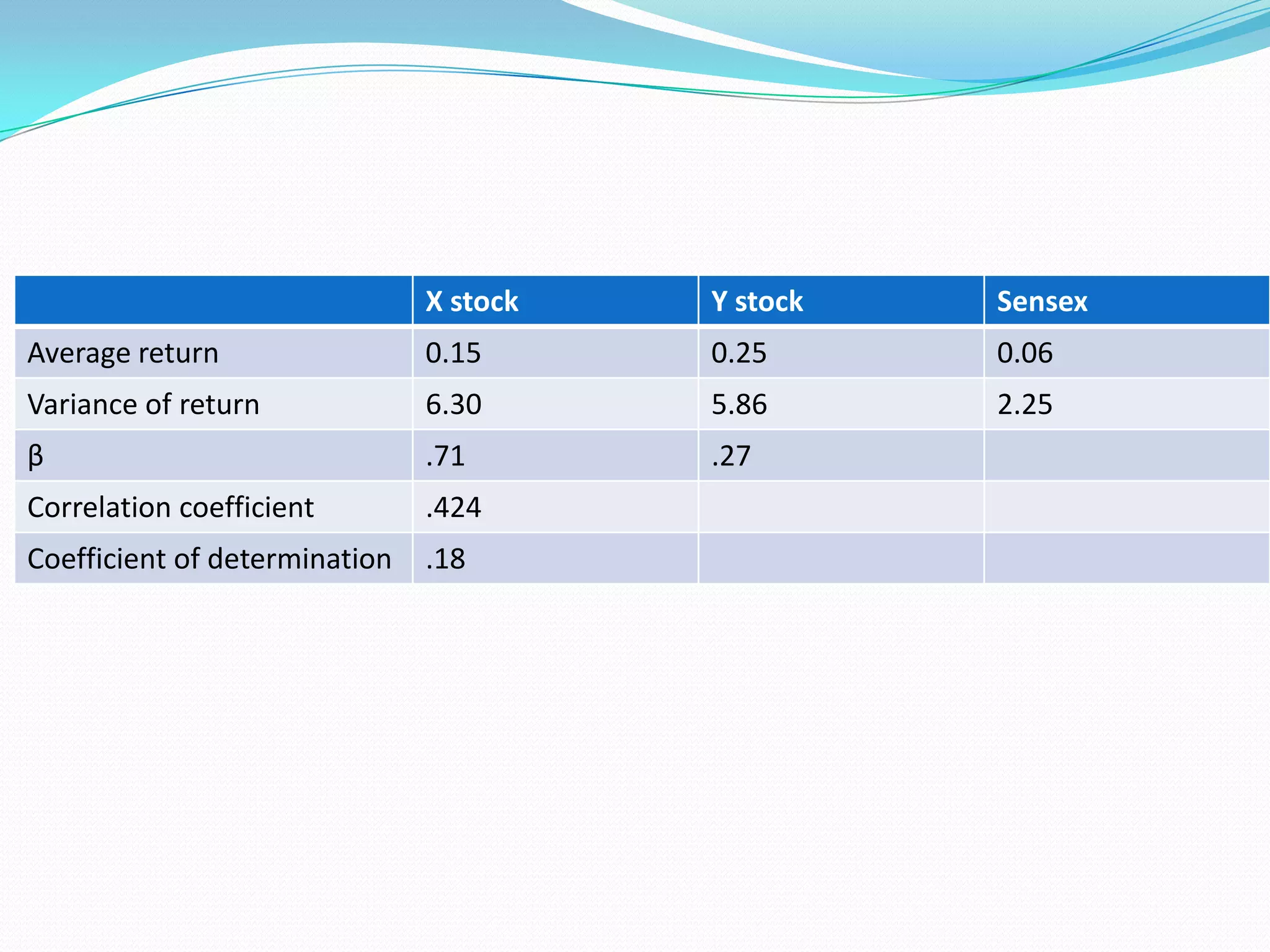
X stock   Y stock   Sensex
Average return                 0.15      0.25      0.06
Variance of return             6.30      5.86      2.25
β                              .71       .27
Correlation coefficient        .424
Coefficient of determination   .18
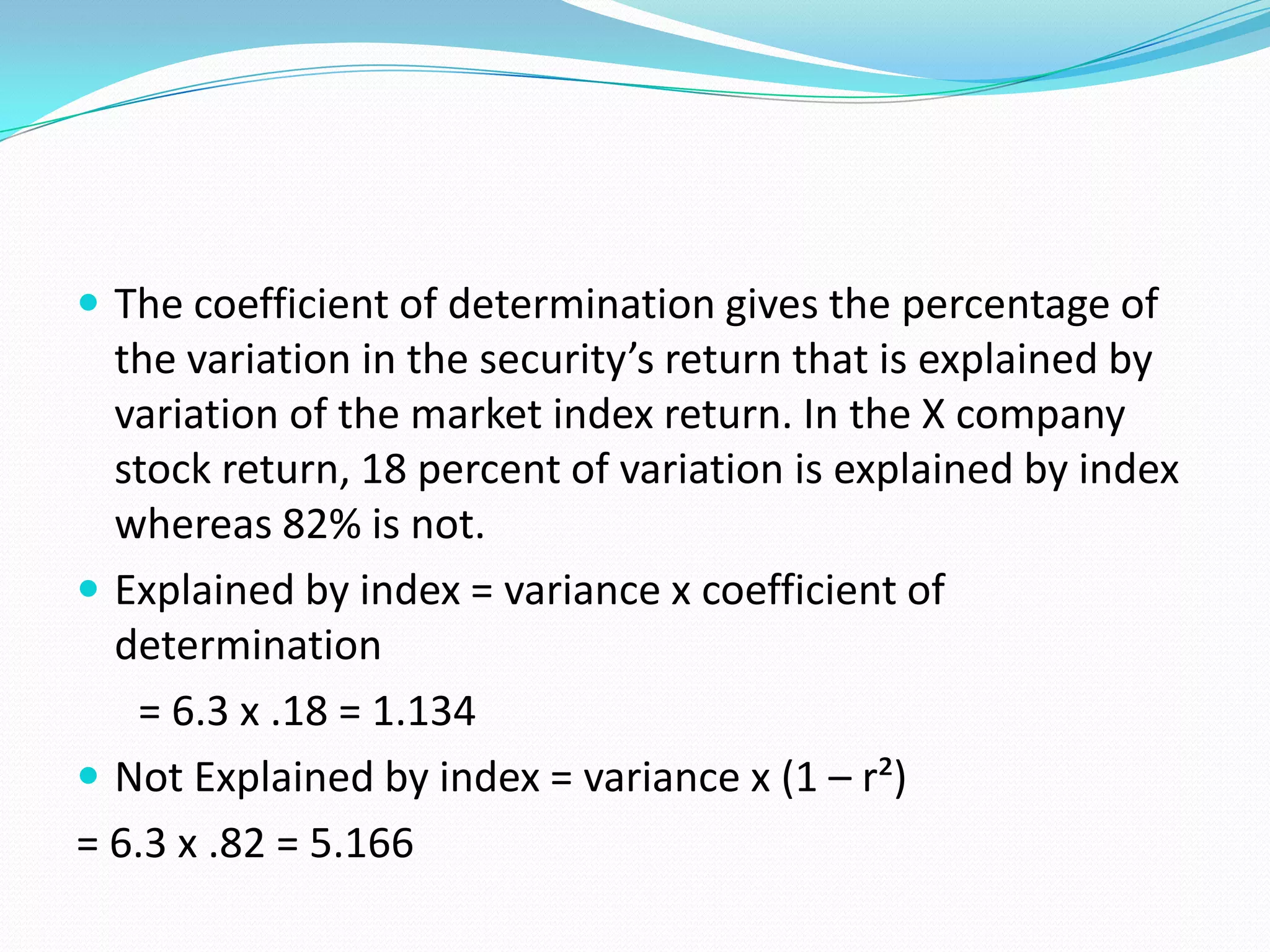
 The coefficient of determination gives the percentage of
  the variation in the security’s return that is explained by
  variation of the market index return. In the X company
  stock return, 18 percent of variation is explained by index
  whereas 82% is not.
 Explained by index = variance x coefficient of
  determination
   = 6.3 x .18 = 1.134
 Not Explained by index = variance x (1 – r²)
= 6.3 x .82 = 5.166
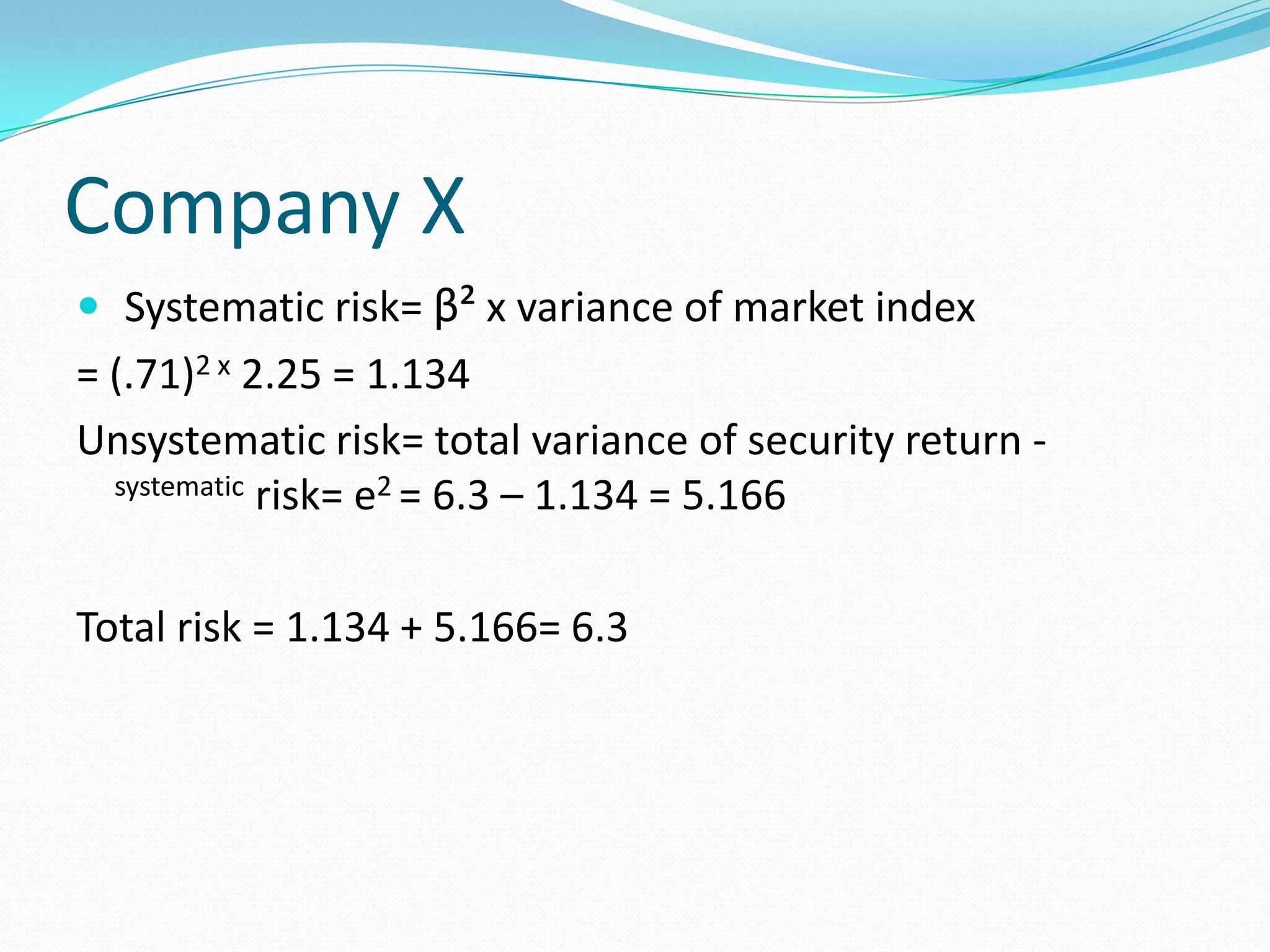
Company X
 Systematic risk= β² x variance of market index
= (.71)2 x 2.25 = 1.134
Unsystematic risk= total variance of security return -
  systematic risk= e2 = 6.3 – 1.134 = 5.166


Total risk = 1.134 + 5.166= 6.3
Company y
 Systematic risk = βi² x σ²m
 (.27)2 x 2.25 = 0.1640
 Unsystematic risk = total variance of security return – systematic risk
 = 5.86 - .1640 = 5.696

 σ²p = [ (Σxiβi)²σ²m] + [ Σxi² ei²]
 = {(.5 x .71 + .5 x .27)2 x 2.25} + {(.5) 2 (5.166) + (.5) 2
  (5.696)}
 = (.540 + 2.716)
 = 3.256

3. sharpe index model

  • 1.
  • 2.
    INTRODUCTION  The investorlike to purchase securities with low risk and high return. Now for that purpose Markowitz model is good but we have to make lots of calculations in order to get the result.  In Markowitz model we need N(N+2)/2 bits of information whereas in Sharpe 3N+2 bits of information is needed.
  • 3.
    Sharpe index model Casual observation of stock prices over a period of time reveals that most of stock prices move with the market index. When the Sensex increases the price increases and vice versa. Stock prices are related to the market index and this relationship could be used to estimate return on stock. Towards this purpose following equation can be used.
  • 4.
     Ri= αi+ βiRm + ej Where Ri= expected return of security I αi= alpha coefficient  βi= beta coefficient  Rm = the rate of return of market index  ej = error term
  • 5.
     According tothe equation, the return of stock can be divided into two components, the return due to the market and the return independent of the market. βi indicates the sensitivity of stock return to the changes In market return. For example βi of 1.5 means the stock return is expected to increase by 1.5% if market increases by 1% and vice versa. The estimate of βi and αi can be obtained using regression analysis.
  • 6.
     The singleindex model is based on the assumption that stocks vary together because of common movement in the stock market and there are no effects beyond the market (i.e. any fundamental factor effects) that accounts the stock co-movement. The expected return, standard deviation, and co-variance of single index model represents the joint movement of securities. The mean return is Ri= αi + βiRm + ej
  • 7.
     The varianceof security’s return is σ²=βi²σ²m + σei²  The covariance of returns between securities i and j is σij = βiβjσ²m
  • 8.
     The varianceof security has two components namely, systematic risk or market risk and unsystematic risk or unique risk. The variance explained by index is called systematic risk and the unexplained variance is called unsystematic risk. Systematic risk= βi² x variance of market index = βi²σ²m Unsystematic risk= total variance – systematic risk ei² = σ²i – systematic risk Thus total risk= βi² σ² + ei²
  • 9.
     From thisthe portfolio variance can be derived σ²p = [ (Σxiβi)²σ²m] + [ Σxi² ei²] σ²p = variance of portfolio σ²m = expected variance of index ei²= variation in security return not related to the market index xi = the portion of stock i in the portfolio
  • 10.
    X stock Y stock Sensex Average return 0.15 0.25 0.06 Variance of return 6.30 5.86 2.25 β .71 .27 Correlation coefficient .424 Coefficient of determination .18
  • 11.
     The coefficientof determination gives the percentage of the variation in the security’s return that is explained by variation of the market index return. In the X company stock return, 18 percent of variation is explained by index whereas 82% is not.  Explained by index = variance x coefficient of determination = 6.3 x .18 = 1.134  Not Explained by index = variance x (1 – r²) = 6.3 x .82 = 5.166
  • 12.
    Company X  Systematicrisk= β² x variance of market index = (.71)2 x 2.25 = 1.134 Unsystematic risk= total variance of security return - systematic risk= e2 = 6.3 – 1.134 = 5.166 Total risk = 1.134 + 5.166= 6.3
  • 13.
    Company y  Systematicrisk = βi² x σ²m  (.27)2 x 2.25 = 0.1640  Unsystematic risk = total variance of security return – systematic risk  = 5.86 - .1640 = 5.696  σ²p = [ (Σxiβi)²σ²m] + [ Σxi² ei²]  = {(.5 x .71 + .5 x .27)2 x 2.25} + {(.5) 2 (5.166) + (.5) 2 (5.696)}  = (.540 + 2.716)  = 3.256