
What is service ?
INTRODUCTION:-
 SERVICE IS ANY ACT OR PERFORMANCE THAT
 ONE PARTY CAN OFFER TO ANOTHER THAT IS
 ESSENTIALLY INTANGIBLE AND DOES NOT
 RESULT IN ANY OWNERSHIP
                                 -PHILIP
                                 KOTLER

                                           2
In simple terms Services are the deeds, processes and
  performances.

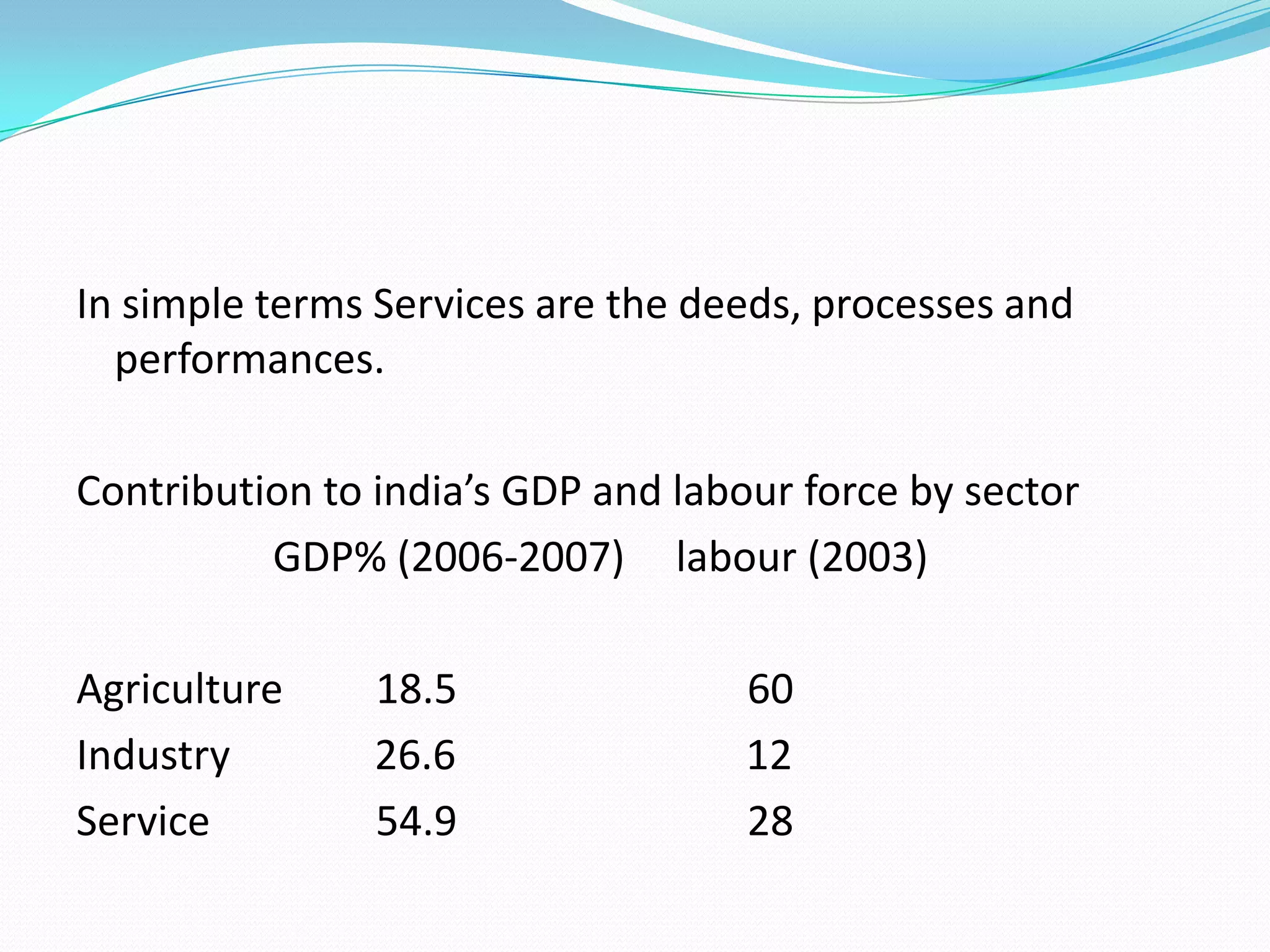
Contribution to india’s GDP and labour force by sector
          GDP% (2006-2007) labour (2003)

Agriculture     18.5                60
Industry        26.6                12
Service         54.9                28
As we begin our discussions of service marketing and
management, it is important to draw distinction between
service industry and company, services as
products, customer service and derived service.
In normal circumstances whenever we talk about service
we talk about consumer services only but services can be
divided into four distinct categories.
 Service industry and companies:- includes those
  companies and industries typically classified within the
  service sector whose core product is service. E.g. Taj
  palace hotels, indian airlines, fortis.
 Services as products:- represents a wide range of
  intangible product offerings that customers value and pay
  for in the market place. E.g. IBM provides information
  technology consulting services to market place.
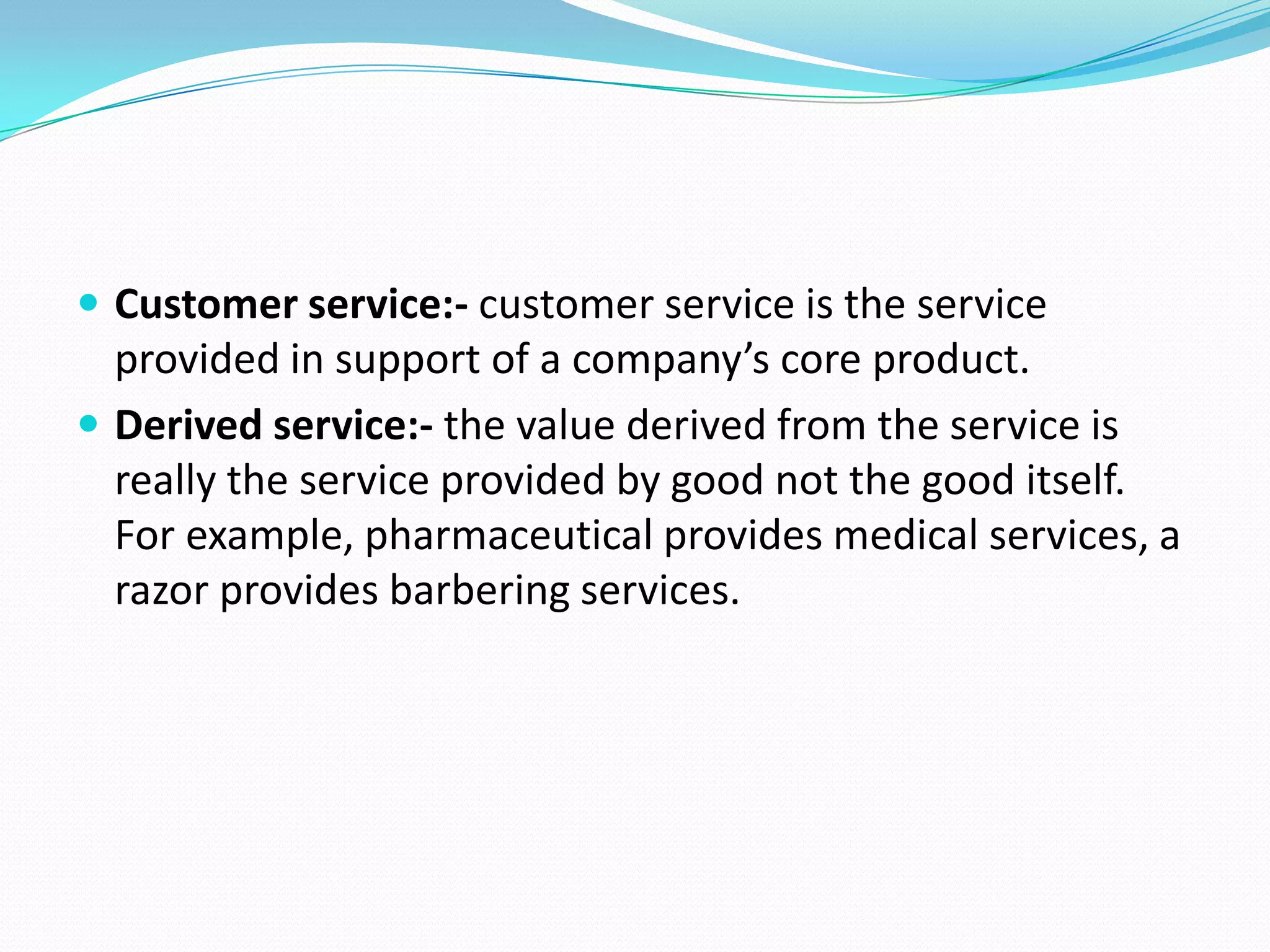
 Customer service:- customer service is the service
  provided in support of a company’s core product.
 Derived service:- the value derived from the service is
  really the service provided by good not the good itself.
  For example, pharmaceutical provides medical services, a
  razor provides barbering services.
Why service marketing
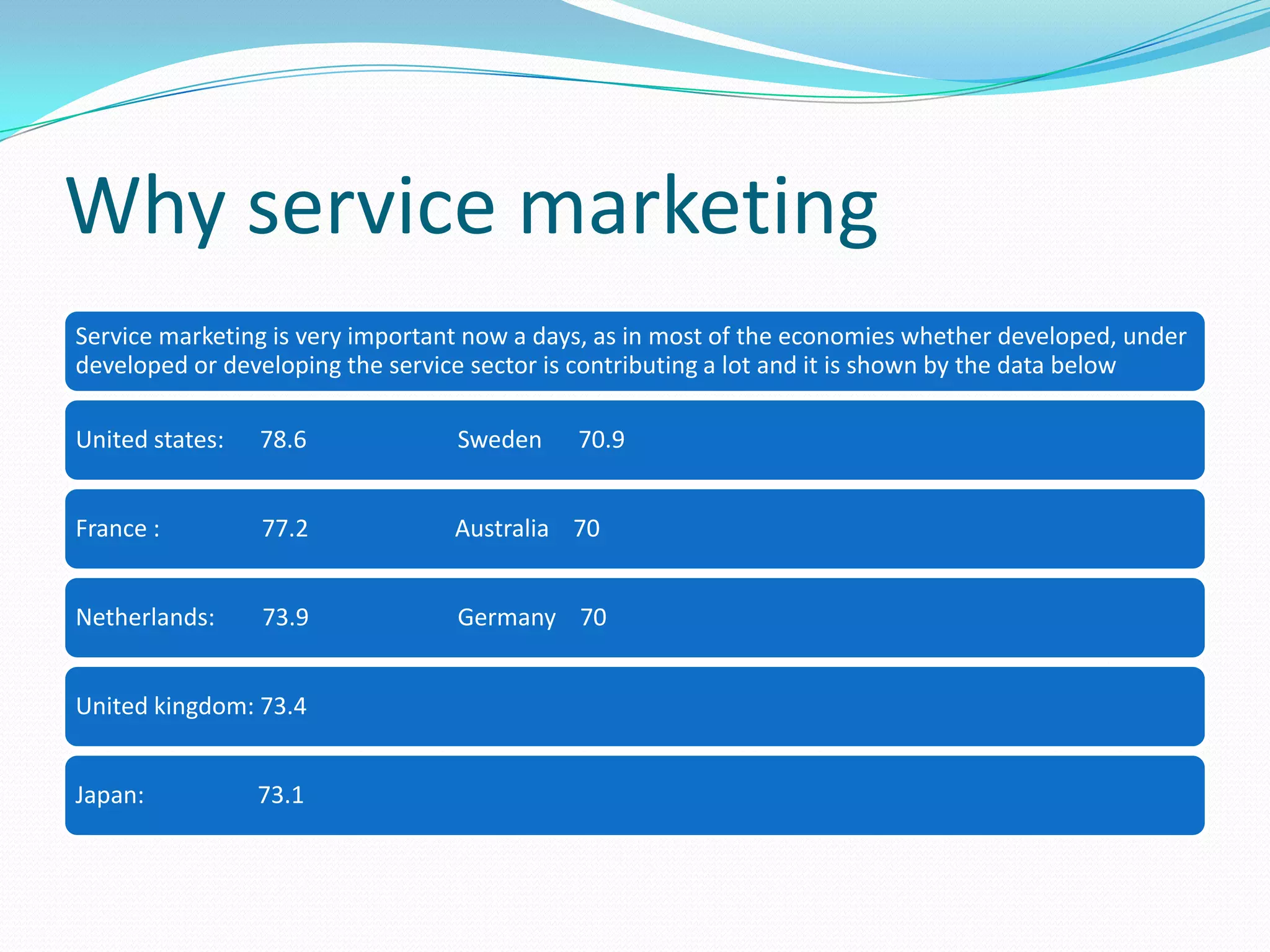
Service marketing is very important now a days, as in most of the economies whether developed, under
developed or developing the service sector is contributing a lot and it is shown by the data below

United states:   78.6             Sweden     70.9


France :         77.2             Australia 70


Netherlands:     73.9             Germany 70


United kingdom: 73.4


Japan:           73.1
Characteristic of Service
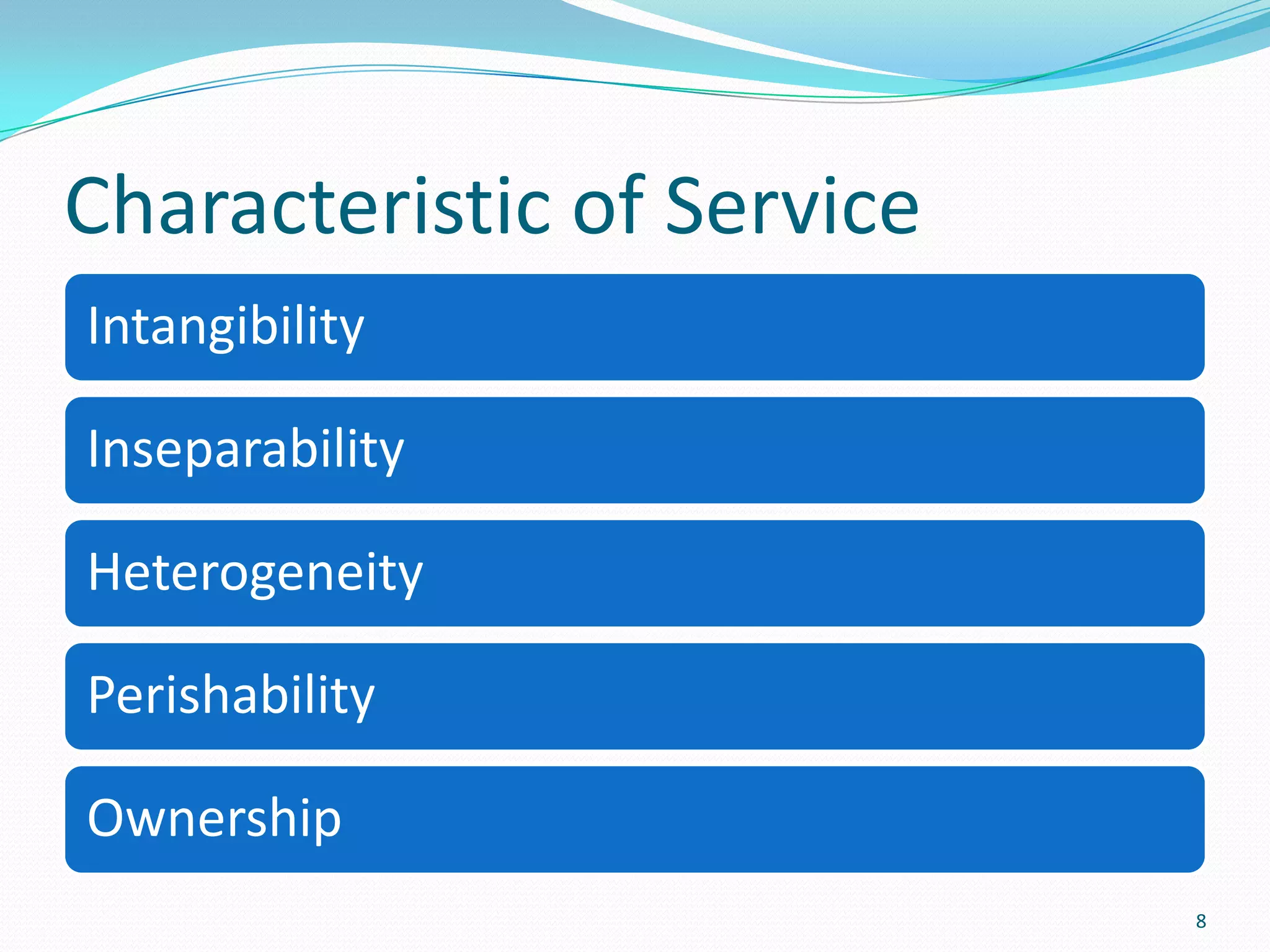
Intangibility

Inseparability

Heterogeneity

Perishability

Ownership
                            8
7 P’s OF SERVICE MARKETING
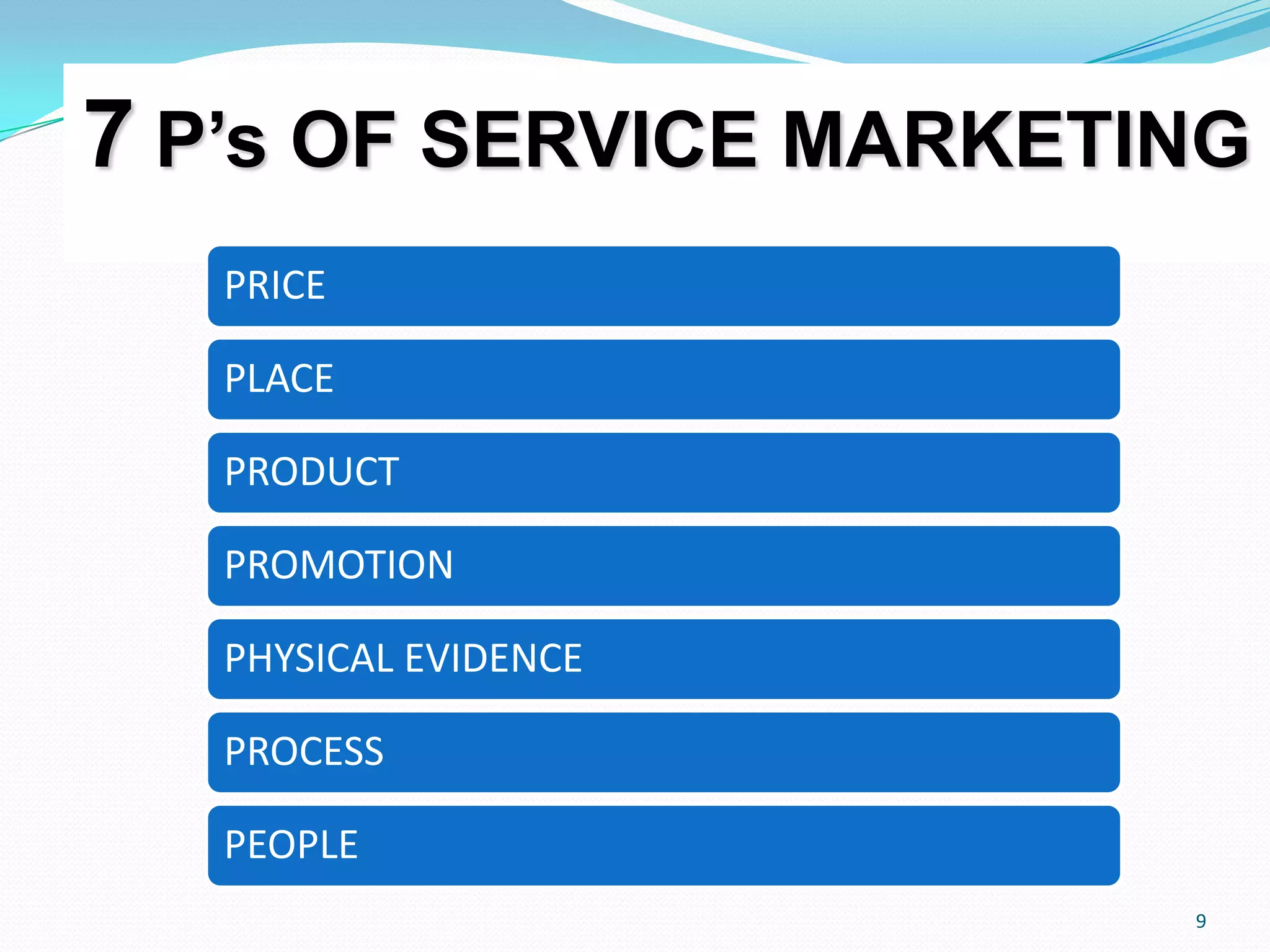
   PRICE

   PLACE

   PRODUCT

   PROMOTION

   PHYSICAL EVIDENCE

   PROCESS

   PEOPLE
                        9
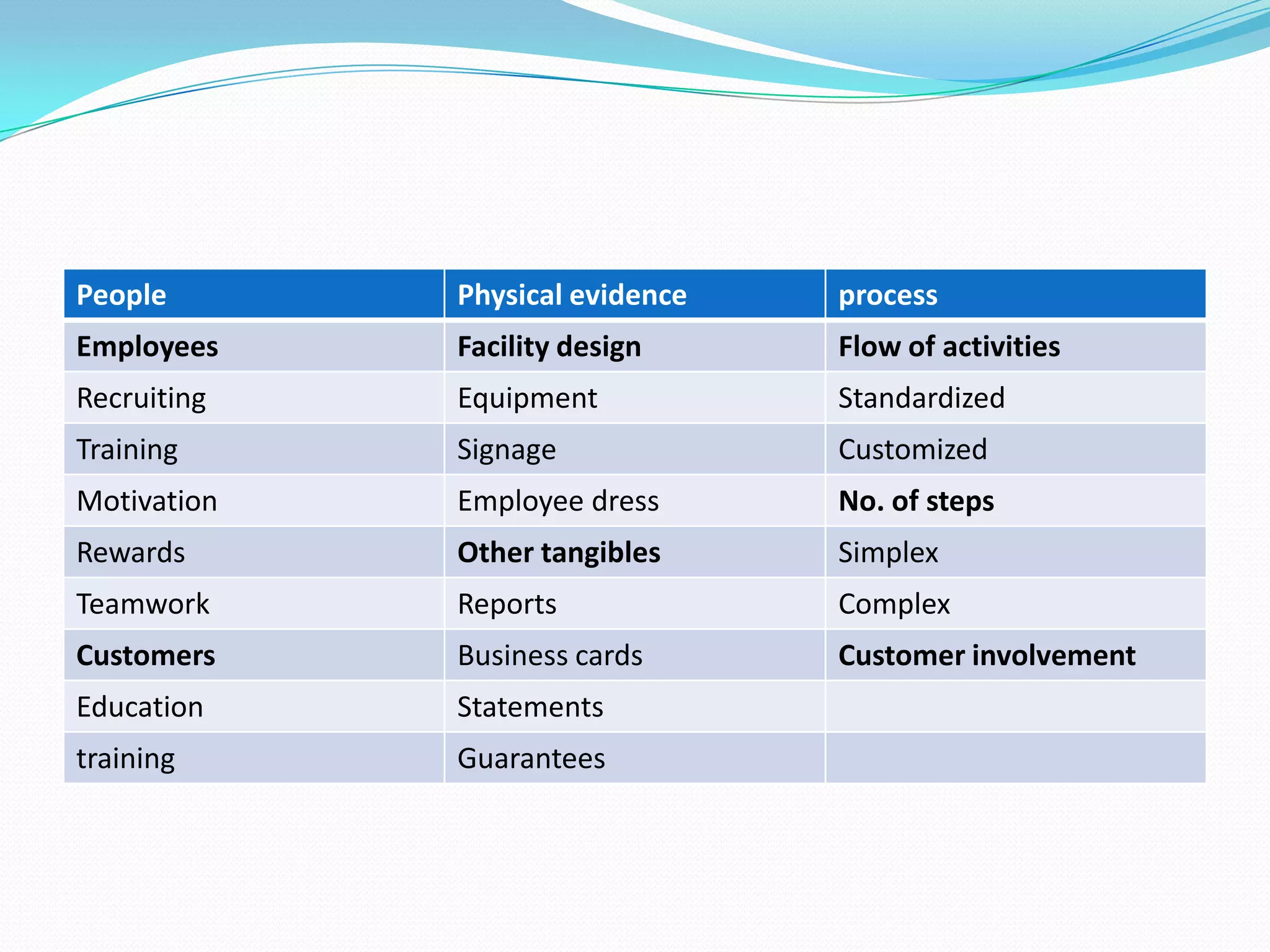
People       Physical evidence   process
Employees    Facility design     Flow of activities
Recruiting   Equipment           Standardized
Training     Signage             Customized
Motivation   Employee dress      No. of steps
Rewards      Other tangibles     Simplex
Teamwork     Reports             Complex
Customers    Business cards      Customer involvement
Education    Statements
training     Guarantees
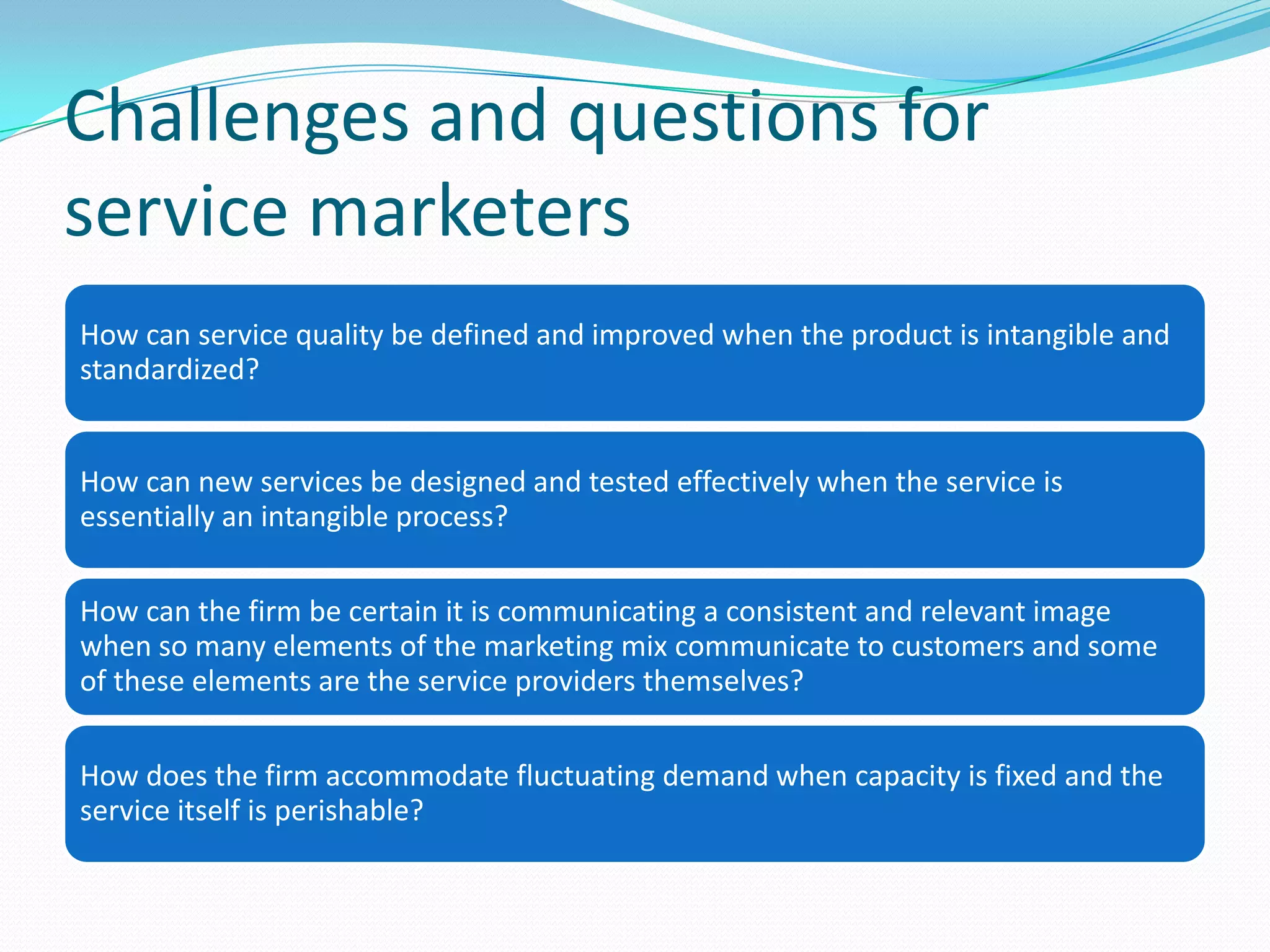
Challenges and questions for
service marketers
How can service quality be defined and improved when the product is intangible and
standardized?


How can new services be designed and tested effectively when the service is
essentially an intangible process?

How can the firm be certain it is communicating a consistent and relevant image
when so many elements of the marketing mix communicate to customers and some
of these elements are the service providers themselves?

How does the firm accommodate fluctuating demand when capacity is fixed and the
service itself is perishable?
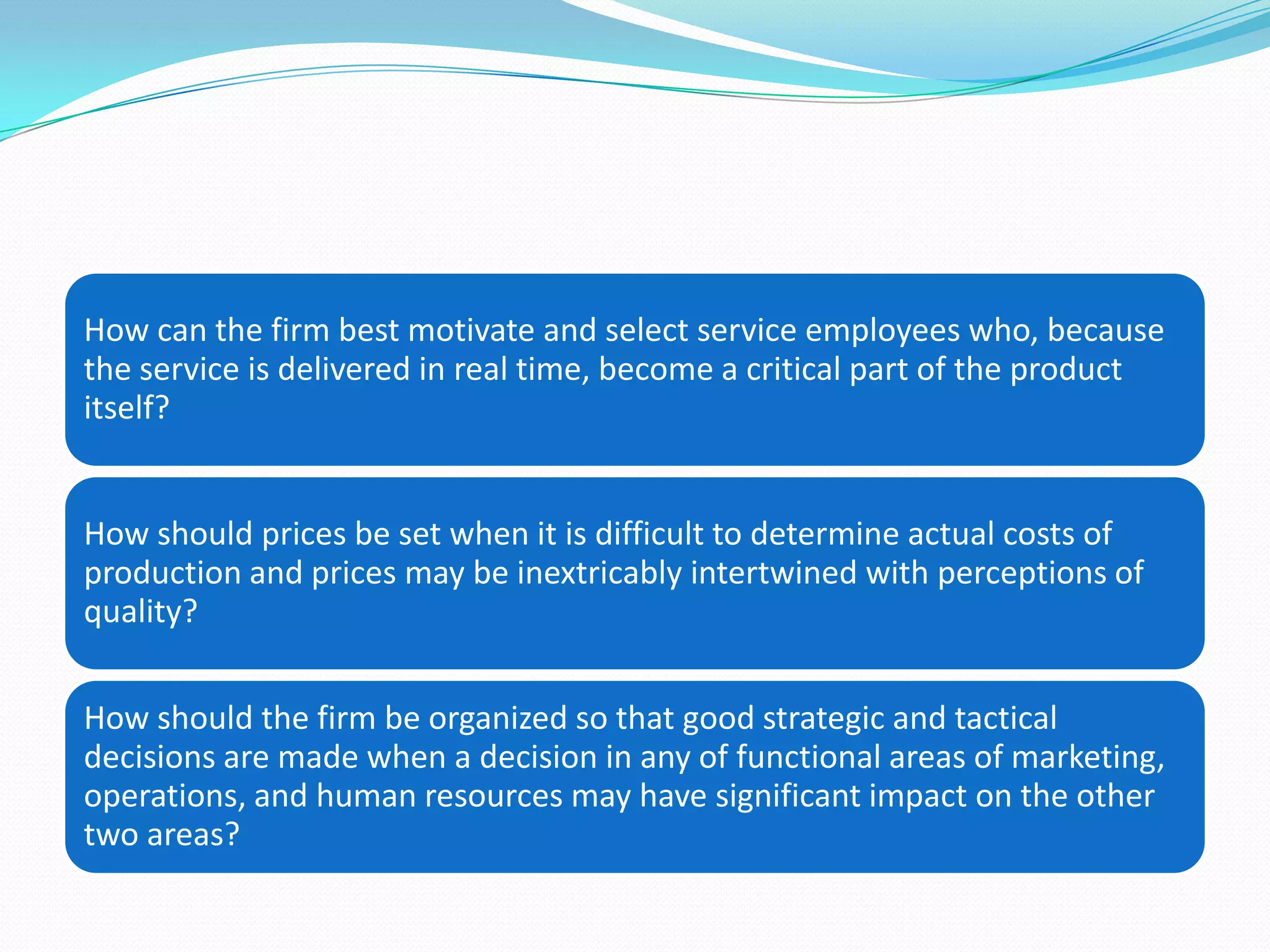
How can the firm best motivate and select service employees who, because
the service is delivered in real time, become a critical part of the product
itself?


How should prices be set when it is difficult to determine actual costs of
production and prices may be inextricably intertwined with perceptions of
quality?


How should the firm be organized so that good strategic and tactical
decisions are made when a decision in any of functional areas of marketing,
operations, and human resources may have significant impact on the other
two areas?
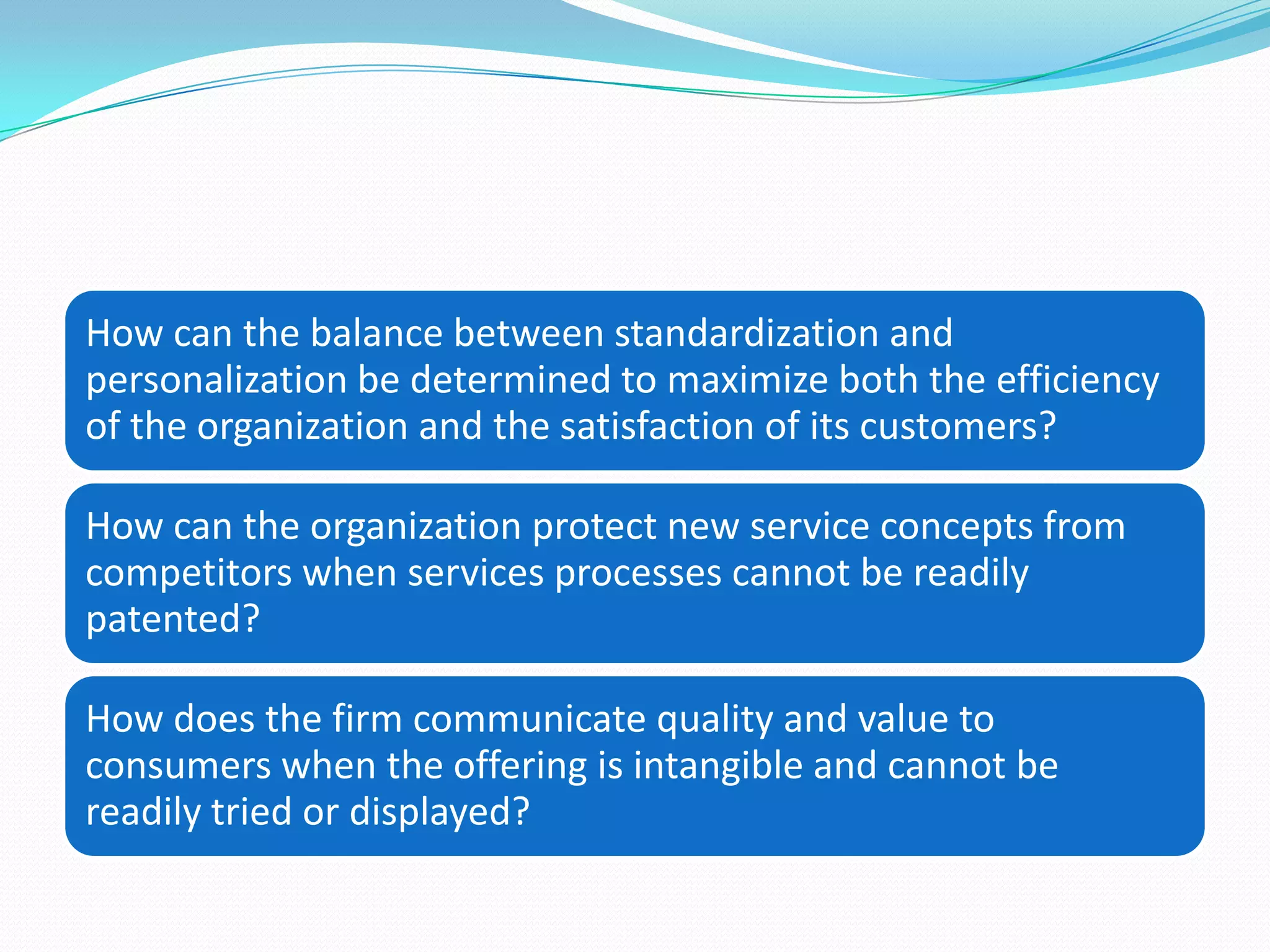
How can the balance between standardization and
personalization be determined to maximize both the efficiency
of the organization and the satisfaction of its customers?

How can the organization protect new service concepts from
competitors when services processes cannot be readily
patented?

How does the firm communicate quality and value to
consumers when the offering is intangible and cannot be
readily tried or displayed?
How can the organization ensure
the delivery of consistent quality
service when both the
organization’s employees and the
customers themselves can affect
the service outcome?

1. service marketing introduction

  • 2.
    What is service? INTRODUCTION:- SERVICE IS ANY ACT OR PERFORMANCE THAT ONE PARTY CAN OFFER TO ANOTHER THAT IS ESSENTIALLY INTANGIBLE AND DOES NOT RESULT IN ANY OWNERSHIP -PHILIP KOTLER 2
  • 3.
    In simple termsServices are the deeds, processes and performances. Contribution to india’s GDP and labour force by sector GDP% (2006-2007) labour (2003) Agriculture 18.5 60 Industry 26.6 12 Service 54.9 28
  • 4.
    As we beginour discussions of service marketing and management, it is important to draw distinction between service industry and company, services as products, customer service and derived service. In normal circumstances whenever we talk about service we talk about consumer services only but services can be divided into four distinct categories.
  • 5.
     Service industryand companies:- includes those companies and industries typically classified within the service sector whose core product is service. E.g. Taj palace hotels, indian airlines, fortis.  Services as products:- represents a wide range of intangible product offerings that customers value and pay for in the market place. E.g. IBM provides information technology consulting services to market place.
  • 6.
     Customer service:-customer service is the service provided in support of a company’s core product.  Derived service:- the value derived from the service is really the service provided by good not the good itself. For example, pharmaceutical provides medical services, a razor provides barbering services.
  • 7.
    Why service marketing Servicemarketing is very important now a days, as in most of the economies whether developed, under developed or developing the service sector is contributing a lot and it is shown by the data below United states: 78.6 Sweden 70.9 France : 77.2 Australia 70 Netherlands: 73.9 Germany 70 United kingdom: 73.4 Japan: 73.1
  • 8.
  • 9.
    7 P’s OFSERVICE MARKETING PRICE PLACE PRODUCT PROMOTION PHYSICAL EVIDENCE PROCESS PEOPLE 9
  • 10.
    People Physical evidence process Employees Facility design Flow of activities Recruiting Equipment Standardized Training Signage Customized Motivation Employee dress No. of steps Rewards Other tangibles Simplex Teamwork Reports Complex Customers Business cards Customer involvement Education Statements training Guarantees
  • 11.
    Challenges and questionsfor service marketers How can service quality be defined and improved when the product is intangible and standardized? How can new services be designed and tested effectively when the service is essentially an intangible process? How can the firm be certain it is communicating a consistent and relevant image when so many elements of the marketing mix communicate to customers and some of these elements are the service providers themselves? How does the firm accommodate fluctuating demand when capacity is fixed and the service itself is perishable?
  • 12.
    How can thefirm best motivate and select service employees who, because the service is delivered in real time, become a critical part of the product itself? How should prices be set when it is difficult to determine actual costs of production and prices may be inextricably intertwined with perceptions of quality? How should the firm be organized so that good strategic and tactical decisions are made when a decision in any of functional areas of marketing, operations, and human resources may have significant impact on the other two areas?
  • 13.
    How can thebalance between standardization and personalization be determined to maximize both the efficiency of the organization and the satisfaction of its customers? How can the organization protect new service concepts from competitors when services processes cannot be readily patented? How does the firm communicate quality and value to consumers when the offering is intangible and cannot be readily tried or displayed?
  • 14.
    How can theorganization ensure the delivery of consistent quality service when both the organization’s employees and the customers themselves can affect the service outcome?