
Microbiology  Antonio Rivas PA-C Feb 2008
Microbiology Clinical microbiology encompasses Bacteriology Parasitology Virology Mycology
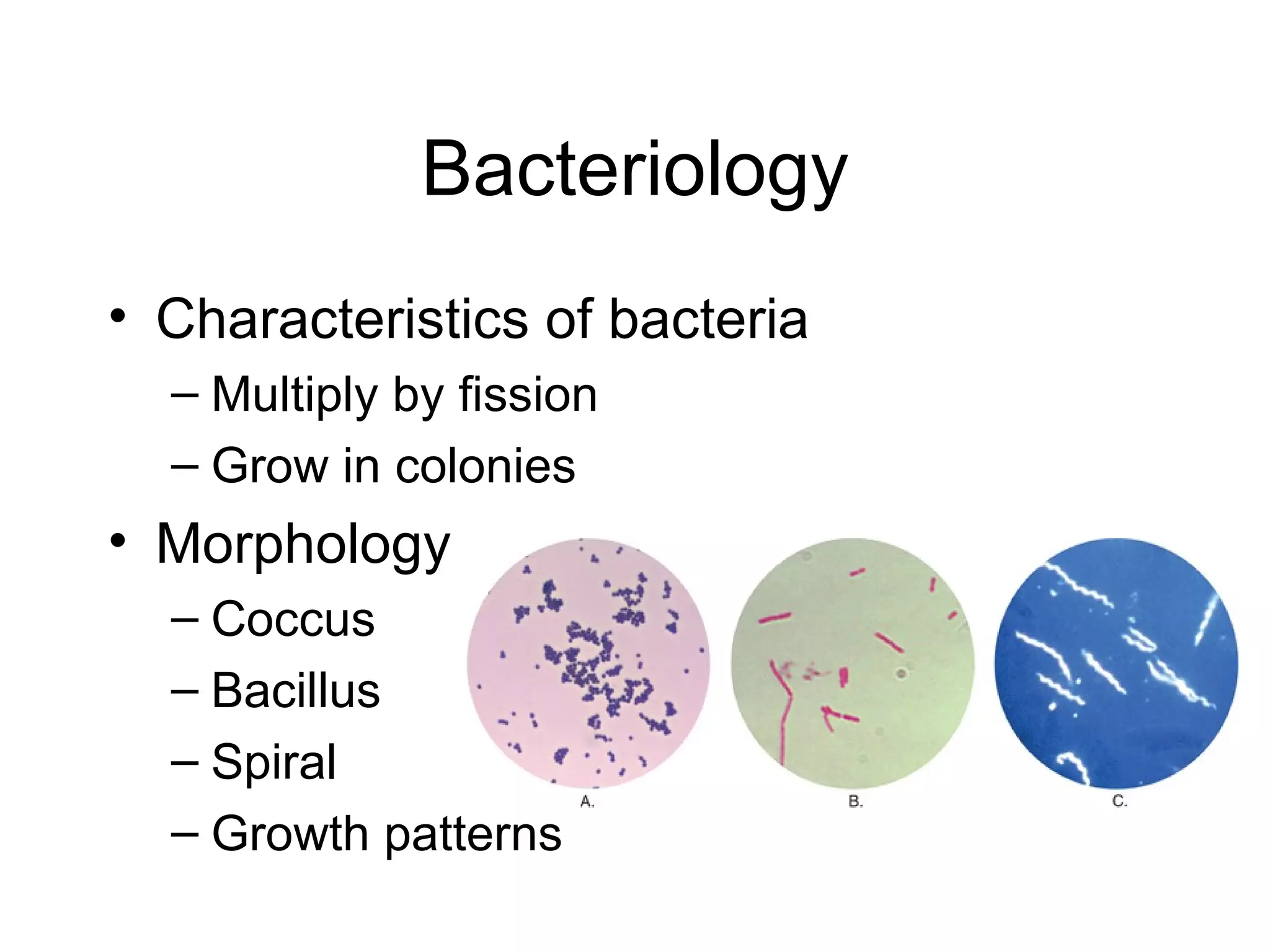
Bacteriology Characteristics of bacteria Multiply by fission Grow in colonies Morphology Coccus Bacillus Spiral Growth patterns
Specimen collection Collect before antimicrobials are given Specimen collected where the organism is most likely to be found w/o external contamination Stage of the disease Enteric pathogens are present in higher numbers during the acute or diarrheal phase of the infection Sufficient quantity of specimen  Prompt delivery to the lab
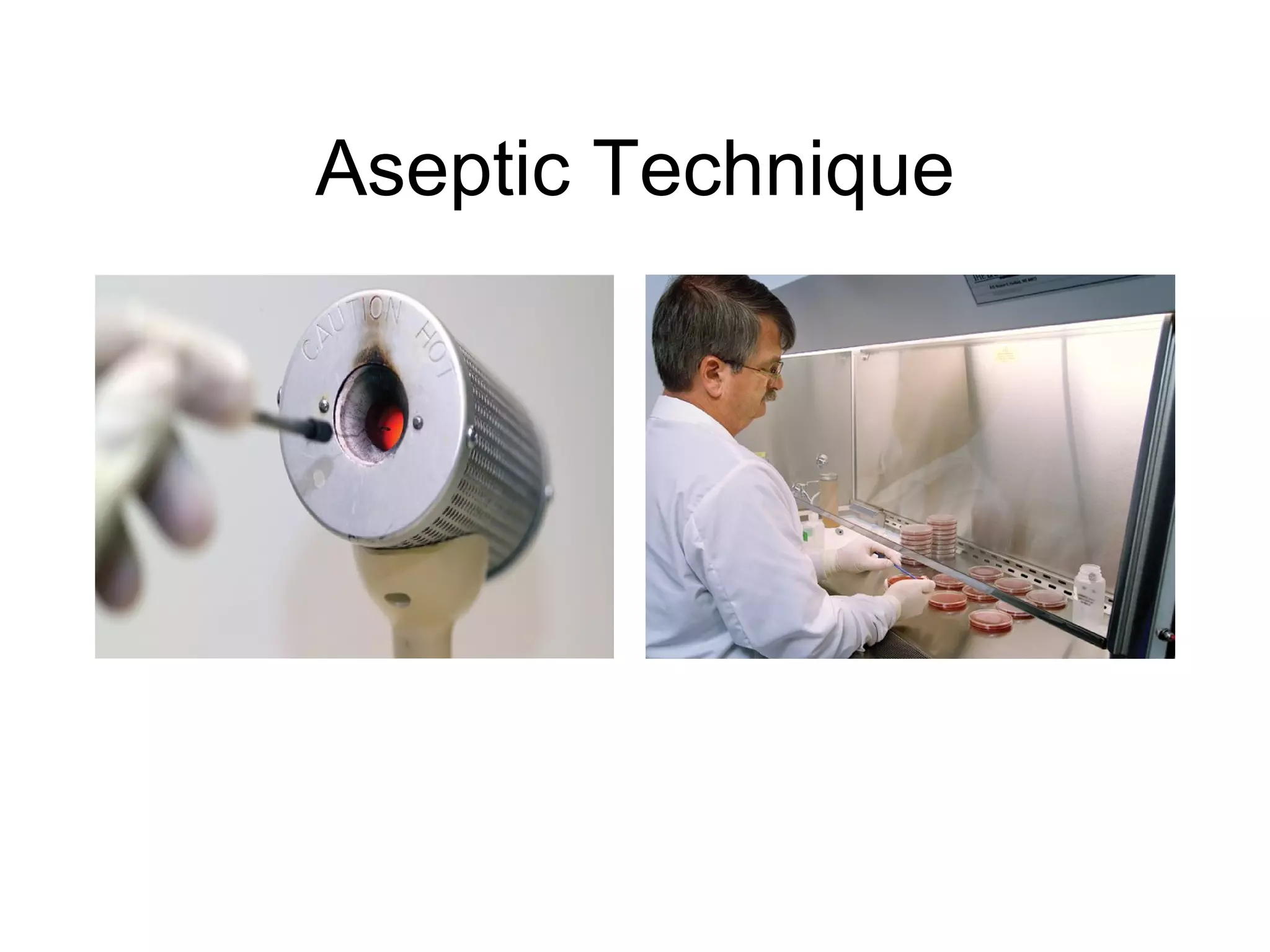
Aseptic Technique
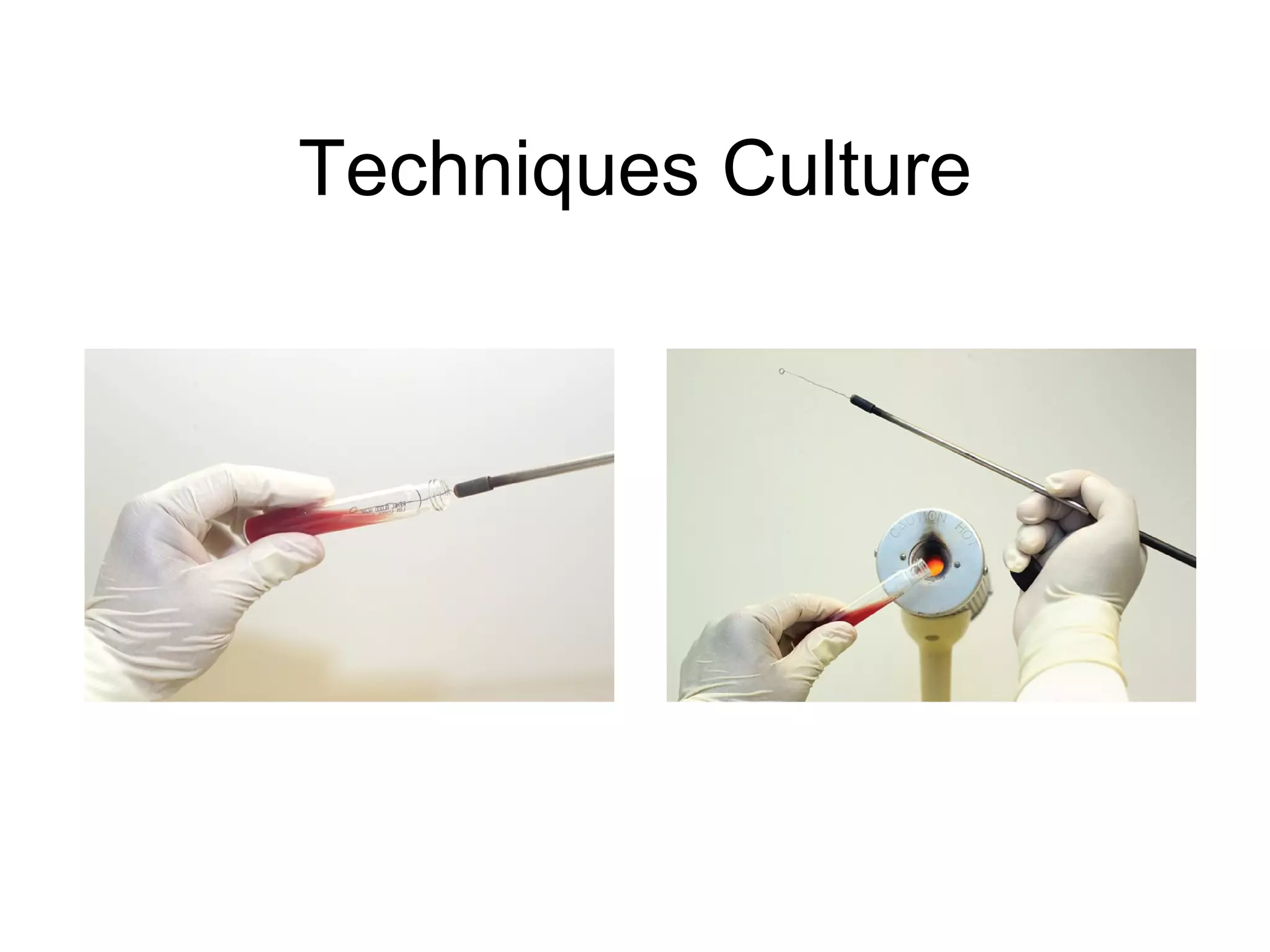
Techniques Culture
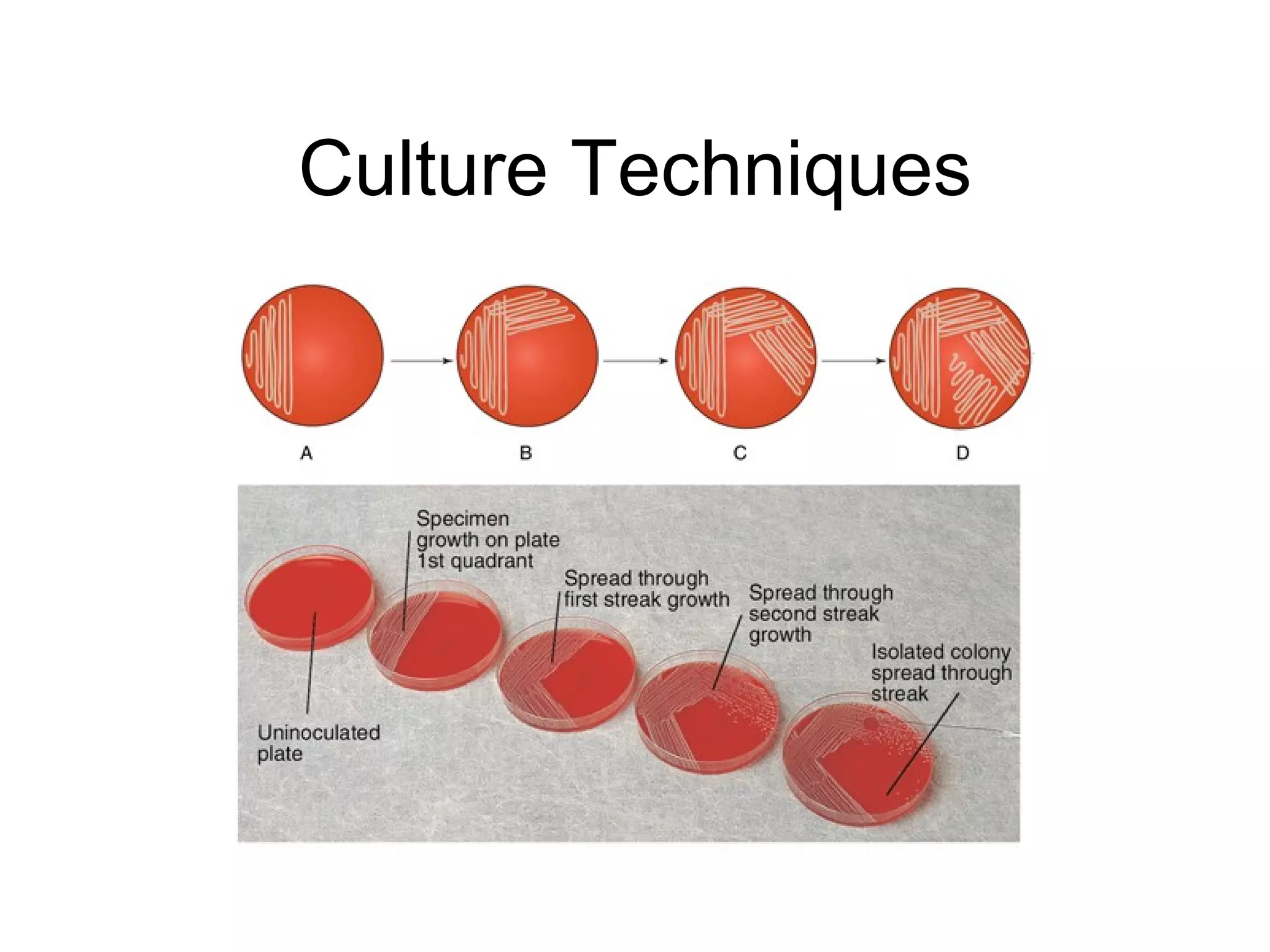
Culture Techniques
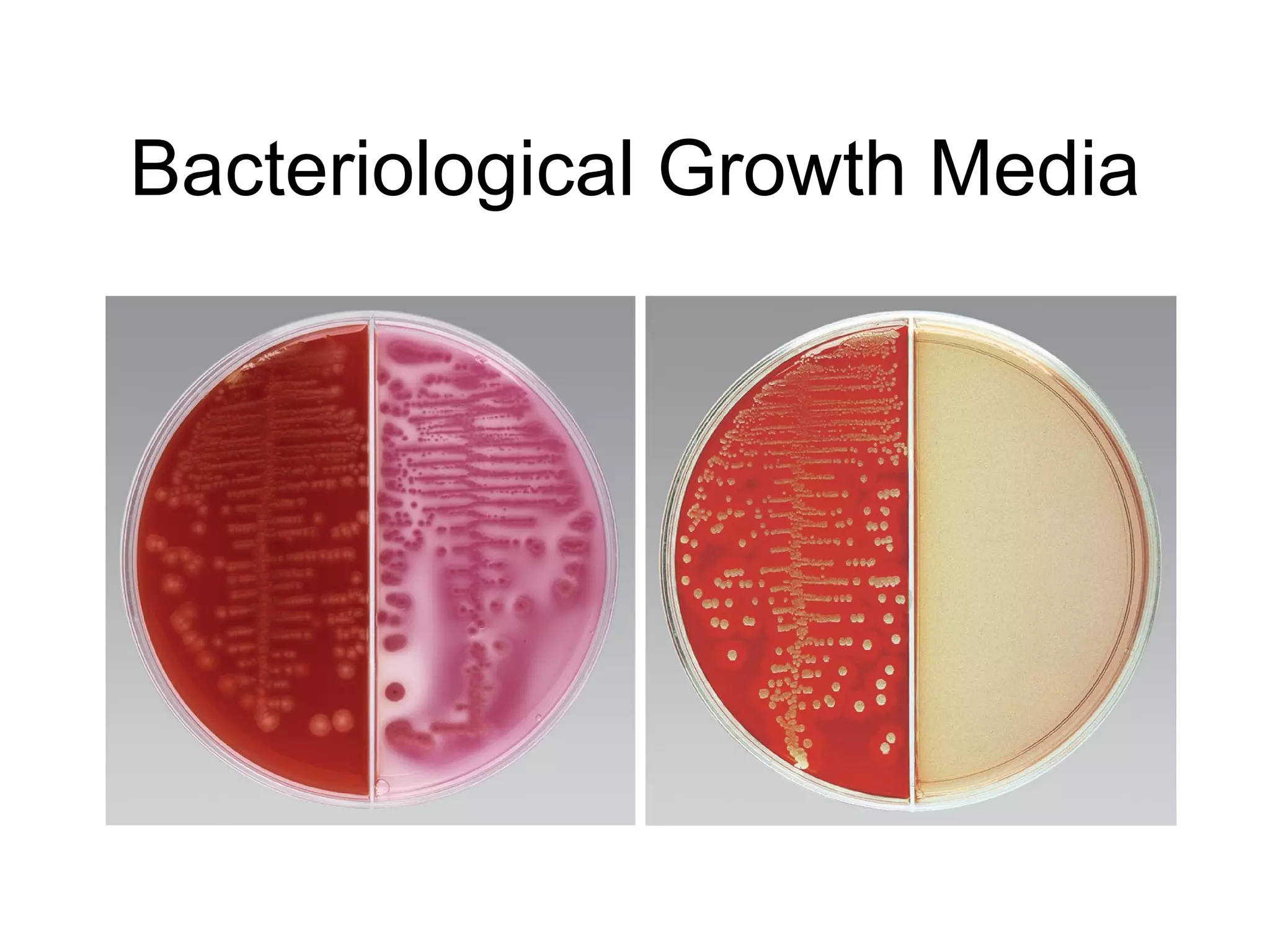
Bacteriological Growth Media Agar plates contain different components that enhance or inhibit the growth of certain microorganisms Examples: MAC-selective media - inhibits Gram Positive  organism HE- selective media- inhibits Gram negative organism
Bacteriological Growth Media
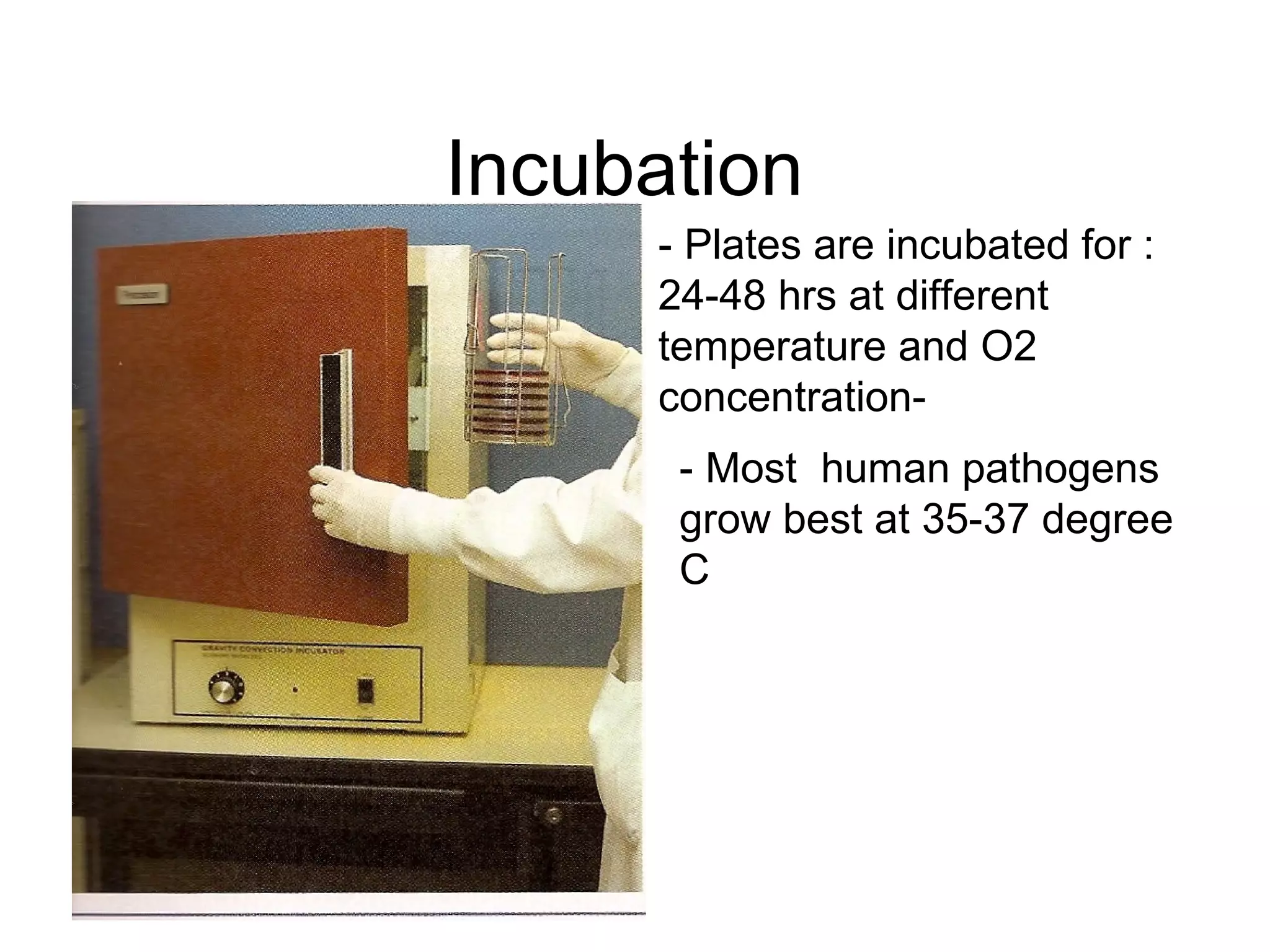
Incubation  - Plates are incubated for : 24-48 hrs at different  temperature and O2 concentration- - Most  human pathogens grow best at 35-37 degree C
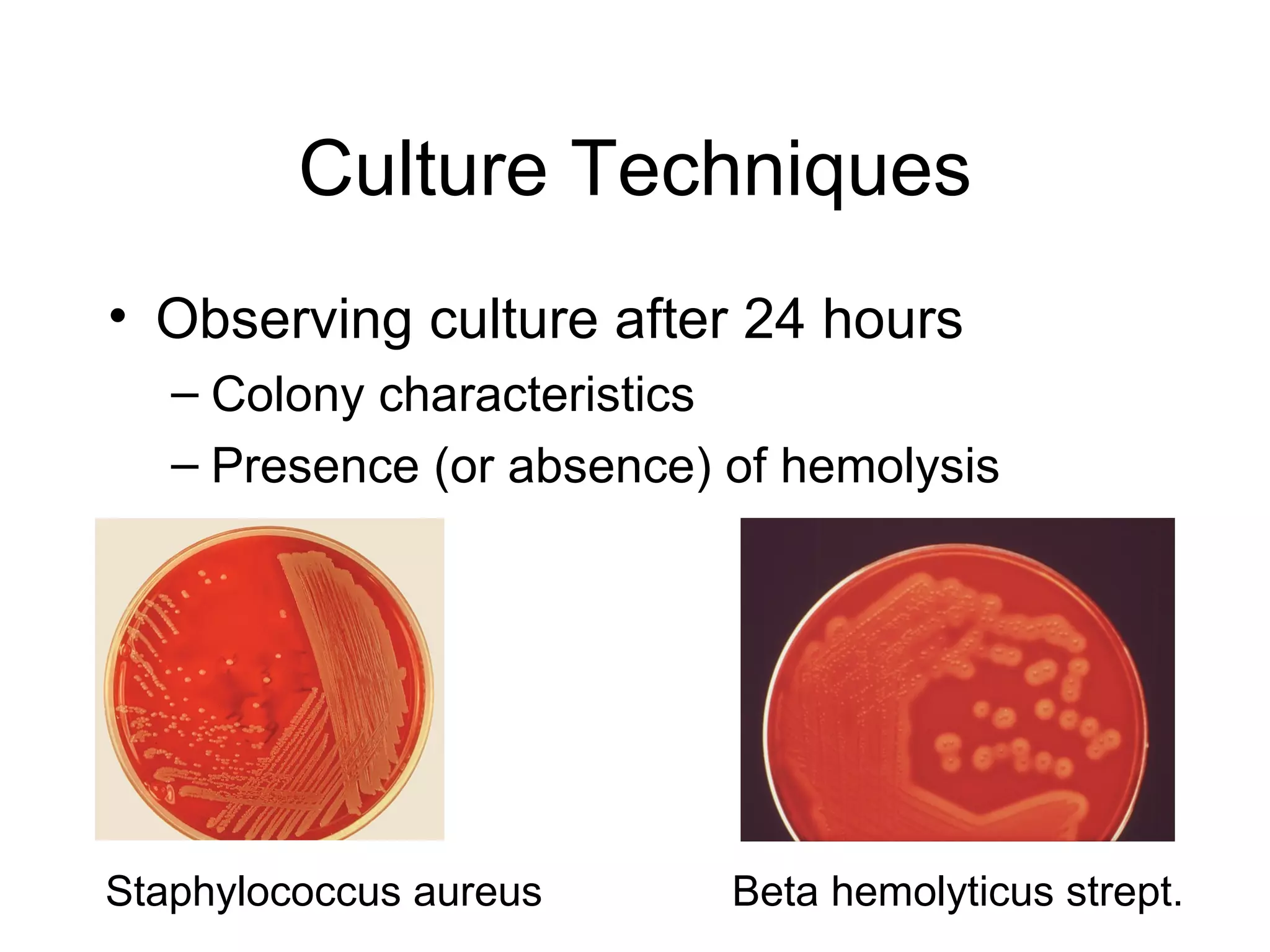
Culture Techniques Observing culture after 24 hours Colony characteristics Presence (or absence) of hemolysis Staphylococcus aureus  Beta hemolyticus strept.
Colony Characteristics Colony size, shape, moist or dry, color, smell Pseudomonas sp. Smells like grapes Neisseria gonorrhea smells like sweaty tennis shoe Shigella is mucoid and purple Presence of hemolysis in blood agar plate (Strep.pyogenes-throat inf.-beta hemolysis) Beta-hemolysis: Lysis of the red cell present in the media showing clear area around the bacterial growth
Automated ID
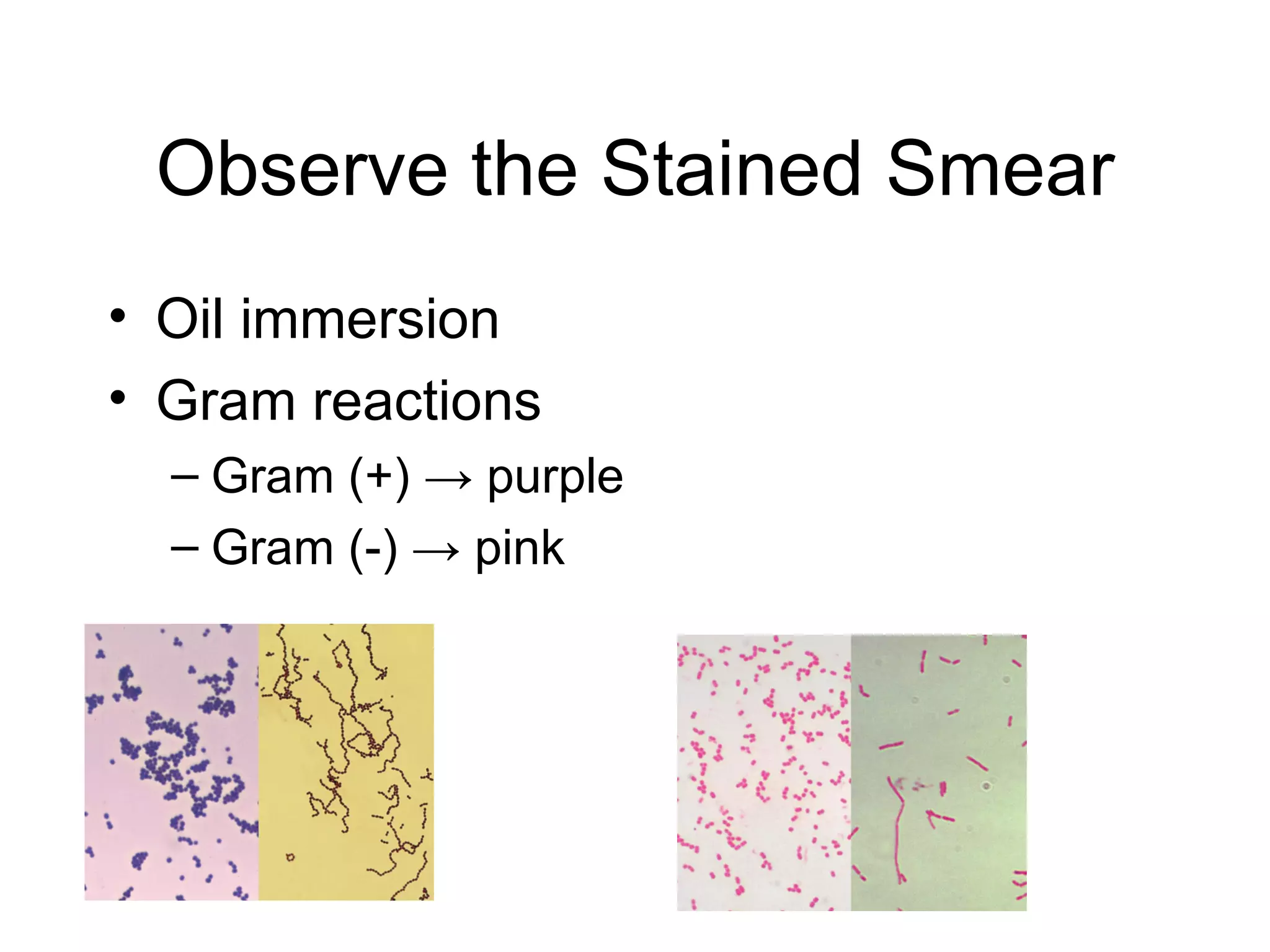
Gram Stain Bacterial species divided into two groups according to how they take Gram Stain Gram positive : take up the crystal violet basic stain (stain purple) Gram negative : allow the crystal violet to easily washout with acetone and take up the Safranin dye (stain pink) Related to the cell membrane composition
Gram Stain Important for Bacterial identification Antibiotic susceptibility testing Preparing a smear  From a swab From a culture
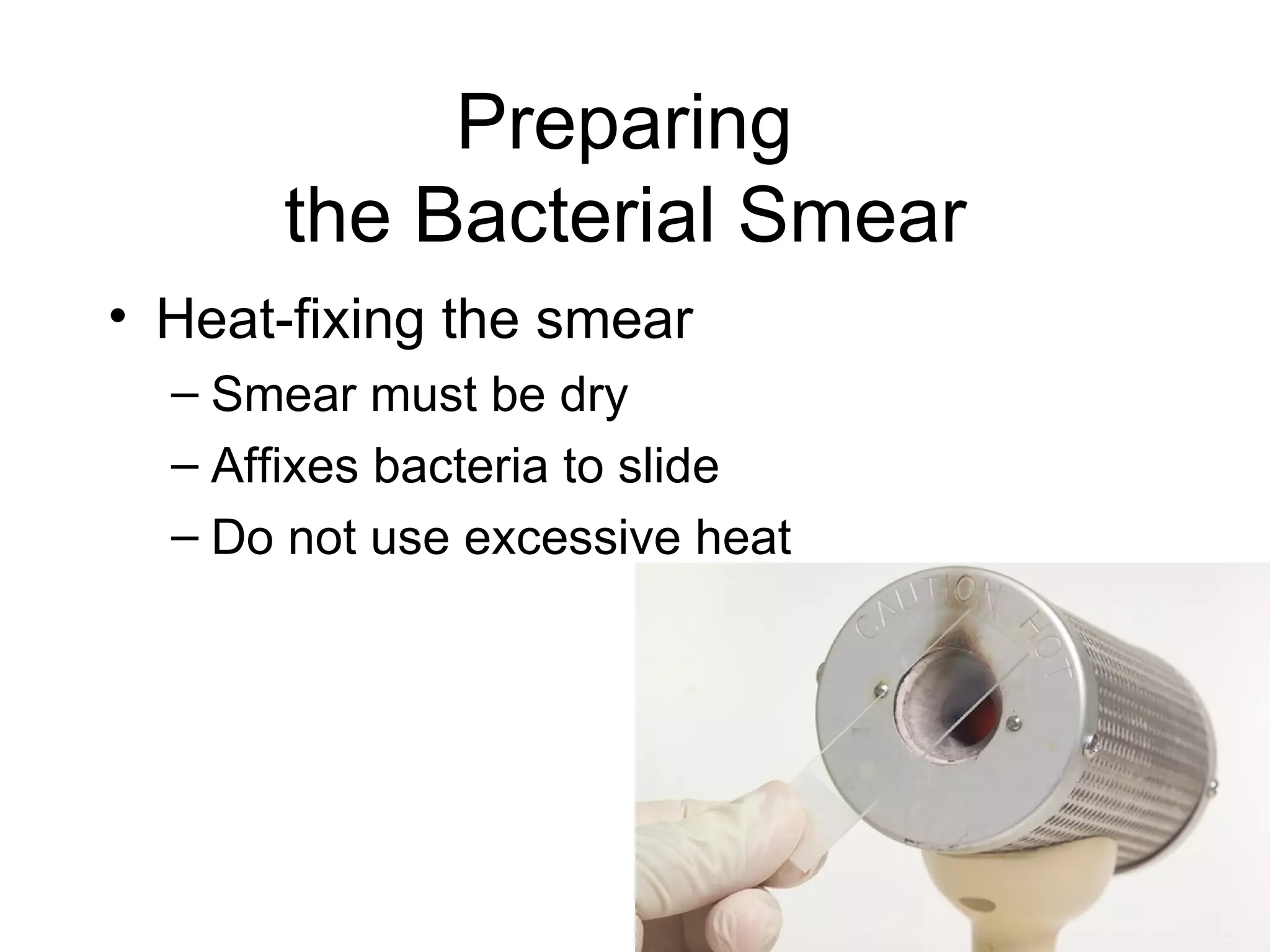
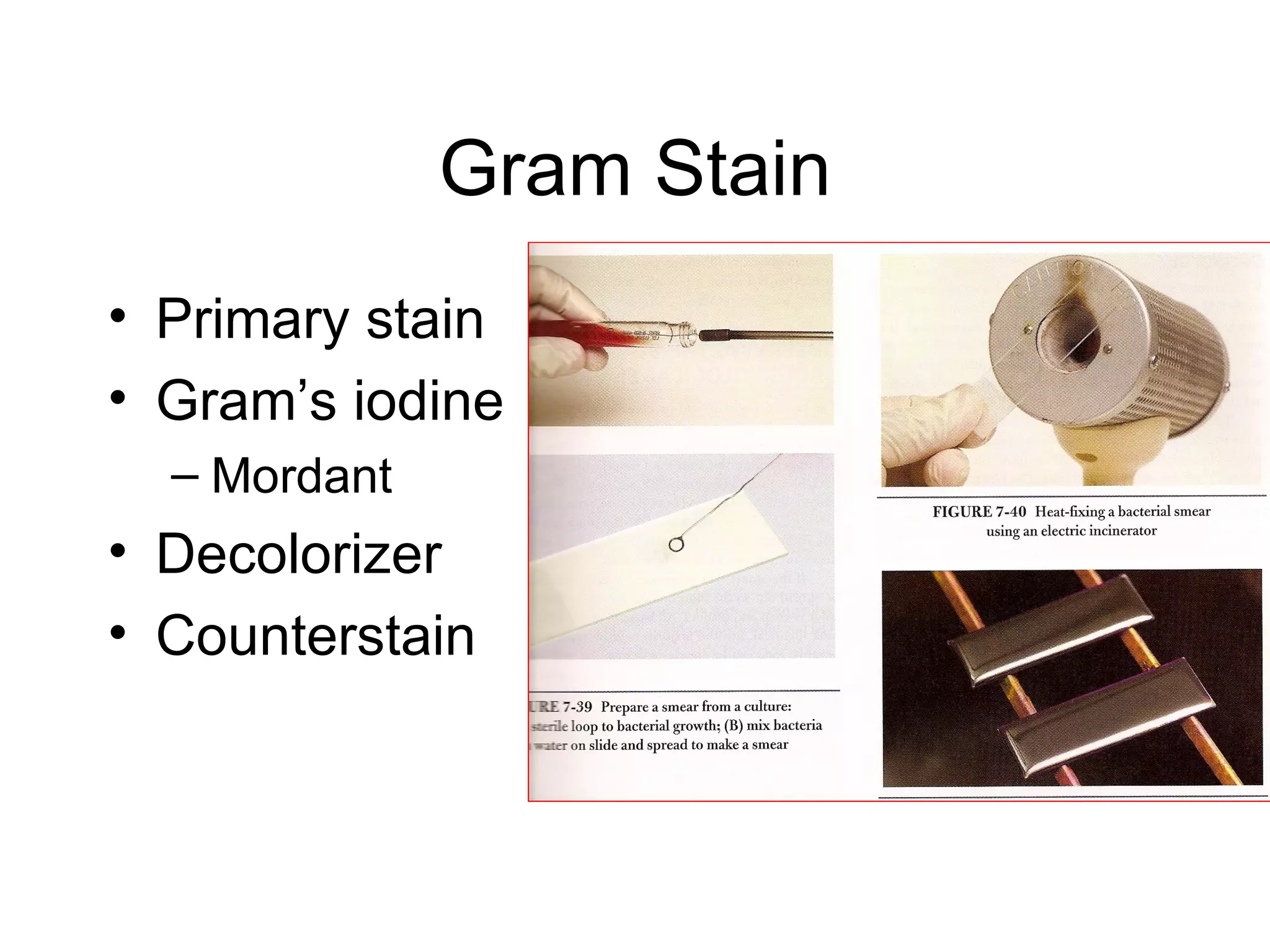
Preparing  the Bacterial Smear   Heat-fixing the smear Smear must be dry Affixes bacteria to slide Do not use excessive heat
Gram Stain Primary stain Gram’s iodine Mordant Decolorizer Counterstain
Observe the Stained Smear Oil immersion Gram reactions Gram (+)  ->  purple Gram (-)  ->  pink
Microbiology Bacteremia : transient release of bacteria to the blood stream, indicates the presence of a focus of disease Septicemia or Sepsis : a situation in which bacteria and their products are causing harm  to the host Terms are used interchangeable
Portals of entry for septicemia: GU Respiratory Abscesses Surgical wound infections Biliary tract Other sites Organisms most commonly isolated from blood are: Gram positive cocci Coagulase neg staphylococci Staphylococcus aureus Enterococcus sp.
Meningitis: infection in the subarachnoid space, between the Pia-mater  and the Arachnoid Dx by PE, CSF analyisis, and cultures  Hematogenous spread Children <5  years Haemophilus influenza Neonates Group B streptococci E.coli Listeria sp. Most common bacteria causing meningitis in children age 6 years and up Haemophilus influenza Neisseria meningitidis  Streptococcus pneumoniae
Meningitis in adults Neisseria meningitidis(young adults crowded conditions) Pneumococci  Listeria monocytogenes Staphylococcus aureus
Staphylococcus saprophyticus Gram positive cocci Second cause of UTI in young females after E.coli Symptoms : Burning when urinating Increased urge to urinate Dripping effect Razor like pain in the lower abdomen and during intercourse Treated with Quinolones in the US
Enterococcus faecalis Gram positive bacilli Inhabitant in GI tract humans and animals Life threatening nosocomial infections High level antibiotic resistance Can cause endocarditis, bladder, prostate and epididymal infections
Streptococcus pyogenes Gram positive cocci in chains Group A, beta hemolytic Strept throat-pharyngitis Impetigo Cellulitis Necrotizing fasciitis Toxic shock Rheumatic fever Glomerulonephritis Sensitive to penicillin
Candida albicans Yeast, fungi Opportunistic oral and genital infection in immunocompromised patients Live in human mouth and GI May occur in blood  Thrush – immunocompromised
Cryptococcus neoformans Encapsulated yeast-like fungus Cryptococcal meningitis in immunocompromissed patients India ink stain used for Dx in CSF
E.coli Gram negative rod Virulent strains can cause gastroenteritis, UTI, neonatal meningitis Ascending UTI with fecal contamination

3 Microbilogylecturelab

  • 1.
    Microbiology AntonioRivas PA-C Feb 2008
  • 2.
    Microbiology Clinical microbiologyencompasses Bacteriology Parasitology Virology Mycology
  • 3.
    Bacteriology Characteristics ofbacteria Multiply by fission Grow in colonies Morphology Coccus Bacillus Spiral Growth patterns
  • 4.
    Specimen collection Collectbefore antimicrobials are given Specimen collected where the organism is most likely to be found w/o external contamination Stage of the disease Enteric pathogens are present in higher numbers during the acute or diarrheal phase of the infection Sufficient quantity of specimen Prompt delivery to the lab
  • 5.
  • 6.
  • 7.
  • 8.
    Bacteriological Growth MediaAgar plates contain different components that enhance or inhibit the growth of certain microorganisms Examples: MAC-selective media - inhibits Gram Positive organism HE- selective media- inhibits Gram negative organism
  • 9.
  • 10.
    Incubation -Plates are incubated for : 24-48 hrs at different temperature and O2 concentration- - Most human pathogens grow best at 35-37 degree C
  • 11.
    Culture Techniques Observingculture after 24 hours Colony characteristics Presence (or absence) of hemolysis Staphylococcus aureus Beta hemolyticus strept.
  • 12.
    Colony Characteristics Colonysize, shape, moist or dry, color, smell Pseudomonas sp. Smells like grapes Neisseria gonorrhea smells like sweaty tennis shoe Shigella is mucoid and purple Presence of hemolysis in blood agar plate (Strep.pyogenes-throat inf.-beta hemolysis) Beta-hemolysis: Lysis of the red cell present in the media showing clear area around the bacterial growth
  • 13.
  • 14.
    Gram Stain Bacterialspecies divided into two groups according to how they take Gram Stain Gram positive : take up the crystal violet basic stain (stain purple) Gram negative : allow the crystal violet to easily washout with acetone and take up the Safranin dye (stain pink) Related to the cell membrane composition
  • 15.
    Gram Stain Importantfor Bacterial identification Antibiotic susceptibility testing Preparing a smear From a swab From a culture
  • 16.
    Preparing theBacterial Smear Heat-fixing the smear Smear must be dry Affixes bacteria to slide Do not use excessive heat
  • 17.
    Gram Stain Primarystain Gram’s iodine Mordant Decolorizer Counterstain
  • 18.
    Observe the StainedSmear Oil immersion Gram reactions Gram (+) -> purple Gram (-) -> pink
  • 19.
    Microbiology Bacteremia :transient release of bacteria to the blood stream, indicates the presence of a focus of disease Septicemia or Sepsis : a situation in which bacteria and their products are causing harm to the host Terms are used interchangeable
  • 20.
    Portals of entryfor septicemia: GU Respiratory Abscesses Surgical wound infections Biliary tract Other sites Organisms most commonly isolated from blood are: Gram positive cocci Coagulase neg staphylococci Staphylococcus aureus Enterococcus sp.
  • 21.
    Meningitis: infection inthe subarachnoid space, between the Pia-mater and the Arachnoid Dx by PE, CSF analyisis, and cultures Hematogenous spread Children <5 years Haemophilus influenza Neonates Group B streptococci E.coli Listeria sp. Most common bacteria causing meningitis in children age 6 years and up Haemophilus influenza Neisseria meningitidis Streptococcus pneumoniae
  • 22.
    Meningitis in adultsNeisseria meningitidis(young adults crowded conditions) Pneumococci Listeria monocytogenes Staphylococcus aureus
  • 23.
    Staphylococcus saprophyticus Grampositive cocci Second cause of UTI in young females after E.coli Symptoms : Burning when urinating Increased urge to urinate Dripping effect Razor like pain in the lower abdomen and during intercourse Treated with Quinolones in the US
  • 24.
    Enterococcus faecalis Grampositive bacilli Inhabitant in GI tract humans and animals Life threatening nosocomial infections High level antibiotic resistance Can cause endocarditis, bladder, prostate and epididymal infections
  • 25.
    Streptococcus pyogenes Grampositive cocci in chains Group A, beta hemolytic Strept throat-pharyngitis Impetigo Cellulitis Necrotizing fasciitis Toxic shock Rheumatic fever Glomerulonephritis Sensitive to penicillin
  • 26.
    Candida albicans Yeast,fungi Opportunistic oral and genital infection in immunocompromised patients Live in human mouth and GI May occur in blood Thrush – immunocompromised
  • 27.
    Cryptococcus neoformans Encapsulatedyeast-like fungus Cryptococcal meningitis in immunocompromissed patients India ink stain used for Dx in CSF
  • 28.
    E.coli Gram negativerod Virulent strains can cause gastroenteritis, UTI, neonatal meningitis Ascending UTI with fecal contamination