Genus Staphylococcus
Almugadam B Saad
Lecturer of medical microbiology Full name
Babiker Saad Almugadam Yousif
Faculty of medical laboratory sciences
University of El Imam El Mahadi
Kosti-Sudan
MSc University of Khartoum
BSc University of El Imam El Mahadi
Babiker Saad Almugadam Yousif
Genus Staphylococcus
With the end of this topic , You should
know the following:
Learning
objectives
1-Important properties , M.Important
species , Pathogenesis , Lab diagnosis
,and drugs of choice for Staphylococcus
2-How to differentiate between the
species of staphylococcus
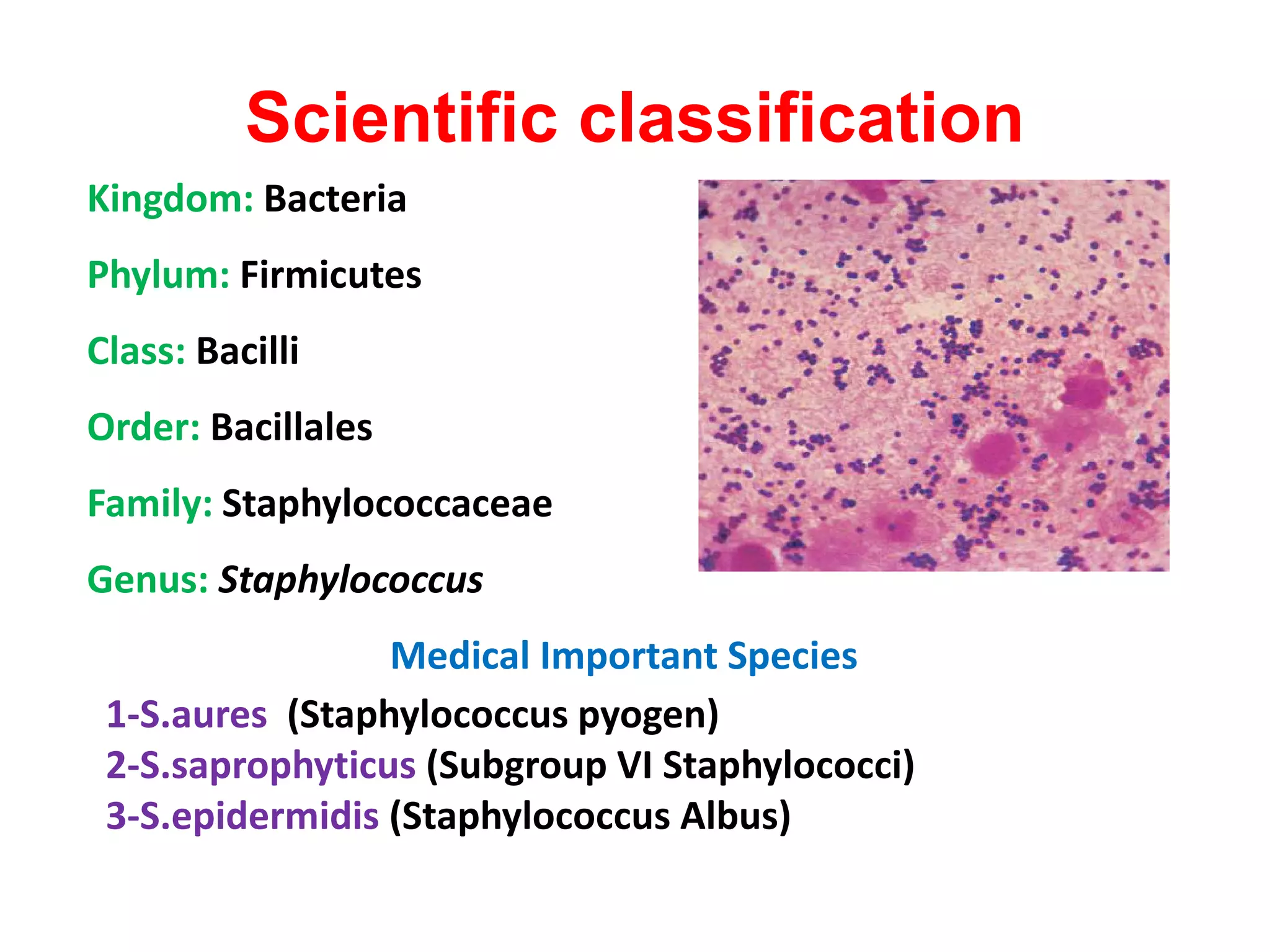
Scientific classification
Kingdom: Bacteria
Phylum: Firmicutes
Class: Bacilli
Order: Bacillales
Family: Staphylococcaceae
Genus: Staphylococcus
Medical Important Species
1-S.aures (Staphylococcus pyogen)
2-S.saprophyticus (Subgroup VI Staphylococci)
3-S.epidermidis (Staphylococcus Albus)
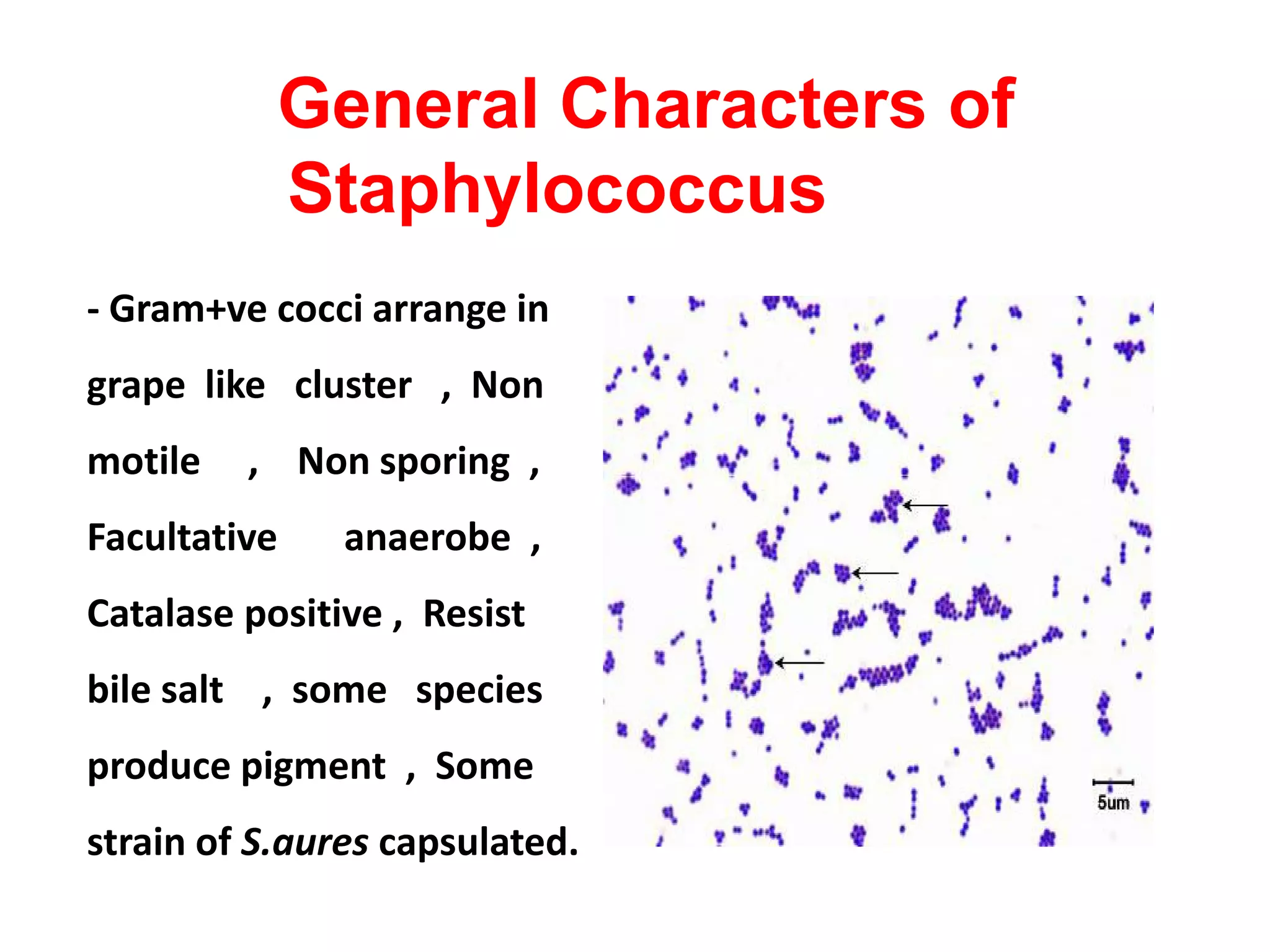
- Gram+ve cocci arrange in
grape like cluster , Non
motile , Non sporing ,
General Characters of
Staphylococcus
motile , Non sporing ,
Facultative anaerobe ,
Catalase positive , Resist
bile salt , some species
produce pigment , Some
strain of S.aures capsulated.
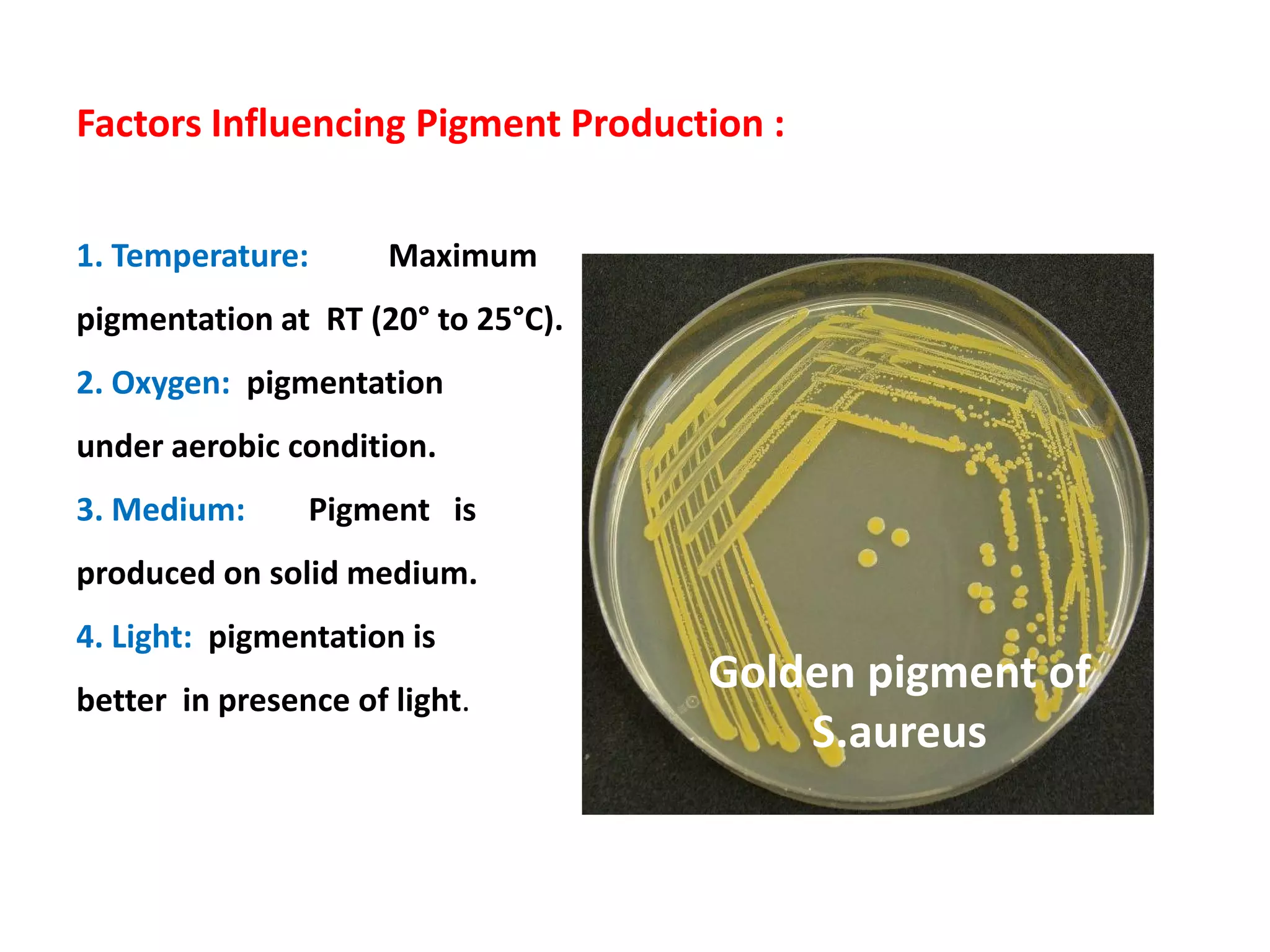
Factors Influencing Pigment Production :
1. Temperature: Maximum
pigmentation at RT (20° to 25°C).
2. Oxygen: pigmentation
under aerobic condition.
3. Medium: Pigment is
produced on solid medium.
4. Light: pigmentation is
better in presence of light.
Golden pigment of
S.aureus
Classification of Staphylococcus
A. Baird-Parker classification : classify staphylococcus into subgroups (I-VI).
B. On the basis of pathogenecity:
1. Pathogenic species
2. Non-pathogen species
C. On the basis of coagulase production:
1. Coagulase positive staphylococci (CPS)1. Coagulase positive staphylococci (CPS)
2. Coagulase negative staphylococci (CNS)
D. On the basis of pigment production :
Pathogenesis
A. Staphylococcus aureus :
-Virulence Factors :
Hemolysin , Leucocidin , Enterotoxin , Fibrinolysin
(staphylokinase) , Exfoliative toxin , Toxic shock syndrome
toxin (TSST) , Nucleases , Lipases , Proteases , Teichoic acid ,
Capsule , Protein A , coagulase Hyaluronidase , Bactermia ,
Catalase ,B.lactamase , and Scarlatina toxin.Catalase ,B.lactamase , and Scarlatina toxin.
-Diseases :
1.Pyogenic :
- Cutaneous : Furuncles , styes , boils,abscess,carbuncles,
impetigo, pemphigus neonatorum.
- Deep infection: Acute osteomyelitis, tonsillitis, sinusitis,
pneumonia , pharyngitis , pulmonary abscess , breast
abscess,meningitis,endocarditis , septicemia and renal
abscess.
2.Toxogenic :
food poisoning (Enterotoxin) , staphylococcal scalded skin
syndrome (Exfoliative toxin), toxic shock syndrome (TSST-1).
B. Staphylococcus Saprophyticus :
-Virulence Factors :
Catalase , B.lactamase and Teichoic acid .
-Diseases : UTI in sexually active young women
C. Staphylococcus Epidermidis :
-Virulence Factors :
Catalase , B.lactamase and Teichoic acid .
-Diseases : Endocarditis
Laboratory diagnosis
- Specimen: depend on the type and site of infection
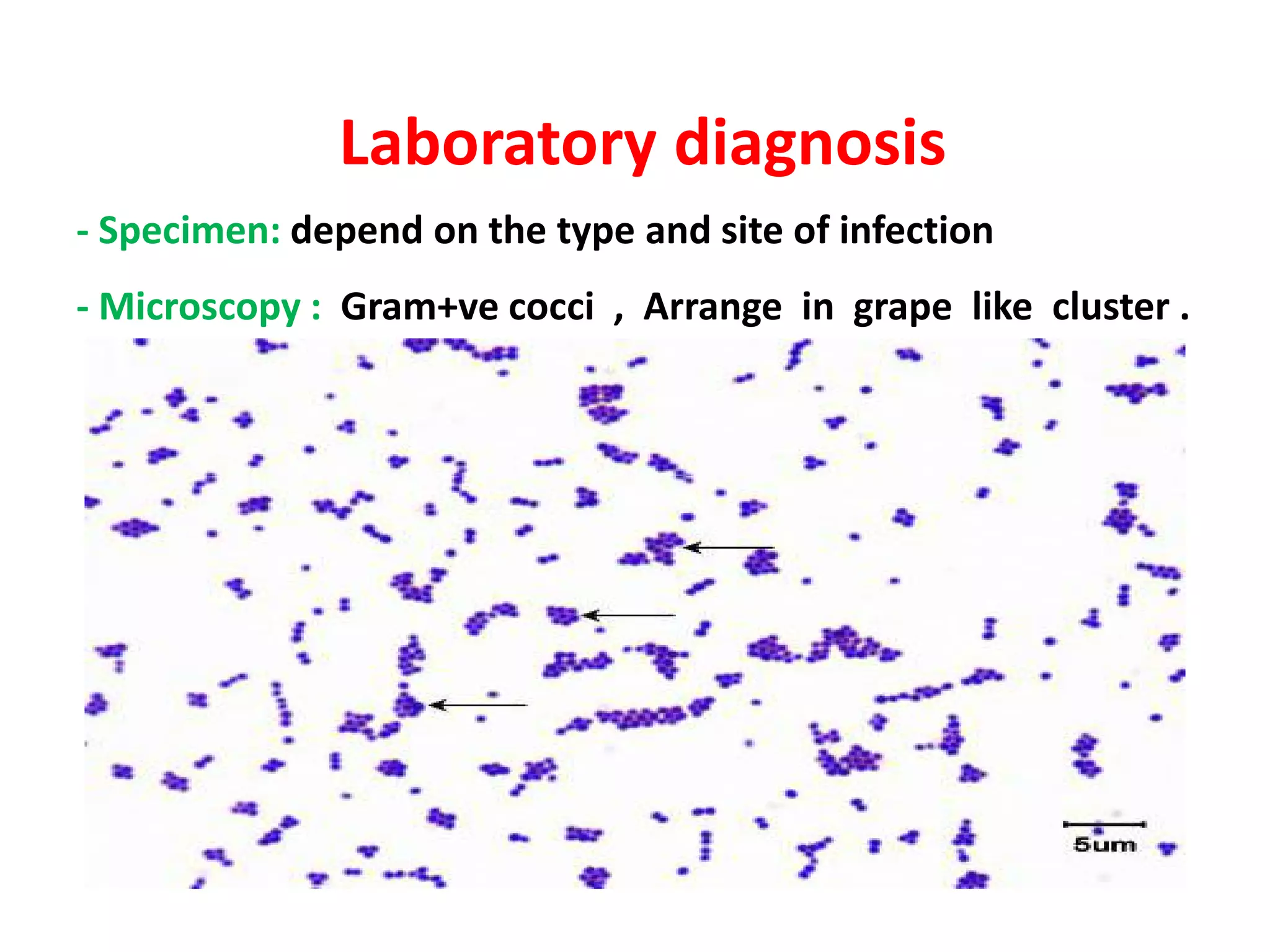
- Microscopy : Gram+ve cocci , Arrange in grape like cluster .
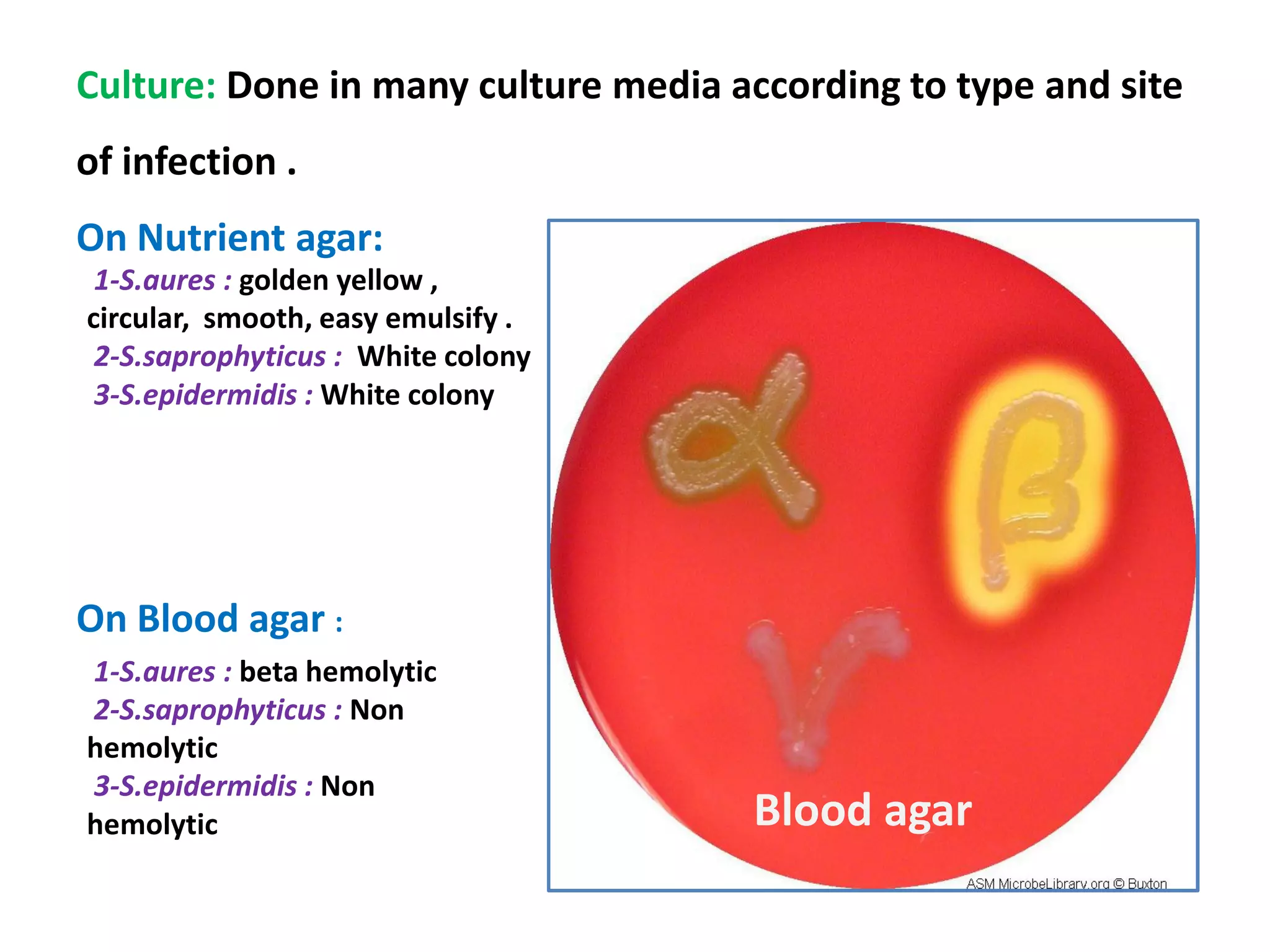
Culture: Done in many culture media according to type and site
of infection .
On Nutrient agar:
1-S.aures : golden yellow ,
circular, smooth, easy emulsify .
2-S.saprophyticus : White colony
3-S.epidermidis : White colony
On Blood agar :
1-S.aures : beta hemolytic
2-S.saprophyticus : Non
hemolytic
3-S.epidermidis : Non
hemolytic Blood agar
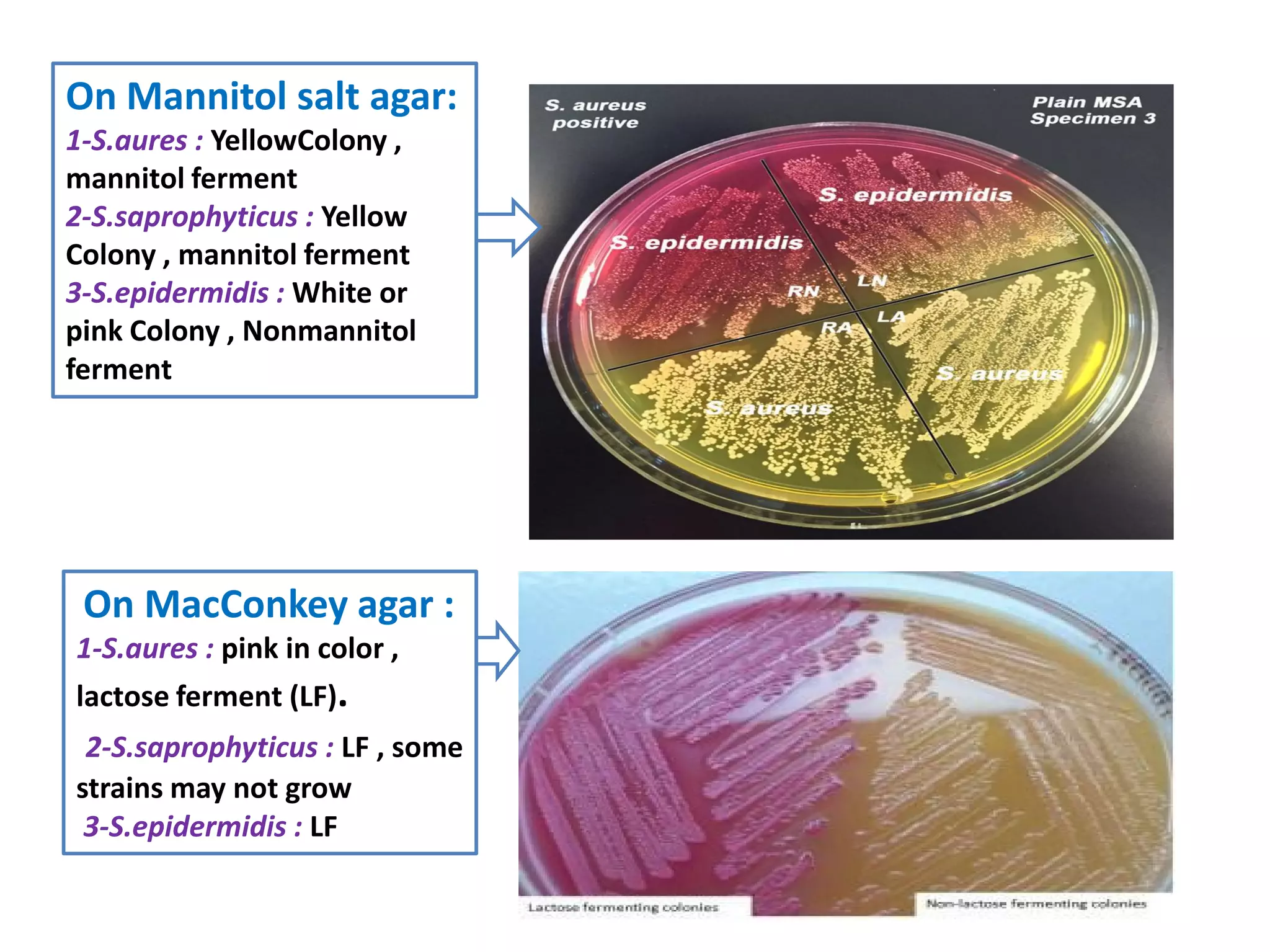
On Mannitol salt agar:
1-S.aures : YellowColony ,
mannitol ferment
2-S.saprophyticus : Yellow
Colony , mannitol ferment
3-S.epidermidis : White or
pink Colony , Nonmannitol
ferment
On MacConkey agar :
1-S.aures : pink in color ,
lactose ferment (LF).
2-S.saprophyticus : LF , some
strains may not grow
3-S.epidermidis : LF
Selective Media : Made by adding of
1. NaCl ?
2. Lithium chloride ?
3. Tellurite ?
4. Polymyxin ?
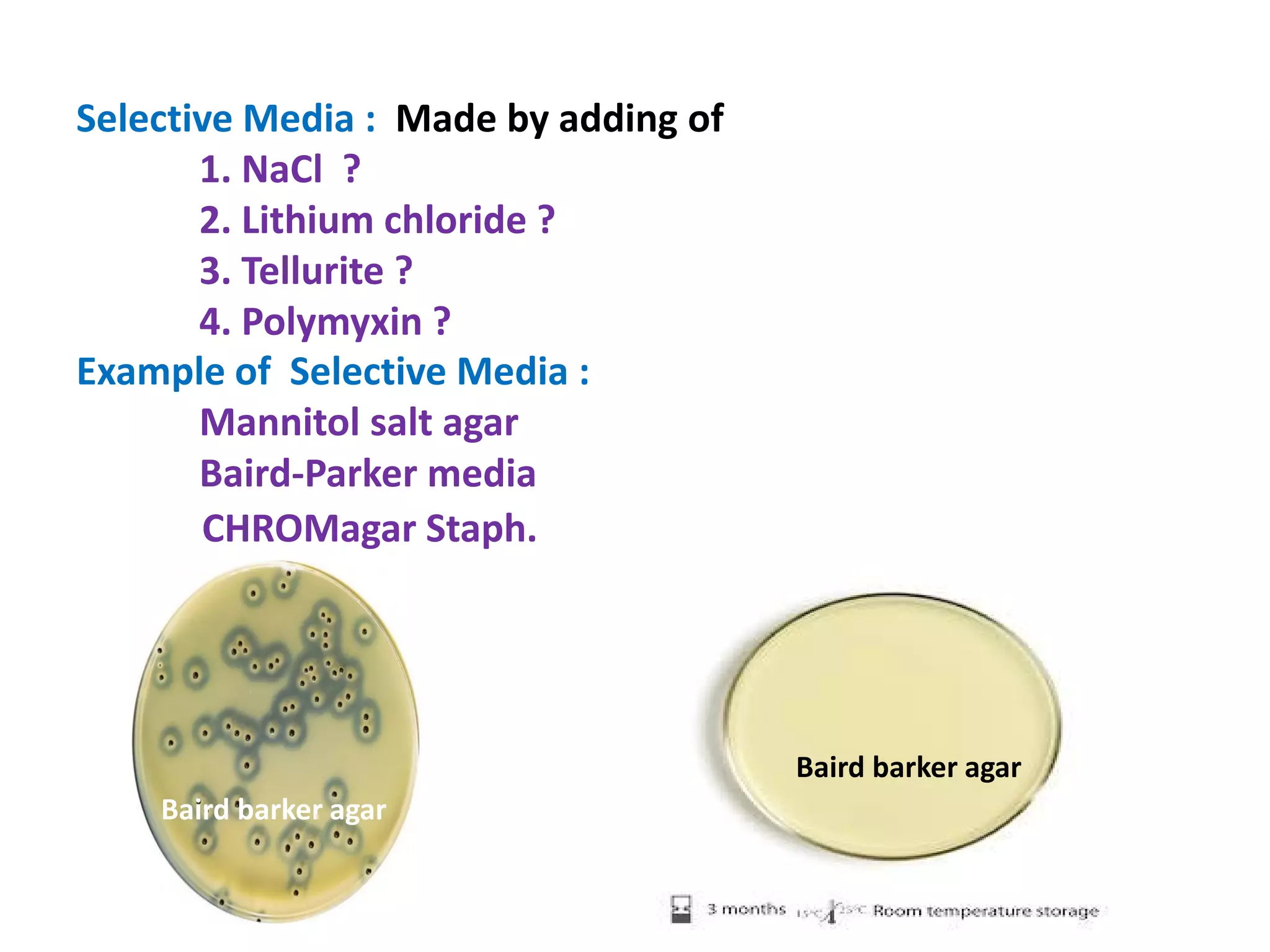
Example of Selective Media :
Mannitol salt agar
Baird-Parker media
CHROMagar Staph.
Baird-Parker media
Baird barker agar
Baird barker agar
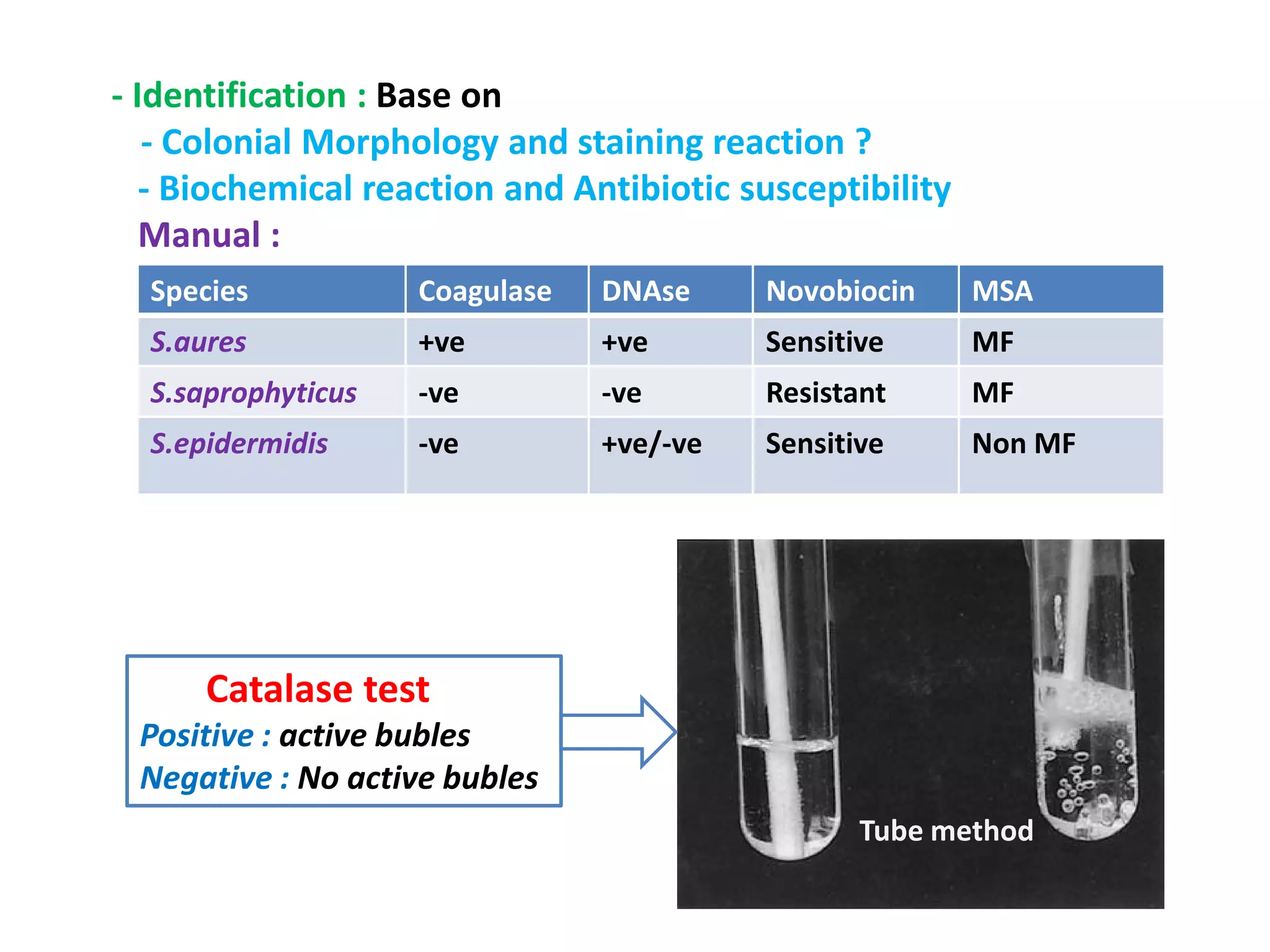
- Identification : Base on
- Colonial Morphology and staining reaction ?
- Biochemical reaction and Antibiotic susceptibility
Manual :
MSANovobiocinDNAseCoagulaseSpecies
MFSensitive+ve+veS.aures
MFResistant-ve-veS.saprophyticus
Non MFSensitive+ve/-ve-veS.epidermidis
Catalase test
Positive : active bubles
Negative : No active bubles
Tube method
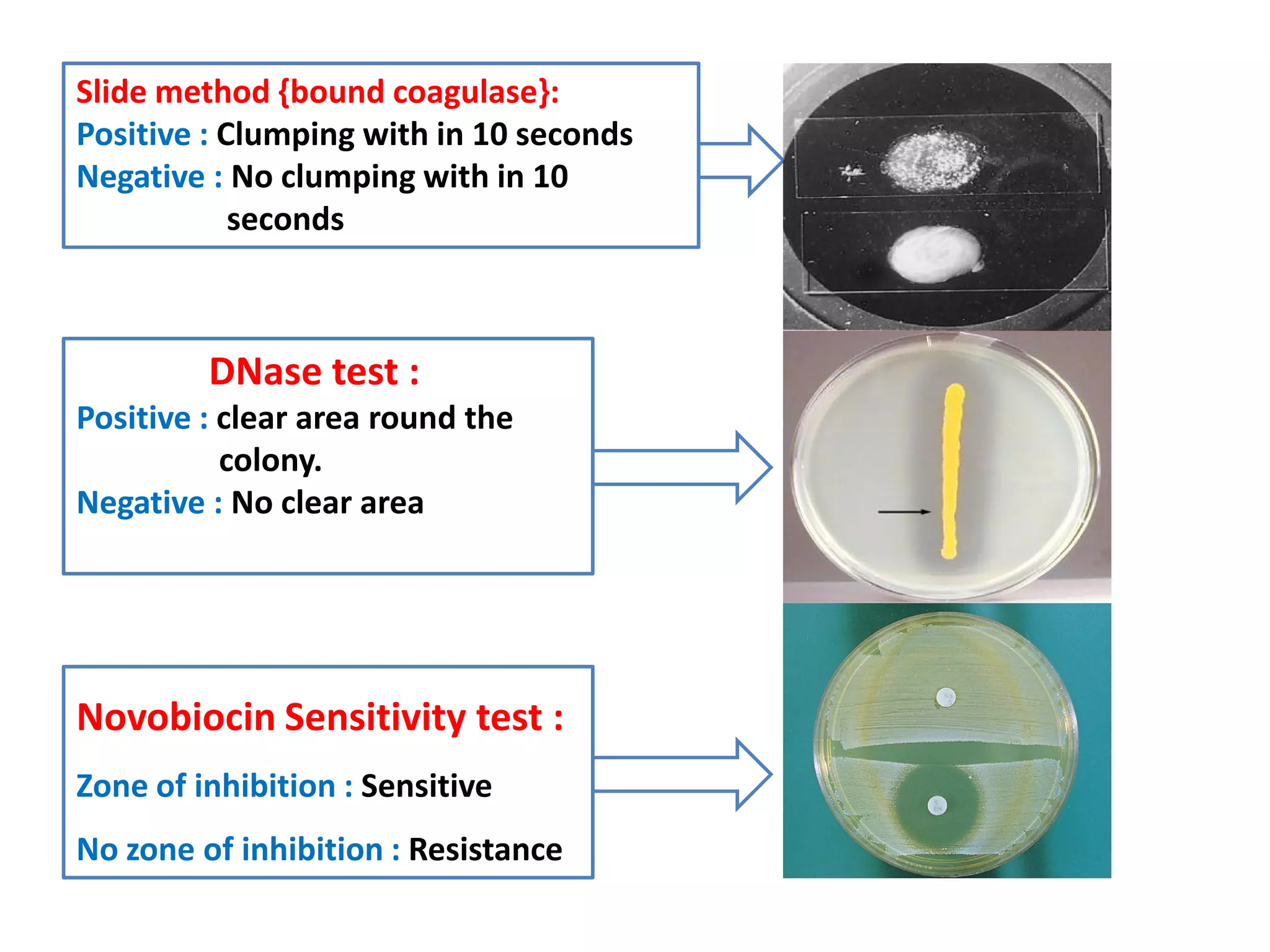
DNase test :
Positive : clear area round the
colony.
Slide method {bound coagulase}:
Positive : Clumping with in 10 seconds
Negative : No clumping with in 10
seconds
colony.
Negative : No clear area
Novobiocin Sensitivity test :
Zone of inhibition : Sensitive
No zone of inhibition : Resistance
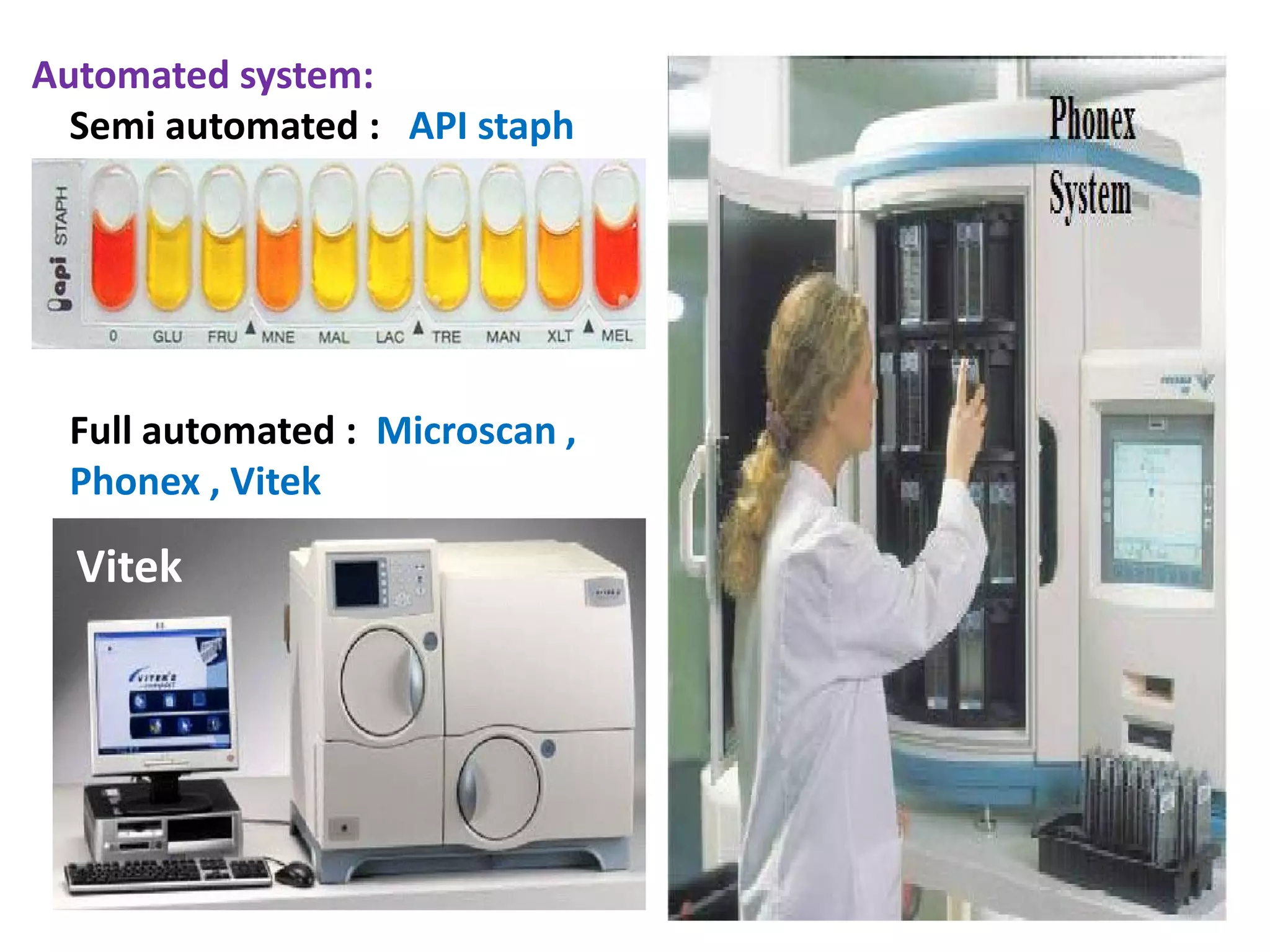
Automated system:
Semi automated : API staph
Full automated : Microscan ,
Phonex , VitekPhonex , Vitek
Vitek
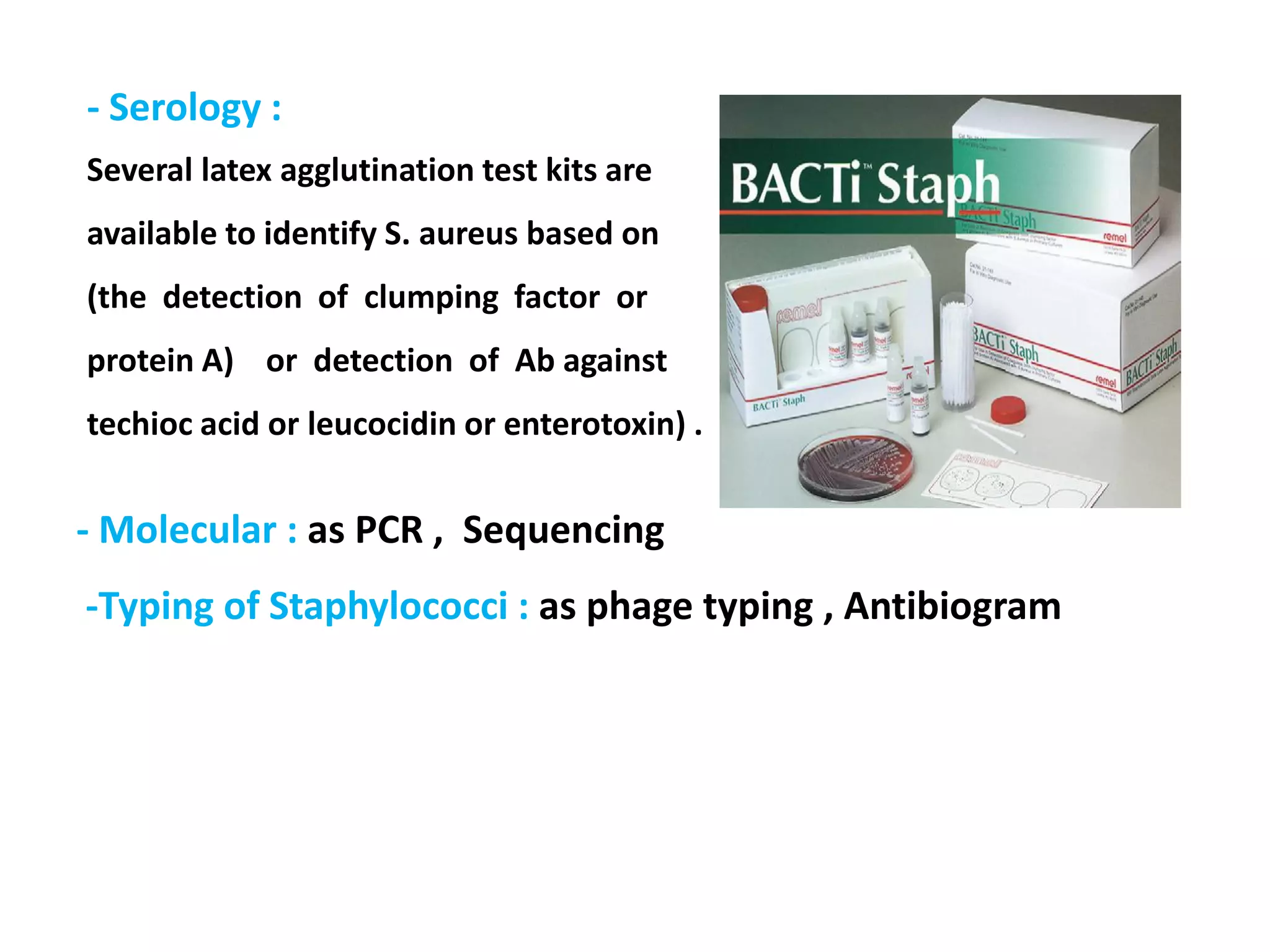
Several latex agglutination test kits are
available to identify S. aureus based on
(the detection of clumping factor or
protein A) or detection of Ab against
techioc acid or leucocidin or enterotoxin) .
- Serology :
- Molecular : as PCR , Sequencing
-Typing of Staphylococci : as phage typing , Antibiogram
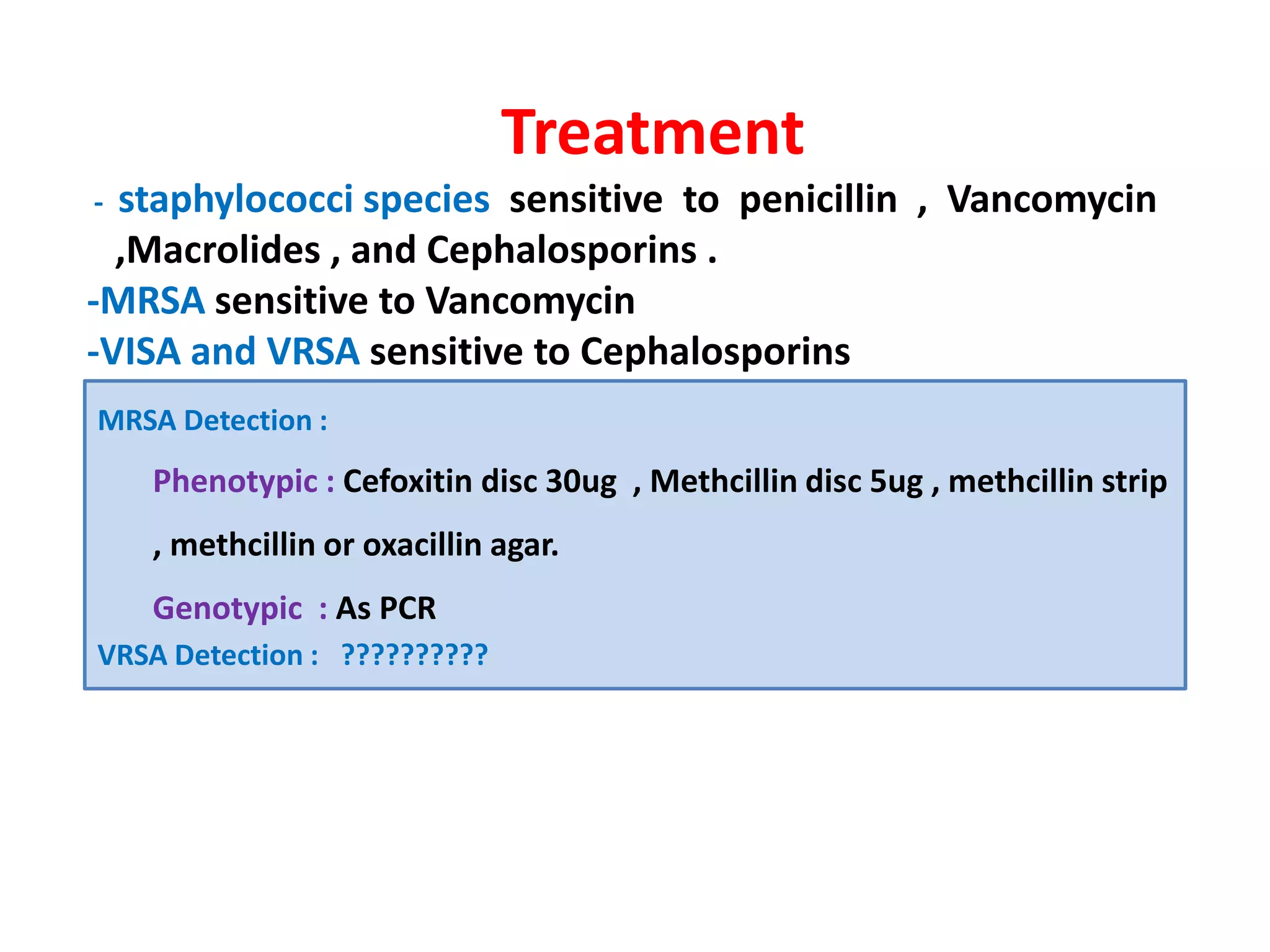
Treatment
- staphylococci species sensitive to penicillin , Vancomycin
,Macrolides , and Cephalosporins .
-MRSA sensitive to Vancomycin
-VISA and VRSA sensitive to Cephalosporins
MRSA Detection :
Phenotypic : Cefoxitin disc 30ug , Methcillin disc 5ug , methcillin stripPhenotypic : Cefoxitin disc 30ug , Methcillin disc 5ug , methcillin strip
, methcillin or oxacillin agar.
Genotypic : As PCR
VRSA Detection : ??????????

staphylococcus

  • 1.
    Genus Staphylococcus Almugadam BSaad Lecturer of medical microbiology Full name Babiker Saad Almugadam Yousif Faculty of medical laboratory sciences University of El Imam El Mahadi Kosti-Sudan MSc University of Khartoum BSc University of El Imam El Mahadi Babiker Saad Almugadam Yousif
  • 2.
    Genus Staphylococcus With theend of this topic , You should know the following: Learning objectives 1-Important properties , M.Important species , Pathogenesis , Lab diagnosis ,and drugs of choice for Staphylococcus 2-How to differentiate between the species of staphylococcus
  • 3.
    Scientific classification Kingdom: Bacteria Phylum:Firmicutes Class: Bacilli Order: Bacillales Family: Staphylococcaceae Genus: Staphylococcus Medical Important Species 1-S.aures (Staphylococcus pyogen) 2-S.saprophyticus (Subgroup VI Staphylococci) 3-S.epidermidis (Staphylococcus Albus)
  • 4.
    - Gram+ve cocciarrange in grape like cluster , Non motile , Non sporing , General Characters of Staphylococcus motile , Non sporing , Facultative anaerobe , Catalase positive , Resist bile salt , some species produce pigment , Some strain of S.aures capsulated.
  • 5.
    Factors Influencing PigmentProduction : 1. Temperature: Maximum pigmentation at RT (20° to 25°C). 2. Oxygen: pigmentation under aerobic condition. 3. Medium: Pigment is produced on solid medium. 4. Light: pigmentation is better in presence of light. Golden pigment of S.aureus
  • 6.
    Classification of Staphylococcus A.Baird-Parker classification : classify staphylococcus into subgroups (I-VI). B. On the basis of pathogenecity: 1. Pathogenic species 2. Non-pathogen species C. On the basis of coagulase production: 1. Coagulase positive staphylococci (CPS)1. Coagulase positive staphylococci (CPS) 2. Coagulase negative staphylococci (CNS) D. On the basis of pigment production :
  • 7.
    Pathogenesis A. Staphylococcus aureus: -Virulence Factors : Hemolysin , Leucocidin , Enterotoxin , Fibrinolysin (staphylokinase) , Exfoliative toxin , Toxic shock syndrome toxin (TSST) , Nucleases , Lipases , Proteases , Teichoic acid , Capsule , Protein A , coagulase Hyaluronidase , Bactermia , Catalase ,B.lactamase , and Scarlatina toxin.Catalase ,B.lactamase , and Scarlatina toxin. -Diseases : 1.Pyogenic : - Cutaneous : Furuncles , styes , boils,abscess,carbuncles, impetigo, pemphigus neonatorum. - Deep infection: Acute osteomyelitis, tonsillitis, sinusitis, pneumonia , pharyngitis , pulmonary abscess , breast abscess,meningitis,endocarditis , septicemia and renal abscess.
  • 8.
    2.Toxogenic : food poisoning(Enterotoxin) , staphylococcal scalded skin syndrome (Exfoliative toxin), toxic shock syndrome (TSST-1). B. Staphylococcus Saprophyticus : -Virulence Factors : Catalase , B.lactamase and Teichoic acid . -Diseases : UTI in sexually active young women C. Staphylococcus Epidermidis : -Virulence Factors : Catalase , B.lactamase and Teichoic acid . -Diseases : Endocarditis
  • 9.
    Laboratory diagnosis - Specimen:depend on the type and site of infection - Microscopy : Gram+ve cocci , Arrange in grape like cluster .
  • 10.
    Culture: Done inmany culture media according to type and site of infection . On Nutrient agar: 1-S.aures : golden yellow , circular, smooth, easy emulsify . 2-S.saprophyticus : White colony 3-S.epidermidis : White colony On Blood agar : 1-S.aures : beta hemolytic 2-S.saprophyticus : Non hemolytic 3-S.epidermidis : Non hemolytic Blood agar
  • 11.
    On Mannitol saltagar: 1-S.aures : YellowColony , mannitol ferment 2-S.saprophyticus : Yellow Colony , mannitol ferment 3-S.epidermidis : White or pink Colony , Nonmannitol ferment On MacConkey agar : 1-S.aures : pink in color , lactose ferment (LF). 2-S.saprophyticus : LF , some strains may not grow 3-S.epidermidis : LF
  • 12.
    Selective Media :Made by adding of 1. NaCl ? 2. Lithium chloride ? 3. Tellurite ? 4. Polymyxin ? Example of Selective Media : Mannitol salt agar Baird-Parker media CHROMagar Staph. Baird-Parker media Baird barker agar Baird barker agar
  • 13.
    - Identification :Base on - Colonial Morphology and staining reaction ? - Biochemical reaction and Antibiotic susceptibility Manual : MSANovobiocinDNAseCoagulaseSpecies MFSensitive+ve+veS.aures MFResistant-ve-veS.saprophyticus Non MFSensitive+ve/-ve-veS.epidermidis Catalase test Positive : active bubles Negative : No active bubles Tube method
  • 14.
    DNase test : Positive: clear area round the colony. Slide method {bound coagulase}: Positive : Clumping with in 10 seconds Negative : No clumping with in 10 seconds colony. Negative : No clear area Novobiocin Sensitivity test : Zone of inhibition : Sensitive No zone of inhibition : Resistance
  • 15.
    Automated system: Semi automated: API staph Full automated : Microscan , Phonex , VitekPhonex , Vitek Vitek
  • 16.
    Several latex agglutinationtest kits are available to identify S. aureus based on (the detection of clumping factor or protein A) or detection of Ab against techioc acid or leucocidin or enterotoxin) . - Serology : - Molecular : as PCR , Sequencing -Typing of Staphylococci : as phage typing , Antibiogram
  • 17.
    Treatment - staphylococci speciessensitive to penicillin , Vancomycin ,Macrolides , and Cephalosporins . -MRSA sensitive to Vancomycin -VISA and VRSA sensitive to Cephalosporins MRSA Detection : Phenotypic : Cefoxitin disc 30ug , Methcillin disc 5ug , methcillin stripPhenotypic : Cefoxitin disc 30ug , Methcillin disc 5ug , methcillin strip , methcillin or oxacillin agar. Genotypic : As PCR VRSA Detection : ??????????