Proteus spp.
Prepared by
Hoven Jalal
Elaf Abdulhakem
Objectves:
Morphology of proteus spp.
Microscopical morphology
Colony morphology
Diagnostic methods of proteus spp.
Gram stain
Culture &isolation on blood agar,macconkey agar
Oxidase test
Imvic test
TSI test
Motility test
Swarming phenomenon
Api &vitek system
General charachteristic:
Gram negative rods, facultative anaerobics.
Motile they have peritrichous flagella
Non capsulated
Non spore forming
Proteus sp. are most commonly found in the human intestinal
tract as part of normal human intestinal flora.

Non-lactose fermenting
The main species of medical importance are:
P. mirabilis
P. vulgaris

Proteus spp. are opportunist pathogens and may
cause many types of infection.
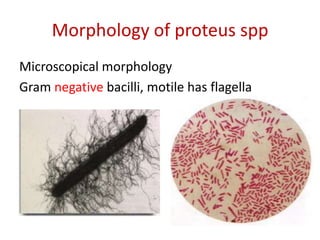
Morphology of proteus spp
Microscopical morphology
Gram negative bacilli, motile has flagella
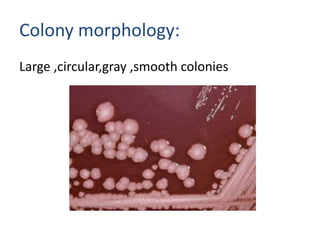
Colony morphology:
Large ,circular,gray ,smooth colonies
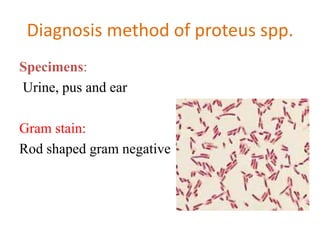
Diagnosis method of proteus spp.
Specimens:
Urine, pus and ear
Gram stain:
Rod shaped gram negative
Culture:
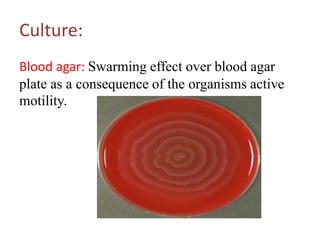
Blood agar: Swarming effect over blood agar
plate as a consequence of the organisms active
motility.
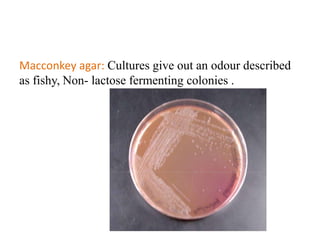
Macconkey agar: Cultures give out an odour described
as fishy, Non- lactose fermenting colonies .
Oxidase test:
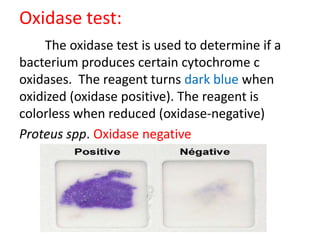
The oxidase test is used to determine if a
bacterium produces certain cytochrome c
oxidases. The reagent turns dark blue when
oxidized (oxidase positive). The reagent is
colorless when reduced (oxidase-negative)
Proteus spp. Oxidase negative
IMViC test
1-indole test:
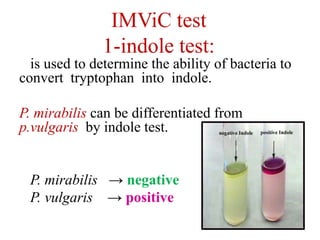
is used to determine the ability of bacteria to
convert tryptophan into indole.
P. mirabilis can be differentiated from
p.vulgaris by indole test.
P. mirabilis → negative
P. vulgaris → positive
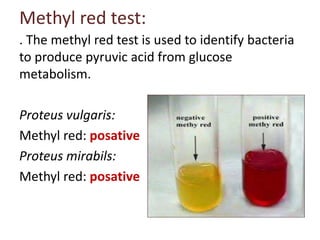
Methyl red test:
. The methyl red test is used to identify bacteria
to produce pyruvic acid from glucose
metabolism.
Proteus vulgaris:
Methyl red: posative
Proteus mirabils:
Methyl red: posative
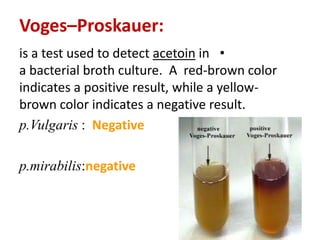
Voges–Proskauer:
is a test used to detect acetoin in •
a bacterial broth culture. A red-brown color
indicates a positive result, while a yellowbrown color indicates a negative result.
p.Vulgaris : Negative
p.mirabilis:negative
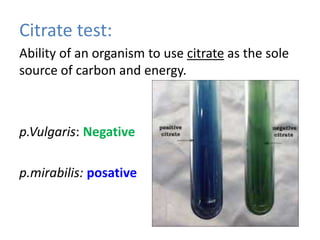
Citrate test:
Ability of an organism to use citrate as the sole
source of carbon and energy.

p.Vulgaris: Negative
p.mirabilis: posative
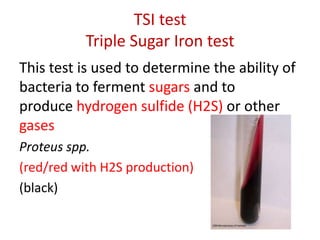
TSI test
Triple Sugar Iron test
This test is used to determine the ability of
bacteria to ferment sugars and to
produce hydrogen sulfide (H2S) or other
gases
Proteus spp.
(red/red with H2S production)
(black)
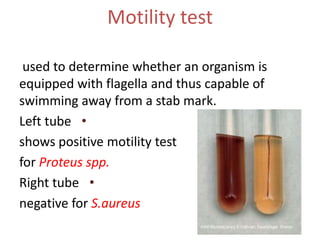
Motility test
used to determine whether an organism is
equipped with flagella and thus capable of
swimming away from a stab mark.
Left tube •
shows positive motility test
for Proteus spp.
Right tube •
negative for S.aureus
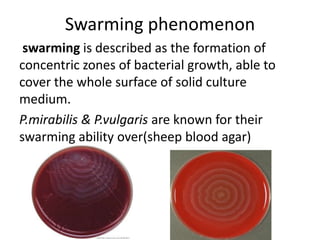
Swarming phenomenon
swarming is described as the formation of
concentric zones of bacterial growth, able to
cover the whole surface of solid culture
medium.
P.mirabilis & P.vulgaris are known for their
swarming ability over(sheep blood agar)
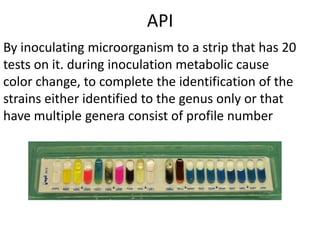
API
By inoculating microorganism to a strip that has 20
tests on it. during inoculation metabolic cause
color change, to complete the identification of the
strains either identified to the genus only or that
have multiple genera consist of profile number
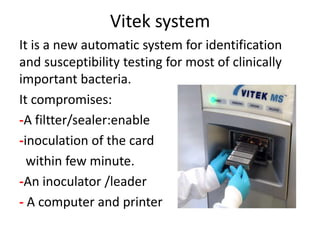
Vitek system
It is a new automatic system for identification
and susceptibility testing for most of clinically
important bacteria.
It compromises:
-A filtter/sealer:enable
-inoculation of the card
within few minute.
-An inoculator /leader
- A computer and printer

Proteus spp (2)

  • 1.
    Proteus spp. Prepared by HovenJalal Elaf Abdulhakem
  • 2.
    Objectves: Morphology of proteusspp. Microscopical morphology Colony morphology Diagnostic methods of proteus spp. Gram stain Culture &isolation on blood agar,macconkey agar Oxidase test Imvic test TSI test Motility test Swarming phenomenon Api &vitek system
  • 3.
    General charachteristic: Gram negativerods, facultative anaerobics. Motile they have peritrichous flagella Non capsulated Non spore forming Proteus sp. are most commonly found in the human intestinal tract as part of normal human intestinal flora. Non-lactose fermenting
  • 4.
    The main speciesof medical importance are: P. mirabilis P. vulgaris Proteus spp. are opportunist pathogens and may cause many types of infection.
  • 5.
    Morphology of proteusspp Microscopical morphology Gram negative bacilli, motile has flagella
  • 6.
  • 7.
    Diagnosis method ofproteus spp. Specimens: Urine, pus and ear Gram stain: Rod shaped gram negative
  • 8.
    Culture: Blood agar: Swarmingeffect over blood agar plate as a consequence of the organisms active motility.
  • 9.
    Macconkey agar: Culturesgive out an odour described as fishy, Non- lactose fermenting colonies .
  • 10.
    Oxidase test: The oxidasetest is used to determine if a bacterium produces certain cytochrome c oxidases. The reagent turns dark blue when oxidized (oxidase positive). The reagent is colorless when reduced (oxidase-negative) Proteus spp. Oxidase negative
  • 11.
    IMViC test 1-indole test: isused to determine the ability of bacteria to convert tryptophan into indole. P. mirabilis can be differentiated from p.vulgaris by indole test. P. mirabilis → negative P. vulgaris → positive
  • 12.
    Methyl red test: .The methyl red test is used to identify bacteria to produce pyruvic acid from glucose metabolism. Proteus vulgaris: Methyl red: posative Proteus mirabils: Methyl red: posative
  • 13.
    Voges–Proskauer: is a testused to detect acetoin in • a bacterial broth culture. A red-brown color indicates a positive result, while a yellowbrown color indicates a negative result. p.Vulgaris : Negative p.mirabilis:negative
  • 14.
    Citrate test: Ability ofan organism to use citrate as the sole source of carbon and energy. p.Vulgaris: Negative p.mirabilis: posative
  • 15.
    TSI test Triple SugarIron test This test is used to determine the ability of bacteria to ferment sugars and to produce hydrogen sulfide (H2S) or other gases Proteus spp. (red/red with H2S production) (black)
  • 16.
    Motility test used todetermine whether an organism is equipped with flagella and thus capable of swimming away from a stab mark. Left tube • shows positive motility test for Proteus spp. Right tube • negative for S.aureus
  • 17.
    Swarming phenomenon swarming isdescribed as the formation of concentric zones of bacterial growth, able to cover the whole surface of solid culture medium. P.mirabilis & P.vulgaris are known for their swarming ability over(sheep blood agar)
  • 18.
    API By inoculating microorganismto a strip that has 20 tests on it. during inoculation metabolic cause color change, to complete the identification of the strains either identified to the genus only or that have multiple genera consist of profile number
  • 19.
    Vitek system It isa new automatic system for identification and susceptibility testing for most of clinically important bacteria. It compromises: -A filtter/sealer:enable -inoculation of the card within few minute. -An inoculator /leader - A computer and printer