PADMASHREE INSTITUTE OF
MANEGMENTAND SCIENCE.
Seminar topic on;
 HUMAN CHROMOSOMAL ABERRATIONS,
Karyotype analysis
Presented by;
Shylesh murthy I .A
1st yr Msc biotechnology
PIMS
HISTORY
 Chromosomes were first observed in plants, investigation of
human karyotype took many years to settle .
 In 1912 Hans von Winiwarter reported 47 chromosomes in
spermatogonia and 48 in oogonia concluding XX/XO sex
determination mechanism .
 Painter in 1922 was not certain and revised his opinion from
46 to 48 chromosomes . He correctly insisted on human having
XX/XY chromosome system
Human ChromosomalAberration
 Change in the structure and number of
chromosomes are called chromosomal aberration.
 Its off 2 types 1. Structural and numerical
abnormalites
 There are 4 types of structural abnormalites
1. Deletion
2. Duplication
3. Inversion
4. Translocation
Deletion
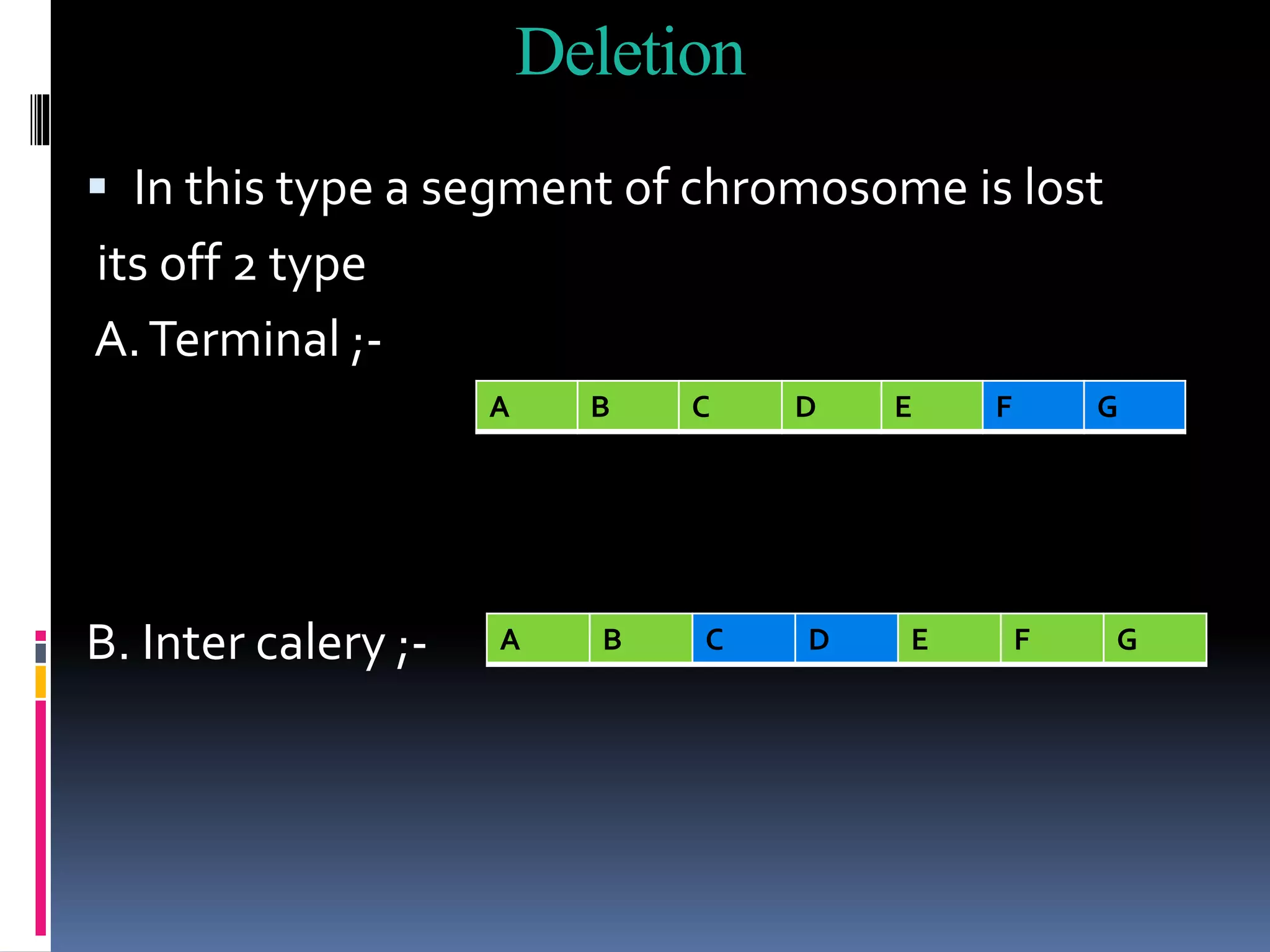
 In this type a segment of chromosome is lost
its off 2 type
A.Terminal ;-
B. Inter calery ;-
A B C D E F G
A B C D E F G
Example;- Cri-du-chat syndrome
In human babies deletion of a segment of a chromosome
at Number 5 causes Cri-du-chat syndrome
Symptoms ;- it cries Like cat and its mentally retarded with
small head
Duplication
 Where a segment is get repeated .Hence a set of
genes is present inn double doses

Normal chromosome
Chromosome with duplication
A B C D E F G H
A B C D E F G H G H
 During meiosis ,the duplicated segment forms a
Loop
 These duplication produces ‘POSITION EFFECT’
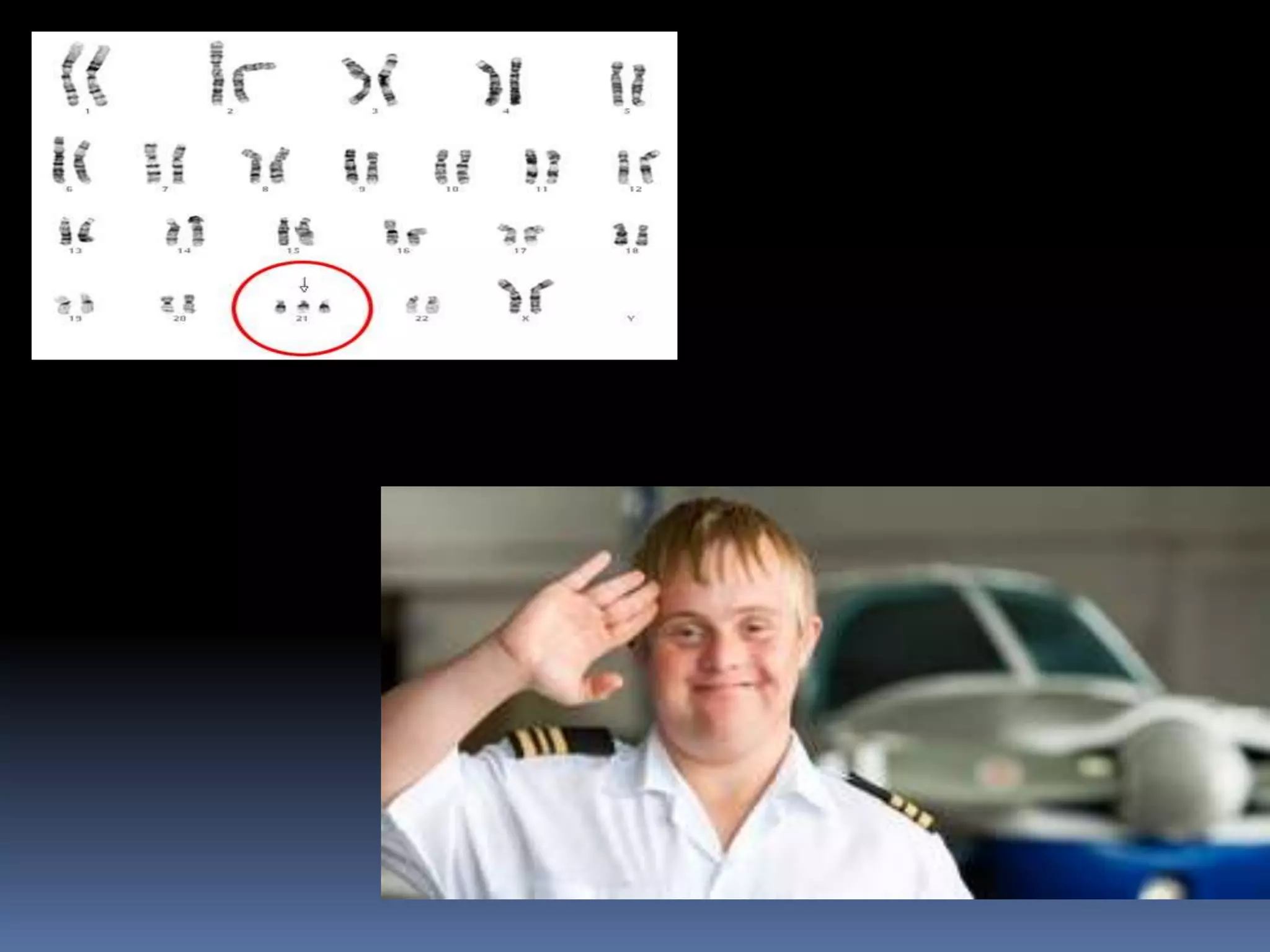
 Example;- Down’s syndrome
Here It is a case of 21st trisomy ,ie an extra
chromosome of the 21st pair is present .hence there are
47 chromosomes (2n+1) instead of 46. formally this
condition was known as mangolism.
Symptoms ;- The diseased person has a
characteristic fold of the eye called epicanthus.
 The eyes are small ,skull is large .
INVERSION
 Where the segment of the chromosome breaks
and rewinds in reverse order .
 In inversion there is no loss or gain of genes ,but
the genes are arranged in reverse order
 It is of 2 types ;- 1. pericentric
2. paracentric
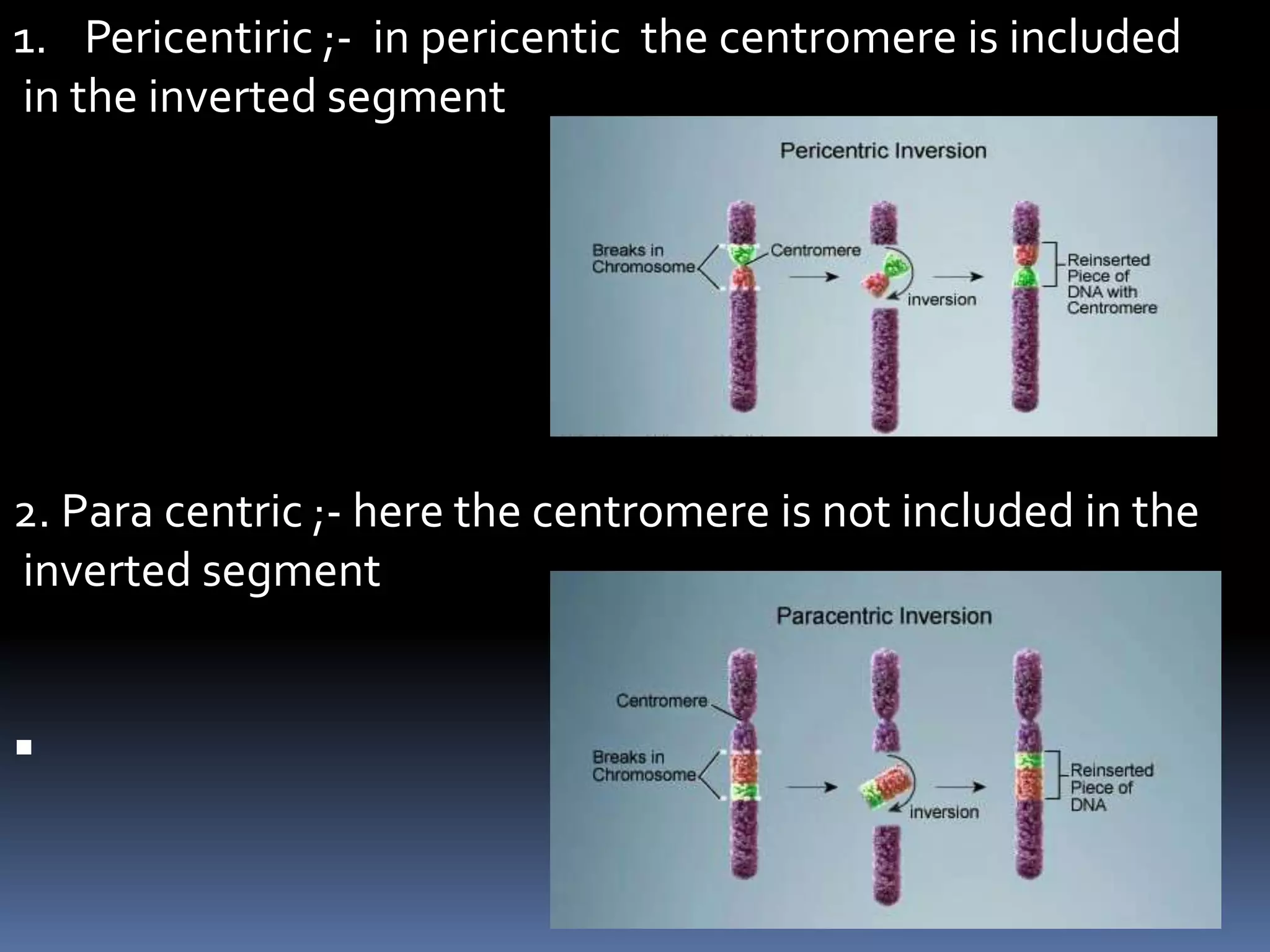
1. Pericentiric ;- in pericentic the centromere is included
in the inverted segment
2. Para centric ;- here the centromere is not included in the
inverted segment

 The chromosome with inverted segment produces an
inversion loop
 These iversion loop prevents crossing over
 It brings about the position effect
Translocation
 Where non homologous chromosome exchange
segments
 These translocation produces the Cross-shaped
structure
A B C D 5 6 7 8
1 2 3 4 E F G H
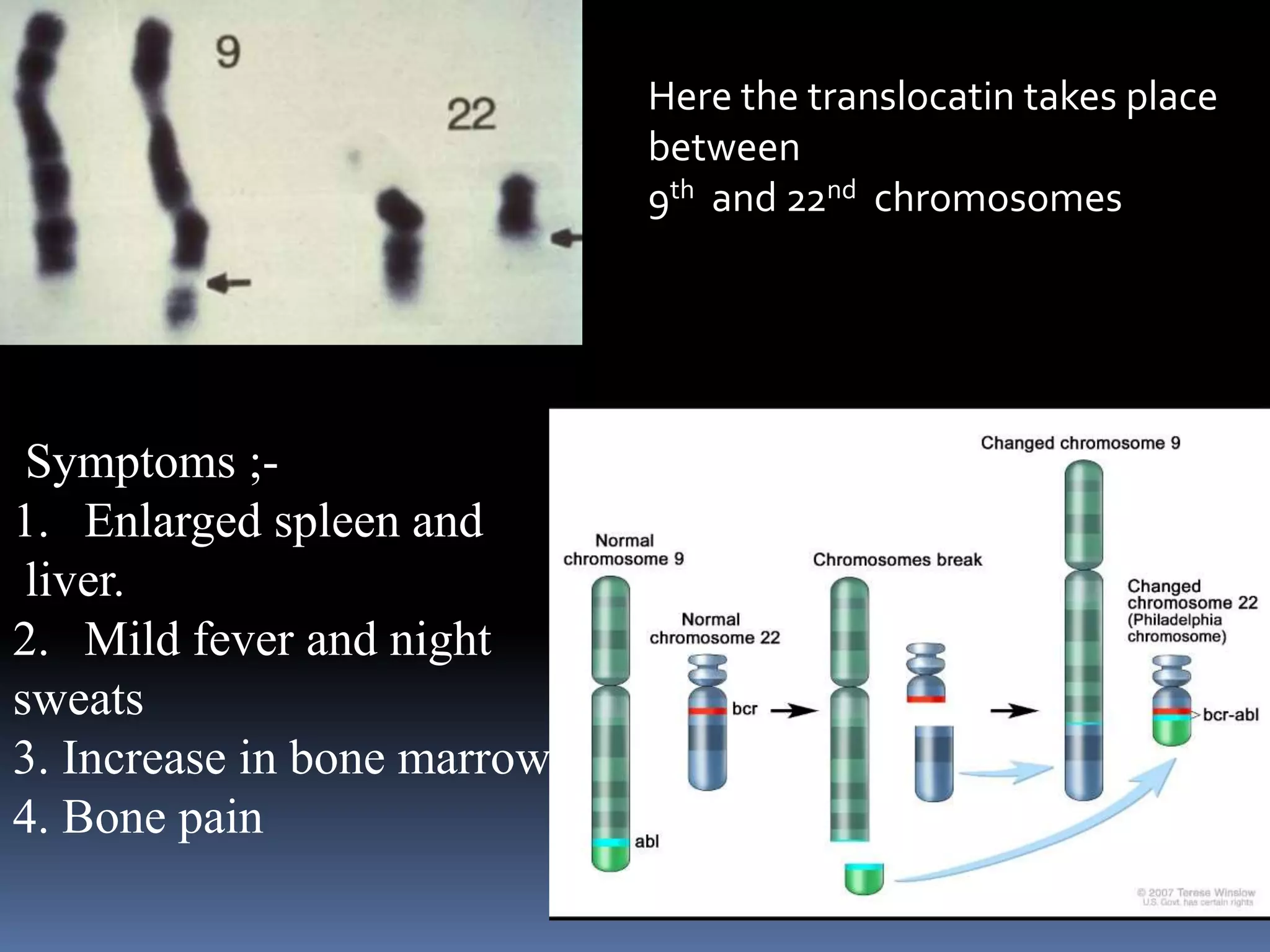
 Example ;- chroinic myeloid leukaemia(commonly
in male Than females)
Here the translocatin takes place
between
9th and 22nd chromosomes
Symptoms ;-
1. Enlarged spleen and
liver.
2. Mild fever and night
sweats
3. Increase in bone marrow
4. Bone pain
Variation in chromosome number
(ploidy)
EUPLOIDY ANEUPLOIDY
POLYIPLOIDY
( 3n ,4n ,5n)
HAPLOIDY
(n)
DIPLOIDY
(2n)
Nullisomy
( 2n-2)
Monosomy
( 2 n-1)
Polysomy
(2n+1 or
2n+2)
Karyotype
1. Nageli observed in plants in 1842.
2. Flemings observed in animals in 1882
3. Chromosomes arranged based on there shape ,size and
structure called karyotype
4. These karyotype of a species are represented by diagram
called IDIOGRAM
 Karyotypes can be used for many purposes as study of
chromosomal aberrations
 The study of karyotypes is important for cell biology
and genetics and the results may be used in evolutionary
biology and genetics
 The study of karyotypes is easily made possible by
staining .usually ,a suitable dye such as Giemsa ,is applied
after the cells have been arrested during cell division .
typesofbanding
 G banding
 R banding
 C banding
 Q banding
 T banding
G banding is obtained with giemsa stain and following digestion
of chromosomes is carried out by trypsin.darkly stained regions are
known as heterochromatin and lightly stained regions are known as
euchromatin.
R banding is the reverse of G banding ..the lightly
stained regions are euchromatin and darkly stained
regions are heterochromatin
C banding is also obtained with giemsa stain .it is used for
centromere staining
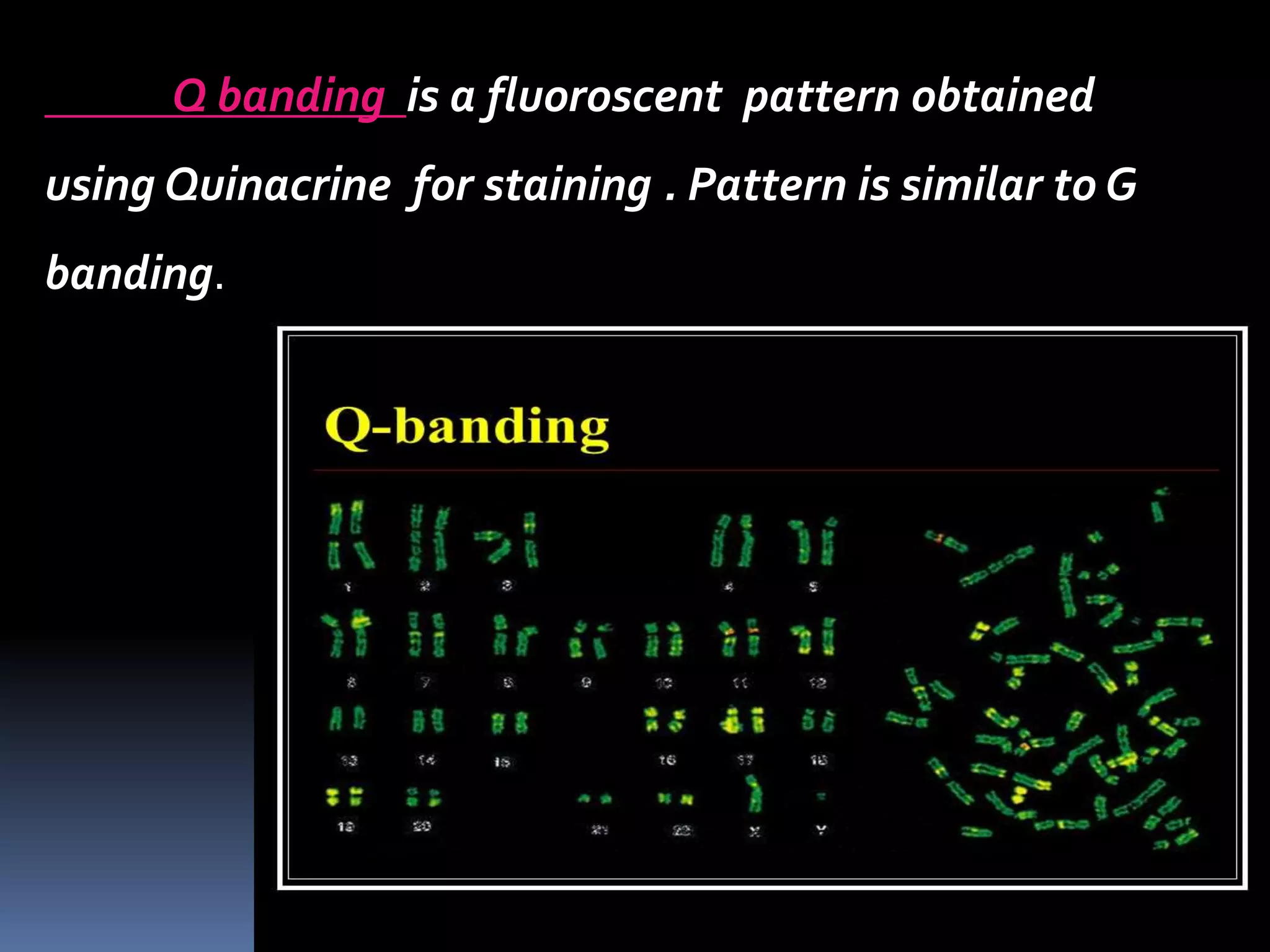
Q banding is a fluoroscent pattern obtained
using Quinacrine for staining . Pattern is similar to G
banding.
T banding is also obtained by giemsa staining and it is
carried out for visualization of telomeres.
Silver staining stains the nucleolar organization region associated
with proteins .
Example ;-
GTG Banding
G = G banding T = trypsin for
Pretreatment
G = Stain used(geimsa)
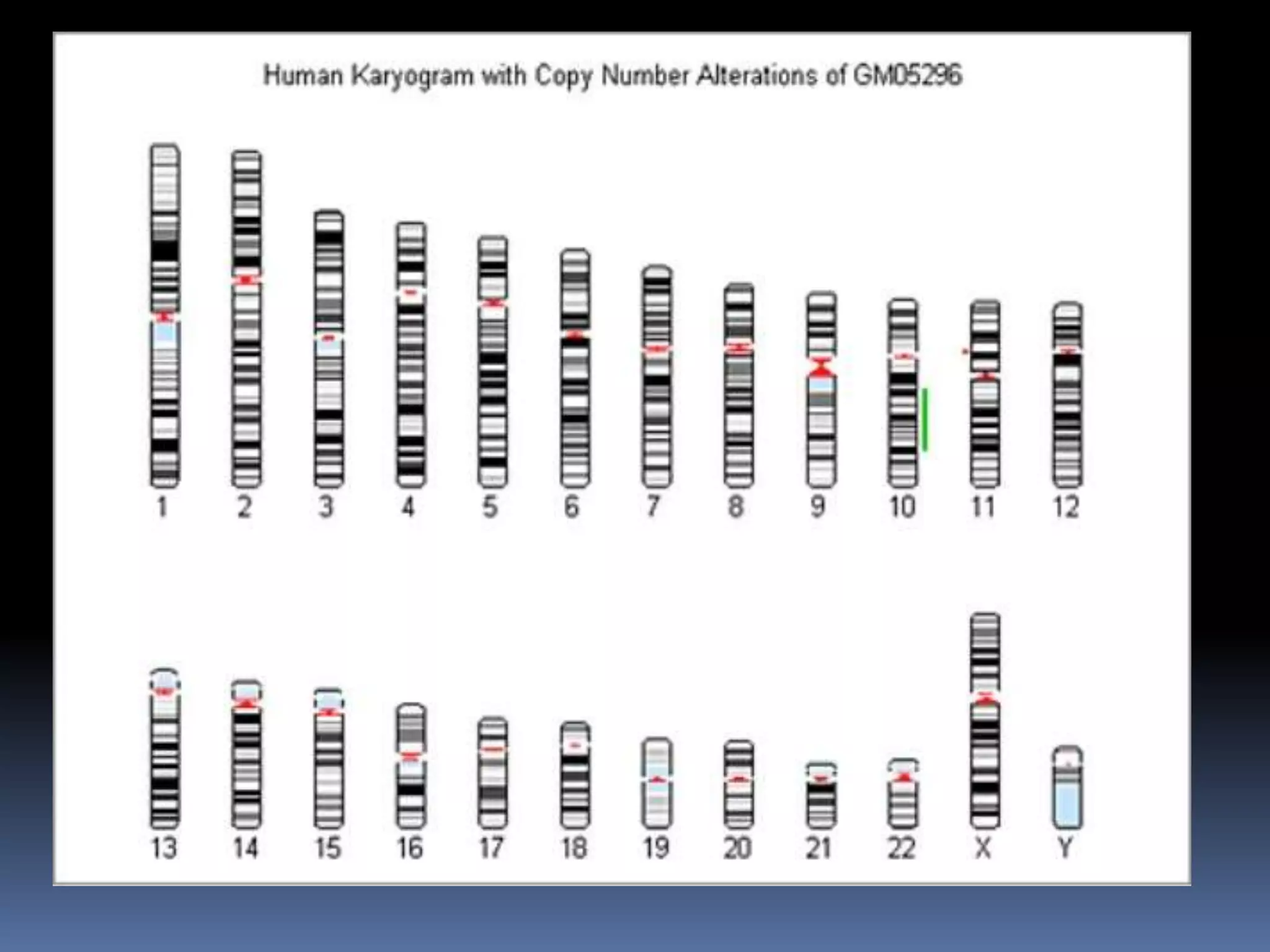
 The normal human karyotypes contain 22 pairs of
autosomal chromosomes and one pair of sex chromosomes
[allosomes].
 Normal karyotype for females contain two X
chromosomes[XX]
 Normal karyotype for male contain one X and Y
chromosome[XY]
 Any variation from the standard karyotype may lead to
developmental abnormalities .
NORMALHUMANKARYOTYPE
Abnormalhumankaryotype
 Chromosome abnormalities can be numerical as in the
presence of extra or missing X chromosome .
 Numerical abnormalities are termed as aneuploidy .it
occurs as a result of nondisjunction during meiosis in the
formation of gametes
 Common numerical abnormality is trisomy of 21st
chromosome .
 Structural abberations occur from errors in homologous
recombination .
Chromosomal abnormalitiesthatleadtodiseasein
humansinclude
 Downs syndrome
 Patau syndrome
 Cri du chat syndrome
 Klienfelters syndrome
 Turner syndrome
Trisomy 13 or D-trisomy (Patau syndrome)
Trisomy 18 or E-trisomy (Edwardsyndrome)
Trisomy 21 or G-trisomy (Down syndrome)
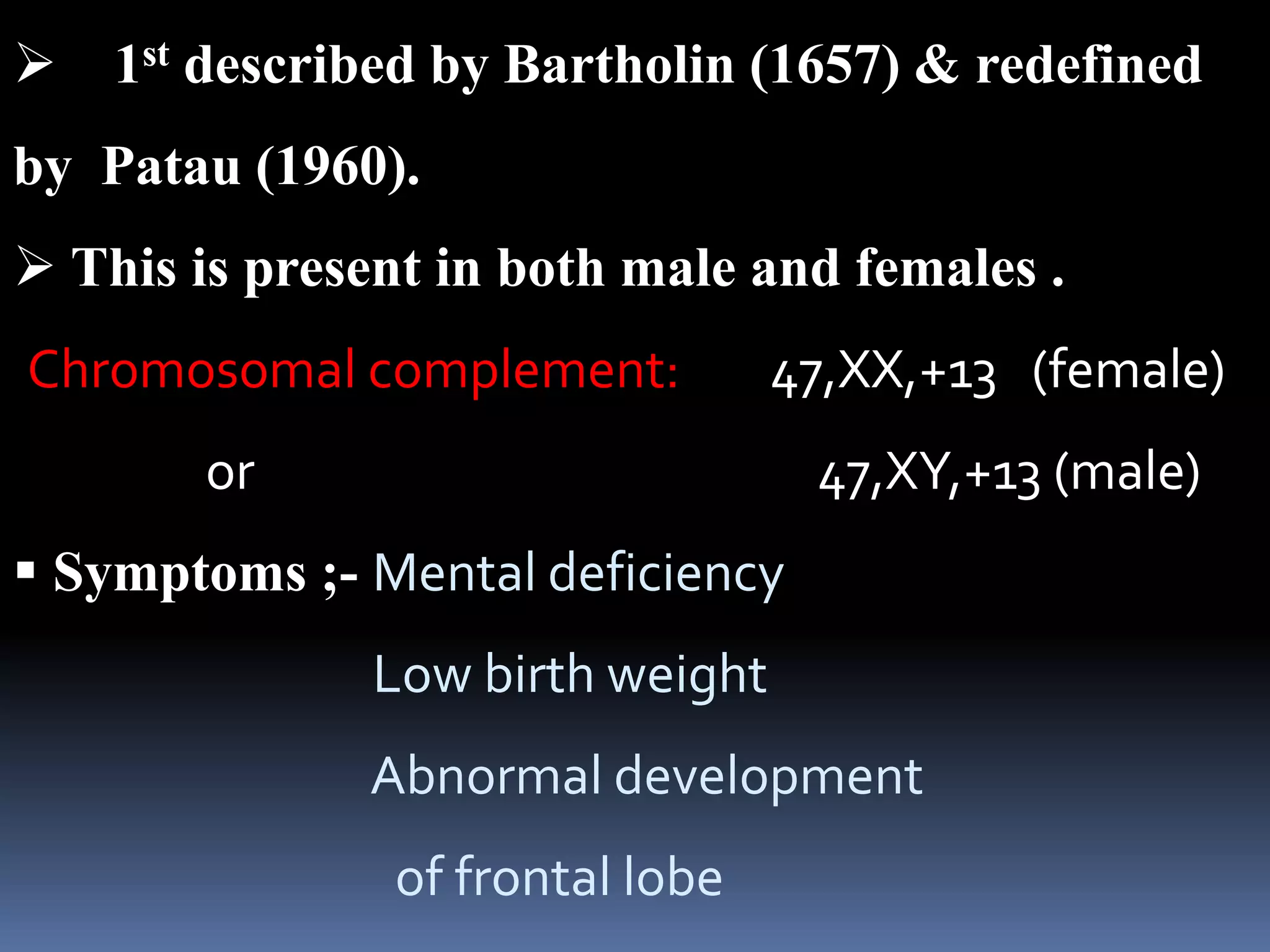
 1st described by Bartholin (1657) & redefined
by Patau (1960).
 This is present in both male and females .
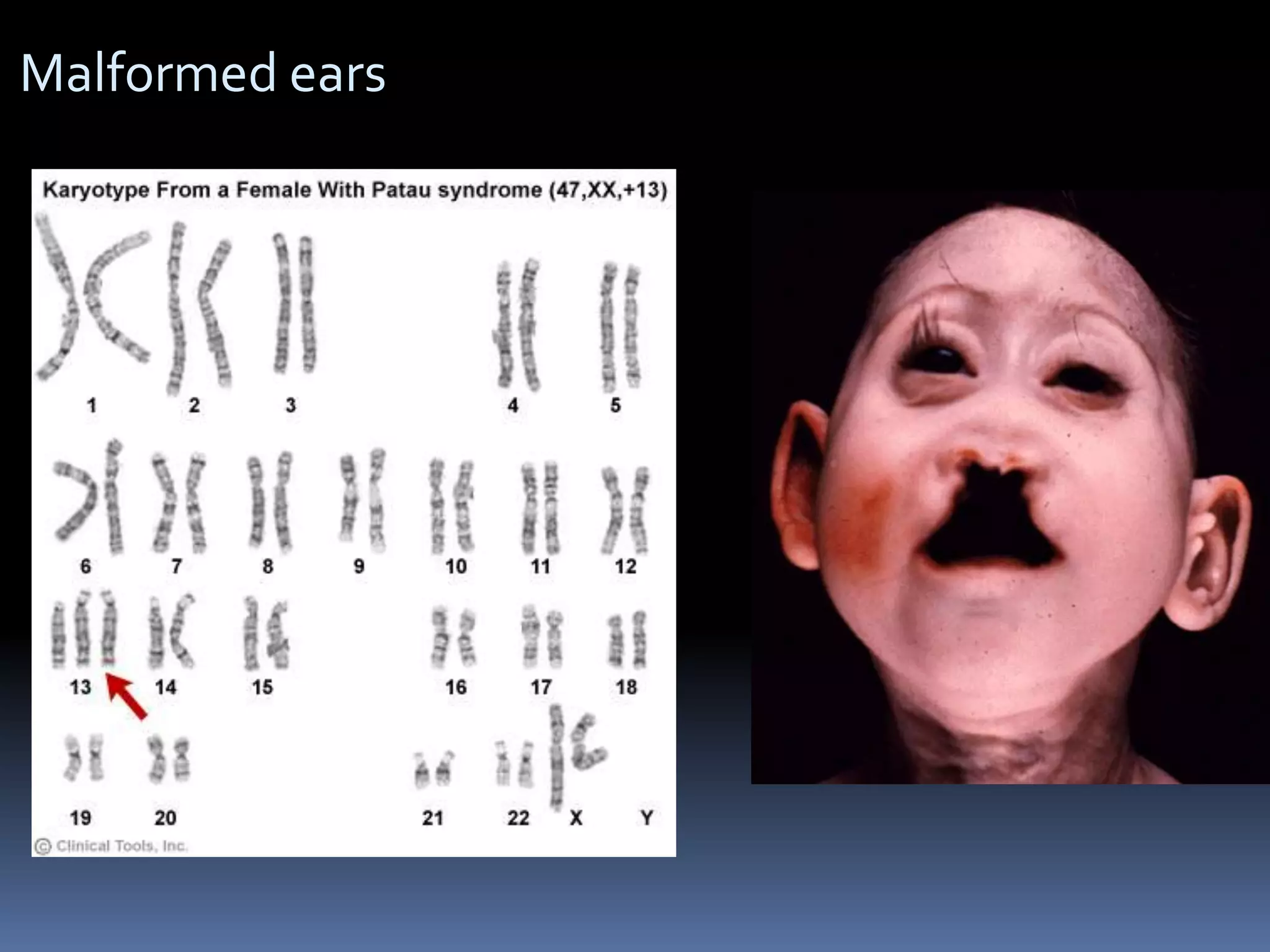
Chromosomal complement: 47,XX,+13 (female)
or 47,XY,+13 (male)
 Symptoms ;- Mental deficiency
Low birth weight
Abnormal development
of frontal lobe
Malformed ears
References ; Biology DR SUDAKAR RAO-
INTERNET SOURCES
.Thankyou ……….

HUMAN CHROMOSOMAL ABERRATIONS AND KARYOTYPE ANALYSIS.

  • 1.
    PADMASHREE INSTITUTE OF MANEGMENTANDSCIENCE. Seminar topic on;  HUMAN CHROMOSOMAL ABERRATIONS, Karyotype analysis Presented by; Shylesh murthy I .A 1st yr Msc biotechnology PIMS
  • 2.
    HISTORY  Chromosomes werefirst observed in plants, investigation of human karyotype took many years to settle .  In 1912 Hans von Winiwarter reported 47 chromosomes in spermatogonia and 48 in oogonia concluding XX/XO sex determination mechanism .  Painter in 1922 was not certain and revised his opinion from 46 to 48 chromosomes . He correctly insisted on human having XX/XY chromosome system
  • 3.
    Human ChromosomalAberration  Changein the structure and number of chromosomes are called chromosomal aberration.  Its off 2 types 1. Structural and numerical abnormalites  There are 4 types of structural abnormalites 1. Deletion 2. Duplication 3. Inversion 4. Translocation
  • 4.
    Deletion  In thistype a segment of chromosome is lost its off 2 type A.Terminal ;- B. Inter calery ;- A B C D E F G A B C D E F G
  • 5.
    Example;- Cri-du-chat syndrome Inhuman babies deletion of a segment of a chromosome at Number 5 causes Cri-du-chat syndrome Symptoms ;- it cries Like cat and its mentally retarded with small head
  • 6.
    Duplication  Where asegment is get repeated .Hence a set of genes is present inn double doses  Normal chromosome Chromosome with duplication A B C D E F G H A B C D E F G H G H
  • 7.
     During meiosis,the duplicated segment forms a Loop  These duplication produces ‘POSITION EFFECT’  Example;- Down’s syndrome Here It is a case of 21st trisomy ,ie an extra chromosome of the 21st pair is present .hence there are 47 chromosomes (2n+1) instead of 46. formally this condition was known as mangolism. Symptoms ;- The diseased person has a characteristic fold of the eye called epicanthus.  The eyes are small ,skull is large .
  • 9.
    INVERSION  Where thesegment of the chromosome breaks and rewinds in reverse order .  In inversion there is no loss or gain of genes ,but the genes are arranged in reverse order  It is of 2 types ;- 1. pericentric 2. paracentric
  • 10.
    1. Pericentiric ;-in pericentic the centromere is included in the inverted segment 2. Para centric ;- here the centromere is not included in the inverted segment 
  • 11.
     The chromosomewith inverted segment produces an inversion loop  These iversion loop prevents crossing over  It brings about the position effect
  • 12.
    Translocation  Where nonhomologous chromosome exchange segments  These translocation produces the Cross-shaped structure A B C D 5 6 7 8 1 2 3 4 E F G H  Example ;- chroinic myeloid leukaemia(commonly in male Than females)
  • 13.
    Here the translocatintakes place between 9th and 22nd chromosomes Symptoms ;- 1. Enlarged spleen and liver. 2. Mild fever and night sweats 3. Increase in bone marrow 4. Bone pain
  • 14.
    Variation in chromosomenumber (ploidy) EUPLOIDY ANEUPLOIDY POLYIPLOIDY ( 3n ,4n ,5n) HAPLOIDY (n) DIPLOIDY (2n) Nullisomy ( 2n-2) Monosomy ( 2 n-1) Polysomy (2n+1 or 2n+2)
  • 15.
    Karyotype 1. Nageli observedin plants in 1842. 2. Flemings observed in animals in 1882 3. Chromosomes arranged based on there shape ,size and structure called karyotype 4. These karyotype of a species are represented by diagram called IDIOGRAM
  • 17.
     Karyotypes canbe used for many purposes as study of chromosomal aberrations  The study of karyotypes is important for cell biology and genetics and the results may be used in evolutionary biology and genetics  The study of karyotypes is easily made possible by staining .usually ,a suitable dye such as Giemsa ,is applied after the cells have been arrested during cell division .
  • 18.
    typesofbanding  G banding R banding  C banding  Q banding  T banding
  • 19.
    G banding isobtained with giemsa stain and following digestion of chromosomes is carried out by trypsin.darkly stained regions are known as heterochromatin and lightly stained regions are known as euchromatin.
  • 20.
    R banding isthe reverse of G banding ..the lightly stained regions are euchromatin and darkly stained regions are heterochromatin
  • 21.
    C banding isalso obtained with giemsa stain .it is used for centromere staining
  • 22.
    Q banding isa fluoroscent pattern obtained using Quinacrine for staining . Pattern is similar to G banding.
  • 23.
    T banding isalso obtained by giemsa staining and it is carried out for visualization of telomeres. Silver staining stains the nucleolar organization region associated with proteins .
  • 24.
    Example ;- GTG Banding G= G banding T = trypsin for Pretreatment G = Stain used(geimsa)
  • 25.
     The normalhuman karyotypes contain 22 pairs of autosomal chromosomes and one pair of sex chromosomes [allosomes].  Normal karyotype for females contain two X chromosomes[XX]  Normal karyotype for male contain one X and Y chromosome[XY]  Any variation from the standard karyotype may lead to developmental abnormalities . NORMALHUMANKARYOTYPE
  • 26.
    Abnormalhumankaryotype  Chromosome abnormalitiescan be numerical as in the presence of extra or missing X chromosome .  Numerical abnormalities are termed as aneuploidy .it occurs as a result of nondisjunction during meiosis in the formation of gametes  Common numerical abnormality is trisomy of 21st chromosome .  Structural abberations occur from errors in homologous recombination .
  • 27.
    Chromosomal abnormalitiesthatleadtodiseasein humansinclude  Downssyndrome  Patau syndrome  Cri du chat syndrome  Klienfelters syndrome  Turner syndrome
  • 28.
    Trisomy 13 orD-trisomy (Patau syndrome) Trisomy 18 or E-trisomy (Edwardsyndrome) Trisomy 21 or G-trisomy (Down syndrome)
  • 29.
     1st describedby Bartholin (1657) & redefined by Patau (1960).  This is present in both male and females . Chromosomal complement: 47,XX,+13 (female) or 47,XY,+13 (male)  Symptoms ;- Mental deficiency Low birth weight Abnormal development of frontal lobe
  • 30.
  • 33.
    References ; BiologyDR SUDAKAR RAO- INTERNET SOURCES
  • 34.