STRUCTURAL
CHROMOSOMAL
ABERRATIONS
Vinitha S Babu
What are chromosomes?
Chromosomes are thread-like structures located inside the nucleus of animal
and plant cells.
Each chromosome is made of protein and a single molecule of
deoxyribonucleic acid (DNA).
Passed from parents to offspring, DNA contains the specific instructions that
make each type of living creature unique.
The term chromosome comes from the Greek words for color (chroma) and
body (soma).
Strongly stained by some colorful dyes used in research.
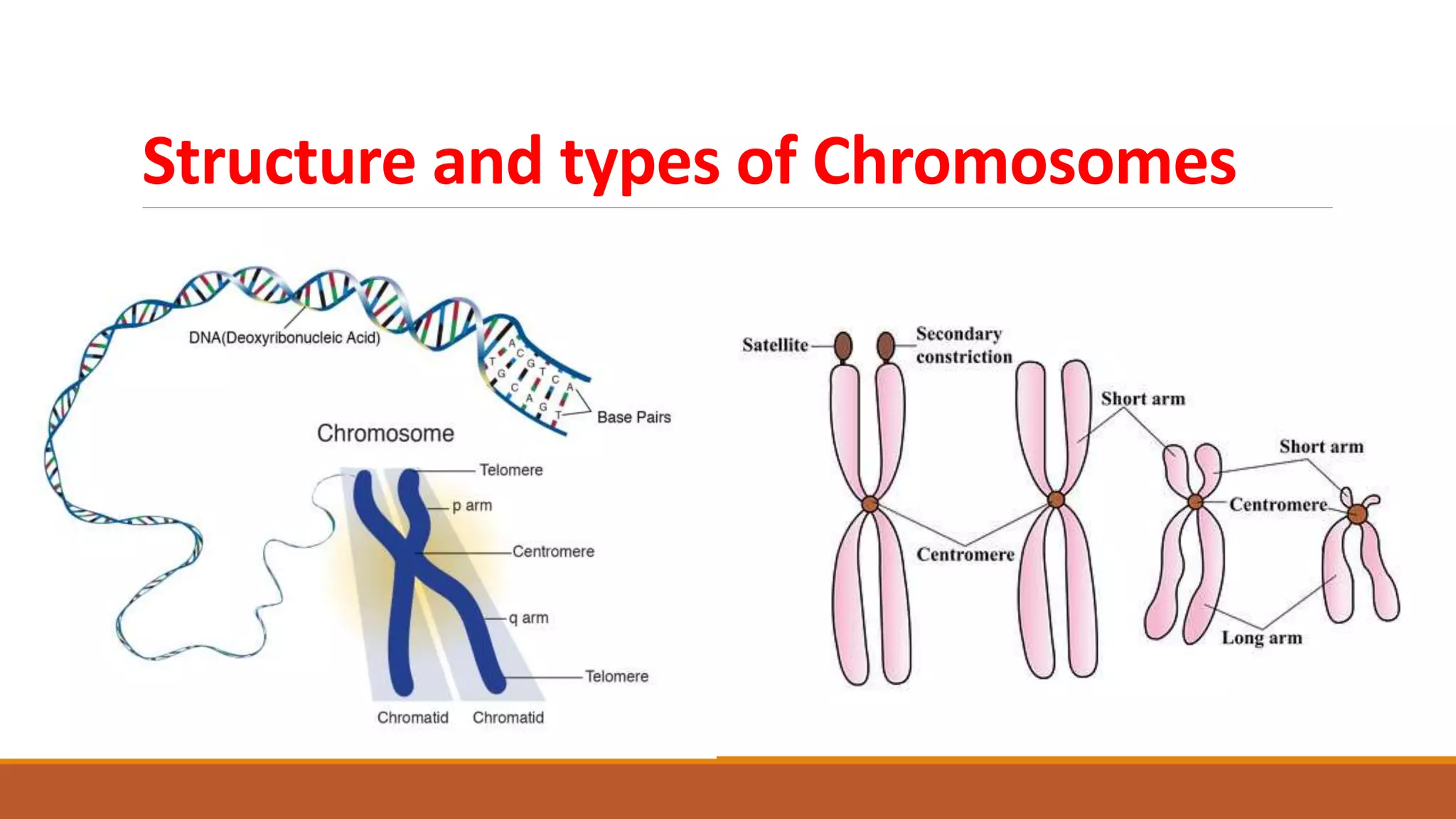
Structure and types of Chromosomes
Chromosomal Aberrations
Chromosomal aberrations are abnormalities in the structure or number of
chromosomes and are often responsible for genetic disorders.
These events may occur spontaneously or can be induced by environmental
agents such as chemicals, radiation, and ultraviolet light.
However, mutations are most likely due to mistakes that occur when the genes
are copied as the cells are dividing to produce new cells.
Types of Chromosomal aberrations
Two types of aberrations:
I. Structural
1. Deletion
2. Duplication
3. Inversion
4. Translocation
II. Numerical
1. Aneuploidy
2. Polyploidy
Structural Aberrations
1. Deletion
2. Duplication
3. Inversion
4. Translocation
Changes involving the
number of genes
Changes involving the
arrangement of genes
1. Deletion
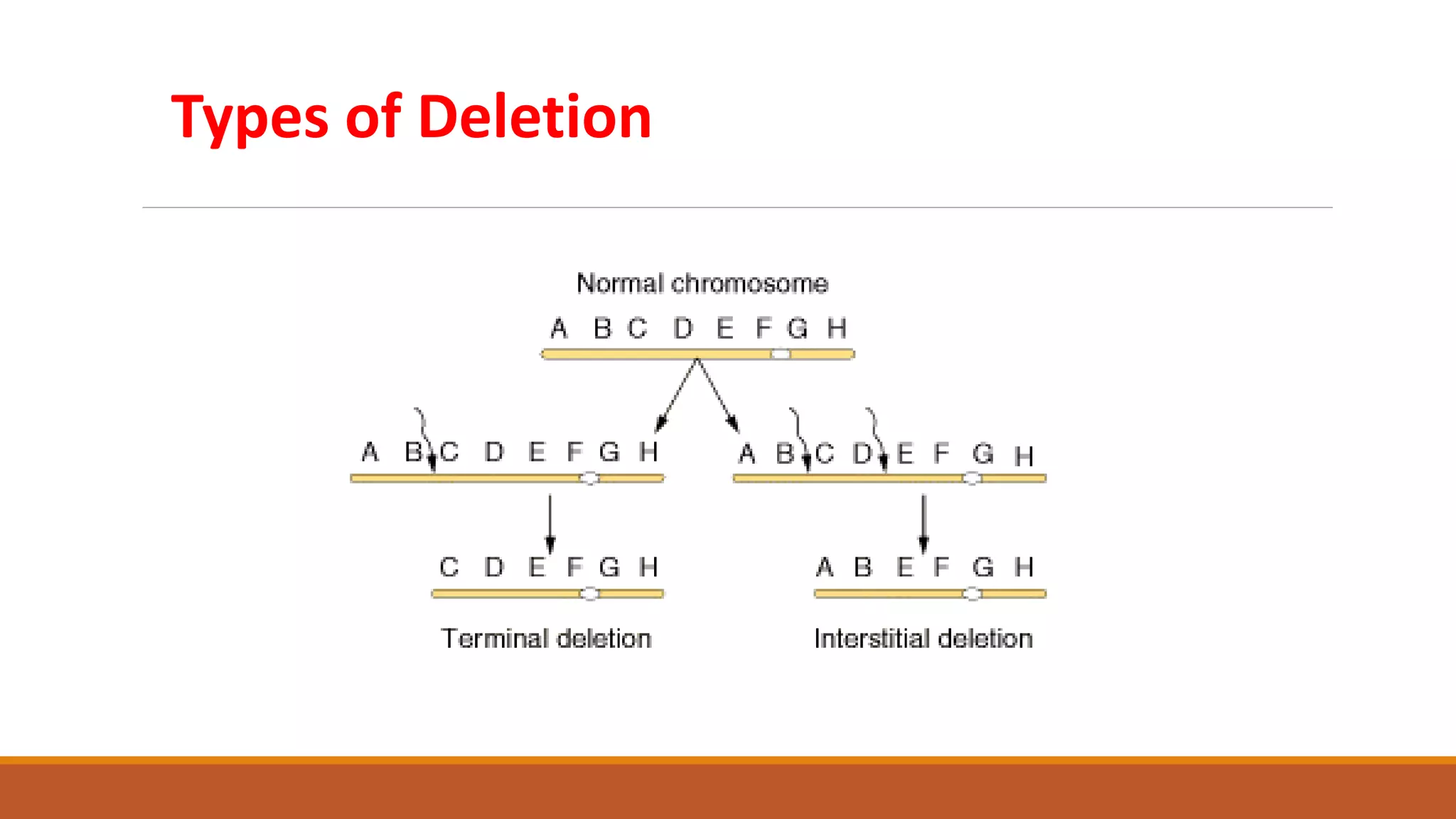
Loss of a region of chromosome
Occurs when a chromosome breaks and a fragment is lost
2 types
Terminal
Intercalary
Types of Deletion
Deletion Loop Formation
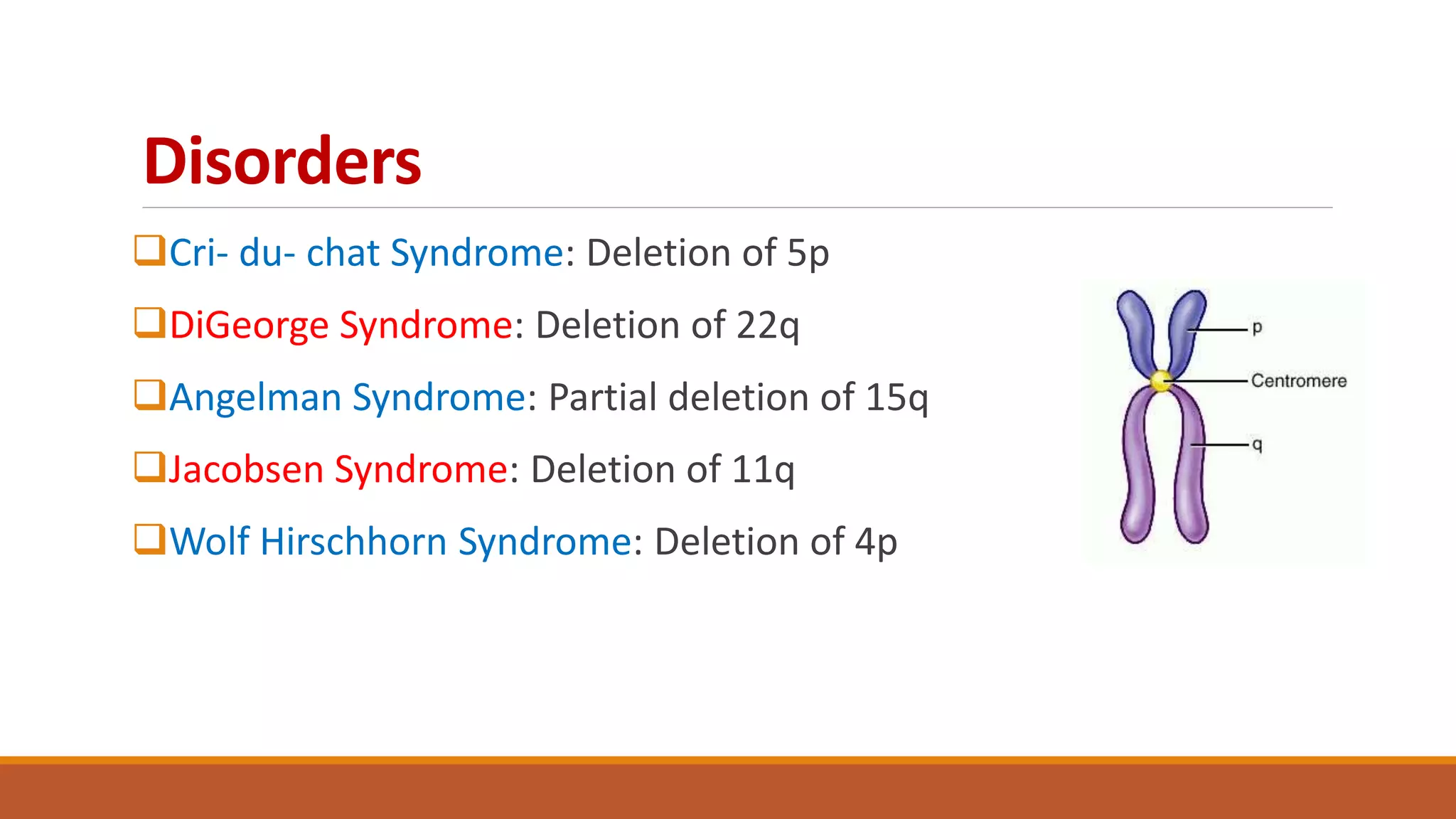
Disorders
Cri- du- chat Syndrome: Deletion of 5p
DiGeorge Syndrome: Deletion of 22q
Angelman Syndrome: Partial deletion of 15q
Jacobsen Syndrome: Deletion of 11q
Wolf Hirschhorn Syndrome: Deletion of 4p
2. Duplication
Caused by abnormal events during recombination
Just opposite of deletion
Extra copies of chromosomal regions are formed
Types of duplication
Loop formation in duplication
Deficiency Disorder
Charcot Marie-Tooth Disease Type 1A: Duplication of gene PMP
(Peripheral Myelin Protein) 22 on chromosome 17
3. Inversion
It is a chromosome rearrangement in which a segment of
a chromosome is reversed end to end.
An inversion occurs when a single chromosome undergoes
breakage and rearrangement within itself: Breakage-reunion
hypothesis
Types of inversions
2 types:
1. Pericentric
2. Paracentric
4. Translocation
Here, a part of one chromosome breaks off and sticks to
another chromosome
2 types;
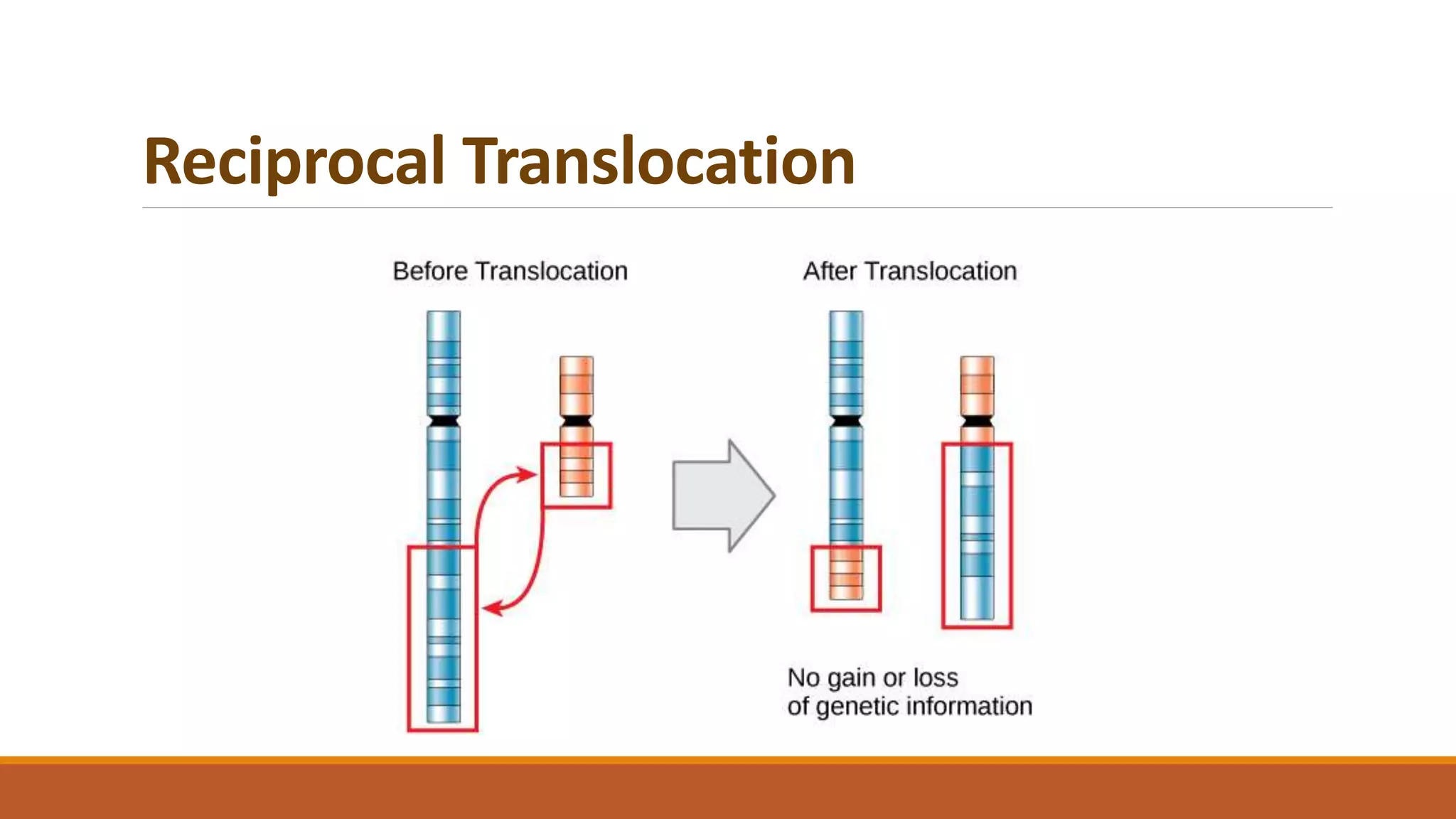
1. Reciprocal Translocation: Segments from 2 different chromosomes are exchanged
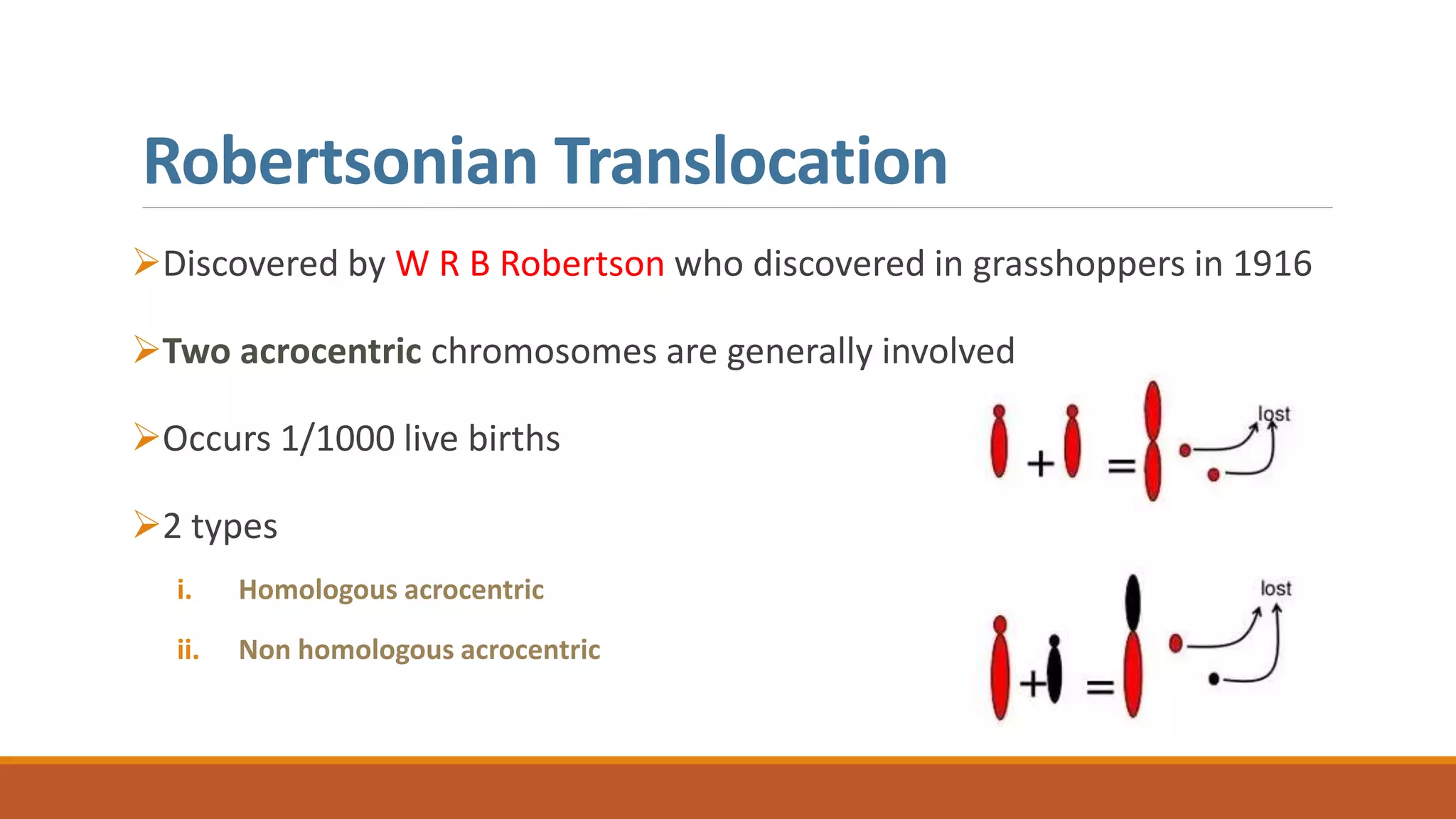
2. Robertsonian Translocation: An entire chromosome has been attached to another
at the centromere region. It occurs in five acrocentric pairs as 13, 14, 15, 21, 22.
Reciprocal Translocation
Robertsonian Translocation
Discovered by W R B Robertson who discovered in grasshoppers in 1916
Two acrocentric chromosomes are generally involved
Occurs 1/1000 live births
2 types
i. Homologous acrocentric
ii. Non homologous acrocentric
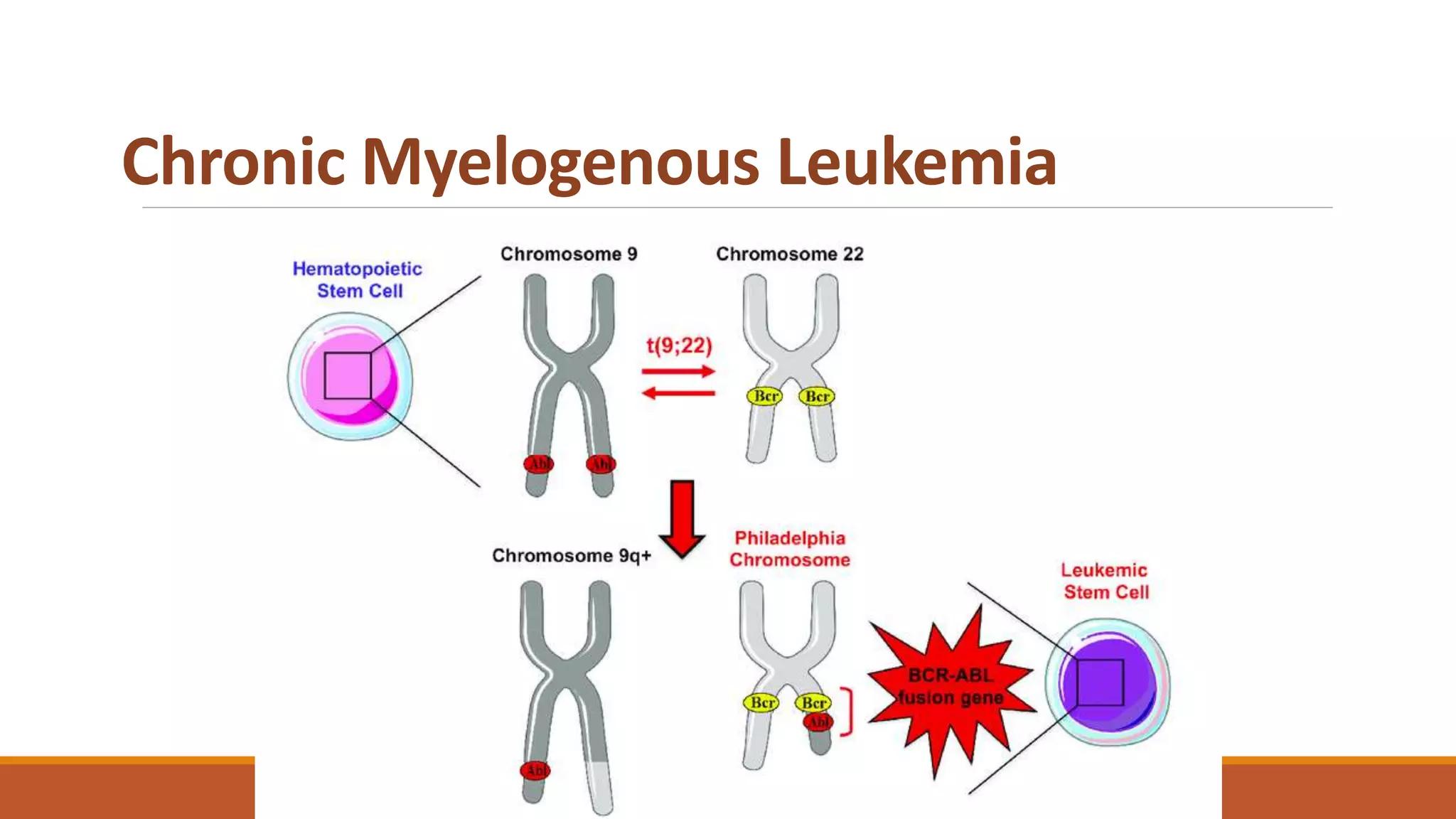
Chronic Myelogenous Leukemia
Summary
Chromosomes: Structure, Types
Chromosomal Aberration
Types of chromosomal aberrations
Structural aberrations
Thank You

Structural Chromosomal Aberrations

  • 1.
  • 2.
    What are chromosomes? Chromosomesare thread-like structures located inside the nucleus of animal and plant cells. Each chromosome is made of protein and a single molecule of deoxyribonucleic acid (DNA). Passed from parents to offspring, DNA contains the specific instructions that make each type of living creature unique. The term chromosome comes from the Greek words for color (chroma) and body (soma). Strongly stained by some colorful dyes used in research.
  • 3.
    Structure and typesof Chromosomes
  • 4.
    Chromosomal Aberrations Chromosomal aberrationsare abnormalities in the structure or number of chromosomes and are often responsible for genetic disorders. These events may occur spontaneously or can be induced by environmental agents such as chemicals, radiation, and ultraviolet light. However, mutations are most likely due to mistakes that occur when the genes are copied as the cells are dividing to produce new cells.
  • 5.
    Types of Chromosomalaberrations Two types of aberrations: I. Structural 1. Deletion 2. Duplication 3. Inversion 4. Translocation II. Numerical 1. Aneuploidy 2. Polyploidy
  • 6.
    Structural Aberrations 1. Deletion 2.Duplication 3. Inversion 4. Translocation Changes involving the number of genes Changes involving the arrangement of genes
  • 7.
    1. Deletion Loss ofa region of chromosome Occurs when a chromosome breaks and a fragment is lost 2 types Terminal Intercalary
  • 8.
  • 9.
  • 10.
    Disorders Cri- du- chatSyndrome: Deletion of 5p DiGeorge Syndrome: Deletion of 22q Angelman Syndrome: Partial deletion of 15q Jacobsen Syndrome: Deletion of 11q Wolf Hirschhorn Syndrome: Deletion of 4p
  • 11.
    2. Duplication Caused byabnormal events during recombination Just opposite of deletion Extra copies of chromosomal regions are formed
  • 12.
  • 13.
    Loop formation induplication
  • 14.
    Deficiency Disorder Charcot Marie-ToothDisease Type 1A: Duplication of gene PMP (Peripheral Myelin Protein) 22 on chromosome 17
  • 15.
    3. Inversion It isa chromosome rearrangement in which a segment of a chromosome is reversed end to end. An inversion occurs when a single chromosome undergoes breakage and rearrangement within itself: Breakage-reunion hypothesis
  • 16.
    Types of inversions 2types: 1. Pericentric 2. Paracentric
  • 17.
    4. Translocation Here, apart of one chromosome breaks off and sticks to another chromosome 2 types; 1. Reciprocal Translocation: Segments from 2 different chromosomes are exchanged 2. Robertsonian Translocation: An entire chromosome has been attached to another at the centromere region. It occurs in five acrocentric pairs as 13, 14, 15, 21, 22.
  • 18.
  • 19.
    Robertsonian Translocation Discovered byW R B Robertson who discovered in grasshoppers in 1916 Two acrocentric chromosomes are generally involved Occurs 1/1000 live births 2 types i. Homologous acrocentric ii. Non homologous acrocentric
  • 20.
  • 21.
    Summary Chromosomes: Structure, Types ChromosomalAberration Types of chromosomal aberrations Structural aberrations
  • 22.