Downloaded 113 times
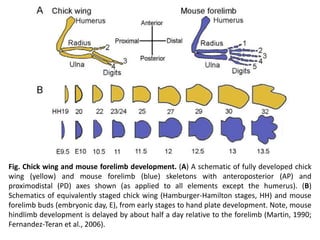



This document summarizes limb development in vertebrates using the chicken wing and mouse forelimb as models. It describes how the limb develops axes and patterns of differentiated tissues over time. The early limb bud consists of undifferentiated mesenchymal cells covered by ectoderm. As the bud elongates, the thickened apical ectodermal ridge and differences in expansion across the limb axes influence patterning and contribute to formation of proximal versus distal structures. While chicken wings and mouse forelimbs follow similar developmental processes, there are some differences in morphology and growth.


