Chapter: Fertilization
Subtopics:
 Recognition of sperm and egg
 Fusion of gametes
 Activation of Egg Metabolism
 Rearrangement of Egg cytoplasm
Fertilization
Fertilization is the process by which two sex cells (gametes) fuse together to form a new
individual.
 Fertilization accomplishes two separate ends: sex (the combining of genes derive
from two parents) and reproduction (the creation of new individuals).
 The first function of fertilization is to transmit genes from parents to offspring
and the second function is to initiate in the egg cytoplasm those reactions that
proceed development.
 Although the details of fertilization vary from species to specie, conception
generally consist of following major events:
o Recognition of sperm and egg
o Regulation of sperm entry into egg
o Fusion of genetic material of sperm and egg
o Activation of egg metabolism to start development
1. Recognition of sperm and egg
The interaction of sperm and egg generally proceeds according to 5 basic steps.
i. The chemo attraction of the sperm to the egg by soluble molecules secreted by
the egg.
ii. The exocytosis of the acrosomal vesicle to release its enzymes.
iii. The binding of sperm to the extracellular envelope (vitelline membrane or zona
pellucida) of the egg.
iv. The passing of the sperm through this extra cellular envelope.
v. Fusion of egg and sperm cell plasma membranes.
Explanation:
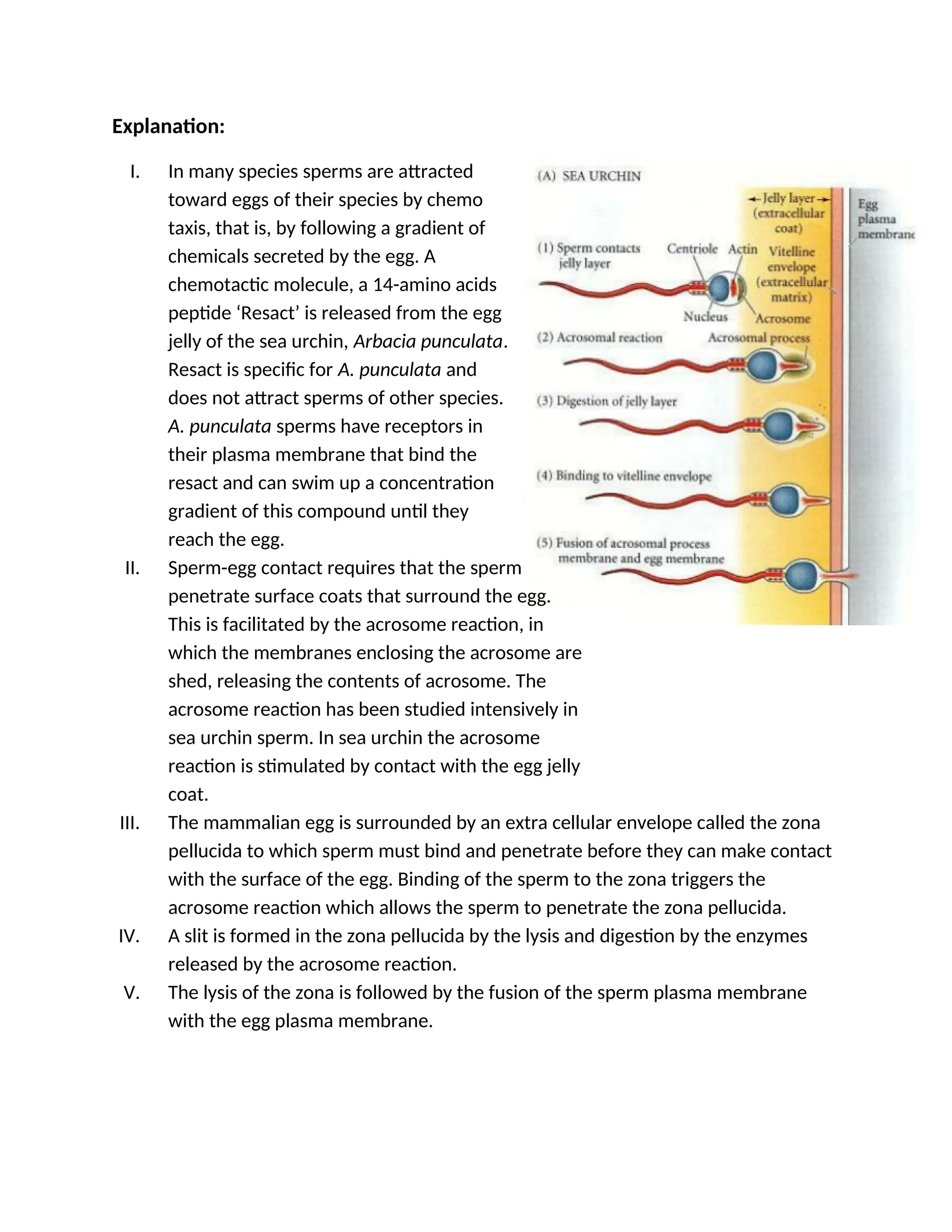
I. In many species sperms are attracted
toward eggs of their species by chemo
taxis, that is, by following a gradient of
chemicals secreted by the egg. A
chemotactic molecule, a 14-amino acids
peptide ‘Resact’ is released from the egg
jelly of the sea urchin, Arbacia punculata.
Resact is specific for A. punculata and
does not attract sperms of other species.
A. punculata sperms have receptors in
their plasma membrane that bind the
resact and can swim up a concentration
gradient of this compound until they
reach the egg.
II. Sperm-egg contact requires that the sperm
penetrate surface coats that surround the egg.
This is facilitated by the acrosome reaction, in
which the membranes enclosing the acrosome are
shed, releasing the contents of acrosome. The
acrosome reaction has been studied intensively in
sea urchin sperm. In sea urchin the acrosome
reaction is stimulated by contact with the egg jelly
coat.
III. The mammalian egg is surrounded by an extra cellular envelope called the zona
pellucida to which sperm must bind and penetrate before they can make contact
with the surface of the egg. Binding of the sperm to the zona triggers the
acrosome reaction which allows the sperm to penetrate the zona pellucida.
IV. A slit is formed in the zona pellucida by the lysis and digestion by the enzymes
released by the acrosome reaction.
V. The lysis of the zona is followed by the fusion of the sperm plasma membrane
with the egg plasma membrane.
2. Fusion of gametes
 Fusion of the sperm and egg plasma membrane, the sperm nucleus and its
centrioles separate from the mitochondria and the flagellum.
 The mitochondria and the flagellum disintegrate inside the egg.
 Although each gamete contributes a haploid genome to the zygote, the
mitochondrial genome is transmitted primarily by the maternal parent (mother).
 After the sea urchin sperm enter the egg’s cytoplasm the male pro-nucleus
rotates 180° so that the sperm centriole is between the sperm pro-nucleus and
the egg pro-nucleus.
 The sperm centriole then acts as microtubules organizing center extending its
own microtubules and integrating them with the egg microtubule to from an
aster.
 These microtubules extend throughout the egg and contact the female pro-
nucleus and the two pro-nuclei migrate toward each other. Their fusion forms
the diploid zygote nucleus.
3. Activation of Egg Metabolism
 Egg activation means that secondary oocyte is metabolically activated on the
arrival of the sperm.
 Throughout the animal kingdom it has been found that inositol trisphosphate
(IP3) is the primary mechanism for releasing Ca₊2
from intracellular storage.
 Sperm binding with the egg initiates a signal transduction cascade resulting in the
production of IP3.
 IP3 is able to release Ca₊2
into the cytoplasm by opening Ca₊2
channel of the
endoplasmic reticulum.
 The release of Ca₊2
is crucial for activating the egg’s metabolism and initiating
development. Ca₊2
are used to activate development during fertilization
throughout the animal kingdom.
 The rise in Ca₊2
is the cytosol activates DNA and protein synthesis and also
increases the rate of cellular respiration by the egg cell.
 Ca₊2
release also activates the enzyme NAD₊
kinase which converts NAD₊
to NADP₊
can be used as a coenzyme for lipid biosynthesis which are important in the
construction of new cell membranes required during cleavage.
4. Rearrangement of Egg Cytoplasm
 Fertilization can initiate the displacement of the egg’s cytoplasmic materials
while these cytoplasmic movements are not obvious in mammalian or sea urchin
eggs; there are several species in which these rearrangements of egg cytoplasm
are important for later in development.
 Such cytoplasmic movements are easily seen in amphibian eggs. In frog, a single
sperm can enter anywhere on the animal hemisphere of the egg; when it does, it
changes the cytoplasmic pattern of the egg.
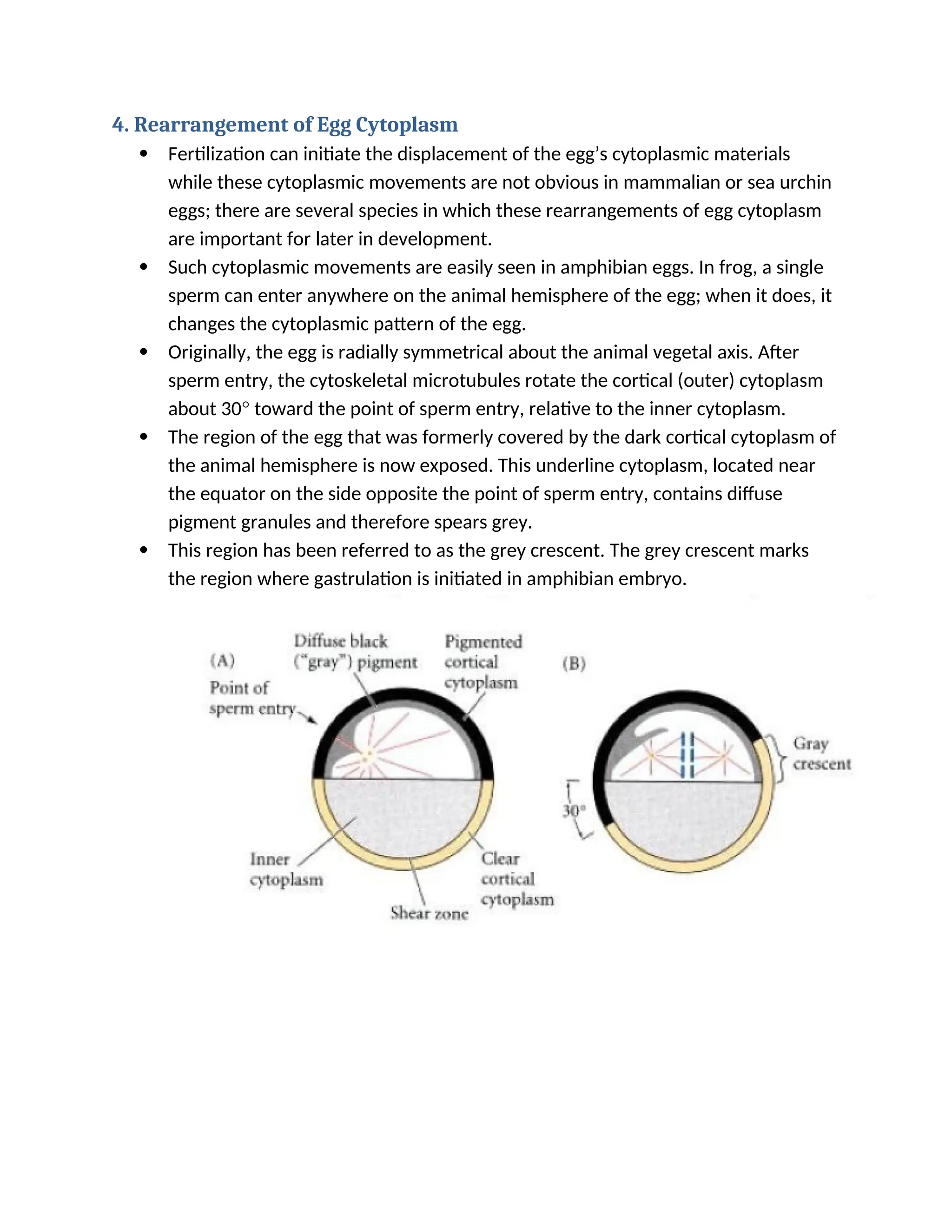
 Originally, the egg is radially symmetrical about the animal vegetal axis. After
sperm entry, the cytoskeletal microtubules rotate the cortical (outer) cytoplasm
about 30° toward the point of sperm entry, relative to the inner cytoplasm.
 The region of the egg that was formerly covered by the dark cortical cytoplasm of
the animal hemisphere is now exposed. This underline cytoplasm, located near
the equator on the side opposite the point of sperm entry, contains diffuse
pigment granules and therefore spears grey.
 This region has been referred to as the grey crescent. The grey crescent marks
the region where gastrulation is initiated in amphibian embryo.

Fertilization, recognition of sperm and egg, activation of egg metabolism, rearrangement of egg cytoplasm.docx

  • 1.
    Chapter: Fertilization Subtopics:  Recognitionof sperm and egg  Fusion of gametes  Activation of Egg Metabolism  Rearrangement of Egg cytoplasm Fertilization Fertilization is the process by which two sex cells (gametes) fuse together to form a new individual.  Fertilization accomplishes two separate ends: sex (the combining of genes derive from two parents) and reproduction (the creation of new individuals).  The first function of fertilization is to transmit genes from parents to offspring and the second function is to initiate in the egg cytoplasm those reactions that proceed development.  Although the details of fertilization vary from species to specie, conception generally consist of following major events: o Recognition of sperm and egg o Regulation of sperm entry into egg o Fusion of genetic material of sperm and egg o Activation of egg metabolism to start development 1. Recognition of sperm and egg The interaction of sperm and egg generally proceeds according to 5 basic steps. i. The chemo attraction of the sperm to the egg by soluble molecules secreted by the egg. ii. The exocytosis of the acrosomal vesicle to release its enzymes. iii. The binding of sperm to the extracellular envelope (vitelline membrane or zona pellucida) of the egg. iv. The passing of the sperm through this extra cellular envelope. v. Fusion of egg and sperm cell plasma membranes.
  • 2.
    Explanation: I. In manyspecies sperms are attracted toward eggs of their species by chemo taxis, that is, by following a gradient of chemicals secreted by the egg. A chemotactic molecule, a 14-amino acids peptide ‘Resact’ is released from the egg jelly of the sea urchin, Arbacia punculata. Resact is specific for A. punculata and does not attract sperms of other species. A. punculata sperms have receptors in their plasma membrane that bind the resact and can swim up a concentration gradient of this compound until they reach the egg. II. Sperm-egg contact requires that the sperm penetrate surface coats that surround the egg. This is facilitated by the acrosome reaction, in which the membranes enclosing the acrosome are shed, releasing the contents of acrosome. The acrosome reaction has been studied intensively in sea urchin sperm. In sea urchin the acrosome reaction is stimulated by contact with the egg jelly coat. III. The mammalian egg is surrounded by an extra cellular envelope called the zona pellucida to which sperm must bind and penetrate before they can make contact with the surface of the egg. Binding of the sperm to the zona triggers the acrosome reaction which allows the sperm to penetrate the zona pellucida. IV. A slit is formed in the zona pellucida by the lysis and digestion by the enzymes released by the acrosome reaction. V. The lysis of the zona is followed by the fusion of the sperm plasma membrane with the egg plasma membrane.
  • 3.
    2. Fusion ofgametes  Fusion of the sperm and egg plasma membrane, the sperm nucleus and its centrioles separate from the mitochondria and the flagellum.  The mitochondria and the flagellum disintegrate inside the egg.  Although each gamete contributes a haploid genome to the zygote, the mitochondrial genome is transmitted primarily by the maternal parent (mother).  After the sea urchin sperm enter the egg’s cytoplasm the male pro-nucleus rotates 180° so that the sperm centriole is between the sperm pro-nucleus and the egg pro-nucleus.  The sperm centriole then acts as microtubules organizing center extending its own microtubules and integrating them with the egg microtubule to from an aster.  These microtubules extend throughout the egg and contact the female pro- nucleus and the two pro-nuclei migrate toward each other. Their fusion forms the diploid zygote nucleus. 3. Activation of Egg Metabolism  Egg activation means that secondary oocyte is metabolically activated on the arrival of the sperm.  Throughout the animal kingdom it has been found that inositol trisphosphate (IP3) is the primary mechanism for releasing Ca₊2 from intracellular storage.  Sperm binding with the egg initiates a signal transduction cascade resulting in the production of IP3.  IP3 is able to release Ca₊2 into the cytoplasm by opening Ca₊2 channel of the endoplasmic reticulum.  The release of Ca₊2 is crucial for activating the egg’s metabolism and initiating development. Ca₊2 are used to activate development during fertilization throughout the animal kingdom.  The rise in Ca₊2 is the cytosol activates DNA and protein synthesis and also increases the rate of cellular respiration by the egg cell.  Ca₊2 release also activates the enzyme NAD₊ kinase which converts NAD₊ to NADP₊ can be used as a coenzyme for lipid biosynthesis which are important in the construction of new cell membranes required during cleavage.
  • 4.
    4. Rearrangement ofEgg Cytoplasm  Fertilization can initiate the displacement of the egg’s cytoplasmic materials while these cytoplasmic movements are not obvious in mammalian or sea urchin eggs; there are several species in which these rearrangements of egg cytoplasm are important for later in development.  Such cytoplasmic movements are easily seen in amphibian eggs. In frog, a single sperm can enter anywhere on the animal hemisphere of the egg; when it does, it changes the cytoplasmic pattern of the egg.  Originally, the egg is radially symmetrical about the animal vegetal axis. After sperm entry, the cytoskeletal microtubules rotate the cortical (outer) cytoplasm about 30° toward the point of sperm entry, relative to the inner cytoplasm.  The region of the egg that was formerly covered by the dark cortical cytoplasm of the animal hemisphere is now exposed. This underline cytoplasm, located near the equator on the side opposite the point of sperm entry, contains diffuse pigment granules and therefore spears grey.  This region has been referred to as the grey crescent. The grey crescent marks the region where gastrulation is initiated in amphibian embryo.