PADMASHREE INSTITUTE OF
MANEGMENT AND SCIENCE.
Seminar topic on;
TPP( Thiamine pyrophosphate)
Presented by;
Shylesh murthy I .A
2NDyr Msc biotechnology
PIMS
VITAMIN B1(THIAMINE)
History
 Old literature : Thiamine was called ‘Aneurine’ – can relieve neuritis Also
called ‘
 Anti – beri beri factor’
Batavia isolated the vitamin & named it as ‘Thiamine’ .
 Structure was elucidated by Adolf Windaus – Nobel prize in 1928
Many Enzymes Require
Cofactors for Activity
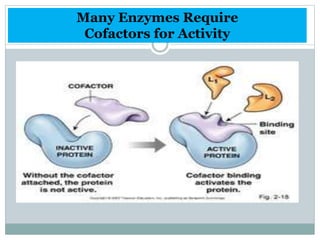
 A cofactor is a small non-protein molecules that is bound
(either tightly or loosely) to an enzyme and is required for
catalysis.
 Catalytic activity of many enzymes depends on the
presence of cofactors.
Many Enzymes Require
Cofactors for Activity
5
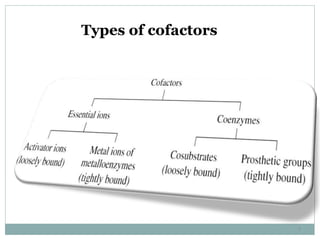
Types of cofactors
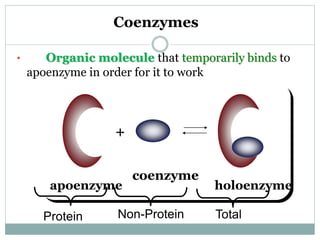
Coenzymes
• Organic molecule that temporarily binds to
apoenzyme in order for it to work
+
apoenzyme
coenzyme
holoenzyme
Protein Non-Protein Total
Coenzyme
 Coenzymes are small organic non-protein molecules.
 Loosely attached to apoenzymes, seperated easily
by dialysis they are often called cosubstrate or
secondary substrate.
 Reaction involving:
 oxidoreduction,
 group. transfer,
 Isomerization and
 covalent bond formation req. coenzyme.
The functional role of Coenzymes is to act as
transporters of chemical group
 A coenzyme is a necessary helper for enzymes
that assist in biochemical transformations.
 These molecules act to transfer chemical groups
between enzymes or from Enzyme to substrate
or product.
 A coenzyme Transport a variety of chemical groups
(Such as Hydride, Acetyl, Formyl, Methenyl or
methyl).
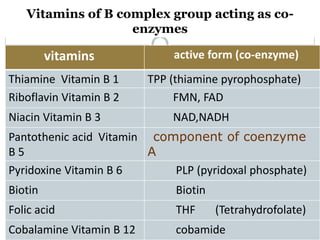
Vitamins of B complex group acting as co-
enzymes
vitamins active form (co-enzyme)
Thiamine Vitamin B 1 TPP (thiamine pyrophosphate)
Riboflavin Vitamin B 2 FMN, FAD
Niacin Vitamin B 3 NAD,NADH
Pantothenic acid Vitamin
B 5
component of coenzyme
A
Pyridoxine Vitamin B 6 PLP (pyridoxal phosphate)
Biotin Biotin
Folic acid THF (Tetrahydrofolate)
Cobalamine Vitamin B 12 cobamide
VB1( Thiamine)
 Thiamin pyrophosphate(TPP)
 The first discovery of vitamin
 Structure:
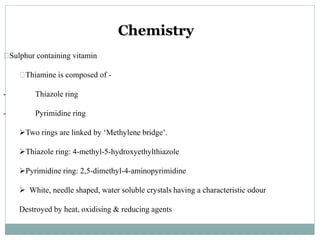
Chemistry
􀂒Sulphur containing vitamin
􀂒Thiamine is composed of -
- Thiazole ring
- Pyrimidine ring
Two rings are linked by ‘Methylene bridge’.
Thiazole ring: 4-methyl-5-hydroxyethylthiazole
Pyrimidine ring: 2,5-dimethyl-4-aminopyrimidine
 White, needle shaped, water soluble crystals having a characteristic odour
Destroyed by heat, oxidising & reducing agents
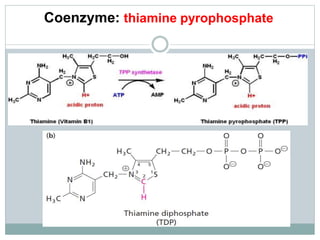
Coenzyme: thiamine pyrophosphate
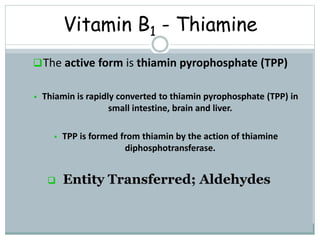
Vitamin B1 - Thiamine
The active form is thiamin pyrophosphate (TPP)
 Thiamin is rapidly converted to thiamin pyrophosphate (TPP) in
small intestine, brain and liver.
 TPP is formed from thiamin by the action of thiamine
diphosphotransferase.
 Entity Transferred; Aldehydes
Functions
􀂄Thiamine is essential for growth & development
􀂄Thiamine is essential for the maintenance of nervous tissue
􀂄Physiological Role
􀂄Metabolic role
􀂄Thiamine is converted into its active coenzyme form ‘Thiamine pyrophosphate’
􀂄Reaction takes place in the liver & intestinal mucosa
􀂄Catalysed by the enzyme ‘ Thiamine pyrophosphokinase’ requiring ATP
Absorption, Transport Storage & Excretion
􀂄Thiamine is readily absorbed from small intestine
􀂄It is distributed throughout the body after absorption
􀂄Thiamine is not stored in appreciable amounts in the body but relatively
high concentration is seen in heart, liver & kidneys
􀂄Excess thiamine is excreted in urine & some of it is also metabolised
􀂄Normal thiamine levels in serum:0.5 to 1 μg/dl
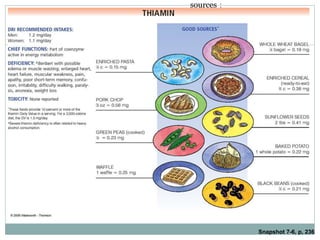
Snapshot 7-6, p, 236
sources:
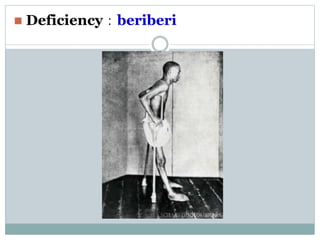
 Deficiency:beriberi
References
1. Trevor palmer enzymes ; Page No 214
2. Davia donald l.gary M.lampman. George s kritz , Randalll g.engel[2006
‘INTRODUCTION TO ORGANIC LABORATORY TECHNIQUES’ Pg no 304-305
3. Internet data base . www.sciencedirect.com
.Thank you ……….

Vitamine B1 Thaimine Pyrophosphate

  • 1.
    PADMASHREE INSTITUTE OF MANEGMENTAND SCIENCE. Seminar topic on; TPP( Thiamine pyrophosphate) Presented by; Shylesh murthy I .A 2NDyr Msc biotechnology PIMS
  • 2.
    VITAMIN B1(THIAMINE) History  Oldliterature : Thiamine was called ‘Aneurine’ – can relieve neuritis Also called ‘  Anti – beri beri factor’ Batavia isolated the vitamin & named it as ‘Thiamine’ .  Structure was elucidated by Adolf Windaus – Nobel prize in 1928
  • 3.
    Many Enzymes Require Cofactorsfor Activity  A cofactor is a small non-protein molecules that is bound (either tightly or loosely) to an enzyme and is required for catalysis.  Catalytic activity of many enzymes depends on the presence of cofactors.
  • 4.
  • 5.
  • 6.
    Coenzymes • Organic moleculethat temporarily binds to apoenzyme in order for it to work + apoenzyme coenzyme holoenzyme Protein Non-Protein Total
  • 7.
    Coenzyme  Coenzymes aresmall organic non-protein molecules.  Loosely attached to apoenzymes, seperated easily by dialysis they are often called cosubstrate or secondary substrate.  Reaction involving:  oxidoreduction,  group. transfer,  Isomerization and  covalent bond formation req. coenzyme.
  • 8.
    The functional roleof Coenzymes is to act as transporters of chemical group  A coenzyme is a necessary helper for enzymes that assist in biochemical transformations.  These molecules act to transfer chemical groups between enzymes or from Enzyme to substrate or product.  A coenzyme Transport a variety of chemical groups (Such as Hydride, Acetyl, Formyl, Methenyl or methyl).
  • 9.
    Vitamins of Bcomplex group acting as co- enzymes vitamins active form (co-enzyme) Thiamine Vitamin B 1 TPP (thiamine pyrophosphate) Riboflavin Vitamin B 2 FMN, FAD Niacin Vitamin B 3 NAD,NADH Pantothenic acid Vitamin B 5 component of coenzyme A Pyridoxine Vitamin B 6 PLP (pyridoxal phosphate) Biotin Biotin Folic acid THF (Tetrahydrofolate) Cobalamine Vitamin B 12 cobamide
  • 10.
    VB1( Thiamine)  Thiaminpyrophosphate(TPP)  The first discovery of vitamin  Structure:
  • 11.
    Chemistry 􀂒Sulphur containing vitamin 􀂒Thiamineis composed of - - Thiazole ring - Pyrimidine ring Two rings are linked by ‘Methylene bridge’. Thiazole ring: 4-methyl-5-hydroxyethylthiazole Pyrimidine ring: 2,5-dimethyl-4-aminopyrimidine  White, needle shaped, water soluble crystals having a characteristic odour Destroyed by heat, oxidising & reducing agents
  • 12.
  • 13.
    Vitamin B1 -Thiamine The active form is thiamin pyrophosphate (TPP)  Thiamin is rapidly converted to thiamin pyrophosphate (TPP) in small intestine, brain and liver.  TPP is formed from thiamin by the action of thiamine diphosphotransferase.  Entity Transferred; Aldehydes
  • 14.
    Functions 􀂄Thiamine is essentialfor growth & development 􀂄Thiamine is essential for the maintenance of nervous tissue 􀂄Physiological Role 􀂄Metabolic role 􀂄Thiamine is converted into its active coenzyme form ‘Thiamine pyrophosphate’ 􀂄Reaction takes place in the liver & intestinal mucosa 􀂄Catalysed by the enzyme ‘ Thiamine pyrophosphokinase’ requiring ATP
  • 15.
    Absorption, Transport Storage& Excretion 􀂄Thiamine is readily absorbed from small intestine 􀂄It is distributed throughout the body after absorption 􀂄Thiamine is not stored in appreciable amounts in the body but relatively high concentration is seen in heart, liver & kidneys 􀂄Excess thiamine is excreted in urine & some of it is also metabolised 􀂄Normal thiamine levels in serum:0.5 to 1 μg/dl
  • 16.
    Snapshot 7-6, p,236 sources:
  • 17.
  • 18.
    References 1. Trevor palmerenzymes ; Page No 214 2. Davia donald l.gary M.lampman. George s kritz , Randalll g.engel[2006 ‘INTRODUCTION TO ORGANIC LABORATORY TECHNIQUES’ Pg no 304-305 3. Internet data base . www.sciencedirect.com
  • 19.