 SOLID WASTES .
 Introduction
 Source And Management
 Biogas production
 Process of Biogas production
 By products of Sugar Industries
 References
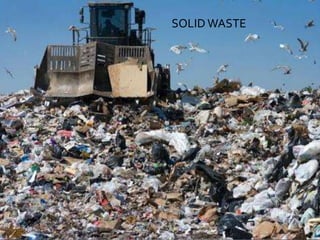
SOLID WASTE
 Solid waste is defined as
"non liquid, non soluble materials
ranging from municipal garbage to industrial
wastes that contain complex and sometimes
hazardous substances.
 It also include:-
 Garbage
 Sewage treatment residue
 Dead animals
 Manure and other discarded material
 Agriculture
 Fisheries
 Household
 Commercial and Industry
MANAGEMENT :-
 Storage
 Collection
 Transport and Handling
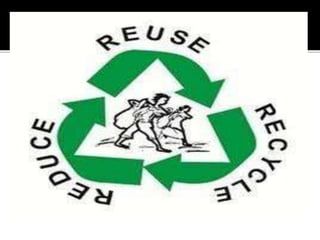
 Recyling
SOURCES :-
 Biogas is a mixture of gases composed of
methane (50-80%), carbon dioxide (15-40%),
nitrogen (4%) and hydrogen sulfide (1%)
with trace of hydrogen, oxygen and carbon
monoxide.
 USES :
 It can be used for cooking purpose.
 Gobar gas can generate electricity.
 Methane gas is used as a fuel for domestic
and industrial purposes.
SUBSTRATES :-
 The usual substrates for biogas
production are the waste products of
animal husbandry, industries, agriculture
and municipalities.
 In India and other developing countries
cattle dung is most commonly used.
 Biogas production from biomass is an anaerobic process.
 The anaerobic digestion is usually carried out by using are
referred to as anaerobic digesters.
 A digester may be made up of concrete bricks and cement or
steel, usually built underground.
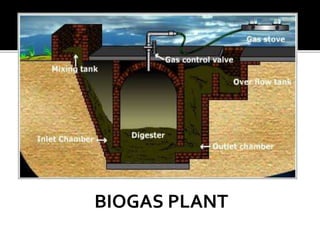
 The digester has an inlet attached to a mixing tank feeding
cow dung.
 The methanogenic bacteria from another digester are also
added with cow dung.
 The digester is attached to a movable gas holding or storage
tank with a gas outlet.
 The used slurry comes out from the digester through an
outlet. This can be used as a manure.
BIOGAS PLANT
 By using simple technology,
agricultural, industrial and municipal
wastes can be converted into a
biofuel.
 The left over residue after biogas
formation can be used as fertilizers.
 Molasses
 Molasses is a viscous by product of refining
sugarcane or sugar beets into sugar.
 It contain solids, sucrose and reducing sugars.
 Total sugar content is 45-55%. Hence it is a valuable
raw material for the producton of many value added
products.
 India has the largest chemical industry in the world
using sugarcane molasses to produce acetaldehyde,
acetic acid, polyvinyl chloride, synthetic rubber etc.
 Citric acid is produced easily from molasses by
submerged fermentation.
 Bagasse is the fibrous matter that remains
after sugarcane stalks are crushed to extract
their juice.
 It is a dry pulpy residue left after the
extraction of juice from sugarcane.
 Bagasse is used as a biofuel and in
manufacture of pulp and building materials.
 Wang L.K Handbook of Environmental
Engineering 1st Edi, Springer Publishers 2010.
 Singh B.D. Biotechnology 1st Edi, Kalyani
Publishers.
SOLID WASTE AND MANAGEMENT BIO GAS PRODUCTION

SOLID WASTE AND MANAGEMENT BIO GAS PRODUCTION

  • 1.
  • 2.
     Introduction  SourceAnd Management  Biogas production  Process of Biogas production  By products of Sugar Industries  References
  • 3.
  • 4.
     Solid wasteis defined as "non liquid, non soluble materials ranging from municipal garbage to industrial wastes that contain complex and sometimes hazardous substances.  It also include:-  Garbage  Sewage treatment residue  Dead animals  Manure and other discarded material
  • 5.
     Agriculture  Fisheries Household  Commercial and Industry MANAGEMENT :-  Storage  Collection  Transport and Handling  Recyling SOURCES :-
  • 7.
     Biogas isa mixture of gases composed of methane (50-80%), carbon dioxide (15-40%), nitrogen (4%) and hydrogen sulfide (1%) with trace of hydrogen, oxygen and carbon monoxide.  USES :  It can be used for cooking purpose.  Gobar gas can generate electricity.  Methane gas is used as a fuel for domestic and industrial purposes.
  • 8.
    SUBSTRATES :-  Theusual substrates for biogas production are the waste products of animal husbandry, industries, agriculture and municipalities.  In India and other developing countries cattle dung is most commonly used.
  • 9.
     Biogas productionfrom biomass is an anaerobic process.  The anaerobic digestion is usually carried out by using are referred to as anaerobic digesters.  A digester may be made up of concrete bricks and cement or steel, usually built underground.  The digester has an inlet attached to a mixing tank feeding cow dung.  The methanogenic bacteria from another digester are also added with cow dung.  The digester is attached to a movable gas holding or storage tank with a gas outlet.  The used slurry comes out from the digester through an outlet. This can be used as a manure.
  • 10.
  • 11.
     By usingsimple technology, agricultural, industrial and municipal wastes can be converted into a biofuel.  The left over residue after biogas formation can be used as fertilizers.
  • 12.
     Molasses  Molassesis a viscous by product of refining sugarcane or sugar beets into sugar.  It contain solids, sucrose and reducing sugars.  Total sugar content is 45-55%. Hence it is a valuable raw material for the producton of many value added products.  India has the largest chemical industry in the world using sugarcane molasses to produce acetaldehyde, acetic acid, polyvinyl chloride, synthetic rubber etc.  Citric acid is produced easily from molasses by submerged fermentation.
  • 13.
     Bagasse isthe fibrous matter that remains after sugarcane stalks are crushed to extract their juice.  It is a dry pulpy residue left after the extraction of juice from sugarcane.  Bagasse is used as a biofuel and in manufacture of pulp and building materials.
  • 14.
     Wang L.KHandbook of Environmental Engineering 1st Edi, Springer Publishers 2010.  Singh B.D. Biotechnology 1st Edi, Kalyani Publishers.