SCALES OF FISHES
Kiran Kanhurkar
Diversity in vertebrates
BSc zoology(hons)
Definition of scales
• A fish scale is a small rigid plate that grows out of the skin of a fish.
• The term scale derives from the Old French "escale", meaning a shell pod or husk.
• The type of scale will affect the behavior of fish
• Large, heavier scales providing more protection but restricting movement
• Smaller lighter scales offering more freedom of moment but less protection
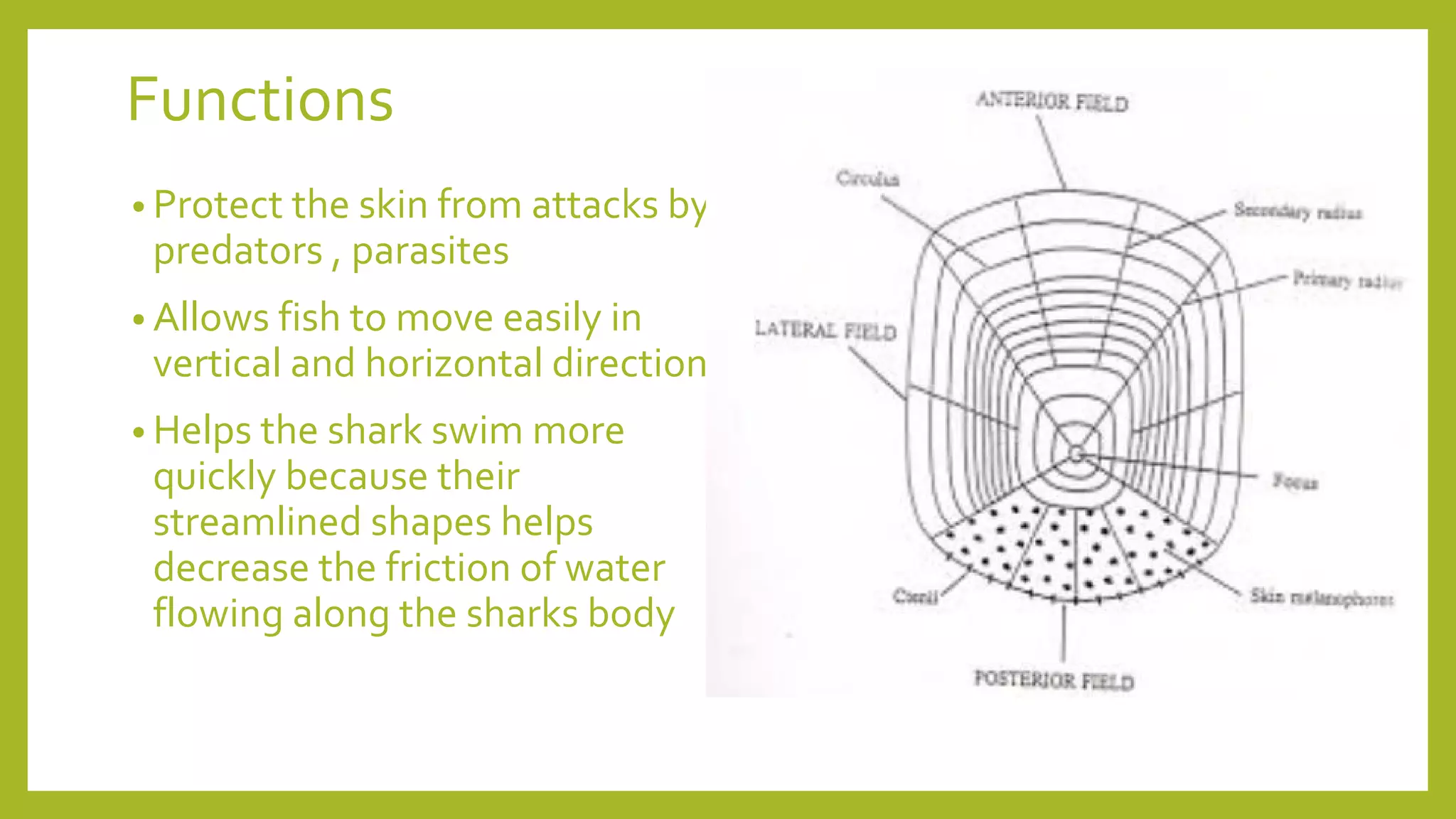
Functions
• Protect the skin from attacks by
predators , parasites
• Allows fish to move easily in
vertical and horizontal direction
• Helps the shark swim more
quickly because their
streamlined shapes helps
decrease the friction of water
flowing along the sharks body
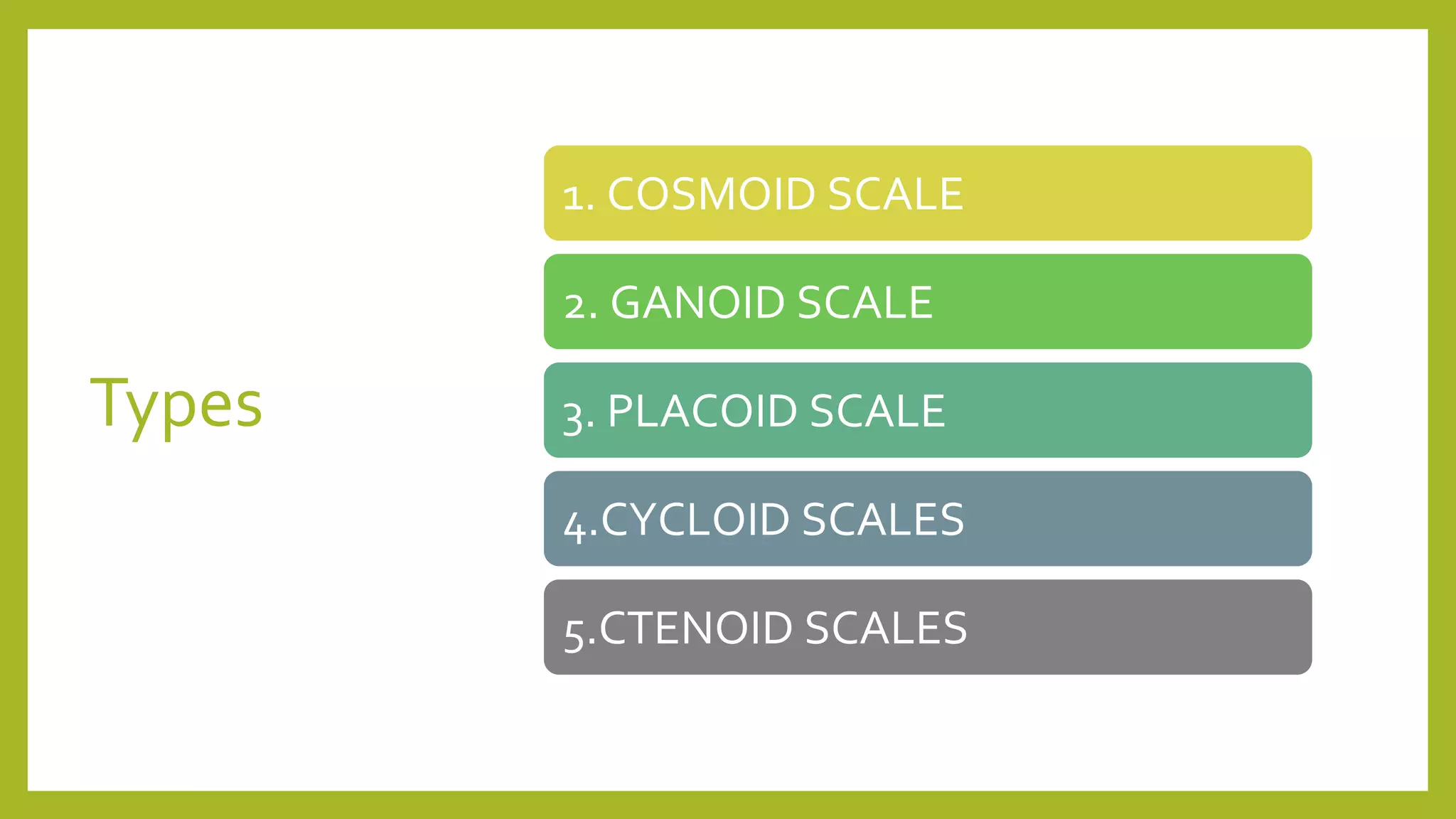
Types
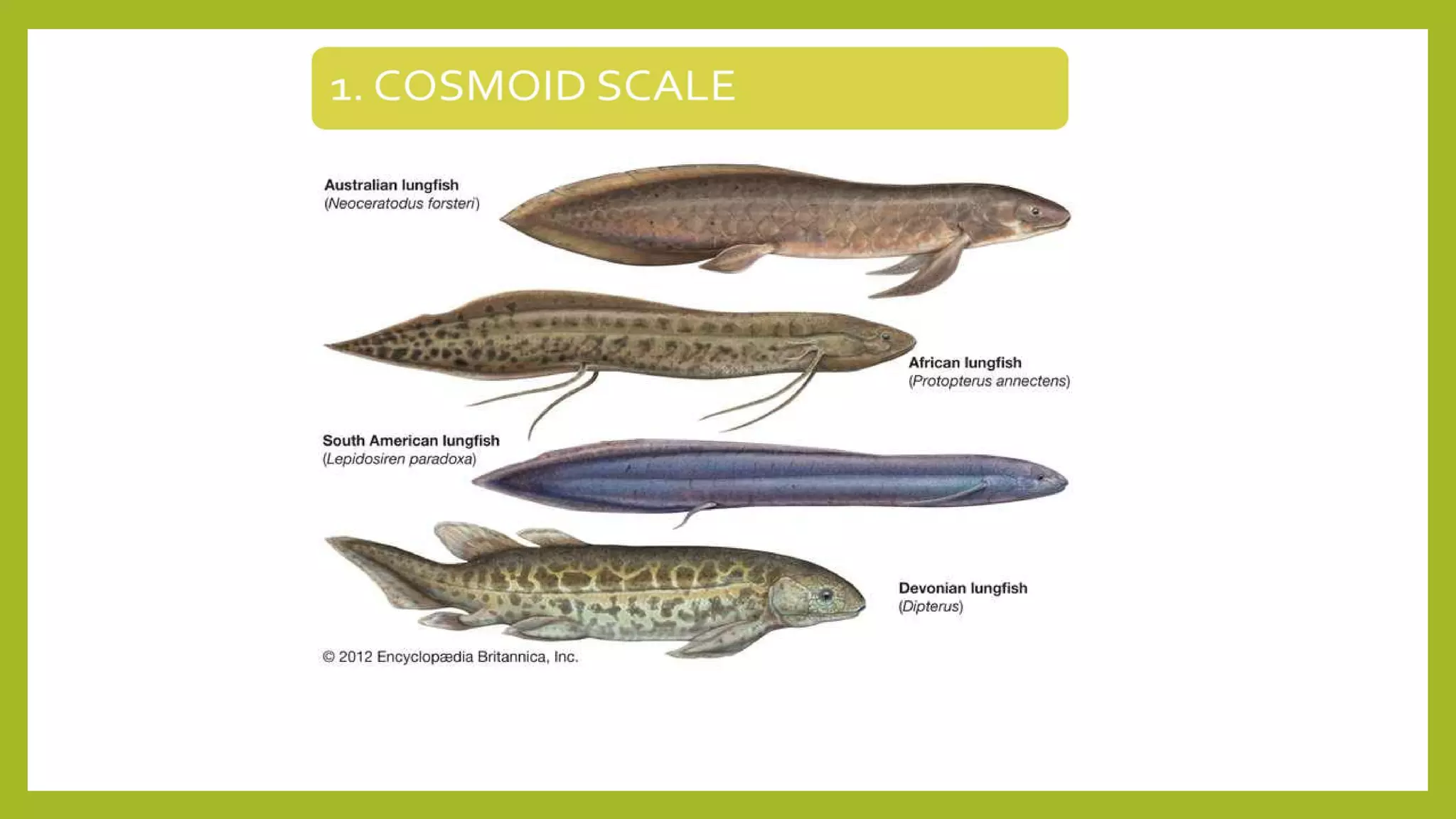
1. COSMOID SCALE
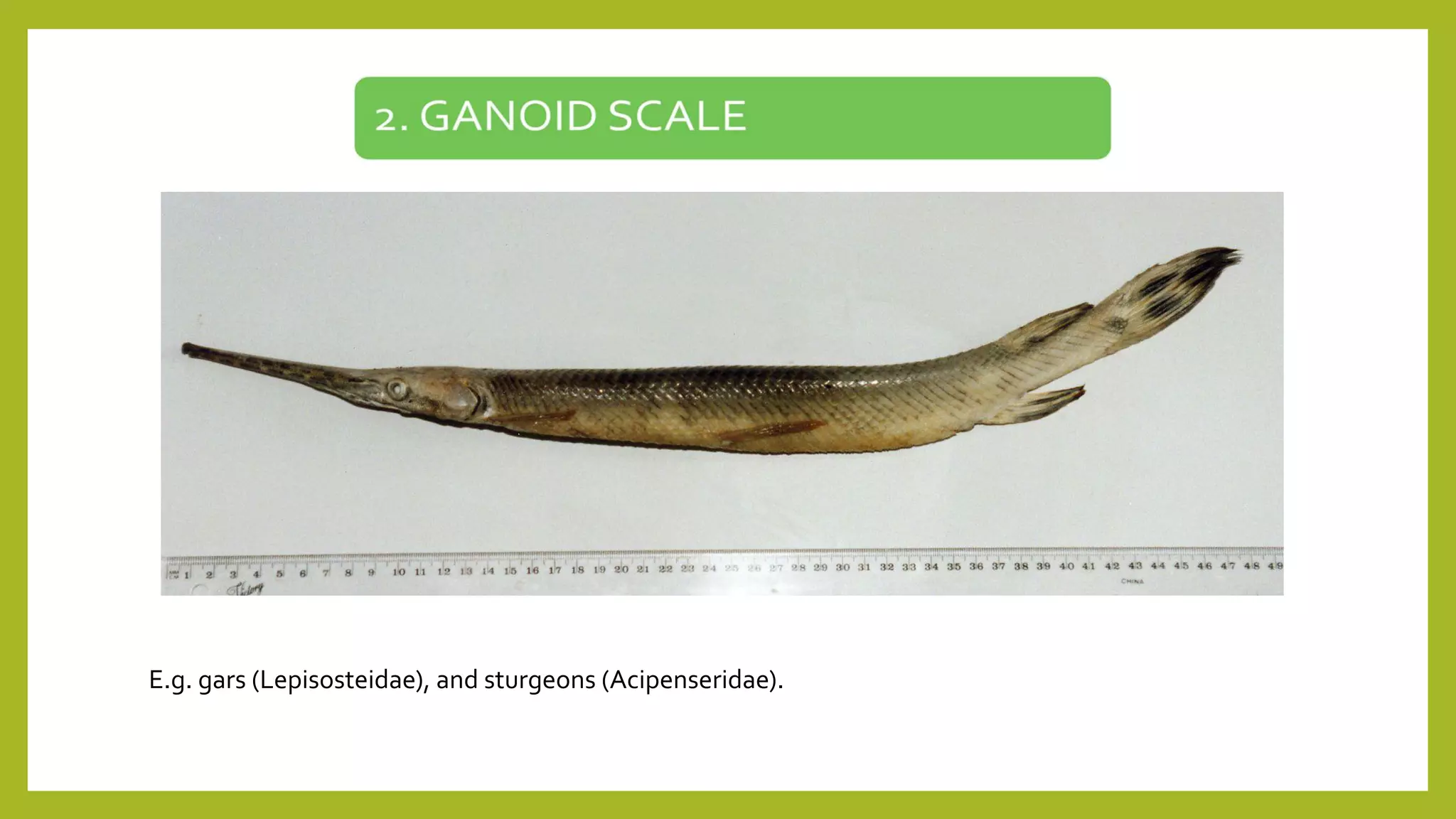
2. GANOID SCALE
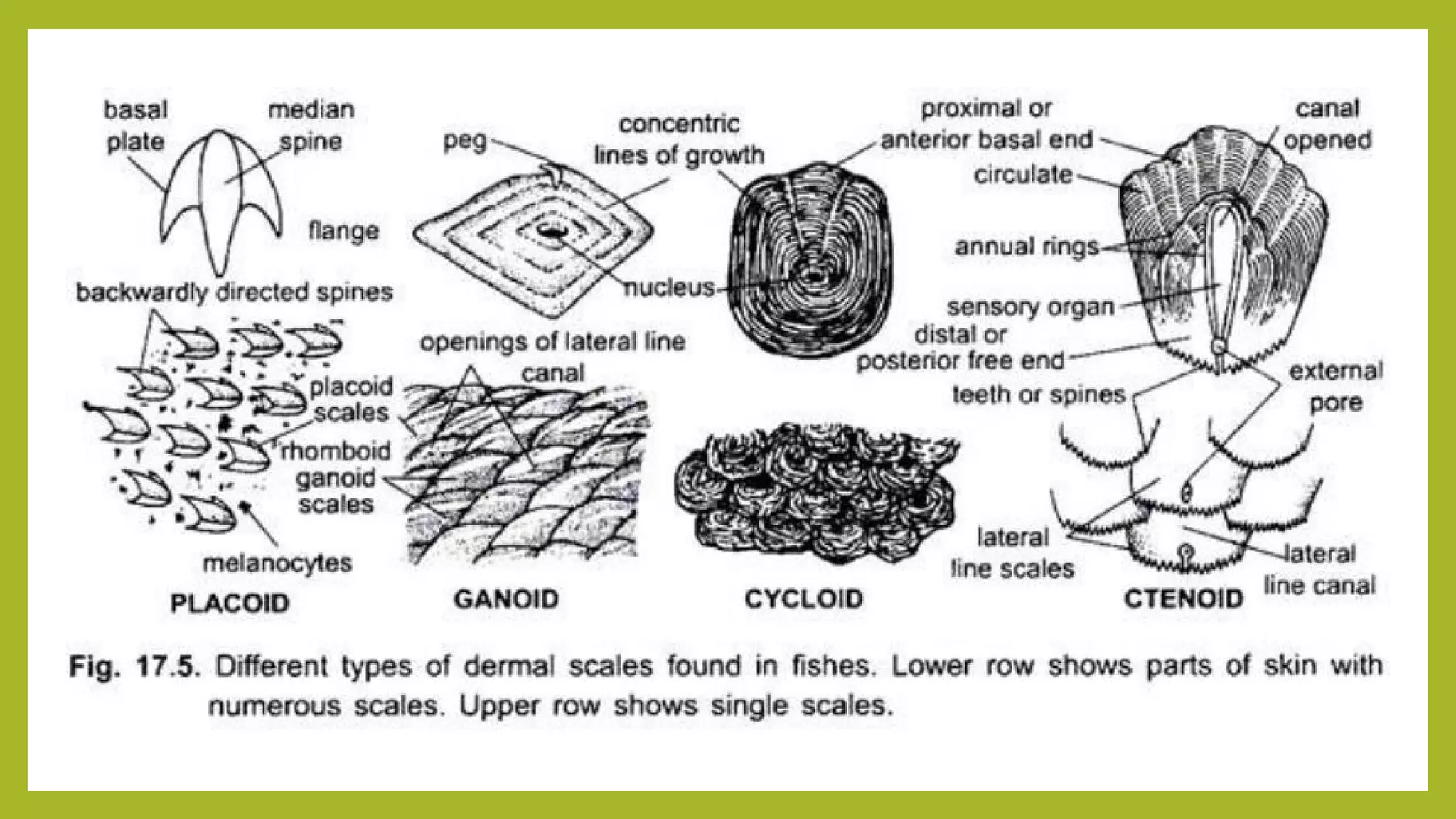
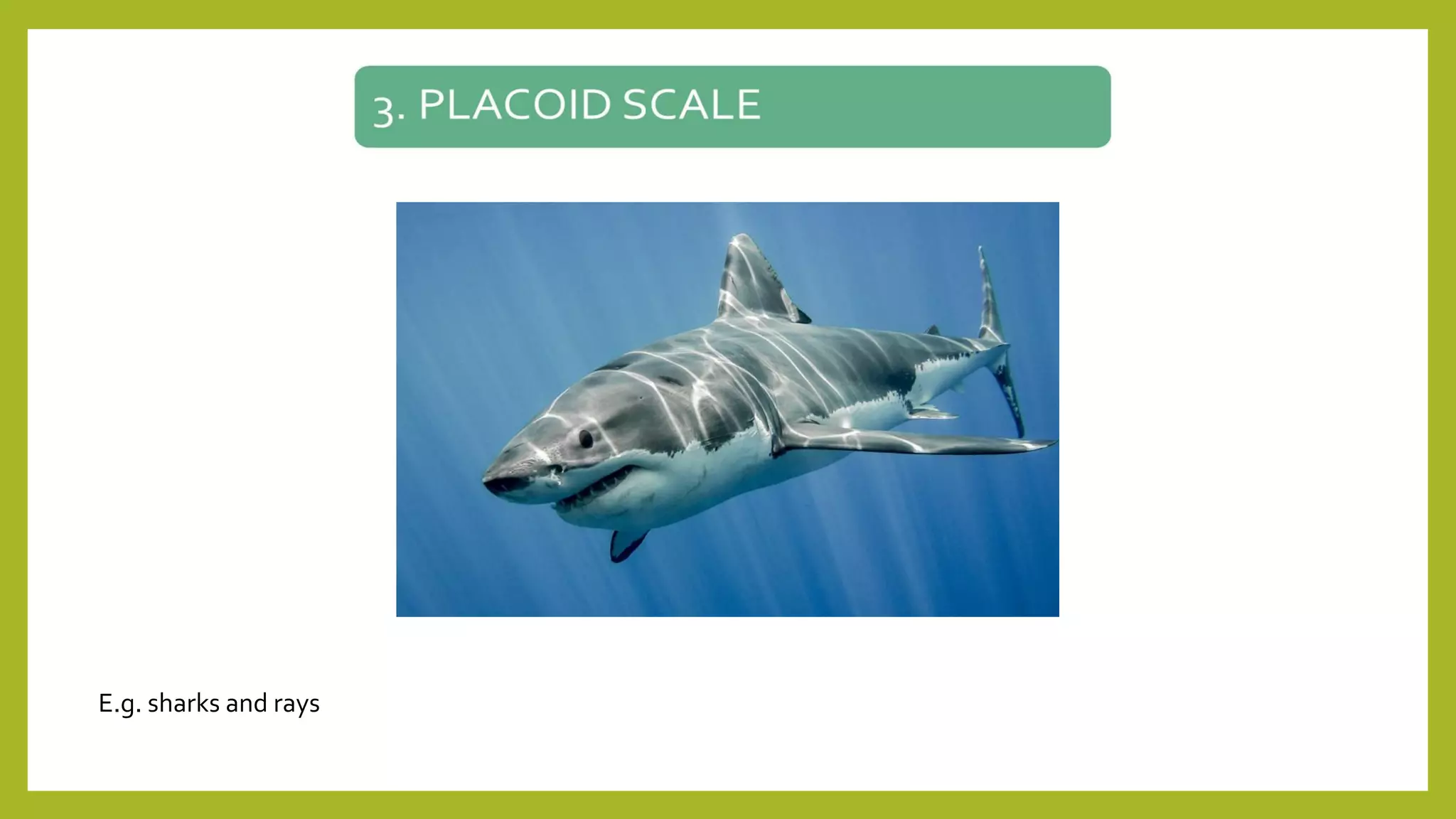
3. PLACOID SCALE
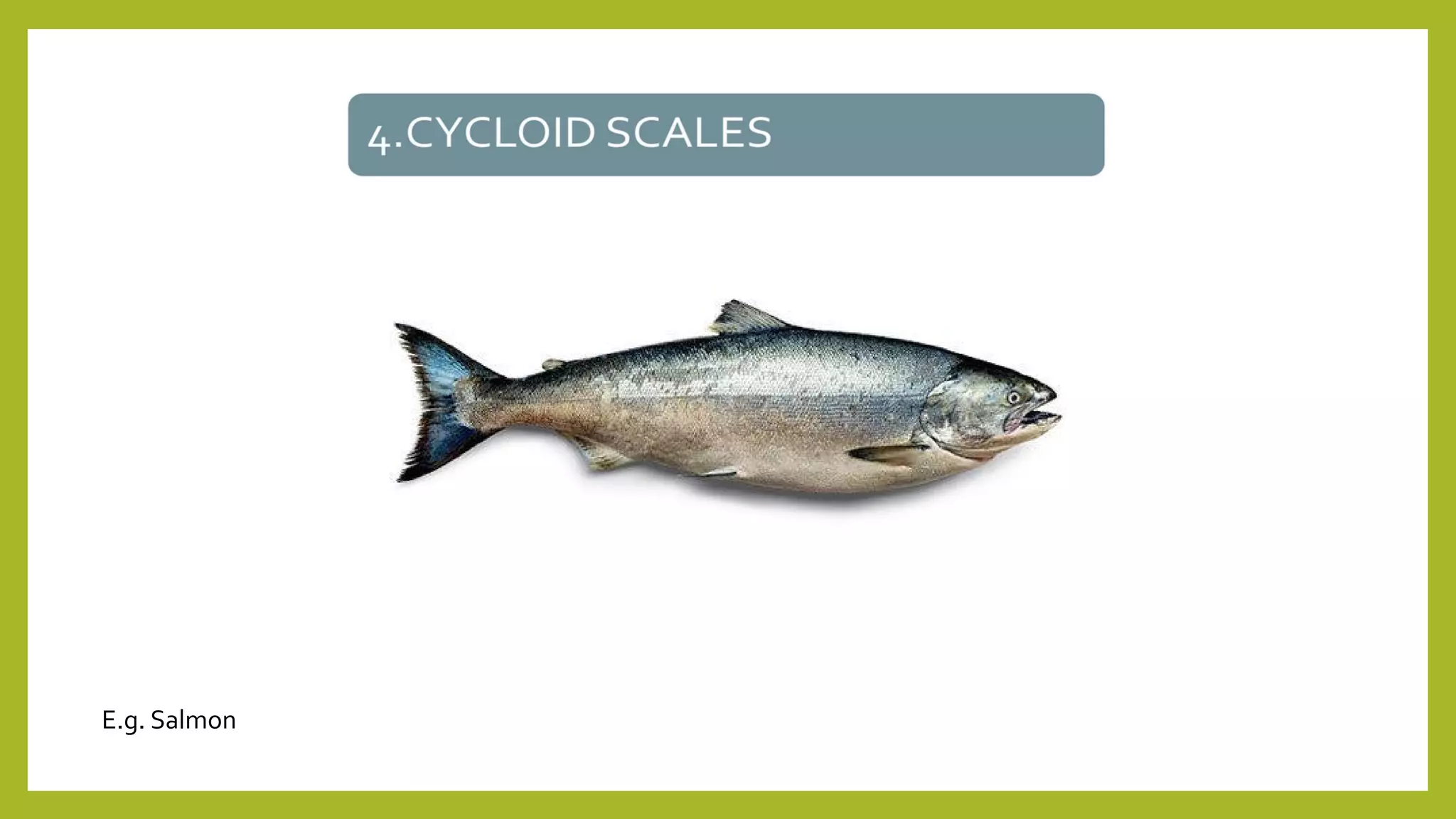
4.CYCLOID SCALES
5.CTENOID SCALES
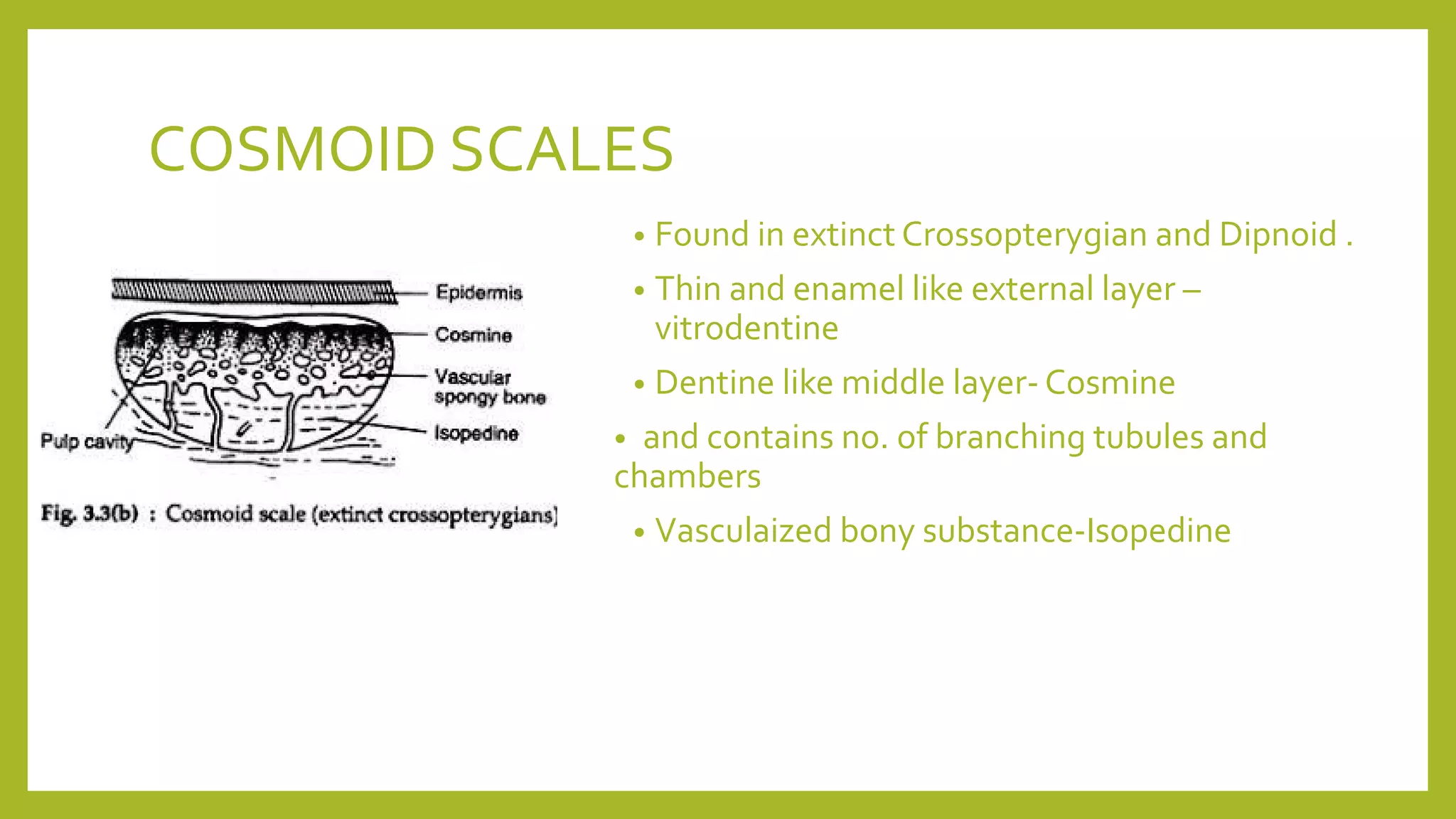
COSMOID SCALES
• Found in extinct Crossopterygian and Dipnoid .
• Thin and enamel like external layer –
vitrodentine
• Dentine like middle layer- Cosmine
• and contains no. of branching tubules and
chambers
• Vasculaized bony substance-Isopedine
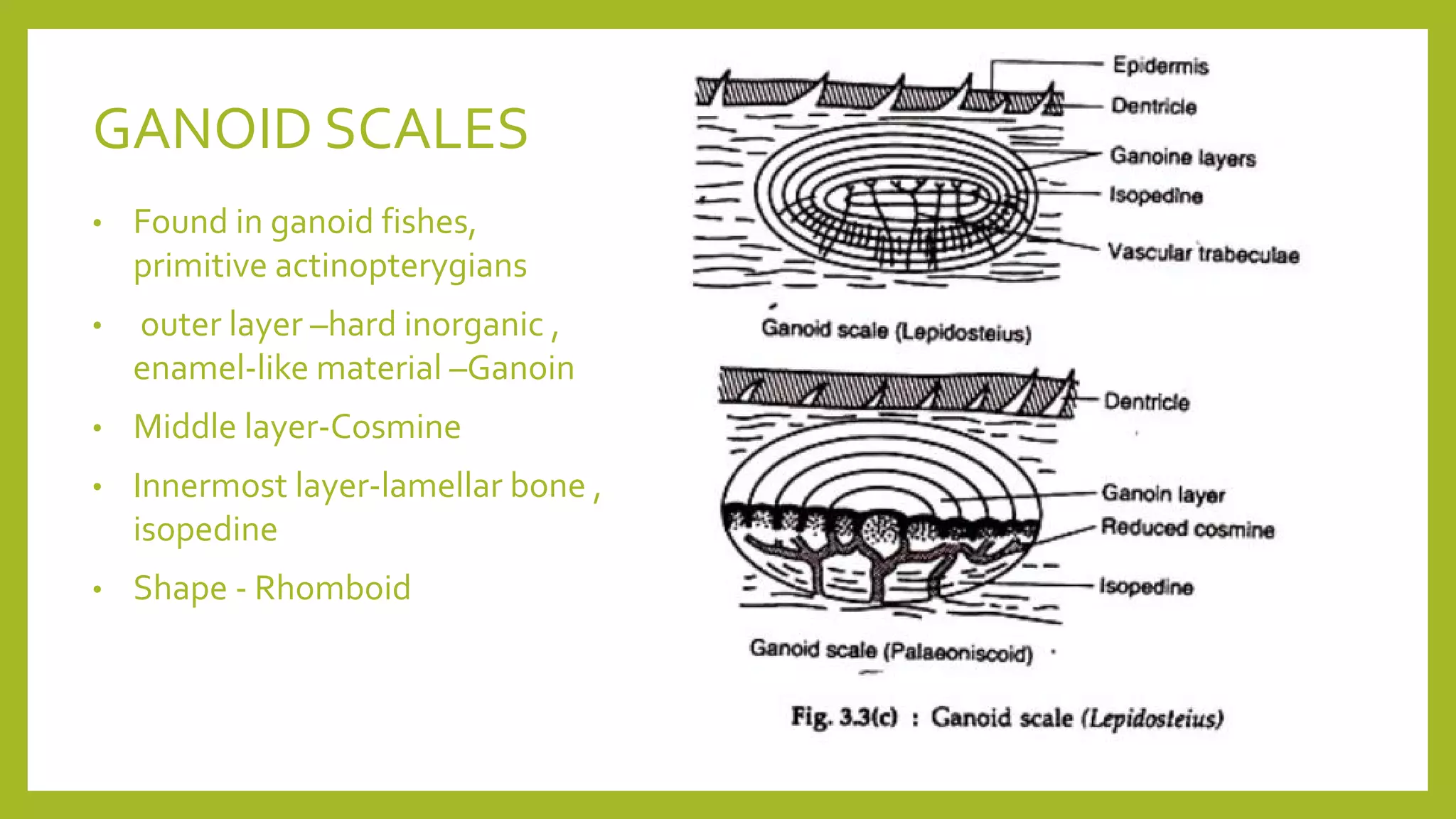
GANOID SCALES
• Found in ganoid fishes,
primitive actinopterygians
• outer layer –hard inorganic ,
enamel-like material –Ganoin
• Middle layer-Cosmine
• Innermost layer-lamellar bone ,
isopedine
• Shape - Rhomboid
E.g. gars (Lepisosteidae), and sturgeons (Acipenseridae).
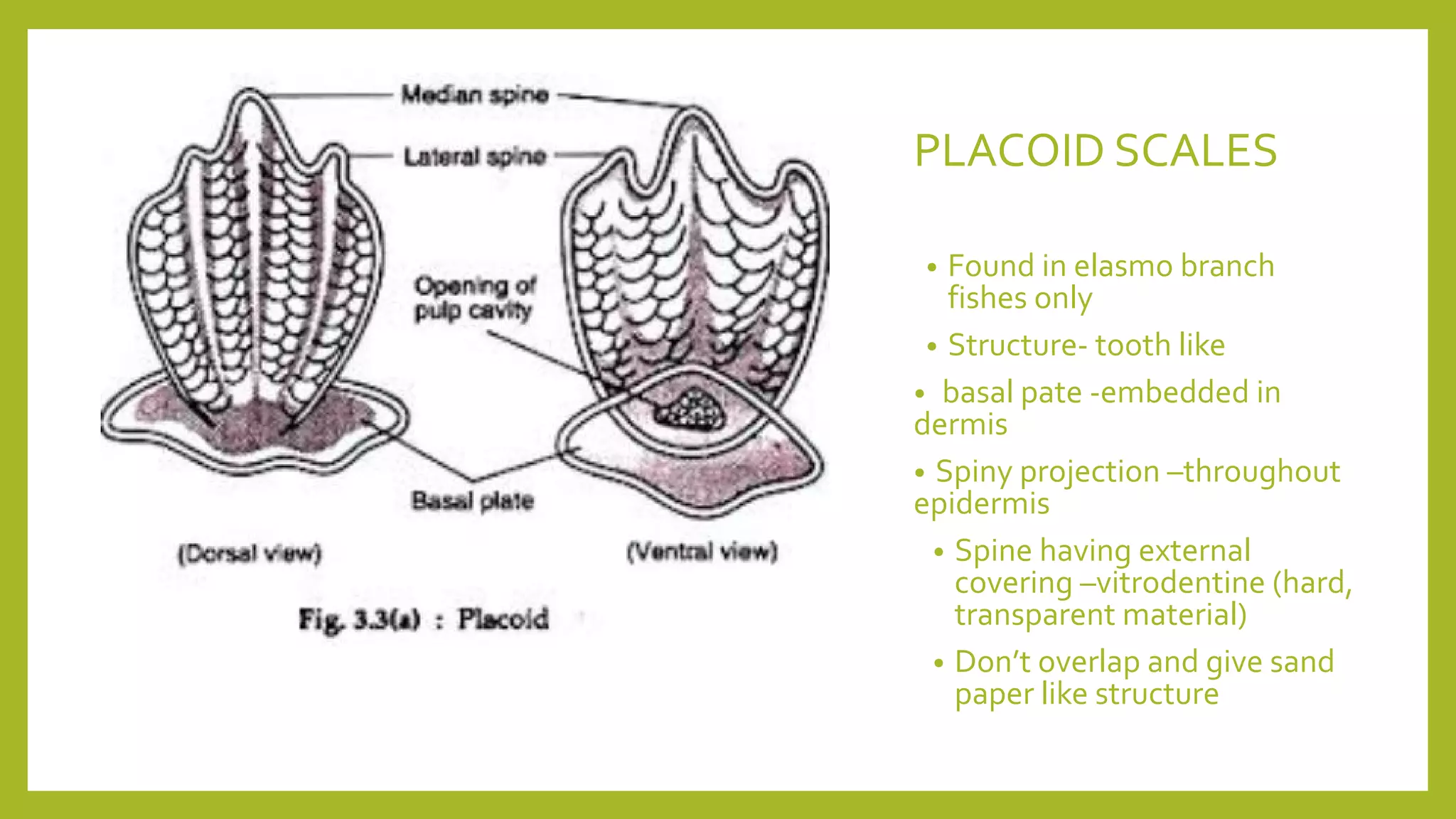
PLACOID SCALES
• Found in elasmo branch
fishes only
• Structure- tooth like
• basal pate -embedded in
dermis
• Spiny projection –throughout
epidermis
• Spine having external
covering –vitrodentine (hard,
transparent material)
• Don’t overlap and give sand
paper like structure
E.g. sharks and rays
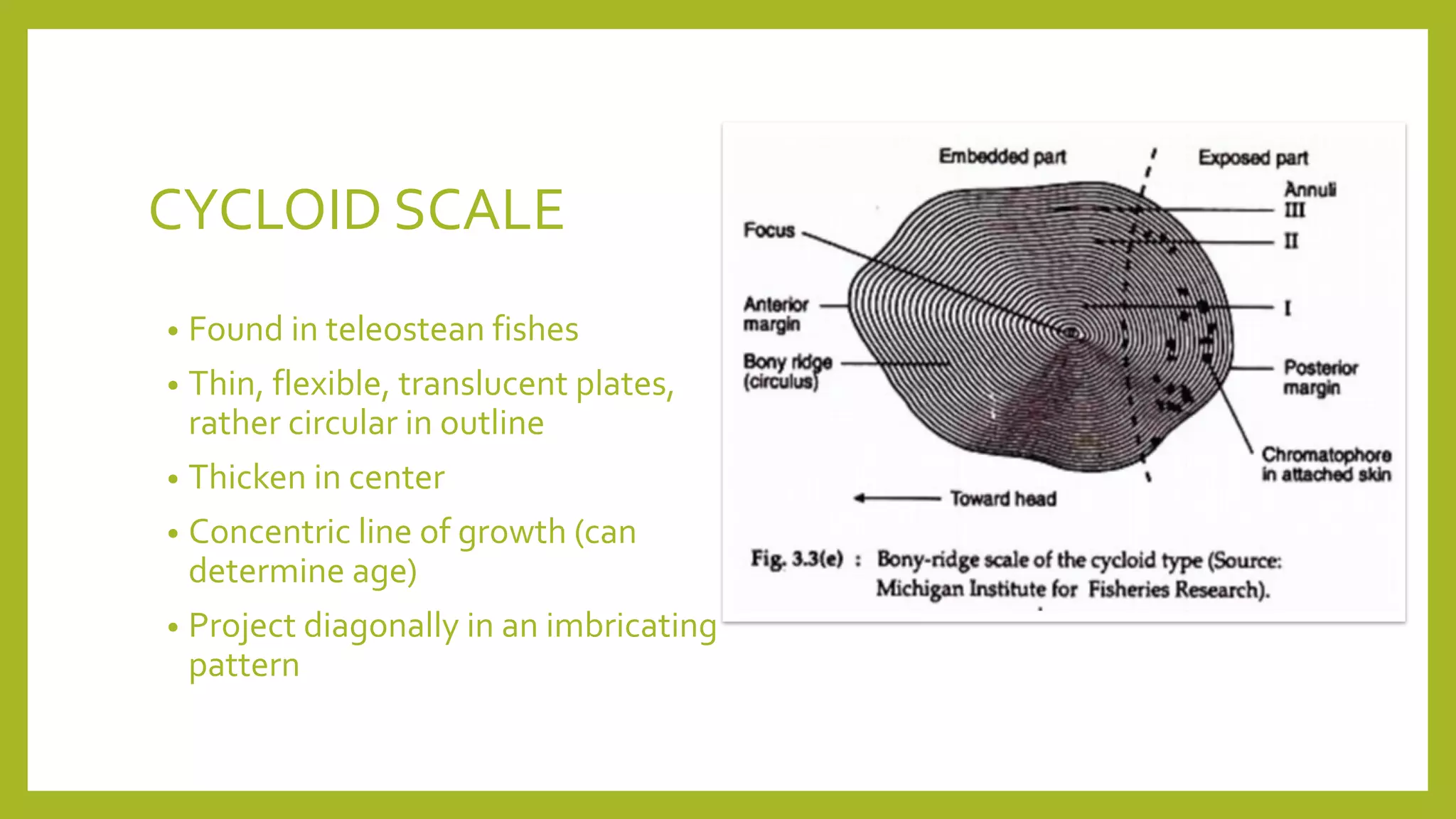
CYCLOID SCALE
• Found in teleostean fishes
• Thin, flexible, translucent plates,
rather circular in outline
• Thicken in center
• Concentric line of growth (can
determine age)
• Project diagonally in an imbricating
pattern
E.g. Salmon
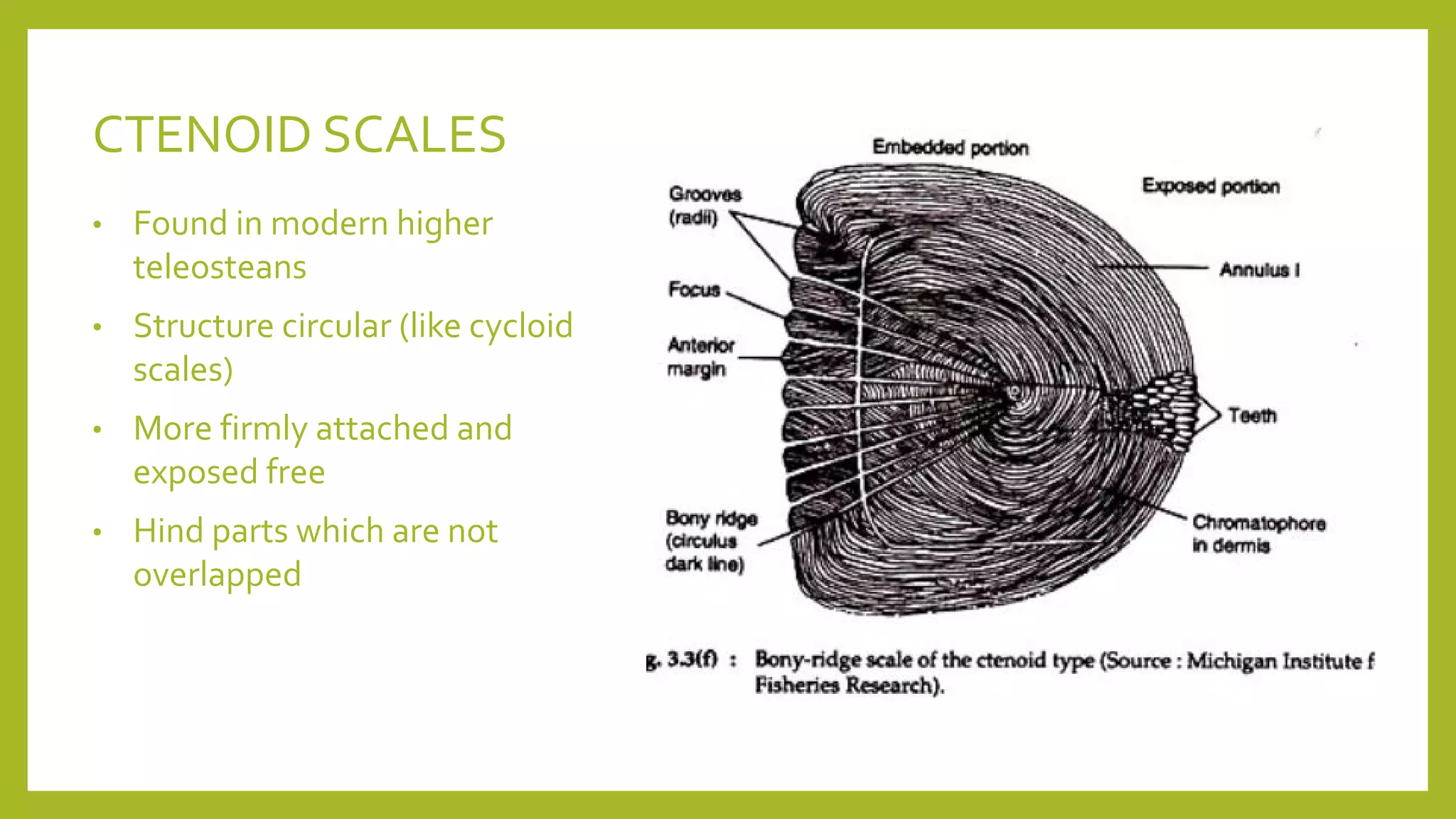
CTENOID SCALES
• Found in modern higher
teleosteans
• Structure circular (like cycloid
scales)
• More firmly attached and
exposed free
• Hind parts which are not
overlapped
E.g. yellow perch
Fishes without scales
Fish without scales usually
evolve alternatives to the
protection scales can provide,
such as tough leathery skin or
bony plates.
Type of layers in place of scales
v smooth skin
v Though leathery skin
v body armor in the form of dermal
plates
v fine forked dermal prickles or
tubercles
v Exoskeleton-plates of ossified skin
fused
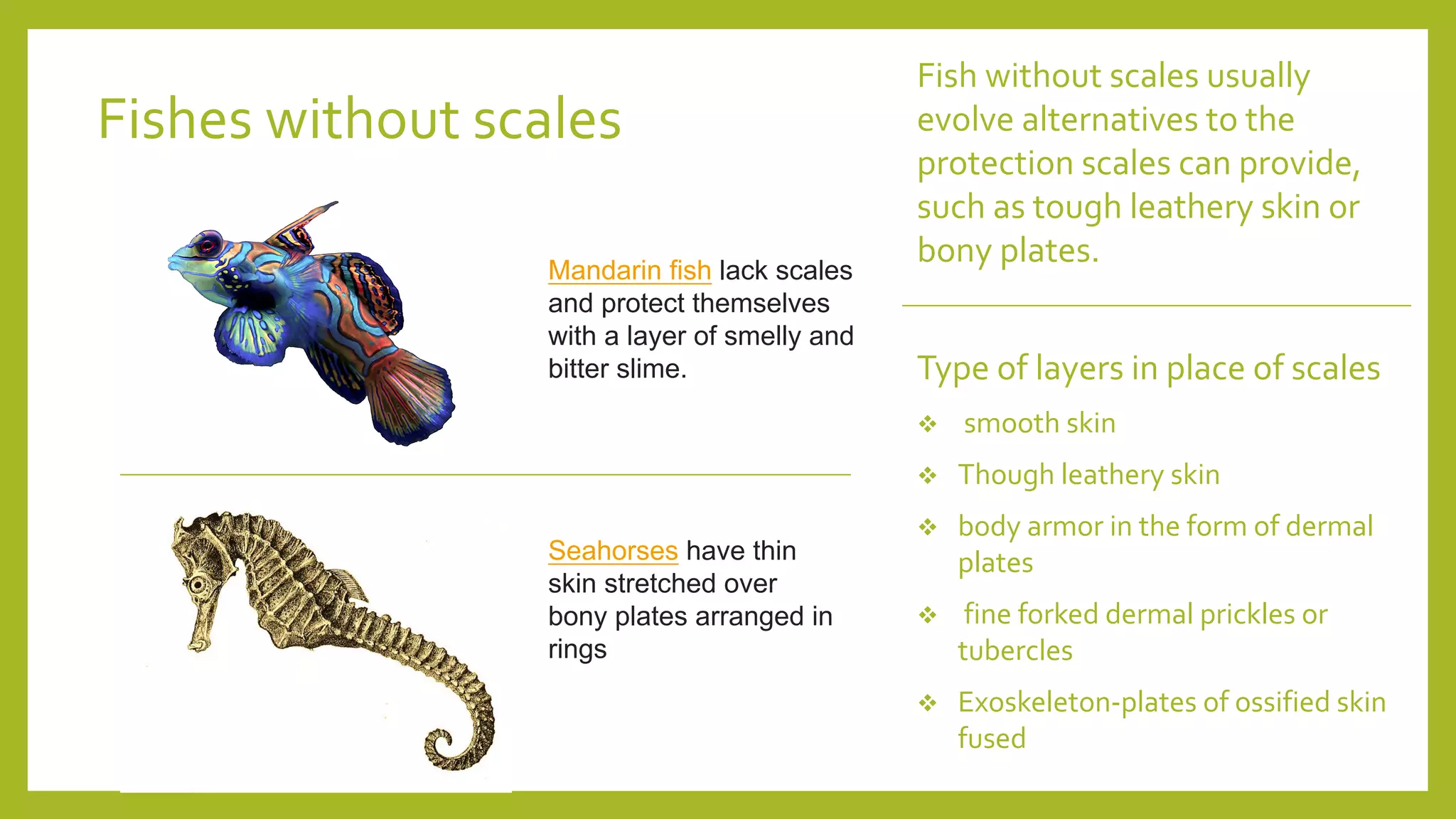
Seahorses have thin 
skin stretched over 
bony plates arranged in 
rings
Mandarin fish lack scales 
and protect themselves 
with a layer of smelly and 
bitter slime.
THANKYOU

Scales in fishes

  • 1.
    SCALES OF FISHES KiranKanhurkar Diversity in vertebrates BSc zoology(hons)
  • 2.
    Definition of scales •A fish scale is a small rigid plate that grows out of the skin of a fish. • The term scale derives from the Old French "escale", meaning a shell pod or husk. • The type of scale will affect the behavior of fish • Large, heavier scales providing more protection but restricting movement • Smaller lighter scales offering more freedom of moment but less protection
  • 3.
    Functions • Protect theskin from attacks by predators , parasites • Allows fish to move easily in vertical and horizontal direction • Helps the shark swim more quickly because their streamlined shapes helps decrease the friction of water flowing along the sharks body
  • 4.
    Types 1. COSMOID SCALE 2.GANOID SCALE 3. PLACOID SCALE 4.CYCLOID SCALES 5.CTENOID SCALES
  • 6.
    COSMOID SCALES • Foundin extinct Crossopterygian and Dipnoid . • Thin and enamel like external layer – vitrodentine • Dentine like middle layer- Cosmine • and contains no. of branching tubules and chambers • Vasculaized bony substance-Isopedine
  • 8.
    GANOID SCALES • Foundin ganoid fishes, primitive actinopterygians • outer layer –hard inorganic , enamel-like material –Ganoin • Middle layer-Cosmine • Innermost layer-lamellar bone , isopedine • Shape - Rhomboid
  • 9.
    E.g. gars (Lepisosteidae),and sturgeons (Acipenseridae).
  • 10.
    PLACOID SCALES • Foundin elasmo branch fishes only • Structure- tooth like • basal pate -embedded in dermis • Spiny projection –throughout epidermis • Spine having external covering –vitrodentine (hard, transparent material) • Don’t overlap and give sand paper like structure
  • 11.
  • 12.
    CYCLOID SCALE • Foundin teleostean fishes • Thin, flexible, translucent plates, rather circular in outline • Thicken in center • Concentric line of growth (can determine age) • Project diagonally in an imbricating pattern
  • 13.
  • 14.
    CTENOID SCALES • Foundin modern higher teleosteans • Structure circular (like cycloid scales) • More firmly attached and exposed free • Hind parts which are not overlapped
  • 15.
  • 16.
    Fishes without scales Fishwithout scales usually evolve alternatives to the protection scales can provide, such as tough leathery skin or bony plates. Type of layers in place of scales v smooth skin v Though leathery skin v body armor in the form of dermal plates v fine forked dermal prickles or tubercles v Exoskeleton-plates of ossified skin fused Seahorses have thin  skin stretched over  bony plates arranged in  rings Mandarin fish lack scales  and protect themselves  with a layer of smelly and  bitter slime.
  • 17.