10 LEARNER
EXPERIENCE
POWERS FROM
EXPERIENCE
GIRL!!!
RFJOYCE SEITZINGER
#IMOOT16
26-27 MAY 2016
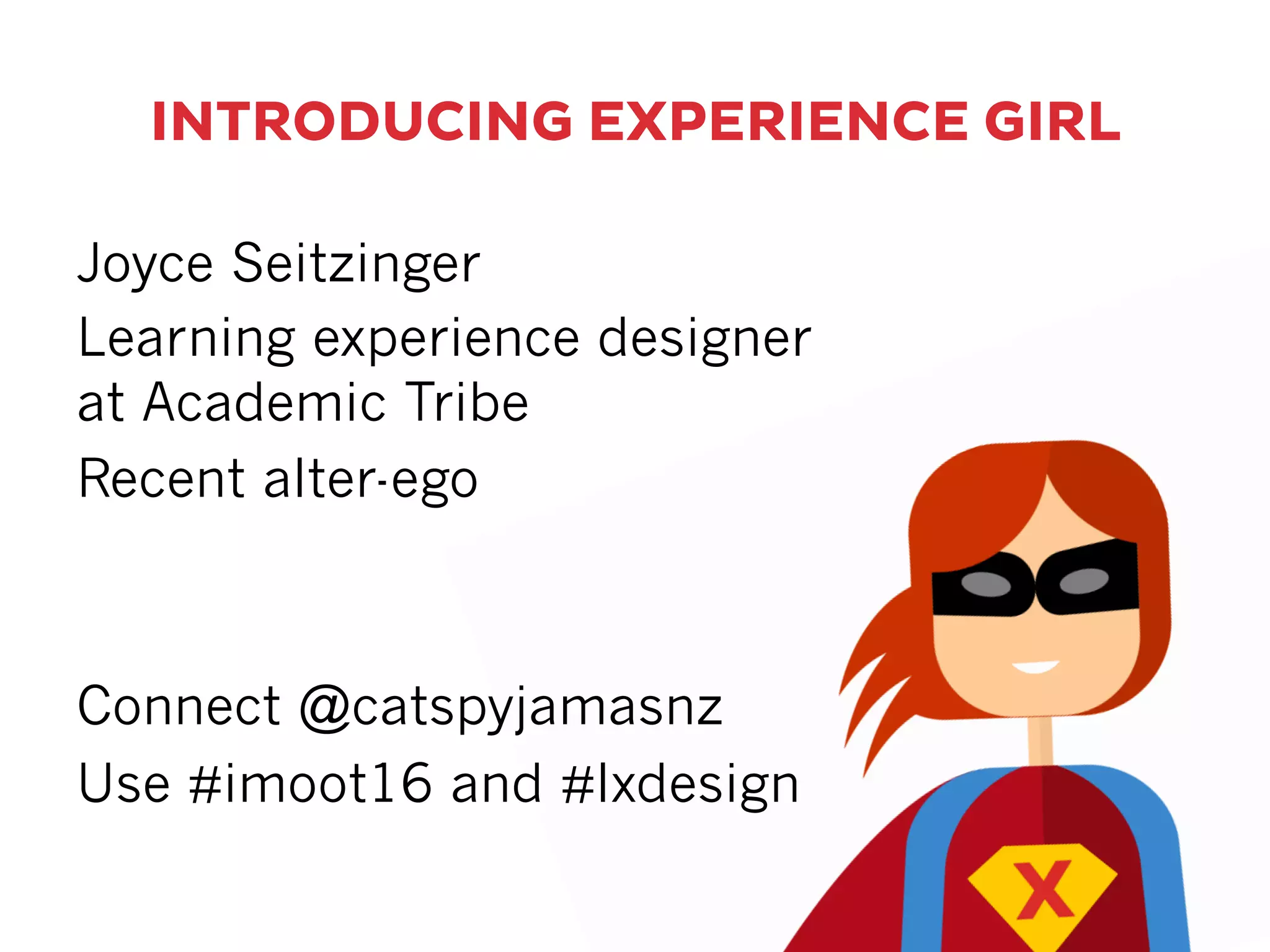
INTRODUCING EXPERIENCE GIRL
Joyce Seitzinger
Learning experience designer
at Academic Tribe
Recent alter-ego
Connect @catspyjamasnz
Use #imoot16 and #lxdesign
WHAT IS LEARNER
EXPERIENCE DESIGN?
TRANSCENDING MATERIAL
“Experience is not about good industrial
design, multi-touch, or fancy interfaces. It is
about transcending the material. It is about
creating an experience through a device.”
MARC HASSENZAHL
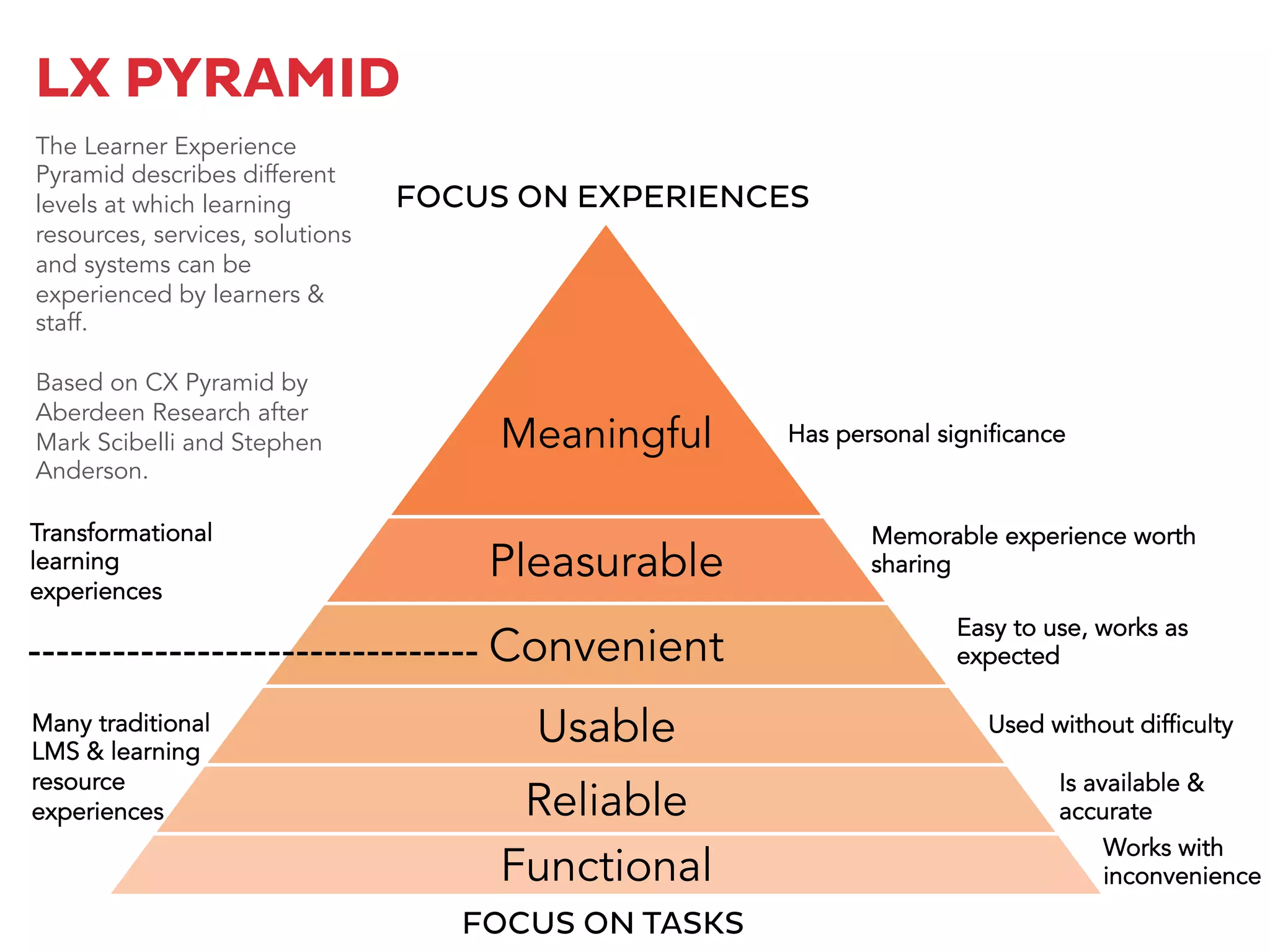
Meaningful
Pleasurable
Convenient
Usable
Reliable
Functional
LX PYRAMID
The Learner Experience
Pyramid describes different
levels at which learning
resources, services, solutions
and systems can be
experienced by learners &
staff.
Based on CX Pyramid by
Aberdeen Research after
Mark Scibelli and Stephen
Anderson.
FOCUS ON EXPERIENCES
FOCUS ON TASKS
Many traditional
LMS & learning
resource
experiences
Transformational
learning
experiences
Has personal significance
Memorable experience worth
sharing
Easy to use, works as
expected
Used without difficulty
Is available &
accurate
Works with
inconvenience
USER EXPERIENCE DESIGN
…to achieve high-quality user experience in a
company's offerings there must be a seamless merging
of the services of multiple disciplines.
The first requirement for an exemplary user experience
is to meet the exact needs of the customer, without fuss
or bother.
Don Norman, & Jakob Nielsen
EXPERIENCE DESIGN
It is crucial to view experience as the consequence
of many different systems.
Experience emerges from the intertwined works of
perception, action, motivation, emotion and
cognition in dialogue with the world (place, time,
people and objects).
Experience Design: Technology for all the right reasons
Marc Hassenzahl
The world is complex, and so too must be the activities
that we perform. But that doesn’t mean that we must
live in continual frustration. No. The whole point of
human-centered design is to tame complexity, to turn
what would appear to be a complicated tool into one
that fits the task, that is understandable, usable,
enjoyable.
Don Norman,
The Design of Everyday Things
HUMAN-CENTRED DESIGN
SERVICE DESIGN THINKING
Service design is the intentional and
thoughtful design of internal and
customer-facing activities needed to
deliver a service. Where experience design
concerns itself only with the customer-
facing aspects, service design looks also at
the experience of staff.
This Is Service Design Thinking
METHODOLOGY
EMPATHY FOR THE USER
“Feelings are integral to experiences
(maybe even its core), inextricably
intertwined with our action.”
MARC HASSENZAHL
EMPATHY FOR THE USER
“Empathy is a noun. A thing. It is an
understanding you develop about another
person. Empathizing is the use of that
understanding – an action.”
INDI YOUNG
DO WE NEED LEARNER
EXPERIENCE DESIGN?
A DESIGN SCIENCE FOR EDUCATION
“Educational technologists needs to
develop a set of principled working
practices....that contribute to a design
science for education.”
EILEEN SCANLON
TEACHING AS A DESIGN SCIENCE
Because technology is changing both what
and how students learn we can only lead
educational innovation by being clear about
the principles of designing good teaching
and learning and therefore what education
needs from technology.
DIANA LAURILLARD
CO-CREATED EXPERIENCES
ELEANOR CATTON: ON PURPOSE
Reading is a creative act: it cannot happen automatically, and it
cannot happen passively.
Any piece of writing is therefore as intimately shaped by the
reader’s imagination, their memories, their intelligence, their
disposition and their state of mind, as by the writer’s.
ELEANOR CATTON
DESIGN FOR EXPERIENCE
Participatory design makes everyday people, such as users, an
integral part of the design process, especially at the early front
end.
Experience design has emerged recently as a new discipline in
response to the new information and communication
technologies. But I will argue that there is no such thing as
experience design. Experiencing is in people and you can’t
design it for someone else. You can, however, design for
experiencing.
http://www.maketools.com/articles-papers/NewDesignSpace_Sanders_01.pdf
LIZ SANDERS
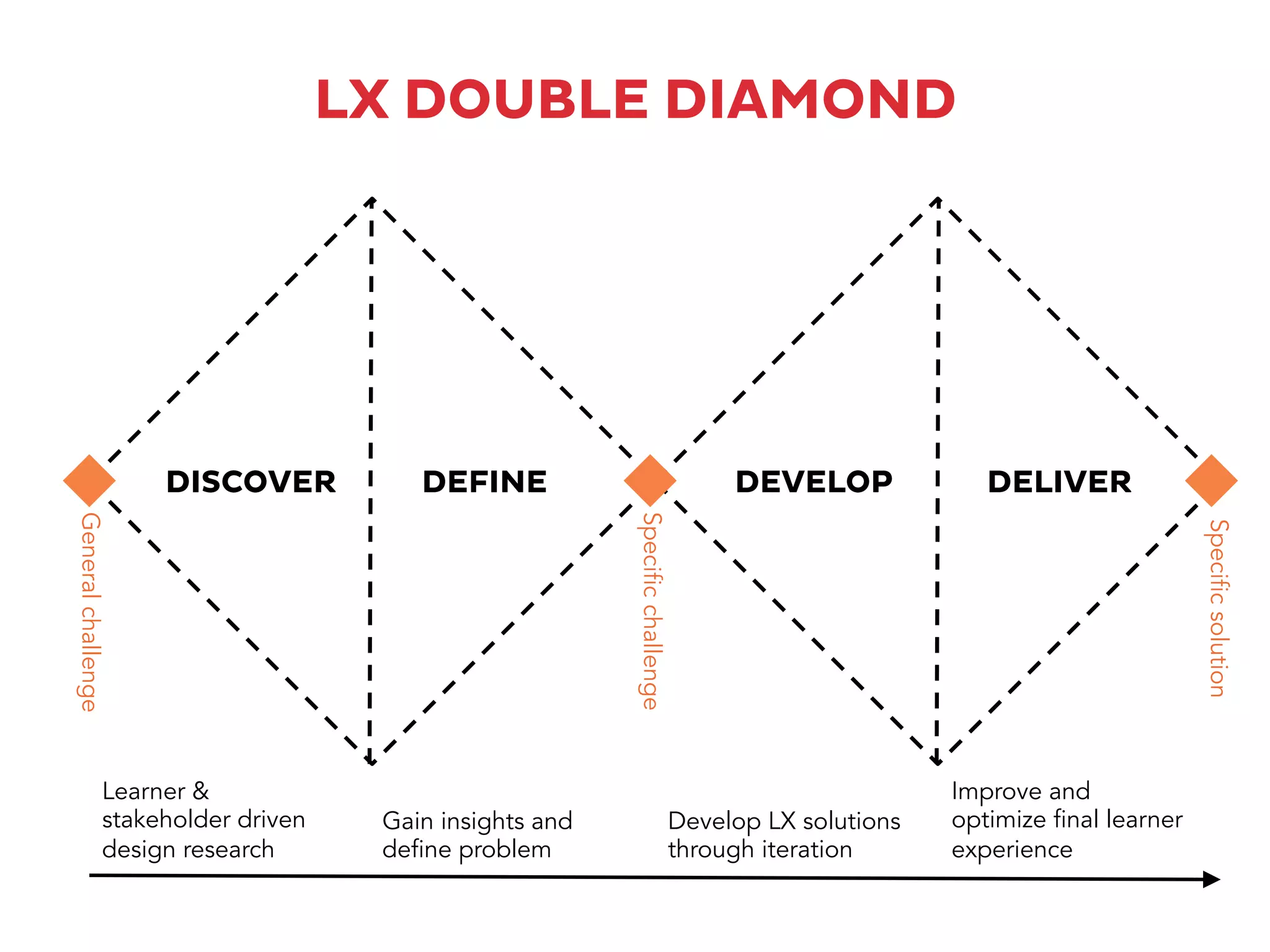
DISCOVER DEFINE DEVELOP DELIVER
Learner &
stakeholder driven
design research
Gain insights and
define problem
Develop LX solutions
through iteration
Improve and
optimize final learner
experience
Generalchallenge
Specificchallenge
Specificsolution
LX DOUBLE DIAMOND
1: LISTENING TO USERS
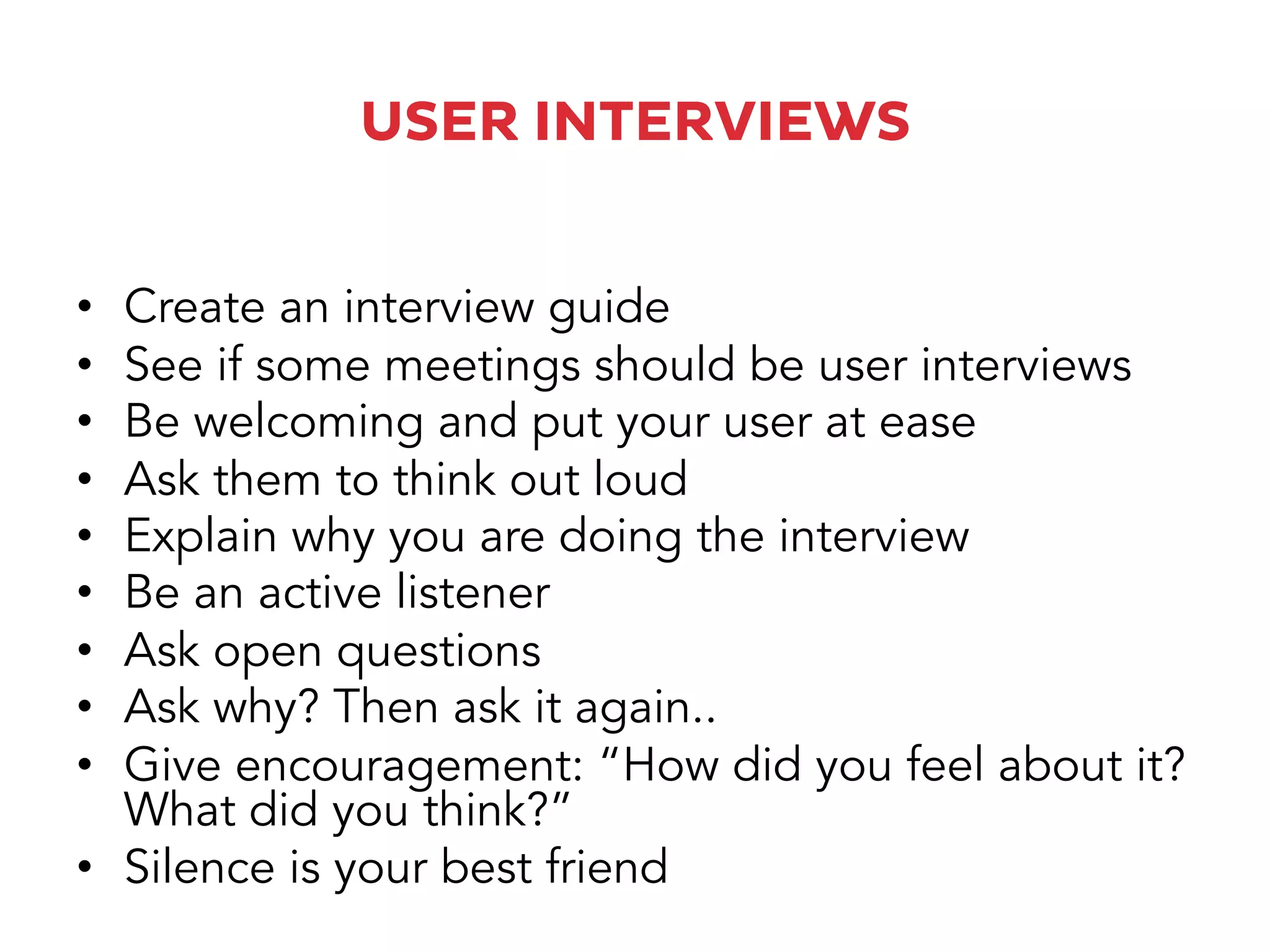
USER INTERVIEWS
•  Create an interview guide
•  See if some meetings should be user interviews
•  Be welcoming and put your user at ease
•  Ask them to think out loud
•  Explain why you are doing the interview
•  Be an active listener
•  Ask open questions
•  Ask why? Then ask it again..
•  Give encouragement: “How did you feel about it?
What did you think?”
•  Silence is your best friend
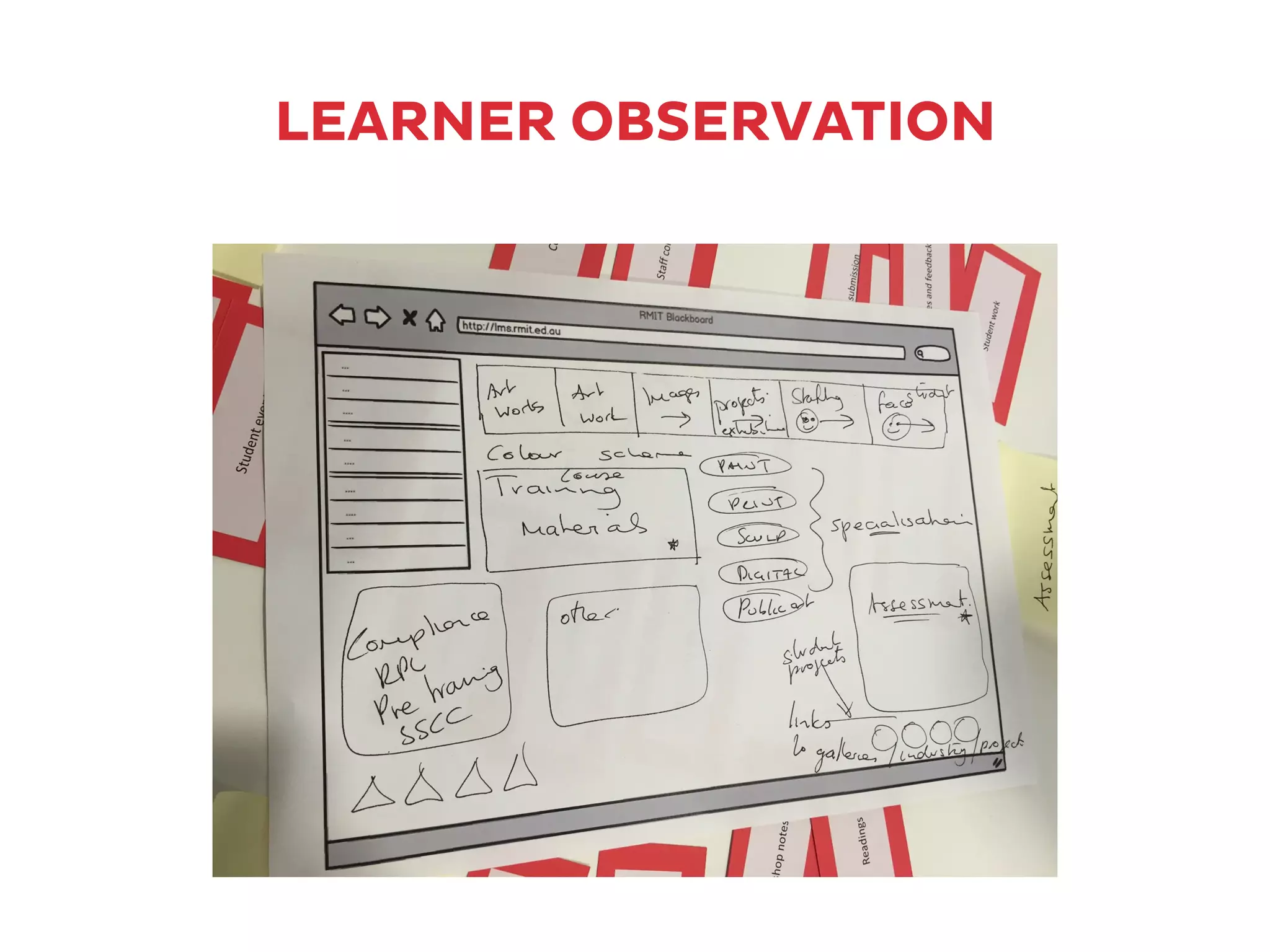
LEARNER OBSERVATION
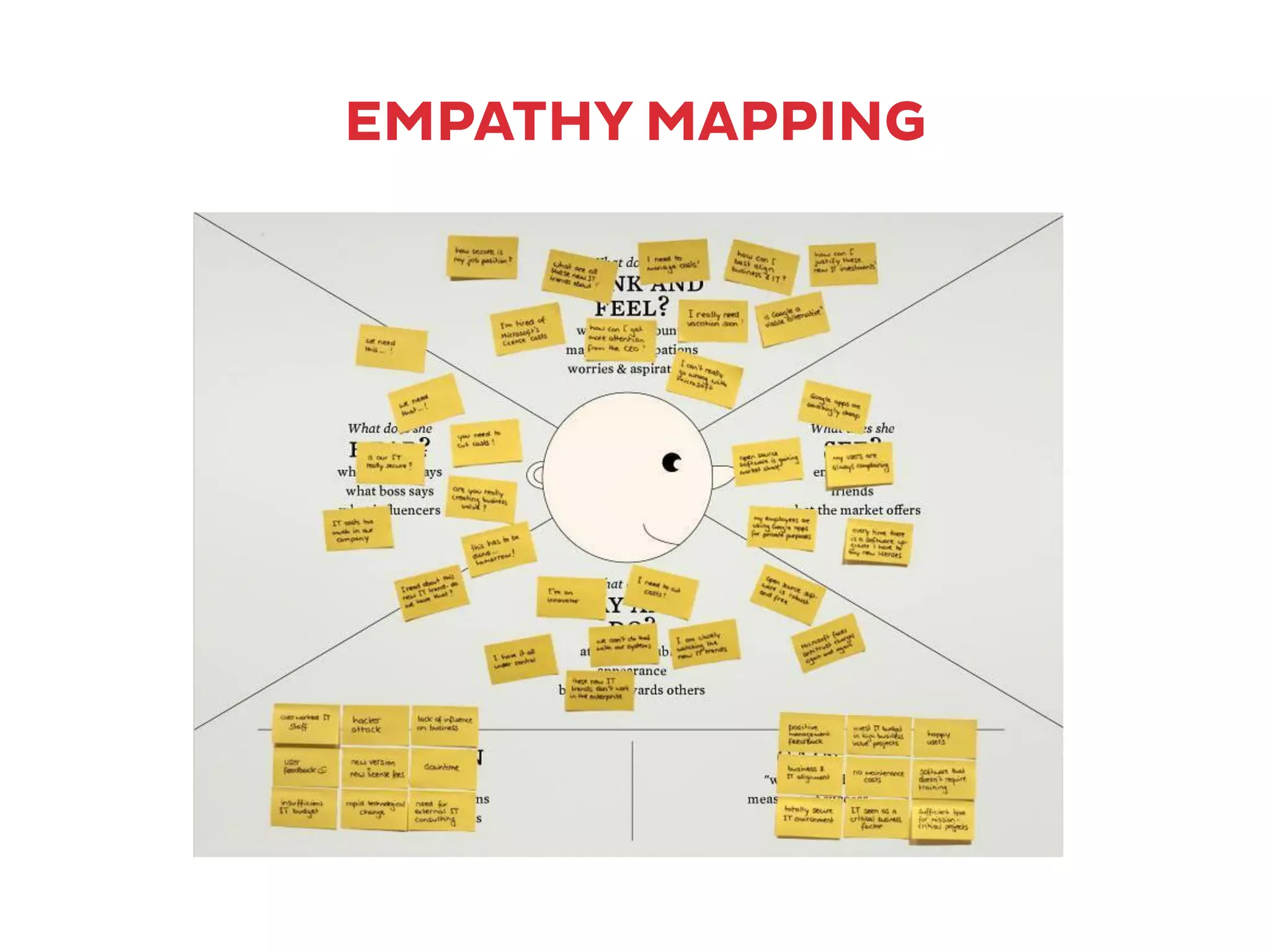
2. EMPATHY MAPPING
EMPATHY MAPPING
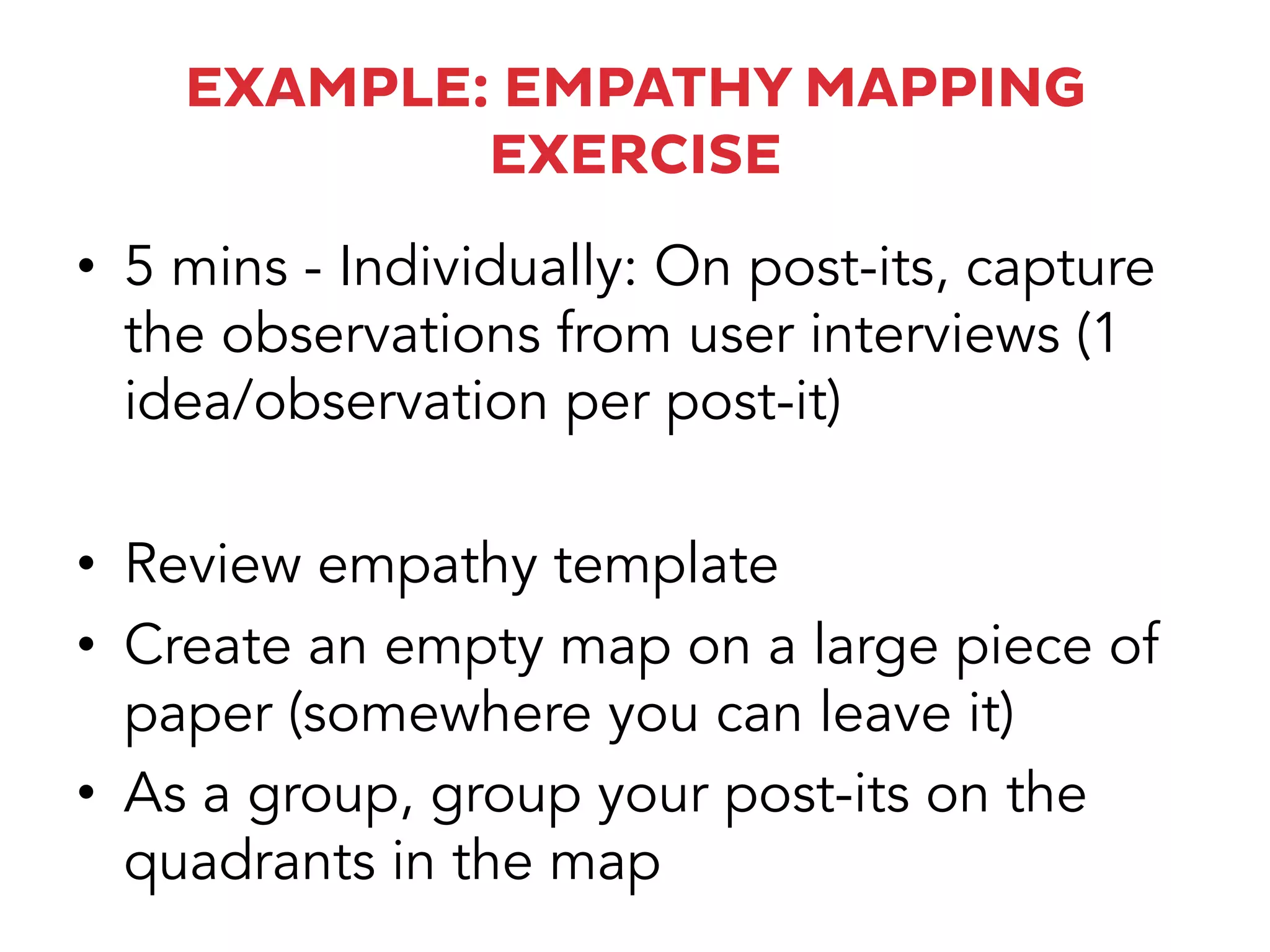
EXAMPLE: EMPATHY MAPPING
EXERCISE
•  5 mins - Individually: On post-its, capture
the observations from user interviews (1
idea/observation per post-it)
•  Review empathy template
•  Create an empty map on a large piece of
paper (somewhere you can leave it)
•  As a group, group your post-its on the
quadrants in the map
3. TRANSLATE FINDINGS INTO
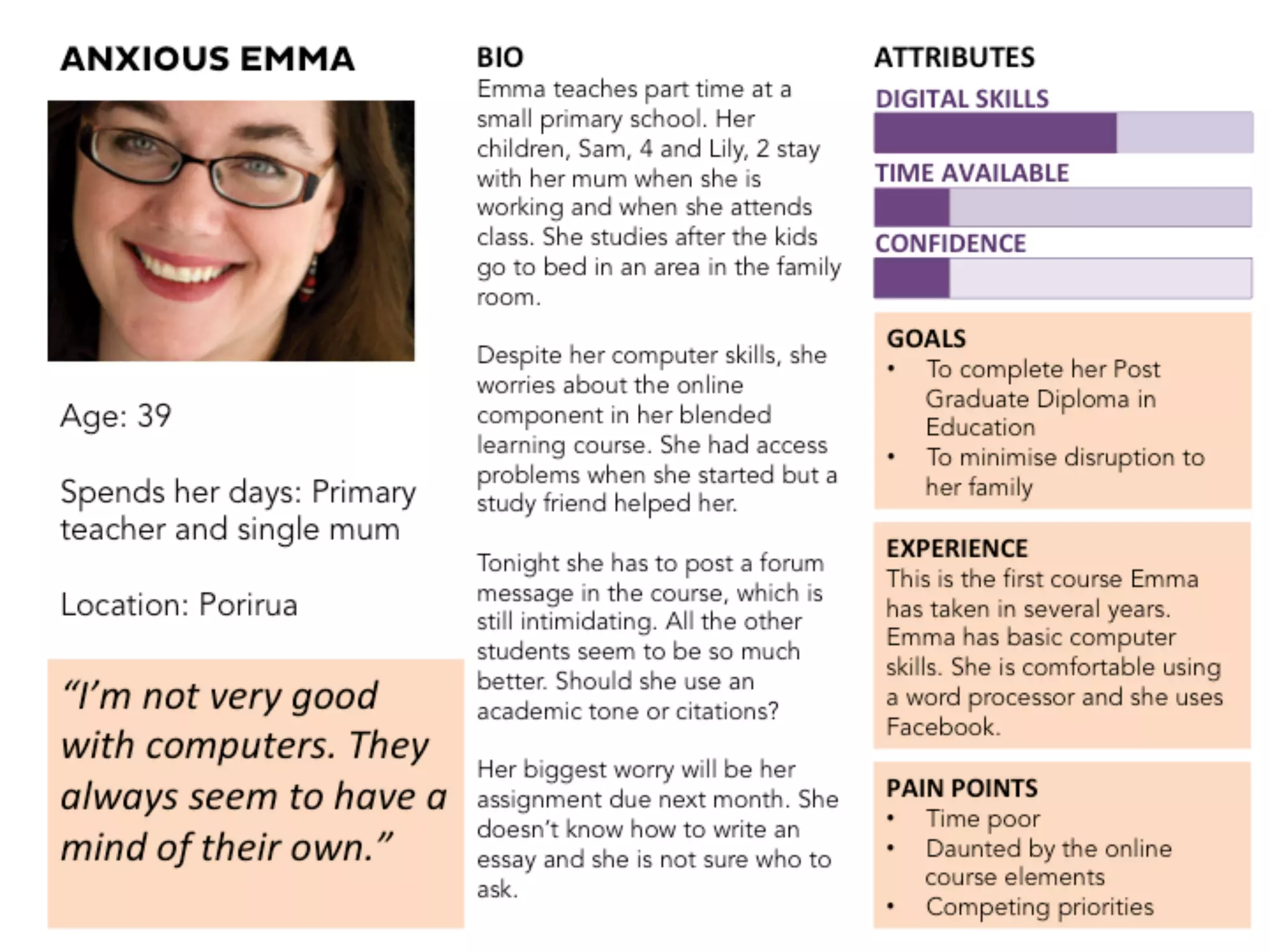
PERSONAS
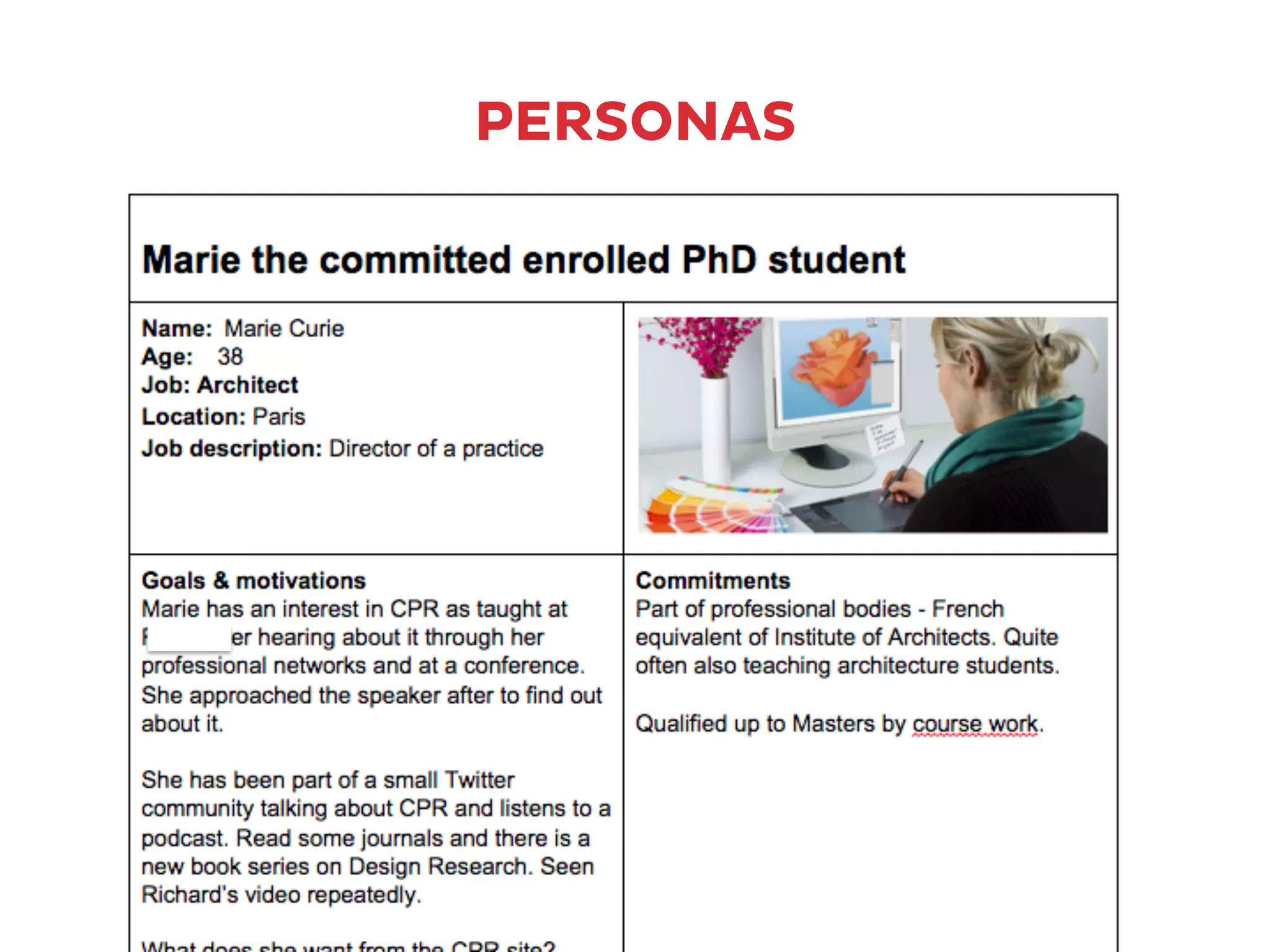
PERSONAS
PERSONAS
4. FACILITATE GROUP INPUTS
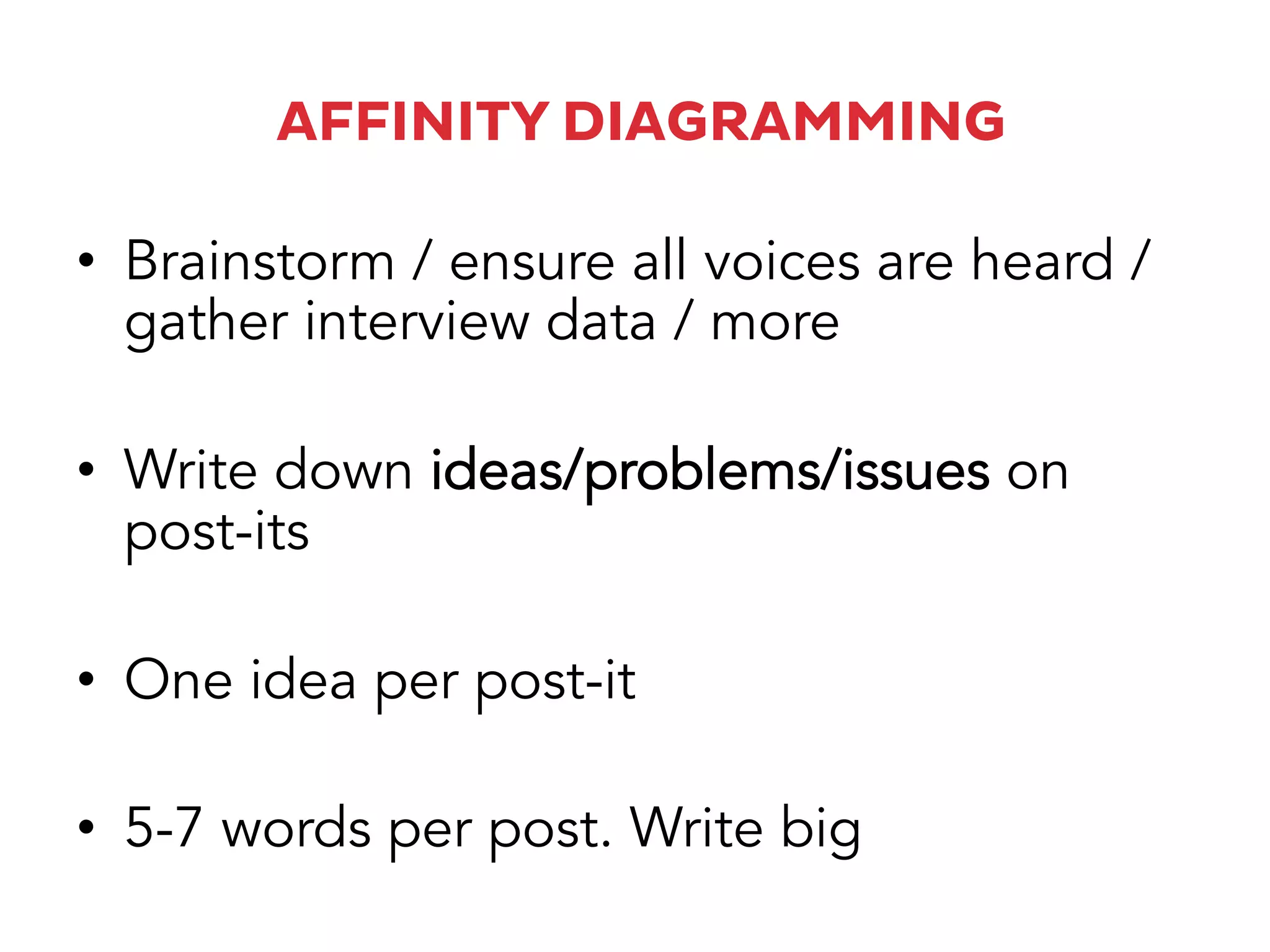
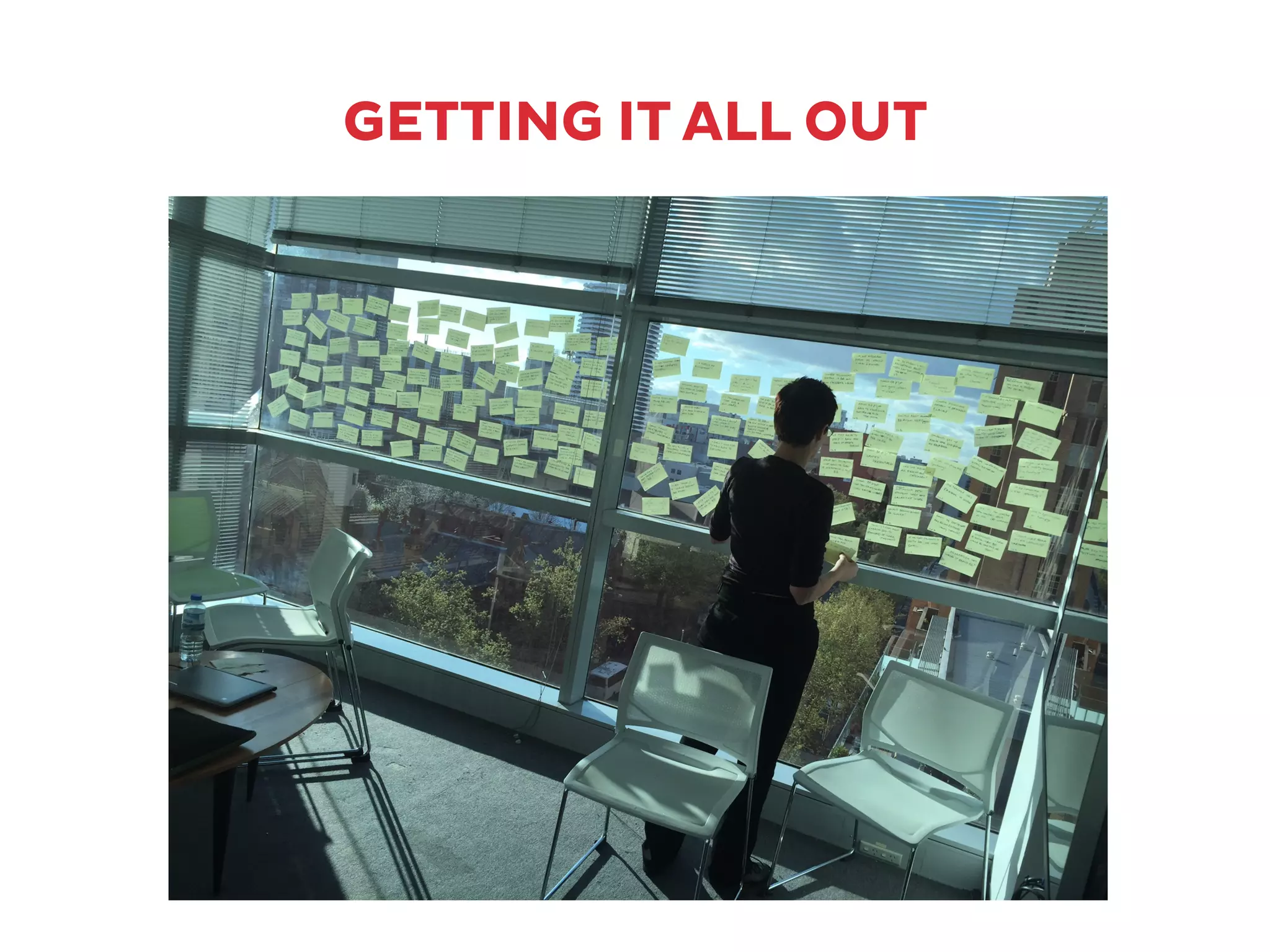
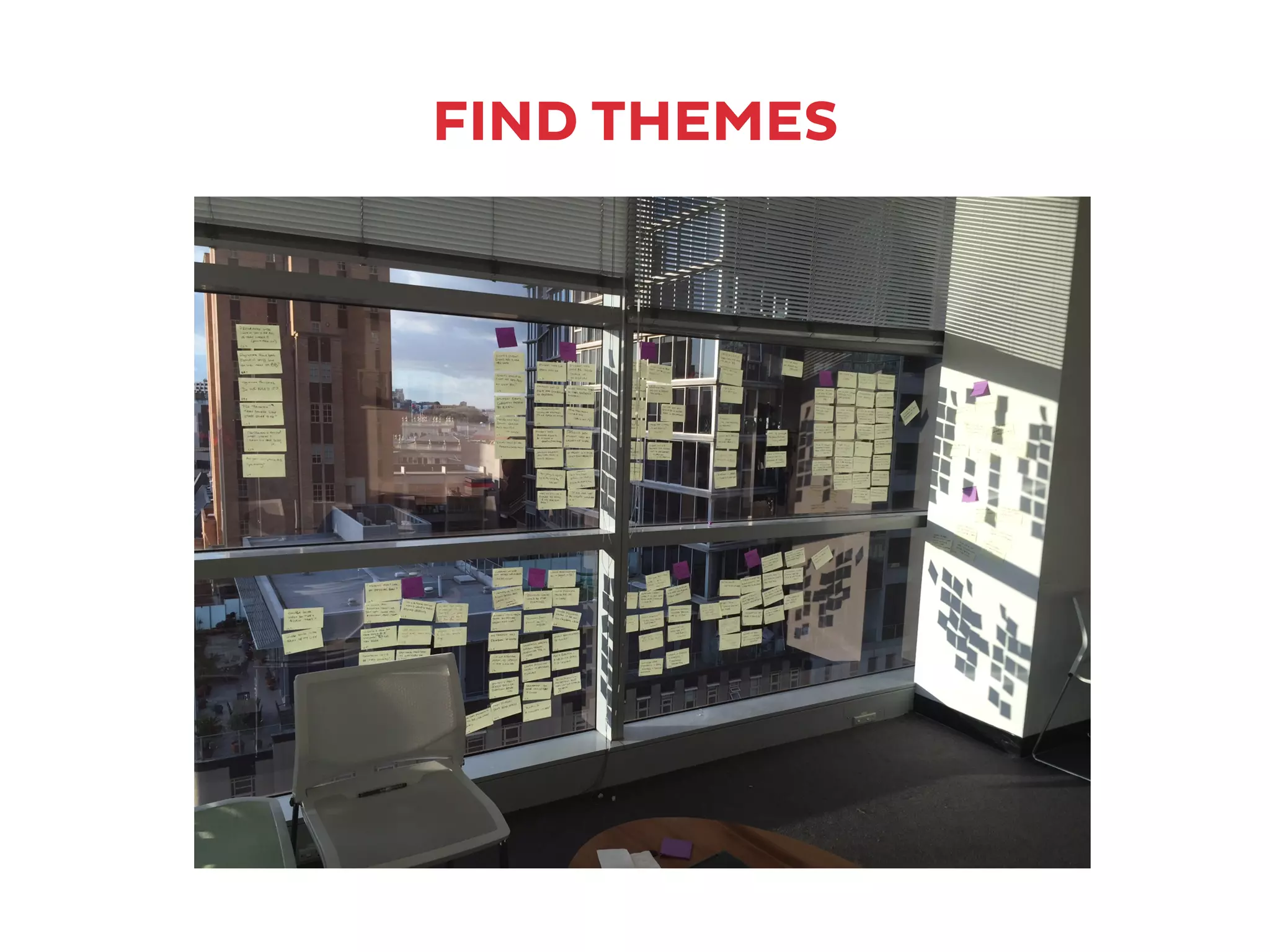
AFFINITY DIAGRAMMING
•  Brainstorm / ensure all voices are heard /
gather interview data / more
•  Write down ideas/problems/issues on
post-its
•  One idea per post-it
•  5-7 words per post. Write big
GETTING IT ALL OUT
FIND THEMES
5. HELP ARTICULATE A PROBLEM
STATEMENT
?
WHAT IS A PROBLEM STATEMENT?
I am [persona name, 3 characteristics].
I am trying to [outcome/job/task], but
[problem/barrier] because [root cause].
This makes me feel [emotion].
6. ASK HOW MIGHT WE…?
?
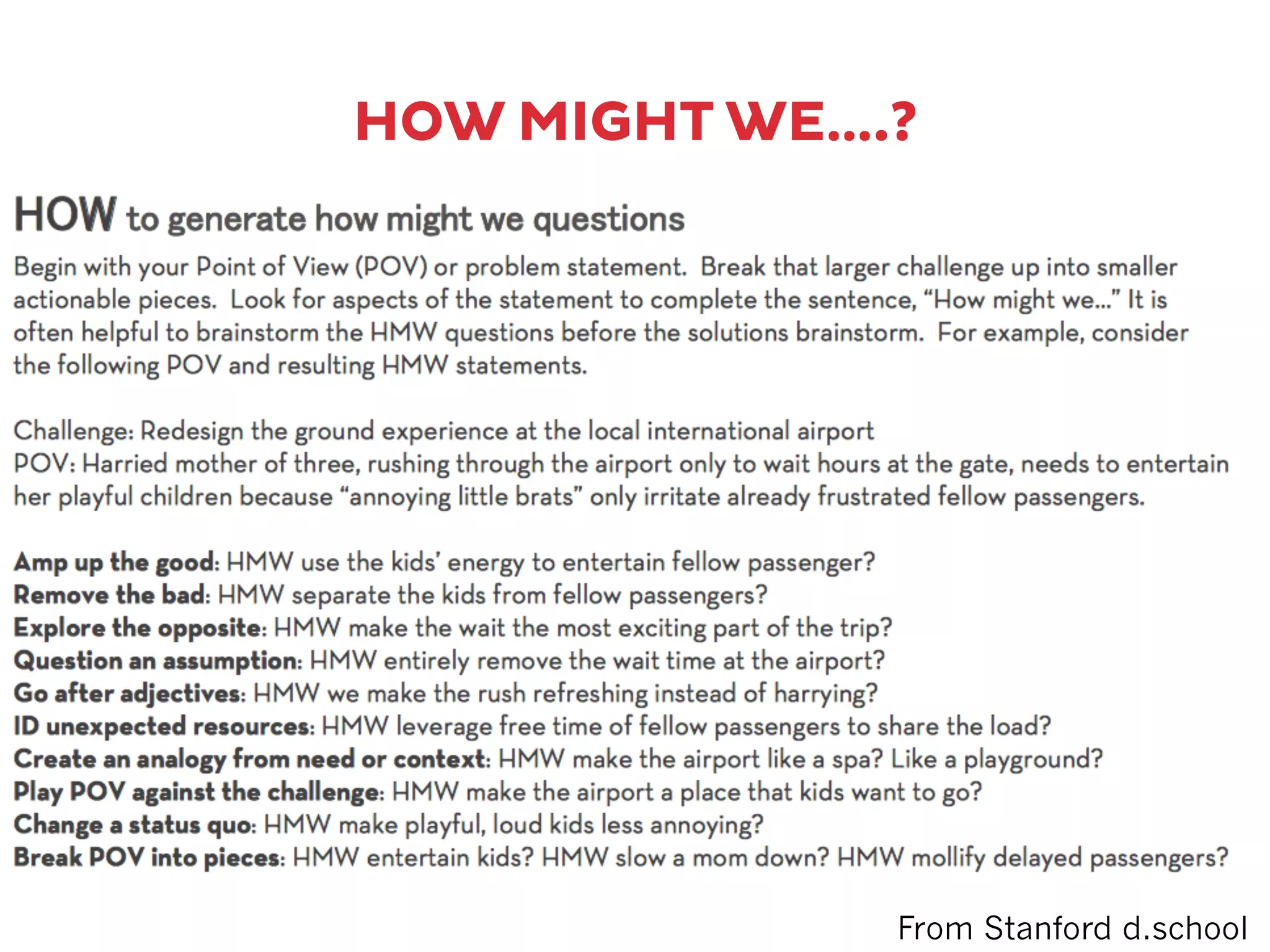
HOW MIGHT WE….?
From Stanford d.school
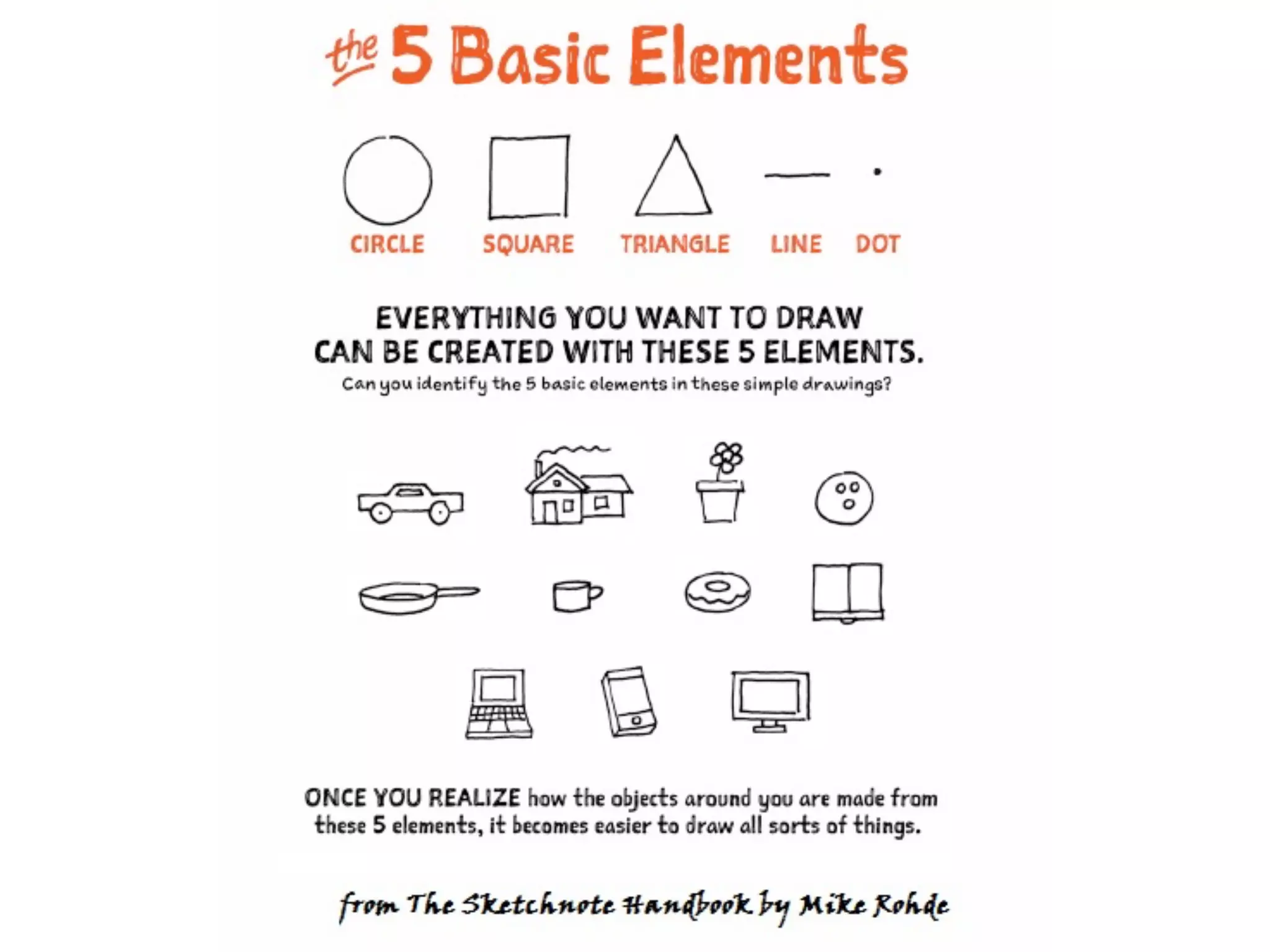
7. DRAW IT OUT!
MIKE ROHDE
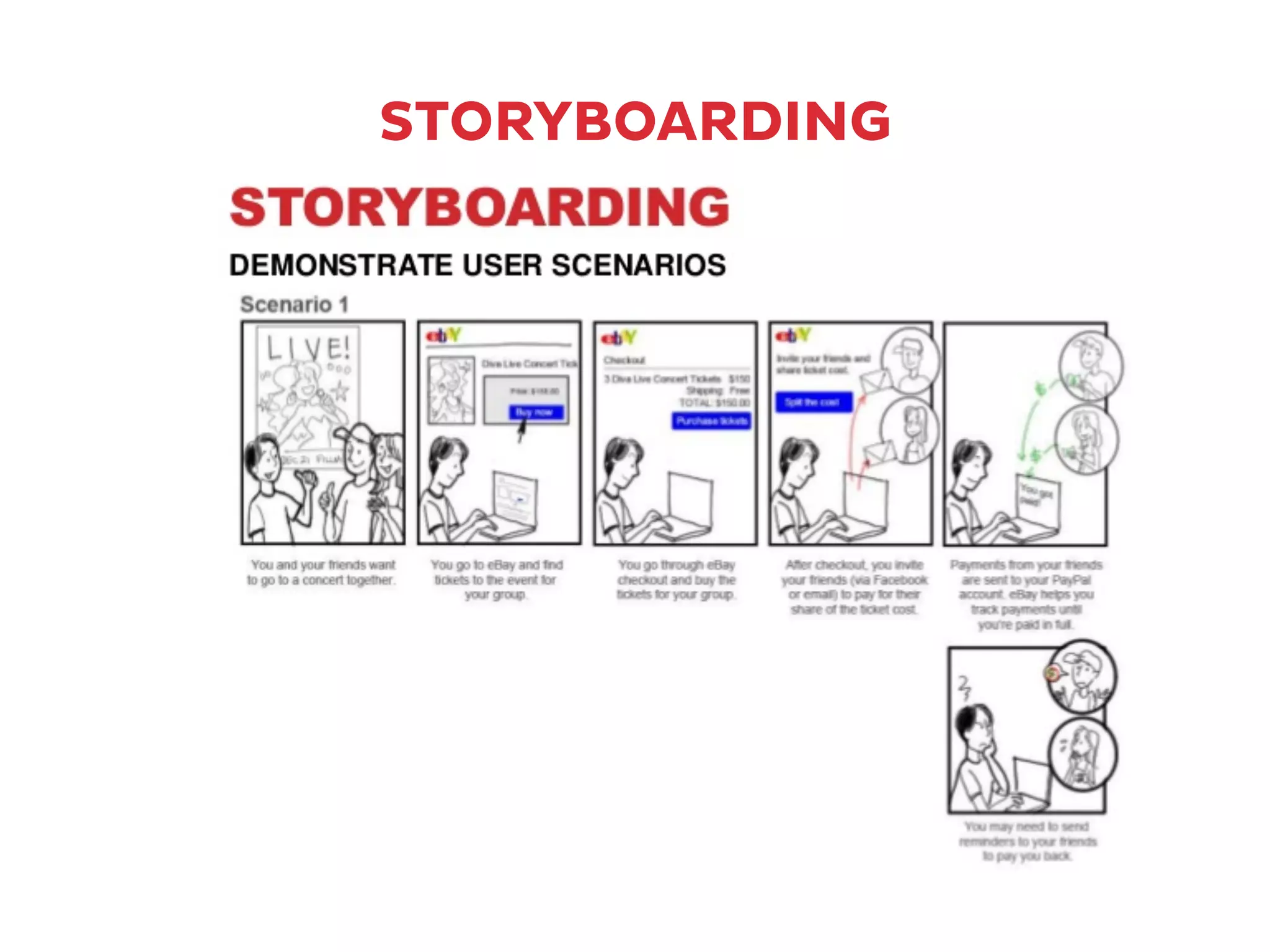
STORYBOARDING
8. MAPPING THE LEARNER JOURNEY
SIMILAR TECHNIQUES
•  Journey mapping (emotional)
•  Scenario mapping (narrative)
•  Service Design Blueprint (channels)
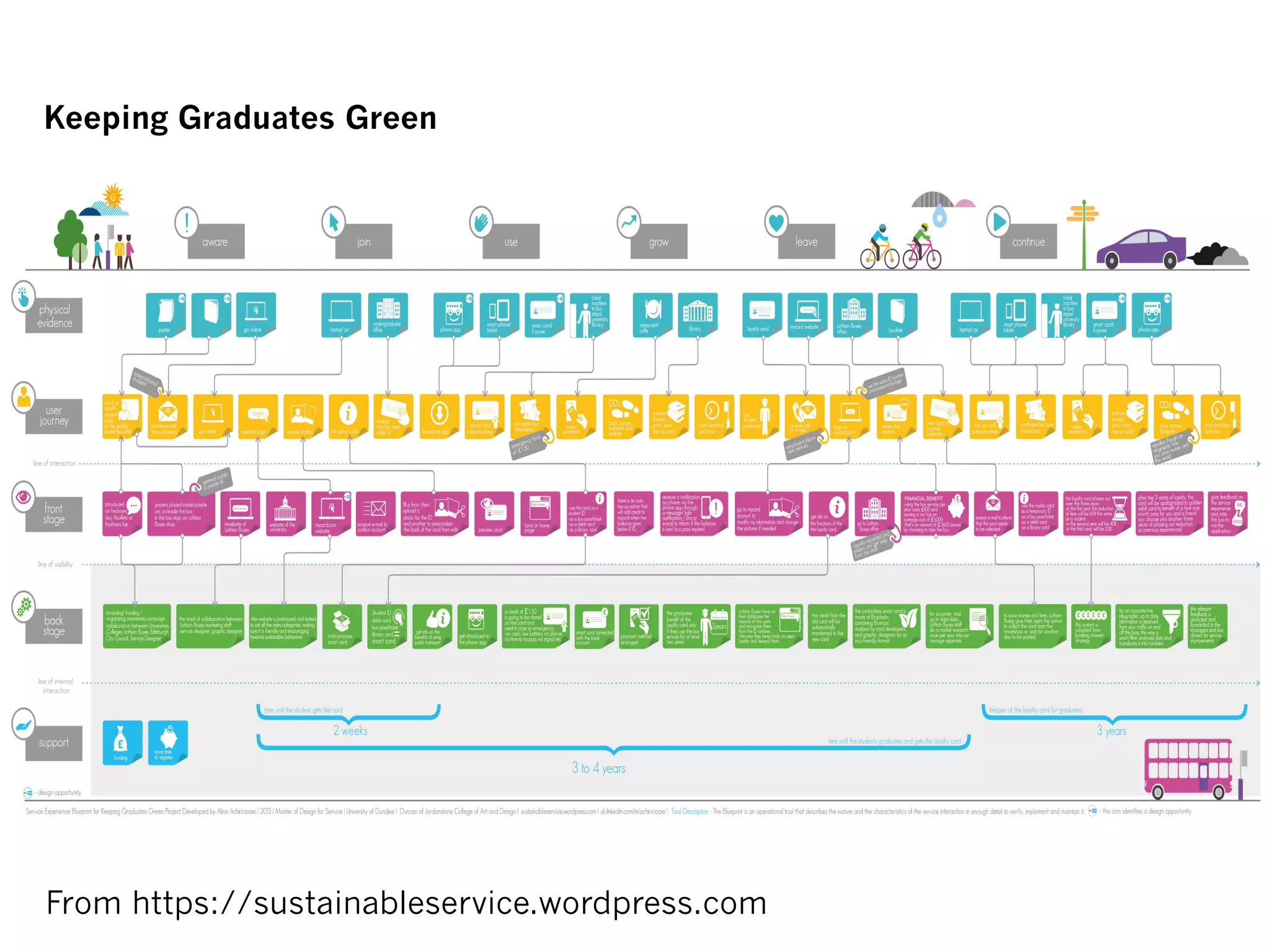
From https://sustainableservice.wordpress.com
Keeping Graduates Green
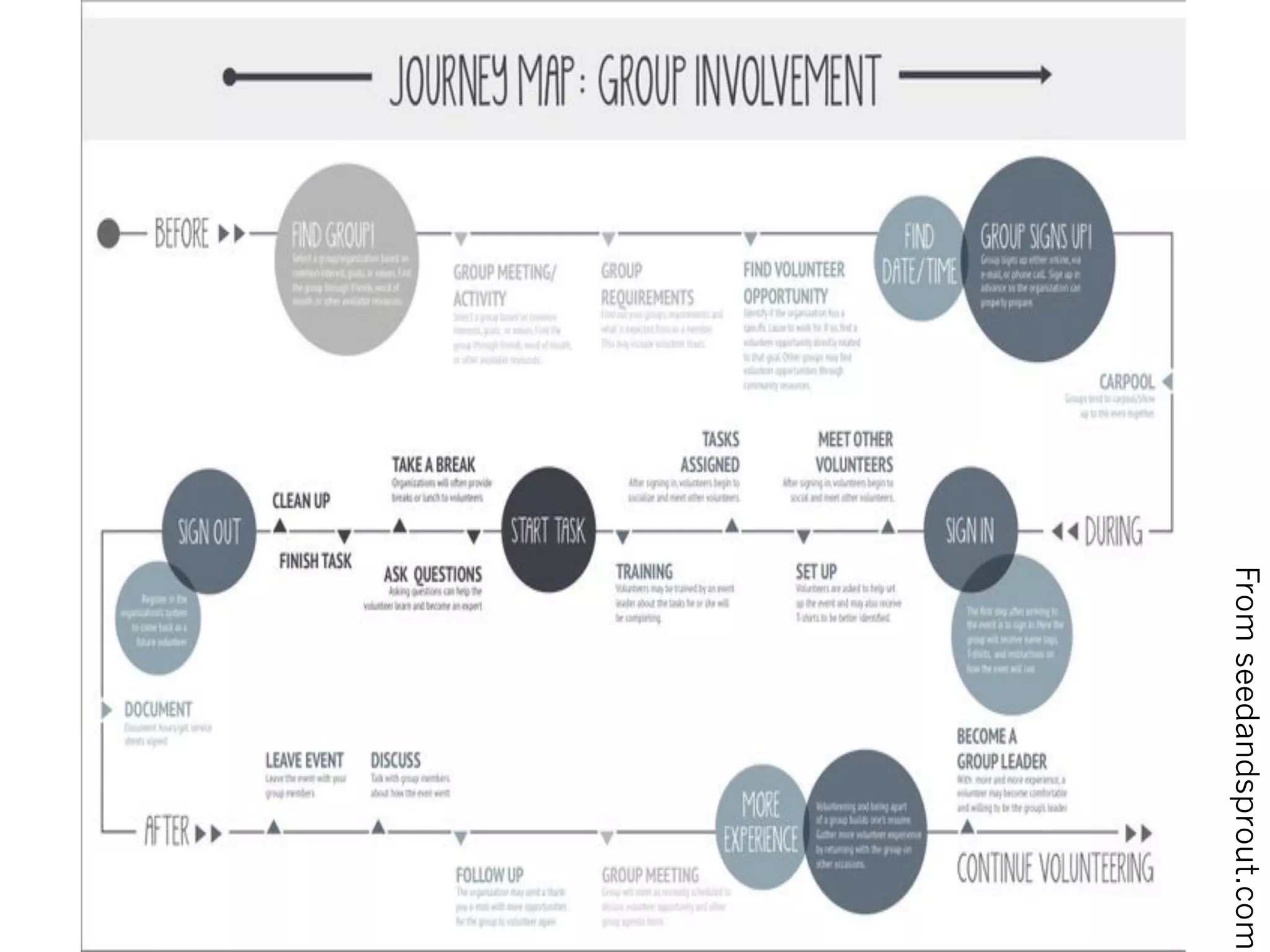
Fromseedandsprout.com
WHEN CAN YOU USE JOURNEY MAPPING?
•  For an existing product, object or service
•  To get an overview of all the elements
and stakeholders
•  To map all the touch points
•  To identify emotions associated with
interactions
•  To identify pain points
WHEN DO YOU USE JOURNEY MAPPING?
For a new product, object or service to be
designed, developed and implemented:
•  To get a common understanding of aspiring
experience for all members of design &
development team
•  To identify touch points
•  To identify channels
•  To identify priorities for the development
WHEN DO YOU USE JOURNEY MAPPING?
Instead of a prototype
•  When a prototype is too expensive to
build
•  Have something to shoot at
WHY DO YOU USE JOURNEY MAPPING?
•  To map all the bricks in your bricolage
(even those beyond your control)
•  To step away from your medium
•  To design across the gaps
•  To facilitate design conversation
•  To facilitate development collaboration
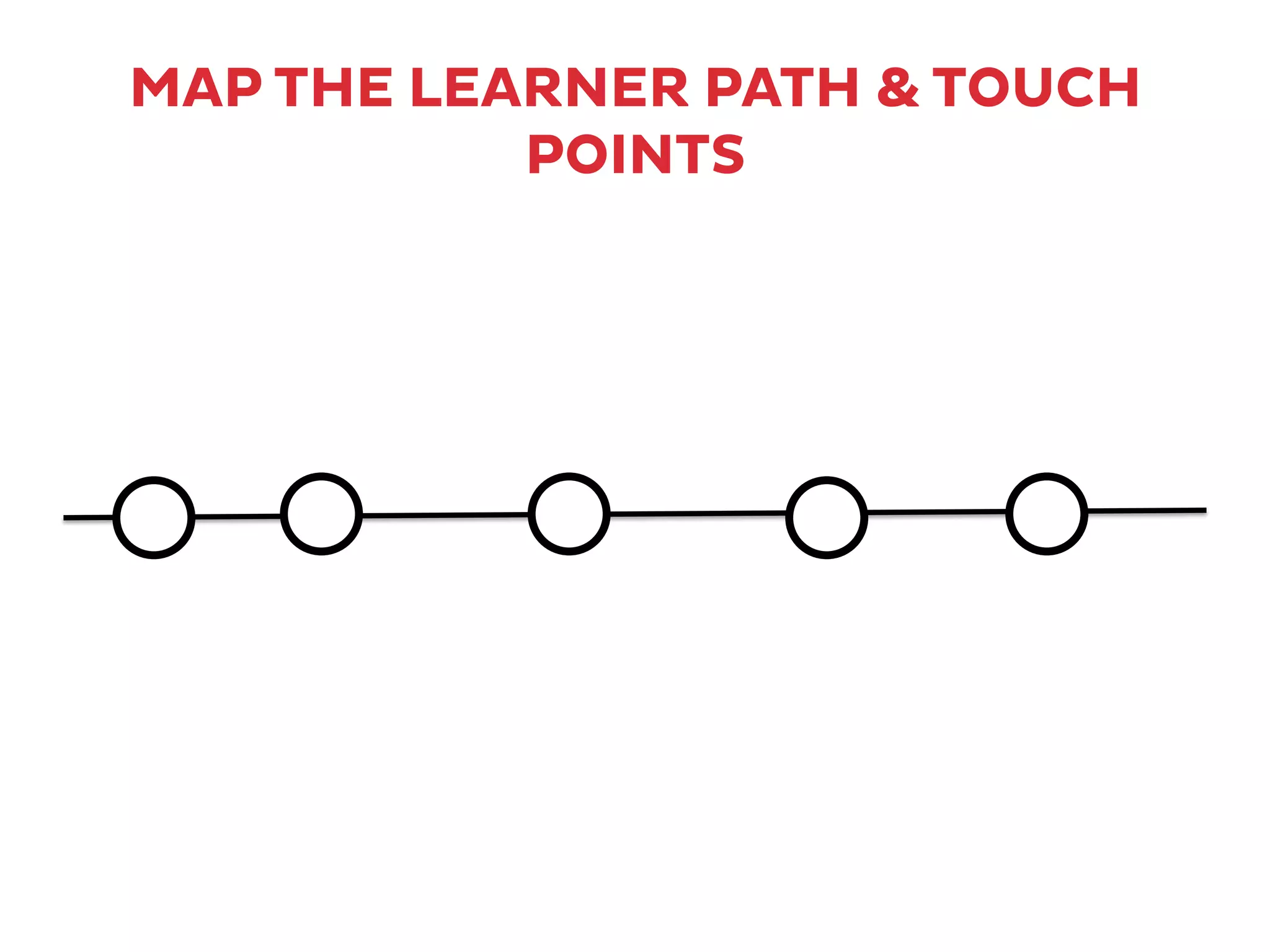
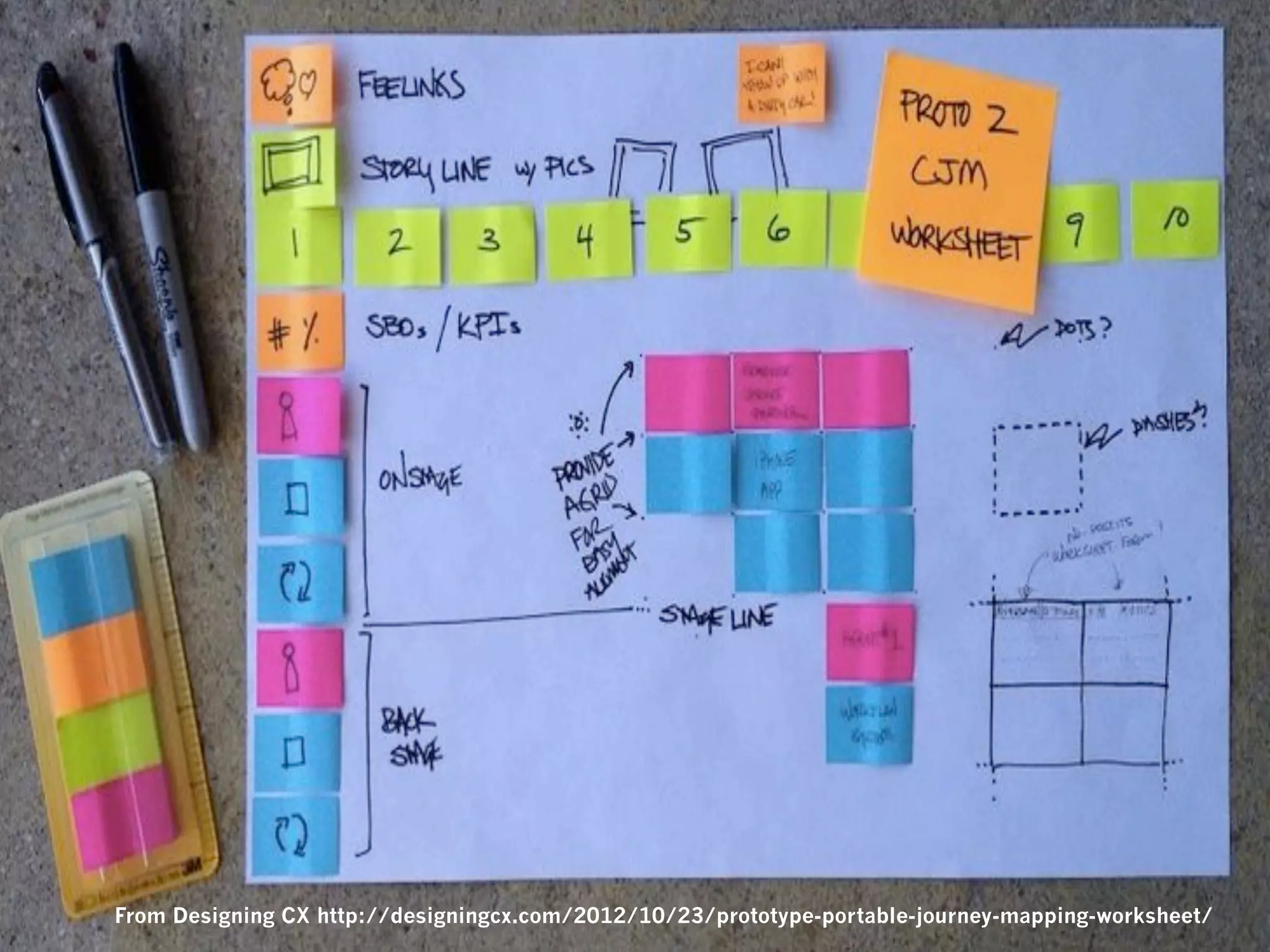
MAP THE LEARNER PATH & TOUCH
POINTS
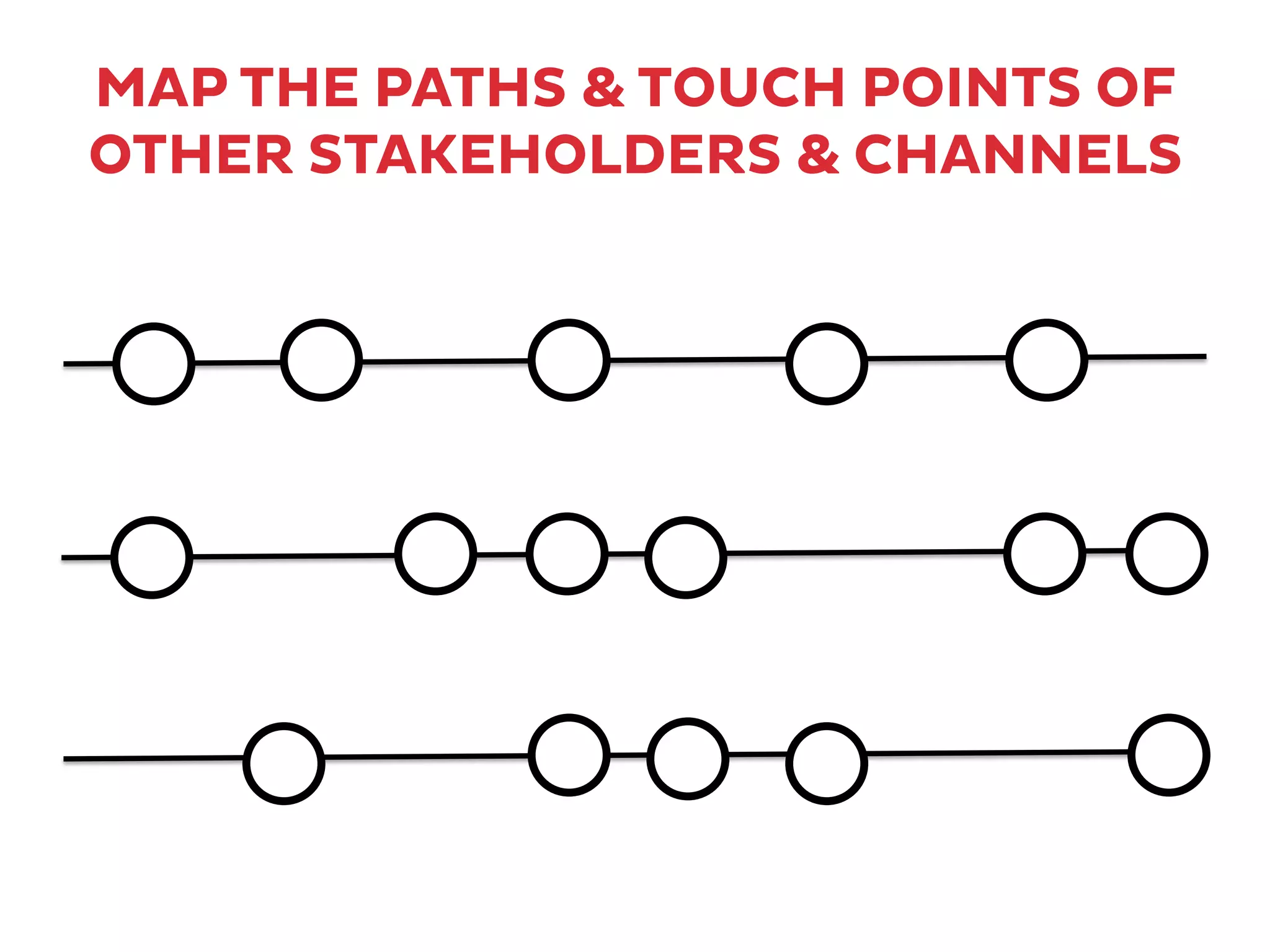
MAP THE PATHS & TOUCH POINTS OF
OTHER STAKEHOLDERS & CHANNELS
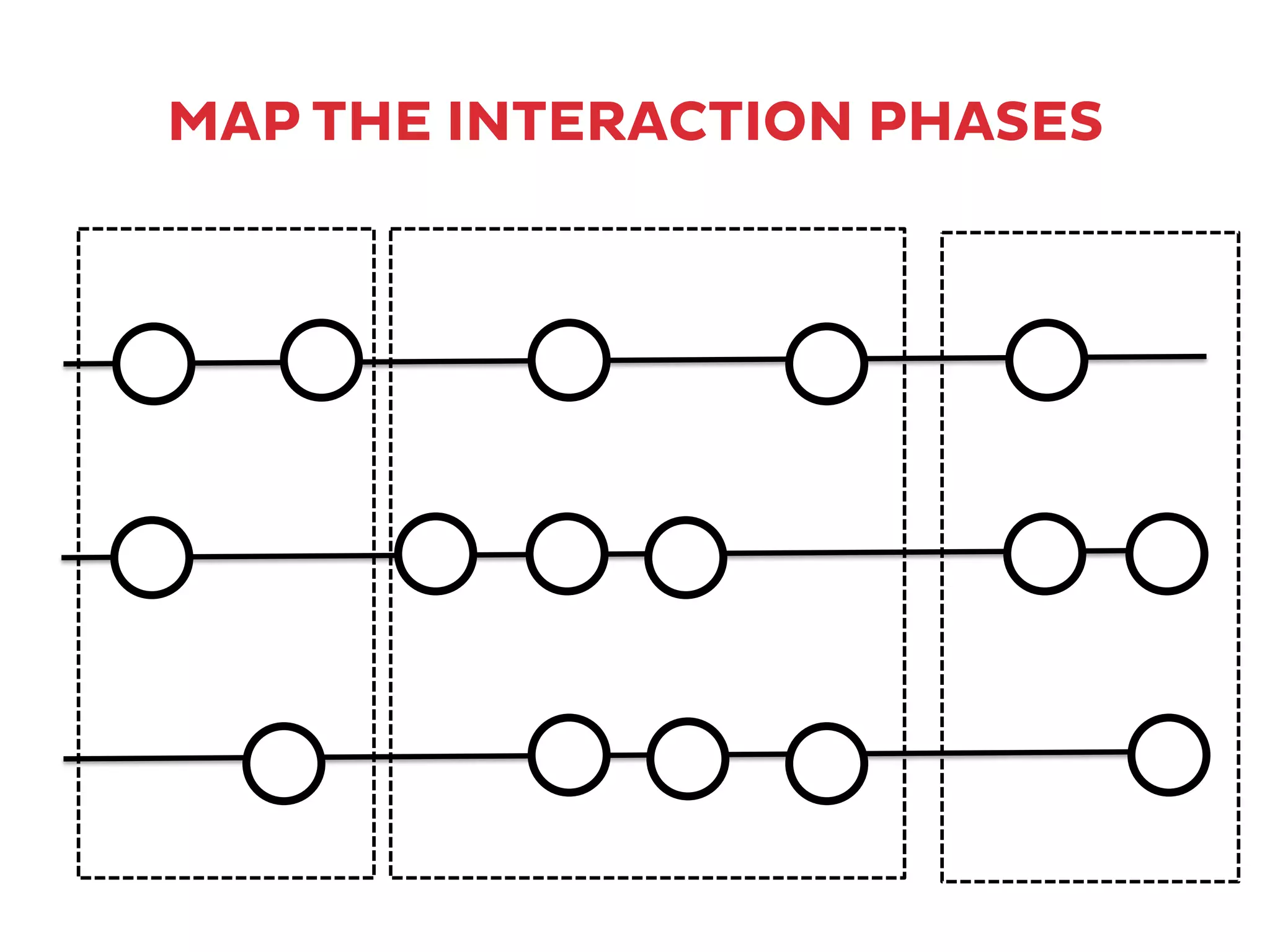
MAP THE INTERACTION PHASES
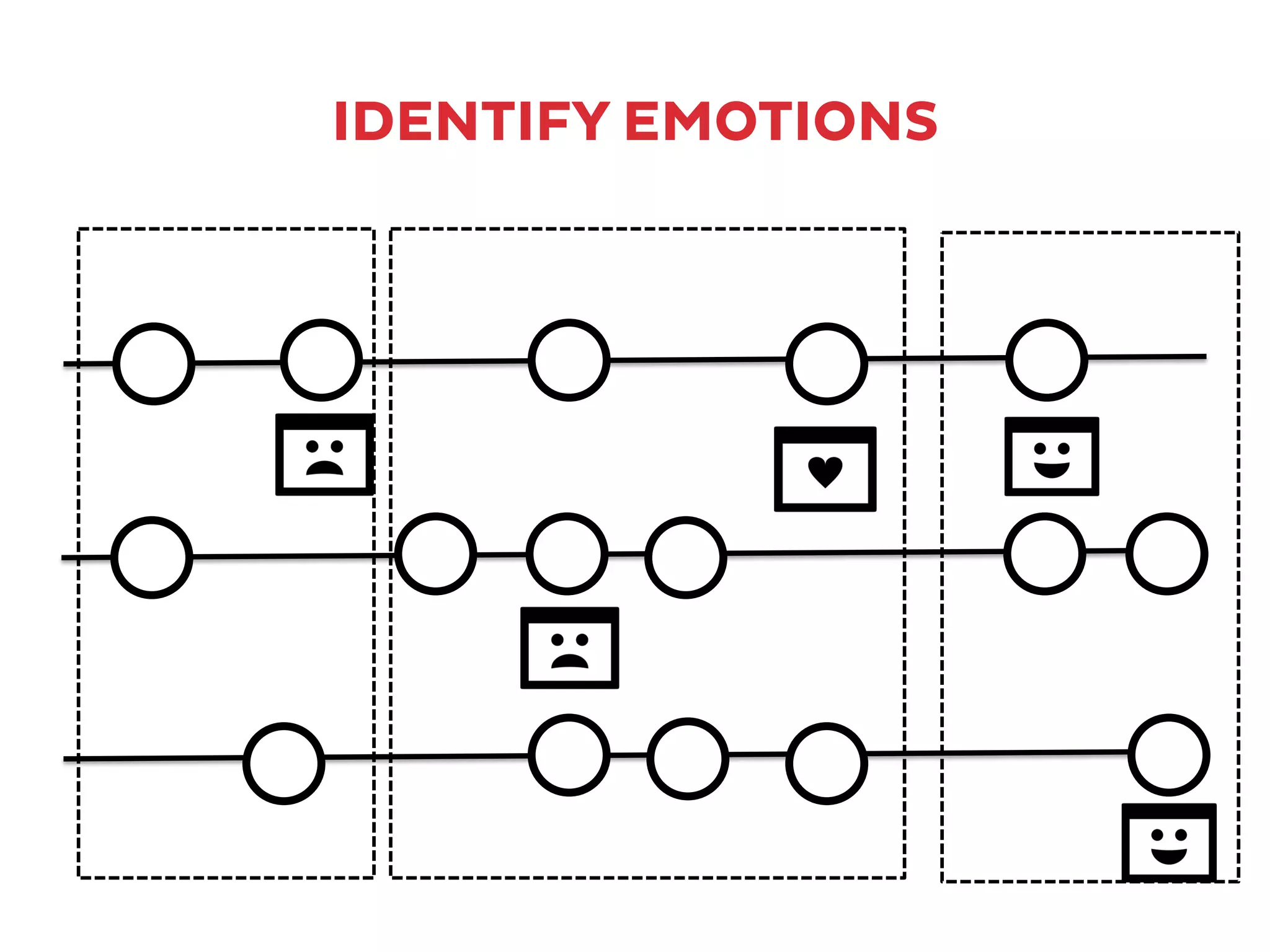
IDENTIFY EMOTIONS
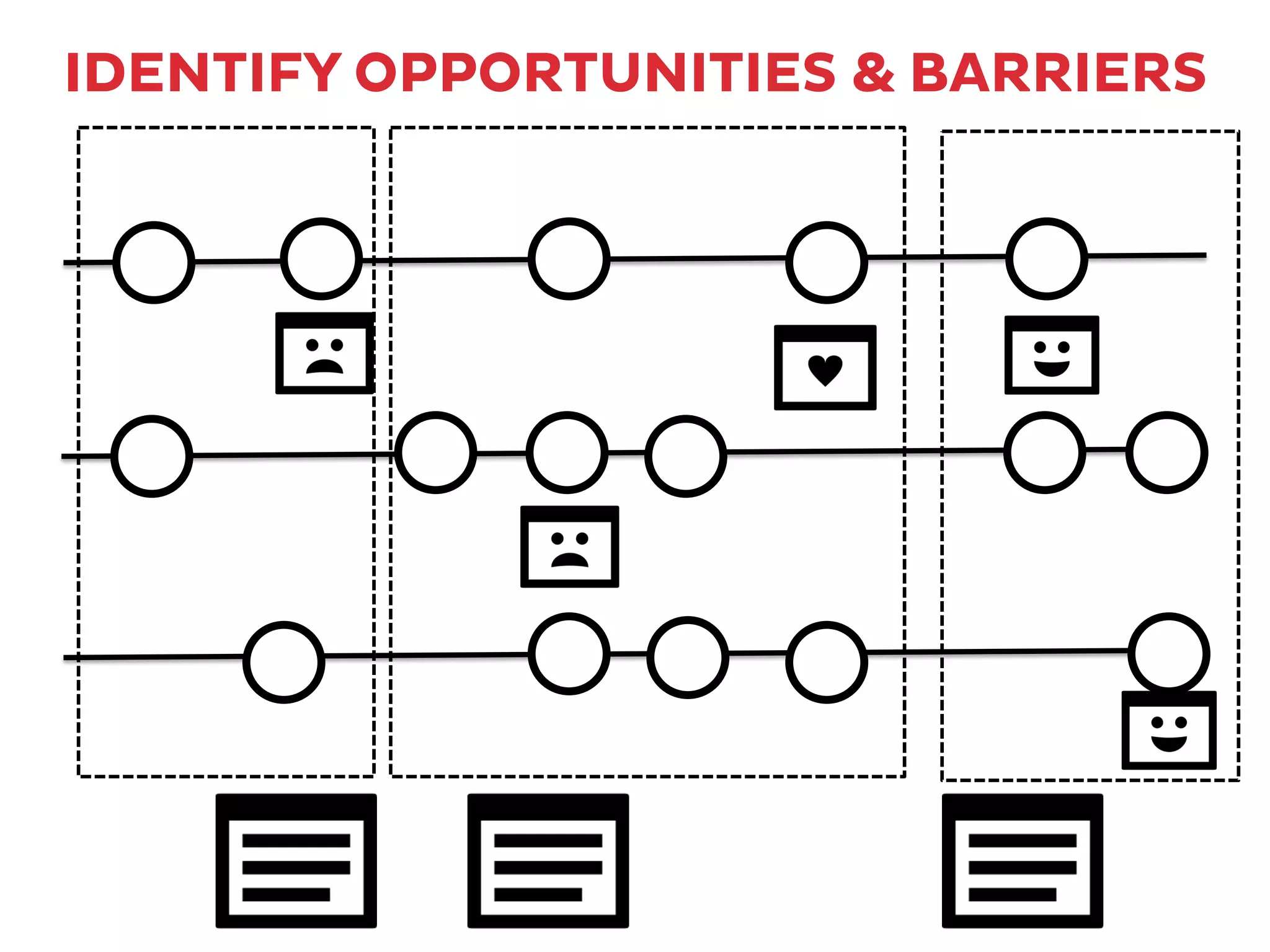
IDENTIFY OPPORTUNITIES & BARRIERS
From Designing CX http://designingcx.com/2012/10/23/prototype-portable-journey-mapping-worksheet/
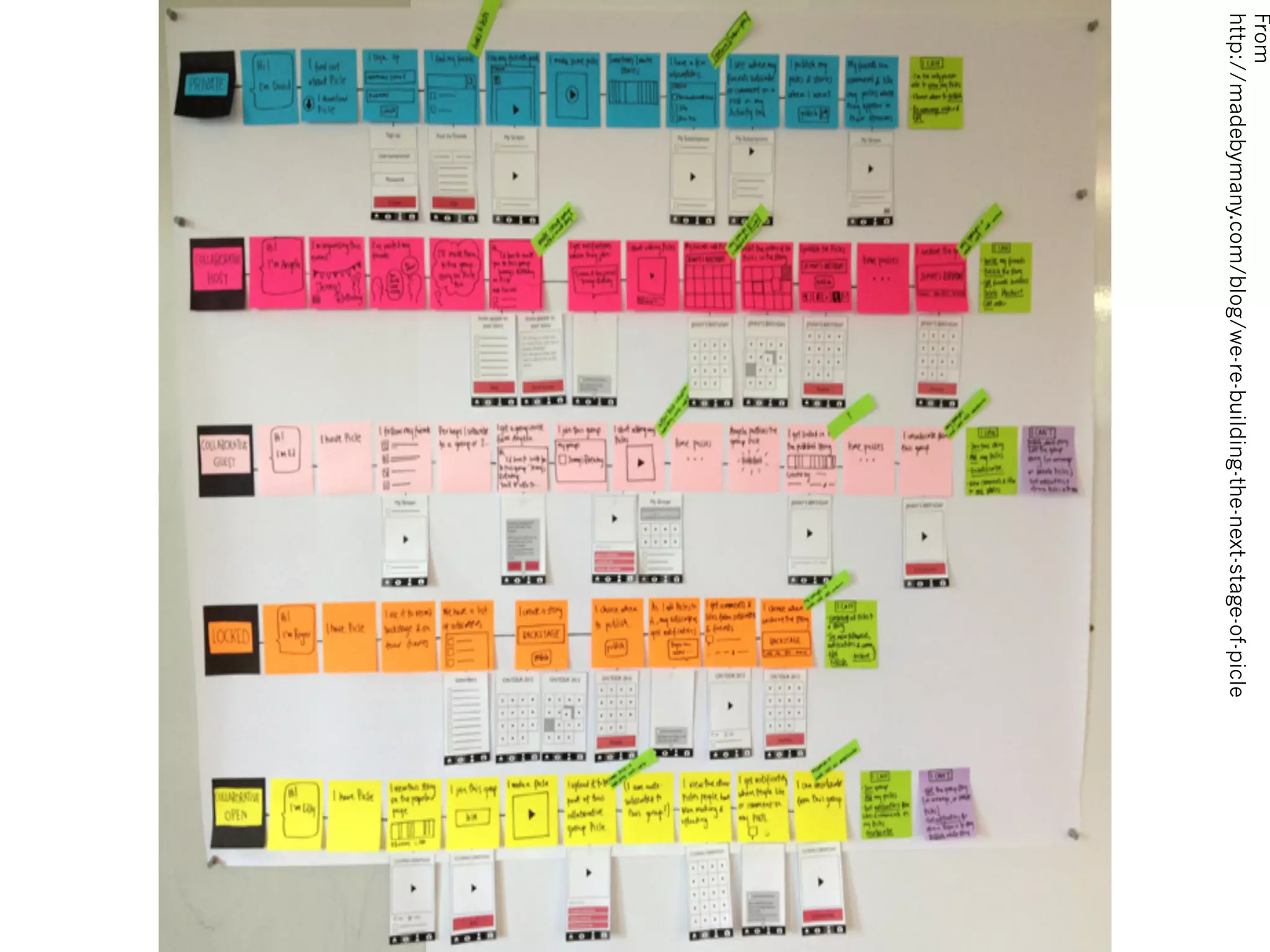
From
http://madebymany.com/blog/we-re-building-the-next-stage-of-picle
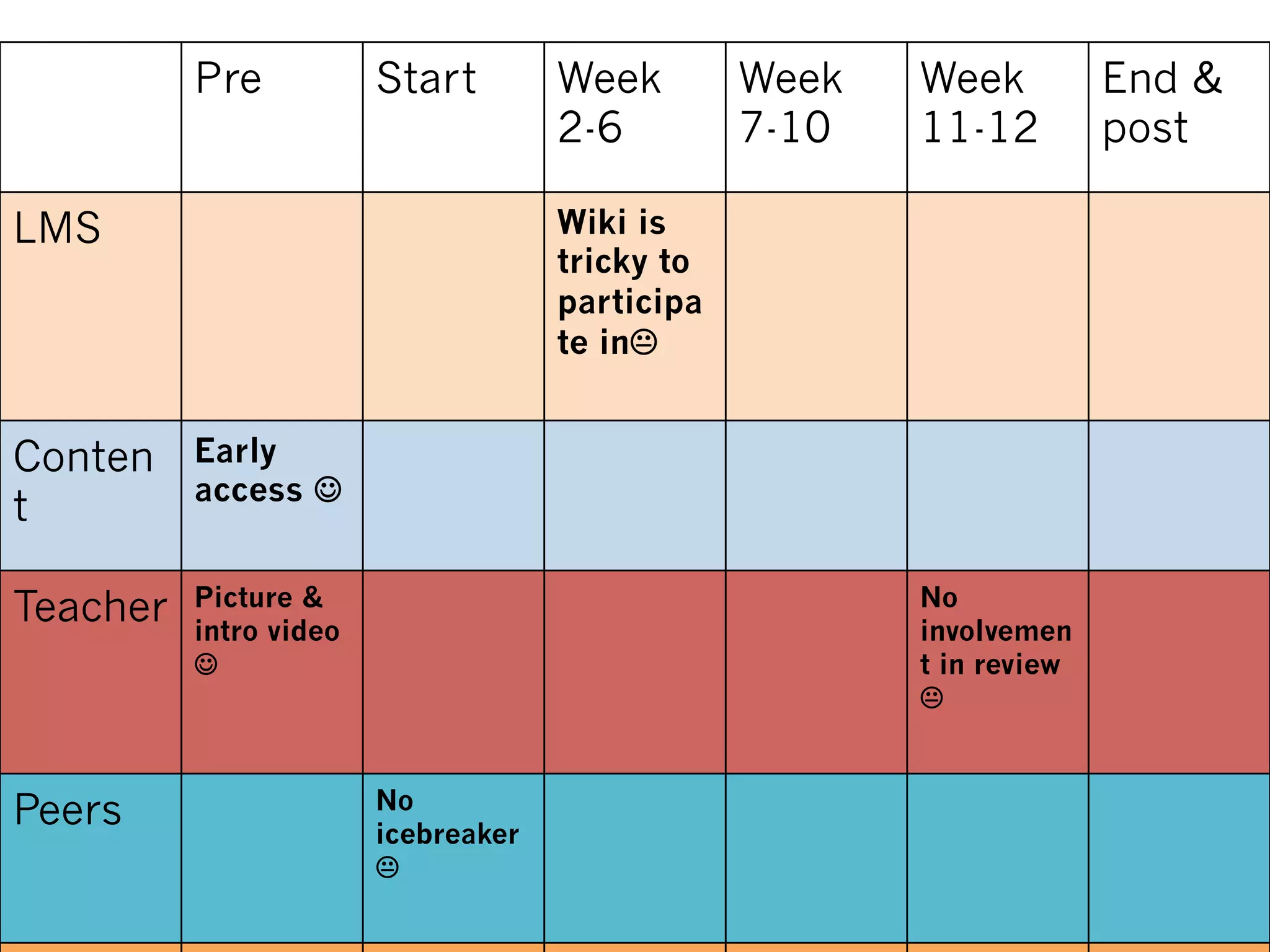
Pre Start Week
2-6
Week
7-10
Week
11-12
End &
post
LMS Wiki is
tricky to
participa
te in!
Conten
t
Early
access ☺
Teacher Picture &
intro video
☺
No
involvemen
t in review
!
Peers No
icebreaker
!
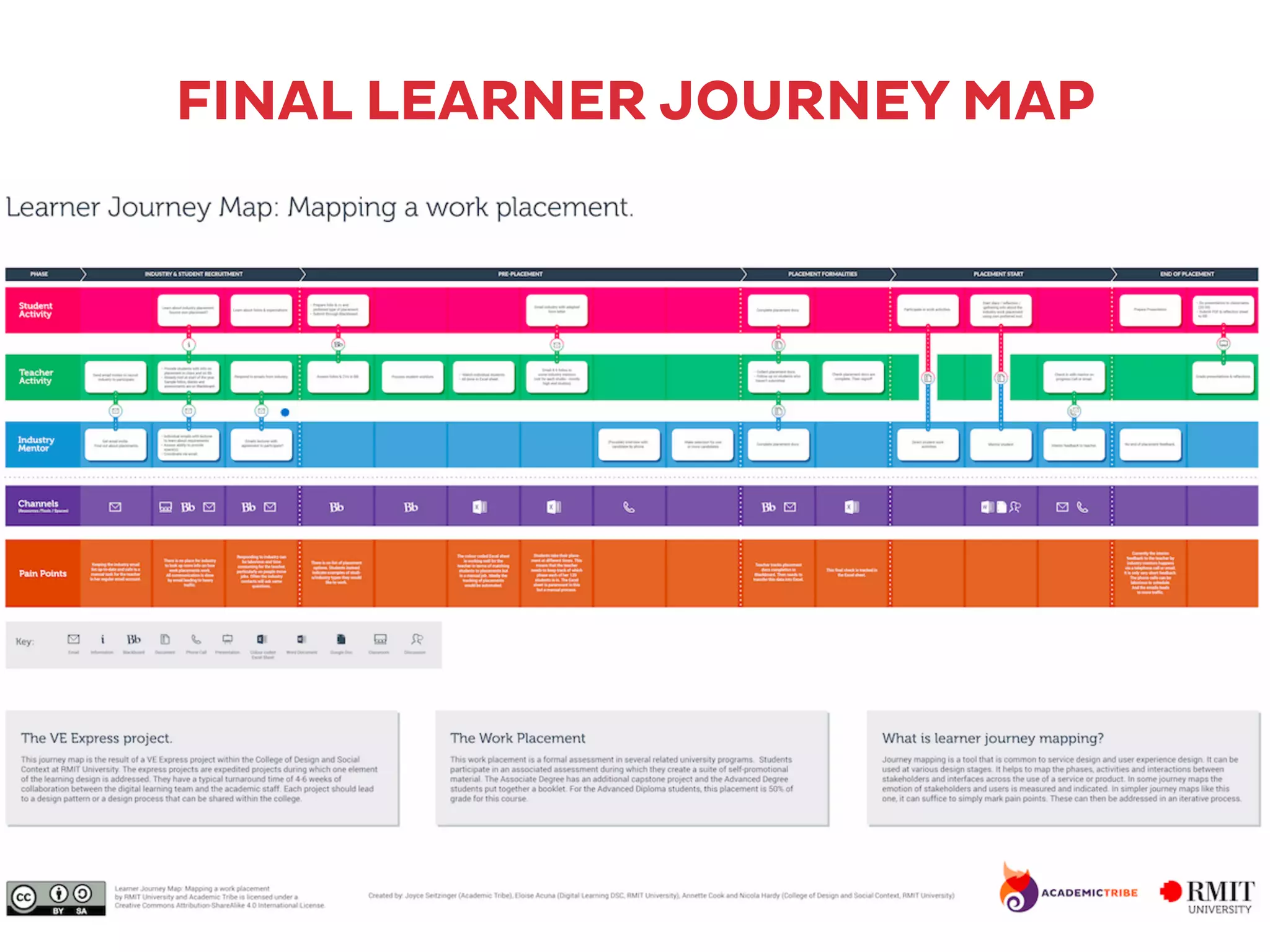
OUR VE EXPRESS LEARNER
JOURNEY MAP
THE TEAM
•  Joyce Seitzinger
•  Mark Smithers
Lecturers
•  Annette Cook
•  Nicola Hardy
Digital Learning Team
•  Spiros Soulis
•  Angela Nicolettou
•  Eloise Acuna
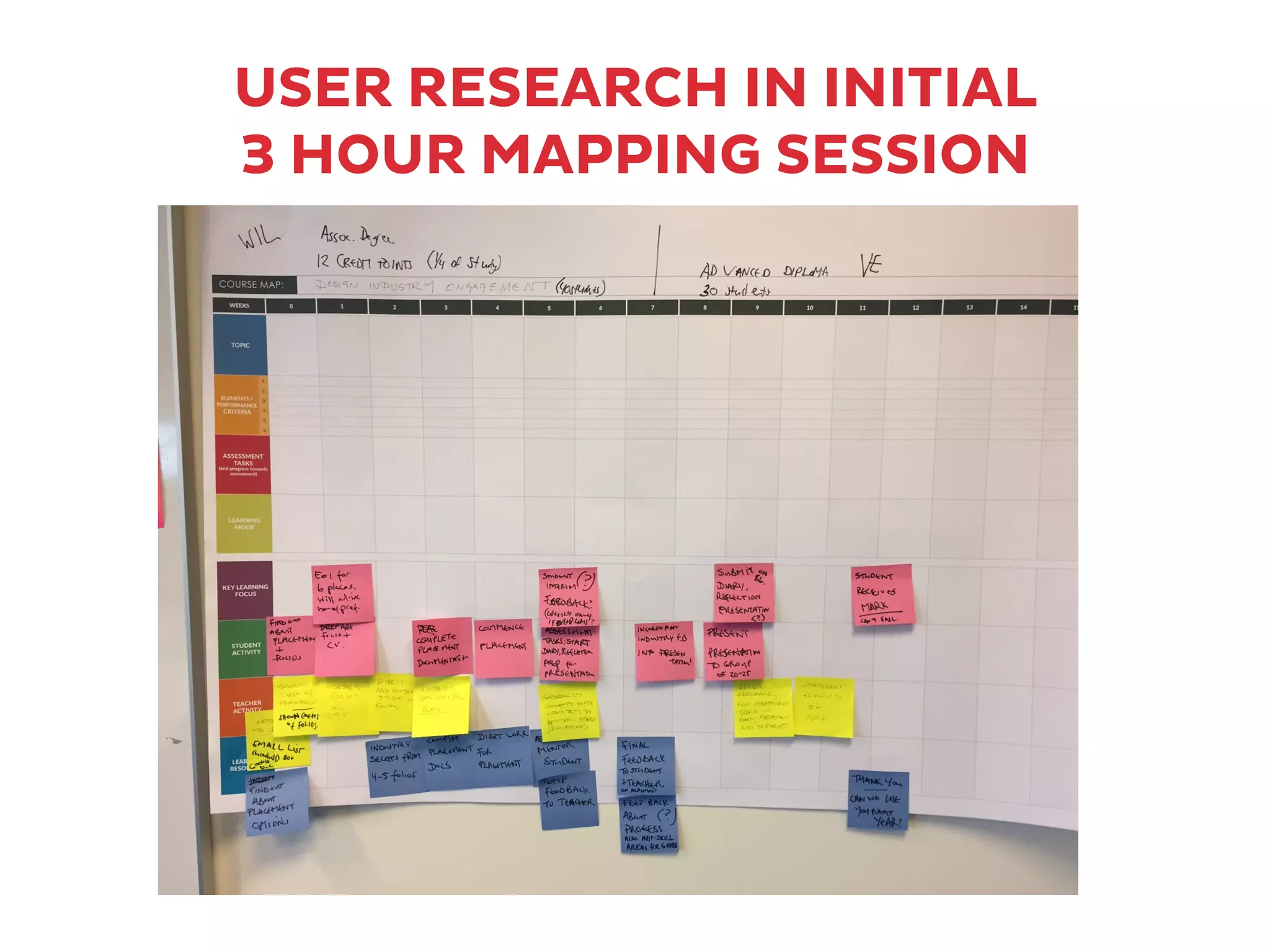
USER RESEARCH IN INITIAL
3 HOUR MAPPING SESSION
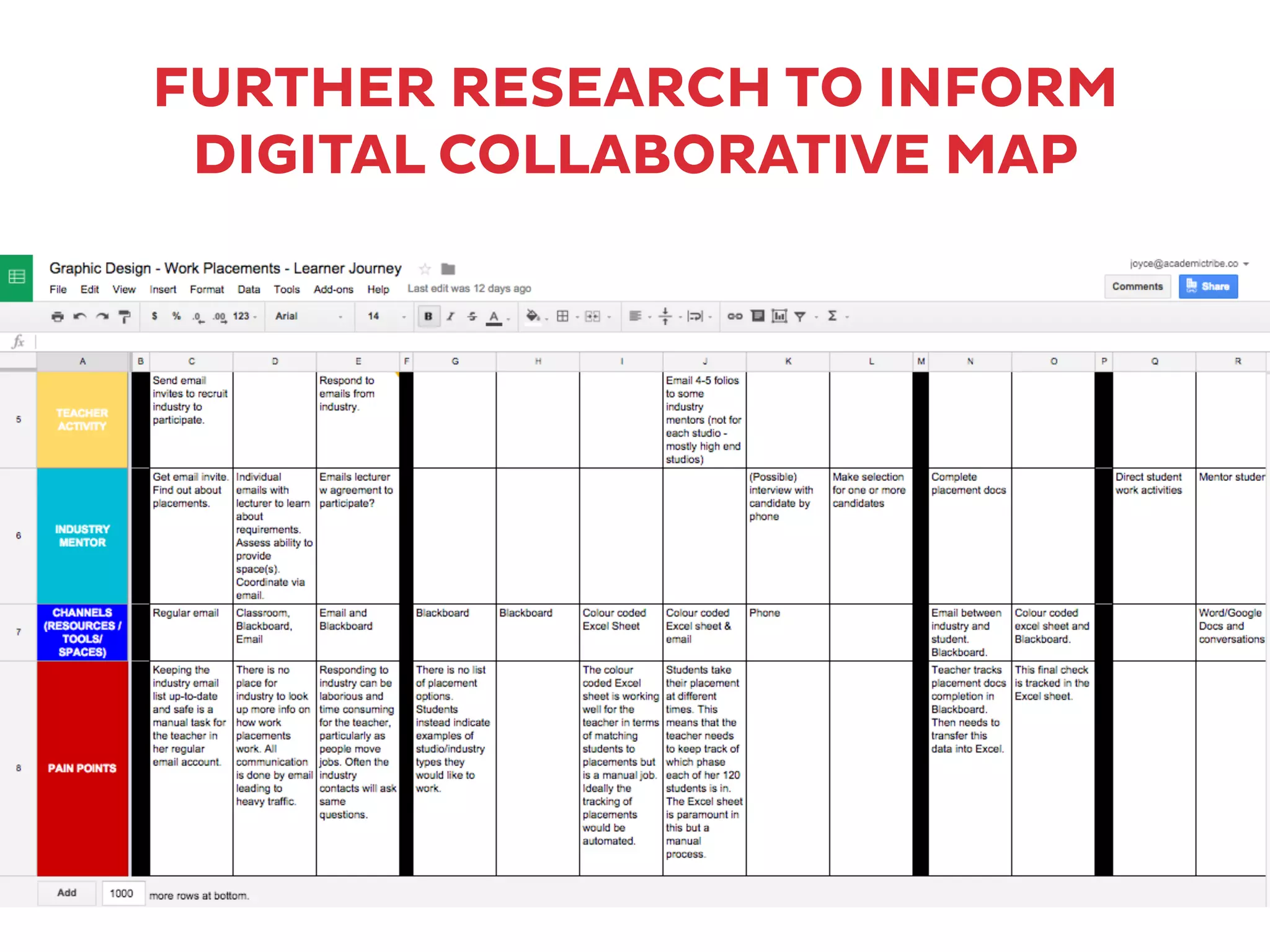
FURTHER RESEARCH TO INFORM
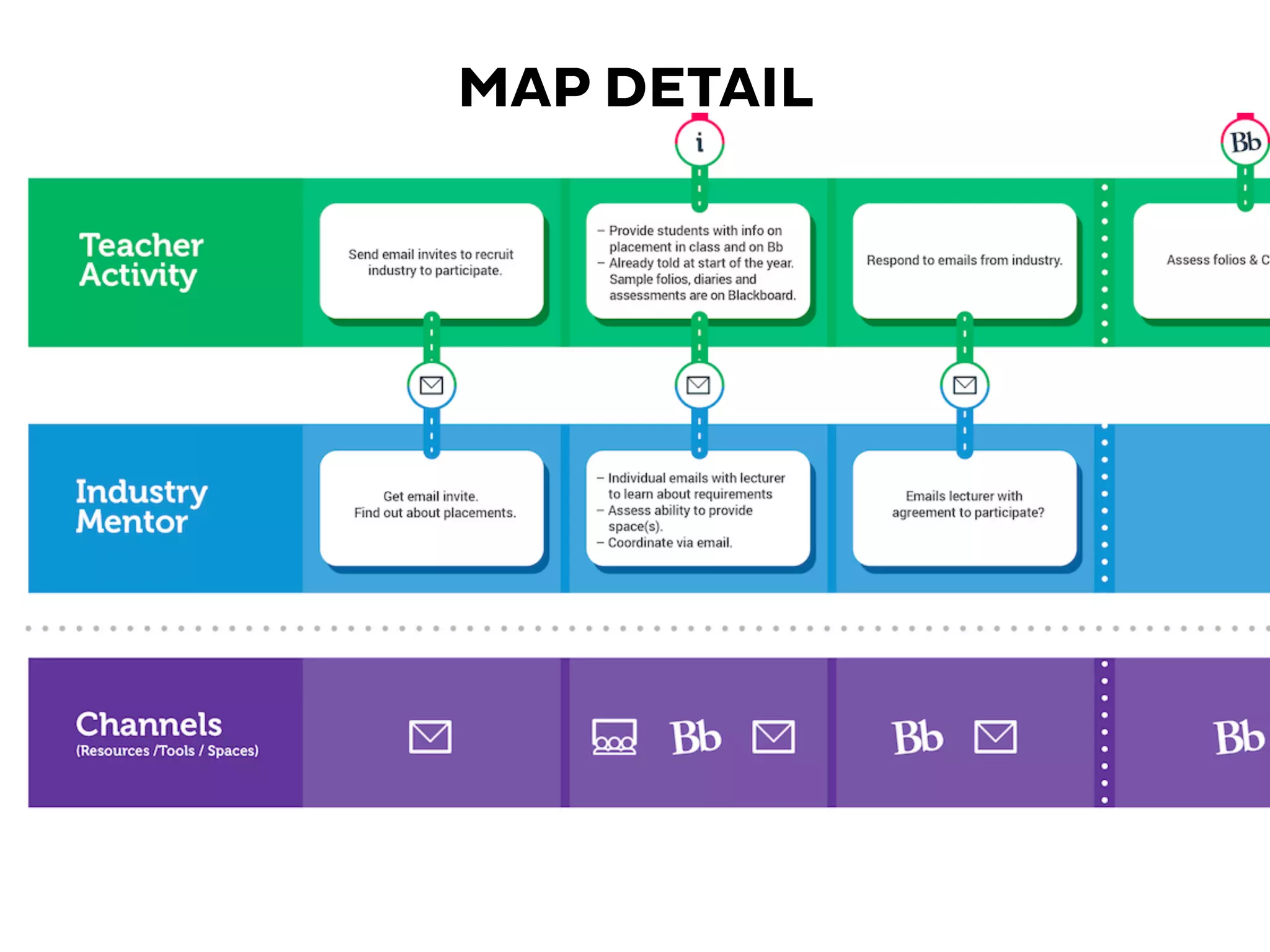
DIGITAL COLLABORATIVE MAP
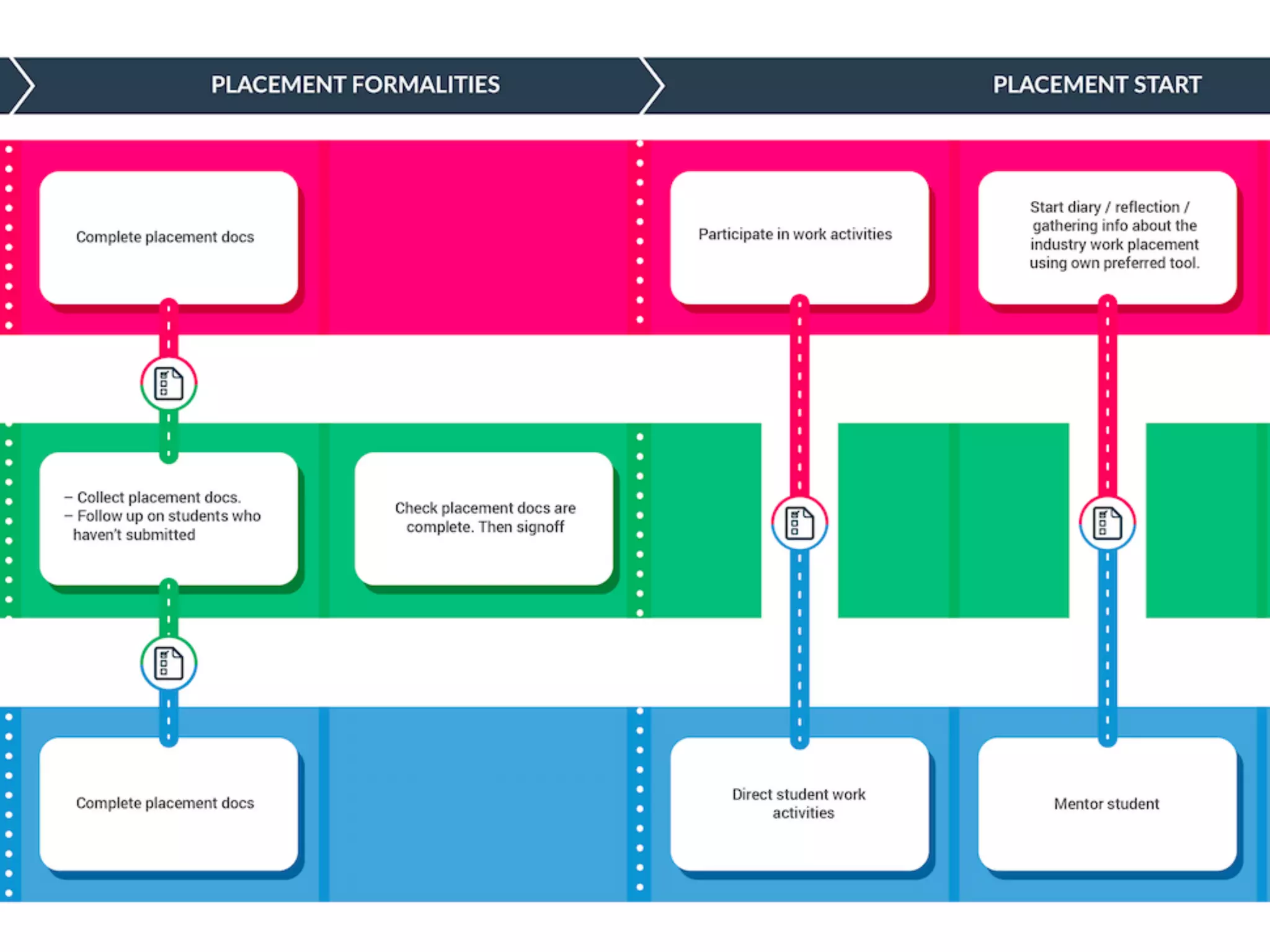
FINAL LEARNER JOURNEY MAP
MAP DETAIL
ADDRESS THE PAIN POINTS:
IMPROVED COMMUNICATION
CHANNELS
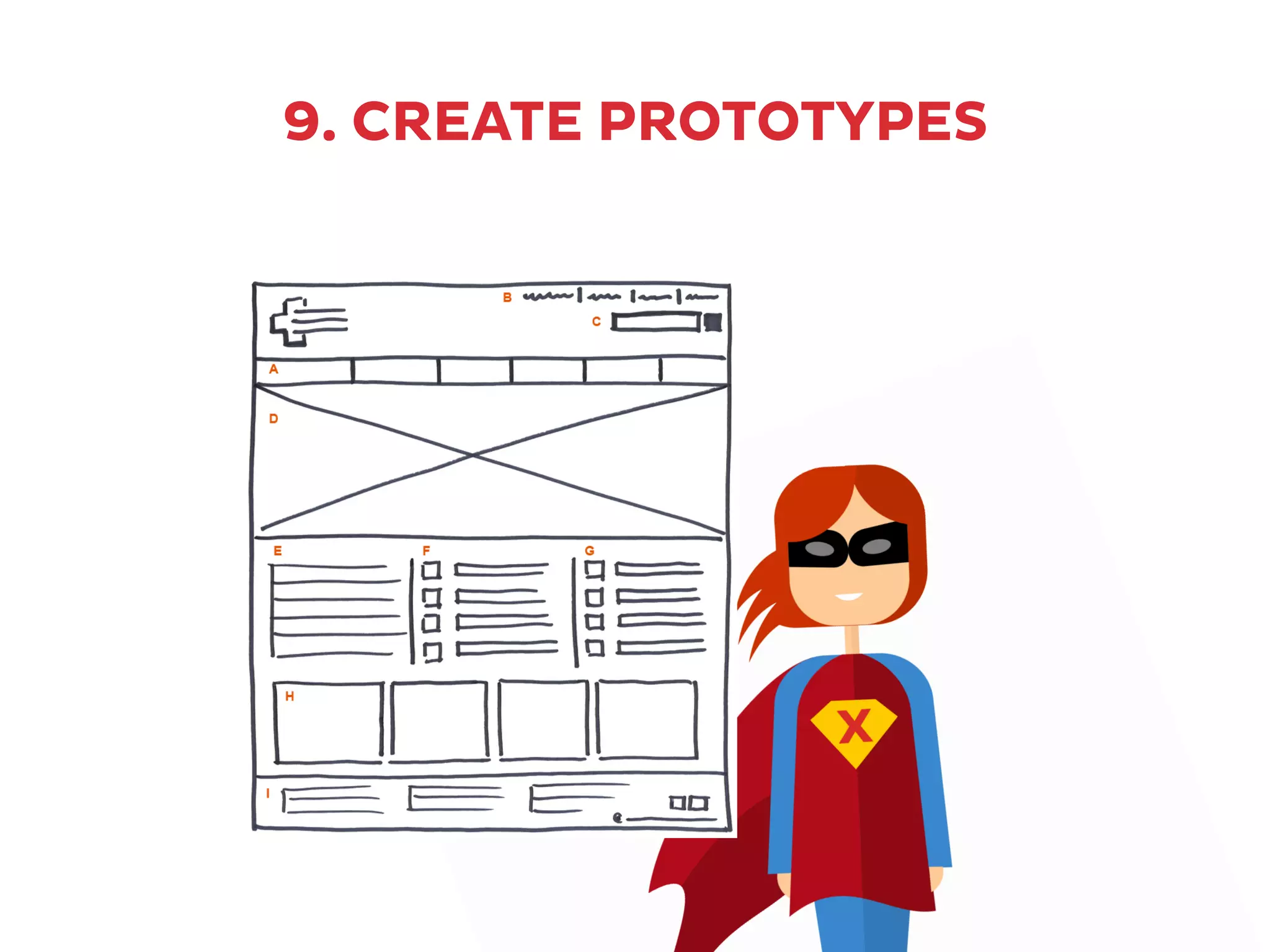
9. CREATE PROTOTYPES
PROTOTYPES
•  What is the minimum you can rapidly
create?
•  Get something in front of people
•  Get feedback
•  Create a new prototype
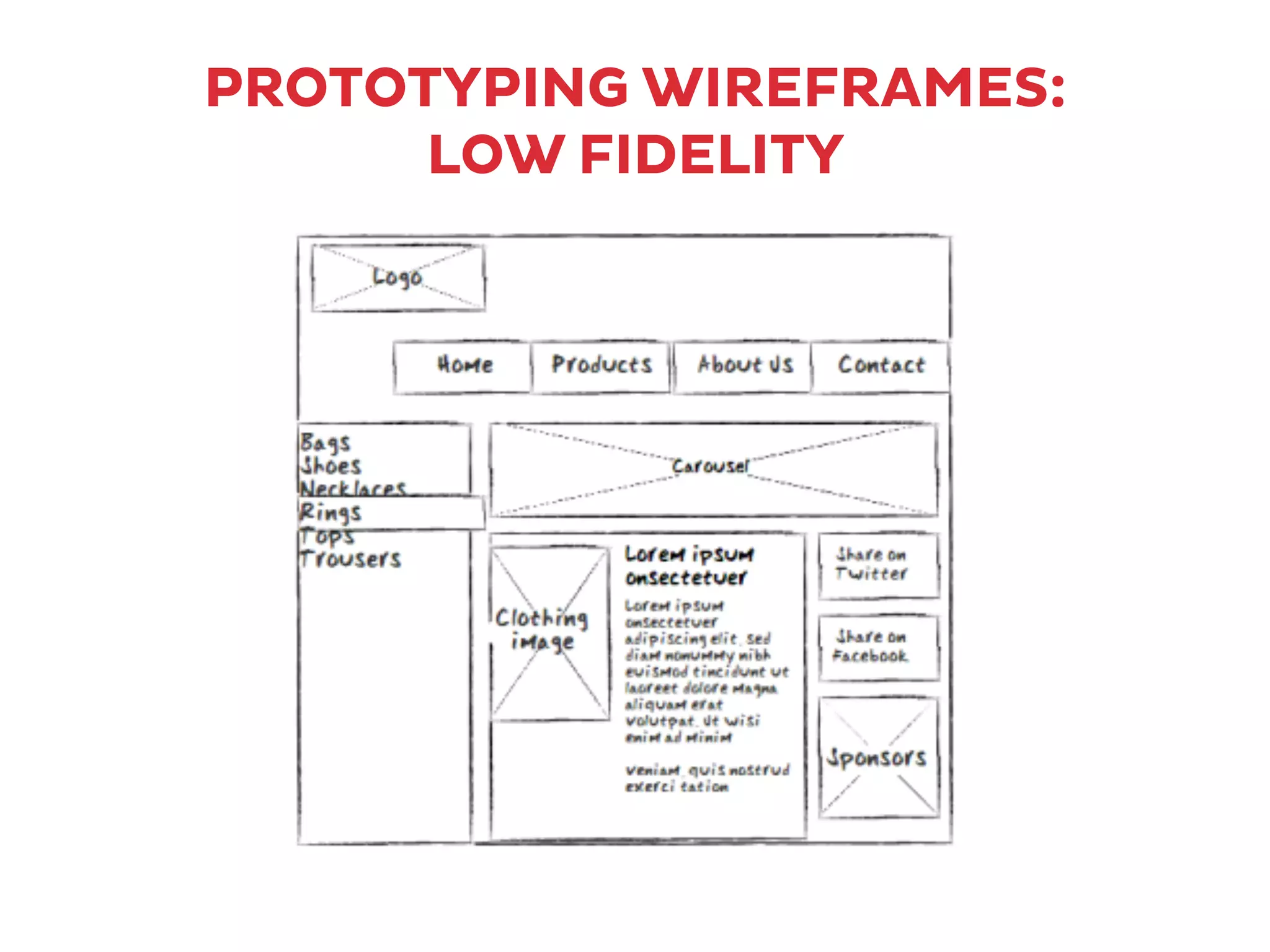
PROTOTYPING WIREFRAMES:
LOW FIDELITY
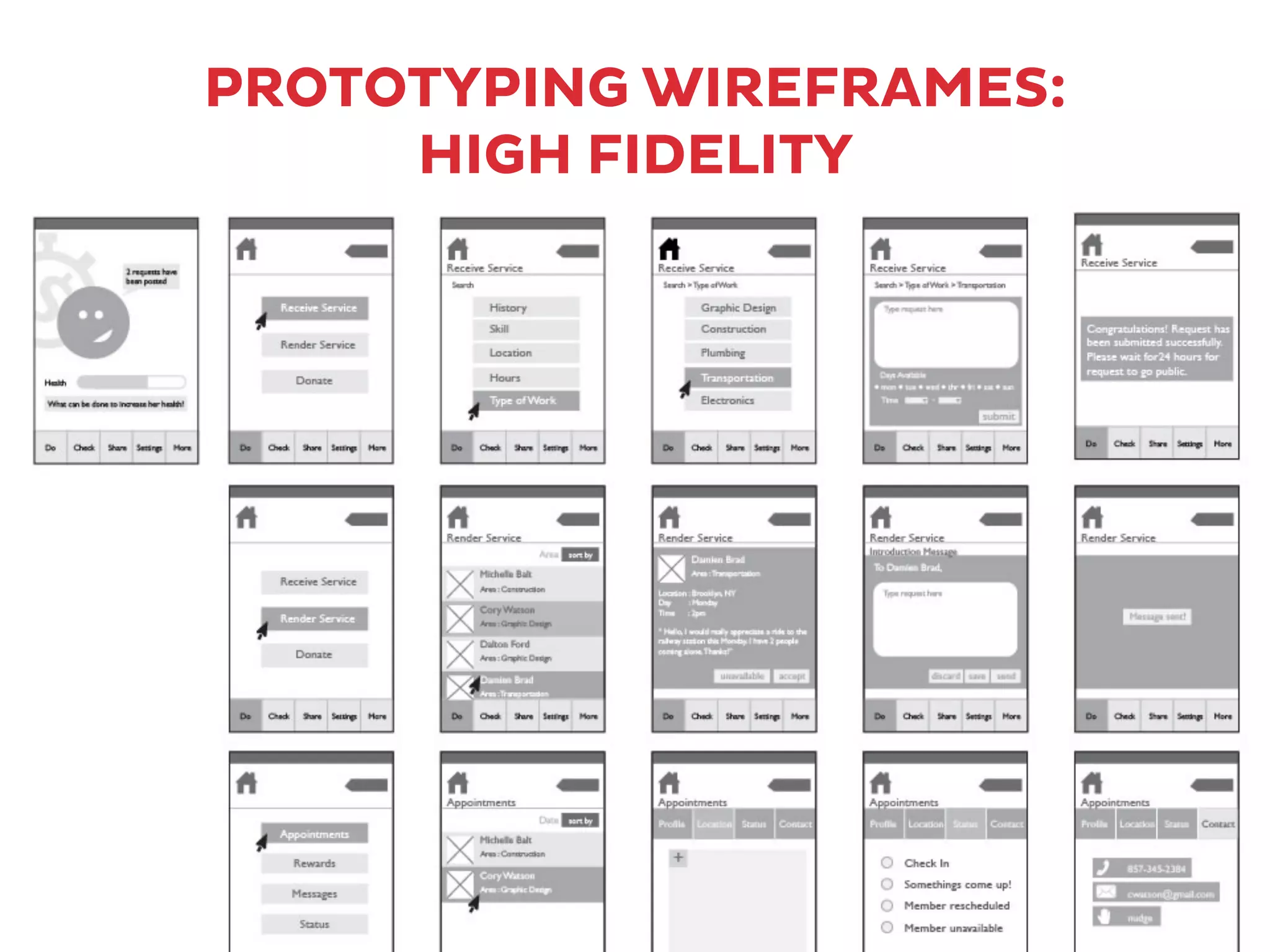
PROTOTYPING WIREFRAMES:
HIGH FIDELITY
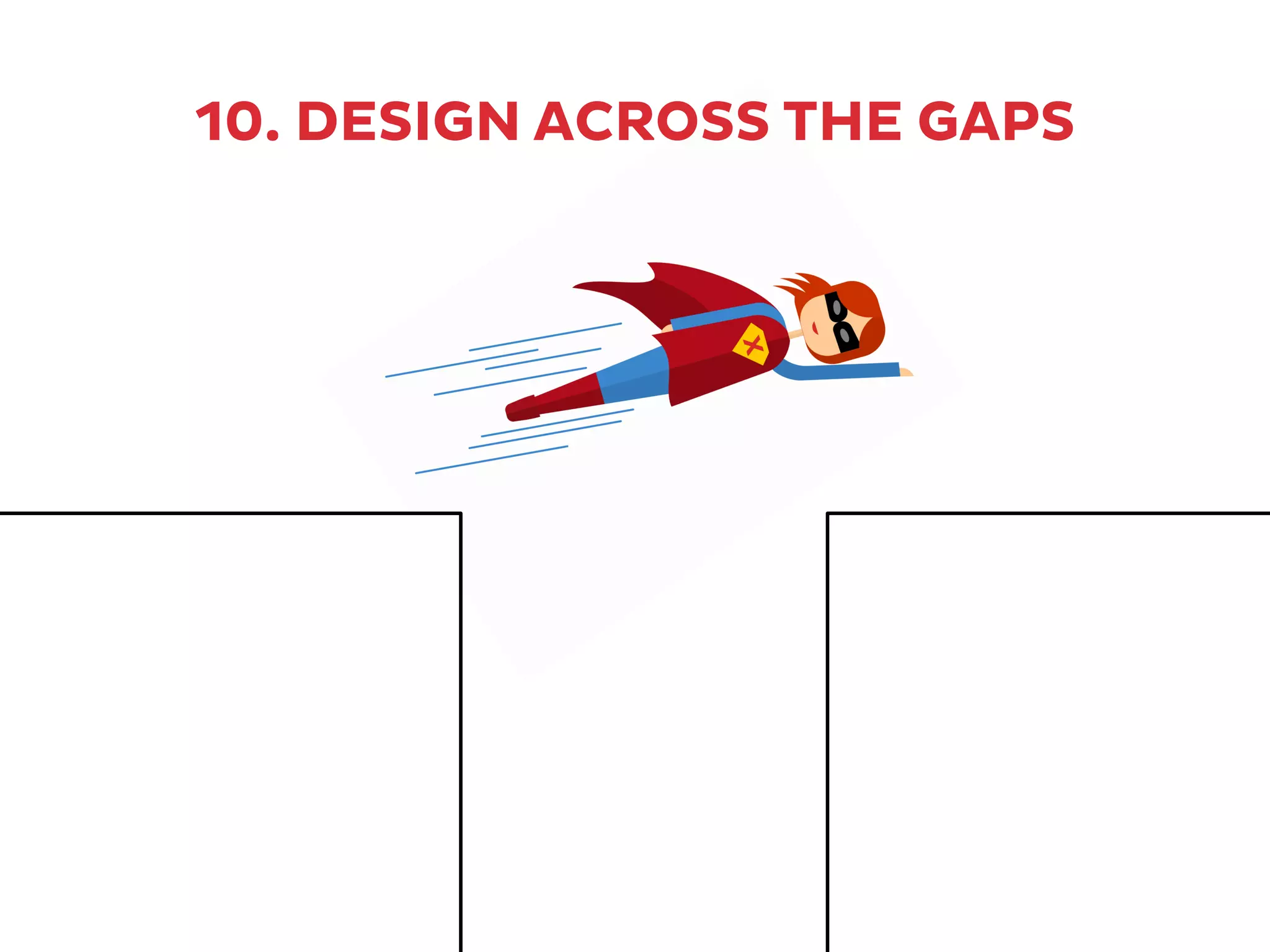
10. DESIGN ACROSS THE GAPS
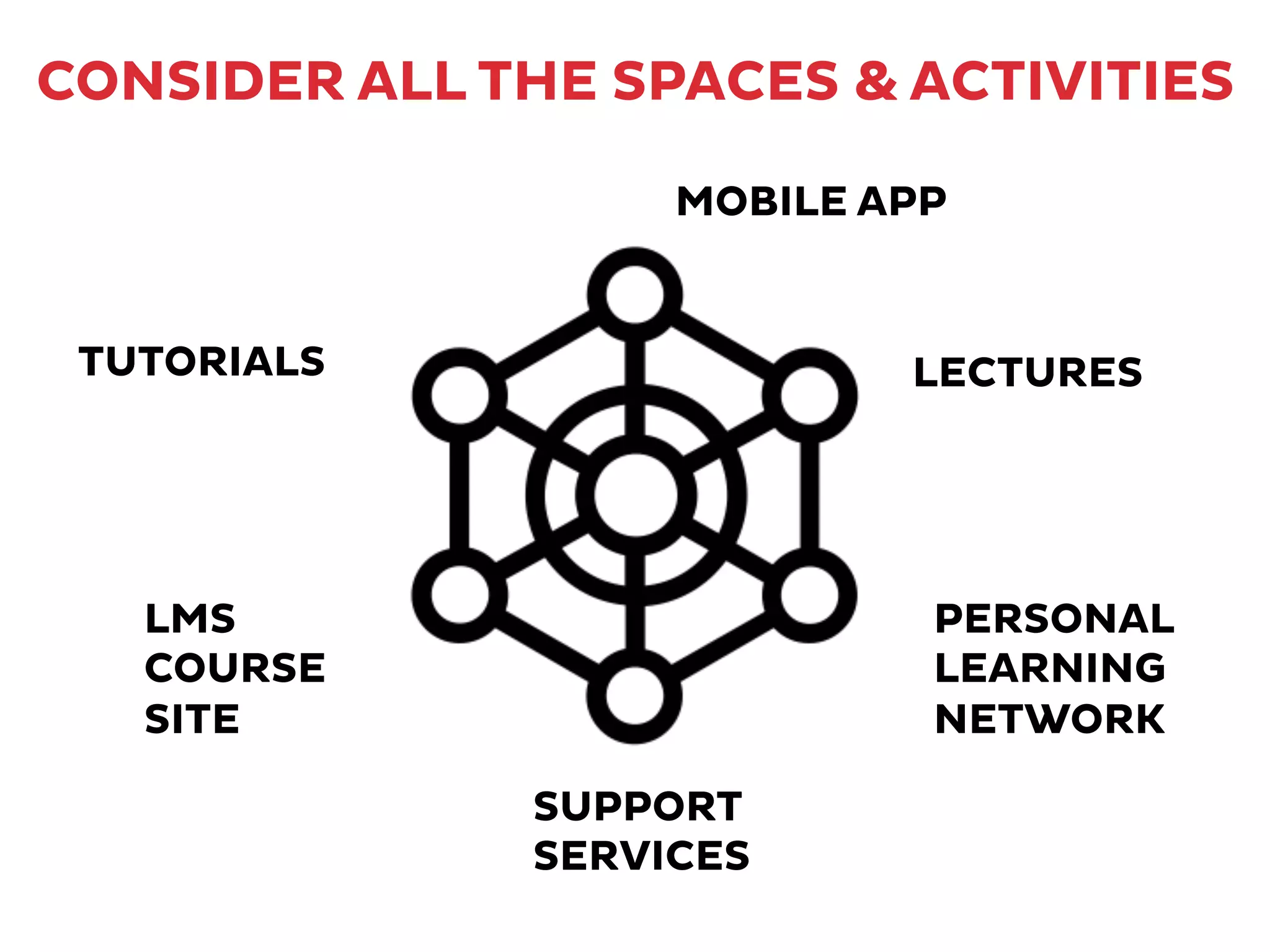
CONSIDER ALL THE SPACES & ACTIVITIES
LECTURES
PERSONAL
LEARNING
NETWORK
TUTORIALS
LMS
COURSE
SITE
SUPPORT
SERVICES
MOBILE APP
STAY IN TOUCH
www.academictribe.co / www. lxdesign.co
@catspyjamasnz @academictribe #lxdesign
Facebook.com/academictribe
Search: lxdesign
joyce@academictribe.co

10 Learner Experience Powers from Experience Girl - #imoot16 Agents of Change

  • 1.
  • 2.
    INTRODUCING EXPERIENCE GIRL JoyceSeitzinger Learning experience designer at Academic Tribe Recent alter-ego Connect @catspyjamasnz Use #imoot16 and #lxdesign
  • 3.
  • 4.
    TRANSCENDING MATERIAL “Experience isnot about good industrial design, multi-touch, or fancy interfaces. It is about transcending the material. It is about creating an experience through a device.” MARC HASSENZAHL
  • 5.
    Meaningful Pleasurable Convenient Usable Reliable Functional LX PYRAMID The LearnerExperience Pyramid describes different levels at which learning resources, services, solutions and systems can be experienced by learners & staff. Based on CX Pyramid by Aberdeen Research after Mark Scibelli and Stephen Anderson. FOCUS ON EXPERIENCES FOCUS ON TASKS Many traditional LMS & learning resource experiences Transformational learning experiences Has personal significance Memorable experience worth sharing Easy to use, works as expected Used without difficulty Is available & accurate Works with inconvenience
  • 6.
    USER EXPERIENCE DESIGN …toachieve high-quality user experience in a company's offerings there must be a seamless merging of the services of multiple disciplines. The first requirement for an exemplary user experience is to meet the exact needs of the customer, without fuss or bother. Don Norman, & Jakob Nielsen
  • 7.
    EXPERIENCE DESIGN It iscrucial to view experience as the consequence of many different systems. Experience emerges from the intertwined works of perception, action, motivation, emotion and cognition in dialogue with the world (place, time, people and objects). Experience Design: Technology for all the right reasons Marc Hassenzahl
  • 8.
    The world iscomplex, and so too must be the activities that we perform. But that doesn’t mean that we must live in continual frustration. No. The whole point of human-centered design is to tame complexity, to turn what would appear to be a complicated tool into one that fits the task, that is understandable, usable, enjoyable. Don Norman, The Design of Everyday Things HUMAN-CENTRED DESIGN
  • 9.
    SERVICE DESIGN THINKING Servicedesign is the intentional and thoughtful design of internal and customer-facing activities needed to deliver a service. Where experience design concerns itself only with the customer- facing aspects, service design looks also at the experience of staff. This Is Service Design Thinking
  • 10.
  • 11.
  • 12.
    EMPATHY FOR THEUSER “Feelings are integral to experiences (maybe even its core), inextricably intertwined with our action.” MARC HASSENZAHL
  • 13.
    EMPATHY FOR THEUSER “Empathy is a noun. A thing. It is an understanding you develop about another person. Empathizing is the use of that understanding – an action.” INDI YOUNG
  • 14.
    DO WE NEEDLEARNER EXPERIENCE DESIGN?
  • 15.
    A DESIGN SCIENCEFOR EDUCATION “Educational technologists needs to develop a set of principled working practices....that contribute to a design science for education.” EILEEN SCANLON
  • 16.
    TEACHING AS ADESIGN SCIENCE Because technology is changing both what and how students learn we can only lead educational innovation by being clear about the principles of designing good teaching and learning and therefore what education needs from technology. DIANA LAURILLARD
  • 17.
  • 18.
    ELEANOR CATTON: ONPURPOSE Reading is a creative act: it cannot happen automatically, and it cannot happen passively. Any piece of writing is therefore as intimately shaped by the reader’s imagination, their memories, their intelligence, their disposition and their state of mind, as by the writer’s. ELEANOR CATTON
  • 19.
    DESIGN FOR EXPERIENCE Participatorydesign makes everyday people, such as users, an integral part of the design process, especially at the early front end. Experience design has emerged recently as a new discipline in response to the new information and communication technologies. But I will argue that there is no such thing as experience design. Experiencing is in people and you can’t design it for someone else. You can, however, design for experiencing. http://www.maketools.com/articles-papers/NewDesignSpace_Sanders_01.pdf LIZ SANDERS
  • 20.
    DISCOVER DEFINE DEVELOPDELIVER Learner & stakeholder driven design research Gain insights and define problem Develop LX solutions through iteration Improve and optimize final learner experience Generalchallenge Specificchallenge Specificsolution LX DOUBLE DIAMOND
  • 21.
  • 22.
    USER INTERVIEWS •  Createan interview guide •  See if some meetings should be user interviews •  Be welcoming and put your user at ease •  Ask them to think out loud •  Explain why you are doing the interview •  Be an active listener •  Ask open questions •  Ask why? Then ask it again.. •  Give encouragement: “How did you feel about it? What did you think?” •  Silence is your best friend
  • 23.
  • 24.
  • 25.
  • 26.
    EXAMPLE: EMPATHY MAPPING EXERCISE • 5 mins - Individually: On post-its, capture the observations from user interviews (1 idea/observation per post-it) •  Review empathy template •  Create an empty map on a large piece of paper (somewhere you can leave it) •  As a group, group your post-its on the quadrants in the map
  • 27.
    3. TRANSLATE FINDINGSINTO PERSONAS
  • 28.
  • 29.
  • 30.
  • 31.
    AFFINITY DIAGRAMMING •  Brainstorm/ ensure all voices are heard / gather interview data / more •  Write down ideas/problems/issues on post-its •  One idea per post-it •  5-7 words per post. Write big
  • 32.
  • 33.
  • 34.
    5. HELP ARTICULATEA PROBLEM STATEMENT ?
  • 35.
    WHAT IS APROBLEM STATEMENT? I am [persona name, 3 characteristics]. I am trying to [outcome/job/task], but [problem/barrier] because [root cause]. This makes me feel [emotion].
  • 36.
    6. ASK HOWMIGHT WE…? ?
  • 37.
    HOW MIGHT WE….? FromStanford d.school
  • 38.
  • 39.
  • 40.
  • 41.
    8. MAPPING THELEARNER JOURNEY
  • 42.
    SIMILAR TECHNIQUES •  Journeymapping (emotional) •  Scenario mapping (narrative) •  Service Design Blueprint (channels)
  • 43.
  • 44.
  • 45.
    WHEN CAN YOUUSE JOURNEY MAPPING? •  For an existing product, object or service •  To get an overview of all the elements and stakeholders •  To map all the touch points •  To identify emotions associated with interactions •  To identify pain points
  • 46.
    WHEN DO YOUUSE JOURNEY MAPPING? For a new product, object or service to be designed, developed and implemented: •  To get a common understanding of aspiring experience for all members of design & development team •  To identify touch points •  To identify channels •  To identify priorities for the development
  • 47.
    WHEN DO YOUUSE JOURNEY MAPPING? Instead of a prototype •  When a prototype is too expensive to build •  Have something to shoot at
  • 48.
    WHY DO YOUUSE JOURNEY MAPPING? •  To map all the bricks in your bricolage (even those beyond your control) •  To step away from your medium •  To design across the gaps •  To facilitate design conversation •  To facilitate development collaboration
  • 49.
    MAP THE LEARNERPATH & TOUCH POINTS
  • 50.
    MAP THE PATHS& TOUCH POINTS OF OTHER STAKEHOLDERS & CHANNELS
  • 51.
  • 52.
  • 53.
  • 54.
    From Designing CXhttp://designingcx.com/2012/10/23/prototype-portable-journey-mapping-worksheet/
  • 55.
  • 56.
    Pre Start Week 2-6 Week 7-10 Week 11-12 End& post LMS Wiki is tricky to participa te in! Conten t Early access ☺ Teacher Picture & intro video ☺ No involvemen t in review ! Peers No icebreaker !
  • 57.
    OUR VE EXPRESSLEARNER JOURNEY MAP
  • 58.
    THE TEAM •  JoyceSeitzinger •  Mark Smithers Lecturers •  Annette Cook •  Nicola Hardy Digital Learning Team •  Spiros Soulis •  Angela Nicolettou •  Eloise Acuna
  • 59.
    USER RESEARCH ININITIAL 3 HOUR MAPPING SESSION
  • 60.
    FURTHER RESEARCH TOINFORM DIGITAL COLLABORATIVE MAP
  • 61.
  • 62.
  • 64.
    ADDRESS THE PAINPOINTS: IMPROVED COMMUNICATION CHANNELS
  • 65.
  • 66.
    PROTOTYPES •  What isthe minimum you can rapidly create? •  Get something in front of people •  Get feedback •  Create a new prototype
  • 67.
  • 68.
  • 69.
  • 70.
    CONSIDER ALL THESPACES & ACTIVITIES LECTURES PERSONAL LEARNING NETWORK TUTORIALS LMS COURSE SITE SUPPORT SERVICES MOBILE APP
  • 71.
    STAY IN TOUCH www.academictribe.co/ www. lxdesign.co @catspyjamasnz @academictribe #lxdesign Facebook.com/academictribe Search: lxdesign joyce@academictribe.co