Sept. 28 2016
Human-Centered Design
Methods & Tools Workshop
Morgan Noel
Director, Methodology
@moxmas
Jake Truemper
Director, Experience Design
@trump29
WTF is HCD?
Human Centered Design
focuses on understanding the
entire experience of a
customer, employee or partner.
Consider the experience of going
to a Cardinals baseball game...
Decide to go
to a game
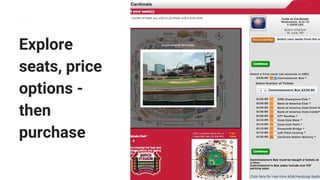
Explore
seats, price
options -
then
purchase
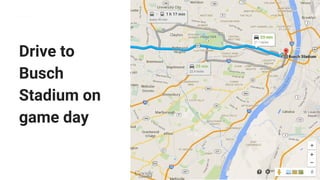
Drive to
Busch
Stadium on
game day
Park and
make your
way to your
seats
Purchase
food &
beverages
No, we said
BEVERAGES
Enjoy the
game!
(Especially if
the Cubs win)
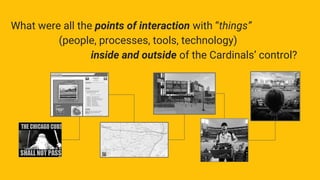
What were all the points of interaction with “things”
(people, processes, tools, technology)
inside and outside of the Cardinals’ control?
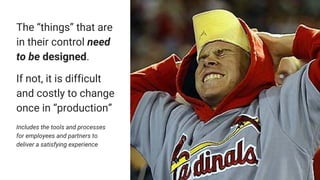
The “things” that are
in their control need
to be designed.
If not, it is difficult
and costly to change
once in “production”
Includes the tools and processes
for employees and partners to
deliver a satisfying experience
So ask yourself three
Human Centered Questions...
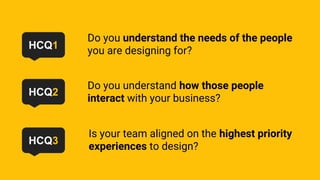
Do you understand the needs of the people
you are designing for?
Do you understand how those people
interact with your business?
Is your team aligned on the highest priority
experiences to design?
HCQ1
HCQ2
HCQ3
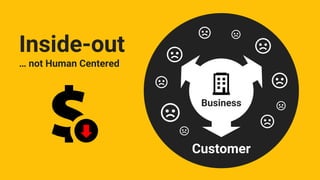
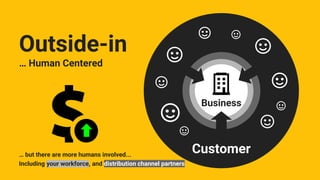
Sounds simple, but for many
organizations this is a massive
dynamic shift from inside-out,
to outside-in.
Customer
Business
Inside-out
… not Human Centered
Customer
Business
Outside-in
… Human Centered
… but there are more humans involved...
Including your workforce, and distribution channel partners
Lets walk through a recent real
world example
HCD Methods & Tools
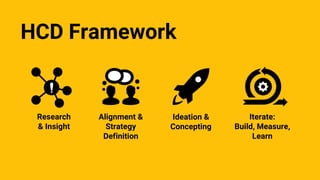
HCD Framework
Ideation &
Concepting
Alignment &
Strategy
Definition
Research
& Insight
Iterate:
Build, Measure,
Learn
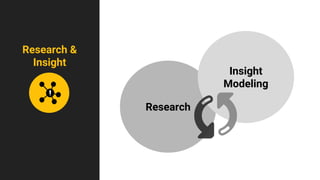
Research
Insight
Modeling
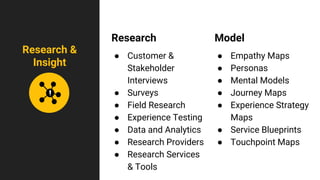
Research &
Insight
Research
● Customer &
Stakeholder
Interviews
● Surveys
● Field Research
● Experience Testing
● Data and Analytics
● Research Providers
● Research Services
& Tools
Model
● Empathy Maps
● Personas
● Mental Models
● Journey Maps
● Experience Strategy
Maps
● Service Blueprints
● Touchpoint Maps
Research &
Insight
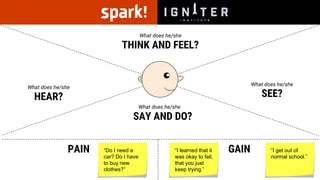
Empathy Maps
Empathy Maps
What are they?
A collaborative tool for building
empathy with an intended audience.
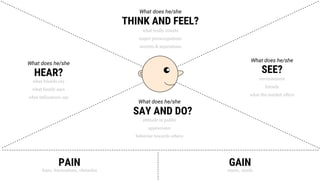
THINK AND FEEL?
What does he/she
what really counts
major preoccupations
worries & aspirations
SEE?
What does he/she
environment
friends
what the market offers
SAY AND DO?
What does he/she
attitude in public
appearance
behavior towards others
HEAR?
What does he/she
what friends say
what family says
what influencers say
PAIN
fears, frustrations, obstacles
GAIN
wants, needs
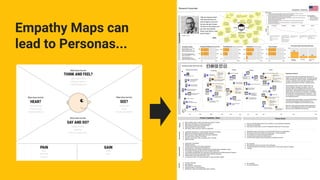
Empathy Maps can
lead to Personas...
THINK AND FEEL?
What does he/she
SEE?
What does he/she
SAY AND DO?
What does he/she
HEAR?
What does he/she
PAIN GAIN
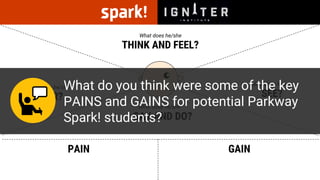
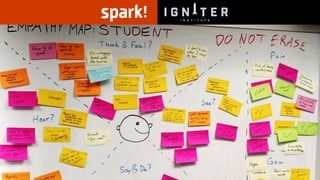
What do you think were some of the key
PAINS and GAINS for potential Parkway
Spark! students?
THINK AND FEEL?
What does he/she
SEE?
What does he/she
SAY AND DO?
What does he/she
HEAR?
What does he/she
PAIN GAIN“Do I need a
car? Do I have
to buy new
clothes?”
“I learned that it
was okay to fail,
that you just
keep trying.”
“I get out of
normal school.”
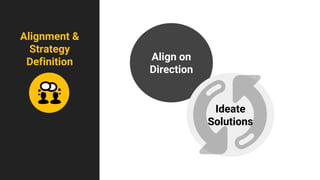
Align on
Direction
Ideate
Solutions
Alignment &
Strategy
Definition
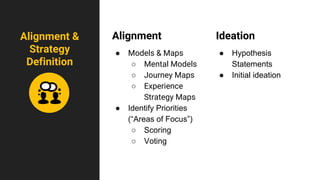
Alignment
● Models & Maps
○ Mental Models
○ Journey Maps
○ Experience
Strategy Maps
● Identify Priorities
(“Areas of Focus”)
○ Scoring
○ Voting
Ideation
● Hypothesis
Statements
● Initial ideation
Alignment &
Strategy
Definition
Experience
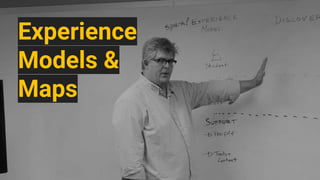
Models &
Maps
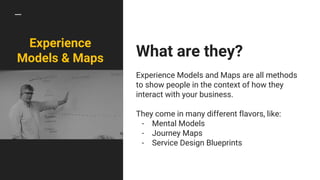
What are they?
Experience Models and Maps are all methods
to show people in the context of how they
interact with your business.
They come in many different flavors, like:
- Mental Models
- Journey Maps
- Service Design Blueprints
Experience
Models & Maps
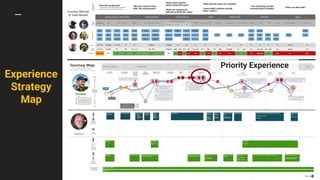
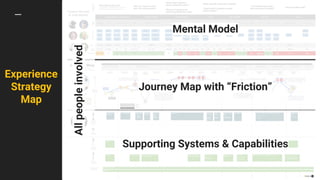
We like to combine them together...
Experience
Strategy
Map
Priority Experience
Experience
Strategy
Map
Mental Model
Journey Map with “Friction”
Supporting Systems & Capabilities
Allpeopleinvolved
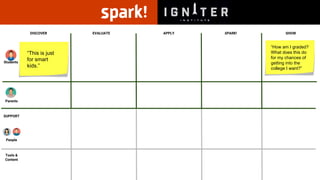
DISCOVER EVALUATE APPLY SPARK! SHOW
Students
Parents
People
SUPPORT
Tools &
Content
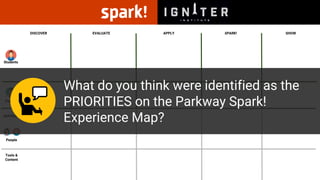
What do you think were identified as the
PRIORITIES on the Parkway Spark!
Experience Map?
DISCOVER EVALUATE APPLY SPARK! SHOW
Students
Parents
People
SUPPORT
Tools &
Content
“This is just
for smart
kids.”
“How am I graded?
What does this do
for my chances of
getting into the
college I want?”
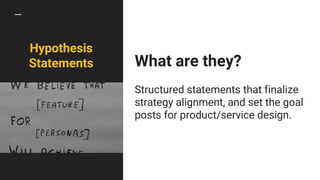
Hypothesis Statements
What are they?
Structured statements that finalize
strategy alignment, and set the goal
posts for product/service design.
Hypothesis
Statements
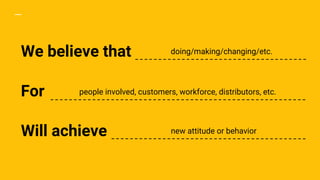
We believe that doing/making/changing/etc.
For people involved, customers, workforce, distributors, etc.
Will achieve new attitude or behavior
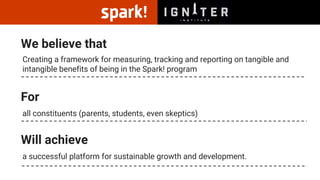
We believe that
Creating a framework for measuring, tracking and reporting on tangible and
intangible benefits of being in the Spark! program
For
all constituents (parents, students, even skeptics)
Will achieve
a successful platform for sustainable growth and development.
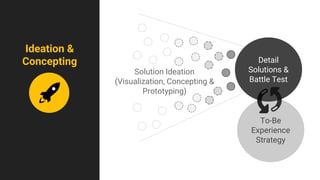
Ideation &
Concepting
To-Be
Experience
Strategy
Detail
Solutions &
Battle Test
Solution Ideation
(Visualization, Concepting &
Prototyping)
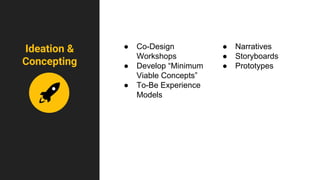
● Co-Design
Workshops
● Develop “Minimum
Viable Concepts”
● To-Be Experience
Models
● Narratives
● Storyboards
● Prototypes
Ideation &
Concepting
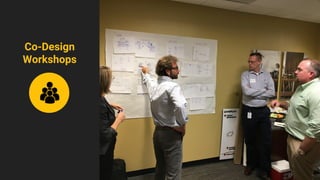
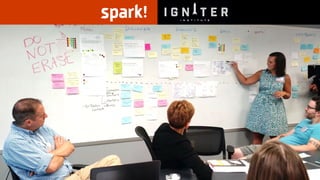
Co-Design Workshops
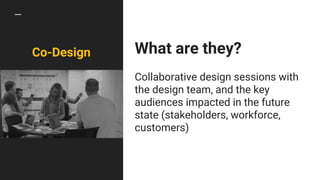
Co-Design What are they?
Collaborative design sessions with
the design team, and the key
audiences impacted in the future
state (stakeholders, workforce,
customers)
Co-Design
Workshops
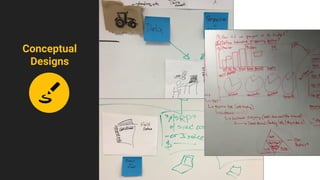
Conceptual
Designs What are they?
Raw, high level sketches -- just
enough to communicate an idea for
someone else to understand.
Conceptual
Designs
And then you go build something...
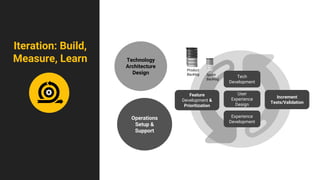
Tech
Development
User
Experience
Design
Experience
Development
Feature
Development &
Prioritization
Increment
Tests/Validation
Product
Backlog Sprint
Backlog
Technology
Architecture
Design
Operations
Setup &
Support
Iteration: Build,
Measure, Learn
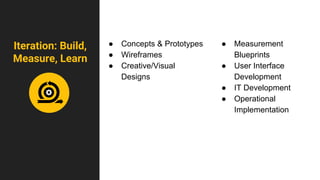
● Concepts & Prototypes
● Wireframes
● Creative/Visual
Designs
● Measurement
Blueprints
● User Interface
Development
● IT Development
● Operational
Implementation
Iteration: Build,
Measure, Learn
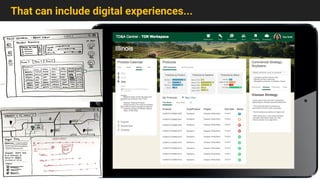
That can include digital experiences...
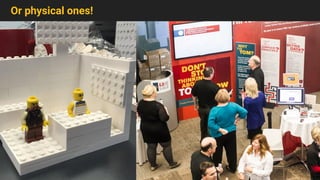
Or physical ones!
Human-Centered Design Methods & Tools

Human-Centered Design Methods & Tools