Cell Division Chapter 18 Content  •  Mitosis  •  Meiosis
Introduction to cell division
Lesson Objectives At the end of this lesson, you should be able to:  state the importance of mitosis in growth, repair and asexual reproduction  explain the need for the production of genetically identical cells and fine control of replication  identify, with the aid of diagrams, the main stages of mitosis  state what is meant by  homologous pairs  of chromosomes
Lesson Objectives (e) identify, with the aid of diagrams, the main stages of meiosis (Names of the sub-divisions of prophase are not required)  (f) define the terms  haploid  and  diploid , and explain the need for a reduction division process prior to fertilisation in sexual reproduction (g) state how meiosis and fertilisation can lead to variation  Use the knowledge gained in this section in new situations or to solve related problems.
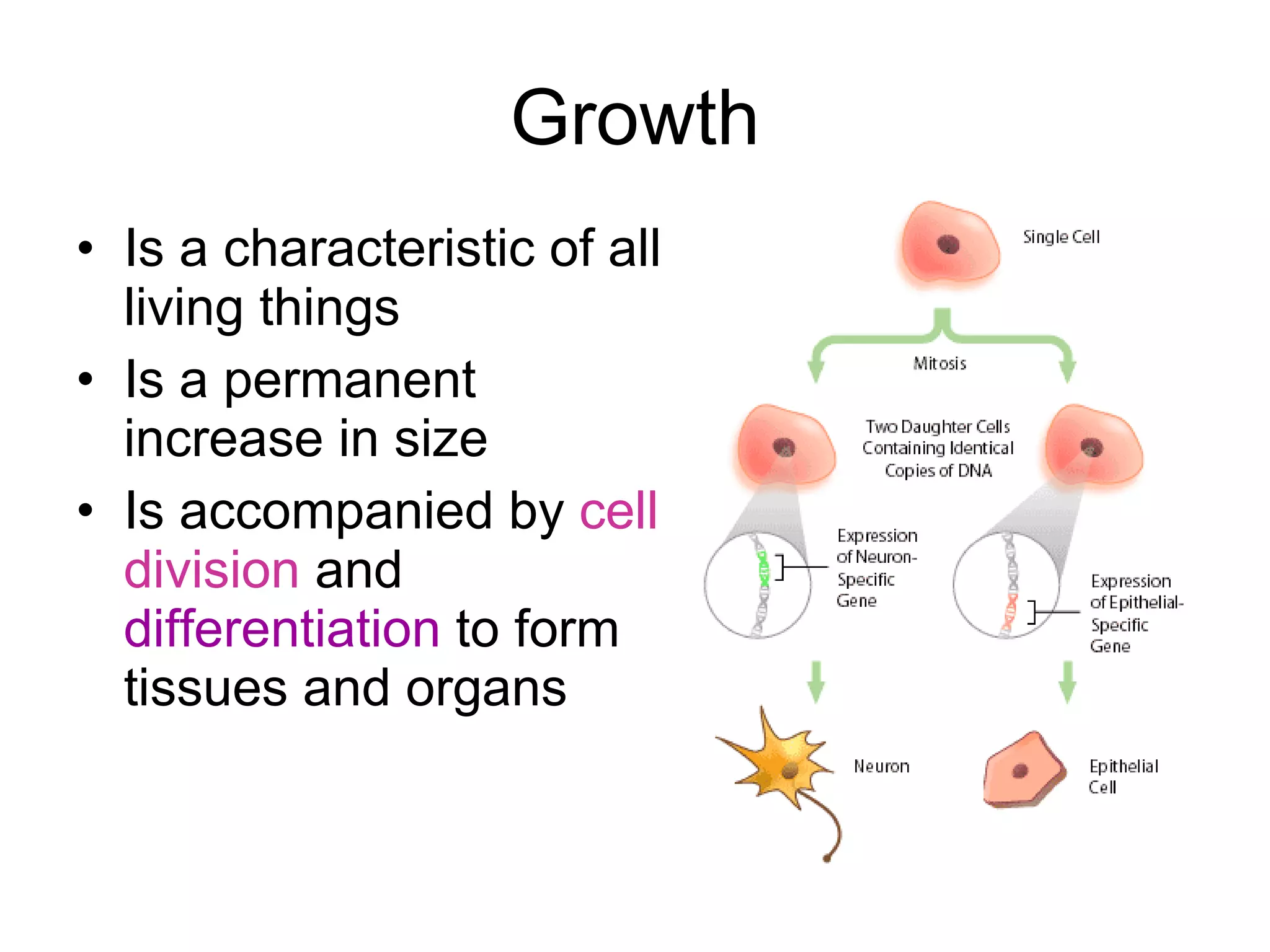
Growth Is a characteristic of all living things Is a permanent increase in size Is accompanied by  cell division  and  differentiation  to form tissues and organs
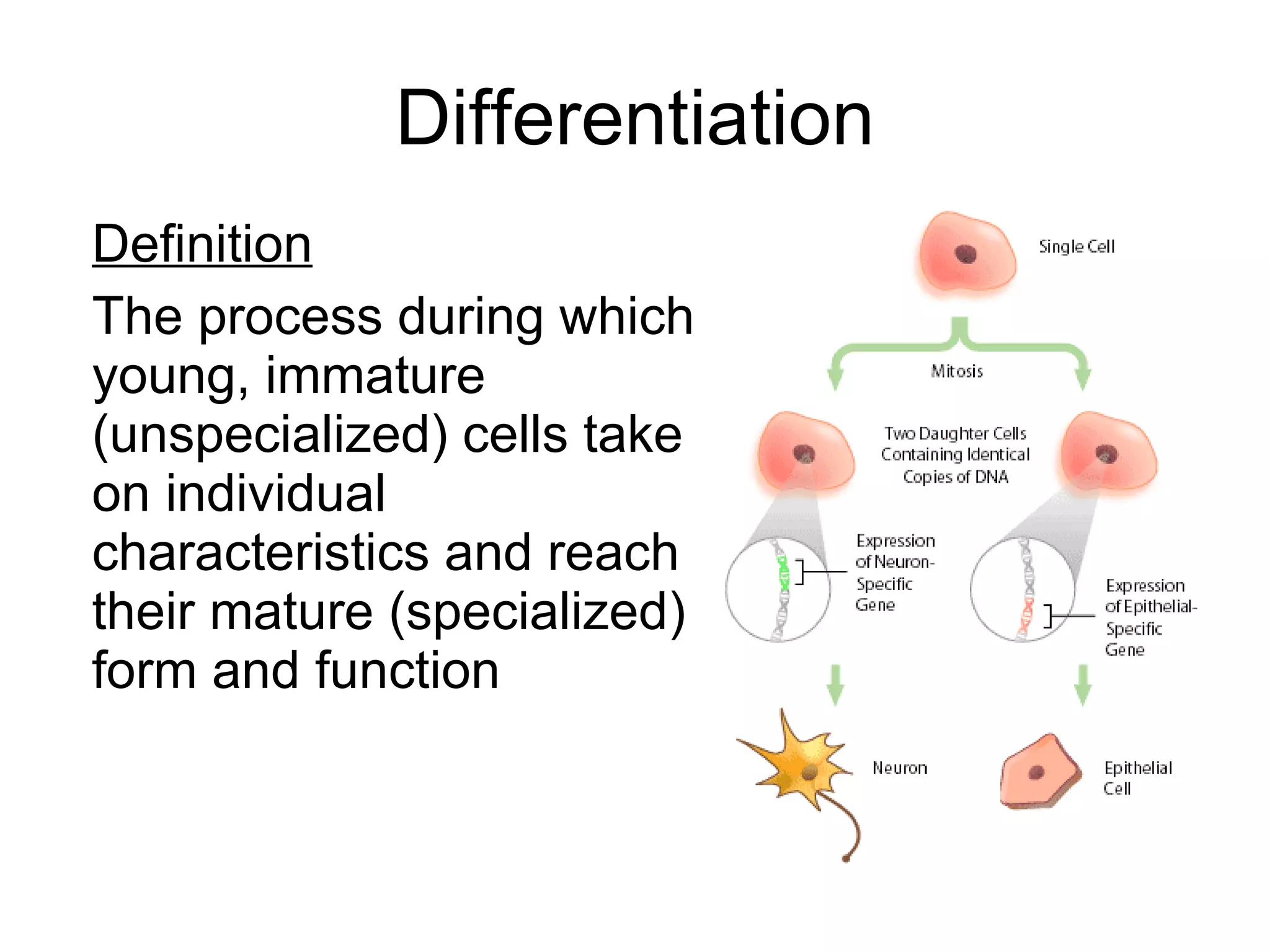
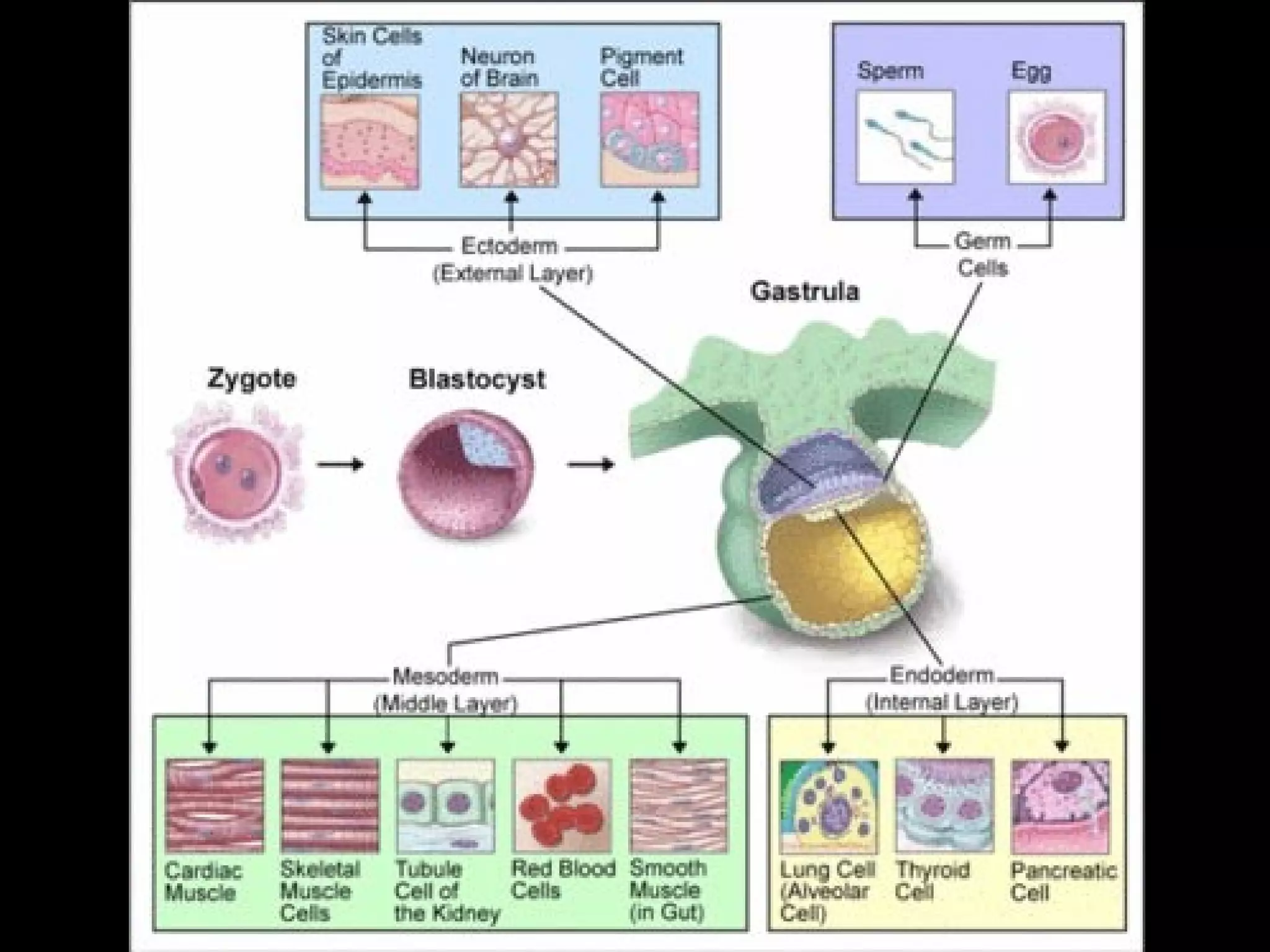
Differentiation Definition The process during which young, immature (unspecialized) cells take on individual characteristics and reach their mature (specialized) form and function
 
How does growth take place in plants and animals? In plants Growth is restricted to the tips of  1 roots and  2 shoots, known as  growing points The shoot and root tips can grow throughout the life of the plant In animals Growth occurs throughout the body Most animals stop growing soon after reaching a certain age ( maturity ) For a multicellular organism to grow normally, its cells must first divide. The cell division that takes place during growth is called  mitosis

Chapter 18 Cell Division Lesson 1 - Introduction to Cell Division

  • 1.
    Cell Division Chapter18 Content • Mitosis • Meiosis
  • 2.
  • 3.
    Lesson Objectives Atthe end of this lesson, you should be able to: state the importance of mitosis in growth, repair and asexual reproduction explain the need for the production of genetically identical cells and fine control of replication identify, with the aid of diagrams, the main stages of mitosis state what is meant by homologous pairs of chromosomes
  • 4.
    Lesson Objectives (e)identify, with the aid of diagrams, the main stages of meiosis (Names of the sub-divisions of prophase are not required) (f) define the terms haploid and diploid , and explain the need for a reduction division process prior to fertilisation in sexual reproduction (g) state how meiosis and fertilisation can lead to variation Use the knowledge gained in this section in new situations or to solve related problems.
  • 5.
    Growth Is acharacteristic of all living things Is a permanent increase in size Is accompanied by cell division and differentiation to form tissues and organs
  • 6.
    Differentiation Definition Theprocess during which young, immature (unspecialized) cells take on individual characteristics and reach their mature (specialized) form and function
  • 7.
  • 8.
    How does growthtake place in plants and animals? In plants Growth is restricted to the tips of 1 roots and 2 shoots, known as growing points The shoot and root tips can grow throughout the life of the plant In animals Growth occurs throughout the body Most animals stop growing soon after reaching a certain age ( maturity ) For a multicellular organism to grow normally, its cells must first divide. The cell division that takes place during growth is called mitosis