Mechanisms of Evolution: Genetics
Introduction to Genetics Genetics is the study of genes and the ways whereby they determine the traits of an organism We cover the following concepts and principles of evolution based on genetics:  Biological Genetics Chromosomes and Genes Mitosis and Meiosis Population Genetics Molecular Biology
Key Concepts in Evolution: Natural Selection Species : A group of life forms (plants and animals) that can reproduce fertile offspring among themselves Evolution : Change through time of biological species Natural selection : Evolutionary change based on differential reproduction of the species within an environment
Key Concepts in Evolutionary Thought: Mutation Heredity:  the transmission of all biological traits (inherited characteristic) from generation to generation Chromosome : Body in the nucleus of the cell that contains the hereditary material: DNA and protein Genes : A chromosomal segment with a specific function Mutation : Alteration of genetic material giving rise to new life forms
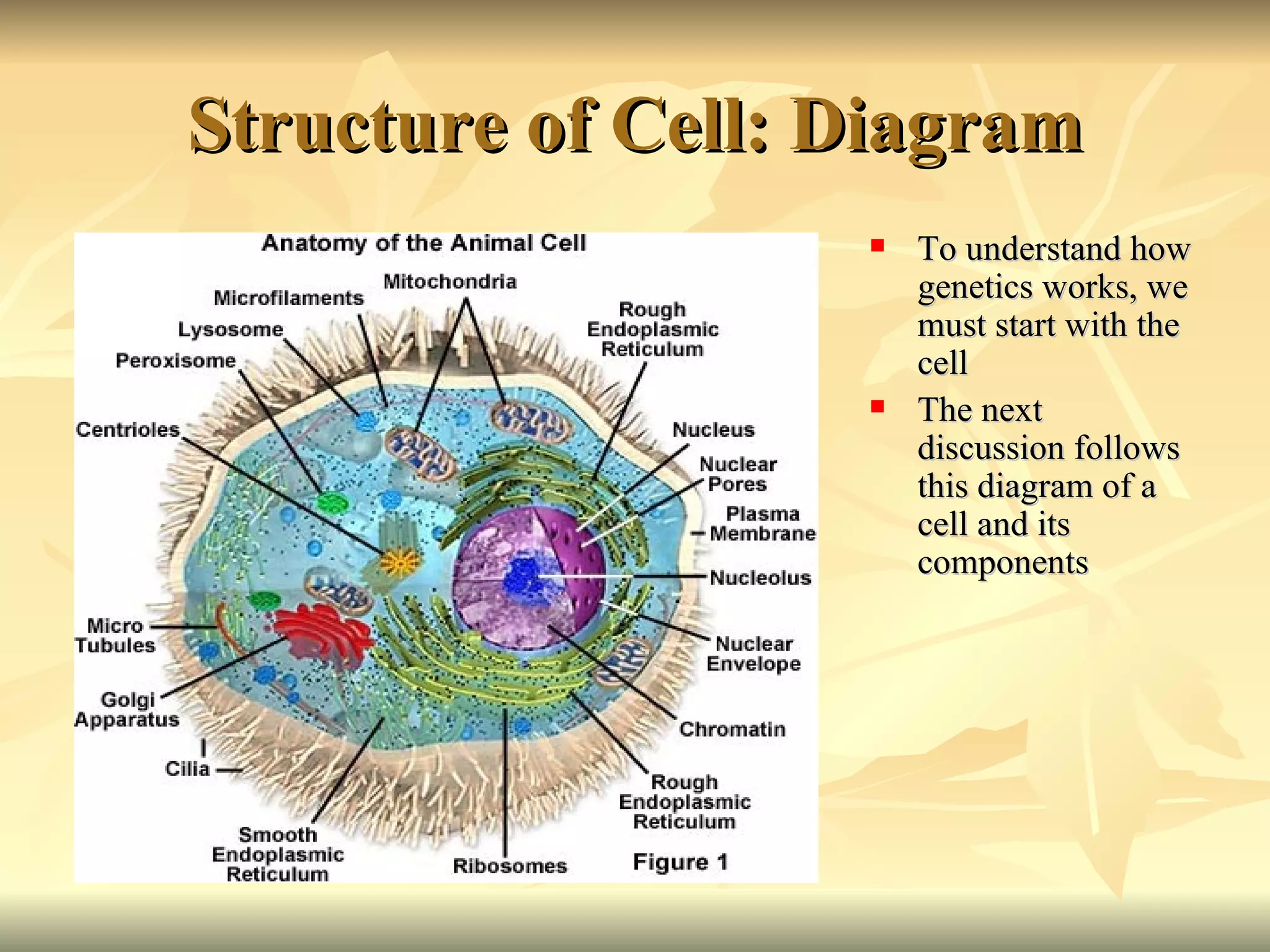
Structure of Cell: Diagram To understand how genetics works, we must start with the cell The next discussion follows this diagram of a cell and its components
Cell Structure: Description Cell : Smallest unit of the organism considered to be alive Nucleus : Center of the cell, which contains genetic material (chromosomes, comprising the genes) Nuclear Membrane : Membrane enclosing the nucleus Cytoplasm : Jellylike material that make up the rest of the cell Plasma Membrane : The membrane that keeps the cell in shape and allows entry and exit of certain material. The diagram to the left show other specialized parts: nerve cell, white blood cell, sperm
Cells: Other Parts Proteins:  The organic molecules that maintain the cells’ functions Organelles:  functional parts within cytoplasm Ribosomes : organelles important to protein synthesis, as we will see Mitochondria:  organelles responsible for energy production; They have their own DNA whose regular mutations enable relative dating within a species, human in this case
Concepts  of Genetics Trait:  Any inborn feature of a living organism   Each organism contains a pair of  genes  for each trait Each  gene  may have two or more  alleles (variants) Monogenic Trait:  a trait coded by one gene for each trait (e.g., phenylthiocarbamide  [PTC]  taster vs. nontaster of the bitterness of brussels sprouts); Mendelian Trait:  This is a synonym for  Monogenic trait Polygenic:  a trait coded by more than one gene (e.g. skin color, eye color)
Genes and Chromosomes In the cell nucleus is genetic material which determines our traits.  Chromosomes  are long strands of  molecules  and protein; they come in pairs Humans have 23 pairs of chromosomes, or 46 in all Genes  are units within chromosomes Also in pairs, they occur in specific location, or  loci , of the chromosomes Each variant of a trait is determined by an  allele  of a gene
Genetic Composition: Genotype Genotype : Alleles of a gene possessed by an organism Homozygous : Having two of the same allele in a gene pair Heterozygous : Having two different alleles in a gene pair
Genetic Appearance: Phenotype Phenotype : Observable characteristics of an organism Dominant : Allele of a pair that is expressed in the phenotype (e.g. PTC taster) Recessive : Allele of a pair that is expressed only when homozygous (e.g. PTC nontaster, Blood Type O) Codominant : Both alleles of a pair are expressed in the phenotype (e.g., Blood Type A and B) Or four o’clock flowers: red, white—and pink
Cell Division Cell division is a constant process in all living forms. There are two types of cell division:  Mitosis:  The division of  somatic  or body cells Meiosis:  The division of  gametes  or sex cells:  sperm  in the males of any species and  ovum  (plural  ova ) or egg in the females of any species The next sections explain how these two types of cells divide. Refer to the diagram in the next panel
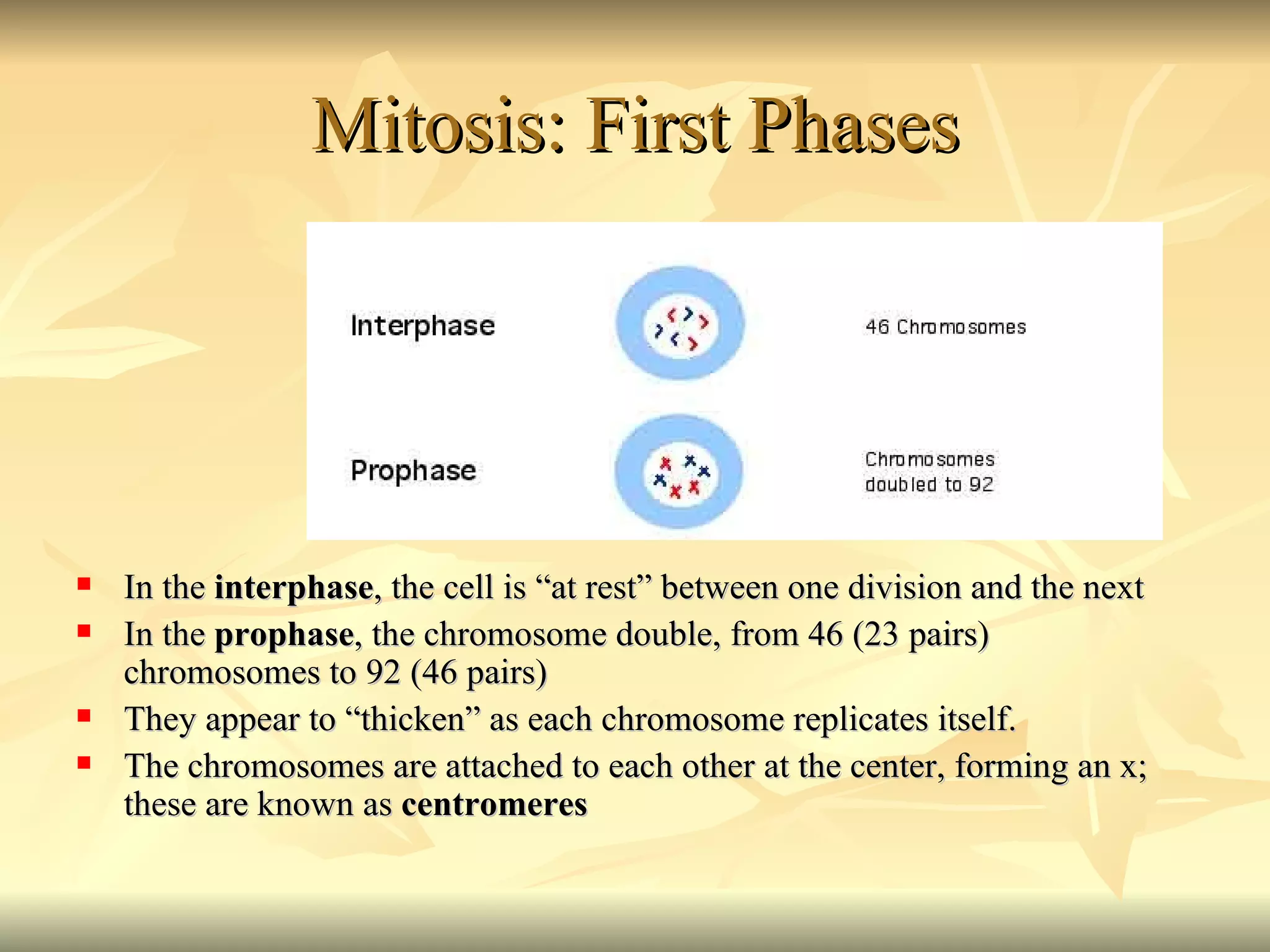
Mitosis: First Phases In the  interphase , the cell is “at rest” between one division and the next In the  prophase , the chromosome double, from 46 (23 pairs) chromosomes to 92 (46 pairs) They appear to “thicken” as each chromosome replicates itself. The chromosomes are attached to each other at the center, forming an x; these are known as  centromeres
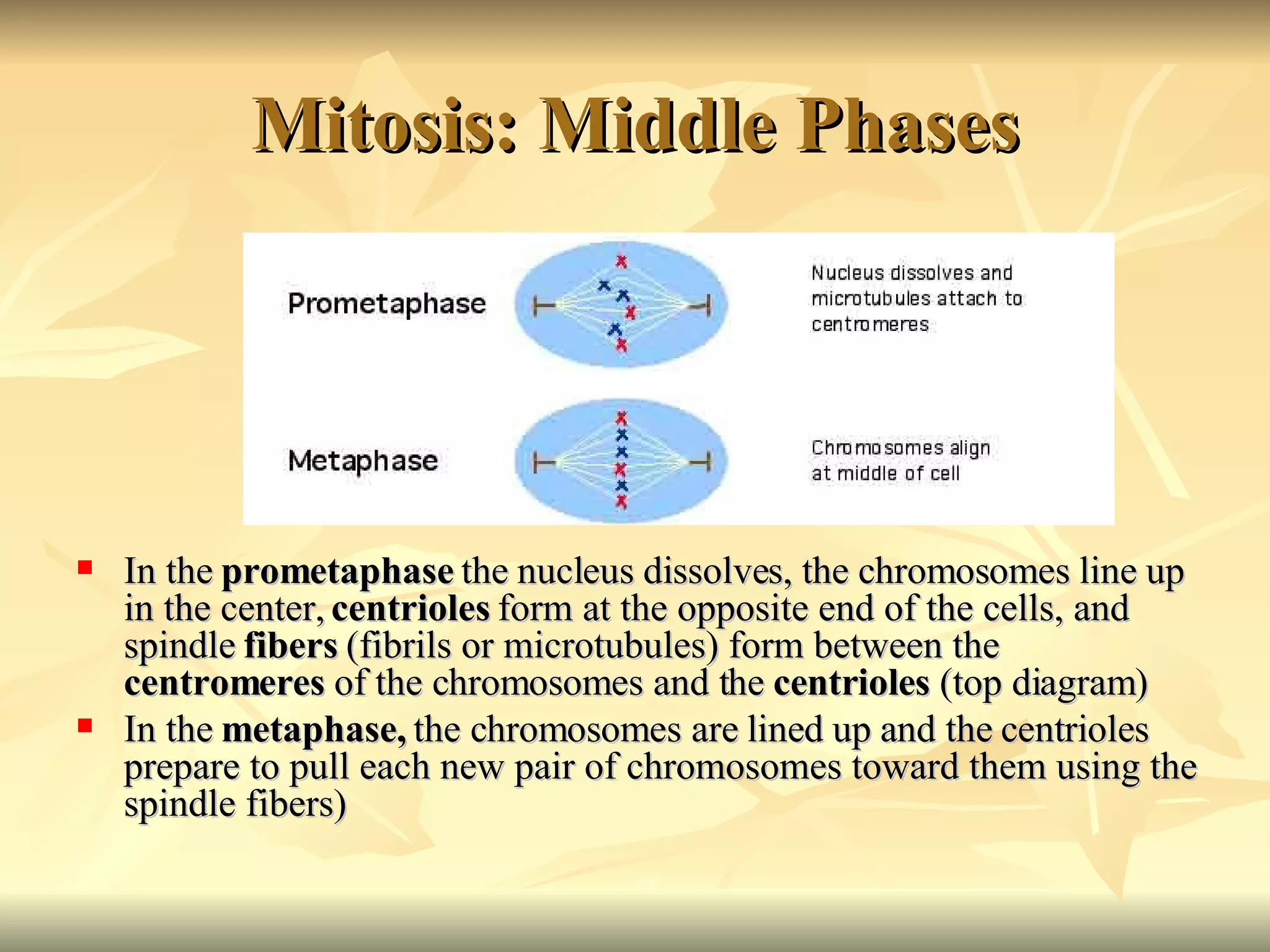
Mitosis: Middle Phases In the  prometaphase  the nucleus dissolves, the chromosomes line up in the center,  centrioles  form at the opposite end of the cells, and spindle  fibers  (fibrils or microtubules) form between the  centromeres  of the chromosomes and the  centrioles  (top diagram) In the  metaphase,  the chromosomes are lined up and the centrioles prepare to pull each new pair of chromosomes toward them using the spindle fibers)
Mitosis: End Phases In the  anaphase,  the fibrils anchored by the centrioles pull the chromosomes toward the center of each new cell In the  telophase,  the fibrils and the centrioles dissolve and the wall forms between the two new cells In  cytokinesis , the walls are completely formed and the two new cells are in interphrase.
Meiosis: Introduction and Terms Meiosis  refers to cell division of a fertilized egg  in the reproductive process. Gametes : sex cells Sperm : male sex cells Ovum : female sex cells Each gamete (sex cell) Contains half the normal number of chromosomes in cells Contains 23 chromosomes in humans
Meiosis: Fertilization of an Ovum First, the sperm has fertilizes an ovum (above left) Three million sperms enter the vagina; only one ultimately enters the ovum, roughly a third of the way down the Fallopian tube The fertilized ovum (now a  zygote ) is then implanted in the uterus The rapid process of  meiosis  begins there Of course, some couples don’t get it quite right (below left)
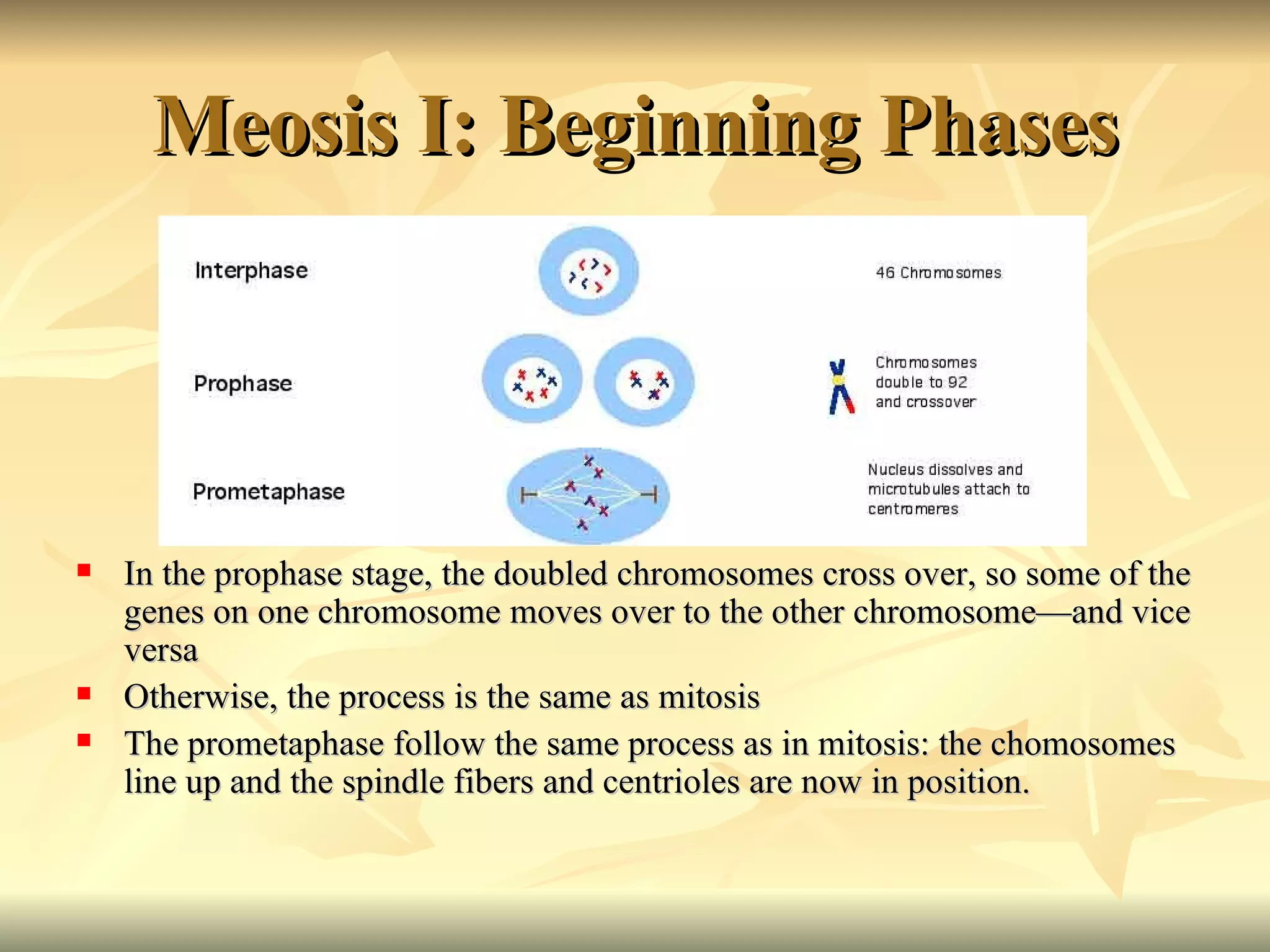
Meosis I: Beginning Phases In the prophase stage, the doubled chromosomes cross over, so some of the genes on one chromosome moves over to the other chromosome—and vice versa Otherwise, the process is the same as mitosis The prometaphase follow the same process as in mitosis: the chomosomes line up and the spindle fibers and centrioles are now in position.
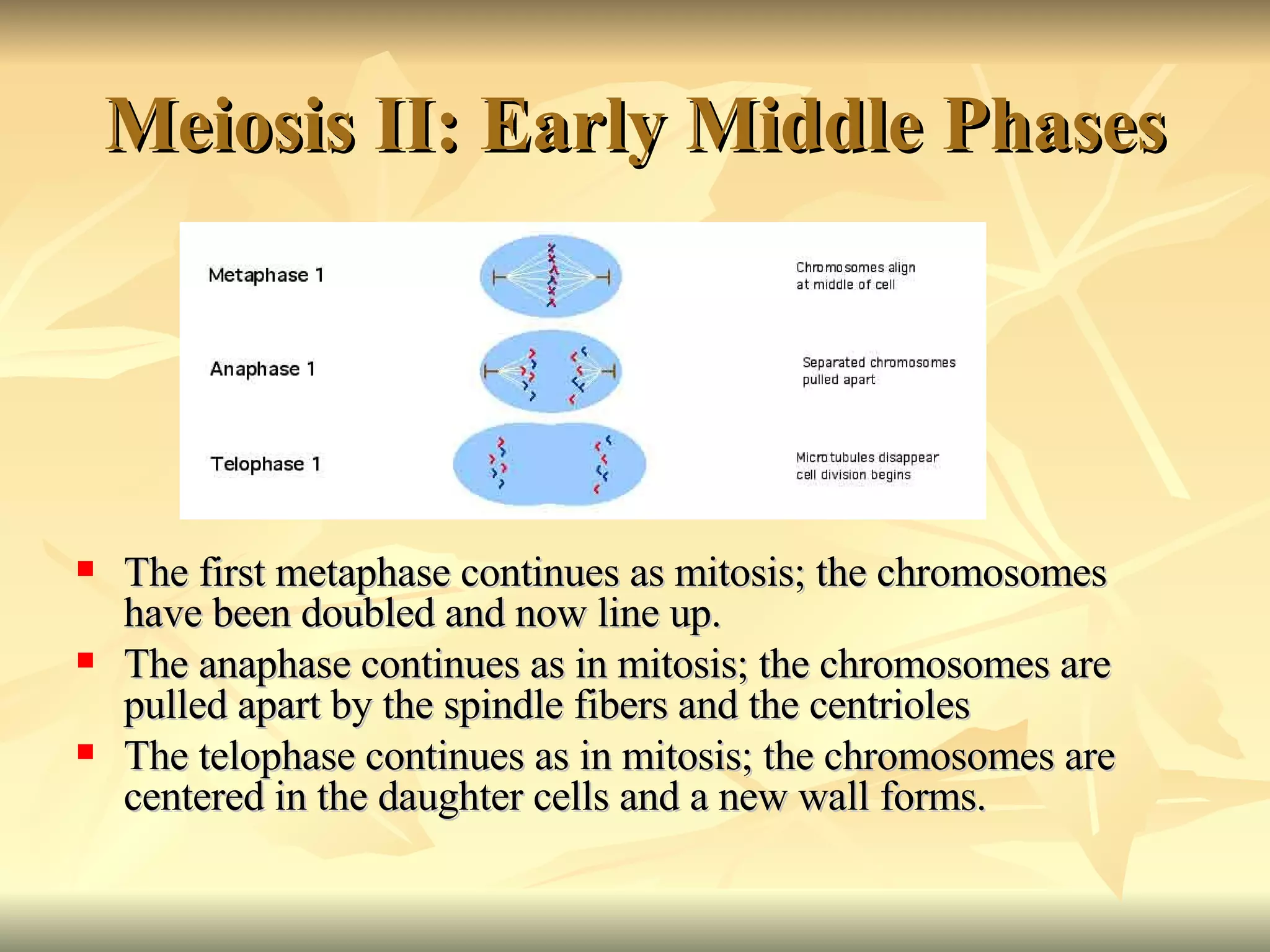
Meiosis II: Early Middle Phases The first metaphase continues as mitosis; the chromosomes have been doubled and now line up. The anaphase continues as in mitosis; the chromosomes are pulled apart by the spindle fibers and the centrioles The telophase continues as in mitosis; the chromosomes are centered in the daughter cells and a new wall forms.
Meiosis III: Late Middle Phases In the interphase 2, the chromosomes remain lined up and the nucleus has not formed In metaphase 2, there is only a pair of chromosomes in each cell; they remain lined up and the spindle fibers and the centrioles go into position In anaphase 2, the chromosomes (now numbering 23 as  haploids ) are pulled apart.
Meiosis IV: Final Phases In telephase 2, a wall forms between each of the cells and the nuclei start to form In cytokinesis or interphase, the daughter cells remain with one pair of chromosomes.  On fertilization, the sperm will contribute half the chromosomes and the ovum contributes half to the offspring
End of Meiosis; Beginning of Mitosis: Fertilization of an Ovum When the couple copulates, the sperm fertilizes the egg (upper left) In so doing, each parent contributes exactly half ot the chromosomes of the offspring cell Three million sperms enter the vagina; only one ultimately enters the ovum, roughly a third of the way down the Fallopian tube The fertilized ovum (now a  zygote ) is then implanted in the uterus The rapid process of  mitosis of the zygote  begins there Of course, some couples don’t get it quite right (lower left)
Mendelian Genetics The appearance of an individual is derived from the cell divisions we just described Traits are maintained in the organism through mitosis They are transmitted from parent to offspring through meiosis When haploid cells are united between couples to become diploid Each parent contributes exactly half their makeup to their offspring
Individual  Genetics; :Concepts Traits  are inherited through the chromosomes and their constituent genes The genetic composition of a trait is known as a  genotype A  phenotype  is a trait of a genotype that is visible or otherwise observable and can be measured Homozygous  traits are those with two identical alleles in a gene pair Heterozygous  traits are those with two different alleles in a gene pair
Individual Genetics: When Genotypes Become Phenotypes A  dominant  allele is one whose trait appears in both homozygous heterozygous combination A  recessive  allele is one whose trait appears only in homozygous combination. A  codominant  allele is one whose trait reflects the genetic combination of two different alleles Punnett squares  illustrate how these principles work
Case Study of Monogenic Trait: Tasters vs. Nontasters Most of us can taste the bitterness of Brussels sprouts This is the ability to taste phenylthiocarbamide  (PTC) Tasters are dominant; nontasters are recessive A Punnett Square allows us to determine the proportion of tasters vs. nontasters of PTC  This is a table that gives us a visual count of the allele for each trait.
PTC Tasters and Nontasters: Generation I Suppose one parent is a taster and the other is a nontaster in the first generation All the offspring (Generation II) will be tasters in the second generation, as shown in the next  panel.  To simplify, we use only a 2 X 2 table
Punnett Square of Tasters and Non-Tasters: Generation II t (nontaster)  t (nontaster) T (taster)  Tt  Tt T (taster)  Tt  Tt
PHC Tasters and Nontasters: Generation II The second generation generate a new combination of phenotypes The proportion is now 1 homozygote for PTC tasters, 1 homozygote for nontasters, and 2 heterozygotes for tasters/nontasters.
Punnett Square of Tasters and Non-Tasters: Generation III   T (tasters t (nontasers) T  TT Tt t  Tt  tt
Codominant Genes Some alleles are codominant: one trait does not trump the other A species of flower, four-o’clocks, may come in red and white Their hybrids thus come in pink in Generation II In the Punnett Square, in Generation III, the proportion is 1:2:1 (one red, two pinks, and one white)
Mendel’s Laws: Law of Segregation Mendel found that there were three principles of inheritance resulting from the study of pea plants for seven characteristics. In so doing, he found that traits of the parent generation do not blend in those of their offspring. Rather, one gene for each trait is  segregated  from other genes for other traits.  Segregation : Separation of alleles in the formation of gametes (sex cells)
Mendel’s Law: Law of Independent Assortment Independent Assortment:  differing traits are inherited independently of each other (genes on separate chromosomes) For example whether a pea plant flower is violet or white is separated from smooth or wrinkled peas In other words, a white flowering plant can yield either a wrinkled or a smooth pea; so can a violet flowering plant So flower color is independent from smoothness of peas The PHC assortments in the Punnett Squares are another example of this law.
Mendel’s Laws: Law of Recombination Though independent, genes can recombined to allow further genetic variety In meiosis, some genes cross over, allowing even further variety.
Linkages Nevertheless, if alleles occur on the same chromosome, they will be inherited together. Sex-linked traits are one example: secondary characteristic are linked to the  primary characteristics (organs of reproduction
Molecular Biology: Basics All matter is made of  atoms Of the 92 atoms, 4 are essential to life: --Carbon [C] --Oxygen [O] --Hydrogen [H]   --Nitrogen [N] Others are also important: calcium, phosphorus Atoms are joined together to form  molecules
Molecular Biology: Molecules of Life Three molecules are essential Carbohydrates : sugars and starches Lipids:  fats, oils, and waxes Proteins:  building blocks of cells
Protein Role of Proteins To build cells And maintain them in various ways Amino acids:  Any of 20 kinds of  long chains of basic units that include C, O, H, and N  that form protein
Structure of DNA
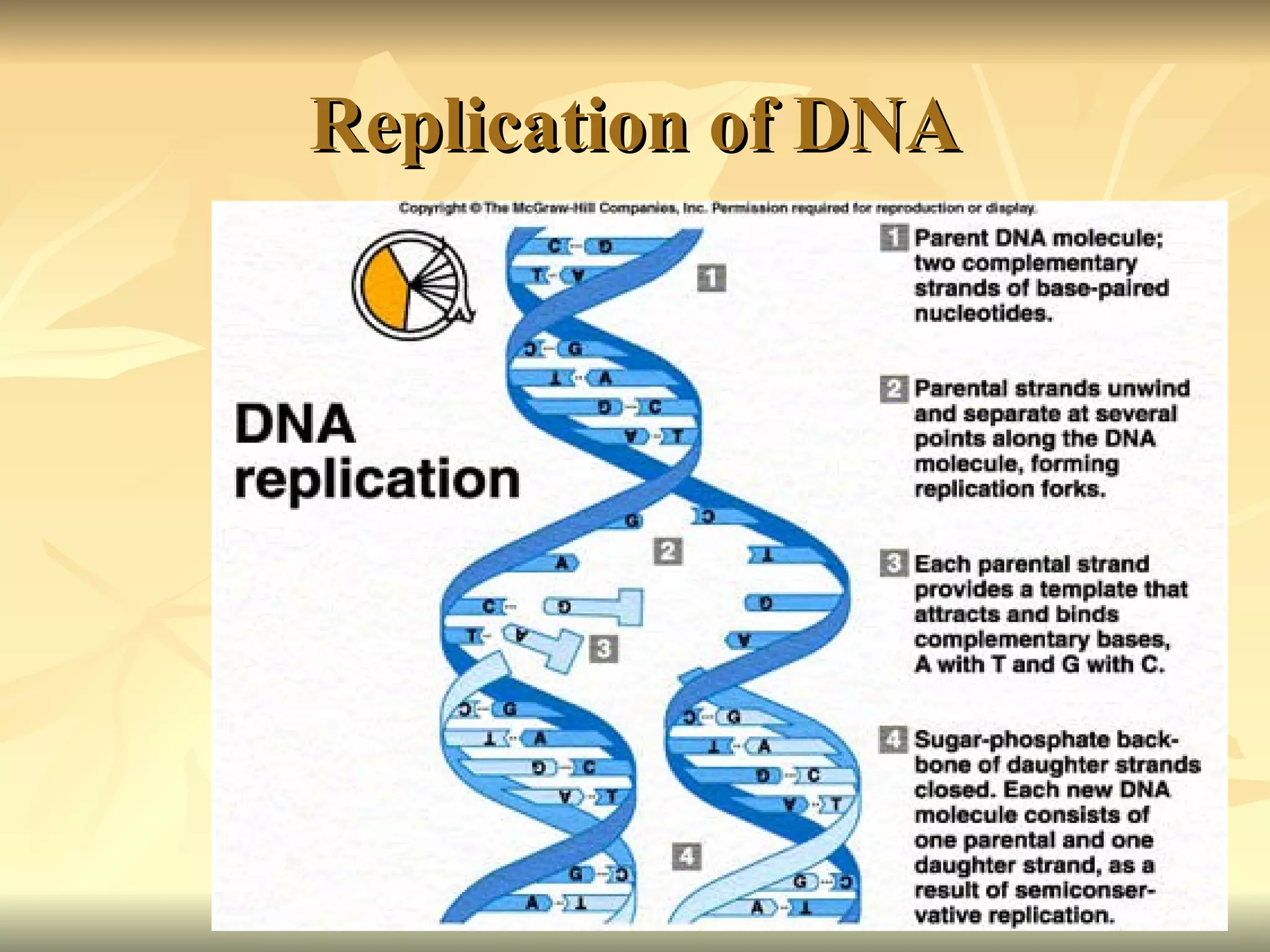
Replication of DNA
Nucleic Acid Nucleic Acid : Long chains of molecules that convey genetic information DNA and  RNA are nucleic acids Nucleotide:  A unit of  nucleic acid that comprises Phosphate:  Compound that combines phosphorus with other elements Complex Sugar:  aka  pentose,  a catchall name for sugars with five carbon atoms Base:  one of four nitrogen-based molecules in DNA
Defining DNA: Deoxyribonucleic Acid 1 DNA  is a  molecule  carrying the genetic code Picture DNA as a spiral ladder Sides are composed of a Complex sugar molecule (deoxyribose in DNA) Phosphate molecule “ Rungs” are the bases
Defining DNA: Deoxyribonucleic Acid 2 The  Bases Purines  (defined as two connected rings of nitrogen):  Adenine (A)  in DNA and RNA Guanine (G)  in DNA and RNA Pyrimidine  (defined as one ring of nitrogen): Cytosine (C)  in DNA and RNA Thymine (T)  in DNA Uracil (U)  takes T’s place  in RNA
Defining DNA: Deoxyribonucleic Acid 3 Sugar and phosphate form the “sides” of a “ladder” Bases are the rungs, that with hydrogen bonds link: One specific purine with one specific pyramidine Adenine (A) with thymine (T) (uracil [U] in RNA) Cytosine [C] with guanine [G] The phosphate, sugar, and base comprise the  nucleotide Triplets:  three nucleotides (and three bases) The chain of nucleotides is known as  nucleic acid DNA is one type of  nucleic acid
Replication of DNA
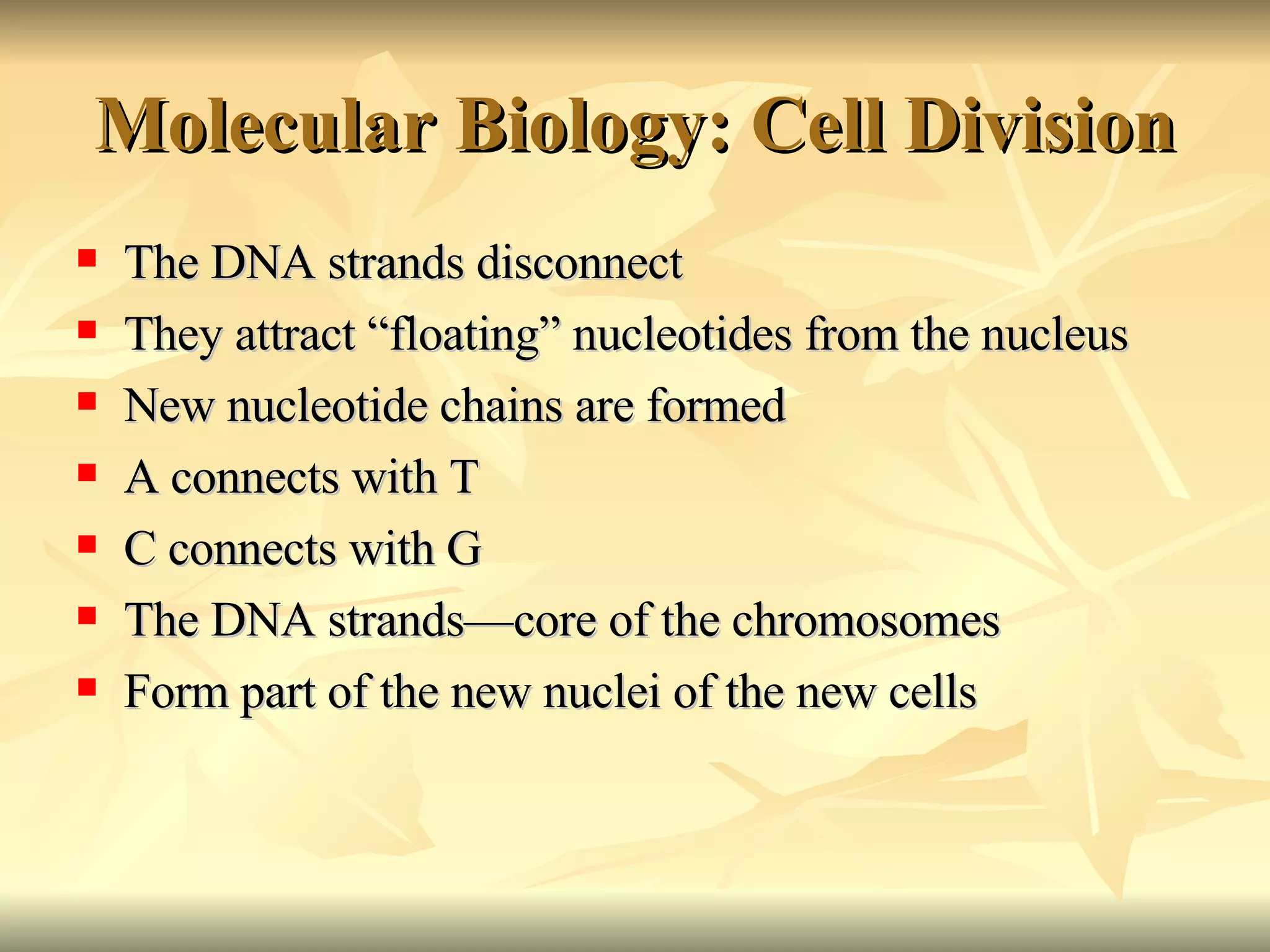
Molecular Biology: Cell Division The DNA strands disconnect They attract “floating” nucleotides from the nucleus New nucleotide chains are formed A connects with T C connects with G The DNA strands—core of the chromosomes Form part of the new nuclei of the new cells
Protein Synthesis: mRNA
DNA and RNA DNA is “deoxyribose nucleic acid” RNA is “ribose nucleic acid” The differences: DNA has one less oxygen molecule per sugar molecule than RNA DNA is double-stranded (the double helix) RNA is single-stranded
Molecular Biology: Synthesizing Protein 1 DNA strands “unzip” or disconnect Messenger ribonucleic acid (mRNA) is attracted to opened “master” DNA A connects with uracil (replacing T) C connects with G Each DNA triplet attracts a mRNA codon Codon by codon, the mRNA string forms When complete  mRNA  leaves nucleus And goes to a ribosome
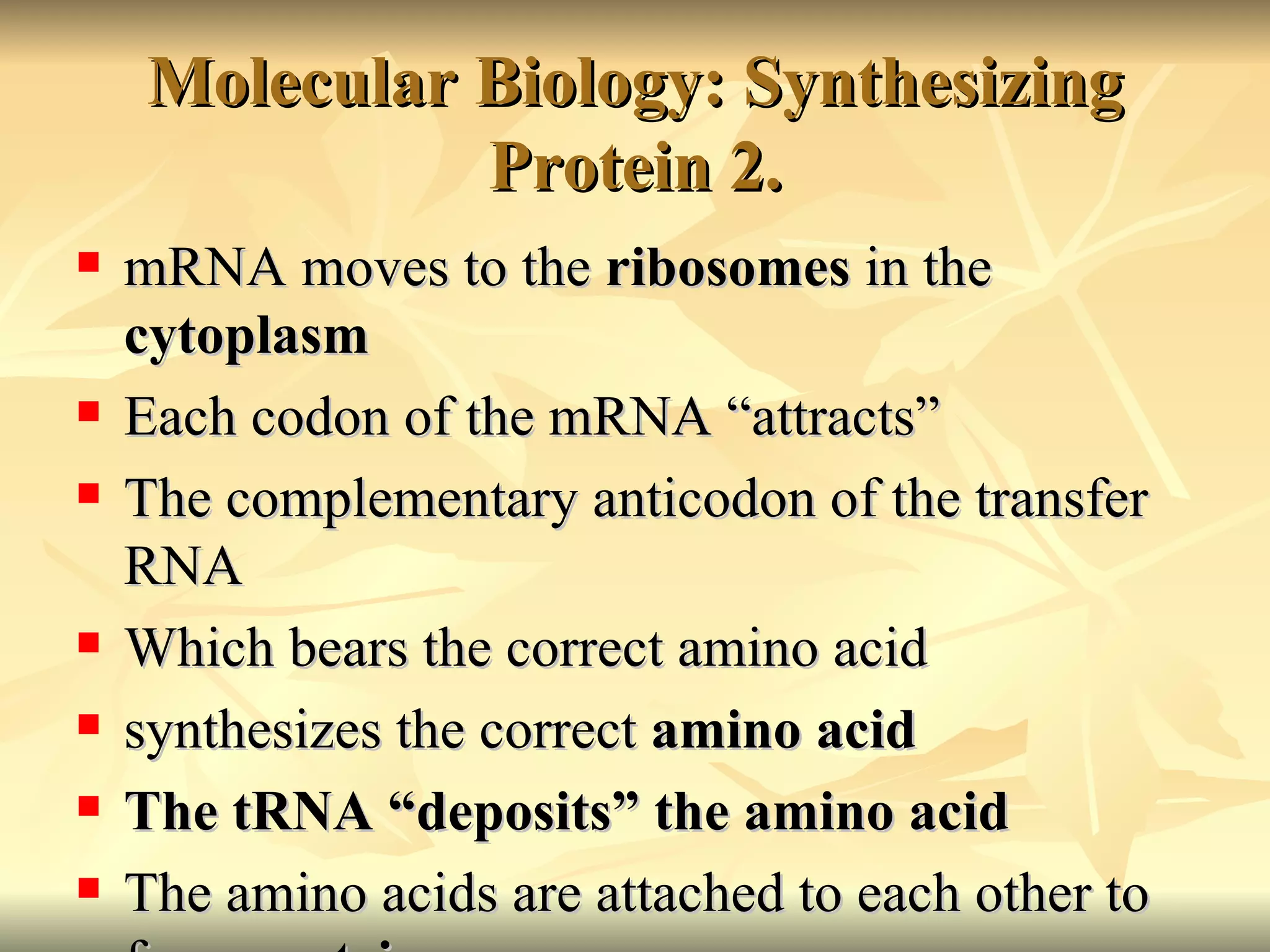
Molecular Biology: Synthesizing Protein 2. mRNA moves to the  ribosomes  in the  cytoplasm Each codon of the mRNA “attracts” The complementary anticodon of the transfer RNA Which bears the correct amino acid synthesizes the correct  amino acid The tRNA “deposits” the amino acid The amino acids are attached to each other to form  proteins
Molecular Biology: Information Metaphor Codons:  Three-based units that form code (“recipes”) for type of amino acid Sequence of codons make up a chain of amino acids to make a protein Term for process:  protein synthesis To summarize: Base  = Letter Triplet/Codon/Anticodon  = Word = Amino Acid Gene  = Sentence = Protein
Conclusion: What Has Been Covered Cellular genetics Cell structure Chromosomes Genes Cell division (mitosis and meiosis Genotypes and Phenotypes Dominant, Codominant, and Recessive Genes Molecular Biology Nucleic acid and nucleotides Cell structure from another perspective DNA and coding RNA and protein synthesis

Molecular Genetics

  • 1.
  • 2.
    Introduction to GeneticsGenetics is the study of genes and the ways whereby they determine the traits of an organism We cover the following concepts and principles of evolution based on genetics: Biological Genetics Chromosomes and Genes Mitosis and Meiosis Population Genetics Molecular Biology
  • 3.
    Key Concepts inEvolution: Natural Selection Species : A group of life forms (plants and animals) that can reproduce fertile offspring among themselves Evolution : Change through time of biological species Natural selection : Evolutionary change based on differential reproduction of the species within an environment
  • 4.
    Key Concepts inEvolutionary Thought: Mutation Heredity: the transmission of all biological traits (inherited characteristic) from generation to generation Chromosome : Body in the nucleus of the cell that contains the hereditary material: DNA and protein Genes : A chromosomal segment with a specific function Mutation : Alteration of genetic material giving rise to new life forms
  • 5.
    Structure of Cell:Diagram To understand how genetics works, we must start with the cell The next discussion follows this diagram of a cell and its components
  • 6.
    Cell Structure: DescriptionCell : Smallest unit of the organism considered to be alive Nucleus : Center of the cell, which contains genetic material (chromosomes, comprising the genes) Nuclear Membrane : Membrane enclosing the nucleus Cytoplasm : Jellylike material that make up the rest of the cell Plasma Membrane : The membrane that keeps the cell in shape and allows entry and exit of certain material. The diagram to the left show other specialized parts: nerve cell, white blood cell, sperm
  • 7.
    Cells: Other PartsProteins: The organic molecules that maintain the cells’ functions Organelles: functional parts within cytoplasm Ribosomes : organelles important to protein synthesis, as we will see Mitochondria: organelles responsible for energy production; They have their own DNA whose regular mutations enable relative dating within a species, human in this case
  • 8.
    Concepts ofGenetics Trait: Any inborn feature of a living organism Each organism contains a pair of genes for each trait Each gene may have two or more alleles (variants) Monogenic Trait: a trait coded by one gene for each trait (e.g., phenylthiocarbamide [PTC] taster vs. nontaster of the bitterness of brussels sprouts); Mendelian Trait: This is a synonym for Monogenic trait Polygenic: a trait coded by more than one gene (e.g. skin color, eye color)
  • 9.
    Genes and ChromosomesIn the cell nucleus is genetic material which determines our traits. Chromosomes are long strands of molecules and protein; they come in pairs Humans have 23 pairs of chromosomes, or 46 in all Genes are units within chromosomes Also in pairs, they occur in specific location, or loci , of the chromosomes Each variant of a trait is determined by an allele of a gene
  • 10.
    Genetic Composition: GenotypeGenotype : Alleles of a gene possessed by an organism Homozygous : Having two of the same allele in a gene pair Heterozygous : Having two different alleles in a gene pair
  • 11.
    Genetic Appearance: PhenotypePhenotype : Observable characteristics of an organism Dominant : Allele of a pair that is expressed in the phenotype (e.g. PTC taster) Recessive : Allele of a pair that is expressed only when homozygous (e.g. PTC nontaster, Blood Type O) Codominant : Both alleles of a pair are expressed in the phenotype (e.g., Blood Type A and B) Or four o’clock flowers: red, white—and pink
  • 12.
    Cell Division Celldivision is a constant process in all living forms. There are two types of cell division: Mitosis: The division of somatic or body cells Meiosis: The division of gametes or sex cells: sperm in the males of any species and ovum (plural ova ) or egg in the females of any species The next sections explain how these two types of cells divide. Refer to the diagram in the next panel
  • 13.
    Mitosis: First PhasesIn the interphase , the cell is “at rest” between one division and the next In the prophase , the chromosome double, from 46 (23 pairs) chromosomes to 92 (46 pairs) They appear to “thicken” as each chromosome replicates itself. The chromosomes are attached to each other at the center, forming an x; these are known as centromeres
  • 14.
    Mitosis: Middle PhasesIn the prometaphase the nucleus dissolves, the chromosomes line up in the center, centrioles form at the opposite end of the cells, and spindle fibers (fibrils or microtubules) form between the centromeres of the chromosomes and the centrioles (top diagram) In the metaphase, the chromosomes are lined up and the centrioles prepare to pull each new pair of chromosomes toward them using the spindle fibers)
  • 15.
    Mitosis: End PhasesIn the anaphase, the fibrils anchored by the centrioles pull the chromosomes toward the center of each new cell In the telophase, the fibrils and the centrioles dissolve and the wall forms between the two new cells In cytokinesis , the walls are completely formed and the two new cells are in interphrase.
  • 16.
    Meiosis: Introduction andTerms Meiosis refers to cell division of a fertilized egg in the reproductive process. Gametes : sex cells Sperm : male sex cells Ovum : female sex cells Each gamete (sex cell) Contains half the normal number of chromosomes in cells Contains 23 chromosomes in humans
  • 17.
    Meiosis: Fertilization ofan Ovum First, the sperm has fertilizes an ovum (above left) Three million sperms enter the vagina; only one ultimately enters the ovum, roughly a third of the way down the Fallopian tube The fertilized ovum (now a zygote ) is then implanted in the uterus The rapid process of meiosis begins there Of course, some couples don’t get it quite right (below left)
  • 18.
    Meosis I: BeginningPhases In the prophase stage, the doubled chromosomes cross over, so some of the genes on one chromosome moves over to the other chromosome—and vice versa Otherwise, the process is the same as mitosis The prometaphase follow the same process as in mitosis: the chomosomes line up and the spindle fibers and centrioles are now in position.
  • 19.
    Meiosis II: EarlyMiddle Phases The first metaphase continues as mitosis; the chromosomes have been doubled and now line up. The anaphase continues as in mitosis; the chromosomes are pulled apart by the spindle fibers and the centrioles The telophase continues as in mitosis; the chromosomes are centered in the daughter cells and a new wall forms.
  • 20.
    Meiosis III: LateMiddle Phases In the interphase 2, the chromosomes remain lined up and the nucleus has not formed In metaphase 2, there is only a pair of chromosomes in each cell; they remain lined up and the spindle fibers and the centrioles go into position In anaphase 2, the chromosomes (now numbering 23 as haploids ) are pulled apart.
  • 21.
    Meiosis IV: FinalPhases In telephase 2, a wall forms between each of the cells and the nuclei start to form In cytokinesis or interphase, the daughter cells remain with one pair of chromosomes. On fertilization, the sperm will contribute half the chromosomes and the ovum contributes half to the offspring
  • 22.
    End of Meiosis;Beginning of Mitosis: Fertilization of an Ovum When the couple copulates, the sperm fertilizes the egg (upper left) In so doing, each parent contributes exactly half ot the chromosomes of the offspring cell Three million sperms enter the vagina; only one ultimately enters the ovum, roughly a third of the way down the Fallopian tube The fertilized ovum (now a zygote ) is then implanted in the uterus The rapid process of mitosis of the zygote begins there Of course, some couples don’t get it quite right (lower left)
  • 23.
    Mendelian Genetics Theappearance of an individual is derived from the cell divisions we just described Traits are maintained in the organism through mitosis They are transmitted from parent to offspring through meiosis When haploid cells are united between couples to become diploid Each parent contributes exactly half their makeup to their offspring
  • 24.
    Individual Genetics;:Concepts Traits are inherited through the chromosomes and their constituent genes The genetic composition of a trait is known as a genotype A phenotype is a trait of a genotype that is visible or otherwise observable and can be measured Homozygous traits are those with two identical alleles in a gene pair Heterozygous traits are those with two different alleles in a gene pair
  • 25.
    Individual Genetics: WhenGenotypes Become Phenotypes A dominant allele is one whose trait appears in both homozygous heterozygous combination A recessive allele is one whose trait appears only in homozygous combination. A codominant allele is one whose trait reflects the genetic combination of two different alleles Punnett squares illustrate how these principles work
  • 26.
    Case Study ofMonogenic Trait: Tasters vs. Nontasters Most of us can taste the bitterness of Brussels sprouts This is the ability to taste phenylthiocarbamide (PTC) Tasters are dominant; nontasters are recessive A Punnett Square allows us to determine the proportion of tasters vs. nontasters of PTC This is a table that gives us a visual count of the allele for each trait.
  • 27.
    PTC Tasters andNontasters: Generation I Suppose one parent is a taster and the other is a nontaster in the first generation All the offspring (Generation II) will be tasters in the second generation, as shown in the next panel. To simplify, we use only a 2 X 2 table
  • 28.
    Punnett Square ofTasters and Non-Tasters: Generation II t (nontaster) t (nontaster) T (taster) Tt Tt T (taster) Tt Tt
  • 29.
    PHC Tasters andNontasters: Generation II The second generation generate a new combination of phenotypes The proportion is now 1 homozygote for PTC tasters, 1 homozygote for nontasters, and 2 heterozygotes for tasters/nontasters.
  • 30.
    Punnett Square ofTasters and Non-Tasters: Generation III T (tasters t (nontasers) T TT Tt t Tt tt
  • 31.
    Codominant Genes Somealleles are codominant: one trait does not trump the other A species of flower, four-o’clocks, may come in red and white Their hybrids thus come in pink in Generation II In the Punnett Square, in Generation III, the proportion is 1:2:1 (one red, two pinks, and one white)
  • 32.
    Mendel’s Laws: Lawof Segregation Mendel found that there were three principles of inheritance resulting from the study of pea plants for seven characteristics. In so doing, he found that traits of the parent generation do not blend in those of their offspring. Rather, one gene for each trait is segregated from other genes for other traits. Segregation : Separation of alleles in the formation of gametes (sex cells)
  • 33.
    Mendel’s Law: Lawof Independent Assortment Independent Assortment: differing traits are inherited independently of each other (genes on separate chromosomes) For example whether a pea plant flower is violet or white is separated from smooth or wrinkled peas In other words, a white flowering plant can yield either a wrinkled or a smooth pea; so can a violet flowering plant So flower color is independent from smoothness of peas The PHC assortments in the Punnett Squares are another example of this law.
  • 34.
    Mendel’s Laws: Lawof Recombination Though independent, genes can recombined to allow further genetic variety In meiosis, some genes cross over, allowing even further variety.
  • 35.
    Linkages Nevertheless, ifalleles occur on the same chromosome, they will be inherited together. Sex-linked traits are one example: secondary characteristic are linked to the primary characteristics (organs of reproduction
  • 36.
    Molecular Biology: BasicsAll matter is made of atoms Of the 92 atoms, 4 are essential to life: --Carbon [C] --Oxygen [O] --Hydrogen [H] --Nitrogen [N] Others are also important: calcium, phosphorus Atoms are joined together to form molecules
  • 37.
    Molecular Biology: Moleculesof Life Three molecules are essential Carbohydrates : sugars and starches Lipids: fats, oils, and waxes Proteins: building blocks of cells
  • 38.
    Protein Role ofProteins To build cells And maintain them in various ways Amino acids: Any of 20 kinds of long chains of basic units that include C, O, H, and N that form protein
  • 39.
  • 40.
  • 41.
    Nucleic Acid NucleicAcid : Long chains of molecules that convey genetic information DNA and RNA are nucleic acids Nucleotide: A unit of nucleic acid that comprises Phosphate: Compound that combines phosphorus with other elements Complex Sugar: aka pentose, a catchall name for sugars with five carbon atoms Base: one of four nitrogen-based molecules in DNA
  • 42.
    Defining DNA: DeoxyribonucleicAcid 1 DNA is a molecule carrying the genetic code Picture DNA as a spiral ladder Sides are composed of a Complex sugar molecule (deoxyribose in DNA) Phosphate molecule “ Rungs” are the bases
  • 43.
    Defining DNA: DeoxyribonucleicAcid 2 The Bases Purines (defined as two connected rings of nitrogen): Adenine (A) in DNA and RNA Guanine (G) in DNA and RNA Pyrimidine (defined as one ring of nitrogen): Cytosine (C) in DNA and RNA Thymine (T) in DNA Uracil (U) takes T’s place in RNA
  • 44.
    Defining DNA: DeoxyribonucleicAcid 3 Sugar and phosphate form the “sides” of a “ladder” Bases are the rungs, that with hydrogen bonds link: One specific purine with one specific pyramidine Adenine (A) with thymine (T) (uracil [U] in RNA) Cytosine [C] with guanine [G] The phosphate, sugar, and base comprise the nucleotide Triplets: three nucleotides (and three bases) The chain of nucleotides is known as nucleic acid DNA is one type of nucleic acid
  • 45.
  • 46.
    Molecular Biology: CellDivision The DNA strands disconnect They attract “floating” nucleotides from the nucleus New nucleotide chains are formed A connects with T C connects with G The DNA strands—core of the chromosomes Form part of the new nuclei of the new cells
  • 47.
  • 48.
    DNA and RNADNA is “deoxyribose nucleic acid” RNA is “ribose nucleic acid” The differences: DNA has one less oxygen molecule per sugar molecule than RNA DNA is double-stranded (the double helix) RNA is single-stranded
  • 49.
    Molecular Biology: SynthesizingProtein 1 DNA strands “unzip” or disconnect Messenger ribonucleic acid (mRNA) is attracted to opened “master” DNA A connects with uracil (replacing T) C connects with G Each DNA triplet attracts a mRNA codon Codon by codon, the mRNA string forms When complete mRNA leaves nucleus And goes to a ribosome
  • 50.
    Molecular Biology: SynthesizingProtein 2. mRNA moves to the ribosomes in the cytoplasm Each codon of the mRNA “attracts” The complementary anticodon of the transfer RNA Which bears the correct amino acid synthesizes the correct amino acid The tRNA “deposits” the amino acid The amino acids are attached to each other to form proteins
  • 51.
    Molecular Biology: InformationMetaphor Codons: Three-based units that form code (“recipes”) for type of amino acid Sequence of codons make up a chain of amino acids to make a protein Term for process: protein synthesis To summarize: Base = Letter Triplet/Codon/Anticodon = Word = Amino Acid Gene = Sentence = Protein
  • 52.
    Conclusion: What HasBeen Covered Cellular genetics Cell structure Chromosomes Genes Cell division (mitosis and meiosis Genotypes and Phenotypes Dominant, Codominant, and Recessive Genes Molecular Biology Nucleic acid and nucleotides Cell structure from another perspective DNA and coding RNA and protein synthesis