CREDIT SEMINAR
ON
SINGLE NUCLEOTIDE POLYMORPHISM
(SNP)
CONTENTS
Introduction
Properties
Classification
eSNP
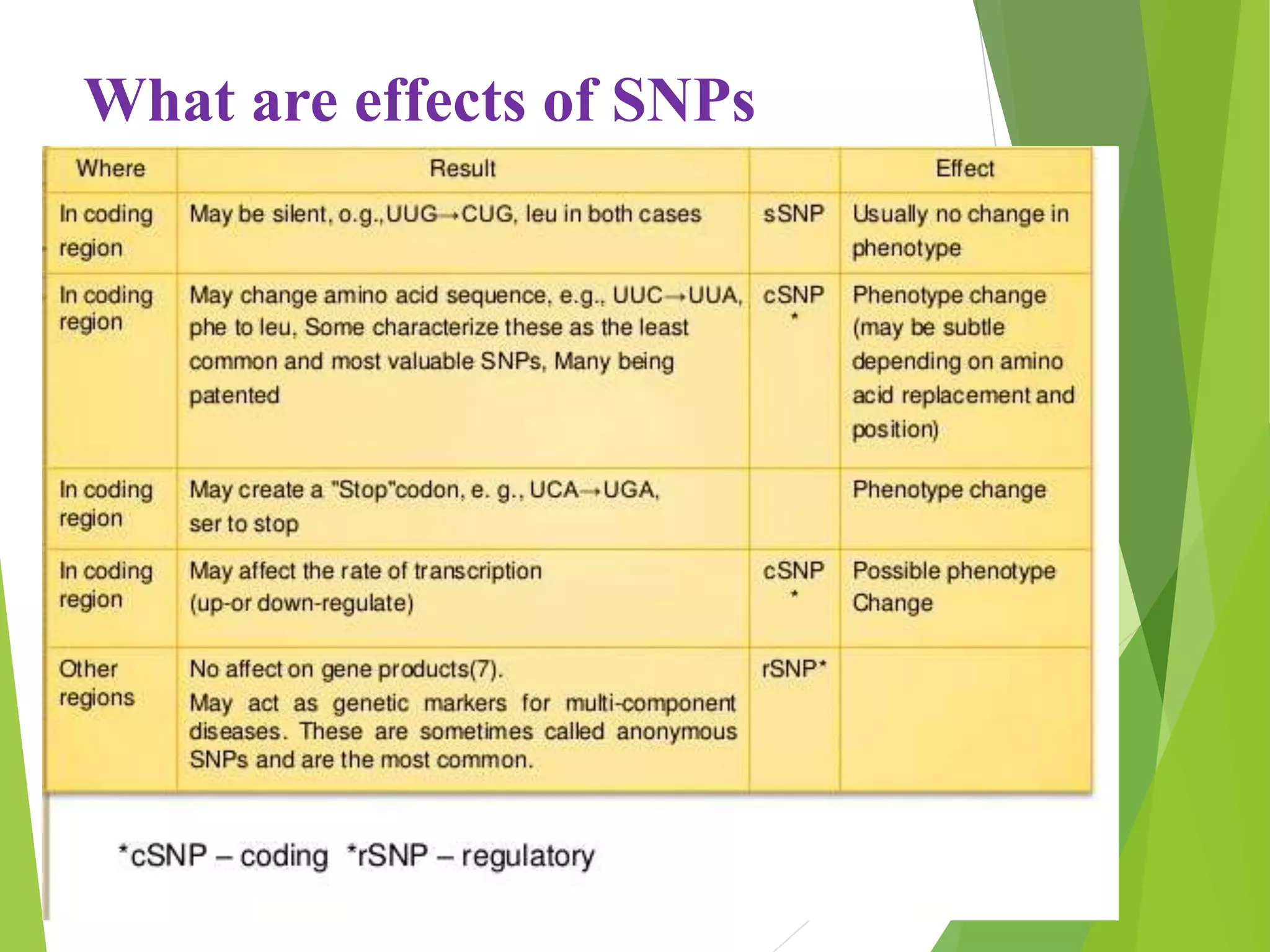
SNP’s effect
Advantage, Disadvantage, Application
INTRODUCTION
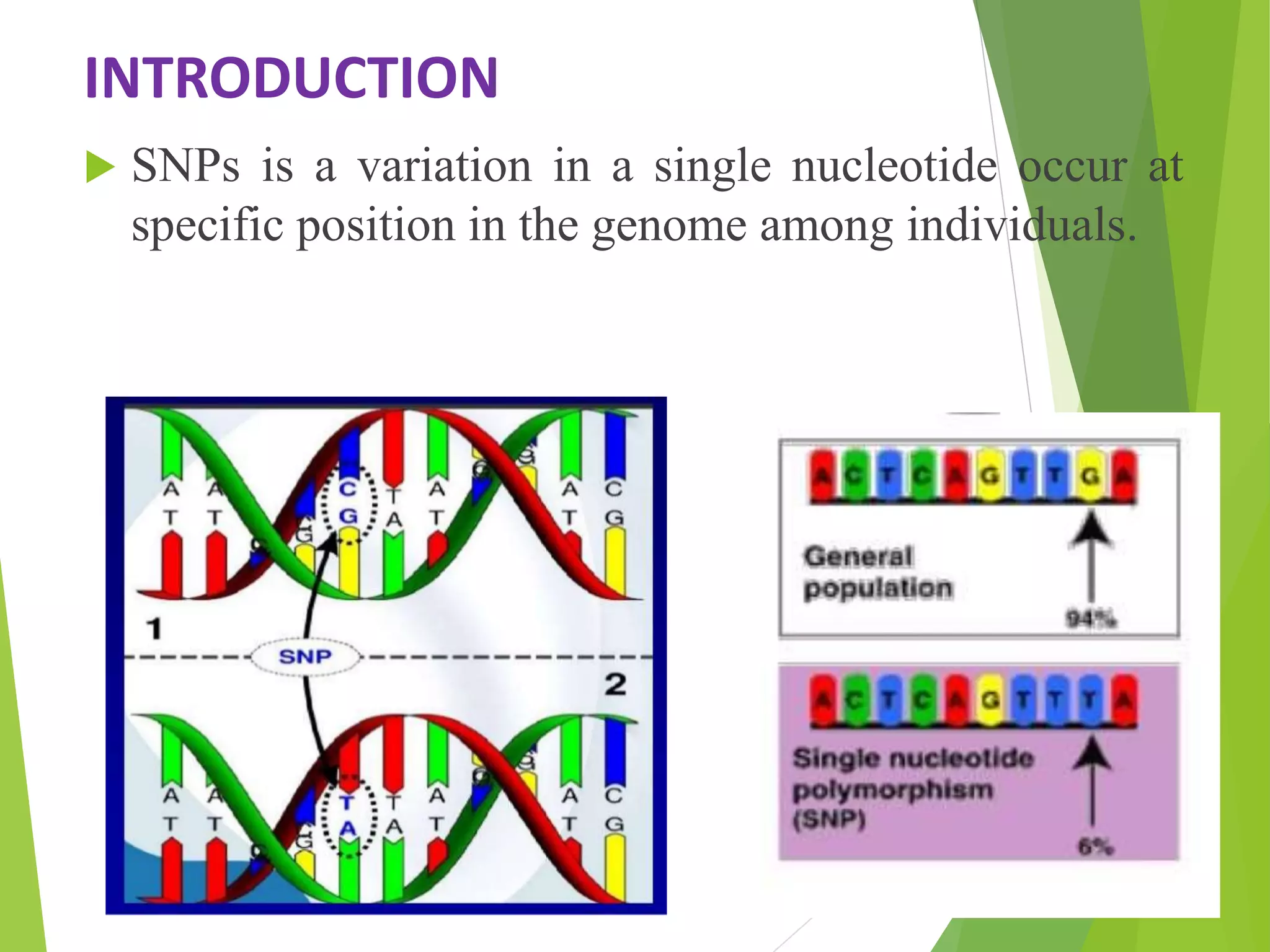
 SNPs is a variation in a single nucleotide occur at
specific position in the genome among individuals.
INTRODUCTION
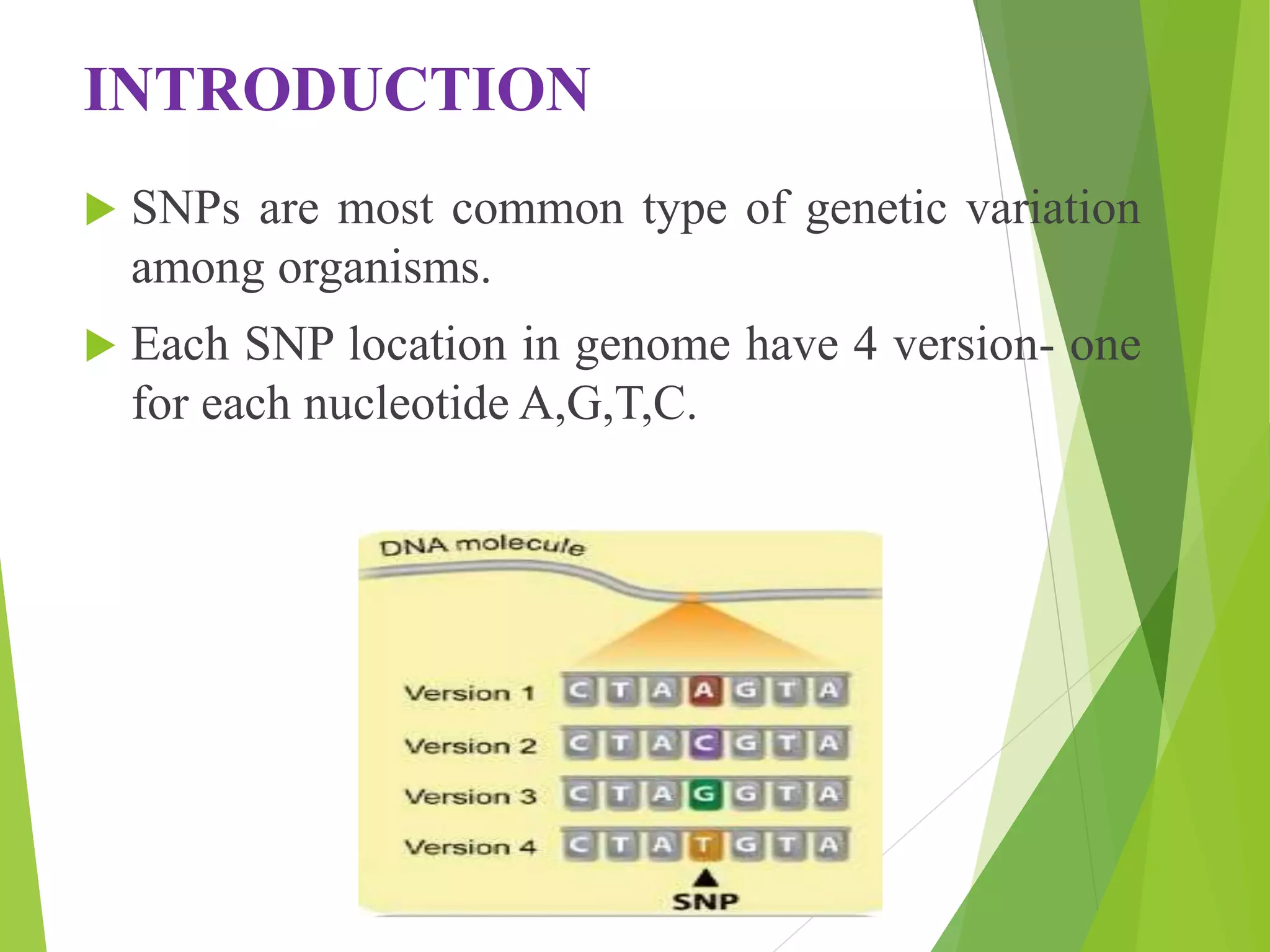
 SNPs are most common type of genetic variation
among organisms.
 Each SNP location in genome have 4 version- one
for each nucleotide A,G,T,C.
 In cattle, SNP profiles for individual animals are generated using a
small plastic chip that is diagnostic for up to 50 000 SNPs spaced
throughout the genome.
 Phenotypes, usually averaged over offspring of bulls, are matched
with SNP profiles of bulls mathematically so that animals can be
ranked for siring desirable phenotypes via their SNP profiles.
 The value of these systems is very dependent on the number of
accurate phenotypes matched with SNP profiles
 Increasing the number of North American Holstein bulls evaluated
from 1151 to 3576 quadrupled the additional genetic gain in net
merit from this approach.
 Once a valid SNP evaluation system is developed, any animal in that
population, including embryos, can be evaluated with similar
accuracy.
Contemporary Relevance
 The study on Goat Population reveled 16 million single-nucleotide
polymorphisms (SNPs) as well as 123,577 insertions and deletions.
Contemporary Relevance
PROPERTIES
 SNPs are found in coding and non-coding both
regions.
 Occurs with a very high frequency.
 The abundance of SNPs and the ease with which
they can be measured make these genetic
variations significant.
 SNP is commonly biallelic.
PROPERTIES
 SNPs are most widespread type of sequence
variation in genome.
 Widespread use because these are numerous, more
stable, potentially easier to score than
microsatellite repeats.
 In many organisms most polymorphisms result
from changes in single nucleotide position (point
mutation) has led to the development of technique
to study single nucleotide polymorphisms.
 Have power to reveal hidden polymorphism not
detected with other marker or method.
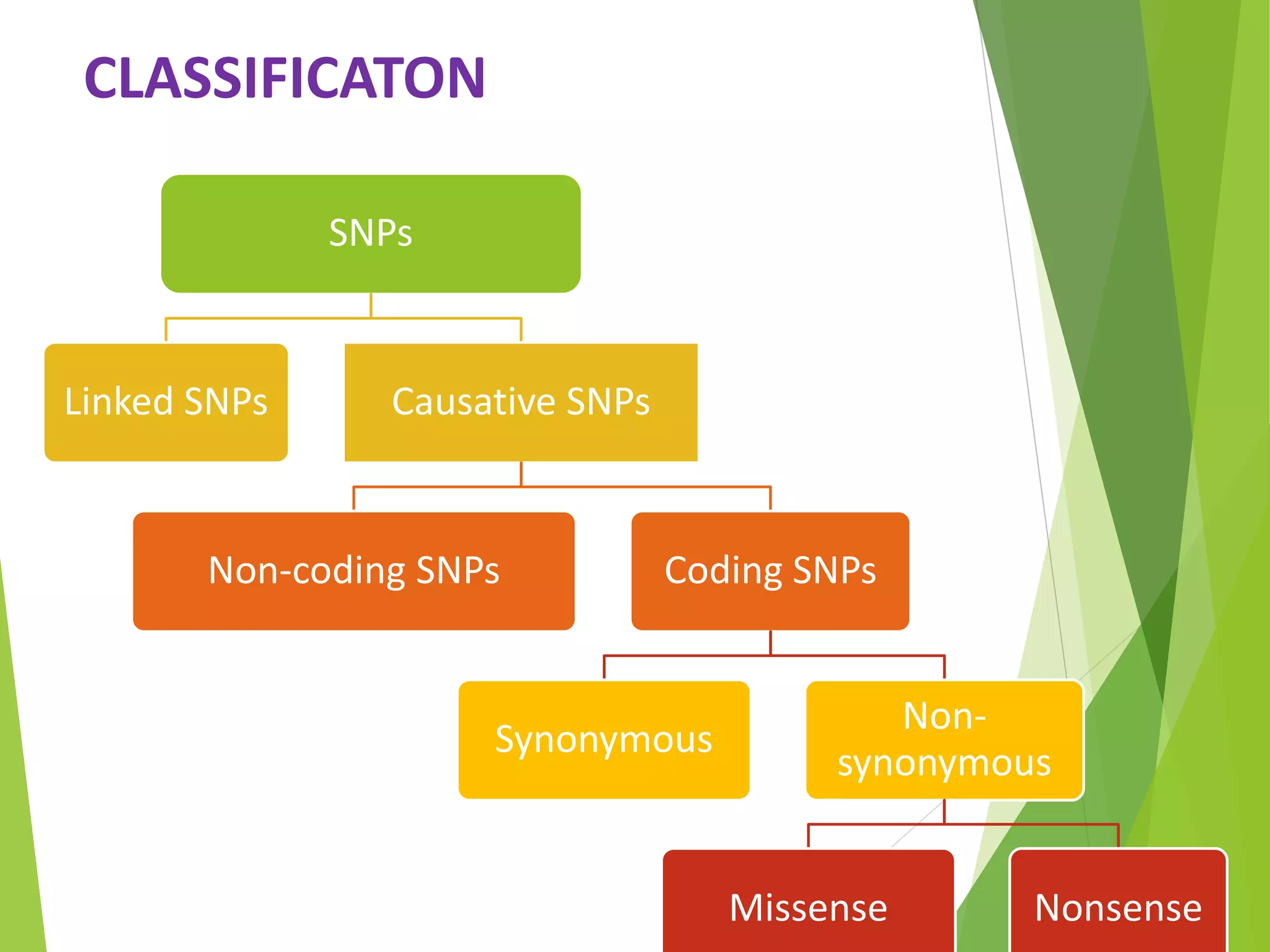
CLASSIFICATON
SNPs
Linked SNPs Causative SNPs
Non-coding SNPs Coding SNPs
Synonymous
Non-
synonymous
Missense Nonsense
LINKED SNPs
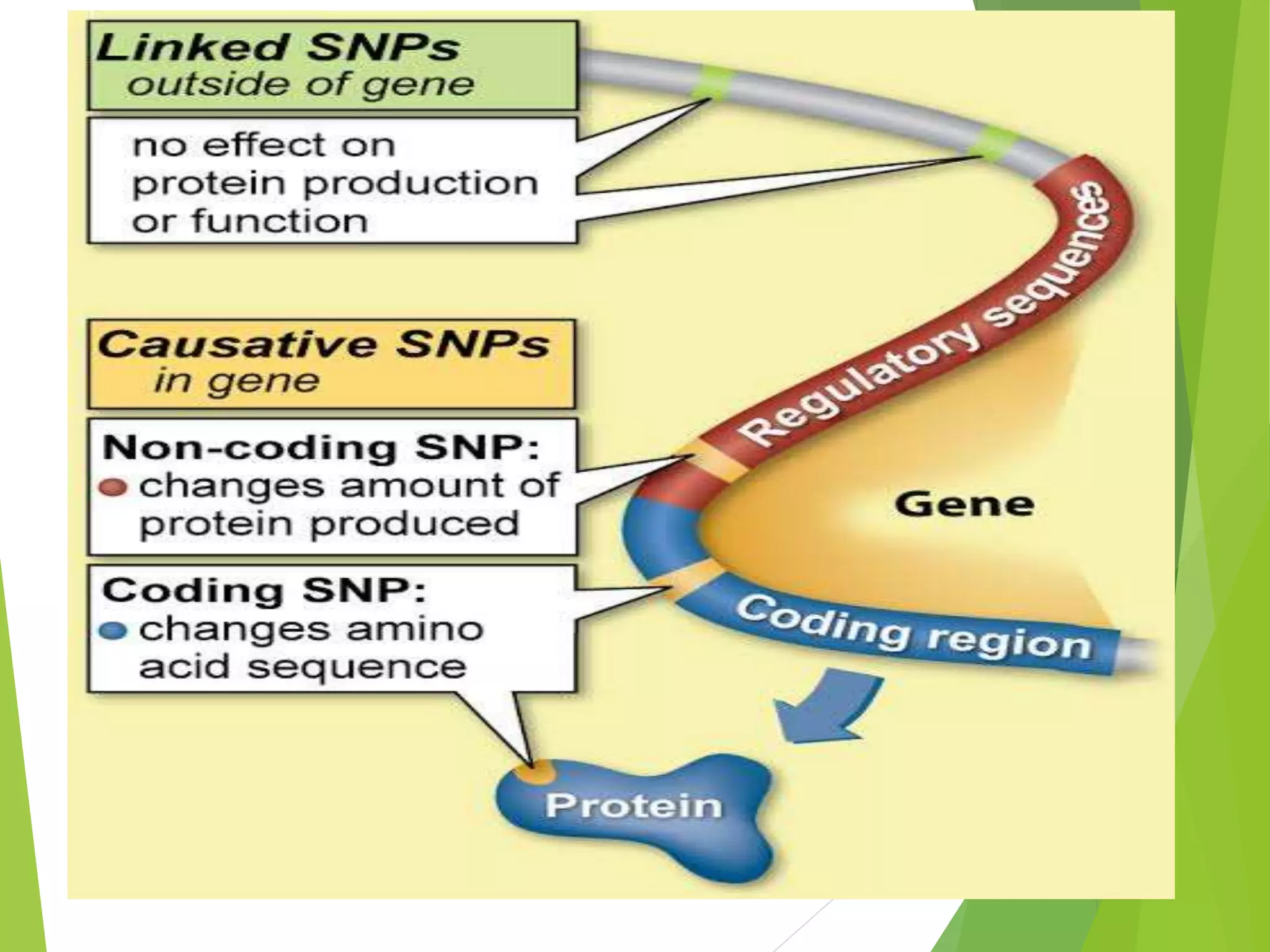
 Also known as indicative SNPs.
 They do not resides within genes and do not
affect protein function.
 Nevertheless, they do correspond to a particular
drug response or to the risk for getting a certain
disease.
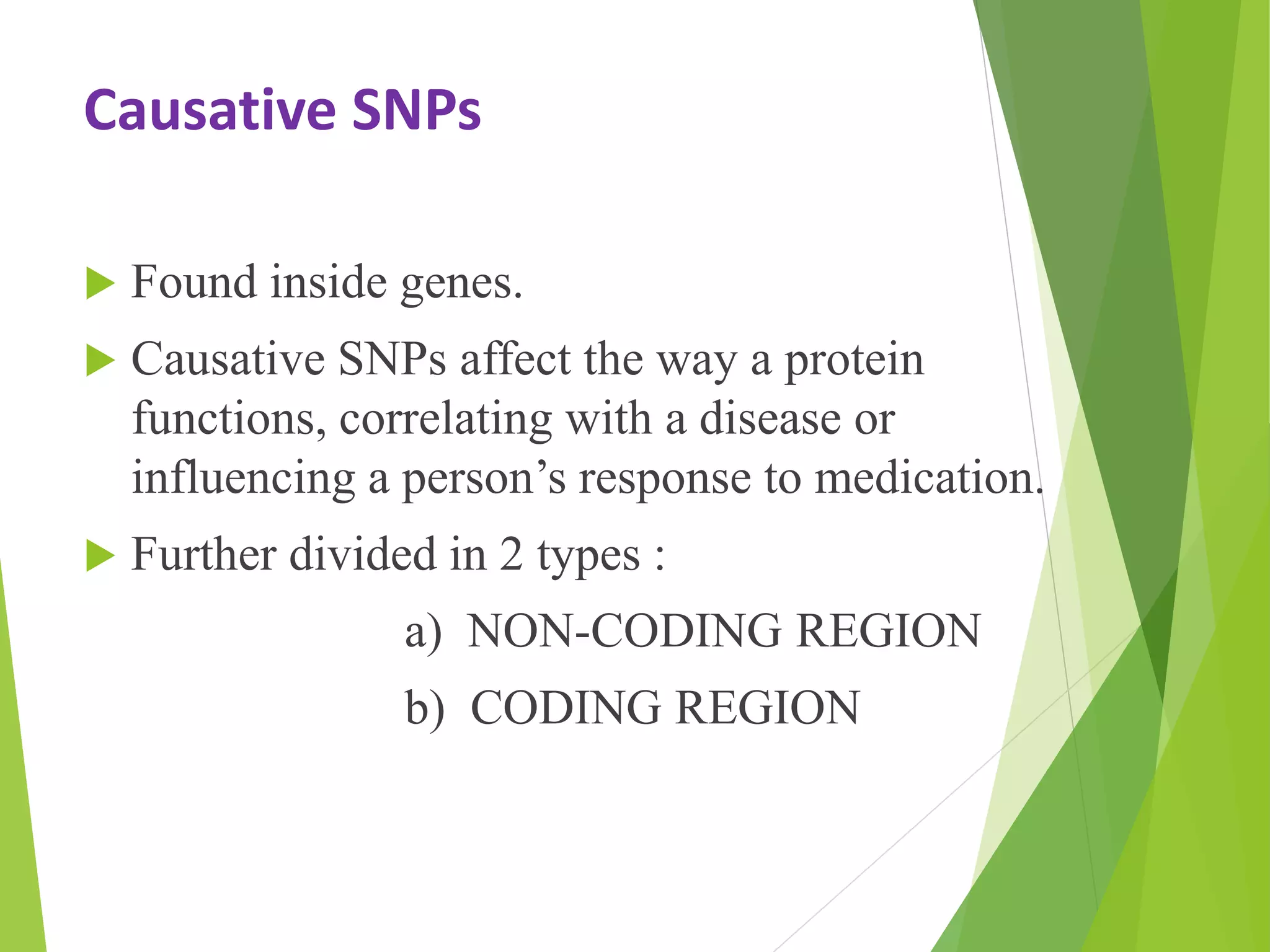
Causative SNPs
 Found inside genes.
 Causative SNPs affect the way a protein
functions, correlating with a disease or
influencing a person’s response to medication.
 Further divided in 2 types :
a) NON-CODING REGION
b) CODING REGION
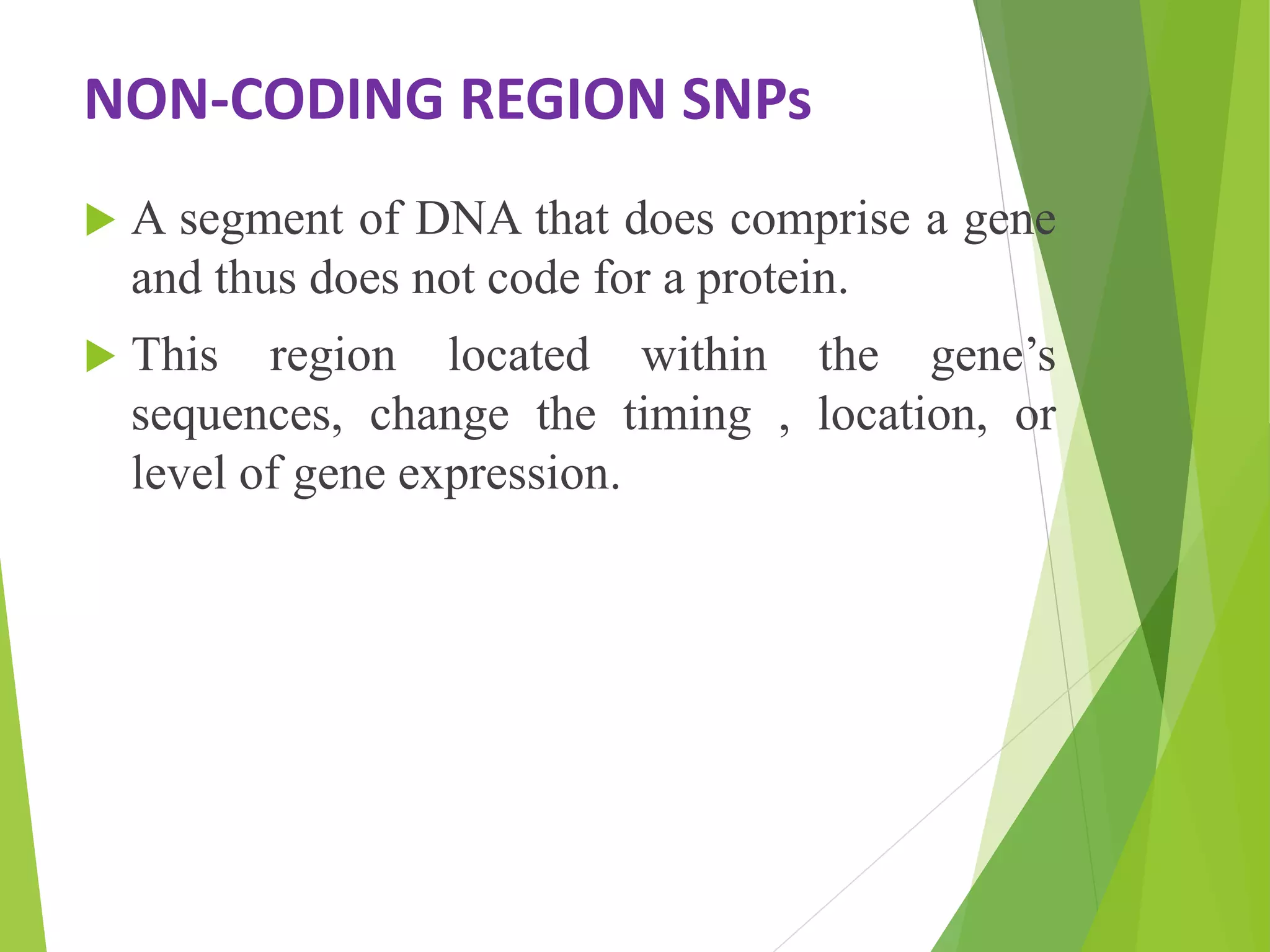
NON-CODING REGION SNPs
 A segment of DNA that does comprise a gene
and thus does not code for a protein.
 This region located within the gene’s
sequences, change the timing , location, or
level of gene expression.
CODING REGION SNPs
 This is region of DNA that code for proteins.
 Located within the region of a gene, change
the amino acid sequence of the gene’s protein
product and thus alter the protein structure
made by coding region.
 These are of 2 types- a) Synonymous
b) Non-synonymous
SYNONYMOUS
 A SNP in which both forms lead to the same
polypeptide sequence is termed as Synonymous
(sometimes called a silent mutation).
 This do not affect the protein sequence.
NON-SYNONYMOUS
 A SNP in which both forms form different
polypeptide sequence, they are Non-
synonymous.
 This SNPs change the amino acid sequence of
protein.
 Missense change results in a different amino
acid while Nonsense change result in
premature stop codon.
eSNP
 That is expression SNP.
 SNPs that are not present in the protein-coding
region may still affect gene splicing,
transcription factor binding, messenger RNA
degradation, or the sequence of non coding
RNA.
 Gene expression affected by this type of SNP is
referred as an eSNP.
 These may be present upstream or downstream
from the gene.
What are effects of SNPs
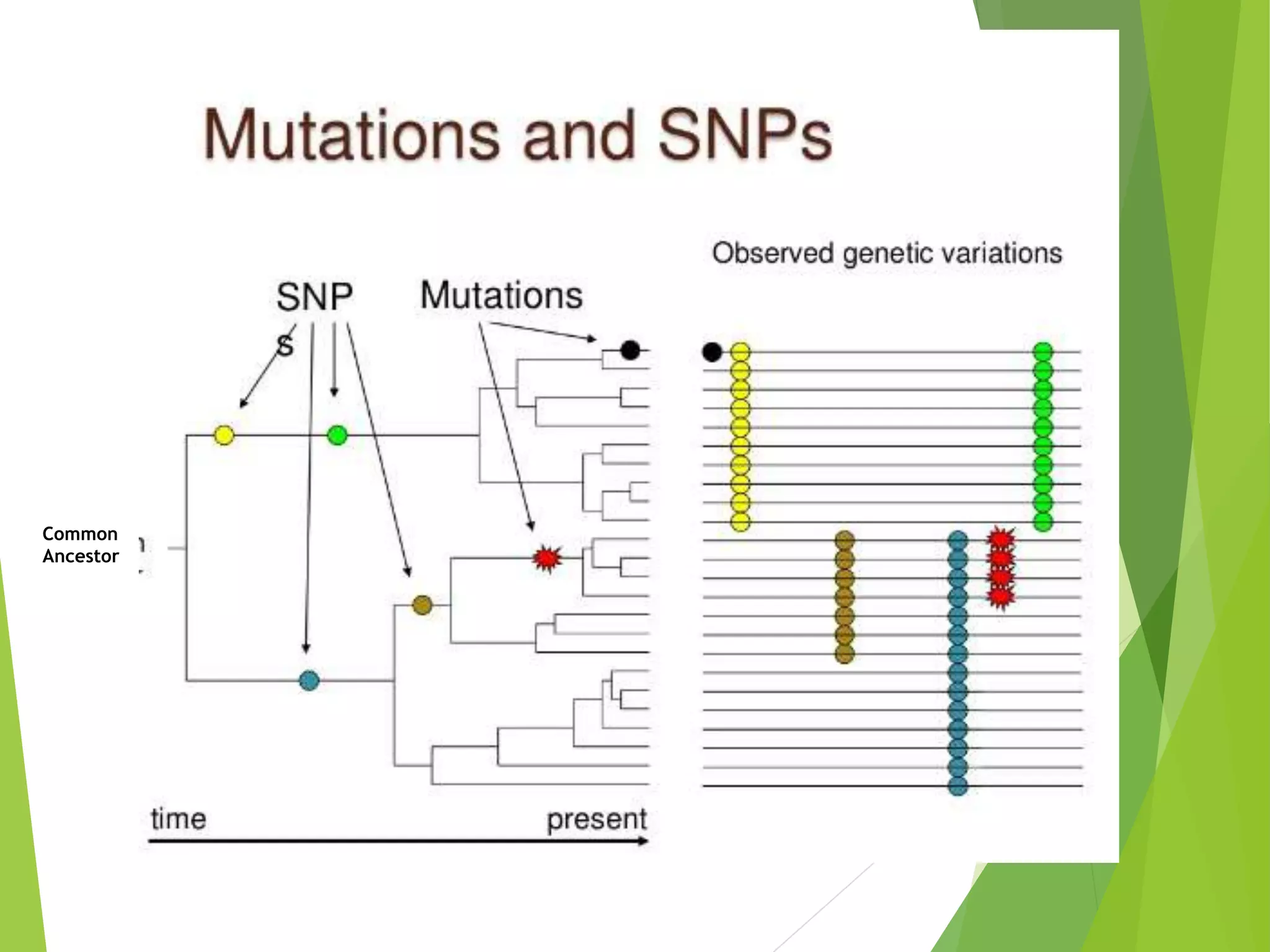
Common
Ancestor
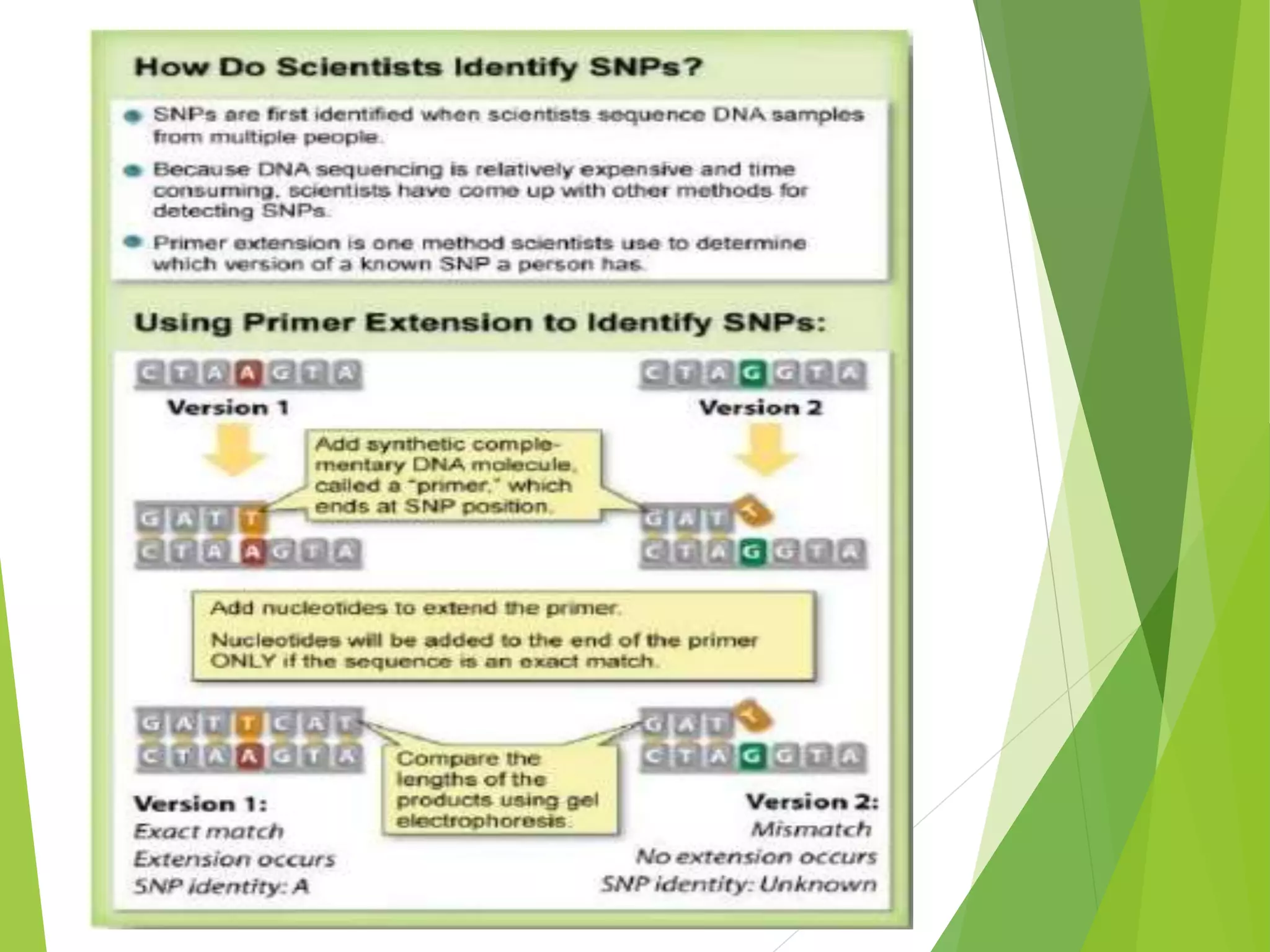
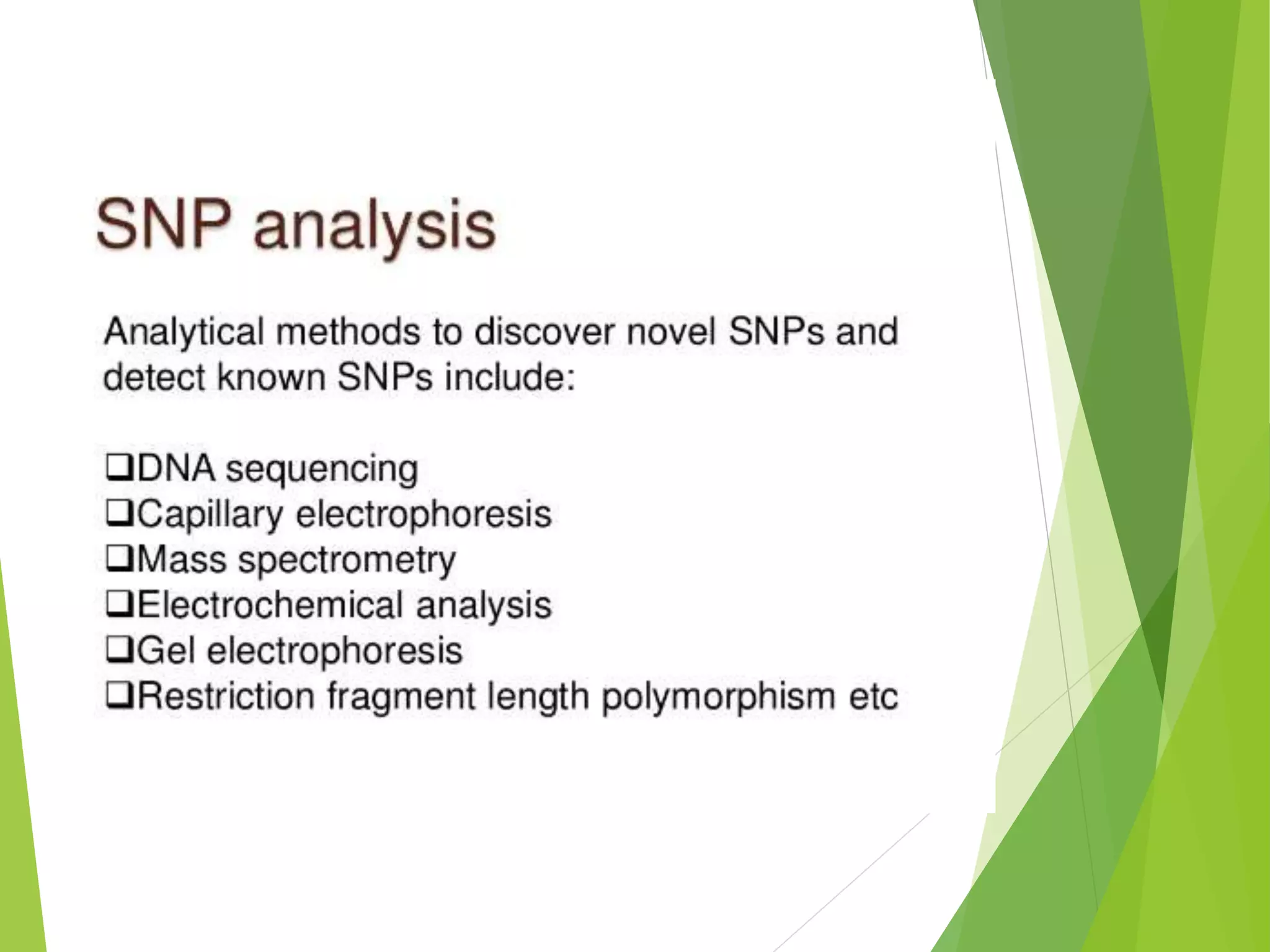
How to identify SNPs
 Using Sequencing Data
 Genotyping with SNP Microarrays
 Filtering SNPs

Identified SNPs Till Date
 Cattle :
 Buffalo :
 Goat :
 Sheep :
 Pig :
 HUMAN : 2 million SNPs
ADVANTAGES
 SNP markers are useful in gene mapping.
 Helps in detection of mutations at molecular
level.
 SNP are useful in positional cloning of mutant
locus.
 SNP markers are useful in detection of disease
causing genes.
 High genomic abundance.
 Potential for high throughout analysis.
 Relatively low genotyping error.
 Locus specificity.
DISADVANTAGE
 Most of SNPs are biallelic and less informative
than SSRs.
 Multiplexing is not possible for all loci.
 SNP assay technique is costly.
 Development of SNP markers are labour
oriented.
 More SNP are required in preparing genetic
maps than SSRs markers.
APPLICATIONS
 For many traits in dairy cattle, the rate of genetic improvement can be nearly
doubled when SNP information is used in addition to current methods of
genetic evaluation.
 In Livestock SNPs helps to Design conservation strategy, aids in breed
management, genetic improvement, and utilization programs.
 Gene discovery and Mapping
 Association based candidate polymorphism testing
 Diagnostics profiling/ disease diagnosis
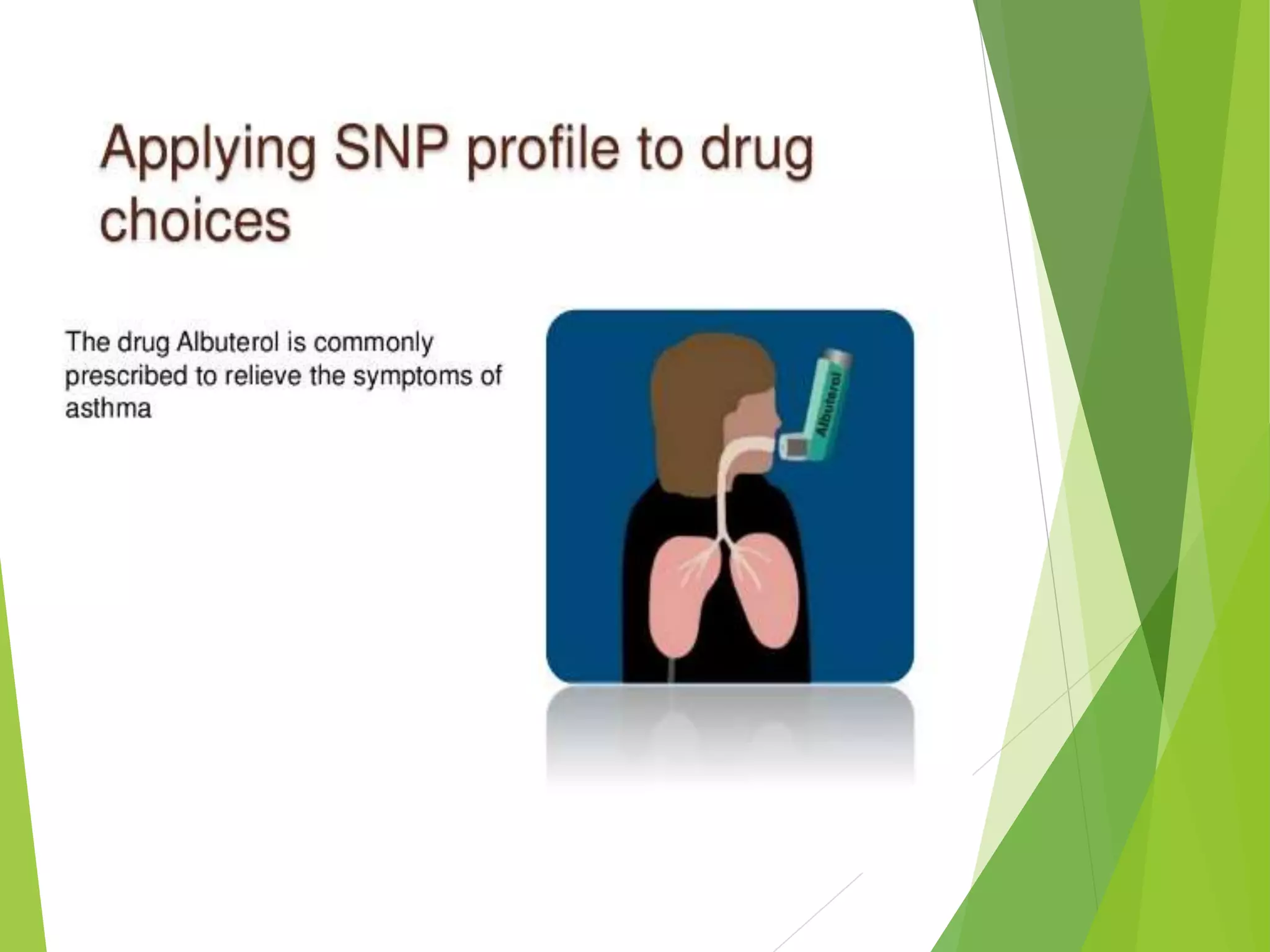
 Drug response predication
 Homogeneity testing/ study design
 Gene function identification
 Drug discovery and development
REFERENCES
 Brookes, AJ. (1999). The essence of SNPs.
Gene,234: 177-186.
 Dawson, E. (1999). SNP maps: more markers
needed? Molecular medicine todays, 5: 419-420.
 Nachman and Michel W. (2001). “Single
nucleotide polymorphisms and recombination rate
in humans”. Trends in genetics, 17(9) : 481-485.
 Wang, D. G., Siao, C.J. and Berno (1998). Large
scale identification, mapping and genotyping of
single nucleotide polymorphism in the human
genome. Science, 280: 1077-1082.
REFERENCES
 William, J. G. K., Kubelik, A. R., Livak, K. J., Rafalski,
J. A. and Tingey, S.V. (1990). DNA polymorphism
amplified by arbitrary primers are useful as genetic
markers. Nucleic acids research, 18: 6531-6535.
SNP ppt.pptx

SNP ppt.pptx

  • 1.
  • 2.
  • 3.
    INTRODUCTION  SNPs isa variation in a single nucleotide occur at specific position in the genome among individuals.
  • 4.
    INTRODUCTION  SNPs aremost common type of genetic variation among organisms.  Each SNP location in genome have 4 version- one for each nucleotide A,G,T,C.
  • 5.
     In cattle,SNP profiles for individual animals are generated using a small plastic chip that is diagnostic for up to 50 000 SNPs spaced throughout the genome.  Phenotypes, usually averaged over offspring of bulls, are matched with SNP profiles of bulls mathematically so that animals can be ranked for siring desirable phenotypes via their SNP profiles.  The value of these systems is very dependent on the number of accurate phenotypes matched with SNP profiles  Increasing the number of North American Holstein bulls evaluated from 1151 to 3576 quadrupled the additional genetic gain in net merit from this approach.  Once a valid SNP evaluation system is developed, any animal in that population, including embryos, can be evaluated with similar accuracy. Contemporary Relevance
  • 6.
     The studyon Goat Population reveled 16 million single-nucleotide polymorphisms (SNPs) as well as 123,577 insertions and deletions. Contemporary Relevance
  • 7.
    PROPERTIES  SNPs arefound in coding and non-coding both regions.  Occurs with a very high frequency.  The abundance of SNPs and the ease with which they can be measured make these genetic variations significant.  SNP is commonly biallelic.
  • 8.
    PROPERTIES  SNPs aremost widespread type of sequence variation in genome.  Widespread use because these are numerous, more stable, potentially easier to score than microsatellite repeats.  In many organisms most polymorphisms result from changes in single nucleotide position (point mutation) has led to the development of technique to study single nucleotide polymorphisms.  Have power to reveal hidden polymorphism not detected with other marker or method.
  • 9.
    CLASSIFICATON SNPs Linked SNPs CausativeSNPs Non-coding SNPs Coding SNPs Synonymous Non- synonymous Missense Nonsense
  • 11.
    LINKED SNPs  Alsoknown as indicative SNPs.  They do not resides within genes and do not affect protein function.  Nevertheless, they do correspond to a particular drug response or to the risk for getting a certain disease.
  • 12.
    Causative SNPs  Foundinside genes.  Causative SNPs affect the way a protein functions, correlating with a disease or influencing a person’s response to medication.  Further divided in 2 types : a) NON-CODING REGION b) CODING REGION
  • 13.
    NON-CODING REGION SNPs A segment of DNA that does comprise a gene and thus does not code for a protein.  This region located within the gene’s sequences, change the timing , location, or level of gene expression.
  • 14.
    CODING REGION SNPs This is region of DNA that code for proteins.  Located within the region of a gene, change the amino acid sequence of the gene’s protein product and thus alter the protein structure made by coding region.  These are of 2 types- a) Synonymous b) Non-synonymous
  • 15.
    SYNONYMOUS  A SNPin which both forms lead to the same polypeptide sequence is termed as Synonymous (sometimes called a silent mutation).  This do not affect the protein sequence.
  • 16.
    NON-SYNONYMOUS  A SNPin which both forms form different polypeptide sequence, they are Non- synonymous.  This SNPs change the amino acid sequence of protein.  Missense change results in a different amino acid while Nonsense change result in premature stop codon.
  • 17.
    eSNP  That isexpression SNP.  SNPs that are not present in the protein-coding region may still affect gene splicing, transcription factor binding, messenger RNA degradation, or the sequence of non coding RNA.  Gene expression affected by this type of SNP is referred as an eSNP.  These may be present upstream or downstream from the gene.
  • 18.
  • 19.
  • 27.
    How to identifySNPs  Using Sequencing Data  Genotyping with SNP Microarrays  Filtering SNPs 
  • 28.
    Identified SNPs TillDate  Cattle :  Buffalo :  Goat :  Sheep :  Pig :  HUMAN : 2 million SNPs
  • 29.
    ADVANTAGES  SNP markersare useful in gene mapping.  Helps in detection of mutations at molecular level.  SNP are useful in positional cloning of mutant locus.  SNP markers are useful in detection of disease causing genes.  High genomic abundance.  Potential for high throughout analysis.  Relatively low genotyping error.  Locus specificity.
  • 30.
    DISADVANTAGE  Most ofSNPs are biallelic and less informative than SSRs.  Multiplexing is not possible for all loci.  SNP assay technique is costly.  Development of SNP markers are labour oriented.  More SNP are required in preparing genetic maps than SSRs markers.
  • 31.
    APPLICATIONS  For manytraits in dairy cattle, the rate of genetic improvement can be nearly doubled when SNP information is used in addition to current methods of genetic evaluation.  In Livestock SNPs helps to Design conservation strategy, aids in breed management, genetic improvement, and utilization programs.  Gene discovery and Mapping  Association based candidate polymorphism testing  Diagnostics profiling/ disease diagnosis  Drug response predication  Homogeneity testing/ study design  Gene function identification  Drug discovery and development
  • 32.
    REFERENCES  Brookes, AJ.(1999). The essence of SNPs. Gene,234: 177-186.  Dawson, E. (1999). SNP maps: more markers needed? Molecular medicine todays, 5: 419-420.  Nachman and Michel W. (2001). “Single nucleotide polymorphisms and recombination rate in humans”. Trends in genetics, 17(9) : 481-485.  Wang, D. G., Siao, C.J. and Berno (1998). Large scale identification, mapping and genotyping of single nucleotide polymorphism in the human genome. Science, 280: 1077-1082.
  • 33.
    REFERENCES  William, J.G. K., Kubelik, A. R., Livak, K. J., Rafalski, J. A. and Tingey, S.V. (1990). DNA polymorphism amplified by arbitrary primers are useful as genetic markers. Nucleic acids research, 18: 6531-6535.