HIGH FREQUENCY TITRATIONS
1
SAGARIKA.B
M.Pharm (PA&QA)
INTRODUCTION
 High frequency titrimetry is closely related to conductometry .
 This method is also called as Oscillometry.
 This is an analytical technique in which a radio frequency electric field
is applied for which electric conductance of analytical substance
governs the response of detector.
 The titration vessel is kept in the field of H.F.O and changes in
conductivity of solution produce capacitance changes of the
detector circuit.
 Major advantage is elimination of electrodes .
2
THEORY:
• The conductivity of a sol depends on the mobility of ions in an electric field.
• Use of AC to avoid electrochem. depositon still allows ion mobility which
at high frequencies can not gain their full speed here a phenomenon called
molecular polarization arises.
• Thus ionic & orientation polarization occurs .
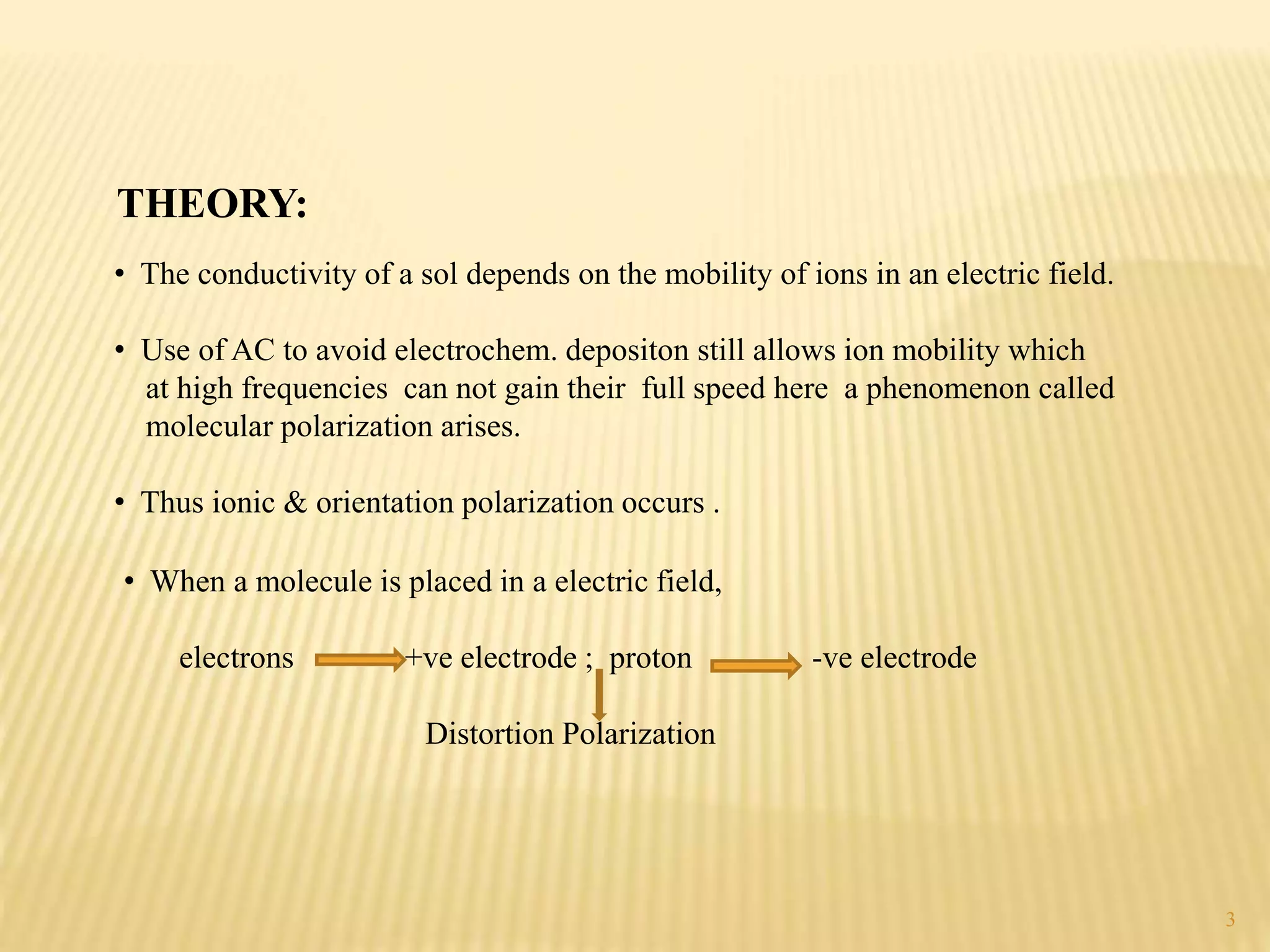
• When a molecule is placed in a electric field,
electrons +ve electrode ; proton -ve electrode
Distortion Polarization
3
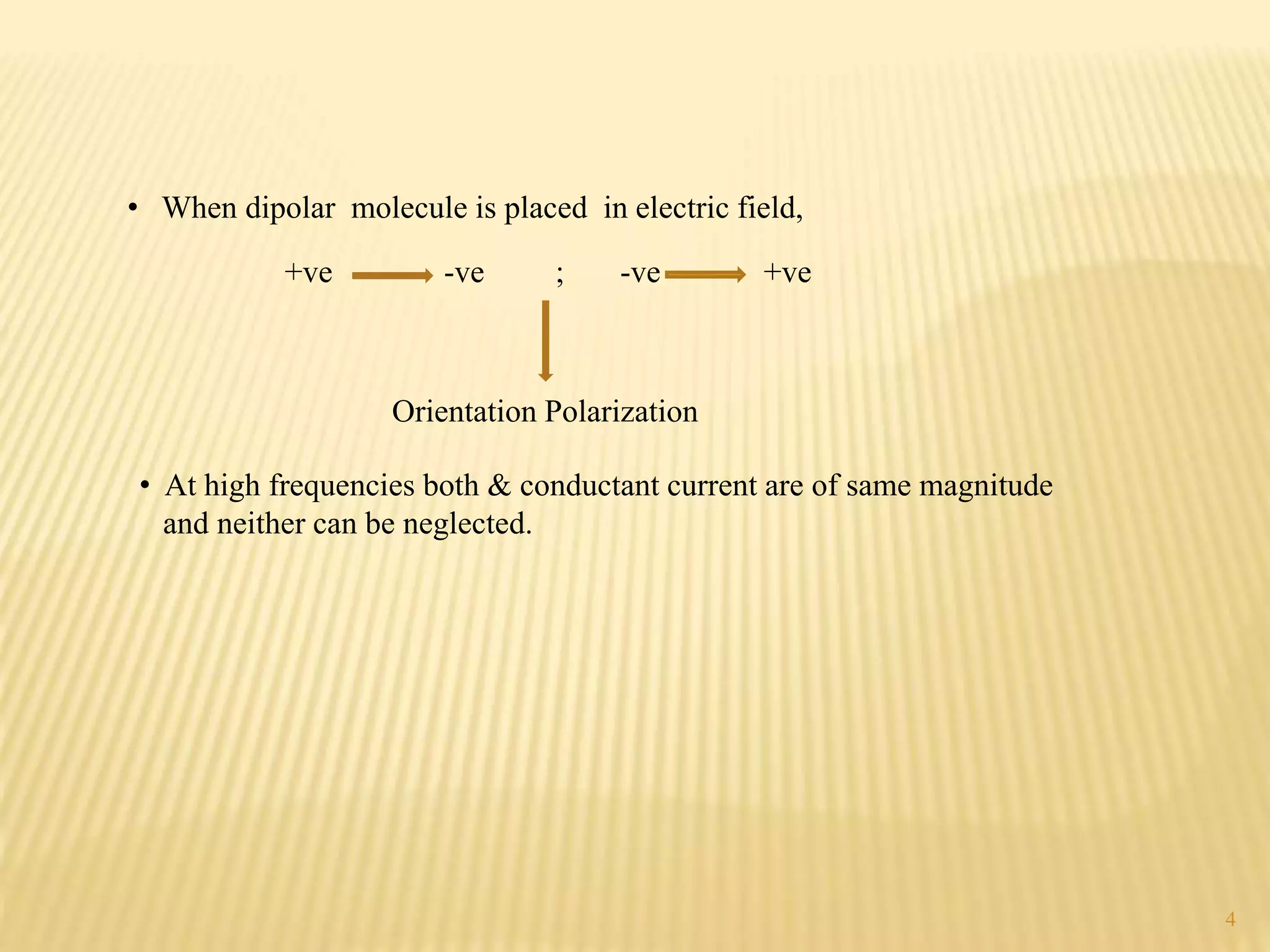
• When dipolar molecule is placed in electric field,
+ve -ve ; -ve +ve
Orientation Polarization
• At high frequencies both & conductant current are of same magnitude
and neither can be neglected.
4
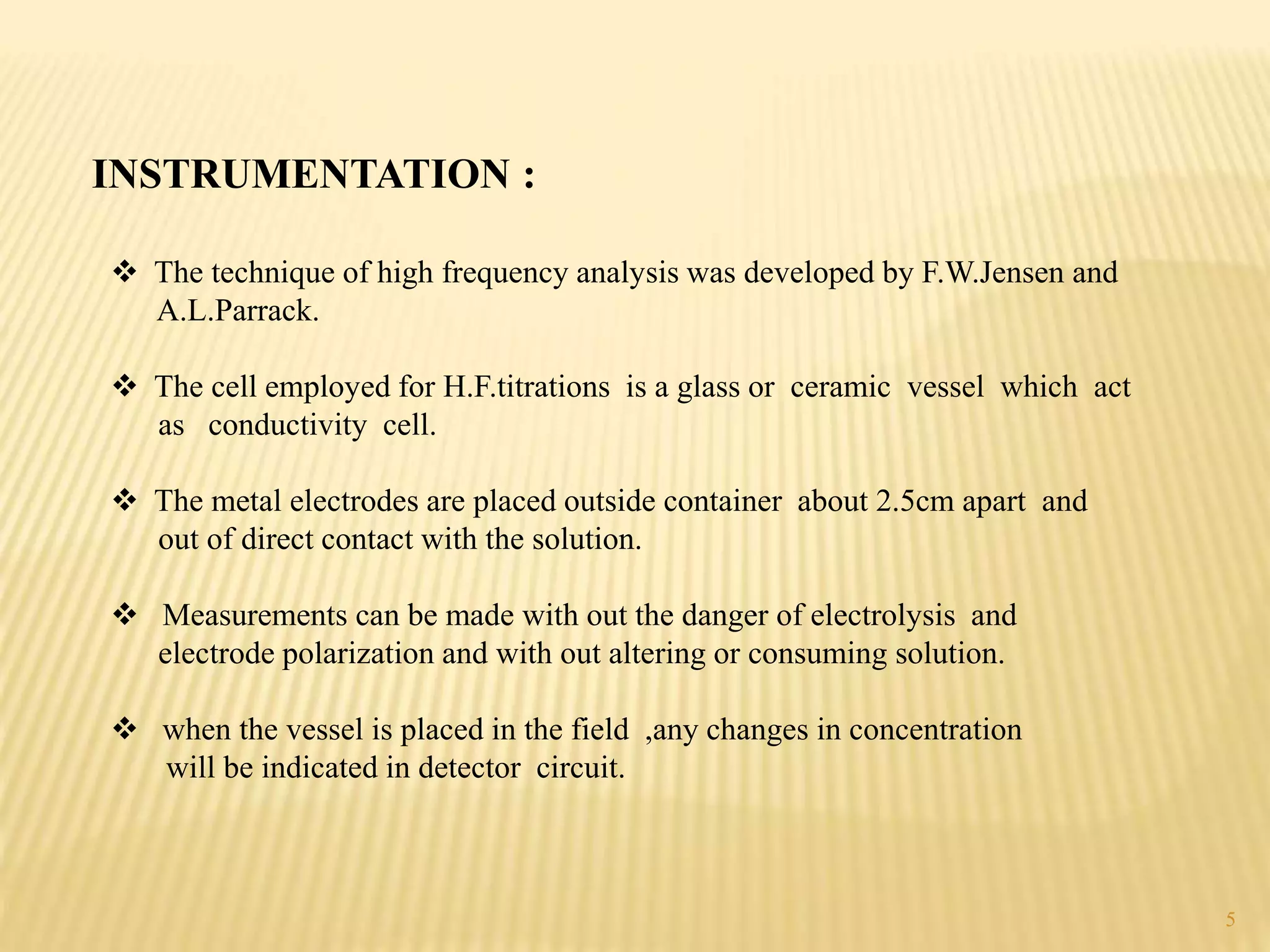
INSTRUMENTATION :
 The technique of high frequency analysis was developed by F.W.Jensen and
A.L.Parrack.
 The cell employed for H.F.titrations is a glass or ceramic vessel which act
as conductivity cell.
 The metal electrodes are placed outside container about 2.5cm apart and
out of direct contact with the solution.
 Measurements can be made with out the danger of electrolysis and
electrode polarization and with out altering or consuming solution.
 when the vessel is placed in the field ,any changes in concentration
will be indicated in detector circuit.
5
CELLS:
 In H.F.titrations two types of cells are used
1. Capacitative cells
2. Induction cells
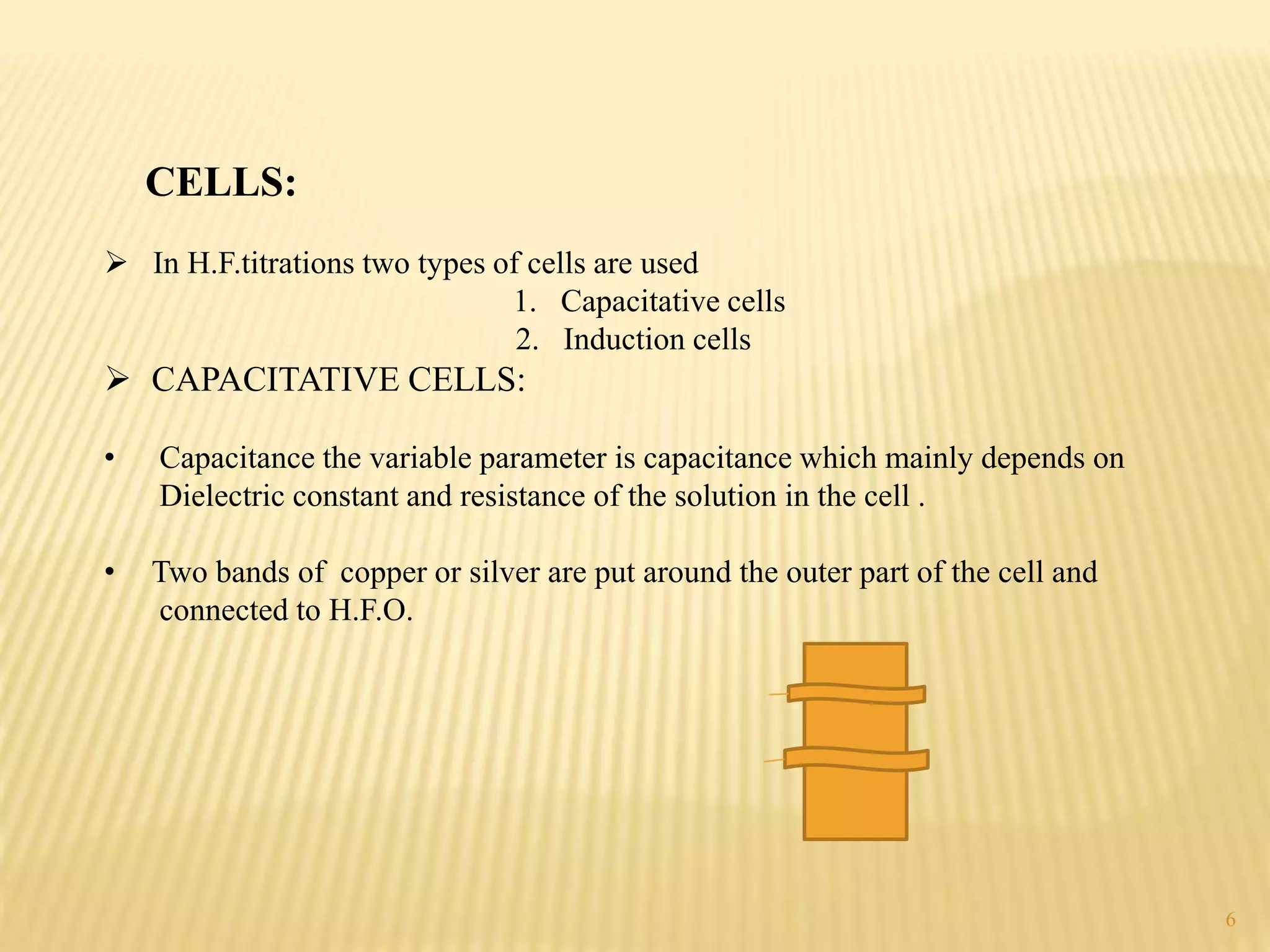
 CAPACITATIVE CELLS:
• Capacitance the variable parameter is capacitance which mainly depends on
Dielectric constant and resistance of the solution in the cell .
• Two bands of copper or silver are put around the outer part of the cell and
connected to H.F.O.
6
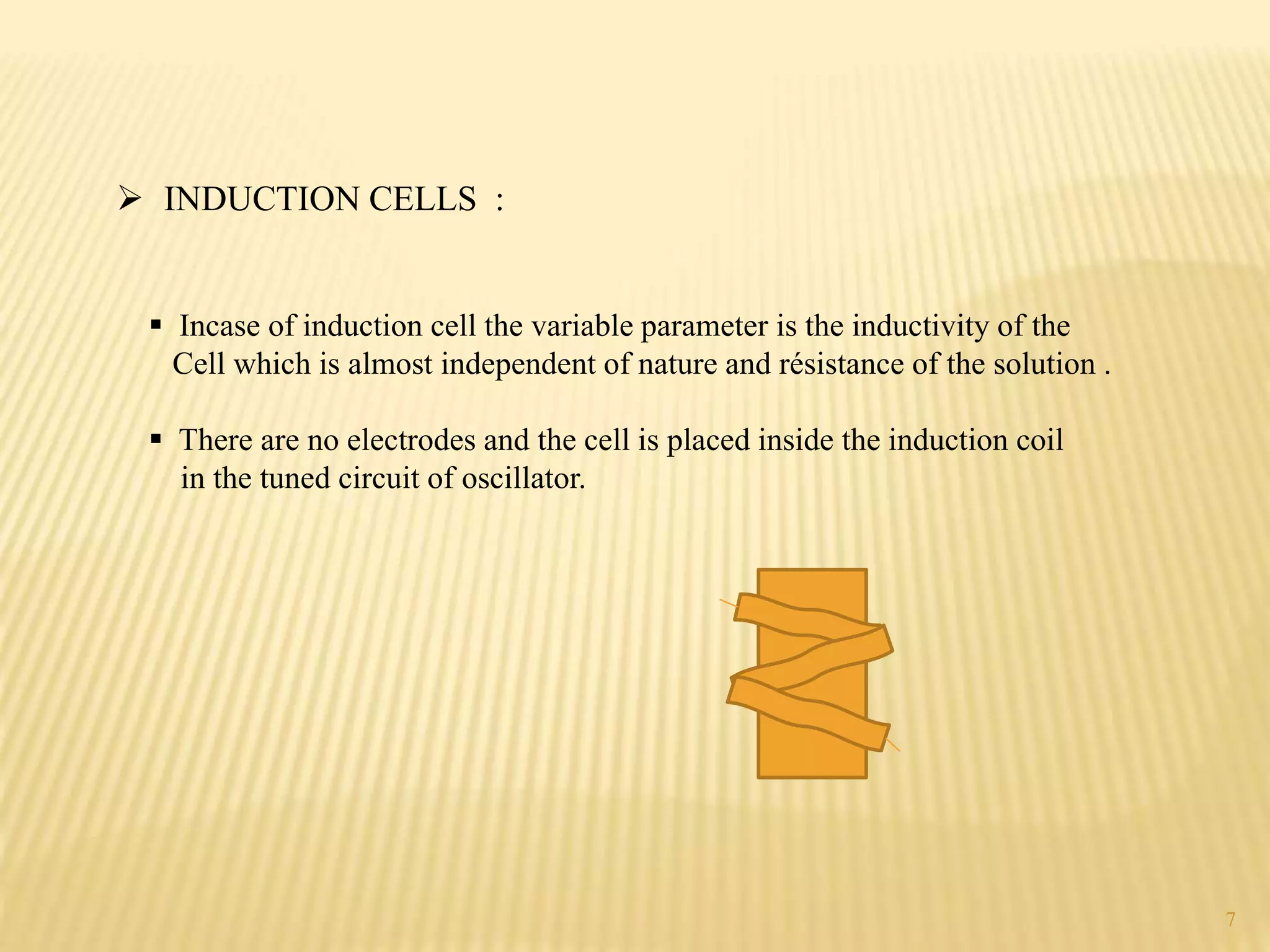
 INDUCTION CELLS :
 Incase of induction cell the variable parameter is the inductivity of the
Cell which is almost independent of nature and résistance of the solution .
 There are no electrodes and the cell is placed inside the induction coil
in the tuned circuit of oscillator.
7
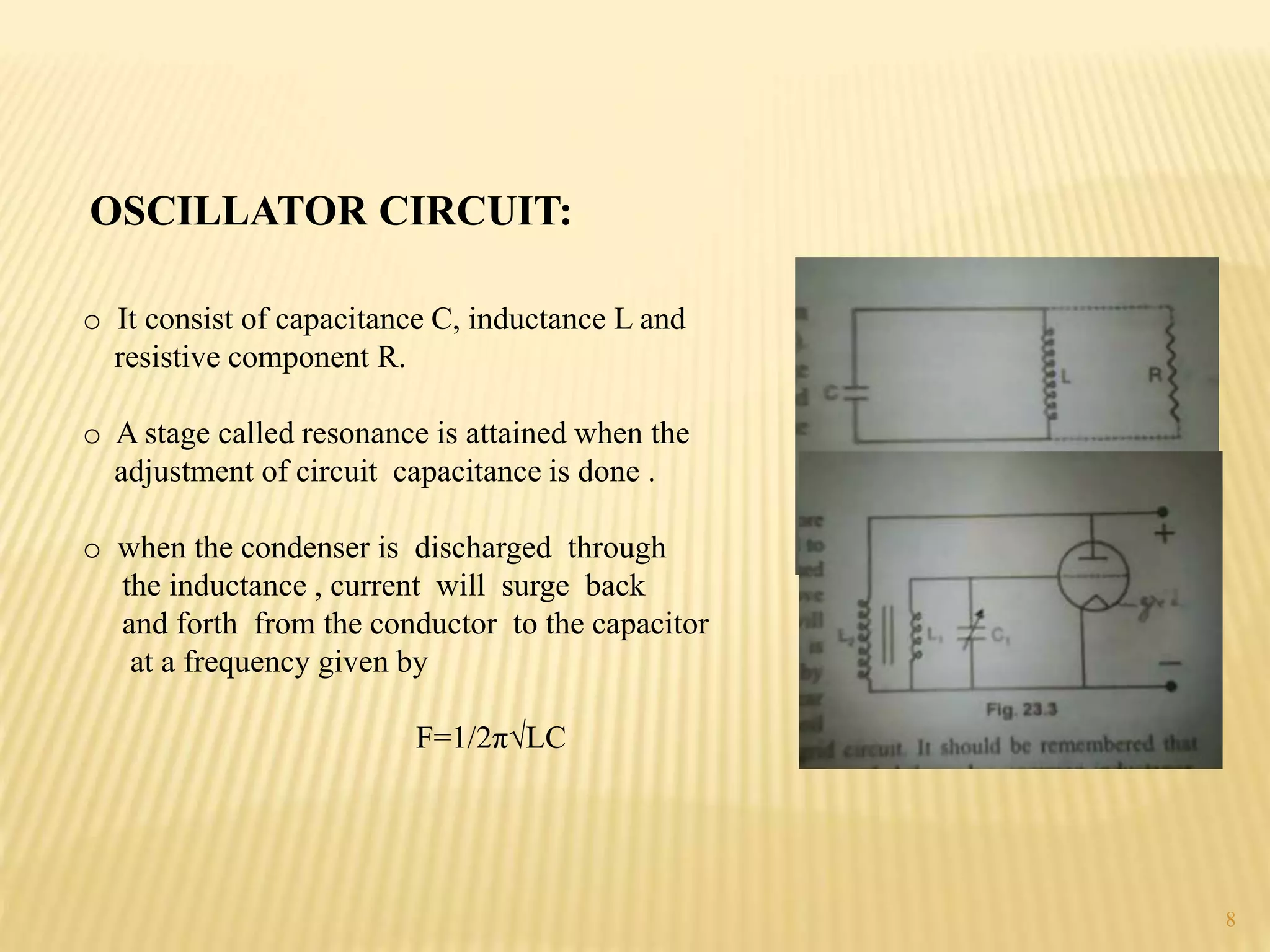
OSCILLATOR CIRCUIT:
o It consist of capacitance C, inductance L and
resistive component R.
o A stage called resonance is attained when the
adjustment of circuit capacitance is done .
o when the condenser is discharged through
the inductance , current will surge back
and forth from the conductor to the capacitor
at a frequency given by
F=1/2π√LC
8
PRINCIPLE:
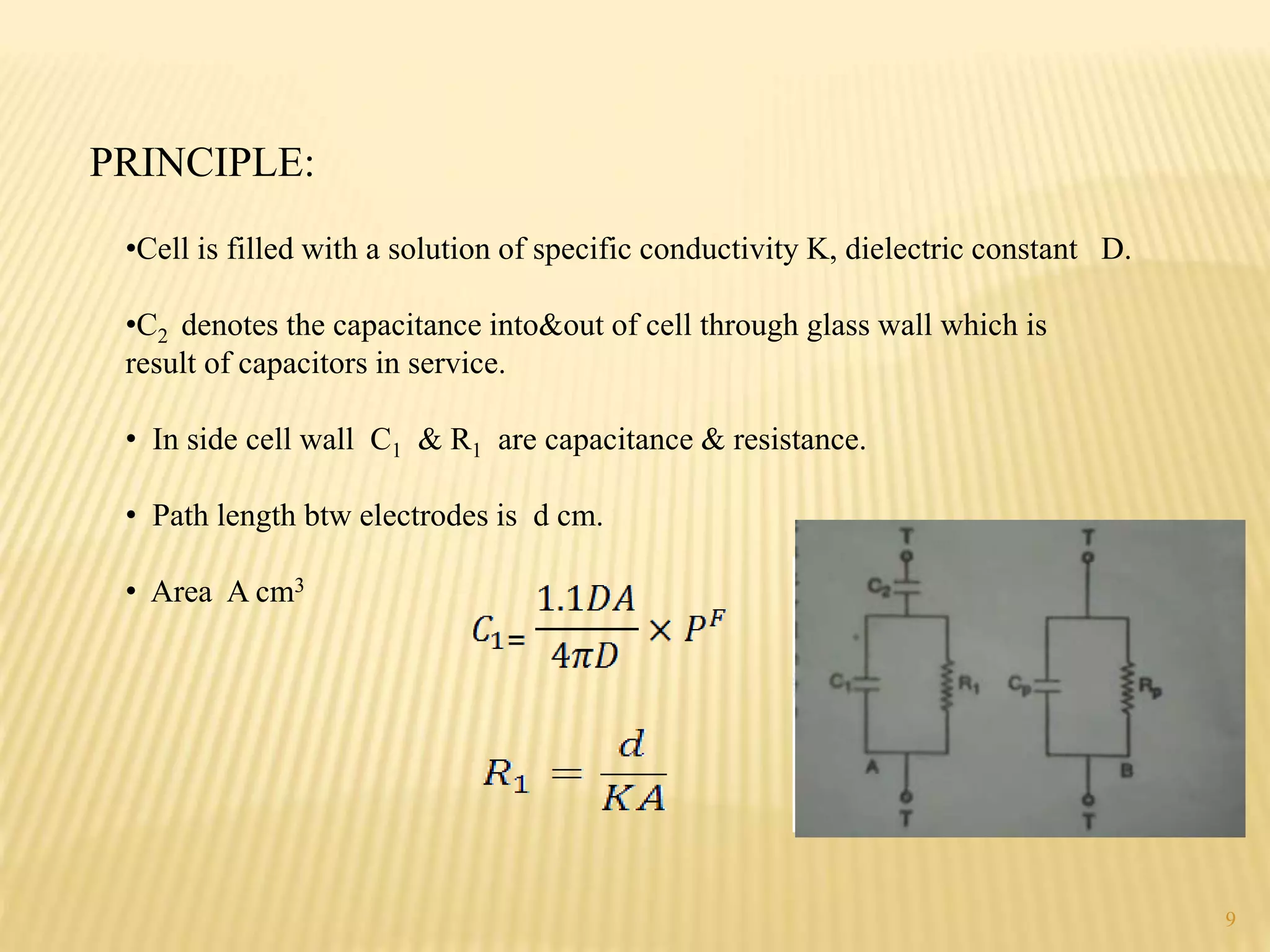
•Cell is filled with a solution of specific conductivity K, dielectric constant D.
•C2 denotes the capacitance into&out of cell through glass wall which is
result of capacitors in service.
• In side cell wall C1 & R1 are capacitance & resistance.
• Path length btw electrodes is d cm.
• Area A cm3
9
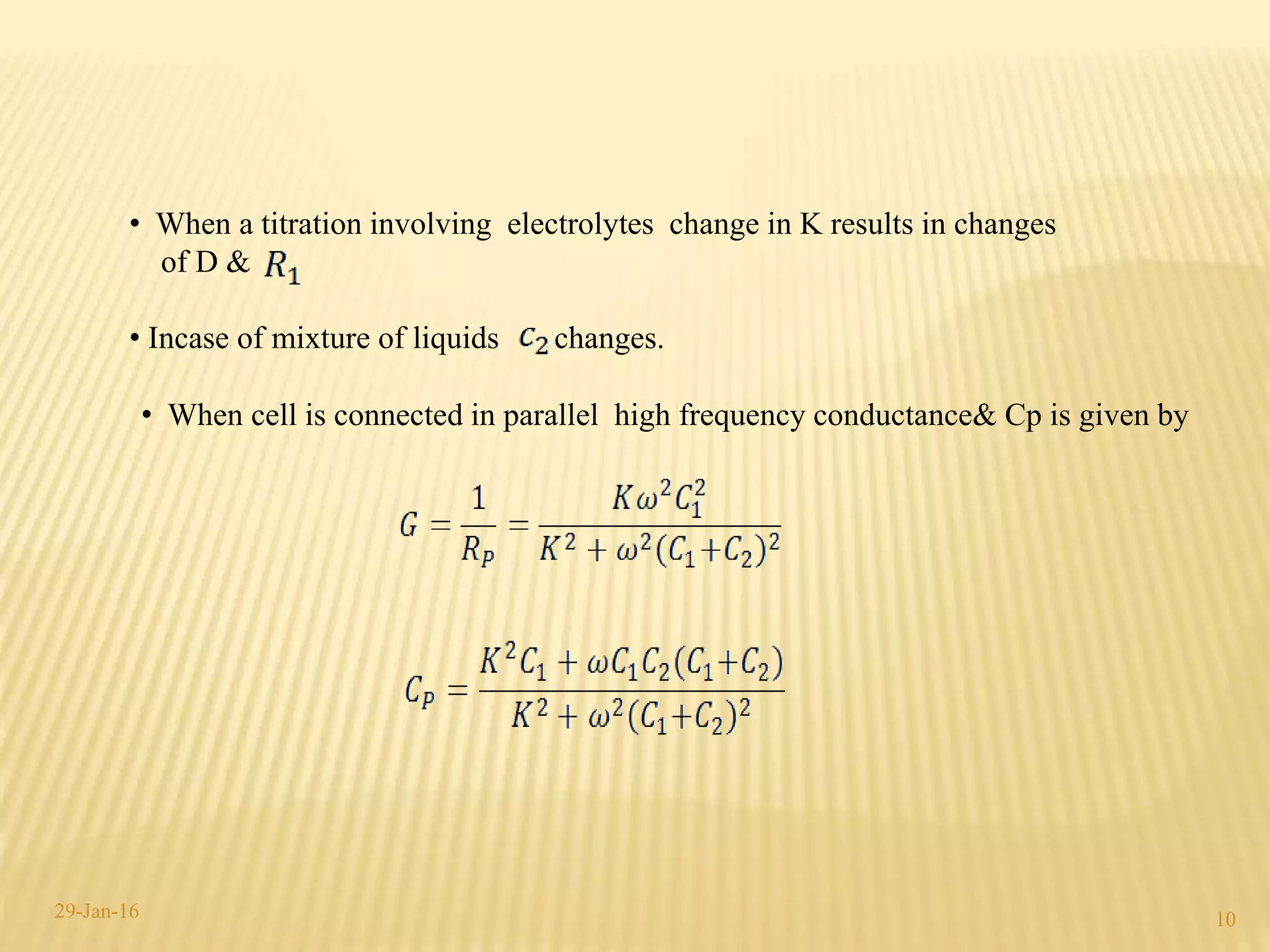
• When a titration involving electrolytes change in K results in changes
of D &
• Incase of mixture of liquids changes.
• When cell is connected in parallel high frequency conductance& Cp is given by
1029-Jan-16
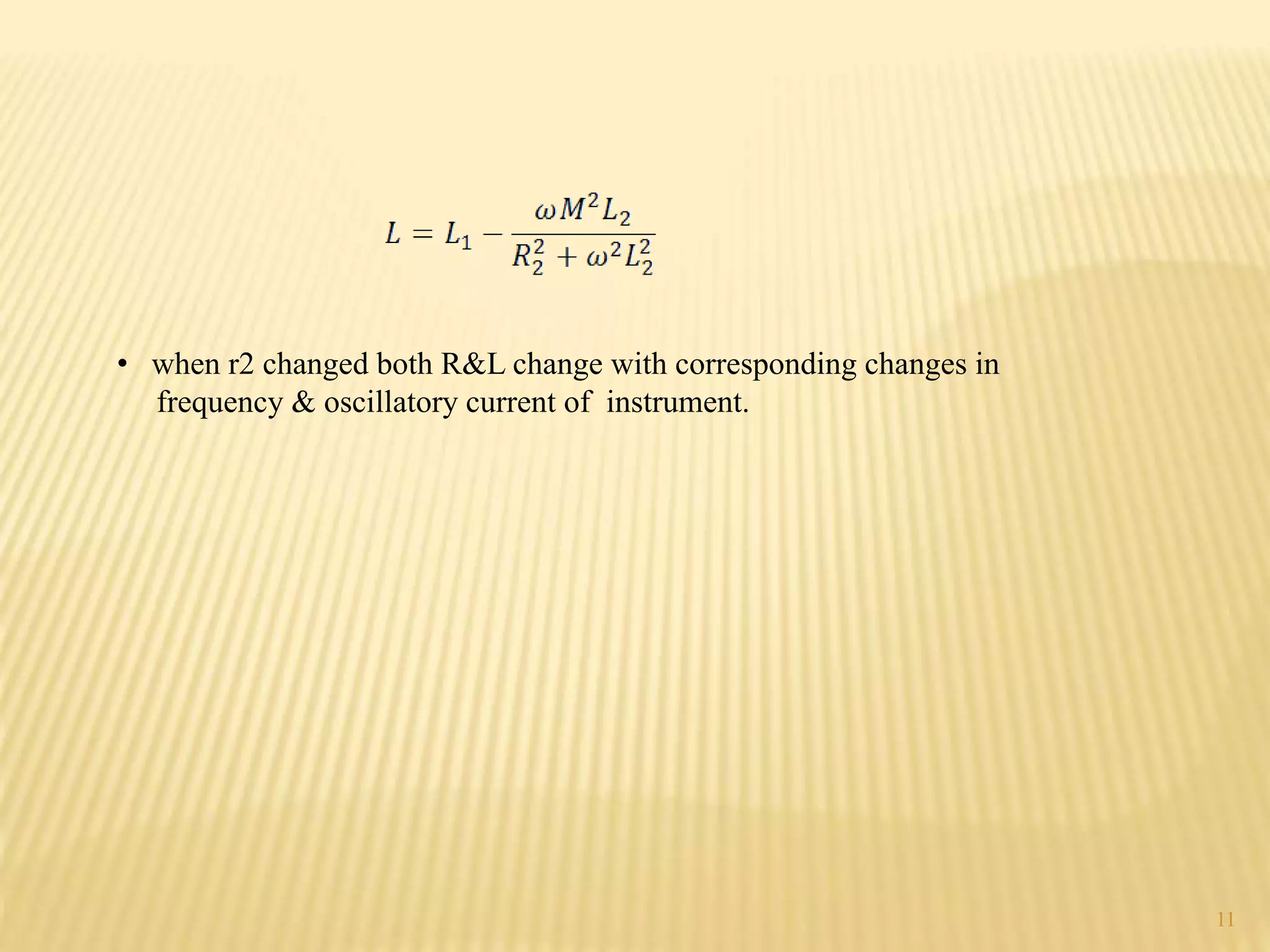
• when r2 changed both R&L change with corresponding changes in
frequency & oscillatory current of instrument.
11
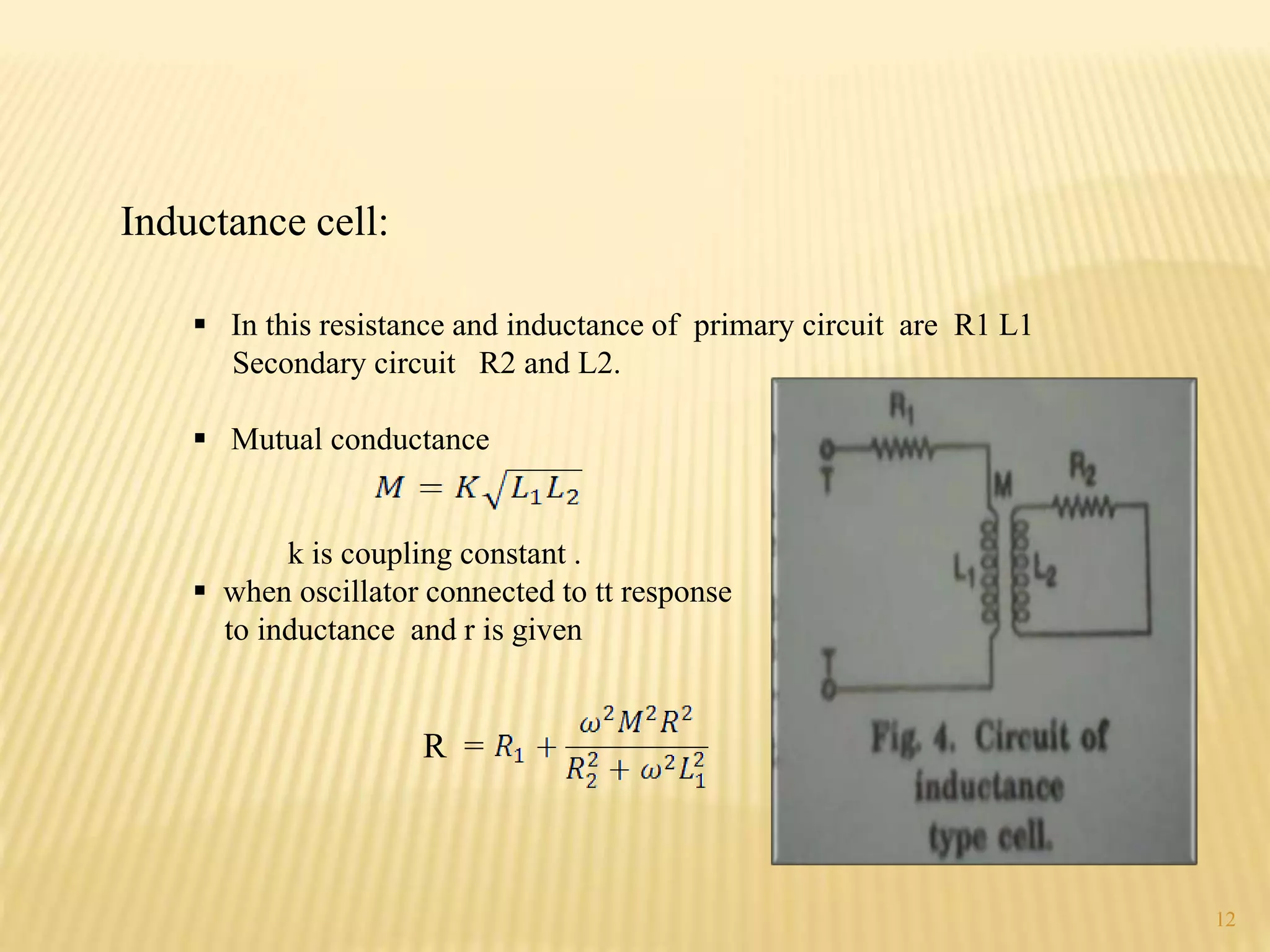
 In this resistance and inductance of primary circuit are R1 L1
Secondary circuit R2 and L2.
 Mutual conductance
k is coupling constant .
 when oscillator connected to tt response
to inductance and r is given
R =
Inductance cell:
12
HIGH FREQUENCY TITRIMETERS
 The H.F. Titrimeter ranges from simple magic eye tube circuit of hall
To the complex oscillometer of sergent .
 The cell is put in parallel with a calibrated capacitor .
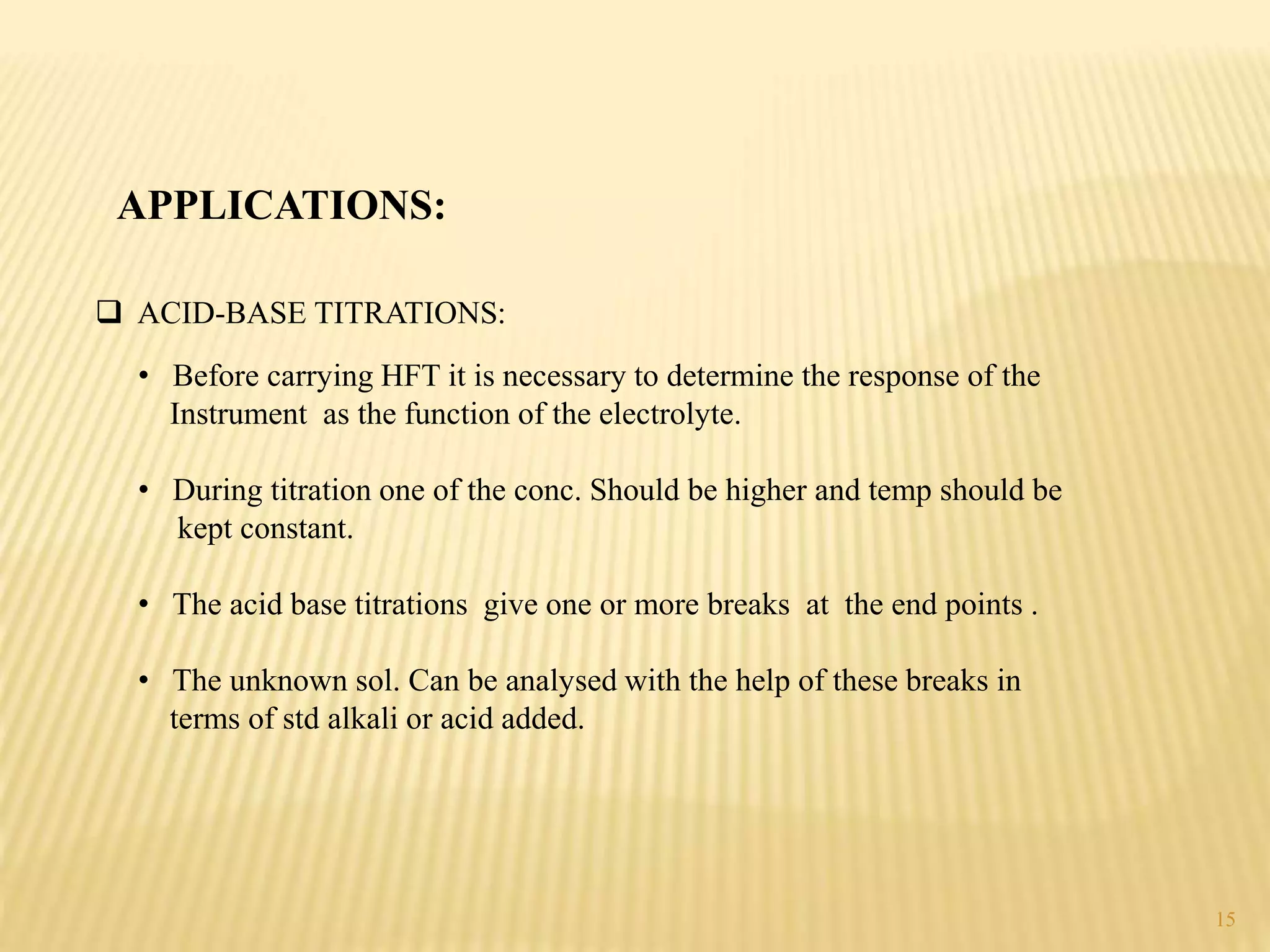
 In this method , the out put frequency of two identical oscillator circuit
is measured.
One of the circuit contains the sample cell as a part of oscillator circuit ‘f’
and other circuit serves as reference unit ‘fo’.
The output from the two units are then fed in to a mixer unit
and the difference of frequency is measured directly.
 In some titrimeters change in oscillator current from the introduction
of sample is measured.
13
SCHEMATIC DIAGRAM OF HIGH FREQUENCY
TITRIMETER
F-fo
14
 ACID-BASE TITRATIONS:
APPLICATIONS:
• Before carrying HFT it is necessary to determine the response of the
Instrument as the function of the electrolyte.
• During titration one of the conc. Should be higher and temp should be
kept constant.
• The acid base titrations give one or more breaks at the end points .
• The unknown sol. Can be analysed with the help of these breaks in
terms of std alkali or acid added.
15
 COMPLEXOMETRIC TITRAITIONS:
• High frequency titrations of ions like ca, mg, cu,la give a sharp
end point with EDTA.
• The titrations of ni,cu,zn, with pyridine has been used successfully.
 PRECIPITATION TITRATIONS :
• In this the change in conductivity is small before the end point is reached .
• The exact shape point of the titration curve depends on concentration
of titrant and solution & the frequency on which the measurements
are carried out.
16
 ANALYSIS OF MIXTURE OF ORGANIC COMPOUNDS :
• This method is based on the dielectric behavior or the mixtures .
• it can be done calibration curve are prepared and instrument readings
are converted. Into concentration ratios.
• The mixtures of P-xylenes ,hexanes ,and benzene, methanol and ethanol ,
alcohol and water are detected.
 DETERMINATION OF DIELECTRIC CONSTANT:
• Consider a non-conducting liquid placed between metal plates of a cell
behaving as two capacitors cg & cs in series.
• Cs varies from fixed co,(filled with air) to a value D depending upon
the dielectric constant of the sample.
Cs=coD
17
ADVANTAGES :
• H.F.T reflects more complex changes occurring in the solution than
conductometric titrations.
• The method dose not require any special type of conductivity cell.
• Polarization of electrodes and chemical interaction of substances are eliminated.
• Catalytic or surface effects do not occur on platinum electrodes.
• It is particularly useful for organic compounds where low frequency method
is not helpful because of their poor conductance.
• The variation of oscillator current may be plotted against function of time if
a Potentiometric recorder is connected.
18
DISADVANTAGES:
• The technique is complex and tuning is difficult .
• Titrimeter is less sensitive.This can be enhanced by using well designed cell.
• This method require measures at the end point.
• This method is empirical than fundamental.
19
20
SAGARIKA

High Frequency Titrations

  • 1.
  • 2.
    INTRODUCTION  High frequencytitrimetry is closely related to conductometry .  This method is also called as Oscillometry.  This is an analytical technique in which a radio frequency electric field is applied for which electric conductance of analytical substance governs the response of detector.  The titration vessel is kept in the field of H.F.O and changes in conductivity of solution produce capacitance changes of the detector circuit.  Major advantage is elimination of electrodes . 2
  • 3.
    THEORY: • The conductivityof a sol depends on the mobility of ions in an electric field. • Use of AC to avoid electrochem. depositon still allows ion mobility which at high frequencies can not gain their full speed here a phenomenon called molecular polarization arises. • Thus ionic & orientation polarization occurs . • When a molecule is placed in a electric field, electrons +ve electrode ; proton -ve electrode Distortion Polarization 3
  • 4.
    • When dipolarmolecule is placed in electric field, +ve -ve ; -ve +ve Orientation Polarization • At high frequencies both & conductant current are of same magnitude and neither can be neglected. 4
  • 5.
    INSTRUMENTATION :  Thetechnique of high frequency analysis was developed by F.W.Jensen and A.L.Parrack.  The cell employed for H.F.titrations is a glass or ceramic vessel which act as conductivity cell.  The metal electrodes are placed outside container about 2.5cm apart and out of direct contact with the solution.  Measurements can be made with out the danger of electrolysis and electrode polarization and with out altering or consuming solution.  when the vessel is placed in the field ,any changes in concentration will be indicated in detector circuit. 5
  • 6.
    CELLS:  In H.F.titrationstwo types of cells are used 1. Capacitative cells 2. Induction cells  CAPACITATIVE CELLS: • Capacitance the variable parameter is capacitance which mainly depends on Dielectric constant and resistance of the solution in the cell . • Two bands of copper or silver are put around the outer part of the cell and connected to H.F.O. 6
  • 7.
     INDUCTION CELLS:  Incase of induction cell the variable parameter is the inductivity of the Cell which is almost independent of nature and résistance of the solution .  There are no electrodes and the cell is placed inside the induction coil in the tuned circuit of oscillator. 7
  • 8.
    OSCILLATOR CIRCUIT: o Itconsist of capacitance C, inductance L and resistive component R. o A stage called resonance is attained when the adjustment of circuit capacitance is done . o when the condenser is discharged through the inductance , current will surge back and forth from the conductor to the capacitor at a frequency given by F=1/2π√LC 8
  • 9.
    PRINCIPLE: •Cell is filledwith a solution of specific conductivity K, dielectric constant D. •C2 denotes the capacitance into&out of cell through glass wall which is result of capacitors in service. • In side cell wall C1 & R1 are capacitance & resistance. • Path length btw electrodes is d cm. • Area A cm3 9
  • 10.
    • When atitration involving electrolytes change in K results in changes of D & • Incase of mixture of liquids changes. • When cell is connected in parallel high frequency conductance& Cp is given by 1029-Jan-16
  • 11.
    • when r2changed both R&L change with corresponding changes in frequency & oscillatory current of instrument. 11
  • 12.
     In thisresistance and inductance of primary circuit are R1 L1 Secondary circuit R2 and L2.  Mutual conductance k is coupling constant .  when oscillator connected to tt response to inductance and r is given R = Inductance cell: 12
  • 13.
    HIGH FREQUENCY TITRIMETERS The H.F. Titrimeter ranges from simple magic eye tube circuit of hall To the complex oscillometer of sergent .  The cell is put in parallel with a calibrated capacitor .  In this method , the out put frequency of two identical oscillator circuit is measured. One of the circuit contains the sample cell as a part of oscillator circuit ‘f’ and other circuit serves as reference unit ‘fo’. The output from the two units are then fed in to a mixer unit and the difference of frequency is measured directly.  In some titrimeters change in oscillator current from the introduction of sample is measured. 13
  • 14.
    SCHEMATIC DIAGRAM OFHIGH FREQUENCY TITRIMETER F-fo 14
  • 15.
     ACID-BASE TITRATIONS: APPLICATIONS: •Before carrying HFT it is necessary to determine the response of the Instrument as the function of the electrolyte. • During titration one of the conc. Should be higher and temp should be kept constant. • The acid base titrations give one or more breaks at the end points . • The unknown sol. Can be analysed with the help of these breaks in terms of std alkali or acid added. 15
  • 16.
     COMPLEXOMETRIC TITRAITIONS: •High frequency titrations of ions like ca, mg, cu,la give a sharp end point with EDTA. • The titrations of ni,cu,zn, with pyridine has been used successfully.  PRECIPITATION TITRATIONS : • In this the change in conductivity is small before the end point is reached . • The exact shape point of the titration curve depends on concentration of titrant and solution & the frequency on which the measurements are carried out. 16
  • 17.
     ANALYSIS OFMIXTURE OF ORGANIC COMPOUNDS : • This method is based on the dielectric behavior or the mixtures . • it can be done calibration curve are prepared and instrument readings are converted. Into concentration ratios. • The mixtures of P-xylenes ,hexanes ,and benzene, methanol and ethanol , alcohol and water are detected.  DETERMINATION OF DIELECTRIC CONSTANT: • Consider a non-conducting liquid placed between metal plates of a cell behaving as two capacitors cg & cs in series. • Cs varies from fixed co,(filled with air) to a value D depending upon the dielectric constant of the sample. Cs=coD 17
  • 18.
    ADVANTAGES : • H.F.Treflects more complex changes occurring in the solution than conductometric titrations. • The method dose not require any special type of conductivity cell. • Polarization of electrodes and chemical interaction of substances are eliminated. • Catalytic or surface effects do not occur on platinum electrodes. • It is particularly useful for organic compounds where low frequency method is not helpful because of their poor conductance. • The variation of oscillator current may be plotted against function of time if a Potentiometric recorder is connected. 18
  • 19.
    DISADVANTAGES: • The techniqueis complex and tuning is difficult . • Titrimeter is less sensitive.This can be enhanced by using well designed cell. • This method require measures at the end point. • This method is empirical than fundamental. 19
  • 20.