Downloaded 562 times


![REFERENCES
[1]http://en.wikipedia.org/wiki/Affinity_chromatography
[2]www.apsu.edu/reedr/.../Affinity%20Chromatography%201.ppt
[3] www.rpi.edu/dept/chem-eng/WWW/faculty/.../Lecture%2001.pdf
[4]www.chemistryinnovation.co.uk/.../Technology%20Area%20Affinity
%20Chromatography.pdf -](https://image.slidesharecdn.com/affinitychromatography-170208143811/85/Affinity-chromatography-22-320.jpg)


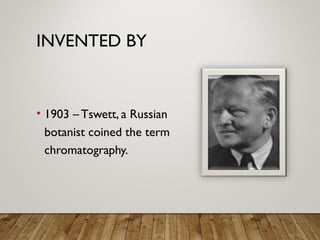
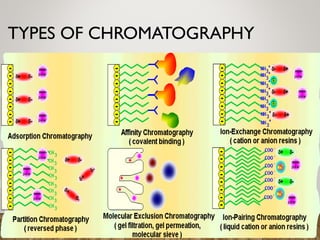
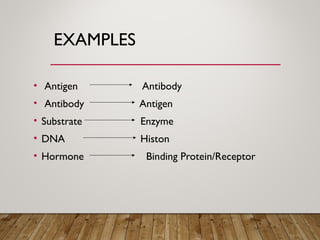
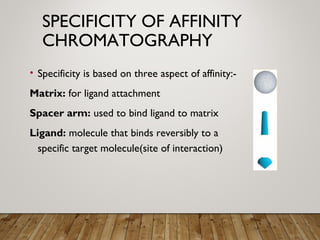
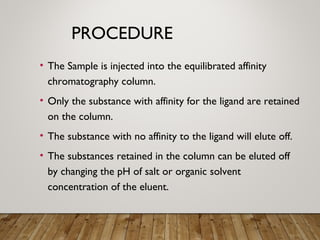
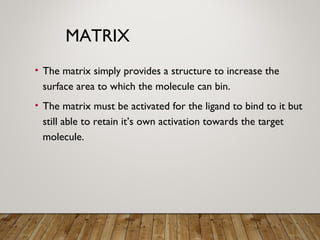
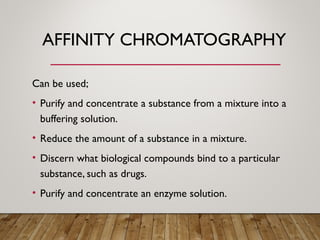
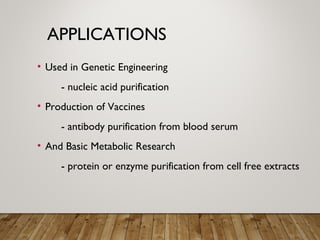
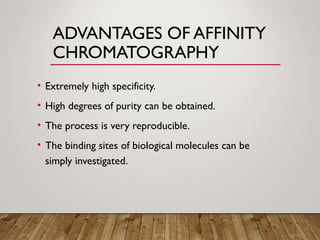
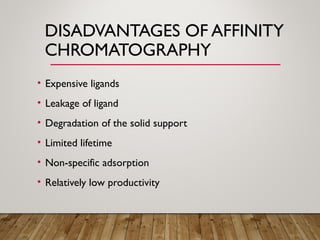
Affinity chromatography is a type of liquid chromatography that separates components based on a highly specific non-covalent biological interaction between the analyte and a ligand attached to a chromatography matrix. It was developed in the 1930s and relies on the affinity of biochemical compounds for specific properties. The matrix provides surface area for the ligand to bind to, while the ligand binds only to the desired molecule from the solution. Common applications include purifying antibodies, enzymes, and nucleic acids. It provides highly specific purification but the ligands and support can be expensive.


![谷歌留痕技术 [ 𝙩𝙤𝙥 𝟮𝟯𝟯. 𝙘 𝙤𝙢 ]](https://cdn.slidesharecdn.com/ss_thumbnails/top233-260130174328-3833018c-thumbnail.jpg?width=640&height=640&fit=bounds)


