PNEUMOTHORAX MBBS.weebly.com
Introduction Laennec described the clinical picture of pneumothorax in 1819 The modern description of primary spontaneous pneumothorax occurring in otherwise healthy people was provided by Kjaergard in 1932 Primary pneumothorax remains a significant global problem The incidence is 18-28/100 000 per year for men and 1.2-6/100 000 per year for women
Introduction Secondary pneumothorax is associated with underlying lung disease, whereas primary pneumothorax is not Hospital admission rates for combined primary and secondary pneumothorax are reported in the UK at between 5.8/10 000 per year for women and 16.7/10 000 per year for men Mortality rates in the UK were 0.62/million for men between 1991 and 1995
Contents What is pneumothorax Pathogenesis and mechanisms Pathophysiology  Clinical typing  Clinical manifestation  Diagnosis and differentiate diagnosis Treatment
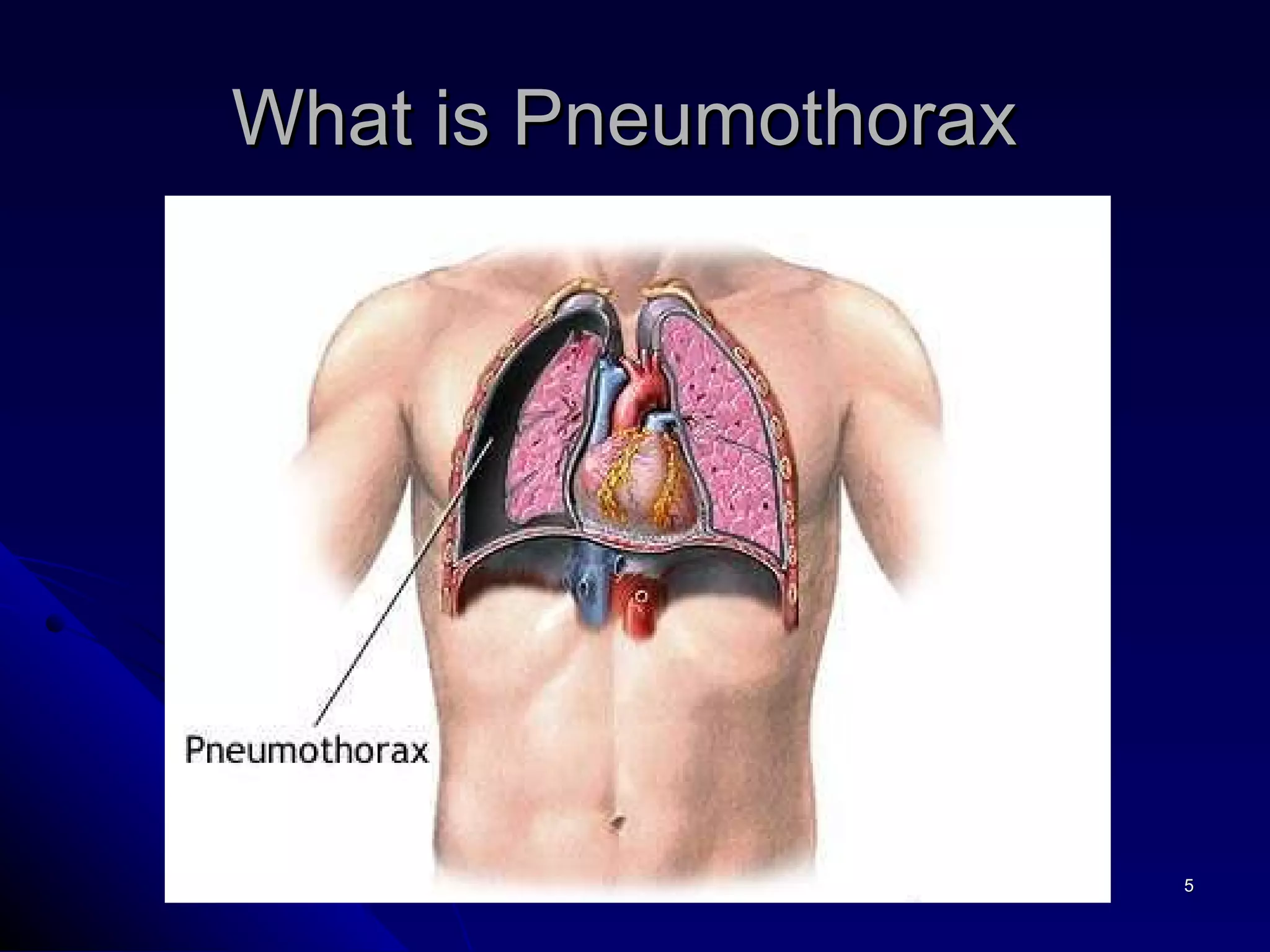
What is Pneumothorax
Classification of pneumothorax Types Spontaneous having an unknown cause or occurring as a consequence of the nature course of a disease process, such as COPD, tuberculosis Traumatic following any penetrating or non-penetrating chest trauma, with or without bronchial rupture Iatrogenic  occurring as the results of diagnostic or therapeutic medical procedure. Intentional or a complication
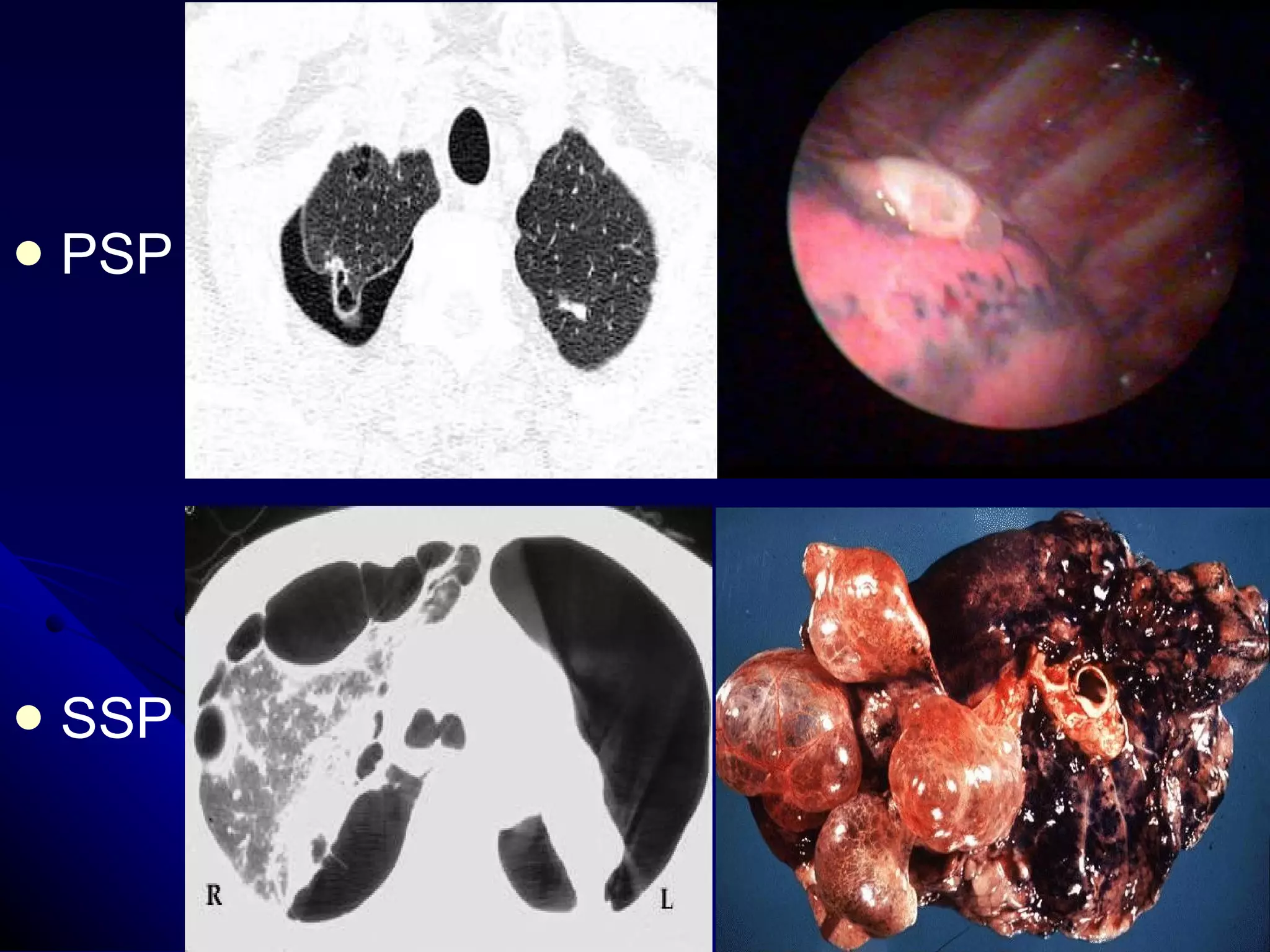
Spontaneous pneumothoraces are subclassified as: Primary spontaneous pneumothorax (PSP) Healthy people, most young people Secondary spontaneous pneumothorax (SSP) Underlying diseases Chronic obstructive pulmonary disease (COPD), pulmonary tuberculosis Clinical typing of pneumothorax
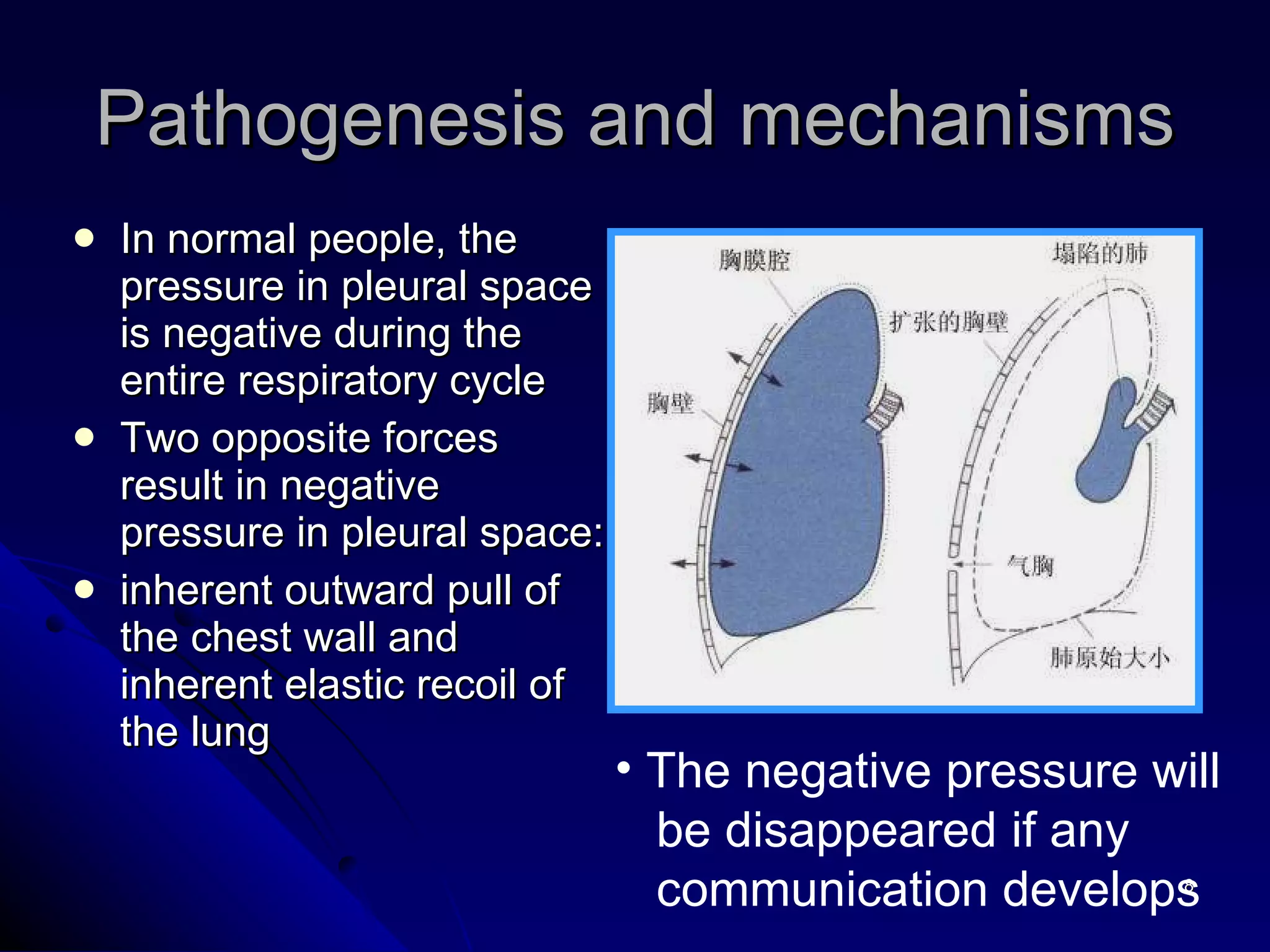
Pathogenesis and mechanisms In normal people, the pressure in pleural space is negative during the entire respiratory cycle Two opposite forces result in negative pressure in pleural space: inherent outward pull of the chest wall and inherent elastic recoil of the lung  The negative pressure will    be disappeared if any    communication develops
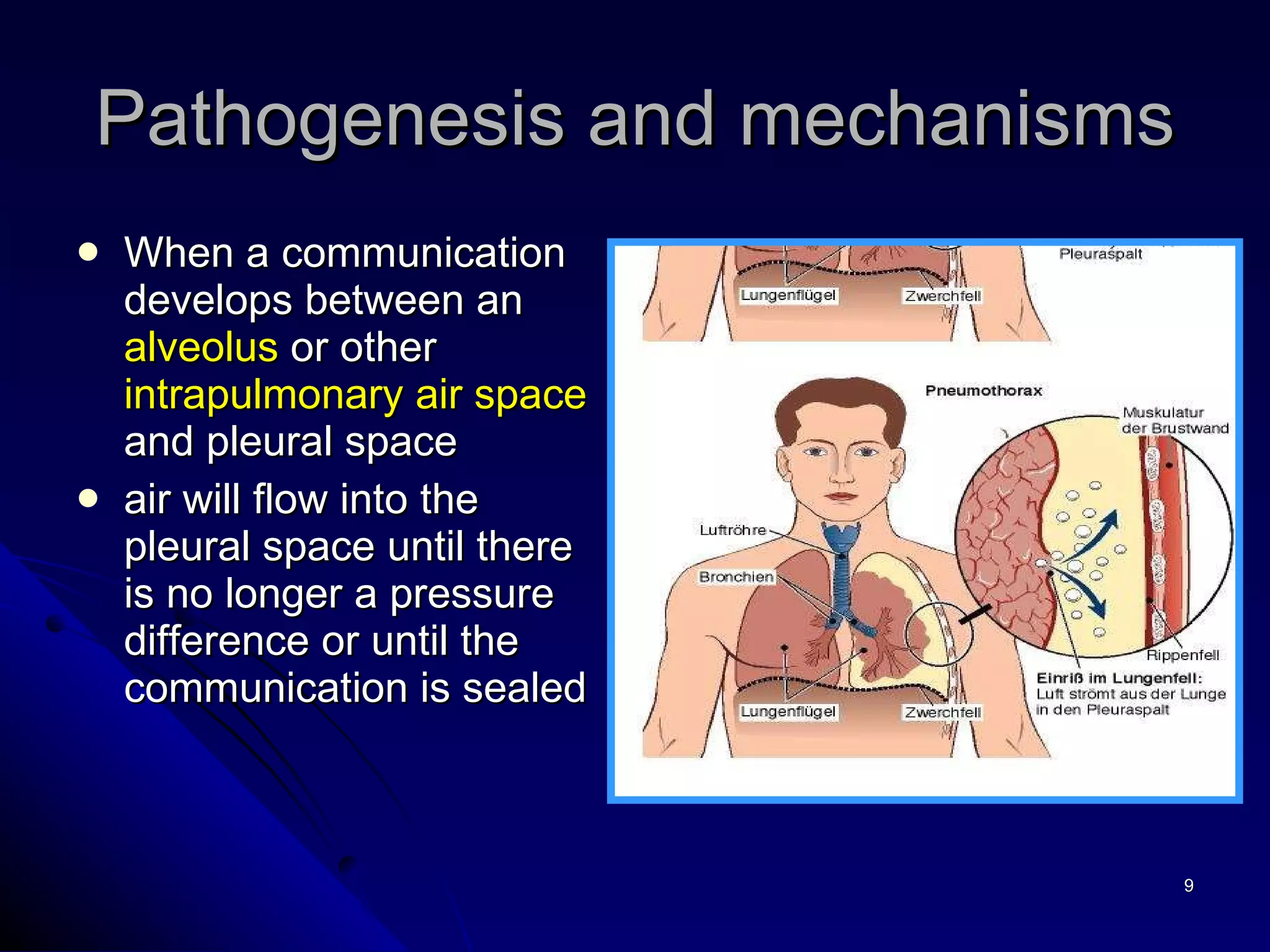
When a communication develops between an  alveolus  or other  intrapulmonary air space  and pleural space air will flow into the pleural space until there is no longer a pressure difference or until the communication is sealed Pathogenesis and mechanisms
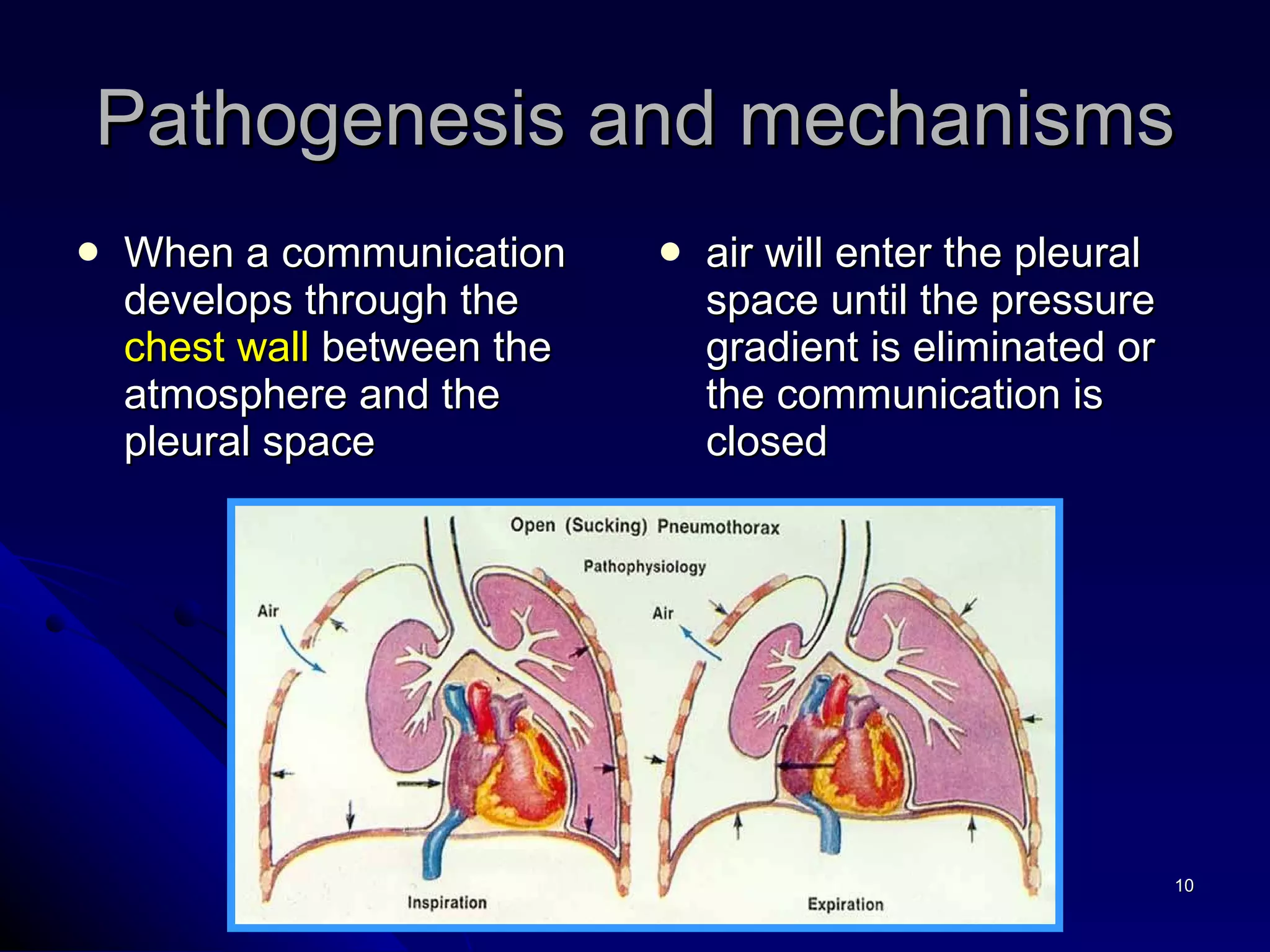
Pathogenesis and mechanisms When a communication develops through the  chest wall  between the atmosphere and the pleural space  air will enter the pleural space until the pressure gradient is eliminated or the communication is closed
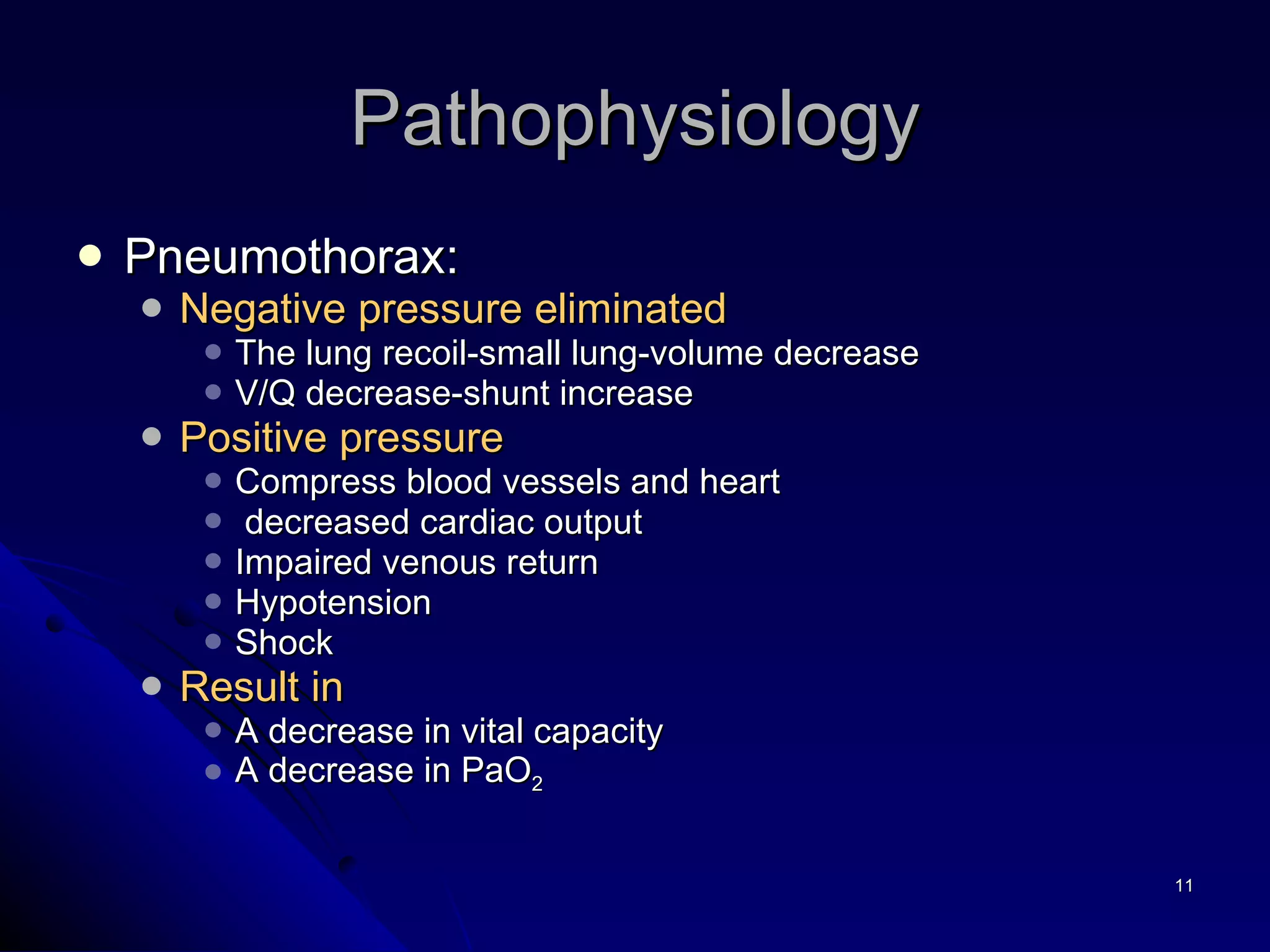
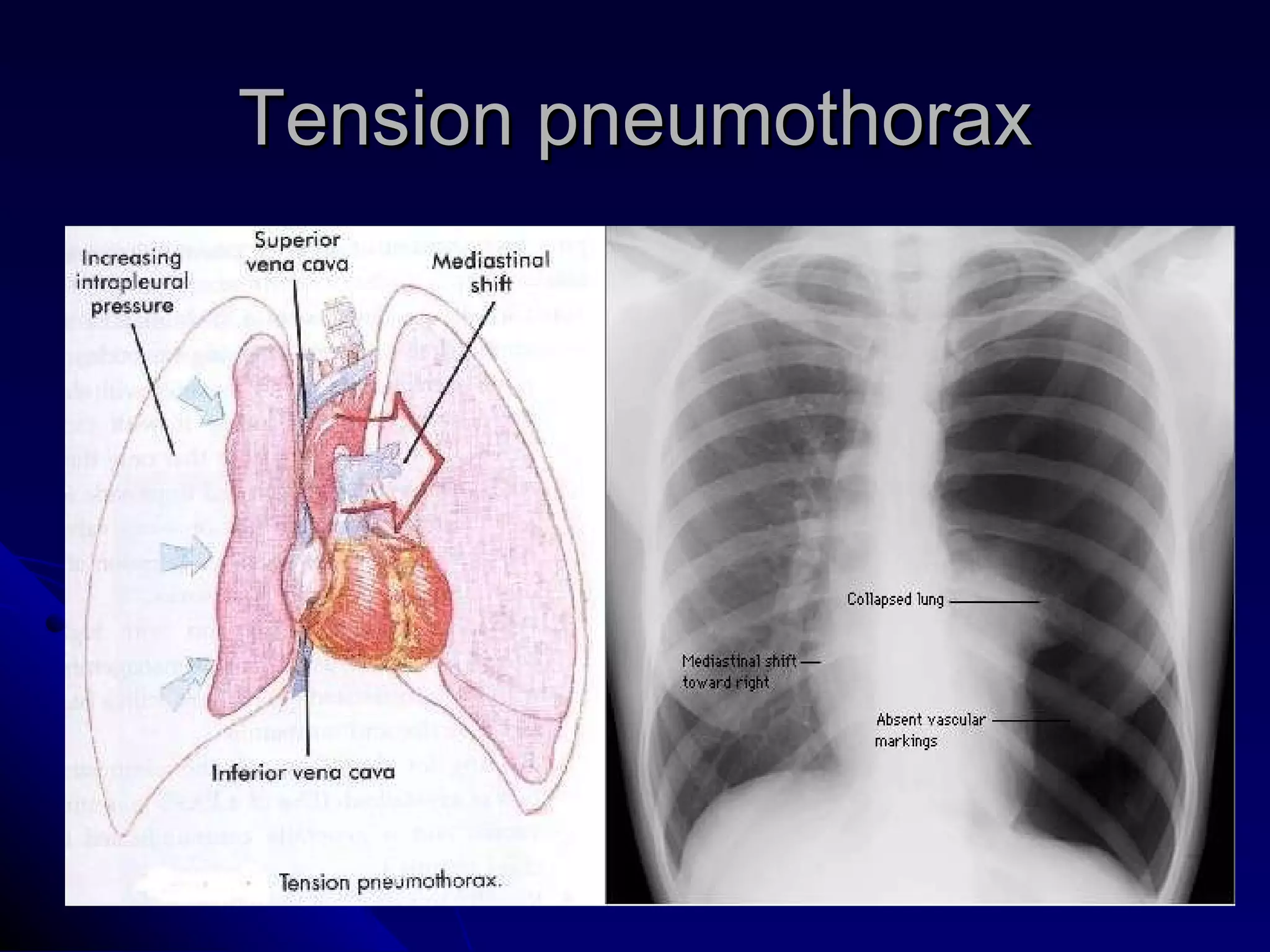
Pneumothorax: Negative pressure eliminated The lung recoil-small lung-volume decrease V/Q decrease-shunt increase Positive pressure Compress blood vessels and heart decreased cardiac output Impaired venous return Hypotension  Shock  Result in   A decrease in vital capacity  A decrease in PaO 2 Pathophysiology
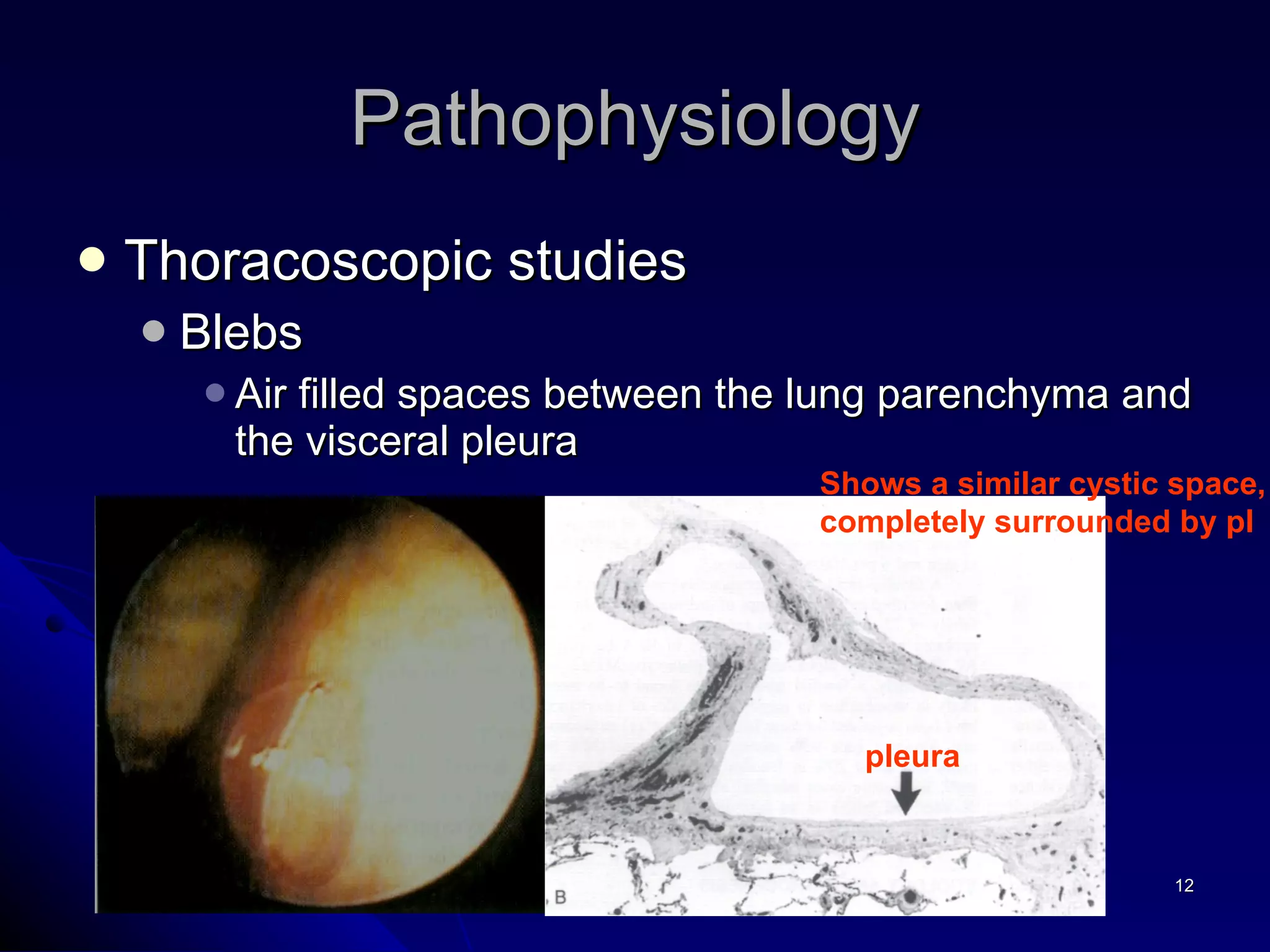
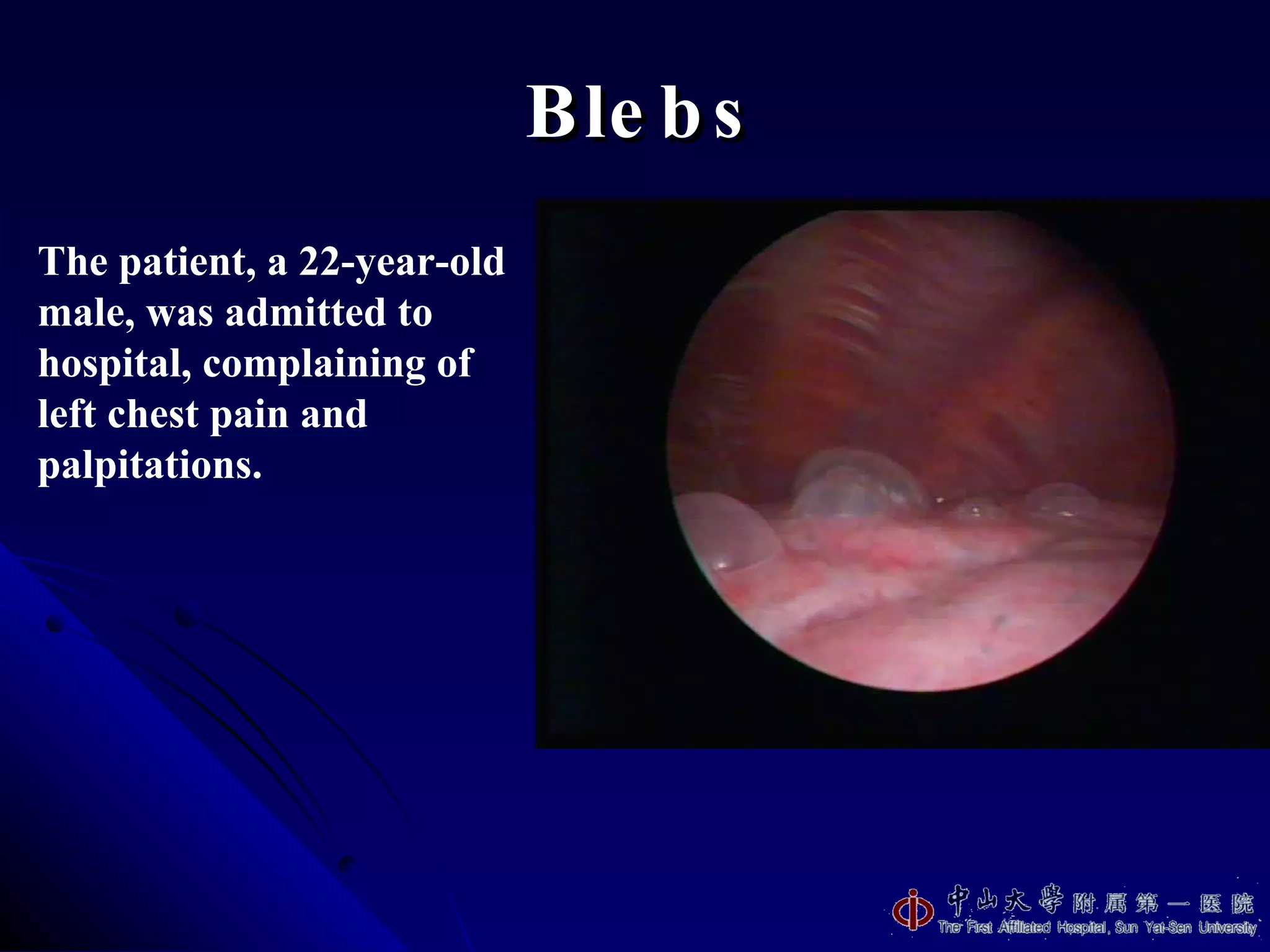
Thoracoscopic studies Blebs  Air filled spaces between the lung parenchyma and the visceral pleura Pathophysiology Shows a similar cystic space, completely surrounded by pl pleura
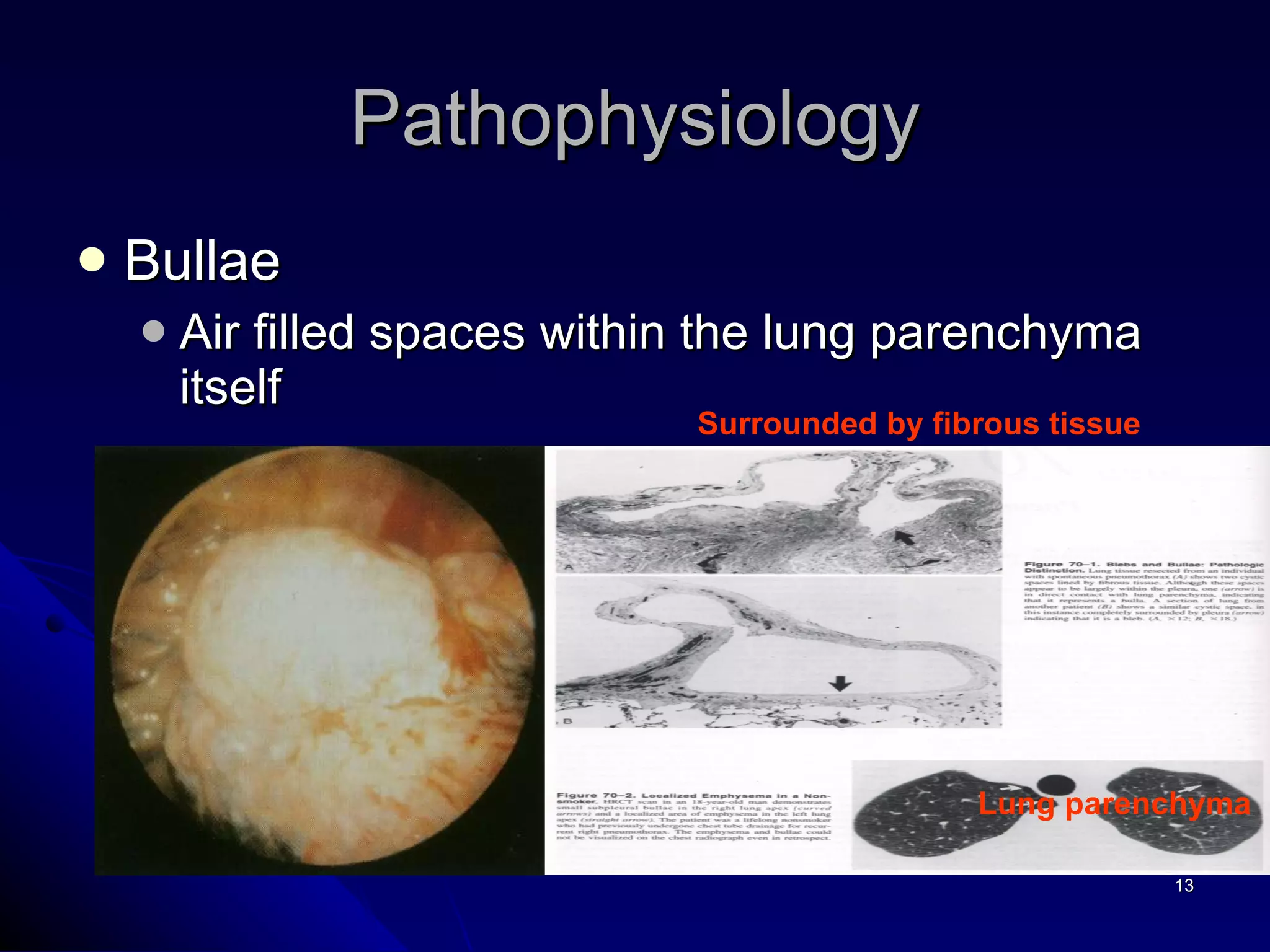
Bullae Air filled spaces within the lung parenchyma itself Pathophysiology Lung parenchyma Surrounded by fibrous tissue
Blebs The patient, a 22-year-old male, was admitted to hospital, complaining of left chest pain and palpitations.
Blebs and bullae are also known as emphysema-like changes (ELCs) The probable cause of pneumothorax is rupture of an apical bleb or bulla Because the compliance of blebs or bullae in the apices is lower compared with that of similar lesions situated in the lower parts of the lungs Pathophysiology
It is often hard to assess whether bullae are the site of leakage, and where the site of rupture of the visceral pleura is Smoking causes a 9-fold increase in the relative risk of a pneumothorax in females A 22-fold increase in male smokers With a dose-response relationship between the number of cigarettes smoked per day and occurrence of PSP  Pathophysiology
PSP SSP
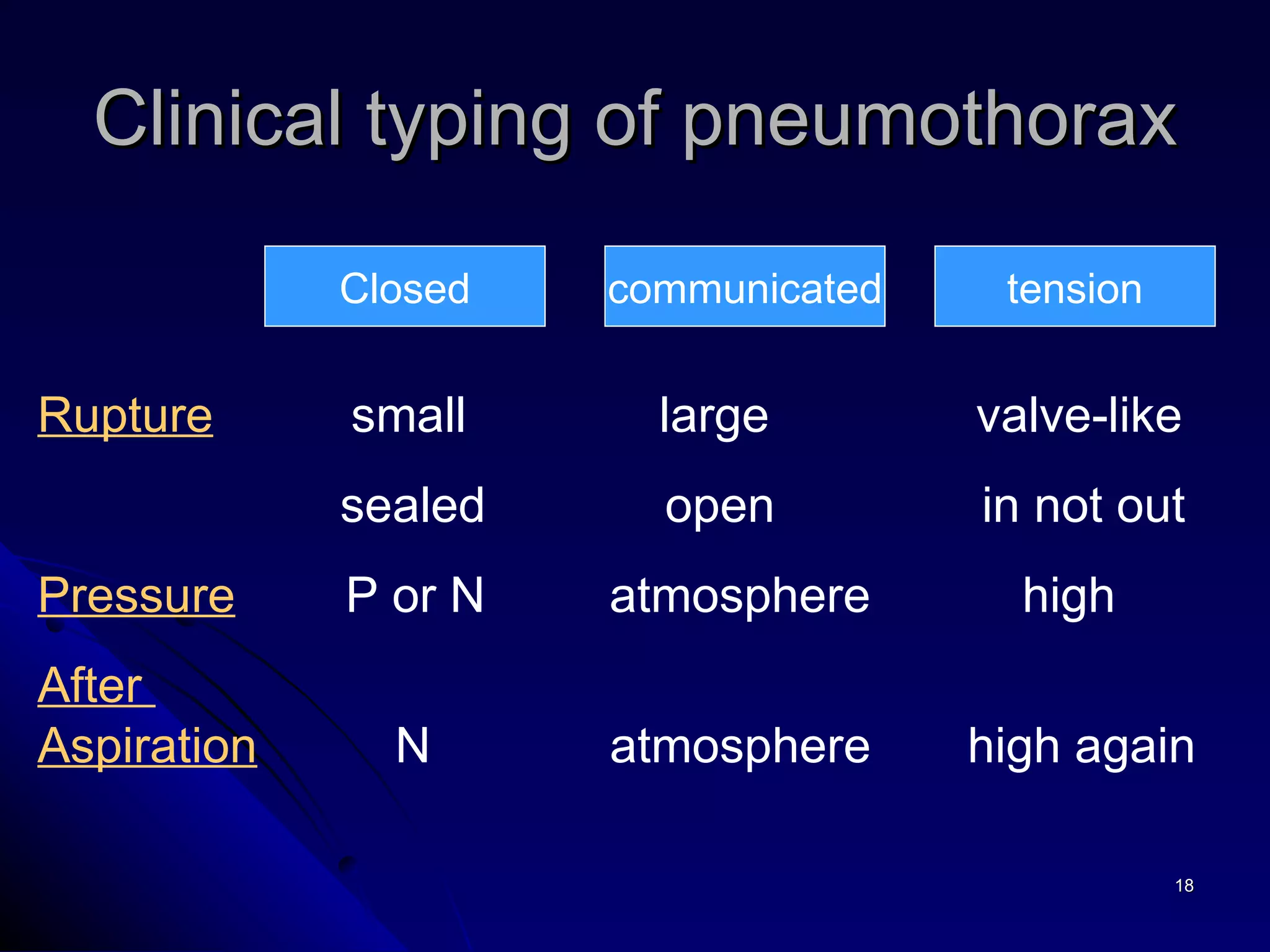
Clinical typing of pneumothorax Closed communicated tension Rupture   small  large  valve-like sealed  open  in not out Pressure   P or N  atmosphere  high After  Aspiration   N  atmosphere  high again
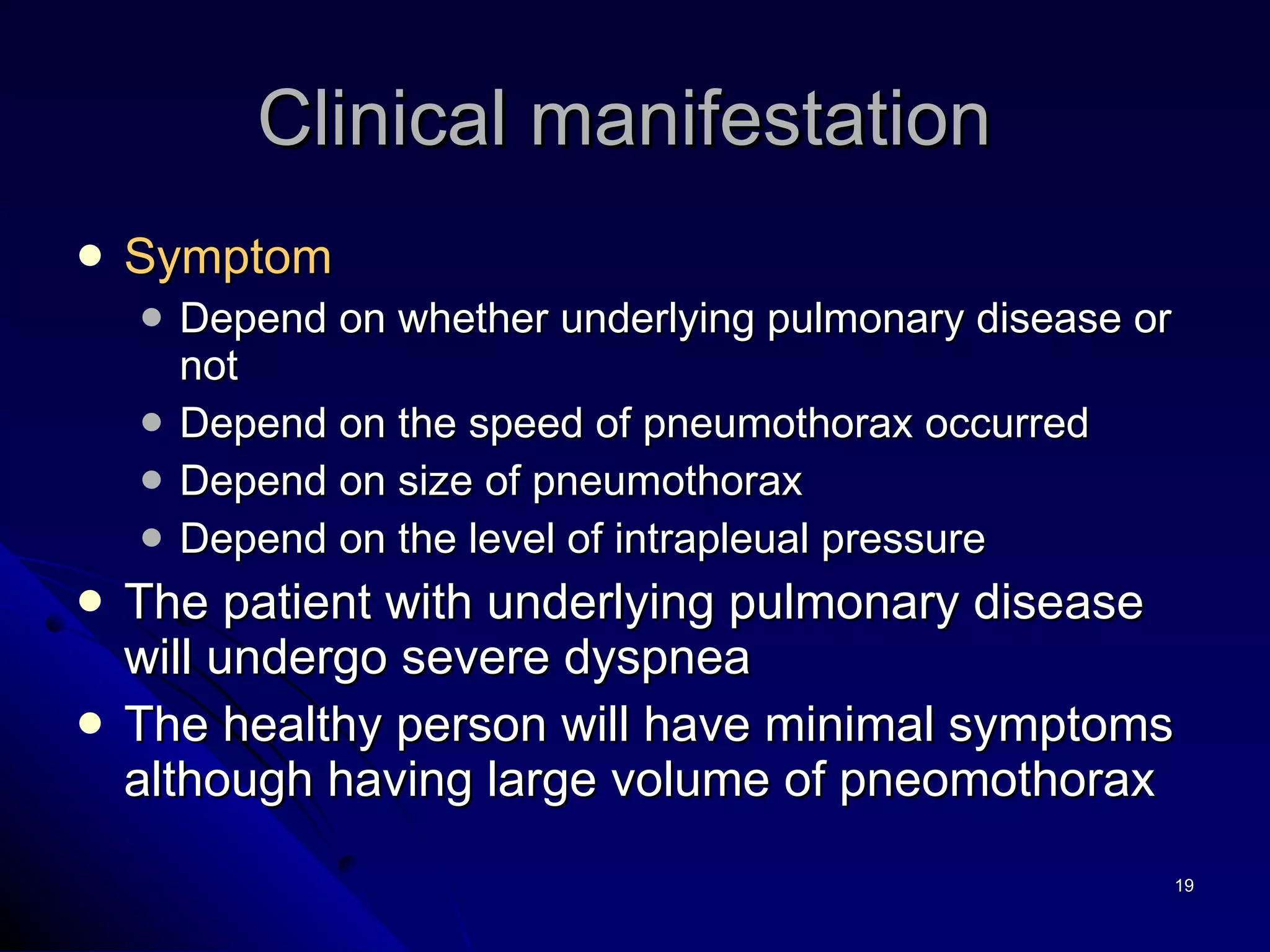
Clinical manifestation  Symptom   Depend on whether underlying pulmonary disease or not Depend on the speed of pneumothorax occurred  Depend on size of pneumothorax  Depend on the level of intrapleual pressure The patient with underlying pulmonary disease will undergo severe dyspnea  The healthy person will have minimal symptoms although having large volume of pneomothorax
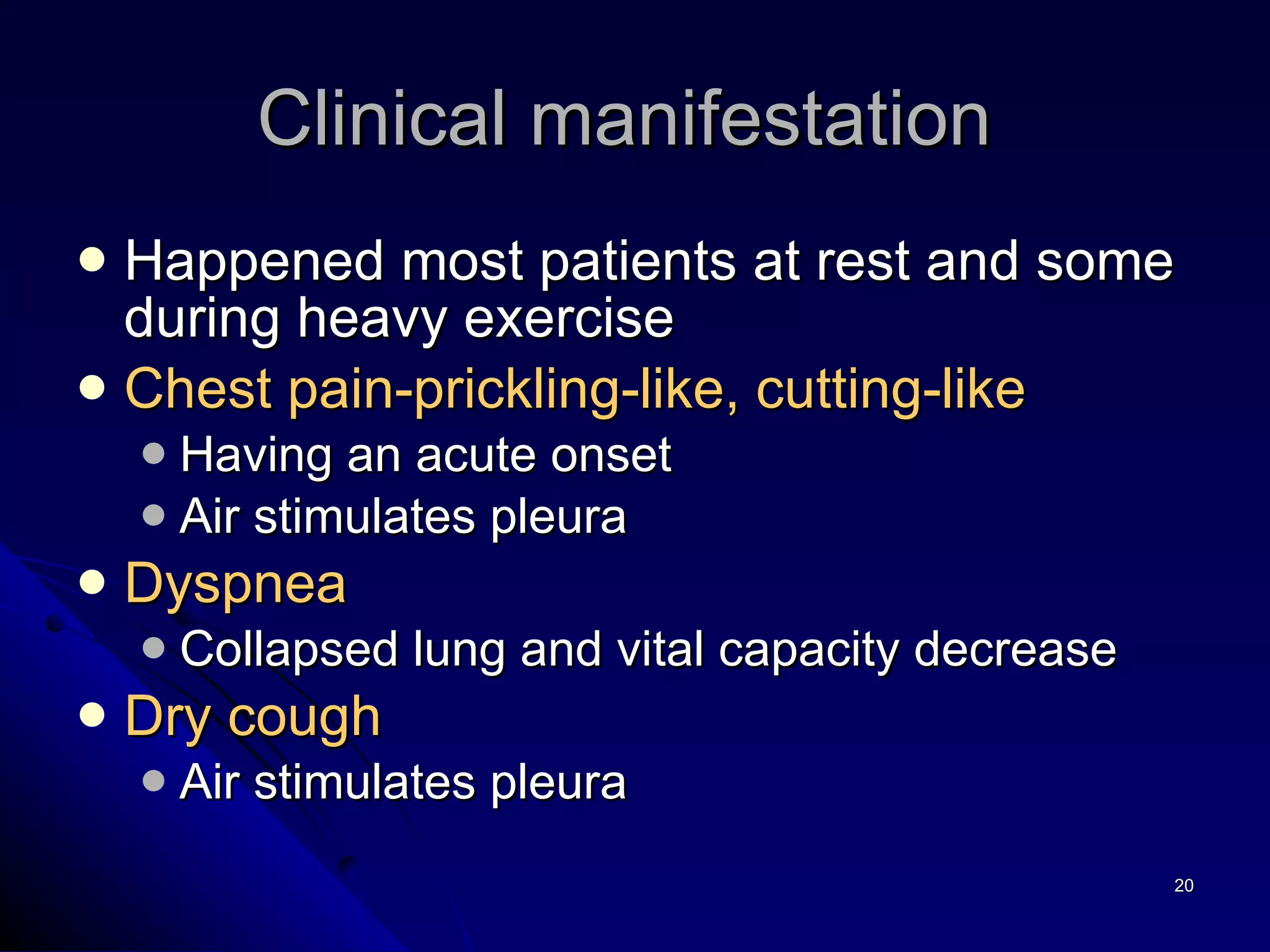
Happened most patients at rest and some during heavy exercise   Chest pain-prickling-like, cutting-like Having an acute onset Air stimulates pleura Dyspnea  Collapsed lung and vital capacity decrease Dry cough   Air stimulates pleura Clinical manifestation
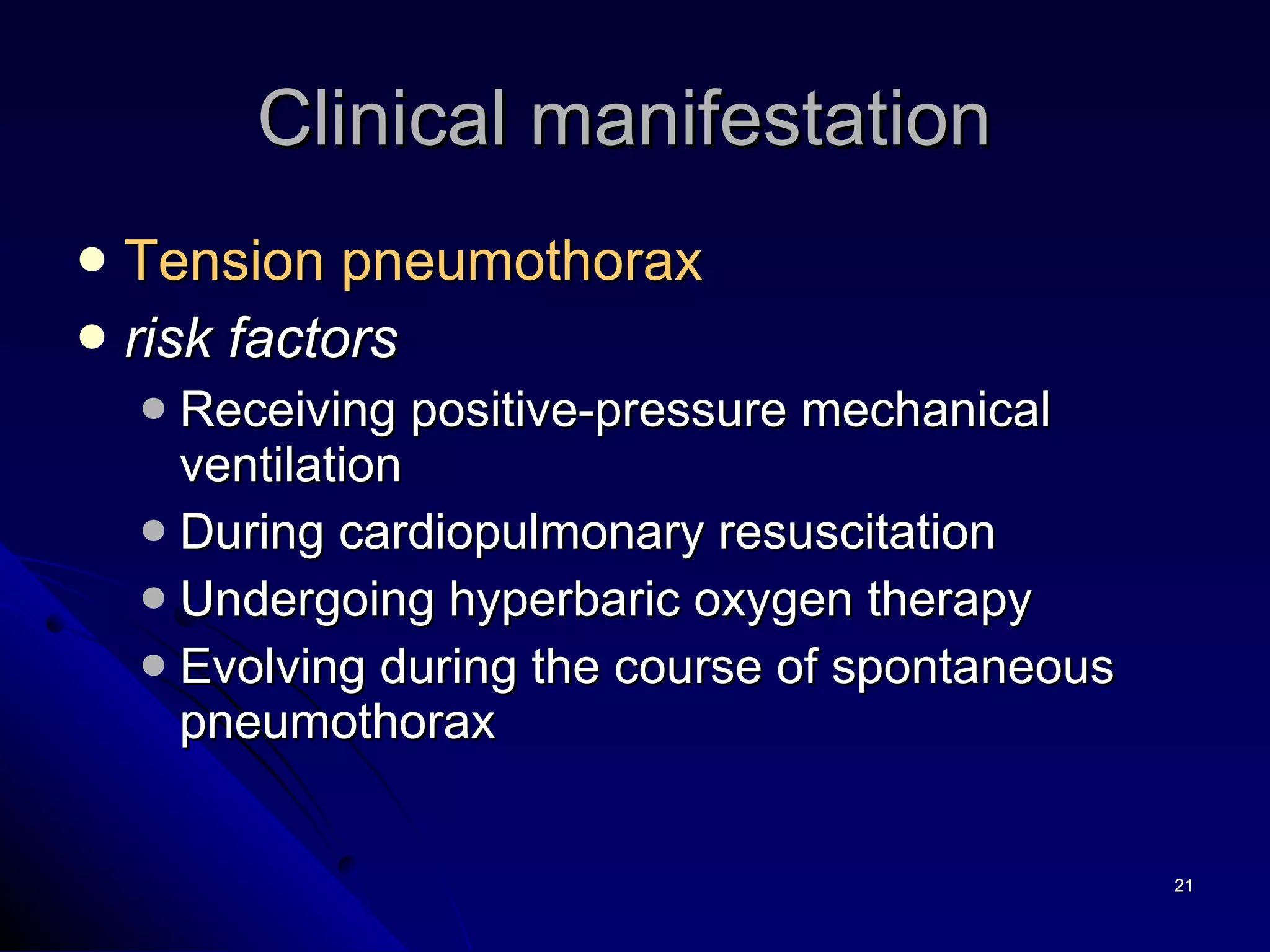
Tension pneumothorax risk factors Receiving positive-pressure mechanical ventilation During cardiopulmonary resuscitation  Undergoing hyperbaric oxygen therapy Evolving during the course of spontaneous pneumothorax Clinical manifestation
Tension pneumothorax
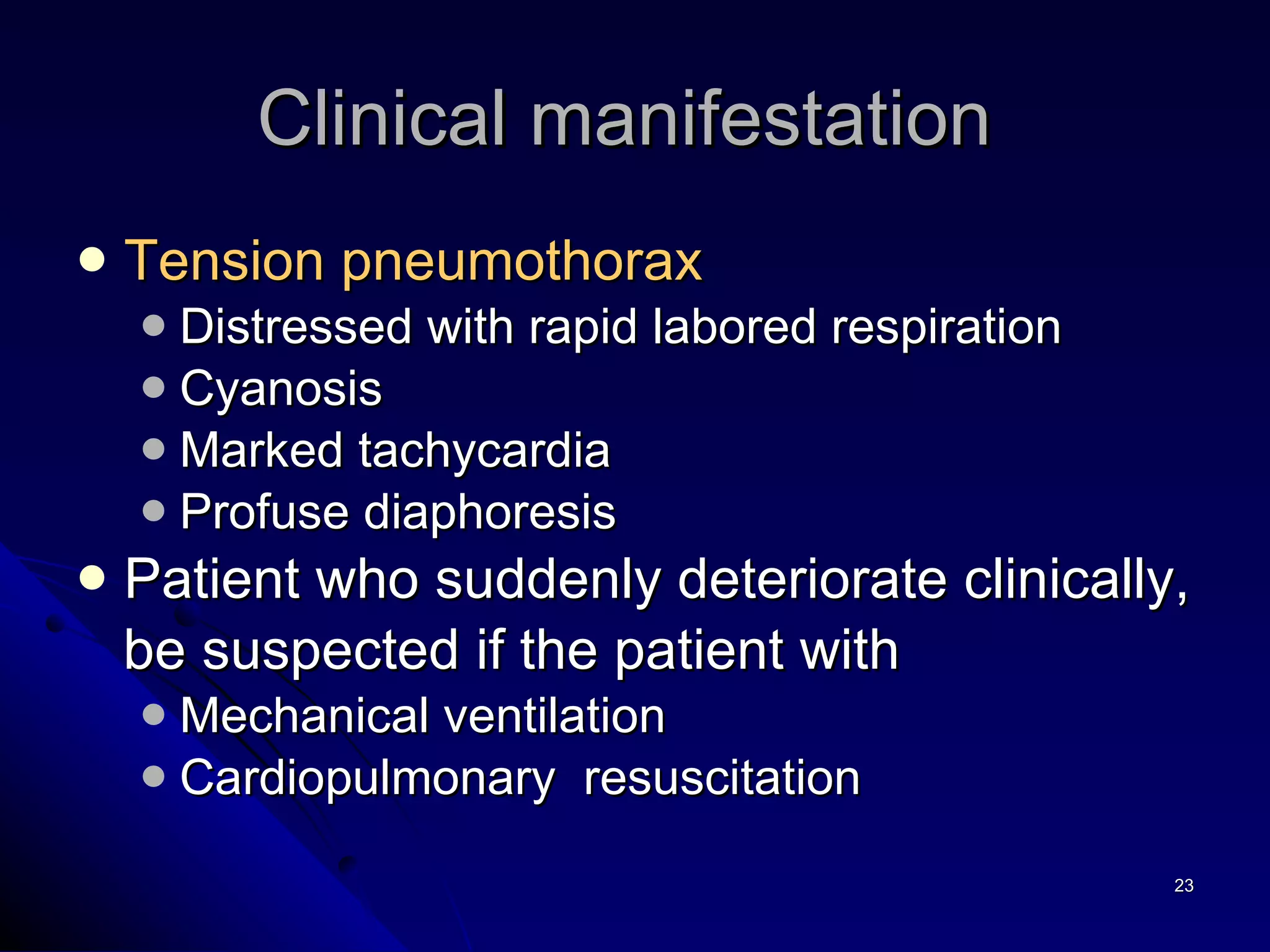
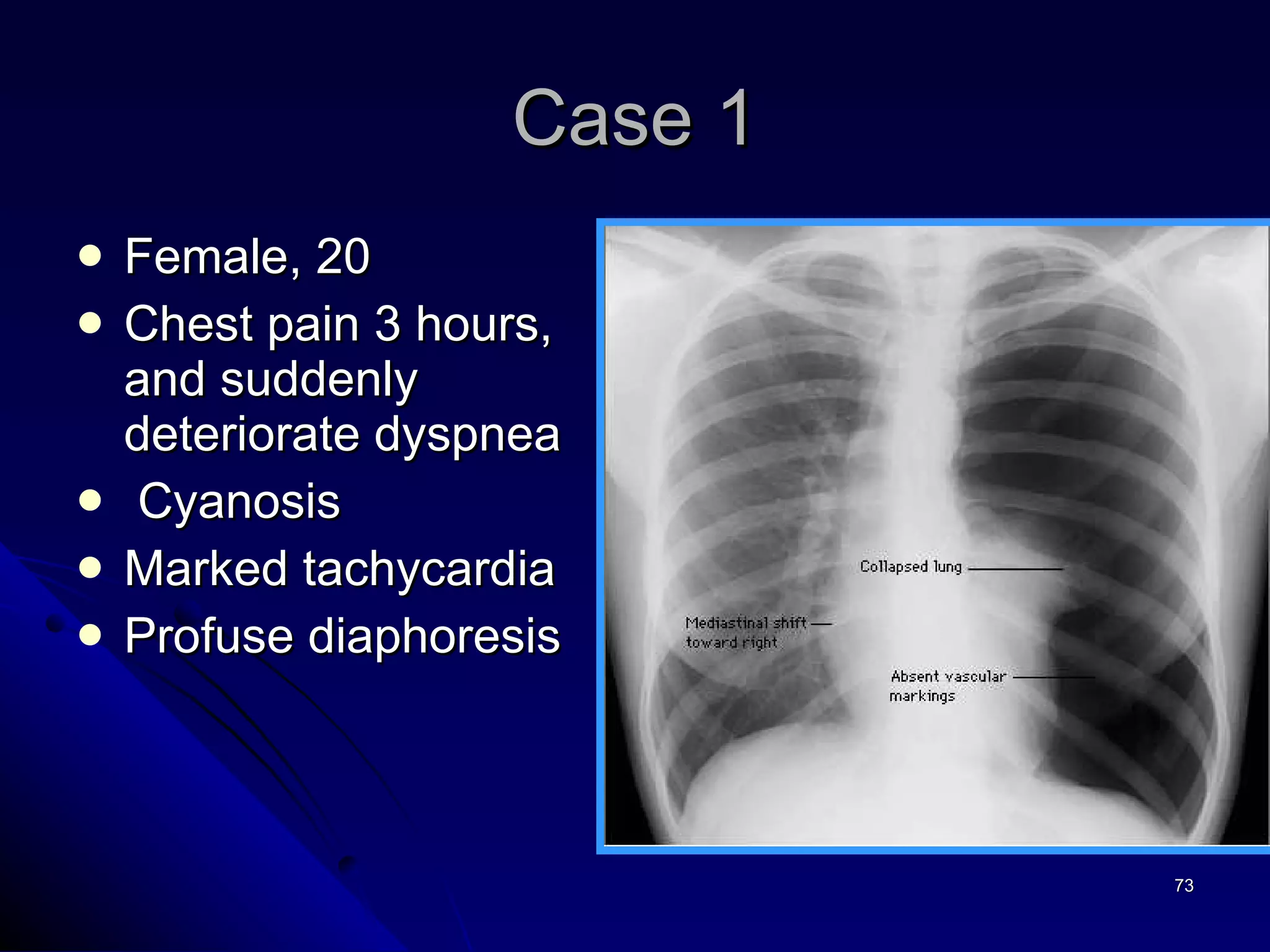
Tension pneumothorax Distressed with rapid labored respiration Cyanosis Marked tachycardia  Profuse diaphoresis  Patient who suddenly deteriorate clinically, be suspected if the patient with Mechanical ventilation Cardiopulmonary  resuscitation Clinical manifestation
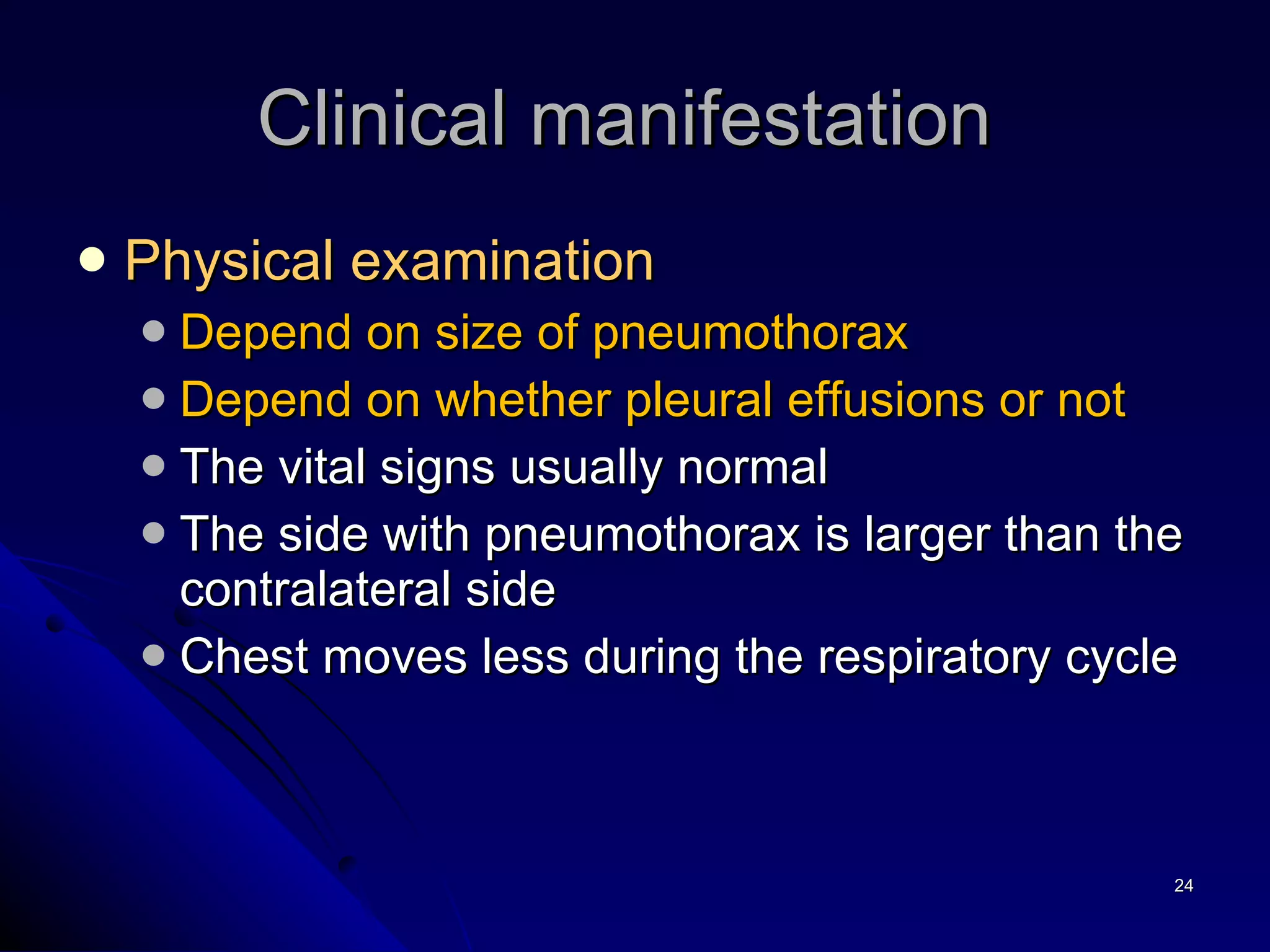
Physical examination Depend on size of pneumothorax Depend on whether pleural effusions or not The vital signs usually normal The side with pneumothorax is larger than the contralateral side Chest moves less during the respiratory cycle Clinical manifestation
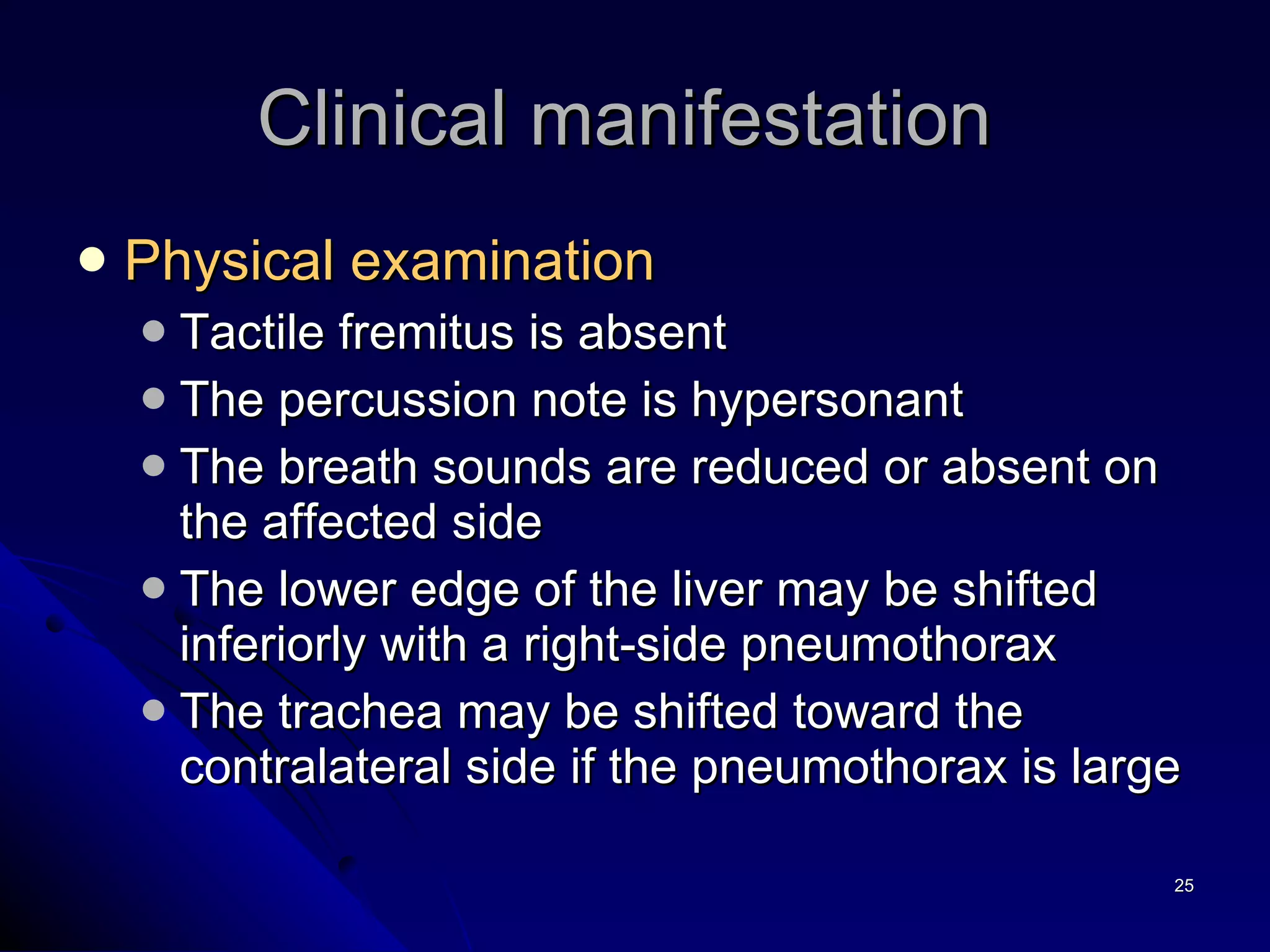
Physical examination Tactile fremitus is absent The percussion note is hypersonant The breath sounds are reduced or absent on the affected side The lower edge of the liver may be shifted inferiorly with a right-side pneumothorax The trachea may be shifted toward the contralateral side if the pneumothorax is large Clinical manifestation
Clinical stability Stable patients RR: <24/min HR: 60-120/min BP: normal SO 2 : >90% (room air) Patient can speak in whole sentences between breaths All above present Unstable patients   Not fulfilling the definition of stable Evaluate the severity and make decision for treatment
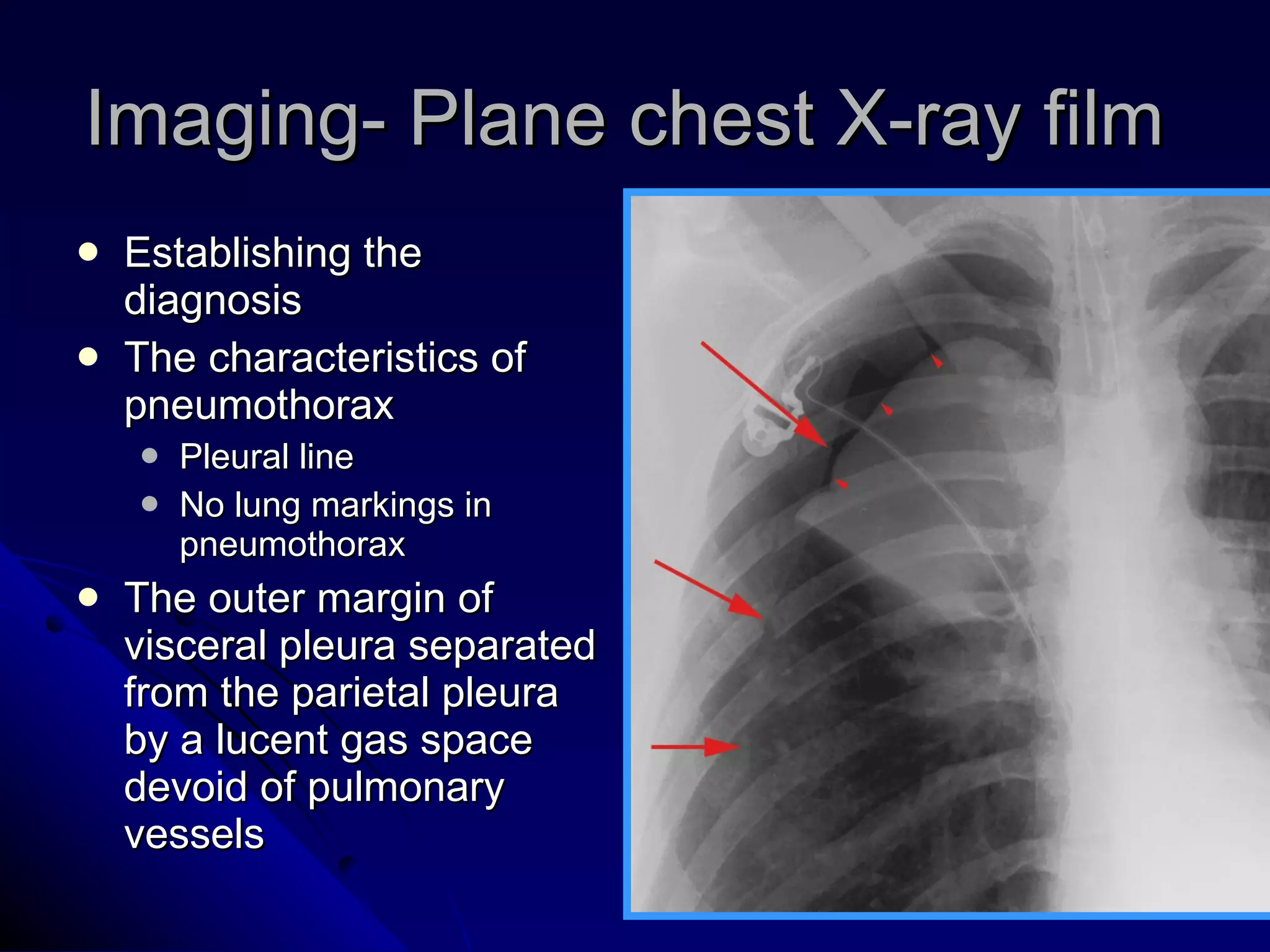
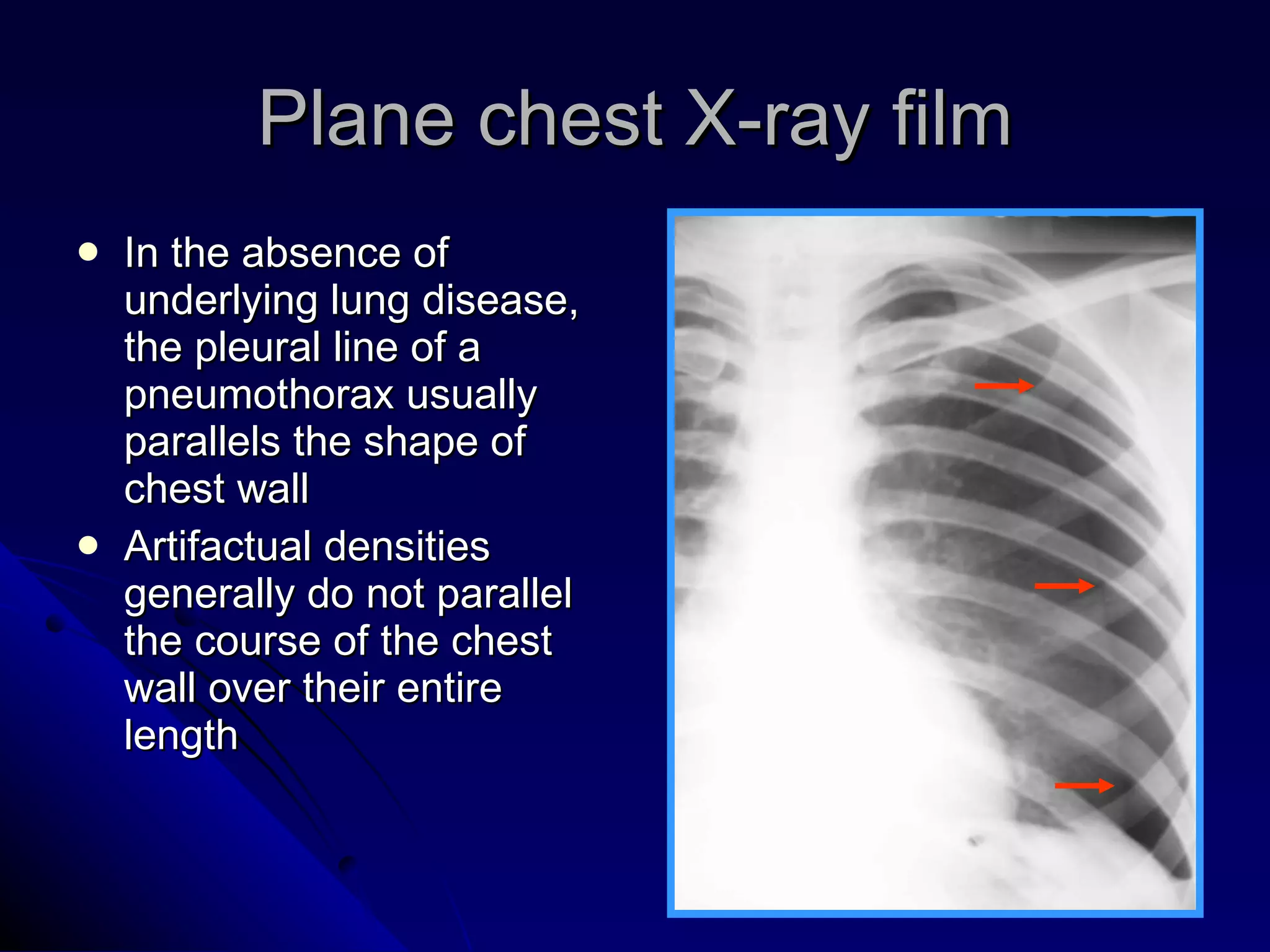
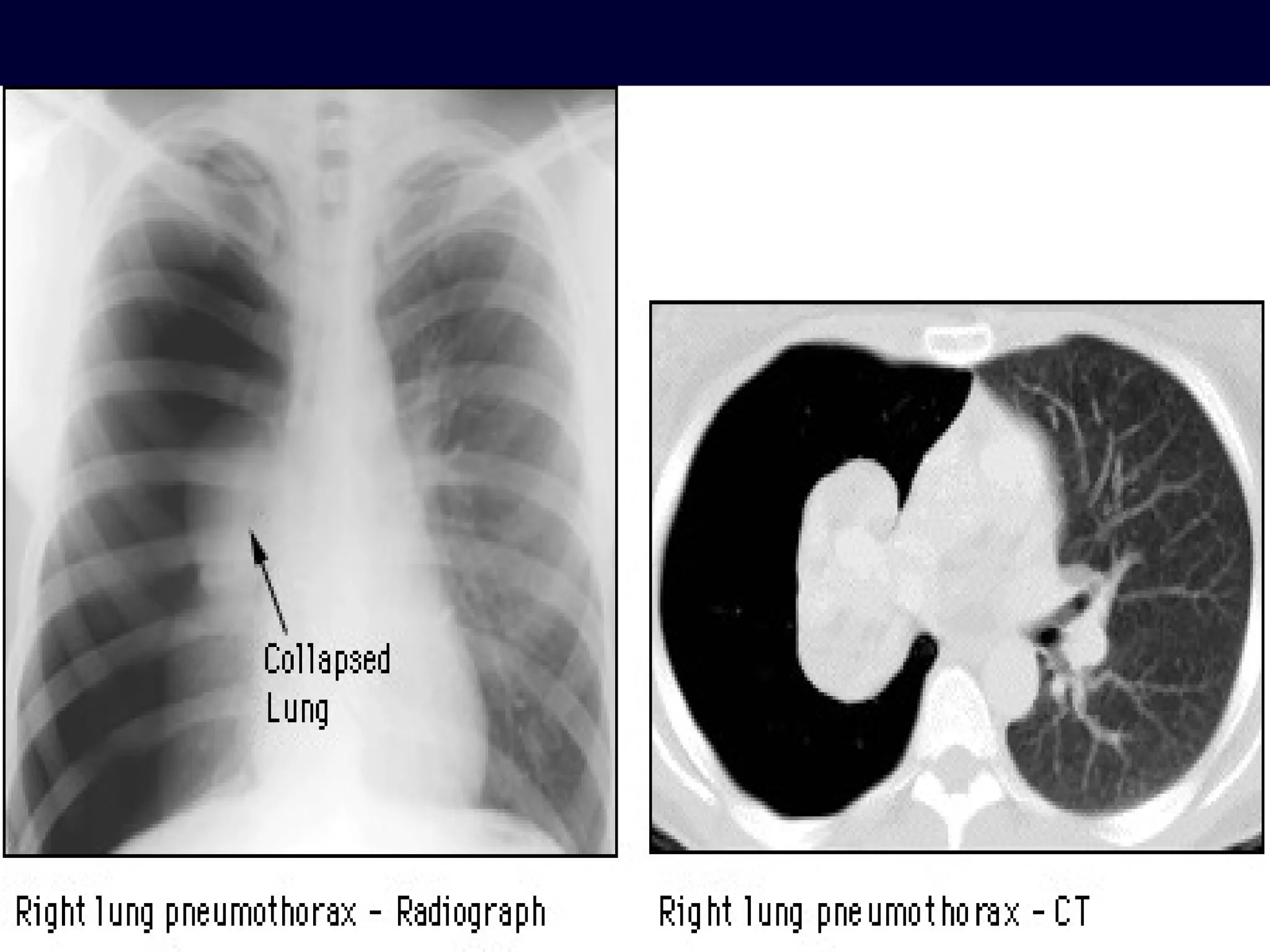
Imaging- Plane chest X-ray film  Establishing the diagnosis The characteristics of pneumothorax Pleural line No lung markings in pneumothorax The outer margin of visceral pleura separated from the parietal pleura by a lucent gas space devoid of pulmonary vessels
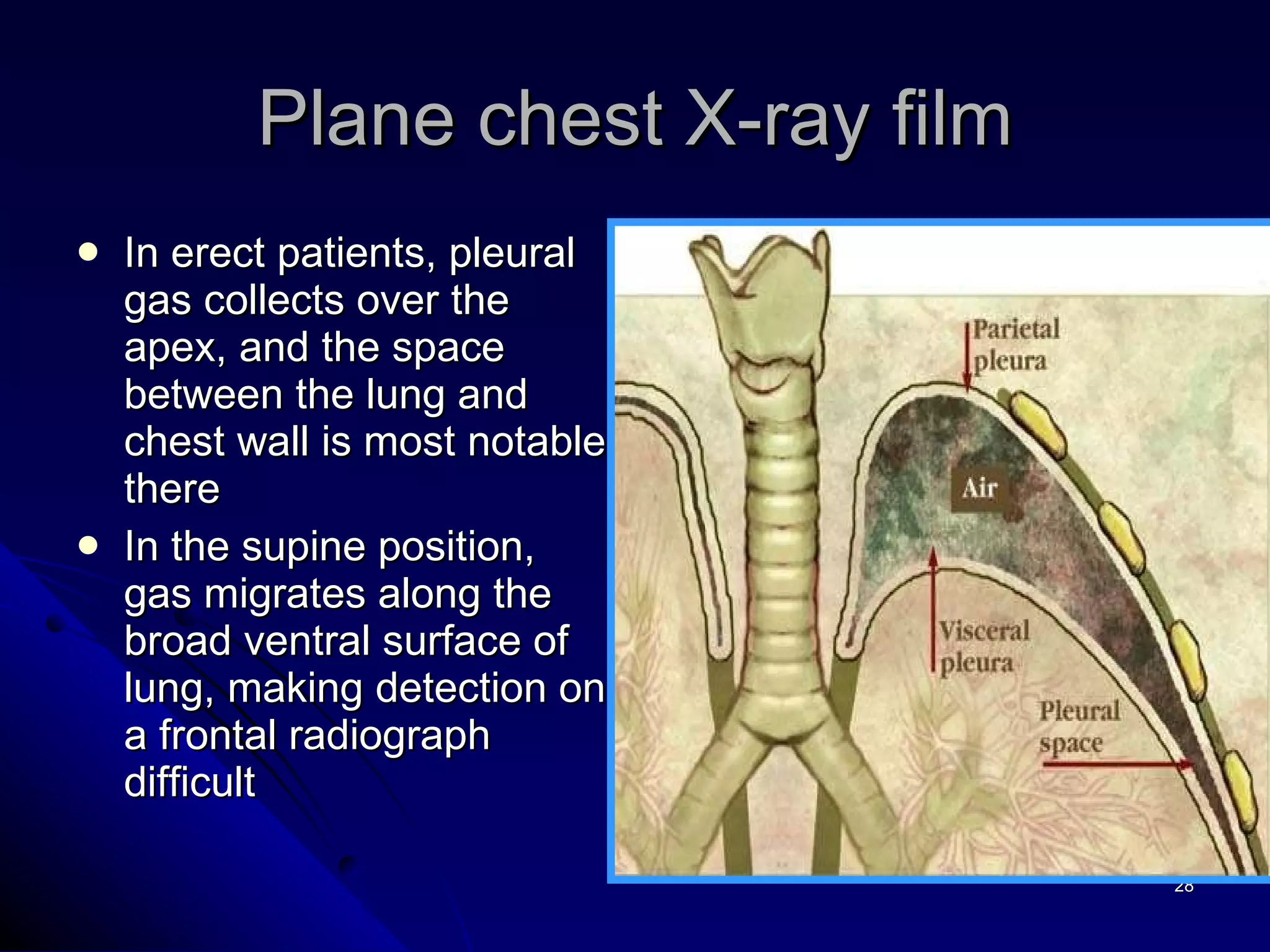
Plane chest X-ray film In erect patients, pleural gas collects over the apex, and the space between the lung and chest wall is most notable there In the supine position, gas migrates along the broad ventral surface of lung, making detection on a frontal radiograph difficult
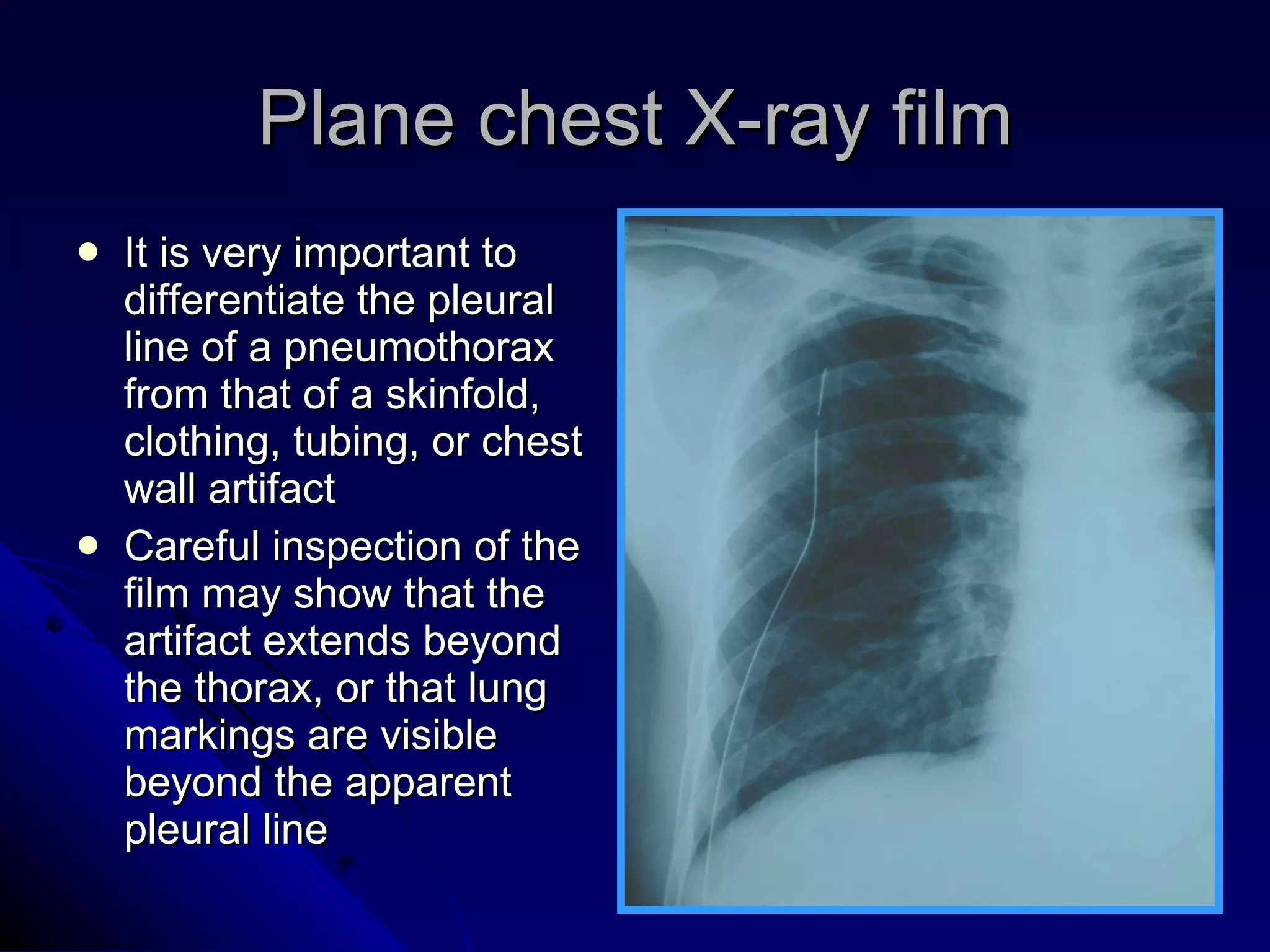
Plane chest X-ray film It is very important to differentiate the pleural line of a pneumothorax from that of a skinfold, clothing, tubing, or chest wall artifact Careful inspection of the film may show that the artifact extends beyond the thorax, or that lung markings are visible beyond the apparent pleural line
Plane chest X-ray film In the absence of underlying lung disease, the pleural line of a pneumothorax usually parallels the shape of chest wall Artifactual densities generally do not parallel the course of the chest wall over their entire length
Plane chest X-ray film Quantification of the size   The size of a pneumothorax, in terms of volume, is difficult to assess accurately from a chest radiograph The simple method to estimate the size Small,  a visible  rim of < 2 cm between the lung margin and the chest wall Large,  a visible rim of ≥2 cm between the lung margin and chest wall
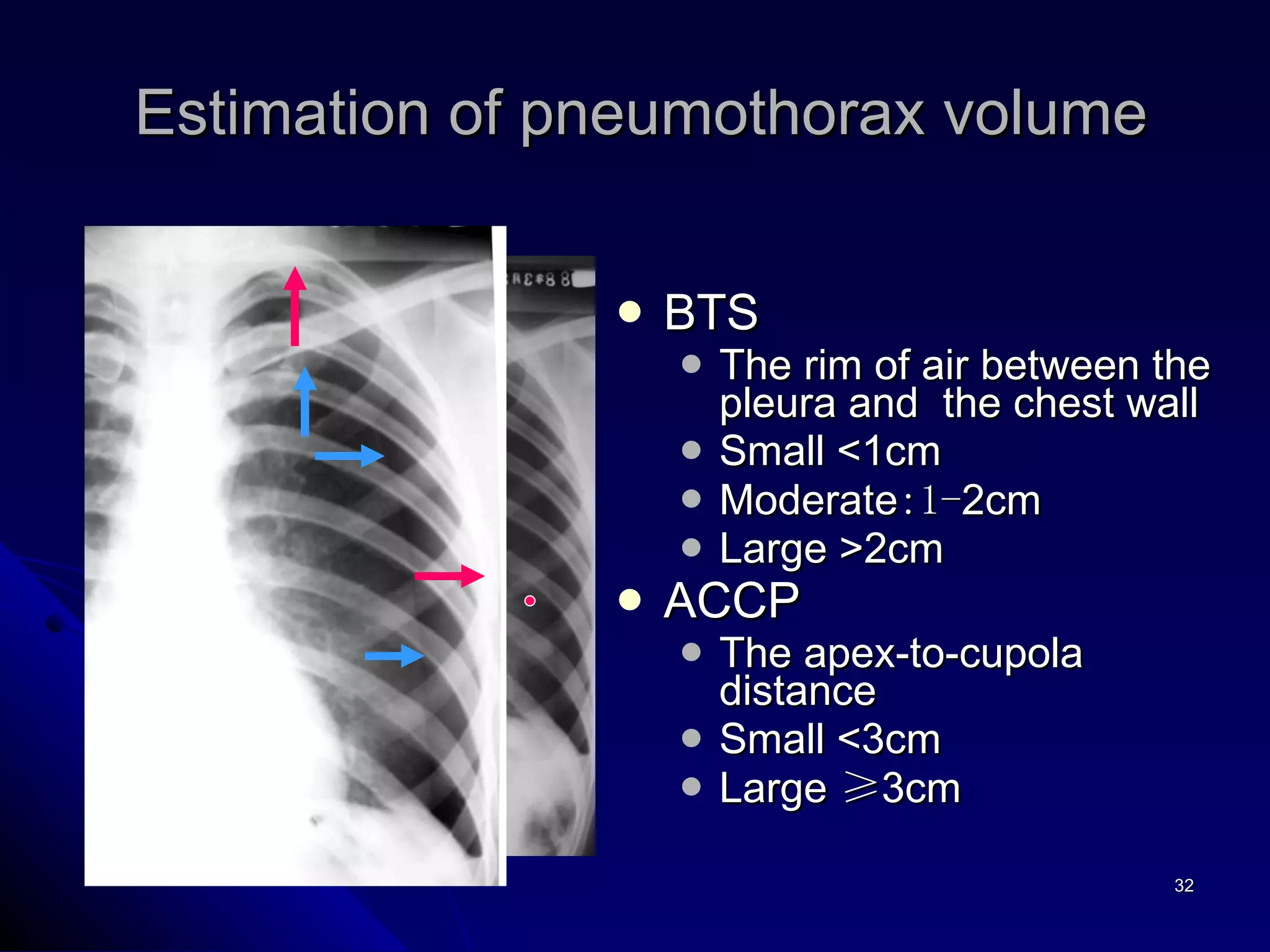
BTS  The rim of air between the pleura and  the chest wall Small <1cm Moderate :1- 2cm Large >2cm ACCP The apex-to-cupola distance Small <3cm Large  ≥ 3cm Estimation of pneumothorax volume
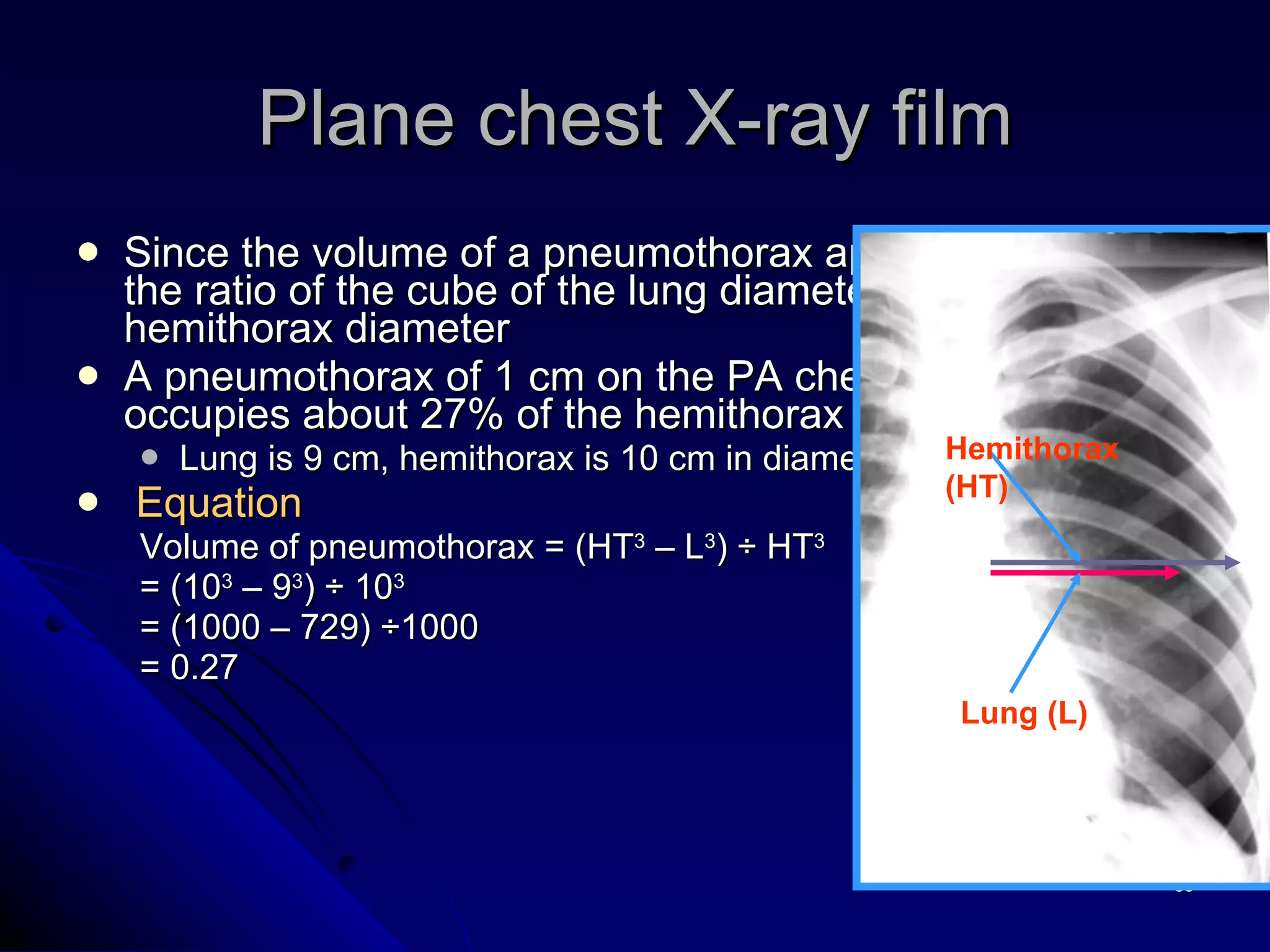
Since the volume of a pneumothorax approximates to the ratio of the cube of the lung diameter to the hemithorax diameter A pneumothorax of 1 cm on the PA chest radiograph occupies about 27% of the hemithorax volume Lung is 9 cm, hemithorax is 10 cm in diameter Equation  Volume of pneumothorax = (HT 3  – L 3 ) ÷ HT 3 = (10 3  – 9 3 ) ÷ 10 3   = (1000 – 729) ÷1000 = 0.27 Plane chest X-ray film Hemithorax (HT) Lung (L)
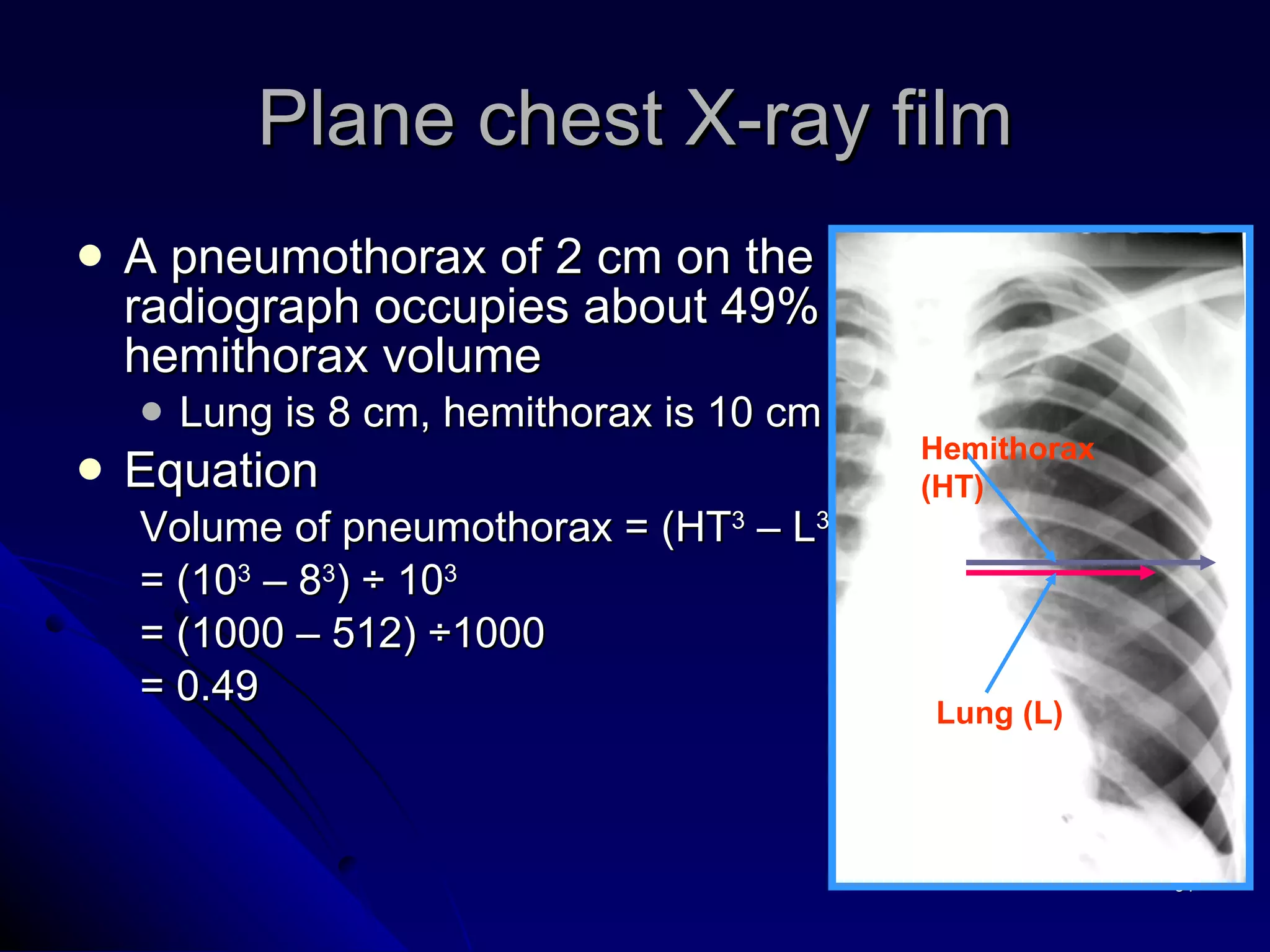
A pneumothorax of 2 cm on the PA chest radiograph occupies about 49% of the hemithorax volume Lung is 8 cm, hemithorax is 10 cm in diameter Equation  Volume of pneumothorax = (HT 3  – L 3 ) ÷ HT 3 = (10 3  – 8 3 ) ÷ 10 3   = (1000 – 512) ÷1000 = 0.49 Plane chest X-ray film Hemithorax (HT) Lung (L)
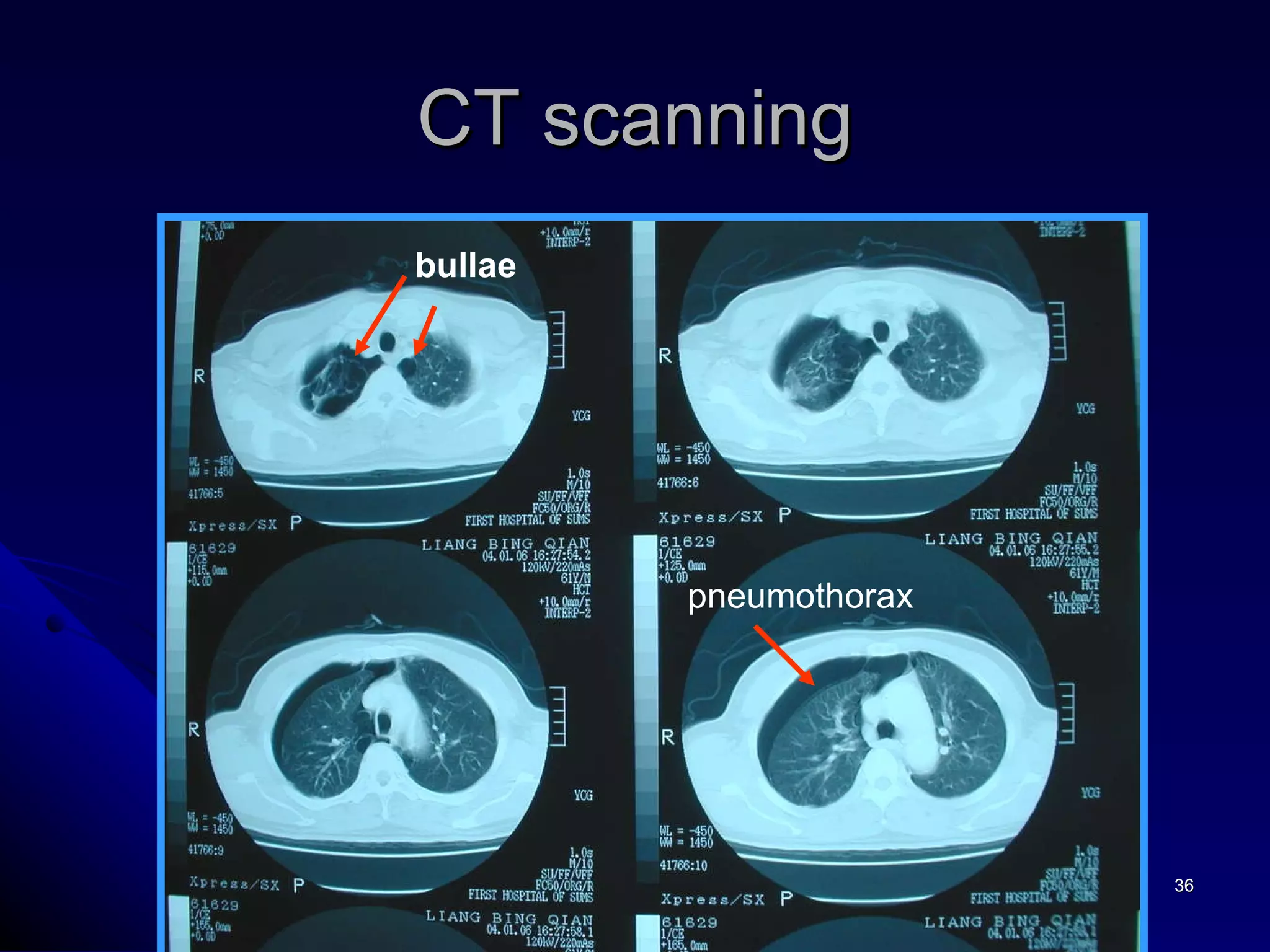
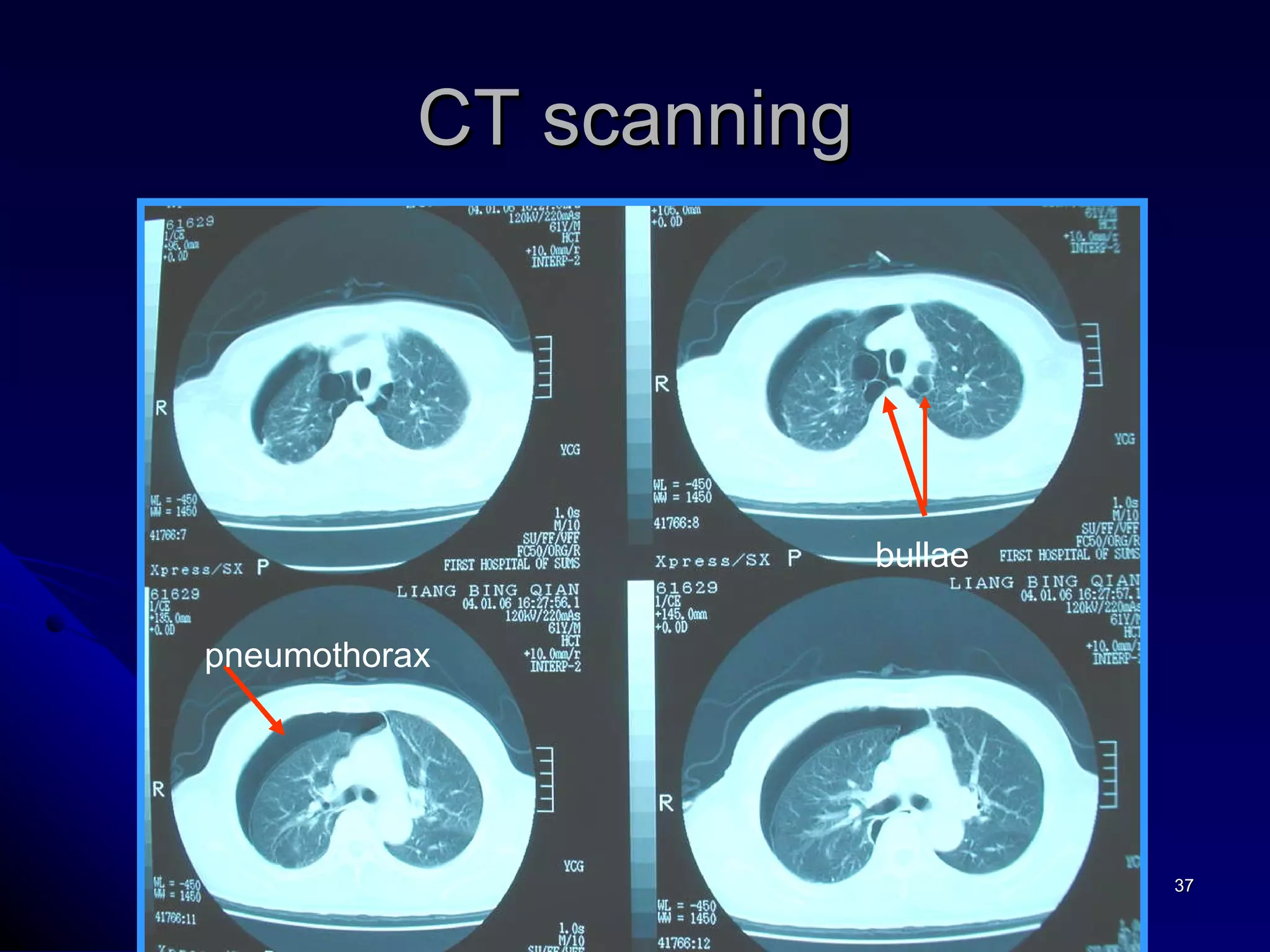
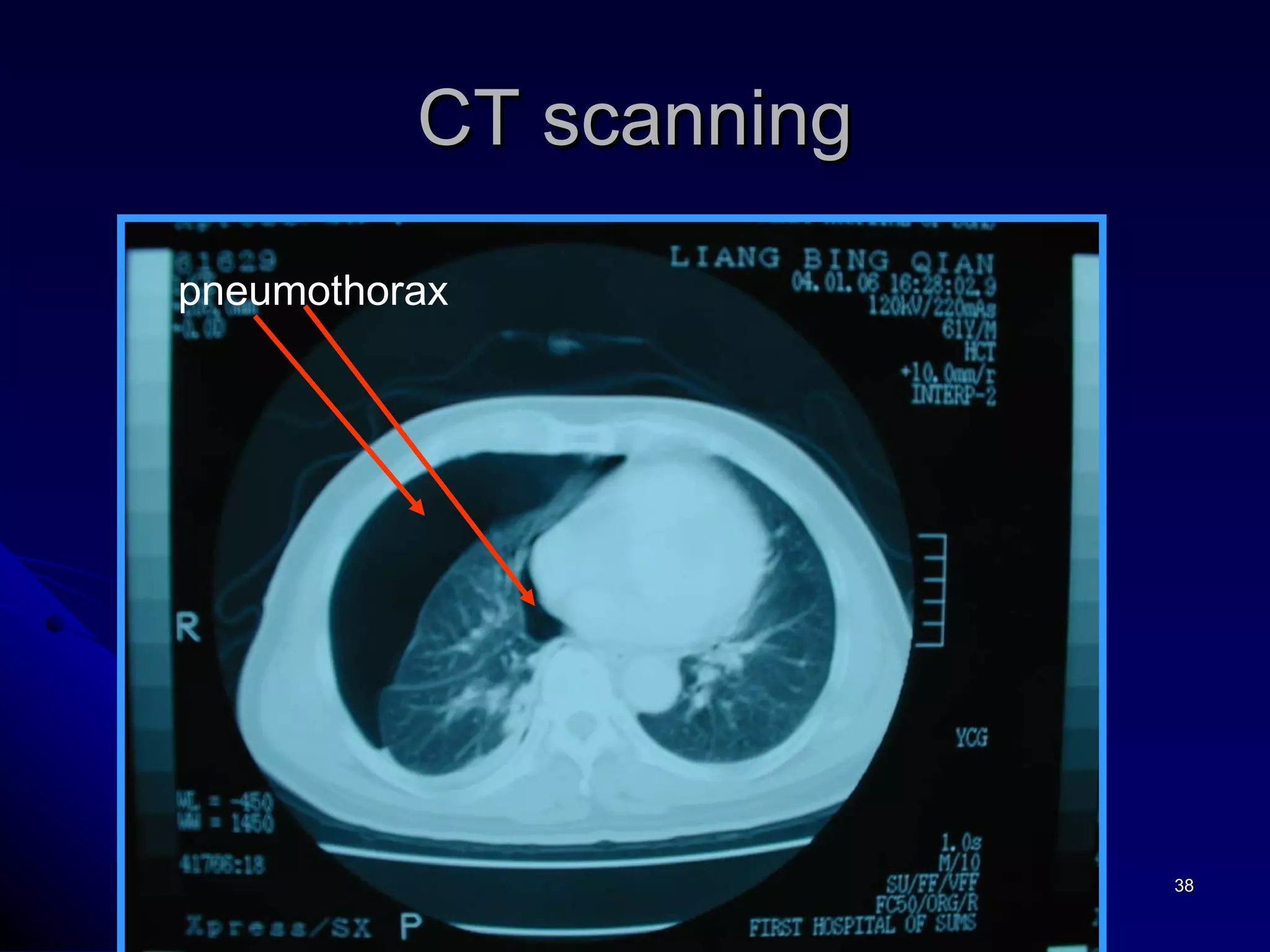
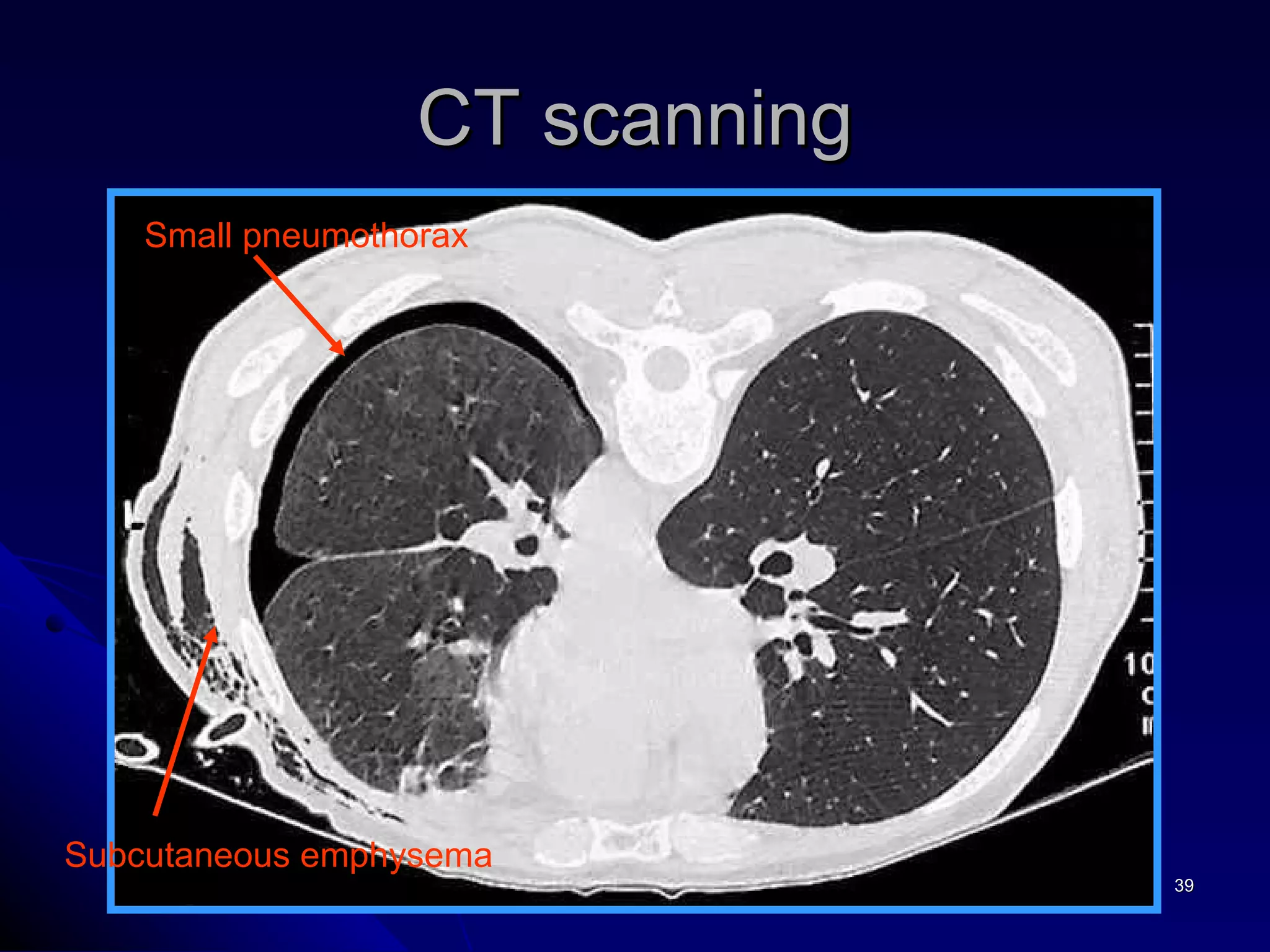
CT scanning CT scanning is the most robust approach if accurate size estimates are required It is only recommended to difficult cases such as patients in whom the lungs are obscured by overlying surgical emphysema To differentiate a pneumothorax from suspected bulla in complex cystic lung disease
CT scanning bullae pneumothorax
CT scanning bullae pneumothorax pneumothorax
CT scanning pneumothorax
CT scanning Small pneumothorax Subcutaneous emphysema
 
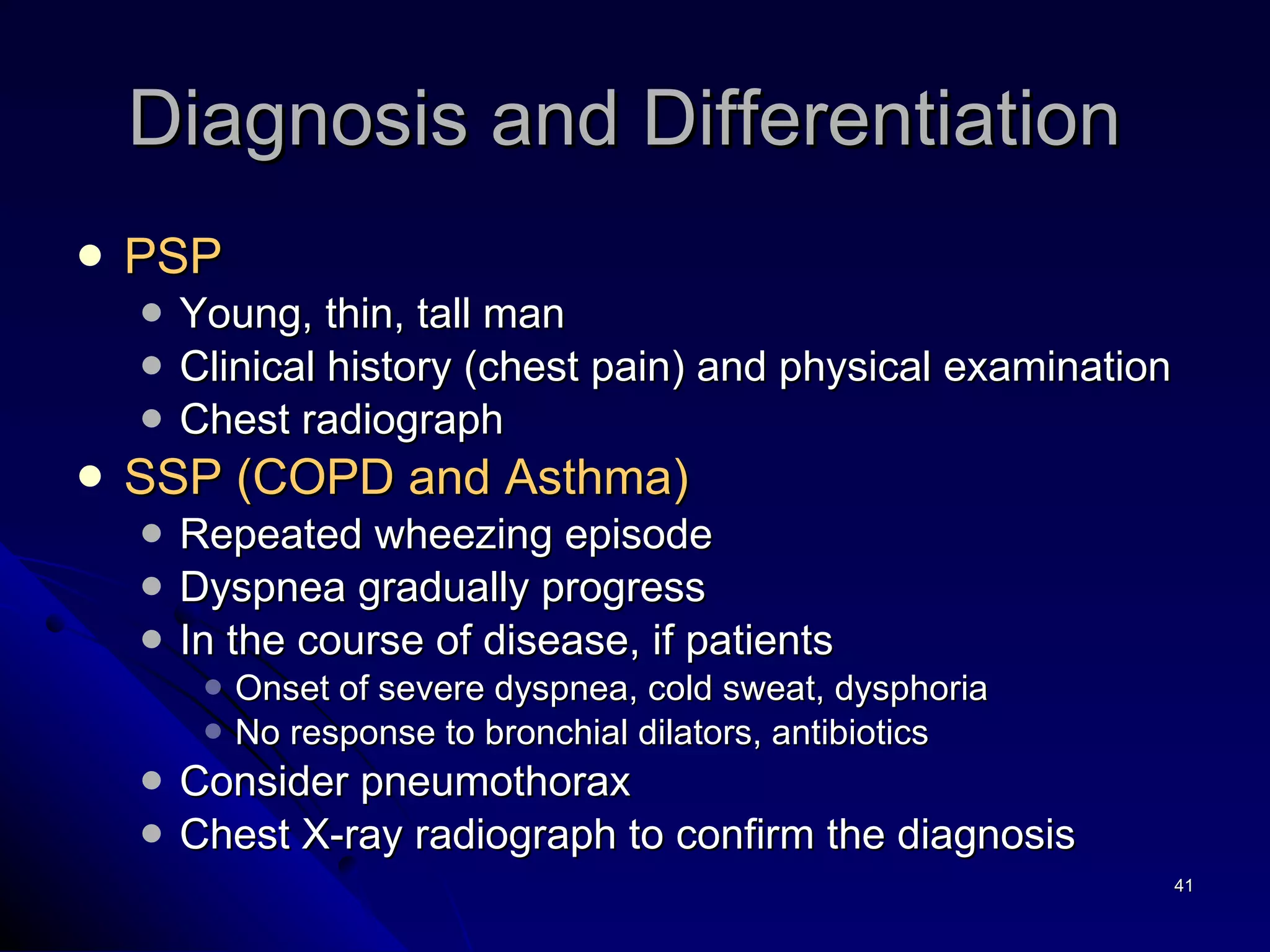
Diagnosis and Differentiation  PSP Young, thin, tall man Clinical history (chest pain) and physical examination Chest radiograph SSP (COPD and Asthma) Repeated wheezing episode Dyspnea gradually progress In the course of disease, if patients  Onset of severe dyspnea, cold sweat, dysphoria No response to bronchial dilators, antibiotics Consider pneumothorax  Chest X-ray radiograph to confirm the diagnosis
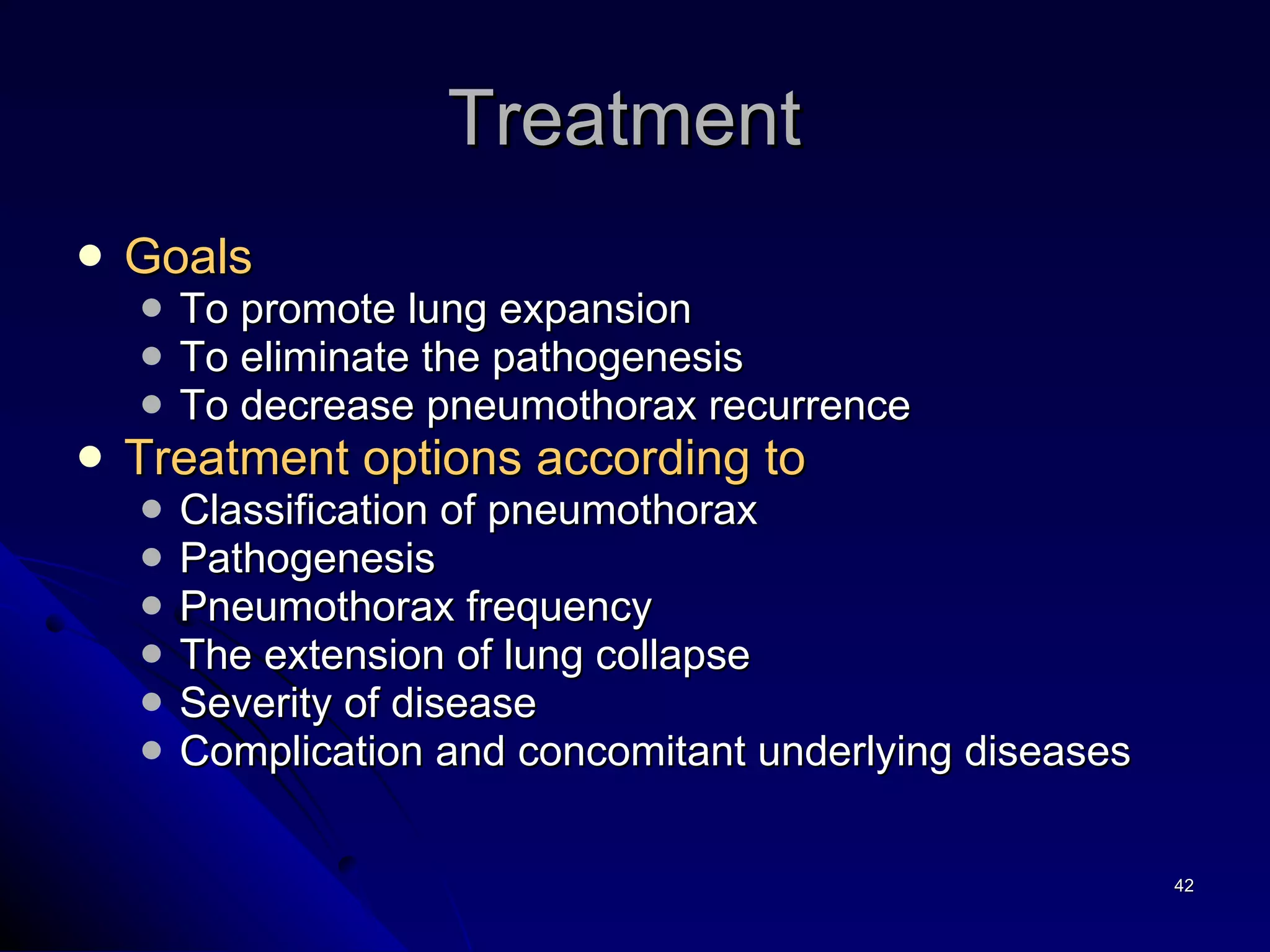
Goals  To promote lung expansion  To eliminate the pathogenesis  To decrease pneumothorax recurrence  Treatment options according to Classification of pneumothorax Pathogenesis Pneumothorax frequency  The extension of lung collapse  Severity of disease Complication and concomitant underlying diseases Treatment
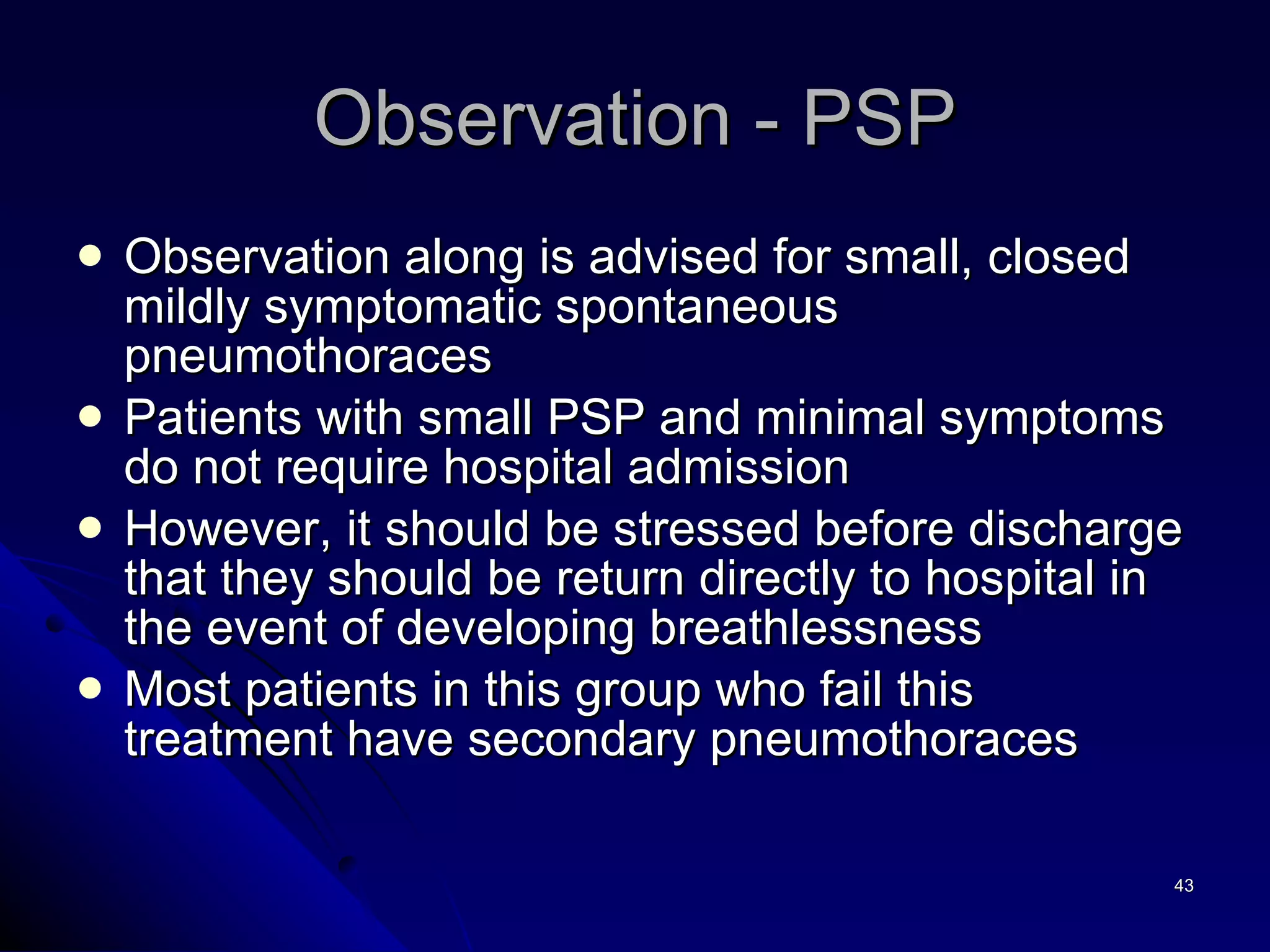
Observation - PSP Observation along is advised for small, closed mildly symptomatic spontaneous pneumothoraces Patients with small PSP and minimal symptoms do not require hospital admission  However, it should be stressed before discharge that they should be return directly to hospital in the event of developing breathlessness Most patients in this group who fail this treatment have secondary pneumothoraces
Observation along is only recommend in patients with small SSP of less than 1 cm depth or isolated apical pneumothoraces in asymptomatic patients Hospitalisation is recommended in these cases All other cases will require active intervention ( aspiration or chest drain insertion) Observation - SSP
Observation along is inappropriate and active intervation is required Marked breathlessness in a patient with a small (<2 cm) PSP may herald tension pneumothorax If a patient is hospitalised for observation, supplemental high flow (10 l/min) oxygen should be given where feasible Observation -  PSP or SSP
Inhalation of high concentration of oxygen may reduce the total pressure of gases in pleural capillaries by reducing the partial pressure of nitrogen This should increase the pressure gradient between the pleural capillaries and the pleural cavity Thereby increasing absorption of air from the pleural cavity Observation -  PSP or SSP
The rate of resolution/reabsorption of spontaneous pneumothoraces is 1.25 – 1.8% of volume of hemithorax every 24 hours The addition of high flow oxygen therapy has been shown to result in a 4-fold increase in the rate of peumothorax reabsorption during the periods of oxygen supplementation  Observation -  PSP or SSP
Aspiration Simple aspiration is recommended as first line treatment for all PSP requiring intervention Simple aspiration is less likely to succeed in secondary pneumothoraces and in this situation, is only recommended as an initial treatment in small (<2 cm) pneumothoraces in minimally breathless patients under the age of 50 years Patients with secondary pneumothoraces treated successfully with simple aspiration should be admitted to hospital and observed for at least 24 hours before discharge
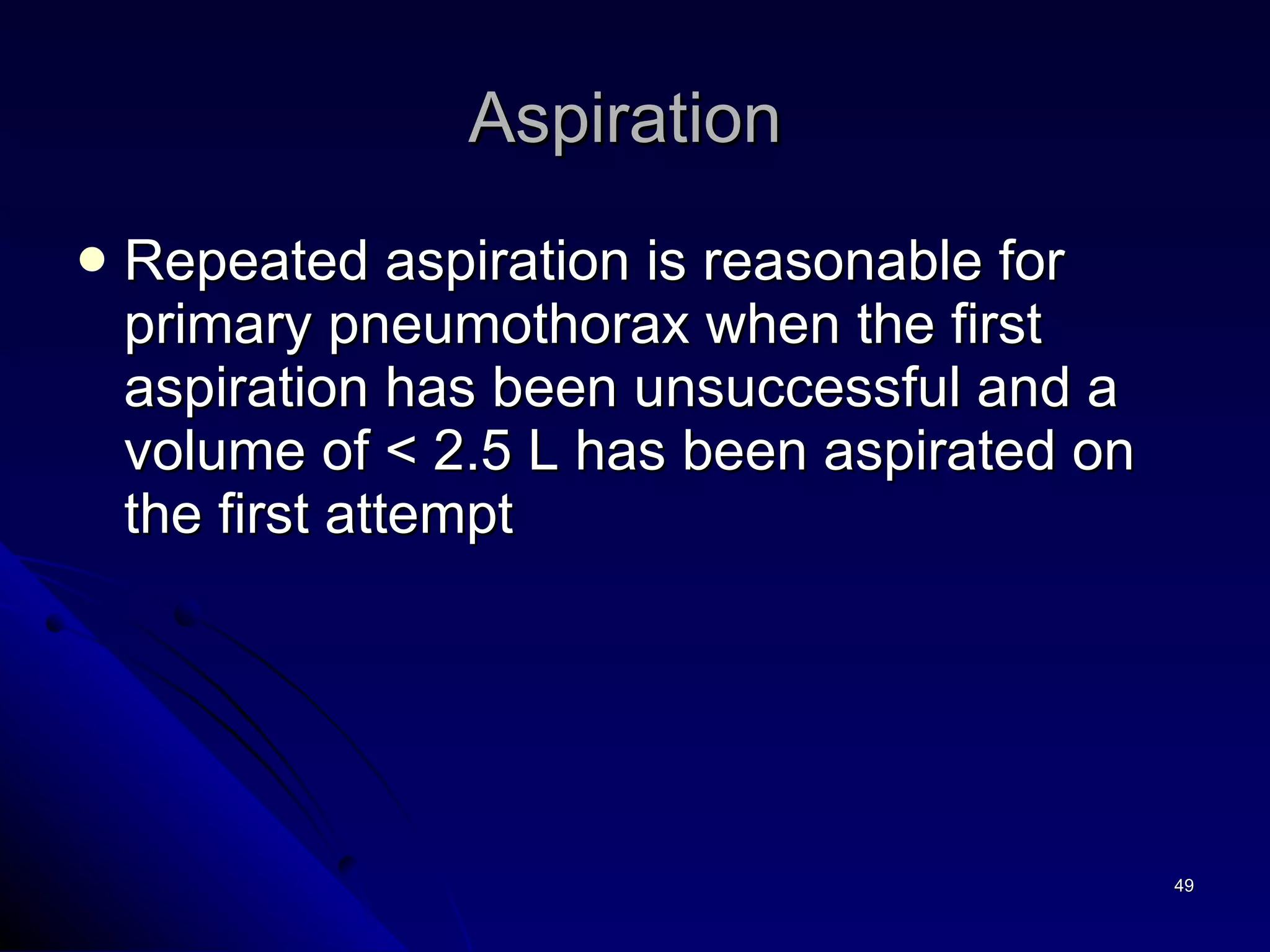
Repeated aspiration is reasonable for primary pneumothorax when the first aspiration has been unsuccessful and a volume of < 2.5 L has been aspirated on the first attempt Aspiration
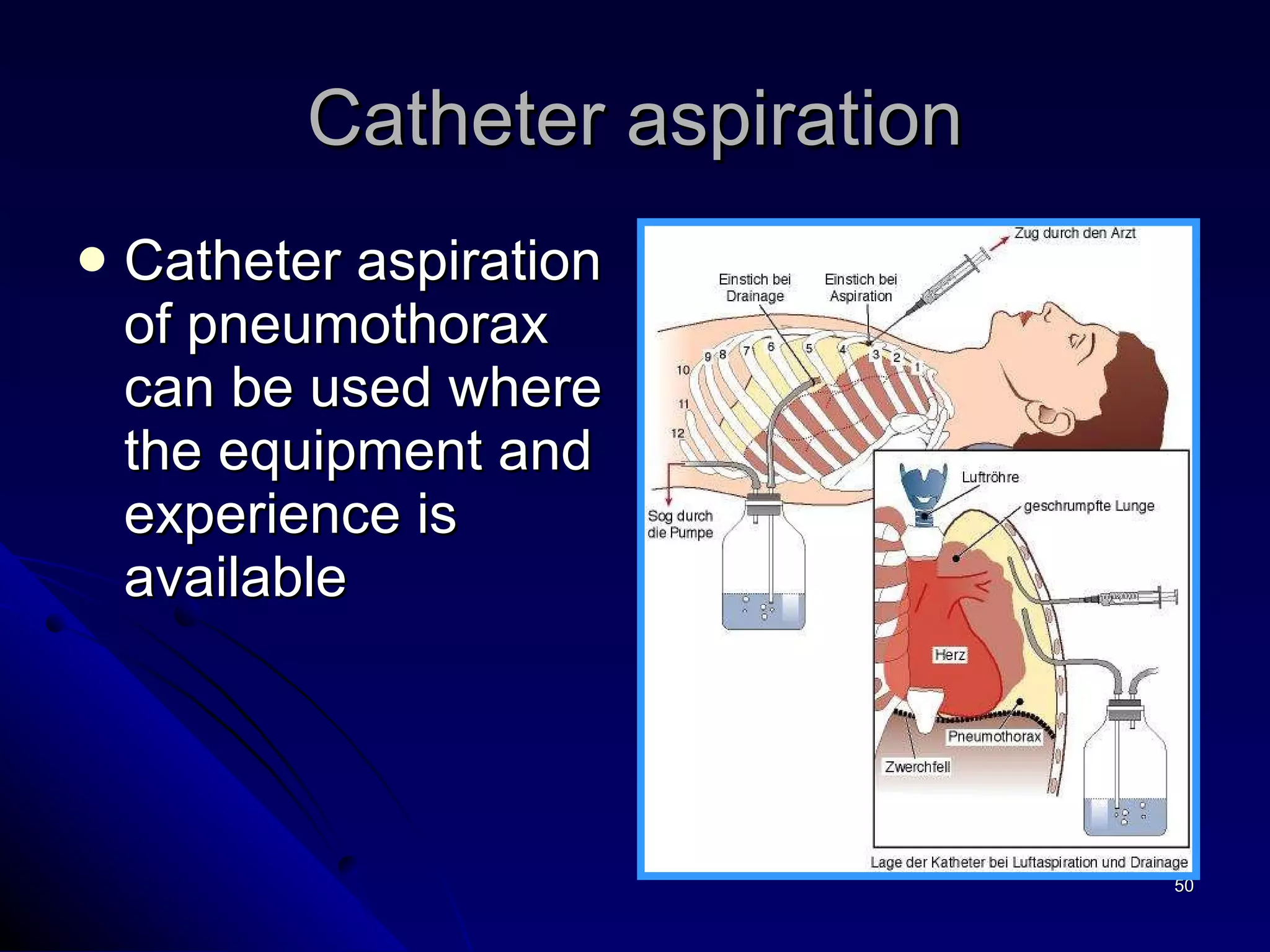
Catheter aspiration Catheter aspiration of pneumothorax can be used where the equipment and experience is available
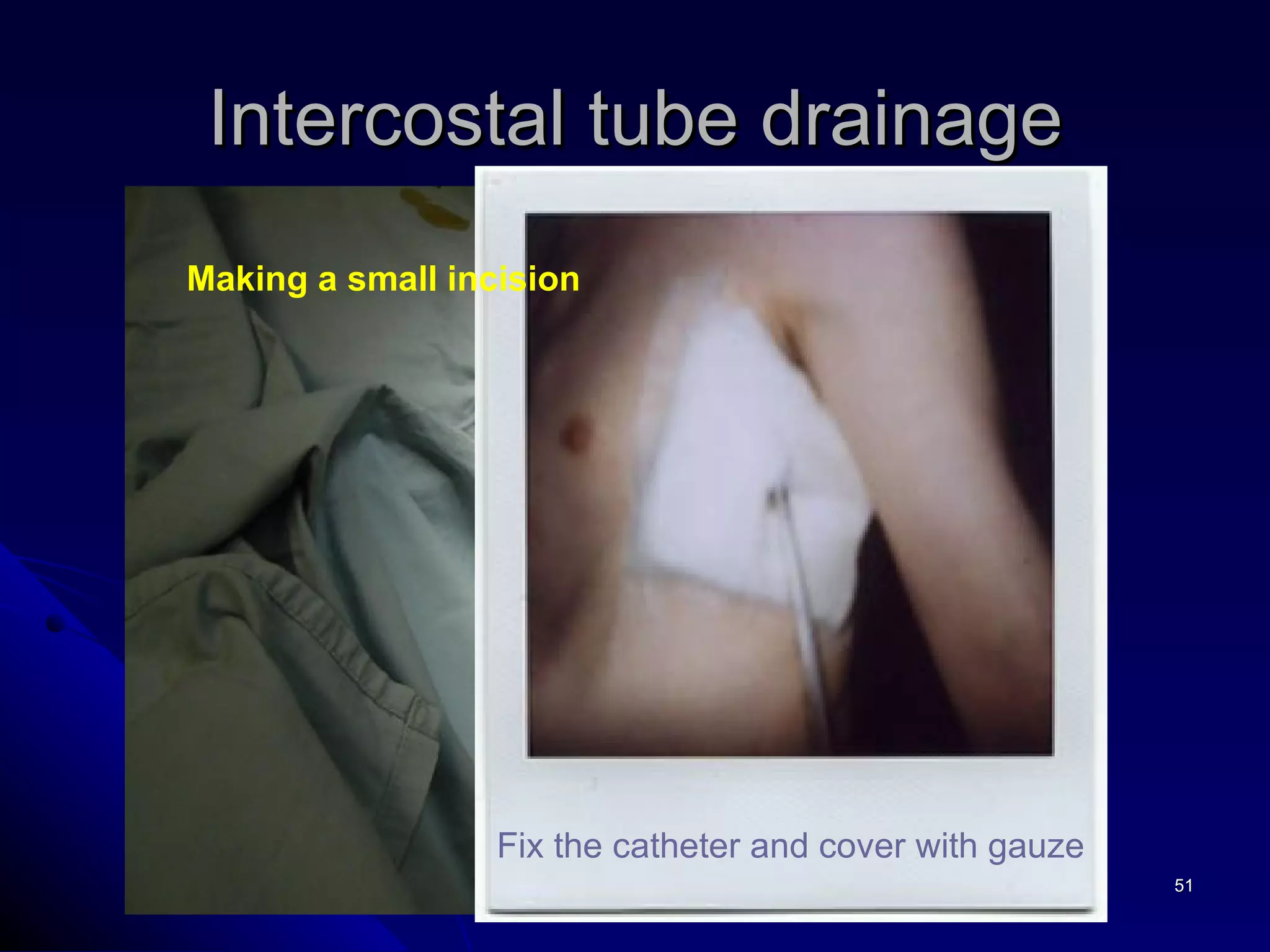
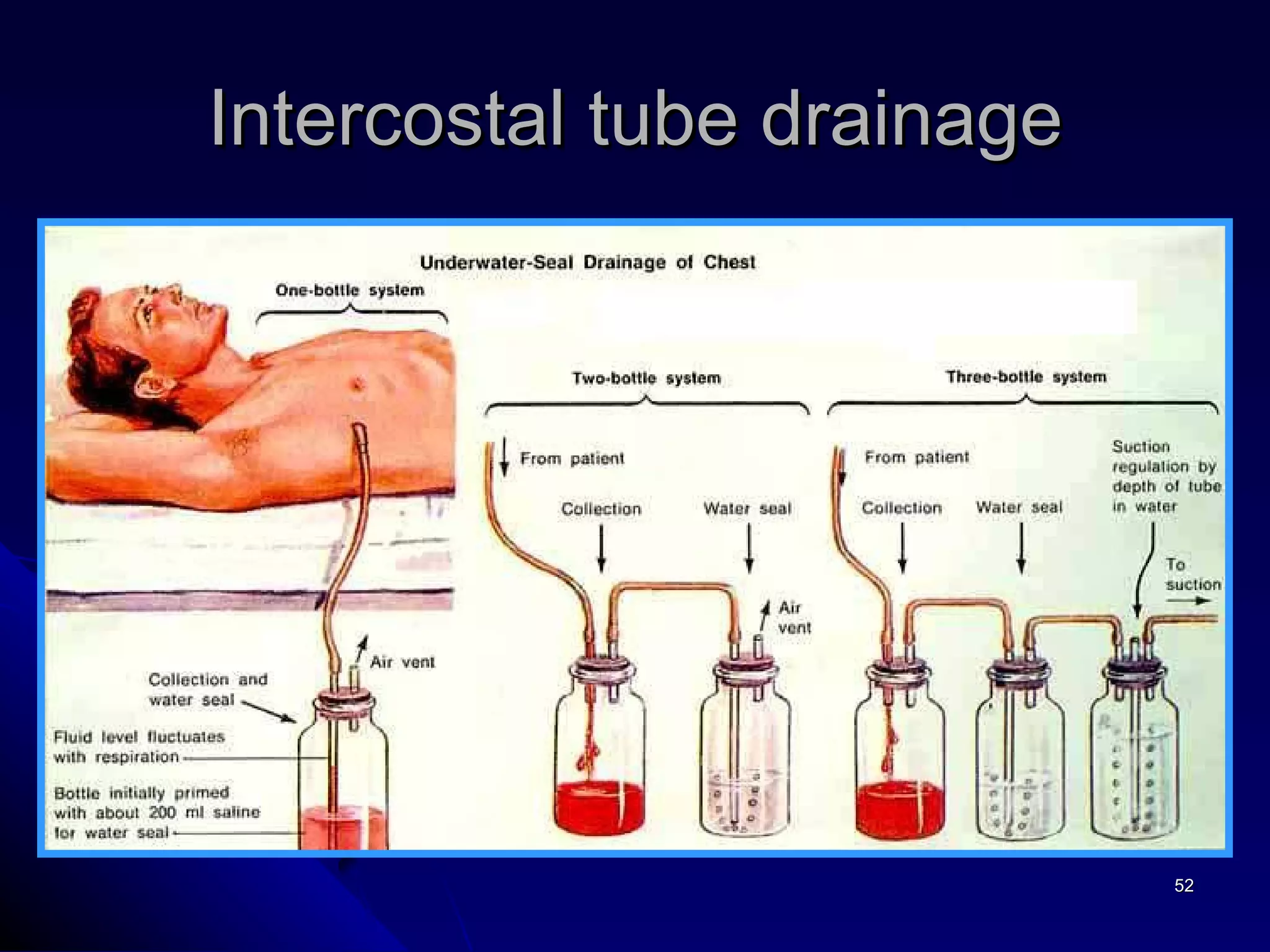
Intercostal tube drainage Fix the catheter and cover with gauze Making a small incision
Intercostal tube drainage
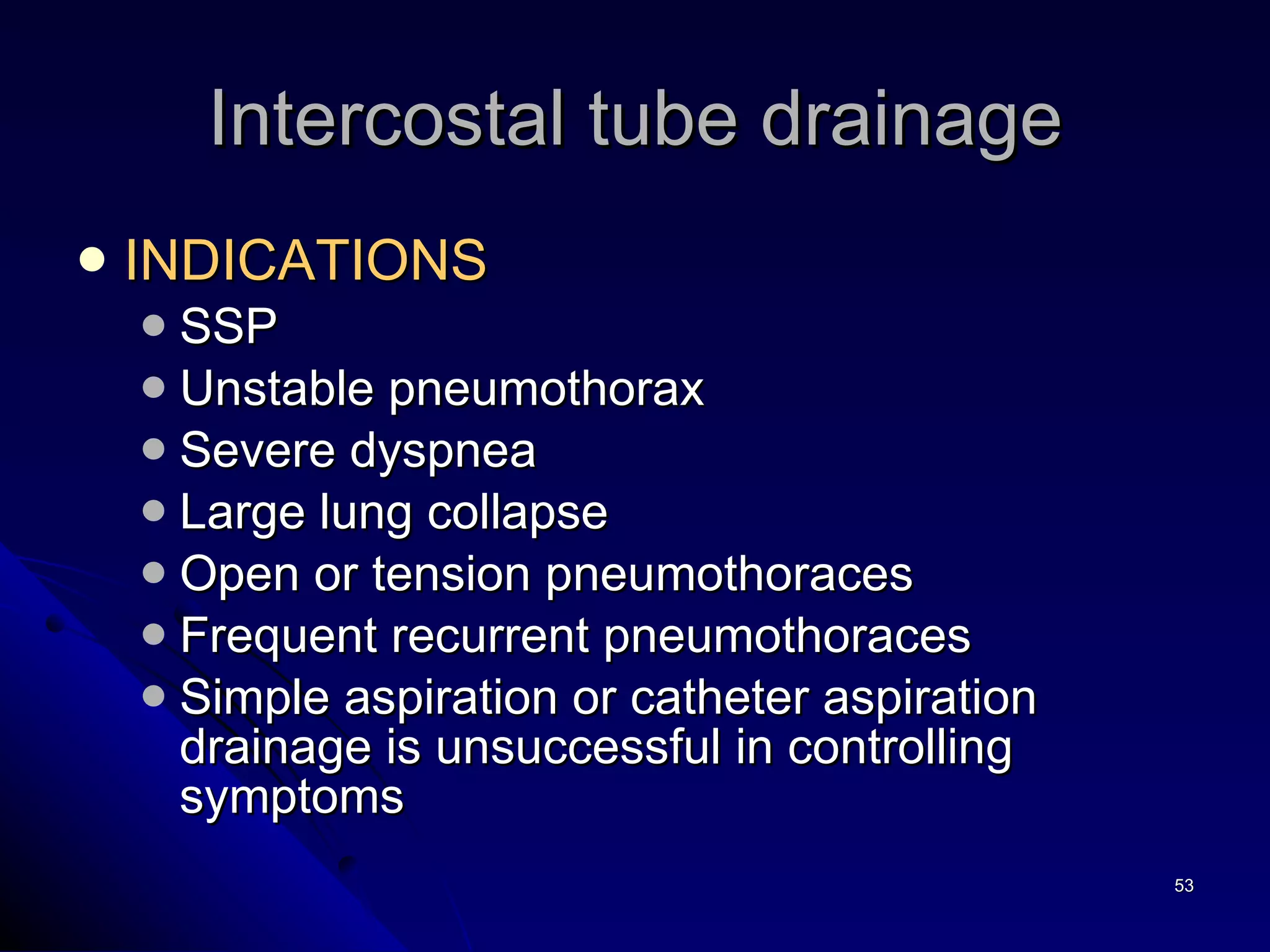
INDICATIONS  SSP Unstable pneumothorax Severe dyspnea Large lung collapse  Open or tension pneumothoraces Frequent recurrent pneumothoraces Simple aspiration or catheter aspiration drainage is unsuccessful in controlling symptoms Intercostal tube drainage
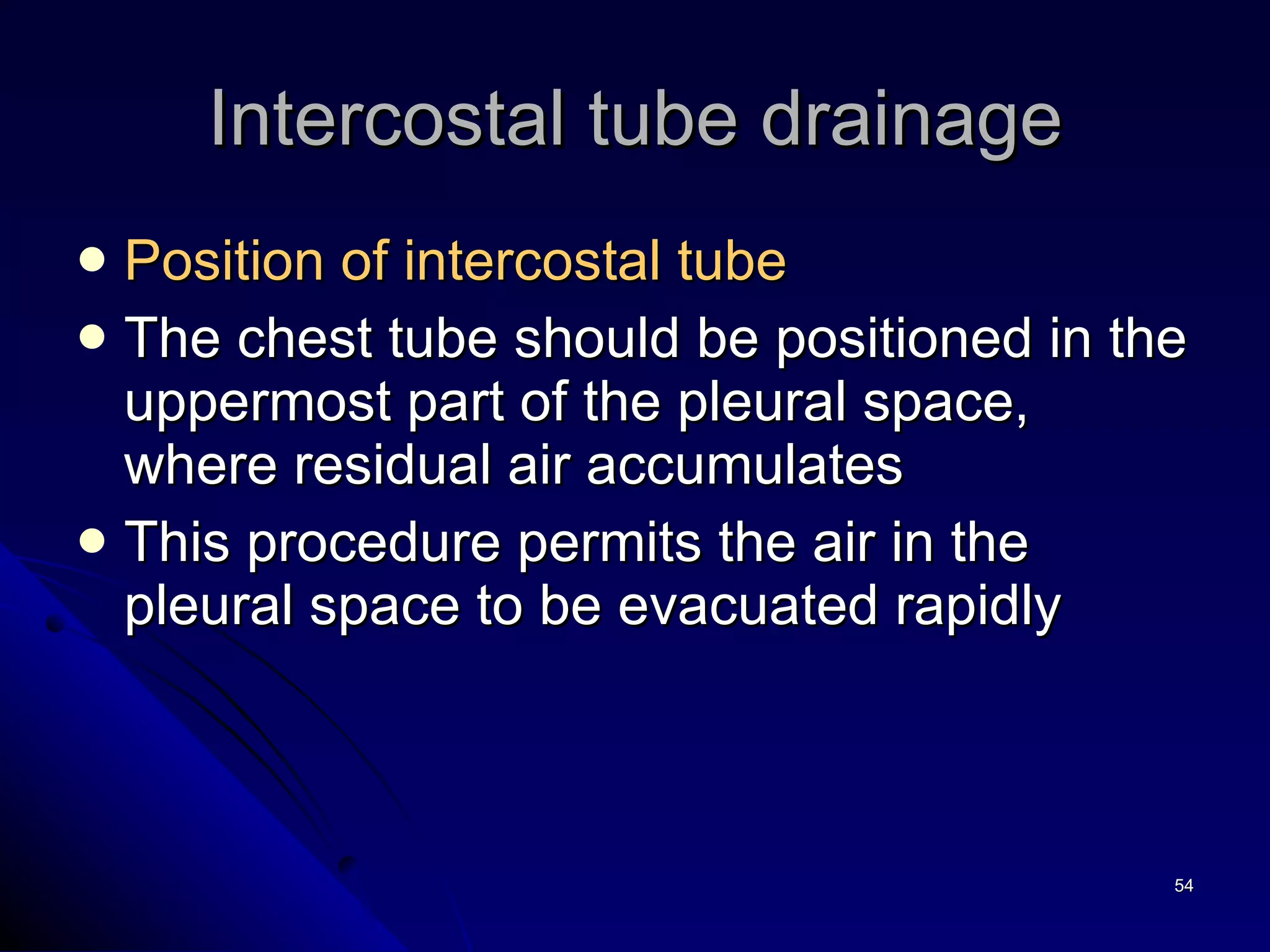
Position of intercostal tube The chest tube should be positioned in the uppermost part of the pleural space, where residual air accumulates  This procedure permits the air in the pleural space to be evacuated rapidly Intercostal tube drainage
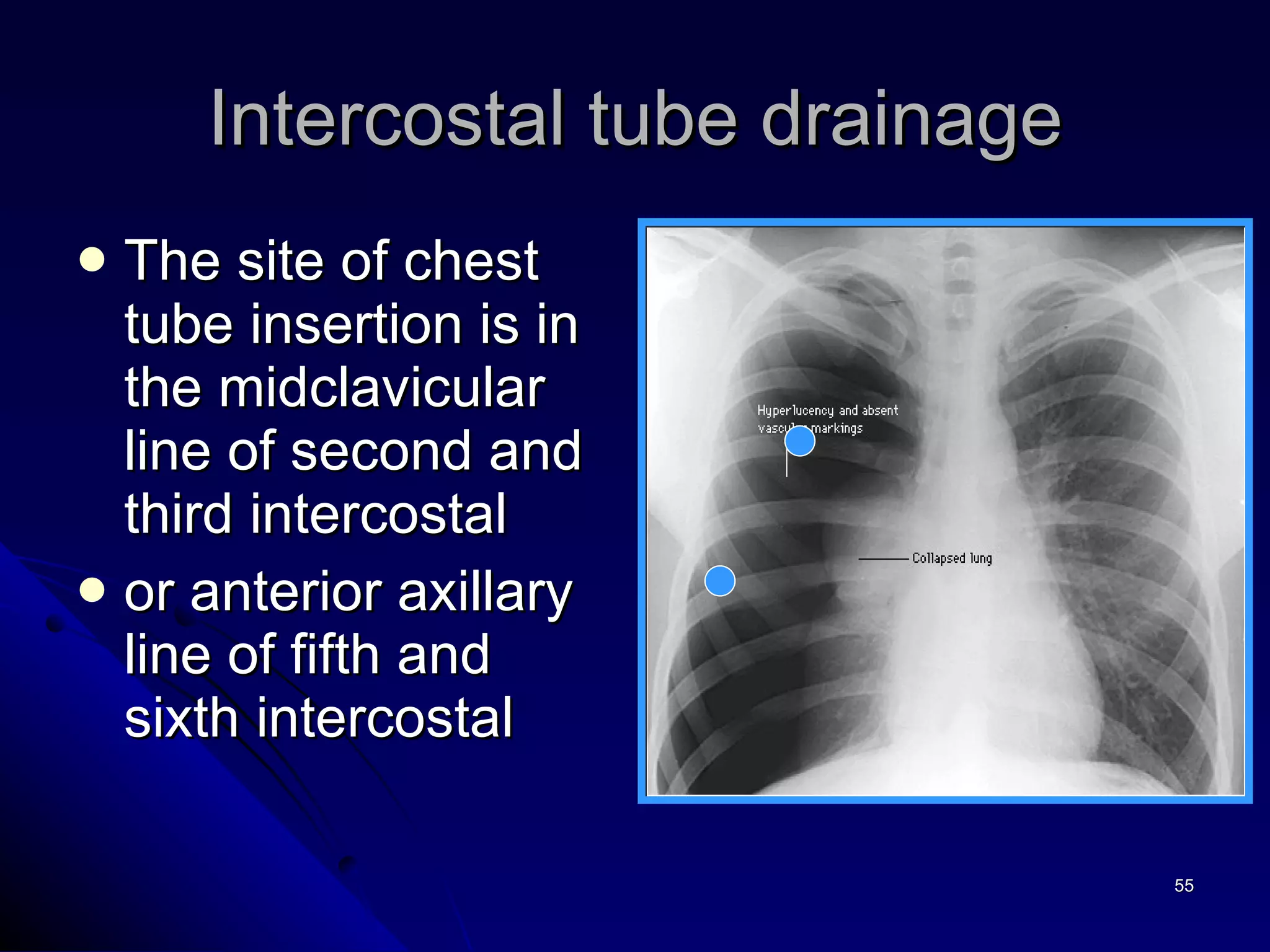
The site of chest tube insertion is in the midclavicular line of second and third intercostal or anterior axillary line of fifth and sixth intercostal Intercostal tube drainage
Observation of drainage No bubble released  The lung reexpansion  The chest tube is obstructed by secretion or blood clot The chest tube shift to chest wall, the hole of the chest tube is located in the chest wall  If the lung reexpansion, removing the chest tube 24 hours after reexpansion Otherwise, the chest tube will be inserted again or regulated the position
Complications of intercostal tube drainage Penetration of major organs Lung, stomach, spleen, liver, heart and great vessels Occur more commonly when a sharp metal trocar is inappropriately applied Pleural infection Empyema, the rate of 1% Surgical emphysema  Subcutaneous emphysema
Chemical pleurodesis Goals  Prevention of pneumothorax recurrence  To produce inflammation of pleura and adhesions Indications   Persist air leak and repeated pneumothorax Bilateral pneumothoraces Complicated with bullae Lung dysfunction, not tolerate to operation
Chemical pleurodesis Sclerosing agents Tetracycline Minocycline Doxycline  Talc  Erythromycin  The instillation of sclerosing agents into the pleural space should lead to an aseptic inflammation with dense adhesions, leading ultimately to pleural symphysis
Methods  Via chest tube or by surgical mean  Administration of intrapleural local anaesthesia, 200 – 400 mg lidocaine intrapleurally injection Agents diluted by 60 – 100 ml saline Injected to pleural space  Clamp the tube 1 – 2 hours Drainage again Observed by chest X-ray film, if air of pleural space is absorption, remove the chest tube If pneumothorax still exist, repeated pleurodesis Chemical pleurodesis
Side effect Chest pain Fever Dyspnea Acute respiratory distress syndrome Acute respiratory failure Chemical pleurodesis
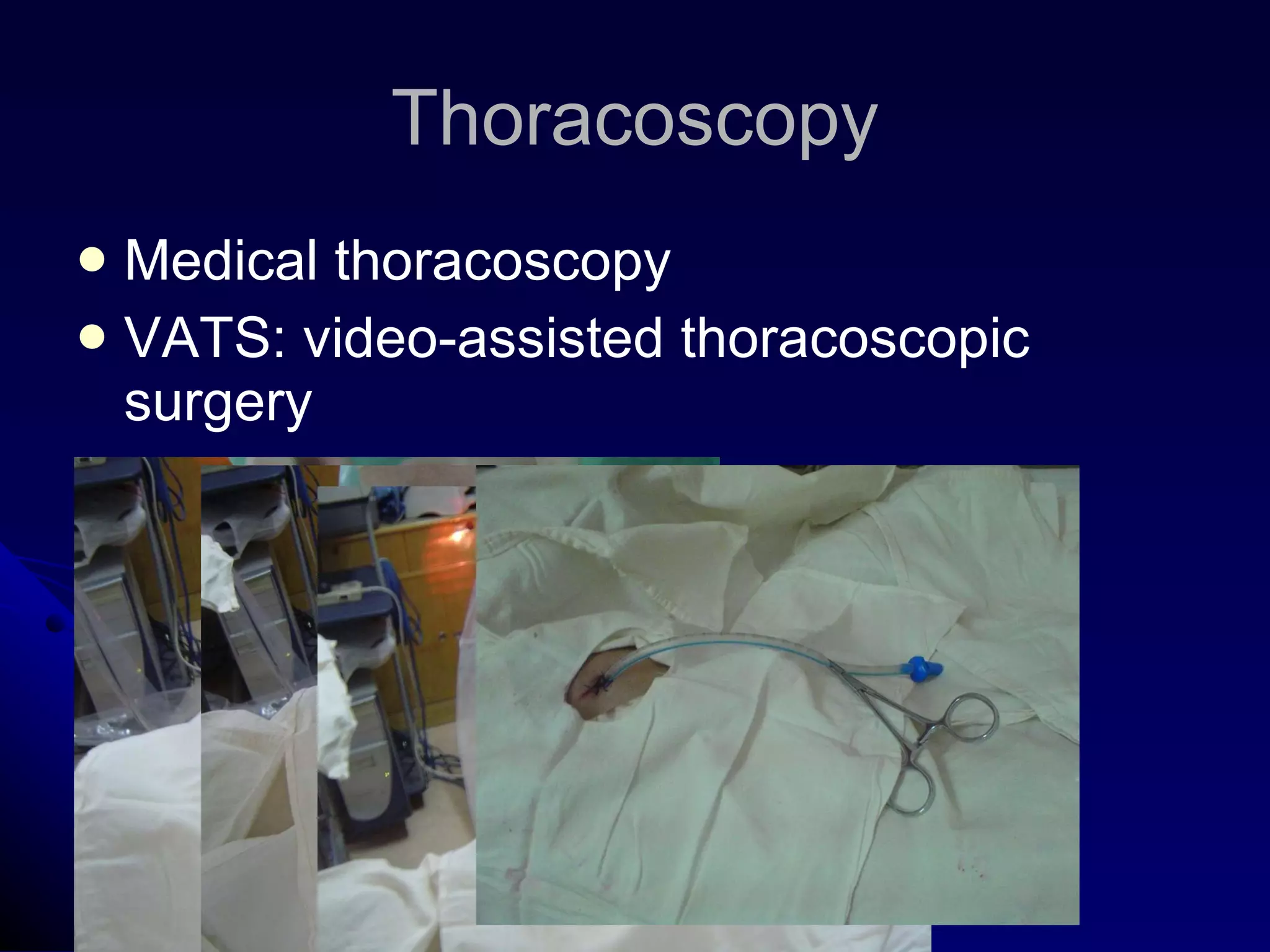
Thoracoscopy Medical thoracoscopy VATS: video-assisted thoracoscopic surgery
Surgical treatment Indication   No response to medical treatment Persist air leak Hemopneumothorax  Bilateral pneumothoraces Recurrent pneumothorax Tension pneumothorax failed to dainage Thicken pleura makes lung unable to reexpansion Multiple blebs or bullae
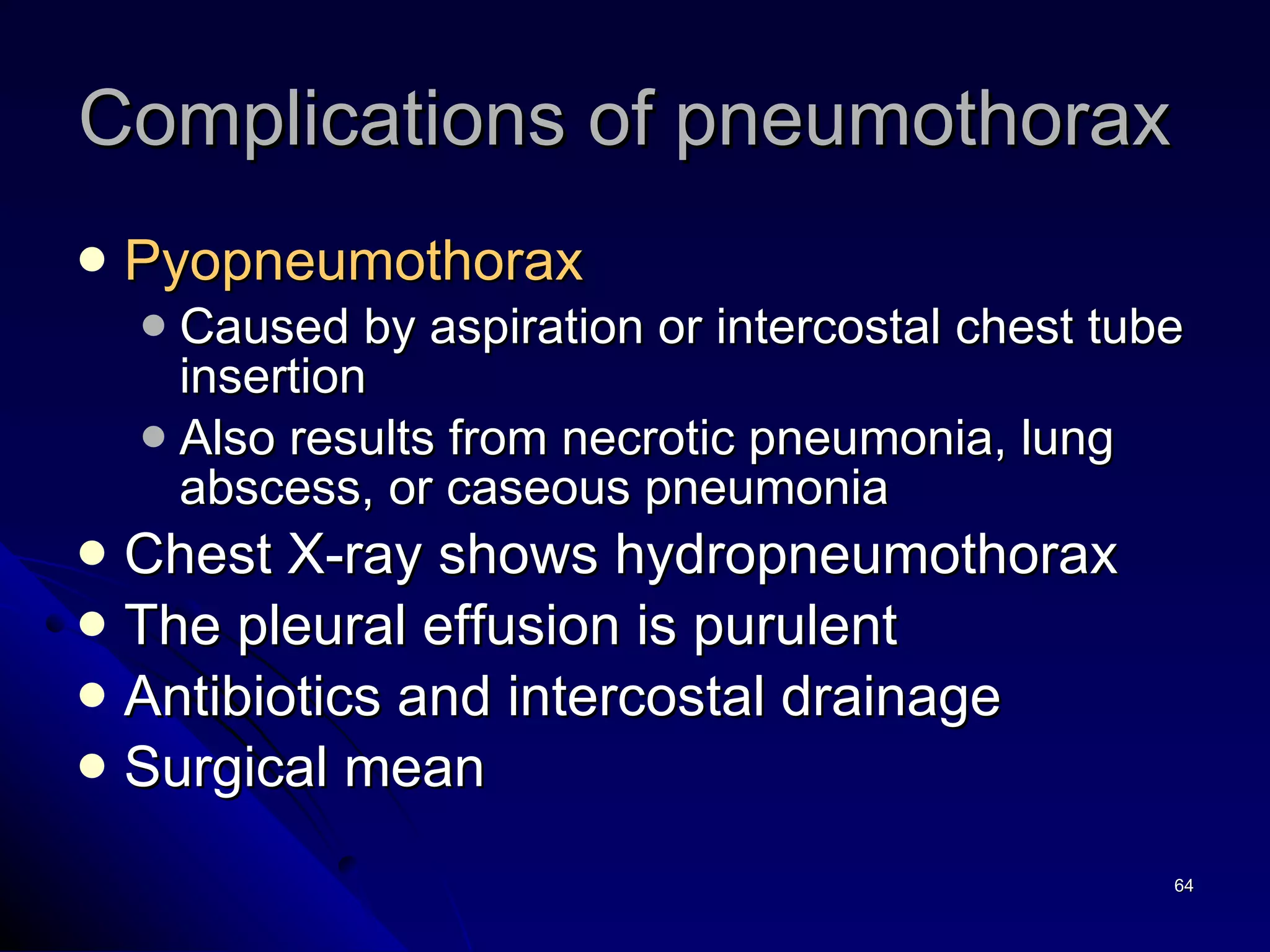
Complications of pneumothorax  Pyopneumothorax   Caused by aspiration or intercostal chest tube insertion  Also results from necrotic pneumonia, lung abscess, or caseous pneumonia Chest X-ray shows hydropneumothorax The pleural effusion is purulent  Antibiotics and intercostal drainage Surgical mean
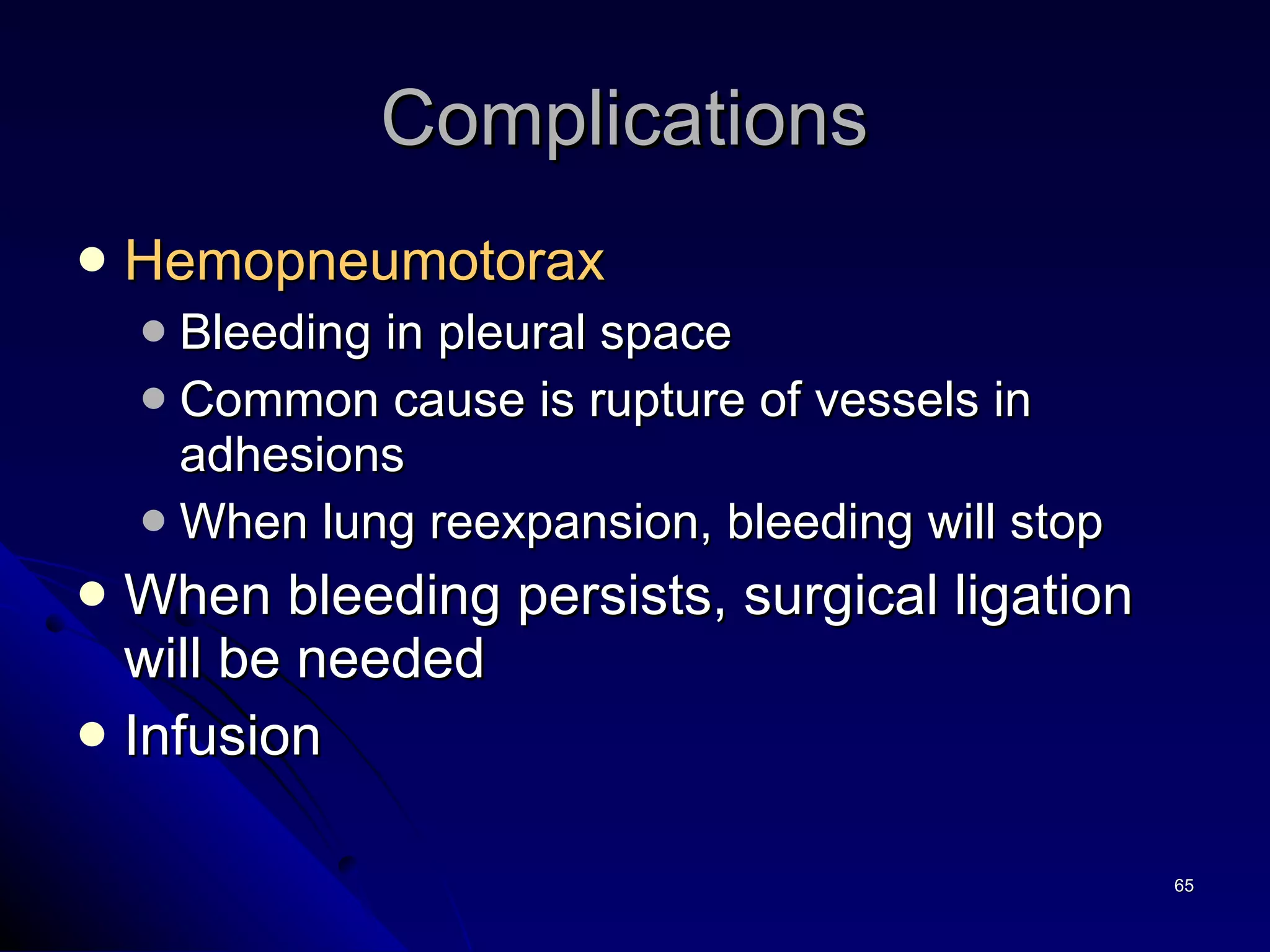
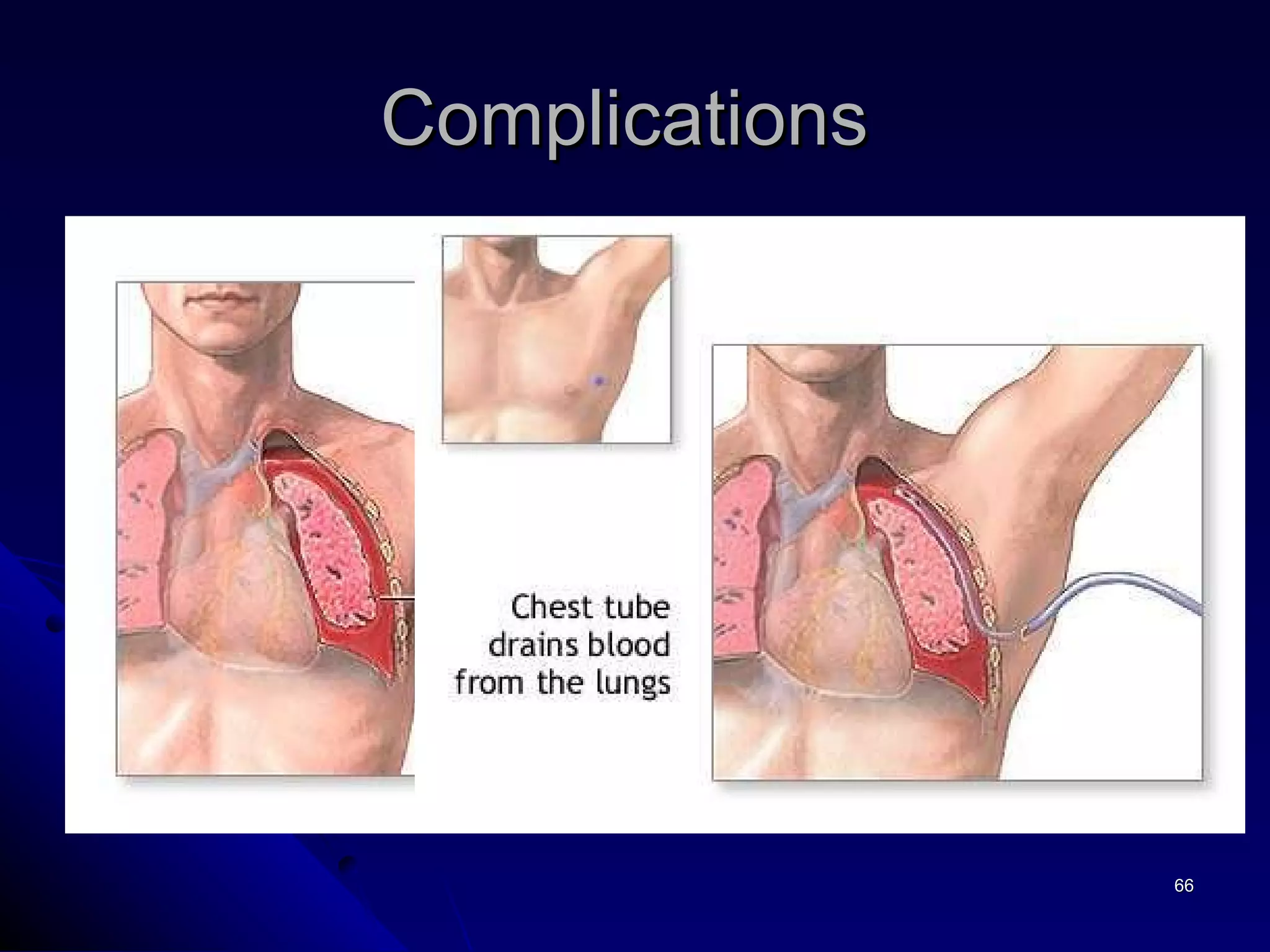
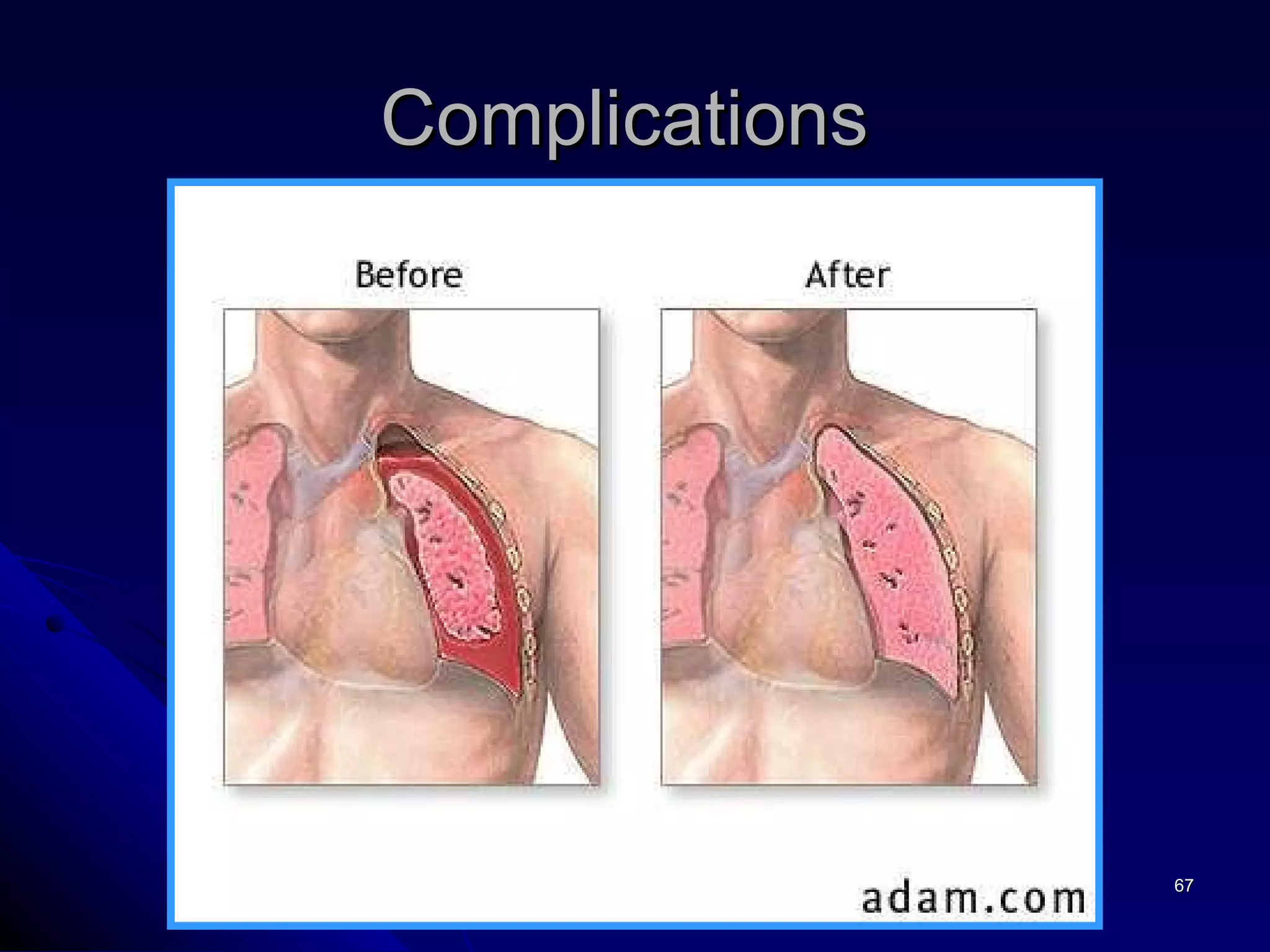
Hemopneumotorax   Bleeding in pleural space Common cause is rupture of vessels in adhesions When lung reexpansion, bleeding will stop When bleeding persists, surgical ligation will be needed Infusion  Complications
Complications
Complications
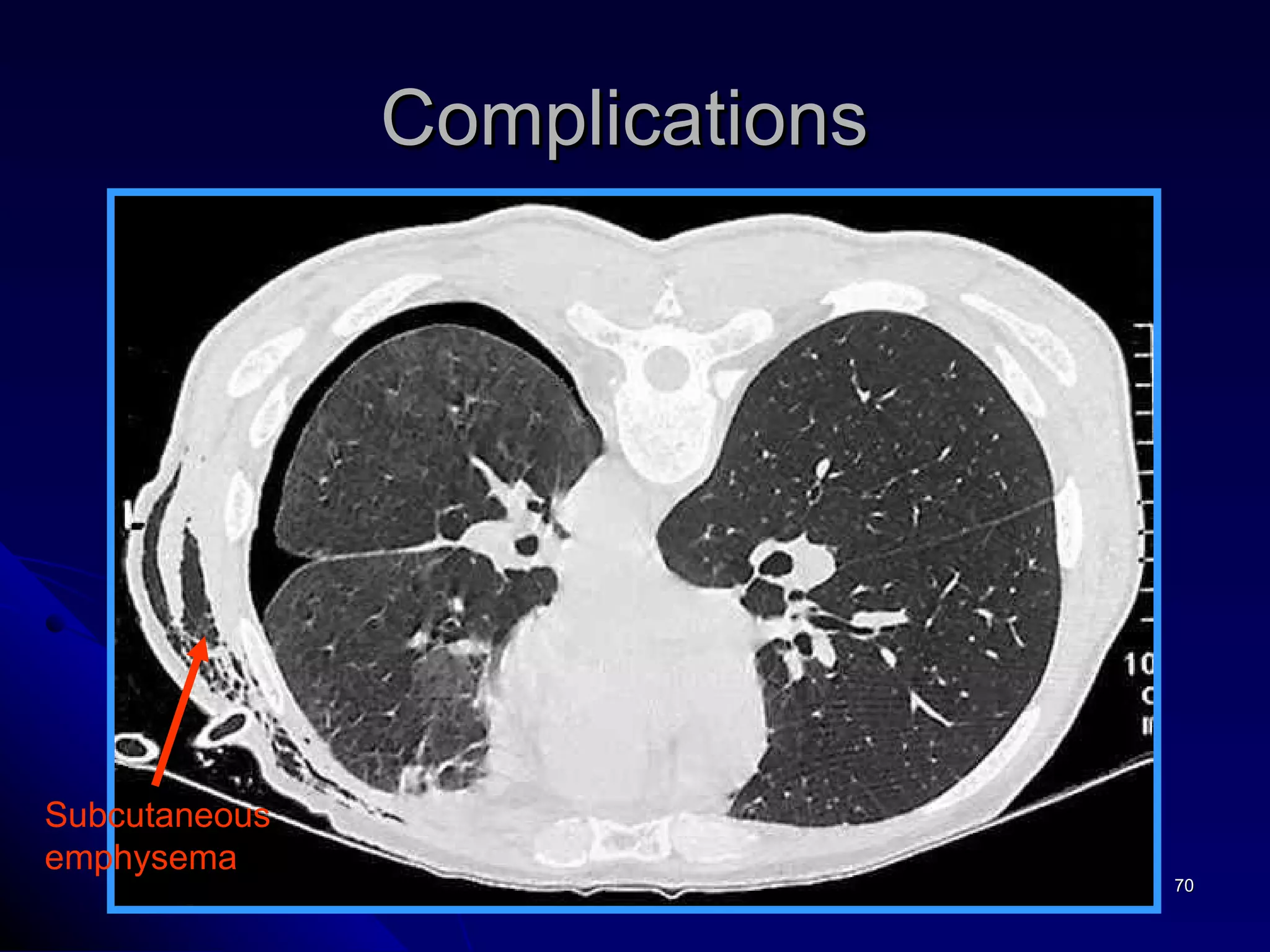
Mediastinal and subcutaneous emphysema Alveoli rupture, the air enter into pulmonary interstitial, and then goes into mediastinal and subcutaneous tissues  After aspiration or intercostal chest tube insertion, the air enters the subcutaneous by the needle hole or incision  Physical exam – crepitus is present  Complications
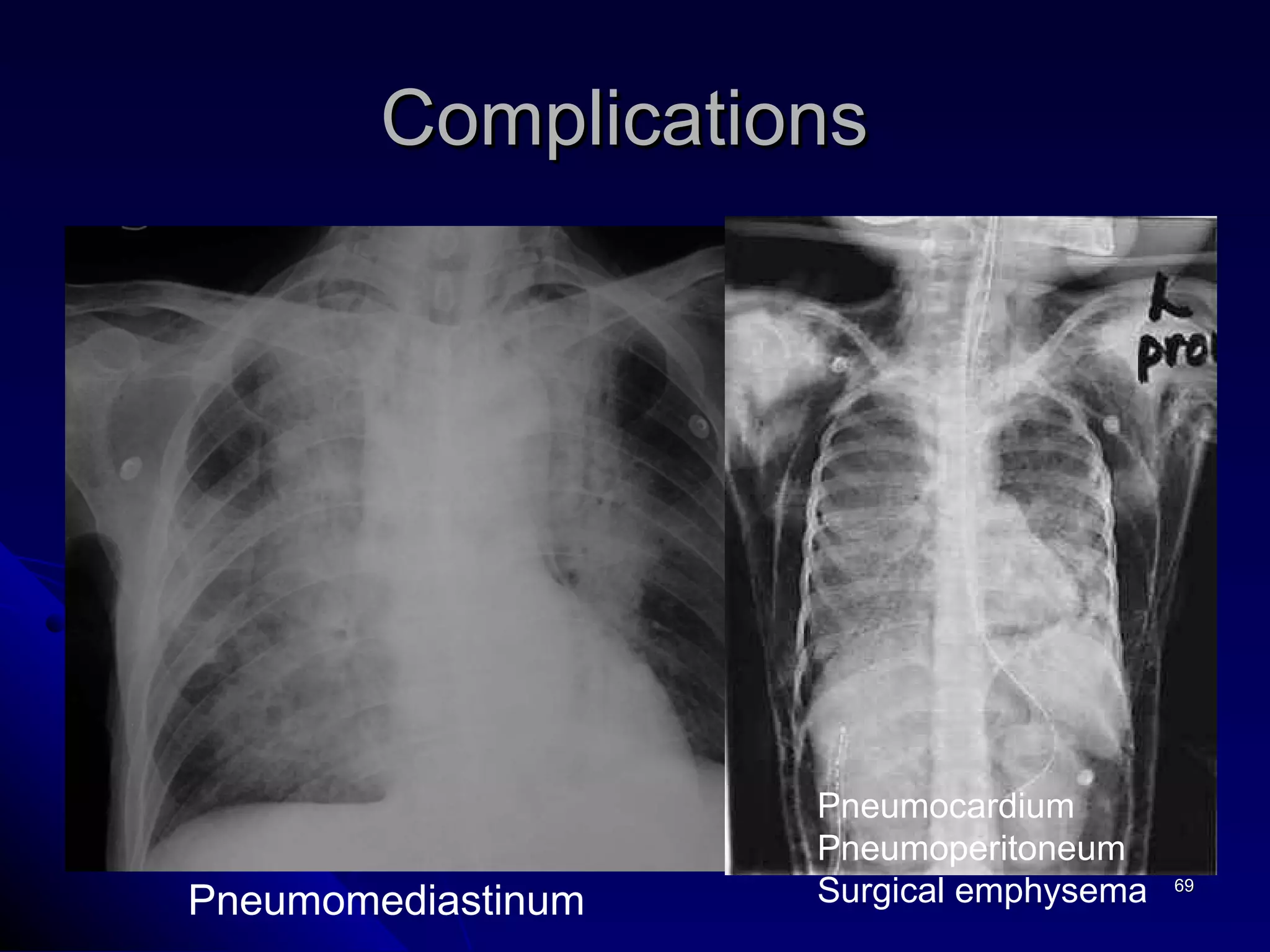
Complications  Pneumomediastinum  Pneumocardium Pneumoperitoneum Surgical emphysema
Complications  Subcutaneous  emphysema
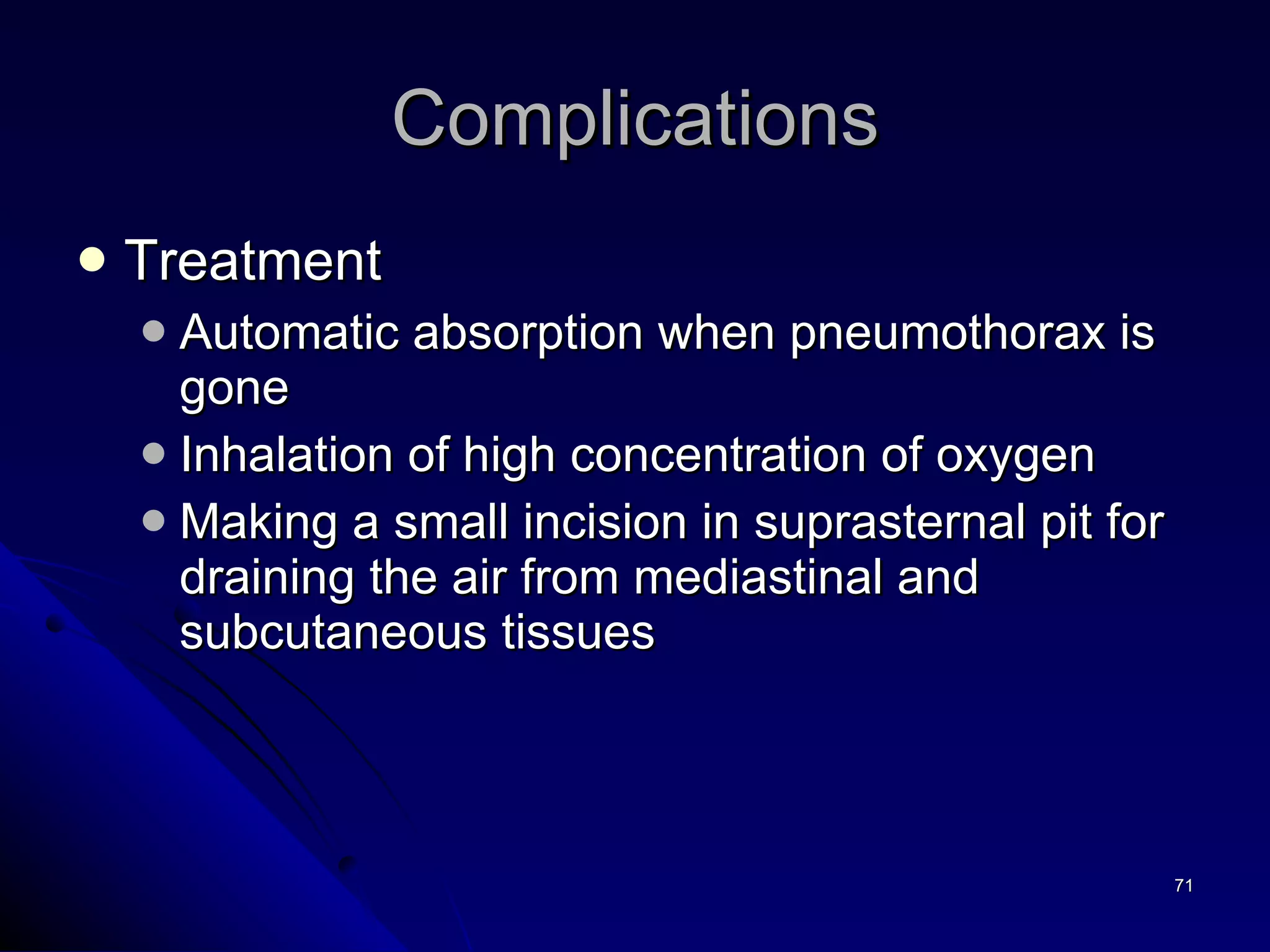
Complications Treatment  Automatic absorption when pneumothorax is gone  Inhalation of high concentration of oxygen Making a small incision in suprasternal pit for draining the air from mediastinal and subcutaneous tissues
Recurrent Rates 30-50% recurrence after observation or tube thoracostomy. Attempts: thoracoscopy, surgery, pleurodesis.
Case 1 Female, 20 Chest pain 3 hours, and suddenly deteriorate dyspnea Cyanosis Marked tachycardia  Profuse diaphoresis
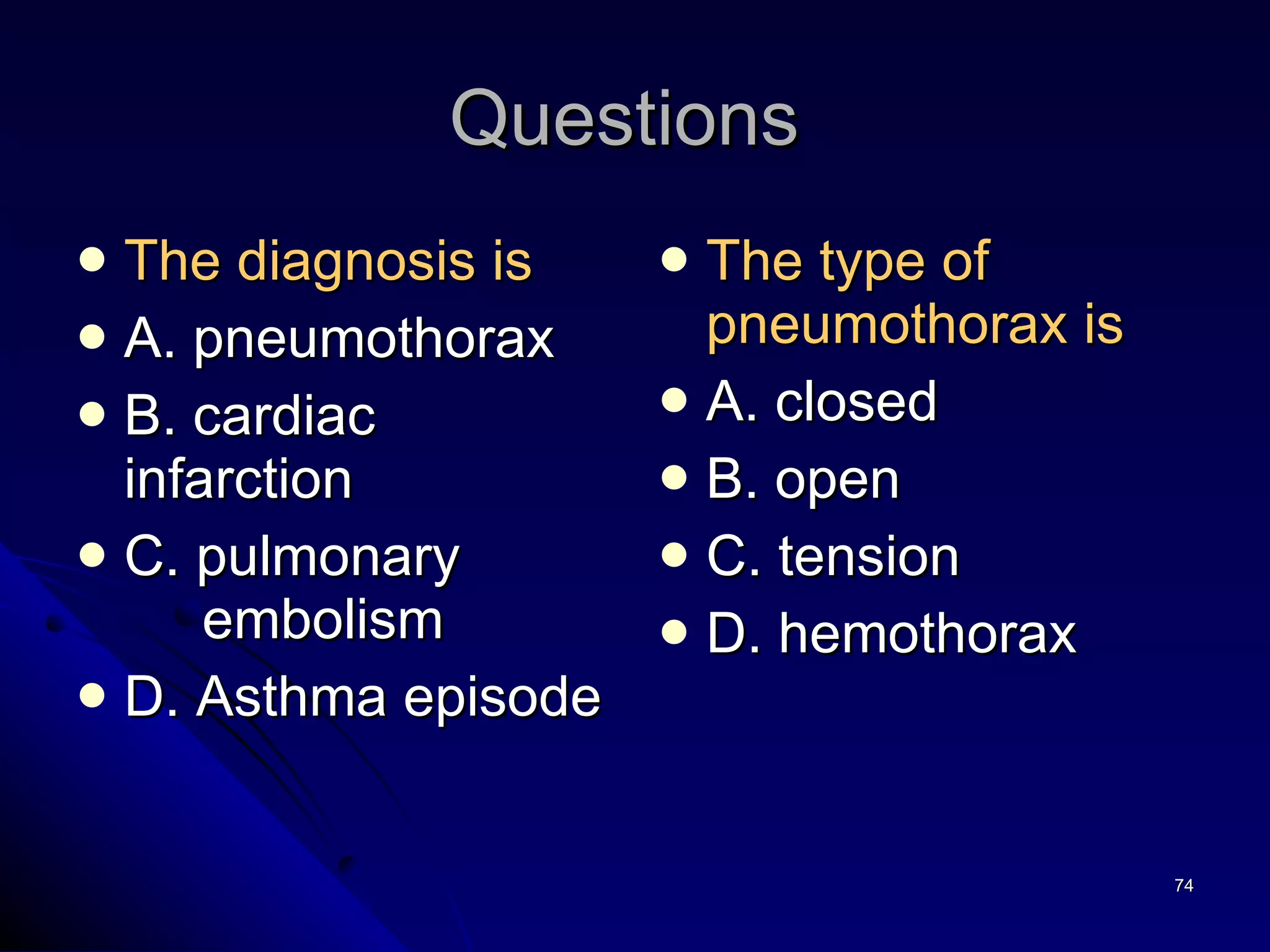
Questions  The diagnosis is A. pneumothorax B. cardiac infarction C. pulmonary    embolism  D. Asthma episode  The type of pneumothorax is A. closed B. open C. tension  D. hemothorax
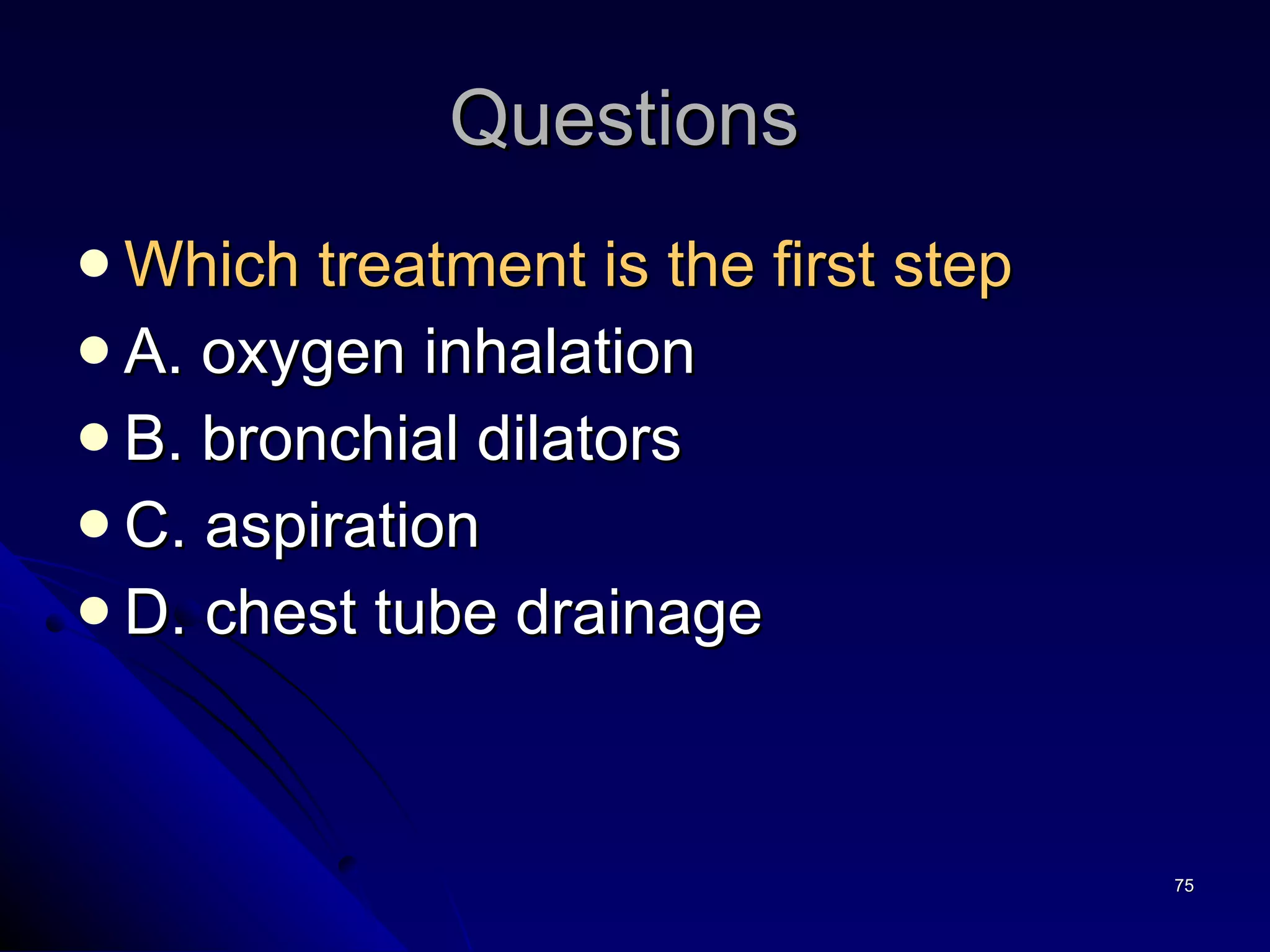
Questions  Which treatment is the first step A. oxygen inhalation B. bronchial dilators C. aspiration D. chest tube drainage
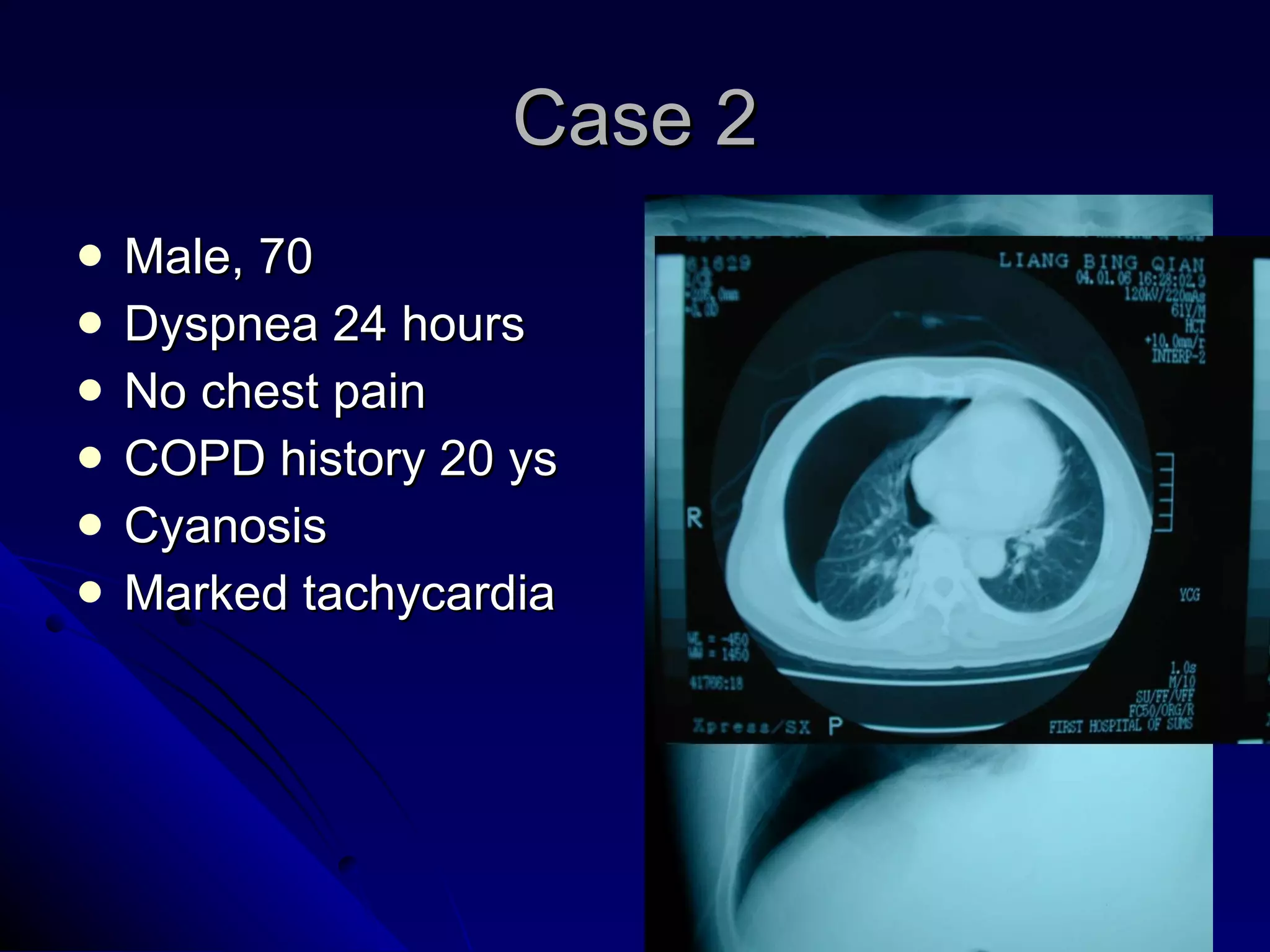
Case 2 Male, 70 Dyspnea 24 hours No chest pain COPD history 20 ys Cyanosis Marked tachycardia
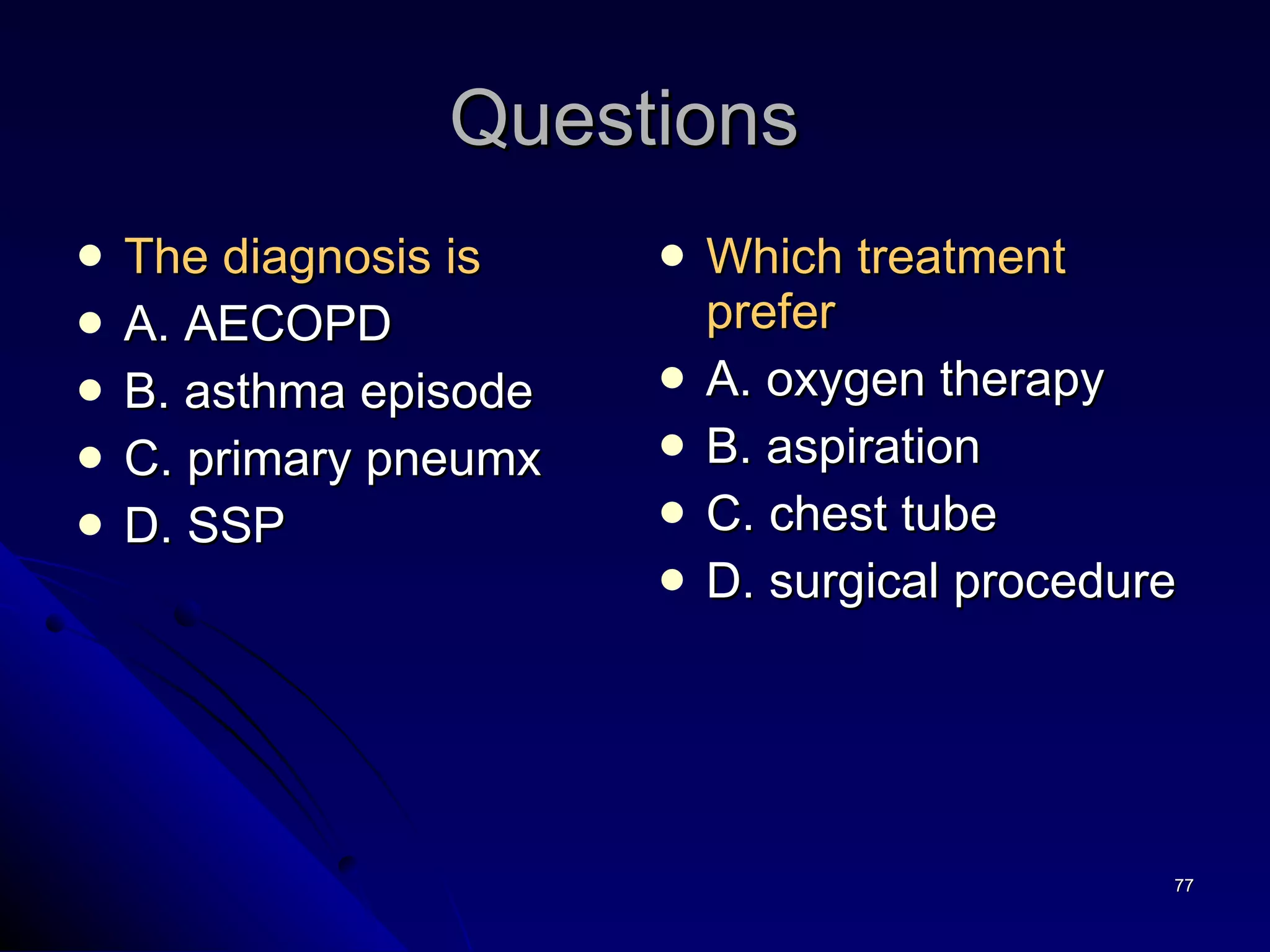
Questions  The diagnosis is   A. AECOPD B. asthma episode C. primary pneumx D. SSP Which treatment prefer   A. oxygen therapy B. aspiration C. chest tube  D. surgical procedure
Thank you!

10.Pneumothorax

  • 1.
  • 2.
    Introduction Laennec describedthe clinical picture of pneumothorax in 1819 The modern description of primary spontaneous pneumothorax occurring in otherwise healthy people was provided by Kjaergard in 1932 Primary pneumothorax remains a significant global problem The incidence is 18-28/100 000 per year for men and 1.2-6/100 000 per year for women
  • 3.
    Introduction Secondary pneumothoraxis associated with underlying lung disease, whereas primary pneumothorax is not Hospital admission rates for combined primary and secondary pneumothorax are reported in the UK at between 5.8/10 000 per year for women and 16.7/10 000 per year for men Mortality rates in the UK were 0.62/million for men between 1991 and 1995
  • 4.
    Contents What ispneumothorax Pathogenesis and mechanisms Pathophysiology Clinical typing Clinical manifestation Diagnosis and differentiate diagnosis Treatment
  • 5.
  • 6.
    Classification of pneumothoraxTypes Spontaneous having an unknown cause or occurring as a consequence of the nature course of a disease process, such as COPD, tuberculosis Traumatic following any penetrating or non-penetrating chest trauma, with or without bronchial rupture Iatrogenic occurring as the results of diagnostic or therapeutic medical procedure. Intentional or a complication
  • 7.
    Spontaneous pneumothoraces aresubclassified as: Primary spontaneous pneumothorax (PSP) Healthy people, most young people Secondary spontaneous pneumothorax (SSP) Underlying diseases Chronic obstructive pulmonary disease (COPD), pulmonary tuberculosis Clinical typing of pneumothorax
  • 8.
    Pathogenesis and mechanismsIn normal people, the pressure in pleural space is negative during the entire respiratory cycle Two opposite forces result in negative pressure in pleural space: inherent outward pull of the chest wall and inherent elastic recoil of the lung The negative pressure will be disappeared if any communication develops
  • 9.
    When a communicationdevelops between an alveolus or other intrapulmonary air space and pleural space air will flow into the pleural space until there is no longer a pressure difference or until the communication is sealed Pathogenesis and mechanisms
  • 10.
    Pathogenesis and mechanismsWhen a communication develops through the chest wall between the atmosphere and the pleural space air will enter the pleural space until the pressure gradient is eliminated or the communication is closed
  • 11.
    Pneumothorax: Negative pressureeliminated The lung recoil-small lung-volume decrease V/Q decrease-shunt increase Positive pressure Compress blood vessels and heart decreased cardiac output Impaired venous return Hypotension Shock Result in A decrease in vital capacity A decrease in PaO 2 Pathophysiology
  • 12.
    Thoracoscopic studies Blebs Air filled spaces between the lung parenchyma and the visceral pleura Pathophysiology Shows a similar cystic space, completely surrounded by pl pleura
  • 13.
    Bullae Air filledspaces within the lung parenchyma itself Pathophysiology Lung parenchyma Surrounded by fibrous tissue
  • 14.
    Blebs The patient,a 22-year-old male, was admitted to hospital, complaining of left chest pain and palpitations.
  • 15.
    Blebs and bullaeare also known as emphysema-like changes (ELCs) The probable cause of pneumothorax is rupture of an apical bleb or bulla Because the compliance of blebs or bullae in the apices is lower compared with that of similar lesions situated in the lower parts of the lungs Pathophysiology
  • 16.
    It is oftenhard to assess whether bullae are the site of leakage, and where the site of rupture of the visceral pleura is Smoking causes a 9-fold increase in the relative risk of a pneumothorax in females A 22-fold increase in male smokers With a dose-response relationship between the number of cigarettes smoked per day and occurrence of PSP Pathophysiology
  • 17.
  • 18.
    Clinical typing ofpneumothorax Closed communicated tension Rupture small large valve-like sealed open in not out Pressure P or N atmosphere high After Aspiration N atmosphere high again
  • 19.
    Clinical manifestation Symptom Depend on whether underlying pulmonary disease or not Depend on the speed of pneumothorax occurred Depend on size of pneumothorax Depend on the level of intrapleual pressure The patient with underlying pulmonary disease will undergo severe dyspnea The healthy person will have minimal symptoms although having large volume of pneomothorax
  • 20.
    Happened most patientsat rest and some during heavy exercise Chest pain-prickling-like, cutting-like Having an acute onset Air stimulates pleura Dyspnea Collapsed lung and vital capacity decrease Dry cough Air stimulates pleura Clinical manifestation
  • 21.
    Tension pneumothorax riskfactors Receiving positive-pressure mechanical ventilation During cardiopulmonary resuscitation Undergoing hyperbaric oxygen therapy Evolving during the course of spontaneous pneumothorax Clinical manifestation
  • 22.
  • 23.
    Tension pneumothorax Distressedwith rapid labored respiration Cyanosis Marked tachycardia Profuse diaphoresis Patient who suddenly deteriorate clinically, be suspected if the patient with Mechanical ventilation Cardiopulmonary resuscitation Clinical manifestation
  • 24.
    Physical examination Dependon size of pneumothorax Depend on whether pleural effusions or not The vital signs usually normal The side with pneumothorax is larger than the contralateral side Chest moves less during the respiratory cycle Clinical manifestation
  • 25.
    Physical examination Tactilefremitus is absent The percussion note is hypersonant The breath sounds are reduced or absent on the affected side The lower edge of the liver may be shifted inferiorly with a right-side pneumothorax The trachea may be shifted toward the contralateral side if the pneumothorax is large Clinical manifestation
  • 26.
    Clinical stability Stablepatients RR: <24/min HR: 60-120/min BP: normal SO 2 : >90% (room air) Patient can speak in whole sentences between breaths All above present Unstable patients Not fulfilling the definition of stable Evaluate the severity and make decision for treatment
  • 27.
    Imaging- Plane chestX-ray film Establishing the diagnosis The characteristics of pneumothorax Pleural line No lung markings in pneumothorax The outer margin of visceral pleura separated from the parietal pleura by a lucent gas space devoid of pulmonary vessels
  • 28.
    Plane chest X-rayfilm In erect patients, pleural gas collects over the apex, and the space between the lung and chest wall is most notable there In the supine position, gas migrates along the broad ventral surface of lung, making detection on a frontal radiograph difficult
  • 29.
    Plane chest X-rayfilm It is very important to differentiate the pleural line of a pneumothorax from that of a skinfold, clothing, tubing, or chest wall artifact Careful inspection of the film may show that the artifact extends beyond the thorax, or that lung markings are visible beyond the apparent pleural line
  • 30.
    Plane chest X-rayfilm In the absence of underlying lung disease, the pleural line of a pneumothorax usually parallels the shape of chest wall Artifactual densities generally do not parallel the course of the chest wall over their entire length
  • 31.
    Plane chest X-rayfilm Quantification of the size The size of a pneumothorax, in terms of volume, is difficult to assess accurately from a chest radiograph The simple method to estimate the size Small, a visible rim of < 2 cm between the lung margin and the chest wall Large, a visible rim of ≥2 cm between the lung margin and chest wall
  • 32.
    BTS Therim of air between the pleura and the chest wall Small <1cm Moderate :1- 2cm Large >2cm ACCP The apex-to-cupola distance Small <3cm Large ≥ 3cm Estimation of pneumothorax volume
  • 33.
    Since the volumeof a pneumothorax approximates to the ratio of the cube of the lung diameter to the hemithorax diameter A pneumothorax of 1 cm on the PA chest radiograph occupies about 27% of the hemithorax volume Lung is 9 cm, hemithorax is 10 cm in diameter Equation Volume of pneumothorax = (HT 3 – L 3 ) ÷ HT 3 = (10 3 – 9 3 ) ÷ 10 3 = (1000 – 729) ÷1000 = 0.27 Plane chest X-ray film Hemithorax (HT) Lung (L)
  • 34.
    A pneumothorax of2 cm on the PA chest radiograph occupies about 49% of the hemithorax volume Lung is 8 cm, hemithorax is 10 cm in diameter Equation Volume of pneumothorax = (HT 3 – L 3 ) ÷ HT 3 = (10 3 – 8 3 ) ÷ 10 3 = (1000 – 512) ÷1000 = 0.49 Plane chest X-ray film Hemithorax (HT) Lung (L)
  • 35.
    CT scanning CTscanning is the most robust approach if accurate size estimates are required It is only recommended to difficult cases such as patients in whom the lungs are obscured by overlying surgical emphysema To differentiate a pneumothorax from suspected bulla in complex cystic lung disease
  • 36.
    CT scanning bullaepneumothorax
  • 37.
    CT scanning bullaepneumothorax pneumothorax
  • 38.
  • 39.
    CT scanning Smallpneumothorax Subcutaneous emphysema
  • 40.
  • 41.
    Diagnosis and Differentiation PSP Young, thin, tall man Clinical history (chest pain) and physical examination Chest radiograph SSP (COPD and Asthma) Repeated wheezing episode Dyspnea gradually progress In the course of disease, if patients Onset of severe dyspnea, cold sweat, dysphoria No response to bronchial dilators, antibiotics Consider pneumothorax Chest X-ray radiograph to confirm the diagnosis
  • 42.
    Goals Topromote lung expansion To eliminate the pathogenesis To decrease pneumothorax recurrence Treatment options according to Classification of pneumothorax Pathogenesis Pneumothorax frequency The extension of lung collapse Severity of disease Complication and concomitant underlying diseases Treatment
  • 43.
    Observation - PSPObservation along is advised for small, closed mildly symptomatic spontaneous pneumothoraces Patients with small PSP and minimal symptoms do not require hospital admission However, it should be stressed before discharge that they should be return directly to hospital in the event of developing breathlessness Most patients in this group who fail this treatment have secondary pneumothoraces
  • 44.
    Observation along isonly recommend in patients with small SSP of less than 1 cm depth or isolated apical pneumothoraces in asymptomatic patients Hospitalisation is recommended in these cases All other cases will require active intervention ( aspiration or chest drain insertion) Observation - SSP
  • 45.
    Observation along isinappropriate and active intervation is required Marked breathlessness in a patient with a small (<2 cm) PSP may herald tension pneumothorax If a patient is hospitalised for observation, supplemental high flow (10 l/min) oxygen should be given where feasible Observation - PSP or SSP
  • 46.
    Inhalation of highconcentration of oxygen may reduce the total pressure of gases in pleural capillaries by reducing the partial pressure of nitrogen This should increase the pressure gradient between the pleural capillaries and the pleural cavity Thereby increasing absorption of air from the pleural cavity Observation - PSP or SSP
  • 47.
    The rate ofresolution/reabsorption of spontaneous pneumothoraces is 1.25 – 1.8% of volume of hemithorax every 24 hours The addition of high flow oxygen therapy has been shown to result in a 4-fold increase in the rate of peumothorax reabsorption during the periods of oxygen supplementation Observation - PSP or SSP
  • 48.
    Aspiration Simple aspirationis recommended as first line treatment for all PSP requiring intervention Simple aspiration is less likely to succeed in secondary pneumothoraces and in this situation, is only recommended as an initial treatment in small (<2 cm) pneumothoraces in minimally breathless patients under the age of 50 years Patients with secondary pneumothoraces treated successfully with simple aspiration should be admitted to hospital and observed for at least 24 hours before discharge
  • 49.
    Repeated aspiration isreasonable for primary pneumothorax when the first aspiration has been unsuccessful and a volume of < 2.5 L has been aspirated on the first attempt Aspiration
  • 50.
    Catheter aspiration Catheteraspiration of pneumothorax can be used where the equipment and experience is available
  • 51.
    Intercostal tube drainageFix the catheter and cover with gauze Making a small incision
  • 52.
  • 53.
    INDICATIONS SSPUnstable pneumothorax Severe dyspnea Large lung collapse Open or tension pneumothoraces Frequent recurrent pneumothoraces Simple aspiration or catheter aspiration drainage is unsuccessful in controlling symptoms Intercostal tube drainage
  • 54.
    Position of intercostaltube The chest tube should be positioned in the uppermost part of the pleural space, where residual air accumulates This procedure permits the air in the pleural space to be evacuated rapidly Intercostal tube drainage
  • 55.
    The site ofchest tube insertion is in the midclavicular line of second and third intercostal or anterior axillary line of fifth and sixth intercostal Intercostal tube drainage
  • 56.
    Observation of drainageNo bubble released The lung reexpansion The chest tube is obstructed by secretion or blood clot The chest tube shift to chest wall, the hole of the chest tube is located in the chest wall If the lung reexpansion, removing the chest tube 24 hours after reexpansion Otherwise, the chest tube will be inserted again or regulated the position
  • 57.
    Complications of intercostaltube drainage Penetration of major organs Lung, stomach, spleen, liver, heart and great vessels Occur more commonly when a sharp metal trocar is inappropriately applied Pleural infection Empyema, the rate of 1% Surgical emphysema Subcutaneous emphysema
  • 58.
    Chemical pleurodesis Goals Prevention of pneumothorax recurrence To produce inflammation of pleura and adhesions Indications Persist air leak and repeated pneumothorax Bilateral pneumothoraces Complicated with bullae Lung dysfunction, not tolerate to operation
  • 59.
    Chemical pleurodesis Sclerosingagents Tetracycline Minocycline Doxycline Talc Erythromycin The instillation of sclerosing agents into the pleural space should lead to an aseptic inflammation with dense adhesions, leading ultimately to pleural symphysis
  • 60.
    Methods Viachest tube or by surgical mean Administration of intrapleural local anaesthesia, 200 – 400 mg lidocaine intrapleurally injection Agents diluted by 60 – 100 ml saline Injected to pleural space Clamp the tube 1 – 2 hours Drainage again Observed by chest X-ray film, if air of pleural space is absorption, remove the chest tube If pneumothorax still exist, repeated pleurodesis Chemical pleurodesis
  • 61.
    Side effect Chestpain Fever Dyspnea Acute respiratory distress syndrome Acute respiratory failure Chemical pleurodesis
  • 62.
    Thoracoscopy Medical thoracoscopyVATS: video-assisted thoracoscopic surgery
  • 63.
    Surgical treatment Indication No response to medical treatment Persist air leak Hemopneumothorax Bilateral pneumothoraces Recurrent pneumothorax Tension pneumothorax failed to dainage Thicken pleura makes lung unable to reexpansion Multiple blebs or bullae
  • 64.
    Complications of pneumothorax Pyopneumothorax Caused by aspiration or intercostal chest tube insertion Also results from necrotic pneumonia, lung abscess, or caseous pneumonia Chest X-ray shows hydropneumothorax The pleural effusion is purulent Antibiotics and intercostal drainage Surgical mean
  • 65.
    Hemopneumotorax Bleeding in pleural space Common cause is rupture of vessels in adhesions When lung reexpansion, bleeding will stop When bleeding persists, surgical ligation will be needed Infusion Complications
  • 66.
  • 67.
  • 68.
    Mediastinal and subcutaneousemphysema Alveoli rupture, the air enter into pulmonary interstitial, and then goes into mediastinal and subcutaneous tissues After aspiration or intercostal chest tube insertion, the air enters the subcutaneous by the needle hole or incision Physical exam – crepitus is present Complications
  • 69.
    Complications Pneumomediastinum Pneumocardium Pneumoperitoneum Surgical emphysema
  • 70.
  • 71.
    Complications Treatment Automatic absorption when pneumothorax is gone Inhalation of high concentration of oxygen Making a small incision in suprasternal pit for draining the air from mediastinal and subcutaneous tissues
  • 72.
    Recurrent Rates 30-50%recurrence after observation or tube thoracostomy. Attempts: thoracoscopy, surgery, pleurodesis.
  • 73.
    Case 1 Female,20 Chest pain 3 hours, and suddenly deteriorate dyspnea Cyanosis Marked tachycardia Profuse diaphoresis
  • 74.
    Questions Thediagnosis is A. pneumothorax B. cardiac infarction C. pulmonary embolism D. Asthma episode The type of pneumothorax is A. closed B. open C. tension D. hemothorax
  • 75.
    Questions Whichtreatment is the first step A. oxygen inhalation B. bronchial dilators C. aspiration D. chest tube drainage
  • 76.
    Case 2 Male,70 Dyspnea 24 hours No chest pain COPD history 20 ys Cyanosis Marked tachycardia
  • 77.
    Questions Thediagnosis is A. AECOPD B. asthma episode C. primary pneumx D. SSP Which treatment prefer A. oxygen therapy B. aspiration C. chest tube D. surgical procedure
  • 78.