Pneumothorax
&
Hemothorax
By
Farshid Mokhberi
Shahid Beheshti University of Medical Sciences
PulmonaryVentilation
 BOYLE’S LAW
 Gas pressure in closed container is inversely proportional to
volume of container
 Pressure differences and Air flow
 From high to low gradient
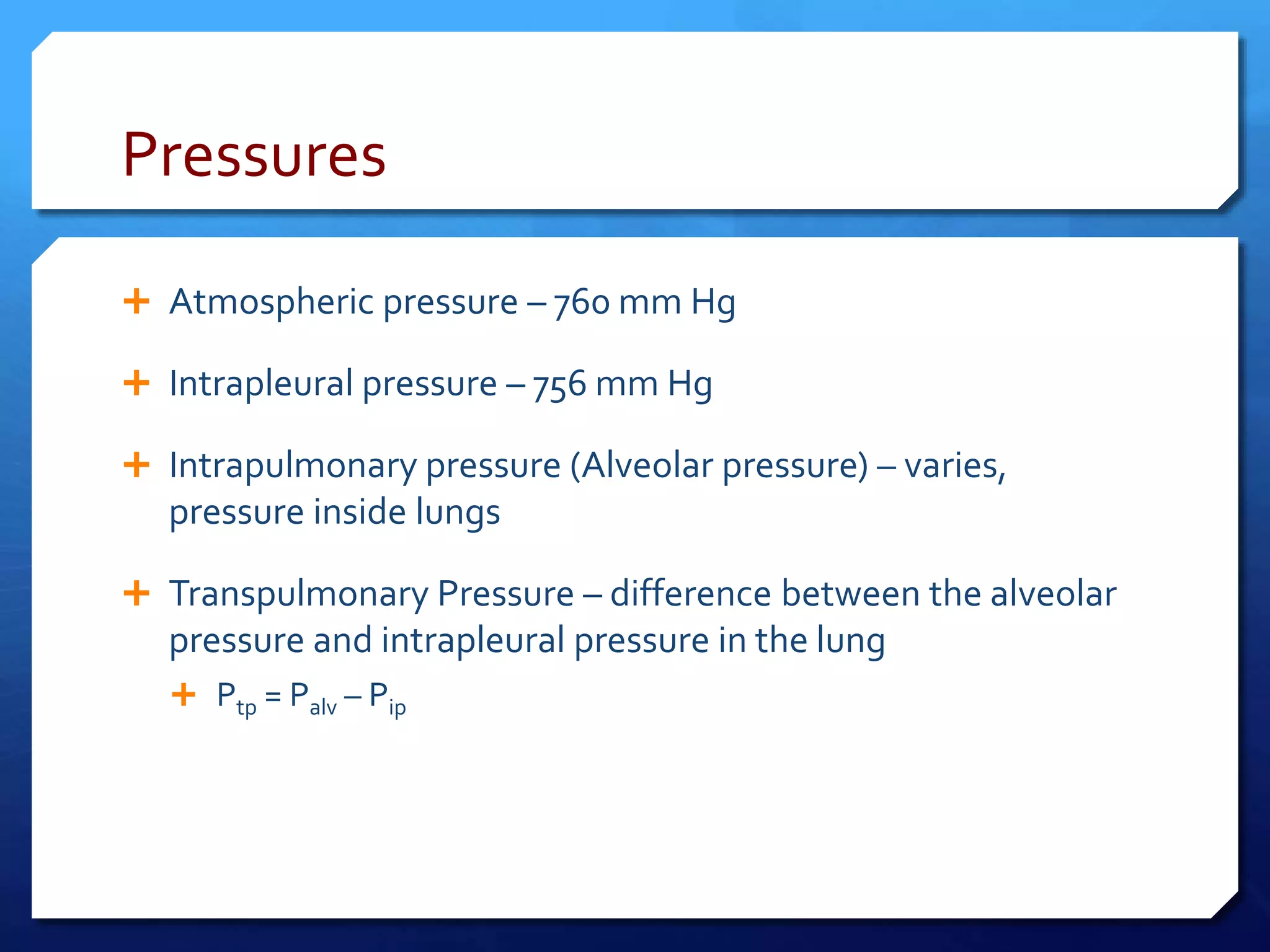
Pressures
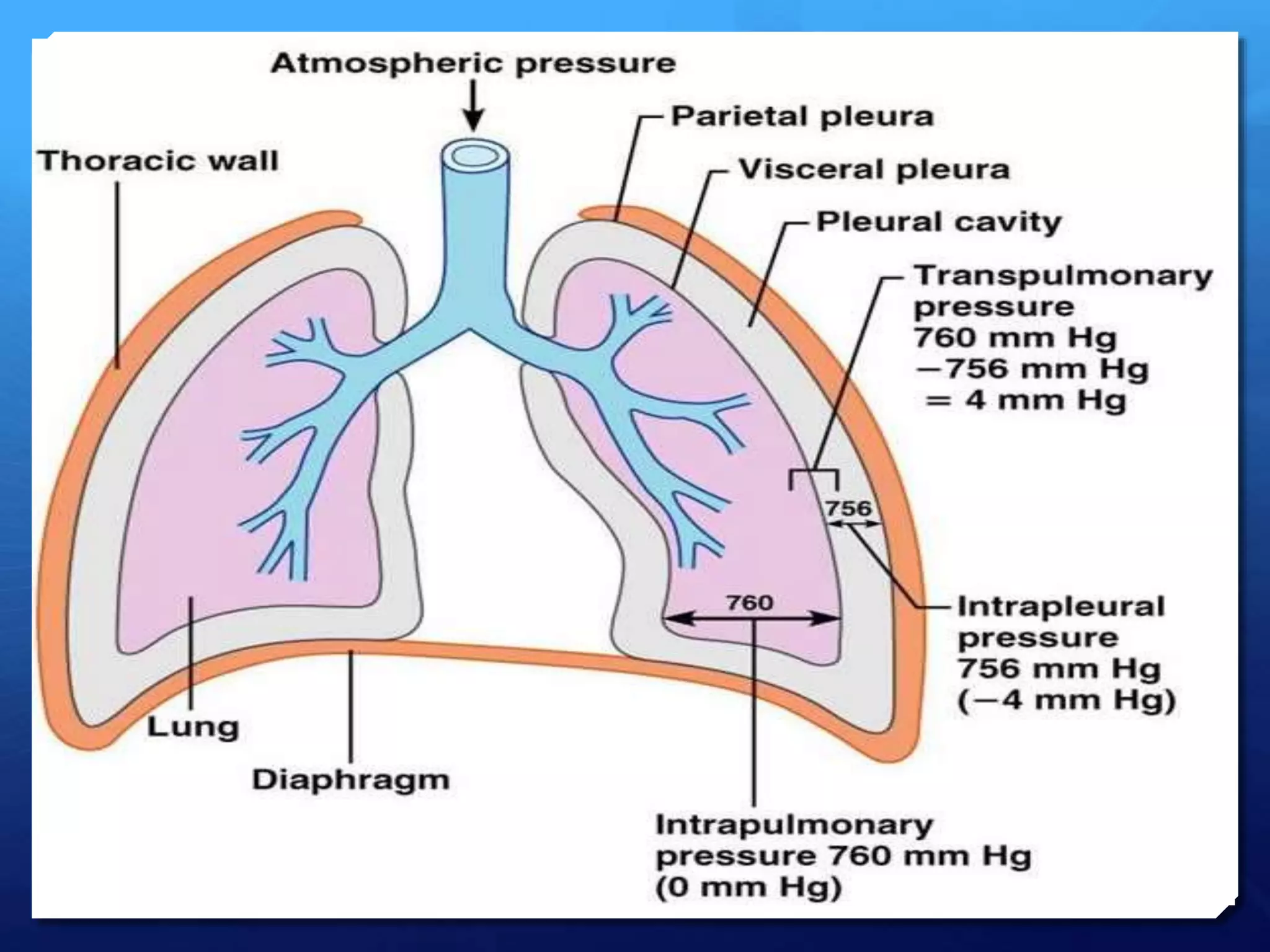
 Atmospheric pressure – 760 mm Hg
 Intrapleural pressure – 756 mm Hg
 Intrapulmonary pressure (Alveolar pressure) – varies,
pressure inside lungs
 Transpulmonary Pressure – difference between the alveolar
pressure and intrapleural pressure in the lung
 Ptp = Palv – Pip
Under Physiological Conditions
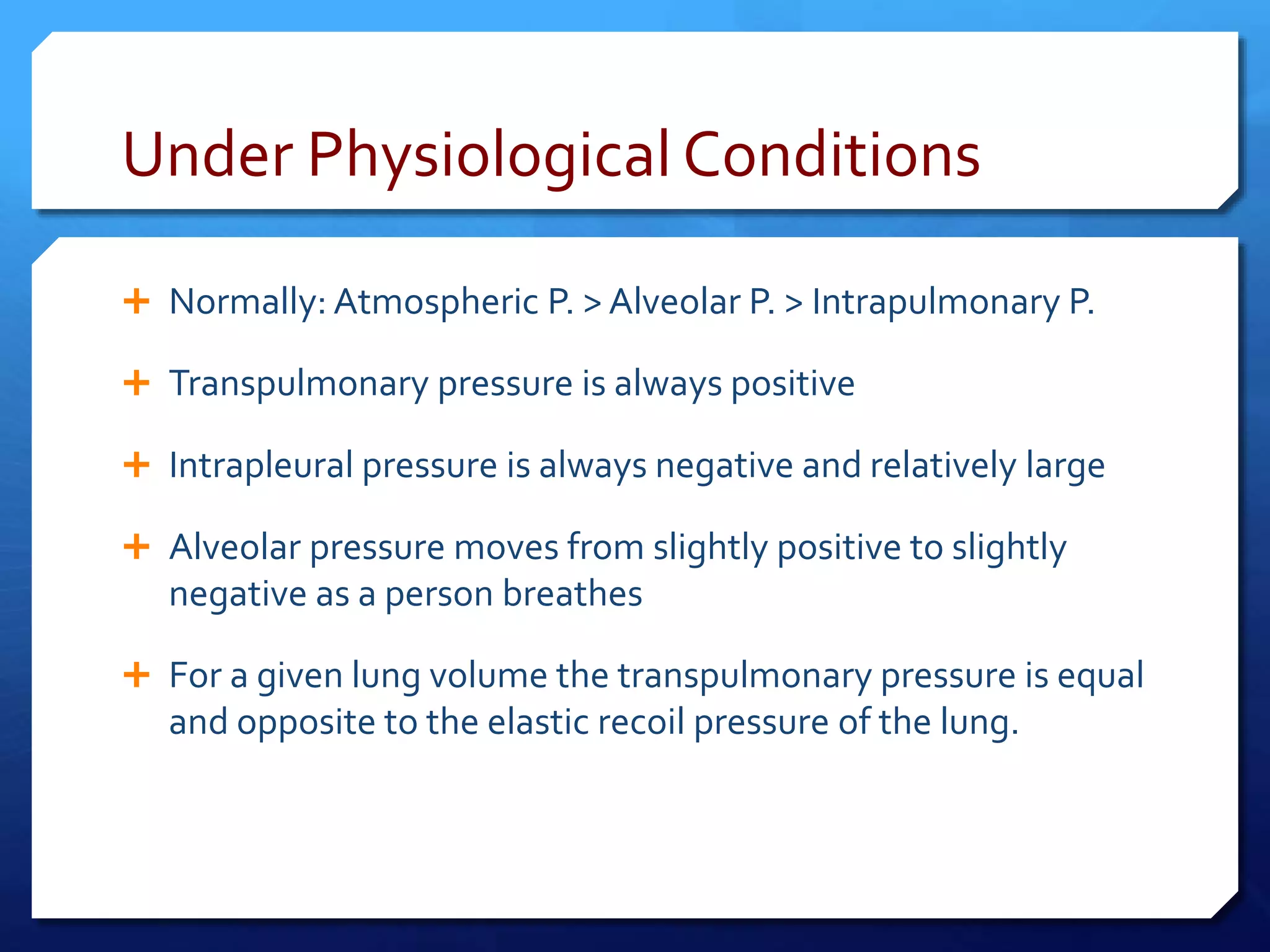
 Normally: Atmospheric P. > Alveolar P. > Intrapulmonary P.
 Transpulmonary pressure is always positive
 Intrapleural pressure is always negative and relatively large
 Alveolar pressure moves from slightly positive to slightly
negative as a person breathes
 For a given lung volume the transpulmonary pressure is equal
and opposite to the elastic recoil pressure of the lung.
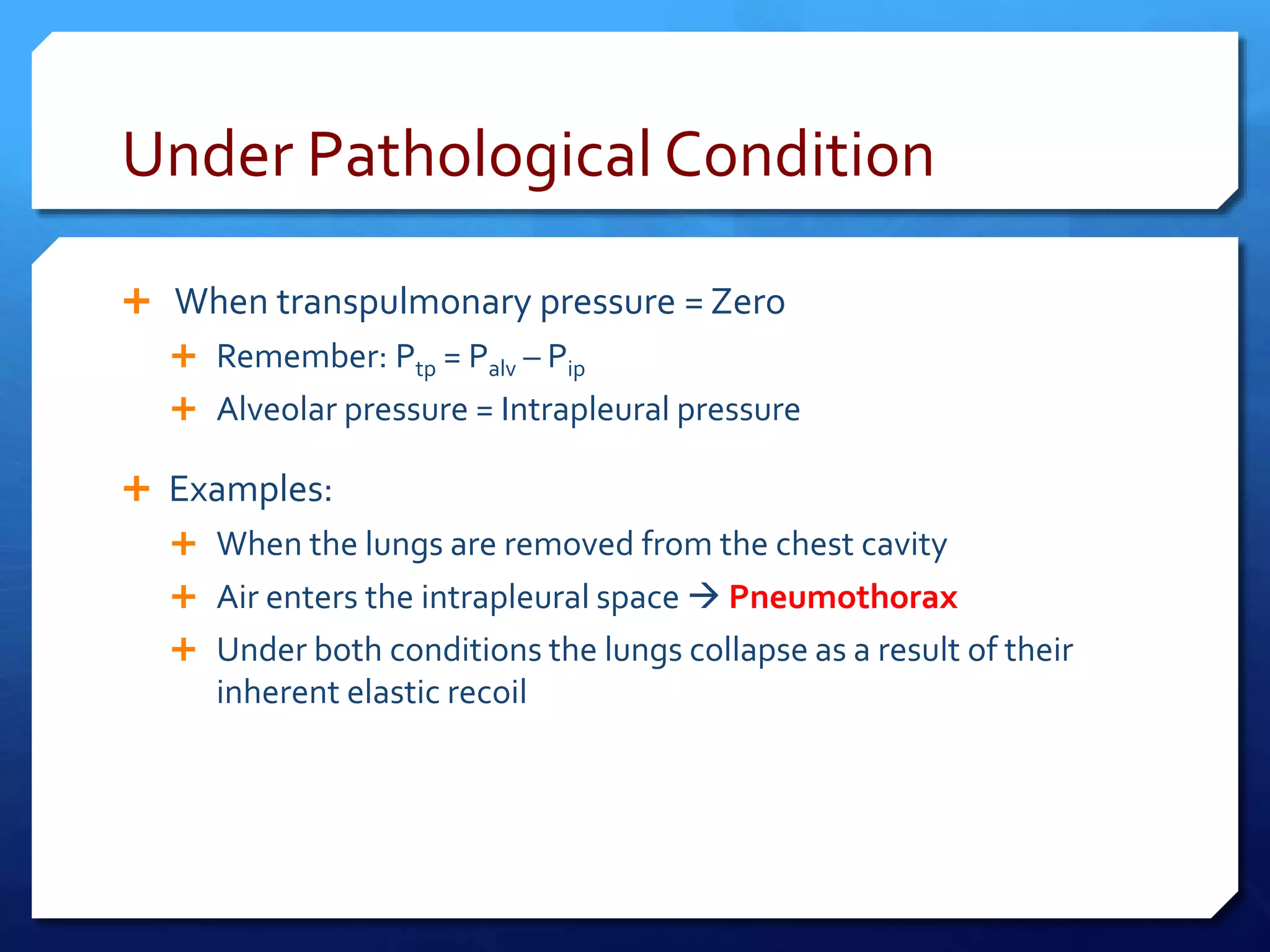
Under Pathological Condition
 When transpulmonary pressure = Zero
 Remember: Ptp = Palv – Pip
 Alveolar pressure = Intrapleural pressure
 Examples:
 When the lungs are removed from the chest cavity
 Air enters the intrapleural space  Pneumothorax
 Under both conditions the lungs collapse as a result of their
inherent elastic recoil
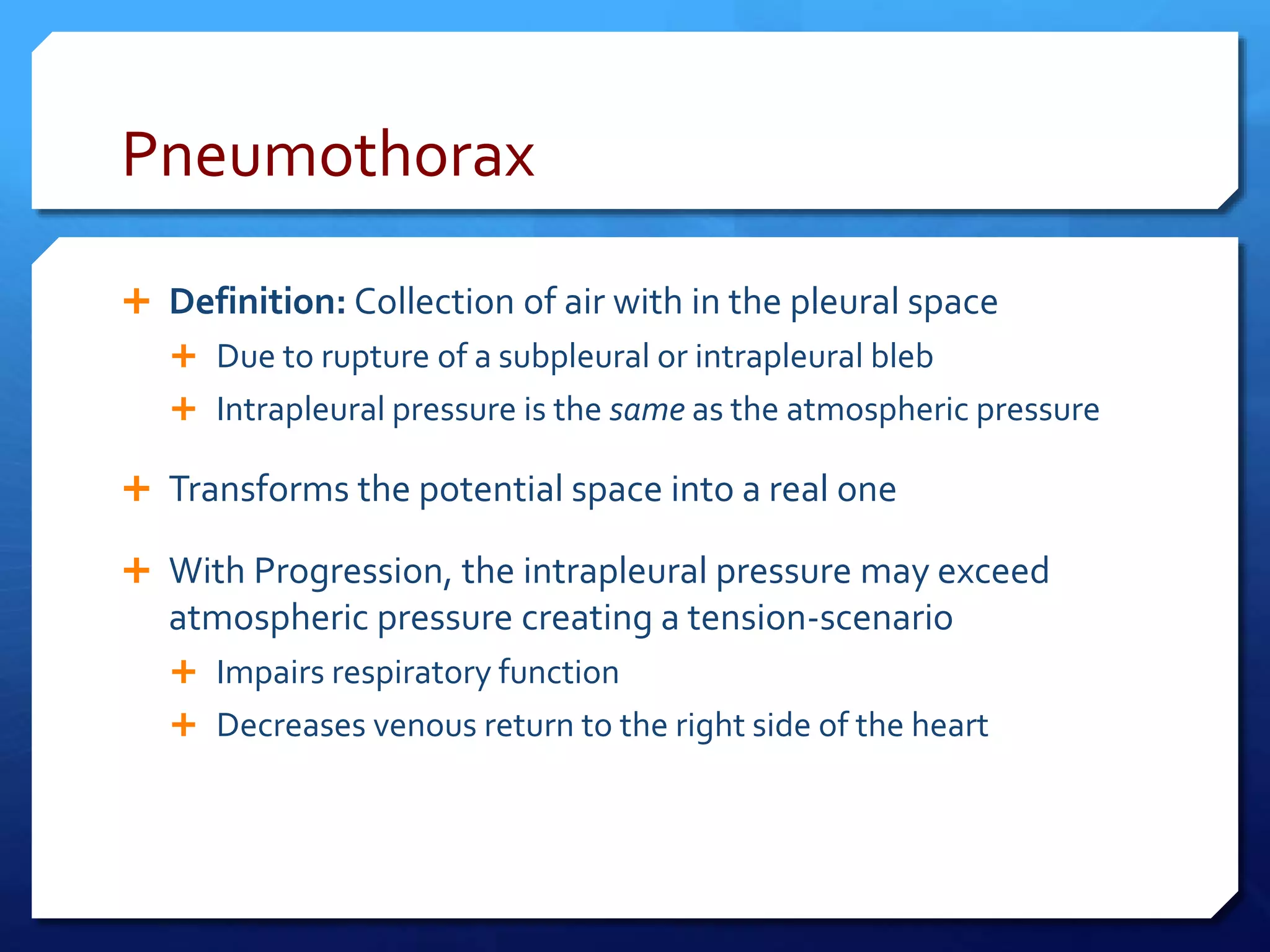
Pneumothorax
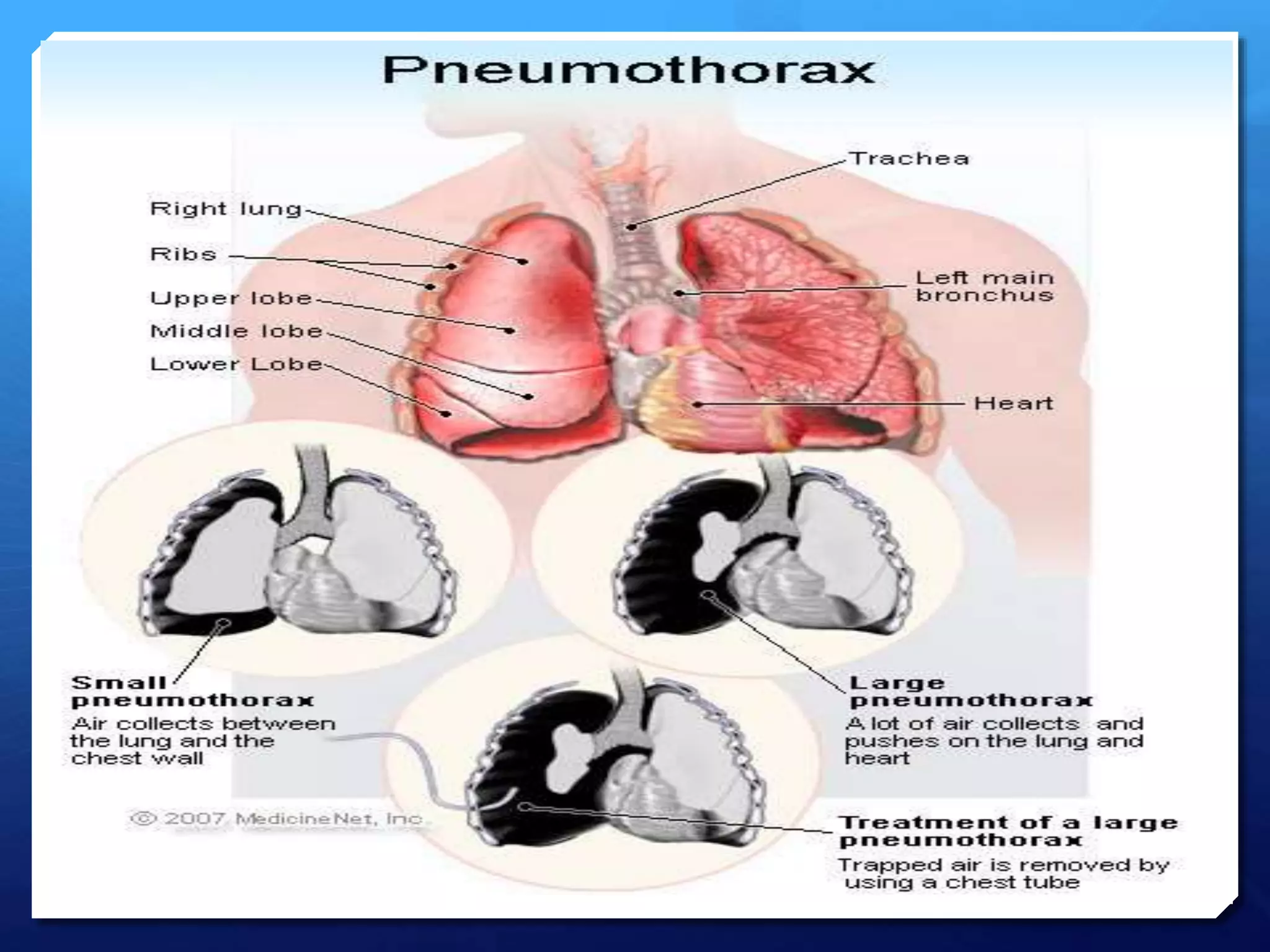
 Definition: Collection of air with in the pleural space
 Due to rupture of a subpleural or intrapleural bleb
 Intrapleural pressure is the same as the atmospheric pressure
 Transforms the potential space into a real one
 With Progression, the intrapleural pressure may exceed
atmospheric pressure creating a tension-scenario
 Impairs respiratory function
 Decreases venous return to the right side of the heart
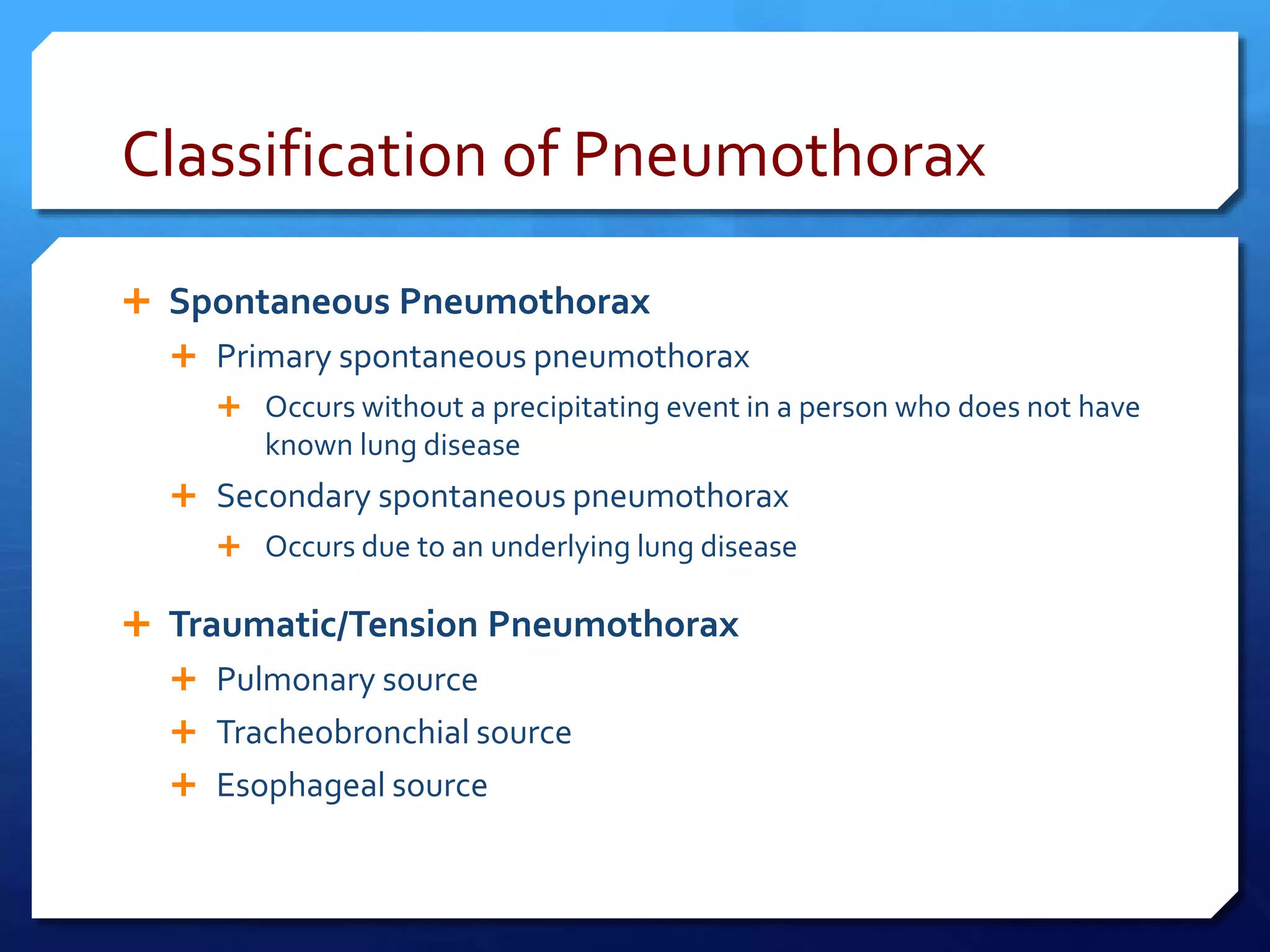
Classification of Pneumothorax
 Spontaneous Pneumothorax
 Primary spontaneous pneumothorax
 Occurs without a precipitating event in a person who does not have
known lung disease
 Secondary spontaneous pneumothorax
 Occurs due to an underlying lung disease
 Traumatic/Tension Pneumothorax
 Pulmonary source
 Tracheobronchial source
 Esophageal source
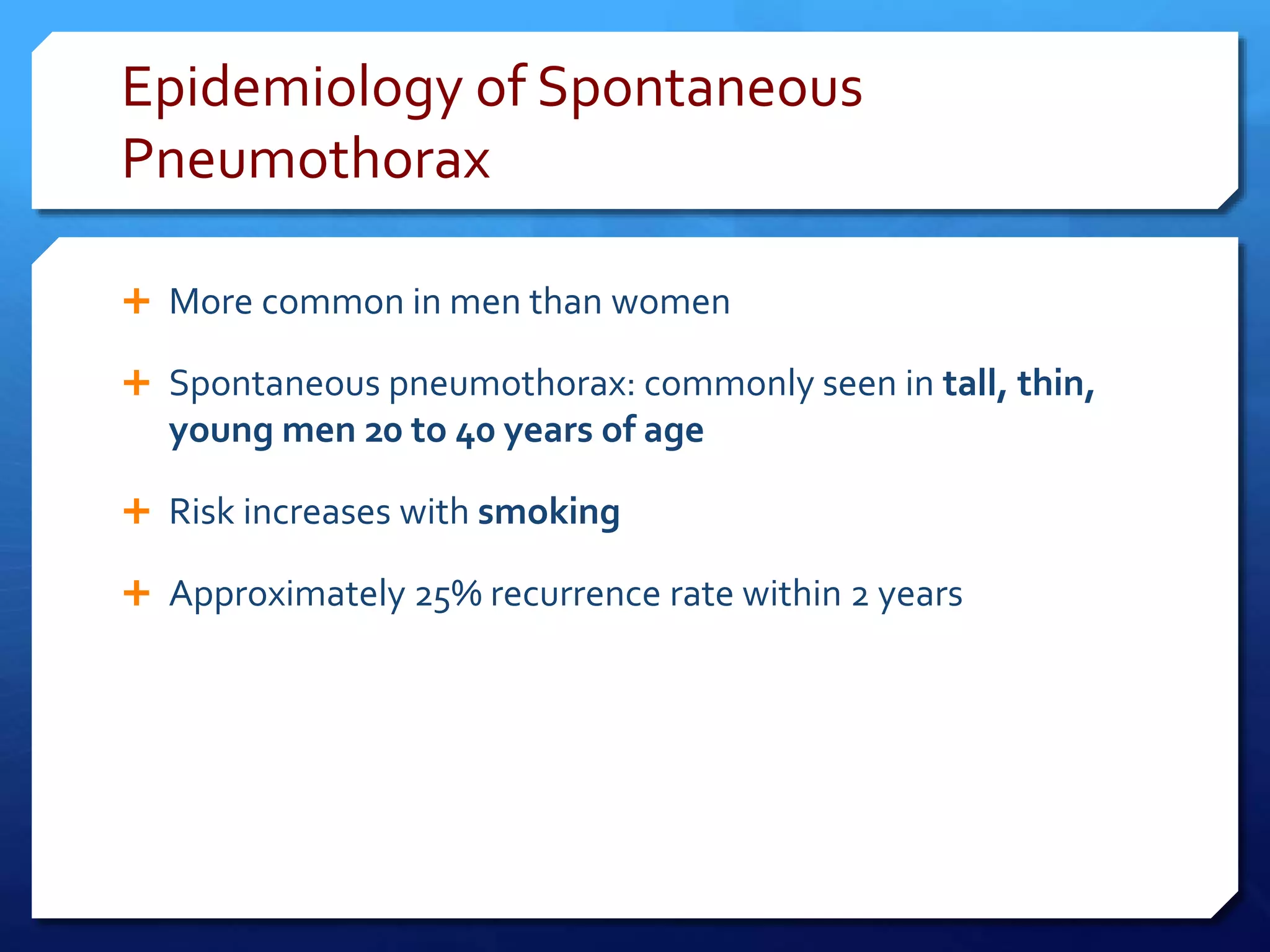
Epidemiology of Spontaneous
Pneumothorax
 More common in men than women
 Spontaneous pneumothorax: commonly seen in tall, thin,
young men 20 to 40 years of age
 Risk increases with smoking
 Approximately 25% recurrence rate within 2 years
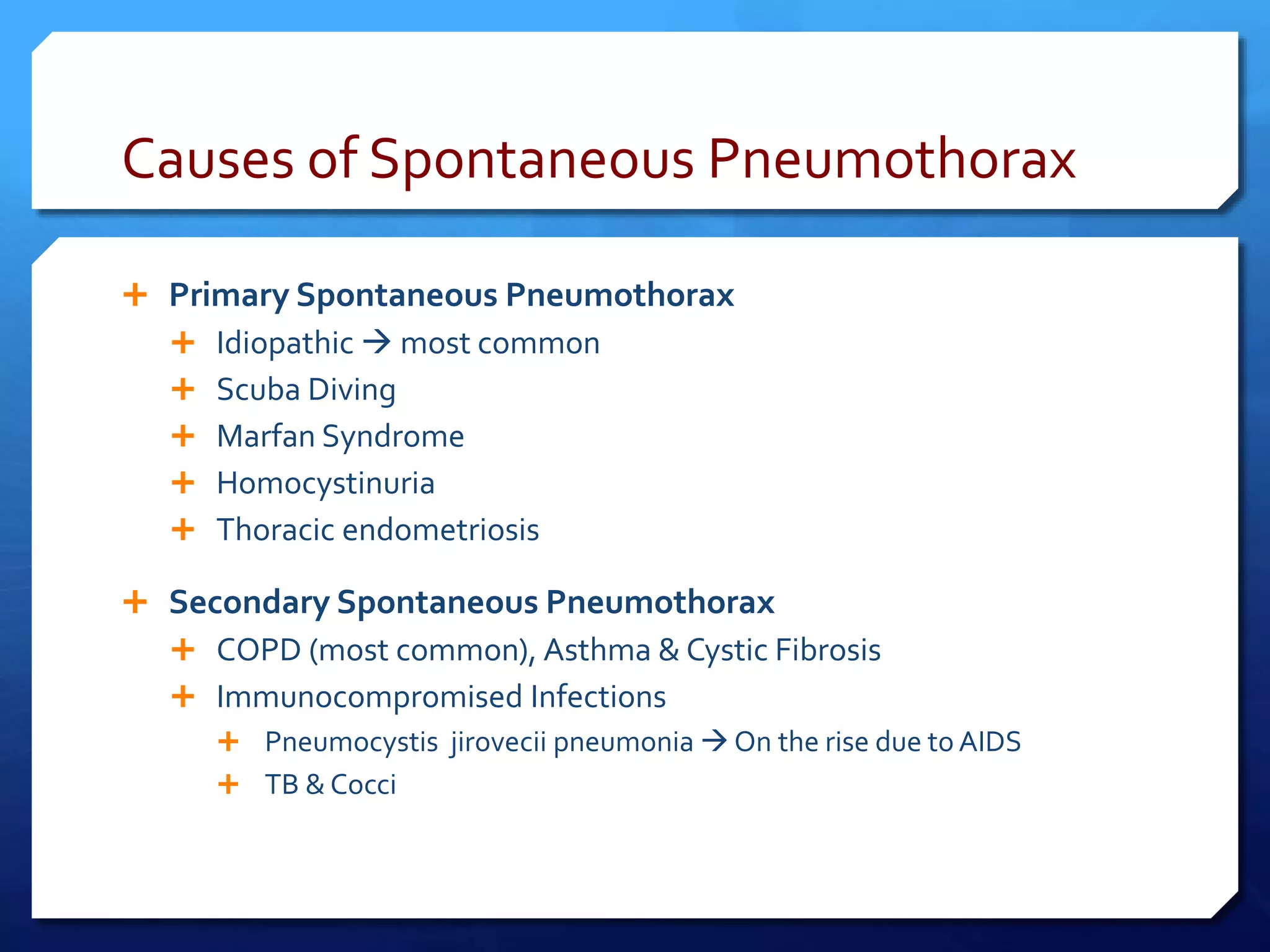
Causes of Spontaneous Pneumothorax
 Primary Spontaneous Pneumothorax
 Idiopathic  most common
 Scuba Diving
 Marfan Syndrome
 Homocystinuria
 Thoracic endometriosis
 Secondary Spontaneous Pneumothorax
 COPD (most common), Asthma & Cystic Fibrosis
 Immunocompromised Infections
 Pneumocystis jirovecii pneumonia  On the rise due to AIDS
 TB & Cocci
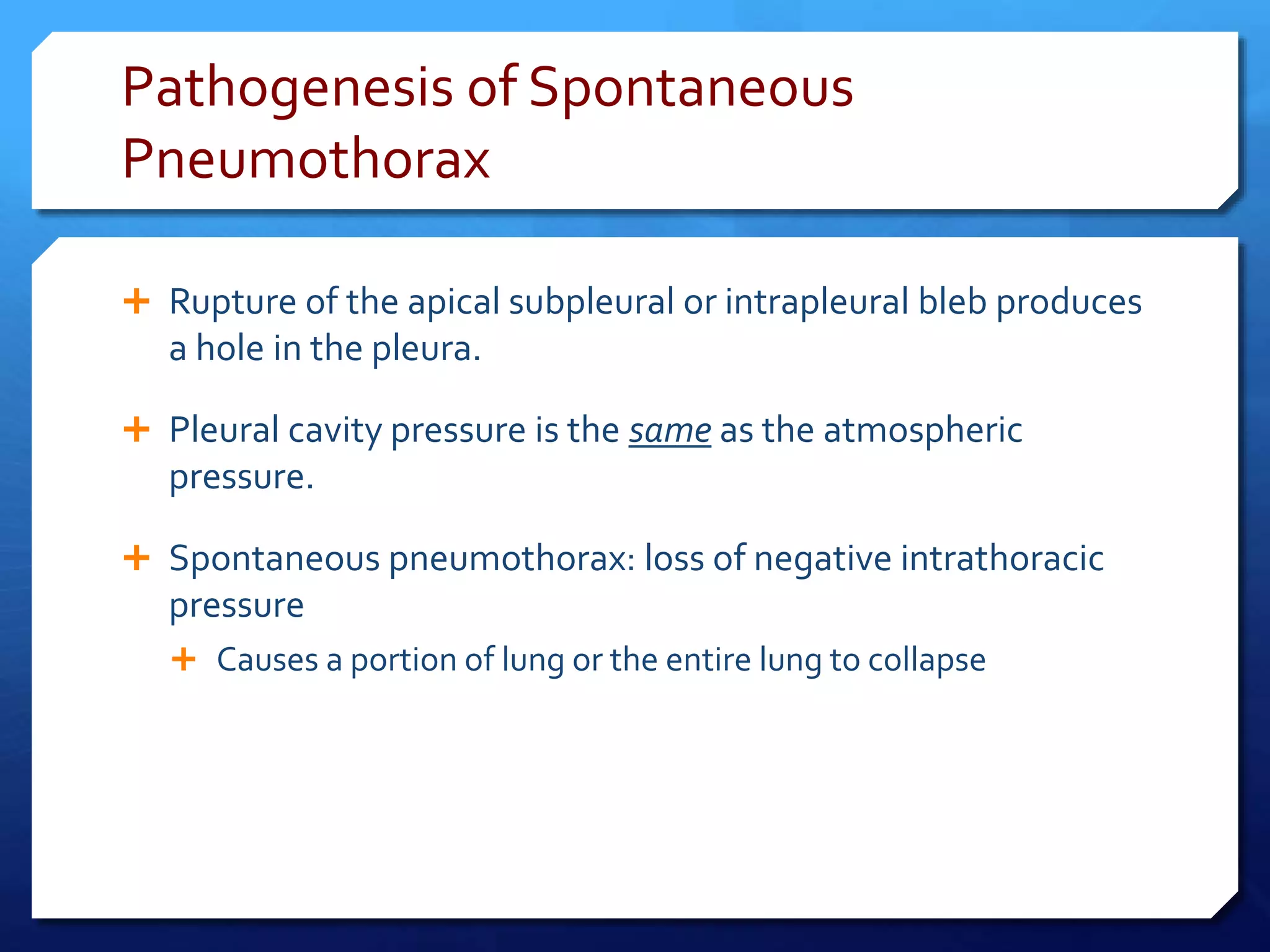
Pathogenesis of Spontaneous
Pneumothorax
 Rupture of the apical subpleural or intrapleural bleb produces
a hole in the pleura.
 Pleural cavity pressure is the same as the atmospheric
pressure.
 Spontaneous pneumothorax: loss of negative intrathoracic
pressure
 Causes a portion of lung or the entire lung to collapse
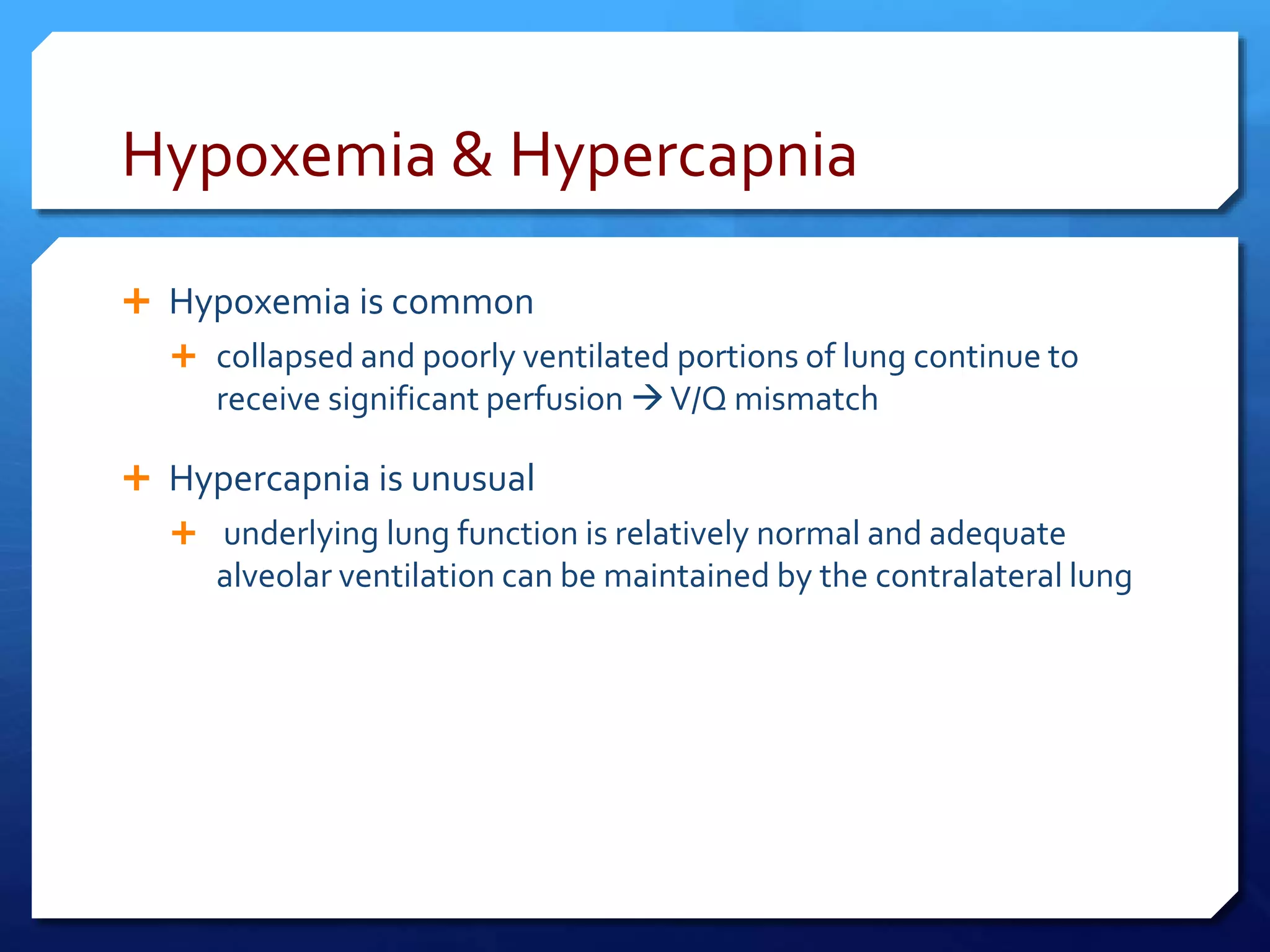
Hypoxemia & Hypercapnia
 Hypoxemia is common
 collapsed and poorly ventilated portions of lung continue to
receive significant perfusion V/Q mismatch
 Hypercapnia is unusual
 underlying lung function is relatively normal and adequate
alveolar ventilation can be maintained by the contralateral lung
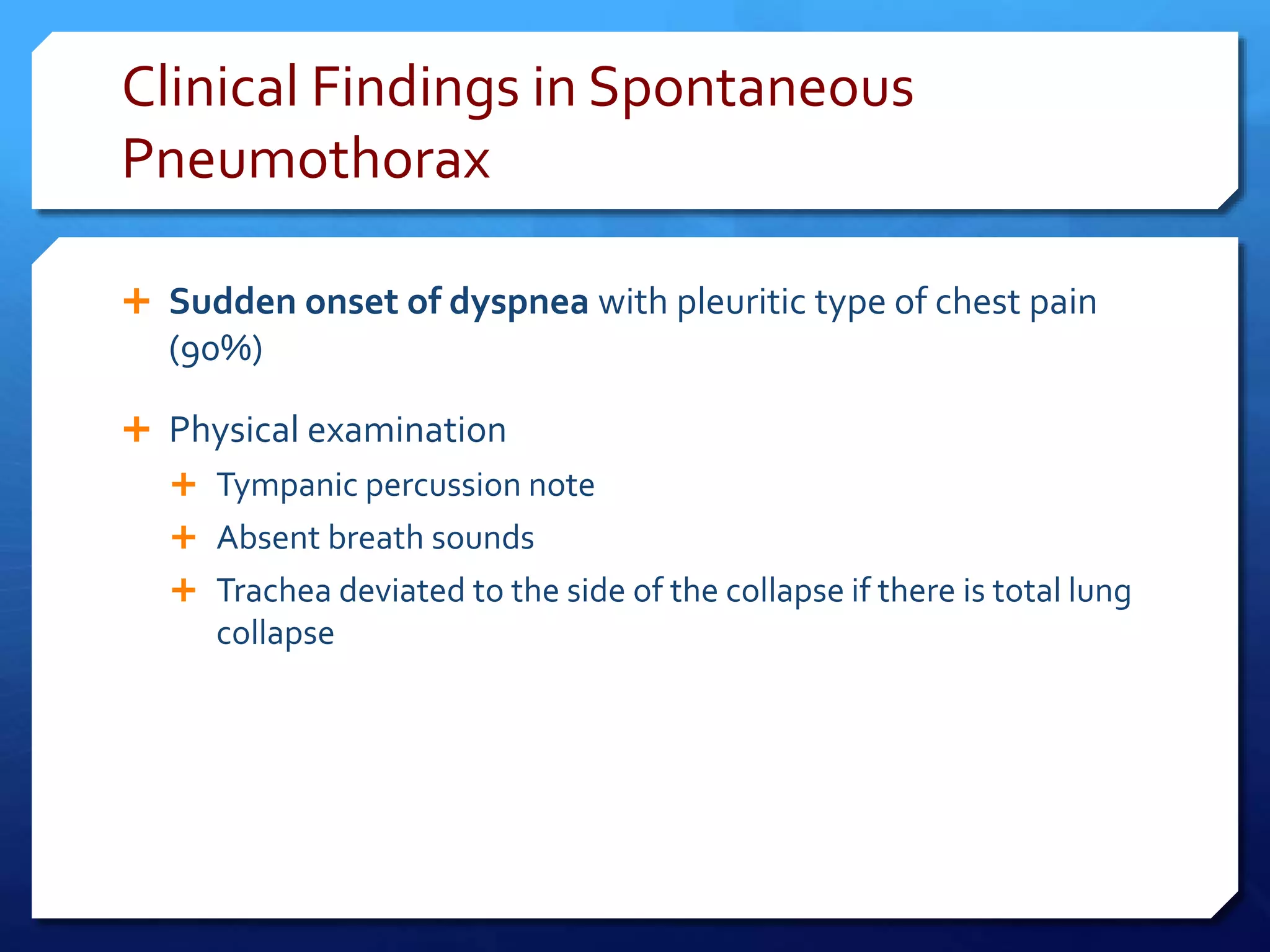
Clinical Findings in Spontaneous
Pneumothorax
 Sudden onset of dyspnea with pleuritic type of chest pain
(90%)
 Physical examination
 Tympanic percussion note
 Absent breath sounds
 Trachea deviated to the side of the collapse if there is total lung
collapse
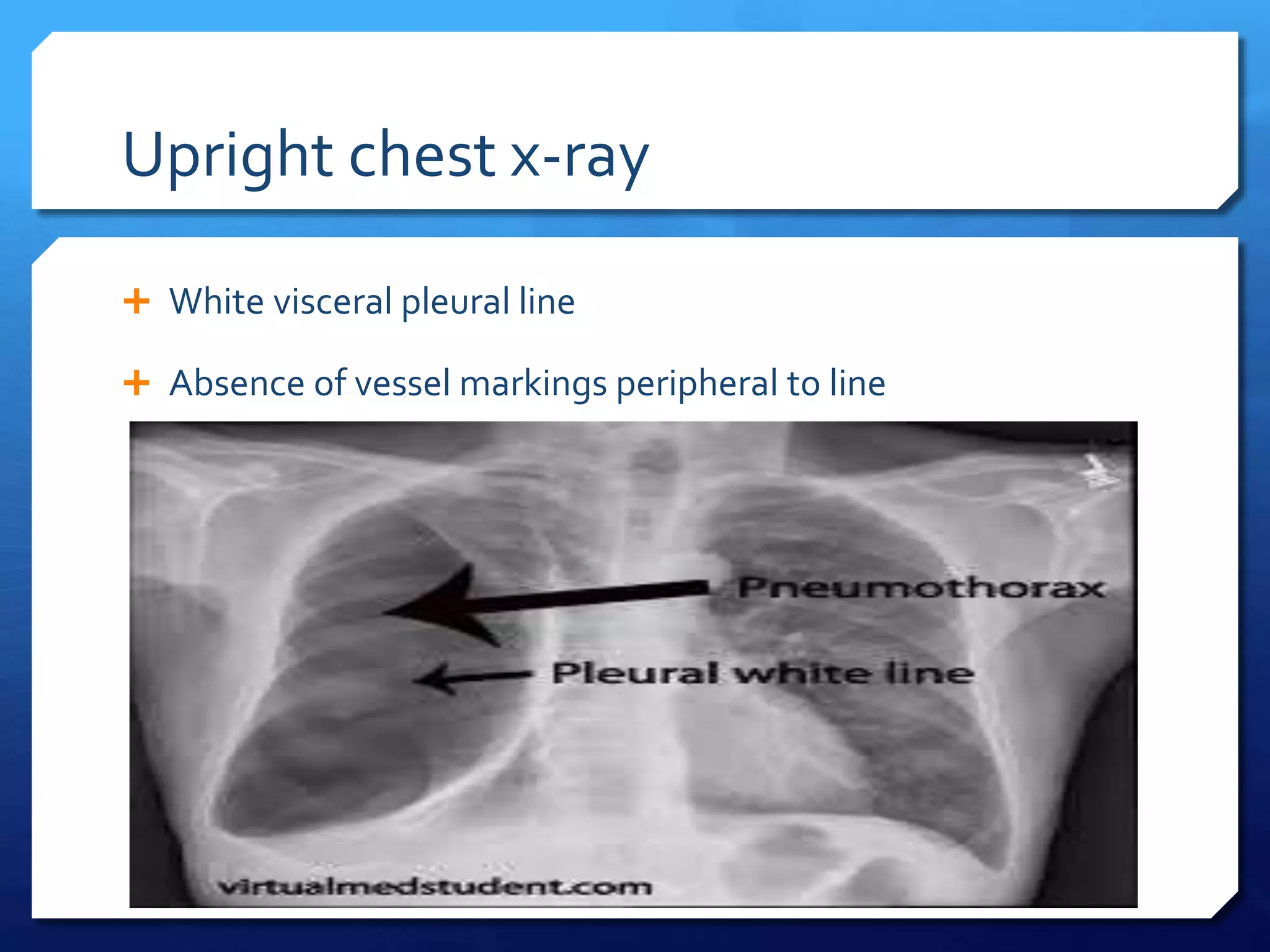
Upright chest x-ray
 White visceral pleural line
 Absence of vessel markings peripheral to line
Treatment of Spontaneous
Pneumothorax
 Observation alone if asymptomatic and pneumothorax < 15%
 One hundred percent oxygen administration
 Reduces partial pressure of nitrogen  increases rate of
pneumothorax absorption
 Chest tube insertion or thoracoscopy may be required.
 V.A.T.S. (Video AssistedThoracoscopic Surgery) is becoming the
standard
Tension Pneumothorax
 Definition: A tension pneumothorax is generally considered
to be present when a pneumothorax leads to significant
impairment of respiration and/or blood circulation
Causes ofTension Pneumothorax
 Penetrating trauma to the lungs (e.g., knife wound)  valve
type of pleural tear
 Rupture of tension pneumatocysts
Pathogenesis ofTension Pneumothorax
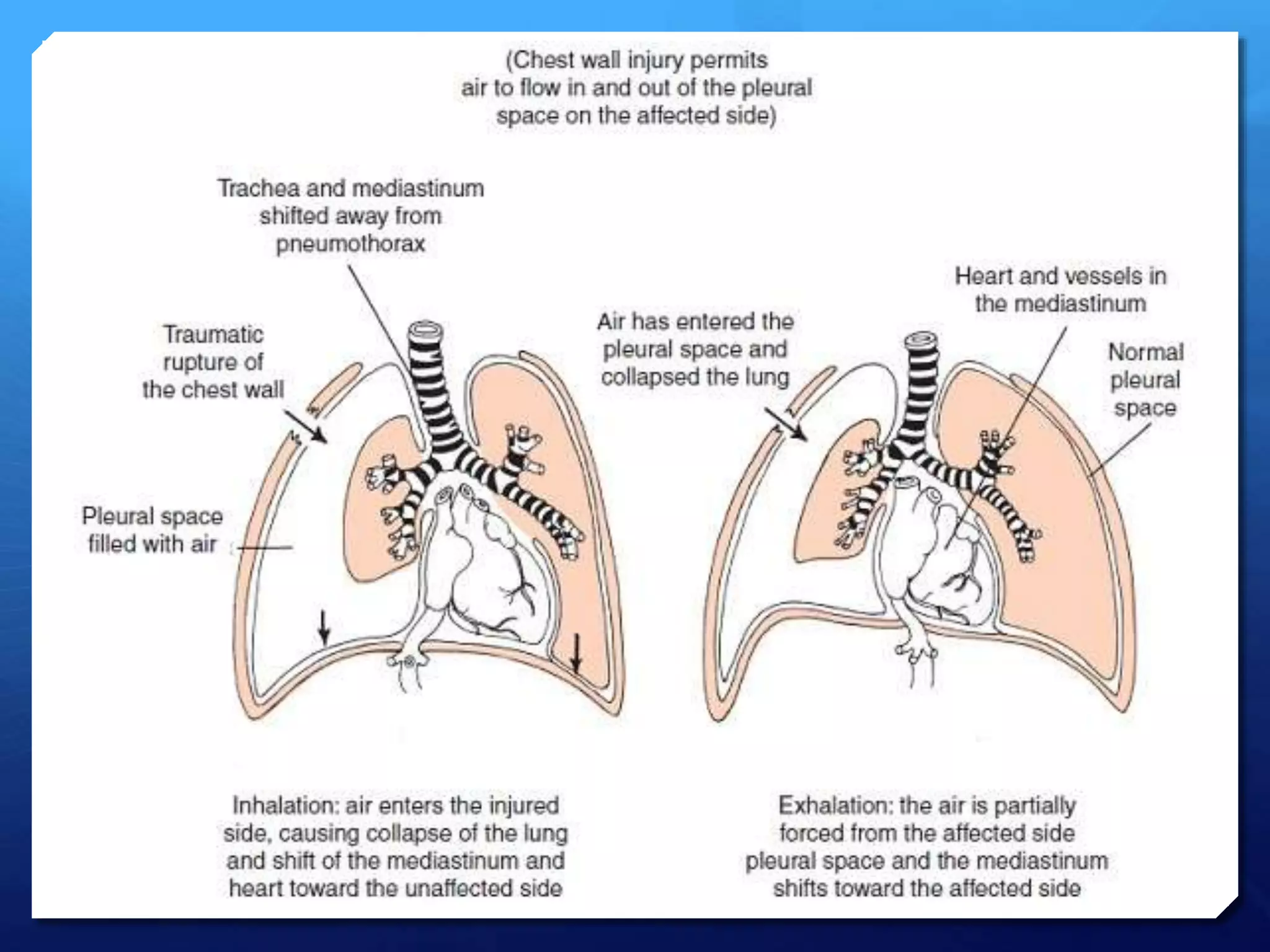
 Flap-like pleural tear (check valve) allows air into the pleural
cavity but prevents its exit.
 Similar in concept to filling a tire up with air
 Increased pleural cavity pressure
 Increase in pleural cavity pressure with each breath
 Produces compression atelectasis
 a condition in which a region of the lung cannot be ventilated as
a result of intrathoracic pressures that compress the alveoli in
that region
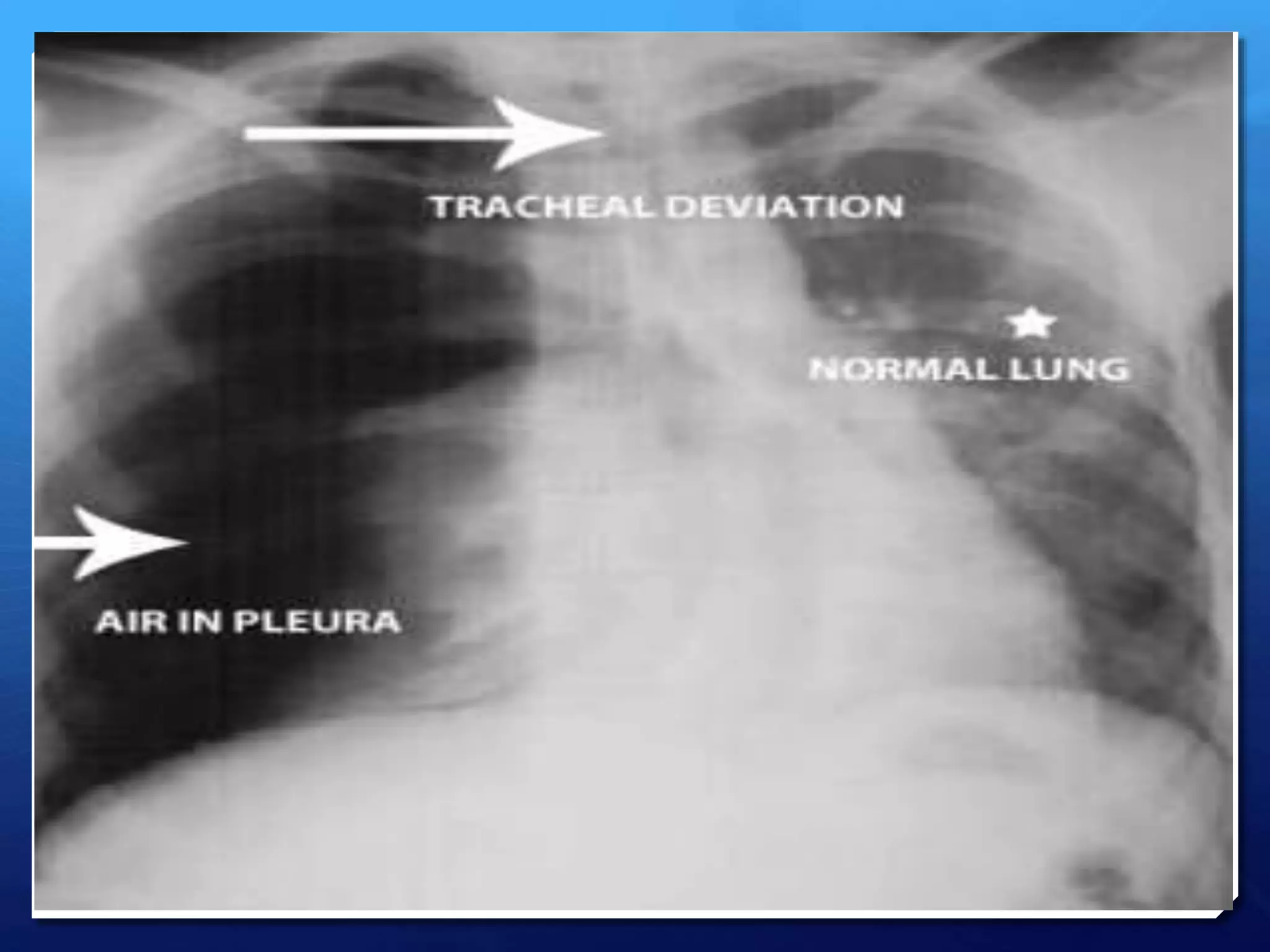
Clinical Findings ofTension
Pneumothorax
 Sudden onset of severe dyspnea and pleuritic chest pain
 Physical examination
 Tympanic percussion note and absent breath sounds
 Trachea and mediastinal structures deviate to contralateral side
if large tension pneumothorax
 Compromised venous return to the heart, if the
pneumothorax is located on the left side
 Due to obstruction of the venous return
Treatment ofTension Pneumothorax
 Relieve pressure first.
 Insert a needle into the second intercostal space on the
midclavicular line.
 Insert a chest tube.
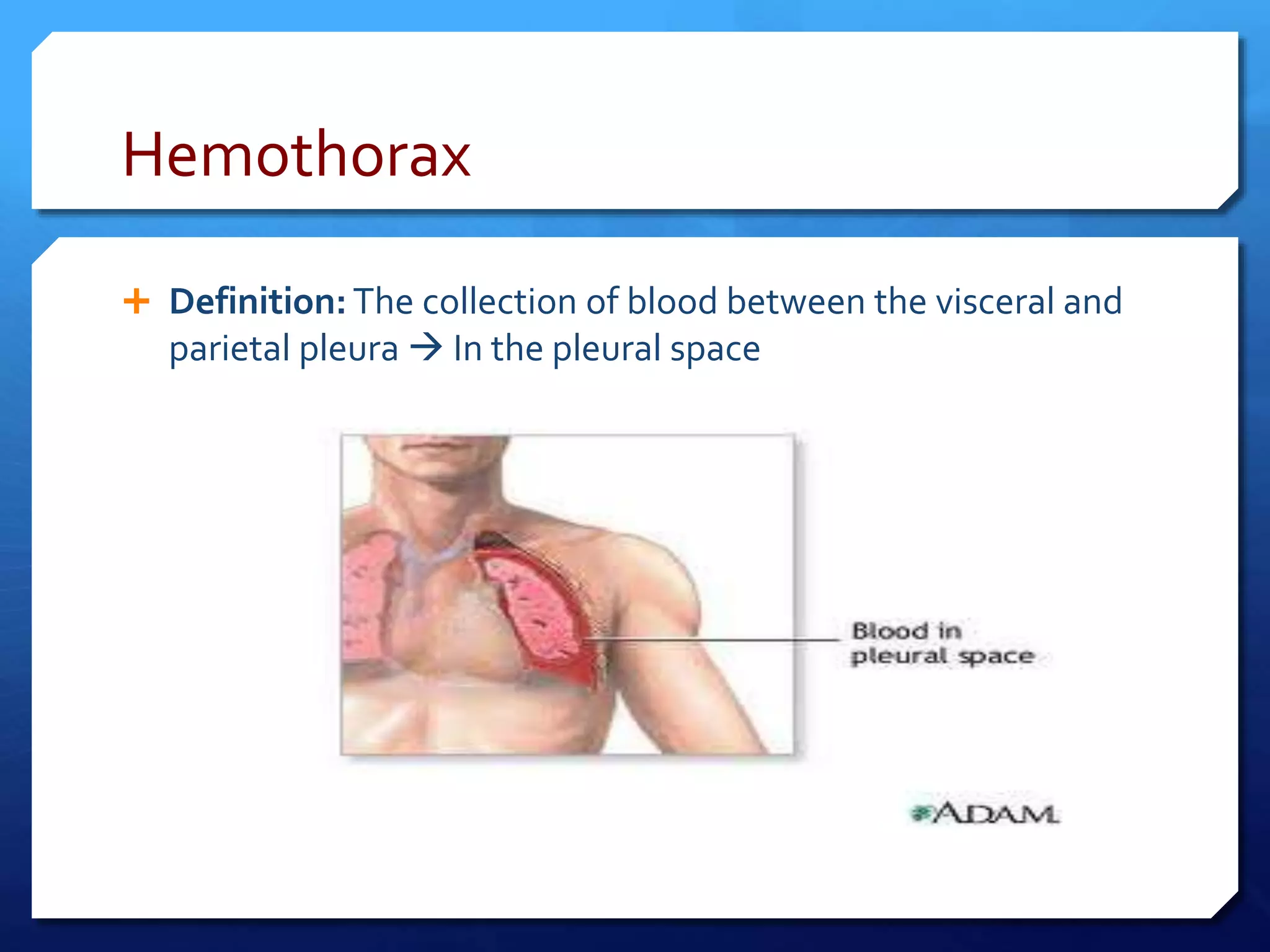
Hemothorax
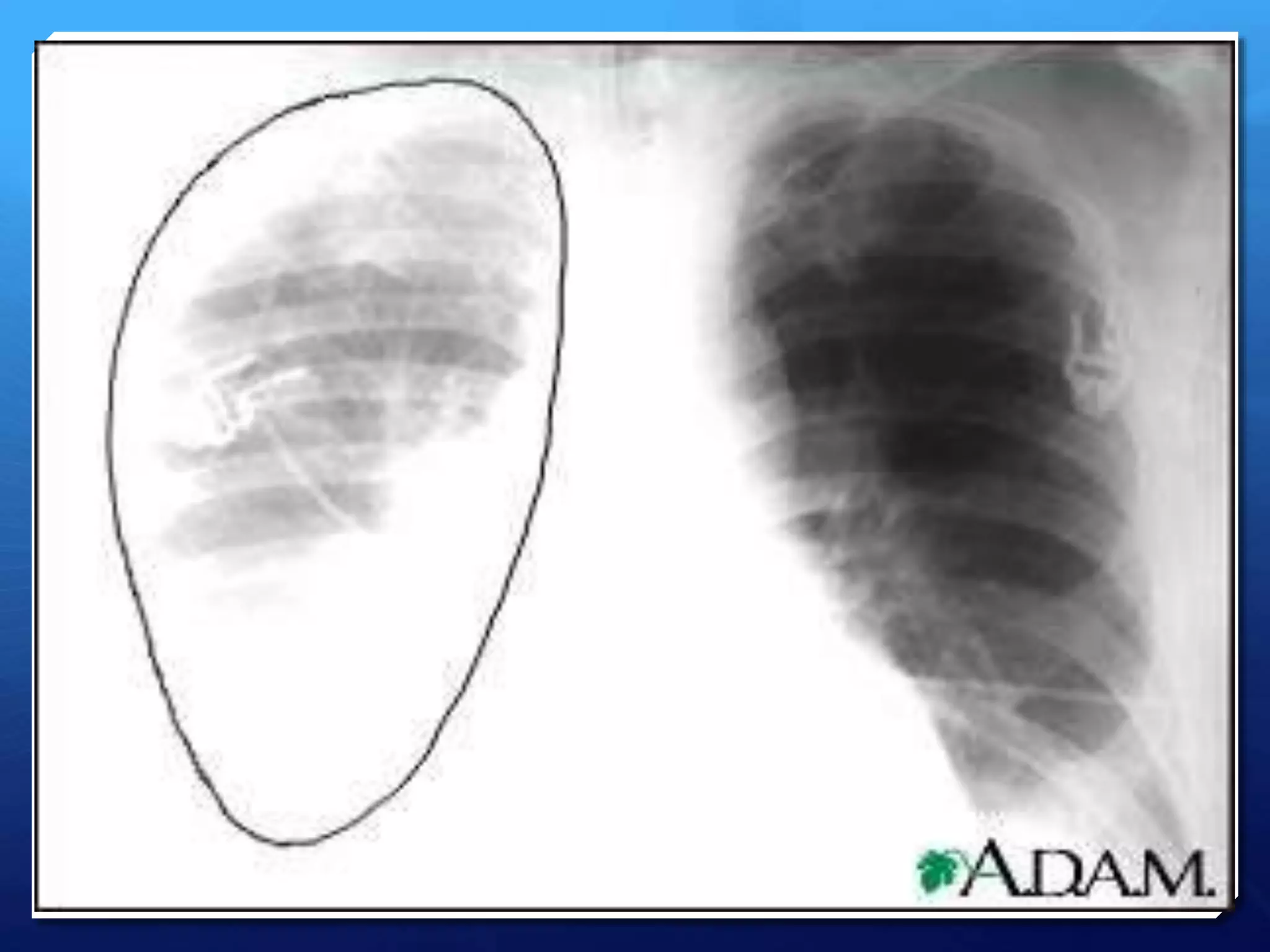
 Definition: The collection of blood between the visceral and
parietal pleura  In the pleural space
Causes of Hemothorax
 Pulmonary: Bullous Emphysema, PE, Infection,TB,AVM’s
 Pleural:Torn adhesions, Endometriosis
 Neoplastic: Primary, Metastatic (Melanoma)
 Blood Pathology:Thrombocytopenia, Hemophilia,
Anticoagulation medications (Heparin,Warfarin)
 Thoracic Pathology: Ruptured aorta
Pathogenesis of Hemothorax
 The accumulation of pleural blood forms a stable clot
 Overall ventilation & Oxygenation becomes impaired
 Mechanical compression of the lung parenchyma
 Mediastinal shift
 Flattening of the hemidiaphragm
Clinical Findings of Hemothorax
 Dyspnea
 Tachypnea
 Cyanosis  Due to loss of blood
 Hypotension  Due to loss of blood
 Tachycardia  Normal Response to hypotenstion
 Tracheal deviation to unaffected side
 Decrease or absent of breath sounds on the affected side
Treatment of Hemothorax
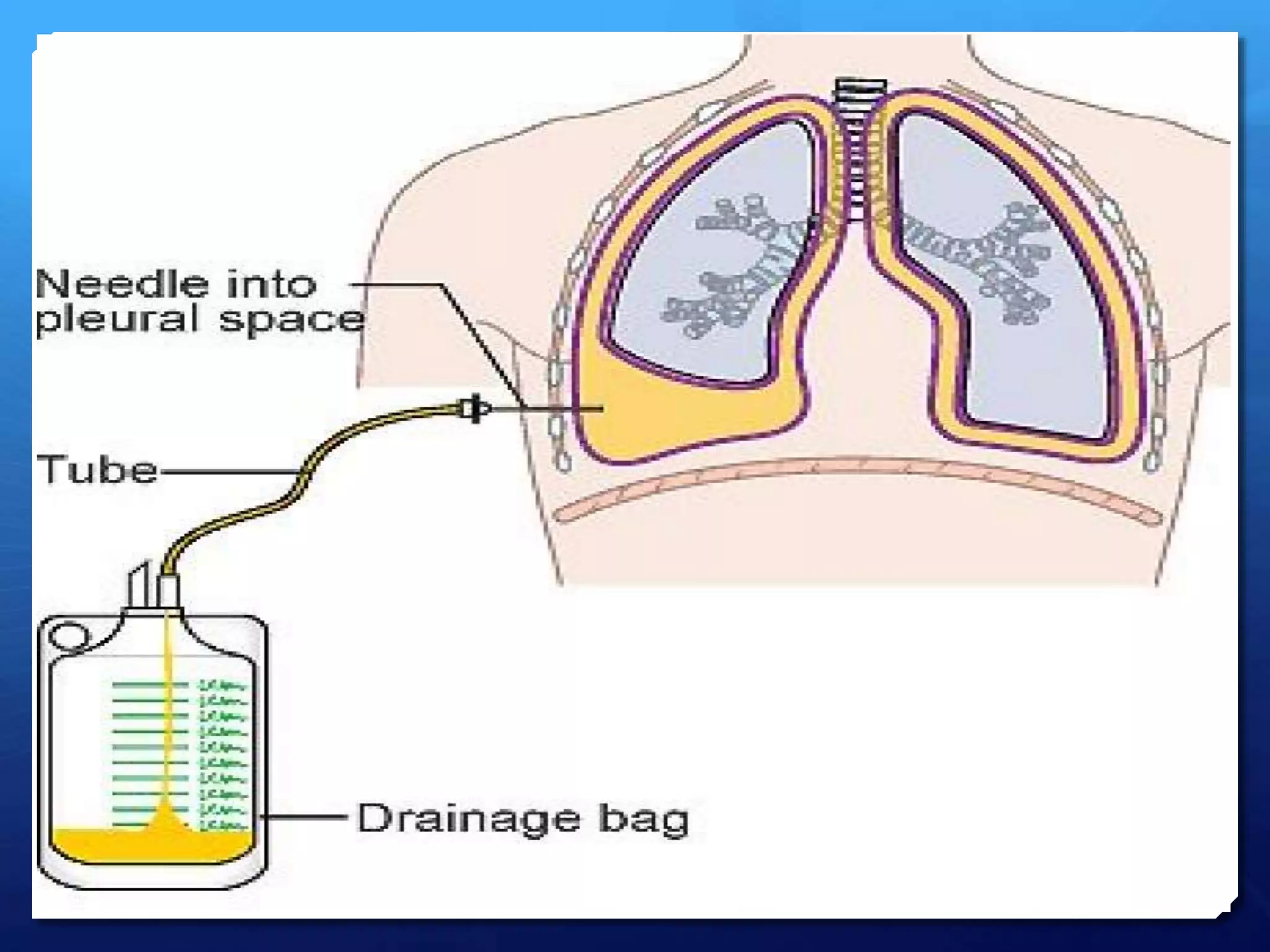
 Goal of treatment: To remove the pleural blood and allow
for complete lung re-expansion
 Thoracocentesis orThoracostomy  Remove blood
ThankYou
References:
 Light, RW. Primary Spontaneous Pneumothorax. In: UpToDate, Basow, DS (Ed: 19.3), UpToDate,
Waltham, MA, 2013.
 Light, RW. Secondary Spontaneous Pneumothorax. In: UpToDate, Basow, DS (Ed: 19.3),
UpToDate, Waltham, MA, 2013.
 MacDuffA, Arnold A, Harvey J, BTS Pleural Disease Guideline Group (December 2010).
"Management of spontaneous pneumothorax: BritishThoracic Society pleural disease guideline
2010". Thorax 65 (8): ii18–ii31
 Leigh-Smith S, HarrisT (January 2005). "Tension pneumothorax—time for a re-think?".
Emergency MedicineJournal 22 (1): 8–16. doi:10.1136/emj.2003.010421
 Misthos, P; Kakaris S, Sepsas E et al. (May 2004). "A prospective analysis of occult
pneumothorax, delayed pneumothorax and delayed hemothorax after minor blunt thoracic
trauma". European Journal of Cardio-thoracic Surgery 25 (5): 859–864.
doi:10.1016/j.ejcts.2004.01.044
 Rapid Review Pathology Revised Reprint:With STUDENTCONSULTOnlineAccess, 3e by Edward
F. Goljan MD (Apr 29, 2011)

Pneomothorax & hemothorax by Farshid Mokhberi

  • 1.
  • 2.
    PulmonaryVentilation  BOYLE’S LAW Gas pressure in closed container is inversely proportional to volume of container  Pressure differences and Air flow  From high to low gradient
  • 3.
    Pressures  Atmospheric pressure– 760 mm Hg  Intrapleural pressure – 756 mm Hg  Intrapulmonary pressure (Alveolar pressure) – varies, pressure inside lungs  Transpulmonary Pressure – difference between the alveolar pressure and intrapleural pressure in the lung  Ptp = Palv – Pip
  • 5.
    Under Physiological Conditions Normally: Atmospheric P. > Alveolar P. > Intrapulmonary P.  Transpulmonary pressure is always positive  Intrapleural pressure is always negative and relatively large  Alveolar pressure moves from slightly positive to slightly negative as a person breathes  For a given lung volume the transpulmonary pressure is equal and opposite to the elastic recoil pressure of the lung.
  • 6.
    Under Pathological Condition When transpulmonary pressure = Zero  Remember: Ptp = Palv – Pip  Alveolar pressure = Intrapleural pressure  Examples:  When the lungs are removed from the chest cavity  Air enters the intrapleural space  Pneumothorax  Under both conditions the lungs collapse as a result of their inherent elastic recoil
  • 7.
    Pneumothorax  Definition: Collectionof air with in the pleural space  Due to rupture of a subpleural or intrapleural bleb  Intrapleural pressure is the same as the atmospheric pressure  Transforms the potential space into a real one  With Progression, the intrapleural pressure may exceed atmospheric pressure creating a tension-scenario  Impairs respiratory function  Decreases venous return to the right side of the heart
  • 8.
    Classification of Pneumothorax Spontaneous Pneumothorax  Primary spontaneous pneumothorax  Occurs without a precipitating event in a person who does not have known lung disease  Secondary spontaneous pneumothorax  Occurs due to an underlying lung disease  Traumatic/Tension Pneumothorax  Pulmonary source  Tracheobronchial source  Esophageal source
  • 9.
    Epidemiology of Spontaneous Pneumothorax More common in men than women  Spontaneous pneumothorax: commonly seen in tall, thin, young men 20 to 40 years of age  Risk increases with smoking  Approximately 25% recurrence rate within 2 years
  • 10.
    Causes of SpontaneousPneumothorax  Primary Spontaneous Pneumothorax  Idiopathic  most common  Scuba Diving  Marfan Syndrome  Homocystinuria  Thoracic endometriosis  Secondary Spontaneous Pneumothorax  COPD (most common), Asthma & Cystic Fibrosis  Immunocompromised Infections  Pneumocystis jirovecii pneumonia  On the rise due to AIDS  TB & Cocci
  • 11.
    Pathogenesis of Spontaneous Pneumothorax Rupture of the apical subpleural or intrapleural bleb produces a hole in the pleura.  Pleural cavity pressure is the same as the atmospheric pressure.  Spontaneous pneumothorax: loss of negative intrathoracic pressure  Causes a portion of lung or the entire lung to collapse
  • 12.
    Hypoxemia & Hypercapnia Hypoxemia is common  collapsed and poorly ventilated portions of lung continue to receive significant perfusion V/Q mismatch  Hypercapnia is unusual  underlying lung function is relatively normal and adequate alveolar ventilation can be maintained by the contralateral lung
  • 13.
    Clinical Findings inSpontaneous Pneumothorax  Sudden onset of dyspnea with pleuritic type of chest pain (90%)  Physical examination  Tympanic percussion note  Absent breath sounds  Trachea deviated to the side of the collapse if there is total lung collapse
  • 14.
    Upright chest x-ray White visceral pleural line  Absence of vessel markings peripheral to line
  • 15.
    Treatment of Spontaneous Pneumothorax Observation alone if asymptomatic and pneumothorax < 15%  One hundred percent oxygen administration  Reduces partial pressure of nitrogen  increases rate of pneumothorax absorption  Chest tube insertion or thoracoscopy may be required.  V.A.T.S. (Video AssistedThoracoscopic Surgery) is becoming the standard
  • 17.
    Tension Pneumothorax  Definition:A tension pneumothorax is generally considered to be present when a pneumothorax leads to significant impairment of respiration and/or blood circulation
  • 18.
    Causes ofTension Pneumothorax Penetrating trauma to the lungs (e.g., knife wound)  valve type of pleural tear  Rupture of tension pneumatocysts
  • 19.
    Pathogenesis ofTension Pneumothorax Flap-like pleural tear (check valve) allows air into the pleural cavity but prevents its exit.  Similar in concept to filling a tire up with air  Increased pleural cavity pressure  Increase in pleural cavity pressure with each breath  Produces compression atelectasis  a condition in which a region of the lung cannot be ventilated as a result of intrathoracic pressures that compress the alveoli in that region
  • 20.
    Clinical Findings ofTension Pneumothorax Sudden onset of severe dyspnea and pleuritic chest pain  Physical examination  Tympanic percussion note and absent breath sounds  Trachea and mediastinal structures deviate to contralateral side if large tension pneumothorax  Compromised venous return to the heart, if the pneumothorax is located on the left side  Due to obstruction of the venous return
  • 23.
    Treatment ofTension Pneumothorax Relieve pressure first.  Insert a needle into the second intercostal space on the midclavicular line.  Insert a chest tube.
  • 24.
    Hemothorax  Definition: Thecollection of blood between the visceral and parietal pleura  In the pleural space
  • 25.
    Causes of Hemothorax Pulmonary: Bullous Emphysema, PE, Infection,TB,AVM’s  Pleural:Torn adhesions, Endometriosis  Neoplastic: Primary, Metastatic (Melanoma)  Blood Pathology:Thrombocytopenia, Hemophilia, Anticoagulation medications (Heparin,Warfarin)  Thoracic Pathology: Ruptured aorta
  • 26.
    Pathogenesis of Hemothorax The accumulation of pleural blood forms a stable clot  Overall ventilation & Oxygenation becomes impaired  Mechanical compression of the lung parenchyma  Mediastinal shift  Flattening of the hemidiaphragm
  • 27.
    Clinical Findings ofHemothorax  Dyspnea  Tachypnea  Cyanosis  Due to loss of blood  Hypotension  Due to loss of blood  Tachycardia  Normal Response to hypotenstion  Tracheal deviation to unaffected side  Decrease or absent of breath sounds on the affected side
  • 29.
    Treatment of Hemothorax Goal of treatment: To remove the pleural blood and allow for complete lung re-expansion  Thoracocentesis orThoracostomy  Remove blood
  • 31.
  • 32.
    References:  Light, RW.Primary Spontaneous Pneumothorax. In: UpToDate, Basow, DS (Ed: 19.3), UpToDate, Waltham, MA, 2013.  Light, RW. Secondary Spontaneous Pneumothorax. In: UpToDate, Basow, DS (Ed: 19.3), UpToDate, Waltham, MA, 2013.  MacDuffA, Arnold A, Harvey J, BTS Pleural Disease Guideline Group (December 2010). "Management of spontaneous pneumothorax: BritishThoracic Society pleural disease guideline 2010". Thorax 65 (8): ii18–ii31  Leigh-Smith S, HarrisT (January 2005). "Tension pneumothorax—time for a re-think?". Emergency MedicineJournal 22 (1): 8–16. doi:10.1136/emj.2003.010421  Misthos, P; Kakaris S, Sepsas E et al. (May 2004). "A prospective analysis of occult pneumothorax, delayed pneumothorax and delayed hemothorax after minor blunt thoracic trauma". European Journal of Cardio-thoracic Surgery 25 (5): 859–864. doi:10.1016/j.ejcts.2004.01.044  Rapid Review Pathology Revised Reprint:With STUDENTCONSULTOnlineAccess, 3e by Edward F. Goljan MD (Apr 29, 2011)