Classifying organisms

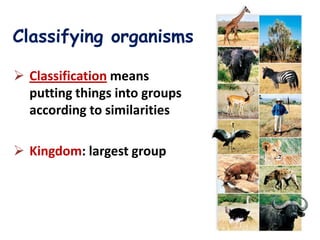
 Classification means
  putting things into groups
  according to similarities

 Kingdom: largest group
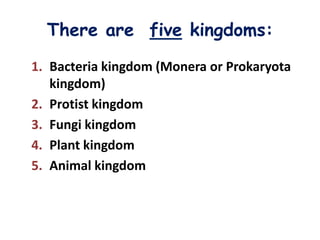
There are five kingdoms:
1. Bacteria kingdom (Monera or Prokaryota
   kingdom)
2. Protist kingdom
3. Fungi kingdom
4. Plant kingdom
5. Animal kingdom
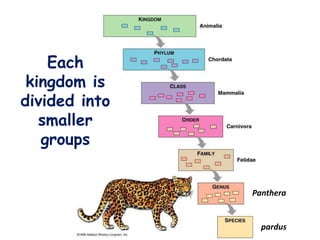
Each
 kingdom is
divided into
   smaller
   groups


               Panthera


                 pardus
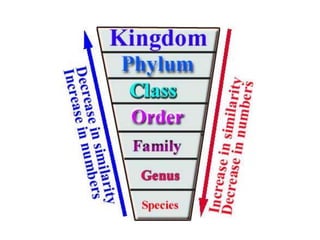
 Species – organisms that look alike and
  successfully interbreed

 Genus – A group of similar species which that
  have similar features and are closely related

 Family – A group of similar genera

 Order – A group of similar families

 Class – A group of similar orders

 Phylum – A group of similar classes

 Kingdom – A group of similar phyla
Carolus Linnaeus invented a system
    to name organisms in 1735

 was a Swedish scientist
Each name consists of:
 TWO parts:
   the first part of the name is the genus
   the second is the species

 this method of naming organisms is called
  binomial nomenclature

 the names are written in:
       Latin or
       have Latin endings
Examples of scientific names:
 human being :
    Homo sapiens
    genus     species


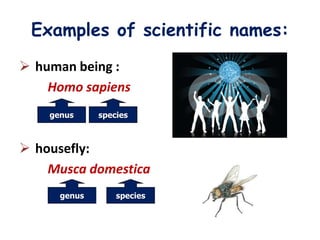
 housefly:
    Musca domestica
      genus       species
Binomial Nomenclature - Rules
1. First letter of first word (genus) is
   always capitalised
2. First letter of second word (species) is
   not capitalised
3. Both words are written in italicis or
   both words are underlined
   Homo sapiens           Homo sapiens

DO NOT underline space between words!!!
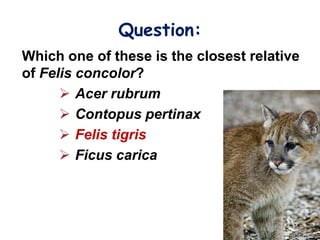
Question:
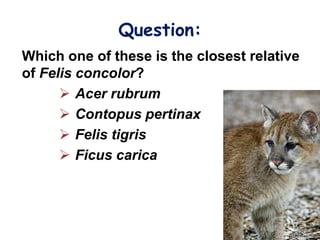
Which one of these is the closest relative
of Felis concolor?
       Acer rubrum
       Contopus pertinax
       Felis tigris
       Ficus carica
Question:
Which one of these is the closest relative
of Felis concolor?
       Acer rubrum
       Contopus pertinax
       Felis tigris
       Ficus carica
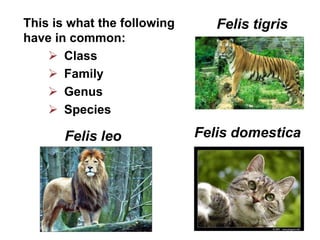
This is what the following      Felis tigris
have in common:
     Class
     Family
     Genus
     Species

       Felis leo             Felis domestica
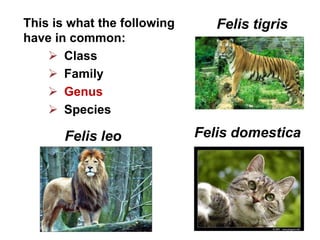
This is what the following      Felis tigris
have in common:
     Class
     Family
     Genus
     Species

       Felis leo             Felis domestica
The importance of writing scientific
             names:
Common names vary from:
  region to region
  language to language

Problem with this is:
  it is hard to know what people are
              talking about.
The importance
     of writing
 scientific names:
  This is a reindeer.

                    This is a caribou.


Caribou & reindeer
are the same thing.
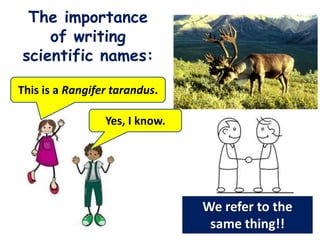
The importance
    of writing
scientific names:

This is a Rangifer tarandus.

                 Yes, I know.


                                We refer to the
                                 same thing!!
The importance of writing scientific
             names:

1. Every species can be unambiguously
   identified by two names.

2. The same name can be used all over the
   world, in all languages, avoiding difficulties
   of translation.
Question: MAY, 2012
Comment on the biological significance of each
of the following statements.
Classification systems are used to give scientific
names. (4)
Question: SEP, 2012
Give ONE advantage of giving scientific names to
living organisms. (2)
The use of scientific names eliminates confusion
between nationalities that may have different
common names for organisms by assigning them a
universal name that acts as a code. Scientists from
one nation can converse with scientists from
another about a specific organism with the aid of
the scientific name, avoiding confusion that may
arise from differing common names.
THE END

Classification

  • 2.
    Classifying organisms  Classificationmeans putting things into groups according to similarities  Kingdom: largest group
  • 3.
    There are fivekingdoms: 1. Bacteria kingdom (Monera or Prokaryota kingdom) 2. Protist kingdom 3. Fungi kingdom 4. Plant kingdom 5. Animal kingdom
  • 5.
    Each kingdom is dividedinto smaller groups Panthera pardus
  • 6.
     Species –organisms that look alike and successfully interbreed  Genus – A group of similar species which that have similar features and are closely related  Family – A group of similar genera  Order – A group of similar families  Class – A group of similar orders  Phylum – A group of similar classes  Kingdom – A group of similar phyla
  • 7.
    Carolus Linnaeus inventeda system to name organisms in 1735  was a Swedish scientist
  • 8.
    Each name consistsof:  TWO parts:  the first part of the name is the genus  the second is the species  this method of naming organisms is called binomial nomenclature  the names are written in:  Latin or  have Latin endings
  • 9.
    Examples of scientificnames:  human being : Homo sapiens genus species  housefly: Musca domestica genus species
  • 10.
    Binomial Nomenclature -Rules 1. First letter of first word (genus) is always capitalised 2. First letter of second word (species) is not capitalised 3. Both words are written in italicis or both words are underlined Homo sapiens Homo sapiens DO NOT underline space between words!!!
  • 11.
    Question: Which one ofthese is the closest relative of Felis concolor?  Acer rubrum  Contopus pertinax  Felis tigris  Ficus carica
  • 12.
    Question: Which one ofthese is the closest relative of Felis concolor?  Acer rubrum  Contopus pertinax  Felis tigris  Ficus carica
  • 13.
    This is whatthe following Felis tigris have in common:  Class  Family  Genus  Species Felis leo Felis domestica
  • 14.
    This is whatthe following Felis tigris have in common:  Class  Family  Genus  Species Felis leo Felis domestica
  • 15.
    The importance ofwriting scientific names: Common names vary from:  region to region  language to language Problem with this is: it is hard to know what people are talking about.
  • 16.
    The importance of writing scientific names: This is a reindeer. This is a caribou. Caribou & reindeer are the same thing.
  • 17.
    The importance of writing scientific names: This is a Rangifer tarandus. Yes, I know. We refer to the same thing!!
  • 18.
    The importance ofwriting scientific names: 1. Every species can be unambiguously identified by two names. 2. The same name can be used all over the world, in all languages, avoiding difficulties of translation.
  • 19.
    Question: MAY, 2012 Commenton the biological significance of each of the following statements. Classification systems are used to give scientific names. (4)
  • 20.
    Question: SEP, 2012 GiveONE advantage of giving scientific names to living organisms. (2) The use of scientific names eliminates confusion between nationalities that may have different common names for organisms by assigning them a universal name that acts as a code. Scientists from one nation can converse with scientists from another about a specific organism with the aid of the scientific name, avoiding confusion that may arise from differing common names.
  • 21.