CLASSIFICATION!


 Sorting It All Out
Why Classify?
 Classification: the division of organisms
  into groups, or classes, based on specific
  characteristics
 For thousands of years, humans have
  classified things based on usefulness
 Biologists use system to classify things—
  this system groups organisms according
  to their shared characteristics
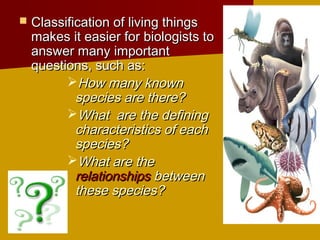
   Classification of living things
    makes it easier for biologists to
    answer many important
    questions, such as:
          How many known
            species are there?
          What are the defining
            characteristics of each
            species?
          What are the
            relationships between
            these species?
How Do Scientists Classify
       Organisms?
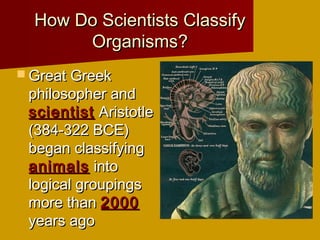
 Great Greek
 philosopher and
 scientist Aristotle
 (384-322 BCE)
 began classifying
 animals into
 logical groupings
 more than 2000
 years ago
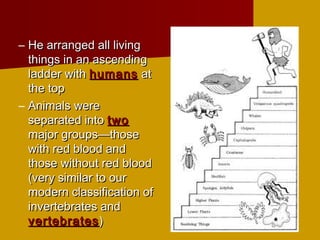
– He arranged all living
  things in an ascending
  ladder with humans at
  the top
– Animals were
  separated into two
  major groups—those
  with red blood and
  those without red blood
  (very similar to our
  modern classification of
  invertebrates and
  vertebrates )
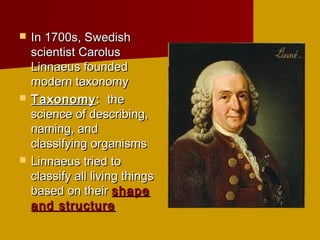
   In 1700s, Swedish
    scientist Carolus
    Linnaeus founded
    modern taxonomy
   Taxonomy : the
    science of describing,
    naming, and
    classifying organisms
   Linnaeus tried to
    classify all living things
    based on their shape
    and structure
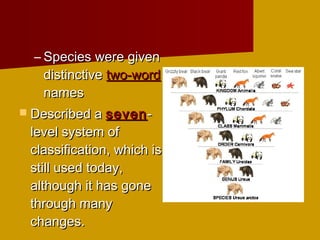
– Species were given
    distinctive two-word
    names
 Described a seven -
 level system of
 classification, which is
 still used today,
 although it has gone
 through many
 changes.
Classification Today
 Taxonomists use the 7-level system to
  classify living things based on shared
  characteristics
 Also use shared characteristics to
  hypothesize how closely related living
  things are
 The more characteristics they share, more
  closely related the organisms are
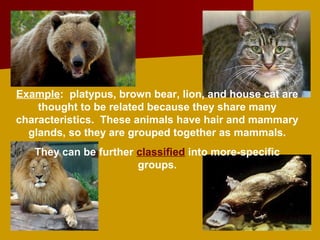
Example: platypus, brown bear, lion, and house cat are
    thought to be related because they share many
characteristics. These animals have hair and mammary
  glands, so they are grouped together as mammals.
   They can be further classified into more-specific
                       groups.
Branching Diagrams
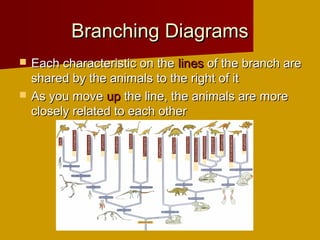
   Each characteristic on the lines of the branch are
    shared by the animals to the right of it
   As you move up the line, the animals are more
    closely related to each other
Levels of Classification
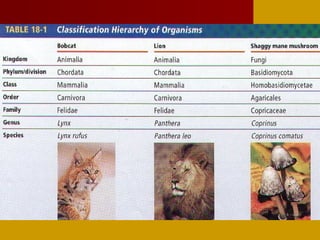
    Every living thing is classified into one of six
     kingdoms:
1.   KINGDOM: largest, most general group
2.   PHYLUM: sorted from the kingdom
3.   CLASS: all living things in a phylum are sorted
     into classes
4.   ORDER: each class includes one or more
     orders
5.   FAMILY: one or more orders
6.   GENUS: families are broken into genera
   Genera are sorted into
    species
   A species is a group of
    organisms that are
    closely related and can
    mate to produce fertile
    offspring
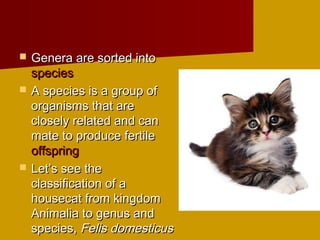
   Let’s see the
    classification of a
    housecat from kingdom
    Animalia to genus and
    species, Felis domesticus
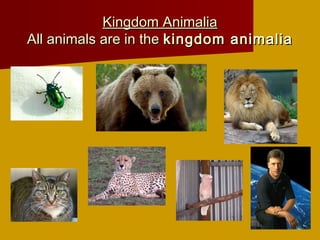
Kingdom Animalia
All animals are in the kingdom animalia
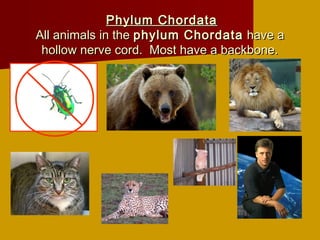
Phylum Chordata
All animals in the phylum Chordata have a
 hollow nerve cord. Most have a backbone.
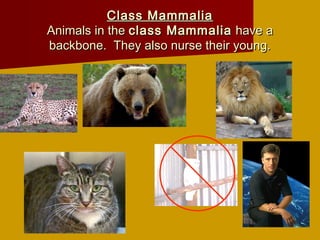
Class Mammalia
Animals in the class Mammalia have a
backbone. They also nurse their young.
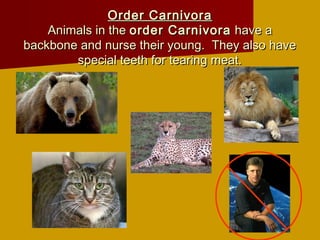
Order Carnivora
    Animals in the order Carnivora have a
backbone and nurse their young. They also have
        special teeth for tearing meat.
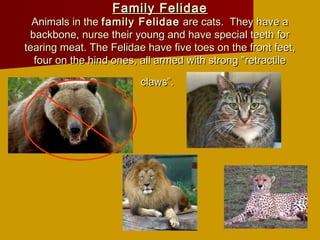
Family Felidae
  Animals in the family Felidae are cats. They have a
 backbone, nurse their young and have special teeth for
tearing meat. The Felidae have five toes on the front feet,
  four on the hind ones, all armed with strong "retractile

                         claws”.
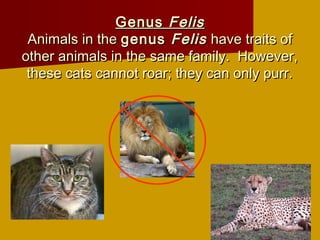
Genus Felis
 Animals in the genus Felis have traits of
other animals in the same family. However,
 these cats cannot roar; they can only purr.
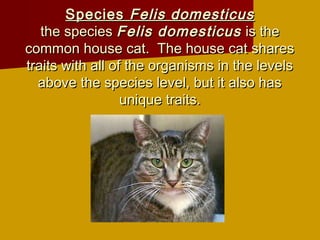
Species Felis domesticus
   the species Felis domesticus is the
common house cat. The house cat shares
traits with all of the organisms in the levels
  above the species level, but it also has
                  unique traits.
Scientific Names

 A scientific name is always the same for a
  specific kind of organism no matter how
  many common names there might be
 Before Linnaeus, different scientists
  named organisms differently, so an
  organism could have more than one name

                    Example on next slide…
Example:


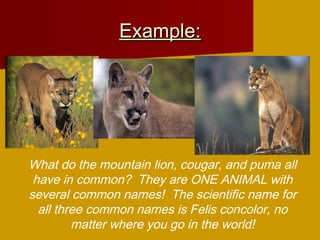
What do the mountain lion, cougar, and puma all
 have in common? They are ONE ANIMAL with
several common names! The scientific name for
  all three common names is Felis concolor, no
         matter where you go in the world!
Two-Part Names

   Linnaeus simplified the naming of
    living things by giving each species
    a two-part scientific name
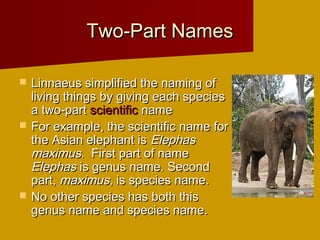
   For example, the scientific name for
    the Asian elephant is Elephas
    maximus. First part of name
    Elephas is genus name. Second
    part, maximus, is species name.
   No other species has both this
    genus name and species name.
   All genus names begin with a
    capital letter
   All species names begin with a
    lowercase letter
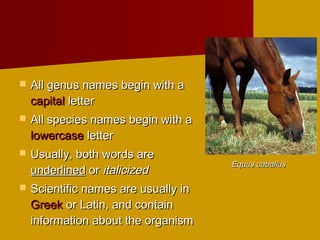
   Usually, both words are
                                      Equus caballus
    underlined or italicized
   Scientific names are usually in
    Greek or Latin, and contain
    information about the organism
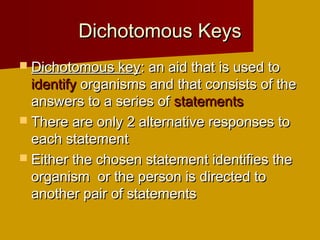
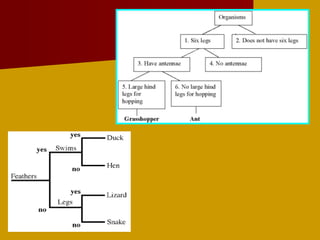
Dichotomous Keys
 Dichotomous key: an aid that is used to
  identify organisms and that consists of the
  answers to a series of statements
 There are only 2 alternative responses to
  each statement
 Either the chosen statement identifies the
  organism or the person is directed to
  another pair of statements
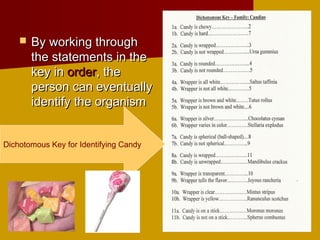
   By working through
        the statements in the
        key in order, the
        person can eventually
        identify the organism


Dichotomous Key for Identifying Candy
A Growing System
 People are still discovering and classifying
  organisms
 Some newly discovered organisms fit into
  existing categories
 Sometimes, someone discovers new
  evidence or an organism is so different
  from other organisms that it doesn’t fit into
  a category.

Classification prt1

  • 1.
  • 2.
    Why Classify?  Classification:the division of organisms into groups, or classes, based on specific characteristics  For thousands of years, humans have classified things based on usefulness  Biologists use system to classify things— this system groups organisms according to their shared characteristics
  • 3.
    Classification of living things makes it easier for biologists to answer many important questions, such as: How many known species are there? What are the defining characteristics of each species? What are the relationships between these species?
  • 4.
    How Do ScientistsClassify Organisms?  Great Greek philosopher and scientist Aristotle (384-322 BCE) began classifying animals into logical groupings more than 2000 years ago
  • 5.
    – He arrangedall living things in an ascending ladder with humans at the top – Animals were separated into two major groups—those with red blood and those without red blood (very similar to our modern classification of invertebrates and vertebrates )
  • 6.
    In 1700s, Swedish scientist Carolus Linnaeus founded modern taxonomy  Taxonomy : the science of describing, naming, and classifying organisms  Linnaeus tried to classify all living things based on their shape and structure
  • 7.
    – Species weregiven distinctive two-word names  Described a seven - level system of classification, which is still used today, although it has gone through many changes.
  • 9.
    Classification Today  Taxonomistsuse the 7-level system to classify living things based on shared characteristics  Also use shared characteristics to hypothesize how closely related living things are  The more characteristics they share, more closely related the organisms are
  • 10.
    Example: platypus, brownbear, lion, and house cat are thought to be related because they share many characteristics. These animals have hair and mammary glands, so they are grouped together as mammals. They can be further classified into more-specific groups.
  • 11.
    Branching Diagrams  Each characteristic on the lines of the branch are shared by the animals to the right of it  As you move up the line, the animals are more closely related to each other
  • 12.
    Levels of Classification  Every living thing is classified into one of six kingdoms: 1. KINGDOM: largest, most general group 2. PHYLUM: sorted from the kingdom 3. CLASS: all living things in a phylum are sorted into classes 4. ORDER: each class includes one or more orders 5. FAMILY: one or more orders 6. GENUS: families are broken into genera
  • 13.
    Genera are sorted into species  A species is a group of organisms that are closely related and can mate to produce fertile offspring  Let’s see the classification of a housecat from kingdom Animalia to genus and species, Felis domesticus
  • 14.
    Kingdom Animalia All animalsare in the kingdom animalia
  • 15.
    Phylum Chordata All animalsin the phylum Chordata have a hollow nerve cord. Most have a backbone.
  • 16.
    Class Mammalia Animals inthe class Mammalia have a backbone. They also nurse their young.
  • 17.
    Order Carnivora Animals in the order Carnivora have a backbone and nurse their young. They also have special teeth for tearing meat.
  • 18.
    Family Felidae Animals in the family Felidae are cats. They have a backbone, nurse their young and have special teeth for tearing meat. The Felidae have five toes on the front feet, four on the hind ones, all armed with strong "retractile claws”.
  • 19.
    Genus Felis Animalsin the genus Felis have traits of other animals in the same family. However, these cats cannot roar; they can only purr.
  • 20.
    Species Felis domesticus the species Felis domesticus is the common house cat. The house cat shares traits with all of the organisms in the levels above the species level, but it also has unique traits.
  • 21.
    Scientific Names  Ascientific name is always the same for a specific kind of organism no matter how many common names there might be  Before Linnaeus, different scientists named organisms differently, so an organism could have more than one name Example on next slide…
  • 22.
    Example: What do themountain lion, cougar, and puma all have in common? They are ONE ANIMAL with several common names! The scientific name for all three common names is Felis concolor, no matter where you go in the world!
  • 23.
    Two-Part Names  Linnaeus simplified the naming of living things by giving each species a two-part scientific name  For example, the scientific name for the Asian elephant is Elephas maximus. First part of name Elephas is genus name. Second part, maximus, is species name.  No other species has both this genus name and species name.
  • 24.
    All genus names begin with a capital letter  All species names begin with a lowercase letter  Usually, both words are Equus caballus underlined or italicized  Scientific names are usually in Greek or Latin, and contain information about the organism
  • 25.
    Dichotomous Keys  Dichotomouskey: an aid that is used to identify organisms and that consists of the answers to a series of statements  There are only 2 alternative responses to each statement  Either the chosen statement identifies the organism or the person is directed to another pair of statements
  • 26.
    By working through the statements in the key in order, the person can eventually identify the organism Dichotomous Key for Identifying Candy
  • 28.
    A Growing System People are still discovering and classifying organisms  Some newly discovered organisms fit into existing categories  Sometimes, someone discovers new evidence or an organism is so different from other organisms that it doesn’t fit into a category.