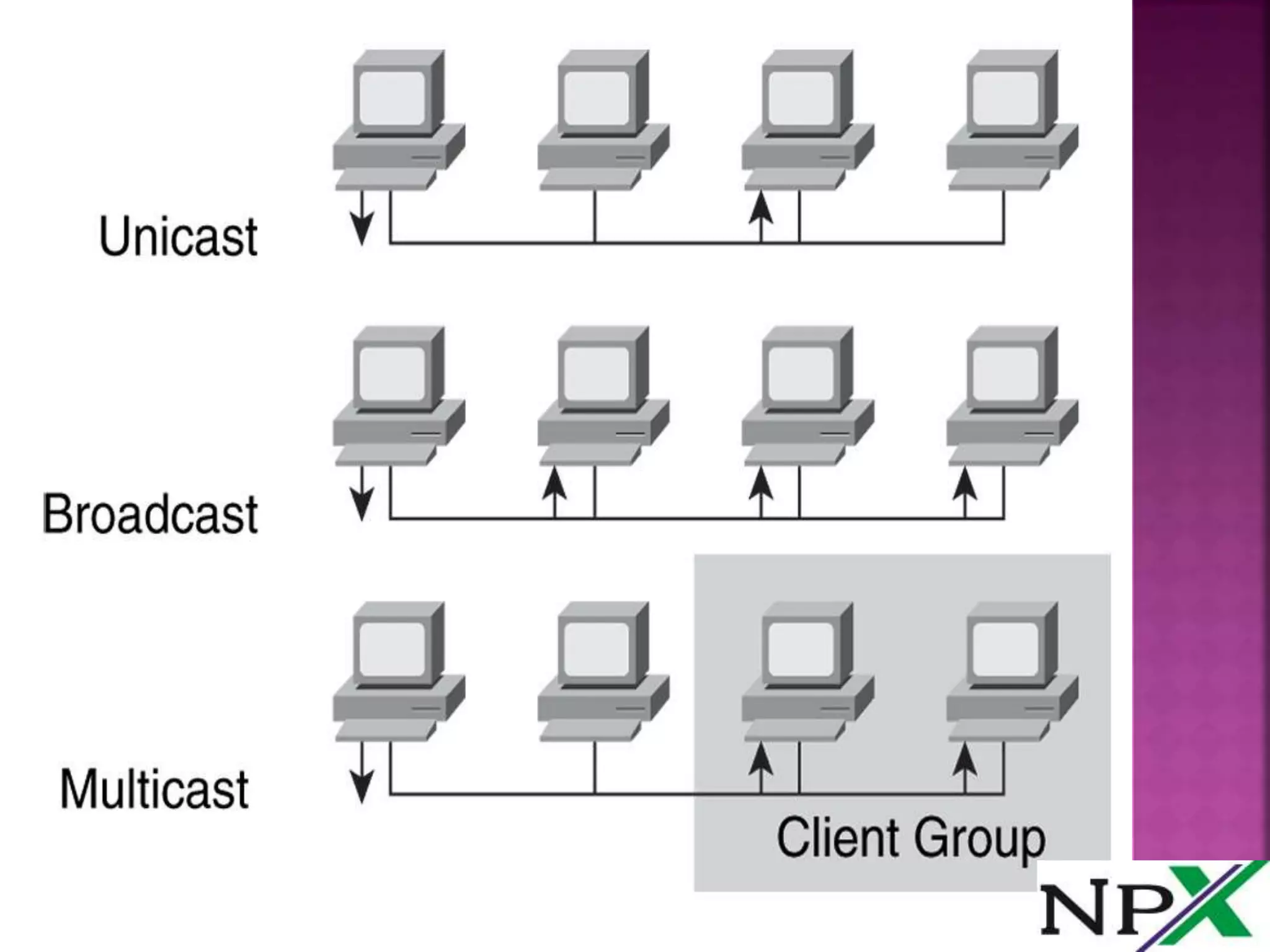
Unicast, Multicast & Broadcast
 Unicast is a type of communication where data is
sent from one computer to another computer.
 In Unicast type of communication, there is only one
sender, and one receiver.
 Example:
 1) Browsing a website. (Webserver is the sender and
your computer is the receiver.)
 2) Downloading a file from a FTP Server. (FTP Server
is the sender and your computer is the receiver.)
 Multicast is a type of communication where multicast
traffic addressed for a group of devices on the
network. IP multicast traffic are sent to a group and
only members of that group receive and/or process
the Multicast traffic.
 Devices which are interested in a particular Multicast
traffic must join to that Multicast group to receive
the traffic. IP Multicast Groups are identified by
Multicast IP Addresses (IPv4 Class D Addresses)
 In Multicast, the sender transmit only one copy of
data and it is delivered and/or processed to many
devices (Not as delivered and processed by all
devices as in Broadcast) who are interested in that
traffic.
 Example : Multicast Windows Deployment Services
(WDS) OS deployment traffic, IP TV etc
 Broadcast is a type of communication where data is
sent from one computer once and a copy of that data
will be forwarded to all the devices.
 In Broadcast, there is only one sender and the data is
sent only once. But the Broadcast data is delivered to
all connected devices.
 Switches by design will forward the broadcast traffic
and Routers by design will drop the broadcast traffic.
In other words, Routers will not allow a broadcast
from one LAN to cross the Router and reach another
Network Segment. The primary function of a Router is
to divide a big Broadcast domain to Multiple
smaller Broadcast domain.
 Example: ARP Request message, DHCP DISCOVER
Message
Unicast multicast & broadcast

Unicast multicast & broadcast

  • 1.
  • 2.
     Unicast isa type of communication where data is sent from one computer to another computer.  In Unicast type of communication, there is only one sender, and one receiver.  Example:  1) Browsing a website. (Webserver is the sender and your computer is the receiver.)  2) Downloading a file from a FTP Server. (FTP Server is the sender and your computer is the receiver.)
  • 3.
     Multicast isa type of communication where multicast traffic addressed for a group of devices on the network. IP multicast traffic are sent to a group and only members of that group receive and/or process the Multicast traffic.  Devices which are interested in a particular Multicast traffic must join to that Multicast group to receive the traffic. IP Multicast Groups are identified by Multicast IP Addresses (IPv4 Class D Addresses)  In Multicast, the sender transmit only one copy of data and it is delivered and/or processed to many devices (Not as delivered and processed by all devices as in Broadcast) who are interested in that traffic.  Example : Multicast Windows Deployment Services (WDS) OS deployment traffic, IP TV etc
  • 4.
     Broadcast isa type of communication where data is sent from one computer once and a copy of that data will be forwarded to all the devices.  In Broadcast, there is only one sender and the data is sent only once. But the Broadcast data is delivered to all connected devices.  Switches by design will forward the broadcast traffic and Routers by design will drop the broadcast traffic. In other words, Routers will not allow a broadcast from one LAN to cross the Router and reach another Network Segment. The primary function of a Router is to divide a big Broadcast domain to Multiple smaller Broadcast domain.  Example: ARP Request message, DHCP DISCOVER Message