UNICAST, MULTICAST,BROADCAST
The cast term here signifies some data(stream of packets) is being
transmitted to the recipient(s) from the client(s) side over the
communication channel that helps them to communicate.
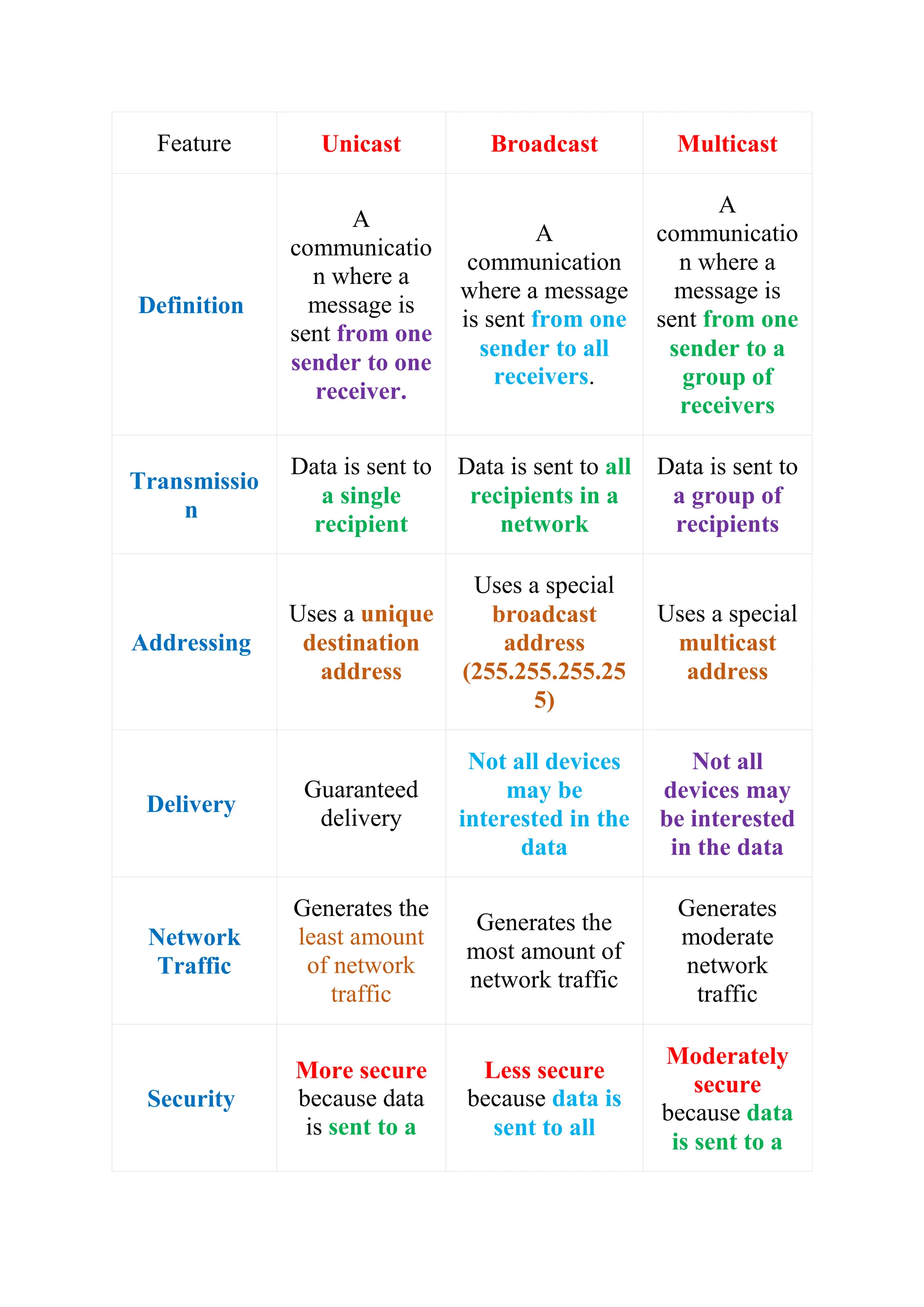
Feature Unicast Broadcast Multicast
Definition
A
communicatio
n where a
message is
sent from one
sender to one
receiver.
A
communication
where a message
is sent from one
sender to all
receivers.
A
communicatio
n where a
message is
sent from one
sender to a
group of
receivers
Transmissio
n
Data is sent to
a single
recipient
Data is sent to all
recipients in a
network
Data is sent to
a group of
recipients
Addressing
Uses a unique
destination
address
Uses a special
broadcast
address
(255.255.255.25
5)
Uses a special
multicast
address
Delivery
Guaranteed
delivery
Not all devices
may be
interested in the
data
Not all
devices may
be interested
in the data
Network
Traffic
Generates the
least amount
of network
traffic
Generates the
most amount of
network traffic
Generates
moderate
network
traffic
Security
More secure
because data
is sent to a
Less secure
because data is
sent to all
Moderately
secure
because data
is sent to a
specific
recipient
devices in the
network
specific
group of
devices
Destination
Single
receiver
All receivers
Group of
receivers
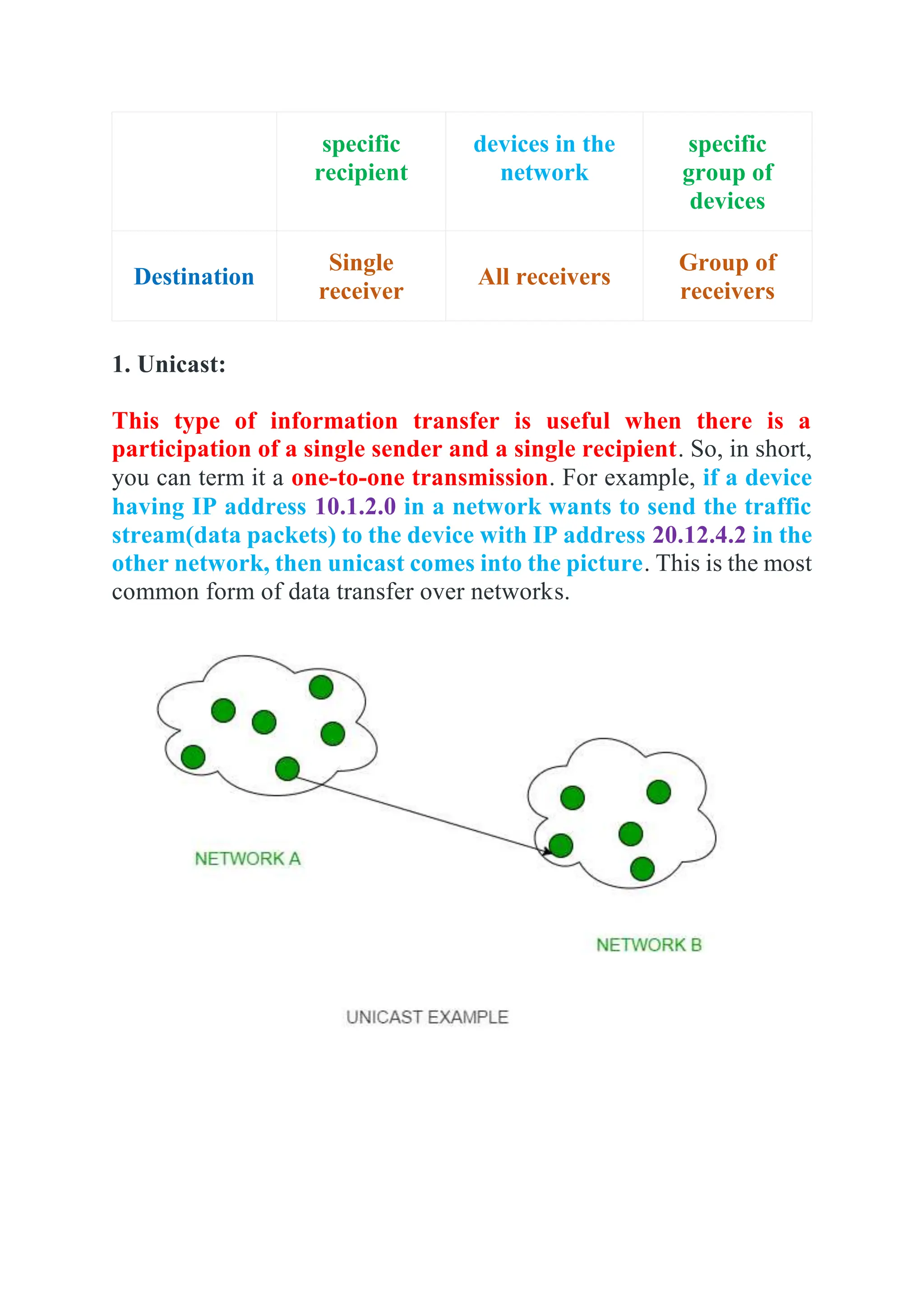
1. Unicast:
This type of information transfer is useful when there is a
participation of a single sender and a single recipient. So, in short,
you can term it a one-to-one transmission. For example, if a device
having IP address 10.1.2.0 in a network wants to send the traffic
stream(data packets) to the device with IP address 20.12.4.2 in the
other network, then unicast comes into the picture. This is the most
common form of data transfer over networks.
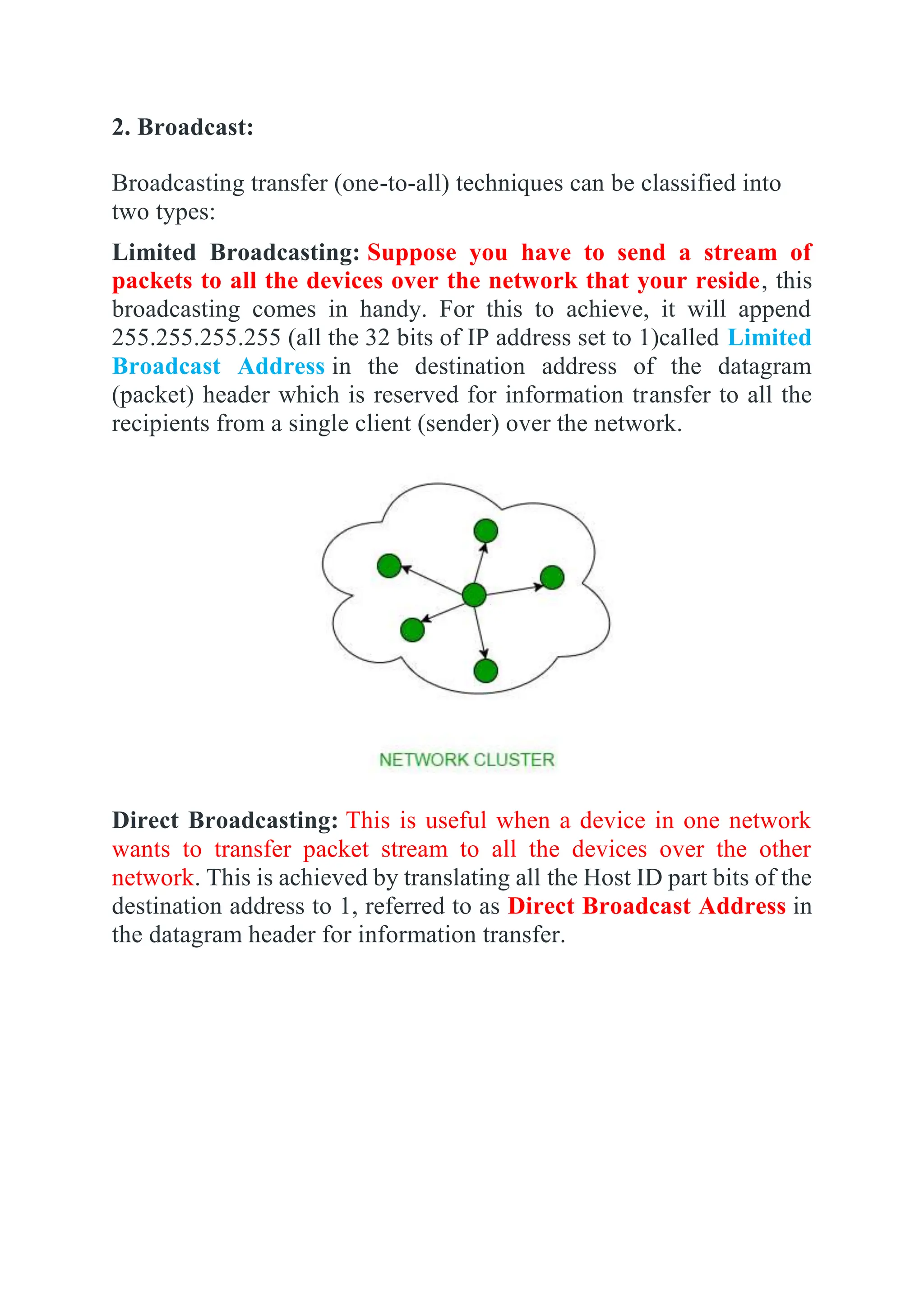
2. Broadcast:
Broadcasting transfer (one-to-all) techniques can be classified into
two types:
Limited Broadcasting: Suppose you have to send a stream of
packets to all the devices over the network that your reside, this
broadcasting comes in handy. For this to achieve, it will append
255.255.255.255 (all the 32 bits of IP address set to 1)called Limited
Broadcast Address in the destination address of the datagram
(packet) header which is reserved for information transfer to all the
recipients from a single client (sender) over the network.
Direct Broadcasting: This is useful when a device in one network
wants to transfer packet stream to all the devices over the other
network. This is achieved by translating all the Host ID part bits of the
destination address to 1, referred to as Direct Broadcast Address in
the datagram header for information transfer.
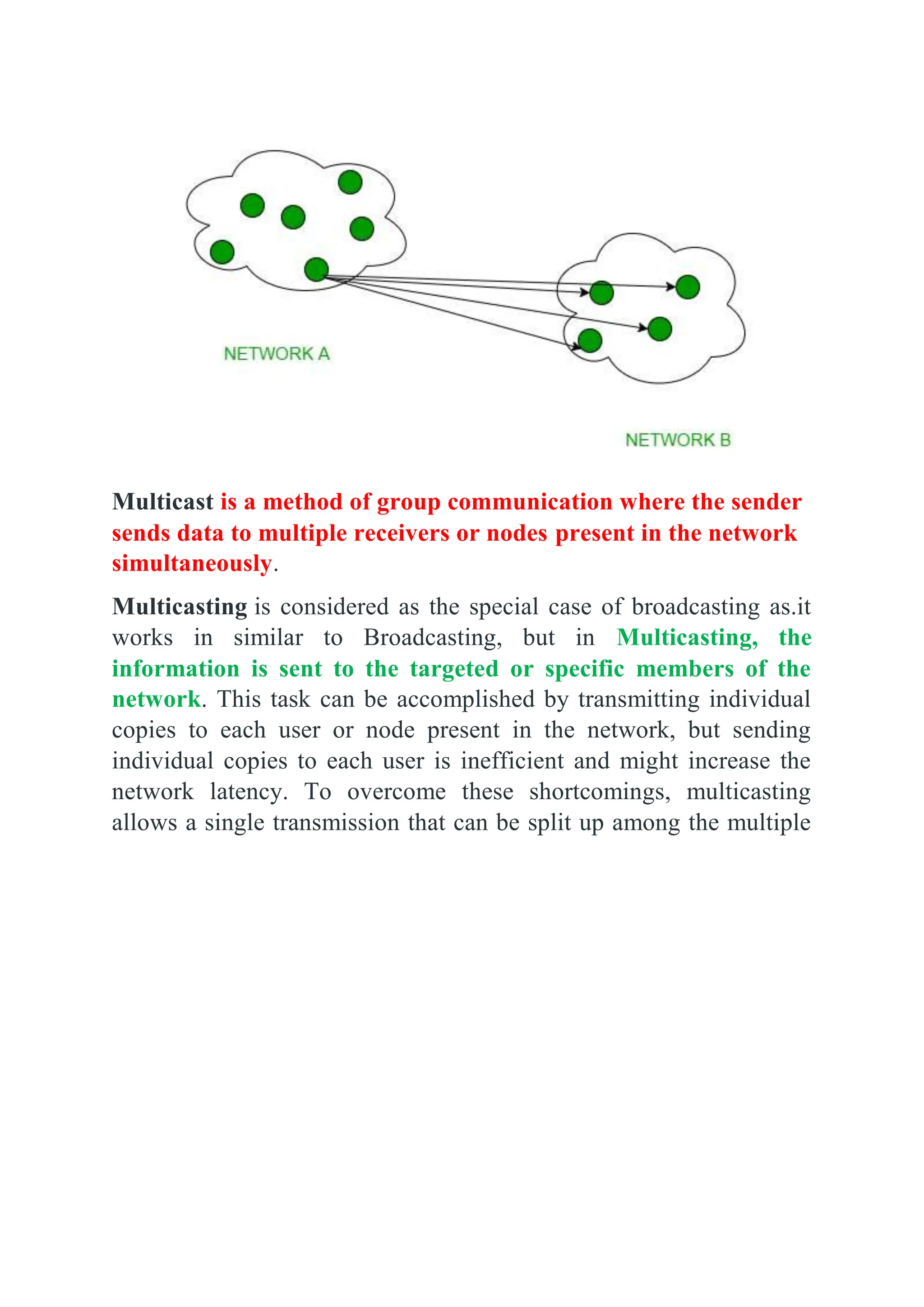
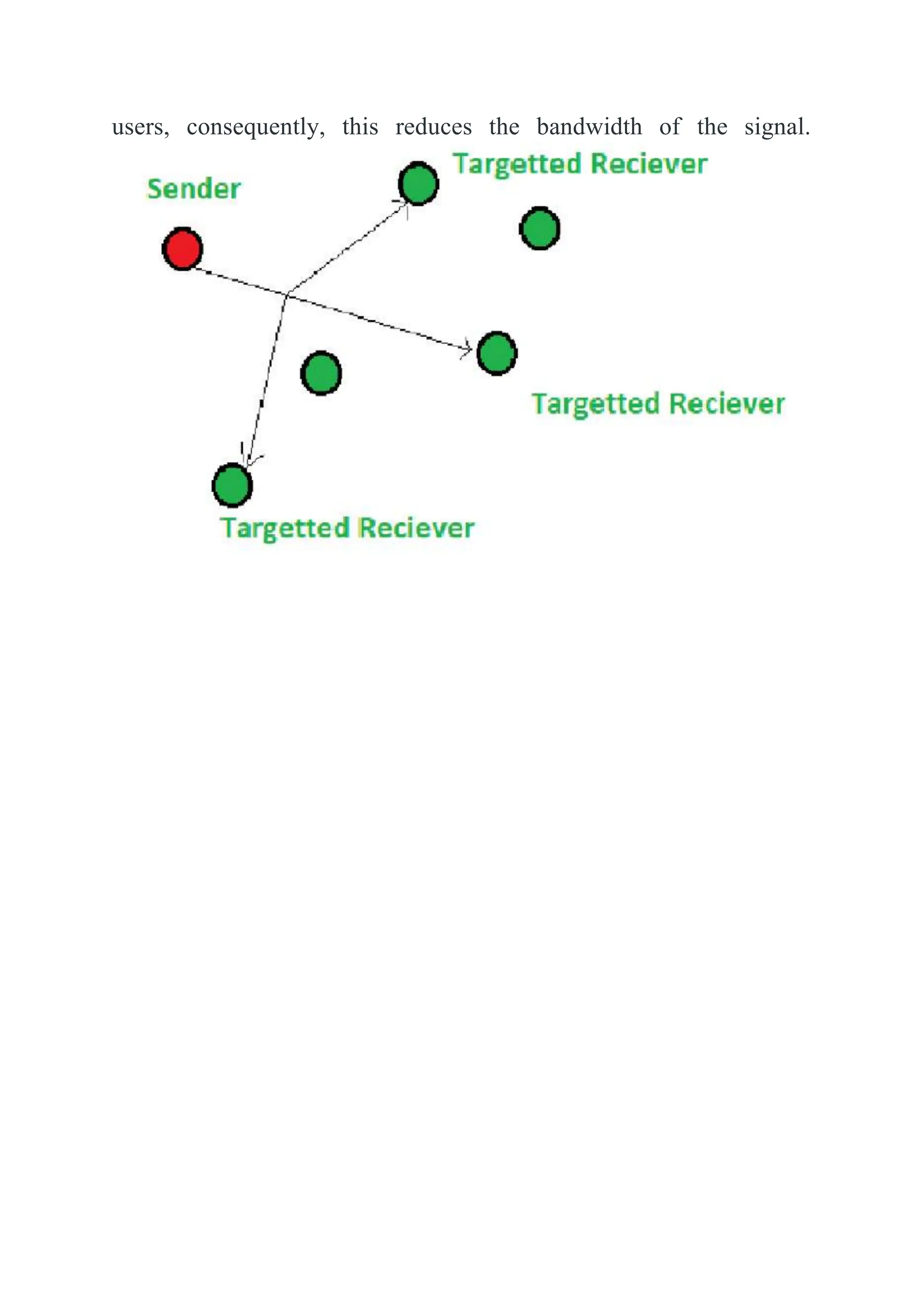
Multicast is a method of group communication where the sender
sends data to multiple receivers or nodes present in the network
simultaneously.
Multicasting is considered as the special case of broadcasting as.it
works in similar to Broadcasting, but in Multicasting, the
information is sent to the targeted or specific members of the
network. This task can be accomplished by transmitting individual
copies to each user or node present in the network, but sending
individual copies to each user is inefficient and might increase the
network latency. To overcome these shortcomings, multicasting
allows a single transmission that can be split up among the multiple
users, consequently, this reduces the bandwidth of the signal.

Casting in CN: UNICAST,MULTICAST,BROADCAST, MONALISA HATI,COMPUTER NETWORK, B.TECH FIFTH SEMESTER, ENGINEERING STUDY

  • 1.
    UNICAST, MULTICAST,BROADCAST The castterm here signifies some data(stream of packets) is being transmitted to the recipient(s) from the client(s) side over the communication channel that helps them to communicate.
  • 2.
    Feature Unicast BroadcastMulticast Definition A communicatio n where a message is sent from one sender to one receiver. A communication where a message is sent from one sender to all receivers. A communicatio n where a message is sent from one sender to a group of receivers Transmissio n Data is sent to a single recipient Data is sent to all recipients in a network Data is sent to a group of recipients Addressing Uses a unique destination address Uses a special broadcast address (255.255.255.25 5) Uses a special multicast address Delivery Guaranteed delivery Not all devices may be interested in the data Not all devices may be interested in the data Network Traffic Generates the least amount of network traffic Generates the most amount of network traffic Generates moderate network traffic Security More secure because data is sent to a Less secure because data is sent to all Moderately secure because data is sent to a
  • 3.
    specific recipient devices in the network specific groupof devices Destination Single receiver All receivers Group of receivers 1. Unicast: This type of information transfer is useful when there is a participation of a single sender and a single recipient. So, in short, you can term it a one-to-one transmission. For example, if a device having IP address 10.1.2.0 in a network wants to send the traffic stream(data packets) to the device with IP address 20.12.4.2 in the other network, then unicast comes into the picture. This is the most common form of data transfer over networks.
  • 4.
    2. Broadcast: Broadcasting transfer(one-to-all) techniques can be classified into two types: Limited Broadcasting: Suppose you have to send a stream of packets to all the devices over the network that your reside, this broadcasting comes in handy. For this to achieve, it will append 255.255.255.255 (all the 32 bits of IP address set to 1)called Limited Broadcast Address in the destination address of the datagram (packet) header which is reserved for information transfer to all the recipients from a single client (sender) over the network. Direct Broadcasting: This is useful when a device in one network wants to transfer packet stream to all the devices over the other network. This is achieved by translating all the Host ID part bits of the destination address to 1, referred to as Direct Broadcast Address in the datagram header for information transfer.
  • 5.
    Multicast is amethod of group communication where the sender sends data to multiple receivers or nodes present in the network simultaneously. Multicasting is considered as the special case of broadcasting as.it works in similar to Broadcasting, but in Multicasting, the information is sent to the targeted or specific members of the network. This task can be accomplished by transmitting individual copies to each user or node present in the network, but sending individual copies to each user is inefficient and might increase the network latency. To overcome these shortcomings, multicasting allows a single transmission that can be split up among the multiple
  • 6.
    users, consequently, thisreduces the bandwidth of the signal.