
POLYMER PROCESSING (MOLDING)
D. JIM LIVINGSTON
Faculty of Chemistry,
St. John’s College.
MOLDING
 A process in which a finely divided plastic is forced by the
application of heat and pressure to flow, fill and forms the
shape of the mold.
 Compression
 Extrusion
 Injection
 Blow
COMPRESSION MOLDING PROCESS
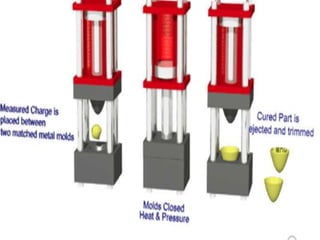
 Polymers (fiber/resin) pre weighed to a specific size charge,
placed between movable and stationary mold.
 Heat (150OC) and pressure (3000) psi is then applied so the
polymeric material becomes plastic, flows and fill the mold.
 The material is compressed and compacted into the shape
inside the cavity.
 The excess material flows out of the mold called as flash.
 After a short time the press is opened and the molded part is
removed.
Advantages of compression molding
 low mold maintenance
 low capital and tooling costs
 well distributed fibrous fillers
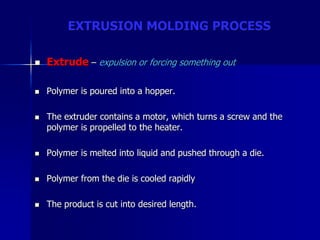
EXTRUSION MOLDING PROCESS
 Extrude – expulsion or forcing something out
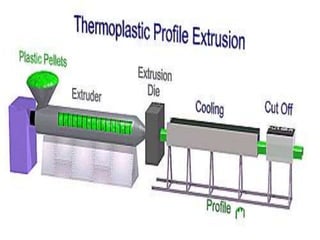
 Polymer is poured into a hopper.
 The extruder contains a motor, which turns a screw and the
polymer is propelled to the heater.
 Polymer is melted into liquid and pushed through a die.
 Polymer from the die is cooled rapidly
 The product is cut into desired length.
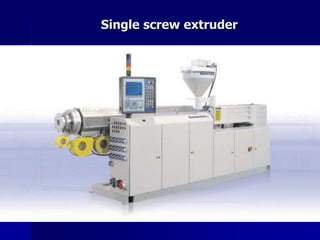
Single screw extruder
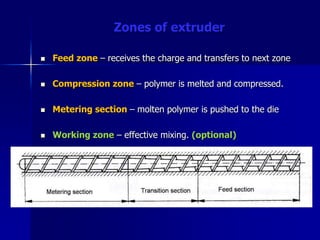
Zones of extruder
 Feed zone – receives the charge and transfers to next zone
 Compression zone – polymer is melted and compressed.
 Metering section – molten polymer is pushed to the die
 Working zone – effective mixing. (optional)
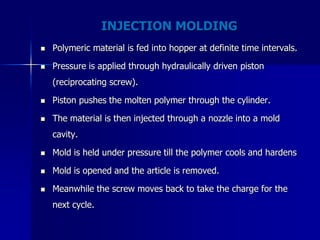
INJECTION MOLDING
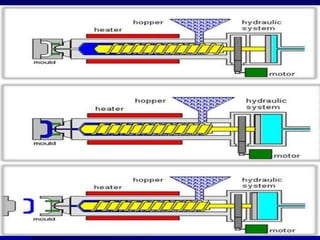
 Polymeric material is fed into hopper at definite time intervals.
 Pressure is applied through hydraulically driven piston
(reciprocating screw).
 Piston pushes the molten polymer through the cylinder.
 The material is then injected through a nozzle into a mold
cavity.
 Mold is held under pressure till the polymer cools and hardens
 Mold is opened and the article is removed.
 Meanwhile the screw moves back to take the charge for the
next cycle.
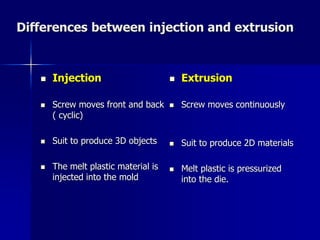
Differences between injection and extrusion
 Injection
 Screw moves front and back
( cyclic)
 Suit to produce 3D objects
 The melt plastic material is
injected into the mold
 Extrusion
 Screw moves continuously
 Suit to produce 2D materials
 Melt plastic is pressurized
into the die.
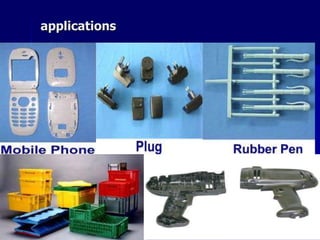
applications
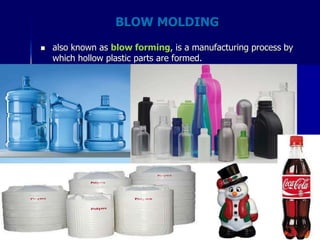
BLOW MOLDING
 also known as blow forming, is a manufacturing process by
which hollow plastic parts are formed.
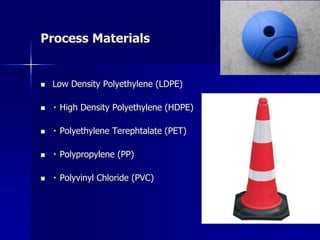
Process Materials
 Low Density Polyethylene (LDPE)
 High Density Polyethylene (HDPE)
 Polyethylene Terephtalate (PET)
 Polypropylene (PP)
 Polyvinyl Chloride (PVC)
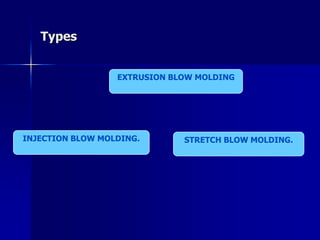
Types
EXTRUSION BLOW MOLDING
INJECTION BLOW MOLDING. STRETCH BLOW MOLDING.
Processing
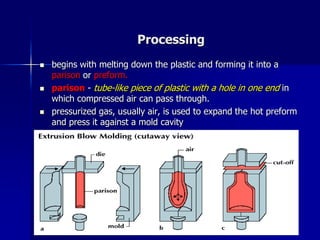
 begins with melting down the plastic and forming it into a
parison or preform.
 parison - tube-like piece of plastic with a hole in one end in
which compressed air can pass through.
 pressurized gas, usually air, is used to expand the hot preform
and press it against a mold cavity
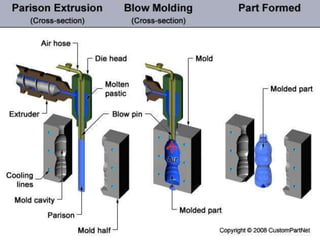
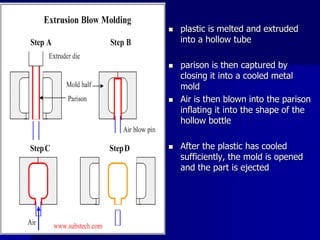
 plastic is melted and extruded
into a hollow tube
 parison is then captured by
closing it into a cooled metal
mold
 Air is then blown into the parison
inflating it into the shape of the
hollow bottle
 After the plastic has cooled
sufficiently, the mold is opened
and the part is ejected
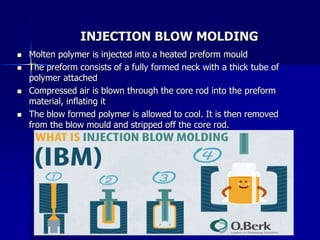
INJECTION BLOW MOLDING
 Molten polymer is injected into a heated preform mould
 The preform consists of a fully formed neck with a thick tube of
polymer attached
 Compressed air is blown through the core rod into the preform
material, inflating it
 The blow formed polymer is allowed to cool. It is then removed
from the blow mould and stripped off the core rod.
STRETCH BLOW MOLDING
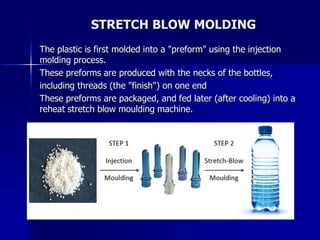
The plastic is first molded into a "preform" using the injection
molding process.
These preforms are produced with the necks of the bottles,
including threads (the "finish") on one end
These preforms are packaged, and fed later (after cooling) into a
reheat stretch blow moulding machine.
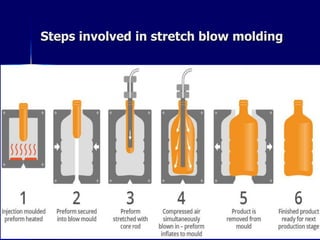
Steps involved in stretch blow molding
ADVANTAGES
 Well suited to low and high production rates
 Tooling is less expensive
 Trim and flash reusable into finished parts
References
 https://www.slideshare.net/UmerWarraich2/blow-molding
 https://www.slideshare.net/habib_117/extrusion-molding
 http://www.idc-
online.com/technical_references/pdfs/chemical_engineering/E
xtrusion_and_Injection_molding_of_polymers.pdf
 Polymer Science – Vasant R. Gowariker
 Text book of polymer science – Bill Mayer

Polymer Processing - II

  • 1.
    POLYMER PROCESSING (MOLDING) D.JIM LIVINGSTON Faculty of Chemistry, St. John’s College.
  • 2.
    MOLDING  A processin which a finely divided plastic is forced by the application of heat and pressure to flow, fill and forms the shape of the mold.  Compression  Extrusion  Injection  Blow
  • 3.
    COMPRESSION MOLDING PROCESS Polymers (fiber/resin) pre weighed to a specific size charge, placed between movable and stationary mold.  Heat (150OC) and pressure (3000) psi is then applied so the polymeric material becomes plastic, flows and fill the mold.  The material is compressed and compacted into the shape inside the cavity.  The excess material flows out of the mold called as flash.  After a short time the press is opened and the molded part is removed.
  • 5.
    Advantages of compressionmolding  low mold maintenance  low capital and tooling costs  well distributed fibrous fillers
  • 6.
    EXTRUSION MOLDING PROCESS Extrude – expulsion or forcing something out  Polymer is poured into a hopper.  The extruder contains a motor, which turns a screw and the polymer is propelled to the heater.  Polymer is melted into liquid and pushed through a die.  Polymer from the die is cooled rapidly  The product is cut into desired length.
  • 8.
  • 9.
    Zones of extruder Feed zone – receives the charge and transfers to next zone  Compression zone – polymer is melted and compressed.  Metering section – molten polymer is pushed to the die  Working zone – effective mixing. (optional)
  • 12.
    INJECTION MOLDING  Polymericmaterial is fed into hopper at definite time intervals.  Pressure is applied through hydraulically driven piston (reciprocating screw).  Piston pushes the molten polymer through the cylinder.  The material is then injected through a nozzle into a mold cavity.  Mold is held under pressure till the polymer cools and hardens  Mold is opened and the article is removed.  Meanwhile the screw moves back to take the charge for the next cycle.
  • 14.
    Differences between injectionand extrusion  Injection  Screw moves front and back ( cyclic)  Suit to produce 3D objects  The melt plastic material is injected into the mold  Extrusion  Screw moves continuously  Suit to produce 2D materials  Melt plastic is pressurized into the die.
  • 15.
  • 16.
    BLOW MOLDING  alsoknown as blow forming, is a manufacturing process by which hollow plastic parts are formed.
  • 17.
    Process Materials  LowDensity Polyethylene (LDPE)  High Density Polyethylene (HDPE)  Polyethylene Terephtalate (PET)  Polypropylene (PP)  Polyvinyl Chloride (PVC)
  • 18.
    Types EXTRUSION BLOW MOLDING INJECTIONBLOW MOLDING. STRETCH BLOW MOLDING.
  • 19.
    Processing  begins withmelting down the plastic and forming it into a parison or preform.  parison - tube-like piece of plastic with a hole in one end in which compressed air can pass through.  pressurized gas, usually air, is used to expand the hot preform and press it against a mold cavity
  • 21.
     plastic ismelted and extruded into a hollow tube  parison is then captured by closing it into a cooled metal mold  Air is then blown into the parison inflating it into the shape of the hollow bottle  After the plastic has cooled sufficiently, the mold is opened and the part is ejected
  • 22.
    INJECTION BLOW MOLDING Molten polymer is injected into a heated preform mould  The preform consists of a fully formed neck with a thick tube of polymer attached  Compressed air is blown through the core rod into the preform material, inflating it  The blow formed polymer is allowed to cool. It is then removed from the blow mould and stripped off the core rod.
  • 23.
    STRETCH BLOW MOLDING Theplastic is first molded into a "preform" using the injection molding process. These preforms are produced with the necks of the bottles, including threads (the "finish") on one end These preforms are packaged, and fed later (after cooling) into a reheat stretch blow moulding machine.
  • 24.
    Steps involved instretch blow molding
  • 25.
    ADVANTAGES  Well suitedto low and high production rates  Tooling is less expensive  Trim and flash reusable into finished parts
  • 26.
    References  https://www.slideshare.net/UmerWarraich2/blow-molding  https://www.slideshare.net/habib_117/extrusion-molding http://www.idc- online.com/technical_references/pdfs/chemical_engineering/E xtrusion_and_Injection_molding_of_polymers.pdf  Polymer Science – Vasant R. Gowariker  Text book of polymer science – Bill Mayer