NACHIMUTHU POLYTECHNIC
COLLEGE:POLLACHI-03
DEPARTMENT OF MECHANICAL
ENGINEERING
P.Srirajarajan.ME
HoS- Mechanical Engg
NPTC, Pollachi
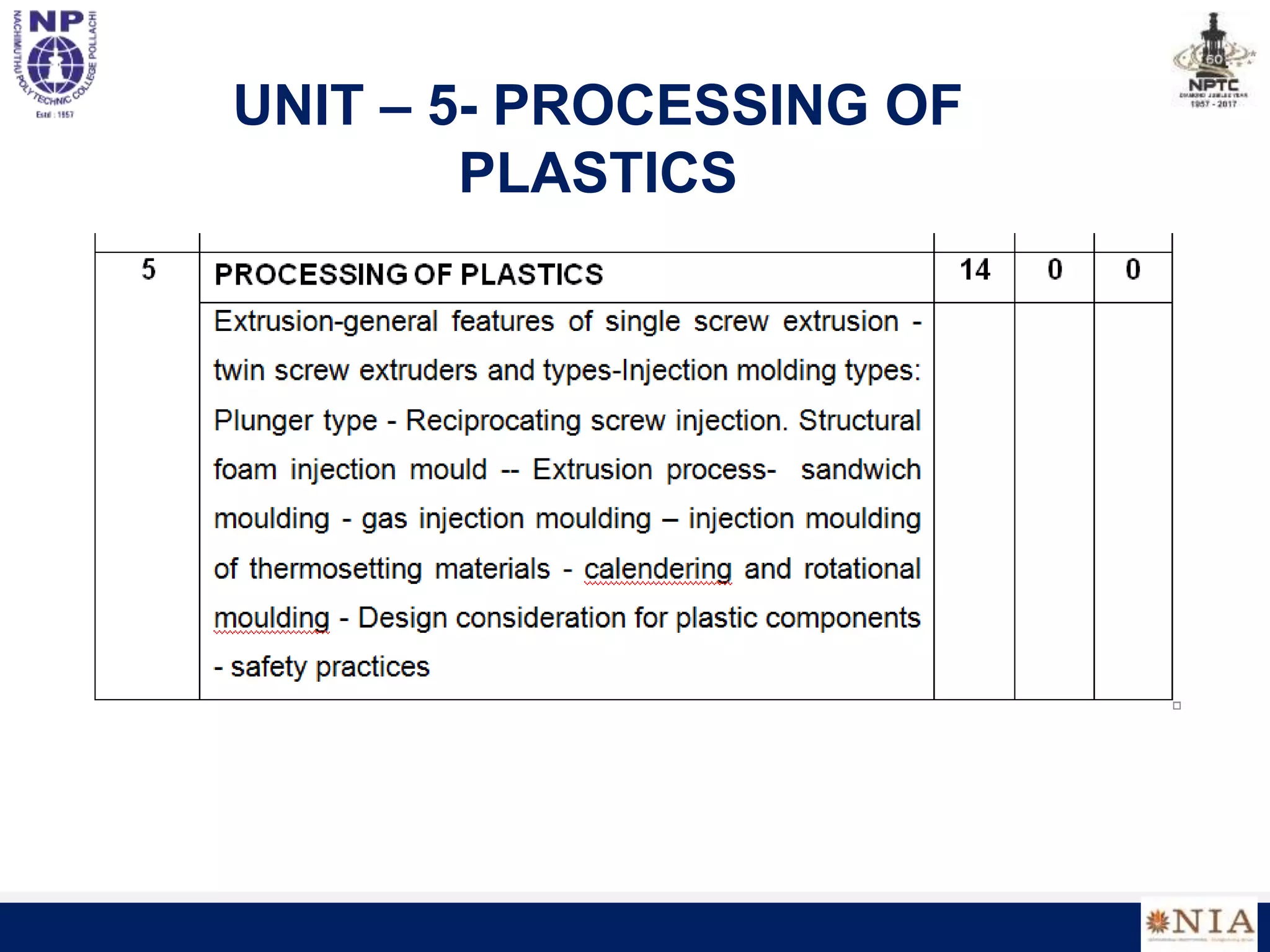
2203: Casting, Forming and Joining
Process
UNIT – 5- PROCESSING OF
PLASTICS
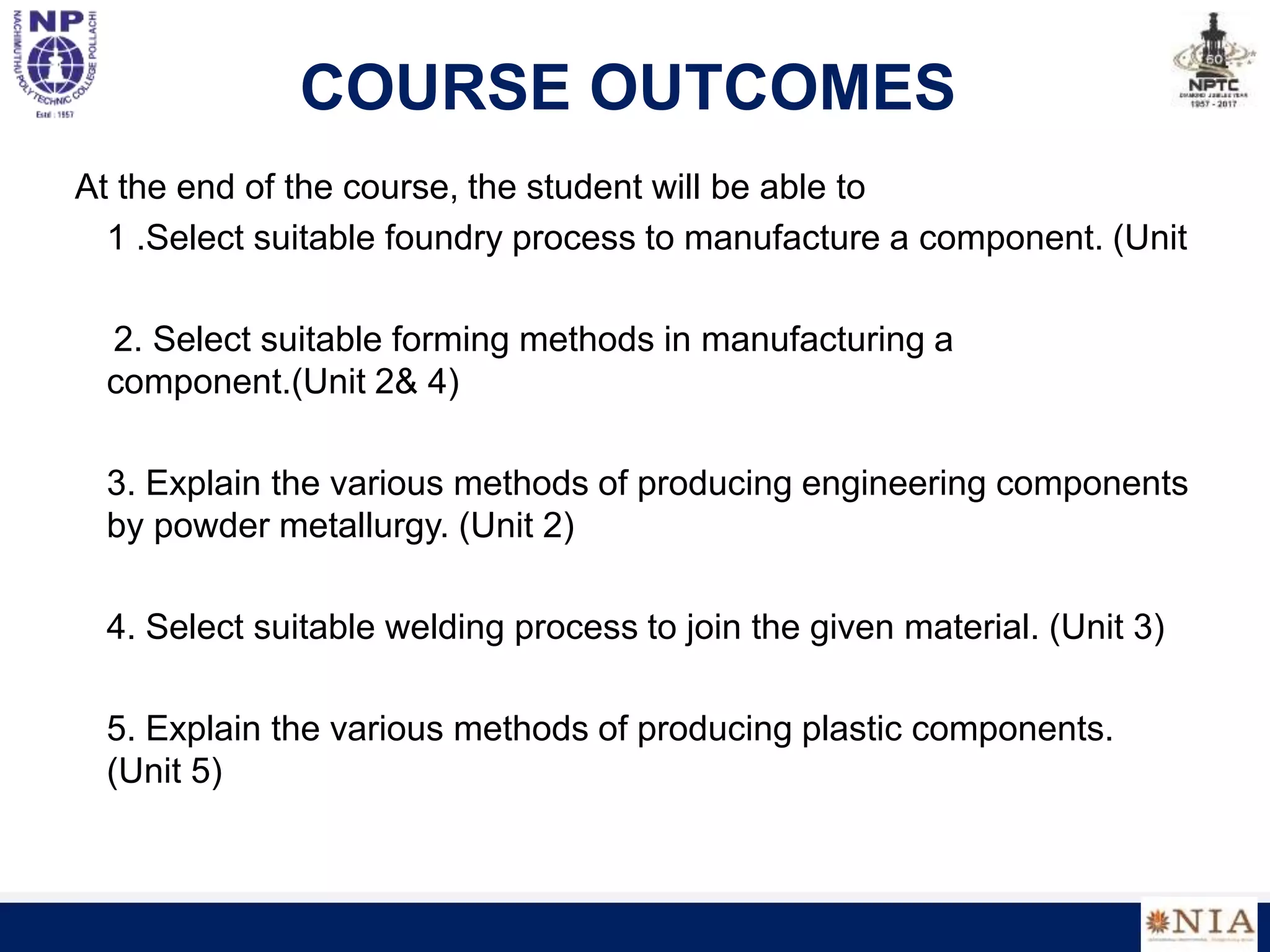
COURSE OUTCOMES
At the end of the course, the student will be able to
1 .Select suitable foundry process to manufacture a component. (Unit
2. Select suitable forming methods in manufacturing a
component.(Unit 2& 4)
3. Explain the various methods of producing engineering components
by powder metallurgy. (Unit 2)
4. Select suitable welding process to join the given material. (Unit 3)
5. Explain the various methods of producing plastic components.
(Unit 5)
Introduction
The word plastics is from the Greek word
Plastikos, meaning “able to be shaped and
molded”
Historical Background
A single-action hydraulic injection machine
was designed in the U.S.A. in 1870 by
Hyatt
Heating-cylinder design was first
recognised in a patent issued to Adam
Gastron in 1932.
Large-scale development of injection
moulding machinery design towards the
machines we know today did not occur until
the 1950's in Germany
Plastics????
Plastics are Macromolecular structured Polymer.
Polymer is made up of many repeating simple
chemical units, known as Monomer.
All Plastics are Polymers-----But All Polymers are
not Plastics, they may be Fibres, Elastomers
(rubbers) or adhesives.
In simple words plastic is one of the family
member of polymers.
Thermoplastics & Thermosets
Thermoplastics are materials that can be
repeatedly heated, melted and converted
into a product.
Thermosets undergo a chemical reaction
during conversion into a product. The
product cannot be re-melted and converted
into another product again.
Extrusion
• Pellets, granules or powder is placed into a hopper and
fed into the extruder barrel.
• As screw in the barrel that turns it blends and moves
the material down the barrel.
• Material then forced through a die that is in desired
shape. It is cooled by water or air and cut to length.
• Largest production volume of plastics (bar, tube, sheet,
film)
• Rated by the length to diameter ratio of the screw
Extrusion Machine
Extruder barrel and screw
Extrusion
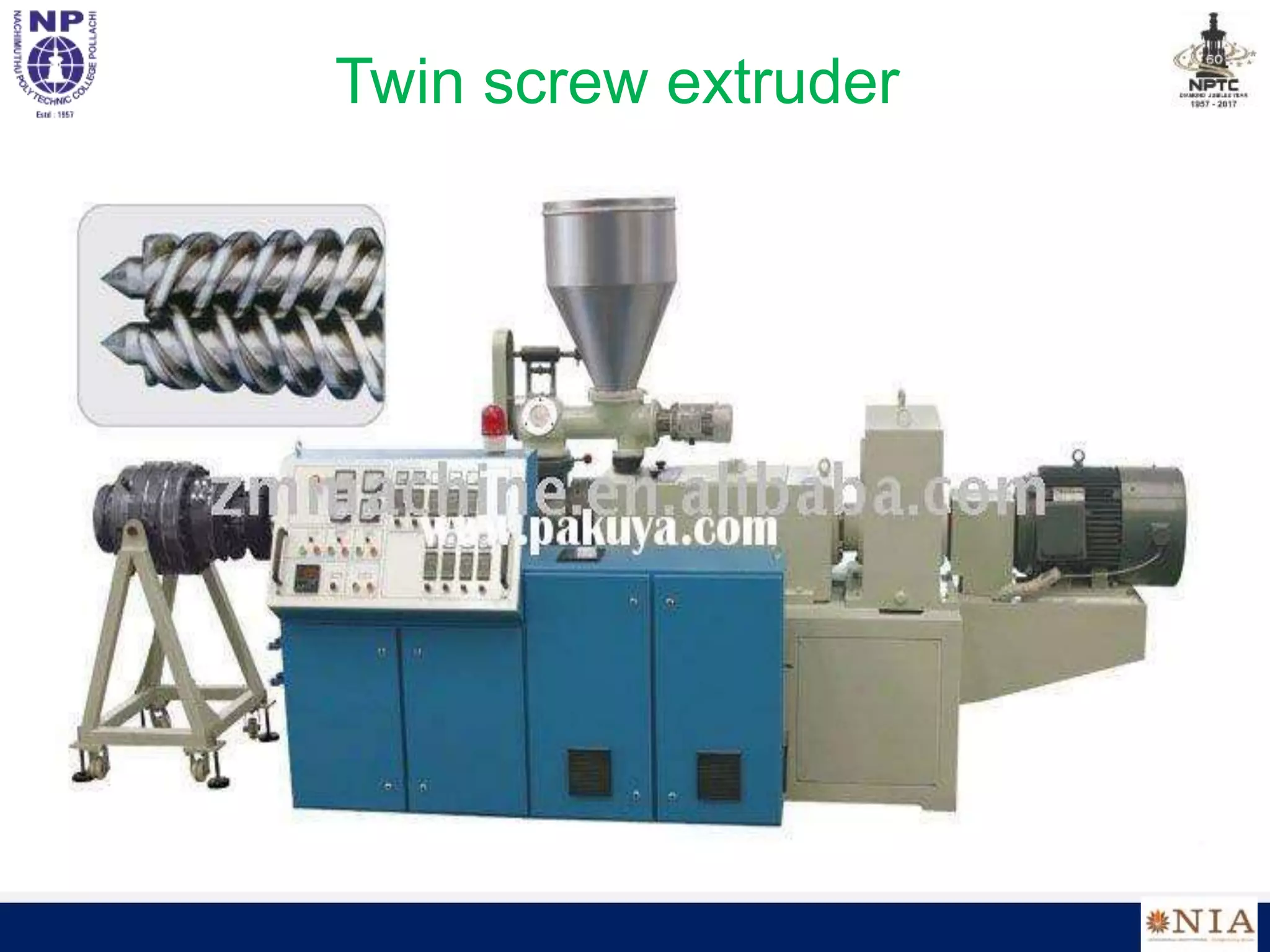
Twin screw extruder
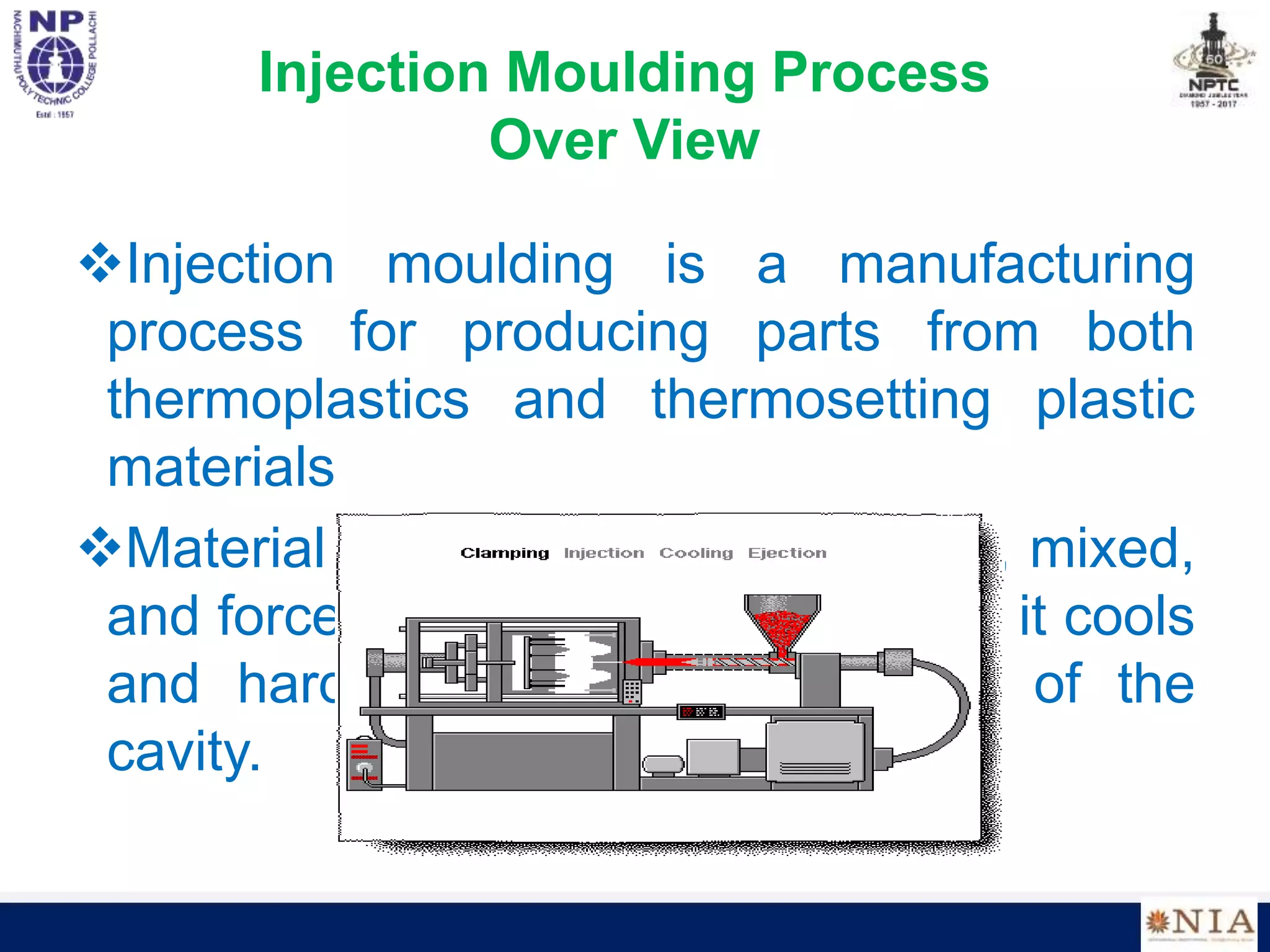
Injection Moulding Process
Over View
Injection moulding is a manufacturing
process for producing parts from both
thermoplastics and thermosetting plastic
materials
Material is fed into a heated barrel, mixed,
and forced into a mold cavity where it cools
and hardens to the configuration of the
cavity.
IT 208 Chapter 18 15
Injection Moulding
• Similar to die casting metal. Pellets are fed into heated
cylinder where they are melted.
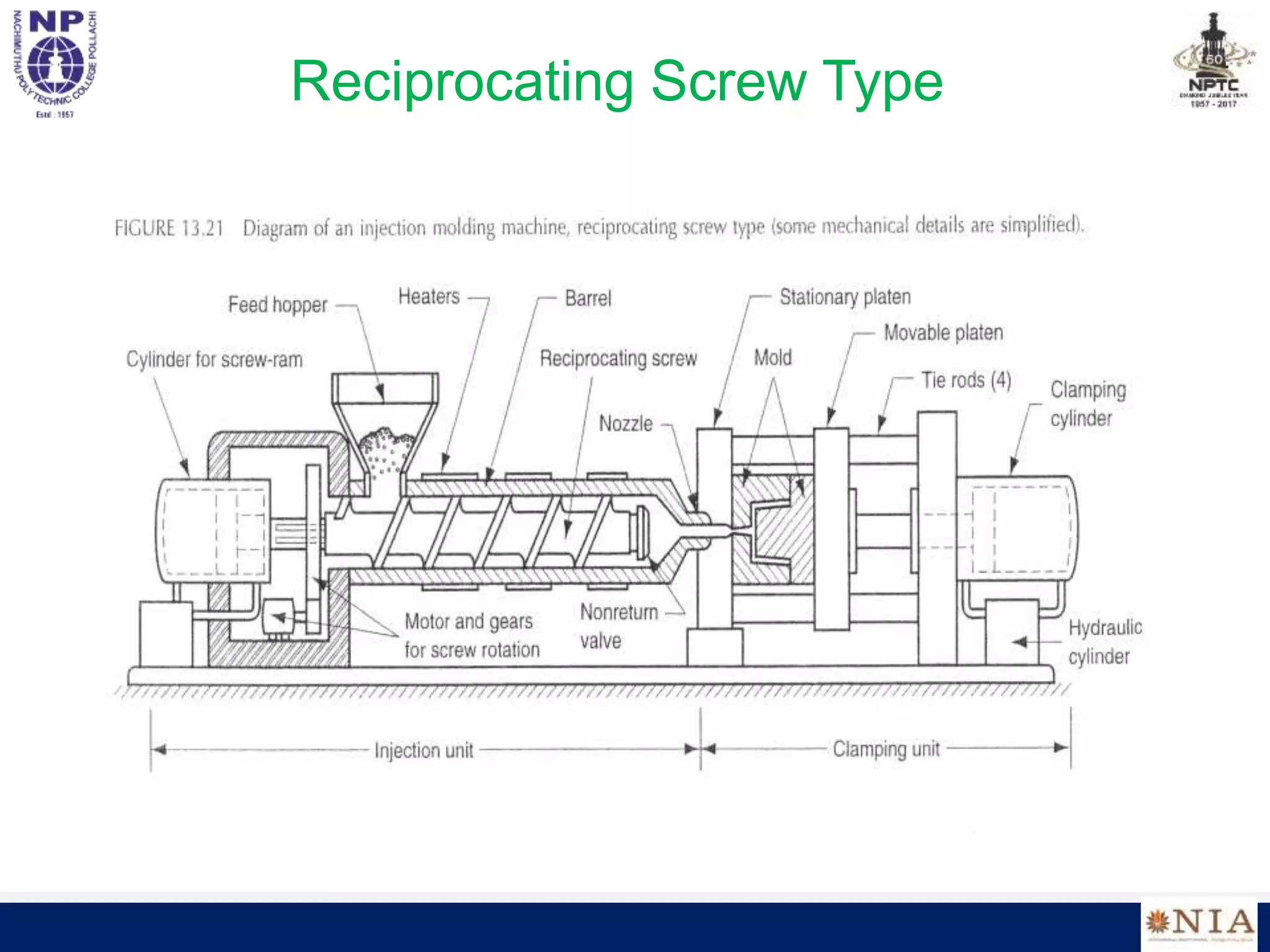
• The screw rotates much like extrusion molder (it moves
back as material in front of it are melted) then it rams
forward pushing the melted material into the die.
• most wide spread technique for making 3-D
configurations
• uses either reciprocating screw or reciprocating plunger
(RAM)
• rated by clamping pressure of die
Type of Injection Moulding Machine
Hand Injection Moulding M/C
Plunger type Injection Moulding M/C
Reciprocating Screw Type Injection Moulding M/C
Structural foam type
Sandwich moulding
Gas moulding
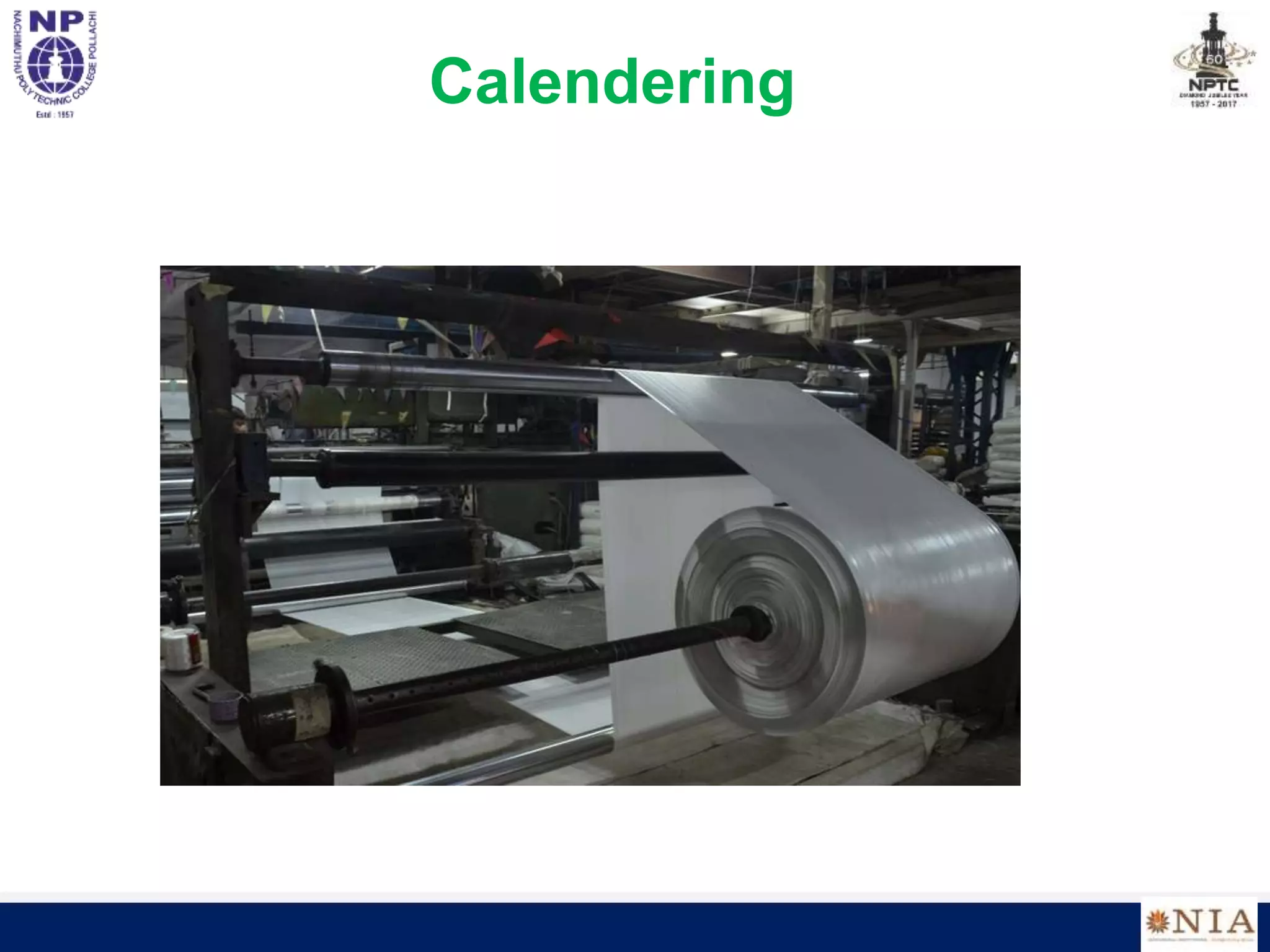
Calendering
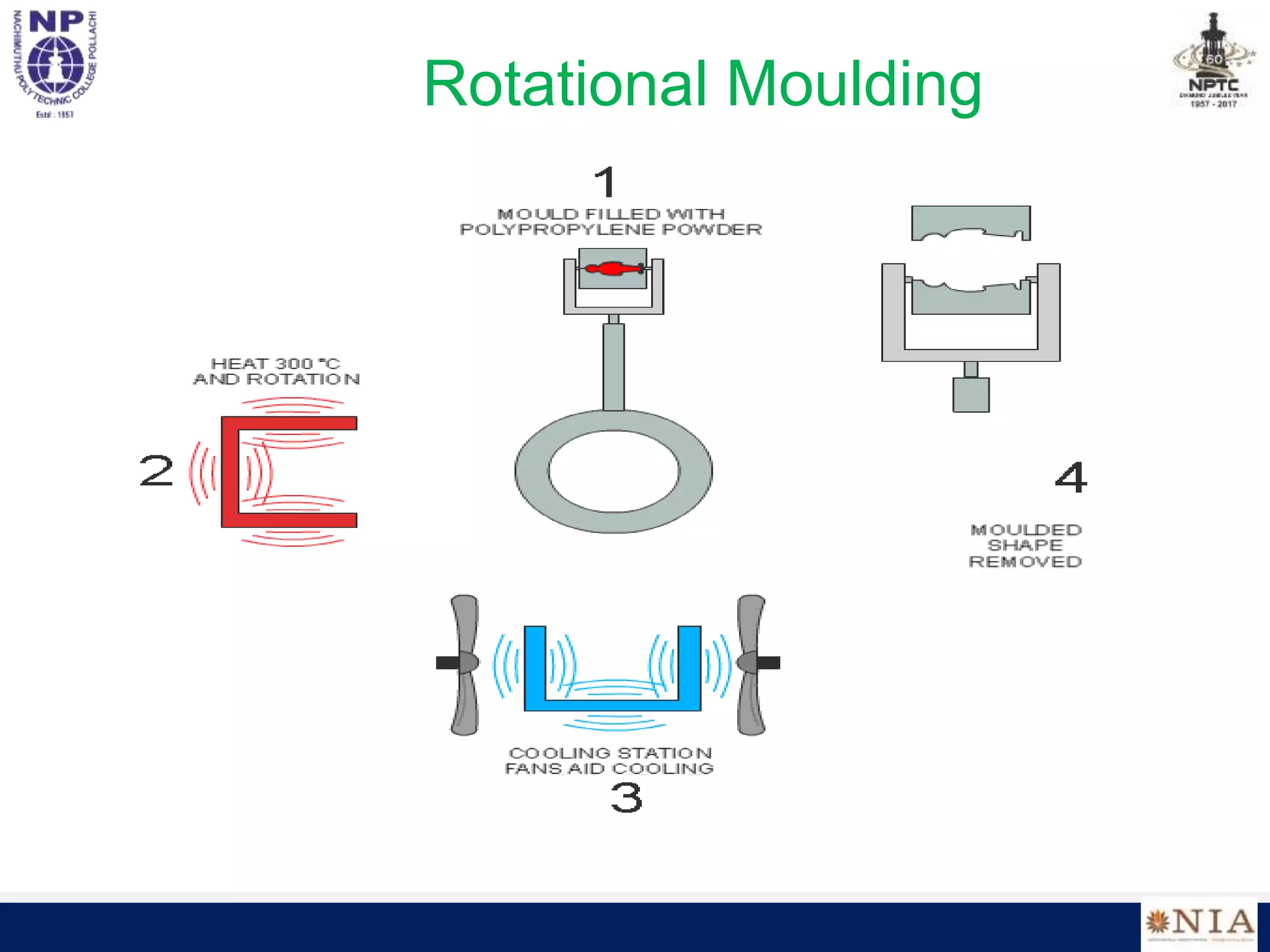
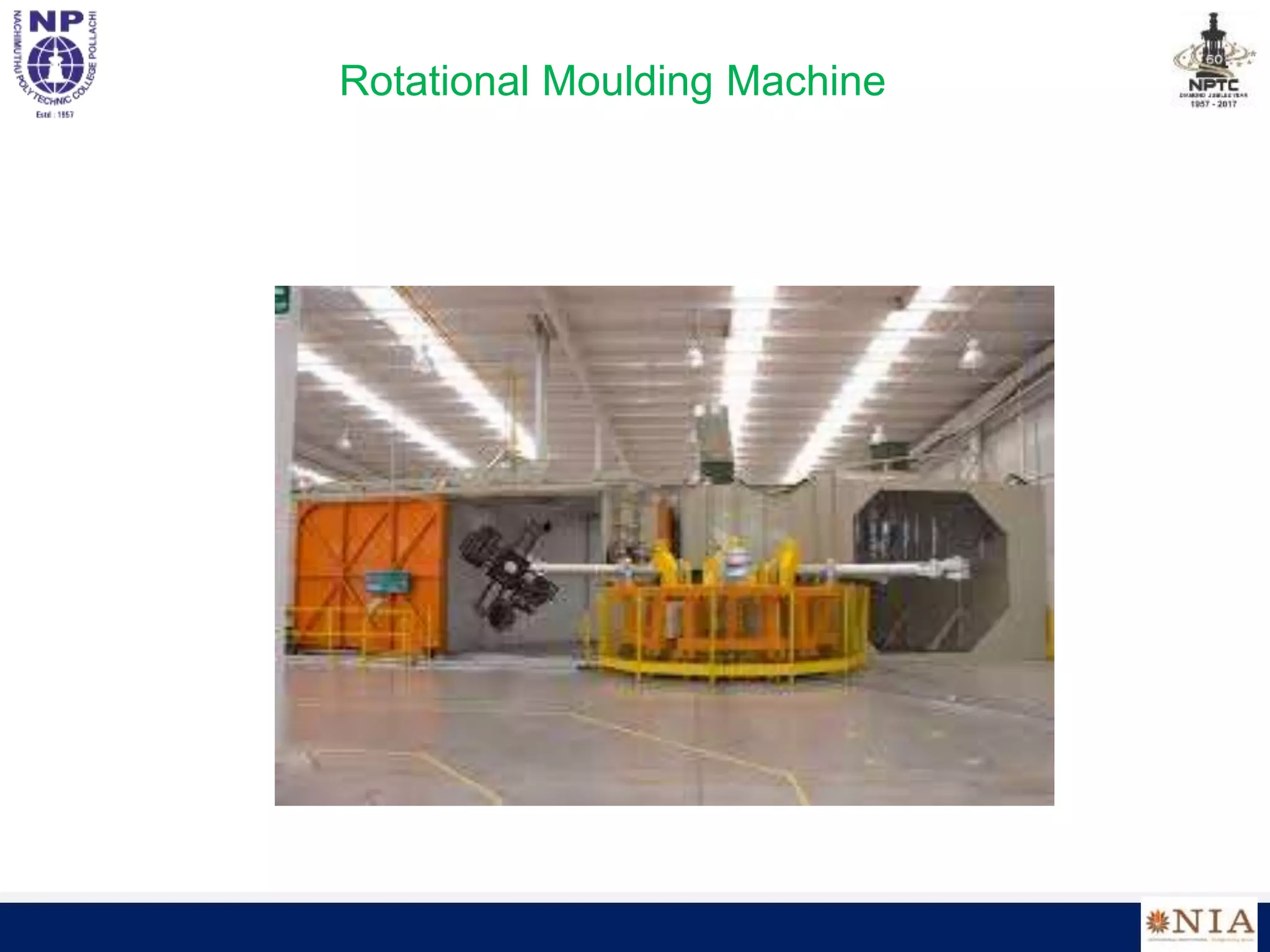
Rotational moulding
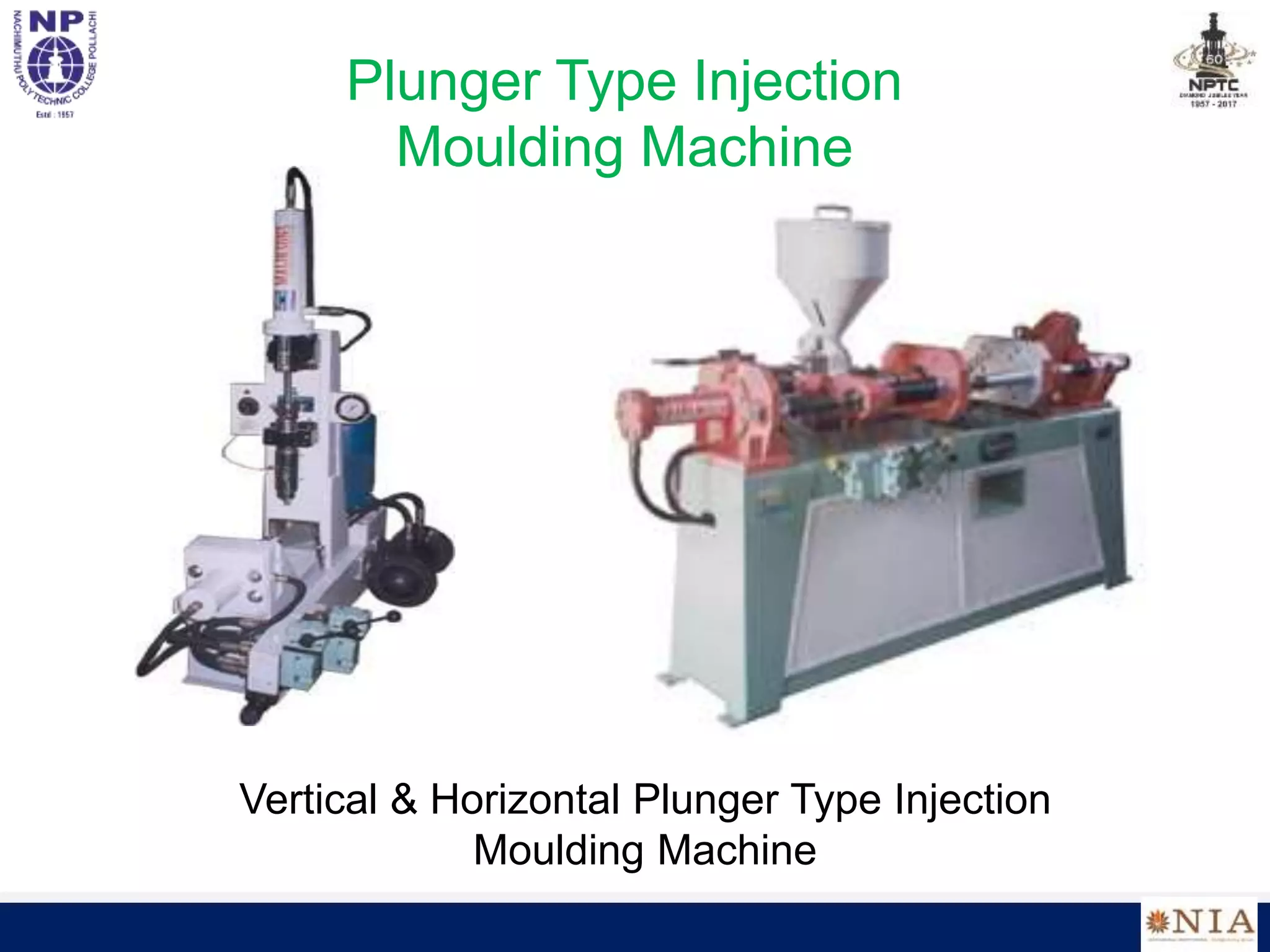
Plunger Type Injection
Moulding Machine
Vertical & Horizontal Plunger Type Injection
Moulding Machine
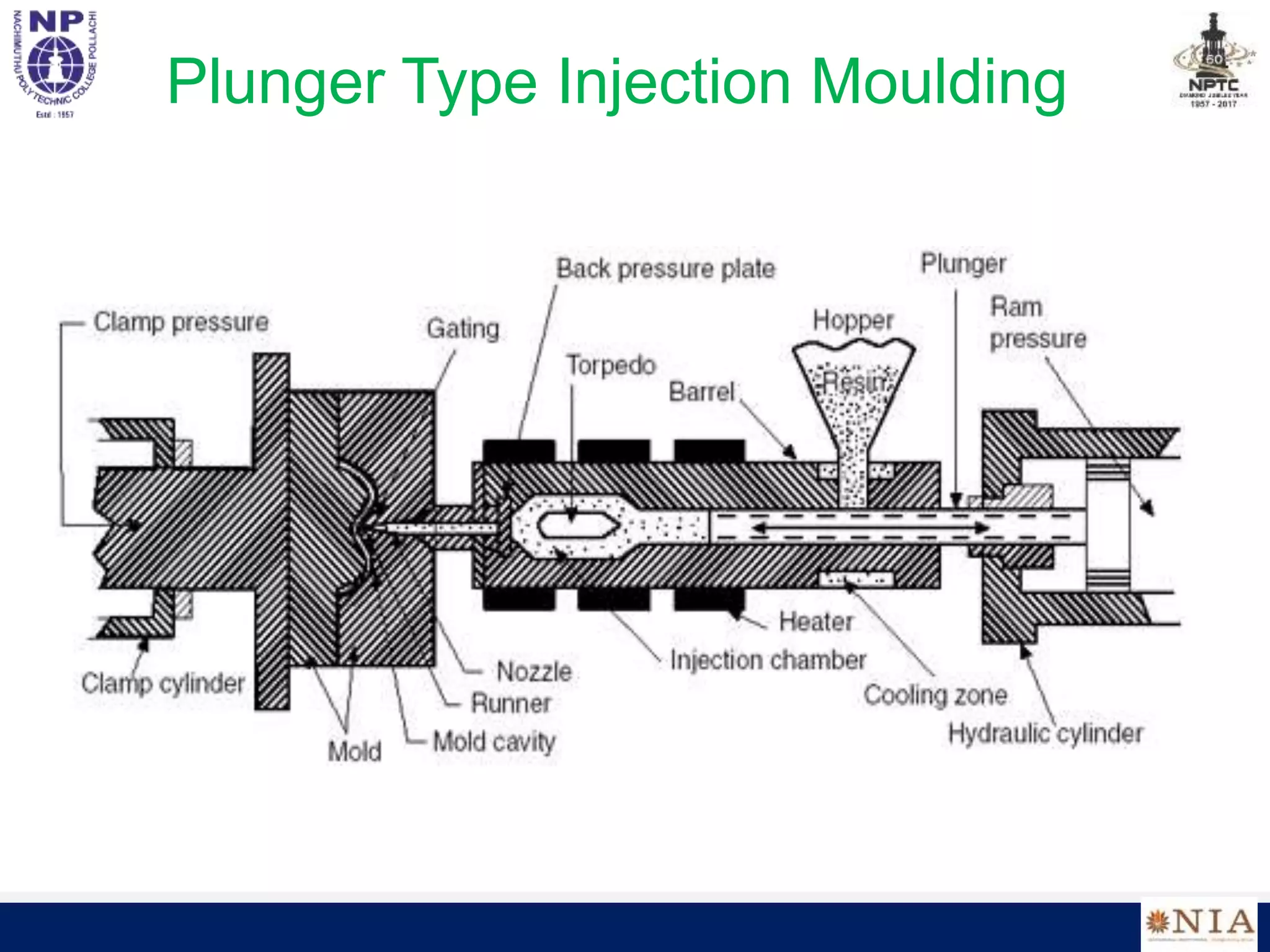
Plunger Type Injection Moulding
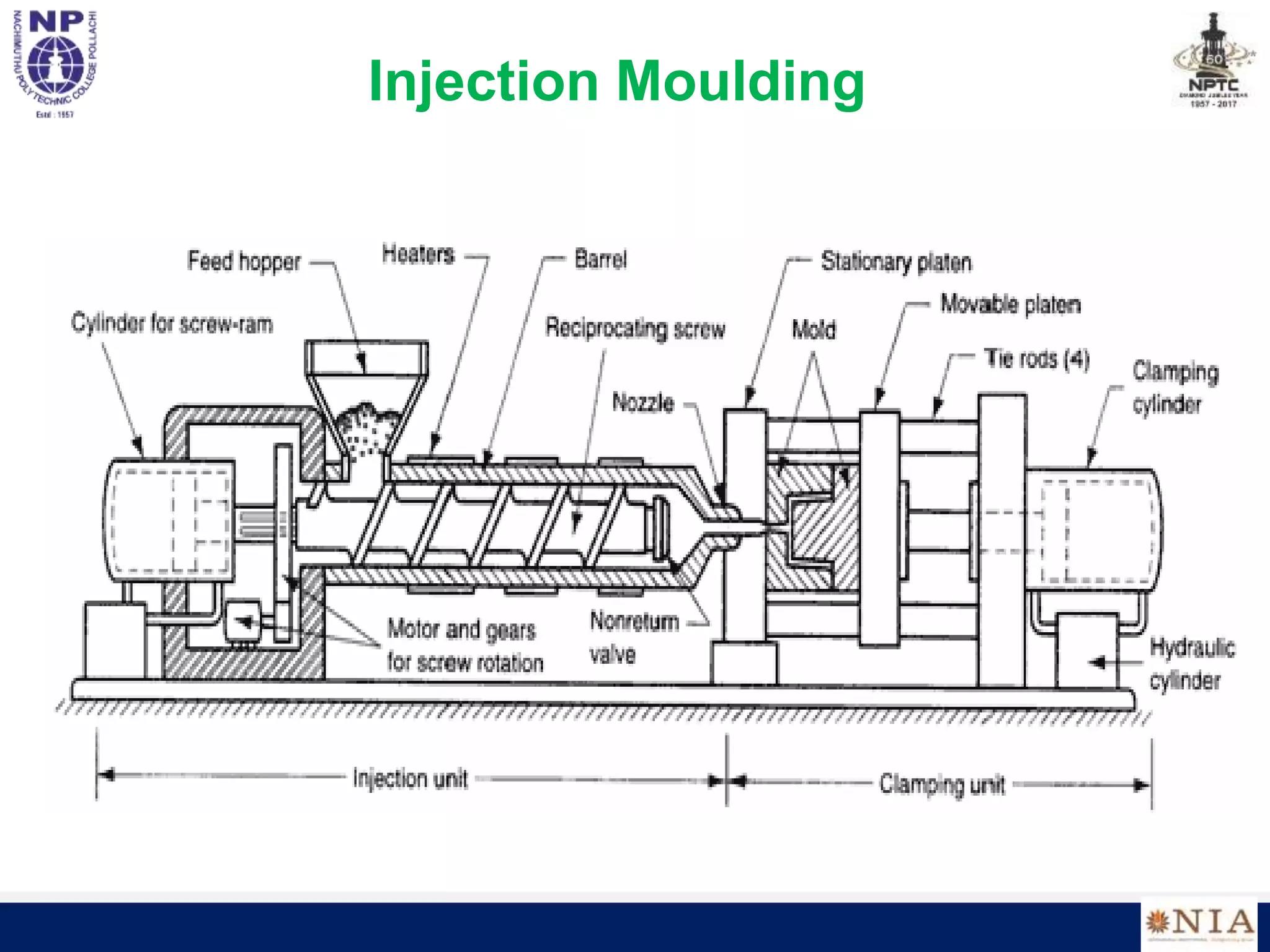
Injection Moulding
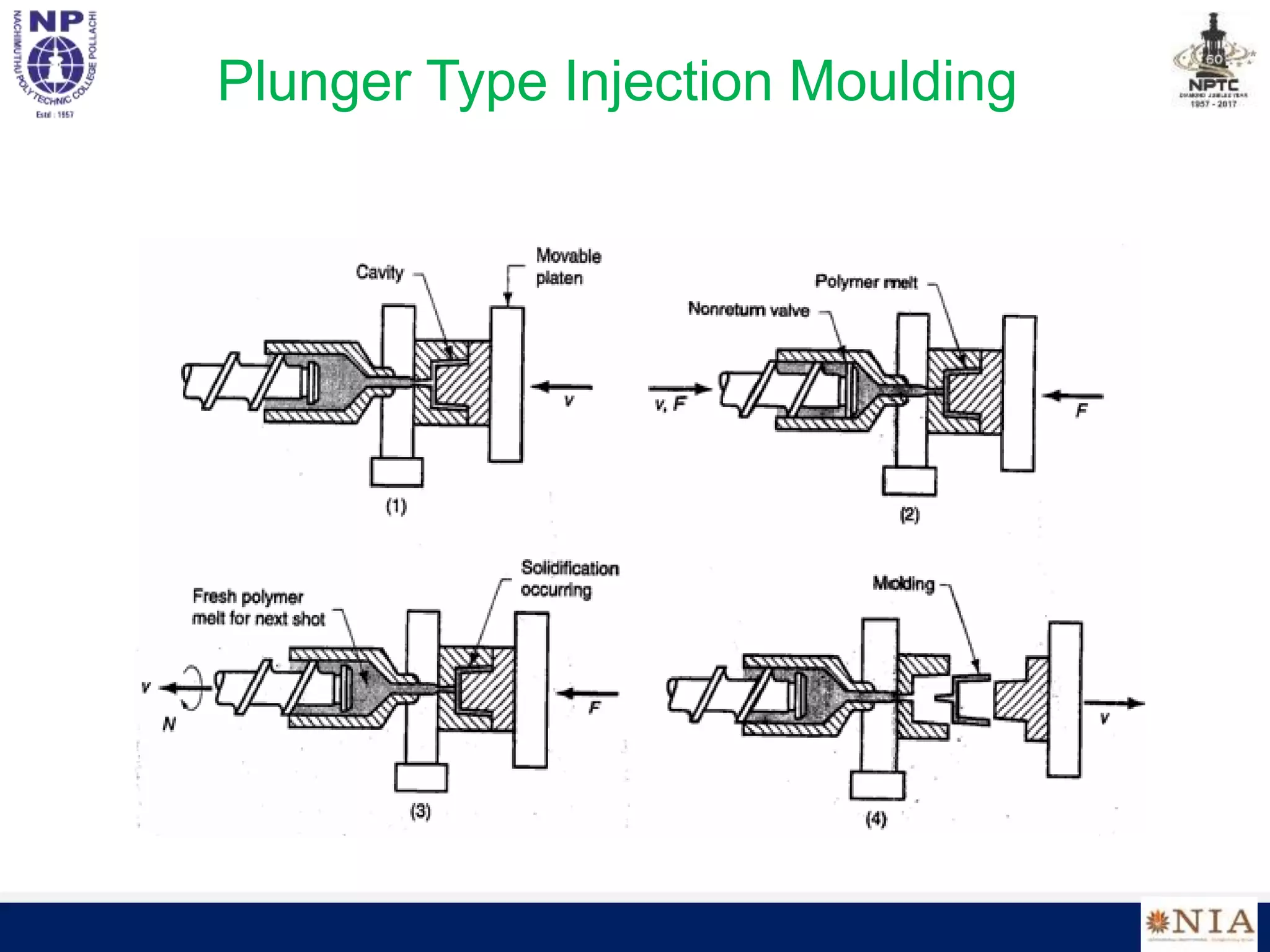
Plunger Type Injection Moulding
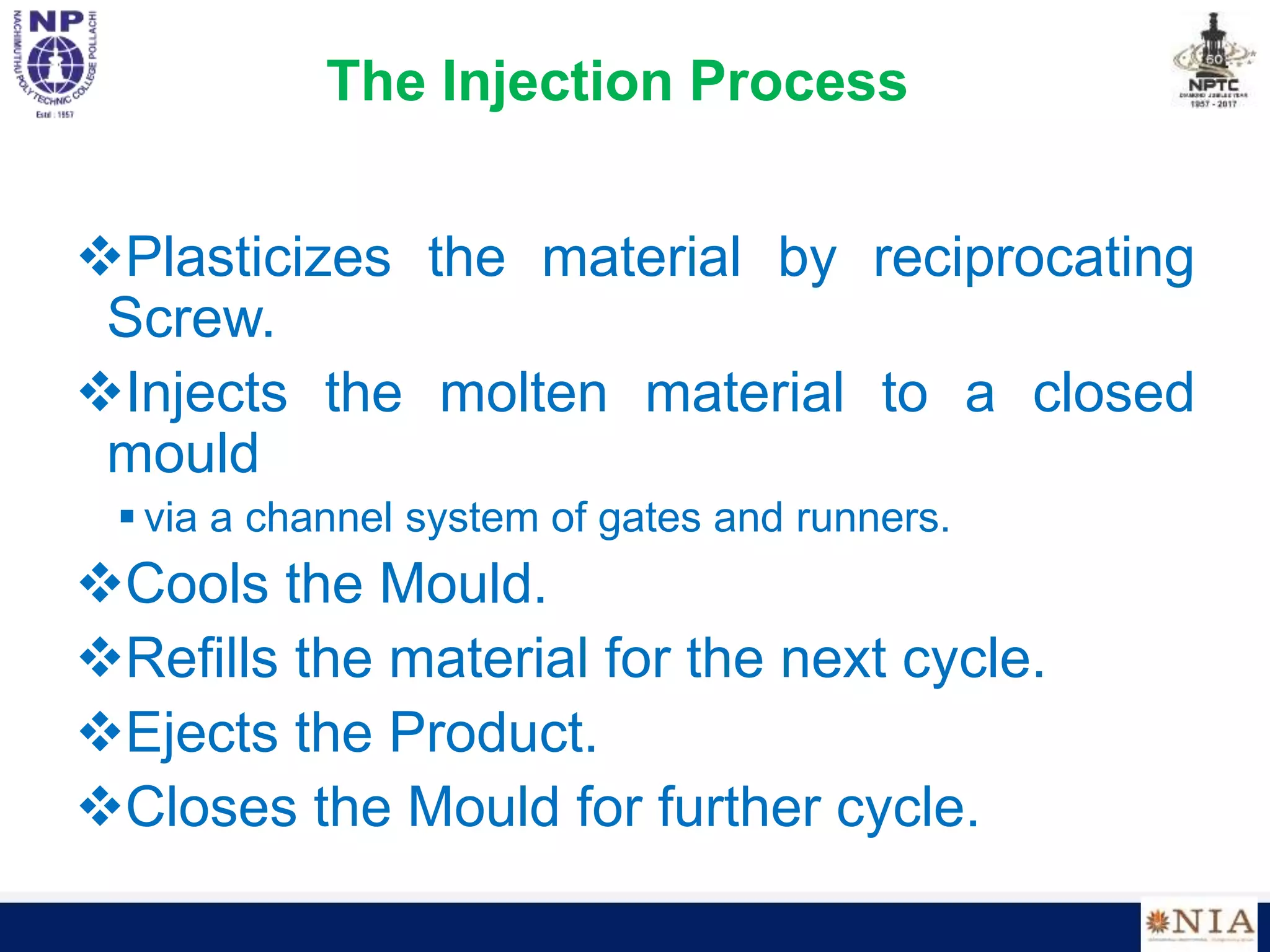
The Injection Process
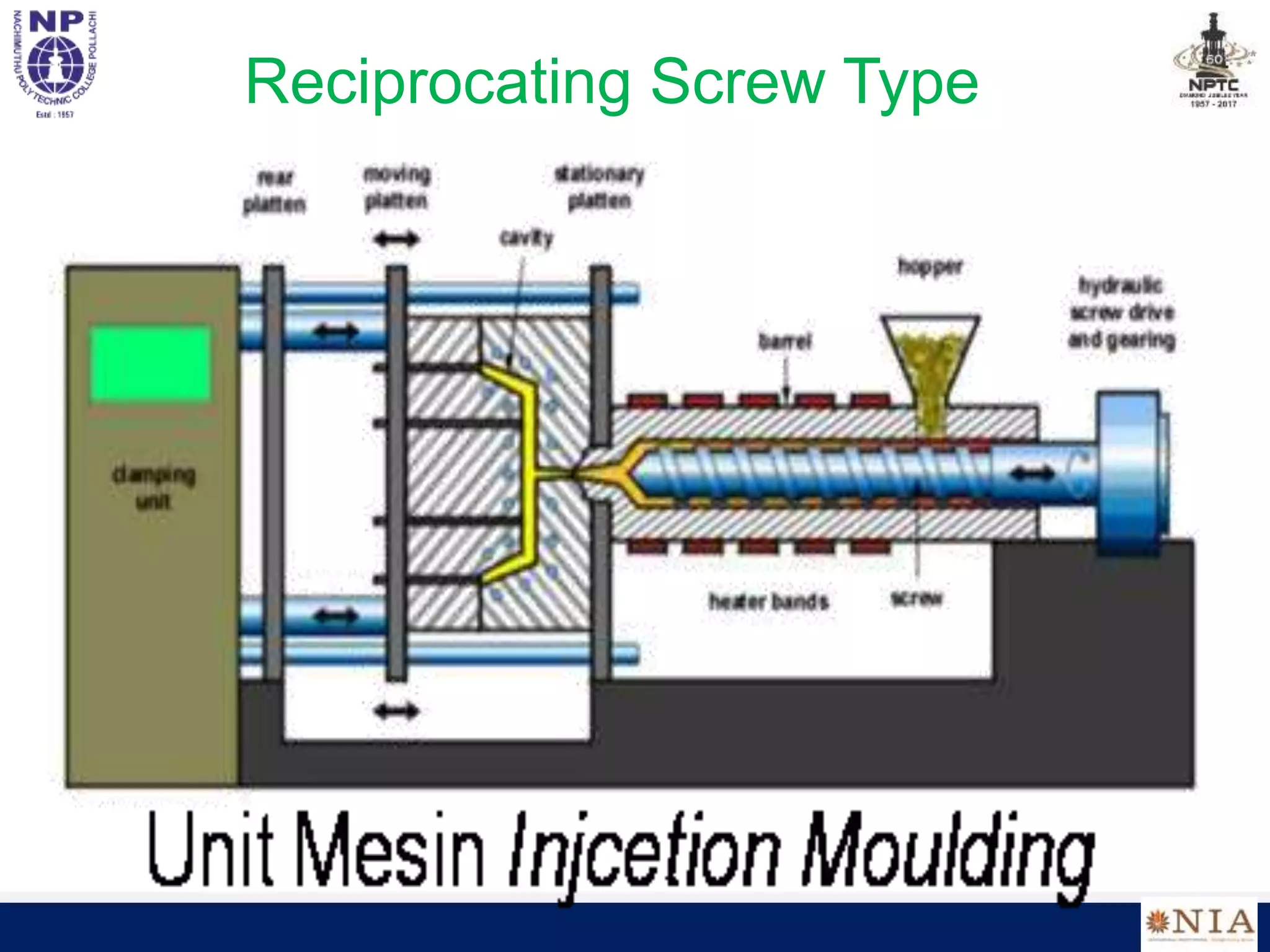
Plasticizes the material by reciprocating
Screw.
Injects the molten material to a closed
mould
 via a channel system of gates and runners.
Cools the Mould.
Refills the material for the next cycle.
Ejects the Product.
Closes the Mould for further cycle.
Injection Moulding Process sequence
Mould closing
Injection
Cooling
Mould opening
Ejection
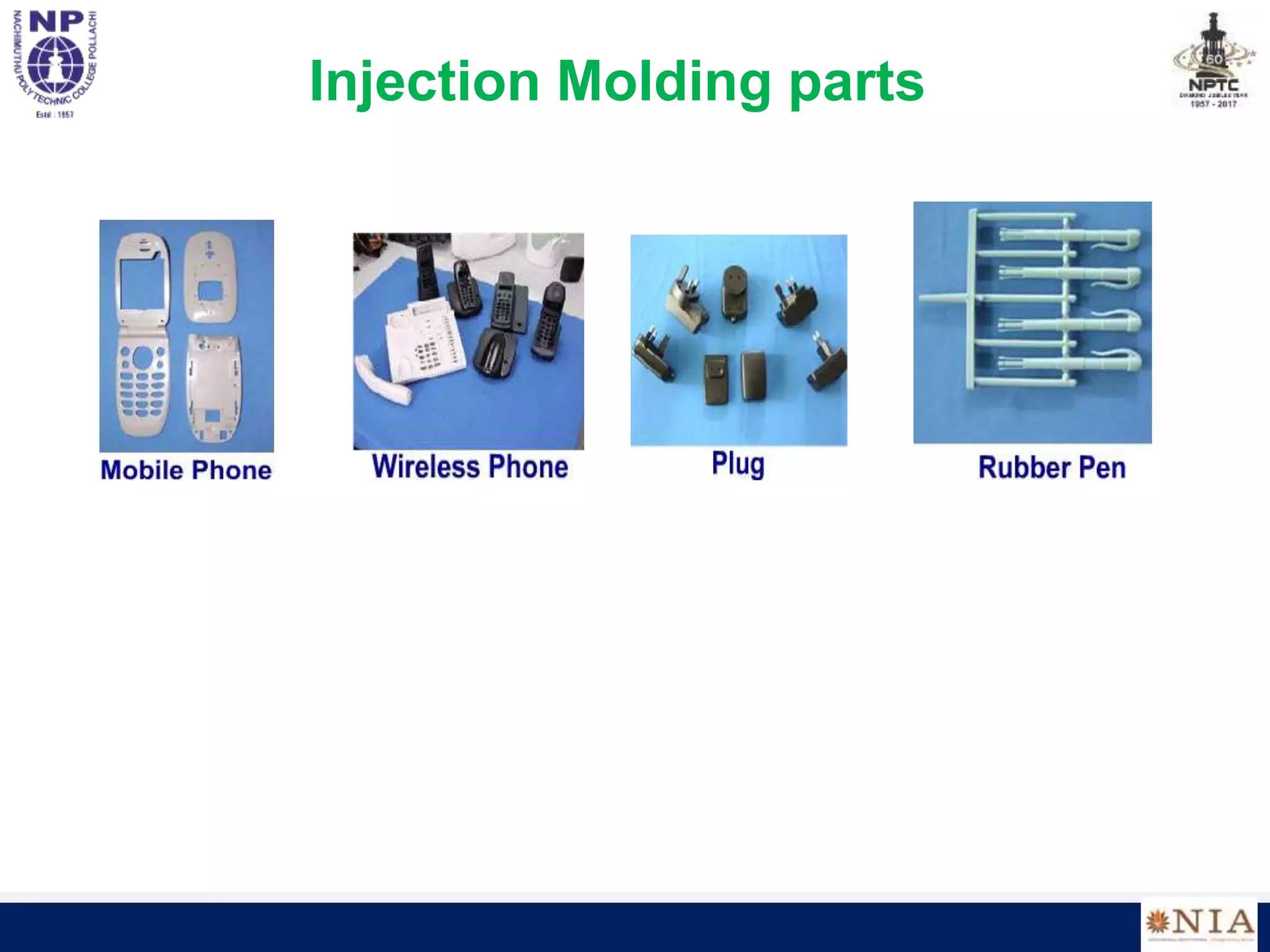
Injection Molding parts
Reciprocating Screw Type
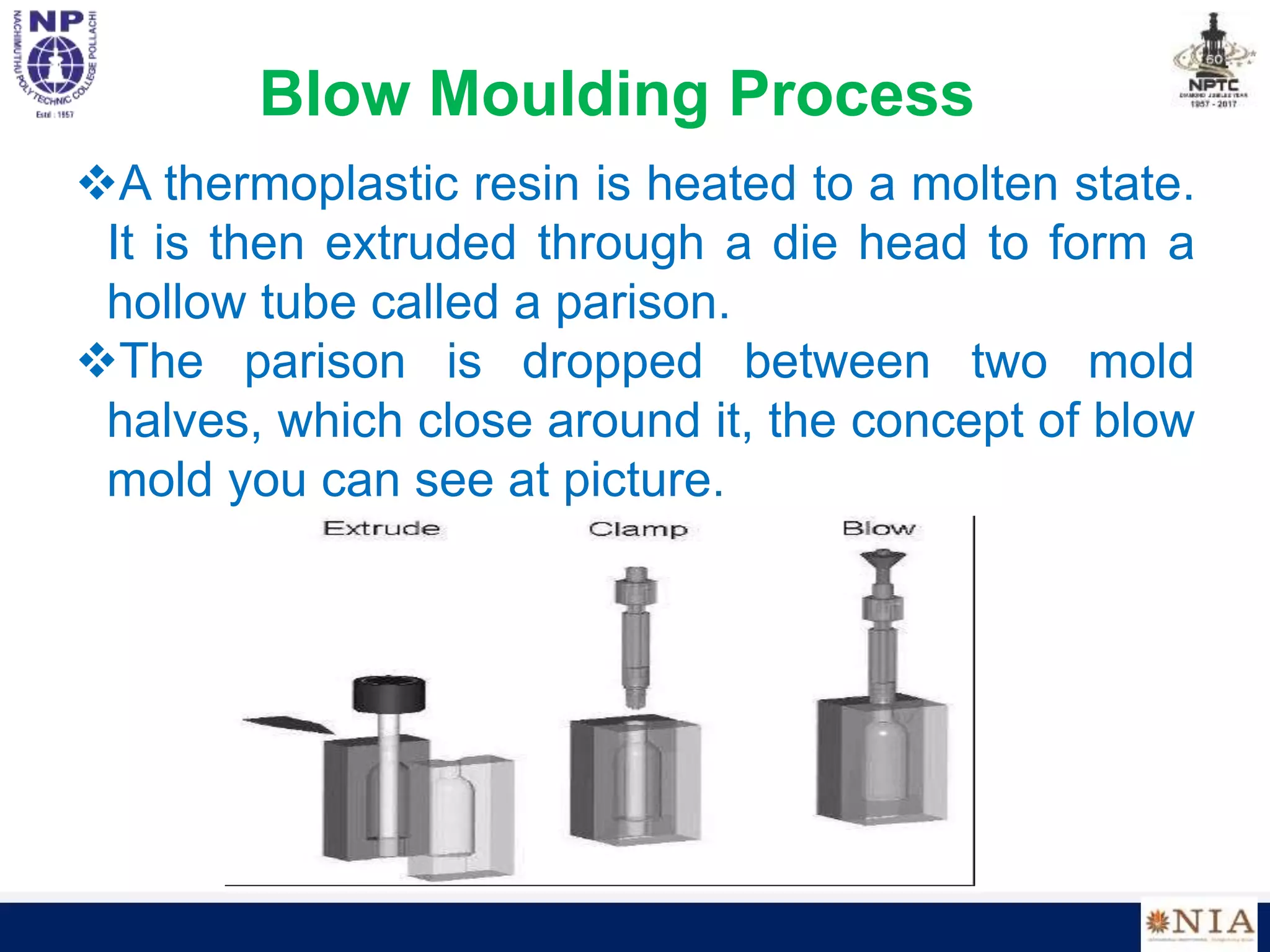
Blow Moulding Process
A thermoplastic resin is heated to a molten state.
It is then extruded through a die head to form a
hollow tube called a parison.
The parison is dropped between two mold
halves, which close around it, the concept of blow
mold you can see at picture.
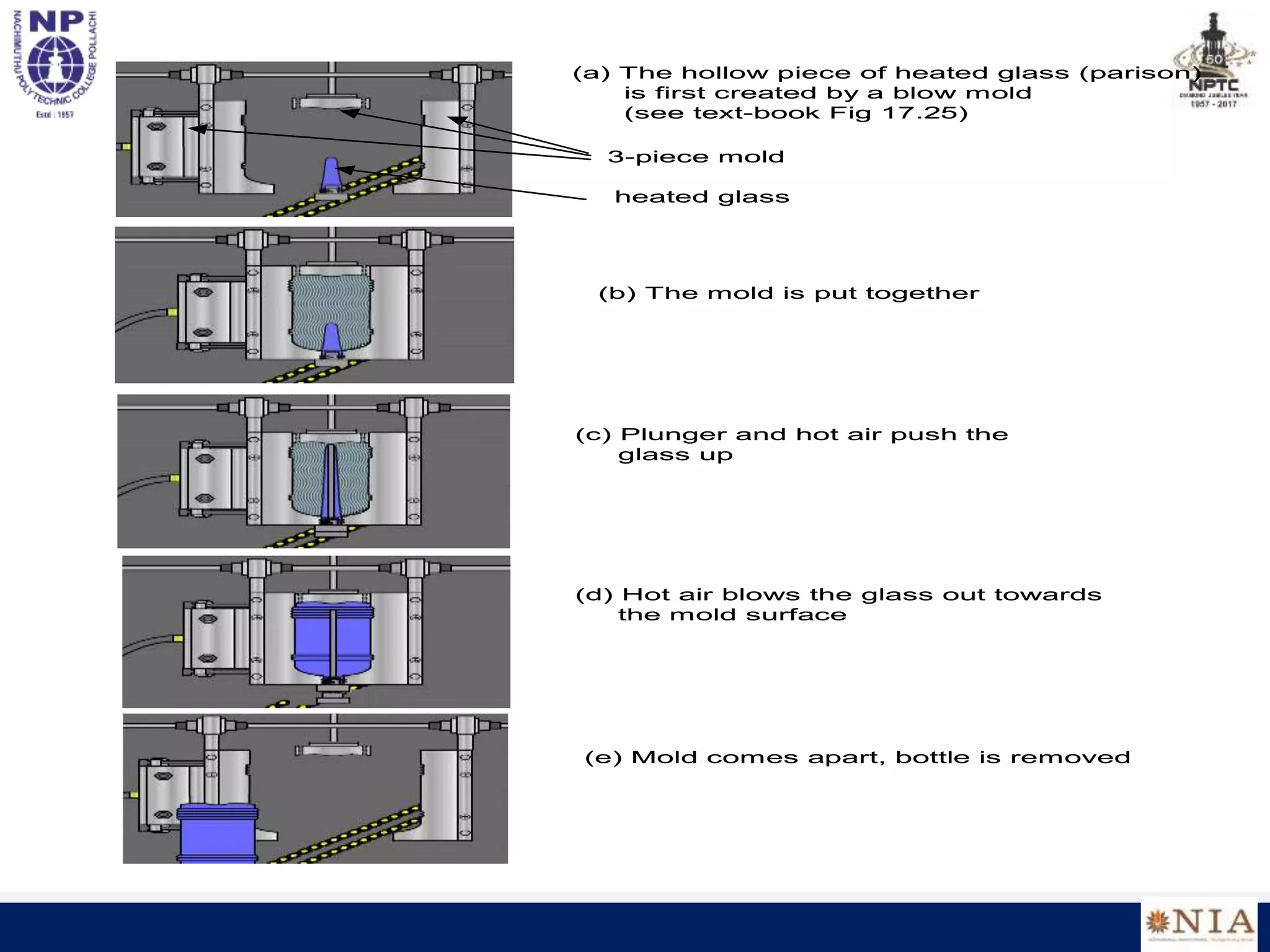
heated glass
3-piece mold
(a) The hollow piece of heated glass (parison)
is first created by a blow mold
(see text-book Fig 17.25)
(b) The mold is put together
(c) Plunger and hot air push the
glass up
(d) Hot air blows the glass out towards
the mold surface
(e) Mold comes apart, bottle is removed
heated glass
3-piece mold
(a) The hollow piece of heated glass (parison)
is first created by a blow mold
(see text-book Fig 17.25)
(b) The mold is put together
(c) Plunger and hot air push the
glass up
(d) Hot air blows the glass out towards
the mold surface
(e) Mold comes apart, bottle is removed
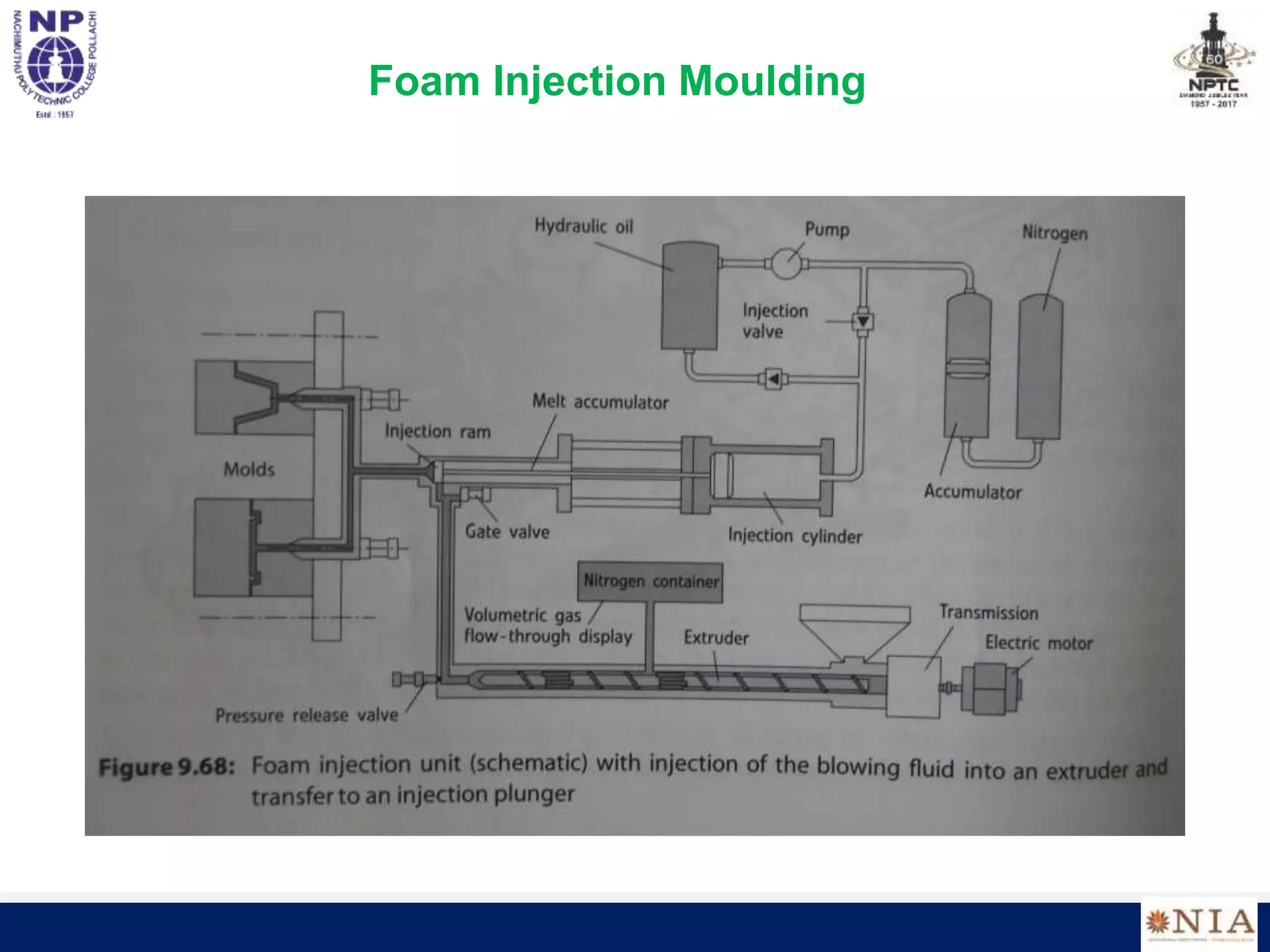
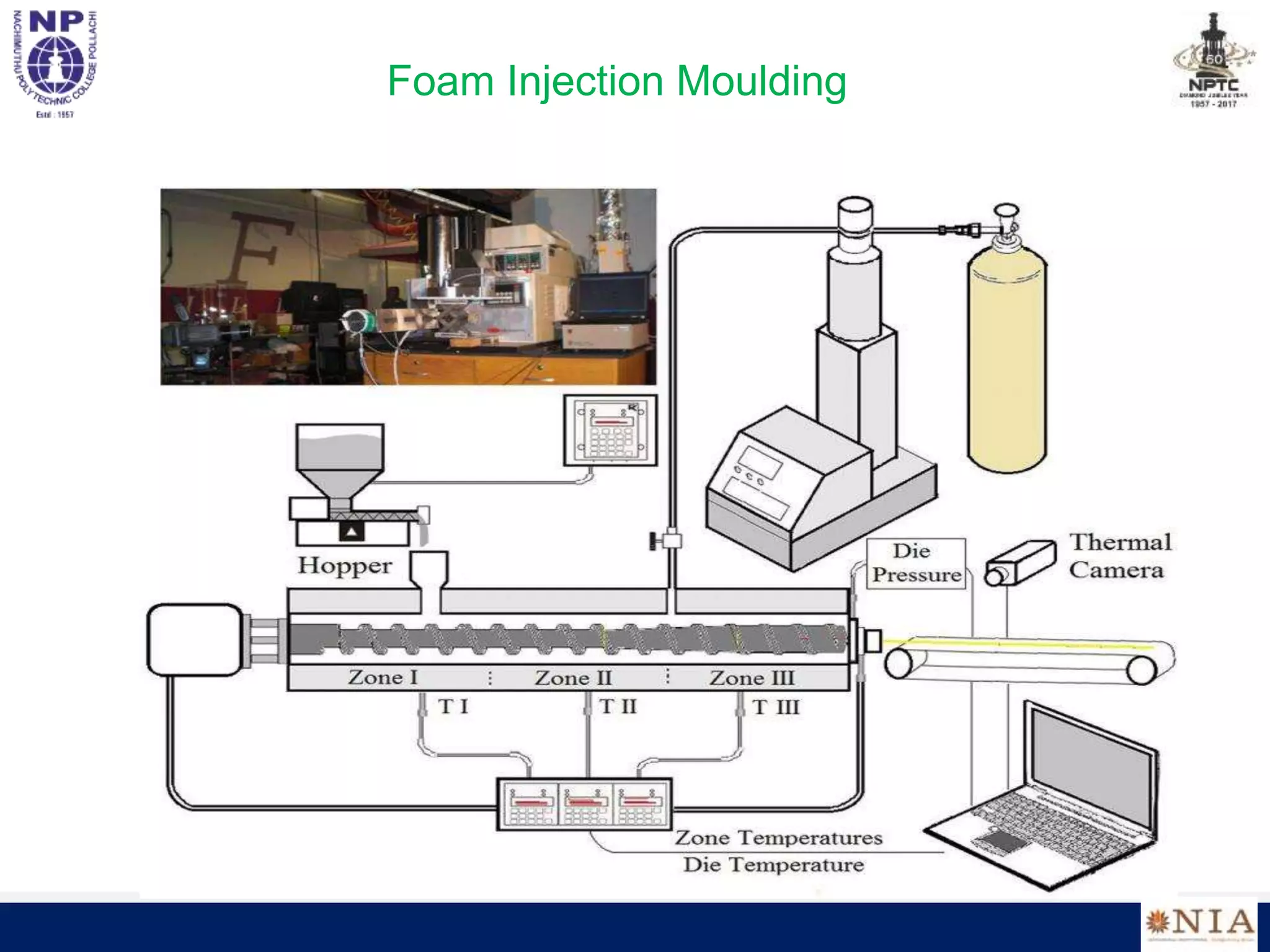
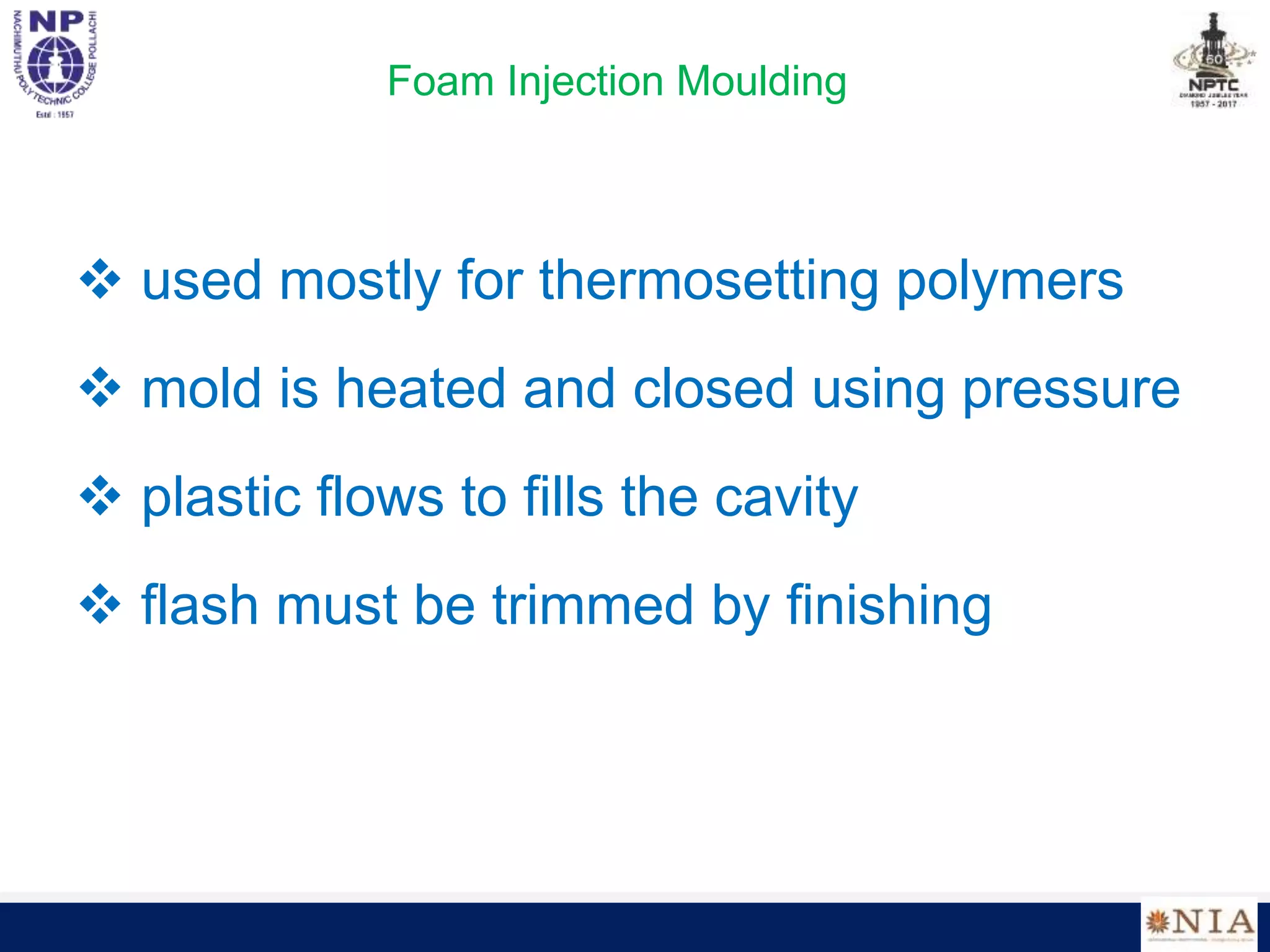
Foam Injection Moulding
 used mostly for thermosetting polymers
 mold is heated and closed using pressure
 plastic flows to fills the cavity
 flash must be trimmed by finishing
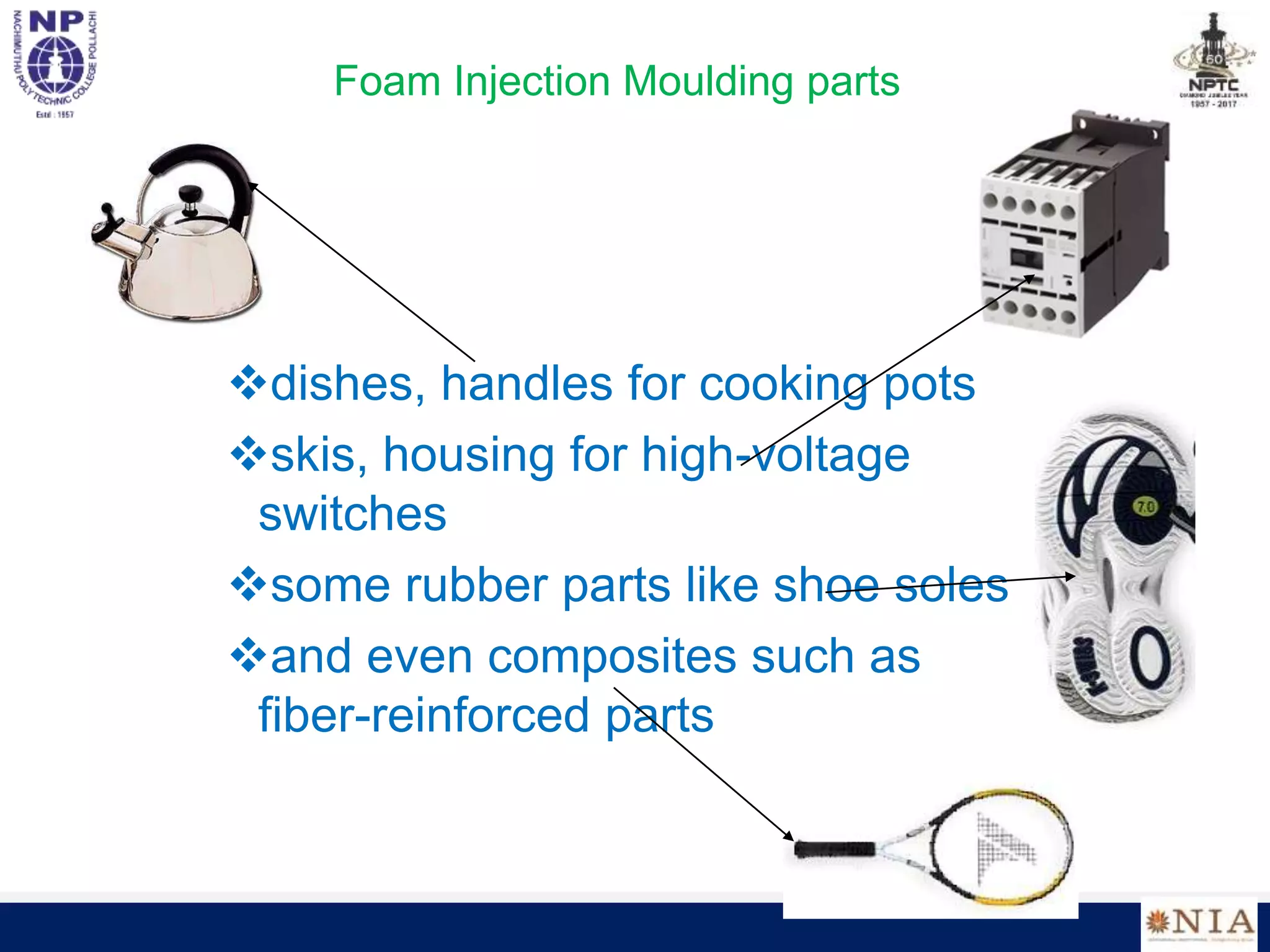
Foam Injection Moulding parts
dishes, handles for cooking pots
skis, housing for high-voltage
switches
some rubber parts like shoe soles
and even composites such as
fiber-reinforced parts
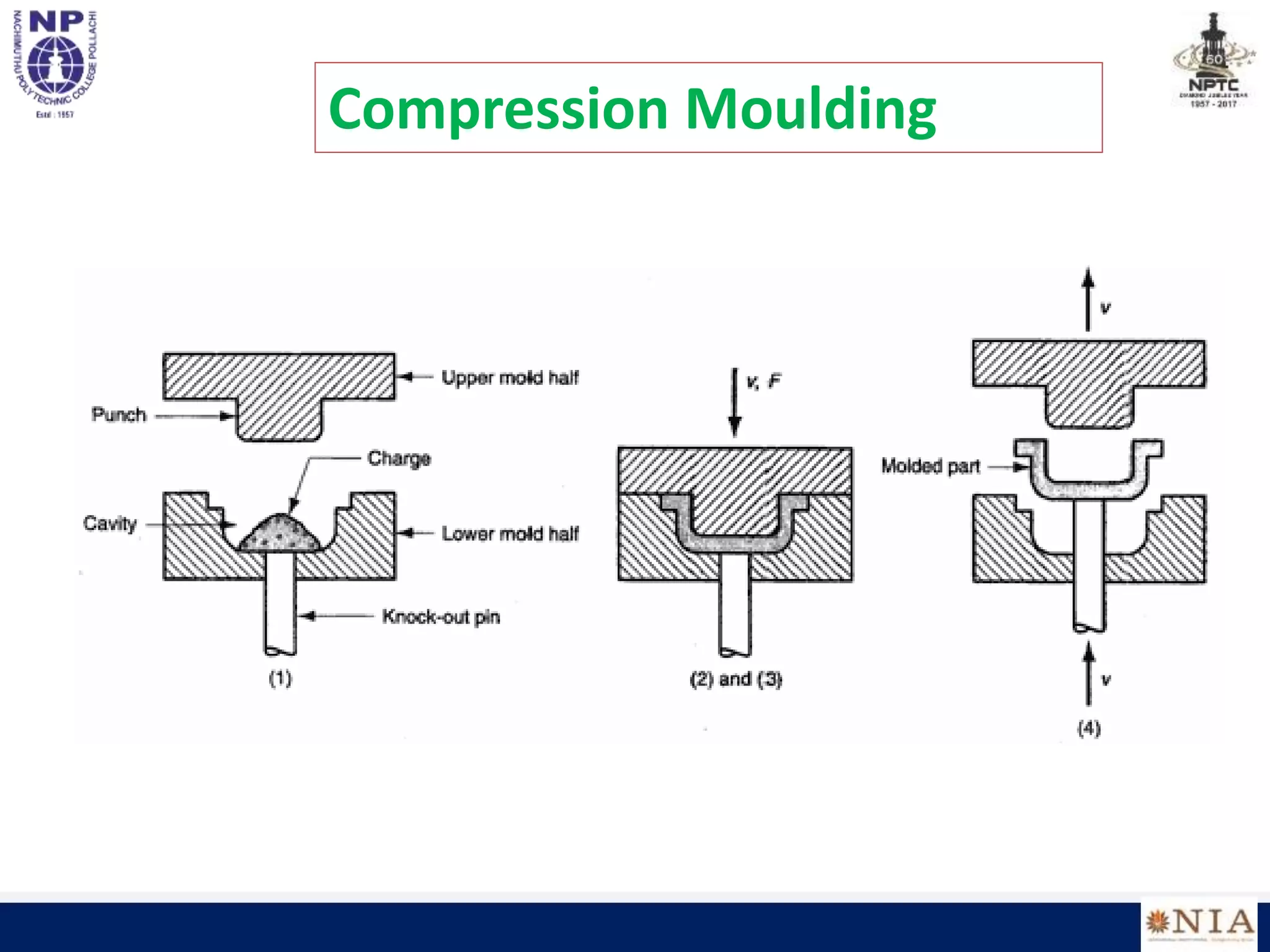
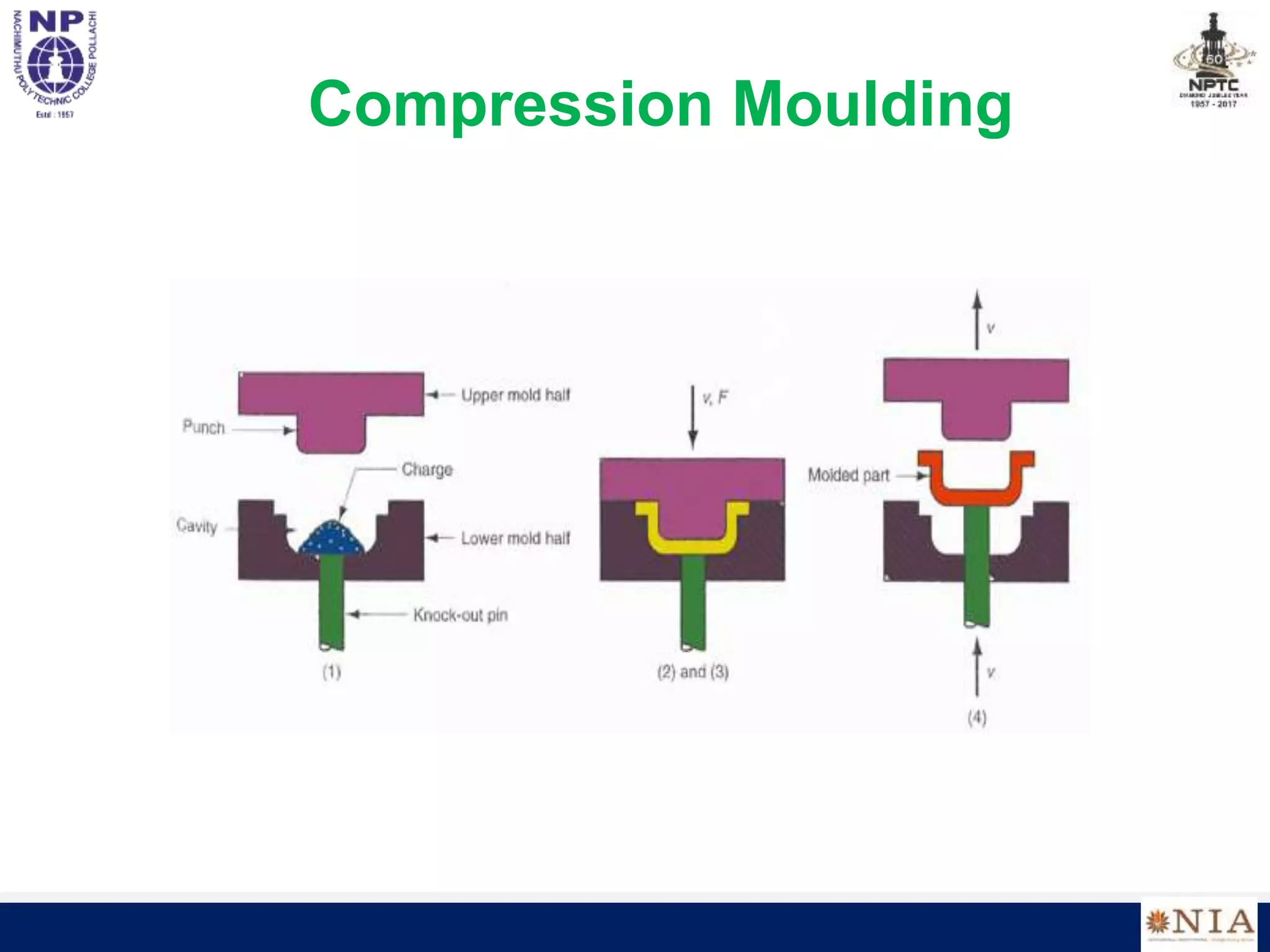
Compression Moulding
Compression moulding is a method of
moulding in which the plastic, generally
preheated, is first placed in an open, heated
mould cavity, they are four step in
compression moulds they are loaded
charge, charge compressed, cured the
charge and ejecting process of product. the
main construction is Punch (cavity side),
core moulds and ejection system.
Compression Moulding
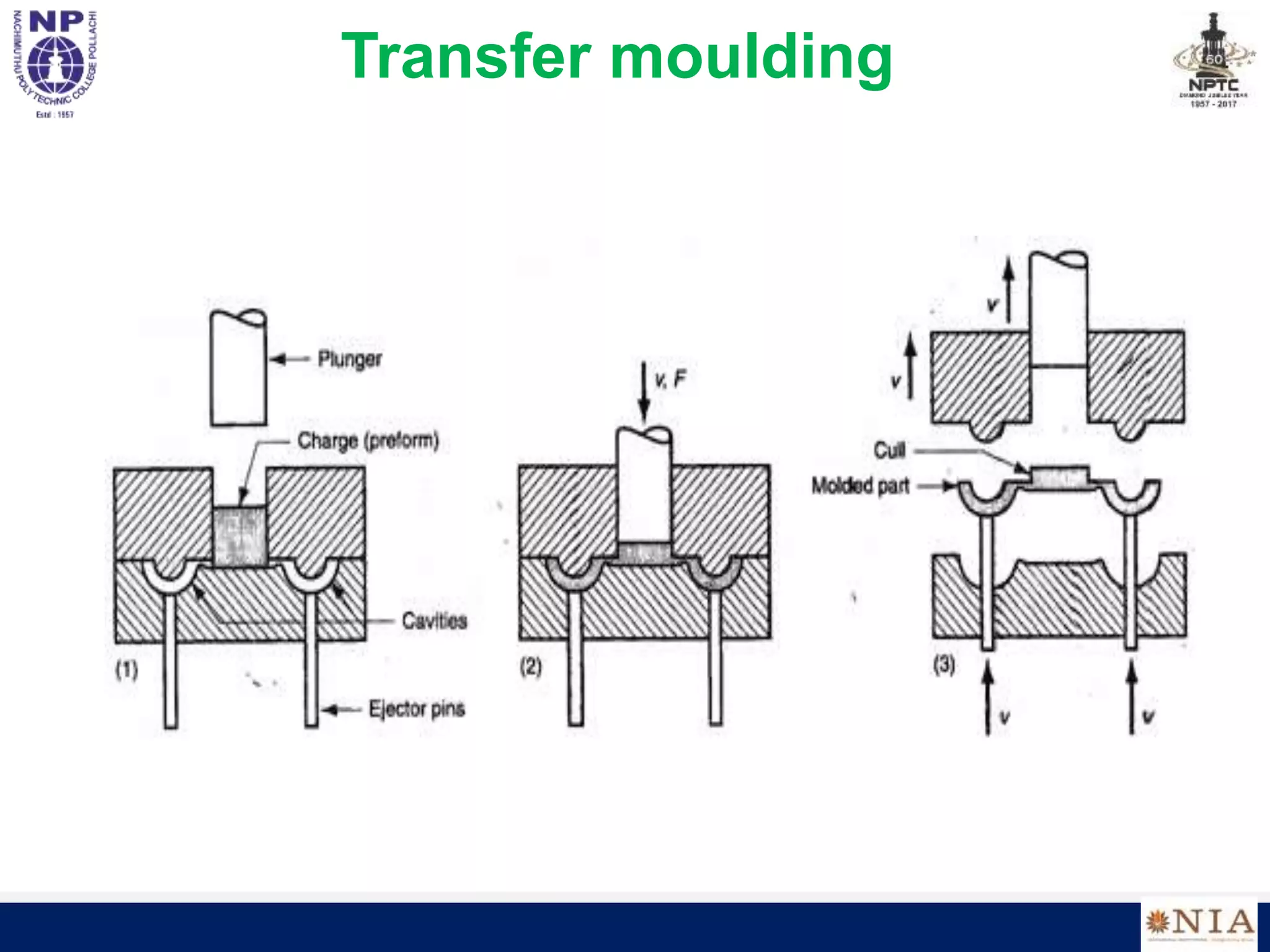
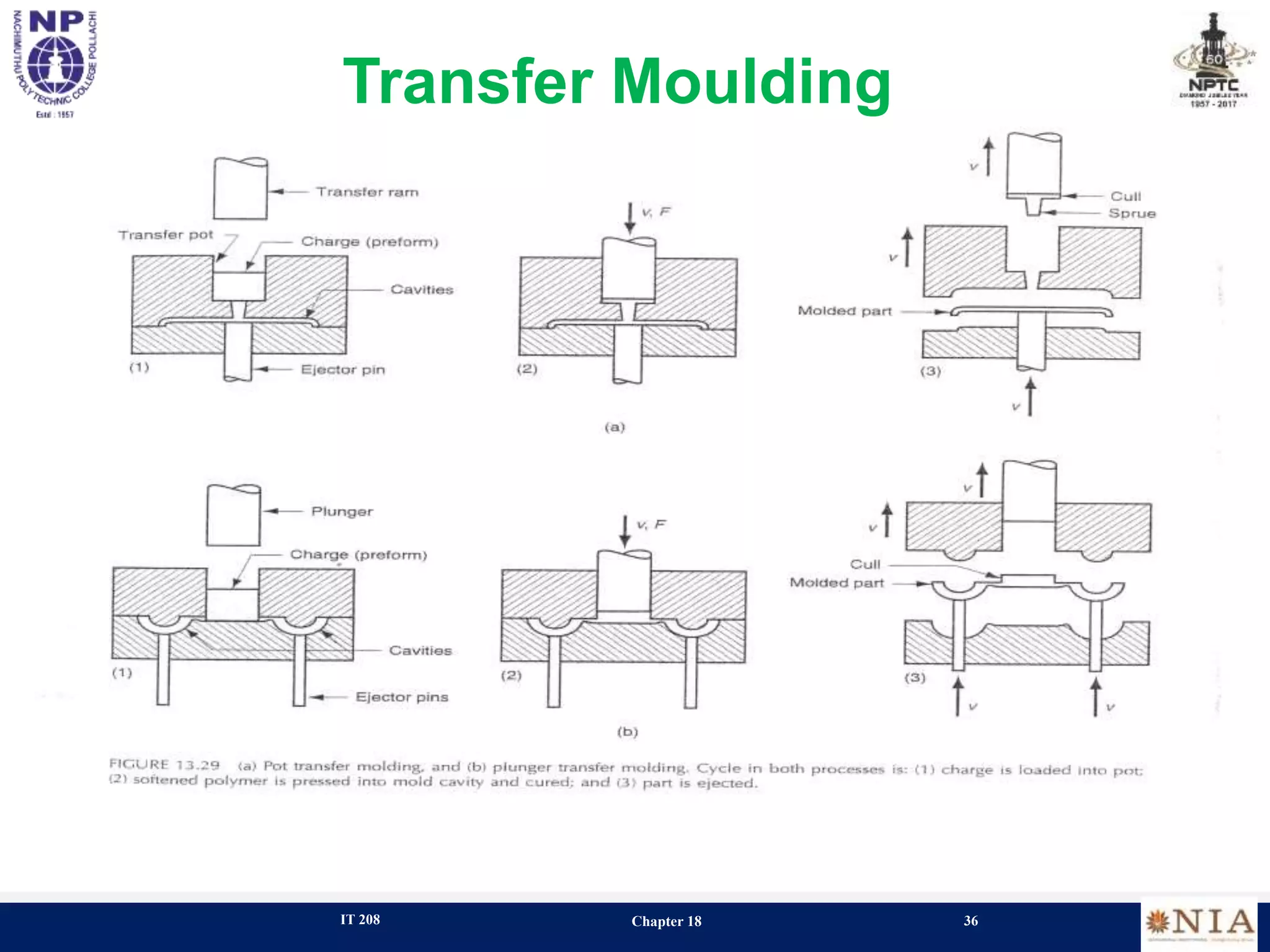
Transfer moulding
IT 208 Chapter 18 36
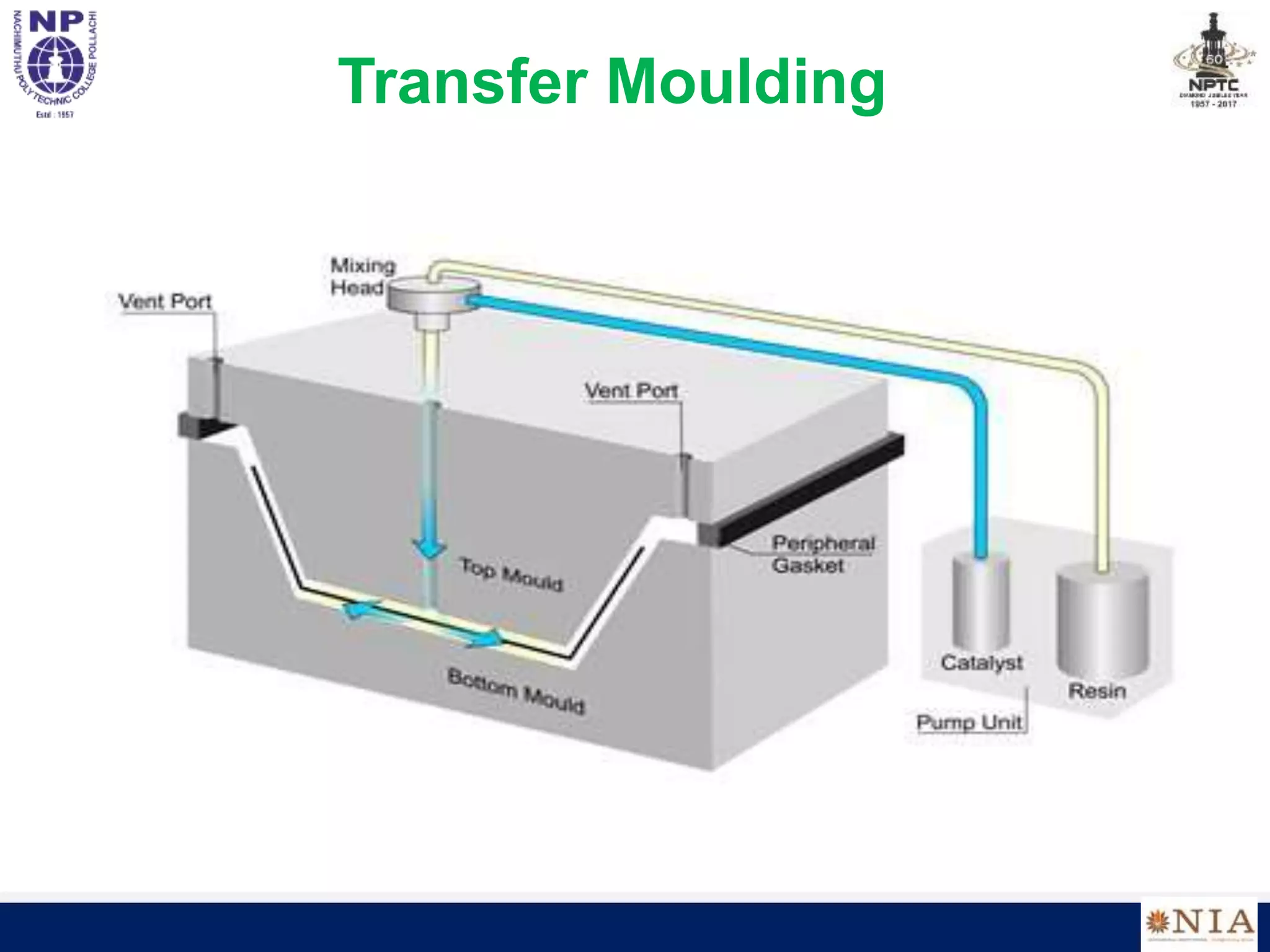
Transfer Moulding
Transfer Moulding
Gas moulding
Similar to Blow Moulding
Uses Inert gas instead of Air
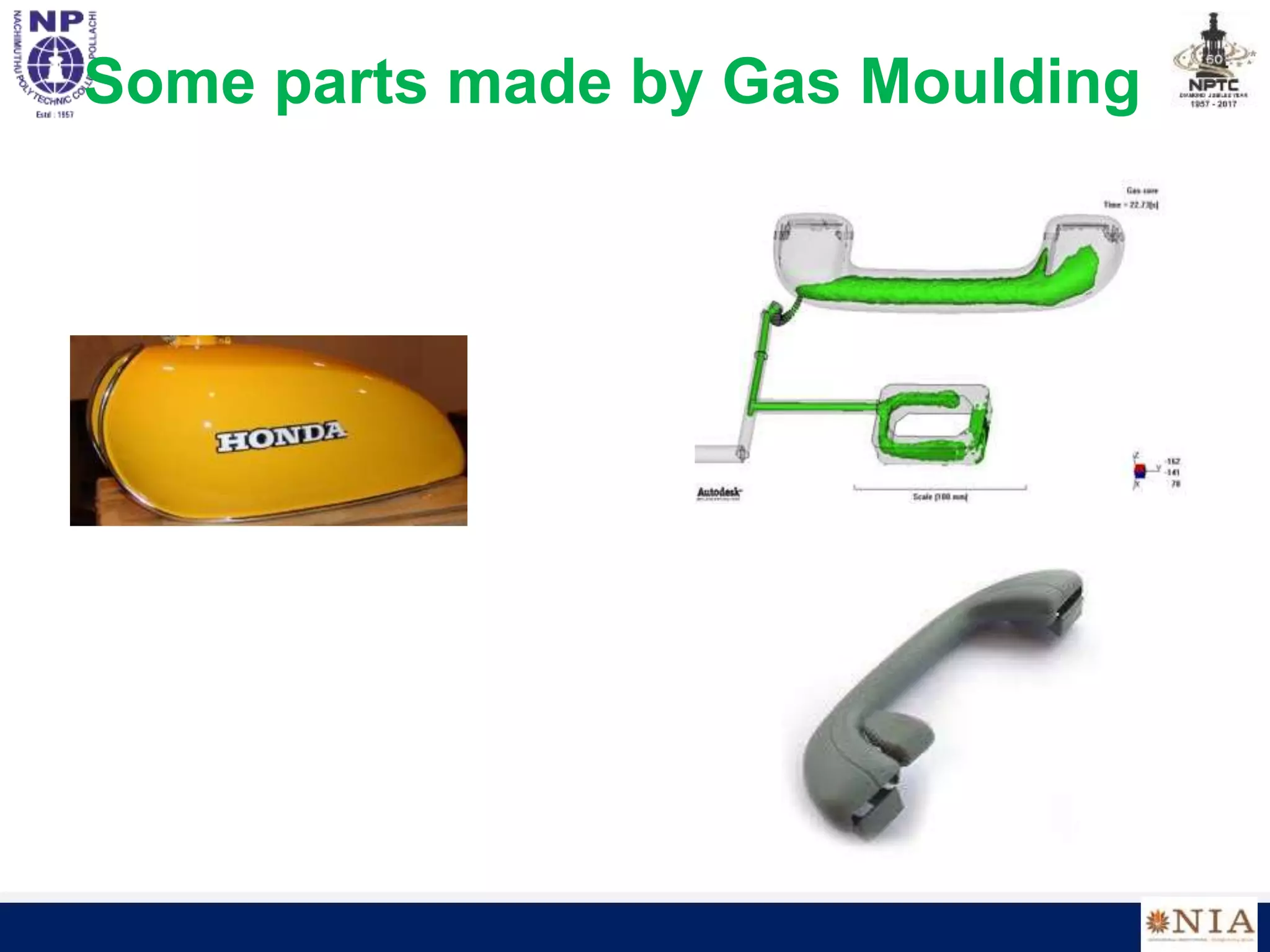
Some parts made by Gas Moulding
Calendering
Calendering
Rotational Moulding
Rotational Moulding Machine
Runner
Part
Cavity
Nozzle
Part
Cavity
Knob
Stripper
plate
Runner
Part
Cavity
Nozzle
Runner
Part
Cavity
Nozzle
Runner
Part
Cavity
Nozzle
Part
Cavity
Knob
Stripper
plate
Part
Cavity
Knob
Part
Cavity
Knob
Stripper
plate
Runner
Part
Cavity
Nozzle
Runner
Part
Cavity
Nozzle
Designing injection moulds: mould in action
[source: Lec notes, Prof T. Gutosky, MIT]
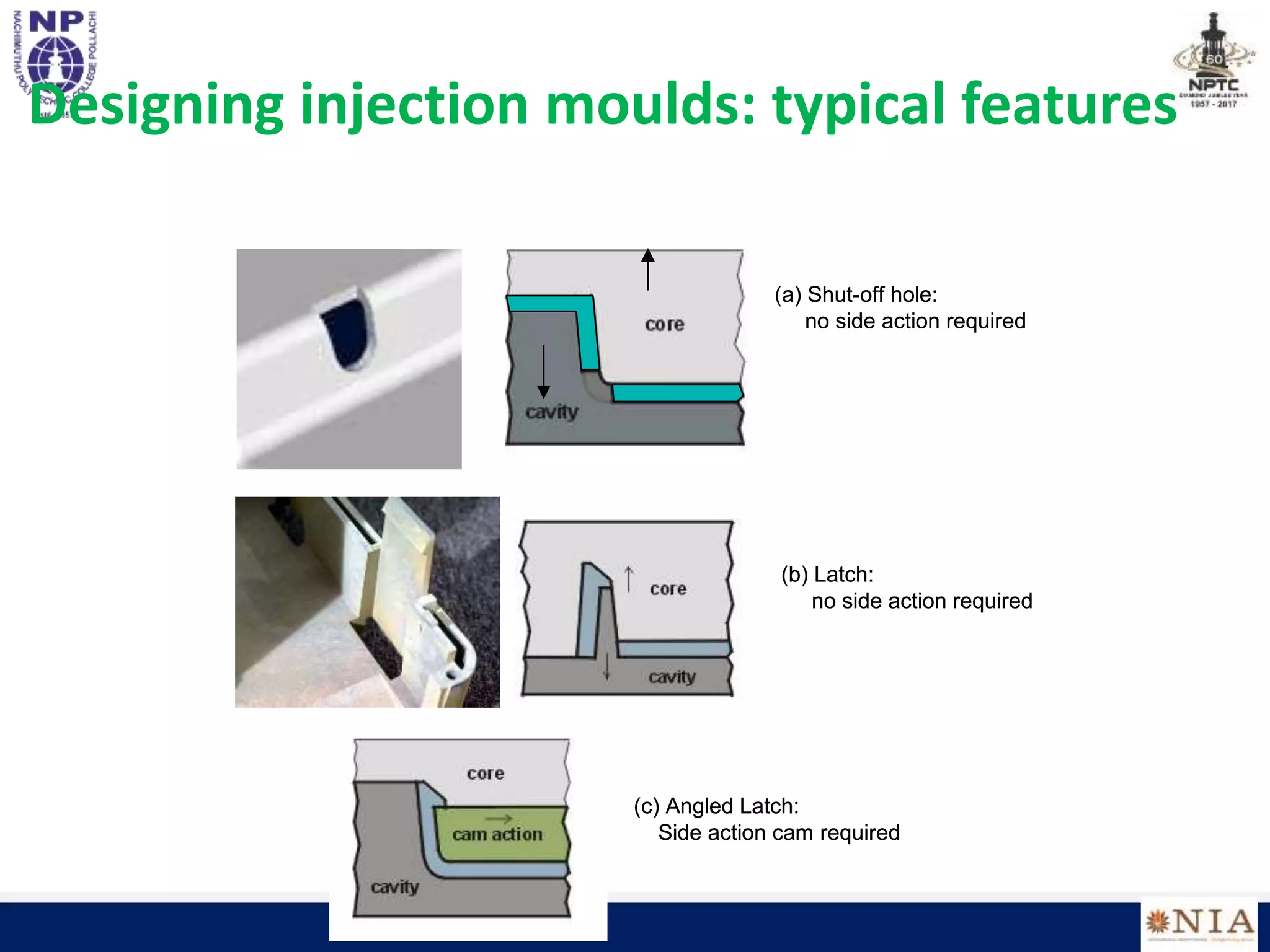
Designing injection molds: typical features
[source: www.idsa-mp.org]
(a) Shut-off hole:
no side action required
(b) Latch:
no side action required
(c) Angled Latch:
Side action cam required
(a) Shut-off hole:
no side action required
(b) Latch:
no side action required
(c) Angled Latch:
Side action cam required
Designing injection moulds: typical features
Considerations in design of injection molded
parts
The two biggest geometric concerns
(i) proper flow of plastic to all parts of the mold cavity before solidification
(ii) shrinking of the plastic resulting in sink holes
Guideline (1) maintain uniform cross-section thickness throughout the part
How: use of ribs/gussets
[source: GE plastics: Injection Molding Design Guidelines]
Guideline (2) avoid thick cross-sections
[source: GE plastics: Injection Molding Design Guidelines]
Guideline (3) gate location determines weld lines
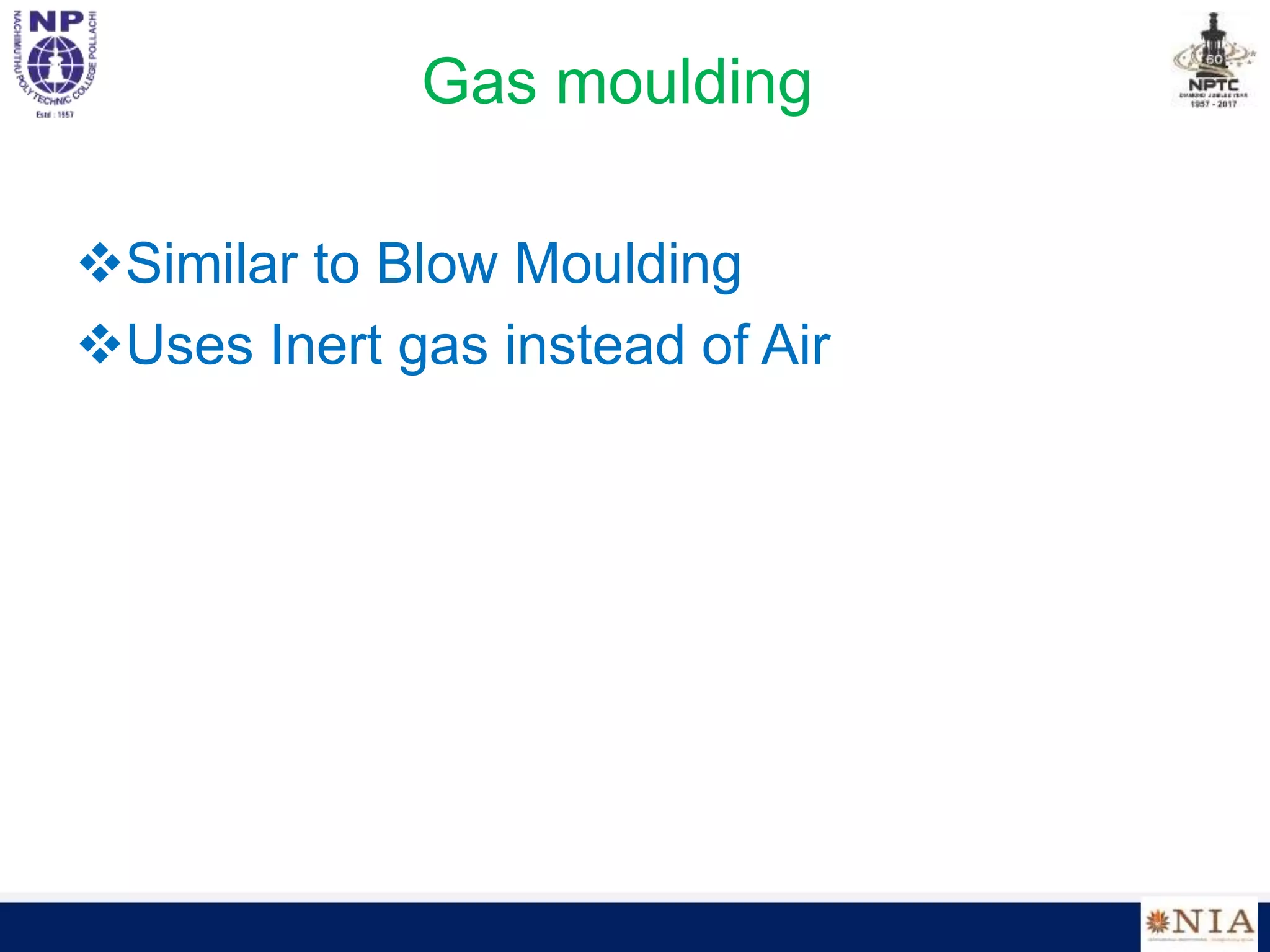
weld lines
* Source: http://www.idsa-mp.org/proc/plastic/injection/injection_design_7.htm

CFJ UNIT 5.ppt

  • 1.
    NACHIMUTHU POLYTECHNIC COLLEGE:POLLACHI-03 DEPARTMENT OFMECHANICAL ENGINEERING P.Srirajarajan.ME HoS- Mechanical Engg NPTC, Pollachi
  • 2.
    2203: Casting, Formingand Joining Process
  • 3.
    UNIT – 5-PROCESSING OF PLASTICS
  • 4.
    COURSE OUTCOMES At theend of the course, the student will be able to 1 .Select suitable foundry process to manufacture a component. (Unit 2. Select suitable forming methods in manufacturing a component.(Unit 2& 4) 3. Explain the various methods of producing engineering components by powder metallurgy. (Unit 2) 4. Select suitable welding process to join the given material. (Unit 3) 5. Explain the various methods of producing plastic components. (Unit 5)
  • 5.
    Introduction The word plasticsis from the Greek word Plastikos, meaning “able to be shaped and molded”
  • 6.
    Historical Background A single-actionhydraulic injection machine was designed in the U.S.A. in 1870 by Hyatt Heating-cylinder design was first recognised in a patent issued to Adam Gastron in 1932. Large-scale development of injection moulding machinery design towards the machines we know today did not occur until the 1950's in Germany
  • 7.
    Plastics???? Plastics are Macromolecularstructured Polymer. Polymer is made up of many repeating simple chemical units, known as Monomer. All Plastics are Polymers-----But All Polymers are not Plastics, they may be Fibres, Elastomers (rubbers) or adhesives. In simple words plastic is one of the family member of polymers.
  • 8.
    Thermoplastics & Thermosets Thermoplasticsare materials that can be repeatedly heated, melted and converted into a product. Thermosets undergo a chemical reaction during conversion into a product. The product cannot be re-melted and converted into another product again.
  • 9.
    Extrusion • Pellets, granulesor powder is placed into a hopper and fed into the extruder barrel. • As screw in the barrel that turns it blends and moves the material down the barrel. • Material then forced through a die that is in desired shape. It is cooled by water or air and cut to length. • Largest production volume of plastics (bar, tube, sheet, film) • Rated by the length to diameter ratio of the screw
  • 10.
  • 11.
  • 12.
  • 13.
  • 14.
    Injection Moulding Process OverView Injection moulding is a manufacturing process for producing parts from both thermoplastics and thermosetting plastic materials Material is fed into a heated barrel, mixed, and forced into a mold cavity where it cools and hardens to the configuration of the cavity.
  • 15.
    IT 208 Chapter18 15 Injection Moulding • Similar to die casting metal. Pellets are fed into heated cylinder where they are melted. • The screw rotates much like extrusion molder (it moves back as material in front of it are melted) then it rams forward pushing the melted material into the die. • most wide spread technique for making 3-D configurations • uses either reciprocating screw or reciprocating plunger (RAM) • rated by clamping pressure of die
  • 16.
    Type of InjectionMoulding Machine Hand Injection Moulding M/C Plunger type Injection Moulding M/C Reciprocating Screw Type Injection Moulding M/C Structural foam type Sandwich moulding Gas moulding Calendering Rotational moulding
  • 17.
    Plunger Type Injection MouldingMachine Vertical & Horizontal Plunger Type Injection Moulding Machine
  • 18.
  • 19.
  • 20.
  • 21.
    The Injection Process Plasticizesthe material by reciprocating Screw. Injects the molten material to a closed mould  via a channel system of gates and runners. Cools the Mould. Refills the material for the next cycle. Ejects the Product. Closes the Mould for further cycle.
  • 22.
    Injection Moulding Processsequence Mould closing Injection Cooling Mould opening Ejection
  • 23.
  • 24.
  • 25.
  • 26.
    Blow Moulding Process Athermoplastic resin is heated to a molten state. It is then extruded through a die head to form a hollow tube called a parison. The parison is dropped between two mold halves, which close around it, the concept of blow mold you can see at picture.
  • 27.
    heated glass 3-piece mold (a)The hollow piece of heated glass (parison) is first created by a blow mold (see text-book Fig 17.25) (b) The mold is put together (c) Plunger and hot air push the glass up (d) Hot air blows the glass out towards the mold surface (e) Mold comes apart, bottle is removed heated glass 3-piece mold (a) The hollow piece of heated glass (parison) is first created by a blow mold (see text-book Fig 17.25) (b) The mold is put together (c) Plunger and hot air push the glass up (d) Hot air blows the glass out towards the mold surface (e) Mold comes apart, bottle is removed
  • 28.
  • 29.
  • 30.
    Foam Injection Moulding used mostly for thermosetting polymers  mold is heated and closed using pressure  plastic flows to fills the cavity  flash must be trimmed by finishing
  • 31.
    Foam Injection Mouldingparts dishes, handles for cooking pots skis, housing for high-voltage switches some rubber parts like shoe soles and even composites such as fiber-reinforced parts
  • 32.
    Compression Moulding Compression mouldingis a method of moulding in which the plastic, generally preheated, is first placed in an open, heated mould cavity, they are four step in compression moulds they are loaded charge, charge compressed, cured the charge and ejecting process of product. the main construction is Punch (cavity side), core moulds and ejection system.
  • 33.
  • 34.
  • 35.
  • 36.
    IT 208 Chapter18 36 Transfer Moulding
  • 37.
  • 38.
    Gas moulding Similar toBlow Moulding Uses Inert gas instead of Air
  • 39.
    Some parts madeby Gas Moulding
  • 40.
  • 41.
  • 42.
  • 43.
  • 44.
  • 45.
    Designing injection molds:typical features [source: www.idsa-mp.org]
  • 46.
    (a) Shut-off hole: noside action required (b) Latch: no side action required (c) Angled Latch: Side action cam required (a) Shut-off hole: no side action required (b) Latch: no side action required (c) Angled Latch: Side action cam required Designing injection moulds: typical features
  • 47.
    Considerations in designof injection molded parts The two biggest geometric concerns (i) proper flow of plastic to all parts of the mold cavity before solidification (ii) shrinking of the plastic resulting in sink holes Guideline (1) maintain uniform cross-section thickness throughout the part How: use of ribs/gussets [source: GE plastics: Injection Molding Design Guidelines]
  • 48.
    Guideline (2) avoidthick cross-sections [source: GE plastics: Injection Molding Design Guidelines]
  • 49.
    Guideline (3) gatelocation determines weld lines weld lines * Source: http://www.idsa-mp.org/proc/plastic/injection/injection_design_7.htm