INTRODUCTION TO POLYMERS
D. JIM LIVINGSTON
ASST.PROF. OF CHEMISTRY
St. JOHN’S COLLEGE
POLYMER CHEMISTRY
• Polymer
• Monomer
• Polymerization
• Classification of polymers – part I
Polymer Chemistry
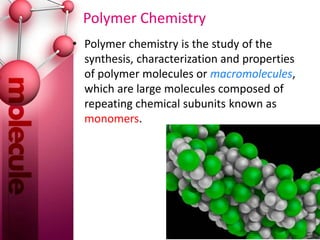
• Polymer chemistry is the study of the
synthesis, characterization and properties
of polymer molecules or macromolecules,
which are large molecules composed of
repeating chemical subunits known as
monomers.
Polymer and monomer
• A polymer Greek poly-, "many" + -mer, "part") is a
substance or material consisting of very large molecules,
composed of many repeating subunits.
A monomer is a molecule that forms the basic unit for
polymers, which are the building blocks of polymers
A monomer is a molecule that is able to bond in long
chains.
A monomer is a small molecule that reacts with a similar
molecule to form a larger molecule. It is the smallest unit
in a polymer
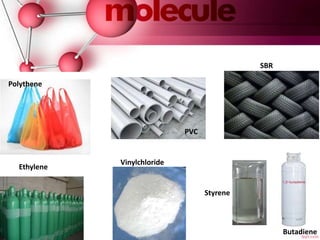
PVC
Ethylene
Polythene
Vinylchloride
SBR
Styrene
Butadiene
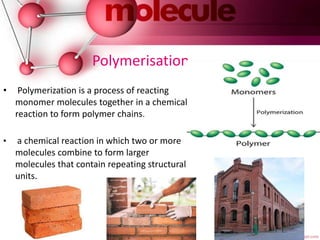
Polymerisation
• Polymerization is a process of reacting
monomer molecules together in a chemical
reaction to form polymer chains.
• a chemical reaction in which two or more
molecules combine to form larger
molecules that contain repeating structural
units.
Classification of polymers
• Polymer can be classified on the following basis
• Based on origin
• Natural
• Synthetic
• Semi-synthetic
Classification of polymers
• 1. Origin
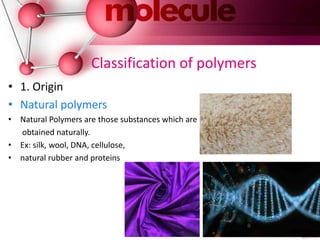
• Natural polymers
• Natural Polymers are those substances which are
obtained naturally.
• Ex: silk, wool, DNA, cellulose,
• natural rubber and proteins
• Synthetic polymers:
• Synthetic polymers are derived from petroleum oil,
and made by scientists and engineers in laboratories.
• Ex: nylon, polyethylene, polyester, Teflon, and epoxy
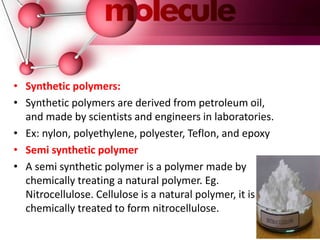
• Semi synthetic polymer
• A semi synthetic polymer is a polymer made by
chemically treating a natural polymer. Eg.
Nitrocellulose. Cellulose is a natural polymer, it is
chemically treated to form nitrocellulose.
• Based on properties and applications:
• Rubbers
• Plastics
• Fibres
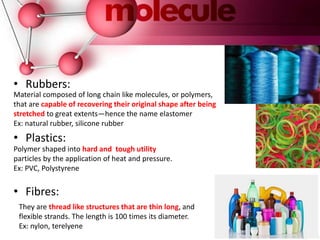
• Rubbers:
• Plastics:
• Fibres:
Material composed of long chain like molecules, or polymers,
that are capable of recovering their original shape after being
stretched to great extents—hence the name elastomer
Ex: natural rubber, silicone rubber
Polymer shaped into hard and tough utility
particles by the application of heat and pressure.
Ex: PVC, Polystyrene
They are thread like structures that are thin long, and
flexible strands. The length is 100 times its diameter.
Ex: nylon, terelyene
• Based on thermal response
• Thermosetting
• Thermoplastics
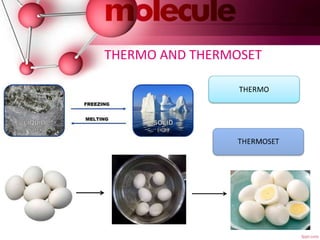
THERMO AND THERMOSET
• THERMO PLASTICS
• Soften on heating and harden on cooling,
and can be reshaped and remolded.
• Ex: polythene, teflon nylon
• THERMOSETTING PLASTICS
• Once heated, thermosetting plastics can be
moulded, shaped and pressed into shapes.
Once set they cannot be reheated since they
are permanently set
• Ex: bakelite,polyurethane, epoxy resin
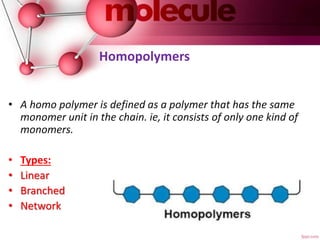
Homopolymers
• A homo polymer is defined as a polymer that has the same
monomer unit in the chain. ie, it consists of only one kind of
monomers.
• Types:
• Linear
• Branched
• Network
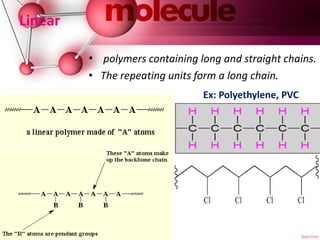
Linear
• polymers containing long and straight chains.
• The repeating units form a long chain.
Ex: Polyethylene, PVC.
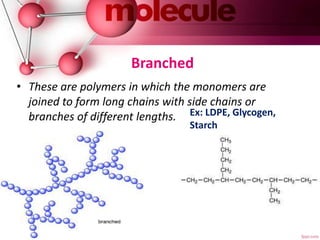
Branched
• These are polymers in which the monomers are
joined to form long chains with side chains or
branches of different lengths. Ex: LDPE, Glycogen,
Starch
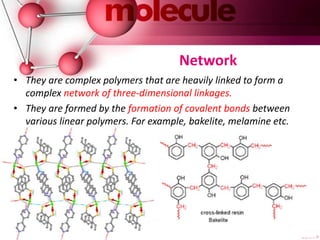
Network
• They are complex polymers that are heavily linked to form a
complex network of three-dimensional linkages.
• They are formed by the formation of covalent bonds between
various linear polymers. For example, bakelite, melamine etc.
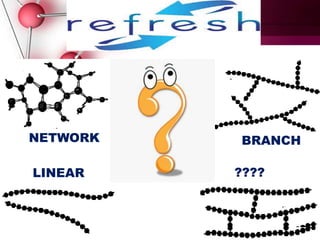
LINEAR ????
NETWORK BRANCH
Co-polymers
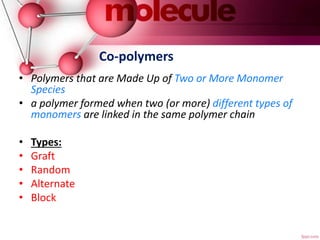
• Polymers that are Made Up of Two or More Monomer
Species
• a polymer formed when two (or more) different types of
monomers are linked in the same polymer chain
• Types:
• Graft
• Random
• Alternate
• Block
Random Polymers
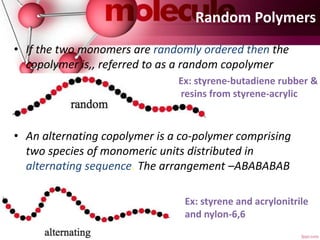
• If the two monomers are randomly ordered then the
copolymer is,, referred to as a random copolymer
• An alternating copolymer is a co-polymer comprising
two species of monomeric units distributed in
alternating sequence. The arrangement –ABABABAB
Ex: styrene-butadiene rubber &
resins from styrene-acrylic
Ex: styrene and acrylonitrile
and nylon-6,6
Block co-polymers
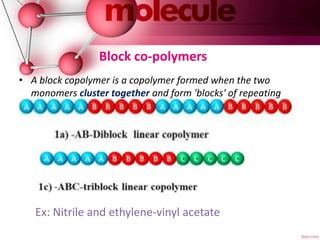
• A block copolymer is a copolymer formed when the two
monomers cluster together and form 'blocks' of repeating
units.
Ex: Nitrile and ethylene-vinyl acetate
Graft co-polymer
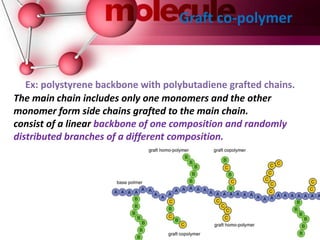
The main chain includes only one monomers and the other
monomer form side chains grafted to the main chain.
consist of a linear backbone of one composition and randomly
distributed branches of a different composition.
Ex: polystyrene backbone with polybutadiene grafted chains.
Polymer Chemistry

Polymer Chemistry

  • 1.
    INTRODUCTION TO POLYMERS D.JIM LIVINGSTON ASST.PROF. OF CHEMISTRY St. JOHN’S COLLEGE
  • 2.
    POLYMER CHEMISTRY • Polymer •Monomer • Polymerization • Classification of polymers – part I
  • 3.
    Polymer Chemistry • Polymerchemistry is the study of the synthesis, characterization and properties of polymer molecules or macromolecules, which are large molecules composed of repeating chemical subunits known as monomers.
  • 4.
    Polymer and monomer •A polymer Greek poly-, "many" + -mer, "part") is a substance or material consisting of very large molecules, composed of many repeating subunits. A monomer is a molecule that forms the basic unit for polymers, which are the building blocks of polymers A monomer is a molecule that is able to bond in long chains. A monomer is a small molecule that reacts with a similar molecule to form a larger molecule. It is the smallest unit in a polymer
  • 5.
  • 6.
    Polymerisation • Polymerization isa process of reacting monomer molecules together in a chemical reaction to form polymer chains. • a chemical reaction in which two or more molecules combine to form larger molecules that contain repeating structural units.
  • 7.
    Classification of polymers •Polymer can be classified on the following basis • Based on origin • Natural • Synthetic • Semi-synthetic
  • 8.
    Classification of polymers •1. Origin • Natural polymers • Natural Polymers are those substances which are obtained naturally. • Ex: silk, wool, DNA, cellulose, • natural rubber and proteins
  • 9.
    • Synthetic polymers: •Synthetic polymers are derived from petroleum oil, and made by scientists and engineers in laboratories. • Ex: nylon, polyethylene, polyester, Teflon, and epoxy • Semi synthetic polymer • A semi synthetic polymer is a polymer made by chemically treating a natural polymer. Eg. Nitrocellulose. Cellulose is a natural polymer, it is chemically treated to form nitrocellulose.
  • 10.
    • Based onproperties and applications: • Rubbers • Plastics • Fibres
  • 11.
    • Rubbers: • Plastics: •Fibres: Material composed of long chain like molecules, or polymers, that are capable of recovering their original shape after being stretched to great extents—hence the name elastomer Ex: natural rubber, silicone rubber Polymer shaped into hard and tough utility particles by the application of heat and pressure. Ex: PVC, Polystyrene They are thread like structures that are thin long, and flexible strands. The length is 100 times its diameter. Ex: nylon, terelyene
  • 12.
    • Based onthermal response • Thermosetting • Thermoplastics
  • 13.
  • 14.
    • THERMO PLASTICS •Soften on heating and harden on cooling, and can be reshaped and remolded. • Ex: polythene, teflon nylon • THERMOSETTING PLASTICS • Once heated, thermosetting plastics can be moulded, shaped and pressed into shapes. Once set they cannot be reheated since they are permanently set • Ex: bakelite,polyurethane, epoxy resin
  • 15.
    Homopolymers • A homopolymer is defined as a polymer that has the same monomer unit in the chain. ie, it consists of only one kind of monomers. • Types: • Linear • Branched • Network
  • 16.
    Linear • polymers containinglong and straight chains. • The repeating units form a long chain. Ex: Polyethylene, PVC.
  • 17.
    Branched • These arepolymers in which the monomers are joined to form long chains with side chains or branches of different lengths. Ex: LDPE, Glycogen, Starch
  • 18.
    Network • They arecomplex polymers that are heavily linked to form a complex network of three-dimensional linkages. • They are formed by the formation of covalent bonds between various linear polymers. For example, bakelite, melamine etc.
  • 19.
  • 20.
    Co-polymers • Polymers thatare Made Up of Two or More Monomer Species • a polymer formed when two (or more) different types of monomers are linked in the same polymer chain • Types: • Graft • Random • Alternate • Block
  • 21.
    Random Polymers • Ifthe two monomers are randomly ordered then the copolymer is,, referred to as a random copolymer • An alternating copolymer is a co-polymer comprising two species of monomeric units distributed in alternating sequence. The arrangement –ABABABAB Ex: styrene-butadiene rubber & resins from styrene-acrylic Ex: styrene and acrylonitrile and nylon-6,6
  • 22.
    Block co-polymers • Ablock copolymer is a copolymer formed when the two monomers cluster together and form 'blocks' of repeating units. Ex: Nitrile and ethylene-vinyl acetate
  • 23.
    Graft co-polymer The mainchain includes only one monomers and the other monomer form side chains grafted to the main chain. consist of a linear backbone of one composition and randomly distributed branches of a different composition. Ex: polystyrene backbone with polybutadiene grafted chains.