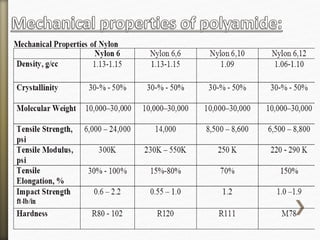
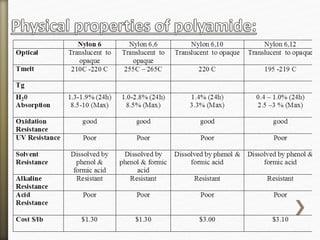
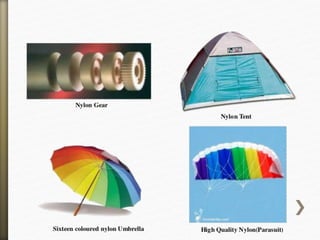
POLYAMIDE
Presented By:
Dilshad Bajwa
Ayesha Hameed
Polyamide
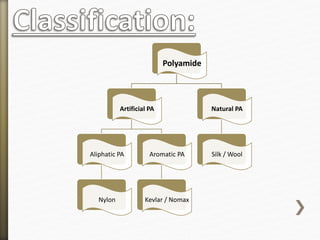
Artificial PA
Aliphatic PA
Nylon
Aromatic PA
Kevlar / Nomax
Natural PA
Silk / Wool
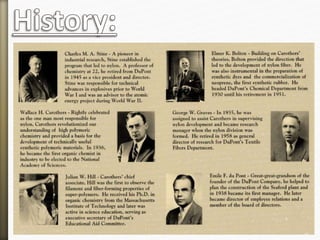
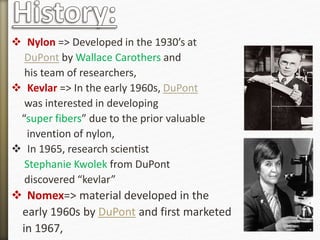
 Nylon => Developed in the 1930’s at
DuPont by Wallace Carothers and
his team of researchers,
 Kevlar => In the early 1960s, DuPont
was interested in developing
“super fibers” due to the prior valuable
invention of nylon,
 In 1965, research scientist
Stephanie Kwolek from DuPont
discovered “kevlar”
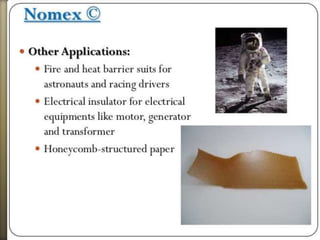
 Nomex=> material developed in the
early 1960s by DuPont and first marketed
in 1967,
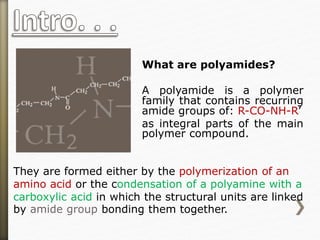
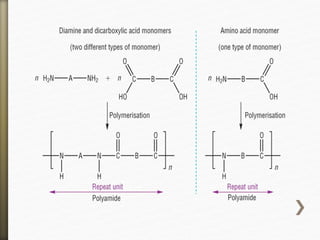
What are polyamides?
A polyamide is a polymer
family that contains recurring
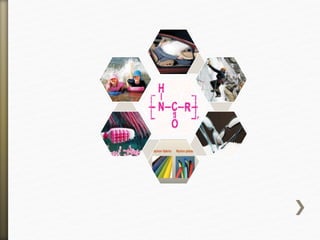
amide groups of: R-CO-NH-R’
as integral parts of the main
polymer compound.
They are formed either by the polymerization of an
amino acid or the condensation of a polyamine with a
carboxylic acid in which the structural units are linked
by amide group bonding them together.
Nylon is formed by the condensation reaction of
two components:
 Diamine (a compound containing two amino
[NH2] groups—e.g., hexamethylenediamine)
 Dicarboxylic acid (containing two carboxyl
[CO−OH] groups—e.g., adipic acid),
 Or may be formed by the self-condensation of an
amino acid or an amino-acid derivative.
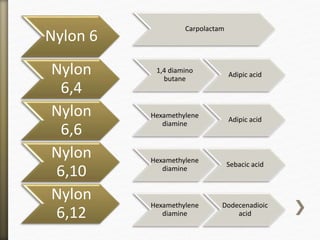
Nylon 6
Carpolactam
Nylon
6,4
1,4 diamino
butane
Adipic acid
Nylon
6,6
Hexamethylene
diamine
Adipic acid
Nylon
6,10
Hexamethylene
diamine
Sebacic acid
Nylon
6,12
Hexamethylene
diamine
Dodecenadioic
acid
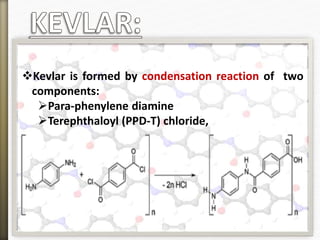
Kevlar is formed by condensation reaction of two
components:
Para-phenylene diamine
Terephthaloyl (PPD-T) chloride,
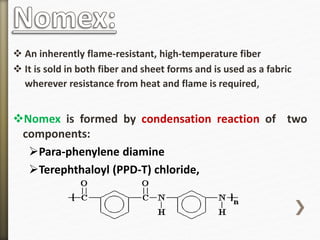
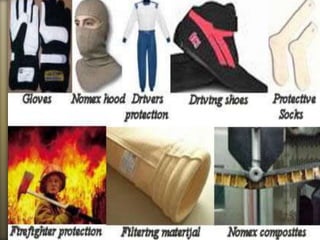
 An inherently flame-resistant, high-temperature fiber
 It is sold in both fiber and sheet forms and is used as a fabric
wherever resistance from heat and flame is required,
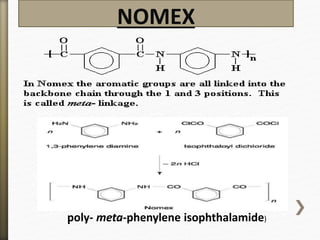
Nomex is formed by condensation reaction of two
components:
Para-phenylene diamine
Terephthaloyl (PPD-T) chloride,
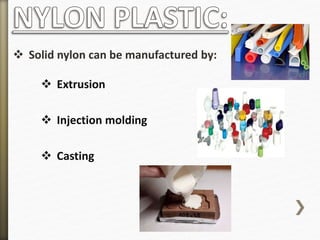
 Solid nylon can be manufactured by:
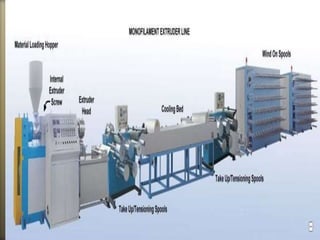
 Extrusion
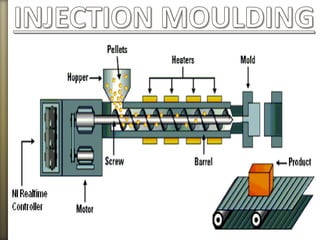
 Injection molding
 Casting
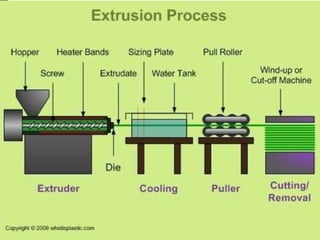
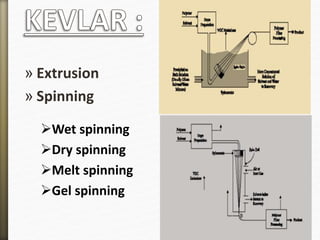
» Extrusion
» Spinning
Wet spinning
Dry spinning
Melt spinning
Gel spinning
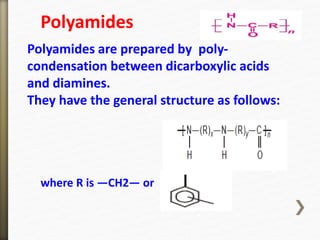
Polyamides are prepared by poly-
condensation between dicarboxylic acids
and diamines.
They have the general structure as follows:
where R is —CH2— or
Polyamides
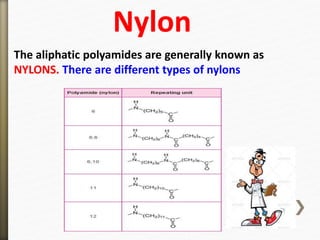
The aliphatic polyamides are generally known as
NYLONS. There are different types of nylons
Nylon
.
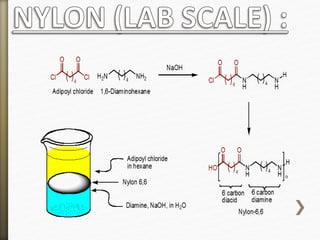
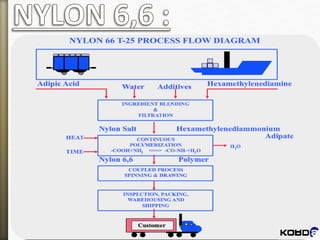
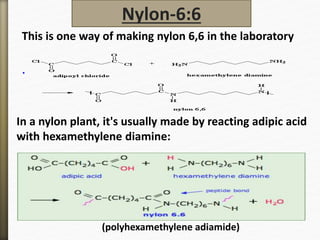
Nylon-6:6
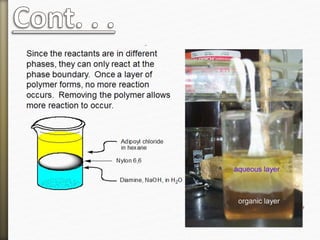
This is one way of making nylon 6,6 in the laboratory
In a nylon plant, it's usually made by reacting adipic acid
with hexamethylene diamine:
(polyhexamethylene adiamide)
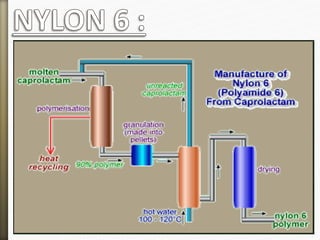
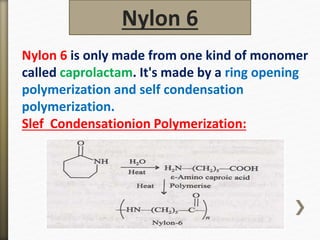
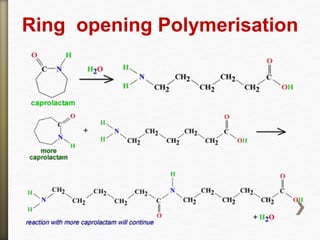
Nylon 6 is only made from one kind of monomer
called caprolactam. It's made by a ring opening
polymerization and self condensation
polymerization.
Slef Condensationion Polymerization:
Nylon 6
Ring opening Polymerisation
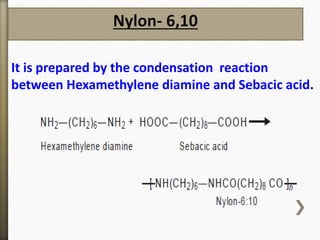
Nylon- 6,10
It is prepared by the condensation reaction
between Hexamethylene diamine and Sebacic acid.
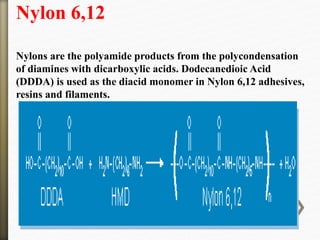
Nylon 6,12
Nylons are the polyamide products from the polycondensation
of diamines with dicarboxylic acids. Dodecanedioic Acid
(DDDA) is used as the diacid monomer in Nylon 6,12 adhesives,
resins and filaments.
resilience
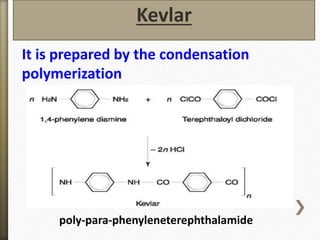
It is prepared by the condensation
polymerization
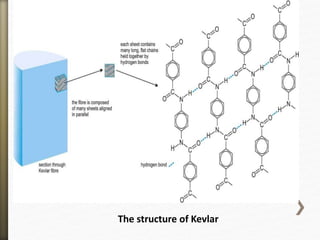
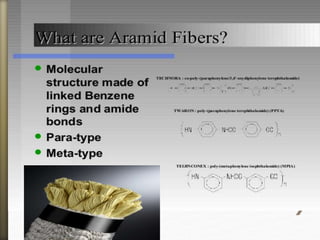
Kevlar
poly-para-phenyleneterephthalamide
The structure of Kevlar
NOMEX
.poly- meta-phenylene isophthalamide)
 Variation of luster: nylon has
the ability to be very lustrous,
semi lustrous or dull,
 Durability and high elongation,
 Excellent abrasion resistance,
 High resistance to insects, fungi,
molds and many chemicals,
 Melts instead of burning,
 Good specific strength,
 Absorbs more water,
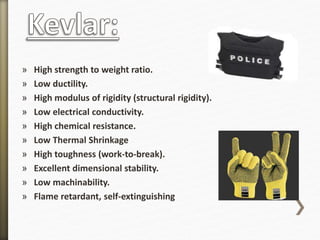
» High strength to weight ratio.
» Low ductility.
» High modulus of rigidity (structural rigidity).
» Low electrical conductivity.
» High chemical resistance.
» Low Thermal Shrinkage
» High toughness (work-to-break).
» Excellent dimensional stability.
» Low machinability.
» Flame retardant, self-extinguishing
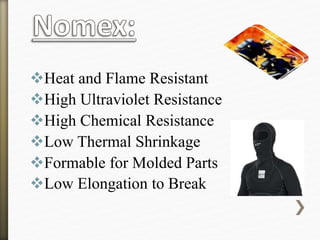
Heat and Flame Resistant
High Ultraviolet Resistance
High Chemical Resistance
Low Thermal Shrinkage
Formable for Molded Parts
Low Elongation to Break
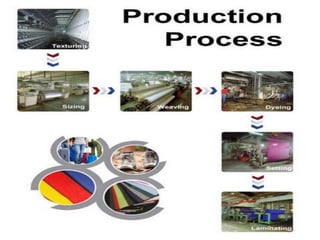
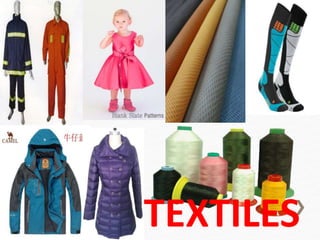
TEXTILES
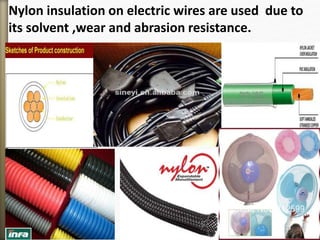
Nylon insulation on electric wires are used due to
its solvent ,wear and abrasion resistance.
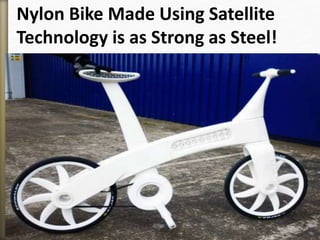
Nylon Bike Made Using Satellite
Technology is as Strong as Steel!
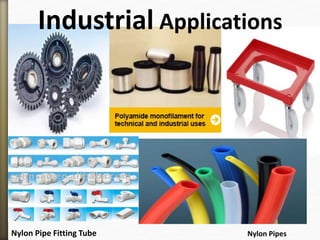
Nylon Pipe Fitting Tube Nylon Pipes
Industrial Applications
safety airbags
Seat belts
HOUSEHOLD APPLICATIONS
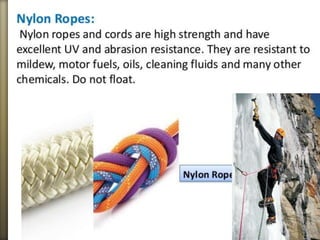
Ropes made from polyamides are used by rock and ice climbers.
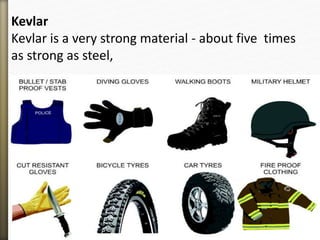
Kevlar
Kevlar is a very strong material - about five times
as strong as steel,
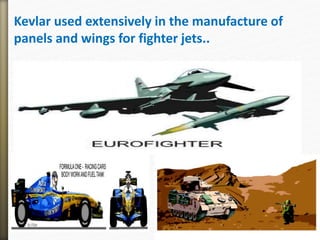
Kevlar used extensively in the manufacture of
panels and wings for fighter jets..
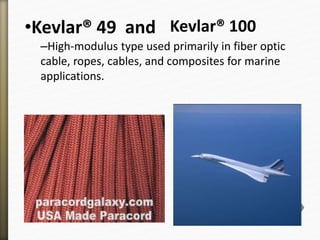
•Kevlar® 49 and
–High-modulus type used primarily in fiber optic
cable, ropes, cables, and composites for marine
applications.
Kevlar® 100
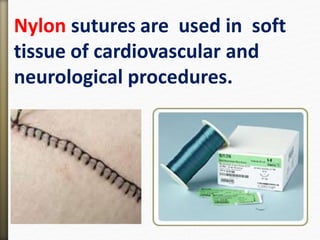
Nylon sutureS are used in soft
tissue of cardiovascular and
neurological procedures.
polyamides

polyamides

  • 2.
  • 6.
    Polyamide Artificial PA Aliphatic PA Nylon AromaticPA Kevlar / Nomax Natural PA Silk / Wool
  • 8.
     Nylon =>Developed in the 1930’s at DuPont by Wallace Carothers and his team of researchers,  Kevlar => In the early 1960s, DuPont was interested in developing “super fibers” due to the prior valuable invention of nylon,  In 1965, research scientist Stephanie Kwolek from DuPont discovered “kevlar”  Nomex=> material developed in the early 1960s by DuPont and first marketed in 1967,
  • 9.
    What are polyamides? Apolyamide is a polymer family that contains recurring amide groups of: R-CO-NH-R’ as integral parts of the main polymer compound. They are formed either by the polymerization of an amino acid or the condensation of a polyamine with a carboxylic acid in which the structural units are linked by amide group bonding them together.
  • 11.
    Nylon is formedby the condensation reaction of two components:  Diamine (a compound containing two amino [NH2] groups—e.g., hexamethylenediamine)  Dicarboxylic acid (containing two carboxyl [CO−OH] groups—e.g., adipic acid),  Or may be formed by the self-condensation of an amino acid or an amino-acid derivative.
  • 13.
    Nylon 6 Carpolactam Nylon 6,4 1,4 diamino butane Adipicacid Nylon 6,6 Hexamethylene diamine Adipic acid Nylon 6,10 Hexamethylene diamine Sebacic acid Nylon 6,12 Hexamethylene diamine Dodecenadioic acid
  • 14.
    Kevlar is formedby condensation reaction of two components: Para-phenylene diamine Terephthaloyl (PPD-T) chloride,
  • 15.
     An inherentlyflame-resistant, high-temperature fiber  It is sold in both fiber and sheet forms and is used as a fabric wherever resistance from heat and flame is required, Nomex is formed by condensation reaction of two components: Para-phenylene diamine Terephthaloyl (PPD-T) chloride,
  • 29.
     Solid nyloncan be manufactured by:  Extrusion  Injection molding  Casting
  • 33.
    » Extrusion » Spinning Wetspinning Dry spinning Melt spinning Gel spinning
  • 41.
    Polyamides are preparedby poly- condensation between dicarboxylic acids and diamines. They have the general structure as follows: where R is —CH2— or Polyamides
  • 42.
    The aliphatic polyamidesare generally known as NYLONS. There are different types of nylons Nylon
  • 43.
    . Nylon-6:6 This is oneway of making nylon 6,6 in the laboratory In a nylon plant, it's usually made by reacting adipic acid with hexamethylene diamine: (polyhexamethylene adiamide)
  • 44.
    Nylon 6 isonly made from one kind of monomer called caprolactam. It's made by a ring opening polymerization and self condensation polymerization. Slef Condensationion Polymerization: Nylon 6
  • 45.
  • 46.
    Nylon- 6,10 It isprepared by the condensation reaction between Hexamethylene diamine and Sebacic acid.
  • 47.
    Nylon 6,12 Nylons arethe polyamide products from the polycondensation of diamines with dicarboxylic acids. Dodecanedioic Acid (DDDA) is used as the diacid monomer in Nylon 6,12 adhesives, resins and filaments.
  • 48.
  • 51.
    It is preparedby the condensation polymerization Kevlar poly-para-phenyleneterephthalamide
  • 52.
  • 53.
  • 56.
     Variation ofluster: nylon has the ability to be very lustrous, semi lustrous or dull,  Durability and high elongation,  Excellent abrasion resistance,  High resistance to insects, fungi, molds and many chemicals,  Melts instead of burning,  Good specific strength,  Absorbs more water,
  • 57.
    » High strengthto weight ratio. » Low ductility. » High modulus of rigidity (structural rigidity). » Low electrical conductivity. » High chemical resistance. » Low Thermal Shrinkage » High toughness (work-to-break). » Excellent dimensional stability. » Low machinability. » Flame retardant, self-extinguishing
  • 58.
    Heat and FlameResistant High Ultraviolet Resistance High Chemical Resistance Low Thermal Shrinkage Formable for Molded Parts Low Elongation to Break
  • 60.
  • 61.
    Nylon insulation onelectric wires are used due to its solvent ,wear and abrasion resistance.
  • 62.
    Nylon Bike MadeUsing Satellite Technology is as Strong as Steel!
  • 65.
    Nylon Pipe FittingTube Nylon Pipes Industrial Applications
  • 68.
  • 69.
  • 70.
    Ropes made frompolyamides are used by rock and ice climbers.
  • 72.
    Kevlar Kevlar is avery strong material - about five times as strong as steel,
  • 73.
    Kevlar used extensivelyin the manufacture of panels and wings for fighter jets..
  • 74.
    •Kevlar® 49 and –High-modulustype used primarily in fiber optic cable, ropes, cables, and composites for marine applications. Kevlar® 100
  • 78.
    Nylon sutureS areused in soft tissue of cardiovascular and neurological procedures.