Processing and applications
of polymers
Polymer
2
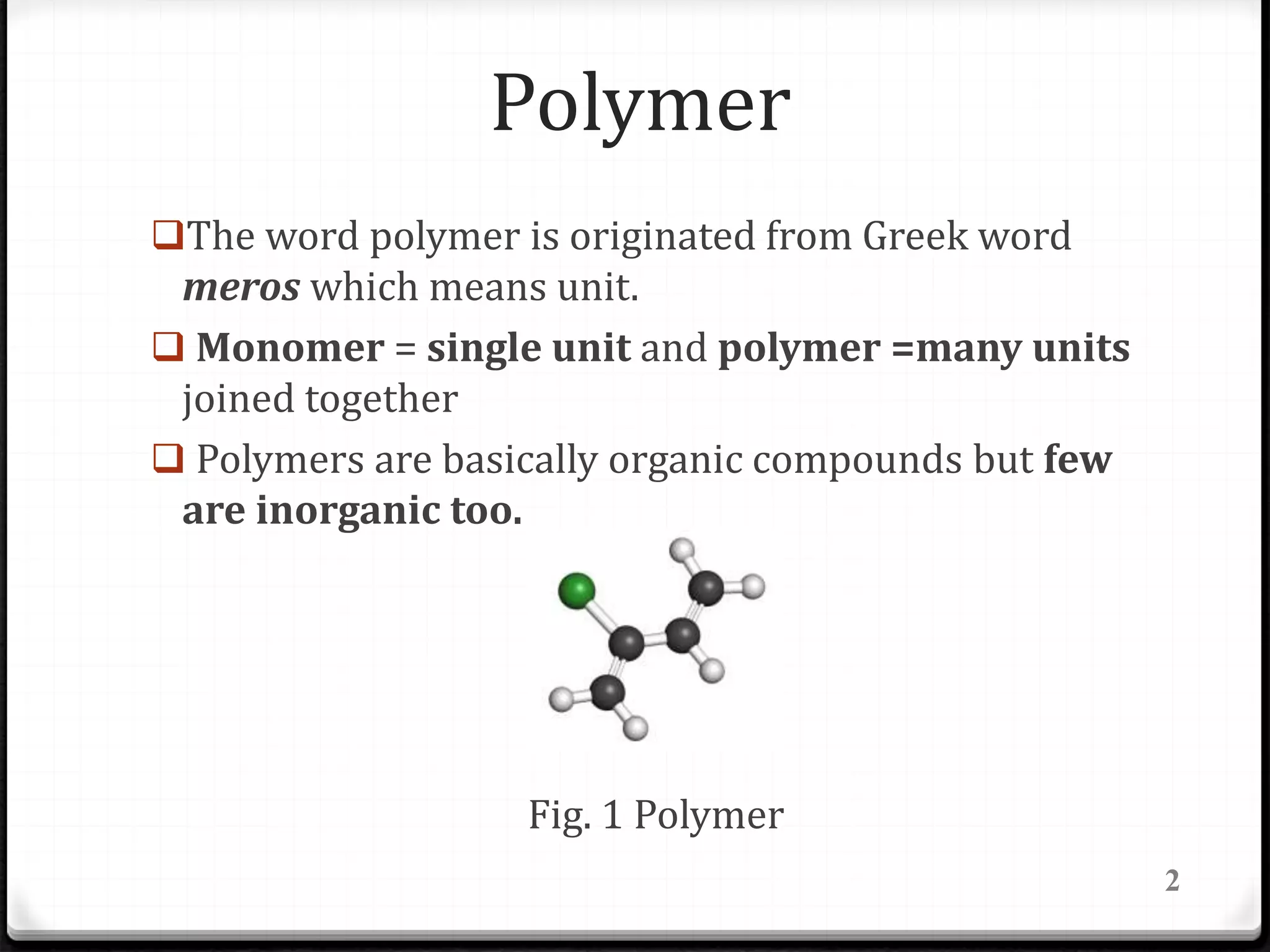
The word polymer is originated from Greek word
meros which means unit.
 Monomer = single unit and polymer =many units
joined together
 Polymers are basically organic compounds but few
are inorganic too.
Fig. 1 Polymer
POLYMER MATERIALS
The polymers are different group of
engineering materials.
They are the main components of plastics,
rubbers, resins, adhesives and paints.
These materials have distinctive
microstructures built from macromolecular
chains and networks of carbon and other
light elements.
3
Polymer processing
 Processing:
A systematic series of mechanized or chemical
operations that are performed in order to produce
something.
 Polymer processing:
A process resulting in the forming, manufacture,
or modification of a plastic.
4
Moulding
Moulding is a process of manufacturing by shaping liquid
or pliable raw material using a rigid frame called a mold
or matrix.
Types of moulding
0 Compression moulding.
0 Extrusion moulding.
0 Injection moulding.
0 Blow moulding.
0 Transfer moulding.
5
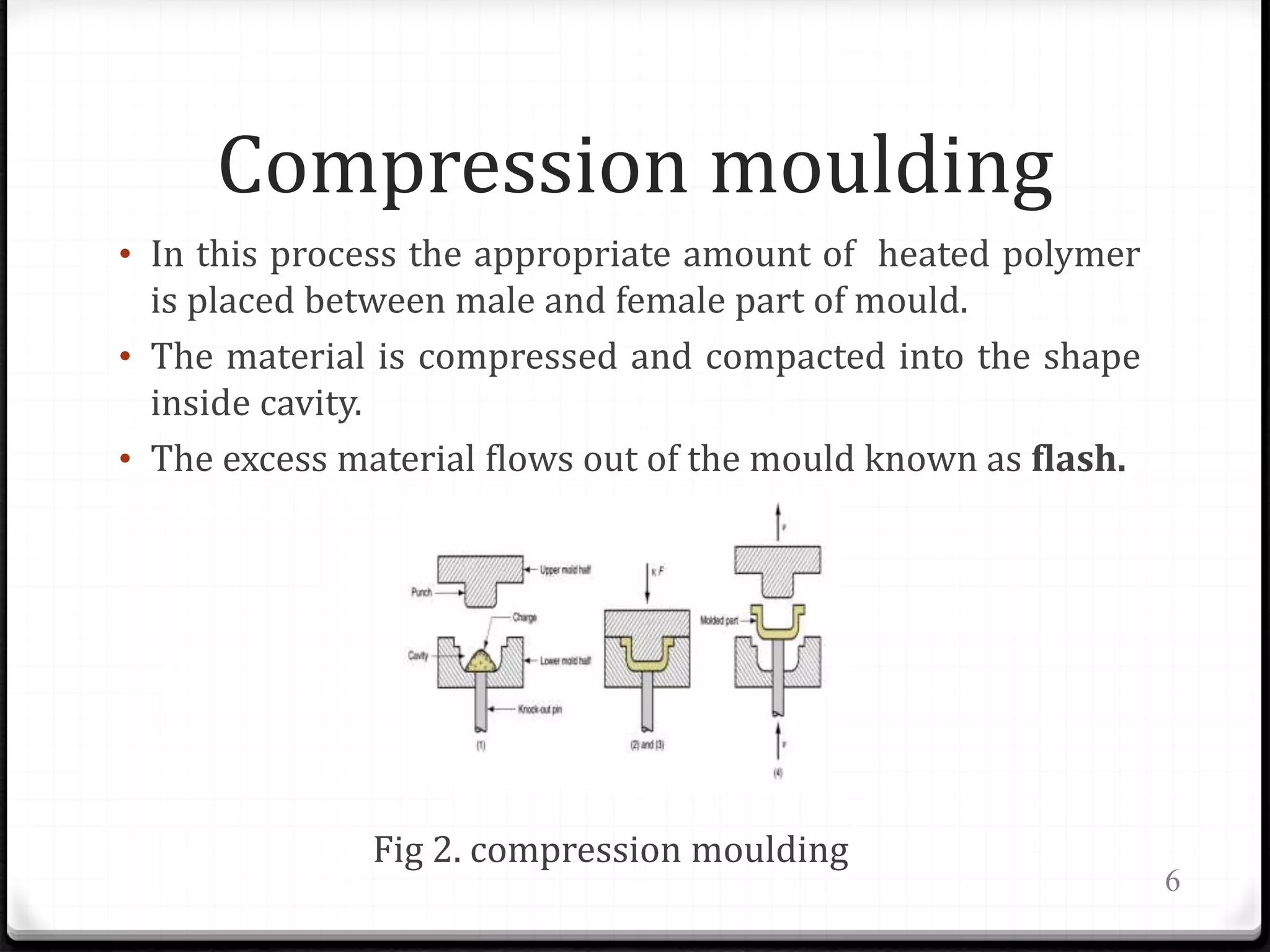
Compression moulding
• In this process the appropriate amount of heated polymer
is placed between male and female part of mould.
• The material is compressed and compacted into the shape
inside cavity.
• The excess material flows out of the mould known as flash.
Fig 2. compression moulding
6
Materials produced by
compression moulding
o Ceramics.
o Thermoset plastics.(melamine)
o Fiber composites.
o Cork.
o Kitchen wares(bowl and cups etc.)
o Switches, and handles.
7
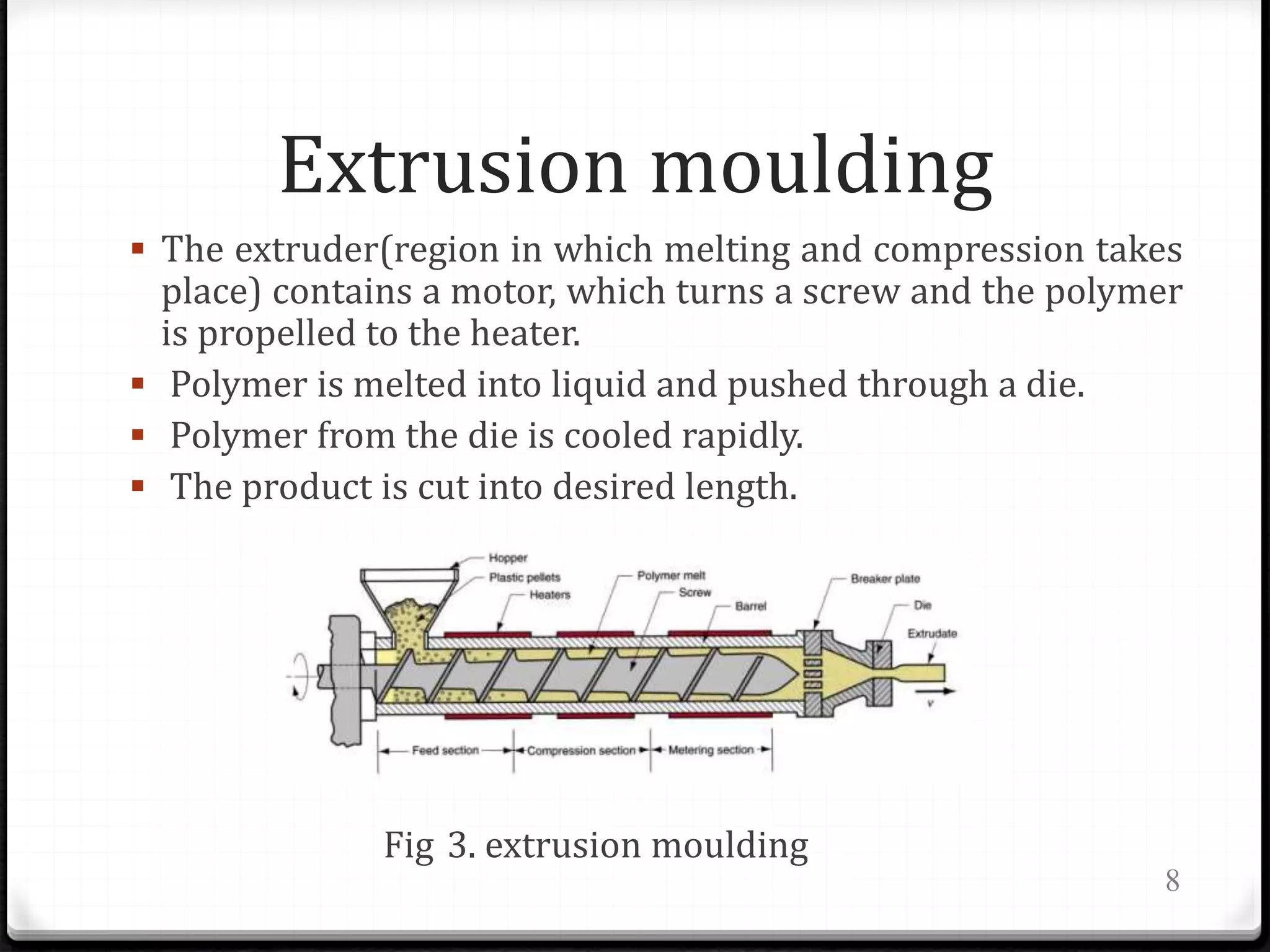
Extrusion moulding
 The extruder(region in which melting and compression takes
place) contains a motor, which turns a screw and the polymer
is propelled to the heater.
 Polymer is melted into liquid and pushed through a die.
 Polymer from the die is cooled rapidly.
 The product is cut into desired length.
Fig 3. extrusion moulding
8
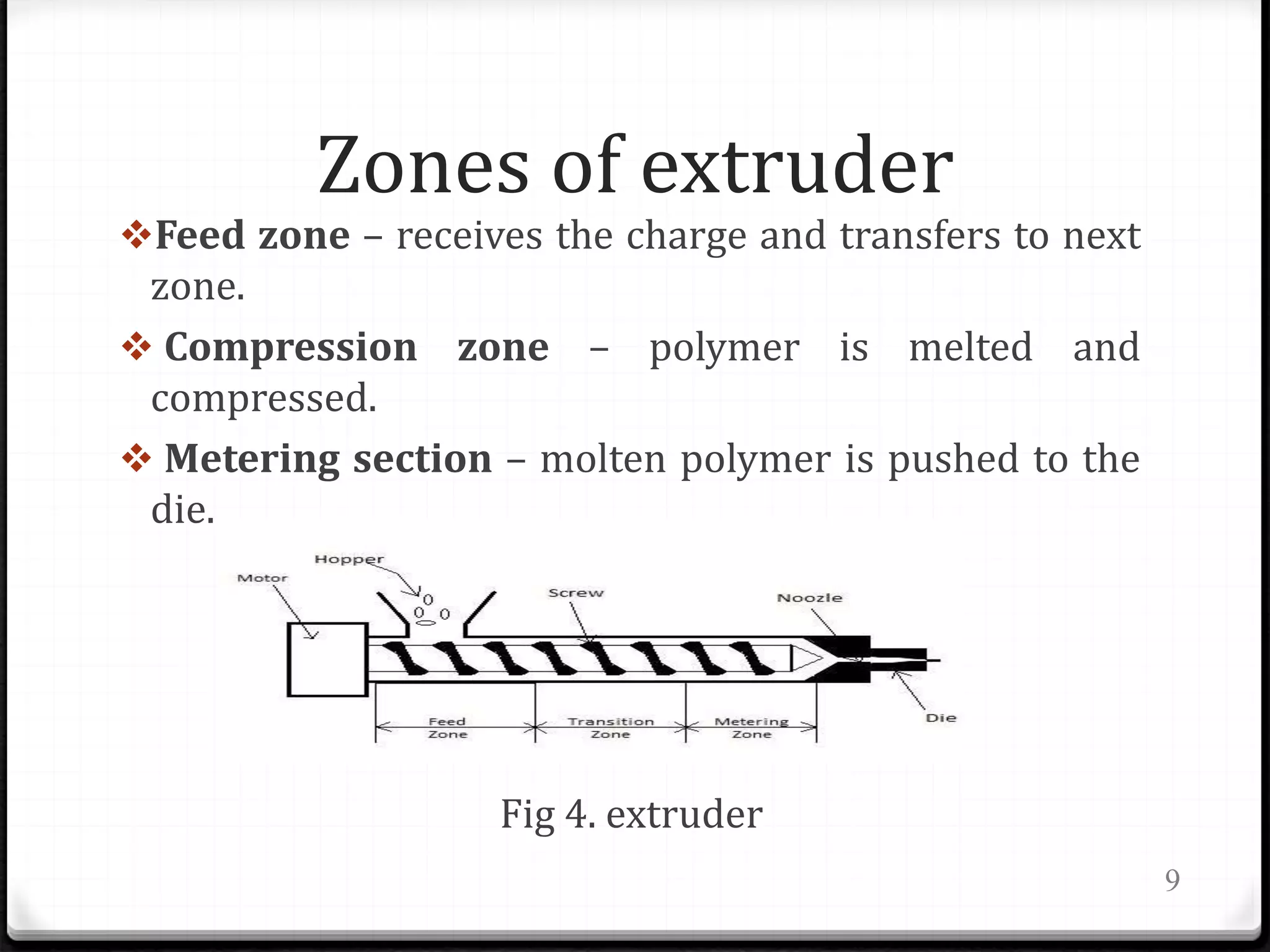
Zones of extruder
Feed zone – receives the charge and transfers to next
zone.
 Compression zone – polymer is melted and
compressed.
 Metering section – molten polymer is pushed to the
die.
Fig 4. extruder
9
Materials produced by
extrusion moulding
0 Hoses.
0 Pipes.
0 Drinking straws.
0 Rods.
0 Fire extinguisher cases.
0 Shock absorber cylinders.
10
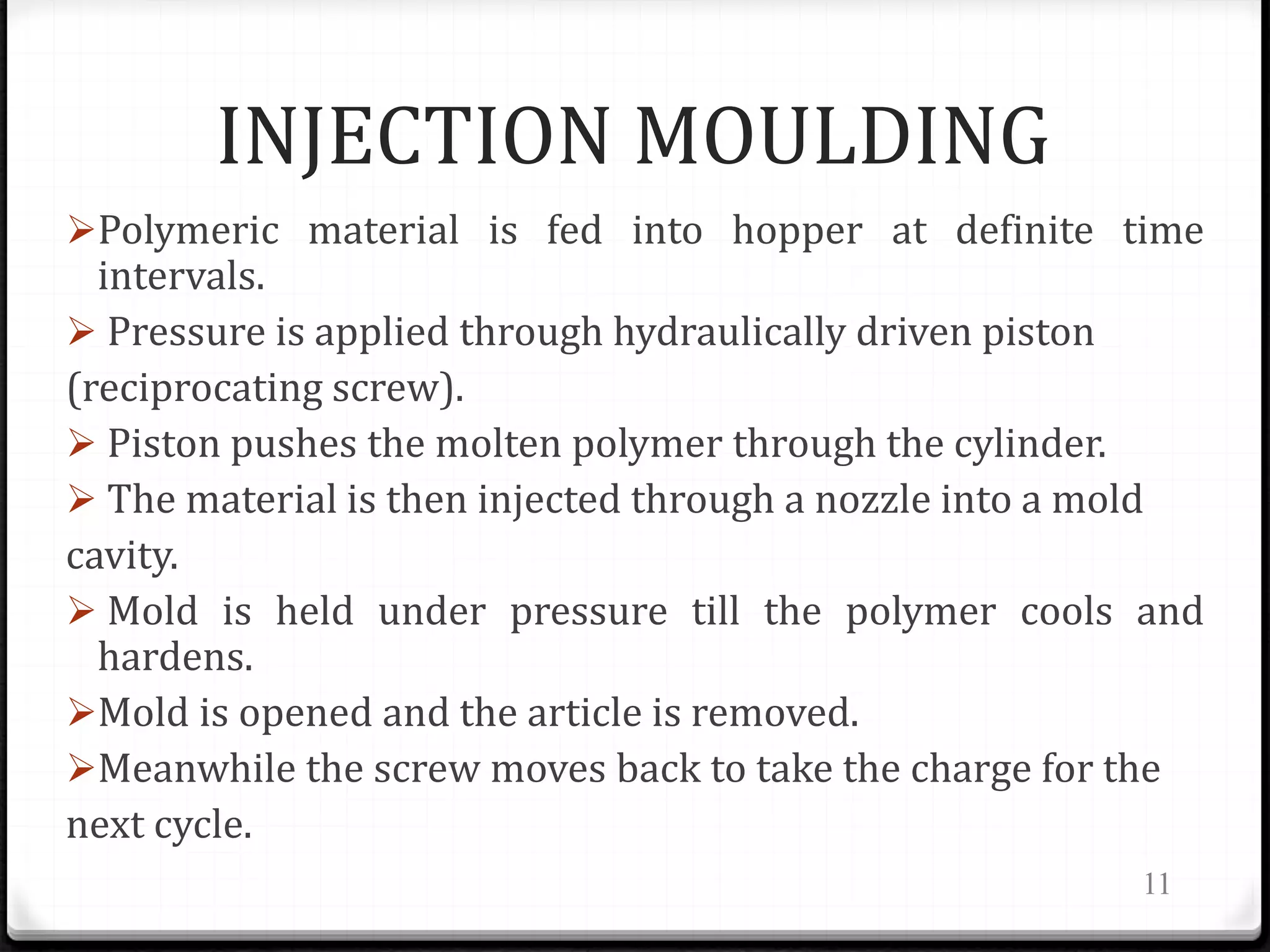
INJECTION MOULDING
Polymeric material is fed into hopper at definite time
intervals.
 Pressure is applied through hydraulically driven piston
(reciprocating screw).
 Piston pushes the molten polymer through the cylinder.
 The material is then injected through a nozzle into a mold
cavity.
 Mold is held under pressure till the polymer cools and
hardens.
Mold is opened and the article is removed.
Meanwhile the screw moves back to take the charge for the
next cycle.
11
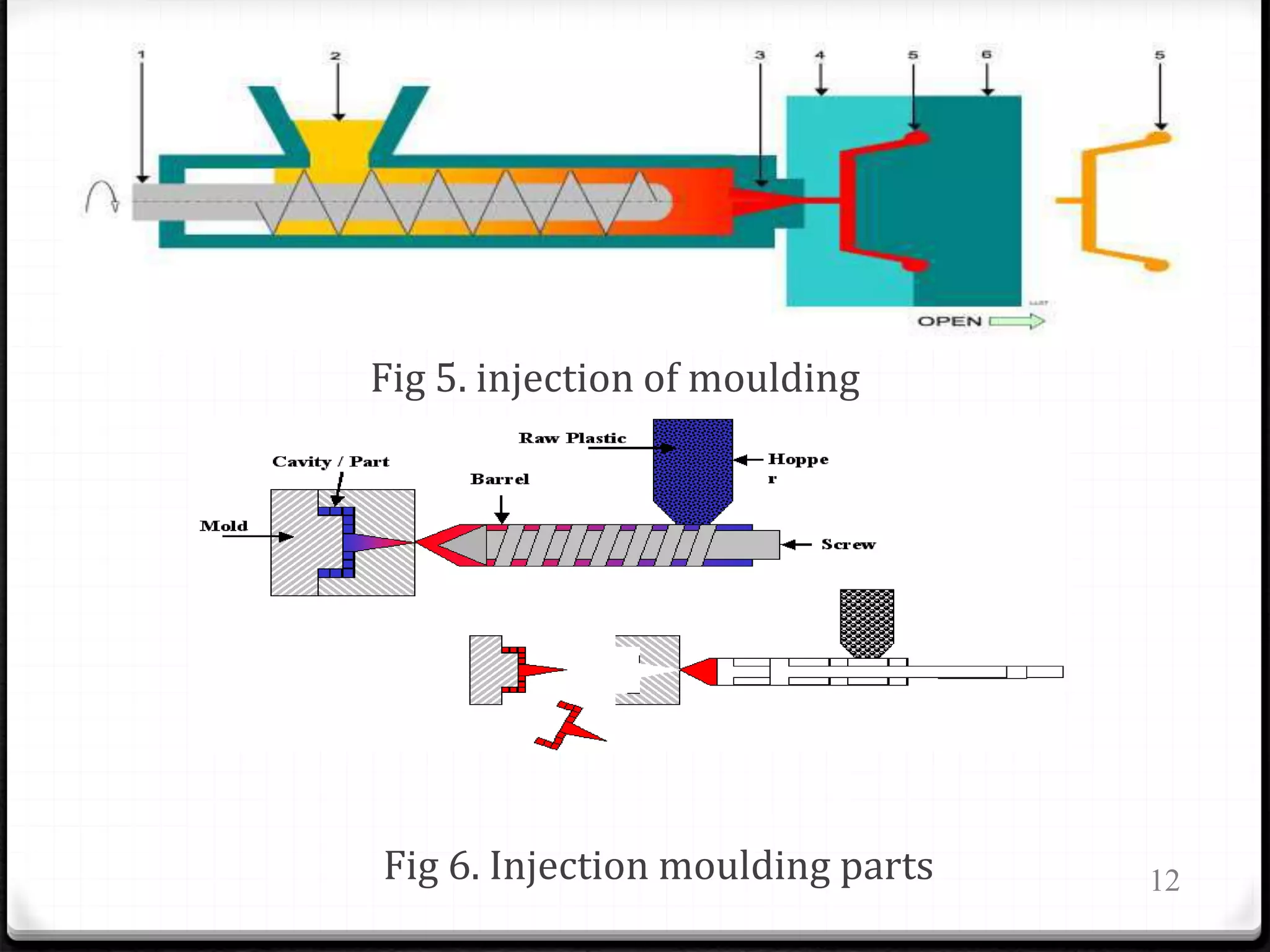
Fig 5. injection of moulding
Fig 6. Injection moulding parts 12
Materials produced by
injection moulding
• Bottle caps.
• Automotive parts.
• Toys.
• Pocket comb.
• Musical instruments and parts.
• Storage container.
• Mechanical parts.
13
Blow moulding
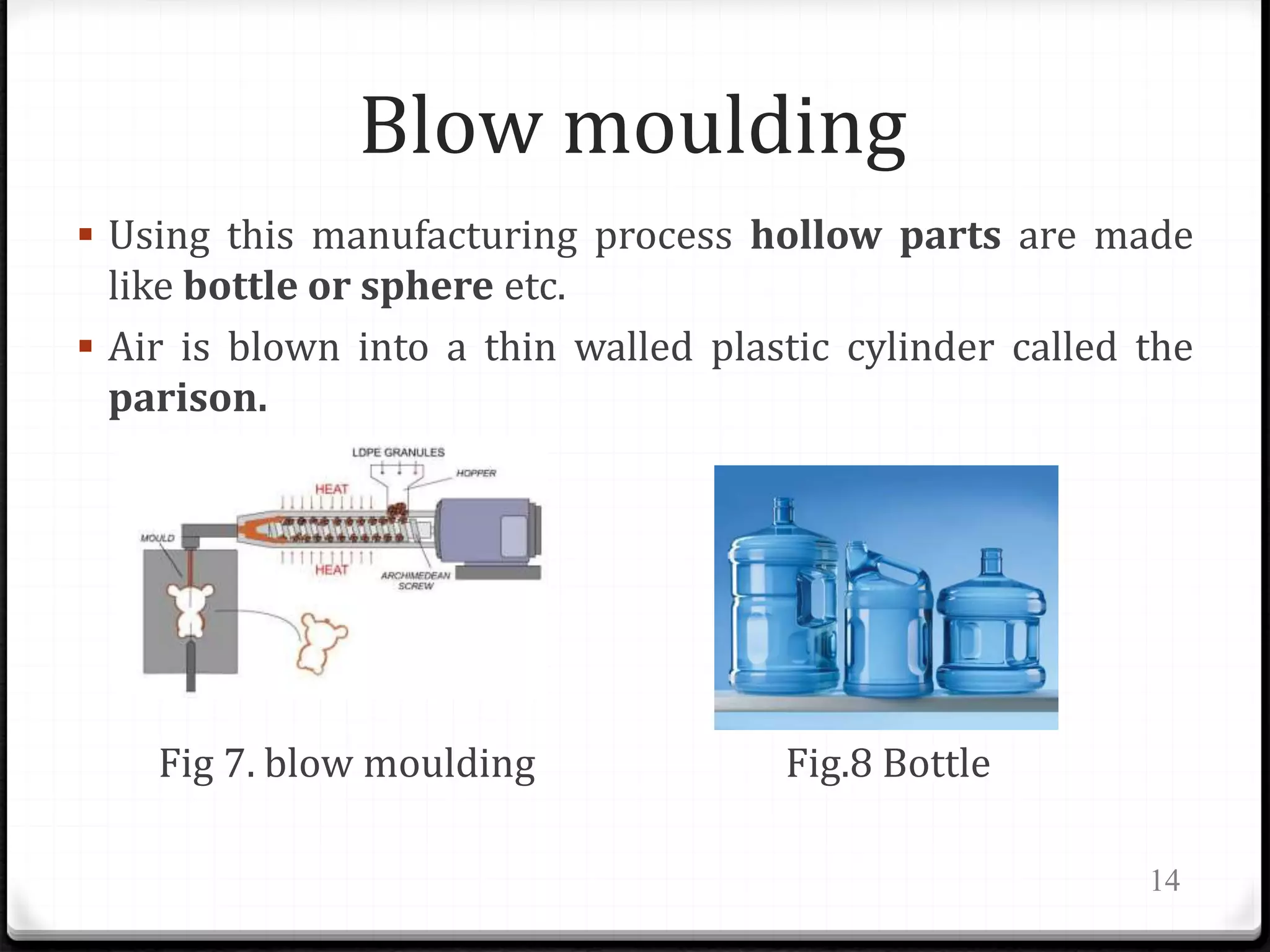
 Using this manufacturing process hollow parts are made
like bottle or sphere etc.
 Air is blown into a thin walled plastic cylinder called the
parison.
Fig 7. blow moulding Fig.8 Bottle
14
Types of blow moulding
EXTRUSION BLOW MOLDING.
INJECTION BLOW MOLDING.
STRETCH BLOW MOLDING.
15
EXTRUSION BLOW MOLDING:
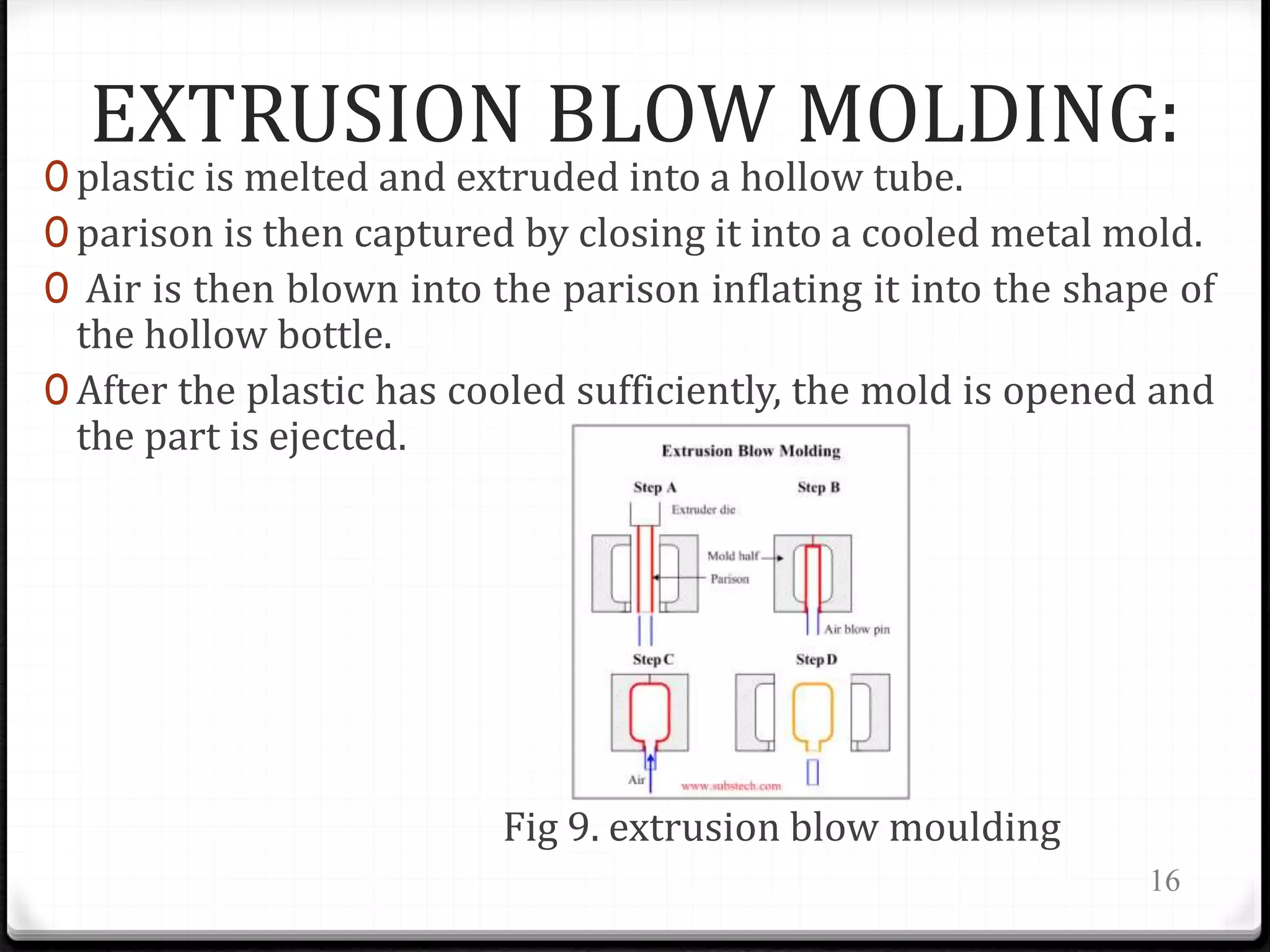
0 plastic is melted and extruded into a hollow tube.
0 parison is then captured by closing it into a cooled metal mold.
0 Air is then blown into the parison inflating it into the shape of
the hollow bottle.
0 After the plastic has cooled sufficiently, the mold is opened and
the part is ejected.
Fig 9. extrusion blow moulding
16
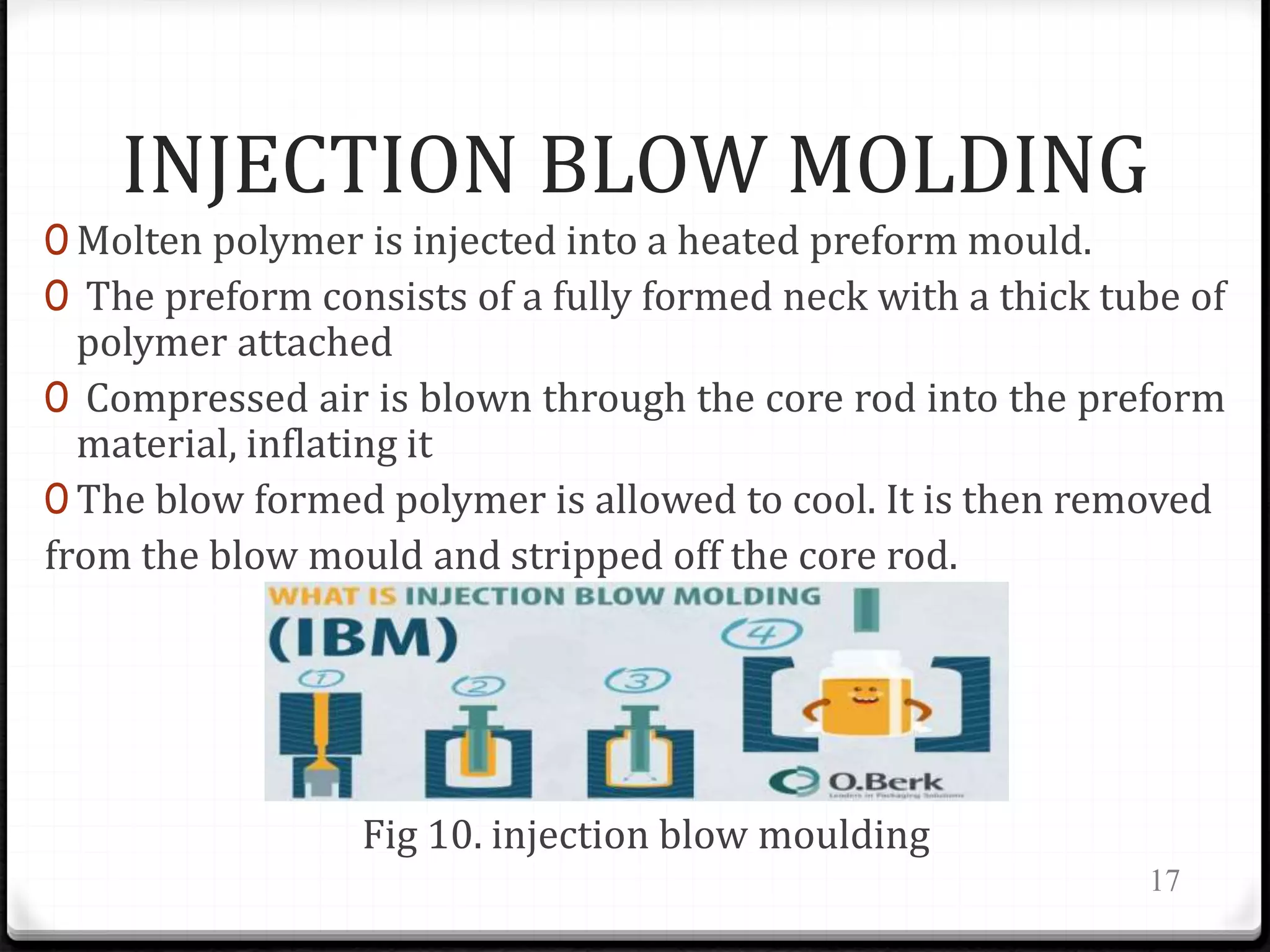
INJECTION BLOW MOLDING
0 Molten polymer is injected into a heated preform mould.
0 The preform consists of a fully formed neck with a thick tube of
polymer attached
0 Compressed air is blown through the core rod into the preform
material, inflating it
0 The blow formed polymer is allowed to cool. It is then removed
from the blow mould and stripped off the core rod.
Fig 10. injection blow moulding
17
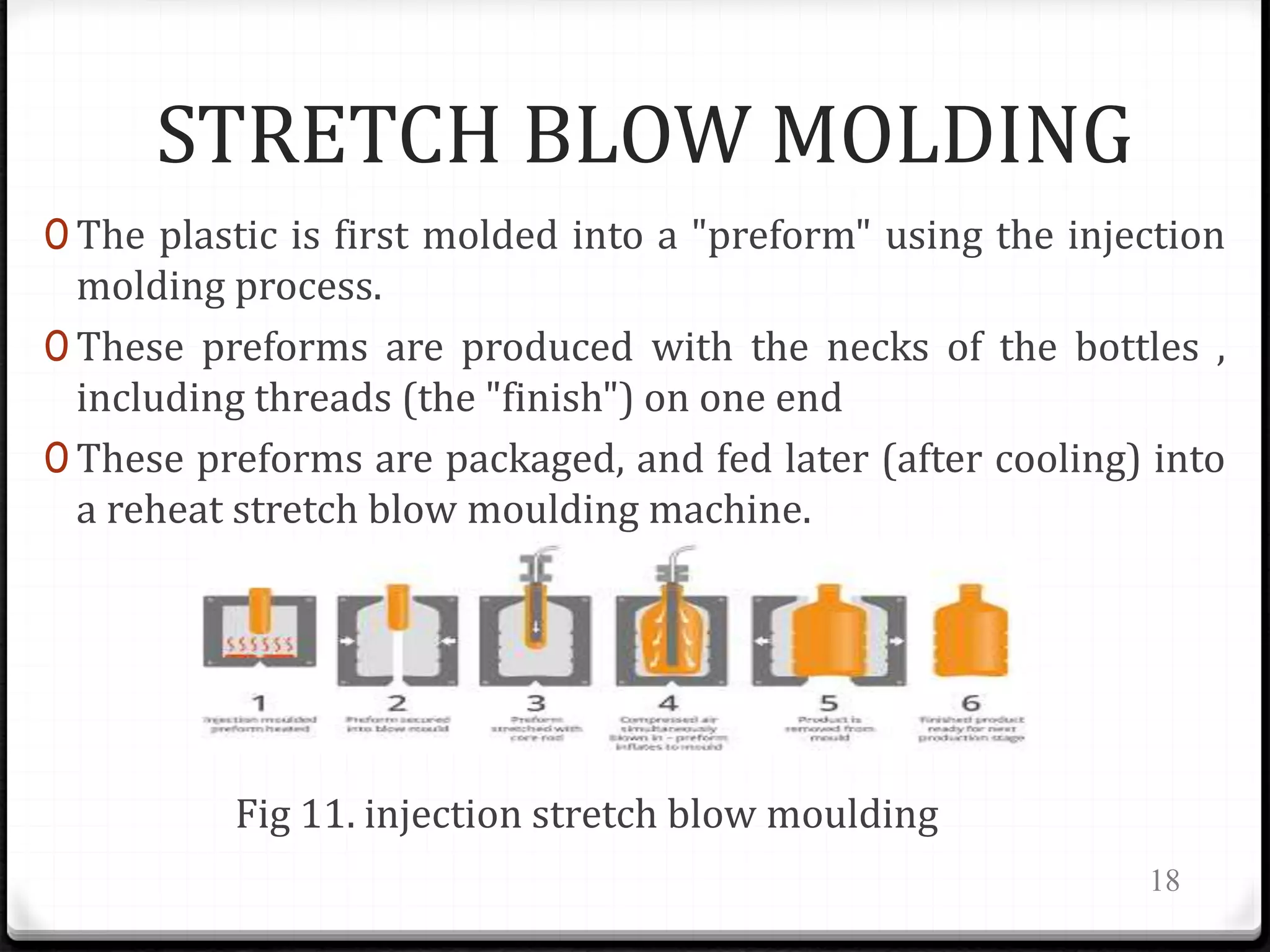
STRETCH BLOW MOLDING
0 The plastic is first molded into a "preform" using the injection
molding process.
0 These preforms are produced with the necks of the bottles ,
including threads (the "finish") on one end
0 These preforms are packaged, and fed later (after cooling) into
a reheat stretch blow moulding machine.
Fig 11. injection stretch blow moulding
18
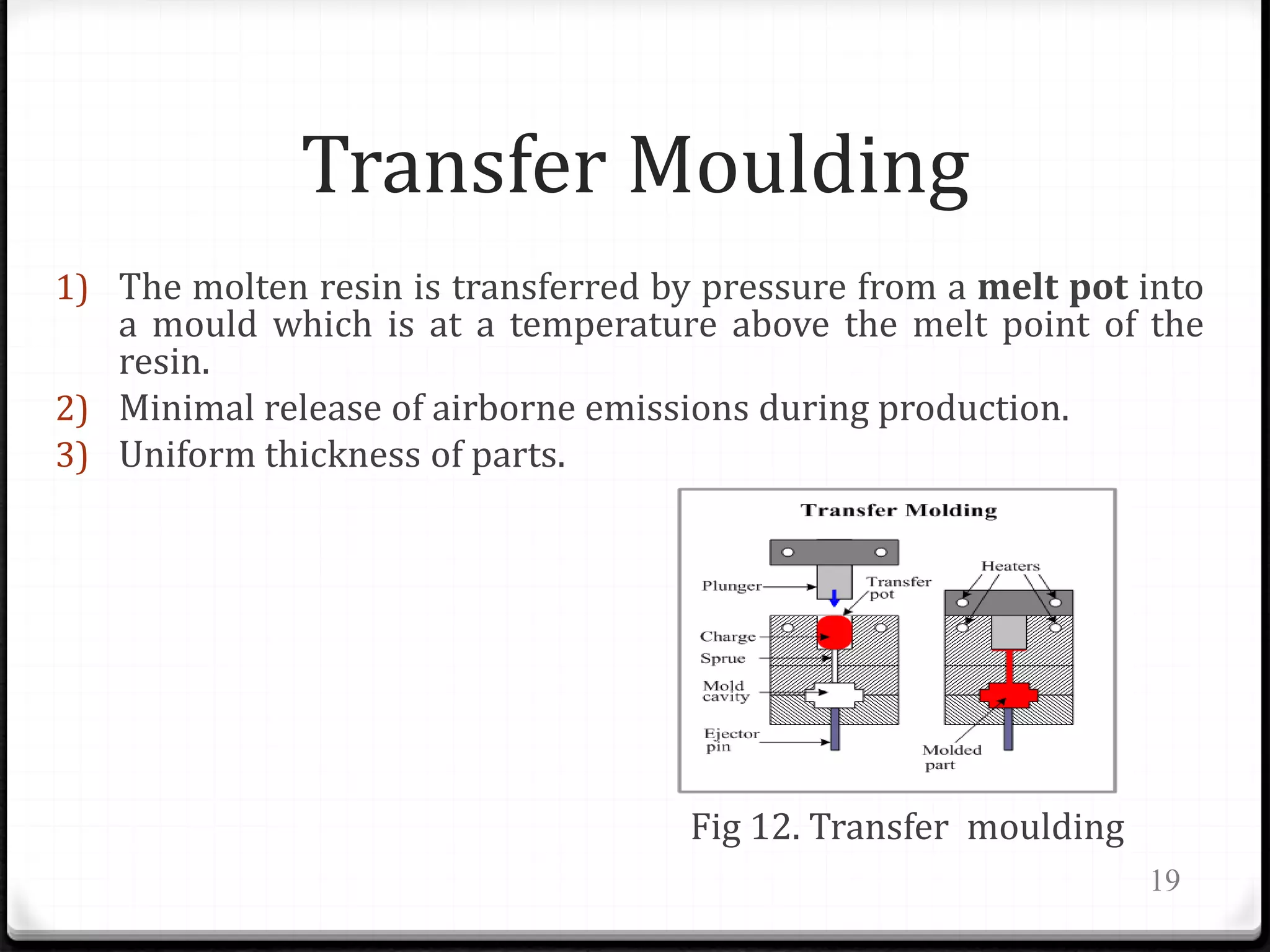
Transfer Moulding
1) The molten resin is transferred by pressure from a melt pot into
a mould which is at a temperature above the melt point of the
resin.
2) Minimal release of airborne emissions during production.
3) Uniform thickness of parts.
Fig 12. Transfer moulding
19
Polymerization
Polymerization is a process of reacting monomer molecules
together in a chemical reaction to form polymer chains or
three-dimensional networks.
Types:
1. Addition polymerization.
2. Condensation polymerization.
20
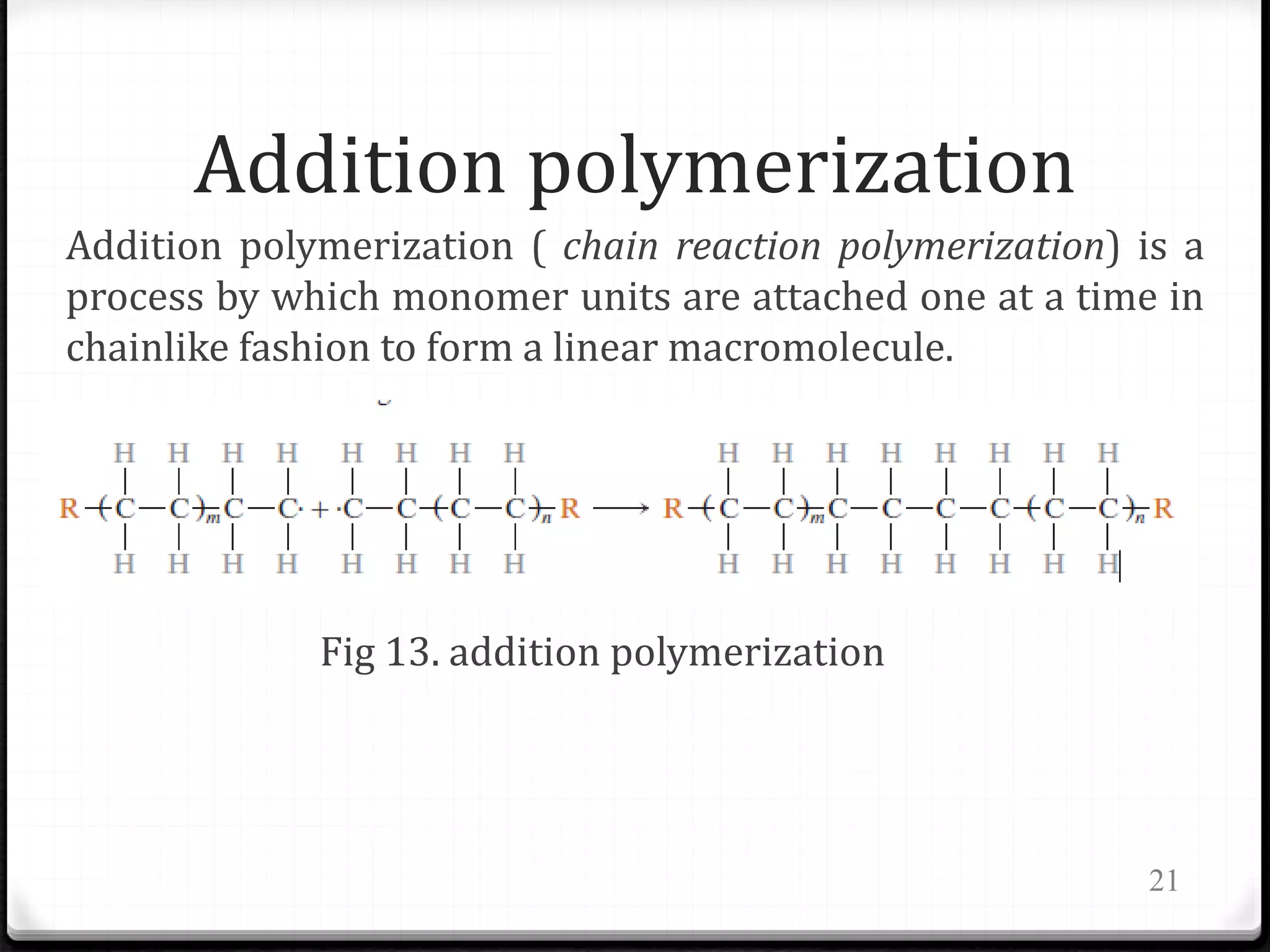
Addition polymerization
Addition polymerization ( chain reaction polymerization) is a
process by which monomer units are attached one at a time in
chainlike fashion to form a linear macromolecule.
Fig 13. addition polymerization
21
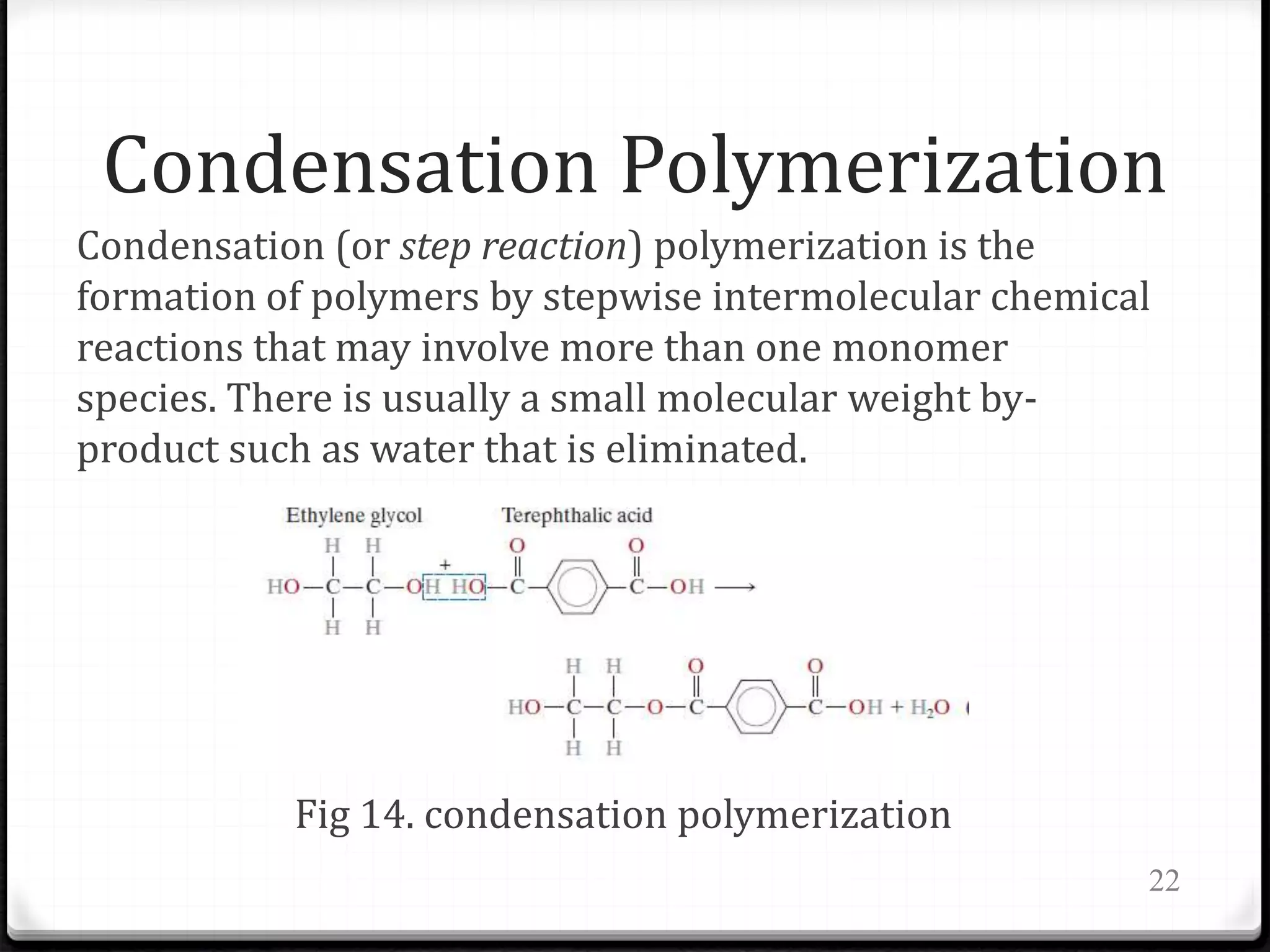
Condensation Polymerization
Condensation (or step reaction) polymerization is the
formation of polymers by stepwise intermolecular chemical
reactions that may involve more than one monomer
species. There is usually a small molecular weight by-
product such as water that is eliminated.
Fig 14. condensation polymerization
22
Applications of polymers
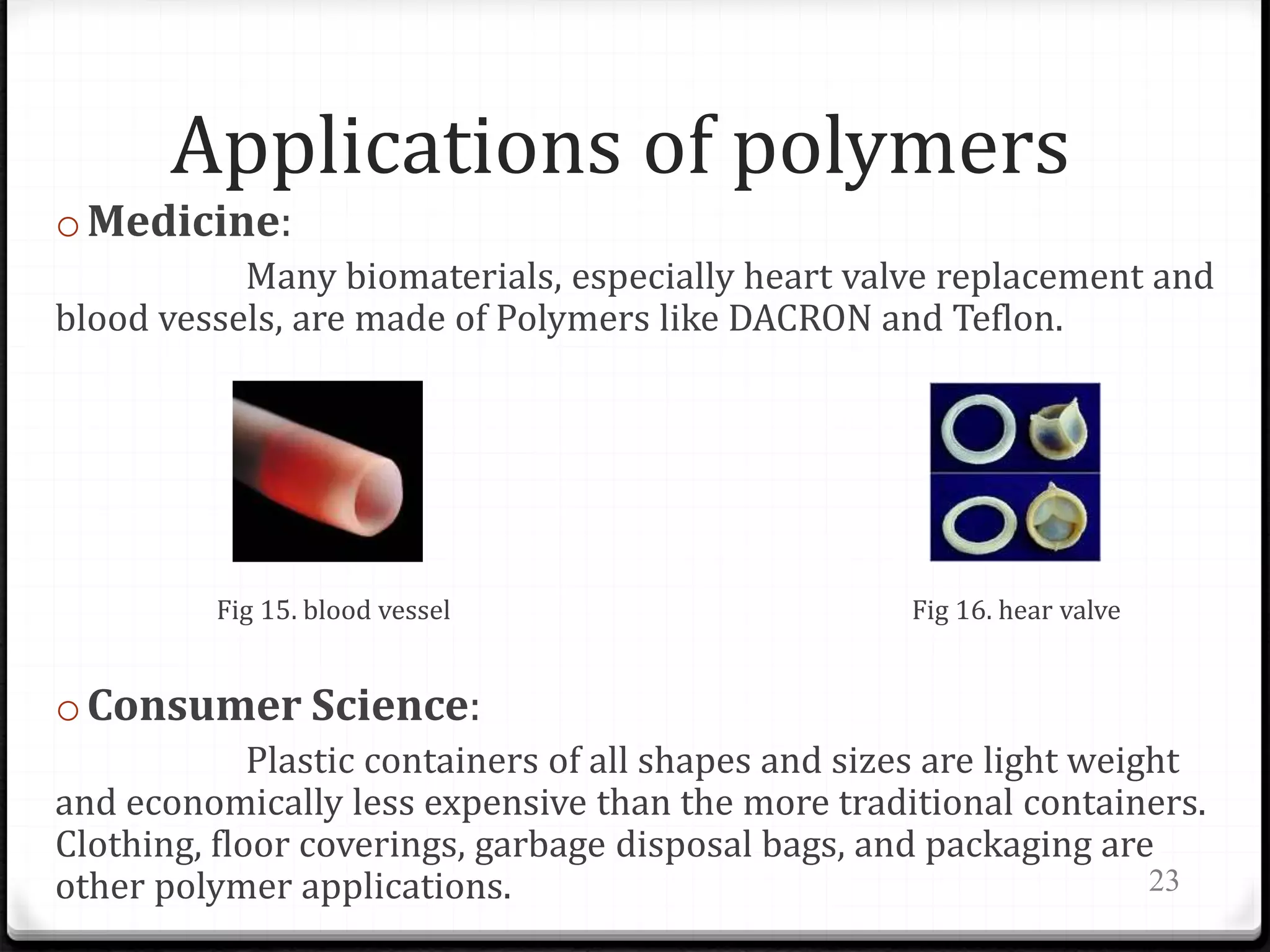
oMedicine:
Many biomaterials, especially heart valve replacement and
blood vessels, are made of Polymers like DACRON and Teflon.
Fig 15. blood vessel Fig 16. hear valve
oConsumer Science:
Plastic containers of all shapes and sizes are light weight
and economically less expensive than the more traditional containers.
Clothing, floor coverings, garbage disposal bags, and packaging are
other polymer applications. 23
o Industry:
Automobile parts, windshields for fighter planes, pipes,
tanks, packing materials, insulation, wood substitutes, adhesives,
matrix for composites, and elastomers are all polymer
applications used in the industrial market.
oSports:
Playground equipment, various balls, golf clubs,
swimming pools, and protective helmets are often produced
from polymers.
o As a thickening agent in suspension. e.g methyl cellulose.
o Polyester is used in clothing, magnetic recording tape etc.
o Polystyrene is used in wall tiles and in battery cases.
24
25

Processing and applications of polymers

  • 1.
  • 2.
    Polymer 2 The word polymeris originated from Greek word meros which means unit.  Monomer = single unit and polymer =many units joined together  Polymers are basically organic compounds but few are inorganic too. Fig. 1 Polymer
  • 3.
    POLYMER MATERIALS The polymersare different group of engineering materials. They are the main components of plastics, rubbers, resins, adhesives and paints. These materials have distinctive microstructures built from macromolecular chains and networks of carbon and other light elements. 3
  • 4.
    Polymer processing  Processing: Asystematic series of mechanized or chemical operations that are performed in order to produce something.  Polymer processing: A process resulting in the forming, manufacture, or modification of a plastic. 4
  • 5.
    Moulding Moulding is aprocess of manufacturing by shaping liquid or pliable raw material using a rigid frame called a mold or matrix. Types of moulding 0 Compression moulding. 0 Extrusion moulding. 0 Injection moulding. 0 Blow moulding. 0 Transfer moulding. 5
  • 6.
    Compression moulding • Inthis process the appropriate amount of heated polymer is placed between male and female part of mould. • The material is compressed and compacted into the shape inside cavity. • The excess material flows out of the mould known as flash. Fig 2. compression moulding 6
  • 7.
    Materials produced by compressionmoulding o Ceramics. o Thermoset plastics.(melamine) o Fiber composites. o Cork. o Kitchen wares(bowl and cups etc.) o Switches, and handles. 7
  • 8.
    Extrusion moulding  Theextruder(region in which melting and compression takes place) contains a motor, which turns a screw and the polymer is propelled to the heater.  Polymer is melted into liquid and pushed through a die.  Polymer from the die is cooled rapidly.  The product is cut into desired length. Fig 3. extrusion moulding 8
  • 9.
    Zones of extruder Feedzone – receives the charge and transfers to next zone.  Compression zone – polymer is melted and compressed.  Metering section – molten polymer is pushed to the die. Fig 4. extruder 9
  • 10.
    Materials produced by extrusionmoulding 0 Hoses. 0 Pipes. 0 Drinking straws. 0 Rods. 0 Fire extinguisher cases. 0 Shock absorber cylinders. 10
  • 11.
    INJECTION MOULDING Polymeric materialis fed into hopper at definite time intervals.  Pressure is applied through hydraulically driven piston (reciprocating screw).  Piston pushes the molten polymer through the cylinder.  The material is then injected through a nozzle into a mold cavity.  Mold is held under pressure till the polymer cools and hardens. Mold is opened and the article is removed. Meanwhile the screw moves back to take the charge for the next cycle. 11
  • 12.
    Fig 5. injectionof moulding Fig 6. Injection moulding parts 12
  • 13.
    Materials produced by injectionmoulding • Bottle caps. • Automotive parts. • Toys. • Pocket comb. • Musical instruments and parts. • Storage container. • Mechanical parts. 13
  • 14.
    Blow moulding  Usingthis manufacturing process hollow parts are made like bottle or sphere etc.  Air is blown into a thin walled plastic cylinder called the parison. Fig 7. blow moulding Fig.8 Bottle 14
  • 15.
    Types of blowmoulding EXTRUSION BLOW MOLDING. INJECTION BLOW MOLDING. STRETCH BLOW MOLDING. 15
  • 16.
    EXTRUSION BLOW MOLDING: 0plastic is melted and extruded into a hollow tube. 0 parison is then captured by closing it into a cooled metal mold. 0 Air is then blown into the parison inflating it into the shape of the hollow bottle. 0 After the plastic has cooled sufficiently, the mold is opened and the part is ejected. Fig 9. extrusion blow moulding 16
  • 17.
    INJECTION BLOW MOLDING 0Molten polymer is injected into a heated preform mould. 0 The preform consists of a fully formed neck with a thick tube of polymer attached 0 Compressed air is blown through the core rod into the preform material, inflating it 0 The blow formed polymer is allowed to cool. It is then removed from the blow mould and stripped off the core rod. Fig 10. injection blow moulding 17
  • 18.
    STRETCH BLOW MOLDING 0The plastic is first molded into a "preform" using the injection molding process. 0 These preforms are produced with the necks of the bottles , including threads (the "finish") on one end 0 These preforms are packaged, and fed later (after cooling) into a reheat stretch blow moulding machine. Fig 11. injection stretch blow moulding 18
  • 19.
    Transfer Moulding 1) Themolten resin is transferred by pressure from a melt pot into a mould which is at a temperature above the melt point of the resin. 2) Minimal release of airborne emissions during production. 3) Uniform thickness of parts. Fig 12. Transfer moulding 19
  • 20.
    Polymerization Polymerization is aprocess of reacting monomer molecules together in a chemical reaction to form polymer chains or three-dimensional networks. Types: 1. Addition polymerization. 2. Condensation polymerization. 20
  • 21.
    Addition polymerization Addition polymerization( chain reaction polymerization) is a process by which monomer units are attached one at a time in chainlike fashion to form a linear macromolecule. Fig 13. addition polymerization 21
  • 22.
    Condensation Polymerization Condensation (orstep reaction) polymerization is the formation of polymers by stepwise intermolecular chemical reactions that may involve more than one monomer species. There is usually a small molecular weight by- product such as water that is eliminated. Fig 14. condensation polymerization 22
  • 23.
    Applications of polymers oMedicine: Manybiomaterials, especially heart valve replacement and blood vessels, are made of Polymers like DACRON and Teflon. Fig 15. blood vessel Fig 16. hear valve oConsumer Science: Plastic containers of all shapes and sizes are light weight and economically less expensive than the more traditional containers. Clothing, floor coverings, garbage disposal bags, and packaging are other polymer applications. 23
  • 24.
    o Industry: Automobile parts,windshields for fighter planes, pipes, tanks, packing materials, insulation, wood substitutes, adhesives, matrix for composites, and elastomers are all polymer applications used in the industrial market. oSports: Playground equipment, various balls, golf clubs, swimming pools, and protective helmets are often produced from polymers. o As a thickening agent in suspension. e.g methyl cellulose. o Polyester is used in clothing, magnetic recording tape etc. o Polystyrene is used in wall tiles and in battery cases. 24
  • 25.