ANALYTICAL CHEMISTRY
(Gravimetry)
Dr.S.SURESH
Assistant Professor
Email:avitsureshindia@gmail.com
2
Gravimetric Analysis
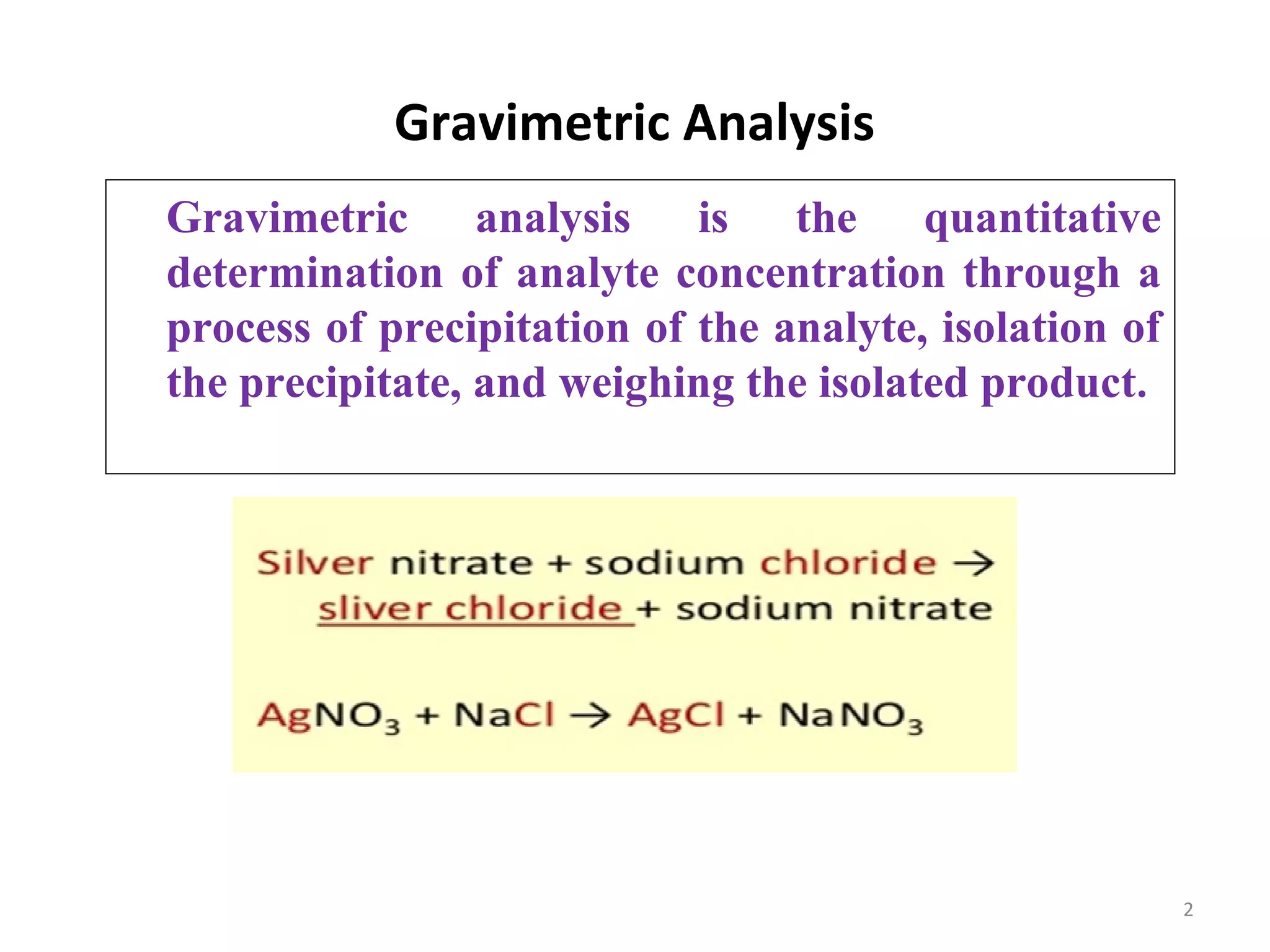
Gravimetric analysis is the quantitative
determination of analyte concentration through a
process of precipitation of the analyte, isolation of
the precipitate, and weighing the isolated product.
4
Gravimetric Analysis
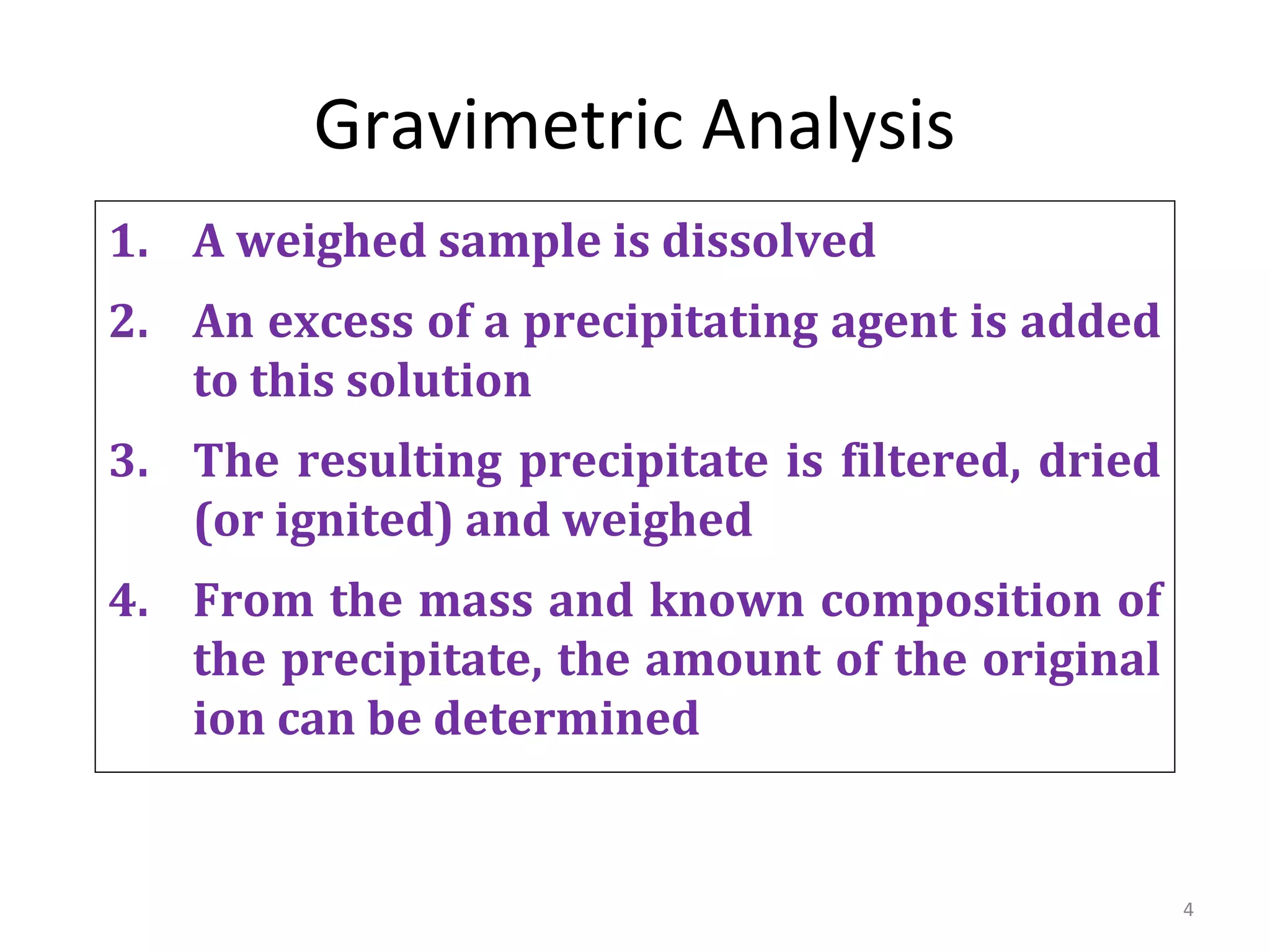
1. A weighed sample is dissolved
2. An excess of a precipitating agent is added
to this solution
3. The resulting precipitate is filtered, dried
(or ignited) and weighed
4. From the mass and known composition of
the precipitate, the amount of the original
ion can be determined
Types of Crucibles
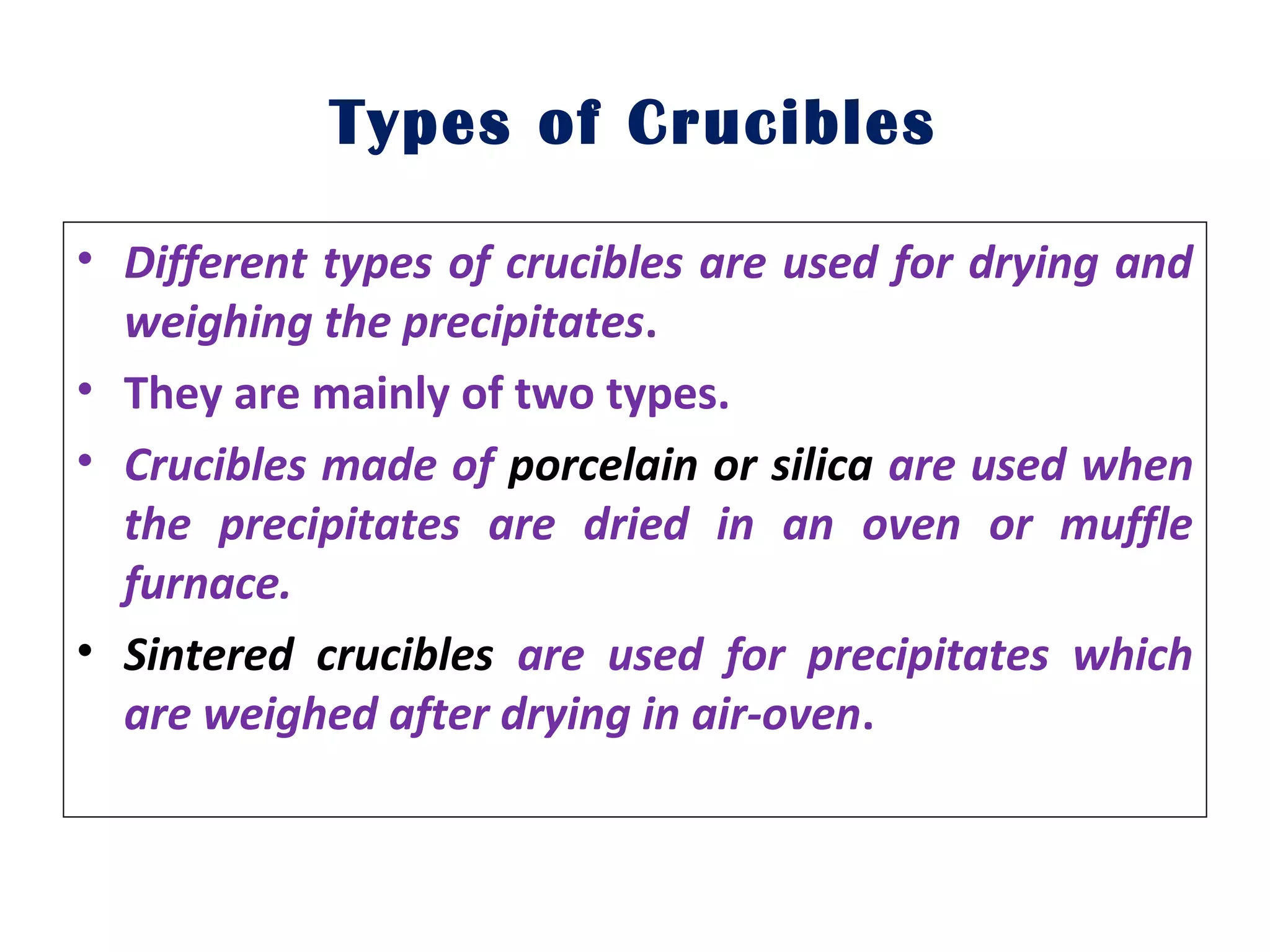
• Different types of crucibles are used for drying and
weighing the precipitates.
• They are mainly of two types.
• Crucibles made of porcelain or silica are used when
the precipitates are dried in an oven or muffle
furnace.
• Sintered crucibles are used for precipitates which
are weighed after drying in air-oven.
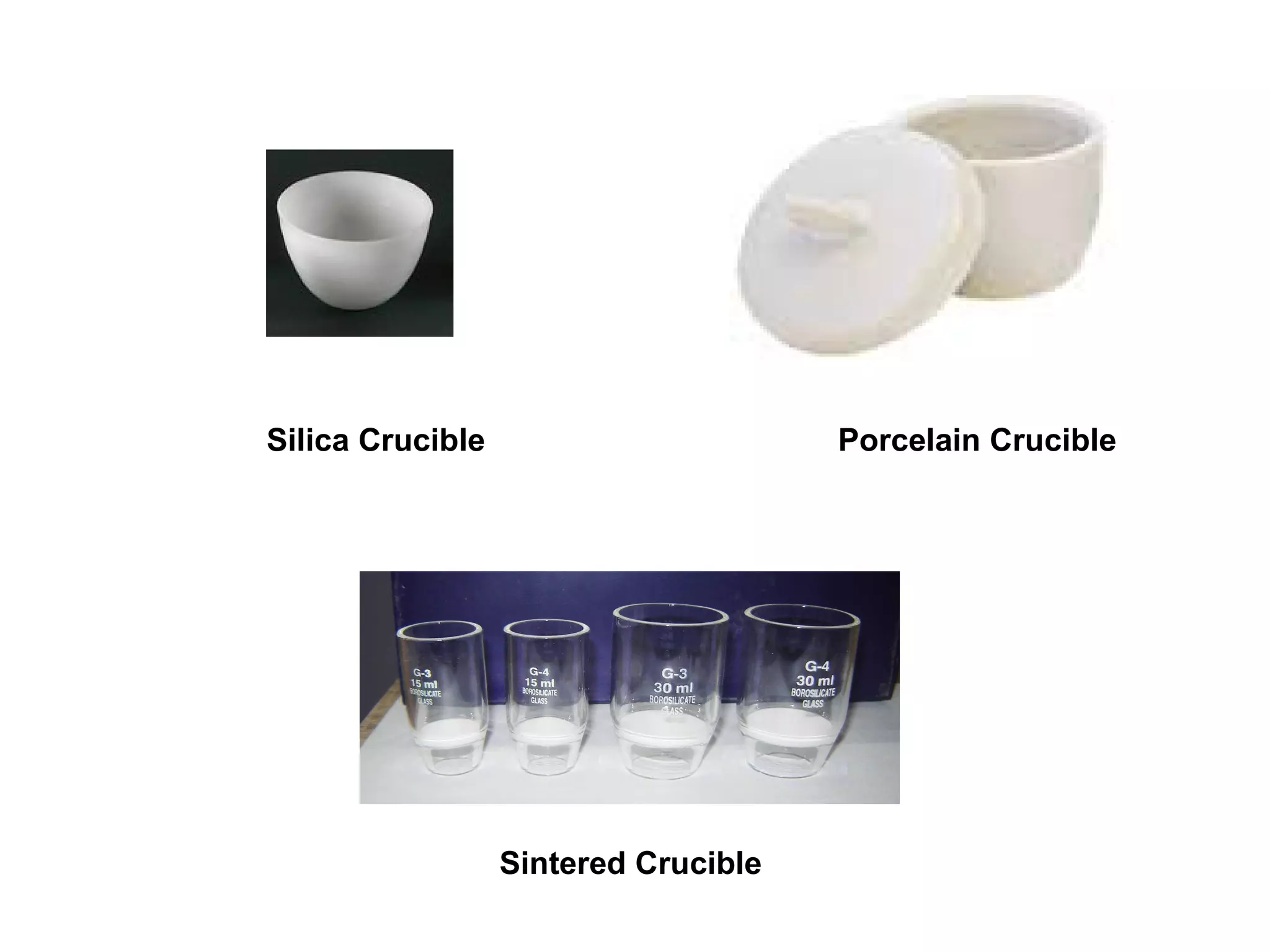
Silica Crucible Porcelain Crucible
Sintered Crucible
The degree of contamination in gravimetric process
The types of contamination we come across in gravimetry is
• Co-precipitation and
• Post-precipitation
• Co-precipitation : Soluble impurities which are
getting precipitated along with the formation of the
precipitate.
• Post-precipitation: After the formation of the
precipitate, the impurities will get soluble.
Post-precipitation
Ca2+
(NH4)2C2O4 CaC2O4
• If Mg2+
is present as an impurity in Ca2+
, then we can have
a post precipitation of MgC2O4 over CaC2O4. The post
precipitation can be avoided by keeping a high pH.
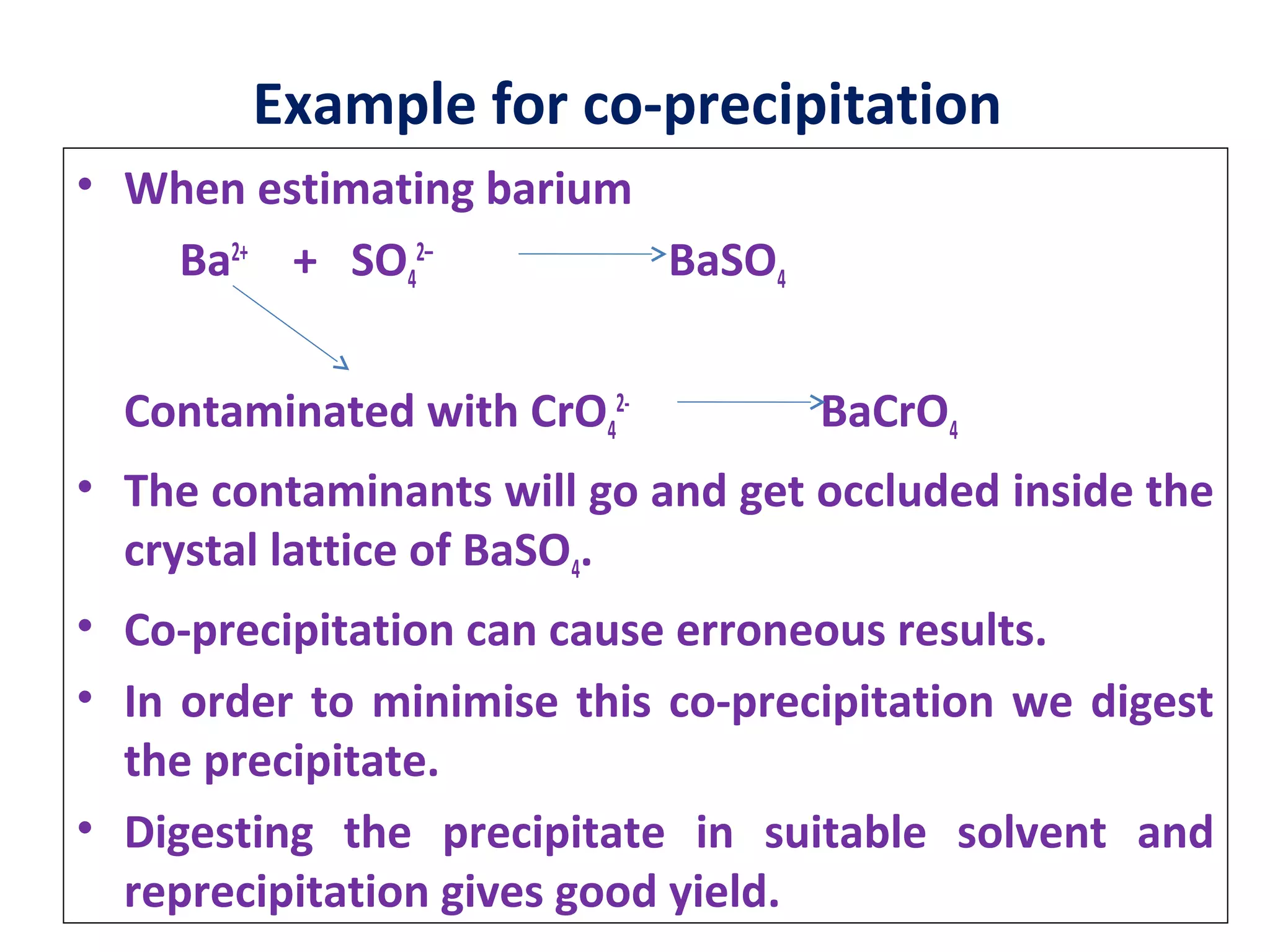
Example for co-precipitation
• When estimating barium
Ba2+
+ SO4
2–
BaSO4
Contaminated with CrO4
2-
BaCrO4
• The contaminants will go and get occluded inside the
crystal lattice of BaSO4.
• Co-precipitation can cause erroneous results.
• In order to minimise this co-precipitation we digest
the precipitate.
• Digesting the precipitate in suitable solvent and
reprecipitation gives good yield.
Gravimetric factor
• A gravimetric factor converts grams of a compound
into grams of a single element.
• Example: To find the gravimetric factor of Cl–
in AgCl
AgCl Ag+
+ Cl–
Gravimetric factor =
=
= 0.24
AgClofMassMolecular
Clofmass –
143.3
35.5
⇌
Gravimetric factor
• Determine gravimetric factor of calcium in
water, if you precipitate calcium as CaCO3.
Gravimetric factor =
= 40
100
= 0.4
3CaCOofMassMolecular
CaofMass
Factors which affect solubility of precipitate
• Temperature: heat is absorbed as most solids
dissolve. Therefore the solubility of precipitates
increases with increasing temperature.
• Solvent composition: The nature of solvent
influences the solubility of most inorganic
substances
• Diverse ion effect: Many slightly soluble salts show
an increased solubility in the presence of increased
concentration of certain salts having no ion in
common with those of the slightly soluble salt.
Gravimetry

Gravimetry

  • 1.
  • 2.
    2 Gravimetric Analysis Gravimetric analysisis the quantitative determination of analyte concentration through a process of precipitation of the analyte, isolation of the precipitate, and weighing the isolated product.
  • 4.
    4 Gravimetric Analysis 1. Aweighed sample is dissolved 2. An excess of a precipitating agent is added to this solution 3. The resulting precipitate is filtered, dried (or ignited) and weighed 4. From the mass and known composition of the precipitate, the amount of the original ion can be determined
  • 5.
    Types of Crucibles •Different types of crucibles are used for drying and weighing the precipitates. • They are mainly of two types. • Crucibles made of porcelain or silica are used when the precipitates are dried in an oven or muffle furnace. • Sintered crucibles are used for precipitates which are weighed after drying in air-oven.
  • 6.
    Silica Crucible PorcelainCrucible Sintered Crucible
  • 7.
    The degree ofcontamination in gravimetric process The types of contamination we come across in gravimetry is • Co-precipitation and • Post-precipitation • Co-precipitation : Soluble impurities which are getting precipitated along with the formation of the precipitate. • Post-precipitation: After the formation of the precipitate, the impurities will get soluble.
  • 8.
    Post-precipitation Ca2+ (NH4)2C2O4 CaC2O4 • IfMg2+ is present as an impurity in Ca2+ , then we can have a post precipitation of MgC2O4 over CaC2O4. The post precipitation can be avoided by keeping a high pH.
  • 9.
    Example for co-precipitation •When estimating barium Ba2+ + SO4 2– BaSO4 Contaminated with CrO4 2- BaCrO4 • The contaminants will go and get occluded inside the crystal lattice of BaSO4. • Co-precipitation can cause erroneous results. • In order to minimise this co-precipitation we digest the precipitate. • Digesting the precipitate in suitable solvent and reprecipitation gives good yield.
  • 10.
    Gravimetric factor • Agravimetric factor converts grams of a compound into grams of a single element. • Example: To find the gravimetric factor of Cl– in AgCl AgCl Ag+ + Cl– Gravimetric factor = = = 0.24 AgClofMassMolecular Clofmass – 143.3 35.5 ⇌
  • 11.
    Gravimetric factor • Determinegravimetric factor of calcium in water, if you precipitate calcium as CaCO3. Gravimetric factor = = 40 100 = 0.4 3CaCOofMassMolecular CaofMass
  • 12.
    Factors which affectsolubility of precipitate • Temperature: heat is absorbed as most solids dissolve. Therefore the solubility of precipitates increases with increasing temperature. • Solvent composition: The nature of solvent influences the solubility of most inorganic substances • Diverse ion effect: Many slightly soluble salts show an increased solubility in the presence of increased concentration of certain salts having no ion in common with those of the slightly soluble salt.